Category Archives: NZ poetry

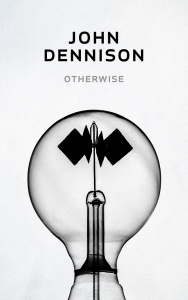
Poetry Shelf interviews John Dennison — ‘it does seem to be a recurrent question in the collection—love’s strangeness’

John Dennison

Photo credit: Robert Cross


John Dennison was born in Sydney in 1978, and grew up in Tawa. He has lived and studied in Wellington, Dunedin, and St Andrews, Scotland, and now lives with his family here in Wellington, where he is a university chaplain. His poems have appeared in magazines in the UK, New Zealand and Australia, and were anthologised in Carcanet’s New Poetries V (2011). A first collection, Otherwise, was published by AUP and Carcanet earlier this year.

To celebrate the arrival of this terrific debut, John agreed to be interviewed. I reviewed Otherwise here.


Did your childhood shape you as a poet? What did you like to read? Did you write as a child? What else did you like to do?

Life was rich and full as a kid. We’d no TV, and I spent a good deal of time in books and up trees, or absorbed in endless audiobooks. That’s attuned my ear to some degree; I’ve also my mother’s knack for picking up other voices. Dad had a handful of poetry LPs in his collection—Eliot reading his Quartets, a record of Hopkins’s verse, one of American poet Carl Sandburg weirdly, wonderfully intoning. We worshipped at an open Brethren assembly in Porirua—a lively, community-oriented, rather tribal affair. I think it was partly the Church that attuned me critically to language, and taught me to take words and address seriously. At the same time, the Church attuned me to the culture around, to the market and to public cant; I’ve still got a well-developed, somewhat from-the-margins suspicion of life as it’s sold and told by the powers that be. Another formative aspect of my childhood: I was born with severe club feet. The deformities were corrected early on, when I was a baby, but it shaped me. I think the pre-verbal memory of that wounding and re-shaping, and my later memories of struggling with sports, with running, has had an effect in some way. Growing up has, in one sense, been a growing into–accepting–the woundedness of my earliest weeks. All of this enters the poetry in some way.


When you started writing poems as a young adult, were there any poets in particular that you were drawn to (poems/poets as surrogate mentors)?

Gregory O’Brien was my flesh-and-blood example of how to be a poet—he was a key figure in my apprenticeship. I took a writing paper with him. More than the workshop, to be accorded dignity and friendship by this older, much more dedicated writer—that was gold. I was stoked to meet Michael Symmons Roberts, a Manchester poet, in person recently—he’s been another important model, via his work. Baxter always hovered in the background—ready mythology.


Did university life transform your poetry writing? Theories? Peers? Discoveries? Sidetracks?

It’s interesting that this question irks me—I guess I chafe at the recognition that the university has become the dominant patron of poetry in NZ and beyond, and I feel uneasy at such patronage. For all that I love the community of scholarship, and serve that community as a chaplain, I do wonder whether it might not impoverish one’s poetry and poetics to turn habitually to the university. There really is, for instance, wonder and joy, contemplation and professing, which the modern university is pretty much deaf to. But yes, for me the university put poetry on the table every breakfast without apology or concern, and with the kind of seriousness a thoughty 19-year-old man is bound to fall for. Poetry was a subject of study before it was a practice, and learning to read slowly and in good faith—assuming everything on the page signifies—was good apprenticeship in the craft. That, and reading poets’ own accounts of making. I guess I learned the traditions, those at home and those abroad—it was important to do that.


Are there any critical books on poetry that have sustained or shifted your approach to writing a poem?

There’s a few. Those of any real use were written by poets. David Jones’s reflections on poetry and sacramental theology in Epoch and Artist was a timely discovery. More recently, Wendell Berry’s essay ‘On the use of old forms’ has helped me to understand what is at stake in choosing to work one or other received tradition and form—terza rima, or a Shakespearean sonnet, as opposed to free verse, say. He describes the way in which such forms enable you to live forwards into the poem, calling you into the possibilities of the language via rhymes, metre, etc. Berry’s been a real practical help. There’s Neruda’s manifesto ‘Toward an Impure Poetry’—I love his refusal to make poetry a religion, to give it some priestly function. Otherwise, I’ve pocketed a handful of dictums: Hopkins in a letter to Bridges, ‘Take breath and read it with the ears’; also, a phrase Seamus Heaney misattributes to Mandelstam, ‘The Incarnation sets the world free for play’. Stunning.


What poets have mattered to you over the past year?

Jorie Graham’s Sea Change has been a recent discovery – it’s difficult, unstable ground, one of the more moving mediations on climate change and the larger state of things I’ve read. Really good public poetry. And her use of negative prefixes has really stuck with me. She’s been important. I’m grateful for Cliff Fell’s poems. Fell sets up large pressure systems—essay poems—in which the lyric voice rises to break the surface tension of the larger flow. In its Dante-esque scope, in its prolonged and evident apprenticeship, and in its pitch and reach across the several keyboards of the language, his stuff is brilliant.


What New Zealand poets have you been drawn to over time?

Again, Baxter loomed large early on—my Father worked with Colin Durning, Baxter’s friend, and so James K. was part of the fabric of things. I love the work of Bethell—she’s been important. More recently, it’s been Curnow and O’Sullivan.


Any other areas you are drawn to read in?

Well, apart from essays in poetics, I’m often reading contemplative theology: Augustine’s Confessions, most recently. I love a good essay on any topic—love the essay form. I’ve been slowly working through Chaim Potok’s novels which have been utterly captivating—My Name is Asher Lev, a story about a gifted artist born into a community of New York Hasidic Jews. And then, I read a lot of kids’ picture books at the moment.
 

1423778022214-1 1423778022214-11423778022214-1


In my review of your debut collection, Otherwise, I identified one of the joys of the collection: ‘the way the poem grounds you in the marvellous detail of the here and now so you feel earthed, and then uplifts you to the transcendental possibilities of elsewhere.’ What are key things for you when you write a poem?

Mostly, poems begin with the musical suggestiveness of a line, or the emotional implications of an image, rather than in some premeditated transection of marvellous and the everyday. A poem is a thing made out of words pitched through some emotional acuity, in which language is pushed towards the condition of music and affective image. If there’s a trajectory I’m inclined to trace, that’s simply a piece with life more generally. It’s how I am. The coordinates you’ve remarked on—the marvellous of the here and now, transcendental possibilities—well, shoot, that’s the shape of things.


The poems are steeped in love. Did you set out to navigate love in poetic forms or is it a key and enduring ingredient in your ink?

No, nothing as confident as navigating love—gosh, I’m not sure how one could do that without stunning presumption. I just went fishing for poems. But it does seem to be a recurrent question in the collection—love’s strangeness, I hope, rather than the stuff that well-worn word normally conjures. I’m very interested in the way that the lyric, traditionally being concerned with a speaking ‘I’, can become a space of loving address. I’m not thinking of some poly-vocal instability, nor of self-esteeming self-talk; I’m thinking more of the kind of address you find in the Psalms – ‘why are you cast down within me, o my soul?’ It’s a kind of excoriating, unflinching yet loving address to the estranged self; I’m excited by finding ways to open the lyric up to that.


I mentioned the spiritual steppingstones in the collection (a particular path the reader can explore). Is poetry a vital means to explore your spirituality?

No, I’d not say that. At times the process of writing, with its emotional accuracies, serves as a mirror. You know, that moment when the finished thing speaks up and looks back and you say ‘gosh, is that who I am, is that what it is! Mercy!’ But no, poetry isn’t some kind of intuitive scripture; it’s not prayer. Prayer—that’s exploration. I’m very interested in prayer as a kind of activity which takes place in the middle voice (rather than the active or passive moods)—a kind of led, participation in an action one didn’t initiate. There is some kinship with the experience of writing a poem—negative capability, and so on. But there are important differences too.


Your critical book, Seamus Heaney and the Adequacy of Poetry, is forthcoming from Oxford University Press this year. What vital discoveries did you make about poetry as you wrote and researched this book?

The book is a critical history of Seamus Heaney’s prose poetics—the poetics which culminate in his brilliant volume of lectures, The Redress of Poetry. It’s the story of a young Catholic poet who abandons his childhood faith, transferring much of that religious impulse to poetry and a theory about poetry’s sufficiency in the face of history. It’s the story of a poet who believes his art has a restorative, morally pure function in the midst of the violence of public life—for Heaney, the Ulster Troubles. It’s also the story of the son of a cattle dealer from Co. Derry, who wins a scholarship to University and becomes one of the most lauded poets of his time—Harvard professorship, Nobel Prize, etc. So I learned a great deal about contemporary poetics and this post-Christian age. Personally, it helped me to sort out my own thinking on some key questions around poetry and life—for example, that I do not feel any need to ascribe to art some redemptive agency. Also, that I don’t believe a poem is morally pure or true by virtue of its self-verifying ‘rightness’—some poems are beautiful lies, and this problem should interest us.


What irks you in poetry?

Moral smugness; a lyric self-regard which cuts out the reader; despair as an existential pose; free-verse which is really prose with line-breaks; a lack of musicality; forms which are not needful.


What delights you?

An ear at work—alive to the mnemonic possibilities and serious play of language pushed towards a condition of music. A lyric voice which is undone in its moment of saying—the suspicion the poem has cost the poet something. A full keyboard of language and register in use (what could be more democratic?) Fully employed forms of which one becomes blithely unaware in their unfolding.


Some poets argue that there are no rules in poetry and all rules are to be broken. Do you agree? Do you have cardinal rules? Do you have rules you particularly like to break?

I guess I want to ask What is this talk of rules? A successful poem is not a matter of rule-keeping or breaking, but of faithfulness—trust in the possibilities of language and the various poetic traditions. Some forms have constraints, and I am very interested in the possibilities generated by working within and against these constraints. The question is not whether to use free-verse or strict forms, it’s about what’s needful, about the way each form sets up a micro-economy of agency and possibility within language. Free-verse, in an apparent paradox, foregrounds a kind of existential bind of constantly having to choose, having to assert control over language, to use it as a means of expression. In terza rima, on the other hand, one is constantly getting ahead of oneself (with the b-rhyme in the tercet) while glancing back from where you’ve been; it’s a promissory kind of form, constantly entrusting itself to unknown possibilities.


Finally if you were to be trapped for hours (in a waiting room, on a mountain, inside on a rainy day) what poetry book would you read?

Probably, right now, I’d take Thomas Merton’s Collected Poems, for its utter strangeness. It includes a very compelling and haunting sequence on the cargo cults in Papua New Guinea. I waded through it in my early twenties – probably due a revisit. And, given his surrealist edge, a waiting room inside a rainy mountain would be an ideal fit.


Auckland University Press page
Some poetry fans pick a recent favourite NZ poetry read – and my giveaway bundle

Thanks for sharing these. I put all the names in a hat and drew out Nicola Easthope. I will send you a wee bundle of poetry books. Can you email me your postal address please?


Sarah Jane Barnett: Congratulations on your 500th post! What an achievement and also such a contribution to New Zealand poetry readers. The book I’m enjoying at the moment is Joan Fleming’s Failed Love Poems. It’s an intense read and I feel immersed in the characters, especially in the second section. The poem ‘The invention of enough’ blew my mind!


Harvey Molloy: One book that comes to mind is Native Bird by Bryan Walpert.  It’s such a well-crafted, polished book. There’s a diversity of poetic forms and tones so the work’s quite dynamic.  There’s also a certain reticence in places, a skirting around painful issues which I find quite refreshing  – – at times emotions are understated and there’s a control and restraint which I find quite moving; the poetry is at times actively self-conscious but never cold or impersonal (for example the poem, ‘Ōakura’).  I’ll be coming back to this book.


Sian Robyns: Airini Beautrais’ Dear Neil Roberts had me enthralled enraged and weeping. To paraphrase ‘History Books’ (p 43), she admitted Neil Roberts into our histories and gave us a harrowing reminder of the particular awfulness of Muldoon’s New Zealand. Sadly, we still maintain a silence closely resembling stupidity.

Can I have two? I also loved Jennifer Compton’s Mr Clean and the Junkie. I loved the story, the sense of place, and that swooping, interfering, conversational, self-aware authorial voice.


Crissi Blair: I loved Caoilinn Hughes’ Gathering Evidence which I had from the library after hearing Gregory O’Brien talking to Kim Hill about her marvellous first lines. Congratulations on your 500th post Paula. You are doing a great job at spreading the poetry word!


Nicola Easthope: One Aotearoa poetry book I have enjoyed this year (there are so many) is Janet Frame’s The Goose Bath, winner of the 2007 Montana NZ Book Awards. I have come late to Janet’s poetry (having gobbled up her prose at university in the late 80s) and love meeting her flaring imagination and dance of language through poems with apparently innocent beginnings that usually turn, back and forth, between the light and the dark of her life.The entire collection leaves me fizzing and aching with appreciation.


Lara Anderson:

The body is a nest alive with new song
The brain is fluent in ghost
The tongue is rich with poetry ~ Siobhan Harvey from ‘Cumulus’ in Cloudboy Otago University Press, 2014

These are just a few of my favourite lines in a book of NZ poetry that I have read and re-read this year. Using the metaphor of clouds to express her feelings and to give poetic form to her son. Harvey is at times both confronted and confronting. You would think that over an extended piece you would get tired of the cloud metaphor but it provides a cohesion that allows the reader to trace the ever changing cloudscapes – like watching the weather dance across the city in time-lapse fashion. Every time I re-read her work I garner something new from it.

Anyway, thank you for your 500 wonderful posts!


Susan Wardell: I stole away from evening toddler-ing duties for a full hour to attend the launch of Emma Neale’s Tender Machines. For the first three days I kept the book lovingly tucked in it’s friendly brown-paper bag, carrying it around in my over-sized, multipurpose parenting handbag, and stealing it out just a few times a day, in the gaps between work-work and home-work, to savour the poems one, or maybe (greedily) two, at a time – along with the salted crackers keeping my ‘morning’ sickness at bay – then carefully replacing it. Parked by the road or outside the house, while my daughter squirmed/sang/ate raisins in the back seat, I cried more than a bit, and more than once, as I read Emma’s poignant, humourous, gentle, and sometimes brutally-true poems about, well… about life. To find something that could capture, without reifying, the beauty and fragility of the mundane and domestic, reading the micro everyday of mealtimes and bedtimes into the macro of our uncertain global times…. it is special. I don’t believe I had ever read what I could call a ‘true’ poem about parenting before I read Emma’s (earlier) work. This collection, too, became a lifeline, another level at which to process my own experience, emotion, as a mother and a woman and a citizen of a broken world. I breathed. It was ok to be human after all. I forgave myself as the book came out of it’s paper sheath permanently and, in the space of only a week, gained nutella fingerprints, sand in the page creases, water bottle stains, and dog ears. I finished it and cried a bit more into the spaghetti, not sure whether to blame hormones or metaphors. This collection is personal in a tender and unapologetic way, political in a raw and thoughtful way, beautiful in a subtle, tangible, heart-lifting way. It is both grounded and soaring; it is both the heartbeat and the wind. It came at just the right moment for me personally, in the way poetry often does. But I am also pleased to think of it’s permanence now, in print; it will remain as a beautiful little signpost in the history, the story, of NZ poetry… should the archaeologists of the future unearth my well-loved copy, they will know us better for it.


Kathryn Crookenden: Congratulations on your 500th post for NZ Poetry Shelf and thank you for all your efforts to promote poetry in New Zealand. I enjoy reading the blog, especially the reviews and the interviews with poets.

I have enjoyed reading Frances Samuel’s Sleeping on Horseback this year. I got it out of the library twice and then bought my own copy because there were so many poems that I enjoyed and wanted to keep going back to. Through her poems I have travelled with Chinese poets and Russian writers, visited Japan and Latvia in summer, and considered how to draw spires and towers. I like her wry humour and sharp observations. My favourite poem in the collection is ‘Just twinkling in the moonlight’ with its baby ‘all shiny with the moon.’ I’d also like to mention the gardening anthology, The Earth’s Deep Breathing, which has been a good companion for the last few weeks as I’ve been getting my own garden into shape, and Glenn Colquhoun’s The Art of Walking Upright which I read earlier this year – there are some beautiful kuia honoured in his poems.


Maureen Sudlow: I am currently reading the collected poems of Ruth Dallas, published by the University of Otago Press, and I am struck again with the breadth and depth of her writing.  Some of her work is influenced by the early Chinese poets, and some returns to the strong heritage of her own environment and upbringing. Ruth also includes haiku, which are one of my favourite poetic forms, and which are not often included in general poetry collections.

Her poems are gathered into five groups that show changes to Ruth’s writing over time.  I particularly love ‘Felled Trees’:

Nobody has come to burn them,
Long green grass grows up between them.
Up between white boughs that lie
Dead and empty, dry,
That once were full of leaves and sky.

and ‘Night Rain’

Needles of the rain
Restitch
Restitch the linen of the flesh

The rich variety of her writing brings me back to read again and again.  If you have no other New Zealand Poet on your shelves, you must at least have Ruth Dallas.  Ruth has gone but she has left a treasure trove of words behind for us to enjoy.


Helen Anderson: I am very pleased to have the opportunity to write about C.K Stead’s Collected Poems 1951 – 2006. This was a very welcome gift that has sat beside my bed all year for dipping into. It was published in 2008 and came to me via Hard to Find book store having never been opened!  I had the privilege of being in Professor Stead’s  classes far too many years ago and reading his text The New Poetic published back in 1964 accounted for my first experience of some understanding of the poetic enterprise. Collected Poems is full of surprises, the range is extraordinary and the collection includes previously unpublished work. It is an ongoing lesson about the power of language to invoke memory, to rebuild perception and to take us beyond our boundaries when crafted by a poet who is serious, playful, cynical and optimistic and an artist.

Poem Friday: Murray Edmond’s ‘The Letter from Rilke — Like a boat under the milky moon you slip and sway upon the crest of the poem


The  Letter from Rilke


Did you get the moon?

(I ask) as you come in

in your hoodie with your tripod.

You laugh. Recall another evening.

When you did ‘get the moon.’

Nice to see the sky. Okay. True.

Clock ticks. One always looks

for a total time of ecstasy

called writing. Taking a photo

it’s all there – or it’s not.

But even to trace letters

has no immediacy. It’s

like the moon rising.

There. You said. Some trace

of old enormity beckons.

The jug is heating up.

Footsteps. Water pump. Floorboards

shaking. I peel off

the outer layer of my insistence.

There is a letter from Rilke

underneath. As if it were a

landscape on the skin. He writes

about how it is impossible for

anything to escape itself. The sea

burnished with the full moon

blue of hyacinths. When you

look into them.


© Murray Edmond Shaggy Magpie Songs Auckland University Press, 2015


Author Bio: Murray Edmond was born in Hamilton in 1949. He has published thirteen books of poems. Letters and Paragraphs (1987) and Fool Moon (2005) were New Zealand Book Awards finalists. His latest volume of poems is Shaggy Magpie Songs (2015) from Auckland University Press. A collection of fiction, Strait Men and Other Tales, will be published by Steele Roberts in October 2015. His collection of critical writings, Then It Was Now Again: Selected Critical Writing was published by Atuanui Press in 2014. A study of Noh theatre and the Western avant-garde, Noh Business, was published by Atelos Press in California in 2005 and the long poem A Piece of Work was published by Tinfish Press in Hawai’i in 2002. He co-edited the anthology Big Smoke: New Zealand Poems 1960–1975 (AUP, 2000); and is the editor of the peer-reviewed, online journal of poetics Ka Mate Ka Ora: A New Zealand Journal of Poetry and Poetics. Since the 1970s, Edmond has been active in experimental and innovative theatre companies and for over 25 years taught theatre and drama at The University of Auckland, retiring from his position as Associate Professor of Drama at the end of 2014. He works as the dramaturge for Indian Ink Theatre Company, whose latest play, Kiss the Fish, was awarded Best New Play of 2014 in the Chapman Tripp Awards.


Note from Paula: Reading a Murray Edmond poem is like entering a linguistic harbour – you are held by the sway and slip of words, the way that sharp sea air alerts your senses, rejuvenates skin and eye and ear. He is the master of word play but the coils and overlaps and skids never feel stuck in exercise mode. This word play is infectious. It nourishes the gap and supports the bridge. Beneath the surface there is always heart, and with that subterranean heart, these are poems that matter.

Moons are a favoured motif in this collection and others. Mysterious; a drawcard in the pitch black of night or a poem or a myth or mood. The first line startles in its punning sidetracks (‘Did you get the moon?’). The last lines startling in their pitch for beauty. In between, gossamer threads that make silvery links between things. Luminous. Eye catching. In the heart of the poem, a relationship. And then another. A letter read. Under the skin; a poet, a lover perhaps. Like a boat under the milky moon you slip and sway upon the crest of the poem. It haunts. Lines stick like glue (‘I peel off/ the outer layer of my insistence’ ‘As if it were a/ landscape on the skin’). Do you get the poem? Jammed packed as it is with light and dark, everyday detail (Floorboards/ shaking’).  The line that sends you between the lines (‘He writes/ about how it is impossible for/ anything to escape itself’). Get – arrivals. Glorious.


Auckland University Press page

NZ Book Council page

nzepc page


Poem Friday: Dinah Hawken’s ‘Stone’ – Its window catches any number of lights


Stone


Stony this, stony that. They are cold

today, these stones on the desk.

Stone cold. Stone blind. Stone deaf.

Heart, reception, stare, silence.

They remember the slingshot.


It is said he is a man to reckon with.

He hasn’t spoken to his son for years.

It is said that words will never hurt you.

‘To be hard in hard times,’ he announces,

‘we must build an expressway like an arrow


through the quiet heart

of your coastal town.’ Cold facts

say one thing, cold politics another.

We remember the ballistic missile.

The falling debris and the striking edge.


© Dinah Hawken Ocean and Stone Victoria University Press, 2015


Author bio: Dinah Hawken is one of New Zealand’s most critically acclaimed poets. Born in Hawera in 1943, she trained as a physiotherapist, psychotherapist and social worker in New Zealand and the United States. Most of the poems in her award-winning first collection It Has No Sound and Is Blue (1987) were written in New York in the mid-1980s while she was studying at Brooklyn College and working with the homeless and mentally ill. Her two most recent books, One Shapely Thing: Poems and Journals (2006) and The Leaf-Ride (2011), were both shortlisted for the New Zealand Book Awards. Dinah was named the 2007 winner of the biennial Lauris Edmond Award for Distinguished Contribution to Poetry in New Zealand. She lives in Paekakariki.


Note from Paula: This poem is in Dinah’s new collection just out from Victoria University Press. It is an utterly beautiful book in every detail (the feel of the pages, the choice of font, the simplicity of the cover and of course the billowing beauty of the poems themselves. I have been a Dinah-Hawken fan for a long time. I remember the pleasure of writing a long essay on Small Stories of Devotion as part of my Masters degree. There has been a sustaining chord between Dinah’s work and my writing since those far-off days. In part it is to do with the grace, the elegance, the economy, the lyricism. In part it is to do with the sumptuous view that settles as you open the window of the poem. In part it is the curious self that questions the world and the way we do things.

This poem is a thing of beauty, and it draws upon all the things I have detailed above. There is the lyricism that builds out of stress, meter and repetition (‘Stone cold. Stone blind. Stone deaf.’) There is the way a thing (stone) shakes with life and possibility. There is the way, with that small frame of the window ajar, we fall upon the beauty of an object (a stone) and then fall away to the hurt we inflict upon each other — at the level of the individual, the level of a town, the level of a nation. It really is the kind of poem that needs to speak for itself, to shimmer on the page in its own marvelous way. Its window catches any number of lights.


Victoria University Press page

NZ Book Council page

Auckland concert launch of Small Holes in the Silence CD – I’ve heard a few tracks and they’re tremendous

Manhire Auckland Concert flier

‘The approach taken by Bill, Norman, Hannah and Colin has been one that seeks to marry the words and music as seamlessly as possible. Performances include readings of the poems by Bill, sometimes accompanied by an anecdote or brief explanation to illuminate the poem’s genesis followed by performances of the poems as songs. Hannah’s nuanced interpretation of these words is complemented by Colin’s obligatos and solos and as a trio (with Norman at the piano) the three make delicate music that draws from European jazz, from the folk traditions of Great Britain and New Zealand, and from popular song.’

Bill Manhire (narrator)
Hannah Griffin (voice)
Norman Meehan (piano)
Colin Hemmingsen (clarinet,bass clarinet, saxophone)
Blair Latham (clarinet, bass clarinet, saxophone)
See details of the rest of the Chamber Music tour here

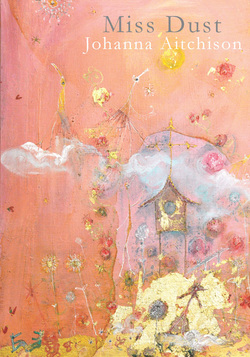
Poetry Shelf review: Johanna Aitchison’s Miss Dust – Simple, everyday cores of truth that have as much to do with how you feel the world as how you see the world

8507862    johanna-aitchison-for-web


Johanna is a poet who was living in Palmerston North (quite a hub of poetry activity!) but currently in Iowa. I haven’t read her debut chapbook from Pemmican Press, Oh My God I’m Flying (1991), but I really loved her second collection, Long Girl Ago (Victoria Press, 2007). The poems felt fresh, playful, finely crafted, and surprising in the little revelations, particularly in the poems that placed little frames on Japan. The book was shortlisted for best book of poetry the following year. Johanna’s new collection, Miss Dust, was recently released by Seraph Press. It is a collection in two parts with many bridges between, and the freshness, the economy and the diligent craft remain a vital feature.

What catches me with these new poems is the heightened degree of surprise. This is poetry tilted on its axis. The first section is devoted to a sequence that gives life to Miss Dust. When read together, the section forms a long narrative poem, or perhaps you could say, a long character poem in pieces. In trying to liken the startling effect of reading this life, I came up with a hybrid analogy: it is like an Eleanor Rigby portrait meets a Salvador Dali painting meets a dislocating dream state meets a short film by Alison Maclean meets Edward Lear meets a veiled memoir.

The idea of dust is ephemeral — it leaves traces and smears, it veils and it clouds. Perfect word for a character that hides behind tropes, white space and poetic jump cuts. The tropes are borderline surreal (‘The curtains of her house are ash’). At dinner with her online date, he ‘ordered for her the dark.’ Yet even though things are strange, it is the effect of the bridges and the gaps that augment the mood, the portrait, the arc of a life. Take ‘Miss Dust and the Affair.’ The little leaps from one thing to the next, from one action to the next, miss the gritty details that might pepper confession, exchanged story. The poem is mysterious and haunting, but if you lift out the stepping stones (that occur on other occasions throughout the book) you get a terrific story of love lost: affair kiss lips lines waves rocks cheeks. That story is the undercurrent of the poem, hiding in the dust. Miss Dust, herself, would sum up the undercurrent with two words (‘black heart’), words that crop up in a number of the poems.

The movement between things is also surprising or disconcerting in the poems and feeds into the crucial threads of loss and love and life. In ‘Miss Dust makes a promise to her black heart,’ every line seems to offer a new twist —  the way the dreaming mind takes the ordinary and then skews it to show a deep-seated feeling pulsing through.


Here is the cure: sitting

on someone else’s carpet,


she makes herself a promise,

with the help of a chisel


and a block of A4 refill.

She chips out a beach scene


three streets away, hammers in

stones that warm or cool


You can’t just read this poem and walk away. It holds you tight as Miss Dust walks into the beach scene and ‘lowers the plunger/ onto one more set of grounds.’ There is that jarring kink between the scene carved (hope, therapy, cure) that catapults the black heart to elsewhere and the chore of making coffee. For me, the word ‘grounds’ flicks and shifts. Yes, the coffee is ground (the daily chore/grind) but also, like the beach scene, ground is another place to lay down roots. To tend damaged roots. Soil, black like the black heart. A single word, and you can set up camp for hours.

I don’t know of a sequence in New Zealand poetry quite like this (maybe I got whiffs of the early surrealness of Gregory O’Brien). Reading and lingering in the half light of Miss Dust, is utterly moving as you fall between the gaps of her life.


The second half of the book is not Miss Dust but there is a similar degree of surprise, little echoes that seem familiar (the half house), the dislocating and then relocating pieces, the way nouns and verbs startle (‘I’m starting to skin your loneliness Miss Shoulder’). There is a stunning Japanese poem, ‘Jun,’ that pulls you back to the previous collection with its final, breathtaking stanza.


one of the saddest things i did in japan was to teach to jun’s photo

on his empty desk i asked the students to count the students

in the class the students said do we count jun


Johanna has delivered a new collection that never lets the dust settle (excuse the pun). Each poem reproduces a glorious jittery, shimmery movement between things, between actions and between things and actions. At the core of that movement: feeling. Yes, you enter a world that is, at times, a little like the bewildering jumps and turns of a dreamscape, but just as with the dream, you fall upon cores of truth. Simple, everyday cores of truth that have as much to do with how you feel the world as how you see the world. I loved this collection.


Seraph Press page

do like this poem by Ashleigh Young posted on The Spin Off’s Friday Poem

a regular feature at The Spin Off  … Friday is Poetry Day!

Ashleigh’s poem here

Poetry Shelf review: Jennifer Compton’s Mr Clean and The Junkie – a fabulous read – the kind of book you devour in one gulp


large_cleanjacket   large_cleanjacket   large_cleanjacket   large_cleanjacket

Jennifer Compton, Mr Clean & The Junkie Mākaro Press, 2015


Jennifer Compton’s new poetry collection, Mr Clean & The Junkie, is a fabulous read – the kind of book you devour in one gulp. It is a long narrative poem in four parts with a coda. Each section is written in couplets – shortish lines that deliver the perfect rhythm for the occasion. This is a 1970s love story set in Sydney (and briefly NZ), yet it is a love story with a difference. It reminded me a bit of Pirandello’s play Six Characters in Search of an Author, in that the stitching is on show — how you tell/show the story, along with the choices you make, is as much a part of the narrative as plot, characters and so. The difference here, though, it is like a poem in search of a character in search of a film director in search of character in search of a poem. Self-reflexive behaviour on the part of authors has been done to death in recent decades, so it has the potential to appear lack lustre. Not in this case. I loved the way the poetry is a series of smudges. A bit like the way life imitates cinema as much as cinema imitates life.

I spent ages on the first page. It got thoughts rolling. I loved the voice. I loved the intrusion of the director (we figure that out as we read) and I loved the way I kept putting the poem in the role of the camera (long shots to gain wider perspective or distance, tracking shots, surprising angles, refreshing views) or the editing suites with jump cuts and smooth transitions. Or sitting back and admiring the composition within the frame. Or tropes. The slow reveal.

The two main characters (My Clean and The Junkie) are definitely in search of flesh and blood, yet you can also see this as genre writing – a narrative poem that is part thriller, part whodunit, part crime writing. Then again it is part feminist critique and part postmodern explosion.


Here is a sample from the first page:


Our hero is discovered sleeping.

We find him as the camera finds him.


Our hero is dreaming of the white mouse

cleaning his whiskers in extreme close-up.


As he dreams we snoop about his habitat.

Everything is there for a reason and we will


see it from another angle before we reach The End.

I imagine ambient sound during the credit sequence.


The mouse begins to run the wheel because

the wheel is there under his paws.


The slow zoom out reveals the wheel is in a cage,

of course.


And fade to the floor-to-ceiling, slatted blinds,

chocked ajar,


looming over our man asleep on his futon.

What do they look like? Bars.


The writing is tight. The plot pulls you along at break-neck pace and then stops you in your tracks as the director’s voice pulls you out of plot and character with wry stumbling blocks.  Little flurries of sidetracks. Or how to proceed? The central idea’s beguiling (poem version of a film version of a love story), the dry humour infectious (after a curtain is pulled back to reveal a spectacular view of Sydney’s Harbour Bridge and Opera House: ‘If you’ve got it/ flaunt it.’). But there is poetry at work here. It is there in the cadence of each line, the end word and the rhythm. It is there in the use of tropes that arch across the length of the book in little delicious echoes. The caged mouse on the wheel stands in for the symbolic cage of the hero (his father’s expectations and life choices). Most of all, however, the poetry sparks and flicks in the white space; the bits that are left on the editor’s floor or the angles that the director chooses not to show. Things are hinted at. Significant events that give flesh to character are caught within a line or two. That white space, that economy, is what gives this long poem its magnetic pull.

The collection is released as part of Mākaro Press’s 2015 Hoopla series. The beautifully designed books share design features and size, and include a new poet, mid-career poet and late-career poet. The other poets this year are: Carolyn McCurdie (Bones in the Octagon) and Bryan Walpert (Native bird). Jennifer is an award-winning poet and playwright who has lived in Australia since the 1970s. She has won both The Kathleen Grattan Award for Poetry (This City, Otago University Press, 2011) and The Katherine Mansfield Award.

Reading Mr Clean and The Junkie is entertaining, diverting, challenging, laughter inducing. How wonderful that a poetry collection can do all of this. I loved it!

Poem Friday: Emma Neale’s ‘Origins’ … At the core, heart.


Origins


When my father made love to my mother

and their salts and foams seethed and lifted

so that a child washed up on their tides,

perhaps they held each other

in an old rotting villa with cracks and gaps

that let the rooms’ winter breath

unravel along the street

like spider silk adrift on the air.


Perhaps outside that house

an untrimmed, straggling macrocarpa

tossed in the wind like a woman in fever sheets

and the clouded sky came close and tight

as a fist screwing a lid on a jar

while nearby the city’s river cried deep in its bed,

birds circled but found they couldn’t alight;

as a chill hide of questions

grew a stubborn lichen

across the corroding, rented roof.


For there are days when the human heart

feels like spit rubbed in mud,

the mind a junk room

of broom handles and wheel-less prams,

must-stink chair nobody will sit in,

little black fly heads

sprinkled in a corner web,

ear bones of vanished mice,

single bits of faded jigsaws,

carpet littered with broken envelopes

addressees illegible,

and even when love creeps close

over the slanting floorboards,

sorrow drifts in with the smell of snow

clustered on its skin.


© Emma Neale

Originally printed in Landfall; appears also in Tender Machines (Otago University Press, 2015).

Author bio: Emma Neale works as an editor. On alternate years, she runs a one-semester poetry workshop at the University of Otago. She has published five novels and five collections of poetry, the most recent of which is Tender Machines (Dunedin: OUP, 2015).

Note from Paula: Usually in my Friday poem slot I have invited poets to write a note about their poem and I have added my own thoughts. Some poets are happy to provide sideways anecdotes or points of origin for their poems; others prefer to let the poems speak for themselves. I have no dogmatic stance on either option. Notes on poems can be utterly fascinating and provide unexpected roads into your reading. I don’t think they ever shut a poem down — as readers, when we press a poem’s start button, anything can happen. So I have decided to make the ‘note’ aspect of my  Poem-Friday feature flexible – taken up on a case by case basis.

This poem stalled me. It is the sort of poem I love to write about because it engages every part of my body — my eye, my ear, my heart and my mind. A poetry coup. Yet I wanted the poem to stand in its off-white space on the screen – shimmering, flickering on a cerebral and aural scale. Without my commentary. Intruding static. Yet I can’t help myself. Just a tad. I adore the loving craft of each line, the words and word connections that catch you by surprise, the surprise upheld like an internal beat, the way physical detail judders and then sets you off on memory tangents. At the core, heart.

This poem is the first poem in the book. Read it, and then you can’t wait to devour the poems that follow. Within the next weeks I will post a review.