Category Archives: NZ author

The NZ Book Council Lecture: Selina Tusitala Marsh on storytelling (limited spaces!)

Invitation to the 2016 Book Council Lecture, Fri 11 Nov, 6pm, National Library

The New Zealand Book Council invites you to join us for the 2016 NZ Book Council Lecture:

Tala Tusi: The Teller is the Tale
Delivered by Selina Tusitala Marsh

selina-marsh

Where: National Library of New Zealand, 70 Molesworth St, Thorndon, Wellington
When: Friday 11 November, 6pm
RSVP: This is a free event, but spaces are limited. Please email rsvp@bookcouncil.org.nz to secure your seat

This event is brought to you in partnership with the National Library of New Zealand.

The Samoan word ‘Tusitala’ means ‘storyteller’ – but what about its inverse, ‘tala tusi’, where the ‘teller is the tale?’

Poet and academic Selina Tusitala Marsh powerfully explores the relationship between our stories, ourselves, and the fate of our literature if we ignore the wisdom offered by ‘tala tusi’ in her remarkable 2016 New Zealand Book Council lecture.

The New Zealand Book Council Lecture has become a prominent part of the literary landscape in Aotearoa New Zealand. It provides an opportunity for one of our country’s leading writers to discuss an aspect of literature close to their heart.
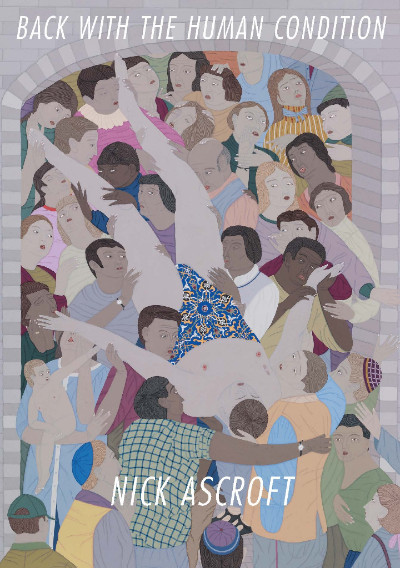
‘Daffodils Lip Sync’: A new poem in a new book by Nick Ascroft

Back+with+the+Human+Condition.jpg


Daffodils Lip Sync


I wandered longwise as a crab

that floats a ‘hi’ and flaps a claw

when on the wall I spied a tap

and hosed a golden Labrador.


* *


I wandered Langley with a cold,

like drones on high that veil the ill.

Vanilla white, we spies of old

would roast a cold in Benadryl.


* *


A squalid mauve miasmic cloud,

whose frozen height in ladles spills

one awful stench that flies enshroud:

your nose is blown, it’s daffodils.


©Nick Ascroft, Back with the Human Condition, Victoria University Press, 2016

Nick Ascroft’s new collection is in four parts: Love, Money, Complaints, Death. He exhibits an enviable linguistic palette with words on the lines languid, sideways darting, playful, ever playful, wriggling and exquisitely calm. You see all that in the ‘The Tide.’ Ascroft’s poems will sound good when read aloud; the poet resisting monotone, shifting then settling in surprising places, catching love and humour. I adored ‘A Hill’  – glorious in its slow contemplation, tender detail compounding. And ‘The Sad Goose,’ a concrete poem stamping the shape of a goose on the page. This book is a treasure trove of poetry delight; one to savour slowly to get the full dance of flavour on the tongue (or in the ear).

Nick and VUP have kindly granted permission to post ‘Daffodils Lip Sync.’ I love the idea of a poem in skewed lip sync with its predecessor. I laughed out loud, mesmerised next step by the word play, and the madcap images that buffet/buff the original.

After this brief sample, I recommend you get the book and read poems in altogether different but equally satisfying keys.


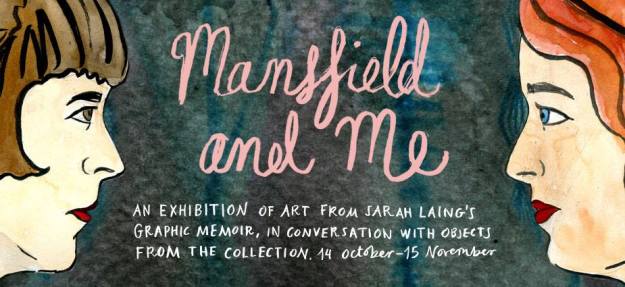
Sarah Laing is having birthday drinks for KM -and a wee art exhibition

14666302_10155250978158998_6133234775647848092_n.jpg

An invitation from Sarah Laing:

Friday night I’m having an opening at the Katherine Mansfield House & Garden! 25 Tinakori Road, Thorndon, 5pm, drinks and free entry into KM’s birthplace on the occasion of her 128th birthday. I’ve got pages of my manuscript pinned all over the wall, alongside objects from the collection. Come along!

To celebrate Prime Minister’s Literary Award: a poem by David Eggleton

35

Prime Minister’s Literary Award for Poetry 2016: David Eggleton

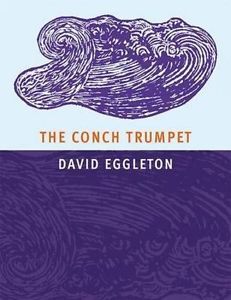
To celebrate David Eggleton’s well-deserved honour, here is a poem from his award-winning book, The Conch Trumpet. Having just watched the second presidential debate, reading this lucid lament was a perfect antidote to my allergic reaction to stupidity.

David has gifted us a sumptuous and kinetic weave of lines across decades. He dares to challenge. He makes words sing. He lets us into an idiosyncratic and  warm absorption of the world about him, whether it is back country or city streets. Read one of his poems, and you get to see the world a little differently. Hear him read one of his poems and you are shuffling on your feet. His poetry is a banquet of constant return.

Congratulations David!


Clocks, Calendars, Nights, Days


Bitterness of bees dying out,

honeyless clouds, forest drought,

red, yellow, charcoal’s grain,

eyes smarting from a world on fire,

air thick with grit; cleave to it.

                                      by clocks, calendars, nights, days


Bog cotton frenzy of winter

dancing erasures over hills,

leaf litter corrected by snow;

fog quickly swallows the sea,

then starts in on the shore.

                                  by clocks, calendars, nights, days


Skerricks of twigs skim high,

flung far from grips of fists;

remember to dip your bucket

deep into the morning sun,

but don’t drown in apathy.

                                    by clocks, calendars, nights, days


Then down in earth’s mouth,

a slow song about the rain,

as you heave from the dark

to hear a thunderous beat

clocking on the old tin roof.

                                         by clocks, calendars, nights, days


By fast, slow, high, deep;

by sing, dance, laugh, sleep;

by climb, fall, jump, walk;

by chance, breath, cry, talk;

by clocks, calendars, nights, days.

                                    by clocks, calendars, nights, days


©  David Eggleton, The Conch Trumpet, Otago University Press, 2015

Congratulations: David Eggleton wins Prime Minister’s Award for Literary Achievement in Poetry

davideggleton.jpg


The recipients of the Prime Minister’s Awards for Literary Achievement for 2016 have been announced today. Writers Atholl Anderson, Marilyn Duckworth and David Eggleton will each be awarded $60,000 in recognition of their outstanding contribution to New Zealand literature.

The three winners were agreed by the Arts Council of Creative New Zealand, based on public nominations and the recommendations of a selection panel. Atholl Anderson will be recognised for non-fiction, Marilyn Duckworth for fiction and David Eggleton for poetry.

Arts Council Chairman, Dr Dick Grant, says, “The Prime Minister’s Awards for Literary Achievement differ from other prizes in that they recognise a career and a significant body of acclaimed work, rather than a single work of literature. The contribution of nominees to the literary community over time is also taken into consideration.”

Dr Grant says, “I congratulate these wonderful authors on their selection for this prestigious award. It’s important that we honour New Zealand writers in this way, to recognise achievement at the highest level, but also to inspire young writers to envisage a writing career for themselves that will continue to build on this literary legacy into the future.”

The awards will be presented at a ceremony at Premier House in Wellington, on Wednesday 12 October.

The Prime Minister’s Awards for Literary Achievement were established in 2003. Every year, New Zealanders are invited to nominate their choice of a writer who has made a significant contribution to New Zealand literature in the genres of non-fiction, poetry and fiction. New Zealand writers are also able to nominate themselves for these awards.

Nominations are assessed by an expert literary panel and recommendations forwarded to the Arts Council of Creative New Zealand for approval.  This year’s selection panel was Jock Philips (Chair), Jill Rawnsley, John Huria, Morrin Rout and Murray Edmond.

A full list of previous recipients can be found on the Creative New Zealand website.

Creative New Zealand and Unity Books invite you to a free literary event

The recipients of the 2016 Prime Ministers Awards for Literary Achievement will read and discuss their work with broadcaster, Kathryn Ryan.

This is a free event at Unity Books, 57 Willis Street, Wellington on Thursday 13 October, 12-12.45 pm. All welcome.

Additional notes: author biographies

David Eggleton (Dunedin). David Eggleton has published eight collections of poetry, most recently The Conch Trumpet, which was the winner of the Ockham New Zealand Book Award for Poetry in 2016. He is well-known as a performance poet and as well as his poetry appearing in numerous anthologies over a long period of time, he has also been involved with many documentaries and recordings of New Zealand poetry. While continuing to produce his own poetry, Eggleton also gives back to the New Zealand poetry community by editing both Landfall magazine and Landfall Review Online. As one of his nominators commented, ‘he has, for over 30 years, made a vital contribution to the poetry community throughout New Zealand.  He is truly a bard, a bard with street credentials. He sings our nationhood.’

Marilyn Duckworth OBE (Wellington). Marilyn Duckworth has a long history of publishing fiction. She has published 16 novels, a novella, a collection of short stories, a collection of poetry and her autobiography. Duckworth has received numerous awards, fellowships and residencies over the course of her career including the Katherine Mansfield Memorial Fellowship to Menton, the Victoria University Writer-in-Residence, the Auckland University Writer-in Residence and, more recently, she has been the New Zealand Society of Authors President of Honour. Duckworth has also been active in the literary community as a mentor and support to many writers and she has been a Trustee on the Katherine Mansfield Memorial Fellowship Trust for many years.

Professor Atholl Anderson (Ngāi Tahu, Blenheim). Atholl Anderson CNZM, FRSNZ, FAHA, FSA is an outstanding writer, researcher and communicator who has carried out many years’ research throughout the Pacific and Indian Oceans. He has directed numerous archaeological excavations, published prolifically, and been the recipient of many awards including the 2015 Humanities Aronui Medal from the Royal Society and the 2016 JD Stout Fellowship. He has made a significant contribution to tribal history in southern New Zealand, with books such as The Welcome of Strangers (1998) and Ngāi Tahu: A Migration History, edited with Te Maire Tau (2008). He is an Emeritus Professor at the Australian National University, Adjunct Professor of History at the University of Canterbury and Honorary Professor of Anthropology at the University of Otago. His publications include Tangata Whenua: An Illustrated History, with Judith Binney and Aroha Harris, which won the Non-fiction award at the 2016 Ockham New Zealand Book Awards. This book has also won several other awards over the past year.

Book Launch: My Father’s Island: A Memoir by Adam Dudding


74b02a7e-38ba-401e-a36d-6c4f93c3c35f.jpg

Victoria University Press warmly invites you to the launch of

My Father’s Island: A Memoir
by Adam Dudding

on Thursday 10 November, 6pm–7.30pm
at Time Out Bookstore
432 Mt Eden Rd, Mt Eden Village, Auckland

paperback, $35

Plucky young upstart: An interview with Holly Hunter about Mimicry by Sarah Jane Barnett


13582111_855436247934556_6405324545644315713_o.jpg


For the complete interview on Sarah’s blog go here.

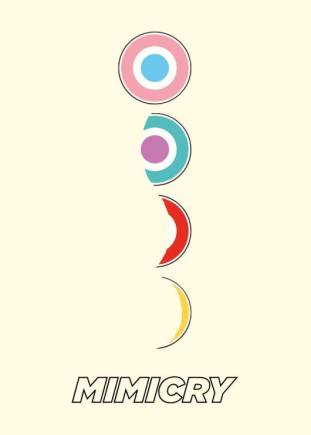
Mimicry is a new Wellington-based literary and arts journal with poetry, fiction, nonfiction, visual art, and even music. It’s the brainchild of Holly Hunter, Assistant Editor at Victoria University Press. This week I had the pleasure of talking to Hunter about the journal, editing her friends, and what she sees happening in young writers’ work.

Sarah Jane Barnett: The journal’s opening page states that ‘Mimicry 1 is an act of nepotism,’ and that your contributors are your ‘incredibly talented and creatively driven friends.’ Tell me where the idea for the journal came from, and about the process of putting Mimicry together. I think many creative people have late night ideas, but most don’t go ahead. I’m glad you made this one happen – it’s a great read. What inspired you to make it happen? Was it difficult to edit and select work from your friends?

Holly Hunter: The opening page is as much a joke as it is a disclaimer, because I think most New Zealand journals are cliquey and nepotistic. In fact the journal was almost called Nepotism, but I backtracked when I realised that poor, well-meaning contributors would forever have it on their record that they were ‘published in Nepotism’—which isn’t exactly an impressive addition to a bio. If nothing else, I want to make a habit of pretentious, grandiose and controversial opening pages that either make the reader laugh or slam the journal shut. Journals could do with more character, I reckon, to live and breathe in their own right alongside the work.

The drive behind Mimicry was less calculated than how I think it’s been received. More than anything it was born from a sappy place of admiration for the people I know who live and breathe their creative side-hustles and deserve a space to display their work. But Mimicry also partly comes from a place of frustration with what I sometimes worry is a vortex of a literary environment. I like reading things that feel raw and contemporary, like they could spin out of control and off the axis, or that don’t care how they’re read but, at the same time, are tight and controlled. Mimicry’s approach isn’t entirely new; the chapbooks, journals and zines of Jackson Nieuwland and Carolyn de Carlo have been doing edgy, fresh things for years. One of their chapbooks, Bound: an ode to falling in love (Compound Press), is a diary of love poems from the perspectives of Kim Kardashian and Kanye West. Zines like theirs, and journals like The Lifted Brow, showed me what something like Mimicry could look like. It probably also helps that I’m a plucky young upstart with no sense of responsibility or consequence.

My SST Jenny Bornholdt review

Selected_Poems_Jenny_BornholdtRGBweb__66924.1464840641.220.220.jpg    Selected_Poems_Jenny_BornholdtRGBweb__66924.1464840641.220.220.jpg


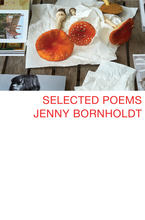
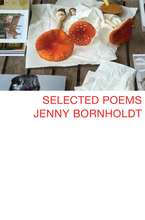
Selected Poems
Jenny Bornholdt
Victoria University Press, $40

Jenny Bornholdt, a former New Zealand Poet Laureate, much honoured and widely loved, has published nine poetry collections and a number of chapbooks. She has also co-edited an edition of love poems and the award-winning Oxford Anthology of New Zealand Poetry in English.

Victoria University Press has recently released an exquisite hardcover edition of her Selected Poems. The beauty of returning to the start of a poet’s work and traversing the contours of a writing life is to experience the delight and wonder of the poetry all over again.


for full review go here

Nick Ascroft and VUP launching Back with the Human Condition – dips so far, very tasty!

0b3bedb4-eac1-4441-a2e8-44cd666aa290.jpg

Victoria University Press warmly invite you to the launch of

Back with the Human Condition

by Nick Ascroft

on Monday 10 October, 6pm–7.30pm
at The Guest Room, Southern Cross Bar
39 Abel Smith St, Te Aro, Wellington.

Books will be available for purchase courtesy of Vic Books. p/b, $25.