Category Archives: NZ author

Poetry Shelf Winter Season: Poets off-piste


IMG_4387 (1).jpg


For Poetry Shelf’s Winter Season, I invited 12 poets to pick one of their own poems that marks a shift in direction, that is outside the usual tracks of their poetry, that moves out of character, that nudges comfort zones of writing. It might be subject matter, style, form, approach, tone, effect, motivation, borrowings, revelation, invention, experimentation, exclusions, inclusions, melody …. anything!

Coincidentally, I heard Bill Manhire talk at AWF17, and I liked the way he put it. He discussed the way he encouraged students to ‘jump the tracks, to go sideways from themselves’ and, out of this, produce poetry that mattered to them and would somehow be their own. He also talked about the way he wrote short stories to turn sideways from the comfort track he had settled into with poetry.

I have borrowed the ski analogy because there is something wonderful about heading sideways from the well-skied track to snow that is altogether more risky but offering surprising rewards.

I will be posting poems over the next fortnight.

Tim Upperton critiques Manifesto Aotearoa at Pantograph Punch

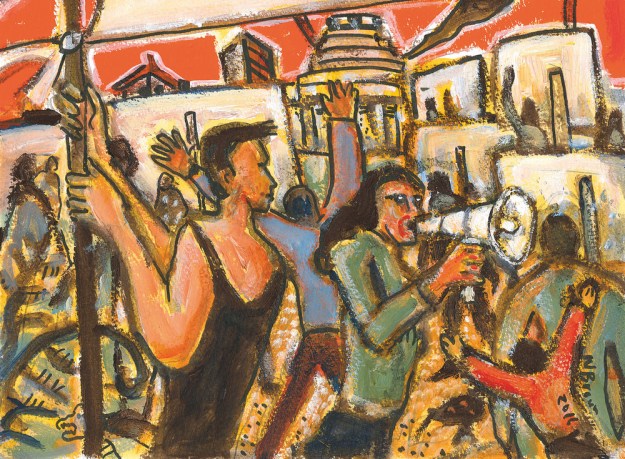
Manifesto_feature.jpg


Full review here. This is terrific writing that raises issues on poetry and the whole business of political poetry.  I realise that statement is ambiguous – so take it to mean both the review and the anthology!


Two cheers for democracy: A review of Manifesto Aotearoa


‘One hundred and one political poems, by nearly one hundred and one poets – who knew we had so many? Yet it’s odd, in an anthology as generous and inclusive as this, how you notice who’s missing. It’s a shame that outstanding political poetry from the past is outside the ambit of this book – the broadsides of Whim-Wham, Glover, Baxter, Fairburn and Frame would have provided a rich historical context for this contemporary offering.

Co-editor Philip Temple rightly points out that there’s another anthology-in-waiting here. I particularly missed Bill Manhire’s ‘Hotel Emergencies,’ and among other practising poets, I also missed Helen Lehndorf, Jenny Bornholdt, Ashleigh Young, Hinemoana Baker, Stefanie Lash, Bob Orr, Tim Jones, Sarah Jane Barnett, Sam Hunt, Helen Heath, and Apirana Taylor (there’s an excerpt from Taylor’s ‘Sad joke on a marae’ in Temple’s introduction). But this is an invitation-to-submit volume rather than a survey of what’s already out there in books, magazines and online, so maybe some poets simply missed the memo. (I missed the memo.) And maybe some poets just don’t have a political poem in them. But maybe every poem is political. And if that’s too woolly and undefined, then what is a political poem, exactly?


‘Poetry on the page, in New Zealand at least, seldom raises its voice, so when it does, you prick up your ears and listen.

But the strident, raised voice of many of the poems here also bothered me.’

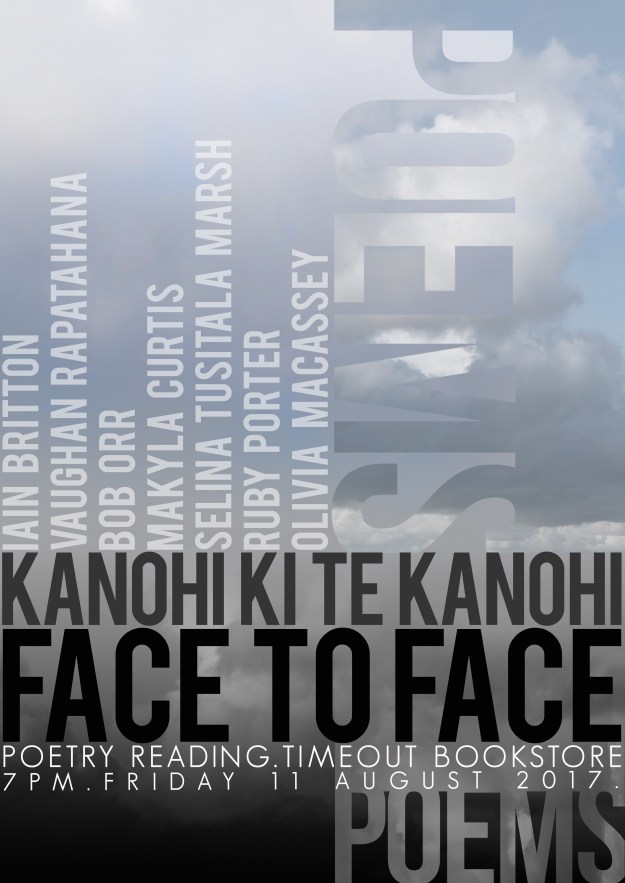
Kanohi ki te kanohi – Face to face: stellar poetry reading at TimeOut Bookstore

Face to Face Poetry Reading - Friday 11 August 2017.jpg

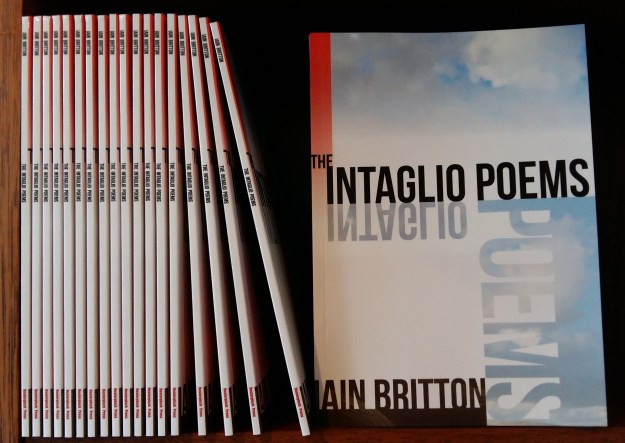
The Intaglio Poems.jpg

Also a chance to celebrate the arrival of Iain’s new book.

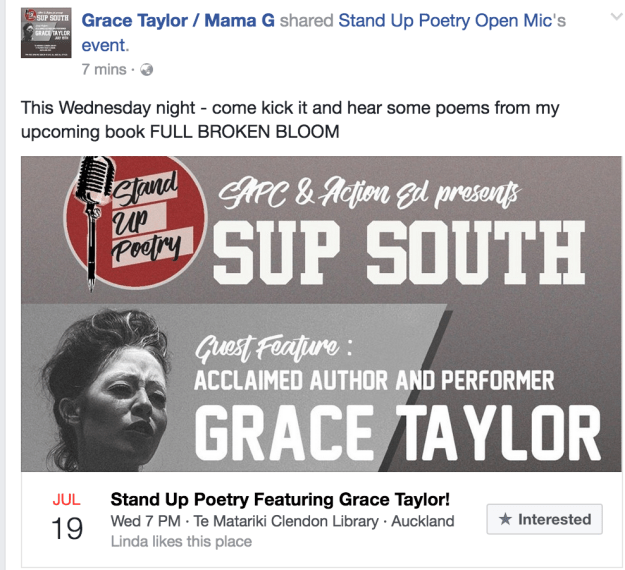
Fabulous Grace Taylor to give taste of new book Full Broken Bloom

Screen Shot 2017-07-17 at 10.56.11 AM.png


The original South Auckland Open Mic is back and we have an amazing feature!

Calling all poets, MCs, spoken word artists and people just looking for a good time! Drop a new piece, an old piece or bring a beat for the DJ to play and drop a verse!
Sign up 15 minutes before.

Koha

Grace Taylor, mother, poet, theatre maker, performer. Writer of poetry theatre show MY OWN DARLING with Auckland Theatre company, author of AFAKASI SPEAKS and upcoming book FULL BROKEN BLOOM with Ala Press, Hawaii.

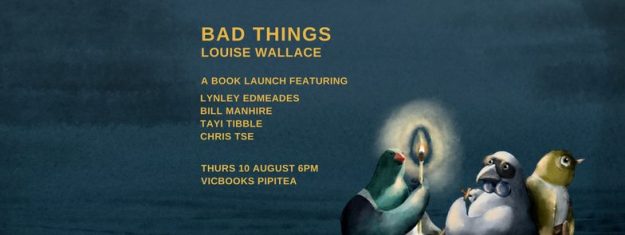
Louise Wallace & guests to launch her new collection August 10th

Sad to miss this event! Glad I get to read to the book!


20046639_10159006640045402_1957579315497457026_n.jpg


Screen Shot 2017-07-15 at 5.01.22 PM.png

Book launch for BAD THINGS: a new book of poems by Louise Wallace. With readings from Lynley Edmeades, Bill Manhire, Tayi Tibble and Chris Tse. All welcome.

Books by all authors available for purchase on the night, along with limited edition cover art prints by Kimberly Andrews.

Drink, nibble, get your books signed and be merry.

VUP page


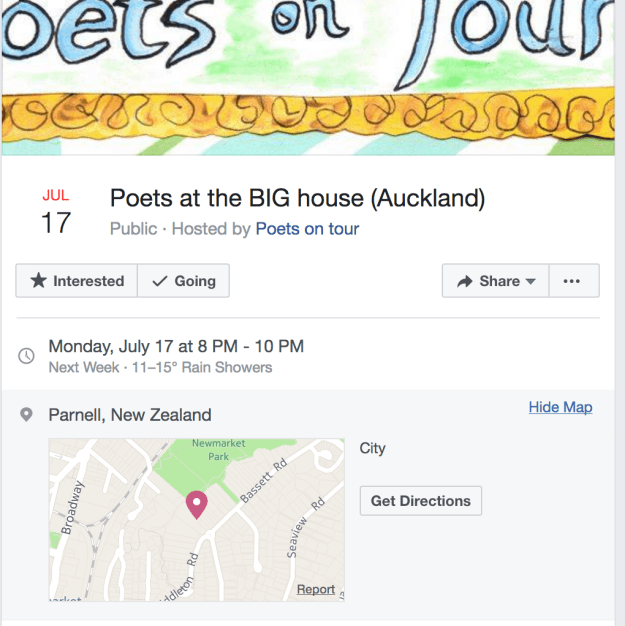
Poets on Tour: McMillan & Beautrais at the Big House in Auckland

Screen Shot 2017-07-13 at 9.23.03 AM.png

‘Poets at the big house. Airini Beautrais (brand new book ‘Flow: Whanganui River Poems’, Maria McMillan (brand new book ‘The Ski Flier’, Tulia Thompson and possibly an awesome guest who I don’t have confirmation of when I created this invite but she’s awesome and I’ll update when we know. Bring wine (or not), sit by the fire, listen to us read things, watch us perform things. We’ll sign our new books (cash sales only).’

Note from Paula: Not sure of exact address

Some details here on Facebook

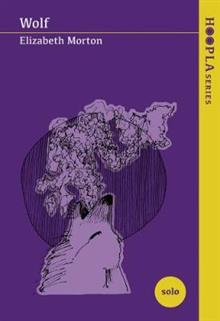
Elizabeth Morton’s Wolf: ‘Wolf goes to suburbia’

9780994137821.jpg

Wolf, Elizabeth Morton, Mākaro Press, 2017


Elizabeth Morton’s debut collection is a mysterious, eye-catching, sound-catching read, with piquant detail and a poetic net that catches all manner of things – the light and the shade. I was particularly drawn to the opening sequence of poems featuring Wolf. Wolf is ‘a critter of humanity’; he is an outsider, an outcast, living on the edge and off scraps. The writing is assured, pungent and rich in atmosphere. I love the way Elizabeth deliberately slows things down, like a raconteur, so the art of the storyteller infuses the poetic line. As a reader, you pay attention to the amassing detail that startles and shines. I also like the way the lower-case letters that precede full stops is like a little hiccup or start on the line. It shifts the fluency and is akin to looking at a view where things pop in the corner of your eye.


Wolf goes to suburbia

rubbish bags hunch in
deathrow orange. yogurt pots
tickle the gutter pit.
newspapers suck asphalt.

like everything else,
Wolf is a shambles –

hide all a-scab with
the nippings of fleas.
skull abuzz with the
echoes of home-

the belchings of elk,
the titterings of muskrats.

today Wolf is a critter
of humanity.

where gophers whistled
trucks now vroom.
where hornets rattled
traffic lights now click

into the emerald of his
mother-world.

Wolf mouths his way
into a rubbish bag.

the yellow night
covers him like a rash.


© Elizabeth Morton 2017


Elizabeth Morton is a poet, fiction writer, and reviewer from Auckland. Her poetry and prose are published in New Zealand, UK, USA, Australia, Canada and online. She is the feature poet in the Poetry New Zealand Yearbook 2017. Her own poetry collection, Wolf, was published by Mākaro Press (2017). In 2013 she was winner of the New Voices Emerging Poets competition. She was shortlisted for the Kathleen Grattan Award (2015) and was, twice, 2nd place in the Sunday Star-Times Short Story Competition (2015, 2016). Her flash fiction was selected for the international anthology, The Best Small Fictions 2016.

Side-projects include: collecting obscure words, penning bad rap music, studying the brain, and exploring the coastal rock pools. She likes to write about broken things, and things with teeth.


Mākaro Press page

Emma Shi’s review at The Booksellers

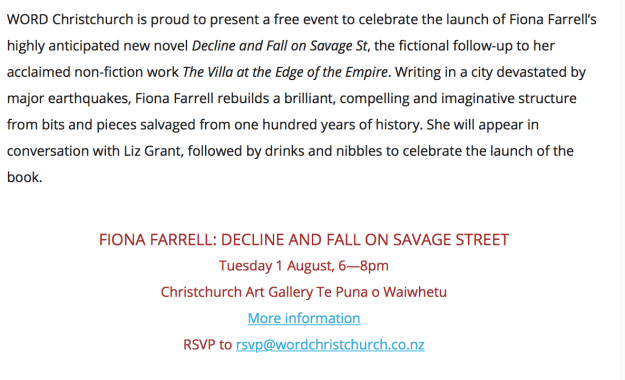
from E-Tangata: Paula Morris in excellent conversation with Dale Husband

Paula Morris: Our Māori writers are free to write whatever they want


I suppose there’s the question of what constitutes a Māori story. And whether a Pākehā can write a Māori story.

Generally, when I talk about Māori literature, I’m talking about writers who are Māori. To me, if you’re a Māori writer, you’re part of Māori literature — no matter what you’re writing. Overseas, people understand that. If Ernest Hemingway is writing a book in Spain — he’s still an American writer. If Graham Greene is writing a book set in Haiti or Cuba — he’s still a British writer.

Here, sometimes I think that, because our literature is younger and a bit more anxious, we worry about who’s in and who’s out. I do think really good Pākehā writers can write a Māori story if they really understand what they’re writing — and if they have the empathy, imagination, and skills, and if they’ve done their research. Then, yes. Absolutely.

And, of course, Māori writers can write about whatever the hell they want to. So Kelly Ana Morey can write about a racehorse in a book largely set in Australia — and still be part of Māori literature because she is a Māori writer. Our national literature is like other art. It’s to do with the painters or the sculptors themselves. It’s not to do with the actual work having to fit a particular theme or subject.


Full interview here

Flow: Whanganui River Poems – Airini Beautrais’s poetry launch

Nau mai, haere mai. Come and help celebrate the launch of Airini Beautrais’s new collection, Flow: Whanganui River Poems.
Featuring stories from the catchment, river and town.
Shipwrecks, floods, soldier-settlers, surveyors, missionaries, protests, poets, petrolheads, deviants, sly-groggers, environmentalists, heroes, anti-heroes and complicated characters.

With readings by Airini, Maria McMillan, and special guests.

All welcome. Drinks and nibbles will be served (in adjacent space as food and drink can’t be consumed in the museum. Please do not bring these items).

Screen Shot 2017-07-05 at 12.51.24 PM.png