Category Archives: NZ author

Poetry Shelf in conversation with Anna Jackson

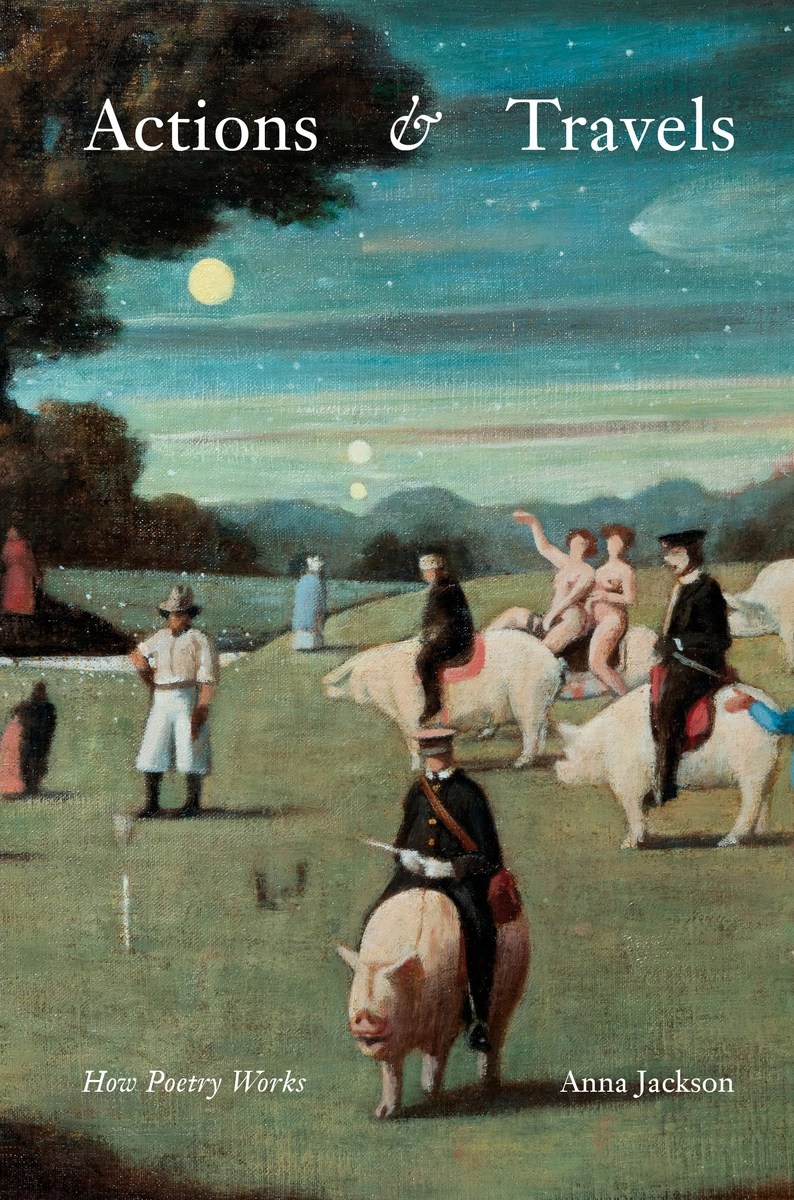
In 2022 I aim to have email conversations with poets whose work has inspired me over time. First up, Anna Jackson. Very apt, as Anna’s new book, Actions & Travels: How Poetry Works, is published by Auckland University Press today.

Right from the start Anna’s poetry has touched a chord with me. In the early poems, the litheness on the line, the measured wit, the roving curiosity captivate, as in AUP New Poets 1 and The Long Road to Teatime (2000). In The Gas Leak (2006) Anna steps into narrative, but family remains in acute focus. There is a humaneness at work, little wisdoms, a playful yet serious pushing at familial boundaries. When Pasture and Flock: New & selected poems arrived in 2018, I admired the new growth, myriad viewpoints, shelter and flight. We discussed poetry and the Selected Poems in a Poetry Shelf interview.

Paula: Not long after my debut poetry collection Cookhouse appeared (1997) you popped a note in my pigeon hole at the University of Auckland inviting me to afternoon tea. We meet up for the first time and have been sharing afternoon tea ever since, exchanging thoughts on poetry, what we read and write, the world at large and the world close at hand.

To celebrate the arrival of your book Actions & Travels: How Poetry Works, I thought a slowly unfolding email conversation as I read the book would be perfect.

I love the title because it underlines the way poetry is full of movement. I also like the open-spirited ‘how poetry works’. I started listing verbs under the umbrella word, ‘works’: sings, captivates, challenges, narrates, mystifies, dreams, soothes, astonishes, functions. Was it hard settling upon a title?

Anna: I still love Cookhouse, I used to carry around my copy of it so I could read an afternoon tea poem wherever I was in the day.  Yes, movement is exactly what I love in poetry, movement and pace.  The title comes from a quote I love by Anne Carson, from an interview with her, in which she calls a poem ‘an action of the mind captured on the page’, an action that the reader has to enter into, and move through – so that reading poetry is a form of travelling.  Actions and Travels was my working title for the book from the start, but I did try to come up with something that would be a bit less obscure.  Instead, the subtitle has had to make it clear that this is a book about poetry.  ‘Works’ is a very functional sort of word, less poetic than sings, or mystifies.  But when I’m writing poetry myself that is what I am looking for, whether the poem is working or not.   

After I’d finished the book, and was editing the final chapter for the last time, a chapter about the poet’s invisibility, and a poem’s flights, I thought Flight and Invisibility could have made a good title for the book.  But I like the more prosaic quality of Actions and Travels too.
Paula:  Before I move onto the book, is there a poetry book (or two) you have carried with you in the past few months or so?

Anna: Oh, there is, actually – Anne Kennedy’s The Sea Walks into a Wall (AUP).  It is a collection that fits different spaces of time, with some shorter poems and some longer poems, so I am quite often picking it up again, and the longer poems in particular I return to at different times.  They repay rereading and the collection as a whole also gains in substance and resonance with rereading.  It has been a good summer book, and a good counterweight to the Knausgaard novels that have been my other summer obsession.

Paula: I am fascinated how a poetry collection reaches us in different ways over a period of time. In the introduction to Actions and Travels, you discuss John Keats’ brilliant short poem and the hand reaching out: ‘I hold it towards you’.  This is poetry. I always think of the bridge I cross as I enter a book. So many ways of crossing, sometimes impossible, so many different bridges. I am thinking of the Bridge of Wonder. The Bridge of Knots. The Bridge of Song. Heaven forbid The Bridge of Dead Ends. What matters to you as you enter a poetry book?

Anna: Different things matter according to the book – I suppose it depends on what mattered to the poet. Wonder, knots and song – those are all things that might draw me in.  I was talking to artist/curator Nathan Pohio about the importance of grit in writing and thinking – it was what he was working to include in his own writing – and I thought this was such a good word, something that slows you down and maybe even hurts a little bit, something that makes you need to bring something of yourself to the experience.  Grit rather than a dead end – something that invites collaboration and involvement rather than shutting you out.  But not something too smooth, either – not something you are forgetting as you read it.

Paula: Collaboration seems important. Openings for the reader rather than closures. When you first came up with the idea for Actions and Travels, what sort of things did you hope it would do. From my early stage of reading, I am finding it a source of openings and inspiration. It prompts me to action as a writer and travels as a reader, and vice versa.

Anna: I hoped it would allow readers to take some time over some poems I love, some of which they might already know, some of which may be new discoveries for them.  A lot of people I talk to don’t read poetry but read novels or non-fiction, books they can be immersed in.  Part of what I love about poetry is what a quick reading hit it can give you, how you can come across it on social media, in magazines or on posters and be instantly transported.  And poetry is reaching more and more readers this way.  But Actions and Travels offers a slower reading experience for readers who want to follow my own responses to the poems I read.  I hope readers will also want to stop and think about their own responses to the poem and be interested in any differences there might be between their own initial responses and my own.  I hope slowing down the reading, and returning to some poems that might already be familiar, will also make space for the poems to resonate deeply, and maybe continue to haunt the reader after the book is finished.

Paula: I was thinking similar things when I wrote Wild Honey. I love the way poetry can fit in small moments, in a pocket, a bag, or while you drink morning coffee. Long poems are immensely pleasurable, but short poems equally so. Bill Manhire sent me a poem he recently had published in PNReview, and I haven’t stopped thinking about it. It’s musical, enigmatic, physical, a haunting Covid snapshot. Tell me a short poem you have read recently that has lingered in your mind.

Anna: Yes, I loved the way Wild Honey gave us time with each of the poems you discussed, and with the poets too – I loved the way it brought the poets into the picture with biographical details.  Actions and Travels doesn’t have the same scope but I hope it does open space up in a way that is a little bit similar.  As for a short poem, for brilliance with brevity my favourite poet would have to be Lydia Davis, and the short poem of hers I think of most often is ‘Improving my German’, which goes like this: 

All my life I have been trying to improve my German.
At last my German is better
—but now I am old and ill and don’t have long to live.
Soon I will be dead,
with better German.

And the poem I’ve been talking most about lately is Erin Scudder’s Jewel Box.  It is definitely the best poem about grit I can think of.  It can be found in Sweet Mammalian Issue 8.

Paula: I love ‘Jewel Box’. It has got me thinking of poems in this way. Yes as jewel boxes, but also the grit that rubs against you. There’s the ‘peach meat’ and there’s the grit. Glorious. As I said long poems are equally rewarding. I wrote long poems when I was doing my Doctorate and my daughters were young, as I felt I could fit something big in small moments. Your long-poem chapter is entitled ‘Sprawl’ and that is so fitting. I am thinking of the way your ‘I, Clodia’ sequence (can I call this a long poem?) both sprawls and concentrates on small poems. Clodia’s voice is the connective tissue. And I am also thinking of The Gas Leak. I see grit and peach meat in both these projects. What draws you to the long poem? Do you like writing them?

Anna: I think of ‘I, Clodia’ and ‘The Gas Leak’ in terms of sequence rather than sprawl, because of the concentration, as you say, in each of the small poems.  Every poem of those sequences I think of as quite tightly wound.  I did love having the space that the sequence gave to build narrative and to develop ideas over its course.  That is what sprawl offers too but I think of the sprawling poem as having more looseness and more fluidity to it, so it can be very relaxed, open and looping.  I don’t think I’ve ever really written a sprawling poem though I would like to try.  I love your ‘Letter to Anne Kennedy’ which I include as an example of sprawl for the way it unfolds so loosely and easily across the pages.  There are patterns too, an intricate architecture of departures and returns, repetitions and echoes, and shifts in perspective, but they are very unobtrusive.

Paula: ‘Tightly wound’ is apt – and it also resonates with wound/ injured. ‘Resonates’ is a word you explore in ‘Simplicity & resonance’. If the stars align in a poem for a reader, it resonates – as in the examples you navigate. I find I am reading the book at a snail’s pace because of the interior resonances. The way I stall on a poem, and then want to read more of Emily Brontë, Robert Frost, Bill Manhire, Rebecca Gayle Howell, Eileen Duggan, William Butler Yeats (or return to). Yet I am also compelled to keep reading – as I might with a detective novel -regardless of what else needs to be done. Did you find this book a challenge to write? It seems to be a book written out of deep love for the subject matter and that shows.

Anna: Resonance is interesting to think about because as you say it depends on the relation between the reader and the poem – what resonates for one reader may not be what resonates for another – but also on how the poem sets up the possibilities for resonance.  So it is both internal to the poem and external to it – the way the thought of a wound or injury is suggested by the word wound as in wound up, but is not actually present in the phrase tightly wound. I wondered at the time, actually, about writing “wound up” instead of tightly wound, because I didn’t particularly want the association with injury to come into play, but then I thought, tightly wound is better – it is how you might describe a person, a mood, whereas wound up suggests clockwork, something more mechanical, and something wound up in order to then do something else.  And I thought, after all, there is also some kind of injury or wound at the heart of each of those narratives. 

Language is complicated!  And part of the beauty of poetry is how the poet works with all those complications and manages the interplay of associations.  That is what I loved most about writing the book, the close attention it made me pay to all these sorts of details in the poems I was reading.  So yes, the writing was totally driven by my love of the poetry.

Paula: It shows. Your sentences are exquisitely crafted. There is a fluency about the book that invites the reader in. I like the way the footnotes are not evident until you see the notes at the back. This is a book of ideas but it resists academic jargon and theory speak. What were your thoughts on how you would write it?

Anna: I loved it when you said, earlier, that you were reading it like a detective novel!  It doesn’t have a lot of plot or suspense but I did want readers to be able to follow my thinking and my reading.  So yes, instead of footnotes there are notes at the back you only need to refer to if you want to know where a quote comes from.  For the same reason, I cut back on references to other critics, so that each chapter would just be shaped by my own thinking and observations.  There are times when another critic’s reading really helps me make a point of my own.  I give Edward Hirsh’s account of his childhood reading of the Emily Bronte poem because it is such a good example of how resonance can come both from inside and outside the poem – the experience he brought to it, the idea that his grandfather was talking to him through the poem, was his own experience, but the ways the poem allowed that sense of being haunted and the ways it conveyed the exact sense of loss he felt are very specific to the poem, with its stormy scenery, insistent rhythms and echoing rhymes.  So some critics are referenced but it is mostly just my own voice, talking my way through the poetry, as the discussion of one poem leads to the introduction of the next, to develop an idea about the political work a poem can do, for instance, or what is going on when poets translate or rework poetry from the past.

Paula: I love the way you weave in the voices of other critics. To me these appearances service connection and building rather than dismantling and disconnection. If as poets we write on the shoulders of the poems and ideas that have preceded us, we also write within the ‘fire’ of the present and the urgency of the future (as you explore). We reach out to the established poets and we listen intently to the new and younger voices. I found I had to leave things out of Wild Honey and it kept me awake at night (chapters, poets, poems). Did you have similar struggles and pain?

Anna: Yes, I did, although Actions and Travels is a very different book.  Wild Honey is so inclusive and so wide-ranging and comprehensive an account of women’s writing in New Zealand, you can include so many more poets than I had the space for, and write about their work in so much depth and detail, but even though the book is so inclusive I know how much you agonised over the limits even to so large a book.  In some ways it is harder, when a book is so inclusive, to leave any particular poet out.  Actions and Travels is so much smaller and it covers poetry from the US and UK as well as New Zealand, and goes back to the sixteenth century and even earlier, much earlier in the case of Sappho.  So there was no way I could include every poet who is important to me, or even all my most absolute favourite poems.  There are absolute touchstone poets I left out, like Stevie Smith, Anne Kennedy, Lydia Davis, Seamus Heaney, Robert Sullivan, to name just a few, and poems I often return to that are not in the book at all, or are mentioned briefly in passing, like Gerard Manly Hopkins’ ‘Oh, the mind, the mind has mountains’. 

I did begin with an idea of some of the poems I wanted to include, but I allowed the readings in each chapter to suggest connections between poems, and I wanted observations to be able to develop into arguments or extended thoughts on how poetry can sustain the particular qualities I was finding in it, so often the poems are chosen for how well they illustrate an idea I am exploring, or how well they fit in the chapter between two other poems.  It isn’t a canon-building or a curatorial exercise, just a free-flowing discussion of poetry and ideas.  Having said that, I do love every one of the poems that I have included, and I do think they make a beautiful collection together in the book. 

Paula: I love the addition of writing prompts linked to each chapter at the back. I really like: ‘Find the words that resonate with you – at a paint shop? In a fabric shop? In a knitting pattern? Put one or more of these words in the centre of a short poem.’ Have you tried any of your prompts?

Anna: The poetry prompts are meant to be taken lightly, tried out to see if anything comes of them.  They are a way of setting the writer on a different course of thought than they might have been on.  If you write with a loose grip on the instructions and let the writing go wherever it wants to, it will probably arrive at some concern or obsession of your own or draw on something of your own life, but coming at it from a different angle may lift your own story into something both stranger and perhaps more universal.  Some of the poetry prompts are based on how I wrote some of the poems I’ve written – describing a physical action in such detail it becomes metaphysical (‘Evelyn, after apple-picking’), adding the word ‘Dear’ to turn a poem into a letter (‘Dear Tombs’), adding rhyme to turn free verse into terza rima (‘Dear Tombs’ again, and ‘Eleanor at the beach’), adding in elements to the scenario in Sappho’s love triangle poem (‘Being a poet’), some of the others too.  But I haven’t actually started with any of my own prompts, to generate a new poem.  I really should try them out. 

Paula: I am particularly drawn to the ‘Poetry in a house on fire’ section as it seems apt for the difficult times we share – what with pandemic, protest, looming war, poverty, despair. Locally, globally. You turn to the poetry of younger writers such as Ash Davida Jane and Tayi Tibble (and yes, more established writers), and it excites me. I take heart from these younger poetry voices. I find poetry is so important at the moment. I want Poetry Shelf to be a place of connection and celebration. The edgy grit along with the soothe. What gives you solace at the moment? How does poetry fit into this ‘house on fire’? 

Anna: Yes I think poetry is particularly important in turbulent times, both as solace and as a kind of resistance.  Poets are writing more politically now I think than when I began publishing poetry, maybe because social media is already bringing together the personal and the political, maybe because these are such turbulent, politically charged times, though I also love, too, the way poets like Tayi Tibble and Ash Davida Jane are so funny even when they are at their most political.  The poems that I find most soothing when events in the world are most overwhelming are poems of quiet but implacable resistance or refusal, there’s a kind of humour but it is very astringent.  There was a time I wanted to read Robert Lax’s 1966 poem ‘The port was longing’ over and over again, as a kind of meditation,  not of acceptance but of refusal.  At the moment, Ilya Kaminsky’s ‘We lived happily during the war’ has a terrible resonance.  His reading of it is extraordinarily powerful.  It certainly isn’t soothing, it is terribly disquieting, raising such a difficult question of how to live in times of crisis.  Does happiness become immoral?  Poetry insists not only on an ethical but on an emotional response to such a question.  I don’t think we ever want to let go of feeling. 

Anna Jackson is a New Zealand poet who grew up in Auckland and now lives in Island Bay, Wellington. She has a DPhil from Oxford and is an associate professor in English literature at Victoria University of Wellington.

Anna made her poetry debut in AUP New Poets 1 before publishing six collections with Auckland University Press. Her most recent book, Pasture and Flock: New and Selected Poems, gathers work from her previous collections as well as twenty-five new poems. The book includes poems from Catullus for Children and I, Clodia, the two collections that engage with the work of Catullus, as well as poems about badminton, billiards, salty hair, takahē, head lice, indexing, proof-reading, hens, truth and beauty.

As a scholar, Anna Jackson is the author of Diary Poetics: Form and Style in Writers’ Diaries 1915–1962 (Routledge, 2010) and, with Charles Ferrall, Juvenile Literature and British Society, 1850–1950: The Age of Adolescence (Routledge, 2009).

Auckland University Press page

Anna Jackson website
Poetry Shelf celebrates: Ursula Bethell Collected Poems

Today is International Women’s Day. At breakfast, I read NZ Supreme Court Judge Susan Glazebrook’s terrific story about her ongoing ZOOM efforts to help get women Judges out of Afghanistan last year (with the help the International Association of Women Judges). The story is in the February issue of North & South and it is unmissable. It feels like we are living and breathing under such a blanket of darkness at the moment. We know the list: the pandemic and its ripple effects, misguided protests, impending war, human suffering under despots across the globe, misguided journalism, mis-and-disinformation, poverty, greed. At times it is too much. I switch off social media, the radio, the papers to avoid toxic voices creeping in with their destructive influences influencing the vulnerable and the disenfranchised. But here I am reading a magazine presenting good journalism under Rachel Morris’s astute editorship. Rachel is stepping back now from the role, but I am grateful for the issues she has presented (not forgetting worthy attention to books in Aotearoa).

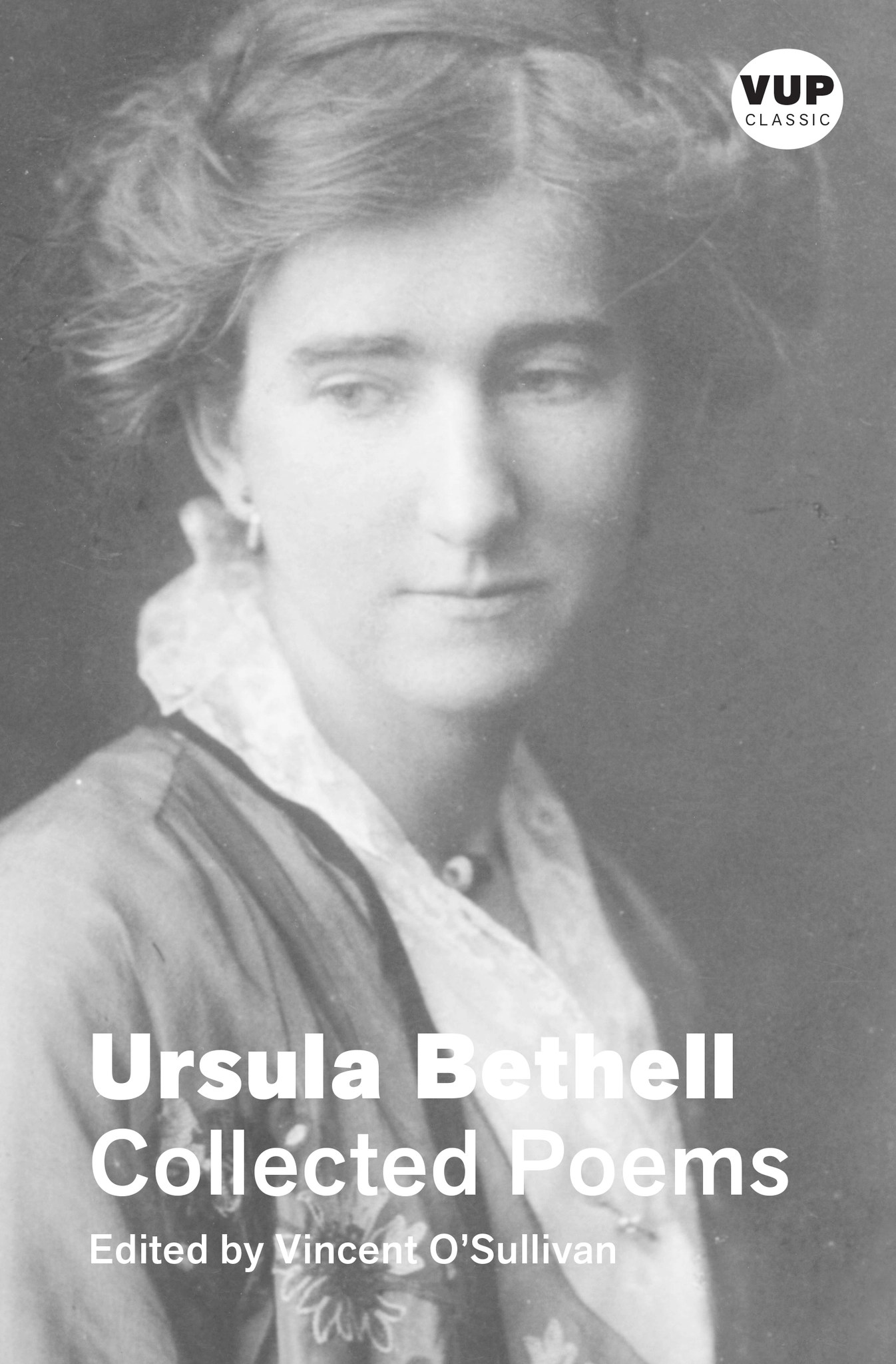
It seems an eon since Wild Honey appeared in the world, yet it was only last year I was doing the online Ockham NZ Book Award celebration for it. But it is fitting to remember this project of love – I set out to celebrate and retrieve women poets in Aotearoa. The younger generations of women poets are vibrant, inspiring, active, revealing, political, personal, edgy, lyrical, path-forging and it is a joy to read them. To write about their work on Poetry Shelf. But I don’t write out of a vacuum. I write out of the women poets who preceded me. Who also wrote with vigour, with various connections to the personal and the political. And so to celebrate International Women’s Day, to celebrate women’s poetry in Aotearoa, I draw your attention to Te Herenga Waka University Press’s reissue of Ursula Bethell’s Collected Poems.

I have several copies of Wild Honey to give away. Email or DM or leave a comment if you would like a copy.

Let’s shine lights this week on all the wonderful things women are doing – but hey, not just women, everyone. Let’s shine lights on humanity’s goodness.

Ursula Bethell Collected Poems, ed Vincent O’Sullian, VUP Classic, 2021

Detail

My garage is a structure of excessive plainness.
it springs from a dry bank in the back garden.
It is made of corrugated iron,
And painted all over with brick-red.

But beside it I have planted a green Bay-tree
— A sweet Bay, an Olive and a Turkey Fig,
— A Fig, an Olive, and a Bay.

Ursula Bethell, From a Garden in the Antipodes, 1929

Ursula Bethell is the kind of poet I turn to when I want uplift, when I crave the poetic line as transport beyond ongoing despair at this sad-sack world. Ursula Bethell’s reissued Collective Poems is now a member of the VUP Classic series. Oxford University Press originally published the collection in 1985, and it was reissued in 1997 with corrections and a new introduction by editor Vincent O’Sullivan.

I utterly loved engaging with Ursula’s poetry in Wild Honey. I considered it in three parts:

“I want to approach her poetry as three distinctive garden plots with a memorial garden to the side: From a Garden in the Antipodes (1929), Time and Place (1936) and Day and Night (1939) and ‘Six Memorials’. You could consider the debut collection as poem bouquets for friends, the second as a poetry posy handpicked for Pollen after her death, while the final collection, a late harvest from the same ground, almost like a consolation bouquet for self. The memorial poems were penned annually on the anniversary, or thereabouts, of Pollen’s death.”


I wrote in my Wild Honey notebooks:

Bethell published three collections of poetry in her lifetime, all anonymously, with the poems chiefly drawn from a decade she devoted to writing, gardening and her cherished companion, Effie Pollen. For ten years, the two women lived in Rise Cottage in the Cashmere Hills, until Pollen’s premature death, at which point Bethell’s life was ripped to unbearable shreds.  The more I read Bethell’s poetry and letters, and the more I muse beyond her characteristic reserve, I feel as though this is the woman to whom I would devote an entire book. She is a knotty collision of reticence, acute intellect, acerbic advice, crippling heartbreak and poetic dexterity. Bethell rightly counters the claim that she ‘knows no school mistress but her garden’, with the point that the garden was ‘a brief episode in a life otherwise spent’. Yet her gardening decade was the most joyous of her life, responsible for the bulk of her poetry, and a period she could not relinquish in letters and the grief that endured until her death. She moved back into the city with ‘no cottage, no garden, no car, no cat, no view of mountains’, no dearest companion and an impaired ability or desire to write poetry.


I was uplifted by individual poems and by the threads and luminosity as a whole:

“How can poetry ever match the joy and beauty a garden offers? Bethell brings us to the pleasure of words, the way words bloom and bristle. For Ruth Mayhew, a close friend to whom she dedicated a number of poems, Bethell builds her green garden symphony in ‘Verdure’: an abundant foliage of lemon, myrtle, rosemary, mimosa, macrocarpa. Without these variations, Bethell confesses she ‘should have, not a pleasaunce, not a garden/ But a heterogeneous botanical garden display’. The word, ‘pleasaunce’, is the spicy fertiliser waiting to explode the poem into new richness. Bethell favours flowers over produce, a pleasure enticement for the senses over fruit and vegetables for the kitchen (‘I find vegetables fatiguing/ And would rather buy them in a shop’. Her poetry ferments as a form of pleasaunce where the ‘plausible’, easily digested details of domestic routine, the house interior, daily conversations, intimate preferences and relations are sidestepped for words that provoke sensual and intellectual variegation in an outside setting.” from my Wild Honey notebook


To re-enter Ursula’s poetry is an act of restoration, just for a blissful moment, because it’s a way of feeling the warmth of the ground, the warmth of humanity (as opposed to its cruelty and ignorance). It is reminder that our literature offers so many rewards, on so many levels, and it is at times like these, poetry can be such necessary solace, respite, prismatic viewfinders, idea boosters. I am toasting the poetry of Ursula Bethell with thanks to Te Herenga Waka University Press.

Vincent O’Sullivan is the author of the novels Let the River Stand, Believers to the Bright Coast, and most recently All This by Chance. He has written many plays and collections of short stories and poems, was joint editor of the five-volume Letters of Katherine Mansfield, has edited a number of major anthologies, and is the author of acclaimed biographies of John Mulgan and Ralph Hotere.

Ursula (Mary) Bethell (1874-1945) was born in England, raised in New Zealand, educated in England and moved back to Christchurch in the 1920s. Bethell published three poetry collections in her lifetime (From a Garden in the Antipodes, 1929; Time and Place, 1936; Day and Night, 1939). She did not begin writing until she was fifty, and was part of Christchurch’s active art and literary scene in the 1930s. A Collected Poems appeared posthumously (1950). Her productive decade of writing was at Rise Cottage in the Cashmere Hills, but after the death of her companion, Effie Pollen, she wrote very little. Vincent O’Sullivan edited a collection of her poetry in 1977 (1985).   

Te Herenga Waka University Press page

Poetry Shelf Monday Poem: Karlo Mila’s ‘Stretch Marks’

Stretch Marks

(20 Sep 2021)

On looking
at my naked body.
Knowing you will be
Looking. 

My body is ripped 
with silver linings.

Stretch marks. 

A weave of flex.
when my world got too big for me,
bearing babies
or burdens.

Stretch marks.
Invisible inked in skin.
Traces I needed to suddenly hide, 
Dive in, submerge into skin
safer unseen
from predator, prowler,
prey.

Oh luminous seal
with quick thick thighs
you dived underwater
thick-pelted, you hide,
Unseen.
Beached.

The loneliness of mammals. 

Alone in the deep blue deep.
Gestating to a saline rhythm .
All my own. 
All alone.
Skins grown
and shed.

Stretch marks.

A spider webbed weave
of vibrating threads.

Silks spun,
and undone.

The painful crack
of the shell of my understanding
breaking.

Growth.

Shedding full body armour
of weta skin, mine and others –
left behind –
with prayers on parting.

The coconut husk –
wringing cream and water
to try and see my future
in the milk of ancestral fluids.

The cocoon
of caterpillar storybooks
cake and pickle and pie,
so hungry.

The black butterflied chrysalis 
of love poetry written in my 30s.
That well written body indeed.

Here it is. 
Looking for love 
Same songs
different sounds.
Re-makes.
Re-takes.
Re-release. 
Re-mastered. 

I am always entranced 
by the acoustic version,
almost poetry. 

Sound healing.
Sexual healing.

I have been waiting for you so long,
Karakia even.
Hope. 
Asking.
Please.
It’s been too long.
Too alone.
I’m too human.

Across time and space,
He arrives, rain.
softly quoting hurricane.
He comes
in front of me,
sticky embryonic. 

Ultimate tōhu
of fertility. newness. rebirth.
remake. Remaster. 

We cross digital divides,
magic echnologies of presence.
wonder-lust, the marvellous.
the surreal sexuality of screens.

Missionary position
is my favourite way
to look at you.
Mirrored
Reflection 
You see
Beauty.
Speak it out loud.

Small scars on my body speak 
to trauma worn, scribbled on skin.
Stretch marks.
Paper thin.
Will you see me? My frailty?
Will you want? 

The small gods of chemistry
are king.

Will you want to
Come in?

Already I imagine you
in my mouth. Salty. Sweet. Big. Deep.

Oceanic. 

De-col. it’s everywhere.
Even in the seabed and foreshore of play… can I play? Can I say? 
Will you stay? 

Trust. in the 21st century 
of unconditional lovers
where it only lasts as long
as the longing.

I want nothing but.
Having settled for less.

I want no settler.
I want native. 
Natural. 
Ease. 

But these stretch marks speak to small anxieties, 
cartography of flesh.
I take a deep breath.
With these silver threads:
Tuia ki roto
Tuia ki waho
Tuia ki raro
Tuia ki runga

I stitch. I sew. I bind. 

Both of us
gasping for breath
in this ocean we have 
Leap of faithed 
into. 

Oh departing place 
of the spirits
watch over us.

Trust. 
Deepak recasts it as moving into the unknown 
beyond the prison of the past.
I listen to his lilting words:
“Today, I will step into the unknown.
I will relinquish the known.
By stepping into the unknown
I will enter in the field of unlimited possibilities.”

This is our place.
The field
beyond write and wrong.
Between hema and mata’u.
The field between other husband and other wife. 

The field between us.

There is no map-making to be had
using the small cursive script of the past. Prisons. 
I cast away my own incarcerated markings,
scribbles, notes, past poems, tiny wounded stories. 

I will give up the need to track-back
the way out
To tightly pencil a safe way in.
To re-make the boundaries.  To fortify.  
To try and control the way home.

I will leave the birds-eye to my ancestors,
keeping an ear open only
to the manu that tangi
keeping our forest alive.
This field.

I step, I step, 
Knowing I will be naked,
humbled, human, 
vulnerable, ashamed, 
afraid, and aroused,
I step, I step
into our field
of infinite possibility.

In this green grass,
I will lie
and meet you there.

Karlo Mila

Karlo Mila (MNZM) is an award winning Pasifika poet of Tongan / Palangi descent.  Her third poetry book “The Goddess Muscle” was released by Huia Publishers in 2020.  Her first book won the first best book award at the New Zealand literary awards in 2005.  She is a Mother, writer, researcher, creative, academic and activist.  Her day job is as the Programme Director of the Mana Moana Experience at Leadership New Zealand.  Karlo is the founder and creator of Mana Moana – aimed at elevating and harnessing indigenous Pacific knowledge for contemporary living and leadership. It is based on five years of postdoctoral research.  Karlo has three sons and lives in Auckland.

Poetry Shelf review: A Game of Two Halves: The Best of Sport 2005 – 2019

A Game of Two halves: The Best of Sport 2005 – 2019, ed Fergus Barrowman
Victoria University Press, 2021

This book looks back through the fifteen issues of Sport from 2005 to 2019. In 600 pages it presents fiction, poetry, essays and oddities by 100 of our best writers, from leading lights like Bill Manhire, Ashleigh Young and Elizabeth Knox, to emerging glow worms like Tayi Tibble, Ruby Solly and Eamonn Marra. (Blurb)

Reviewing A Game of two Halves is a sad glad day for me. I have loved reading my way through old favourites but I am also sad that this is a farewell. I can remember how excited I was when the first issue of Sport hit the bookstands. It was fresh, exciting, unmissable. I am pretty sure I have every copy stacked on my study shelves. On the blurb, I read that editor Fergus Barrowman’s A Game of two Halves selection is a mix of ‘leading lights and glow worms’, the established and the emerging. Light is such a good analogy because I often find myself using the word ‘incandescent’ to describe writing I love. Writing lights me the reader, the world at large and in miniature, the present, future, past, the miraculous things words can do. Even when the subject matter is dark, shadows and weirdness loom, writing still lifts. Sets me alight. This is what literary journals can do. This is what Sport has done.

All those clothes it turned and churned, the lint
that trapped in its door. I once thought
many things would make my life happier
and now one by one I will let them go.

Rachel Bush from ‘All my feelings would have been of common things’

Confession – I haven’t read the whole volume yet but I can’t wait to do that to share. I am so engaged, I want you to place A Game of Two Halves on your summer reading pile as a go-to source of luminous writing. Last ‘light’ analogy I promise. Reading the poetry (I always start with the poetry) is like tuning into a Spotify playlist where individual tracks resonate and then send you back to the albums. Rachel Bush’s sublime ‘Thought Horses’ sent me back to that collection. Michele Amas’ equally sublime ‘Daughter’ sent me back to After the Dance. Herein lies the first joy of Fergus’s playlist. I am reconnected with poems that have registered as all time favourites. Read Angela Andrews’ ‘White Saris’. Bill Manhire’s ‘The Schoolbus’. Read Ruby Solly, Esther Dischereit, Rebecca Hawkes, Ash Davida Jane, essa may ranapiri, Tayi Tibble, Michael Krüger, Jane Arthur, Chris Tse, Freya Daly Sadgrove, Emma Neale. Read Amy Brown’s ‘Jeff Magnum’. Ashleigh Young. Louise Wallace.

This is the place where the schoolbus turns.
The driver backs and snuffles, backs and goes.
It is always winter on these roads: high bridges
and birds in flight above you all the way.
The heart can hardly stay. The heart implodes.

Bill Manhire from ‘The Schoolbus’

Perhaps the biggest gleam is from Tina Makereti’s prose piece, ‘An Englishman, an Irishman and a Welshman walk into a Pā’. I am such a fan of her novels, rereading this reminds me of the power and craft of Tina’s writing.

This is the way of it. Before I have memorised her in a way that will last forever, my mother is gone. If someone asks me to recite my first memory, which consists of chickens in a yard and an old farmhouse and an outside toilet, it will contain this absence. For the rest of my childhood, I don’t think it matters.

Tina Makereti from ‘An Englishman, an Irishman and a Welshman walk into a Pā’

In his introduction, Fergus tracks the development of Sport, the almost demises, and the decision to close (with regrets!). He mentions the vibrancy of the issue Tayi Tibble recently edited (Sport 47, not just the cover but also the contents) and ‘whether it made sense to go on reinventing Sport every year?’ I have appreciated the move to showcase Aotearoa writers beyond the traditional Pākehā set in recent years. To always draw upon the inspired writing of new generations. Fergus closes off his introduction by mentioning a couple of other anthologies VUP / THWUP are doing and then offers this: ‘And after that? You tell us? Send us your ideas. Send us your work.’ Exciting prospect.

I raise my glass to toast what has been an important venue for new and established voices. I will miss Sport. I will really miss Sport. Thank you Fergus and Victoria University Press / Te Herenga Waka University Press for dedicating time and love to a vital space for readers and writers. I look forward to what comes next.

It has been a long time
since I last spoke to you.
When we were children, our fathers
wanted to be mountains
our mothers were the sky.
So here I am, the dry hands,
steady in fog, waiting by the not-there
trees, the holes birds make
in the air.

Jenny Bornholdt from ‘It Has Been a Long Time Since I last Spoke to You, So Here I Am’

the air is thick with depression
even the flies   fly very slowly

Freya Daly Sadgrove from ‘Pool Noodle’

I worry about whakamā and imposter syndrome paralysing our people, making them too afraid or inhibited to really live their best lives or at least the best lives they can under the hellskies of capitalism and party politics. I’m all about people, and I’m all about the best lives.

Tayi Tibble from ‘Diary of a (L)it Girl or, Frankenstein’s Ghost Pig’


Fergus Barrowman has been the Publisher of Victoria University of Wellington Press since 1985, and founded Sport along with Nigel Cox, Elizabeth Knox and Damien Wilkins in 1988. He edited the Picador Book of Contemporary New Zealand Fiction in 1996.

Victoria University Press / Te Herenga Waka University Press page

Poetry Shelf review: Out Here: An anthology of Takatāpui and LGBTQIA+ writers from Aotearoa

Out Here: An anthology of Takatāpui and LGBTQIA+ writers from Aotearoa,
eds Chris Tse and Emma Barnes, Auckland University Press, 2021

Gender buttons

An object on a shelf; a self with words inside that never came out.
Your finger down my spine; fine singing in my bones. Umbrella avoiding
the rain: the celebrating hat you wear. Tell me a little more about myself.

The food you forgot; what you got for biting at my breasts. The coloured
loss of uneaten toast on the bench and your tongue of loving pepper.
Hunger heavy in my mouth.

This room we bed down in, be wed down in. White roses growing
on the ceiling.
You want in a variety of colours, but a rose is a rose is a rose
a bunch of them placate the air much better than one.
We couldn’t grow anywhere else.

The teasing is tender and trying and thoughtful. Melting without mending
you undo my gender buttons till all of me is myself.


Hannah Mettner

Out Here is a significant arrival in Aotearoa, both for the sake of Takatāpui and LGBTQIA+ writers and readers, and for the sake of poetry. The sumptuous and wide ranging anthology feeds heart mind skin lungs ears eyes. It is alive with shifting fluencies and frequencies, and I want to sing its praises from the rooftops, from the moon, from street corners.

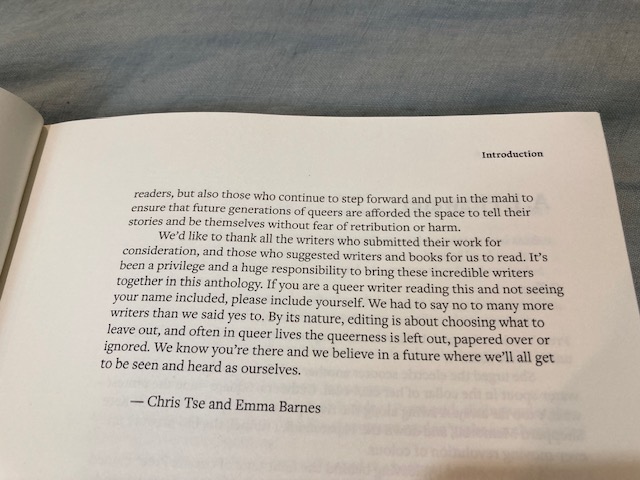
Chris Tse and Emma Barnes have responded to the erasure of queer identities in a national literature that was traditionally dominated and controlled by white heterosexual men. Chris and Emma opted to use ‘Takatāpui’ and ‘LGBTQIA+’ in the title to signal Aotearoa’s rainbow communities within the broadest possible reach. They have used the word queer in their introduction and underline that that must make room for as many ‘labels and identities’ as necessary. I am using the word queer with similar intentions.

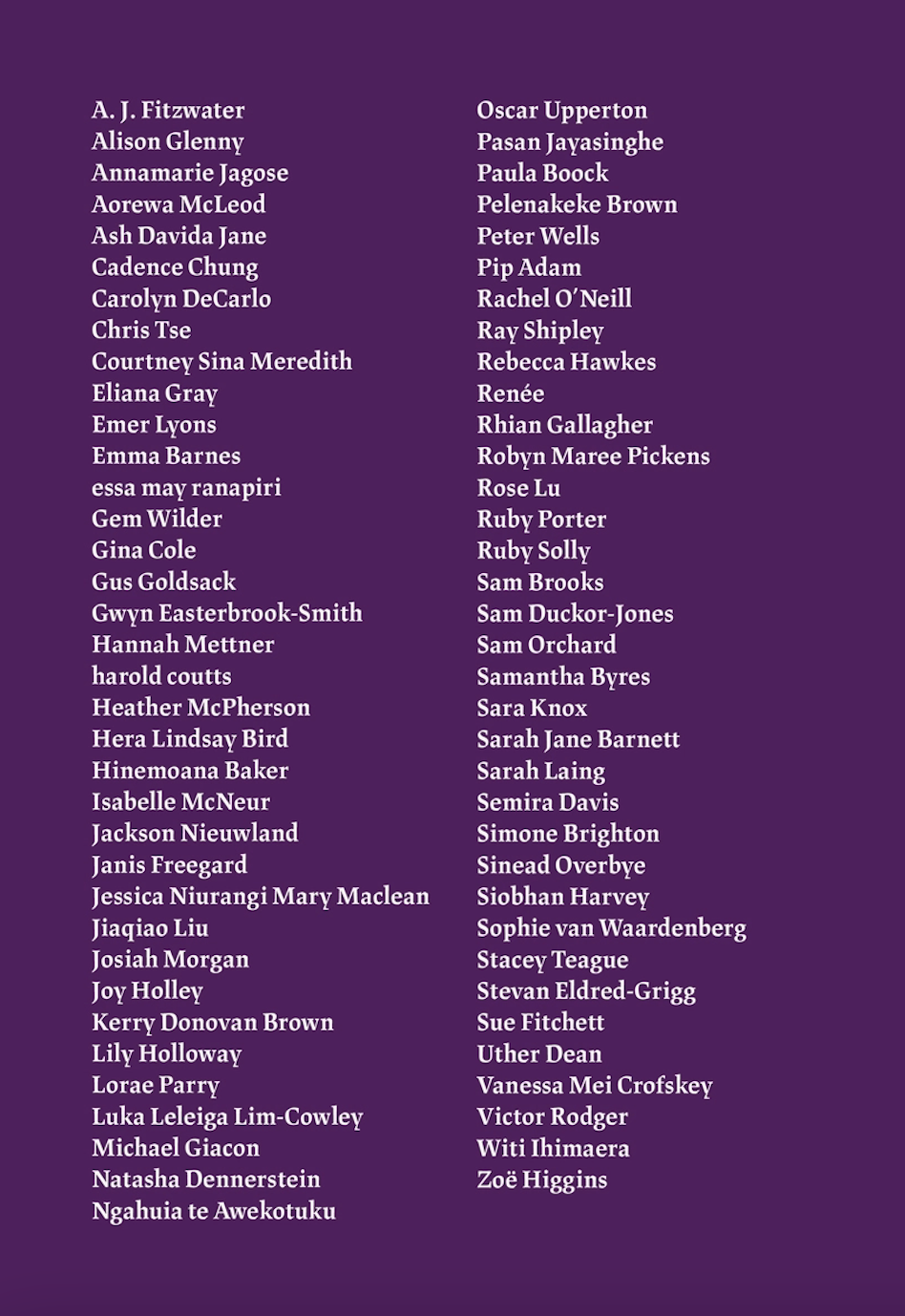
Having spent a number of years on a book that responded to the erasure of women in literature across centuries, I understand what a mammoth task it is to shine a light across invisible voices and to reclaim and celebrate. To refresh the reading page in vital ways. Out Here draws together prose and poetry, from a range of voices, across time, but it never claims to cover everything. We are offered a crucial and comprehensive starting point. After finding 110 writers, Emma and Chris sent out an open call, and the response was overwhelming.

We chose words that delighted us, surprised us, confronted us and engaged us. We chose political pieces and pieces that dreamed futures as yet only yet imagined. We chose coming out stories and stories of home. We followed our noses. What our reading revealed to us is that our queer writers are writing beyond the expectations of what queer writing can be, and doing it in a way that often pushes against the trends of mainstream literature.

Emma Barnes and Chris Tse

I am reading the poetry first. I am reading poetry that reactivates what poems can do whether in terms of style, voice, theme, motifs. Some poems are navigating sexuality, gender issues, sex, love, identity. Other poems explore the body, oceans, discomfort, the end of the world, mothers, fathers, violence, tenderness, place, the dirt under fingernails. Expect humour and expect seriousness, the personal and the imagined. Expect to be moved and to be heartened. Some of the poems are familiar to me, others not, and it is as though I have parked up in a cool cafe for a legendary poetry reading (if only!). The physicality is skin-pricking, the aural choices symphonic, the intimate moments divine.

Take the three poems of Ash Davida Jane for example. I am reminded of the feminist catchphrase the personal is political but I am upending it to become the political is personal. ‘Good people’ resembles an ode to the soy milk carton. The poem considers how to be in the world, to make good choices, and be a good person when the world is drowning in plastics. It blows my head off. Ash’s second poem, ‘water levels’, celebrates the tenderness of being in the bath with someone who is shampooing your hair. The poem slows to such an intimate degree I get goosebumps. A poem that looks like a paragraph, ‘In my memory it is always daytime’, pivots on the waywardness of memory, its omission coupled with its power to transmit. I keep stalling on this glorious suite of poems rereading, revelling in the ability of poetry to deepen my engagement with the world, language, my own obsessions, weakenesses.

I stall too on Carolyn DeCarlo’s poems like I have struck a turning bay in the anthology. Rereading revelling. Reading revelling. And then Jackson Nieuwland’s astonishing ‘I am a version of you from the future’ where they stand in the shifting shoes and choices of a past self and it is tender and it is moving and it is tough. Or Ruby Solly’s ‘Lessons I don’t want to teach my daughter’, which is also tender and moving and tough. The ending in both English and Te Teo Māori restorative.

Imagine me standing on my rooftop singing out the names of the poets in the anthology and how they all offer poems as turning bays because you cannot read once and move on, you simply must read again, and it is measured and slow, and the effects upon you gloriously multiple. Chris and Emma have lovingly collated an anthology that plays its part in the final sentence of their introduction:

The final sentence resonates on so many levels. No longer will we tolerate literature that is limited in its reach. Poetry resists paradigms set in concrete, fenced off manifestos, rules and regulations, identity straitjackets. I welcome every journal and event, website and publishing house, that opens its arms wide to who and how we are as writers and readers. Out Here makes it clear: we are many and we track multiple roads, we are familied and we are connected. We are loved and we are at risk. We are floundering and we are anchored. This is a book to toast with a dance on the beach entitled POETRY JOY. I am dancing with joy to have this book in the world. To celebrate its arrival, I invited nine contributors to record a poem or two. Listen here.

Thank you Emma, Chris and Auckland University Press; this book is a gift. 💜 🙏

I would like to gift a copy of this book to one reader. Let me know if you’d like to go in my draw.

The editors

Chris Tse (he/him) was born and raised in Lower Hutt. He studied English literature and film at Victoria University of Wellington, where he also completed an MA in creative writing at the International Institute of Modern Letters (IIML). Tse was one of three poets featured in AUP New Poets 4 (2011). His first collection How to be Dead in a Year of Snakes (2014) won the Jessie Mackay Award for Best First Book of Poetry and his second book He’s So MASC was published to critical acclaim in 2018.

Emma Barnes (Ngāti Pākehā, they/them) studied at the University of Canterbury and lives in Aro Valley, Wellington. Their poetry has been widely published for more than a decade in journals including Landfall, Turbine | Kapohau, Cordite and Best New Zealand Poems. They are the author of the poetry collection I Am in Bed with You (2021).

Auckland University Press page

Poetry Shelf celebrates 2021: Emma Neale picks favourite books

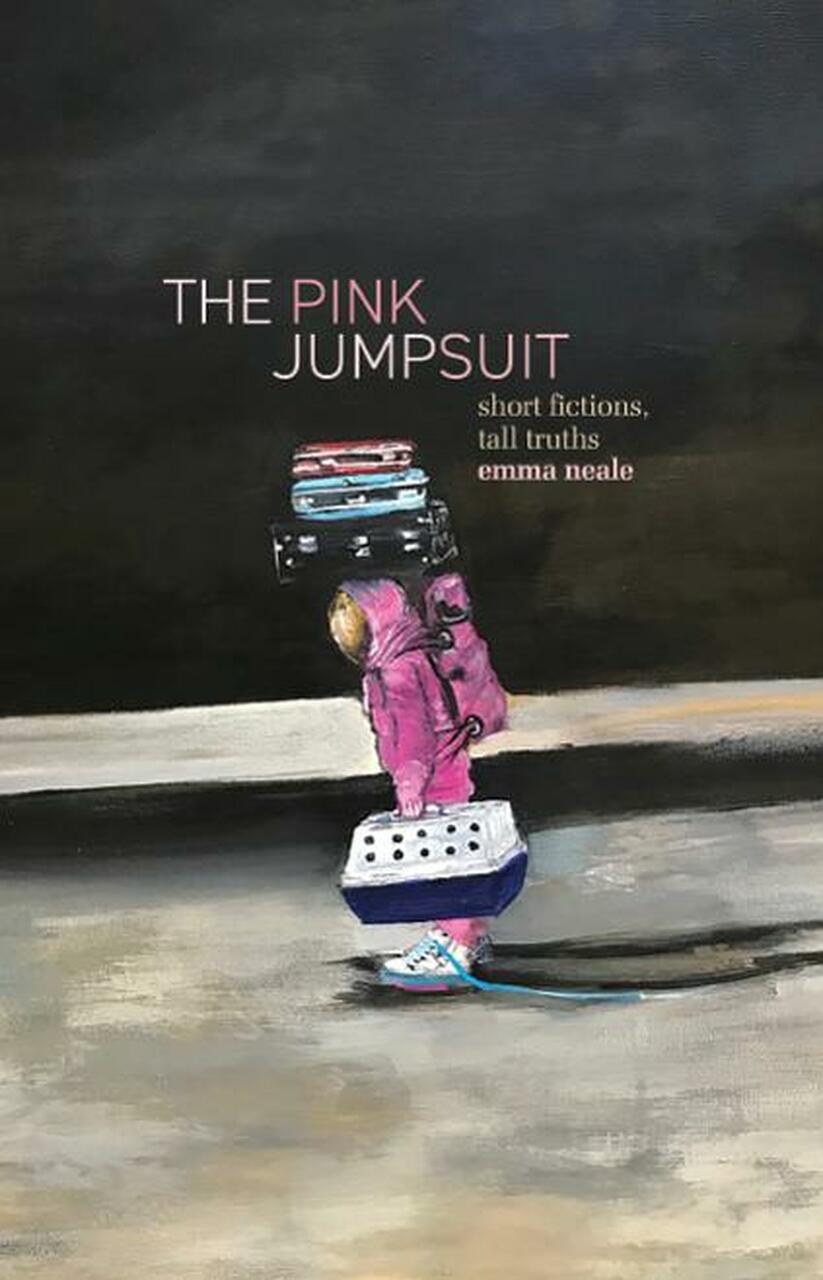
The Pink Jumpsuit, Emma Neale, Quentin Wilson Publishing, 2021

Rather than do my annual list where I invite loads of poets to pick favourite books, I opted for a much smaller feature. I have invited authors whose work I have loved (a book of any genre, a poem, a website) to share favourites. No easy task as I have read so many books I have loved in the past year: poetry, fiction, nonfiction, children’s, local and international. On Friday 17th I will post the feature but, between then and now, I am posting some authors who have produced longer contributions.

Emma Neale’s collection of short fictions is one of my favourite reads of the year. In my short review, I wrote:

Any book by Emma Neale underlines what a supreme wordsmith she is. At times I stop and admire the sentences like I might admire the stitching of a hand-sewn garment.

Like Emma free-falling into memory, sideways skating after looking at ‘Wanderlust’, I am free-falling and sideways skating with this glorious book. I am free-falling into the power of truths, diverted by fiction, the dark the light, the raw edge of human experience, and this matters, this matters so very much.

Emma Neale, a Dunedin based writer and editor, is the author of six novels and six collections of poetry. Her most recent collection is To the Occupant (Otago University Press). In 2020 she received the Lauris Edmond Memorial Award for a Distinguished Contribution to New Zealand Poetry.

Emma Neale’s Picks

Poetry


I’m disoriented when I realise how few full poetry collections I’ve read this year. Lockdown, and then major surgery, altered my reading habits more dramatically than I was aware of until I sat down to look at my (scrappy) reading journal. I feel a bit like the dreamy kid who hasn’t done all her homework: there are so many 2021 titles that I haven’t managed to read yet. But books should last so much longer than their year of publication, shouldn’t they?


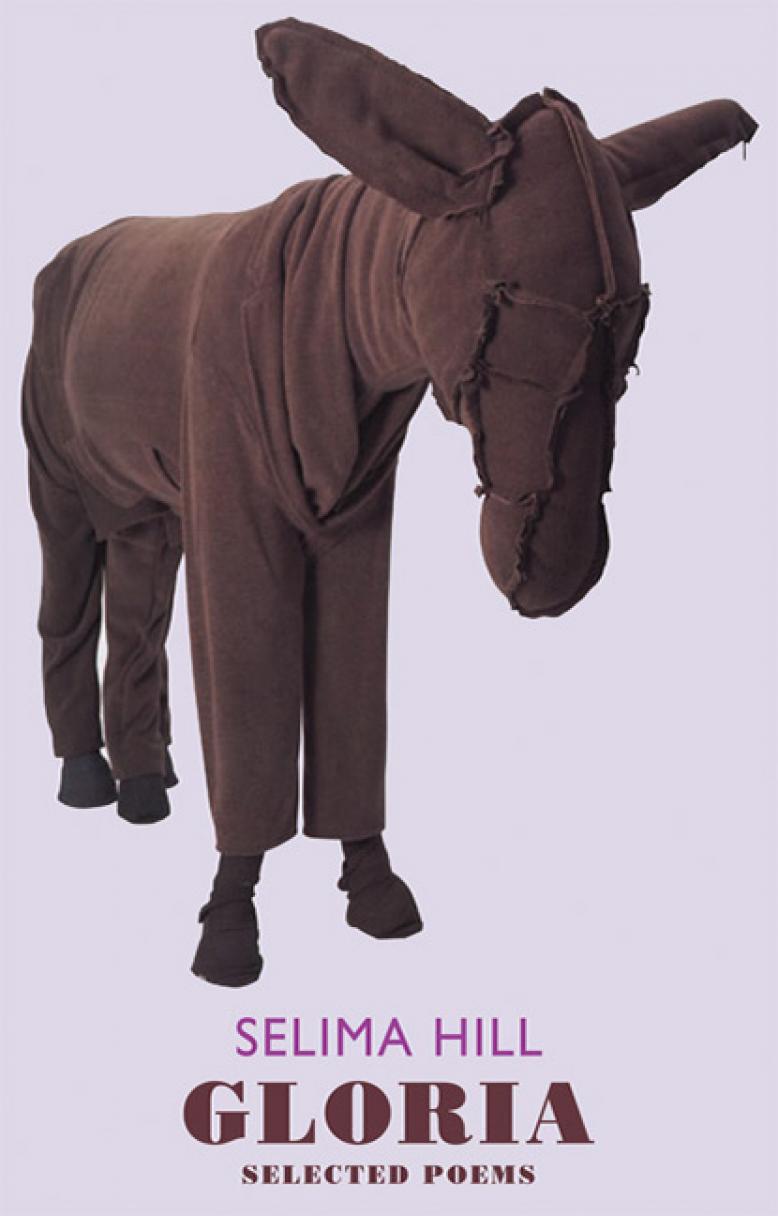
Selima Hill’s Gloria: Selected Poems (Bloodaxe Books) stands out, for its gorgeously bewildering fusion of the surreal, the direct, the subversive and sharp; she writes tiny, acid drop poems that sting you awake with their dark and often tragic accounts of male-female relationships and family, and their sardonic skewering of contemporary consumerist culture.

 
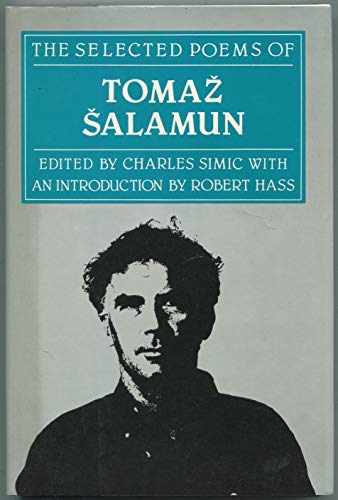
The Selected Poems of Tomaž Šalamun – edited by Charles Simic (The Ecco Press), with an introduction by Robert Hass, was a new discovery for me: I ordered it on the strength of the opening  poem ‘History’ – which is wacky, subversive, swerves from apparently self-aggrandising to irreverent and bitterly self-mocking with rapid, comically dislocating speed. 


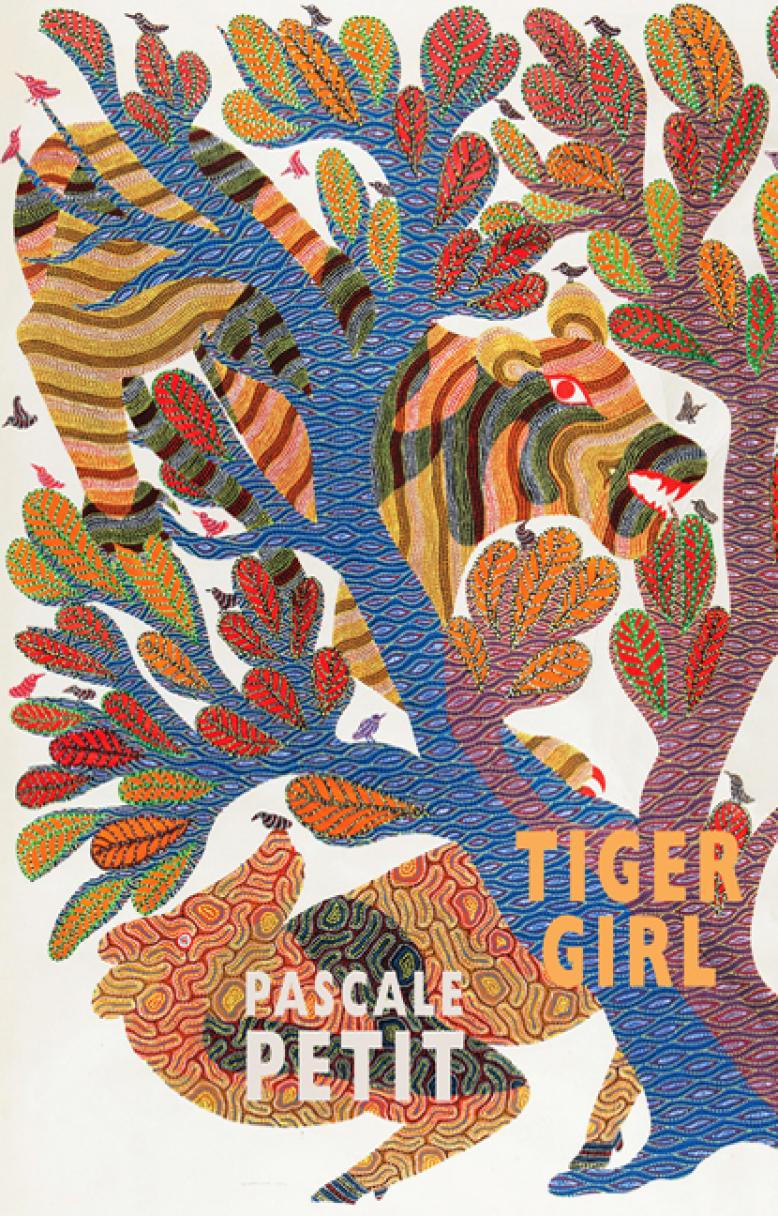
Pascale Petit’s Tiger Girl (Bloodaxe Books) in which many poems explore her grandmother’s Indian heritage, and the natural world in subcontinental jungles, was a delight to read, as her work is exuberant with metaphor and simile, even when she deals with grim  psychologically tough material. I feel like she is a bit of a soulmate poet, as she doesn’t necessarily agree that less is more. Lush is more, here, and there are times I just want to soak up to my chin in the warmth and prismatic light of this generous, capacious voice.


Between us Not Half a Saint, co-authored by Rushi Vyas and Rajiv Mohabir (Gasher). This collection astonished me with its discipline, the dialogue between the two poets, the way it manages to embrace the political and the spiritual; how well the dialogue about responsibility, power, identity, territory, belief, self vs ‘community’ operates.


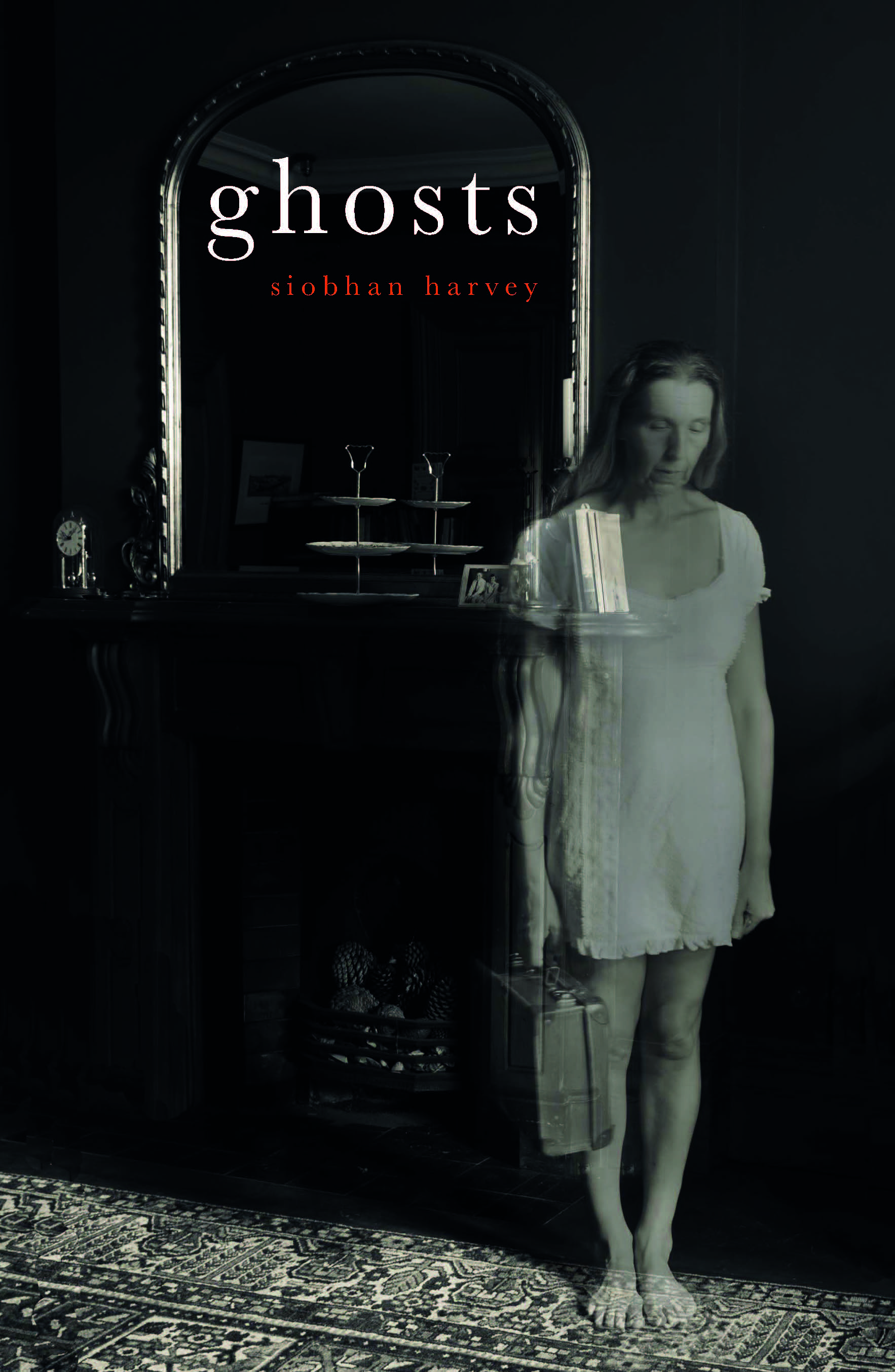
Siobhan Harvey’s Ghosts (Otago University Press) was an intellectually and emotionally challenging editing job I was lucky enough to work on; the poetry often stretched the ‘literal-minded’/logic-tracking compartment of my editing brain while we were at the dialogue stage of author-and-editor; and I think (I hope!) it made me a more open reader. The final book, which includes a profound personal essay, is intensely philosophical, and another striking achievement from the author of Cloudboy


Prayers for the Living & the Dead by Lindsay Rabbit (SP) was a refreshingly sparse, quiet, and reflective collection: somehow it helped to still the babble, clamour, the torrent of words from other non-literary sources pouring in to my head and home this year.


The Wilder Years: Selected Poems by David Eggleton (Otago University Press) – as I said at the Dunedin Writers and Readers festival event on the politics of poetry: David’s work ranges from the piercingly lyrical, to epic postcolonial tsunamis of language, that exhibit a zany abundance of imagination and, I think, an extraordinary capacity to hold wild contraries together, in work that often has the spring and salt of satire. The poems condense such a vast general knowledge, comment on so many social phenomena, that often when reading his work I’ve thought, ‘David is basically the internet’.


I’m still reading both How to Live with Mammals, by Ash Davida Jane (VUP), and Rangikura by Tayi Tibble (VUP). In the first, I’m enjoying the interleaving of vulnerability, humour, intriguing facts slipped in like quick sparkles of energy, a youthful spritz and yet a piercing nostalgia for the planet as it once was, a filmic sense of what it’s like to be young and in love and still frightened of how it all trembles on the brink of loss and collapse. With the second, I’m finding it shares some of the qualities of Ash Davida Jane’s work, and yet the unpredictable power dynamics of desire, the history of imperialism, colonialism, and the dance of contemporary and mythic references are a bright, looping needle-and-thread running through it all. 

Bird Collector, by Alison Glenny (Compound Press) seems both somehow more humorous and more absurd than  The Farewell Tourist, yet it still has a kind of atmosphere of loss and melancholy. Elliptical answers to elusive questions; nostalgia for an impossible past; large tracts of knowledge erased; definitions from a dreamlike dictionary; the melancholy of lost, exquisite creatures, moments, and even of self-recognition …. this collection is intriguing. As I’ve said elsewhere, ‘it  reads as if a Victorian composer, carrying her valise of new operetta libretti, collided in the street with a watchmaker, his briefcase of sketches for a new time-keeping device, and a genderfluid astronomer toting the patent forms for a mechanised orrery made of blown egg shells and  bird skulls. Their papers, shuffled together by misdirected desires, unspoken and even unconscious intentions, lead to an entirely new work — a sheaf of pages where the negative space of silence speaks as pressingly as the shape of song.’


Bird Collector increases the absurd humour and the sense of literary pastiche found in The Farewell Tourist,  as it both flirts with voices of disembodied wisdom and scholarship, and exposes so much of what is surreal in human behaviour, by creating an alternative, credible epoch and society that seems bound by strange rules, to contain weird and uncanny juxtapositions, yet is as riven by unpredictable desires and sudden disappearances as our own. A plangent strain of loss might rise from the pages: yet when we wake from their trance, we’ve seen such entertainingly strange and marvellous things.  

Prose

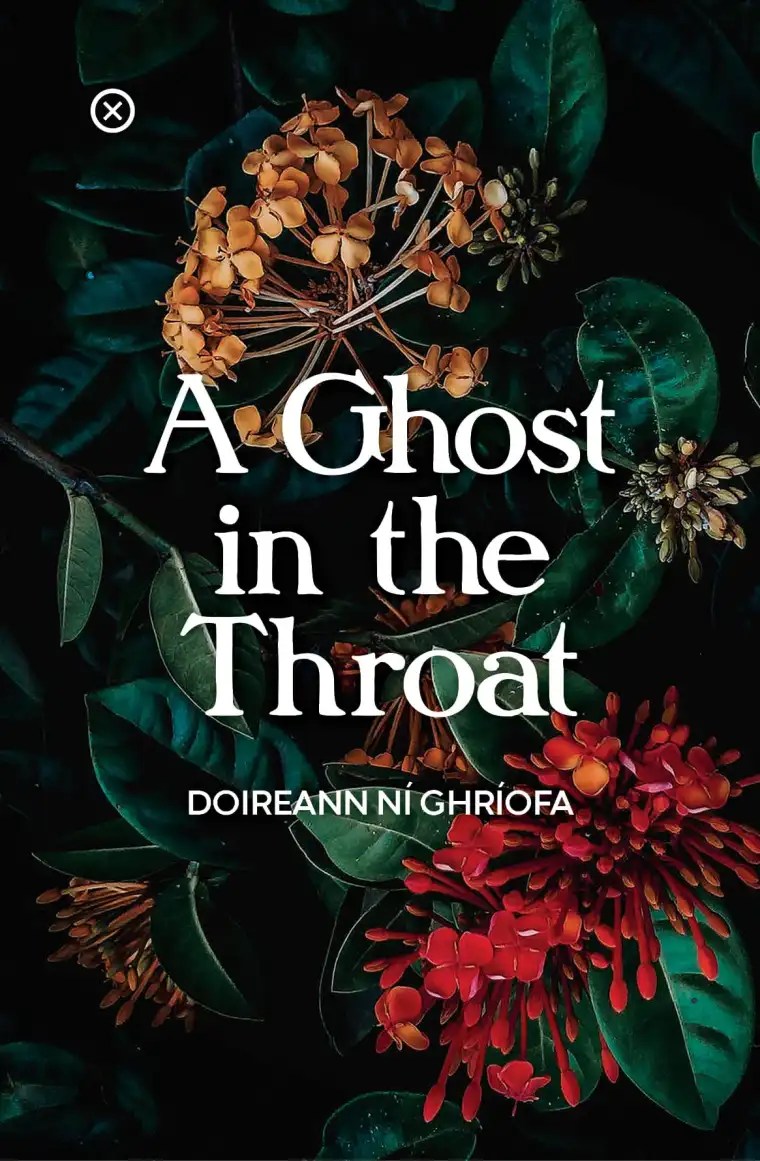
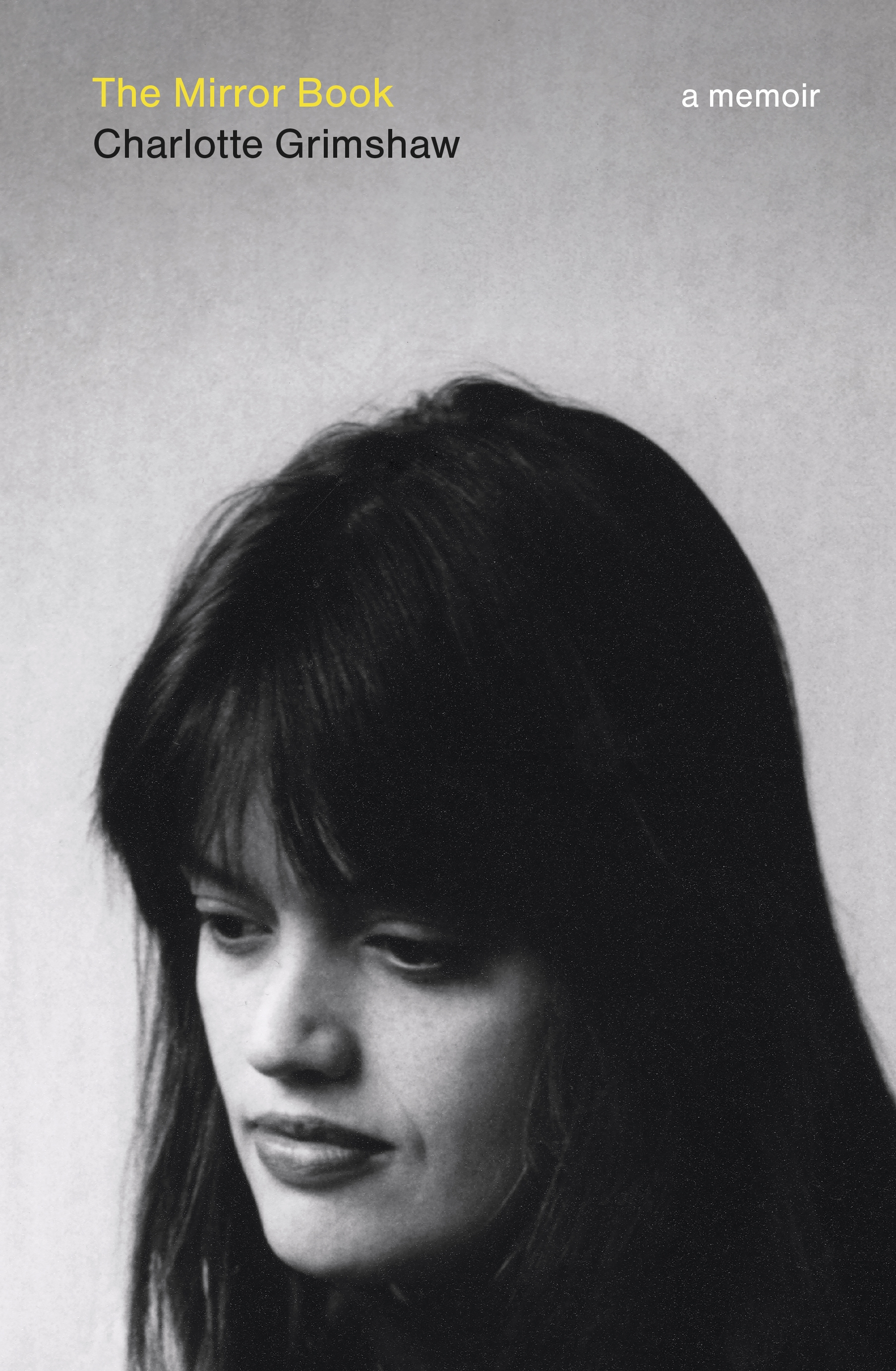
I’ve written elsewhere about how much I Ioved Charlotte Grimshaw’s The Mirror Book (Penguin), and Doireeann Ni Ghríofa’s A Ghost in the Throat (Tramp Press) this year; both psychologically profound and lyrically composed books, which explore the construction of identity, and the sometimes subtle (but often glaringly overt) cross-tides of internalised and institutionalised misogyny. They variously examine narcissism, parenthood, motherhood, marriage, and in Ni Ghríofa’s work, the erasure of women’s experiences historically: in the sense that archival records of their lives, in the past, weren’t kept as clearly or as diligently as those of men. The books are very different stylistically, yet in my mind, they mirror or ghost each other. 

Another memoir that I rate really highly this year is Deborah Levy’s Real Estate (Penguin), for its exploration of ideas of independence and motherhood after children have left home; singledom after a long marriage; and the politics of heterosexual relationships. One of the paragraphs that beams out illumination runs:

Is it domestic space, or is it just a space for living? And if it is a space for living, then no one’s life has more value than another,  no one can take up most of that space or spray their moods in every room or intimidate anyone else. It seems to me that a space for living is more gendered and that a space for living is more fluid. Never again did I want to sit at a table with heterosexual couples and feel that women were borrowing their space. When that happens, it makes landlords of their male partners and the women are their tenants.

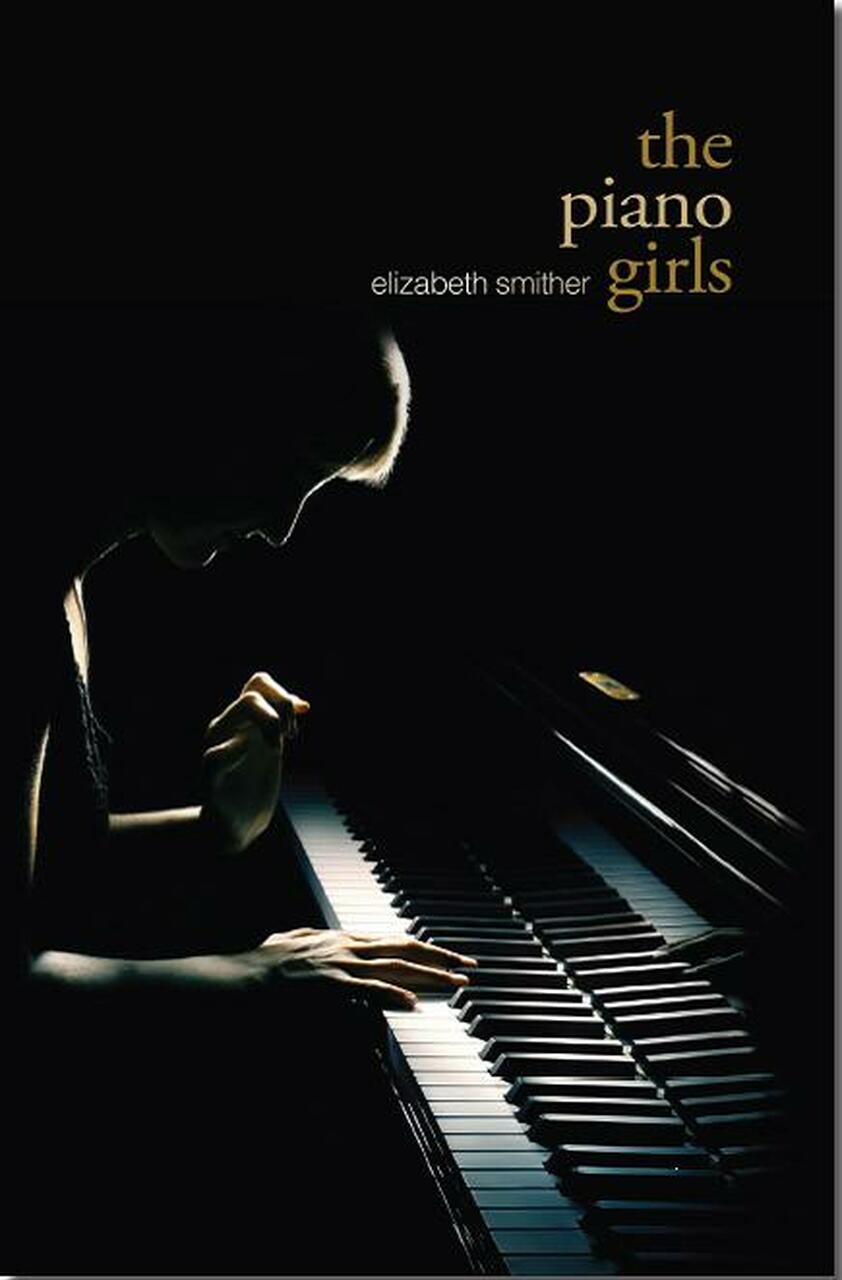
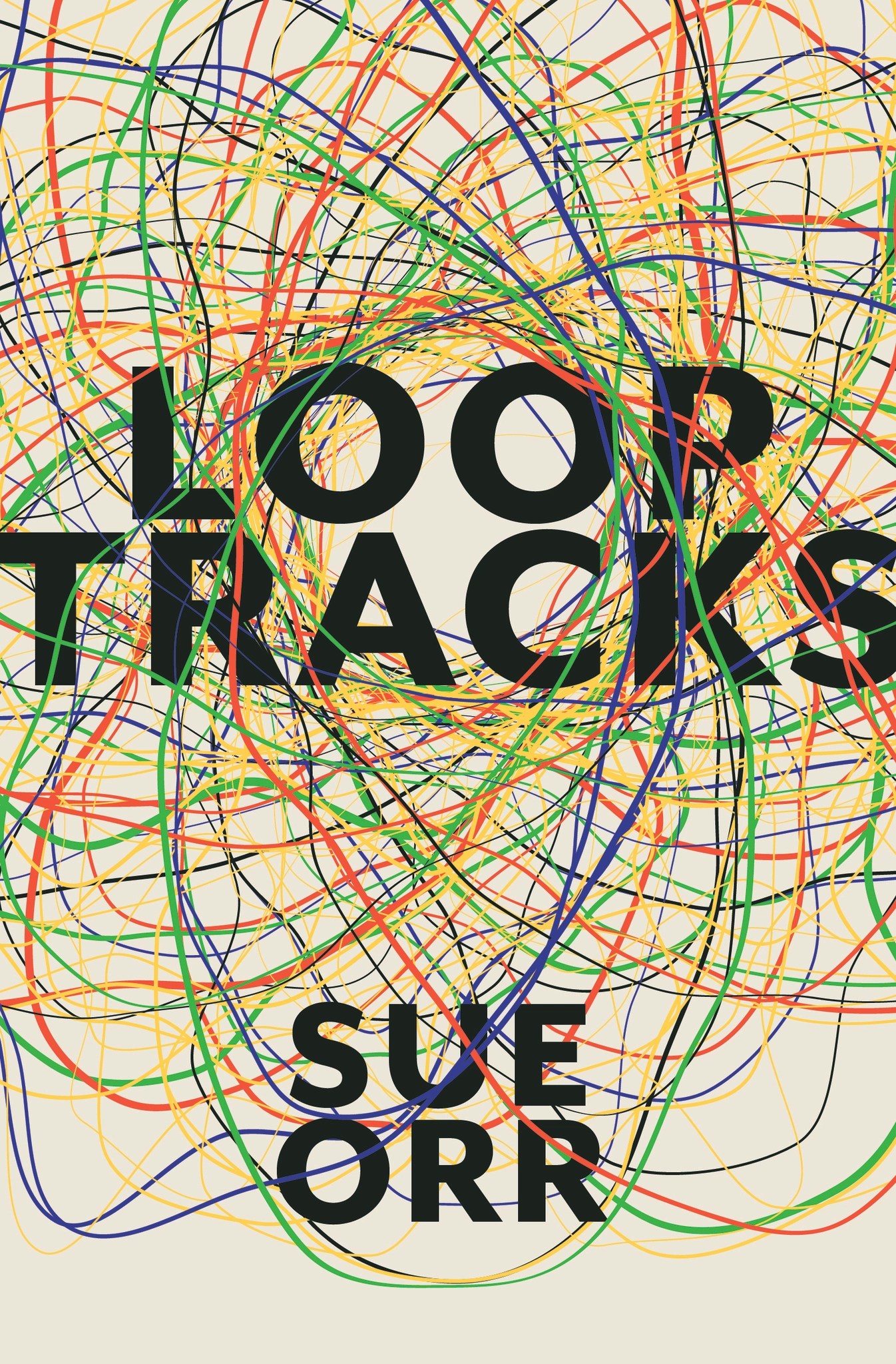
Local fiction that I’ve lost myself in this year includes Sue Orr’s intricate, sensitive, thoughtful Loop Tracks (VUP); some of the  quiet, elegant stories in Elizabeth Smither’s The Piano Girls (Quentin Wilson Publishing), others in Tracy Slaughter’s The Devil’s Trumpet (particularly the extended piece published as the novella-in-flash, If there is no shelter) (VUP) and Kirsten McDougall’s comic eco-thriller, She’s a Killer (VUP), which I’m celebrating for its tense and ominous cameo from a blissfully unaware-yet-also-wary four year old, towards the end … argh!!! Do not drink strong coffee immediately just before this scene. 


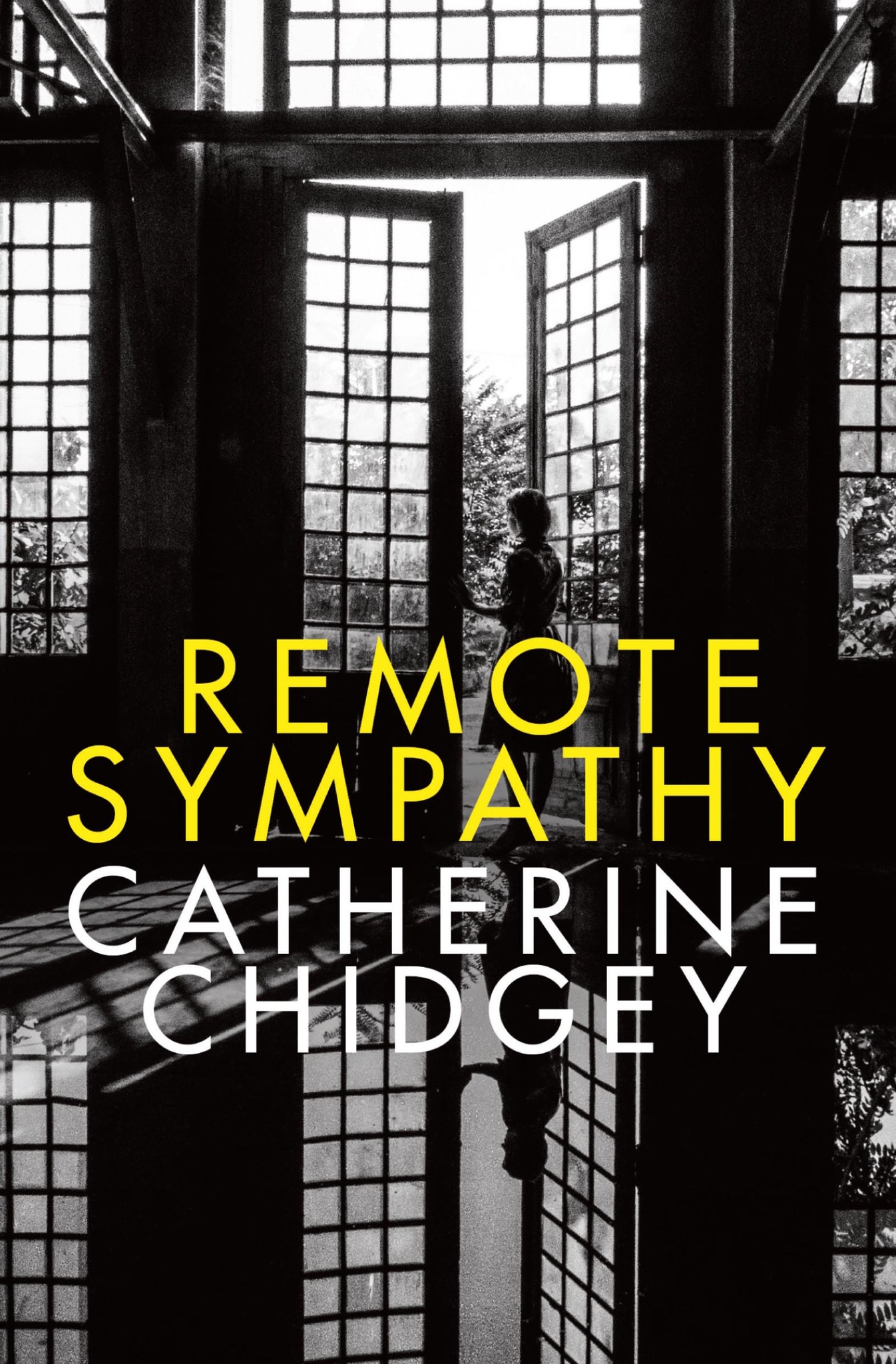
I came late to Catherine Chidgey’s Remote Sympathy (VUP), which was published last year: but it absolutely knocks it out of the book-park for me in terms of New Zealand fiction I’ve read lately. It’s skilfully constructed, managing several different narrative voices; it somehow deals with traumatic, terrifying cruelty with a superlatively light hand, which enables us to keep looking at the heart and mind of evil. Chidgey has a gift for choosing the right metaphor or simile to encapsulate a situation at exactly the right moment: the way she balances plot and poetry is exquisite for the reader. For me as a writer, it makes me want to throw up my hands and quit and yet at the same time it makes me want to work even harder. It’s a bittersweet confusion to have.


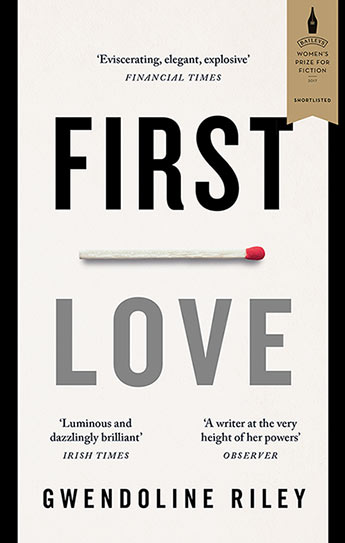
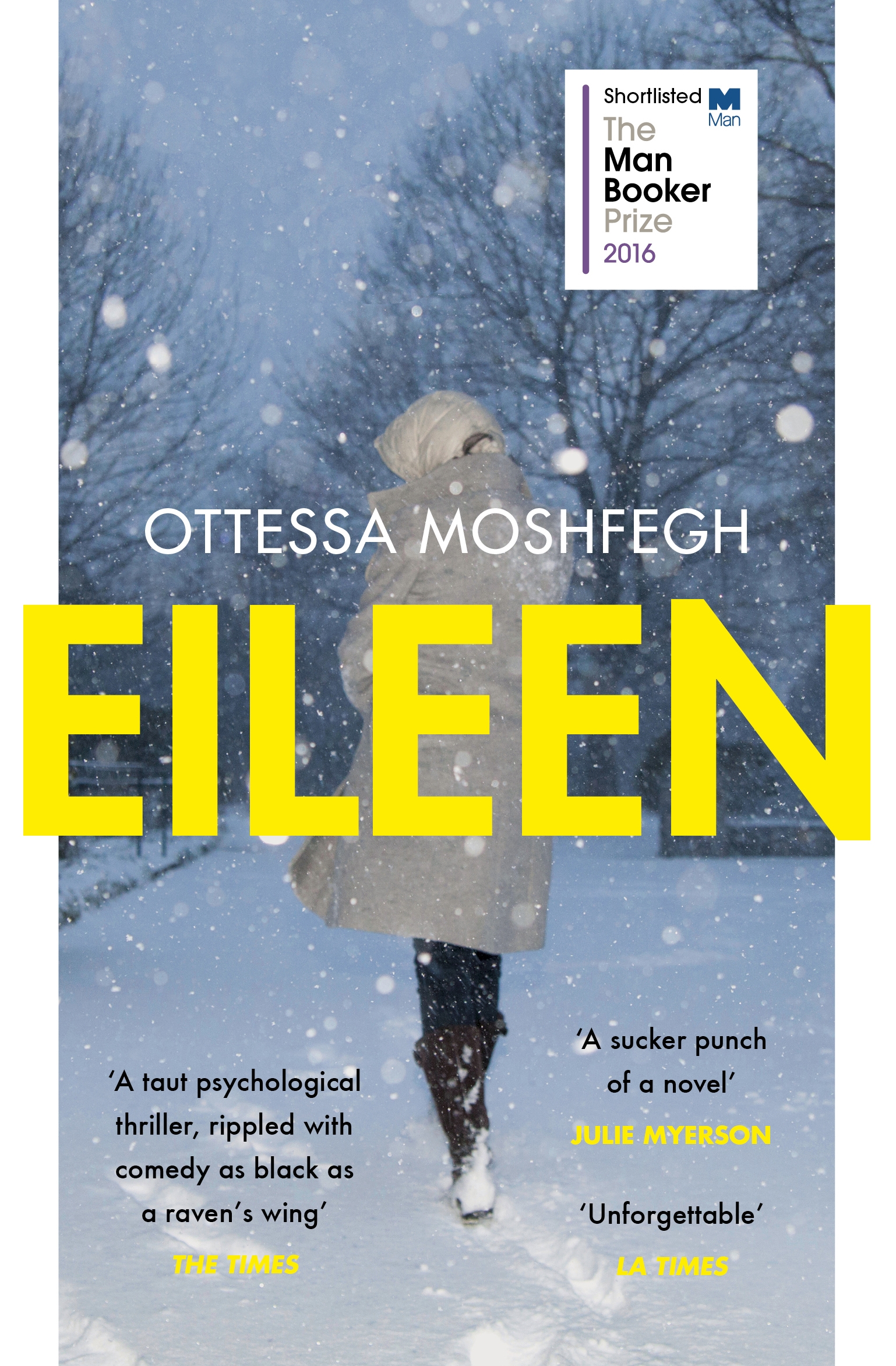
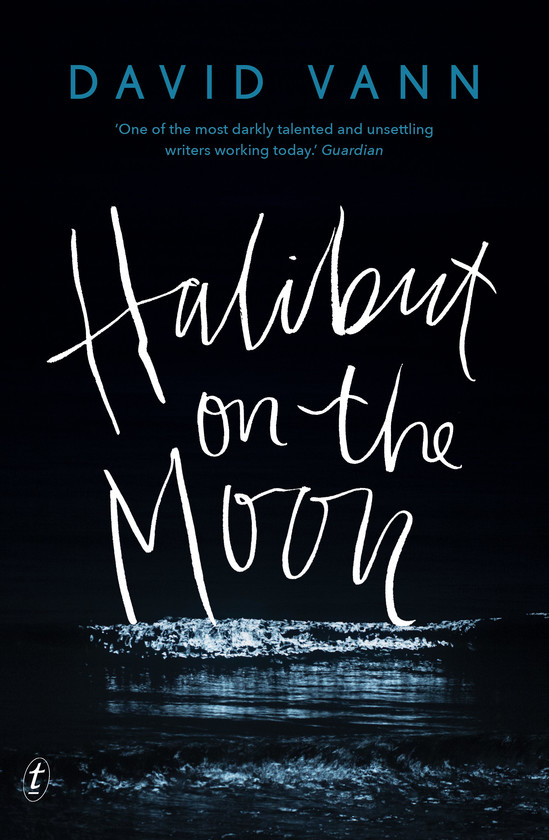
I’ll limit my raves to two other novels I read this year. One is David Vann’s Halibut on the Moon (Text Publishing), an immensely strong fictionalised version of the last days of his father’s life before he committed suicide. It is a remarkable achievement, as we want to keep reading, even though the main character’s actions and desires are often deeply repellent. There’s such compassion in the narrative, somehow, and I found myself comparing it to the unlikeable narrators in two other books I read this year: Eileen, by Ottessa Moshfegh (Penguin) and First Love by Gwendolyn Riley (Allen & Unwin); both books I failed to engage with fully. I think Vann’s novel is so effective because  we see all the other characters in Jim’s family so clearly struggling with him, and trying to bring him back to some kind of moral centre. The way Vann handles a painfully direct, honest, bitter, revealing conversation between the suicidal Jim, and his lifelong-monosyllabic father, is cooly devastating, for the way it pulls in massive unspoken, suppressed intergenerational trauma for indigenous (Cherokee) people.  


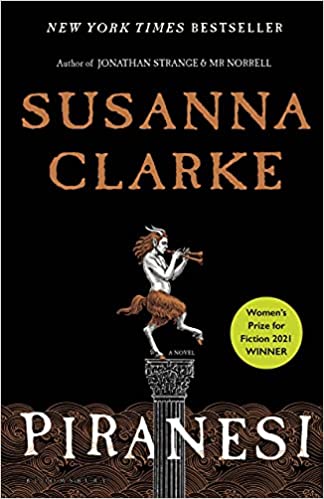
Oh really only one other rave?? Okay,  Susanna Clark’s Piranesi (Bloomsbury). A wonderful, crisply written, strange fantasy about a character who lives in a mysterious labyrinth that contains various classical marble statues, and whose vast chambers fill and drain with ocean tides. He is trying to piece together his own identity through reading shredded notebooks and trying to recall the oblique dialogues he has with the one other inhabitant of the labyrinth. At one point I thought perhaps the labyrinth was the delusion of a man terrifyingly trapped by another man   … but … if I say any more, I will tear and mangle the magic for other readers.

Poetry Shelf Monday Poem: Kate Camp’s ‘What I would give away’

What I would give away

This pill
little light blue moon
tasting of rosewater

the night
in lines
through black dust
of the blind

pines
manuscript
architecture
smashed and torn off
places

morning light
when orange falls
six weeks a year
that way.

But the darkness?
The one behind my eyes?
In the cavities
of this responsible body? No.

When I saw the tow truck
I thought it was carrying
a crucifix.

Let’s start with that.

Kate Camp

Kate Camp’s most recent book is How To Be Happy Though Human, published by Victoria University Press and in Canada by House of Anansi Press. Her memoir, You probably thing this song is about you, will be published by Victoria University Press in 2022. 

Poetry Shelf review: Janet Newman’s Unseasoned Campaigner

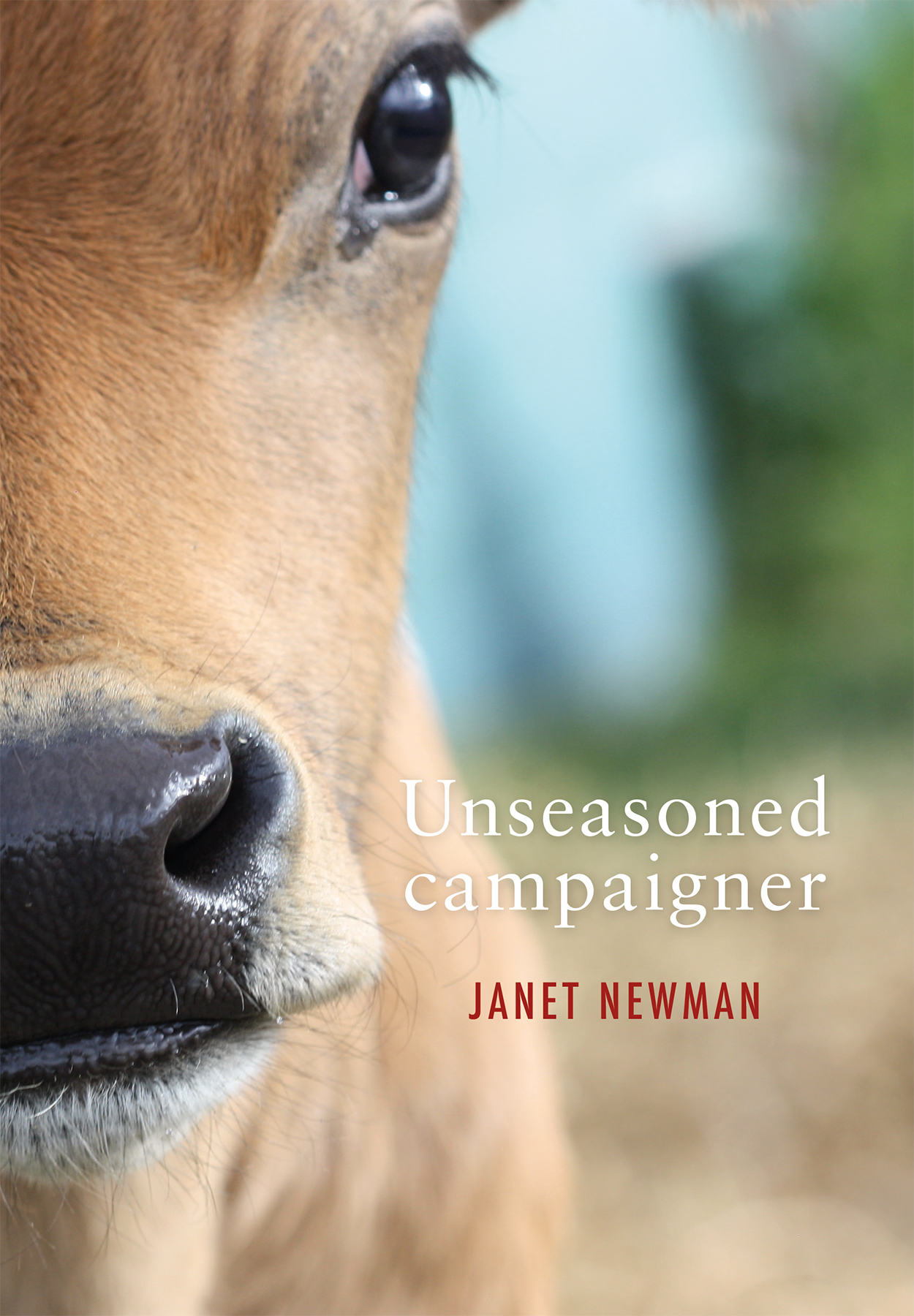
Unseasoned Campaigner, Janet Newman, Otago University Press, 2021

Poet Janet Newman lives at Koputaroa in Horowhenua, where she farms beef. Her debut collection, Unseasoned Campaigner, is nourished beyond description of scenic beauty to a deep love and engagement with the land and farming. Women writing the land is not without precedent. Ruth Dallas comes to mind initially. She spent time as a Herd Recording Officer during WWII and found cities restrictive and dull afterwards. When she was living in Dunedin in later years, writing enabled returns to her beloved rural settings. Janet dedicates several poems to her. The second poet that springs to mind is Marty Smith, whose rural background has featured in her poetry, and who is also unafraid of over and underlaying an idyllic landscape with the grit and reality of farming life.

Janet’s first section, ‘How now?’, places the reader one hundred percent in rural experience: managing livestock, a diarrhea-soaked calf that doesn’t make it, drenching, the slaughter house in graphic detail, blood and sweat. There are water restrictions, water anxiety, drought. A dead river. More dead stock. Horses led to shade and grass. Scenic routes and beauty spots are off the menu.

I applaud this revised view but it is the people who hold my attention to a significant degree. While farmers are currently under scrutiny for diverse reasons, particularly climate change, some are speaking out about how tough it is. Listening to RNZ National’s excellent Country Life, it is clear there is no hold-all definition for the contemporary farmer and their diverse practices. In the book’s middle and final sections, Janet also opens up what “farmer” means, and that adds significant and poignant layers to the first poems.

In the second section, ‘Tender’, Janet draws us to close to a father, and I am assuming her father. He was a complicated, multifaceted human being: a farmer, father, husband, war veteran. He was a man of few words and myriad actions, toil and more toil. He cursed war on television and kept a belt by the door. He is memory, because he has passed, and he fills the speaker with mourning. The poems are vividly detailed with the physicality of daily life, and it is through his presence farming is made prismatic, beyond stereotype. When I pivot on the word “tender”, I see the poems as an offering to both mother and father, to us as readers. I see too the tenderness in the care of animals, and tender as the sore spot that is parental absence, maternal and paternal memory.

His language is electric rhythm of pump and wire,
gush of couplets from the artesian bore,

a flighty heifer enjambed
with a low rail,

stanza of cloud over the back paddock
threatening rain,

the fuck, fuck, fuck
of a dead bull in the drain.

from ‘Man of few words’

The mother is an equally haunting presence with her preserves, her baking and her plums. She too is drawn close through a focus on the physical detail of everyday actions. She is mourned and, in dying first, is an unbearable hole in the father’s life. The parental poems scratch the surface of my skin. Preserving, for example, brings back my own pungent memories. And preserving is also the tool of the poet, poems are stored in sweet and salty brine, held out to be savoured by both poet and reader.

Preserving

Red plums give up
round plump bodies
when I cut out their stones.
I hear my mother’s long-ago voice:
‘Don’t overdo it.’ The boiling
and much else. In the photograph
she is smiling behind glass, my memory
of her steeped in absence. Now,
even that faithless call sounds sweet
as in preserving jars sour plums
surrender to sugar syrup.

The third section, “Ruahine”, moves and adjusts to loss. It also finds footing on scenic routes. In the final poems, the poet is out driving and absorbing the birds and trees, mesmerising hills, the land bereft of vegetation. The landscapes have widened further to carry farm practices, daily challenges, connections to the land and to making a living. But of course it is not as though the farmer is blind to beauty. The final cluster of poems become song, act as sweet refrain, where upon in each return to a view, the view shifts in nuance. Just like poetry. Just like the way life is nuanced and resists deadening dichotomies. ‘Beach’ catches the elusiveness of what we sometimes see and feel so exquisitely:

Some days the clouds disappear
on the drive to the coast

the way the things you wanted to say
evaporate when you get there.

Sentences float to the pencil-line horizon
between sky that is nothing but blue

and sea that is as blue as …
but words fail you,

smudge like fishing boats
in the distance without your binoculars

from ‘Beach’

Janet writes with poise, each line fluent in rhythm and accent, and in doing so achieves a collection that matches heart with sharp and bold eye. Her collection belongs alongside the very best of Marty Smith and Ruth Dallas, a fine addition to how we write the land, whoever and wherever we are.

Janet Newman was born in Levin. She won the 2015 New Zealand Poetry Society International Competition, the 2017 Kathleen Grattan Prize for a Sequence of Poems and was a runner-up in the 2019 Kathleen Grattan Awards. Her essays about the sonnets of Michele Leggott and the ecopoetry of Dinah Hawken won the Journal of New Zealand Literature Prize for New Zealand Literary Studies in 2014 and 2016. She has worked as a journalist in New Zealand and Australia, and a bicycle courier in London. She has three adult children and lives with her partner at Koputaroa in Horowhenua, where she farms beef cattle.

Otago University Press page

Review: Siobhan Harvey for The NZ Herald

Interview: Standing Room Only, RNZ

Feature: Koputaroa farmer and poet Janet Newman writes thesis on ecopoetry

Interview: Janet Newman discusses ecopoetry, RNZ

Interview: The Big Idea

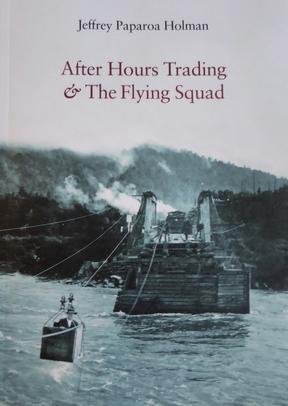
Poetry Shelf celebrates Jeffrey Paparoa Holman’s After Hours Trading & The Flying Squad with a reading and a poem

enter the silence

entering the silence that is not a silence
remains of a shoe by the mouth of a shaft
rusted boiler at a fork in the creek
pond of eels where the dredge dismantled
ended its song in a valley of tailings
entering the silence that is not a silence

enter a silence that never was
the wheels of a lokie sprouting fern
a railway signpost clothed in lichen
the sign to a mine where the dead
still linger lost to lovers dear to mothers
enter a silence that never was

enter then the world without knocking
digging drilling sluicing felling
fishing farming ploughing a dream
hauling an island from the constellations
into the glare of an alien reign
enter then the world without knocking

enter the silence enter the dark enter
the hive of the invitation   enter
the majesty   enter the wine   enter
the wilderness while you may   enter
with flags and enter with instruments
enter the silence   enter   enter

Jeffrey Paparoa Holman

Paula: I recently reviewed Jeffrey’s new poetry collection for Kete Books. In conclusion I wrote: “Holman writes with a measured step, with distinctive and diverse musical keys, with an ear attuned to the everyday and to a refreshing uplift of language. Repetition is a useful device, appearing like a refrain in a book of song, as a subterranean reminder that history repeats itself. Death, ruination, love, joy. This is a collection of poetry that will echo and nourish as we move through uncertain days.”

You can read the review here.

The reading

After Hours Trading & The Flying Squad, Jeffrey Paparoa Holman, Carbide Press, 2021

“The handpiece” for Jack Gilbert


“when the mobile library comes”

“Grinding the gear, 1969”

Jeffrey Paparoa Holman is a Christchurch poet and non-fiction writer. His collection, Blood Ties: selected poems, 1963-2016 was published by Canterbury University Press in 2017. A memoir, Now When It Rains came out from Steele Roberts in 2018. The most recent collection – After Hours Trading & The Flying Squad – has just been released by Carbide Press, his own imprint (29 October 2021).

Recent work has also appeared in Poetry New Zealand Yearbook 2021, an essay on prison reform, and poetry; his work has also been included in The Cuba Press anthology, More Favourable Waters – Aotearoa Poets respond to Dante’s Purgatory (2021).

He makes his living as a stay-at-home puppy wrangler for Hari, a Jack Russell-Fox Terrier cross. Hari ensures that little writing takes place, while psychogeography and excavating parks happens daily.

After Hours Trading & The Flying Squad, Jeffrey Paparoa Holman, Carbide Press, 2021, ISBN 9780473584047

Jeffrey in conversation with Lynn Freeman Standing Room Only RNZ National

Poetry Shelf Monday Poem: Amber Esau’s ‘Liminal’

Liminal

Parted down the middle, his sharpened cuerpo
struts out of a waspish cave in the dark

harakeke, strands bowing under a nosey Tūī
eyeing the red beaned flower that’s claw-like

in lazy light. We lock eyes in glass. Feathers
and flax. He stares from corners acting coy

but this is k’rd, bruh, a Queen will call you
out for not looking long enough. I ruffle

the curls searching silences in the glare
knowing? Not quite slow moving but watchful

the manu drops a beak at onyx arrowhead
eyes forgetting forward. Down the vague grey

he walks the tui across the winking glass
into a powdery afternoon, kicking up silent

dust behind them on the street. They swoop to the top
of St. Kevin’s perched for a second before flying off

into the blue thin as the moon of pulotu
dragging nails across the fog and Paz.

Amber Esau

Amber Esau is a Sā-māo-rish writer (Ngāpuhi / Manase) born and raised in Tāmaki Makaurau. She is a poet, storyteller, and amateur astrologer. Her work has been published both in print and online. 

Hear Amber read