Category Archives: NZ author

Celebrating the Ockham NZ Book Award poetry finalists

The Mary and Peter Biggs Award for Poetry
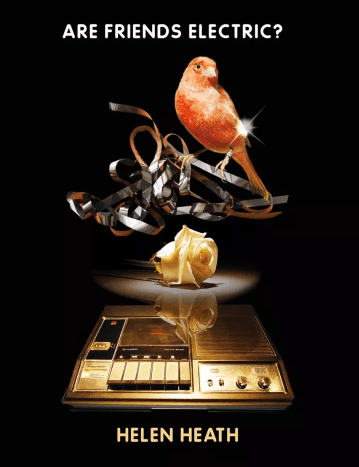
Are Friends Electric? by Helen Heath (Victoria University Press)
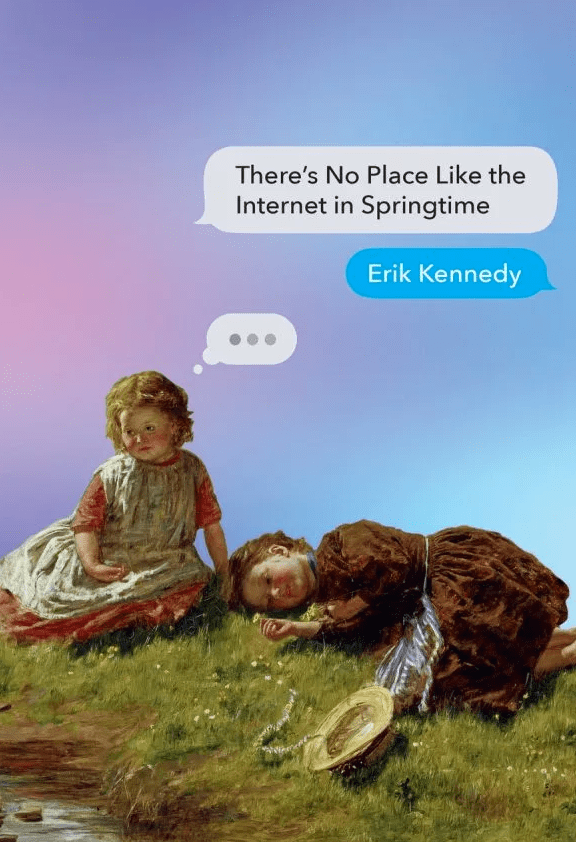
There’s No Place Like the Internet in Springtime by Erik Kennedy (Victoria University Press)
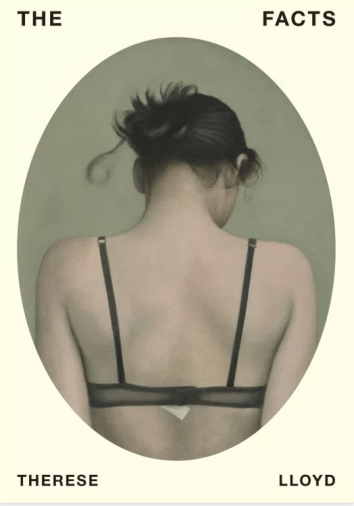
The Facts by Therese Lloyd (Victoria University Press)
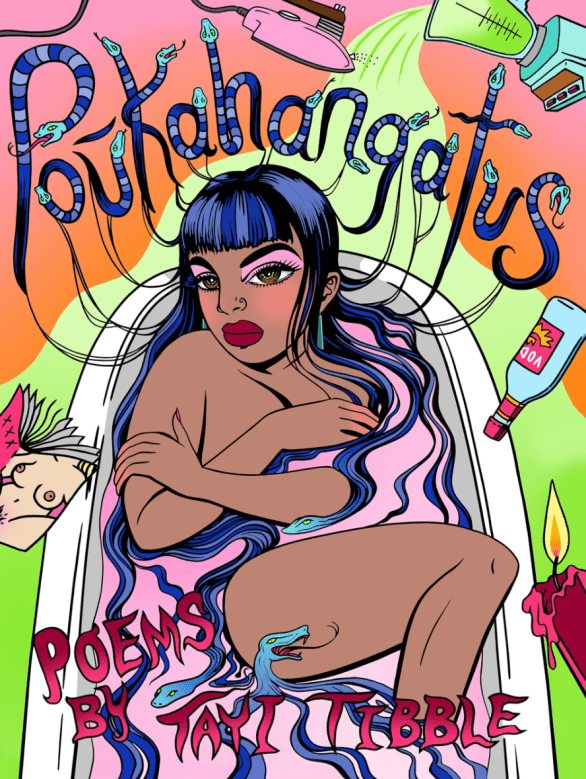
Poūkahangatus by Tayi Tibble (Victoria University Press)


Great to see we have new sponsors, Mary and Peter Biggs, for the Poetry Category at the Book Awards.

I have featured all four finalists on my blog because I have found much to love about these books – this therefore is a moment of celebration. Of course there are books not here that I loved immensely. Poetry Shelf is whole-heatedly devoted to celebrating local books and the fact that I don’t have time to feature all my poetry loves is testimony to the excellent poetry we publish – through both big and small presses. Victoria University Press is becoming a flagship for NZ poetry – publishing at least 9 books a year of high quality and diverse scope. I applaud them for that. And all the other publishers issuing standout poetry (there are many) and the booksellers who put local poetry books on their shelves.

Thank you!

Congratulations to the four finalists! And to VUP.
 

Screen Shot 2019-03-05 at 3.36.34 PM.png


Listen to Helen read two poems here

Helen’s book is a complex, satisfying read with enticing layers and provocative subject matter. It is a book of seeing, strolling, collecting; as though this poet is a bricoleur and   the book is a cabinet of curious things. What I love in the poems is the shifting voice, the conversational tones. The poems that link grief with the effect of technology upon our bodies get under my skin. Most importantly there is a carousel of voices that may or may not be invented or borrowed but that make you feel something.


I ask if you would like a body.

You say, ‘No I’m beyond bodies now,

I’m ready to be fluid, spilling out all over.

I’m ready to spread myself so thin that I’m

a membrane over the world.’ I’m not ready.

I take off my socks and shoes and walk

over a patch of grass very slowly.


from ‘Spilling out all over’
 

Screen Shot 2019-03-05 at 3.46.59 PM.png


Erik’s first-full length collection sparks with multiple fascinations, experience, thought, wit, politics, optical delights and aural treats. It is a book of harmonics and elastic thinking, and is a pleasure to read. The collection navigates eclectic subject matter but I was initially drawn to the interplay between a virtual world and a classical world. I began to muse on how poetry fits into movement between the arrival of the internet and a legacy of classical knowledge. I also love the idea of poetry reacting to collisions, intersections, juxtapositions. Interestingly when I was jotting down notes I wrote the words ‘detail’, ‘things’ and ‘juxtaposition’ but not just for the embedded ideas. Yes, the detail in the poems is striking in itself, but I was drawn to the ‘static’ or the ‘conversation’ or ‘kinetic energy’ between things as I read.


Two feet of snow at my parents’ place, in another season.

Here, the cicadas sing like Christian women’s choirs

in a disused cotton mill. Belief is a kind of weather.

I haven’t seen proper snow for three years.


from ‘Letter from the Estuary’


Screen Shot 2019-03-05 at 3.56.29 PM.png


Therese’s new collection resides in a captivating interplay of chords. You could say that any poetry book delivers chords whether aural, visual or thematic, and in the light of ideas and feelings. This book does it to a stunning degree. Once you start hunting for them – whether in harmony or not, between poems or within a single example – the rewards are myriad. At the core of the book the title poem, the standout-lift-you-off-your-feet poem, achieves a blinding intensity: raw, surprising, probing, accumulative, fearless. I particularly love the surprising turns of ‘Mr Anne Carson’. Therese’s collection takes you deep into personal experience that gets hooked up in the poetry of another (Anne Carson), in matted ideas and the need to write as a form of survival. It makes you feel as much as it makes you think. It is a riveting read.


For three months I tried

to make sense of something.

I applied various methods:

logic, illogic, meditation, physical exertion,

starvation, gluttony. Other things too

that are not necessarily the opposite of one another,

writing and reading for example.


from ‘The Facts’


screen-shot-2018-07-18-at-10-05-26-am.png


Tayi’s debut collection, Poūkahangatus, has already and understandably attracted widespread media attention. The poetry is utterly agile on the beam of its making; and take ‘beam’ as you will. There is brightness, daring and sure-footedness. The poems move in distinctive directions: drawing whanau close, respecting a matrilineal bloodline (I adore this!), delving into the dark and reaping the light, cultural time-travelling, with baroque detail and sinewy gaps. The collection charts the engagement of a young, strong woman with her worlds and words  – and the poetic interplay, the sheer joy and magnetism of the writing, is addictive. I treasure this book for its kaleidoscopic female relations and views of women; and the way women are the vital overcurrents and undercurrents of the collection. Above all I loved the kaleidoscopic effect of the book; the way it is edgy and dark and full of light. The way it catches living within popular culture and within family relations, the way it carries sharp ideas and equally sharp feelings.


Poūkahangatus

in 1995 I was born and Walt Disney’s Animated Classic Pocahontas was

released. Have you ever heard a wolf cry to the blue corn moon? Mum has.

I howled when my mother told me Pocahontas was real but went with John

Smith to England and got a disease and died. Representation is important.


from ‘Poūkahangatus’


I am not a journalist punting on a winner – I am a poetry fan and have read all these books several times – any one of these books deserves to win. A toast from me x.

Poetry Shelf review: Dinah Hawken’s There is no harbour

There_Is_No_Harbour__22619.1544066853.jpg

cover image by Marian Maguire


When I trained in social work

in 1968—the year we saw Earth from space—

I found the History of New Zealand

could shake me like an earthquake

and make me cry.


from ‘”All the history that did not happen'”


Dinah Hawken’s eighth poetry collection, There is no harbour (Victoria University Press, 2019), presents three entwined Taranaki strands. The first comprises her family history during the years of early Pākehā settlement, the second a brief history of the Taranaki wars and the third reveals her thoughts and feelings as she researched and wrote her long poem. Dinah always gifts her poetry with musicality, breathing room, heart and contemplation. This new book is no exception. It is an addictive mix that inspires me as both reader and writer.

In her brief frontnote Dinah writes:

The completion of the poem has not lead me to any sense of resolution. It has led to something less measurable, perhaps more valuable—greater clarity, particularly of the depth of injustice Māori have endured in Taranaki. At the same time it has strengthened my attachment and my gratitude to my great and great-great grandparents, whom I know as essentially good people. And it has led me back to Parihaka: to profound respect for Te Whiti and Tohu, the art of leadership, the art of passive resistance, and their refusal of human war.

Dinah brings together family voices, anecdotes, settings, facts and musings to re-present history in poetic form—history that was hidden, manipulated and muted in the past. She stands as a Pākehā in multiple places, searching for other points of view, other ways of seeing and feeling. I am looking through her poem view-finder and the effect is significant. I am mourning the arrogance and the atrocities, I am celebrating the courage.


Tītokowaru

fired his tūpara in the air

in front of 600 people

threw it down at his feet

and kicked it.


The evil weapon, he said,

which has caused so much mischief and ill-will

and been loaded with the blood of men,

should never hereafter

be taken up again.


from ‘1867, “The Year of the Daughters”‘


As a poet Dinah utilises economy on the line to build richness above, between and beyond. That plainness of talking makes the impact even stronger, deeper, wider.


Wherever you looked at it from,

whoever lived inside it,

a whare was a welcome shelter.

One in which a family could sleep,

in which a child could be born.


It was the kind of house

that could easily

go up in smoke. And it did.


from ‘Oswald, from his notebook’


How to imagine the past? How to imagine the cruel past? How to imagine the day and its sheen of sun on the leaves? How to imagine both sides of  an unforgivable war? How to imagine how to proceed in your Pākehā skin with your Taranaki family tree and the ancestral tree in Britain?  This is what Dinah does as she creates her chain of connections towards the present and back into the past.

Individual lines stand out and they feel like entrances into the stories I /we need to hear:


‘I am the beneficiary of injustice.’


In one poem the voices of Robin Hyde, Virginia Woolf, J. C. Sturm and Te Whiti sit side by side.


In 1940 Virginia Woolf said:


Unless we can think peace into existence

we—not this one body

but millions of bodies yet to be born—

will lie in the same darkness and hear

the same death rattle overhead


from ‘Found Poetry’


I adore this book, this contemplative, self-vulnerable exploration that faces a past that makes me feel shame, but that offers empathetic heart-lines out in the open. I can’t take it all in, in my first reading. I have read it again, and then again. There is no harbour is a vital reminder to bring our stories into the open and to keep finding ways to build peace in our homes and our villages and our cities. And our hearts. I want you to read it and find your own connections, your own lines to treasure, because this is a poetry book that matters so very very much.


‘Loss of possessions is a kind of freedom;

loss of land is exile’


This is what it comes down to:

Taranaki land was stolen.

My people—at first lost—were then

steadied by it. Pakakohe

were wrenched from it.

They were promised reserves,

instead they were jailed.


When you come down to it

everything comes back

to the vital, absorbing land.

And although a poem

can enclose you

like the rocky arms

of a Cornish cove,

justice is so much stronger than injustice

and this poem

has no solace to offer:

it is a phrase or two in a story

being written and woven together

by numerous, various,

generational hands.


©Dinah Hawken There is no harbour


Victoria University Press page


Poetry Shelf Monday Poem: Charlotte Simmonds’s ‘Kirsten’


Kirsten


Says she has a small dog.

You would like a small dog.

Will Kirsten let you walk her small dog?

Will she let you play with it?

But what if Kirsten’s small dog doesn’t like you.

What if it rejects you.

Rejection is so painful and hard to bear.

It feels like you are dying.

You are dying.


If you were in ‘the wild’, ostracism would mean certain death.

If you were in ‘the wild’, it would be hard for you to feed and shelter yourself adequately.

If you were in ‘the wild’, and then you got an injury, you would be really screwed.

If you were in ‘the wild’, no one would be able to help you.

If you were in ‘the wild’, you would be dead by now.

If you were in ‘the wild’, wild dogs who were in the wild would feed on you.

If you were in ‘the wild’, you could productively give back to the wild.

If you were in ‘the wild’, you could help everyone.


You could help everyone except the runt of the litter.

The runt of the litter is too small to feed on you.

His elder siblings shove him rudely out of the way.

His mother no longer loves him because she does not buy into that sunk cost fallacy.

The runt of the litter is excluded, cast out, ostracised, just like you.

He never meets another runt of the litter.

They never hump, conceive, give birth to even runtier runts.

All the small dogs of the world die out.

In the wild, all the small dogs are dead because your body was too small, there was not enough to go round, they could not feed on your body.

You’d think Kirsten’s small dog would like you, because it, too, in the wild, would know the pain of rejection, like you.

But it doesn’t. It blames you.

Kirsten’s small dog thinks this is all your fault.


©Charlotte Simmonds


Charlotte Simmonds is a (currently) “autistic” Wellington writer, translator, sometime researcher and intermittent theatre practitioner. Her fiction, non-fiction and poetry has appeared on stage at BATS Theatre in Wellington, in New Zealand podcasts, on New Zealand poetry blogs The Red Room and Poetry Shelf, in New Zealand literary journals Landfall, Hue & Cry, Sport, Turbine and JAAM, in Usonian literary journals The Iowa Review, Mid-American Review, Painted Bride and Broad Street, and in the UK journal Flash. She is the author of one published collection of poetry and lyric prose, The World’s Fastest Flower, a finalist in the Montana Book Awards in 2009, and was more recently shortlisted for an Australian short story prize.


Poetry Shelf noticeboard: Geoff Cochrane launch


Screen Shot 2019-03-01 at 11.06.51 AM.png


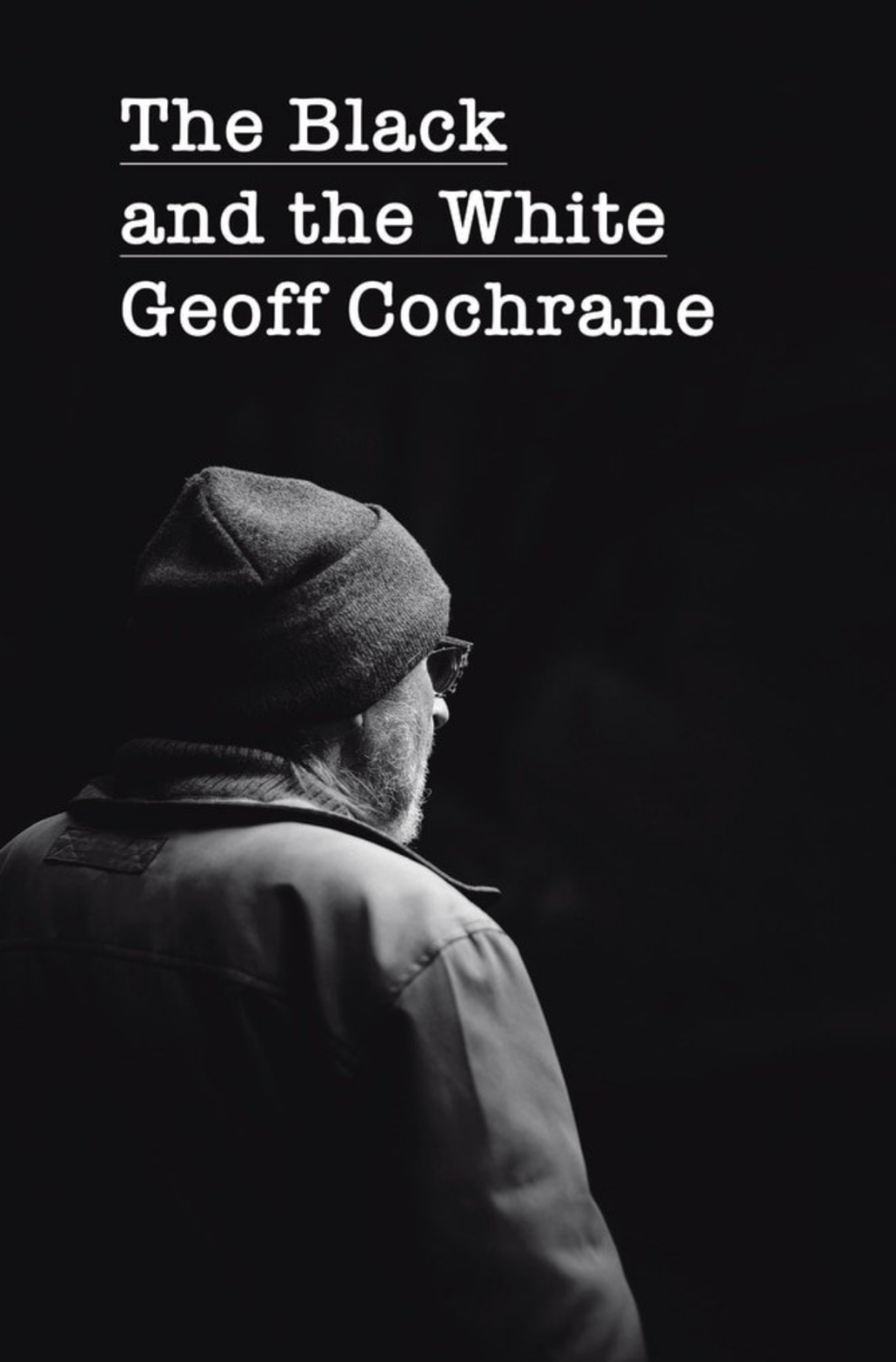
Unity Books & Victoria University Press warmly invite you to hear Geoff Cochrane discuss his new poetry book ‘The Black and the White’ with fellow author Carl Shuker.

‘The Black and the White’ is a new work – witty, fearless, formidably concise – from one of the most distinctive voices in New Zealand poetry.

Geoff Cochrane is the author of seventeen collections of poetry, two novels, and Astonished Dice: Collected Short Stories (2014). In 2009 he was awarded the Janet Frame Prize for Poetry, and in 2010 the inaugural Nigel Cox Unity Books Award. Geoff received an Arts Foundation of New Zealand Laureate Award in 2014.


Screen Shot 2019-03-01 at 11.06.01 AM.png


Poetry Shelf Friday talk spot: Leilani Tamu on the departure of poetry


About eighteen months ago, poetry deserted me. I had just emerged from a period of deep grief, where the shock and trauma of losing a loved one was just beginning to ebb. And yet, at a time in my life when I needed the words more than ever, they were gone. I remember reaching out for them, initially tentatively, carefully. And I remember that first initial deep feeling of shock – and grief – at finding: Nothing.

It felt like an injustice, like I’d been robbed of something precious and irreplaceable. I reached for those same words again. I scoured the cognitive neuron-scape of my mind, and while tattered images and scattered thoughts were found here and there, the raw content – the stuff that had always been there when I needed it and wanted to transform it into poetry – was gone.

I didn’t realise it then, but reflecting on that time now, I understand it to be both beginning and end. Few people get to witness a momentous shift within and across a season in their cognitive evolution with such clarity. Most of us experience seasonal changes that shape our brains as surprising, often gradual, incremental observations that suggest change has occurred. Yet for me the change has been absolute. In a very strange way, writing about this helps to shape up the relativity of that loss; helps to put words to what I have known for eighteen months and been unable to share.

I will always be a poet, but the season in my life within which I wrote poetry, has ended. And within this new beginning, something beautiful – that I could never have dreamed of or fathomed – shaped from the humus of the cognitive tatters of the little that has been left from that season in my life – is just starting to emerge….


Leilani Tamu lives in Aotearoa with her husband and two children. Her first book of poetry, The Art of Excavation, was long-listed in the 2015 Ockham-NZ book awards.


Poetry Shelf audio spot: Johanna Emeney reads ‘Favoured Exception’


Poetry NZ Launch Bronwyn Lloyd photo.jpeg

Photo credit: Bronwyn Lloyd


‘Favoured Exception’ previously published in Poetry NZ 2017


Johanna Emeney has a background as a senior school English Literature teacher — a vocation which she enjoyed for thirteen years. She is the author of two books of poetry: Apple & Tree (2011, Cape Catley) and Family History (2017, Mākaro Press). In 2017, she also wrote a nonfiction book called The Rise of Autobiographical Medical Poetry and the Medical Humanities (ibidem Press). Jo is currently a senior tutor at Massey University, and she co-facilitates the Michael King Young Writers Programme with Rosalind Ali. She is married to David, with a demanding family of two goats and six cats.


Poetry Shelf Classic Poem: Emer Lyons on Heather McPherson


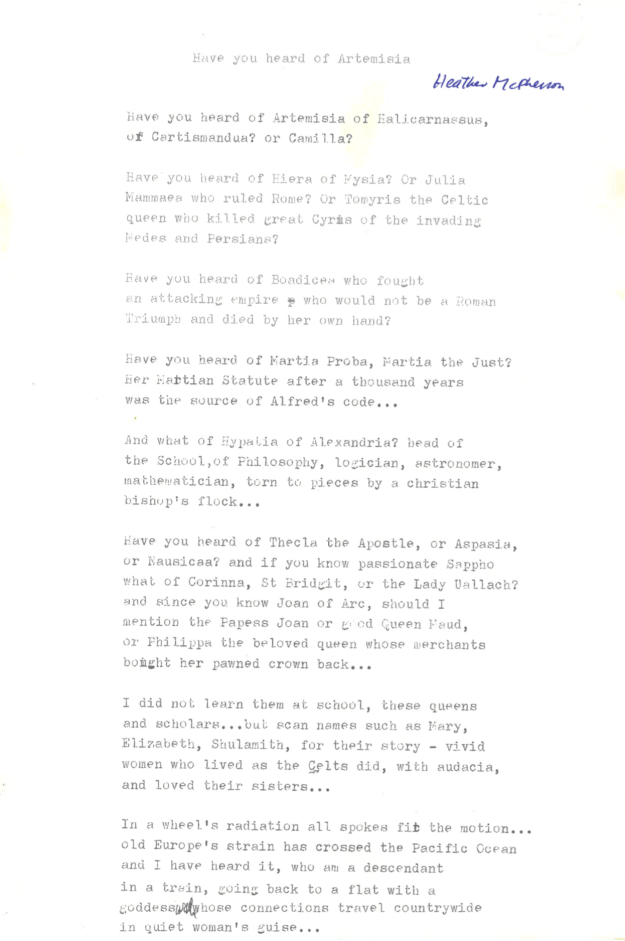
Have you heard of Artemisia?


Have you heard of Artemisia of Halicarnassus,

or Cartismandua? or Camilla?


Have you heard of Hiera of Mysia? Or Julia

Mammaea who ruled Rome? Or Tomyris the Celtic

queen who killed great Cyrus of the invading

Medes and Persians?


Have you heard of Boadicea who fought

an attacking empire – who would not be a Roman

Triumph and died by her own hand?


Have you heard of Martia Proba, Martia the Just?

Her Martian Statue after a thousand years

was the source of Alfred’s code . . .


And what of Hypatia of Alexandria? head of

the School of Philosophy, logician, astronomer,

mathematician, torn to pieces by a Christian

bishop’s flock . . .


Have you heard of Thecla the Apostle, or Aspasia,

or Nausicaa? and if you know passionate Sappho

what of Corinna, St. Bridget, or the Lady Uallach?

and since you know Joan of Arc, should I

mention the Papess Joan or good Queen Maud,

or Philippa the beloved queen whose merchants

bought her pawned crown back . . .


I did not learn them at school, these queens

and scholars . . . but scan names such as Mary,

Elizabeth, Shulamith, for their story – vivid

women who lived as the Celts did, with audacia,

and loved their sisters . . .


In a wheel’s radiation all spokes fit the motion . . .

old Europe’s strain has crossed the Pacific Ocean

and I have heard it, who am a descendant

in a train, going back to a flat with a goddess

wall, who connections travel countrywide

in quiet woman’s guise . . .


dedicated to Elizabeth Gould Davis and Max Jacob


Heather McPherson, from A Figurehead: A Face (Spiral, 1982)


Have you heard of Heather McPherson?

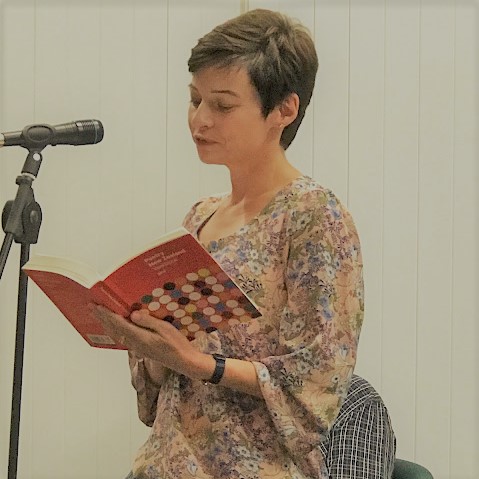
Emma Neale asked me this question when I was searching for lesbian and queer poets for my PhD research. I hadn’t which is hard to imagine now.

‘Have you heard of Artemisia?’ was painted on the outside wall of the Women’s Gallery on Harris Street, Wellington in 1981.

As I typed the poem it became apparent that Microsoft Word had not heard of Cartismandua, or Hiera of Mysia or Tomyris. Neither had I. My middle name is Bridget. A name I share with many women in my family. Every year in my Catholic primary school in Ireland we weaved St. Bridget (most commonly spelt Brigid) crosses on her saint’s day, the first of February. Nobody mentioned Darlughdach, Bridget’s apparent female lover and soulmate. Catholic forums online call this a conspiracy theory.

Heather was the first out lesbian to publish a poetry collection in New Zealand.

I’m not a “gold star lesbian” (watch Hinemoana Baker explain the term here). It took me a long time to own my feminism. The Guerilla Girls came to my university in Cork sometime in 2007 (or 2008 or 2009 . . . ) and when they asked the crowd, “How many people here tonight call themselves a feminist?”, I did not raise my hand. I didn’t think then that it mattered that men always won the Oscar for best director, or that women feature in the Met predominately as nudes not as artists. I believe my religious upbringing ensured that the patriarchal domination of society remained unquestioned within me for far too long. I did not learn to question at school.

There are ten question marks in this poem. I encourage you to ask yourself ten questions today. And to ask ten people, “Have you heard of Heather McPherson?”


Emer Lyons is an Irish writer who has had poetry and fiction published in journals such as TurbineLondon GripThe New Zealand Poetry Society AnthologySouthwordThe Spinoff and Queen Mob’s Tea House. She has appeared on shortlists for the Fish Poetry Competition, the Bridport Poetry Prize, the takahé short story competition, The Collinson’s short story prize and her chapbook Throwing Shapes was long-listed for the Munster Literature Fool For Poetry competition in 2017. Last year she was the recipient of the inaugural University of Otago City of Literature scholarship and is a creative/critical PhD candidate in contemporary queer poetry.

Heather McPherson (1942–2017) was a poet, editor, teacher and feminist activist. In 1974 she founded Christchurch Women Artists Group and Spiral, a woman’s art and literary journal. She published five collections of poetry, with her poems appearing in numerous journals and anthologies. Figurehead: A Face (Spiral, 1982) was the first poetry collection by an out lesbian in New Zealand. Janet Charman selected the poems for McPherson’s posthumous collection, This Joyous, Chaotic Place: Garden Poems (Spiral, 2018).


Screen Shot 2019-02-20 at 6.49.06 PM.png


Poetry Shelf Monday Poem: Albert Wendt’s ‘Packs’


 Packs


We try to breath as long as technology

and medicine can stretch it

and don’t know why we are wretched with anxiety


Every dawn in Samoa the neighbourhood packs of dogs

cracked open our sleep:  barking  howling  yelping  screeching

Theirs was the desperation of hunger and ill-treatment

I needed to quench the undeniable accusation in their howling


Now back in our safe Ponsonby bedroom the spring dawn sprawls

across our bed and refuses to leave but it will be swallowed up

eventually by the morning and our need to walk out

into the embracing routines of our tidy lives


The packs will continue to stalk us with their slow howling


No set plan or final intention

Just let go – just let it go  all of it

even the accusing packs


It will not come again


©Albert Wendt  (August-Sept, 2017)  (November 2018)


Albert Wendt has published many novels, collections of poetry and short stories, and edited numerous anthologies. In 2018, along with four others, he was recognised as a New Zealand Icon at a medallion ceremony for his significant contribution to the Arts.


Poetry Shelf noticeboard: Kiri Piahana-Wong’s poem for Time Out Bookstore

Screen Shot 2019-02-21 at 1.02.58 PM.png

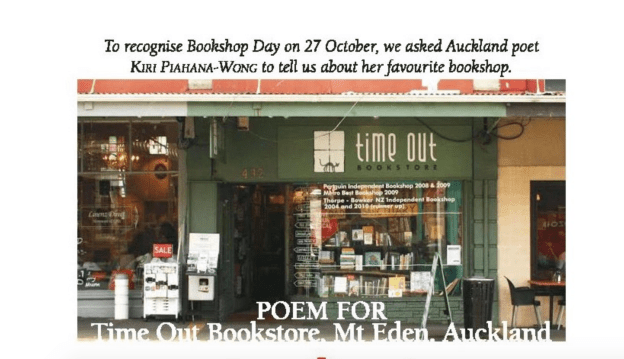
Kiri’s poem, ‘A Poem for Time Out Bookstore’, originally appeared in NZ Author to celebrate NZ Bookshop Day.

You can now read it online.  It is so good! I completely identify with it.


Poetry Shelf talk spot: Tim Upperton on hidden lives


A lifted stone

Much is hidden from us. Behind the smooth, painted and plastered lining of the walls of my living-room, where I sit and write, less than a metre away from me, creatures are stirring, and have their secret life. Sometimes I hear the dry scuttle of a mouse, but other, smaller creatures – woodlice, whitetail spiders, click beetles, ants – these creatures are silent, and seldom reveal themselves. Occasionally I notice a daddy-long-legs swaying slightly in the corner of the ceiling, or, in the early hours, as I trudge to the bathroom, a solitary chocolate-coloured cockroach spreadeagled on the wall, stunned by the light. The borer chews a hole in the skirting board, with only a little brown dust to show for its industry. I imagine it deep in the wood, nestled like a rabbit in its burrow, its scrap of life ticking.

When I was a child I was obsessed with these hidden lives. I would carefully remove the pale, pupating huhu grubs that lay buried in rotting stumps like pharaohs in their tombs, and keep them in jars of damp sawdust until they emerged as winged beetles, still white and frail-looking, their long antennae testing the air. I would turn over planks of wood to see what lived under them, brown beetles, black, shiny, soft-bellied spiders with white egg-sacs, grey hump-backed slugs, orange slimy flatworms. On the windswept beach where my family camped each summer, I would crouch on the reef at low tide, the sea a distant, uneven roar, like traffic, and I would lift the weed-encrusted stones in the rockpools to expose the creatures that teemed underneath. Glassy shrimp, almost invisible, would dart backwards. Brown cockabullies would flash past the cautiously retreating hermit crabs. Anemones would wave their thin arms among the inert kina and cushion starfish. It seemed very strange to me that all these creatures coexisted under the stone, as in a darkened house, in a kind of dormancy, until I lifted the roof and the light fell upon them.

Now, as I turn on the tap to fill the kettle, I hear a gurgling in the plumbing, and I remember the water-supply at the street has been turned off for some hours as contractors are digging a trench for the installation of fibre-optic cable. The cable – really many cables bundled together, each insulated in bright blue sheathing – lies along the grass berm, but soon it will be buried and I will never see it again. Beneath the ground it will ferry data between my computer and the world beyond. The water is back on, and in a sort of convulsion it bursts from the tap, orange with rust, and flecked with clots of green-black algae. And this has always been there, the flakes of rust and the algae, inside the pipe that leads to the tap – if I look closely, I can see a rind of green algae at the spout, surviving despite the chlorine-treated water that rushes through it every day. It has been there the whole time, the outside of the tap is gleaming chrome but this belies what it is like inside, where no light shines, where rust collects and algae grows.

My eldest child, an adult now, writes poems. His poems are sometimes enigmatic, they evoke a feeling, a mood, but I don’t always understand them. I want to, perhaps out of a desire to understand him. It’s as if the poems might reveal to me something about him that is hidden, as if they are a stone that might be lifted. But it’s no good me asking what they mean. He just shrugs and grins. We both know the strangeness of poetry, the impossibility of paraphrase, it’s what makes us come back, to read the same short poem again. There it is, the poem, on the white page with nowhere to hide, yet concealing some of itself. And this is true of all the poems I love most. I memorise these poems, even as they withhold their meanings, to take them into myself. They feel a part of me, just as my liver and kidneys and heart are parts of me, hidden inside my body, working in ways I don’t understand to help me live.


Tim Upperton

(excerpt from a longer work that will be published in a collection of essays, Strong Words, by Otago University Press)


Tim’s second poetry collection, The Night We Ate The Baby, was an Ockham New Zealand Book Awards finalist in 2016. He won the Caselberg International Poetry Competition in 2012 and again in 2013. His poems have been published widely here and overseas, and are anthologised in The Best of Best New Zealand Poems (2011), Villanelles (2012), Essential New Zealand Poems (2014), Obsession: Sestinas in the Twenty-First Century (2014), and Bonsai (2018).