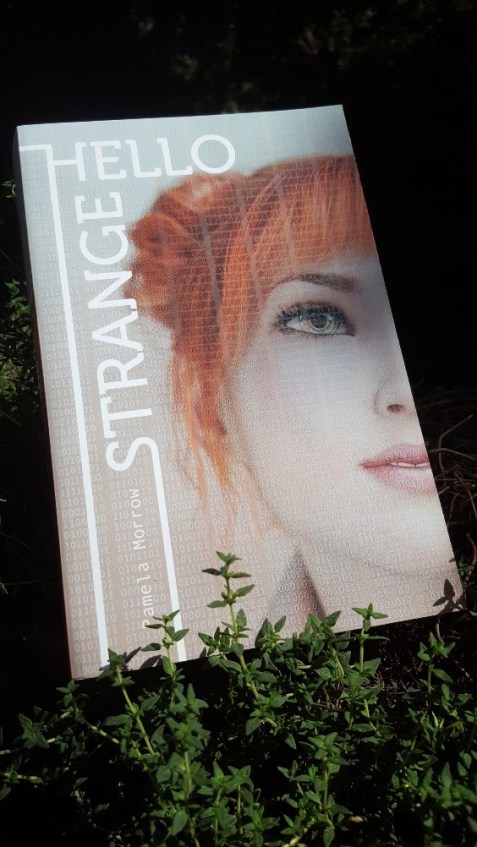
Hello Strange by Pamela Morrow (Penguin Random House)
This month this fabulous young adult novel hits the virtual shelves, and you can access a copy through numerous channels outlined here.
As soon as bookshops open again, you can of course also purchase physical copies, and I urge you to do so, not just because this is a high-paced, funny, stimulating, thought-provoking and entertaining read, with the added bonus of a lively layout, but also because both the author and the shops need all your support given the challenging timing of this launch. The Women’s Bookshop on Ponsonby Road was all set to host the event, so a big shout out to Carole and her team.
When I was about six, the height of scientific enterprise that encapsulated the excitement of the future was not the moon landing; after all, we queued up for ages to see a small lump of dusty moon rock that was, quite frankly, a huge disappointment. No, for me it was the Super Ball, the brightly coloured bouncy sphere of synthetic rubber called (Wikipedia informs me) Zectron. To a little girl, this seemed the height of scientific innovation: if you could make this tiny object bounce from floor to ceiling, endangering any ornaments in its path, then the future was going to be a wonderfully exciting place. Sad, I know, but toys have come a long way since then.
So, why am I wittering on about Super Balls? For two reasons. First, when Pamela sent her first draft in, it was evident there was something really special in there, but it needed work. So, I dashed her hopes to the ground with demands for changes and, like a Super Ball, she bounced back up again producing something far higher than my expectations. We went through that process several times, and Pamela just kept bouncing higher, a whizzing, psychedelic ball of energy and creativity, with added glitter. This is a sign of a true writer: someone with great ideas and a way with words and, most importantly, the perseverance and bounce of a Super Ball.
Secondly, although my imagination was tickled by a lump of synthetic rubber, Pamela’s imagination leaps as high and as far and as unexpectedly as those balls. Her vision of the future is fun and zany, but actually credible and well researched. From the talking toilet cubicles in school to the mood suit, her future is varied and intriguing, and a place I wanted to spend time in through the pages of her book.
Hello Strange has lots of heart (including a mechanical one and a humanoid one), vibrant characters, a compelling plot and is a moving exploration of grief.
So, for all readers from about 12 upwards, do escape this world into the future, as created by this exciting, irrepressible, Super Ball of a new writer, Pamela Morrow.
Frances Edmond reads ‘Late Song’ by her mother Lauris Edmond
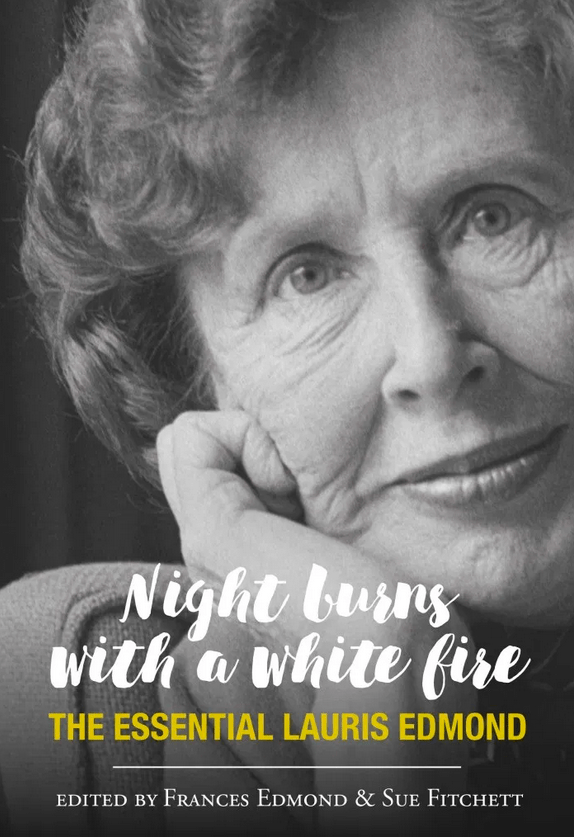
Night Burns with a White Fire: The Essential Lauris Edmond (Steel Roberts, 2017)
Lauris Edmond, 1924–2000, grew up in Napier, and attended Wellington Teachers’ College, Victoria University College (1942–44) and Canterbury College (1944). She completed an MA in English literature with First Class Honours at Victoria University of Wellington. She wrote poetry, novels, short stories, stage plays, autobiography and edited several books, including a selection of A. R. D. Fairburn’s ltters. She published seventeen volumes of poetry, including several anthologies, and a CD, The Poems of Lauris Edmond, which was released in 2000. Her debut collection, In Middle Air (Pegasus Press, 1975), wri tten in her early fifies, won the PEN NZ Best First Book of the Year (1975) and Selected Poems (Oxford University Press, 1984) won the Commonwealth Poetry Prize in 1985. She received numerous awards, including the Katherine Mansfield Menton Fellowship (1981), an OBE for Services to Poetry and Literature (1986), and an Honorary DLi from Massey University (1988). Edmond was a founder of New Zealand Books. The Lauris Edmond Memorial Award was established in her name. Her daughter, Frances Edmond, and poet Sue Fitchett published Night Burns with a White Fire: The Essential Lauris Edmond (Steele Roberts), a selection of her poems, in 2017.
Today Emma Neale was announced as the 2020 winner of the Lauris Edmond Memorial Award for Poetry.
Frances Edmond is a writer and reviewer who works across disciplines in film, theatre and literature and is Literary Executor for her mother, poet, Lauris Edmond. Her most recent completed projects include: Night Burns with a White Fire: THE ESSENTIAL LAURIS EDMOND (with co-editor Sue Fitchett and published by Steele Roberts Aotearoa) and she is now working on a companion piece tentatively titled, Burning Substance: a Lauris Edmond Companion, which explores the origins, sources and inspiration of her mother’s writing through a daughter’s eyes. Frances was the 2018 recipient of the Shanghai Writing Residency and spent two months in Shanghai working on a new draft of her screenplay about New Zealand Missionary Nurse, Kathleen Hall, and her experiences in China. With Ken Rea who teaches at the Guildhall in London, and who was the founder of the Living Theatre Troupe (1970-76), Frances is working on a history of the Troupe based on completed oral histories that were funded with a Ministry of Culture and Heritage Oral History Award. She has also written and directed her own short film, The Apple Tree.
essa told me they would like this poem to be the start of a conversation among Maaori and Pasifika writers. ‘Poetry can bring us together,’ they hope.
I am happy to offer a connecting space ‘for Maaori and Pasifika writers to deal with and or celebrate whatever during this time’.
paulajoygreen@gmail.com If I don’t answer your email within three or four days nudge me please.
essa may ranapiri, Ngāti Raukawa, is a poet from Kirikiriroa, Aotearoa. They graduated with an MA in Creative Writing from Victoria University of Wellington (2018) and their work has appeared in many local journals. They are the featured poet in Poetry Yearbook 2020 (Massey University Press). ransack has been longlisted for the Ockham NZ Book Awards 2020.
E ngā mana e ngā reo e ngā karangatanga maha o ngā hau whā. Ngāmihi atu ki a tātou katoa.
Over the past few months our whānau has experienced a harrowing time regarding my fathers health. For a while there, colour and laughter disappeared and everything seemed meaningless. I found my senses couldn’t handle anything overly loud, aggressive and I was unable to render up the energy to read whole books – instead, it was lines of poems (thematically written about something unrelated) rolling around in my head, giving me comfort as we sat in white corridors and I suppressed the urge to look up all the medical terms online.
Waterfall
I do not ask for youth, nor for delay
in the rising of time’s irreversible river
that takes the jewelled arc of the waterfall
in which I glimpse, minute by glinting minute,
all that I have and all that I am always losing
as sunlight lights each drop fast, fast falling.
I do not dream that you, young again,
might come to me darkly in love’s green darkness
where the dust of the bracken spices the air
moss, crushed, gives out an astringent sweetness
and water holds our reflections
motionless, as if for ever.
It is enough now to come into a room
and find the kindness we have for each other
— calling it love — in eyes that are shrewd
but trustful still, face chastened by years
of careful judgement; to sit in the afternoons
in mild conversation, without nostalgia.
But when you leave me, with your jauntiness
sinewed by resolution more than strength
— suddenly then I love you with a quick
intensity, remembering that water,
however luminous and grand, falls fast
and only once to the dark pool below.
Lauris Edmond
From Night burns with a white fire: the essential Lauris Edmond, eds Frances Edmond and Sue Fitchett, Steele Roberts 2017, poem originally published 1975 In Middle Air)
It’s specifically poetry by Lauris Edmond and John Donne that came.
‘Yesternight the sun went hence,
And yet is here today;’
from ‘Song; Sweetest I Do Not Go’ by John Donne
‘Minute by glinting minute’
from ‘Waterfall’ by Lauris Edmond
They may seem like random choices. But when I discovered Donne and Edmond as a teen they blew.my.mind. Nerdy much.
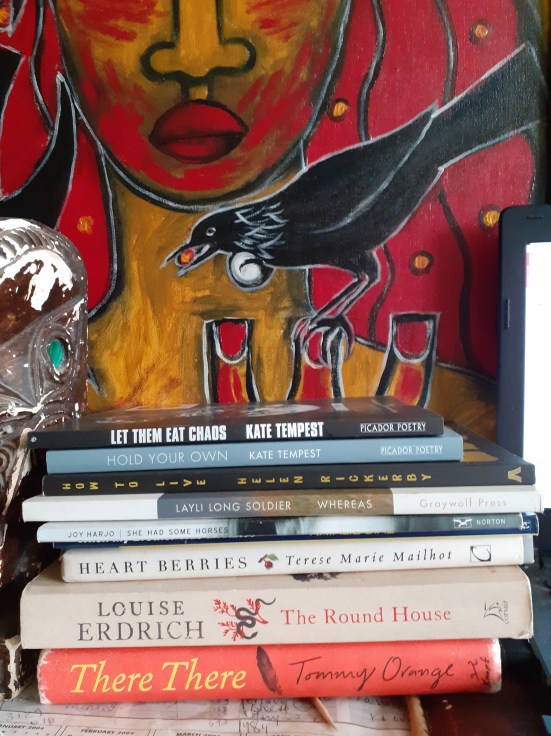
As things settled with Dad, the ground felt more solid instead of the instability we’d been living through and so, I found myself gradually returning to the joy of reading, starting with the pile of newly ordered poetry books (Helen Rickerby’s – How to Live and Kate OHMYGOD Tempest),ebook downloads and podcasts (The Slowdown and New Yorker: Poetry are favourites). Even as I eased back in, World News started to drown out and distract and, without even really being aware of it, I found myself reaching for and returning to the solidarity and familiarity of fellow Indigenous like the current American Poet Laureate Joy Harjo, Layli Long Soldier (Whereas), Natalie Diaz (When My Brother Was an Aztec), Ali Cobby Eckermann and because not all indigenous are print published (yet or maybe even ever – that’s another kōrero, the elitism of print publishing), Evelyn READHERNOW Araluen and; because Indigenous prose is poetic a.f – Tommy Orange (There, There), Richard Wagameese (Indian Horse, Medicine Walk), Terese Marie Mailhot (Heart Berries) and Louise Erdrich (The Round House) and the Spoken Word roopu 1491’s.
Of course, most of these writers/performers are contemporary and that’s purposeful on my part because our commonalities while based upon our shared experience of Colonial Violence is also shaped by our whakapapa to our ancestors, the richness of our respective cultures and our colonised realities. As I acknowledge, that we follow in the steps of those before us, as others follow us, I also recognise that responsibility, that underlying mihi, that humility in the work of these contemporary indigenous and, as we live through these days, I get huge comfort in that. I am comforted by Our shared survival, Our resilience and by Our ability to still be here after the most horrific intentional actions to kill us and our ability to articulate and call that out, while being in a state of constant forgiveness towards our own people because we know, we get it, we’re you as you are me.
It terrifies me as to what will happen if, this new enemy finds its way to my Iwi, to rural Māori communities, to the rural Māori community I love, to Prisons or to the many places around this country where people I love are. We won’t have a shitshow. This’ll be a modern day Scorched Earth. It’ll wipe us out. I can’t bear to think about that.
So, while knowing and feeling allathat, I do the only thing I can. I put one step in front of the other as I have these past months, walking alongside my whānau and my Dad facing what has to be faced because while terrified, the love I have for him is greater than my fear. My love is greater than my fear. Love is greater than fear.
May a vaccination be found/created. And soon.
Ngā manaakitanga na Maraea
I Give You Back
I release you, my beautiful and terrible
fear. I release you. You were my beloved
and hated twin, but now, I don’t know you
as myself. I release you with all the
pain I would know at the death of
my children.
You are not my blood anymore.
I give you back to the soldiers
who burned down my house, beheaded my children,
raped and sodomized my brothers and sisters.
I give you back to those who stole the
food from our plates when we were starving.
I release you, fear, because you hold
these scenes in front of me and I was born
with eyes that can never close.
I release you
I release you
I release you
I release you
I am not afraid to be angry.
I am not afraid to rejoice.
I am not afraid to be black.
I am not afraid to be white.
I am not afraid to be hungry.
I am not afraid to be full.
I am not afraid to be hated.
I am not afraid to be loved.
to be loved, to be loved, fear.
Oh, you have choked me, but I gave you the leash.
You have gutted me but I gave you the knife.
You have devoured me, but I laid myself across the fire.
I take myself back, fear.
You are not my shadow any longer.
I won’t hold you in my hands.
You can’t live in my eyes, my ears, my voice
my belly, or in my heart my heart
my heart my heart
But come here, fear
I am alive and you are so afraid
of dying.
Joy Harjo
Published in How We Became Human: New and Selected Poems: 1975 – 2001
(W.W. Norton and Company Inc., 2002).
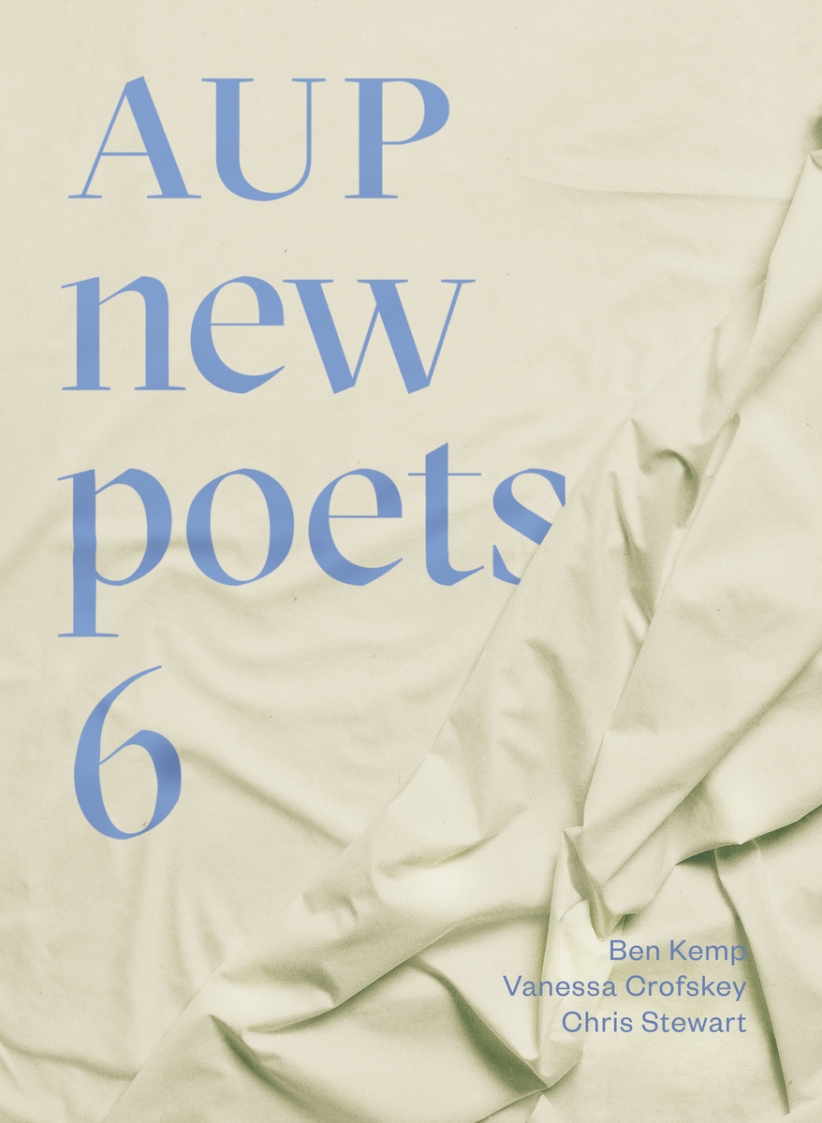
Welcome to AUP New Poets 6 launch. Settle back with a glass of wine or a cup of tea and enjoy the launch. You can order the book from your favourite bookshop once they are open. The book is beautiful – I can’t wait to share my thoughts on it soon.
Congratulations Anna Jackson, Vanessa Crofskey, Ben Kemp and Chris Stewart.
Cheers!
From publisher Sam Elworthy:
Thanks to editor Anna Jackson’s mighty work, AUP NEW POETS has come back with a bang. And in AUP NEW POETS 6 (our second in the new format, this time a book in rumpled bed sheets), the poets turn things inside out and upside down. Ben Kemp, our first poet coming down the line from Papua New Guinea. Vanessa Crofskey, our first poet to lead us to include fold-outs and colour in a poetry book (and excel graphs and arrival cards). And Chris Stewart, well his poetry is from Christchurch as a husband and a father, which may or may not be a first for us but we like it very much.
So I’m sorry that our launch can only be virtual because I would have loved to see Vanessa and Chris in live action (and Ben coming in over the ether) but thanks to Paula for hosting us here and to the great team who made the book: editor Nic Ascroft and proofer Louise Belcher; designer Greg Simpson; Creative New Zealand for the funding and the lovely AUP team, Katharina Bauer, Sophia Broom and Andy Long.
From editor Anna Jackson:
This is a collection of poems that deserves a party so thank you to Paula Green for organising this poetry party on Poetry Shelf, and thank you to Time OutBookstore who would have been hosting an actual launch with people actually at it, if we weren’t all now in lock-down. They can’t process orders now but please remember to support the bookshop and support the poets by placing an order that can be filled after the lockdown is lifted.
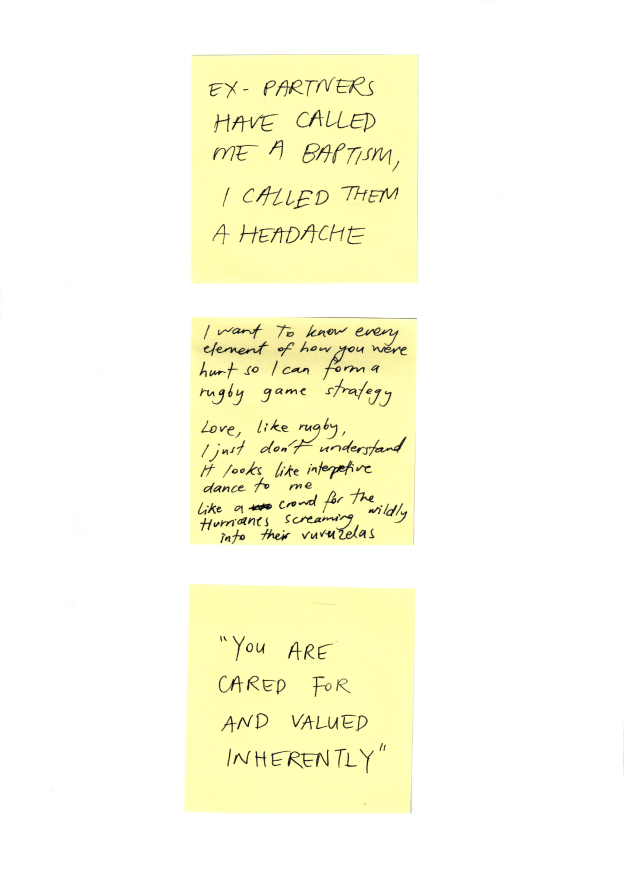
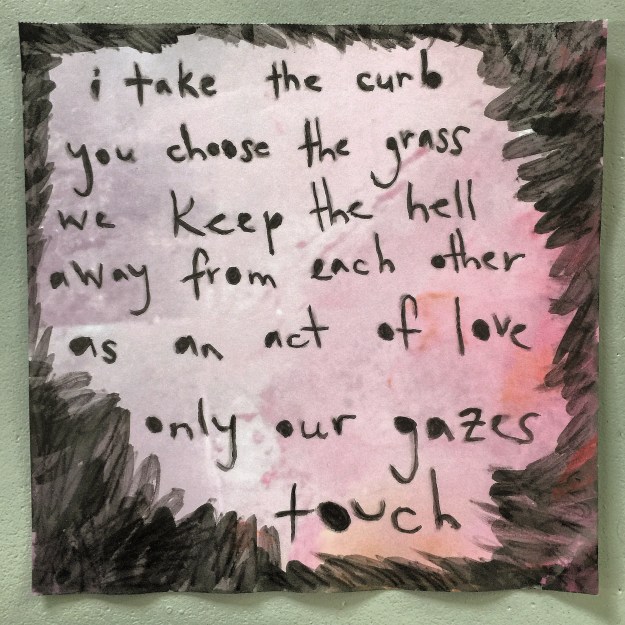
I love this collection, which brings together three such different poets as Ben Kemp, Vanessa Crofskey and Chris Stewart. It moves from Ben Kemp’s slow-paced attentive readings of place and people, in a selection moving between Japan and New Zealand, to the velocity of Vanessa Crofskey’s fierce, funny, intimate and political poetry, which takes the form of shopping lists, post-it notes, graphs, erasures, a passenger arrival card and even *poetry*, and finally to Chris Stewart’s visceral take on the domestic, the nights cut to pieces by teething, the gravity of love and the churn of time.
There is so much in this anthology, poems about whale strandings, teething, dispossession, loss, the pain of physical exercise, the embarrassment of swimwear, the gravity of responsibility, the love you feel with the shiver of your skin, friends to watch Ferris Bueller’s Day Off with a parent to the rescue, cherry blossom, the chatter of 10.000 sea-gulls, clean sheets, rice, bathing a child, white washed pages, red ink and more. We need poetry at a time like this and if we can’t buy books, we can read the books we have, and if we run out of books, we won’t run out of poetry on the internet, and if we have to self-isolate, we don’t have to be alone.
Thank you to the poets for their poetry, to Sam Elworthy and all the team at Auckland University Press and to editor Nick Ascroft, for bringing this book into the world.
Poet Erik Kennedy says a few words and reads a poem by Chris Stewart:
And now for the AUP poets (Chris Stewart, Ben Kemp and Vanessa Crofskey):
Chris Stewart reads three poems:
Ben Kemp reads:
Vanessa Crofskey reads ‘I used to play the silent game even during the lunch breaks’
Ben, Chris and Vanessa in conversation
Chris to Ben: You make links between cultures in your poems. What ideas do you want to ‘get at’ in this way?
When I was a child, we used to visit the local marae every Wednesday and listen to the elders tell stories. These experiences really shaped me. The stories were mystical and deeply embedded in the natural world. Years later, I came into contact with the films of Akira Kurosawa, and I was immediately struck by a familiar energy. I explored Japanese film, theatre and literature for a number of years, and began to explore ways to fuse.
The Fauvist movement, and particularly the paintings of Paul Gauguin also greatly influenced me. The contrast and the juxtaposition of colours has always inspired me. In poetry, the concept of plucking two unfamiliar images from different cultures, and placing them alongside each other often creates a fascinating reaction, and a new energy.
As artists, we are all searching for new ground. In poems, we endeavour to express emotions in a new way, constantly exploring alternative perspectives and all the space in between.
Chris to Ben: I like how you use space in your poems (e.g. the poem oto (sound)). How important do you think space on the page is to a poem, and what informs your choices about that in terms of form?
Miles Davis claimed that the most important notes were the ones you don’t play. Every word must serve a purpose and be innately linked to the whole of the poem. For that reason, I spend quite a lot of time on the editing and refining process. I like space, and the careful arrangement of the poem on the page creates breathing space for the eye. I also often use space to replace punctuation because it declutters the page.
Chris to Ben: The essence of I seems to have some connection to song of myself by Walt Whitman. What parts of Walt Whitman appeal to you, and how do you think they appear in your poems?
Both Walt Whitman and Henry Miller outlined a process where the person must die in order for the artist to grow from the ashes. I had a similar experience in my early twenties. Both writers have been influential on me. Walt Whitman, because he so acutely mined his own consciousness, both evolution and devolution. Whitman is a celebration of everything that is light and dark in the human spirit. The other aspect of Whitman that I have always enjoyed is the way he is able to weave tenderness, fragility, intimacy and brazenness. His lens is so wide, but he is able to pull it all together into his single stream of consciousness.
Chris to Ben: My favourite poem of yours is Ranginui’s tomb. I loved the flow and sound of the sentences, but can you expand on what meaning the last line ‘the tree that grows in someone else’s garden’ has for you?
I guess the line is more a reflection of my own feelings of displacement i.e. being both Maori and Pakeha. I love humanity and hate it at the same time. I will often draw humanity in with affection, then in the next line, throw it away in disgust. I fear for the environment and our disregard for it horrifies and frightens me. Personifying the natural world enables me to express how poorly we treat it. I used Maori gods and placed them in an unfamiliar setting, in order to sharpen a sense of displacement.
Ben to Chris: In Gravity (btw it’s stunning) It seems you’ve drawn on the place and experience before birth. Why were you drawn there?
OK so what happened with that was there was a very clear trigger for that poem, and it was the birth of my second daughter. It was supposed to happen in hospital… but it happened on the veranda on the way to the car. Luckily, the midwife was there! It went waaaay better than the hospital birth for our first daughter – Jo (my amazing) said it was kind of a healing experience for her. Gravity was more drawn from the place and experience of the immediate post birth: The midwife was fiddling around with the placenta (we’ve still got them in our freezer!) and commenting on what it looked like and what it meant. It reminded me of some sort of neolithic wizardy person reading the rune stones, and I thought that I could write a poem about that kind of cosmic stuff. I mean, childbirth is kind of a cosmic experience. Of course that was just the trigger, and you do tend to go away from the trigger a bit in the writing process. I did feel a bit like I really had to get it down; the initial brainstorm happened very quickly, but it took me about three months to work on it. It was one of those poems that was like an ice sculpture; the big block of ice was frozen in place quite early, and the chipping away of small pieces around the edges happened bit by bit over time until I kind of just knew it was done. A big shout out to the Sweet Mammalian crew for selecting it (Hannah Mettner, Magnolia Wilson, and Morgan Bach); I think it was the second poem that I ever got published, and it really made me think, ‘yeah, I can do this’.
Ben to Chris: How do you develop the rhythm and structure of each poem? Is it instinctual? Why have you chosen not use commas throughout?
Yes. I think it is instinctual. I do think that people must just have their own sense of rhythm that comes out in their writing style, in the same way as you can listen to some people talk, and others: not so much… I don’t set out to write ‘rhythmic’ poetry – I do try to work with symbolism and imagery purposefully, though. I definitely edit stuff if I think it needs to ‘sound better’ or if there are awkward sentence structures that need ‘smoothing out’.
The commas thing: well, I don’t usually like using punctuation at all for a variety of reasons. Firstly, punctuation is used to make things clear when clarity is a primary purpose. In poetry, I don’t think clarity is a primary purpose; there are a lot of interesting effects that happen in the reader’s mind as they read without punctuation. I also want the line break to do work: surprise, ambiguous meanings, pace etc… In saying that, I do shy away from finishing and starting different sentences on the same line without full stops. The poem ‘mummy’ is one example of where I’ve done that, though – I think that’s more about pace than meaning. Punctuation tends to ‘direct’ the reader, and I don’t want to do that. Kerrin P Sharpe is a NZ poet who really goes to the limit of the whole ‘say no to punctuation’ thing. If you want to get a sense of the effects it can create in terms of ambiguity and pace, check her stuff out.
Ben to Chris: Stepping back from poetry, how has the birth of your children changed and reshaped you as an artist and a person?
As an artist: I manage my time better! Being a creative person, it’s really difficult to settle into a creative process. It takes a lot of brain space to organise yourself in order to create art… I get very little time that I can actually allocate to that; it’s usually between 8-10pm, and I’m usually buggered from the non-stop day, so unless I have a specific idea for a poem that is churning away and I’m really motivated to drive that forward, I just don’t do it. I find I write my best stuff if I’ve been thinking about poetry and writing regularly for at least a couple of weeks (I’ve heard it called ‘oiling the machine’), and sometimes I’m in that mode, and sometimes I’m not. It happens in fits and starts. Poetry / writing is definitely something that I come back to and is there in me; it will always come out eventually.
As a person: my priority is family. Every decision I make is about ‘how will this affect my family?’ That includes putting work and writing behind that. I feel quite guilty if I think I’m not ‘present’ for my kids. In saying that, as a secondary school teacher, I often feel I put more energy into other people’s kids than my own kids. Also a source of guilt. When I get home I’m often too tired to really give them the best of me. I’ve started to have very little patience for people who waste my time, too, because having kids means you have to be efficient if you want to achieve anything.
Ben to Chris: Why do you write poetry? What drives you? What does the craft give you in return?
Fantastic question. I write poetry because I want to make things. I like making things out of words – things that sound cool and mean something. Sometimes I kind of just get a feeling that I want to bash certain images together or that I want to write something about something-or-other, and I can’t get rid of the urge until I’ve sat down and got it out in a poem. It can actually affect my relationships, like, if all I want to do is sit down and write a poem, and someone else needs me to do something, then I can get quite irritated. The craft gives me what people often call ‘flow’. I get that when i’m in the middle of writing something and it gets to the point where the language I’ve gathered starts to fit together and it all seems to drive itself. I think writing is like putting a puzzle together, but you have to create the pieces yourself as well. That’s the fun bit. I enjoy the feeling of potential when I sit down to do a poem.
Chris to Vanessa: The poem PTSD memes for the anxious / avoidant teen: I find the grid form quite innovative. What effect do you think that adds to the poem? How is it different to other structural techniques that you could have chosen to separate the units of meaning within the poem?
The structure of this poem had to be split up to accommodate page sizing, but it is meant to be like a Bingo grid!
I was inspired by the bingo memes I saw all over the internet that related common experiences to each other, it seemed like a way to confess certain behaviours or feelings without making yourself isolated or vulnerable.
So I wanted to replicate that in my poems to be able to speak about how I felt about something personal, which was sexual trauma.
Chris to Vanessa: Some of your poems seem to be ‘getting at’ the subject of ‘identity politics’ (e.g. every time auckland council says ‘diversity targets,’ my phone vibrates). What do you think your poems are saying about that?
I think identity politics in general can be a bizarre and wild minefield to navigate. It is one I feel aware of in my everyday experience.
I think it’s ironic that people own your identity more than you do yourself. I suppose I’m writing from a place of only just beginning to know myself and yet it feels like that is such a public journey, people put things and assumptions on you before you even make the first step. So you’re always battling against something or clearing away the debris before you find your pathway.
Chris to Vanessa:‘peak hour Kmart lines of salmon dancing’. I love the surprising imagery and incongruous juxtapositions in your poems. What work do you want juxtaposition and imagery to do in your poems?
I have ADHD so I think I just jump around in my brain anyway!!!! Lol. I suppose I’m interested in breaking up the narrative tone people assume, or the given pathway of a poem. I like using metaphor and imagery to surprise people, which makes them have to reorient themselves in a written landscape. You can take someone anywhere.
Chris to Vanessa: In the poem ‘Beauty‘, I’m interested in the ‘redaction’ technique you’ve employed. What effect do you want that to create for the reader?
I think I wanted to make my process of retraction and deletion visible, to show the process that occurs prior to a surface feeling smooth.
I think that’s what beauty feels like to me, dangerous and bumpy, so it didn’t make sense for the way it was written to be glossy. I want people to think about what’s been removed and hidden, and perhaps why.
Vanessa to Chris: Ben might have asked u this already!!! But what draws you to lowercase? Is there anything in particular that makes you feel more comfortable using a more casual style of grammar?
Hhmmm… yep. I do feel comfortable using a more relaxed style of punctuation because it opens bits of a poem more to interpretation – I don’t think my grammar is casual, though. I do try to make my sentences sound ‘correct’. But the lower case thing… I guess what I’d add to my answer to Ben’s question would be I think some poets, for example Nick Ascroft is one, use capitals at the beginning of every line, and I think this might be an appeal to tradition… Maybe I don’t really care about tradition? I like to strip it all back to the essential nature of words themselves. I was told to use capitals for words like ‘Russian’ and stuff like that, though, and I didn’t mind that. There are a couple of poems in there that I’ve punctuated ‘correctly’.
Vanessa to Chris: I am interested in how the domestic unfolds into the astronomical in your writing. What motivates you to write about a specific moment in particular?
I suppose elevating the mundane is one way of putting it. I’ve always been taught that small moments are powerful in writing, so I guess I do try to focus on moments in detail just because I think that’s what good writing does… A specific moment in real life can be a trigger, and I find once I start to unpack it in writing, a lot of symbolism and meaning can fall out of it, so unpacking a moment works for me. I think there’s only a couple of poems that play with astronomical imagery. I guess it’s the bigness of the universe that I draw on to compare to the small moments that seem big. Vanessa to Chris: There is a force of nature that lies beneath your poems. How do you think your present surroundings/ being from Aotearoa New Zealand impacts the way you write?
I’m really interested in what you mean by ‘force of nature’. Do you mean they seem powerful in some way? If so, thanks for the compliment! Is that a mood / atmosphere thing? A mate of mine, Erik Kennedy, said that he thought I was good at creating moods, so maybe that’s what you mean. Is there a particular poem that you think is a good example of that? I take the stance that writing is just words, rather than being in any way connected to, like, my spiritual essence or something. Once the words come out, I’m quite detached from them in the editing process; I just want to make them ‘work’ as a piece of writing, and sometimes that involves ‘deleting’ those lines and phrases that I may feel the most connected to – you’ve got to be a bit detached from the ‘forces of nature’ if you’re going to ‘kill your babies’ so to speak. IDK whether that’s what you meant, though.
I have definitely tried to write poems about being from Aotearoa, but I don’t think any of them have been good enough to be published! I think that most of the poetry I read comes from NZ poets; I like to keep up to date with the contemporary journals, and of course there may be some features of language that happen subconsciously in my poems that are just because I’m ‘a New Zealander’, but putting ‘New Zealandness’ into my poems is not something that is ever at the forefront of my mind when I sit down to write.
Vanessa to Ben: Your writing is so beautiful! What is the place of food in your poetry?
Food is a sensory experience, the transition from material, to the tongue, to chemicals in the brain, to emotion is mind-blowing to me. It epitomises everything that is extraordinary and mystical about the experience of living one single life.
Food also forms the cornerstone of a culture. Generally, we can trace a handful of key ingredients in every culture. Defining culture through one ingredient is fascinating to me. It’s challenging but interesting!
Vanessa to Ben: Your writing spans several languages through words and phrases – from English to Japanese to te reo Māori. What is interesting to you, or important, about using the phrases of the original languages (without necessarily prefacing or explaining them)?
Interesting question. I think it is a lot about the phonetic beauty of language and how they interact with English when placed alongside each other. As poets, we explore meaning, but the phonetic composition is equally as important, drawing from other languages broadens the palette. I have also drawn on quotes, which allows me to go directly to the source, or the essence of the person who uttered them.
Vanessa to Ben: Writing from the perspective of being a Māori person living in Japan feels both curious and insightful, a place to discover both foreign and common cultural connections anew. Which poem were you most surprised by, in terms of what you wrote or gained insight around?
I have always been drawn into Maori culture, but it has never really accepted me. I am of mixed ethnicity and that has always created huge tension in me. I’m not sure any poet truly accepts themselves! I think ‘The Japanese Moko’ was my boldest attempt to blend. The poem/vessel is so short/small, but I feel that I was able to get both Japanese and Maori words/images to snuggle into each other comfortably. I think that the title ‘The Japanese Moko’ is very risky, but I was happy to put it out there.
The poets
Ben Kemp works as a primary school teacher in Papua New Guinea where he has lived for the past three years with his diplomat wife and three children. Gisborne-born Kemp arrived in the Pacific following six years in Australia and ten years in Japan. Tokyo was where he discovered his passion for Kabuki theatre and Japanese film and literature. Between 2003 and 2010 he recorded three studio albums with his band Uminari and toured in Japan, Australia and New Zealand. His artistic work has often explored the nexus between Japanese and Māori/Polynesian culture. He credits the late Taupo-based Māori writer and mentor Rowley Habib with helping him tap into poetry and original writing in his twenties.
Vanessa Crofskey (born in 1996) is a writer and artist of Hokkien Chinese and Pākehā descent. She graduated from Auckland University of Technology with a degree in Sculpture in 2017. Through her practice she investigates social connection: how we form identities through intimacy, inheritance, location and violence. Vanessa has published and presented widely as an interdisciplinary artist – in performance spaces, galleries, festivals plus digital and print publications. She has written for The Spinoff, Gloria Books, New Zealand Herald, Dear Journal, Hainamana and other serious publishing places. She is also a two-time poetry slam champion and award-winning theatre maker but we promise that doesn’t detract from the rest of her career and personality. Vanessa currently works for The Pantograph Punch as a staff writer, and as a curator at Window Gallery (University of Auckland). She advocates for complex trauma survivors and those with attention deficit disorder, plus is very funny and knows a lot about what snacks to eat.
Chris Stewart was born in Wellington but grew up in Christchurch. He has a BA in History and Art History with minors in English and Education from the University of Otago and two graduate diplomas in teaching. After completing the course at the Hagley Writers’ Institute in 2015, winning The Margaret Mahy Prize, his poems have been published in New Zealand journals such as Snorkel, Takahē, Sweet Mammalian, Brief, Catalyst, Mimicry, Blackmail Press, and Aotearotica. He regularly attends the monthly open mic event ‘Catalyst’, a forum for literary and performance poets in Christchurch. Most importantly, he is a son, a brother, a husband, and a father.
Thanks everyone – do mark this book on your list to buy once bookshops are back in business. I am raising my glass and declaring this beautiful book well and truly launched.
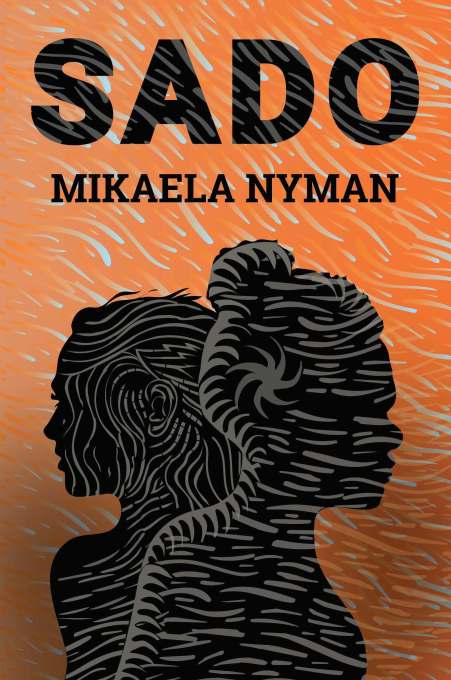
Welcome to the online book launch of Mikaela Nyman’s novel Sado (Victoria University Press). Settle back with a glass of wine before dinner and let’s raise our glasses!
Publisher Fergus Barrowman welcomes us and the book:
Mikaela Nyman introduces us to Sado with a reading:
From Kirsten McDougall, VUP publicist:
This launch was to be held in person with wine and food at Vic Books, Kelburn. We are sorry we don’t get to celebrate the launch of the book by supporting Vic Books and we ask that when business resumes, readers support them.
Here’s a link to our webpage – where people can buy the reader through Mebooks for kindle or any other ereader. People can also read the first chapter of Sado on PDF from a link on that page too.
Four questions for Mikaela(VUP Blog, March 2020)
Your debut novel, Sado, is set in Port Vila, Vanuatu, just after Cyclone Pam caused massive destruction in the islands. Can you tell us about the genesis for your story?
It grew out of the realisation that Vanuatu didn’t seem to feature on people’s radar in New Zealand – despite the fact that it is only a three-hour direct flight away, and we have thousands of Ni-Vanuatu come every year to work in our vineyards and orchards. The majority of New Zealanders I encountered who had visited Vanuatu, had only been there for a day, on a cruise ship holiday. They ‘had done Vanuatu,’ or so they kept telling me. The absoluteness of this statement threw me. I was privileged to spend four years in Vanuatu and feel I’ve barely dipped below the surface – thanks to the generosity of friends, colleagues, villagers, public officials and artists who have shared the richness of their respective cultures, experiences and languages with me over time. Vanuatu stretches over 80 islands and has more than 100 languages. There’s a lot more to it than Port Vila. Yet the exotic island holiday paradise narrative prevails.
Across the Pacific, entire populations brace themselves every year for the cyclone season. But for Vanuatu it wasn’t until Cyclone Pam radically transformed the landscape in 2015 that the outside world took notice. And even then it only lasted for a moment, until a greater natural disaster in another part of the world superseded Pam. And in a heartbeat the world’s attention on a suffering small Pacific island nation was gone. It could make you cynical. Or you could start writing about it … I guess as an islander (albeit from the Northern hemisphere), and as someone who has always tried to make sense of the world by writing about it, I wanted to share a more nuanced and complex reality that included the everyday desires, tragedies, joys, limitations and absurdities that tend to make up island life.
You have two main protagonists, Cathryn, a New Zealand national working in Port Vila, and Faia, a Ni-Vanuatu woman, and colleague of Cathryn. Can you talk about the relationship between these two characters and how you went about the creation of these two very different people?
Cathryn and Faia are amalgams of many people I’ve encountered. There are aspects of their personalities that are made up, because the story demanded it. They are both devoted mothers and have worked together for several years in a fictional non-governmental organisation, yet Cathryn remains more reliant on Faia than vice versa.
Faia is part of a larger and more complicated local scene, with more obligations and reciprocal relationships than Cathryn will ever have. Their relationship traverses that awkward territory where they are no longer merely work colleagues, but neither are they very close friends. I wanted to explore that tension – how far you can push friendship, what may break it; what you are able to forgive, and how.
From a young age, I was hooked on Toni Morrison’s novels. Decades later, I found her insightful lectures, published as Playing in the dark: whiteness and the literary imagination, where Toni Morrison speaks about the perils of writing ‘blackness’ (specifically African-American), and equally the perils of not writing about it enough, and thereby contributing to erasing part of the world’s population from historical records and literature. I did not wish to contribute to that erasure. And I did not want a single narrative that in its incompleteness reinforces stereotype, to paraphrase Chimamanda Ngozi Adichie.
I explored ways to include other voices and came across a helpful essay on Toni Morrison’s paired characters in her novels. It discusses how time and again Morrison’s perceived protagonist serves as an ironic anti-hero, while a secondary character, with a seemingly lesser role, demonstrates courage and overcomes immense personal and cultural obstacles. The ‘seemingly lesser role’ and the common assumption that there is only one protagonist, usually the one who takes up most space, resonated with me as an apt description of what I was trying to achieve. It confirmed to me that Cathryn, albeit the perceived protagonist, could indeed be the anti-hero. What I needed was a radical and tangible shift to physically wrestle authority from Cathryn and pass it to Faia.
There is a lot of discussion presently around the ethics of what stories a writer can write – can you talk about what it was like for you to write Sado? What considerations played into your writing and research of writing a novel set in Vanuatu?
I don’t think I would ever have written a story set in Vanuatu without actually having lived there. The experience of being hammered by Cyclone Pam, a devastating Category 5+ super cyclone, is part of my own lived experience, it is my story to tell (although I hasten to add that my personal circumstances were not the same as Cathryn’s). Apart from the cyclone, there was a lot to consider. Vanuatu was never going to be reduced to mere setting, for a start.
The discovery that Vanuatu doesn’t really feature in New Zealander’s imagination was followed by a realisation that Ni-Vanuatu women’s voices and creative expressions are underrepresented, particularly in literature. I was fortunate to have Teresia Teaiwa read some of my early draft chapters and give me positive feedback before she unexpectedly passed away. It gave me the confidence to continue on this track. ‘We are tired of having to constantly explain ourselves to the outside world,’ Teresia said several times, talking about the Pasifika community in New Zealand, and more broadly about the experience of women of colour in various parts of the world. She handed me a copy of ‘Identity, Skin, Blood, Heart’ by Minnie Bruce Pratt, and Lisa King’s writing on rhetorical sovereignty and rhetorical alliance in the writing classroom.
And so I chose to become an ally and supporter, and perhaps a conduit for New Zealanders to glean a different perspective of their Pacific neighbour. To help explain what it feels like to be at the receiving end of such a natural disaster in our Pacific neighbourhood and to have to deal with an unprecedented influx of responders and well-intended, but perhaps misplaced, relief efforts.
In parallel, I’ve shared my writing, my knowledge and skills with emerging Ni-Vanuatu women writers, facilitating creative writing workshops and collaborative poetry events, in order to find my place in the world and enable Ni-Vanuatu writers to grow as writers and see their work published. ‘Nothing about us without us,’ one of my Māori colleagues said to me when we discussed the ethos informing my research and novel writing. It reinforced my decision that working in alliance and collaboration would be the best ethical choice. Taking heart from the fact that these Ni-Vanuatu women writers were among my first readers and encouraged me to keep writing this world that they recognised, while at the same time ensuring I left space for Ni-Vanuatu writers to tell their own stories. The kind of insider stories I couldn’t possibly tell.
You are also a published poet in your native language. How does your writing in different tongues as well as in different modes – poetry and prose – influence how you write?
I was told my alternative novel titles were too poetic, for a start! Writing in my own mother tongue was a project of writing myself out of personal grief and back to my own language universe. Through language I can belong to different worlds. I actually dream in different languages. I thought I had lost my Swedish and Finnish vocabulary, that they’d been erased by English. It doesn’t seem to be the case, although I know I haven’t been able to keep up with the slang and ever evolving obscene language.
I’ve found it’s more difficult to translate my own poetry than my prose. Language evolves according to its own logic and grammatical rules, complete with specific metaphors and implied subtexts. When I write I have to stay focused on the language I’m using in that moment to make it full justice. It can be quite tiring and takes time, with lots of cross-checking if my family keeps interrupting. Some scenes in the novel started as poems, other bits were cut from the novel but morphed into poems. At the end of the day, poetry and fiction are just different languages in which to express what matters most to me.
Thank you for coming. Please refresh your glass, make a note of the book, and enjoy the rest of your evening.
Next Poetry Shelf Lounge book launch will be Anna Jackson launching AUP New Poets 6 on Saturday around 5 pm.
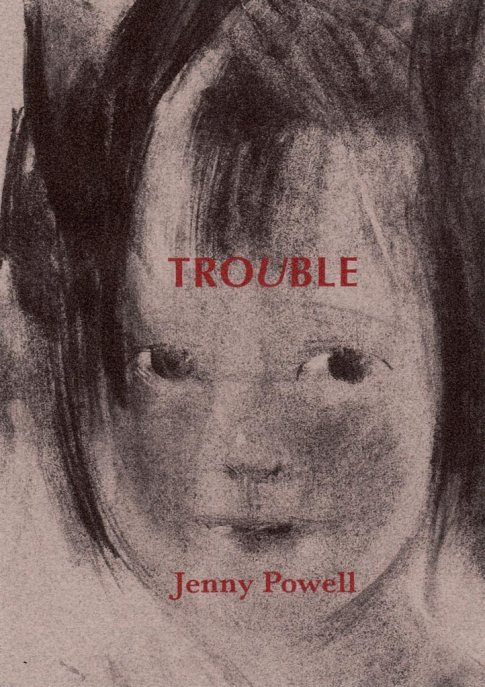
Jenny Powell reads ‘Kaleidoscope’ from her collection Trouble (Cold Hub Press, 2014).
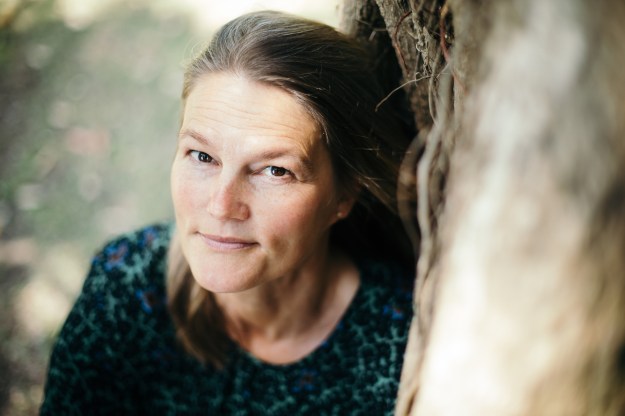
Jenny Powell is a Dunedin poet who has written seven individual and two collaborative volumes of poetry as well as a cross-genre book about human movement, The Case of the Missing Body (University of Otago University Press, 2016). She has worked with artists and musicians in a variety of formats. Jenny enjoys performing her work, and is part of the southern touring poetry duo, J & K Rolling.
against raw statement. Will it ebb, will it increase?
Are his lines over? We, who are sure of nothing,
see this present lapped in burnished distance:
cliffs brittle as bone, the hard-to-read
stance of the land, the role played in all
of this by an ever-ambiguous sea.
Diana Bridge
Diana Bridge has published seven collections of poems, including a new & selected. Her most recent book, two or more islands, came out in 2019 and was one of The Listener’s Top 10 poetry picks for the year. Although much of her adult life has been spent overseas, she was once dubbed a ‘quintessential Wellingtonian’. Her work combines home-grown and Asian, particularly Chinese and Indian, perspectives. She has a Ph.D. in classical Chinese poetry, and has taught in the Chinese Department at Hong Kong University. Her writing includes essays on the China-based poems of Robin Hyde and William Empson; she recently completed a collaborative translation of a selection of favourite Chinese classical poems.
Like many, the poem above foreshadows events. Although it was written before our Whakaari / White Island tragedy, it reflects a general feeling of precariousness stretching from physical catastrophe to the recent deaths of Clive James and Jonathan Miller. It was triggered by one of Clive James’s ‘Late Reading’ columns. I was thinking here of the poetry critic, and especially the author of Poetry Notebook, 2014.




 NZ Poetry Shelf