Category Archives: NZ author

Poetry Shelf Monday Poem; Lynn Davidson’s ‘Lineage’

Lineage

I was nine months pregnant, and waiting, when the man in the

Taranaki airport shop snapped this isn’t a library you know,

and when I turned my great belly full of fingernails and teeth-in-bud

towards him he asked (hotly) if I was actually going to buy anything.

The baby made exclamation marks with its soft bones,

glared with its wide open eyes – two Os.  No I said I won’t buy

my news from you. Above the town, Mount Taranaki blazed red and then

in the quick cold dusk, the plane with my parents in, touched down.

That night the child swung from its treehouse to the tree

and climbed through me to my mother’s hands and with its

persimmon tongue brought us stories (both good and terrible)

from this world, and the other one.

Lynn Davidson

Lynn Davidson’s latest poetry collection Islander is published by Shearsman Books and Victoria University Press. She had a Hawthornden Fellowship in 2013 and a Bothy Project Residency at Inshriach Bothy in the Cairngorms in 2016.  In 2011 she was Visiting Artist at Massey University. She won the Poetry New Zealand Poetry Award, 2020 and is the 2021 Randell Cottage Writer in Residence. Lynn has a doctorate in creative writing and teaches creative writing. She recently returned to New Zealand after four years living and writing in Edinburgh. 


Poetry Shelf Theme Season: Sixteen poems of land

the land. the contested land, the stolen land, the cherished land. the land with its regenerating bush. with a view out to the tail end of the Waitākere ranges. the feel the look the idea. the beauty. the unwavering beauty that holds you as you totter. as you stand. the kūmura to be harvested. the lettuces and herbs. the land as essential pulse in your veins. the sublime land. the broken land. the wounded land. the beloved land. we cycle the length and walk the breadth. we climb the heights and we join hands to protect. we will never stop singing the land. in poetry

The poems

Our tūpuna remain

Nothing like a lone-standing nīkau
in the middle of some paddock
owned by some Pākehā
to make you feel mamae

Surrounded by maunga
who serve to remind you
once that whole paddock
had that same sense of tapu

It’s a bit like that urupā
in the middle of that reserve
which used to be a papakāinga
till some Pākehā had it burned

So

consider yourselves warned:

It’ll take more than

a change of name
a chopping down of trees
a burning down of whare

to make us forget

our tūpuna remain

Jacq Carter

from Puna Wai Kōrero: An Anthology of Māori Poetry in English, Auckland University Press, 2014

Hone Said

chris abani
said
hone said
the only land I am
is that between my toes
but anne read
that hone said
the only land I have
is that between my toes
then michele said
selwyn said
hone had said

which is why
chris had written

it’s the difference between
being
and owning
surging
and standing
living
and landing
she said
she’d read
he said
have
not am

I keep
the am
anyway

then ken said
ron mason said
it first

Selina Tusitala Marsh

from Fast Talkin PI, Auckland University Press, 2009

Parihaka

we never knew
about Parihaka
it was never
taught anywhere
except maybe
around the fires
of Parihaka
itself at night
when stories
are told
of the soldiers
who came
with guns
to haul us up
by the roots
like trees
from our land
though the prophets
called peace peace
it was never
taught at school
it was all hushed up
how we listened
to the prophets
Tohu, Te Whiti
who called peace ‘Rire rire
Paimarire’
but the only
peace the soldiers
knew
spoke through
the barrels
of their guns
threatening
our women children
it was never
taught or spoken
how we
were shackled
led away to the caves
and imprisoned
for ploughing our land

Apirana Taylor

from A Canoe in Midstream: Poems new and old, Canterbury University Press, 2009 (2019)

Kauarapaoa

The road climbs up abruptly, here
beneath the cliff the water dark blue glass.
A peacock dives into the grass –
oh where oh where oh where oh where oh where?
Wet tang of sheep shit, mass of trees
releasing plant-scents in the angled sun,
those smells of summers been and gone,
bruised sap, ripe humus, rising to the nose.
The road bends with the deep-cut stream,
leaves fuzz the chasm to its brim,
and the stream slinks down towards the river
like a lover you’ll never get over.


All over, loose exotic scrub:
gum, willow, wattle, elder, poplar, broom
stitching the hillside like a seam
across the rends of
slip-soil dull and drab.
A man in white bends to his hives
below a face of mānuka sprayed dead.
Sheep crawl amongst the sticks to feed
on threads of green, wherever greenness lives.
Across the road, like greying bones
lie slash-piles of cut-over pines.
And the naked peaks
roll on forever
like a lover you’ll never get over.

A falcon calls above the rise:
Kek kek kek kek kek kek kek kek kek kek.
Far over farmland lies a break
of ocean, and the pale of western skies.
The white volcano points out north,
seeming steadfast, despite its restless sleep.
The road skirts, in a gravel loop
a drop so steep it catches in the breath.
The roadside bluffs divulge their shells,
reveal the ocean held these hills.
And water is as much a mover
as soil in softness is a giver.
And what can the land do but take cover?
Like a lover you’ll never get over.

Airini Berautrais

from Flow: Whanganui River Poems, Victoria University Press, 2017

Wild

Measure my wild. Down to my last leaf,
my furled, my desiccated. This deciduousness,
this bloom. Calculate my xylem levels.
My spore count, fungal, scarlet
in a bluebell glade. Whoosh,
where the foliage closes on a great cat.
Test me: how many tigers in my jungle,
how many lions at roam? Map my rivers,
deltas, estuaries. Mollusc, whelk, worm.
Monitor my silt. Do I have spoonbills, 
high-stepping and watchful over the darting fish?
Rainfall on pines. Dappled sunlight
in my dells. Under moss, the fallen log, under
the log the hibernating hedgehog. Late my dates,
or soon? Return of the albatross, godwits
gathering. What clouds me, shifts,
but: indigo thunder-stack, pink wisp. Count the mice.
What will survive me, O my cockroaches, O my lice?
Scaffold me with metal, cage me in glass, tube me,
needle me, fill me, flush me. Saline solution:
the ocean. Oxygen therapy: the sky.
Mineral deficiency: socks off. Soil. Dark
rot, eye-less wriggle, while the roots seek, seek.
Un-diagnosable, that ticklish insect.
Mountain peak speak only snow, and thus
I am diminished; thus I rest in my pulse. Sweet
heart. Monitor my yearn, and treat it with trees.
Un-pane me. Wilden my outlook.
Membrane animal, skin mammal under the osmosis moon.
Allow my tides. All this to say, in love we nest, and on Earth.

Sue Wootton

from The Yield, University of Otago Press, 2017

Tidelines

6am—

The sun rising behind me
The sea roaring at my feet
On the lip of the precipice

Everyone hunched in quiet
boxes, houses scattered to
the hills, precariously leaning
towards the sea, here we are
surrounded, ready to surrender
the day to the surf, dissolving
other imperatives into the
dust, into the black iron-laced
sand, tracing the time
against the rising breeze,
the tide ticking in, the river
in flood, swollen by rain

And still time passes
it washes away my footprints
Every day I make new marks
imprints on the beach
lines on the page

I walk and I string words in long lines in my head
I write and I skip words across the page like stones

I let them sink
I watch them slowly spiral down
through my mind
Down and down, until they reach the ocean
Deeper, into the abyss of collective dreaming

Until they are no longer my words
Just a passing thought you were having

Early one morning,
in your bed,
in your house,
in Piha,
waiting for the tide to come in. 

Kiri Piahana-Wong

from Night Swimming, Anahera Press, 2013

My Carbon Gaze

1.

Because there were hills to the east and hills to the west, there was a good chance that when you looked at something it would be a hill. Perhaps it would be a hill with a family member or a friend in the foreground. A family member or a friend might be called a loved one for short.

2.

With the hills and the loved ones far apart, your eyes would end up making so many trips back and forth that their orbit solidified into a sort of object. It was a wire model of an atom like they had in the museum. Or perhaps a model of the solar system. In any case, a round thing involving energy and with the potential to explode, but that would be in exceptional circumstances, probably never.

3.

I still have it in my natural history section, although sometimes I wish I didn’t. Sometimes I wish I didn’t have a natural history section. I wish I hadn’t looked up at those hills so often – willy-nilly – between 1960 and 1985, and looked back down at the loved ones, because now I am left with this wire model and it will never go away. In fact it will, because it is organic, but only after a very long time. Perhaps even after I am dead.

4.

Most summers there was a fire on one of the hills, the east or the west, the sun-coming-up hill or the sun-going-down hill. It would seem like the hill was burning, but it was only the gorse. Not so serious. But serious enough to prompt a teacher to set a Poem for homework.

5.

On the way home you could hear the black crackling and it seemed to have a personality, and not a very nice one.

6.

My mother wrote the poem quickly as she peeled the potatoes – in fact she only said it. I wrote it in my McCahon handwriting but much more neatly. Of English descent it crowds the hills, / Originally meant for hedges and sills. / A prickly maze, a funeral pyre, / a golden haze, a monstrous fire. 

7.

There was only ever one hill on fire at a time. The problem would be if both hills caught fire at the same time, and the fires might burn down into the valley, and the trees would burn, and the lawns, and all our houses and their contents. And our Prefaces and Introductions. Not to mention the people. But we would run down to the beach. That’s what we would do.

8.

There was an article in the paper about the possibility of a tidal wave sweeping up the bay and taking everything with it, and if you hadn’t gone in the earthquake that preceded the tidal wave, you would now be finished off altogether. This was the opposite of the fire. You would be washed the other way, all the way into town. How extreme the world was. Why not something in the middle?

9.

(Why not fear something in the middle? Earth, wind, a few other things.)

10.

And the hills were mostly benign anyway. They were just there, like your name. You might even get sick of them, of looking up at them and back again. Why don’t people get sick of their name? Maybe they do. Maybe they say, If I hear that name one more time I’ll scream.

11.

Sometimes you might look up at the hills and think, I am looking at the hills, and you might have some sort of reaction, e.g., They are dark against the white sky and are very beautiful. Or, They have a sun like a solitaire nestled into them, but no for long. See look – gone! Divorced. I told you so. These kinds of reactions were the first attempts to connect the hills and the people in the foreground. But it is probably impossible. Well nigh impossible.

12.

In spring they were brassy yellow with gorse flowers. In summer they were ‘tinder dry’ (a cliché) and ‘brown’ (not a cliché because the word brown doesn’t have much to it and people haven’t got sick of it yet). Okay, brown.

13.

When both sides of the hills were brown, to the east and to the west, in the ‘height of summer’, a fire might be lit by a boy letting off fire-crackers saved from Guy Fawkes, or by a girl letting off fire-crackers (svd fr. GF), or by a man going for a walk on the town belt and smoking a cigarette, or by a woman (gng fr wlk on TB w. cig.), and the fire brigade would be called out.

14.

But because there were two fires – one lit by the boy or the man, the other lit by the girl or the women – the fire brigade would have no chance of taking control, and the fire would burn down into the valley. And everyone, family members and friends (loved ones for short as there would not be much time), would run down the Parade to the beach and go and stand in the sea because there would be nowhere else to go. I am still out there. I am standing in the cold sea at Island Bay, and it is 2011, and it is freezing, and I am waiting for the fires on the hills to go out.

 Anne Kennedy

from The Darling North, Auckland University Press, 2012


Emotional geography

Look back, and forks
and crossroads soon appear.
Now you see, or think you do,

how that U-bend, that country
lane, which at the time seemed
less a turning than the leaning

of the moment, led on to this
and later this, as though there really is
a road-map of the heart

whose one-way system you have to follow
down Ego Street to Guilt Mews,
and the various alleys off Vanity Row.

Harry Ricketts

from Your Secret Life, HeadworX, 2005

More ancient than any of us

Birds swoop over the whenua. Reminders of you alight upon puku and manawa, and night-time channels thoughts unspoken in daylight. Lit fires smoulder upon open ground more ancient than any of us.

Desire grew in the air between us. Braided awa beneath rākau limbs came crashing earthward, into landscapes of enlivened senses. The gifts inside their ringed stumps spoke of ages and shadow tones, and graced our faces with crossed lattices.

Streams of consciousness — like gaps in the light.

Promises leaked from your eyes. They landed upon my soul etching deep chasms of aroha, before that mamae of yours disrupted the course and an undertow began to tear at the fabric of us, casting me out.

My ringaringa spread wide to expose secrets. And you owned none of the lies that spilled over to lap at my feet, where pūrerehua wings stroked my winnowed heart beating fast to the rhythm of our mother.

Streams of consciousness — like gaps in the light.

Birdsong emerged between pō and rā, to illuminate all the unnoticed seasons. But who can say whether we shifted and morphed with it, or remained stagnant puzzles of links scattered from root to tip, our enacted patterns alive.

Wind blows the tussocks in this unfamiliar place. Yet the longing for you dissipates with each luminous marama cycle, and recounts tidal surges in existence long before you left. And the kakahu always enfolds me, certain I will awake unbroken.

Iona Winter

from gaps in the light, Ad Hoc Fiction, 2021

Heaven

A galaxy of stars on dark water,
the breaking of the pack.

Or more like fat congealing on boiled mutton.

When there is only white,
when everything is coloured white,
the land, the sky the ice and the horizon,

the heroes, as they walk away,
you’d say were climbing a white wall to heaven.

Bernadette Hall

from The Ponies, Victoria University Press, 2007

Poem note: This poem arises from the optical illusion in a white-out or almost white-out. As figures move away from you, they appear to be moving upwards. In December 2004 the Dunedin artist, Kathryn Madill and I shared an Artist in Antarctica award.  We were stationed at Scott Base. The Antarctic experience was a life-changer for both of us. Lines from this poem have been set in the stone pavement at the foot of Robert Falcon Scott’s statue at the intersection of Oxford Terrace and Worcester St, Christchurch, on the Ōtākaro pathway. The text was carved by Neil Pardington. My grandsons, Leo and Darcy, are having a find old time, deciphering their grandmother’s word-painting.

Bernadette Hall

Harvest

The first whitebait, see-through, rivery
lightly-flamed into a wriggle of sweet eyes.
Oysters, pink-creamy, frilly, a glug of ocean
neck-felt, lemon-spattered, a sea cry.

The first potatoes, knuckle-white, waxy
spilling from the earth’s dark hold.
Corn, buttoned to the cob, yellow, fleshy,
spitting to the bite.

Sunflowers standing on hopeless stems.
The first-born, mother-coated,
unfolding in the first tears,
swimming into the miraculous light.

Richard Langston

from Henry, Come See the Blue, Fitzbeck Publishing, 2005

Jane

                                                Nga Motu beach, New Plymouth          1845

When my great-grandmother Jane
was a small girl
she played with her cousins
on the backs of harpooned whales.

From the summit
of the biggest creatures on earth
they pointed out to sea:
Look! Look at the islands!

A single mountain
stood behind their backs
felt but not seen,
inward and silent.

Nonetheless
a witness.

Dinah Hawken

in There Is No Harbour, Victoria University Press, 2019

4.9.10 / HOMECOMING

the earth just / empty of it
take the shape of a shake / between your teeth.
in the cold morning many things falling.

touch the wall as it heaves while
translucent alarms vomit
into still air / air is still /
underneath it the writhing thing
turns its dirty head / side to side.

in this movie now / we all should have known better
forget to close the door behind you
run barefoot onto the silty street
see the neighbours in their underpants
/ this is not a dream /

just a mirror of the noise
a tiny pearl lying in your palm sleeping
itch it away at your peril.

later you will urinate / in a dark hole next to the rose bushes
whose thorns in the dawn spiked your mother
in her dressing gown fleeing the house
three wide circles / in her face
eye eye mouth.

fear lives here
in the business part of the throat
nestled / between the toes with
the simple earth fissured
waiting and just

/ not quite
what it used to be.

*

I am in the city,
and it has been long enough.

It’s a decade on, almost,
and the streets’ breathless pant has slowed to a sighing;
smooth tufts puffed into icy air.

Rupture has softened,
cracked stone padded in limpid moss,
splintered beams braced by scaffolding,
broken brick tucked up in landfills.

Christchurch remains
frozen in its decay, somehow,
contractions have distilled
entire city blocks to essences:
flat ground, empty horizons,
a big loud nothing
where a city should be.

Its winter sky is unchanged:
unshaken, unscarred, tectonically oblivious
the low-hung grey cloud a steely blanket
locked tight in violent closure.

A blackened scab
is being pulled off the knee of Christchurch,
and she bleeds brick dust out over the plains,
while the Port Hills loom like aristocracy
cloaked in a fine-knit sprinkle of snow,
sentenced to beheading for the crime of
‘seismic lensing’.

And the Avon River, unfazed,
just goes about its watery business the same;
an arterial swirl the colour of new-born eyes, unsettled,
drawling like a dream past roadwork realms, cone castles,
up-and-coming urban developments,
and the melancholy ghosts
of everything we lost along its banks.

Hebe Kearney

from Starling 10

Land

A child dances alone
in the street. A rainbow
arcs the sky. A hawk
circles, descends. A helicopter
appears. Dark suited, new ghosts
of developers materialise from
the clouds. Here visions –
wild places to shelter –
are set upon empty land
by the writer’s eye.

Once the all-seeing water carried
dreams to this safe shore: liquid
stars to navigate the ancients;
shallows to nurse great-whites;
coastline to settle waders’ Arctic flight;
sea-views for soldiers arriving home.

Now this land is gifted to the gods
of helicopters, SUVs, M6s, sharknosed
disruptors who conjure the mantra of
mixed model, urban renewal, WOW factor,
solar gain, waterfront living. There’s money
to summon – ta-da! – from soil. Everything
seen or imagined belongs to them. The past –
its evicted, protestors and peacemakers –
is a trick, an adjunct made to disappear.

As if the scattering of birds
into late morning, the shriek of
banshees escapes; the helicopter too.

The displaced need this land to live.
They want their future to grow here,
like trees. They want their children
to dance upon it alone, to feel sap
pulse through the branch. Rainbow

and hawk to rise from it. This close
to regeneration, the evicted lament
that which they cannot settle,
cannot own. Their wailing is –
the rustle of money, whisperings
of the past – almost quelled;
almost, but not quite.

Siobhan Harvey

from Ghosts, Otago University Press, 2021

Objects 12

The tight-rooted morning coils up
but I imagine the buds unfurling
in the mess of garden down there;
the sharp agapanthus blooms white,
the jasmine vine, the flame weeds,
the drooping, beaded kowhai.
I do not see it happen but I see it
happen. That waxy flexibility
of plants, I used to call them
my guests. There were tea parties
with dew.
             I want you to whisper to me
about everglades and prairies,
sylvan historians and Dan Bejar,
but I’m afraid that you don’t love me
anymore. The dark morphing
into the unimaginable.

               Look, I’ll show you around
this condensed symbol of a place.
It’s true, it’s everything
and nothing specific,
and everything to me
and always specific.
It’s impossible to understand
how we got from there to here.
One place after another.
You come close
to a home.

             Look, Pip says
the days are getting shorter,
but I can’t help it anymore
I think life is just starting.

Nikki-Lee Birdsey

from Night As Day, Victoria University Press, 2019

Place

Once in a while
you may come across a place
where everything
is as close to perfection
as you will ever need.
And striving to be faultless
the air on its knees
holds the trees apart,
yet nothing is categorically
this, or that, and before the dusk
mellows and fails
the light is like honey
on the stems of tussock grass,
and the shadows
are mauve birthmarks
on the hills.

Brian Turner

from Elemental: Central Otago Poems, Random House, 2012

The poets

Airini Beautrais lives in Whanganui and is the author of four poetry collections and a collection of short fiction. Her most recent poetry collection is Flow: Whanganui River Poems (VUP 2017). Bug Week and Other Stories recently won the Ockham NZ Book Fiction Award 2021.

Nikki-Lee Birdsey was born in Piha. She has a PhD in poetry from the International Institute of Modern Letters (IIML), an MFA from the University of Iowa Writer’s Workshop and a BA from New York University. Her first book Night As Day was published by VUP in 2019. She taught poetry at the IIML last summer.

Jacqueline Carter (also Jacq, Jacqs or Jackie), of Ngāti Awa, Waitaha, Ngāi Te Rangi, English, Irish and Scottish descent, is a poet and teacher living in Tāmaki Makaurau Auckland. She has recently become a member of Te Hā o Ngā Kaituhi Māori (formerly Te Hā) – Contemporary Maori Writers. Her poetry has appeared in several anthologies including Whetū Moana, Mauri Ola, and Puna Wai Kōrero: An Anthology of Māori Poetry in English (Auckland University Press).

Bernadette Hall lives in the Hurunui, North Canterbury. She retired from high-school teaching in 2005 in order to embrace a writing life. Fancy Dancing is her eleventh collection of poetry (VUP, 2020). In 2015 she was awarded the Prime Minister’s Award for literary achievement in poetry and in 2017 she was made a Member of the New Zealand Order of Merit for services to literature in Aotearoa New Zealand.

Siobhan Harvey’s new book, Ghosts (Otago University Press, 2021) is a collection of poetry and creative nonfiction. She was awarded 2020 New Zealand Society of Authors Peter & Dianne Beatson Fellowship, 2020 Robert Burns Poetry Prize and 2019 Kathleen Grattan Prize for a Sequence of Poems. 

Dinah Hawken lives and writes in Paekakariki. Her ninth collection of poetry, Sea-light, is published by Victoria University Press, August, 2021.

Hebe Kearney is a queer poet who lives in Tāmaki Makaurau. Their work has appeared in The Three Lamps, Starling, Oscen, Forest and Bird, a fine line, and Poetry New Zealand Yearbook 2021.

Anne Kennedy is a poet, fiction writer, screenplay editor and teacher. Recent books are Moth Hour (AUP) and The Ice Shelf (VUP). Awards and fellowships include the NZ Post Book Award for Poetry and the IIML Writers’ Residency. The Sea Walks into a Wall is forthcoming from Auckland University Press in October 2021. 

Richard Langston is a poet, television director, and writer. Five O’Clock Shadows is his sixth book of poems. His previous books are Things Lay in Pieces (2012), The Trouble Lamp (2009), The Newspaper Poems (2007), Henry, Come See the Blue (2005), and Boy (2003). He also writes about NZ music and posts interviews with musicians on the Phantom Billstickers website.

Selina Tusitala Marsh (ONZM, FRSNZ) is the former New Zealand Poet Laureate and  has performed poetry for primary schoolers and presidents (Obama), queers and Queens (HRH Elizabeth II). She has published three critically acclaimed collections of poetry, Fast Talking PI (2009), Dark Sparring (2013), Tightrope (2017) and an award-winning graphic memoir, Mophead (Auckland University Press, 2019) followed by Mophead TU (2020), dubbed as ‘colonialism 101 for kids’.

Harry Ricketts teaches English literature and creative writing at Victoria University of Wellington Te Herenga Waka. His Selected Poems appeared in June, Victoria University Press.

Kiri Piahana-Wong is a poet and editor, and she is the publisher at Anahera Press. She lives in Auckland.

Apirana Taylor, Ngati Porou, Te Whanau a Apanui, Ngati Ruanui, Te Ati Awa, is a nationally and internationally published poet, playwright, short story writer, novelist, actor, painter and musician. He has been Writer in Residence at Canterbury and Massey Universities. He frequently tours nationally and internationally visiting schools, tertiary institutions and prisons reading his poetry, storytelling and taking creative writing workshops. He has written six collections of poetry, a book of plays, three collections of short stories, and two novels. His work has been included in many national and international anthologies.

Brian Turner was born in Dunedin in 1944. His debut collection Ladders of Rain (1978) won the Commonwealth Poetry Prize. His writing includes biography, poetry, sports writing and journalism and has won many awards. Just This won the NZ Post Book Award for Poetry (2010). He was the Te Mata Poet Laureate (2003-2005) and received the Prime Minister’s Award for Poetry in 2009. He lives in Central Otago.

Iona Winter (Waitaha/Kāi Tahu) lives in Ōtepoti Dunedin. Her hybrid work is widely published and anthologised in literary journals internationally. Iona creates work to be performed, relishing cross-modality collaboration, and holds a Master of Creative Writing. She has authored three collections, Gaps in the Light (2021), Te Hau Kāika (2019), and then the wind came (2018). Skilled at giving voice to difficult topics, she often draws on her deep connection to land, place and whenua.

Sue Wootton lives in Ōtepoti-Dunedin, and works as the publisher at Otago University Press. ‘Wild’ was awarded second place in the 2013 International Hippocrates Prize for Poetry and Medicine, and appears in Sue’s Ockham short-listed poetry collection The Yield (Otago University Press, 2017).

Ten poems about clouds

Twelve poems about ice

Ten poems about dreaming

Eleven poems about the moon

Twelve poems about knitting

Ten poems about water

Twelve poems about faraway

Fourteen poems about walking

Twelve poems about food

Thirteen poems about home

Ten poems about edge

Eleven poems about breakfast

Twelve poems about kindness

Thirteen poems about light

Thirteen poems about song

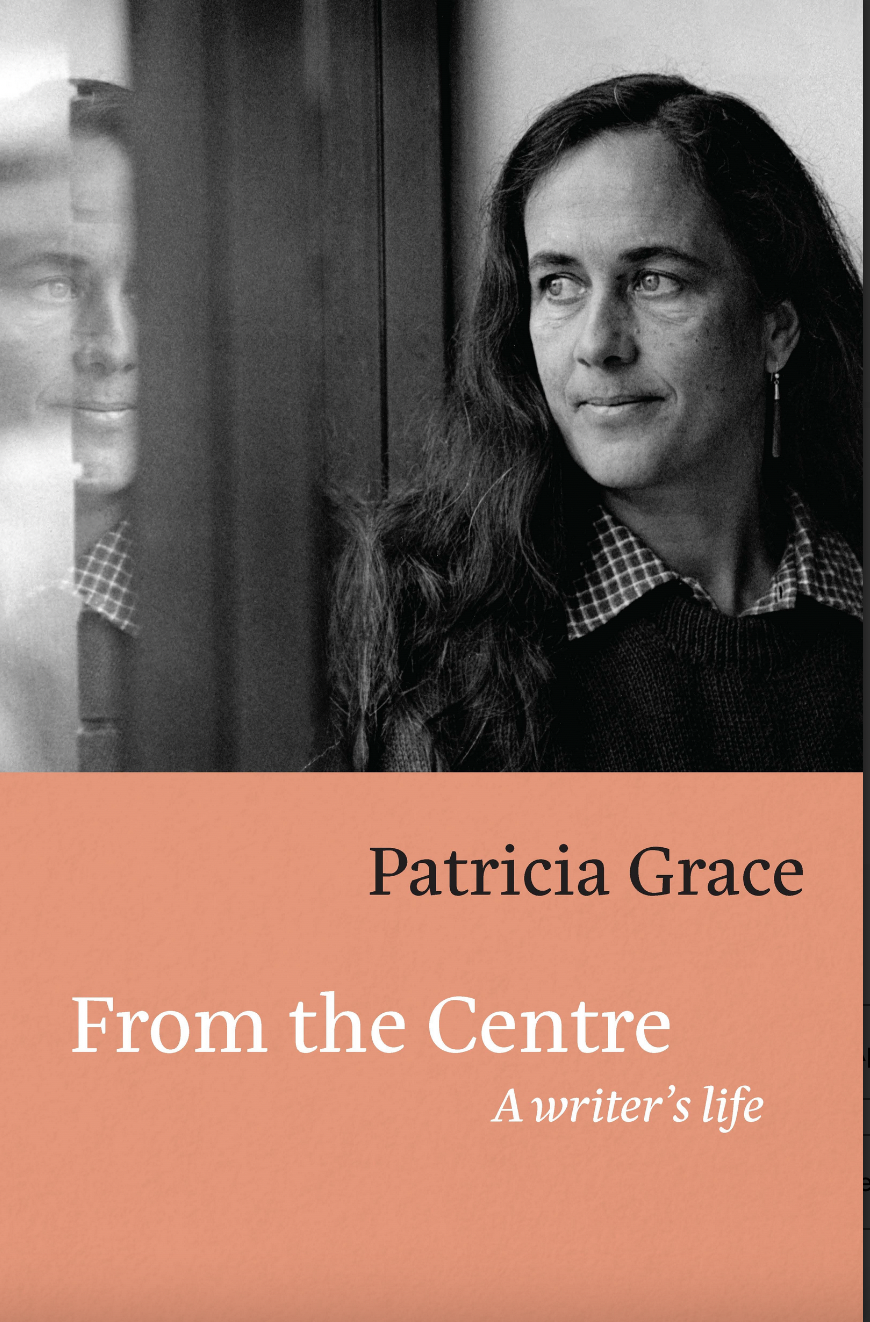
Poetry Shelf review: Patricia Grace’s From the Centre: A writer’s life

From the Centre: A writer’s life, Patricia Grace,Penguin Books, 2021

‘I made up my mind writing was something I would always do’

Patricia Grace

This is the book I took with me when I got my first covid vaccination, and that I have been reading through the side effects, after the first, and now the second. I ended up at ED after the first injection, and the utterly wonderful nurses and ED doctor did numerous tests to make sure all was well. I was a witness to the infinite patience, kindness and expertise of frontline staff, no matter who turned up, no matter the challenges and complications. I was in awe and I was thankful.

I was also in awe of and thankful for the book I held in my hand. It took me out of pain and smashed over tiredness, into another world for hours, into exquisitely crafted writing. This book is quiet, honest, searching, exposing, wise. It is the life of a writer and that in itself is fascinating, but as Patricia will say, writing doesn’t coming out of nowhere, it comes out of living. So this is also a book of living. Writing and living, woven like kete.

From the Centre lifted me. This book is still lifting me. I would love every young Māori writer to read this, and indeed every young woman finding her way with words, against all odds, and indeed every young writer navigating the rugged terrain and the blessed epiphanies life holds out.

And it comes down to the power of story, the power of our own stories to shape us, our own voice to risk and settle and dance and challenge. To read widely like ranging eagles and soaring night bats, to read from a very young age, to hold books close, to celebrate the stories that matter to us. To find our own ways to make words sing and mourn, and to share the worlds we carry: past present future, imagined lived.

This is also a book of beloved whanau, of language, connections, multi-facted aroha. You get drawn into the light – into the light Patricia shines on childhood, the teenage years, being a mother, a daughter. And these experiences are sharped edged as much as they are filled with joy and discovery, because as child, teenage and adult woman, Patricia navigates the relentless racism, the patronising, demeaning, limiting attitudes and behaviours directed at Māori across time. Read Emma Espiner’s terrific review that discusses this (link below).

If I were to pick one book I have read this year and suggest you place it on top of your book pile this it is. I also recommend the terrific podcast from AWF 2021 where Patricia is in conversation with Nic Low (link below).

Penguin Books page

AWF 2021 podcast: Nic Low and Patricia Grace in conversation

Patricia Grace in conversation with Kathryn Ryan – Nine to Noon RNZ National

Extract in The Guardian

Emma Espiner review at Kete Books

Poetry Shelf review: Tayi Tibble’s Rangikura

Rangikura, Tayi Tibble, Victoria University Press, 2021

Cover: Xoë Hall

‘I love words so much they blind me.’

from ‘Mahuika’

Tayi Tibble caught my poetry heart with her debut collection – Poūkahangatus – and the hearts of a galaxy of poetry fans. Rangikura is snaring my heart again. Gloriously so.

Why is it so good to read this book? It is stepping into liquid currents of words, river currents of ideas, images, feelings: incandescent, life-affirming, fast flowing. The poem is the water current and the lightness current, and it is the vessel-on-the-water current. I am climbing in, word splashed, and drenched in joy. The poet is deep diving, skimming the shallows, riding the rough, revelling, honouring, exposing.

Feel the vernacular, the te reo, the melodies along the line, and it is so skin-prickling good.

The first part reclaims the girl. This is girlhood and it is feminism. It is dangerous and vulnerable, mermaid girls racing the boys in the water, girl bonding, girl bounding, the step-brother test, horoscopes, delivering kittens, armouring the danger-girl, becoming winter, the East Coast map carried inside. A road map of adolescence. And always the scintillating rapids of writing. Bliss.

And I remember the year
we were the two strongest ‘girl swimmers’
in our syndicate. This meant
we were forever forced to race
the boys for Western feminism
and you would always win,
even against the boys who were so like men
the teachers treated them as if they were
more muscle than human.

from ‘Lil Mermaidz’

The middle section is a sequence of she he prose poems, a shift in key, a miniature novel in verse, where love is threaded at a distance, and we all might have different things to say about the he, about the she, the tyranny of separation, and the tyranny of waiting. The sexiness of everything. Hierarchies. The love affair, the love relationship, ah what to call this, as dialogue and desire unfold in restaurants and hotel rooms, and the restaurants are sweet and soured with taste and preference. I am almost eating the rice and peanuts (well not the meat), relishing the ‘tacky’ surroundings. And it is sharp edge reading this love, this like love like suite. Think of the way you might look at a photograph and everything is sharp edged with life. And light. And yes the dark shadow jags.

The third section returns to free verse, freedom to break the line, to make it clear that sometimes politics is personal, and that maybe politics is always personal, and that poetry is the the whenua, the maunga, the ocean, the awa. Poetry is sky and breath and beating heart. Tayi’s poetry is grounding liberating speaking out singing. This is what I get when I read Rangikura. It is poetry, but it is also life, more than anything this is poetry as life.

Tayi’s collection is framed by an opening poem and a last poem, ancestor poems, like two palms holding the poetry tenderly, lovingly. Hold this book in your reading hands and check out the electricity when you stand in the river, the ocean. Reading Tayi spins you so sweetly, so sharply, along the line, off the line. I love this book so much.

I sat in the lap of my great-grandmother
until the flax of her couldn’t take it.
So she unravelled herself and
wrapped around me like a blanket
and at her touch the privilege of me
was a headrush as I remember
making dresses out of sugar packets,
my bro getting blown up in Forlì,
my grandfather commemorated under one tree
even though he forced himself into our bloodline
and then abandoned me and me and me.

from ‘My Ancestors Ride with Me’

Tayi Tibble (Te Whānau ā Apanui/Ngāti Porou) was born in 1995 and lives in Wellington. Her first book, Poūkahangatus, won the Jessie Mackay Best First Book of Poetry Award in 2019.

Xoë Hall: xoehall.com

Victoria University Press page

Paul Diamond review on Nine to Noon, RNZ National

Faith Wilson responds to Rangikura at The Spinoff

Kiri Piahana-Wong review at Kete Books

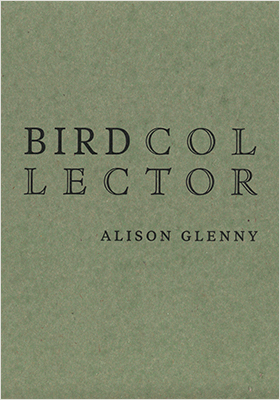
Poetry Shelf review: Alison Glenny’s Bird Collector

Bird Collector, Alison Glenny, Compound Press, 2021

This collection reads as if a Victorian composer, carrying her valise of new operetta libretti, collided in the street with a watchmaker, his briefcase of sketches for a new time-keeping device, and a genderfluid astronomer toting the patent forms for a mechanised solar model made of blown egg shells and bird skulls. Their papers, shuffled together by misdirected desires, unspoken and even unconscious intentions, lead to an entirely new work — a sheaf of pages where the negative space of silence speaks as pressingly as the shape of song.

Emma Neale

Alison Glenny’s new poetry book, Bird Collector, is a perfect sequel to the shining lights of her debut, The Farewell Tourist. What stood out out for me in the first collection is exquisitely revisited in the second: white space, silence, musicality, plenitude, word awareness, the footnotes. Bill Manhire, Airini Beautrais, Erik Kennedy and Emma Neale have endorsed the book. Brilliantly. To the point they almost make future reviews redundant. If you need signposts and pathways into the book, these four contributions are gold. Words that reoccur: awe, song, fragmentary, curiosities, silence, imagination, the unconscious, the gaps.

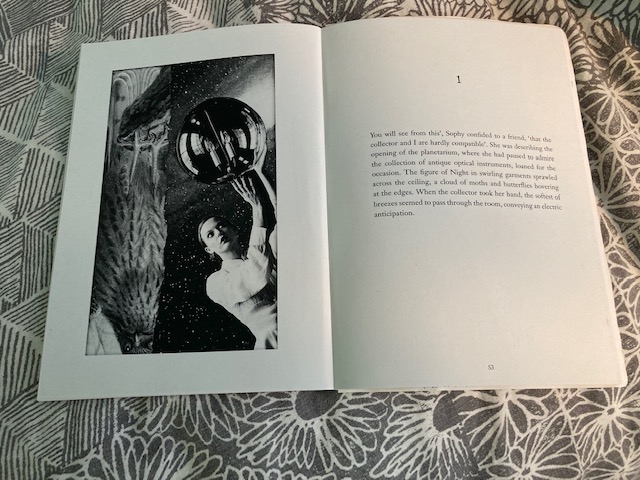
Chris Holdaway, through his Compound Press, has lovingly produced the book, using recycled materials, printing and binding it in Auckland. It includes sublime illustrations by Carrie Tiffany and by Alison herself. I am talking mesmerising. Wow! Alison’s collage-like images are gorgeous, visual overlays!

Bird Collector is in two parts: ‘Bird Organ’ and ‘Nights with the Collector’. Two halves of a beating heart. There is the off-real and the intensely real. Little caches for the hidden, little nooks for the startles. The opening poem holds out the possibility of narrative, character, the potency of things. I am picturing the poetry as paper art unfolding in water, and upon each occasion, the appearance and disappearance unexpected, as the poem comes into being. This is the joy of poetry. The way we read a poem to some surprising form of life. These are the opening lines of the opening poem, ‘Key’:

‘But we do not know in advance which key will unlock the hidden melody. Discovering it is a matter of chance—like opening a drawer at random and finding snow, or the ghost of a bird fluttering among the cogs and feathers.’


You enter the strange but it is not estranging. You come across gaslight and candles as the shade and light flicker. You enter the beautiful but not the beautifying. Sentences sing for the sake of song, and then sing along a thousand flight paths: ‘The notebooks chronicle her internal weather.’ This sentence is from ‘Bird’ where all manner of things and experiences, feeling and reactions, hide or hover over body or clothing. What is this poetry like? I keep losing words to tell you. I keep feeling I am standing in an image-rich, disorienting space, reminiscent of a steam-punk room, that stencils intricate maps on my eyes.

And perhaps each poem becomes the chest of drawers you slowly pull open. Ever so slowly you open the poem. Breathing in scent and melody, fascinations and intriguing juxtapositions. Little actions. Minute epiphanies. Individual words that are shivers, glints, clouds, seepage, dissolution: ‘The difference between use and exchange lay in an abstraction. When she opened the instrument, a cloud of butterflies flew out of the ghostly remains of a forest.’

At times there is a single sentence on the page or even simply a poem title which is expanded upon in a series of footnotes, on the facing page and is always always embraced by the white space, the generous silent beat (for example, ‘Footnotes to a History of Mourning’, Footnotes to a History of Birdsong’).

At times the poems feel like a series of hauntings to me.
At times it feels like scatter and rustle and perfume.

Why do I keep making comparisons to the making of a poem as I read this? The second section is set in a planetarium. The narrative foregrounds catalogues, collecting, cataloguing the collections. Keeping, discarding, keeping discarding. Caring for the souvenir, the ‘tiny shards’. Managing the challenge of falling snow. The sequence of paragraphs/poems offers endings that speak of ash and fracture, then move into poetry skeletons. A handful of words falling like snow down the page. And then the skeleton becomes footnotes, an intriguing aside that catapults you in fresh directions of contemplation, reverie. And what remains? Shadow and light? Ash? The weather? A love story. A lost story? The key is missing we read, and yet every time we travel through the book, we assemble our own key.


‘Some fragments of paper always remained from the burning of the

catalogues. She likened them to telescopes, pointing to a part of the

sky where everything is centred upon vacancy.’


from ‘Footnotes to a History of the Fragment’


The sources cited in the acknowledgements would enhance our reading pathways. I am wondering how we collect as we read. I want to check out: the poetry of Stéphane Mallarmé (again), Susannah B Mintz’s essay ‘Forms of Self-Disclosure in the Lyric Essay’ and Jasmine Gallagher and Kristina Marie Darling on specific found forms.

Alison is one of our most original poets: lyrical, heart-sustaining, mind-altering, hallucinogenic, attentive. Bird Collector demands the very best superlatives you can summon. For me this this is poetry standing on its tip-of-the-toes best, it’s sublime.

Alison Glenny lives on the Kapiti coast. Her Antarctic-themed collection of prose poems and fragments, The Farewell Tourist, was published by Otago University Press in 2018.

Compound Press author page

Image by Alison Glenny

Poetry Shelf Monday Poem: Natalie Morrison’s ‘Be the Building’

Be the Building

Make sure you are in a comfortable

position. Steer your attention down

to your foundation piles.

Sense your I-beams, your

cross-braces. Let your elevators

rise and fall in their natural rhythm.

You may feel your thoughts begin to wander

between floors and out into the street.

This is perfectly normal. I want you to accept

the drift of your thoughts, then gather them back

to their allocated desks. Just focus on the stillness.

Listen to the many keyboards inside yourself.

You might experience them as a ticking cavern

or a preschool armed with felted mallets.

Notice the shuffle of your thoughts in your internal

stairwells. There may be pigeons scribbling their nests

in your eaves, a fresh pucker in your wiring, burnt toast

on Level 7. Acknowledge these,

and try not to ask yourself

why your pipes

feel so water-logged

these days, or whether

it’s just a clump of thoughts

leaning on a wall.

Let your elevators rise

and let them softly fall.

Natalie Morrison

Natalie Morrison has an MA in Creative Writing from the International Institute of Modern Letters, where she received the Biggs Family Prize for Poetry in 2016. She lives and works in Wellington. Her debut collection Pins appeared in 2020 (Victoria University Press).

Poetry Shelf Theme Season: Thirteen poems about song

Music is the first poetry attraction for me. I am drawn to poems that sing. Poems sing in multiple keys with affecting and shifting chords, rhythms, harmonies, counterpoints, pitch, cadence, codas, crescendo. Tune your ear into the poetry of Karlo Mila, Emma Neale, Sue Wootton, Bill Manhire, Hinemoana Baker, Michele Leggott, Nina Mingya Powles, Lily Holloway, Alison Wong, Chris Tse, Mohamed Hassan, Gregory Kan, Anna Jackson, David Eggleton and you will hear music before you enter heart, mystery, experience, startle. Take a listen to Bernadette Hall or Dinah Hawken or Anne Kennedy. Anuja Mitra. Louise Wallace. How about Grace Iwashita Taylor? Ian Wedde. Tusiata Avia. Tayi Tibble. Rebecca Hawkes. Helen Rickerby. Selina Tusitala Marsh. Murray Edmond. Apirana Taylor. Iona Winter. Rose Peoples. Sam Duckor Jones. Vincent O’Sullivan. Kiri Pianhana-Wong. Jackson Nieuwland. Serie Barford. Listening in is of the greatest body comfort and you won’t be able to stop leaning your ear in closer. I think of one poet and then another, to the point I could curate an anthology of musical poets. I can name 100 without moving from the kitchen chair. Ah. Bliss.

But for this theme I went in search of poems that speak of song. The poems I have selected are not so much about song but have a song presence that leads in multiple directions. And yes they sing. Once again I am grateful to publishers and poets who are supporting my season of themes. Two more themes to go.

The poems

poem to Hone Tuwhare 08

the master

adroit composer of

‘No Ordinary Sun’

has gone

and still

the music grows flows
grumbles and laughs

from his pen

only the old house has fallen
to the wind and storm

death shakes the tree
but the bird lives on

Apirana Taylor

from A Canoe in Midstream: Poems new and old, Canterbury University Press, 2009 (2019)

Between Speech and Song

I’m sorry, you said.

What for, I said. And then

you said it again.

The house was cooling.

The pillowcases had blown

across the lawn.

We felt the usual shortcomings

of abstractions. I hope,

you said. Me too, I said.

The distance between our minds

is like the space

between speech and song.

Lynley Edmeades

from As the Verb Tenses, Otago University Press, 2016

Dust House

my sister is humming

through wallpaper

the front door is shutting

and opening like lungs

to kauri trees

leaping upwards through air

my lungs are pressed

between walls

grey warblers sing like

dust moving through air

the sunflower is opening

and shutting like lungs

my lungs are shifting

the air

Rata Gordon

from Second Person, Victoria University Press, 2020

Lullaby

The woman next door sings so slowly someone must have died. She practices her sorry aria through the walls. When we bump on the steps she is neighbourly, maybe, with her purpled eyes. She tries for lightness. The radio tells me it is snowing somewhere south. Drifts fall down for days. The presenter uses the word ghastly far too often. In the ghastly snow, he says, animals dig for their calves. When we meet on the path my own voice is chestnut and dumb. ‘It’s a ghastly thing,’ I say. ‘It was a ghastly mistake.’ In the dark the woman’s voice touches a sweet, high place. It’s a small cupboard where her children once hid when she’d tried to explain ­­– which you never really can – why the animals must paw in the cold, brown slush. Where are the young? Who hears their low, fallow voices?

Sarah Jane  Barnett 

from Bonsai – Best small stories from Aotearoa New Zealand, edited by Michelle Elvy, Frankie McMillan and James Norcliffe, Canterbury University Press, 2018

Song

i

The song feels like singing,

looks out the window:

clouds glued to the sky,

harbour slate-grey,

hills like collapsed elephants.

There’s food stuck to the highchair,

a plastic spoon on the floor.

The cat stares up in awe at the fridge.

The song opens its mouth,

but seems to have forgotten the words.

ii

The song wakes up.

It’s dark.

Someone is crying.

The morepork in the ngaio

shakes out its slow spondee:

more pork more pork more pork.

Back in the dream a line

of faces passes the window.

Each face smiles, lifts

its lips to show large teeth.

iii

The song sits at the window, humming

ever so softly, tapping

a rhythm on the table-edge, watching

the harbour slowly losing

colour. At the very far end

of the harbour slightly up to the right,

a zip of lights marks the hill

over to Wainuiomata. If that zip

could be unzipped, thinks the song,

the whole world might change.

iv

The song strokes the past

like a boa, like some fur muff

or woollen shawl,

but the past is not soft at all;

it’s rough to the touch,

sharp as broken glass.

v

The song longs to sing in tune.

The song longs to be in tune.

The black dog comes whenever

the song whistles, wagging its tail.

The black dog waits for the song’s whistle.

The black dog wants a long walk.

vi

The song croons “Here Comes the Night”

very quietly. Meanwhile the baby

spoons its porridge into a moon.

The black dog leads the song

down long, unlovely streets.

The night is slowly eating the moon.

Harry Ricketts

from Winter Eyes, Victoria University Press, 2018

The Crowd

The crowd is seaweed and there’s always one man too tall at least or one man dancing too much or one woman touching too much. We form short bonds with each other. The man next to me we briefly worry is a fascist. But him and I set a rhythm of touches with each other as we’re together and apart from the music and the bodies. When the bassline and the drums are inside my entire body they always shake up grief like sediment in water so that I am the sediment and my tears become water. And I am the water and the seaweed at the same time and I hover in the thick of the sound experiencing myself experiencing sound and feeling and my body as one piece of a larger thing. I want to be part of a larger thing as often as I can. So many days there isn’t enough music to pull us together. We shred each other, other days. A little rip. A tiny tear. A deep cut. We curl backwards into ourselves to do the damage. I follow the line. I rise into it because it is the sea and the only thing to do is to rise. I am bread and I am fire. I am the line of the horizon as it is reflected back to you. We make our own beds and lie in them. You will have said something. To me. Later, as I think it through I remember us neck to neck, clutching.

Emma Barnes

from Sweet Mammalian 7

singing in the wire

The song is a clutch of mailboxes

at the end of an undulating road,

an unsteady stack of bee-hives

beside poplars.

The song is the whine from a transformer,

crickets, waist-high roadside grass,

a summer that just will not let up.

The song is a power pole’s pale-brown

ceramic cup receiving a direct hit

from a clod flung by my brother.

It is looped bars laid

against the white paper of a gravel road.

Released the year and month my father died,

‘Wichita Lineman’ can still bring me the valley

where we lived,

still bring me grief, the sound

of wind through wire, the loneliness

of country verges; but does not bring

my father back. You can ask

too much of a song.

Kay McKenzie Cooke

from Born To A Red-Headed Woman, Otago University Press 2014

thursday quartet 9:15

The stairwell grew and rolled

with slackened half-night. Quite clearly

she saw how her words had become her.

When she sang she remembered; her breath was deep

letters unnudged. The stairwell hummed. Everything

smelt of other people’s hands.

One, two, three. Another life had trained her ready.

She knew these breaths. It had been a day

of near misses, daredevil secret creatures

who followed her home, a line of sight

and the road, misadventured art deco.

Had she been good enough?  

At night her window smithied day.

She could see the boats as they came.

The stairwell rose and then uprising

the first notes.

Pippi Jean

Trigger


When Johnny Cash
was sad he’d call
Willie Nelson and
ask for a joke.

Willie knew a
dirty joke – good
or bad – was the
secret to happiness.

Some people haven’t
yet realised that Willie
Nelson is one of the
greatest singers, guitarists

and songwriters. But
there’s time. There’s always
time. Despite it being
funny how it always seems

to just slip away. Still,
to add to the legends of
Willie smoking pot
on the roof of the White House

and blowing out interviewers
so that they couldn’t remember
where they parked their car or
where they lived or worked,

we can now thank Willie not
only for his 70 albums and for
writing the greatest jukebox
weepie of all time…

But, also, on some level, he
helped keep Johnny Cash alive
for as long as he lasted. Johnny
battled his depression

with a dirty joke from Willie
Nelson. I’m not saying it works
for everyone but it served
The Man in Black.

Simon Sweetman

from off the tracks website

Sunday’s Song

A tin kettle whistles to the ranges;

dry stalks rustle in quiet field prayer;

bracken spores seed dusk’s brown study;

the river pinwheels over its boulders;

stove twigs crackle and race to blaze;

the flame of leaves curls up trembling.

Church bells clang, and sea foam frays;

there’s distant stammers of revving engines,

a procession of cars throaty in a cutting,

melody soughing in the windbreak trees,

sheep wandering tracks, bleating alone.

Sunday sings for the soft summer tar;

sings for camellias, fullness of grapes;

sings for geometries of farming fence lines;

sings for the dead in monumental stone;

sings for cloud kites reddened by dusk —

and evening’s a hymn, sweet as, sweet as,

carrying its song to streets and to suburbs,

carrying its song to pebbles and hay bales,

carrying its song to crushed metal, smashed glass,

and fading in echoes of the old folks’ choir.

David Eggleton

from The Conch Trumpet, Otago University Press, 2015

Ephemera

My brother says that he doesn’t

understand poetry. He hears the words

but they all intersperse into a polyphonic

whirl of voices; no meaning to them

beyond the formation and execution

of sounds upon lips, pressing together

and coming apart. I cannot touch or feel

words, but I see them ‒ the word ‘simile’

is a grimacing man, poised on the edge

of polite discomfort and anguish. ‘Dazzled’ is

a 1920s flapper with broad, black eyes

and lank black hair around the edges of

her face. A boy in my music class hears

colours ‒ well, not hearing as such, he says,

but images in his mind’s eye. People play

tunes and ask him what colour it is, but

they play all at once, and he says that it is

the indistinguishable brown of all colours

combined. I think of a boy I used to know

called Orlando, and how this word conjures

the sight of a weathered advert for a tropical holiday

in my mind ‒ a forgotten promise, just ephemera

and not to be mentioned. The History room at school smells

like strange, zesty lemons, like the smell when you

peel a mandarin and its pores disperse their

sebum into the air, or when you squeeze the juice

from a lemon into your hands, and feel it dissolve

the soapy first layer of skin. I always think of

a certain someone when I smell this, even though

they wear a different perfume, and when I listen

to soft guitar ballads I think of them too, even though

I know they wouldn’t have heard them. All

of the sounds and smells and thoughts blend

into ephemera, scorched postcards of violets and

swallows, etched with the perfect handwriting of

old, consigned to antique stores that smell of

smoke. Things of the past with no value, no

substance, just air filled with citrus mist. I collect

each word and strain of what was once fresh in

my mind, in a forgotten jacket pocket, to be discovered

on some rainy day, years later. I’ll pull out the

postcard and think of the way I always look twice

when I see someone with curly hair; the word ‘longing’

is a blue wisp that creeps between the cracks

in my fingers. That wisp hides in these things,

tucked away, like the 1930s train tickets I found

in an old book. I wonder if their owner ever made it

to their destination. I wonder who they were.

Cadence Chung

first appeared in Milly’s Magazine

Love songs we haven’t written

Within the warm wreckage of me,

I’d never dare to ask you, but

in that moment when pain finds it plowing rhythm,

would you want me dead?

It’s a startling thought.

So round and whole and ordinary.

But you can’t know these things until

you’re sunk deep in the geometry of them. Of course,

the bed I lie on would be lily white and threatening levitation.

I would imagine the emptiness I leave and

you would think of all the ways to fill it.

That is the grotesque version.

It should of course be the other way around.

I don’t need misery to write poetry.

For me words come only after precarity passes

and there is safety in sitting still for long stretches.

Words, eventually, have the thickness of matter

left out too long in the sun. My love,

If we had a daughter, I’d be more dangerous.

She’d lick words whole     out of the air.

I would recognize her tiny anthem.

Like you, she’d need two anchors, and only one mast.

Like me, she’d be immovable, a miniature old woman

by seven years old.

Catherine Trundle

thursday’s choir

my singing teacher says yawning during lessons is good

it means the soft palate is raised and air circulates the bulb of your skull

to be pulled out between front teeth like a strand of taut hair 

gum skin or yesterday’s nectarine fibre

in empty classrooms my body is a pear, grounded but reaching

the piano is out of tune, its chords now elevator doors

a shrieking melody that says: relish the peeling off

floss til you bleed and watch through the bannisters

voices merge like a zip ripped over fingers

reeling backwards and thrown to the wall

are all the arcades, rubber children

midnight sirens and birds sounding off one by one

the sopranos cry out offering forged banknotes

while the altos bring the alleyways

you crash through the windscreen, thumbs deep in pie

laundromat coins with that rhythm

Lily Holloway

Emma Barnes lives and writes in Te Whanganui-ā-Tara. She’s working on an anthology of Takatāpui and LGBTQIA+ writing with co-conspirator Chris Tse. It’s to be published by AUP in 2021. In her spare time she lifts heavy things up and puts them back down again.

Sarah Jane Barnett is a writer and editor from Te Whanganui-a-Tara. Her poetry, essays and reviews have been published widely in Aotearoa. Her debut poetry collection A Man Runs into a Woman (Hue + Cry Press) was a finalist in the 2013 New Zealand Post Book Awards. Her secondcollection Work (Hue + Cry Press) was published in 2015. Sarah is currently writing a book on womanhood and midlife.

Kay McKenzie Cooke’s fourth poetry collection was published by The Cuba Press in June 2020 and is titled Upturned. She lives and writes in Ootepoti / Dunedin.

Cadence Chung is a student from Wellington High School. She started writing poetry during a particularly boring maths lesson when she was nine. Outside of poetry, she enjoys singing, reading old books, and perusing antique stores.

Lynley Edmeades is the author of two poetry collections, most recently Listening In (Otago Uni Press, 2019). She lives in Dunedin and teaches poetry and creative writing at the University of Otago.

David Eggleton is the Aotearoa New Zealand Poet Laureate 2019 – 2022. His most recent book is The Wilder Years: Selected Poems, published by Otago University Press.

Rata Gordon is a poet, embodiment teacher and arts therapist. Her first book of poetry Second Person was published in 2020 by Victoria University Press. Through her kitchen window, she sees Mount Karioi. www.ratagordon.com 

Lily Holloway is a queer nacho-enthusiast. She is forthcoming in AUP New Poets 8 and you can find her work on lilyholloway.co.nz.

Pippi Jean is eighteen and just moved to Wellington for her first year at Victoria University. Her most recent works can be found in Landfall, Starling, Takahe, Mayhem, and Poetry New Zealand Yearbook among others.

Harry Ricketts teaches English literature and creative writing at Victoria University of Wellington Te Herenga Waka. His Selected Poems appeared in June, Victoria University Press.

Simon Sweetman is a writer and broadcaster. His debut book of poems, “The Death of Music Journalism” was published last year via The Cuba Press. He is the host of the weekly Sweetman Podcast and he writes about movies, books and music for a Substack newsletter called “Sounds Good!” (simonsweetman.substack.com to sign up). He blogs at Off The Tracks and sometimes has a wee chat about music on RNZ. He lives in Wellington with Katy and Oscar, the loves of his life. They share their house with Sylvie the cat and Bowie the dog. 


Apirana Taylor, Ngati Porou, Te Whanau a Apanui, Ngati Ruanui, Te Ati Awa, is a nationally and internationally published poet, playwright, short story writer, novelist, actor, painter and musician. He has been Writer in Residence at Canterbury and Massey Universities. He frequently tours nationally and internationally visiting schools, tertiary institutions and prisons reading his poetry, storytelling and taking creative writing workshops. He has written six collections of poetry, a book of plays, three collections of short stories, and two novels. His work has been included in many national and international anthologies.

Catherine Trundle is a poet and anthropologist, with recent works published in Landfall, Takahē, Poetry New Zealand Yearbook, Not Very Quiet, and Plumwood Mountain.

Ten poems about clouds

Twelve poems about ice

Ten poems about dreaming

Eleven poems about the moon

Twelve poems about knitting

Ten poems about water

Twelve poems about faraway

Fourteen poems about walking

Twelve poems about food

Thirteen poems about home

Ten poems about edge

Eleven poems about breakfast

Twelve poems about kindness

Thirteen poems about light

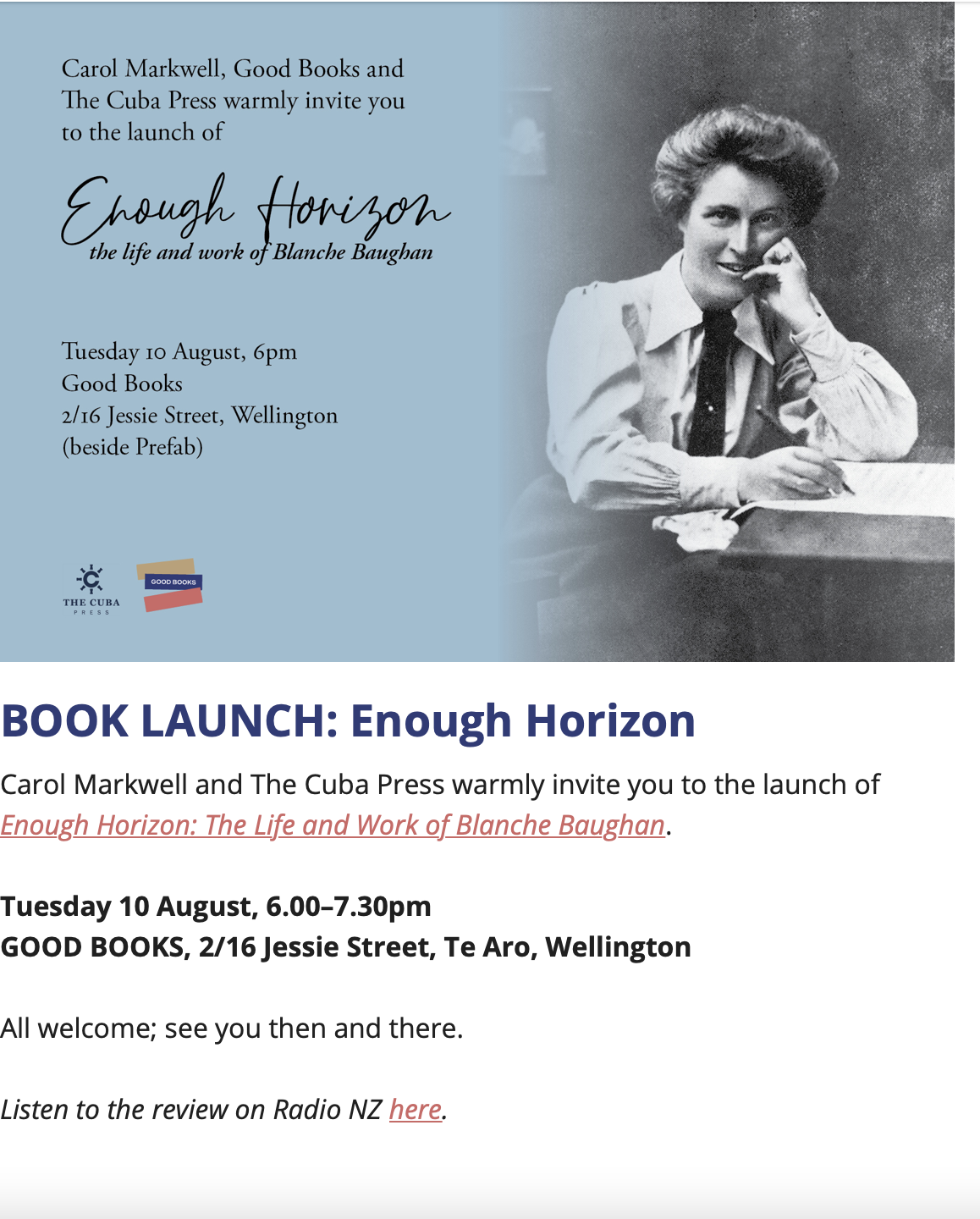
Poetry Shelf noticeboard: Carol Markwell launches Enough Horizon – the life and work of Blanche Baughan

RNZ National review here (Paul Diamond on Nine to Noon)

Poetry Shelf audio: Shari Kocher reads from Foxstruck and Other Collisions

Foxstruck and Other Collisions, Shari Kocher, Puncher & Wattmann, 2021

Shari Kocher reads five poems from Foxstruck and Other Collisions

‘All the Silver Ships You Carry’

‘As We Spiral Pine Tree Mountain’

‘Not the Horses’

‘Goats Cheese with Honey and Rosemary on Toast on Sunday Morning’

‘Peak-to-Peak Amplitude is also the sound of the wind on the tundra, singing’

The poems in Foxstruck and Other Collisions cross many registers and seek to intervene in the ‘death drive’ at work in the over-culture at every level. At the same time, art as a measure of resistance is also riddled with colonisations of every kind. Though it’s hard for this poet to speak about her own work in any comprehensive way, the poems in this collection tackle the labour of love and the work of eros not as modes in which to answer historical and contemporary atrocities, but as provisional structures in which to witness and invoke the kinesis of a tangible ‘life-force’ larger than the self, inherently more mysterious, unknowable, and ecological than the scholarship this poet has undertaken will ever grasp. In this arbitrary selection of five poems, a vision of diverse artistries and bold scholarship is explicitly referenced, from the astronomy of Rebecca Elson, the encaustic paintings of New Zealand artist Amy Melchior, fellow New Zealand artist Kate Van der Drift, one of whose river works adorns the cover of this book, writings by Clarice Lispector and Carson McCullers, the philosophy of Gaston Bachelard, to diffuse and implicit connections with the influential work of Kerry Reed-Gilbert, Deborah Bird Rose and Constanza Ceruti, among others. If poetry is to be a shelter of any kind, then the biosphere that breathes it must be porous and open to the sacred, however that term is both contested and defined.

Shari Kocher, July 2021

Shari Kocher is the author of Foxstruck and Other Collisions (Puncher & Wattmann, 2021) and The Non-Sequitur of Snow (Puncher & Wattmann 2015). Sonqoqui: a Threnody is currently in translation under the auspices of The Peter Steele Poetry Prize (2020). She holds MA and Doctorate degrees from Melbourne University, where she sometimes works in the creative writing program. She also works in a freelance and remedial capacity, but during lockdown, finds herself working primarily on a collection of short stories and new poetry, while shadow-boxing a monograph on Dorothy Porter and Anne Carson. Website

Puncher and Wattman page

Poetry Shelf review

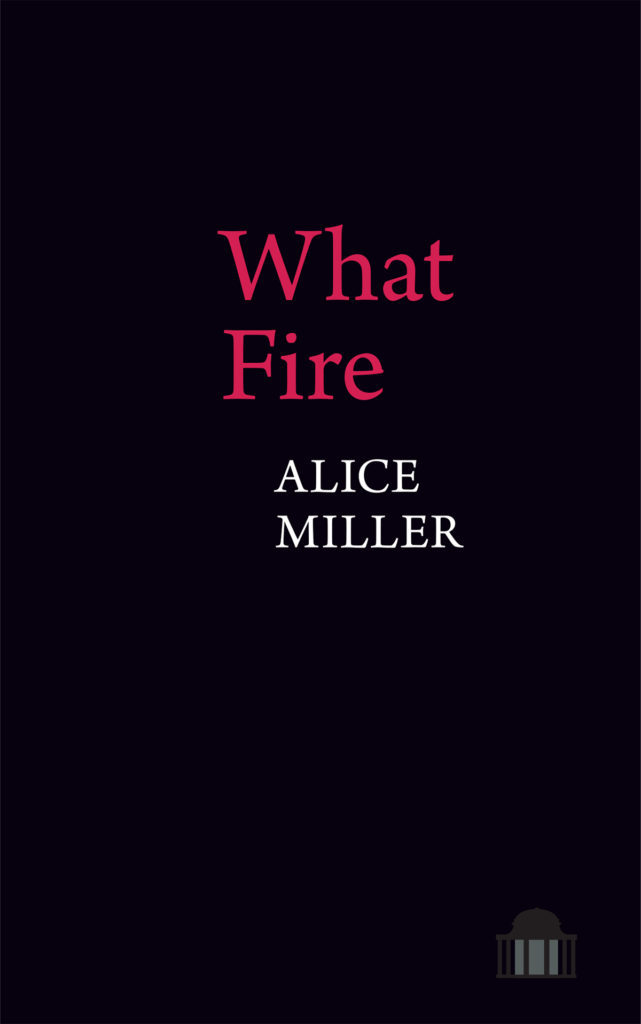
Poetry Shelf celebrates new books: Alice Miller reads from What Fire

What Fire, Alice Miller, Pavillion, 2021

Alice reads ‘After The Internet’

Alice reads ‘New Wings’

Alice reads ‘Seams’

Alice Miller is from Māhina Bay and currently lives in Berlin. Her third poetry collection, What Fire, has just been published by Pavilion in the UK. Her first novel, More Miracle than Bird (Tin House, 2020) was on the New York Times summer reading list. 

Friday Poem at The Spinoff: ‘The Twin Peaks’

Pavilion Poets at Liverpool University Press page (Alice Miller)