Category Archives: NZ author

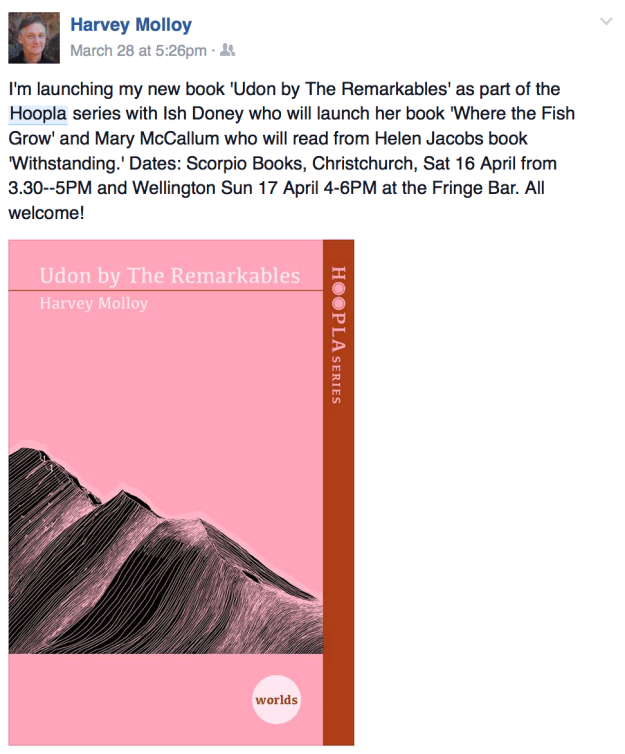
Book Launch: Bill Nelson

Victoria University Press warmly invite you to the launch of
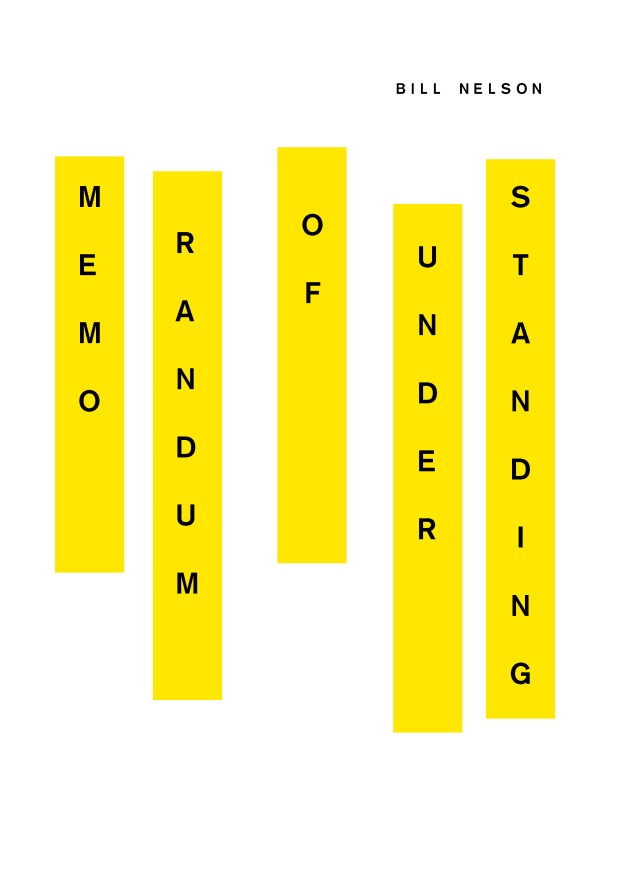
Memorandum of Understanding
by Bill Nelson

on 6pm–7.30pm, Thursday 14 April,
at The Guest Room, Southern Cross Garden Bar
39 Abel Smith St, Te Aro

Memorandum of Understanding will be launched by Kate Camp.
Copies of the book will be for sale courtesy of Vic Books. p/b $25.


Memorandum front cover.jpg

Book launch for Anahera Gildea

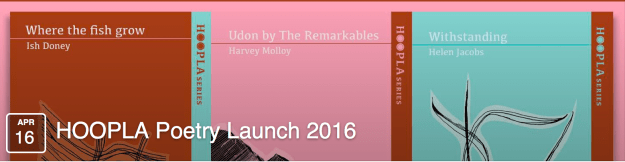
We hope you can make it to the launch of Poroporoaki to the Lord My God: Weaving the Via Dolorosa:  Ekphrasis in Response to Walk (Series C) by Colin McCahon by Anahera Gildea,  published by Seraph Press.


Screen Shot 2016-04-04 at 12.46.06 PM.png

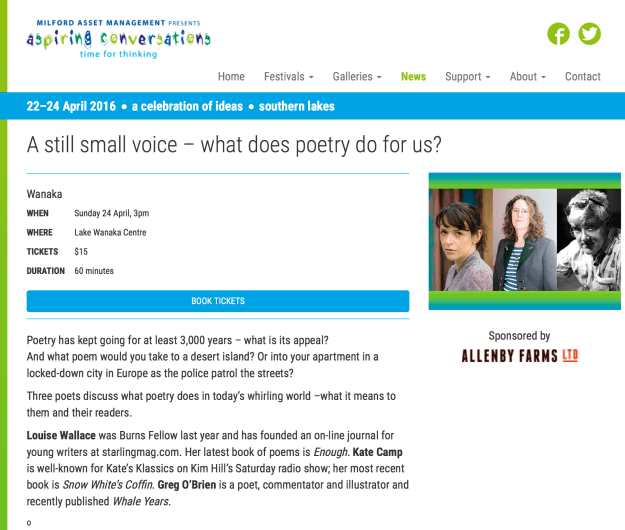
Wanaka Poetry event: ‘A still small voice – what does poetry do for us?

Screen Shot 2016-04-04 at 12.40.22 PM.png


Maria McMillan on Wordsongs


Wordsongs, St Peters Hall, Paekākāriki, 3rd March 2016


I go partly because there’s like a major poetry type gig in Paekākāriki and I’m a Paekākāriki poet and it feels a bit rude not to go. Imagine, I think, if there’s only six people there without me and they decide never to have anything poetry related in our village ever again. Yes, we call it a village and I needn’t have worried. Having scoffed down as much of a delicious fried-rice concoction as I possibly could in 94 seconds  I arrive three minutes late and take the Very Last Seat. It’s an actual excited crowd, in carefully arranged tiers. They’ve turned St Peters Hall around so we face the direction of the sea and one long side of the hall with its cool house-shaped wooden-window shutter things. The huge red velvet curtain hangs over the stage to our left and the doors to the village main street to our right.

I love this hall but truthfully, I’m a bit wary of poetry set to music. It’s the puritanical killjoy in me which says, honey, you need to decide, music or poetry. Just get away with your weird, not very interesting bongo drumming interspersed with a man saying two words usually something like organic tomatoes in  a quiet yet loud, yet well modulated, yet with working-class-solidarity voice and then pausing a full minute while making eye contact with every member of the audience before saying wet. But I know it’s kind of prudish of me and I need to open myself to new experiences so I am willing and here and listening.

Local poet, Dinah Hawken, who starts us off, makes me feel very comfortable. She reads her poetry sans music, the way it should be (sorry) and she starts with a good long poem about environmental catastrophe. The poem earns its length and I enjoy Hawken’s meditative delivery. She reads slowly and thoughtfully and the poem turns from lament to challenge to conversation. I feel like I’m hearing more and more poetry like this, laced with planet grief and helplessness and wonder. I’m glad it’s being written.

The main act is  Bill Manhire with singer Hannah Griffen, pianist Norman Meehan and Hayden Chisholm on saxophone and clarinet. To begin with I think Chisholm is tuning up, his sax is breathy and rough and understated and there’s no clear strong notes but then I realise this is part of it all. He’s throat clearing and then the other clear notes come, but through the set I see this replication of human noises, and also the absorbing of other sounds and instruments. I hear reverb and the plucking of a guitar, slow growling, didgeridoo and the noise of traffic all through his instruments.

In this first song, an interpretation of Baxter’s High Country Weather, the piano and singing come in beside the brass and I’m startled by how much action, how much sound can be produced by just three people. Griffin’s voice is like some really good jazz club singer. I get that vibe through the night. I want to be sitting at a small lamped table having intimate conversations. She sings big, beautiful and clear, high and low.  Next Bill, congenial and with charming anecdotes that thrill the poetry nerd in me, reads Rain by Hone Tuwhare and then the three musicians play it back to us. I get it now. I can listen to the poems read as poems, and listen to the music as music. No bongo drums. No organic tomatoes and soulful stares. It’s a relief. And when I hear Rain sung I’m struck by how lineation changes with the music, the words become split and lumped in different way. We can hear hidden rhymes and rhythms which may be a subtle backbone to verse on the page but in music are drawn out and played with. Cool.

Meehan tells us the set is pretty much the album Small holes in the silence, featuring versions of  Manhire and other poets’ work as songs. We hear interpretations of Alistair Te Ariki Campbell, Manhire, David Mitchell, and my favourite piece, two poems by Eileen Duggan. I can’t actually hear the words as Griffin sings so perfectly in tune with the sax, so my liking this all the same proves how thoroughly mature I’ve become about the whole poetry and music mash up. What I love in this song is the way the sax more than ever takes the role of a voice; for a moment the sax and the singer are a duet and in a kind of heady triumph. After that the two seem to swap places; Griffin no longer singing words but sounds become another instrument and the saxophone becomes a human voice. It’s a meandering interesting work. I also love Manhire’s stories about and poem for Cornish poet Charles Causley. The evening ended with a spoken and then musical interpretation of Manhire’s rhyming list poem ‘1950s.’ The crowd loved it, they threw flowers, they cheered, they stomped. Well, they didn’t but I’m sure if they thought of it they would have. They applauded long and hard. I wander out into the Paekākāriki night. Now the traffic sounds like a saxophone. The crossing signals go off. A train, windows bright, rumbles past us on its way to Waikanae. I wave.

Maria McMillan


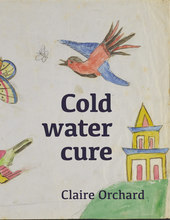
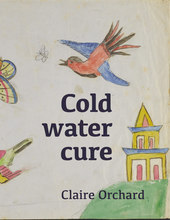
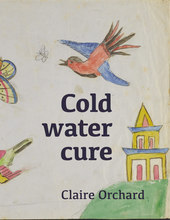
Poetry Shelf review: Claire Orchard’s Cold Water Cure – This is the joy of poetry!

Cold_Water_Cure__43428.1448931921.220.220.jpg   Cold_Water_Cure__43428.1448931921.220.220.jpg   Cold_Water_Cure__43428.1448931921.220.220.jpg


Cold water cure Claire Orchard  Victoria University Press 2016

Lately I have been thinking about the bridges that occur between poem and reader. Some bridges are so surely established that the ensuing traffic is free flowing. Noisy. Exhilarating. On other occasions, the bridges falter and it is barely possible to cross.The poem remains at arm’s length. Reading can be viewed as a travel card of crossings, but it is also invigorated by countless sidetracks  and multiple rest stops.

Claire Orchard’s debut collection,  Cold water cure, affords rich crossings. It is a book in three parts with the long middle section, a  fitting centrepiece. The first section resembles a picnic spread where everyone brings a plate and it all seems to fit together perfectly. These opening poems bring family close to the surface of reading in ways that move you. Move you to laugh out loud, to wry grins, to feel something. Claire prunes the dross, and peels a poem back to the bare bones of incident. Then she adds a little kick, a curve, a tilt and the bare bones gleam so we take notice. This is the joy of poetry. The way it enables renewed attention to old things.

So many favourites in this first section but here are a few:


Egg

What people often don’t realise, my grandfather said abruptly,

while we were sitting on a bench at the playground,

is that parenting involves taking

a lot of split-second decisions.


This poem is a grandparent anecdote involving an egg. I had no idea where the poem was taking me and it made me laugh out loud, grin wryly and feel something. All in one little poem basket.

Several of the poems suggest that Claire was once a primary-school teacher. Very rarely do I come across poems written from the point-of a-view of a teacher. It sparked a whole train of thought. I taught in primary schools in my twenties (Auckland, Wellington, London), yet I have never written poetry about these experiences as though they are low-status material or too far back in time. Janet Charman wrote some tough poems about being a high-school teacher. Johanna Aitchison has written hilarious poems about teaching English as a second language. Claire’s poems catch a knife-edge delight I recognised.

Here is the ending of, ‘Sharpening,’ one of the teacher poems:


I ask these questions without thinking,

tearing open a band-aid.

He’s six, the number of perfection.


There are a few found poems in the bunch. Found poems work best when the poet considers how best to serve them. Sometimes found poems don’t shift beyond road sign or stolen conversation and the connection is one of indifference. Not here. I especially love the one that kick starts the collection with a recycled quote from Ali Williams during the All Blacks 2011 World Cup Campaign.


Hang on

I think we’re getting ahead of ourselves here.

Last time we got ahead of ourselves,

we shot ourselves in the foot

then we did it again a few years before that –

shot our other foot.

We’re just trying to leave our feet on.


I loved the poem that riffs stream-of-conscious like when the poet spots a young man wearing the exact same T-shirt at the next table (‘Don’t let me be misunderstood’). Equally funny is ‘Poetry master class.’ This is based on sharing a copy of the poems with a late arrival at Bill Manhire’s event at the Embassy Theatre. Just hilarious with an ending that nails it. Here is an early stanza:


She referred to the presiding poet as Bill and,

before he’d begun to address himself to the first poem,

had taken a pen and scored briskly through three of its lines.


Yes there is humour in the opening banquet but there are ample reasons to savour rest stops. The end lines. The shift of the eye. The look of the poem. The sound of the poem. Tropes that renovate things. This from ‘Legendary creature’:


Your many-winged laundry rack

resembles a pale, anorexic albatross

doubled over

in the boot of the car


The middle section constitutes the bulk of the book and sets up bridges like Russian dolls, chiefly between Claire and Darwin. Unlike most poetry collections, Claire has placed her detailed notes at the start of the book. A travel guide, if you like, that signposts the link between poem and original source. Many of the poems juxtapose the words of Darwin or those connected to him with the words of Claire. The poems thus promote conversation between then and now, him and us, this idea and that idea. His experience and her experience. It is quite the thing for poets to step back in time at the moment. To take a historical figure and see what happens when you transplant yourself or your subject or both.

Such transplantation raises questions about how we represent the past. How the past infects us and vice versa. What I loved about the Darwin poems is the way his ideas percolate in the gaps but he is placed in a context of living. The poems are infused with life.

In ‘Voyages,’ Darwin’s voice sits on the left-hand side of the page, Claire on the other. I am itching to put Claire in quotation marks to stress her collision of selves. And then I think Darwin is equally unstable, and want to do the same for him. In the end, I leave them to float at will. A word from Darwin on the left prompts a personal anecdote, a musing, an image from Claire on the right. I keep looking at the page and reading the tiny stanzas and seeing them as two hand-prints. He and she. The connections are electric.

IMG_3202.JPG


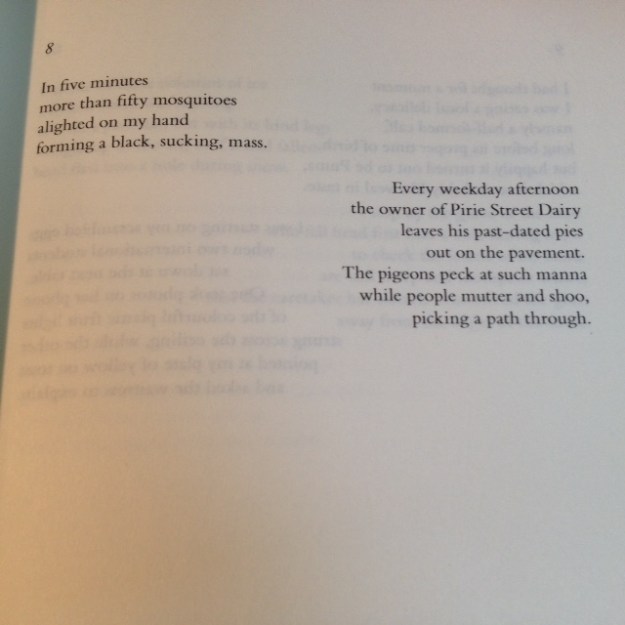
Another poem, ‘Near Lima,’ provides new entries into the Darwin section.


Somewhere I read that, day to day, most of us

rarely raise our eyes more than fifteen degrees

above the horizon.


This is what the Darwin poems do. They lift us beyond the horizon line of fact, beyond the borrowed phrase or lines to reflect on how ideas rub against wife, child, animals, watches, ornaments, fish, ceremonies, death. So innovative. So stimulating.


The final section faltered for me. These poems venture out into the wider world, untethered by theme or style, which felt liberating. I am fascinated that I didn’t make it across the bridge for some of them. I don’t see these poems as failures. I see this as a failure on my part as reader. Sometimes it is like wine affected by mood, circumstances, company or context. One day a vintage hits your palate. The next day it misses. As a persistent reader of New Zealand poetry this interests me. Reading poetry is also susceptible to mood, the weather, what you have just read or done. I haven’t yet got what these poems are doing. I am planning a return visit.

I heard Claire read from ‘Voyages’ at the Lauris Edmond Poetry Prize in Wellington recently. What a treat. It could have been a disaster trying to read these two voices into audible life (do they need to be discrete?), but it was a highlight for me. Hearing the voice of the poet aloud, heightened the effect of her deft hand. I shivered with connections that I hadn’t spotted on the page. Some kind of spooky yet wonderful ventriloquism was taking place.


This book is a gift. It makes you laugh out loud. It rejuvenates. It challenges. I adore it.


Victoria University press page.


I agree! ‘Inaugural Ruapehu Writers Festival wildly successful’

IMG_3168

Helen Rickerby has just posted a slide show from the Ruapehu Writers Festival. And this:

‘We’re still on a high from the fabulous experience that was the inaugural Ruapehu Writers Festival in Ohakune last weekend. We were pretty sure it would be a fun and worthwhile event, but it exceeded our expectations in every way. Several participants, including Elizabeth Knox and Paula Green, said it was the best festival they’ve ever been to!

From the opening event on Thursday, which was opened with a karakia by Hune Rapana of local iwi Ngati Rangi and was MCed by Johnny Greene, Head of English at Ruapehu College, we started to suspect we were in for something special. As those of you who were there will know, on Friday, as more and more people arrived, we enjoyed session after session of articulate and brilliant ideas and readings. By Friday afternoon, the room we used for most sessions had reached its capacity of 80–100, and the spill-over people were lounging in the hallway or sitting on the deck, listening through the open French doors. Also through open doors we could hear the bubbling of a stream across the road, and a couple of times a day the speakers needed to pause for a few moments while a train went past on the nearby Main Trunk Line.’

For the rest of the piece and the slide show see here.

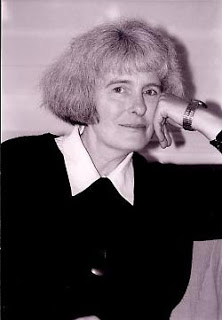
Farewell Rachel Bush, beloved poet


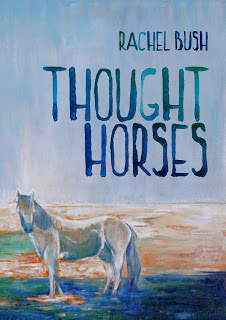
rachel+bush.jpgThought+Horses+cover.jpg
I receive this news with great sadness. I met Rachel for the first time when she read in Nelson as part of my Hot Spot Poetry Tour of Nelson last year. But her poetry caught my attention and held it a number of years ago. My thoughts reach out to friends and family.


from ‘Early’

The darkness wears a quiet sound

of fires died down and people who stir

in sleep. Soon they will slip on

their daily selves, button them up.


A rooster knows the time, says

it out loud when day is less

than a light line above the hills


This from VUP:

It is with great sadness we learned that our good friend Rachel Bush died yesterday. Rachel was a wonderful poet, an astute reader and a warm supporter of other writers. She will be greatly missed. Our thoughts are with her family and close friends.

Thought Horses, Rachel’s newest collection of poetry, will be published in April. We are so pleased that Rachel was well enough to work on her book with editor Ashleigh Young, and that she also got to see and hold her book.

We will be holding a reading and celebration of Rachel at Vic Books on Tuesday 19 April.


As part of the Hot Spot Poetry Tour children interviewed authors. Lucy interviewed Rachel:


5960977

Photo credit: Martin de Ruyter


The Interviewer: My name is Lucy and I am 11 years old. I like to write poems and LOVE to read. I go to Mahana school and I am in Year 7.

 The Interview:

Have you always loved to write and from what age?

I have always enjoyed writing, but I don’t know that I have always ‘loved’ it. When I was a bit younger than you, I was a very keen reader of Enid Blyton books and I wrote two rather pallid imitations of her books. In both of them there were four central characters called George, Kath, Alice and Anne – which names are very like those of some of the characters in Enid Blyton’s Famous Five books. I was starting to grow my hair at this time and all four characters had long plaits.

At first I wrote more stories than poems. Poems seemed to be what i wanted to write as I got older. I still write stories occasionally.

I kept a diary from when I was thirteen. I don’t exactly keep a diary any more, though sometimes I will write about particular things that have just happened but I do always have at least one notebook on the go and I write something in it most days.

What advice would you give to a writer wanting to publish a book?

I’d encourage anyone who wants to do this to go ahead. There are more opportunities now for publishing than there were when I was a young writer.

I sometimes think publishing is a gradation. At one end is someone whose poems/novels/short stories are hidden away deep in a computer file. When I was younger the equivalent was having them hidden in a bottom drawer, and at the other end is a big fat book like The Luminaries with lots of publicity for the author. A first step to publication might be sharing your writing with another person. Probably the first time I had a poem published was when I had a poem in the school magazine when I was in Year 12.

Computer software make it possible to publish your own work and have it looking very smart and stylish. A poet whose a friend of mine sends out a stylish looking card on his birthday. It’s folded in three and on five sides there’s at least one poem. On the sixth side there’s a little note about it being his birthday. (He also has a book published and has work published in magazines.) Or you can go online and publish your work there.

If you want to have a book published, I suppose you try to get some sort of publishing record first of all – maybe sending things to magazines for instance. This involves a bit of research because you need to be familiar with what sort of thing that particular magazine publishes. What sort of length are the pieces they publish? Are they prose and/or poetry?

If I had a book ready to go I would look hard at different publishing firms and what sorts of things they like to publish. I’d be trying to decide whether my book would fit in with the sort of thing they seem to want to publish.

I’d want to make a manuscript look good with no typos, a good clear plain font, double spaced with wide margin space. It would be easy to find information about this sort of thing online. Some publishers don’t want a hard copy, but prefer to be sent a computer file. Again you need to do some research. So this aspect of writing is more like being your own Personal Assistant and being business-like about trying to get work published.

What is your favourite genre to read?

I don’t have a favourite genre. I try to ready widely.

There’s almost always a book of poems that I’m reading and I keep it by my bed or in my handbag if the book is skinny enough. At present I am still reading Essential New Zealand Poems and I am also reading Horse with Hat by Marty Smith. I’ve also read some of Milton’s poetry, particular a verse drama called Samson Agonistes that for some reason I never got round to reading when I studied Milton as a university student. (Paula — these books aren’t children’s books in case you think they are.

I’m reading a novel too – it’s called Concluding by Henry Green. It first came out when I was 6 years old but of course I didn’t know anything about him then. He was talked about a bit when I was at university but was never in any of the English papers I did.

I love Victorian novels. I read and reread Dickens, Trollope and George Eliot’s books for instance.

I’m enjoying biographies more as I get older.

I’ve read several books from the Old Testament this year.

I like reading good short stories and this year I discovered an excellent writer, Lydia Davis. I also found out that nearly everyone except me had known of her work for years!

So it seems that I can’t really answer this question about my favourite genre but have just meandered around it

If you want to write in a particular genre it’s likely you’ll read that genre. At the same time I sometimes find that the books that really get me writing are a surprise. It’s not necessarily books of modern poetry that make me want to write poems.

Where does your inspiration come from?

I don’t often feel inspired. I try to keep writing and sometimes something unexpected happens and I find I’m writing more easily and confidently than usual. It’s wonderful when that happens.

Things that make me want to write vary.

What I read is often helpful. Sometimes first lines of very good writers make me want to write my own poem almost as a response to theirs. Janet Frame and Anne Carson have done that for me.

Sometimes being under a particular pressure makes me write easily. Which seems strange. Pressure might be a time constraint, like to write something in 20 minutes. Or it might be a set of ‘rules’, like ‘Write a poem that consists entirely of untrue statements’. I think the hardest thing to do is probably to be told to take as long as you need to write the best poem you possibly can about whatever you think is important. If there are constraints you can always blame them if your poem isn’t as terrific as you would have liked it to be.

Walking helps me to write. I’m pretty sure Fiona Farrell has written about how how walking helps her to write.

Glenn Colquhoun says something somewhere (I’m sorry I can’t be more precise), about writing being best when you write about those things you see out of the corner of your eyes. I like that idea. Sometimes it helps to sit with and discover what I’m really preoccupied with and use that in my writing, rather than write what I think I ought to write about.

Do you ever take a break from writing a poem and come back to it?

Yes, I almost always do this.

I mentioned earlier that I always have a notebook. Usually this is where I draft poems and then maybe weeks later I read back over this notebook. Some things I’ve written look a bit feeble but often there’s something I can use and develop further.

After a gap of time, I can often look at a poem a bit more objectively and see what needs doing to it. I would hardly ever send a poem I’ve just written away to a literary magazine because I am so likely to see things I want to change if I look at it after a few weeks.

Do you ever get writers block, if you do how can you get rid of it?

Yes, I suppose sometimes I do feel the opposite from inspired and can’t think how to begin or continue anything.

Sometimes I find that to think of it as being like having a bit of a headache is useful. Okay, it’s there, and I can either retire to bed feeling sorry for myself or just go on doing what I do as best I can. But if I decide I am suffering from Writer’s Block and stop writing then there is no chance of my writing well.

Michael Harlow once said at a workshop that if you write a word another flies to it. That’s mostly true for me. So if I can find a word or a phrase from anywhere and write it down then there is a chance some writing will happen. It may not be very good, but at least its writing.

If I was feeling flat about my writing, I used to return to a book called Writing Down the Bones by Natalie Goldberg and it helped me to forgive myself for often writing rubbishy, dull stuff. (And it also has some really good suggestions, about daily writing practice that I found useful.)

What is the hardest thing about writing?

I don’t think I can answer this very well. There’s no single thing that is particularly hard for me.

I have learned to accept that alternating between thinking I have just written a Truly Terrific Poem and thinking that I am an Embarrassing Disaster of a Writer who will never manage an even halfway decent poem doesn’t help me at all. I’m gradually realising that nothing I write will change the world and knock its little cotton socks off, but also I’ve come to realise that there’s no need to be ashamed of what I write.

Just keeping going, I guess, is hard. There are lots of other wonderful things to do. How do you balance these different aspects of your life? I’m busy, as most people are busy. I don’t write as much as I would like to write. I also need to work on regularly finishing poems and sending them away to literary magazines.

Sometimes writing can seem a bit lonely. But having a group of people you trust and with whom you can share your writing helps.

Nobody has to be a writer. But when it’s going well it’s good fun and satisfying.

Thanks for a wonderful interview Lucy and Rachel. Rachel has given us all kinds of tips about writing and has shown us the wide range of books she reads as an adult. To be a good writer you do need to keep reading and trying out things as you write — no matter what age you are! Rachel has a lovely poem in A Treasury of NZ Poems for Children called ‘Early.’

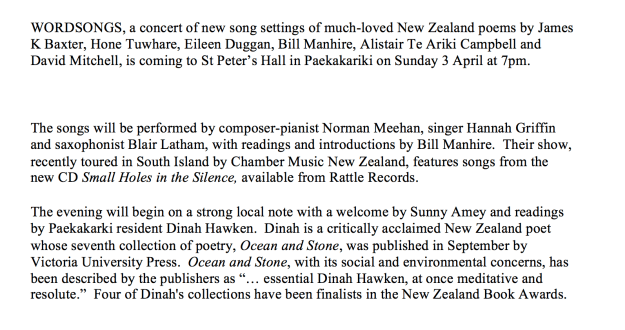
Dinah Hawken to open WORDSONGS

I seem to have been a roving poetry reporter these past few weeks but time to shut the hatches and stay at home. This event will be good – I judge this on my experience of hearing Hannah sing Bill at the AWF a few years ago. Transcendental experience.

I urge you to check this poetry event out and would love a wee response from a poetry patron to post on the blog.


Screen Shot 2016-03-23 at 10.12.24 AM.png


Screen Shot 2016-03-22 at 6.28.24 PM.png


Tickets $20 from Eventfinder or Darcey’s Fruit Shop.  Limited door sales at $25.

QUERIES: Gilbert Haisman.  Tel 04 904 8428 or 022 0122 103. Email: thewordshop@paradise.net.nz

Why I loved the Ruapehu Writers Festival


‘Memoir is a place to illuminate, not seek revenge.’ Elizabeth Knox

‘The Villa is a book of 100 tiny pieces. That’s how my brain was. Everything had fallen to pieces. I was writing in a state of shock.’ Fiona Farrell

‘I am a product of socialism and feminism.’ Fiona Farrell

‘We are not just a who or a what we are also a here.’ Martin Edmond

‘Archives are as questionable as memory.’ Martin Edmond
‘Poems have tended to ambush me every few decades.’ Fiona Kidman
 

[ I   k e e p   r e m e m b e r i n g

t h i n g s  a n d    a d d i n g     b i t s]


Yesterday there was a flurry of writers on social media suggesting the Ruapehu Writers Festival was the best festival ever. I have loved the richness and discoveries of so many other festivals, along with the family warmth of Going West. Yet this festival was special. The best ever.

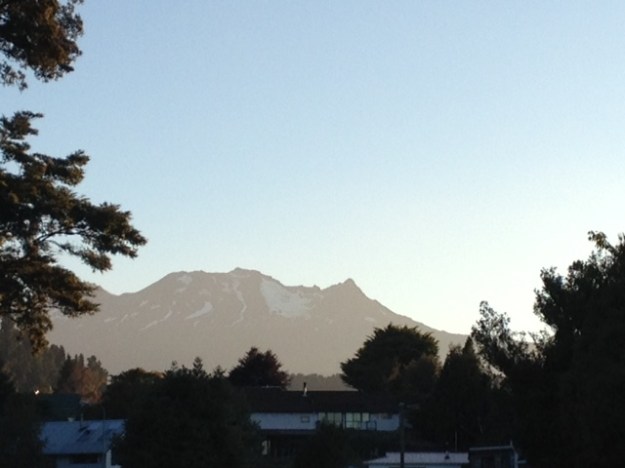
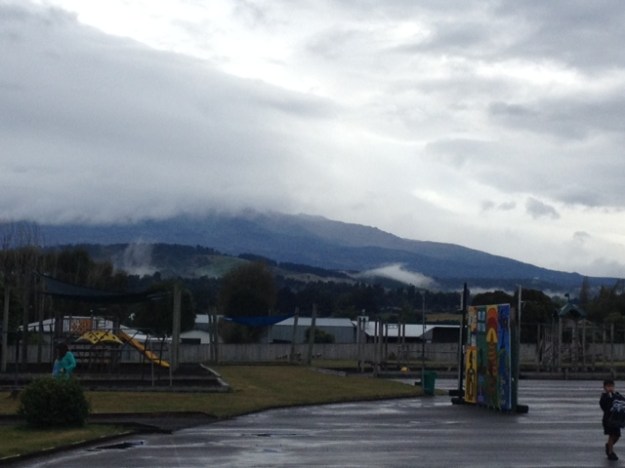
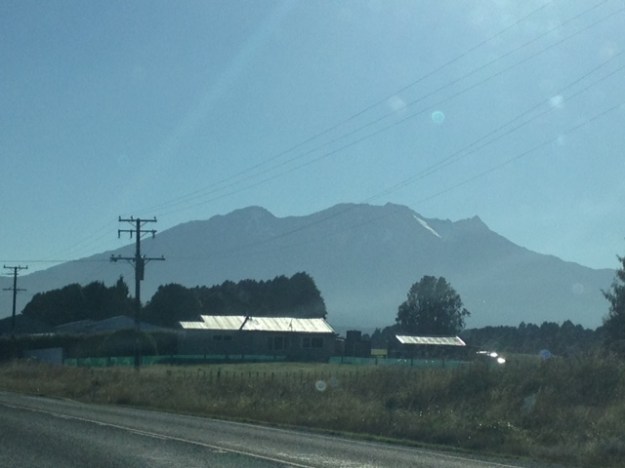
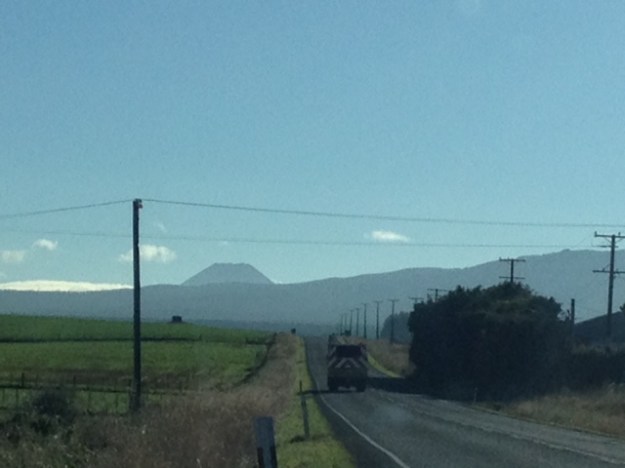
The setting: The mountain to the north loomed large out of clouds, and on some days into bright blue sky. The mountain stream babbled past like a soothing mountain soundtrack. The trains punctuated sessions and we all stopped and listened to the comforting sound of travel.

The writers: The writers came from far and wide (Martin Edmond, Fiona Farrell). Bigger publishers were represented (Penguin Random House, Auckland University Press, Victoria University Press) and so too were the boutique Presses (Seraph Press, Anahera Press, Mākaro Press, Cat & Spaghetti Press, Hue & Cry – to name a few).


The sessions: Not a single dud. Just smorgasbord of highlights. I do want to pick out a couple of presentations that struck a chord with me.

Merrilyn George shared Ohakune stories with Martin Edmond. Wow! I wish the whole country could have squeezed in to hear the way the local matters. Has mattered, does matter and will matter. It was Martin’s session too, but he let Merrilyn take centre stage with his little anecdotal prompts.

The fluency of my good friend Sue Orr when she got talking about place as character.

Three writers musing on the Desert Road: Fiona Kidman, Ingrid Horrocks and Fergus Barrowman (standing in for Nigel Cox). The conversation just flowed and the extracts were riveting. I have tracked down Ingrid’s essay, ‘A Small Town Event,’ in Sport 43. The sample stuck with me so I need to read the whole thing.
Elizabeth Knox‘s festival lecture, ‘On Doubt, Doubtingly,’  explored the implications and means of building memoir. Particularly in view of multiple selves, and the multiple reception and behaviour of selves. Elizabeth showed the way ideas can move, stimulate and challenge. Deliciously complicated and moving.

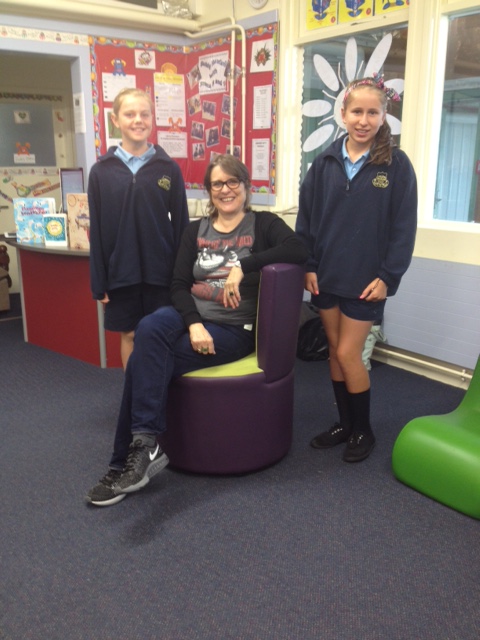
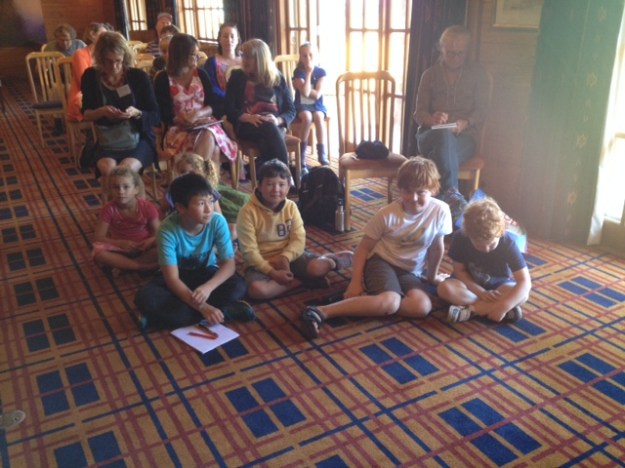
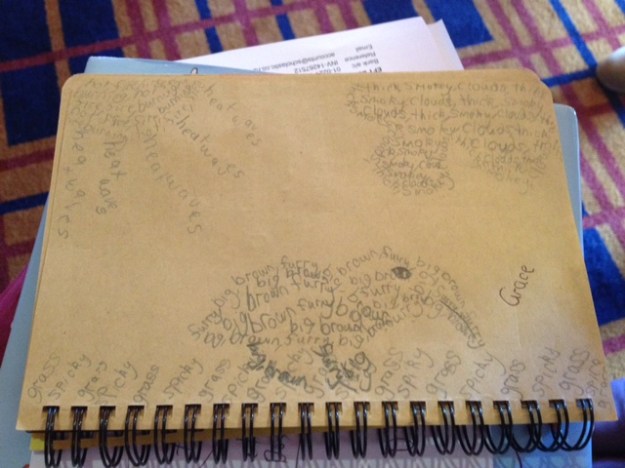
The children who came to my poetry session. Some as a result of my visit to Ohakune Primary School on the Thursday. I had an outstanding time there. This is a school where the teachers have already sown the fertile seeds of poetry. PS Jenny and Laughton Patrick did a great job getting the whole room singing!

Three writers talk on structure: Pip Adams, Emily Perkins and Fiona Farrell. This session got on National Radio because Fiona let her guard down and moved most of us to tears. I thought I was going to start sobbing out loud. Listening to Fiona read from The Villa at the End of the Empire — a book shortlisted in the nonfiction section of the Ockham NZ Book Awards — was extraordinary. Yet the session was this and was more than this. It embraced two other terrific readings and generated a conversation on structure that made me want to get writing.

Six writers read from Extraordinary Elsewhere: Essays on Place from Aotearoa New Zealand (forthcoming VUP). Ashleigh Young‘s detail kept ringing in my ear, along with the moving circularity of Harry Rickett‘s essay and the philosophical nuggets of Martin Edmond (which I tweeted throughout the session).

I was quite taken with the response of Tim Corballis and Thom Conroy (chair) in my session on POV. I just loved the way Tim proposed the leaf on the boy’s shoe acted as a transcendental point of view. Ha! Thom was an excellent chair.

The final session of poets was a perfect way to end. I discovered the poetry of Hannah Mettner and will go hunting for it in issues of Turbine. I loved hearing Fiona Kidman read from her new book (out next week) and Vana Manasiadis from her old. Magnolia Wilson was also a new find off the page (I had loved her foldout poems). A local poet and ex-librarian, Helen Reynolds read her poems in the quietest of quiet voices. We stretched forward, further and further into her reading. It felt like I was bending forward into the end/ear of the festival.


The atmosphere: Warm, intimate, stimulating, generous. The festival had the family flavour of Going West but in a mountain setting. At four thirty each day we spilled into the bar for a glass of wine and platters of gratis nibbles before the final sessions. We shared conversation and that conversation was infused with a common love of books. And an infectious engagement with ideas.

The chance(ish) encounters: Hearing Amy Leigh Wicks read poetry for the first time and having lunch with her. I am itching to write about her poems on the blog. Sitting under the cool of a tree and talking women’s poetry with Sarah Jane Barnett (she was there as reader, as were other writers!). Eating breakfast with the very lovely Fiona Kidman and talking about women’s poetry in the seventies. Meeting a man who lived next to Eileen Duggan but not getting to follow that revelation up (ah! rue!). Drinking coffee with Fiona Farrell and talking about how something in the air or on the page prompted us to let our guard down. Just a tad. Meeting old friends.

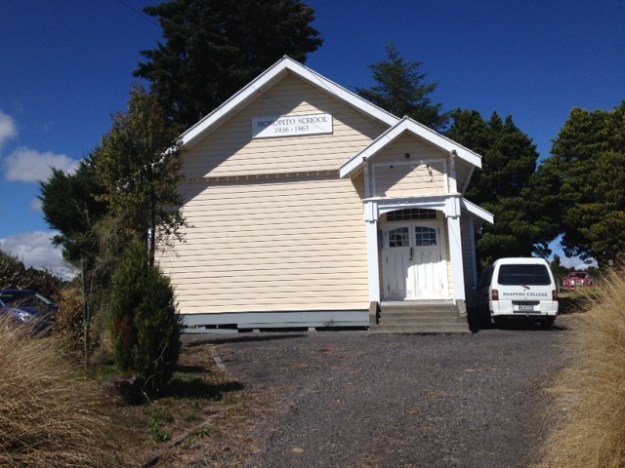
The special features: A band of writers cycled back from Horopito Hall with James Brown after hearing a session on cycling and poetry (ok Ashleigh Young where can I read a version of your lost-things poem?). A local kaumatua guided at least forty readers and writers up to a waterfall and back (around two hours). Stacy Gregg led some fans on a horse trek.

The audiences: Most sessions were full to the brim.

The chairs: I especially loved Fergus Barrowman (he did zillions with just the right degree of input), Nick Ascroft (he was hilarious) and Thom Conroy (astute listener!).

The organisers: Anna Jackson, Helen Rickerby and Simon Edmonds built a festival out of nothing yet when I reflect upon this daring, I realise it was out of something. The festival grew out of the hard labour and inventive thinking of these three. It also grew out of the good will these three can harness: from the locals, the venue, the schools, the publishers and the out-of-town readers and writers. It might sound corny but it also grew out of the physical location and its beauty. The festival always bore this mind.

It was really good to hear Anna and Helen read and share ideas. I loved too the way they sat in the front row in every shared and listened so intently. I could see the joy of the occasion on their faces. You don’t usually see festival organisers with freedom to sit in the front row and listen. Yet another sign of what made this occasion special.

Place matters.

I think if I were to ask all writers and readers to join me in a huge pakipaki for Anna, Helen and Simon we would drown out the mountain stream and the passing train. Just for a moment. We are in debt to you. Thank you.


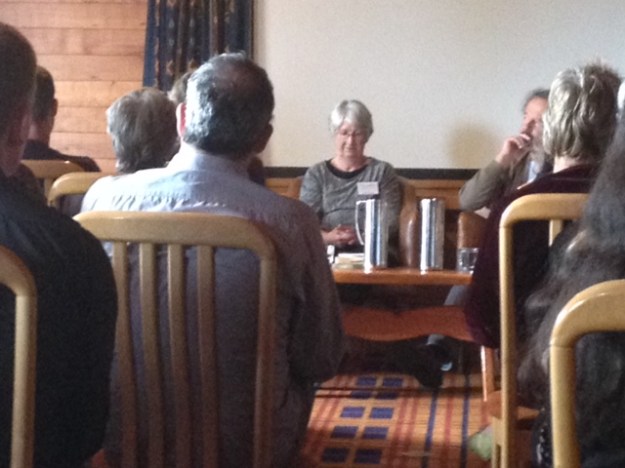
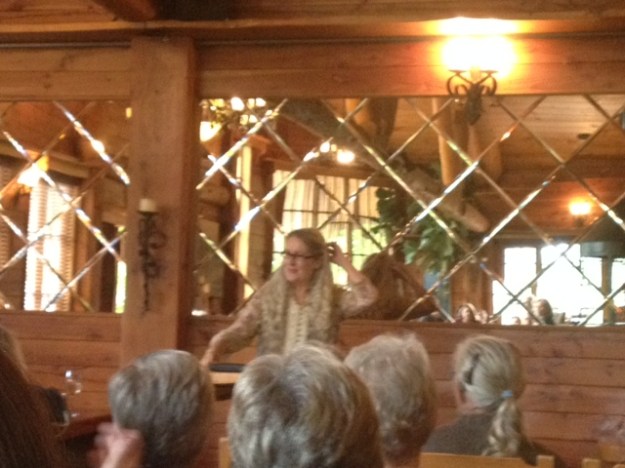
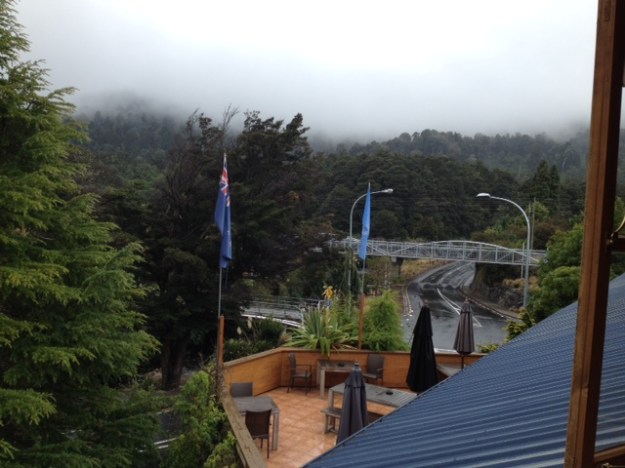
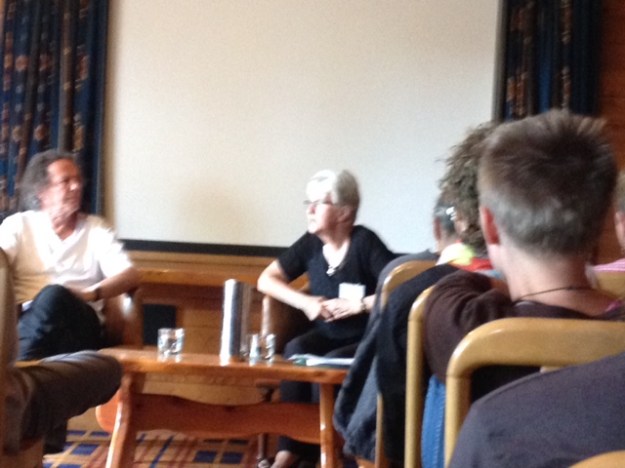
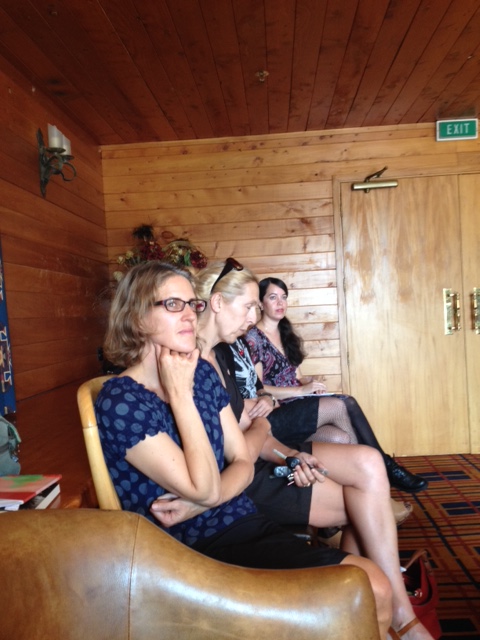
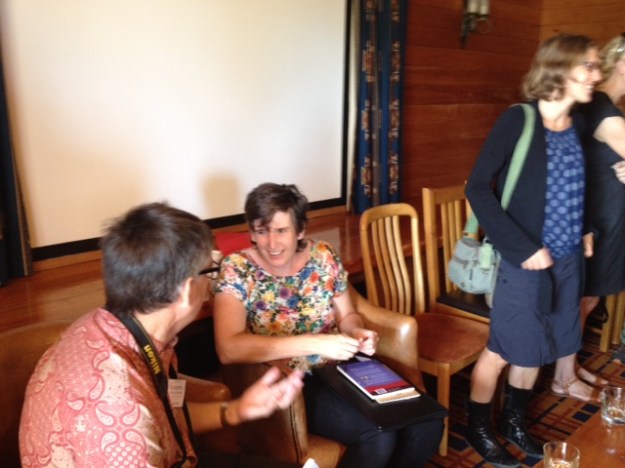
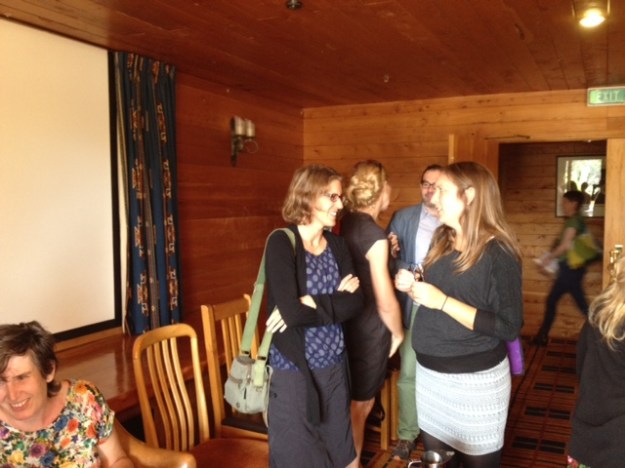
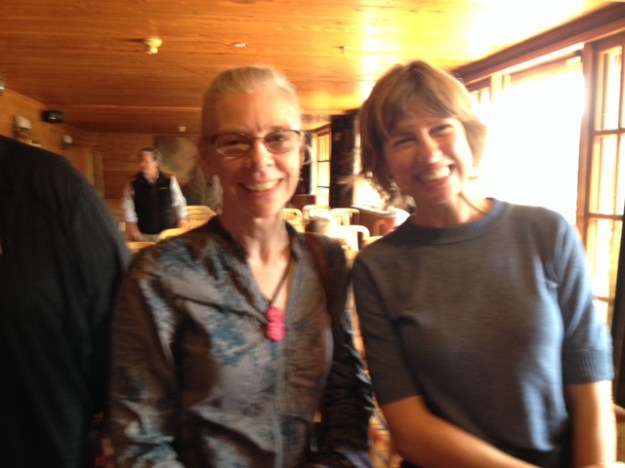
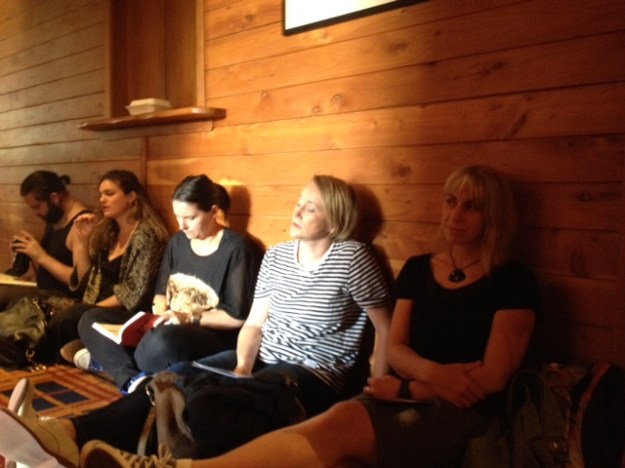
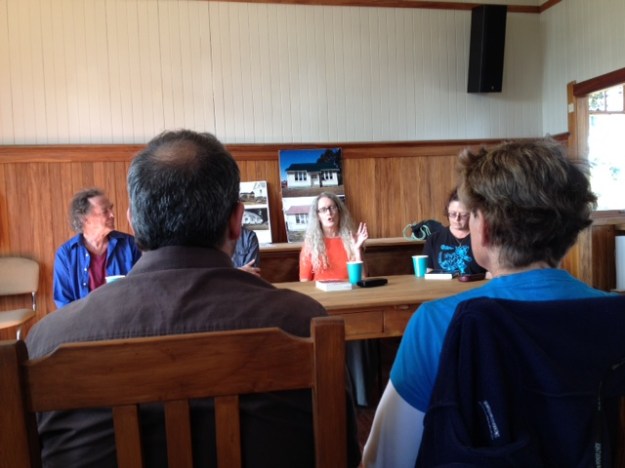
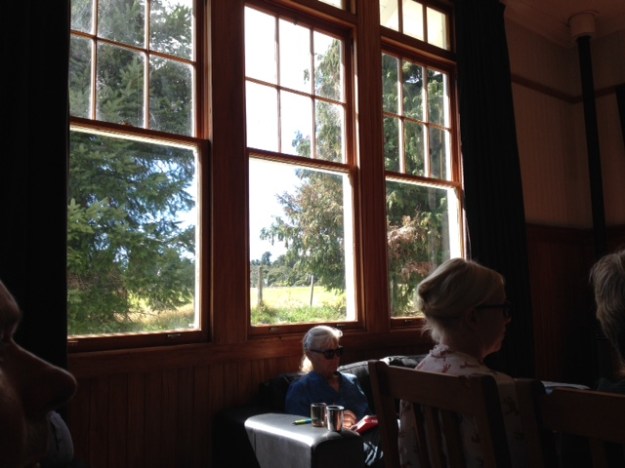
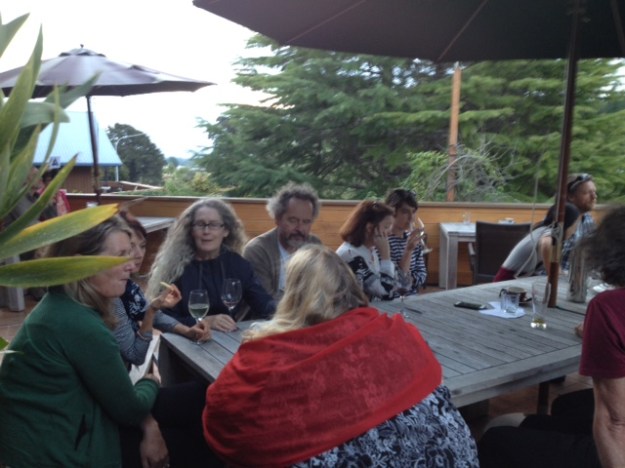
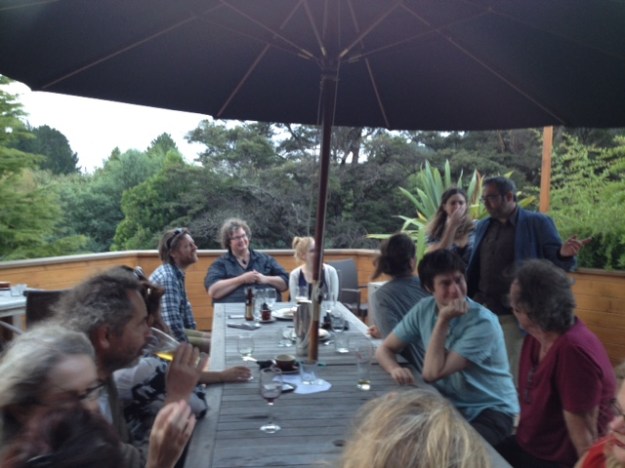
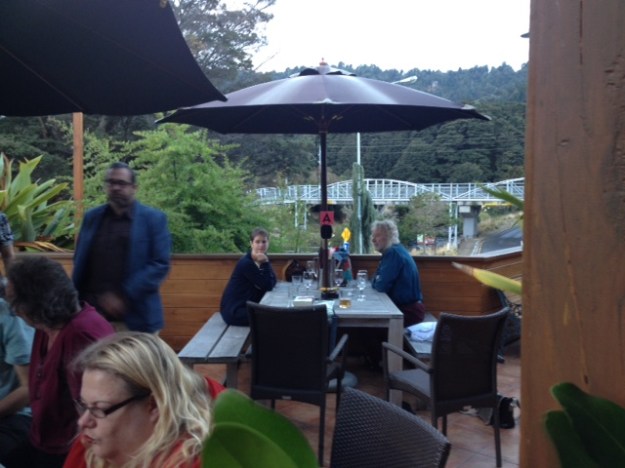
Excuse my phone photos!

IMG_3156IMG_3157IMG_3137IMG_3140IMG_3142IMG_3145IMG_3146IMG_3151IMG_3152IMG_3154IMG_3161IMG_3162IMG_3164IMG_3166IMG_3168IMG_3169IMG_3170IMG_3171IMG_3173IMG_3174IMG_3175IMG_3176IMG_3177IMG_3178