Before Cara Delevingne there was me bushy-browed and proud ready to walk down the catwalk at Burwood Primary (down by the silver birches where we played tree tag).
My eyebrows were so big and black they could knock out the scrawny blonde kid at Intermediate, the one who followed me and hit my legs with a stick as I walked away the one who called the only other brown girl in our class skidmark.
My eyebrows were so wild they could radiate waves of anger to the stranger at the bus stop who said, “just smile, it’s not the end of the world”.
My eyebrows were so thick they punched through my voice spoke so loudly that our Social Studies classroom rumbled and everyone turned to listen.
In my dreams I have a sidekick – with my beastly brows and Kajol’s unibrow we are unstoppable.
Watch out tweezers and threaders and assorted brow shapers we refuse to be plucked or trimmed into shape. We bow only to the brow goddess for long luscious fluffy brows.
Neema Singh
Neema Singh is a poet from Otāutāhi. Her work appears in Ko Aotearoa Tātou: We Are New Zealand(2020) and A Clear Dawn: New Asian Voices from Aotearoa New Zealand (2021) and she is currently working on her first collection of poetry. Neema is an experienced secondary school English teacher and holds a Master of Creative Writing from The University of Auckland.
although the flighty vampires suckling so obscenely are the only creatures that really belong in this scene not the dogs or the willows or the girl or the gorse with its raptures of yellow
that invasive stellation annexing the slopes to wrestle black beech at the bush boundary the smells of pollinated combat mingling by the water sultry as marzipan and honeydew casting a heady spell
over the colonised valley the weeds like her very presence here a legacy of other people’s blood and money though she has yet to understand this history is her own still finding a place in her bones let alone the land
from ‘Noonday gorsebloom’
Rebecca Hawkes caught my attention in AUP New Poets 5 (Anna Jackson’s reboot of the series). I became an instant and avid fan. Rebecca’s debut full collection Meat Lovers is now out in the world and is attracting a solar system of love. Freya Daly Sadgrove wrote this for the blurb: ‘Rebecca Hawkes is the unmatched empress of viscera. Thrillingly, perverse, utterly compelling – you eat these poems like overripe peaches, or your own tongue.’
To celebrate poetry, and the arrival of Meat Lovers, Rebecca and I have an ongoing email conversation over the past month or so.
Paula: Before we discuss your sublime debut collection, these are strange and challenging times. I am finding books help. Writing helps. I just read Rachel O’Neill’s stunning Requiem for a Fruit and it was such an uplift. Inspiring. Have you read any books lately that have stuck with you?
Rebecca: Lately I’ve been disappearing into gaming a fair amount -dystopian epic sequel Horizon Forbidden West just came out and I’ve been abandoning our world for the tragic beauty of that story. I’ve also been reading a lot, enjoying the first releases in the bounty of local poetry arriving this year. The Surgeon’s Brain by Oscar Upperton stuck in my craw, as an incisive testament to an extraordinary life. It’s a powerful reminder of the ongoing need for rediscovery of queer history, and how we continue to fight for our place in the record. It inhabits the character of James Barry, a brilliant transgender military surgeon in the 1800s. Oscar’s work is precise and immersive – it felt like being dropped right into Barry’s whirring mind at various moments throughout his storied life. Reading the book is like speedrunning a novelised biography in a way that fits my fractured attention span, while also having plenty of room to breathe with Barry through his gnarliest thoughts.
I’ve also just read Chris Tse’s much anticipated Super Model Minority. Rainbows and rage, passion and pride, it meets my pent-up energy in the pandemic. This book evolves Chris’ previous work reckoning with racist and homophobic violence, and the radical possibilities of joy in a doomscroller’s world.
I’ve also been lucky to receive a copy of I got you babe, the first publication by new publishing collective Taraheke/Bushlawyer. I’m so glad to see this in the world. I got you babe includes poems and essays by the five writers, holding their power and care and grief. Importantly, it places the forthcoming anthology No Other Place To Stand (which I’ve been co-editing with essa, Erik and Jordan for the past few years), in a richer, wider ecosystem of critical and creative work around climate, capitalism and colonisation. As we get closer to the anthology launching at last (it has gone to print!), it’s daunting how little has changed since the start of this project and the pandemic – the poems sent to us in 2020 have only become more (alarmingly) prescient. The critical urgency of I got you babe is a breath of fresh air.
2022 is, despite all the overall horribleness of Current Events, set to be a killer year for poetry. I’m eager for the new books by Anahera Gildea, Michaela Keeble, Anne-Marie Te Whiu, Erik Kennedy, Jordan Hamel, essa may ranapiri, Cadence Chung, Khadro Mohamed, Michael Steven… My bundle from Titus Books just arrived and I’m reading Chris Holdaway’s Gorse Poems tonight!
Meatlovers Rebecca Hawkes, Auckland University Press, 2022
Paula: How was it, writing your sublime Meat Lovers?
Rebecca: Well, I’ve been working towards Meat Lovers for some while. After Softcore coldsores came out in AUP New Poets 5 in 2019, I wanted to do more with some of the down-home-on-the-farm poems, and build a more cohesive full-length collection set firmly in the rural gothic. The title Meat Lovers came early on. It led to the eventual bisected structure of the book, the two halves of one cracked geode. But getting there was a meandering process…
I bloody love to write a poem, any poem, as a wry joke or full-throated cry. The puzzle and thrill of tinkering with verse ‘til it moves on its own steam and I get to watch the poem skitter off in its own chosen direction is reason enough to keep writing them. And each poem is only one weeny little fragment in the churning vortex / hot mess of whatever’s going on in my head, so a lot of them live in completely different parts of my world that would never touch outside of a word document. A lot of poems therefore ended up on the cutting-room floor for this manuscript, as I had to corral a more cohesive set of little machines that could work as a pack for a more focused sequence. I had so many ‘spare’ poems that there were more than enough for another rather different manuscript – which in a funny turn of events was a runner-up in the Kathleen Grattan Award at OUP last year. Maybe I could have published that altogether more playful and girl-gamerish book first instead, but Meat Lovers holds the work I was most compelled to delve into, mining some darker recesses of my home and heart, and way to still live in some places from my past that I can never really return to.
Once I’d gold-panned for the vibes/themes of this book (food, farming, foolish love) and gathered my first set of poems, structuring it was the challenge – I’d never tried to be so purposeful in a manuscript order before this. I’m grateful for the early eyes of friends like Rebecca K Reilly and essa ranapiri who helped me zero in on what really mattered for the shape of this work. And then of course I kept on writing fresh poems and trying to find places for the new darlings, even as the manuscript really needed to be pruned. How has writing this book been? What is it ever like to make art, to do something freeing but also serious, disarmingly ironic but nonetheless excruciatingly sincere? At turns it has been deep work and easy fun, therapy and tomfoolery, surfing the ecstasy of creation or gruelling arduous labour. Writing the book was humbling, cos making art always kicks my ass, but obviously it’s me doing the kicking as well as my buttcheek with the boot print on it.
‘Frenzy’, Rebecca Hawkes, 2021
Paula: Love the idea that incongruous things in the world co-exist in the neighbourhood of the page! And love how we can never pin the writing process down to one easy answer. Yet for me it is the best thing in this wild and challenging and complicated world. Energy boosting. Heart easing. Body uplifting. Whether reading or writing. I get a similar reaction when I look at your paintings. I have lived with an artist for over thirty years and we inhabit a shared space, but also private and utterly necessarily separate spaces each day. How is it for you both painting and writing? Reading your poems and sinking into your art it is a yin and yang experience for me – the one electrified by the other.
Rebecca: For me the painterly and poetic forms are so intertwined, you could never ask me to choose one, or to go without them. That was why it was so important to me to do my own cover art, even if digital painting isn’t my main medium… and even though what I mostly see in my own paintings is how much learning I still have to do! My necessary poetry-space is laptop-sized and portable, so it’s a more readily accessible art than the ritual of setting up paints and solvents, and then cleaning brushes when I’m bleary-eyed past my bedtime. Sometimes I go months without having – or making – time to paint. But I somehow find the hours when exhibitions are coming up, like right now …
When I’m not both writing and painting I’m not my whole self. They’re things I’ve always done. As a child I constantly drew chimeras, collaging together the most interesting limbs from my gen 1 and 2 Pokémon handbooks and the dinosaurs I was obsessed with – an Arcanine head and mane on a Houndoom’s punk pup frame, equipped with the wings of a Charizard and an Ankylosaurus club tail for bashing. What’s it called when you’re a horse girl but for dragons? I was that. For me a dragon is still the ideal animal, an impossible assemblage of apex attributes, wise and prideful and wild… While my art subjects are often less creaturely now, dragon-building is still basically how I approach both paintings and poems. I rip little shreds of potent detail out of life or dreams, and solder them together to make something that has its own new roar.
Painting is where I most keenly feel the gap between the work I aspire to make and the limits of my capability. I’m not a planner, working out decent compositions in thumbnail sketches. Instead I dive right in with colour and a couple of starting images, then see what happens. Same for poetry, but with poems nobody can see the smudged under-layers lurking beneath the surface of the finished piece… Word docs are forgivingly blank behind the text, so no-one sees my orphanage of random lines, loose chimera limbs waiting to be assembled.
Right now I’m in that horrible gulf between expectation and reality where I’m blocking in a painting, waiting for images to emerge from the mess, knowing that every mistake will be baked in forever, making slapstick attempts to shield the hideous draft with my whole body when friends visit. But when I am actually at work on a painting I let go of all that shame. I get so absorbed I might forget to breathe, eat, drink, urinate – lost in flow-focus, crouched over my canvas between the TV and the couch. As you say, artists need necessary space, to focus and to dream… but I find I get by with surprisingly little of it.
When I paint I kneel on the carpet because there is no space in my apartment for a studio (see: me having feelings about this when I went to see Hilma af Klint’s stupendous body of work), and because painting is a kind of prayer activity anyway. It’s an act of faith, isn’t it, to scratch out some small artwork in response to the shabby miracle of the world? Writing is like that too, a deeply interior creative practice that requires me to be open, curious, trusting and responsive to whatever drifts up from my subconscious. Don’t get me wrong I don’t think my processes are all that spiritually glorious, or my artwork particularly accomplished, but when the going’s good it is transporting, and as I give my energy over to a work it breathes life back into me. Am I a pompous loon, indulging in surrender to my own bad art, while the signals of my partner’s PS4 controller and sounds of gamer swordplay beam through my body as he slays monsters in Elden Ring? Sure. But I can’t not do it.
In painting and poems I’m meditative and open, but also working hard in pursuit of something that mainly eludes me – but maybe I’ll get it next time, and this is what keeps me growing (I hope) as an artist. It also keeps me hungry for others’ work. Yes to everything you said about the energising and uplifting nature of sinking into others’ art! Reading outside of myself is crucial to my writing, and looking carefully at other people’s visual art is essential to my painting. Even though making my own art is a solitary act, if I was in a vacuum without others’ work to delight in and explore, I doubt I’d make much of anything. Do you feel this with poetry?
Paula: Absolutely. The sheer joy that the poetry of others gives me is immeasurable. I thrive on it. Like an extreme vitamin boost. For me, the process of writing is intimate, secret, unfathomable, but it is in debt to writing communities past and present. Thus my continued drive to keep Poetry Shelf alive. And I know the doubt, that aching gap between reality and expectation, I don’t know if it ever goes away. I don’t know if I can ever bear to be published again, aside from children’s books. Tell me about your connections to poetry communities. I am thinking of Show Ponies for a start! I asked Chris Tse if he was a social poet, a hermit poet or something in between!
Rebecca: I totally agree on writing being a personal activity but also inextricable from communities around and before us! Even the solitary work of writing is not completely alone… I’m always reading so my writing is inevitably in conversation with other people’s work, and eventually a handful of trusted first-readers who are the unfortunate recipients of my little jokes. Often my poems are elaborate jokes for my friends. I don’t mean to diminish the poetry by saying that… But my Wellington poet-pals are the people whose response most matters to me, and whose support buoys me along, people I trust completely with my beautiful dark twisted fripperies. I also tend to be most motivated to write when there’s a deadline, which is often some event where I know (or hope) people will show up. So even though I’ve written alone for most of my life, I’d characterise myself as a social poet these days, and am so grateful to be part of a lively community.
Show Ponies is its own beast – Freya is the horsepower behind that. But it reflects the creative connections that are possible in a community like ours, where people are good sports with open hearts. There’s a lot of trust involved in doing something big and silly. It’s as vulnerable and sincere as any earnest confessional poem. But a bunch of poets who aren’t afraid of looking like fools together is a powerful thing. To manifest your popstar destiny you have to commit to the bit!
Rebecca: I’ve missed in-person events dearly through the pandemic, and it feels miraculous that Chris and I got to launch our books to people live and in the flesh. I’m interested in what you said here about bearing to be published. Stacey Teague recently asked posted on Twitter I’m trying to figure out why I should try to get my manuscript published and what motivates other people to get their books published and several people have just said “so you can have a party!” which obviously is something you can just do (well, depending on relative pandemic risk) without all the work of writing and vulnerability of publishing at all. For my sins, I was one of the people who’d said ‘party’ right away. But the launch party for a book is so important to me, bringing all someone’s solitary work into a shared public sphere – where the book now exists as its own object and something that will literally belong to other people, outside of the writer’s brain and screens. Aside from getting to celebrate the launch, the meticulously considered process of putting a manuscript together and then having the book itself exist in hard-copy for real has been so rewarding. I’ve been publishing poems around the place for ages, but this first book feels so precious. It’s been a very different process from blatting out last-minute poems and has taught me so much more about this craft. But the blessing of poems is that we can do whatever we want with them, right? There is no requirement to write books, or to publish the poems in any format.
lambs explode onto the scene like popcorn kernels such freshly detonated fluff antigravity mammals no heart leaps higher than the skipping lambs flocked in dozens barely touching the ground for the joy full fortnight in which they invent their limbs before they settle down to their true vocation grazing themselves into flesh factories babies babies babies babies the loin the chop the shank the juicy vacuum-sealed rack and great value barbecue meat pack stunned slit hung bled gutted skinned
from ‘Hardcore pastorals’
Paula: Exactly! I was out on a rare road trip across the harbour bridge this morning and it felt like the route was lined with poems! Just the sensation of travelling got miniature poems roaming in my head. Who knows what I will do with them!
I reviewedMeat Lovers for Kete Books and absolutely loved it. First up I loved its music. Like I really love it like I might love a breathtaking album. Do you play a musical instrument? What music do you have on repeat at the moment?
Rebecca: Gosh this is so lovely of you to say! Alas I can’t claim to be a musician. I hammered away on the piano as a child and can mimic several convincing barn animal noises… Maybe I could have a go at being a heavy metal singer, but realistically that’s because my friends are just staggeringly supportive at karaoke.
I’m charmed by the sounds of words, which I guess is why I like lush OTT poetry – where it’s permissible to load up the adjectives just because they’re delicious, and make subtle music in that way. I truly was trying to think of Meat Lovers as a concept album, actually, with a Side A and Side B, and poems that can be heard alone but build something bigger when they’re experienced in order.
Lately I’m revving songs about sad cowboys and/or the devil. I love a broody lyric. Orville Peck, Nadine Shah, The Veils, Warren Zevon, Julia Jacklin, that sort of thing. The song I was trying to keep up with while running today was Sinnerman (Nina Simone), and the song I’m looping now to tune out and write this is called I just wanna lie in bed and drink my wine (various artists), which is a mood, and just before that it was Head alone (Julia Jacklin)
you have one job which is to hold
this disturbingly large moth battering the woven basket of your fingers
every instinct whining to close your fingers and crush it
or open your palms set the fluttering insect loose free your hands for other tasks
but this is your job the having and the holding
from ‘Poem about my heart’
Paula: I also love the way your collection has heart. If I pick up a collection at the moment and it is devoid of heart it feels like a remote unreachable island. Yours mattered to me. What matters to you when you write? Does heart matter?
Rebecca: For these poems, certainly. This book is one big folded stained paper heart, clumsy and earnest. It’s anchored in my foundational love for the land I grew up on, gratitude for the life my parents gave me, and care for the animals we lived with – and also the felt complications in all those things. Then there’re my attempts to write about the frustrations and discoveries, failure and bliss of eros and romance – about which there’s nothing new to say under the sun but when has that ever stopped a poet? To be honest, usually when I write I try not to worry about whether a poem has heart. Something I’m doing as play might well turn into something true, but only if I don’t try too hard!
In both writing and reading, different modes call to me at different times, from the sentimental to disaffected… Recently I was bowled over by Frank: Sonnets by Dianne Seuss, which is an often devastating book – poems of desperation, poverty, motherhood, addiction – but often dryly funny. Just observing things, reporting without telling a reader what to feel. Her poems often have a sting in the tail that makes my guts churn, like this one. I’m drawn to gutting poems, just as I am doleful music.
In poems I’m interested in humour and irony and the sardonic, too – how the heartfelt can be reprocessed into more distanced ways of engaging with our feelings. In editing No Other Place to Stand, I was really interested in the poems that did this. The causes, effects, and injustices of climate change, colonialism and capitalism evoke big primary emotions – Fear, Anger, Grief, Hope, Etcetera – so sometimes the only way into these subjects without getting washed away by those feelings can be to approach through slant wit. Those poems have their place in the body of climate writing alongside the activist battle cries, mourning songs, and stirring polemics that they sit with in the book. Sidling away from pure emotion doesn’t imply a lack of care to me, necessarily – the poems are still being written! And the more I learn about the pressures facing our planet and peoples, the less inclined I am to believe there’s any one right way to respond in our heads and hearts. Plus the sentimental can be treacherous too – I was trying to be careful with this in writing my book, not glorifying my nostalgia or delivering undue condemnations, especially in how I speak about aspects of farming life.
it’s not real cottagecore unless you are up to the elbow in it blindly groping down the blood-slick canal as another contraction ripples around your knuckles the cow is lain on her side licking a mud angel
your hand clutching at the calf’s limp hoof head torch slipping over your brow as you affix the chain and brace yourself to pull and pull until an amniotic spill
when the calf’s head breaches unbreathing still you pull and bring the whole body wetly into the cold world you drag the whole darkness drenched newborn around so the mother can lick
caked salts from her motionless baby
from ‘Sparkling bucolic’
Paula: So few women have returned to the farm in their poetry. I am thinking Ruth Dallas and Marty Smith. Ruth had a nostalgic yearning for rural life so wrote farm poems from her Dunedin home to make up for not being there! Marty grew up on a farm and returns to farmland inHorse with Hat. Your return is electrified by edgy realism, razor-edged fantasy, the whole glorious mash of childhood, ‘a rural gothic’. What pulled you back?
Rebecca: Can any of us grow out of our childhoods? The longer I spend away from the farm the more strongly I feel how that land, that life, has shaped me. I have loads of long-winded thoughts about how we live and work and eat and consume and produce on these colonised islands. In my poems it was important for me to write critically and lovingly about these things – to challenge the assumptions I absorbed about the ordinary/natural state of the world as a child, while also celebrating the gifts of my upbringing, the cruelly beautiful lessons and earthing sensory experiences and many ways of relating to other animals. I carry all this with me –I am never without it. I’m glad you registered that not all the book is straight reporting on my life though – there’s plenty of fantasy and fiction in there. Let poets tell lies!
I think often about Ruth Dallas’ Milking Before Dawn. And Marty’s book made an enormous impression on me – she really encouraged me not to worry too much about being macabre! Rural gothic, as you say, is where I’m most at home. And I was so blessed to journey ‘home’ to the farm through these poems, as well as honour previous selves formed in that place – the girl encountering a mythical panther, the adolescent queen of weed-killers, the teen rapt in agonies finding reasons to fight in the rampant gorse in the riverbed… And I hope some of this work rings true for other queer rural kids, farmhands with a taste for verse, or anyone else seeking poems with bloody dirt still fresh under their fingernails.
Paula: When I first held a copy of my debut collection I burst into tears. There was an overwhelming gap between the poetry in my head and the object I held. I can’t explain it. Something to do with a physical thing and a mental thing. Your collection has just been launched into the world – in a venue with friends and family! How is the book’s arrival for you?
Rebecca: Agh, the tears! The gap between the final proof PDF being sent off to print and the arrival of the first book was hardest for me. I’m always spelunking new depths in the elaborate limestone cave system of my self-doubt (though thankfully have enough robust arrogance to keep making art regardless). Downing tools was difficult because I knew that from here on, the book wouldn’t get any better. I wanted this book to have a wholeness between the art and writing and fussed over it for aaaaages. But at some point the endless incrementally different PDFs became a blur, so it was time to end my meddling. The months away were tough because it was when the book was most abstracted from me, just some soulless files in the ether that I couldn’t ever touch again.
But then receiving that first copy of the book was magic. Tearing into the courier package with my teeth in the work elevator to find this actual book, its own thing, with its own weight and colour and scent, an actual living object in the world freed of my brain and screens… My favourite part of the physical book is the inner covers, with a meaty marbling that I learned to do on a version of Photoshop Elements so ancient that I actually own the program (rather than subscribing annually to “creative cloud”, ew). The pinkness peeps out when the book is read, and radiates onto the creamy paper of the pages. I loved the book so much from first sight, and am so grateful to everyone at AUP for helping manifest it. And the urge to tinker further has ceased. I accept it for what it is, now – a polaroid snippet of part of my work. I no longer worry that it doesn’t contain everything I could ever put on the page, or that the gap between the work preserved in the book and the work I’m presently more interested in making will only get wider.
Launching with Chris was a dream come true. I admire his work so much, and it’s inspiring to see how his poetic interests have developed from book to book. As fellow Show Ponies, we both love the energy of a real crowd, especially in a space like Meow. We were on the same buzz about wanting to share a live event with our loved ones and communities. There’s something so special about Wellington’s poetry scene – the city is big enough for stuff to happen, but small enough to hold a close-knit community. I’m shriekingly aware that we are not post-pandemic and there was still risk looming over the event (not least cos we were both meant to fly to the Brisbane Writers’ Festival a few days later), but I’m glad we were able to gather, for my dearest mum and Razz to travel there, for Chris and I to thrive on costumes and theatrics, to demand that a handful of people offered us some obligatory praise, and, most importantly, to perform our dramatic recital of Dragula by Rob Zombie.
Rebecca Hawkes grew up on a sheep and beef farm near Methven and now maintains a tenuous work/work balance in Wellington city. With poems widely published in Aotearoa journals, Rebecca’s debut chapbook ‘Softcore coldsores’ was published in AUP New Poets 5 for the reignition of the series in 2019. Meat Lovers is her first full-length collection. Rebecca is an editor for literary journal Sweet Mammalian and the climate change poetry anthology No Other Place to Stand (Auckland University Press, forthcoming). She is a founding member of popstar poets’ performance posse Show Ponies and haphazard coordinator of the Pegasus Books poetry reading series.
The Surgeon’s Brain, Oscar Upperton, Te Herenga Waka University Press, 202B
A life needs rinsing out, once in awhile.
from ‘Code name’
Oscar Upperton has followed New Transgender Blockbusters, his terrific debut poetry collection, with a book that is equally sublime.
The Surgeon’s Brain is the story of Dr James Barry, a biography say, that is in debt to research, imagining, poetry, more imagining. According to the collection’s blurb, Dr Barry was “a pistol toting dueller, an irascible grudge holder, a vegetarian, an obsessive cleaner – and a brilliant military surgeon who served throughout the British empire, travelled the world with a small menagerie of animals, and advocated for public health reform. Barry was also a transgender man living in the Victorian era when ‘transgender’ was unknown in Western thought.”
Oscar’s new book is essential reading. Marvellous, startling, heart-jolting reading. Poetry, in my view, is a perfect process in which to take risks, to step into the shoes of another, to challenge historical misconceptions and regulations, to enable words to sing. The Surgeon’s Brain does all this and more. It strikes a mark, and then another, and lights up on so many levels. The story is divided into three sections: ‘Dura Mater | Tough Mother’, ‘Arachnoid Mother | Spider Mother’, ‘Pia Mater | Tender Mother’. A baby born, a life lived, a life goes missing. At one point, the doctor admits:
I am not a writer. I am a soldier. I am a surgeon.
Sometimes I write reports. I write in straight lines and use straight language. I would never dream of writing a poem.
from ‘Well’
And here is the doctor speaking from the straight lines of a poem. He is infused in the ink of the excavating poet. And the straight lines of poetry are judder bars, potholes, side roads, scenic views, the unforeseen, the exhilarating downhill cycle ride. And if the doctor only ever wrote reports, would never dream of writing poems, the young girl dreamed of busting apart the straight lines of a girl’s future. She sews herself into another gender. She makes the physical garment and codpiece that renders her man, and he steps into a different set of expectations and outcomes. He studies, passes exams and practices as a surgeon. Dr Barry, for example, is the first surgeon to perform a caesarean where both mother and baby survive.
The rules are different now. I travel unchaperoned; I enter public houses; I attend a university. Once I hid my hair and people would talk to me differently, but now they listen differently too. Before they didn’t listen but now their ears are opened. I am worth teaching now. I can be of use beyond myself. There is no question of my right to board a ship, or take a room. It is as though I were a ghost and I have now been give form.
from ‘The rules’
It is joy reading this as story, moving through beginnings middles and endings, but it is not pure delight. It is discomfort, corrugated musings, because the world has not yet dismantled the structures and behaviours that denigrate and deny women. That perpetrate blind ignorance of all genders as opposed to equity and openness. I carry a degree of mourning as I read, thinking of heart-numbing dichotomies: men women slave master rich poor literate illiterate hungry full. Yes Victorian times, yes 21st century.
It is joy reading The Surgeon’s Brain as poetry, moving through the lilt and economy of voice. And yes, it is voice, think speaking voice: confessing, exploring, refining. It is the musicality of conversation that is poetry. It is images and it is wisdoms. Fluidity and fluencies. Tenderness. It is the arrival along the plainness of line that forms another stitching of self. The poem as self-dress. Precious buttons and warm threads. Lines stand out and it is like you are gut-winded. Here I am falling in to a hole in the world, like we might fall into a hole in the poem, into a life. And I am imagining the floor of the poem. And it is this:
Mamma fell ill; an ill wind blasted; a will drawn up; the trapdoor swung down: a rope ladder descending into darkness; a hole in the floor of the world—
from ‘The idea’
So much to say about The Surgeon’s Brain. I wish we were in a cafe, having invented a poetry bookclub so we could share espresso and our favourite lines. Quoting this bit, and warm musing on that bit. I want to share how the doctor builds a room in his head with a bookshelf and chair, dust in the air and London light. We could talk hesitantly about the rooms we build in our own heads, for whatever reasons, that help keep us safe and on track, strengthened.
I want to tell you as you sip your coffee about a particular poem (‘Journey to the university’) that has a shadow version in the footnotes, little refinements, because we cannot take a face or an action or a statement for granted. Because behind this poem is another shadow poem, and behind that another.
Or the forest. I am thinking of the power of metaphor to get us along the straight line. Through the living of the life, the reading of the poem. How this life and this book is effervescent with metaphor.
Some things I keep secret even from myself. I’ve never seen a forest but sometimes I walk in one in my dreams, great black trees with twisted branches and underfoot wet earth and spiders’ nests. This is a forest that covers the world,
and in it live three things: the red foxes that dislike rain, the innumerable silver spiders, and me, numerable I think, but when I turn to regard the path behind me I am there. Each step of me is frozen in place, curls of earth sticking to the soles of my feet.
Some things I keep secret even from myself. I didn’t want done to me the things that were done to me. But the sun rises and you say, well. Only you don’t say it. You never say it
from ‘Into the forest’
But most of all I want to share the well. The well that ends ‘Well’, the straight line poem I have already mentioned (aside from the appearance/echo in ‘Into the forest’ above). I will leave you with the well, leave this metaphor for you to become entangled in, and say as an opener, how Oscar’s quiet and extraordinary poetry collection taps into another life, and how in doing so, it also taps into your life, my life. You and me and poetry are in this upheavalled world together. And know that as you read thorough marvel and wonder, mourning and wound, poetry is the lamp we can hold high and share.
I am a well. Or there is a well in my mind, clean stones, broad wooden bucket, rope. The water at the bottom of this well is so clear and cold it makes men drunk. It is black, because it takes the darkness with it when it is pulled from the well.
I would like to intoxicate. I would like to be a well-frequented well.
from ‘Well’
Oscar Upperton’s first poetry collection was New Transgender Blockbusters (VUP, 2020). In 2019 he was awarded the Creative New Zealand Louis Johnson New Writer’s Bursary. His work has been featured in Sport, The Spinoff, Metro and Best New Zealand Poems.
Heapmeal. Piecemeal. Leafmeal. We all fall into our chairs like collapsed parachutes. Each of us is known to have been ground down. Each of us has wished for a meal like this. Wholemeal. With some warmth in the talk or in herself. In Leonardo da Vinci’s painting of the last supper, the person beside you sprouts nasturtium-green, seems attached to a branch – Rameal. On this very fertile ground, another person has found the sea is internal – watermeal – and seems draped in an only slightly tousled world. But you are inside the flesh of a pomegranate. Bloodmeal. Ravishmeal. Each of us lean into the foreground of the other – Limbmeal by Limbmeal – to see the source of sun is a person. So much ground, from which everything can rise.
Sarah Scott
Paula: I am captivated by your poetry. The three poems included here, with their attachments to particular paintings, mesmerise on so many levels. Are they part of a wider project? What prompted it?
Sarah: My background is in art history and curating and I’ve always drawn and painted. I thought it might be interesting to have those things cross-pollinate with my creative work in poetry, and now I would love to see this to grow into a larger project. Writing poetry about art feels like a rich vein to me; there’s an endless supply of material, and there is something that happens between the artist/artwork and writer/poem, like a double shot of creativity.
I woke up from a dream one night and wrote down the name Fiona Hall. She’s an Australian artist whose work I must have come across and it had lodged in my subconscious. I sought out her work and I love her experimental, beautiful depictions of the natural world. My poem Amazonical was prompted by looking at a still of the video Amazonical from her exhibition Force Field.
In Leaven I looked at Leonardo da Vinci’s fresco The Last Supper – it was Easter or almost, when I wrote it, so ideas around ascension just floated up into the poem. My poem House by the Railroad, which I talk more about below, responds to Edward Hopper’s haunting painting of the same name.
Amazonical
maybe we go for our usual walk & the way you talk draws out one kid-soft living example:
maybe the sky looks like a giant waterlily except heavier, its Victorian under-structure Built for Dusk
maybe mountains of babies were placed on its leaves in a crystal pavilion in the 1830’s a shoot to show what else there could be
in the universe more powerful than when you touch gingerly &
my mouth is another opening flower bruised as the natural world
Sarah Scott
Paula: I think we need a new word to describe the bridge between poem and artwork. Not exactly translation, transcendence, conversation, road trip.
Sarah: Yes, that’s so true! There’s the potential to speak in a slightly different language and transcend your usual ways of thinking. Anne Carson writes somewhere about the desire to find ways to stand back from yourself, in order to get closer in, and I think the words ekphrasis (poetry about art) and ekstasis (to stand outside of oneself, as in awe) seem curiously close, like they are knit together somewhere deep in the language. Ekphrasis poetry also feels collaborative, like a conversation – sparks from the art overbrim into your own creative process, taking you in unexpected directions.
Paula: What draws you to a painting?
Sarah: If an image draws me down into something deeper, I run with it. Fiona Hall’s video Amazonical immediately threw a confetti of ideas over me. It’s surreal, slant and beautiful. In the video-still I base my poem on, the image of a giant waterlily is overlaid on a landscape, in dusky, bruised colours, making me think about the vulnerability and exhaustion of the natural world, which seems critical right now. I also love the title, and sometimes it’s the title (like with poetry) that draws me in.
Paula: I love how your poems are a sweet trinity of sound, image and surprise. What is important when you write a poem?
Sarah: Sound is so important to me. The more mysterious grooves of prayer and song rather than ordinary speech resonate for me, and I like to let language lead. I’ve also realised that I think through images – they open up vistas through which to talk about other things. The process of writing is like travelling through those doors, toward someplace you didn’t know you were going, but hopefully, you’re happy you did.
House by the Railroad for Phyllis
If a house could be you, in your pale blue swimsuit. If you’d mouthed this house like gum. If the letterbox still flapped open, making the sound of one afternoon on the ocean. If the railroad tracks carried blood back to the plains of your heart. If this house could make light of its own dark. If I scalloped some sky from a Botticelli. If we washed all the small talk off. If your weatherboards were touched soft by grass. If I could return here on a recommissioned train. If we were on the rust -filled platform again, me helping you down and down, into the open sea.
Sarah Scott
Paula: Does autobiography enter the mesh?
Sarah: I feel like this process allows me to go down the tracks of my own life and thought without realising. Hopper’s painting House by the Railroad for instance, felt strangely comforting to me, even though it is a painting that speaks of absence, and my poem became a love letter to my late grandmother who I was very close to.
Paula: Tell me about the Poetry Lightbox Series you curate in Te Whanganui-a-Tara.
Sarah: The lightbox project has given me the opportunity to showcase the work of other poets in a space usually reserved for visual art. People encounter the lightbox on their commute to work or walking up Cuba Street, and I like that these might be people that may not seek poetry out, but there it is, in such an unexpected place. It’s a joyful project to me – creating room for quiet and beauty in the busy urban environment, and I’m hugely grateful to the poets who have contributed their amazing work for it.
Paula: Do you read much poetry? Can you share a couple of books that have left a mark on you recently?
Sarah: I’m smitten by the work of American poet Mary Szybist, whose collection Incarnadine refracts and reflects on depictions of the Virgin Mary from different perspectives. Her imagery is startling, and I can’t recommend her work highly enough. A friend in the States put me onto the ‘pastoral surrealism’ of James Wright. Reading Wright’s collected poems, I’ve had to pause quite often just to take it in – it’s quietly ecstatic – an amazing and rare reading experience.
Sarah Scott’s poetry has appeared in Landfall, Turbine |Kapohau and Fresh Ink. She currently curates the Poetry Lightbox Series in Te Whanganui-a-Tara where she lives with her partner and two sons.
Poetry New Zealand Yearbook is now edited by Tracey Slaughter, supported by the University of Waikato and published by Massey University Press. The latest issue continues to showcase poetry, essays, reviews and a feature poet. It also runs an annual poetry competition for secondary students.
Tracey Slaughter’s introduction sidesteps the traditional literary journal’s editorial ‘opening’ and riffs on the theme of breakage. I adore it! The end of a line provides infinite fascinations: either as a rest stop or an open valve, but Tracey draws us to the way the line itself may be punctured with white space. It is not just the visual hit, prolonged breath or a shift in rhythm, it’s ‘Switch your senses on’. Tracey’s editorial is an invigorating piece on reading and writing poetry. It’s a rush to the senses, and inspired me to to create my second Paragraph Room (coming up soon!).
As an electrified proposition on reading poetry, it also applies to our entry into Poetry New Zealand 2022:
‘Bring it all. Waste nothing. Use everything you are to open the poems in this book.’
Celebration time: there is a succulent and diverse wave of young poets in Aotearoa New Zealand. You meet them on Starling, on social media, in the IIML secondary school poetry competition, and through publishers such as We Are Babies. Holding an annual competition for secondary school students in Aotearoa, PNZYB adds to the increased visibility of emerging voices.
The four First Prize winners (from Y11 to Y13) are nestled in the alphabetical order of the contributors. Good to see them sit alongside the selected poets rather than as a competition adjunct. Unlike most writing competitions, there is no judge’s report. Were there common themes, styles? Leanings towards politics or the personal or both? What the four published poems underline is these new writers are an unmissable destination. You get heart, you get garden-fresh, breathtaking music, thunderbolt surprise, word nimbleness. The names to watch: Ocean Jade, Caitlin Jenkins, Sarah-Kate Simons and Jade Wilson. I am lost for words … these poets are so darn good.
get some air. the haze of summer is ripe and all i could ever want is to rest my head into its shoulder, rendered to its shallow fever until i can find a warmth to keep safe. for now, my head is tilted north through your slack-jawed window with patient wind threading into my skin
Ocean Jade from ‘Route Back Home’
when the world wants our faces to kiss the concrete we’ll still be safe in the arms of papatūānuku cause when things go south — we’ll deal with them like south — with the love our roots nourish us in … bronze skin mona lisa
Caitlin Jenkins from ‘South’
Wes Lee is the featured poet. Her most recent collection is By the Lapels (Steele Roberts, 2019). She was a finalist for the Sarah Broom Poetry Prize (2018) and was awarded the Poetry New Zealand Prize the following year. Tracey provides two terrific paragraphs as entry points into both the poems and an interview she has with Wes. Wes’s poems leave her in awe: ‘accosted, exhilarated, struck’. Tracey writes: ‘The scenes glimpsed within a Wes Lee poem are often low-key, incidental, domestic, yet under the surreal pressure of the poet’s eye the ordinary detonates and homely details seethe and seize.’ Indeed. The poems walk on a precarious edge of living. They scratch and lash, they tilt you as read. You body surf on currents of memory, trauma, the personal.
A highlight for me is reading the essay of poet and journalist, Maryana Garcia’s ‘A Clearer Dawning”. Maryana writes of being selected for the AUP antholgy A Clear Dawn: New Asian Voices from Aotearoa New Zealand, and on standing in the wings about to read at the book launch at the Auckland Writers Festival.The essay is sorting buttons, reciting vowels and diphthongs, a moving ledger of plus and minuses in the family’s move to New Zealand several decades ago (bomb checks v Lola’s cloth cupboard, smog v the best mangoes in the world). It is self doubt as a poet. We should all have a folder marked ‘Dietritus’! It is the way memory is hooked when you least expect it (by the fabric feel of the anthology’s cover). More than anything, it is in keeping with A Clear Dawn‘s stated aim: that Asian poets, like all poets, write about anything in a thousand inspiring ways.
I stared at my poetry folder, asked myself which poems I felt at home with. The answer was: none. Tabs closed. Tabs opened. I blinked again. Then I clicked on a folder I’d called, in a fit of creative frustration, Dietritus.
Maryana Garcia from ‘A Clearer Dawning’
Derek Schulz’s essay steps off from a brilliant Alice Oswald quotation (‘poetry is the great unsettler’) to opening windows on Emily Dickinson’s poetry. I kept arguing and agreeing with the essay which is far more satisfying than skim reading and moving onto the next page.
Sometimes you fall upon a piece of writing at exactly the right time. Sue Wootton’s extraordinary ‘This Damned Helplessness’ chimes so deeply when I am currently equating 2022 to climbing Mt Everest, when I am in training for a high risk adventure and not at all sure what views I will see. Caught in the gap between so many things. Sue considers climbing a first mountain and a second mountain, each with different views, and then perhaps imaginary mountains (Dream, Day, Night, Fact, fiction, Science, Culture, Body, Soul). More importantly, she traverses (connects with) how to exist, survive, flourish in the space between disparate things. Say Science and Culture. The first mountain view and the second mountain view. What is said and what is misheard. She uses her past experience as a physiotherapist to consider storytelling, gap navigation, treating pain, broken self narratives, bridges, patient involvement, re-composition. I am barely scratching the surface of this intricate tapestry of thought. It’s a satisfying neighbourhood of quotations and responses to other writers, physicians, thinkers, patients. Beautifully written, supremely thought provoking, it’s an empathetic plea to speak from both mountains. Yes, extraordinary, humble writing.
My issue of Poetry New Zealand Yearbook 2022 is already well thumbed as I lily-pad hop the poems (one poem per poet) along with the continued solid devotion to reviewing poetry books published in Aotearoa. This is a journal I am drawing out over months not days. To savour and sidestoke in. There are unfamiliar names and recognisable favourites. Under Tracey’s inspired editorship, Poetry New Zealand Yearbook is something I look forward to. Rejuvenating. Rejuvenating. Rejuvenating.
take this night quickly like a pill / the pull of space cracking / ankle joints from the stretch up in its dark belly gurgling acid starlight
Hebe Kearney from ‘night comes on’
she lay on the pavement squinting at clouds and never made out my father roosting in cranes and carillons even her dress pressed with paintings of the domes of Budapest made her giddy sun downing giddy this way and that
Kerrin P. Sharpe from ‘the scaffolding of wings’
didn’t matter that our Chinese faces spoke white/all of us knew the routineness of string/mā má mǎ mà/knotted our xīn into snake bites/left our tongues parched/ dead nailed until the bell rang three.
Wen-Juenn Lee from ‘chinese class’
Massey University Press page 10 Questions with Tracey Slaughter
Tracey Slaughter teaches creative writing at the University of Waikato, where she edits the journals Mayhem and Poetry New Zealand Yearbook.
The Pistils Janet Charman, Otago University Press, 2022
little lapping waves to inundate the shoes of makers whose texts i’ve addressed and assessed in the dark inland towns of my imagination the large waves of the fire siren call me out in the middle of the night
from ‘welling’
I started reading Janet Charman’s poetry when I emerged from my poetry cocoon with Cookhouse, my debut collection, and she knocked my socks off. First up it was Janet’s musical ear: an elasticity with words, linguistic play, surprising syntax. And then, so essential when my academic research focused on women and writing, her feminist core. Not an adjunct, nor a side track, but an essential feminist core. When I walked across the university threshold onto Simmonds Street, with my PhD and carton of books, I walked out of the academy into life as a poet. And a hunger to immerse myself in an Aotearoa New Zealand context. To discover the women who had written before me, who were writing alongside me, and who would write ahead of me. Janet Charman was busting out of the men’s canon and opening up notions of ‘she’, ‘i’, ‘we’, ‘you’, ‘they’. The ink in her pen and her preferences were placed centre stage, whether in trousers or skirts, folding nappies or building houses.
Janet’s new collection The Pistils opens with a terrific sequence, ‘High days and holy days’. Twelve poems that mark holidays or significant occasions (Waitangi Day, Parihaka Day Guy Fawkes Night, Wahine Day, Matariki, Picnic Days). Each poem contributes to a life – within a sequence of panels. Bare bones. Ample white space. A miniature narrative of excavation. Remember when. Remember how. Remember why. The sequence opens scenes, moments, places – and we enter the collection grounded.
winds drain to the horizon tides lap below the wrought-iron railing
here we are sheltered in the hollow of the year the hollow of the day
blowflies loll and bang the afternoon to a close the windows
from ‘1. Northland Panels‘ from ‘high days and holy days’
Move into the heart of the book, and the mind leaps and bounds along the rhythm of the line. Exquisitely crafted. Scored. Composed. In ‘Mrs Valentine’s instructions’, the rhythm of revelation shapes memory. On the next page, in ‘hometime’, attention to the sound of the line is equally arresting. Memory is translated into music and image. It is a portrait of the child but it is also a portrait of the mother. In parings and traces. Surprising arrivals. It is religion and Freud, a mother lost in a novel, it is fingers worn to the bone, the news on the radio, family dinners, walking home. Life and death. It is home.
and the mother weighting at the top of the hill her red roof tile her front windows black blank shine her white two-storeyed weatherboard authority of home time —untangle the latch race the path hunt through the house to find her where she sits adrift in a novel or conducting her day in some regimen of intellectual longing with Freud and Jung in the sunroom —on three sides light pulses in Father Son and the Holy Ghost summer on summer through glass the great gum nods
from ‘hometime’
Rhythm is so important. It renders Janet’s poetry fully charged, and accumulates life, detail, confession, insight, opinion, grief, reflection. It feels real, it feels personal, it feels political. The mother is a constant presence, in the shadows and in the light, a vital connection. Rhythm accommodates the feminist spotlight on life. The stamen and the pistil, the difficulty of childbirth and a baby in an incubator, a war memorial, waste management, Pakehā privilege, an aging body image, a breast removed, James K Baxter’s rape boast, literary criticism, sex, grief, having breakfast while watching John Campbell rather than listening to National Radio because your beloved has gone. It is the rhythm of mourning. Ah. So many layers.
i waited into the summer for my diagnosis saw how a benign White Island only became Whakaari for the pakehā after an eruption with deaths
from ‘bra dollars’
I speak of rhythm in such glowing terms but it is of course part of a sonic festival. Janet’s poetry strikes the ear (as Rebecca Hawke’s debut collection does). This leaning in to listen is rewarding: the leapfrogging alliteration, assonance, short lines, slightly longer lines, punctuating breath, free flowing currents. Again Janet’s agile music enhances my engagement with her roving subject matter. With the sharp edges and the necessary subterranean questions. How to live? How to live and love on planet Earth? How to speak against subjugation based on gender or skin colour? How to see your parents? How to go on when your beloved is no longer there? How to continue probing and resisting? How to be yourself? Ah. Such layerings.
Reading Pistil is exhilarating. I am loving this book because it is vulnerable and open, it is edgy and crafted, and because it shines a light on how it is for women. We still need that persistent light. We still need poetry that misbehaves as much as it makes music on the line. The poems call out and call for, stand out and stand for. It is a stunning collection.
Janet Charman is one of New Zealand’s sharpest and most subversive writers. In 2008 she won the Montana Book Award for Poetry for her sixth collection, Cold Snack. In 2009 she was a Visiting Fellow at the International Writers’ Workshop of Hong Kong Baptist University. In 2014 she appeared as a Guest Reader at the Taipei International Poetry Forum. Her collection 仁 Surrender (2017, OUP) chronicles her writing residencies in Hong Kong and Taiwan. This is her ninth collection of poetry.
Vaughan Rapatahana, Te Ātiawa, commutes between Aotearoa New Zealand, Hong Kong and the Philippines. He writes across genres, in both te reo Māori and English, and his work has been translated into multiple languages. He has published eight poetry collections and has a PhD from the University of Auckland (a thesis on Colin Wilson). His collection Atonement was nominated for a National Book Award in Philippines (2016). He was awarded the inaugural Proverse Prize in 2016. He appeared at Poetry International Festival at London’s Southbank (2019) and at Medellin Poetry Festival Poetry (2021).
Vaughan reads at Medellin Poetry Festival Colombia
Paula: In 2022 I am running a series of email conversations with poets whose work has engaged me, often over a period of time. In these jagged and uncertain days, it is a welcome chance to talk books, writing, reading, hearts and minds. And in our case, an opportunity to discuss your two new books (ināianei/now, cyberwit, 2021; mō taku tama, Kilmog Press, 2021). Has reading offered uplift, solace, diversion? Have certain books really stuck?
Vaughan: Tēnā koe mō tēnei Paula. Reading has certainly offered ‘busyness’, if there is such a word. I am fortunate to be involved in several projects right now and am doing a lot of reading. Of poetry, of short stories, flash fiction, creative non-fiction in both my main languages – te reo Māori rāua ko te reo Ingarihi. I have been very aware that ngā wāhine Māori especially are right at the forefront of current Aotearoa New Zealand writing. And I am impressed. Very impressed. Several collections have recently been published. Tupuranga Journal, Kei te Pai Journal, Saltwater Love Journal, Te Whē, Awa Wāhine, Atua Wāhine have all impressed me greatly, while I know that Cassandra Barnett has a new collection (which I have read) and Anahera Gildea and Alice Te Punga Sommerville also have collections out this year. And Briar Wood of course. I am also looking forward to Robert Sullivan’s new poetry collection, which I have just received. And Michael Steven’s too, eh. Then essa may ranapiri will impress us all with their own new set! Wow, this country has a mighty rich vein of poets.
Reading becomes religion.
Paula: If you made a roadmap of your own poetry writing, are there any significant presences, guides, lamps that you would mark?
Vaughan: To be honest, I did not get into poetry writing until about 2007, when I started to get into the craft more. I was well into my fifties. I do recall getting good advice from my old schoolmate, David Eggleton, and from James Norcliffe – we first met in Brunei Darussalam last century – about the poems I was learning to write back then.
I had always been very aware of Sam Hunt, as a poet, and had a few dealings with him over the years before I got serious about writing poetry myself. To a degree he and James K Baxter had kept poetry in the public eye for a long period. Two distinctive Cancerians, eh. To digress, I remember drinking at the Kiwi Hotel with Baxter. Way back when. Hone Tūwhare was also a favourite of mine. And Jacquie Sturm became one, when I ‘discovered’ her work. There are a couple of her poems that really impressed and – probably – motivate the ‘political’ poetry I often find myself writing. And Hinewirangi too. I knew of her Moana Press collections and got what she was saying. As I noted earlier I am also very impressed by the wave of wāhine Māori poets right now. I won’t name more names as there are several, but I am sure you will see a lot of their work over the next few years.
But, on reflection, you know, the poet who really drove me, from waaaaay back when I never wrote poems, was Sylvia Plath. Too many pained shared echoes for me and I can always read some of her lines and be instantaneously moved.
ināianei/now, cyberwit, 2021 and mō taku tama, Kilmog Press, 2021
Paula: I think, among many things, I am drawn to your poetry because of the strong presence of te reo Māori. Yes it is music that adds to the poems, but it is also individual words that are like gold beacons on a musical staff – maunga, kōrero, manaaki whenua, manaaki tāngata, whakarongo. They take me back to growing up in Tai Tokerau. It is like being welcomed onto the marae that is poetry. What does it mean for you?
Vaughan: E tuhituhi ana ahau ki tāku reo tuatahi ināianei, i te reo Māori. Nā te aha? Nā te mea e pīrangi ana ahau kia whakapuaki whakatepe ngā mea katoa i tāku hinengaro, i tāku mānawa, i tāku wairua. Kāore e taea e au te tino whakapuaki ahau i tētahi atu reo.
[I now write in my first language, the Māori language. Why? Because I want to fully express everything in my mind, in my heart, in my soul.
I cannot express myself fully in another language.]
I think that the sentences above express why I now write a good deal of the time in te reo Māori. While at the same time utilising te reo Ingarihi [English] to twist back upon itself as a sometime circumlocutive, certainly dominating, even duplicitous tongue – or at least its fiscally motivated agents!
Paula: Thank you. Your two new collections, ināiane/now (2021) and mō taku tama (2021) both pulse with vital heart. Especially because you bring a deep-seated pain to the surface of your writing: the tragic loss of your son. The second collection gathers poems you have written to and for him since his death. The first includes some. At times I feel like a trespasser but, at other times, I am reminded why poetry matters to me. A poem can draw me deep into human experience and affect how I live and write my own life. This is what your poetry does. I am reminded of the gift of reading Iona Winter’s Gaps in the Light, who also tragically lost her son. mō taku tama is such a loving tribute and so beautifully crafted by Kilmog Press. The poetry says your grief. How was it, choosing to write this? Putting it out in the world?
Vaughan: Tēnā koe mō tēnei pātai. A good question.
I write in the introduction to mō taku tama (for my son) that composing poetry about him, his far too early demise, and my resultant various mixed feelings about this, keeps him alive – at least for me. In the end that collection, despite the sorrow imbued across the pages, is a celebration.
For Blake was a great guy and I miss him, even although I do often sense his presence. I want others to share not so much my grief , but my love for a wonderful son.
And I guess that I will at times write more poems which relate to him.
Thank you to Dean at Kilmog Press too. He mahi tino pai tēnei.
talking to my son in a funeral home [tiwhatiwha pō tiwhatiwha te ao: gloom and sorrow prevail, night and day]
I spoke more authentically to you during those thirty estiolated minutes than I ever did when you were alive.
the stark room, shaped more like a coffin than what you lay in quite composed, unmoved by my ascesis of angst, my agenda of guilt.
the wooden floor an eavesdropper bouncing back a farrago of belated apologies, an echolation of mea culpa.
those faded walls, the fake flowers in a neutral vase and the box of tissues supplicating for the tears I could no longer summon during that one-sided confession to myself.
Paula: I was thinking about the way you bring knitting into a couple of poems. I especially love ‘knitting a poem’ (read here). What we knit into poetry and ‘what exists beyond it’, and took me back to Blake. I have an uncertain year ahead and your beautiful two books made me hold my daughters closer. What do you think of the idea of poetry to keep us warm? Of poetry that is craft and heart gift? Or a different thought, a net even?
Vaughan: Yes, I guess we – as poets anywhere – are knitting and weaving and sewing together a final tapestry of sorts. It could be a long shawl to warm us up, to keep us snug. It could be some showy patterned piece to display our cleverness. It could be a blanket to stir up a fiery blaze within us – perhaps about an injustice. Equally it could be a fire retardant blanket created to quell raging conflagrations also within us.
I think many of my own poems have elements of these. In the end though, I guess I do like to knit poetry into a coverall that – although it may be angry and sad and clever-dick at times – shares emotions, stirs up thinking, yet can comfort and console even in times of doubt and disaster. After all, eh –
ko taku mahi kia tuhituhi te tika kia wewete ngā roimata mō katoa ō tātou ki te tangi. nō te mea, ki muri ngā roimata anake tātou kia kata.
[it is my task to write the truth to release the tears for all of us to cry. because only after the tears can we laugh.]
Paula: Oh I love that riff on knitting and poetry, that ends with ‘coverall’! Did any poems surprise you when they reached the page? Were there some poems where you felt the stars aligned?
Vaughan: Yes, sometimes – but not often – a poem will arrive, if not ‘fully formed ‘at least well on the way. This usually happens when I am emotionally connected and the emotions have been brewing for some time. The stars aligned for example when I wrote ‘to my wife overseas during lockdown’ and ‘sixteen years’ (both in ināianei/now). I was surprised by the strength of my own feelings and the words just tumbled tightly onto the pages. Almost in perfect alignment.
Other poems are a travail. I can spend a lot of time and make several return trips to a poem before I am content with it. Especially if there is historical research associated with the kaupapa.
And then there are poems which never get completed. Despite many revisits. I guess that they just do not want to be written. Yet, anyway.
Paula: I sometimes think this is how it is as reader too. Sometimes the stars align, you cross the bridge and you are in the poem, and it is utterly wonderful. At other times you cannot sight the bridge and it is travail. But then the next day, the stars do align and you find your way into the poem.
Your poems are personal, but there is also a strong political spine. It seems to be a growing trend in Aotearoa. I welcome this. How important is this presence in your poetry? How does it connect with the poetics? How to write political poetry is wide open!
Vaughan: I don’t consciously write ‘political’ poems. Not in the sense of mainstream party political discourse.
However, when I feel, see, research injustice, whether contemporary or historical I write poetry that depicts the injustice and calls for recompense, recognition, realisation. In this way the poems are personal too. And so, important.
In the end, then, I write poetry from inside, and bugger the (political) ramifications.
Paula: Yes! The political is most definitely personal. You have produced a number of excellent teaching resources (including Poetry in Multicultural Oceania 1-3, Exploring Multicultural Poetry, Te Whakaako Toikupu: Teaching Poetry, Essential Resources) that open up poetry bridges for secondary school students. What prompted you to do this? And what are your aims?
Vaughan: You know – or maybe you don’t! – I was never any ‘good’ at poetry when I was at school.
I only started to ‘get’ it much later when I was overseas teaching English as a foreign language and I needed to somehow simplify the ordeal of comprehending how a poem was structured and only then any comprehension of what it might be ‘all about’ came through.
So all of these poetry teaching resources, commencing in Brunei Darussalam last century and carrying through Hong Kong SAR, to Aotearoa New Zealand and beyond nowadays, are designed to assist an EFL/ESL/poetry lost student – whether adult or at school somewhere – to open the poetry car door, start the engine, and then career down the highway of comprehension, switching gears up to appreciation and then writing their own. Not an automatic this vehicle: you got to work on the gears a bit, eh.
More than this, I want multiculturalism presented as part of the entire package. This country is increasingly multicultural and I am fortunate to have many international poetry contacts to draw on when sourcing material. It is also why I produce bilingual resources, i roto i te reo Māori rāua ko te reo Ingarihi. Such as Te Whakaako Toikupu.
There you go, then. These resources started off to help me work out poetry was ‘all about’ and then grew well beyond.
Paula: Such important resources. I have been wondering about our own personal poetry resources, the poems we have written over time. The poems that stick, whether sweet or sharp. I sometimes wonder: how did I write that? Can you share one of your poems that has stood out for you, for whatever reason?
And thank you Vaughan, for this warm and generous poem kōrero.
Vaughan: Sure, here is a poem. Sort of says a lot about what we have been talking about –
he waiata kai
at times, writing a poem is like beans on toast. easy to apply, in cheap economic actions & reasonably tasty. especially if garnished with melted chyrons; some cognoscenti cheese.
never anodyne if served hot, straight from the pot, eaten with relish & digested in short, sharp bites.
the aftertaste l I n g e r s well after you’ve scanned the can in the cupboard, the lines on the page.
Whai, Nicole Titihuia Hawkins, We Are Babies, 2021
One of my hopes for Whai is that it shares a message that we aren’t ever just one thing. We are as expansive as Te Moana Nui a Kiwa and beyond.
Nicole Titihuia Hawkins, VERB Wellington Q & A
I never used to read endorsements on the back of books but now I do. Once I have finished reading my own paths, bridges and delights. I read them because in the past year or so, they have been astonishingly good. Little kegs of poetry community boost. If I put them together in a book it would underline why I read, write and comment upon poetry in Aoteraroa New Zealand. Eye-catching reminders on what poetry can do. Above all: short, tangy, sweet windows that send you back to read the collection again (in my case), with gusts of refreshing new air.
Emma Espiner, essa may ranapiri and Karlo Mila take delight in Whai
I have things to share about Nicole Titihuia Hawkin’s debut collection Whai, but one part of me wants you to find a quiet nook and find your own bridges and poem trails. I love it so much – the way from the first page the rhythm pulls me in, a rhythm that is life and that is writing. We are welcomed into a space that is whanau, marae and connection. That is breathing the past, the present and the future. That is fed upon potatoes from warm earth, and by words that are nourished on warm tongues. It is discomfort, it is scars and it is let down. It is to be held close and it is to sing. Oh so much to sing, with waiata the energy force, the structure, the passed-down precious melody that sings mother father ancestors, the earth, sings names and naming, singing out in protest, singing in te reo Māori.
Nurture the hypothetical cultivate an organic perennial to grow, to tend, to prune, to water
Even in the longest days sun can come shining in
Looking at you marks a change of the seasons my heart on the precipice of full bloom
from ‘Companion Planting’
Ah, so much to say and feel. There is light and there is dark. There is the hidden and there is the out in the open. It is blazing and it quiet and it is movement.
I have been thinking how certain poetry books catapult you from the everyday – where the wifi streams, kina shells gleam, periods arrive, bulbs are planted – and moves you to interior realms. Intimate, hard to pronounce, a heart pulse. How the occasion of reading becomes both personal and necessary.
On my blog, my poetry engagements often send me into luminescent poetry. Luminescent because poetry shines multiple lights on humanity, and this matters. It might be one woman writing and living, transforming and translating: navigating experience, existence, ideas, sensations. Getting political. Embracing the personal. Staying sharp, tender, deeply relevant. Nicole does exactly this in Whai, and it’s sublime.
I don’t know enough about the tipuna I’m named after but when I read she was a weaver I feel her stitching tāniko into the bodice of my insides
She says it doesn’t hurt that much When I breathe in hundreds of tiny holes expand but her pattern holds its place like the ocean holds the stars that got us here
from ‘Rainbow Piupiu’
Nicole Titihuia Hawkins (Ngāti Kahungunu ki te Wairoa, Ngāti Pāhauwera) is a novice writer, avid home-baker and proud aunt. She lives in Pōneke and works at a local high school teaching English, Social Studies and tikanga Māori. Nicole is also involved in pastoral care and facilitates Kapa Haka. Nicole has collaborated with other writers to host ‘Coffee with Brownies’, which are open mic events for people of colour to share their work in safe spaces. She co-hosted ‘Rhyme Time’, a regional youth event, with Poetry in Motion, to encourage a diverse range of youth to perform their incredible poetry. Nicole has work published by Overland, Capital Magazine, Blackmail Press and The Spinoff Ātea and credits her courageous students with inspiring her to write.
Whai was longlisted for the 2022 Mary & Peter Biggs Award for Poetry.
House & Contents Gregory O’Brien, Auckland University Press, 2022
What is this particular brightness we expect of poetry? And on what or whose account? If the times are dark, oppressive, tunnel-like – as they seem presently – maybe poetry can be a lantern. Or a firefly, or the glowing bud of a cigarette on a dark night. But for poetry to be these things it can’t simply reflect its times – it has to radiate on its own terms, within and beyond that darkness. It is poetry’s job to flicker and glow and, with luck, emit some mysterious luminescence. At times I feel those are its only real criteria.
Gregory O’Brien ‘Notes to Accompany the Poems and Paintings’
I love coming to a new book with no idea what the book is about. And here am I about to share some responses to Gregory O’Brien’s magnificent collection House & Contents with you. I have had the book sitting on my desk for a month and every time I walk past, I stall on the title and the cover. The skeletal tree, the blocks of cloud, sky, hill and roof. The nod to insurance policies, and an expectation the collection might transform ‘house’ into home, ‘contents’ into Gregory’s ability to amass fascinating detail.
In the endnote, Gregory talks about how in the past he has used paintings to shed light on the poetry, and poetry to converse with the artwork. In this collection however, where there is a substantial presence of both image and word, he wanted the artwork and the poem to have a ‘co-equal’ relationship.
One poem, ‘House & contents’, acts as a fractured faultline of the collection. It records experiencing an earthquake in Wellington Te Whanganui-a-Tara – a poem in pieces over the course of a day, over the course of the book, little interruptions. It lays a thread of uncertainty, a stave of different sounds, and shifts how I view the title and cover.
The artwork, with motifs repeating like embers on the canvas, like lamplight, like mysterious tugs and echos, is magnetic. No question. You bend in and become hooked on the light and dark. Full of questions. Breathing in the mysterious because there is anchor but there is also instability. Hill might be corrugated boat might be corrugated house might be hill. The echo of chimney smoke might be that from a volcano. I think of the cigarette butt glowing in the dark. Bend down into these paintings and you are wrapped in mystery – the bed outside might be resting on the hills or in the sky or driving a dreamscape. Words loom small not large, and might be bookshelf or textured wall or miniature poem. There is a brick red burnt umber hue signalling earth, and there are the infinite possibilities of blue.
The poetry is an equal compendium of fascinations, an accumulation of rich motifs and hues, knots and splices. The wading birds by a Canterbury river are the poet’s acupuncture. The world is an open book, where streets and mountains, sky and weather, are busy reading each other. Nothing exists in isolation. A library floor might catch a waterfall or flood of books. The poet tracks an interior world and then stitches it to a physical realm, whether present or mourned. The intensely real might collide with the surreal – ‘coins dance / in an upturned hat’. At times I am reading like a chant – both hidden and out-in-the-open lists that make music, that beckon heart and drifting mind. You can’t skim read, you need to enter the alleyways with a flask of tea, and set up camp for ages.
A poem that particularly stuck with my heart is ‘For Jen at Three O’Clock’, the final poem in the collection, a love poem, a luminous list, an ember glow upon the stretching canvas of life. Here are the opening lines:
With us, ice melt and low land fog, creaking thornbush,
sandarac and walnut lawn. With us towers and minarets
of the asparagus field, each blink and muffled cough, each
recitation and resuscitation, mountain
torrent and gasping stream.
Glorious. That is the word for House & Contents. No question. The light will flicker and gleam in artworks and poetry. Reading this collection is retreat and vacation and epiphany.
Gregory O’Brien is an independent writer, painter and art curator. He has written many books of poetry, fiction, essays and commentary. His books include A Micronaut in the Wide World: The Imaginative Life and Times of Graham Percy (Auckland University Press, 2011) and the multi-award-winning introductions to art for the young and curious: Welcome to the South Seas (Auckland University Press, 2004) and Back and Beyond (Auckland University Press, 2008), which both won the Non-Fiction Prize at the New Zealand Post Book Awards for Children and Young Adults. His book Always Song in the Water: An Oceanic Sketchbook was published in 2019, and a major work on the artist Don Binney will appear in 2023. Gregory O’Brien became an Arts Foundation Laureate and won the Prime Minister’s Award for Literary Achievement in 2012, and in 2017 became a Member of the New Zealand Order of Merit and received an honorary doctorate from Victoria University of Wellington.
Museum, Frances Samuel, Te Herenga Waka University Press, 2022
Up here in the thin green air, I’m feeling the wind on my face with the joy of a dog on a family car trip, head out of the window.
from ‘Exhibition (DNA)’
Frances Samuel worked in a museum writing texts for exhibitions for many years. For me, museums are an endless source of fascination and marvel. I wrote about the intoxicating thrill of museums in New York Pocketbook. Standing, for example, before a pair of child’s boots in Ellis Island’s Immigration Centre or moving with the wonders of the Natural History Museum. Or the roll call of museums that fed my Italian degrees. There are the hungry gaps of the past that you seek to fill by studying scuffed toes, wrinkled leather, the uncanny emptiness, the child that once ran or skipped or hid. In my self-imposed lockdown, picking up Frances’s new collection felt like a trip to a museum and, as happens on the threshold of any museum space, I felt a heady mix of anticipation, joy, curiosity. Where would this book take me?
I pass through the book’s opening poem, ‘Exhibition (Security)’, and then move through three exhibitions: ‘SUPER(NATURAL) WORLD’, ‘(IM)MATERIAL WORLD’ and ‘OBJECT LESSONS’. I am following the poet, the museum maker, but the museum on offer is porous. It reaches out beyond walls and still life into the air we breathe, and with each poem I track twist unfold pursue peruse fold untwist. Just like I do on Ellis Island. Or in Roma. It is discovery and it is magical.
The poem ‘Climate Change’ proposes a change in perspective. Inventive in its start:
Since we are all made up of atoms and vibrations, let’s rearrange ourselves. You be a bird and I’ll be a buffalo, stand on my back and off we go, carefully stepping over our discard clothes
And utterly moving, when you reach the final stanza. I keep bouncing back to the poem’s title, just as I might switch and flick between museum diorama, museum label and someone else’s shoes:
From above, we watch travellers on the trails tying and retying their loads to donkeys’ backs. They take a few steps and the load slips again. Over and over again, agreement can only come when the bird in me bleats to the buffalo in you.
Frances writes lightfootedly. It’s not just a matter of weight but a matter of luminosity. If the poems were written in ink, the ink would be imbued with a wonder that slips in and out of view. You need to read each poem whole to get the effect of fitting together, but certain lines stand out and settle on you, little talismans, little points of fascinations.
‘Rain is hole-punching its way in.’ from ‘Moonhopppers’
‘My friend wears a grass jumpsuit / teeming with ants and worms.’ from ‘Fashion’
‘A poet explodes at a kitchen table / taking everything else with her.’ from ‘Pottery’
‘The words are falling from him like seeds.’ from ‘Fast Forest’
‘If one hundred thousand leaves / can make a clean break every day / then what are you waiting for?’ from ‘Seed/Leaf/Tree’
In the first section/exhibition, you enter forests, mountains, deserts, fields, physical exhibition spaces. In the second section/exhibition space, the immaterial shifts my view on existence. Ghosts and trees jangle eyes. Things leap off the page, the canvas, out of the shadows, or from the anecdote, to gain provisional flesh, and you are back in the invigorating and mysterious air of the world.
And suddenly it’s a good thing you extinguished your shoes because now you are walking on air. And when you are walking on air you can go anywhere.
from ‘Exhibition (Shoes)
And then poet becomes mother, and the maternal role, reframed time and fatigue, chores and the tendering, are made visible. The mother is still of course poet, and the third section/exhibition refuses to keep the world confined in glass cases. The domestic enters and still the writing mind roves and creates and muses. In such an airy space, the wonder and discovery expands. For both reader and writer. In ‘Coin Rubbings’, the speaker finds buried civilisations and buried self elusive, so she tries this:
(…) So maybe it’s as easy as placing the paper over your own face and rubbing to see what impression you are making on the world.
In each section/exhibition space, you turn upon notions of perspective, ways of absorbing and reacting, seeing and feeling. Your place(s) in the world comes into question, or into view, or dissolves, and you turn the page and keep reading. This sublime stanza appears in ‘The Kindness of Giants’ and appears in other guises or translations throughout the book.
Your feet are shod in cruise ships, and your eyes look though spectacles made of frozen lakes. Trapped fish obscure your vision.
When I first visited foreign museums in my twenties, I found them dead. Nothing jumped out and poked me in the eye or heart. Yet all these decades later, both poetry and museums are alive to me. I get to carry bits of humanity, song, epiphany, storytelling, dread, mystery, roadmaps, possibility atlases, the real, the unreal. The power of words, in both locations, along with the power of objects, get to sing in heart and mind. I finished France’s new collection and, how can I explain it, I was bursting with gladness and sadness. Maybe because instead of listening to the 11 am announcement on Covid changes yesterday, I read the book. I reread the collection today, writing this on one breath, on the wire of living, on the lightning rod of uncertain times, and as I put the book on my shelf, I am busting up with joy. That is what poetry can do. Read this book.
Inside your heart, a museum and not the free-entry kind, not the kind with a rollercoaster and a cafe and a shop.
from ‘Museum Without an End’
Frances Samuel‘s first book was Sleeping on Horseback (VUP, 2014). Her poems have appeared in many print and online publications, including Sport, Best New Zealand Poems,Short Poems of New Zealand, and the National Library exhibition The Next Word: Contemporary New Zealand Poetry.

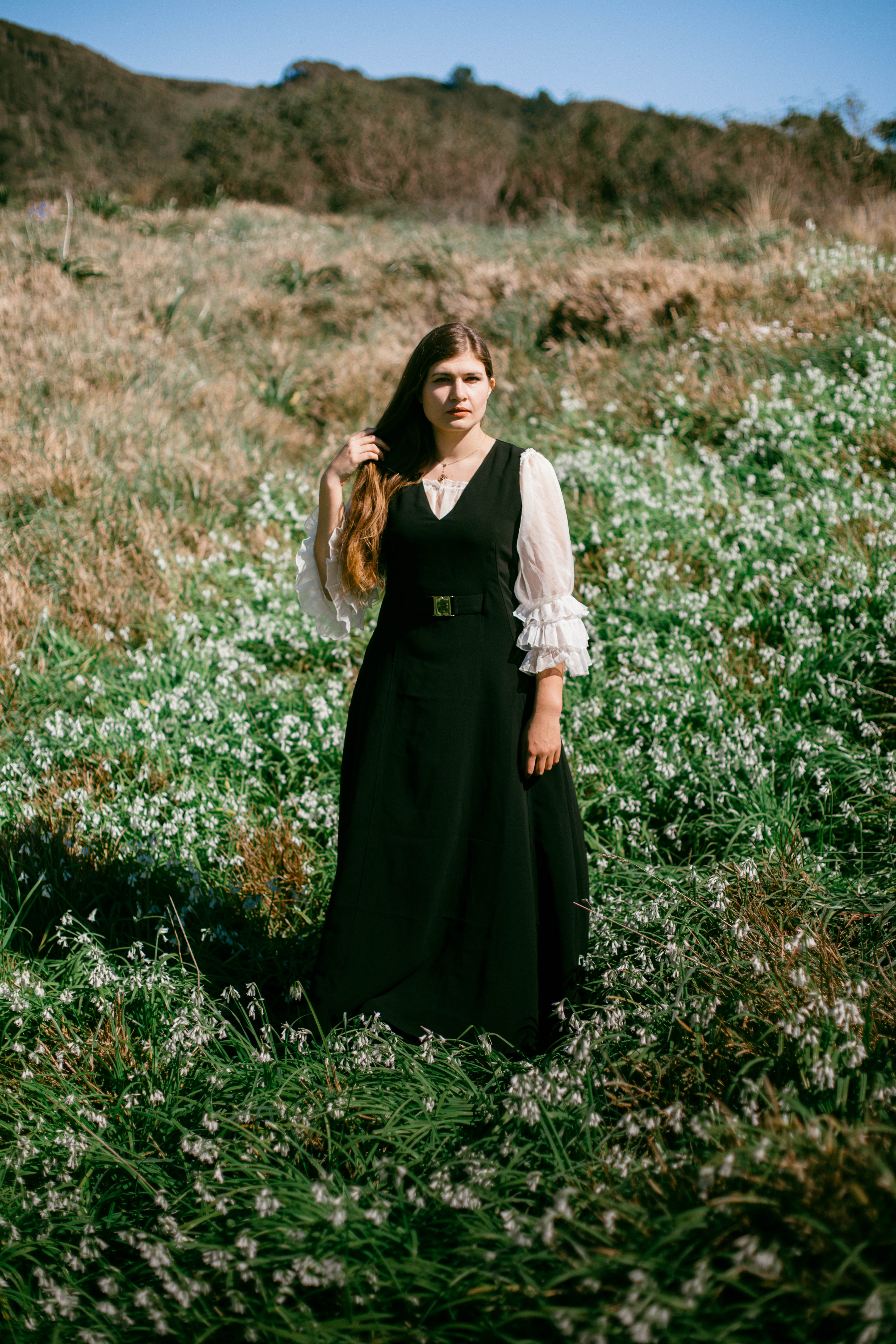
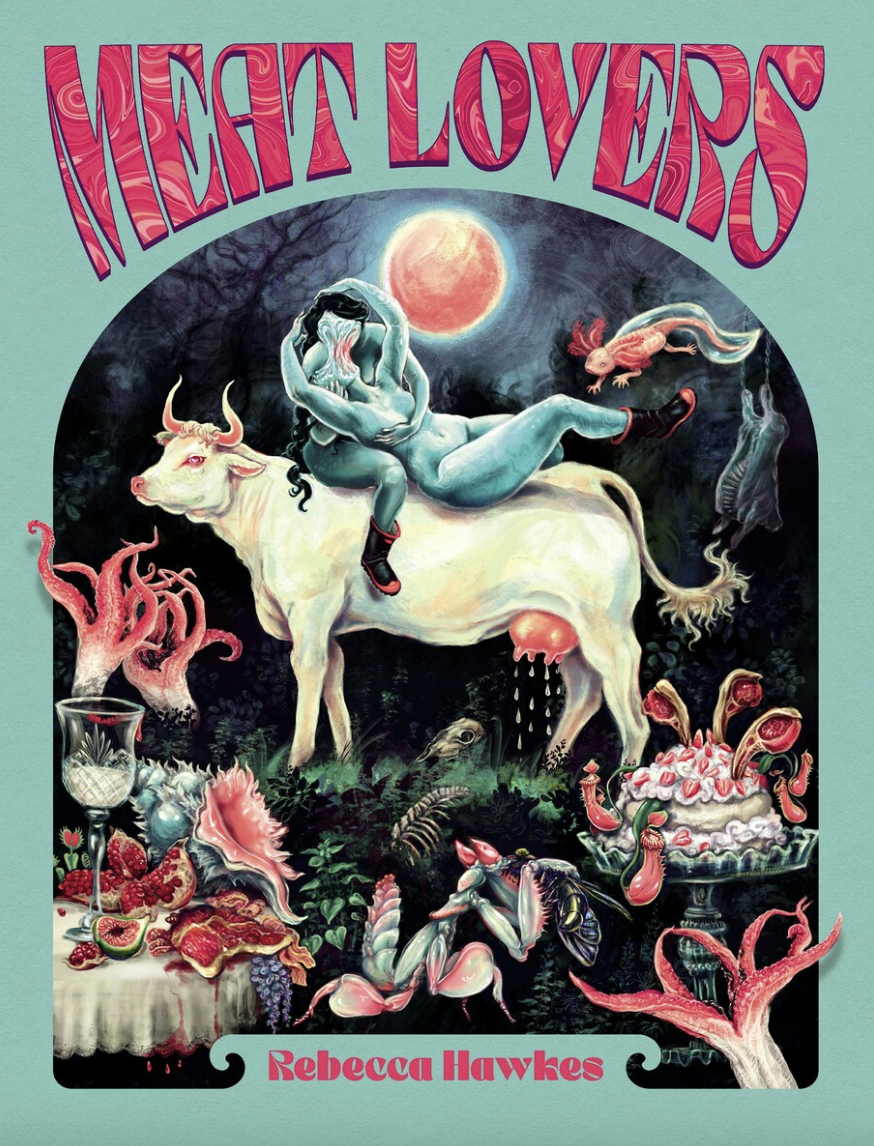
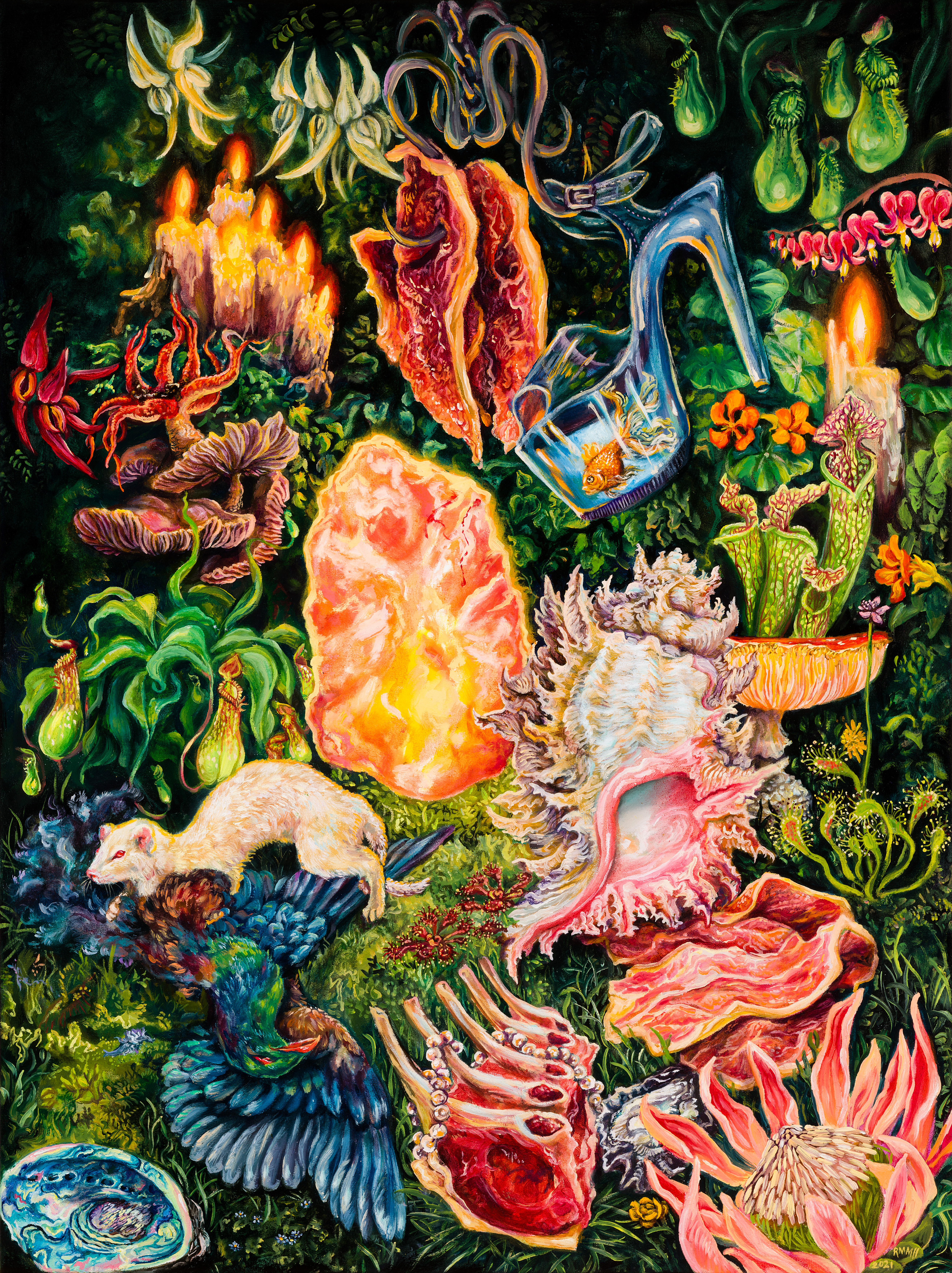

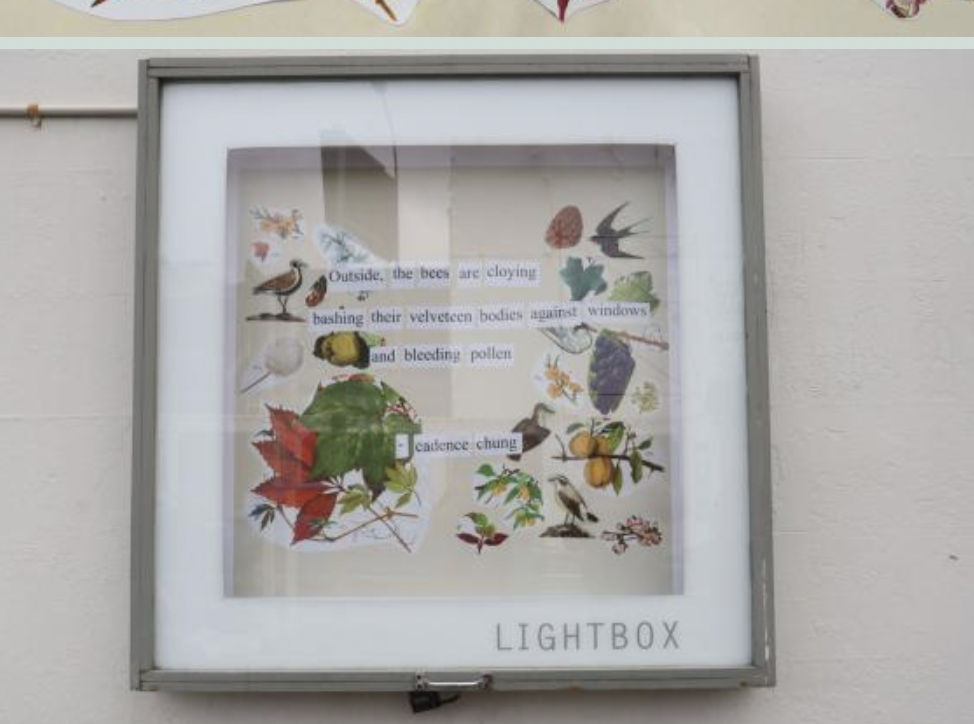

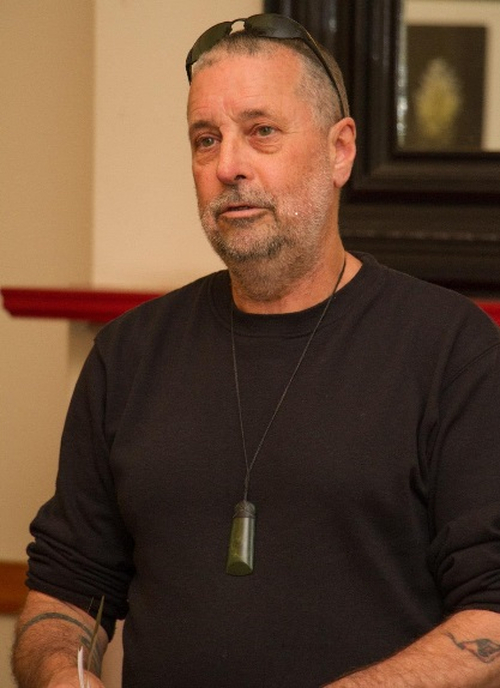
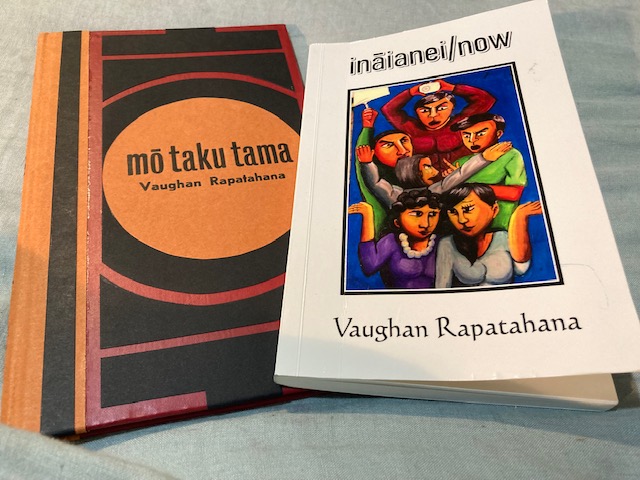
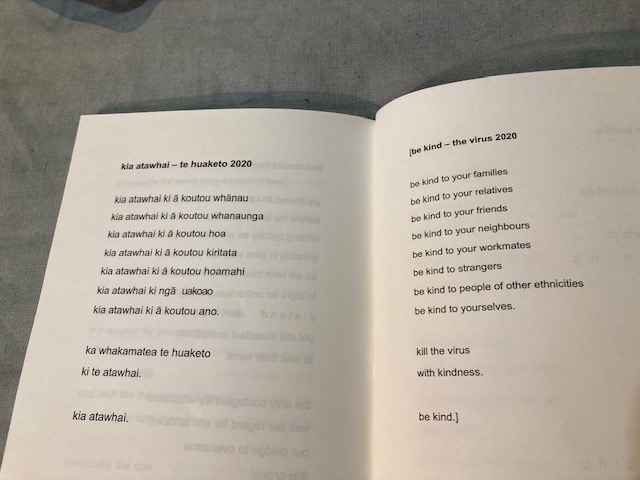
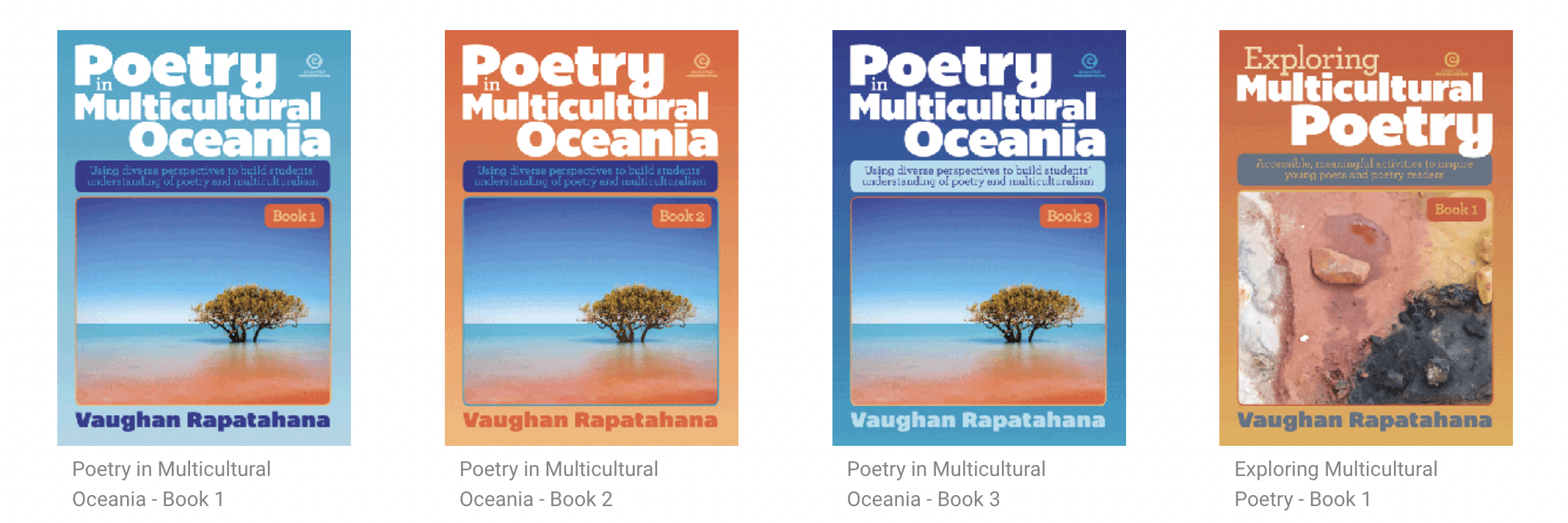

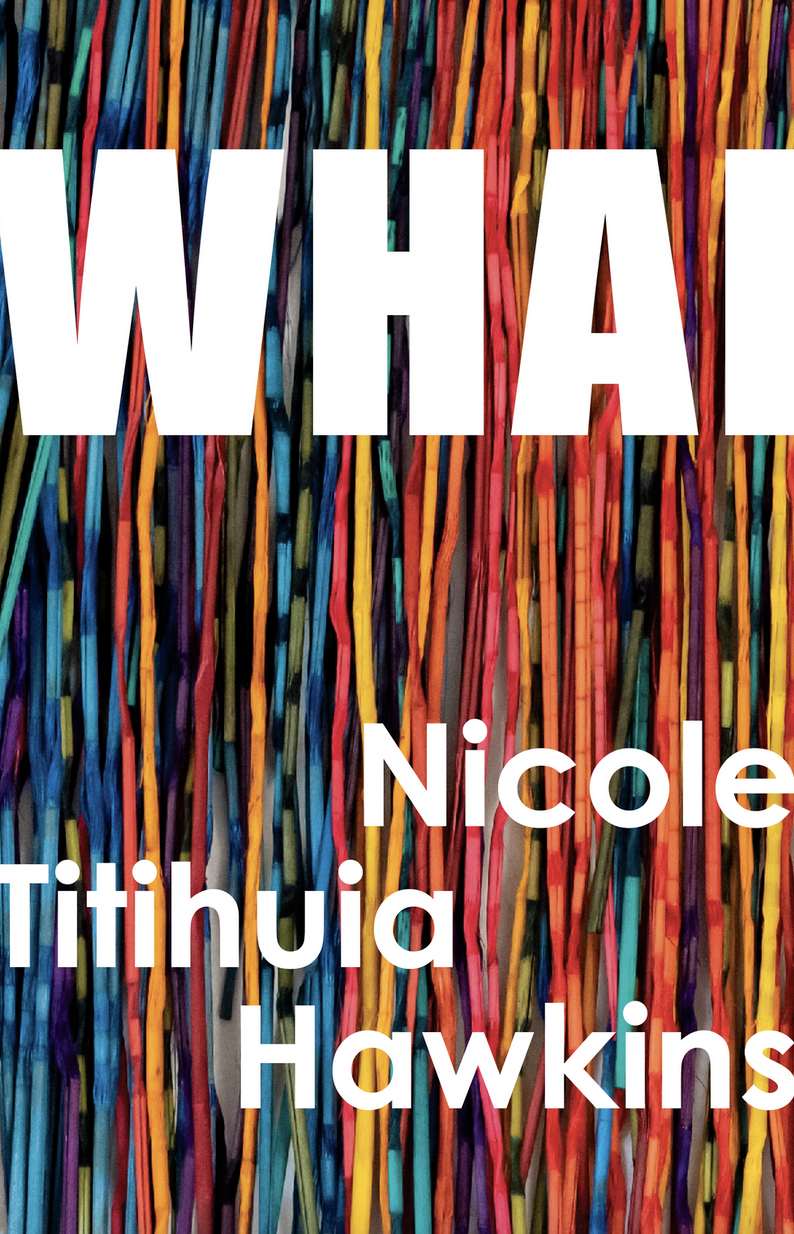
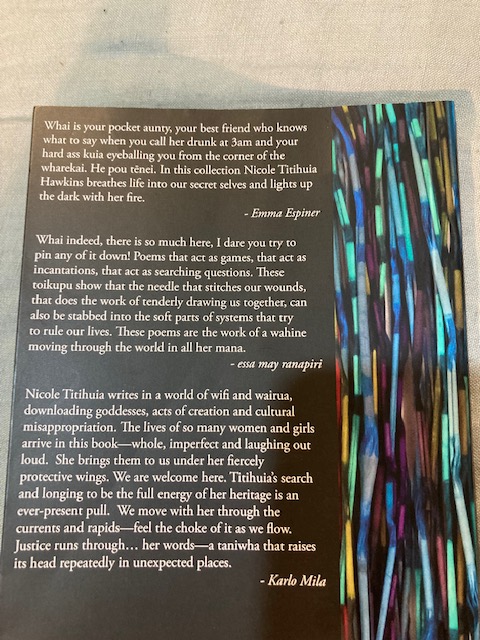
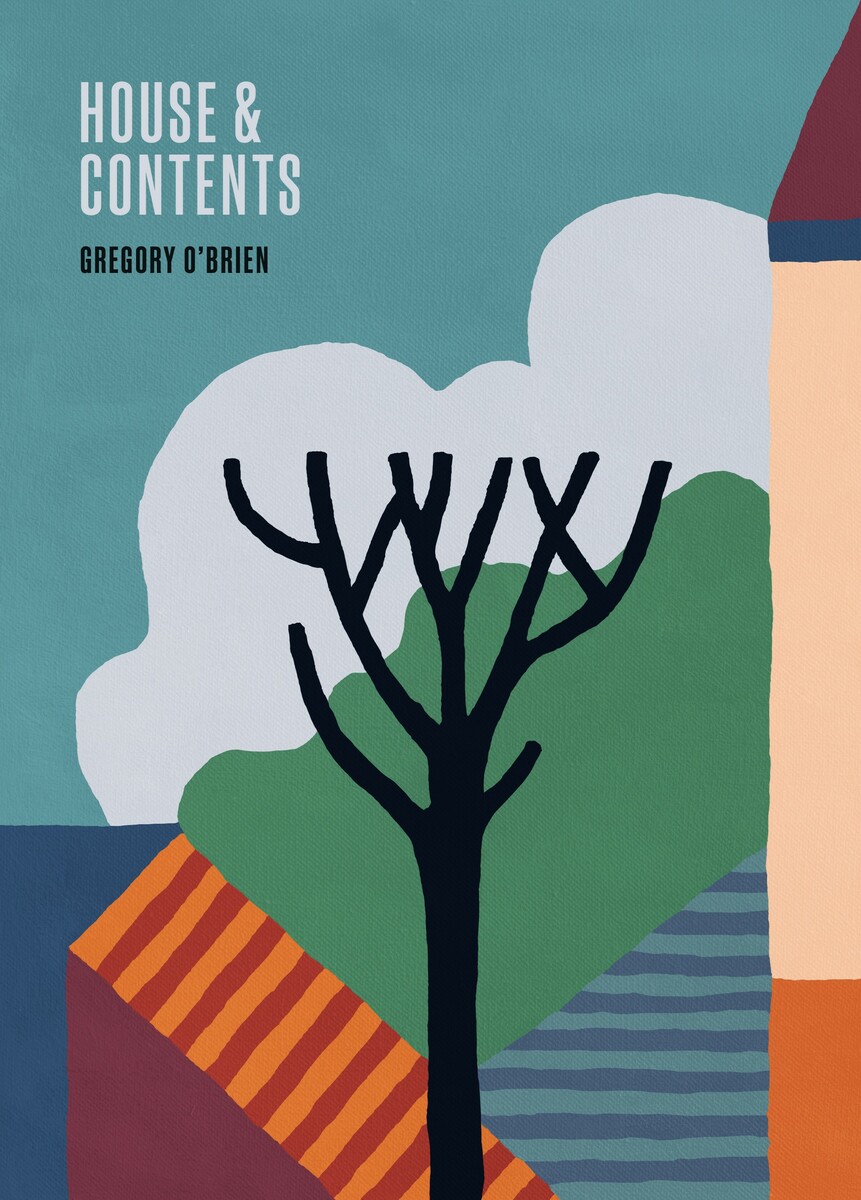
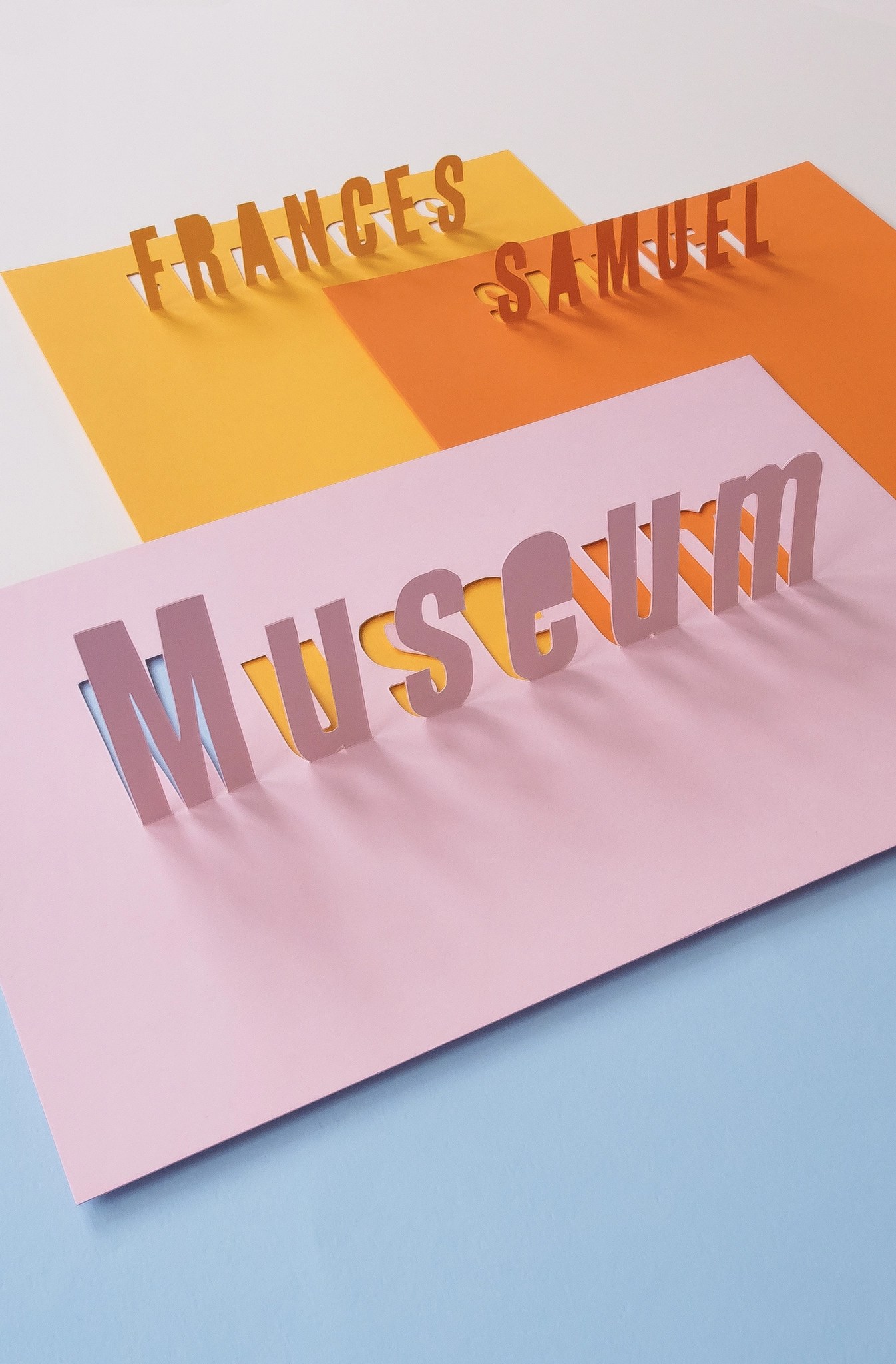
 NZ Poetry Shelf