Author Archives: Paula Green

Poetry Shelf connections: much-loved comfort book list by 19 New Zealanders


For the past three months Poetry Shelf has posted lists of books that have offered solace (first word I used) during lockdown or at any point in time, to a variety of New Zealanders. I then used the word comfort and now I am thinking much loved. We hold books close, we favour particular books for all kinds of reasons, whether in times of smooth sailing or personal catastrophe or global pandemic.

I have loved reading these lists – they have given me goosebumps, taken me back to books I have loved, got me ordering new ones (this list is no exception). Like Pip Adam I find Bill Manhire’s poetry of great comfort. He writes in myraid ways; think tone, mood, form, sharpness, balm, melody, silence, richness, surprise, humaneness. Like Julie Buiso I stack poetry books next to the bed.

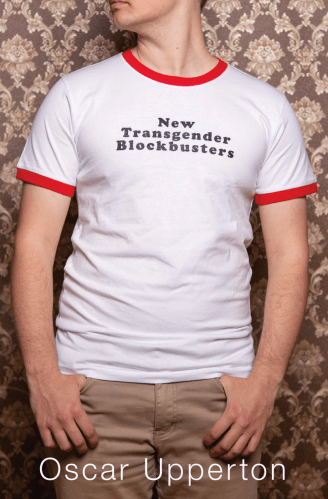
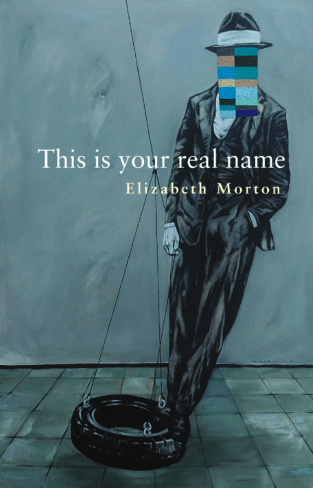
The two poets I kept returning to in lockdown had new books out: Oscar Upperton’s astonishing debut New Transgender Blockbusters (VUP) and Elizabeth Morton’s mesmerising This is your real name (OUP). I posted an interview with Oscar and review of Elizabeth this week. During lockdown only scattered phrases made my notebook. I couldn’t string a sentence together. I was a drifting reader.

Here is Elizabeth reading from the new collection:


This is the last book list for now – because I am carving time for my own work – but I will involve wider communities throughout the year as a way of making connections. It feels important. To make connections. To touch base with different experiences, both imagined and lived.

Ah. The world still feels wobbly to me, but my beautiful backyard on the West Coast of Auckland feels that little bit safer. Poetry Shelf helps, and will continue its usual schedule: I will post reviews and interviews, audios and videos, commentaries, miniature festivals and when needed virtual book launches. I have other ideas up my sleeves that I will test out over the year.

Finally this list celebrates the opening of our bookshops and libraries and I wholeheartedly encourage the support of both.

A warm thank you to everyone who contributed.


T h e   b o o k   l i s t


Pip Adam (Fiction writer, Better off Read podcaster)


Screen Shot 2020-05-29 at 9.41.59 AM


Jane Arthur (Poet)

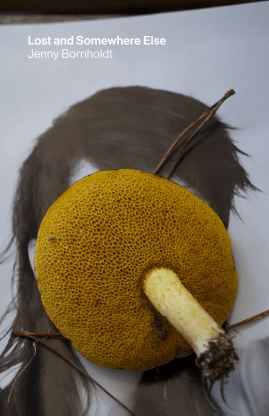
I borrowed Jenny Bornholdt’s latest poetry collection Lost and Somewhere Else (VUP) from the library when it came out last year. There’s something about Jen’s writing I find comforting, even as she takes me through weird images and specifics I don’t understand. She’s gentle, sly and assured all at the same time. Effortlessly precise. I was surprised this book didn’t make it to the awards longlist this year – I thought it would win! I was pleased to receive my own copy for Mother’s Day mid-lockdown. My partner’s annoyingly good at presents.


9780304340835-uk


Ngahuia Te Awekotuku (Academic, writer, activist)

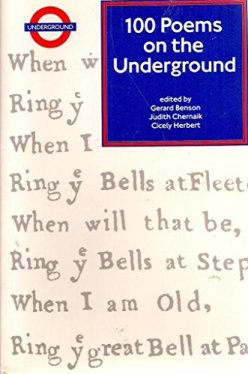
Gerard Benson, Judith Chernalk & Cicely Herbert (eds) (1991)
100 Poems On the Underground
Cassell, London but reprinted and redesigned often.

Rather like the stout little Untermeyer we were given at school, this collection is loaded with old favourites, and newer ones, too. A great book to just pick up and lose yourself in; resonant voices from centuries ago echoed by the joys concerns anguish and excitement of modern London; a place now very much on my mind, as I spend a lot of time and enjoy many friends there, and I feel for them. I love London; I love the Underground. Reading out loud but only to myself and my bemused cat the words of Edna St Vincent Millay, Adrienne Rich, Lorna Goodson, Shirley Geok-Lin Lim, Grace Nichols, amongst pages and pages of pale men, I wonder if on my next descent into the Tube, I will encounter Selina in bold type above my (not mop) head. And Tuwhare. I hope so.


Screen Shot 2020-05-29 at 9.49.28 AM


Julie Buiso (Cookbook author, poet)

I keep a collection of poetry books by my bed with poems I read again and again. Some poems have been with me a long time.

I’m not always sure why a poem moves me, it’s enough that it does, although sometimes I know it’s because of a certain phrase or an image evoked, not because of the entire poem, and these are the poems that I chisel away at over the years.

I sold my house at the beginning of the year and packed my collection of poetry books in a small box and labelled it ‘Don’t Bury Favourite Poems’ and stowed it at the front of a container I had filled with my worldly possessions, and off I went for a few weeks to see family in New Zealand. I’d be back on Waiheke March 25th and could live without a book of poetry until then I reasoned. Well I wasn’t back on the 25th. I spent 10 weeks in the Wairarapa. I’m not complaining about my lockdown exile, but I was bereft. I missed my children and had no access to my favourite poems, poems that had comforted me with their familiarity, poems that had challenged me or helped me see sense, poems that had eased an inner turmoil and made me appreciate where I was at. I hankered after these poems. One of them is ‘In Memory of a Friend’ by John Weir.

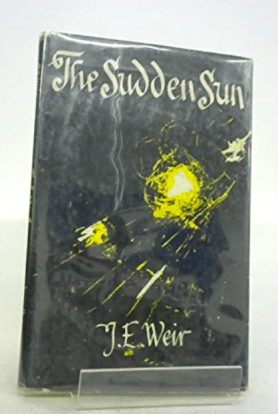
I suppose I should confess to how I discovered it. The poem was in a book The Sudden Sun I borrowed from Wellington’s public library in the 1970s. I never returned the book (apologies, see below) but how could I when it had this poem in it? 50 years of reading it and it still affects me. I also confess, I do not read any of the other poems in the book (it’s the first poem in the book and as far as I go!).

I have always marvelled at the language in the poem – that’s what got me hooked on the first reading. ‘When the heat spills dreams like a drug and copper glows on the maple’ and ‘now each summer when the cherry tree leans lovely over the morning …’. Certain phrases like these still affect me when I read the poem anew and I think that’s because at times it has deepened my own feelings of loss though I’m not sure anyone else would have the same reaction as me. It’s not classical in any way, but instead gathers together the threads of friendship, kindness, love, loss and grief, acceptance and hope, and it has an unpredictable somewhat quirky rhythm that I like.  Sometimes I think the last few lines are the end, death, and other times I feel optimistic about them as they represent the cycle of life and endorse that spring will come again, life will continue. While it’s not a ‘go-to’ solve everything (or anything) poem, or a feel better poem – it’s a memory tinged with sorrow, death and regret after all – it fills my heart every time.

*Years ago when I tried to return the book to the library (it was only about 15 years overdue) they declined to accept it.


1-phNqN84CbooH0pzbB6sacg


Karl Chitham, (Director, The Dowse)

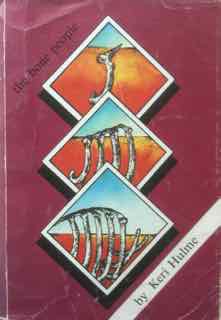
The Bone People by Keri Hulme

I read this book when I was in high school. I can’t remember a lot of the detail of the story, but at the time it was life changing. I recall the themes of solitude and self-reflection as being both comforting and relevant during a particularly turbulent time in my life.


610WKcoibGL._SX440_BO1,204,203,200_ 9780099432937 9781444012507__26282.1569978906   9780141187655


Sam Duckor-Jones (Poet)

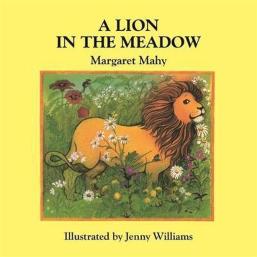
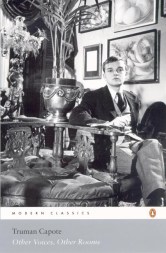
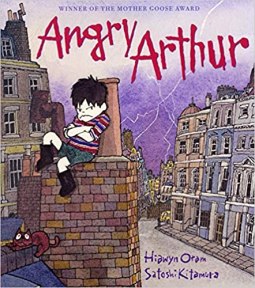
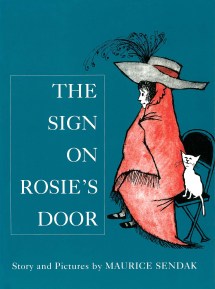
My favourite place to read is at the pub. I like the chatter and music and smell and low light and being out of the house. I can nurse one beer for a very long time and get some gorgeous reading done. But in lockdown this was not possible of course. At home, which is also my place of work, I read slowly and irregularly and distractedly. So during lockdown I decided to check out the reference section. I read an atlas from the eighties with different Europe and different Africa and different Asia and different solar system, hi Pluto! I read the Oxford dictionary (not all of it!! I skimmed), which is a sort of meditation, like walking in the bush, and was useful re all the speed scrabble I’ve been playing with my mum these past weeks. I revisited some childhood hitz: The Lion In The Meadow, Angry Arthur, The Sign On Rosie’s Door…… Books I practically know by heart, some I shared aloud with friends on Zoom. Nothing charms and nourishes like a good picture book. But! The pubs are open again! And I am excited open Truman Capote’s Other Voices Other Rooms for a campy gothic southern drama post lockdown fix.


410bSVdWFdL._SX322_BO1,204,203,200_


Dylan Horrocks (Cartoonist, lecturer Victoria University of Wellington School of Design Innovation)

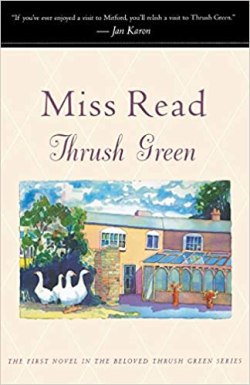
Thrush Green, by Miss Read

I confess that when the country went into lockdown and fear and anxiety seemed to be in the very air we breathed, my reading briefly ground to a halt (unless you count endless scrolling through the news and social media). Pretty soon, I found myself yearning for comfort reads; the pile of history books and memoirs by my bed felt too dark and difficult and I longed for an easy gentle world to disappear into. I somehow remembered Miss Read, whose twee novels about idealised English village life were popular with older customers in the bookshop where I worked in the mid-1980s. Soon I’d loaded most of her books onto my Kindle and for about two weeks, they were my escape from the scary world of Covid-19.

Of course, they really are very twee – not to mention unrealistic, old-fashioned, and problematic. Nothing much actually happens and every twist – both good and bad – is so clearly anticipated and hinted at that there’s never a shock or surprise. The plots are less a roller-coaster ride and more like a simple crossword puzzle; the solutions are obvious, the only question is how long it will take to get there. Needless to say, we do eventually get there and it all works out in the end.

But at least the first book in the series, I’ve decided, is a quiet little gem. Nostalgia is not only its primary self-indulgent pleasure but also the primary theme. The book opens with the youngest character, a child, who’s excited about the arrival of an annual fair; it ends with a character close to death, satisfied with a long and happy life. In between, elderly characters meditate on the way memories enrich the present and the young enjoy the anticipation of looking back. This is no critical analysis of nostalgia (I have Svetlana Boym’s The Future of Nostalgia in my reading pile for that), but as a humble celebration of the life-affirming pleasures of nostalgia Miss Read delivers.

So Thrush Green’s charming eccentric residents held my hand through the scariest weeks of Level 4, until I was ready to return to heavier fare. I’m pretty sure most of them would vote Tory (or even worse). But for a short time in March, they offered me a strong cup of tea, some fresh baked buns, and a few kind words. And for that at least I’ll always be grateful.


9780679779070


Annaleese Jochems (Fiction writer)

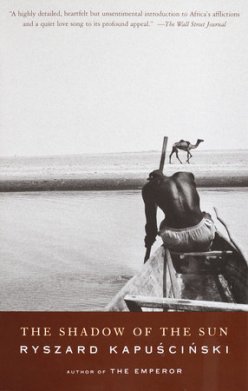
The Shadow of The Sun by Ryszard Kapuscinski

The idea of travel books has always nauseated me. I don’t want to read about a man (or even a woman) putting their boots on and walking up a hill, then back down the hill, and having a beer afterwards. I don’t like long chatty bus rides, or drugged wild nights on the beach. But this book has opened my mind to the whole genre! By the end of the book Kapuscinski was the hero I believed in. You can just tell that he’s a nice guy, and doesn’t talk too much. He’s thoughtful. The Shadow of the Sun is about Africa, but it’s less about its geography or history, than about it’s mood. He sees absurdity with a sort of patient interest that gives it context, that makes it meaningful. He also writes thoughtfully about poverty, sickness, and colonialism. His eye is compassionate, but never mawkish. A perfect book for anytime, I think, but the best choice I can think of for when you’re stuck at home and need someone to show you how to slow down, and just think.


saki-complete-stories-penguin


Erik Kennedy (Poet)

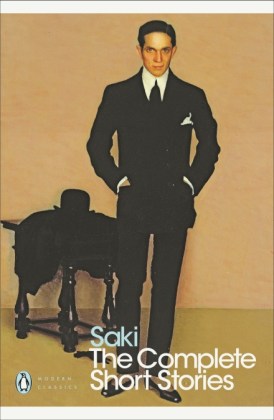
I return to the work of the short-story wizard Saki more than is perhaps healthy. In Saki’s world, it’s not that bad things happen to good people, it’s that nothing good happens to anyone except, sometimes, to his narrators when they are relieved of the burden of being conscientious, sociable Edwardians. Saki’s laughs-per-page ratio is formidable, and that is a tonic when reading his work in grim times like these, but I also appreciate the sheer dazzling macabreness of a large proportion of the stories. It puts things in a sort of perspective—things might be rubbish on the plane we move along, but they’re not (I don’t think) positively diabolical. And, technically, Saki is a poet’s prose writer: there’s a Popean poetic logic to the musings of recurring characters like Reginald and Clovis, and the tightly-executed plot twists that characterise his work are like triple axels, moves that, if you could pull them off in poetry, would mark you out as a god-tier artisan. Personal favourites include ‘The Open Window’, ‘Sredni Vashtar’, ‘Tobermory’, ‘The Yarkand Manner’, and ‘The Schartz-Metterklume Method’, but it’s essentially impossible to make a bad choice if you’re reading Saki. In the same way that even bad pizza is good, even second-class Saki is satisfying.


9780007580835


Erin Kimber (Kaitiaki Pūranga – Library Archivist, Macmillan Brown Library, University of Canterbury)

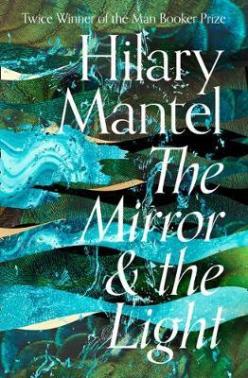
On the day before Level 4 I panic-bought The Mirror and the Light by Hilary Mantel. God knows why I thought I’d run out of things to read…I have stacks of unread books at home. I’m glad I did though. Thomas Cromwell has been an excellent (and frustrating) companion during lockdown. I’ve never been into “historical fiction”, but after many recommendations I gave Wolf Hall a go. Since then I’ve been on this weird and wonderful trip, sometimes creeping, sometimes hurtling toward that inescapable end.

Being an archivist, I think a lot about the evidential power of documents. But anyone who has spent time in an archive knows that it’s the stuff that is missing that can be just as revealing. Mantel uses the silences of history and Cromwell’s life to tell a story of class, gender, environmental violence, and the all too familiar abuse of power. All this wrapped up in a cracking yarn. Right up to the last few pages I was hoping things would turn out differently. There was an odd comfort in that. I mean it is fiction. Anything could happen. Maybe there would be a Tarantino type plot twist. But Cromwell did die. It was strangely underwhelming. I felt empty, trying, like Cromwell, to make sense of everything going on around me. I cried. I needed it.


9781405934138


Louise Lahatte (Head of Heritage for Auckland Libraries)

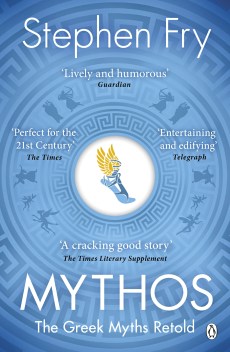
If I were to pick a book I would choose Mythos by Stephen Fry. Just before lockdown my 92 year old mother (a poet and classics lover) was in hospital for 5 weeks. As she recovered from the worst of her illness she was bored, and I brought her my copy of Mythos. I am sure it hastened her recovery, as the stories and foibles of the Greek gods were so delightfully related, and Stephen Fry’s commentary on modern parallels and lessons and the influence of these myths and language on Western thought and the English language kept her constantly entertained. The Greeks believed the world started not with a big bang, but with Chaos. In these chaotic times, Mythos was indeed a solace.


Screen Shot 2020-05-30 at 10.45.31 AM


Euan Macleod (Artist)

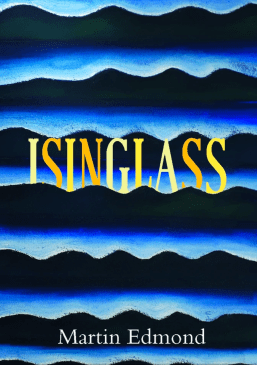
The book that immediately came to my mind was Isinglass by Martin Edmond (another Kiwi living in Sydney). A story within a story that is both very timely and timeless. I read it while I was travelling and it made me see my new surroundings in a different way. A beautiful book.


whisky galore  katie morag


Bill Mcnaught (CBE National Librarian)

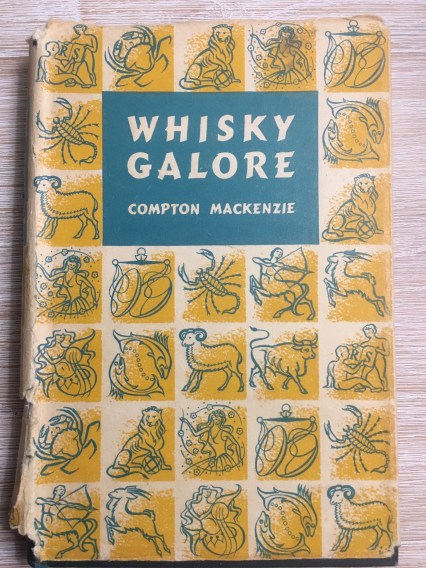
Two books spring to mind when I think of comforting reads. Both have strong connections to the land of my birth. First of all, I think of Whisky Galore by Compton Mackenzie. I picked up my copy of the book in a charity book sale here in New Zealand. Published just after WW2, it’s set towards the end of that war. It’s a well-known story of a cargo ship, laden with crates of whisky, that runs aground during a storm in the Outer Hebrides. By coincidence, the island community nearby has run out whisky. The novel’s plot revolves around the tussle between the authorities who want to confiscate the whisky and the locals who are determined to make the most of this heaven-sent opportunity to replenish their supply of this essential drink. It is not the plot itself that gives me comfort.

The characters in their dialogue frequently use Gaelic phrases that take me back to my childhood. My mother often told me stories about her father, William, who was a master mariner from the Isle of Skye. He was the last in our family to have the Gaelic. He moved to Glasgow as a young man to pursue his career in the merchant navy. My mother was brought up listening to stories and songs about the Hebridean Isles of Scotland and she passed some of them on to me, quoting phrases in Gaelic that she’d heard her father use. One of those phrases was uisge beatha which literally means ‘water of life’ and it is the name for whisky, capturing the importance attached to the drink.

This short excerpt from Whisky Galore paints the picture of the crisis caused by the shortage of the water of life:

“Water! Chust [sic] nothing but water … there hasn’t been a trop [sic] of whisky in the two islands for twelve days… and I was handing it out for a month before that like my own blood, we were that short.”

“Fancy the Government running out of whisky just before Lent. What a Government!”

“Do you think Winston Churchill knows they’ve run out of whisky?” Roderick asked.

“I don’t believe he will,” Joseph replied.

“It’s a pity he wouldn’t be saying something about it on the wireless,” Roderick observed savagely, for he was a profound admirer of the Prime Minister’s oratory. “You never know what these Covernments [sic] will be doing next.”

The soft consonants and turn of phrase that Roderick uses remind me so much of my mother’s mimicry of the gentle, accented way her father apparently spoke in English. My grandfather died when I was two years old but my sister tells me she can remember him singing to me in my pram!
 

mairi


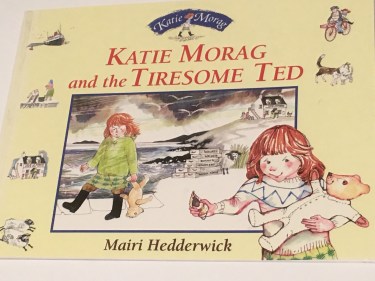
Speaking of prams takes me to my second book choice of comforting memories. This book takes me back to my early career when I was branch librarian at Bridge of Allan library. I had the pleasure of hosting a visit from author Mairi Hedderwick who held the gathering of young children in the library spellbound as she described the plot of the picture book she was working on at that time. The book was Katie Morag and the Tiresome Ted. It’s a heart-warming story featuring Katie Morag’s worse for wear teddy bear. The children were delighted when Mairi told the story using her delightful original sketches for the book. She then produced the battered old teddy bear from her bag, bringing gasps of amazement from her young audience.

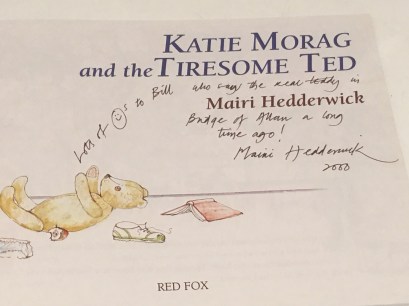
Fast forward to the year 2000 – I’d been working in the NorthEast of England as Director of Libraries and Arts in Gateshead for nine years. Our paths crossed again when Mairi was a guest author at the Northern Children’s Book Festival that year. A signed copy of her book was auctioned and I determinedly outbid all my rivals to secure that copy. Mairi then kindly embellished her original signature with a lovely comment referring to the time when I saw the real Ted in Bridge of Allan! All these years later it still gives me a sense of satisfaction that, as a librarian, I played a small part in helping children to discover the joy of storytelling and reading.


Screen Shot 2020-05-29 at 11.07.20 AM


Paula Morris (Writer, host of current AWF series, teaches Creative Writing University of Auckland)

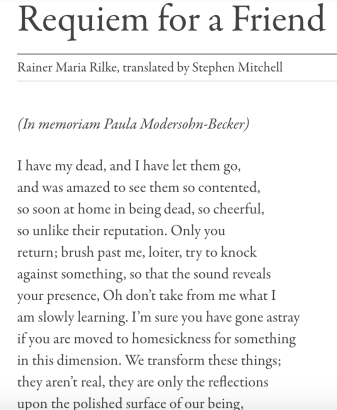
I don’t know that this is ‘comfort reading’ exactly, but after Hurricane Katrina, when we evacuated to central Louisiana and couldn’t go home for months, I read quite a lot of Neruda, and also Rilke’s ‘Requiem for a Friend’, written in 1908. It’s a long poem rather than a book. Rilke was close friends with the painter Paula Modersohn-Becker, and she’d died after having a child the year before: it begins ‘I have my dead, and I have let them go’. I’ve returned to it at various times in my life, not just at times of grief or sadness. One line – ‘For somewhere there is an ancient enmity between our daily life and the great work’ – is one I think about a lot. Too often I pick the wrong side.


IMG_2301


Morrin Rout (Bookenz, PlainsFM)

Like many people, I had grand plans for reading during the lockdown. I was resolved to revisit Middlemarch and had amassed a pile of books to last me through the period and beyond. I don’t know what I did with the time but it passed quickly and my pile of books remained largely untouched. I did manage Hilary Mantel’s The Mirror and The Light but Middlemarch will have to wait for another Level 4.

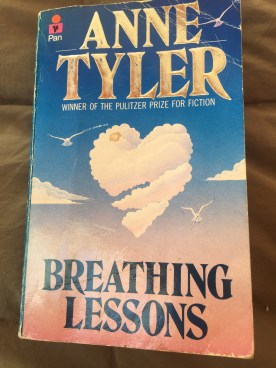
Anne Tyler has always been one of my favourite writers so I was delighted during lockdown to hear her being interviewed on RNZ about her latest book. She is rarely interviewed and does not do festivals, as I discovered when I was organizing literary events at the Christchurch Writers’ festival. Listening to her thoughtful, measured responses to the questions, I was reminded of Breathing Lessons, the book of hers that I treasure above all.

The narrative takes place over a day and provides an extraordinary scrutiny of a marriage. I remember first reading it back in the late 1980’s and finding welcome reassurance that good relationships are not all about dramatic gestures of love but also about routine, often overlooked actions that may mask the affection behind them. In her seemingly simple but subtle prose, she lays bare the minutiae of the day to day dealings of Maggie and Ira as they go about their lives and exposes the love that develops and binds them together. Reading it over thirty years later, a widow now and in a time of pandemic, I found it as moving, wise and engrossing as ever.


The_Chronicles_of_Narnia_box_set_cover


Helen Taylor (Children’s author)

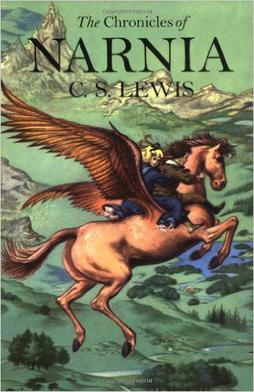
When asked which book or books in my case that have given me comfort at any point throughout my life, I was immediately transported to Narnia. The Chronicles of Narnia by C.S Lewis was the first collection of ‘grown-up’ books I read as a child all-by-myself. I remember I had a yucky dose of the flu, so while stuck in bed for days, covered in camphor and eucalyptus oil, I eagerly stepped through the wardrobe door. That is the beauty of mythical lands, you can leave everything in your world behind – even the flu!

Although a visit to Narnia is not always a smooth journey, C.S Lewis’ warm gentle conversational style allows the pages to become a comforting place to hide. Narnia is a pure and magical place to be. Children can become kings and queens and animals talk back! What better way is there to combat all your worries than to have the King of the Beasts by your side!


Screen Shot 2020-05-11 at 9.47.03 AM.png


John Walsh (Artist)

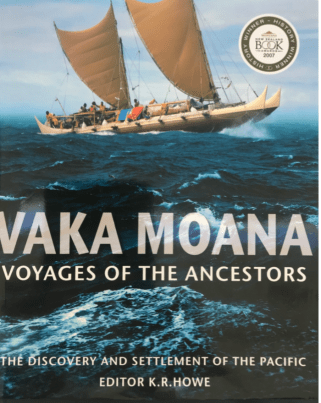
The settlement of the Pacific is the last great story of human migration, and thousands of years before other humans were confident enough to sail regularly beyond the sight of land.

Vaka Moana is a dense 360 pages, it is richly illustrated and the latest findings from world authorities has eyebrows dancing. Nuances of archaeology, genetics, linguistics, canoe building, sailing techniques, pre-instrument navigation, early European encounters, create visions of extraordinary times and people.

Sections are written by different authorities. Some have you at sea and in the minds of the people. Others plod, but it’s scope is huge and has you darting back to reconsider this point or those people.

It is a wonderland, a trip back through our whakapapa. I am biased though, I sailed with the Tahitians on their super, traditional vaka Fa’afaite as part of the Tuia 250 commemorations last November.


Screen Shot 2020-05-29 at 11.17.13 AM


Geraldine Warren (Māori Resources, Mātauranga Advisor/ Auckland Museum).

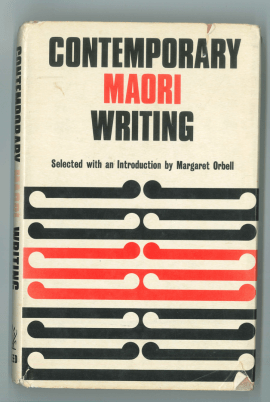
As a Librarian I tend to borrow books and not buy. During the first weeks of  level four COVID -19, I read, re-read and read again the small pile of borrowed science fiction novels and Contemporary Māori Writing: Selected with an introduction by Margaret Orbell. The blurb on the jacket describes it as the first generation of Māori writers to make use of literary forms that are European in origin.  I suspect  my mother slipped it in onto my bookshelf next to The Outsiders by S.E. Hinton.  The inscription on the front endpaper reads Pleasant Rd, Titirangi and I imagine my mother promising the previous owner to look after it. It has become a taonga. Many of the stories were first printed in publications such as Te Ao Hōu with my favourite in 1964.

The introduction says, a constant theme is the closeness and warmth of community life and the support that the social group has given the individual. However the writers also revealed their own individual worlds of isolation, exclusion,  loneliness, death. All the writers are appreciated, although I pay special attention to the Wāhine Māori, the stories by Rose Denness, Rora Paki, Arapera Blank, Patricia Grace and Katarina Mataira.

I know a part of the world of my parents (and grandparents) from Māori fictional writers. Like other rural Māori migrating into the cities, my parents worked long hours in low paid jobs, hosted whanau, saved for a state house and a second-hand car. This book, published fifty years ago, invokes respect for Te Ao Hōu, Te Ao Hurihuri, the continuing journey of Aotearoa.


51vRKq3hjUL._SX329_BO1,204,203,200_


Faith Wilson (Kaiwāwāhi Ahurei | Co-Editor The Pantograph Punch)

The peace you offer like ebb-tide
Draws to the last meter
Of white sand
Leaves bare the cockle tongue
To the sun warmth
That wakens things to be
Never to be again


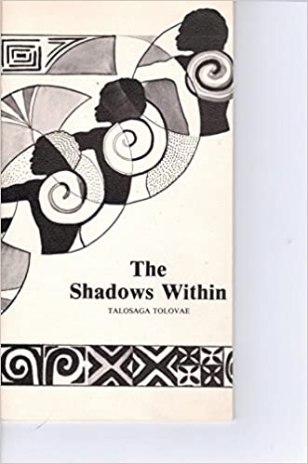
Thus begins ‘The Opening’, the first poem in Talosaga Tolovae’s poetry book The Shadows Within. My mum gave this book to me a couple of weeks ago. Talosaga is a Samoan poet who lived in Tokoroa, where my mum grew up, and I where I lived as a child. I think I might have quite a rare specimen in my hands, as it was printed by little known Hamilton publishing company Rimu Publishers in 1984. The poems lend themselves easily to an exercise in introspection, familiarising yourself with your own interior shadows, something that we’ve all been doing a bit at this moment, perhaps. This book reminds me that your mark on the world doesn’t need to be a monumental bang, but a quiet hello in the darkness.


Thank you

Kia kaha

Keep well

Keep imagining


The other lists:
20 New Zealanders

Musicians and music fans

Booksellers

Publishers

Librarians

17 New Zealanders

Children’s authors

Children’s authors

Fiction writers

Nonfiction writers

Poets


Poetry Shelf in conversation with Oscar Upperton


Screen Shot 2020-05-28 at 10.30.51 AM


Oscar Upperton New Transgender Blockbusters Victoria University Press, 2020


Optimism is the idea that it not always will rain.

Leave home as soon as you are free,

for everyone comes back again—


just never board a train

without a member of family.

Optimism is the idea that it will not always rain,


that between sea and plain

will always sprout a city.

For everyone comes back again.


from ‘Dutch instruction’


Oscar Upperton was born in Christchurch in 1991, grew up in Whāngarei and Palmerston North, and now lives in Wellington. In 2019 he was awarded the Creative New Zealand Louis Johnson New Writer’s Bursary. His work has appeared in Sport, The Spinoff, Metro and Best New Zealand Poems. His debut collection New Transgender Blockbusters was one of two go-to poetry books for me in lockdown (Elizabeth Morton the other). It is fresh, witty, offbeat, surprising yet never loses sight of a lived-in world. As it says on the blurb: These poems are vitally human and consoling: they reframe the ordinary as something to yearn for’. This is the kind of book that I want to talk about with someone, the way the city and rural settings are both present, the way there is a degree of incantation at times, a sense of song, a jubilant relationship with words that might involve rhyme or repetition or silence. I am out of lockdown now but the world is still wobbly, I am still wobbly as both reader and writer, and I find this book the perfect retreat. Glorious is the word for it.


In conversation with Oscar Upperton


Paula: What poets, both here and overseas, have hooked your attention?

Oscar: I only really read Kiwi poets. I love Tayi Tibble’s writing. Also Jane Arthur and Ashleigh Young. My younger sibling Katrina Upperton is my favourite read at the moment though.


Paula: Poetry performers?

Oscar: I went on a road trip with my dad before the lockdown and read in Palmerston North, Whangārei and Kerikeri. I was lucky to see some awesome, awesome performers on that trip. I can’t name everyone (and some of the readings were private anyway) but I will single out Vera Hua Dong, who gave an amazing performance in Kerikeri. I’m looking forward to seeing her writing on the page in Ko Aotearoa Tātou when it comes out in August.


Years aren’t to blame. I was always old.

The garden gathers rain. I grew and grew

and broke the mould. I sat there in the rain.


from Garden beds’


Paula: Your book is like a breath of fresh air. I am drawn to the economy, the richness, the quirkiness, the surprise. What are key things when you write a poem?

Oscar: Thank you for all the compliments! I like to think I’m quirky. Sort of the manic pixie dream boy of New Zealand poetry.

Usually I start with a line or a sound I like, and just follow that. Or I start with an idea, like writing a poem with footnotes. I like to make up rules for myself, like this poem has to have every fourth line written backwards or in this poem the first word of every line rhymes. And I like to use prompts, like Pip Adam’s exercises from her podcast Better Off Read.


The dog is a book read over and over

The dog is a river that’s stopping for no one

The dog is a child who thinks hot is a colour


The book is a dog that’s waiting for water

The book is a river that cannot be forded

The book is a child who’s made out of silence


from ‘Song abut a child’


Paula: I like the appearance of lists in your poems, whether subtle or overt. What attracts you to poetry list making?

Oscar: It’s easy! Also I like repetition. Also I like juxtaposition. Like if you put one image beside another, unrelated image, what happens? Lists are useful for that.


Paula: Yes- I love the connections between things on a line and in the poem. That is where surprise and quirkiness can take root. I also like the musicality – the rhyme. Sometimes I am reminded of Bill Manhire’s poetry palette as I read your poems (final word in book might be referencing his poem ‘Kevin’). Any poets that feel like close writing relations?

Oscar: This is a funny question to me because some of my closest relations are poets (my dad Tim and my sibling Katrina) and they are probably the writers that I am the most similar to, for obvious genetic and environmental reasons. I definitely am very influenced by Bill Manhire. I like his relaxed approach to sound and rhythm, and how a lot of his poems are jokes or riddles. He seems to be having a lot of fun when he writes, and it’s infectious. I aspire to be like that.


Paula: I so see that in your writing! Your poetry seems assured to me, crafted with a deft hand, but do you suffer doubt as you write?

Oscar: Yes, all the time! But I chuck out poems or lines I don’t like, so I am usually happy with a poem by the time it is published. There are some lines in my poems I really don’t like. For example, I think the ending of ‘Child’s First Dictionary’ is really bad. And I even dedicated that poem to my sister! How rude.


We like mushrooms best when they taste of thieving.

At home we turn the Beatles up to eleven.

This bag of mushrooms was not a given.

We don’t like Kevin but we both like ‘Kevin’.


from ‘Two thieves’


Paula: Some poets currently favour massive self-exposure in poems – there are heart-punching examples I adore. I find your collection a complex weave of human experience that might be invented or real, intimate or restrained. How do you feel about revealing your private life in a poem?

Oscar: I have a lot of childhood poems in my book that I guess you could say are autobiographical, but they are more about mood or tone than describing a particular thing that happened. Although ‘Two thieves’ is entirely truthful.

I don’t think I’m interesting enough to merit too much self-exposure – all the poets I love who write about themselves, they seem to get out of the house much more often than I manage to. I’d much rather write about something I haven’t done or haven’t experienced, and I don’t tend to write in my own voice. The only poems I have written that I consider to be in my voice are ‘New transgender blockbusters’ and ‘Carmen’. I wrote them because I had two very specific emotional experiences (one after watching a terrible movie, one after listening to people talk about Carmen Rupe) and I was interested in the challenge of recording those experiences accurately. I like both those poems but I wouldn’t want to write a whole book like that.


A juggernaut is anything sour, sour cabbage.

Why do you hide your head beneath the bedclothes?

A juggernaut is anything at all, air and beans.

Why do you keen? Why throw yourself against the porch light?

A juggernaut is anything sitting on a rooftop not a bird.


from ‘Juggernaut’


Paula: Ha! Poetry is a way of writing yourself out of the house in any way or voice you care to invent. The blurb lists questions. ‘Juggernaut’ is a sequence of questions. I began musing on the idea of questions shadowing poems, like furtive ghosts that help bring something into being. What’s your take on poetry and questions?

Oscar: I like questions because they invite the reader in and suggest an answer without me actually having to come up with one. I don’t like being too definite or conclusive when I write, and questions are useful for that.


Paula: That is another plus about your poetry. In fact I could have used the word ‘openness’. Porous poetry that is like an open home for the reader. Was there a poem that was particularly tough to write?

Oscar: ‘Caroline’ was hard to write because it contains a lot of repetition. The same lines had to make sense in six different contexts, over six stanzas. I wrote it in Excel with formulas set up so that if I changed a line in one place the change would flow through the rest of the poem. It took ages and was a weird time but I really like that poem now.

‘Prudence’ was hard to write because it’s about a cat and therefore ran the risk of becoming too cute.


Last year’s trees are dropping.

They drop like sticky fruit.

They drop as the flies rise.

Last year I woke up differently.

This year is the same old mess.


from ‘Atlas’


Paula: Is there a particular poem – or two – where you feel you have nailed it?

Oscar: ‘Atlas’ is the first poem in the book because it’s my favourite. I wrote it about ten years ago, when I was at my peak.


Paula: Hmm! More peaks on the horizon please! Slowly we return to live poetry events. If you were to curate a session with poets from any time or place who would you invite?

Oscar: I would like to see Bashō and Sappho read. Also Robbie Burns. I wonder if they would be baffled by the experience of a modern poetry reading or if they would just go with it.


Paula: Wow. What a combination. I have no idea how Sappho would deliver a poem and we could get to see gaps filled if she moved beyond fragments. Finally there is more to life than writing poems. What else feeds you?

Oscar: Right now I’m helping out with an online writing workshop run by InsideOUT. Being the ‘teacher’ is super weird but has given me a new perspective on writing. And it is so cool to see what the writers are coming up with.


Victoria University Press page

Oscar in conversation with Karyn Hay RNZ


Poetry Shelf review: Elizabeth Morton’s This is your real name


Screen Shot 2020-05-27 at 12.47.57 PM


This is your real name, Elizabeth Morton, Otago University Press, 2020


There were days I spent gulping sky,

picking every star off the plate

with the stub of a thumb.


from ‘The eating of sorrow’


Elizabeth Morton grew up in Auckland. Her poetry has been published in various journals, both in New Zealand and internationally, and has achieved a number of award placements, including the 2015 Kathleen Grattan Award. Her terrific debut collection, Wolf, was published by Mākaro Press. She recently finished an MLitt in Creative Writing at the University of Glasgow with Distinction.

This book was one of two poetry collections that I kept returning to during lockdown (plus Oscar Upperton’s). I found I could drift in and out of a poem, I could write phrases on sheets of paper, but I couldn’t string sentences together, let alone articulate a reaction to a book. What I could say was I loved it.

The epigraph felt uncannily fitting: ‘For people who wait and people who are alone.’

I had written down the word ‘detail’. Elizabeth’s deft handling of detail forms the visible stitching of a poem. It offers hue and texture to the multiple poem threads. The detail is a gateway to threads that are personal, universal, engaged in storytelling, recollection, contemplation, association, inquiry.

There are reading footholds and there are wobbly boards, especially in poems that are a mix of real life, memory, fable, fiction, enigma.  The real is often elusive, but lands in shards, both striking and evocative. In ‘After’, two lines in particular catch this movement, and echo throughout the collection as a whole (and with me during lockdown):


Night comes apart, like everything else.

We know the landmarks for their hardness.


At the poem’s start, the speaker suggests closing one’s eyes is enough. Shutting one’s eyes is contemplative, an escape device, a pause. This is me in lockdown. I keep shutting my eyes and waiting. The poem features the last polar bear cage-pacing at Auckland Zoo and a butterfly caught on a truck’s windscreen. Two sad notes that alter the way we view the ‘you’ whom the poem addresses. It is the kind of poem you keep reading to absorb the dislocation, the absences, the mournings, the complexities. The ending catapults you back to the beginning which then returns to the eyes closing at the start. The ending:


When I open my eyes I’m in the same cage I was in yesterday.

I am the same yellow bear driving the same haulage truck

over ice sheets, thin as a prince’s hairline.

What night is this? We talk about the butterfly like it got away.

We talk abut you, like you are here. Like you never left.


Every poem works its magic on me – and the breathtaking effects are now heightened by lockdown. I am musing on how I have read this book before, during and after levels 3 and 4. I am writing this review in level 2, and I am wondering when everything I read and write won’t be touched by my Covid experiences. Yet this was the book that held my fuzzy attention.

Most of the poems are dense thickets, interconnected threads, offbeatness and misty bits to get lost in. The beginnings of poems are exquisite hooks:


You might make it, if you sprint.


from ‘Gap’


I’m not going to cry. All winter the television

sulks in the corner of our love. You put the lentils

in a colander to flush the ugly bits.


from ‘You can’t, always’


Here I am turning the pages of the book, writing a review with my thoughts and feelings close up, because I stall on every poem and want to set up a coffee club in a cafe so we can talk about how we move through the poem thickets. Take ‘Aubade with hold music’ for example. You start with the image of a phone booth: ‘The phone booth was skull-cracked, / and caulked with soggy directories.’ Again the uncanny link. The reference to all the people we never know reverberates acutely in lockdown because that’s how I feel about the global Covid statistics. And how I have often felt when I drive down streets and wonder at the lives of the people I see.

The poem moves about a phone call to a mother, but then a central cluster of lines ‘shake’ the phone booth and you wonder what is going on behind the scenes of the poem:


The morning smelled like fire,

like the sun projecting simple stories

against the warehouse brickwork

and I wonder whether you know

you are melting.


Yes I could say this poem is about a phone call, a phone call about to be made; there is a small boy with coins, there are the White Pages, but then there is this: ‘This poem sets you apart, and / you are a small forest pressed against the city’. So mysterious. So ripe with meaning and possibilities. Each poem is like a little forest. Each poem is like a little forest pressed against us. How can we not stall and wonder. These lines stand out.


Writing a poem is a political act.

I want you to know, what you feel

is more than politics.


This is the joy of poetry: you think a poem and you feel a poem. It might be political or personal or a dense thicket, with multiple pathways and myriad connections to a peopled world. Elizabeth’s subject matter is wide ranging. Stories appear like neon lights or fleeting shadows or veiled self exposures. Sometimes it feels like the sun is out and sometimes like pitch-black night. The reading rewards are glorious. Find the book, make a coffee, and then let me know what you think. I am ever so grateful for the arrival of this book.


Otago University Press page


Poetry Shelf audio spot: Erik Kennedy reads ‘To a Couple Who Had Their Rings Brought to the Altar by Drone at Their Garden Wedding’


erik-kennedy-lyttelton-2020-05-08


Erik Kennedy reads ‘To a Couple Who Had Their Rings Brought to the Altar by Drone at Their Garden Wedding’. It first appeared in Poetry Ireland Review, No. 130, April 2020.


Erik Kennedy is the author of There’s No Place Like the Internet in Springtime (Victoria University Press, 2018), and he is co-editing a book of climate-change poetry from Aotearoa New Zealand and the Pacific forthcoming from Auckland University Press in 2021. His poems and criticism have recently been published in places like B O D Y, Poetry, Poetry Ireland Review, The Times Literary Supplement, and Western Humanities Review. Originally from New Jersey, he lives in Christchurch.

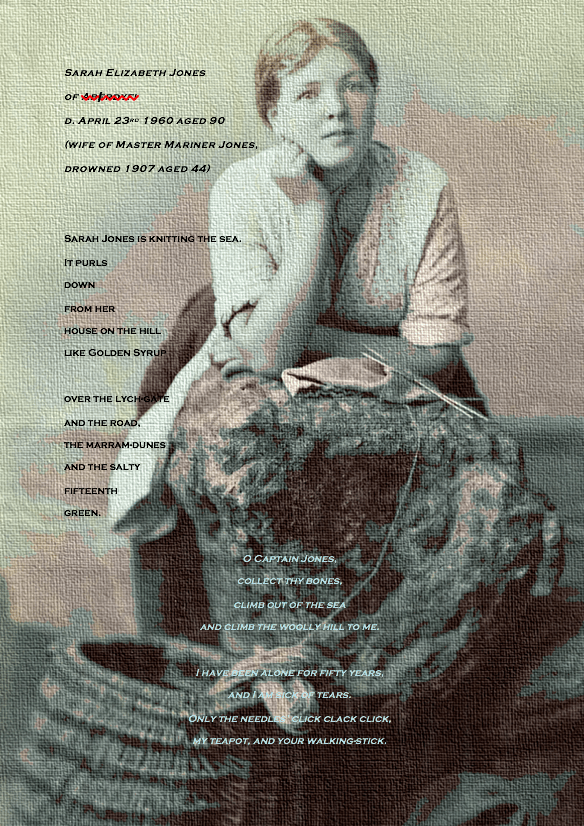
Poetry Shelf Monday poem: John Gallas’s ‘Sarah Elizabeth Jones’

Screen Shot 2020-05-21 at 11.41.45 AM


John Gallas is a NZ poet published by Carcanet. His 20 collections include The Song Atlas, Star City, The Little Sublime Comedy and 52 Euros. The Extasie (60 love poems) and Rhapsodies 1831 (translation of French poet Petrus Borel) to be published January and March 2021. He presently lives in Leicestershire. His a librettist, St Magnus Festival Orkney poet, Saxon Ship Project poet, Fellow of the English Association, tramper, biker and merry ruralist. Presently working on two sets of poem-prints (’18 Paper Resurrections’ and ‘Wasted by Whitemen’). ‘Unscythed’ written in Sefton, near Rangiora: home of bro.


Poetry Shelf noticeboard: Nominations open for The Prime Minister’s Awards for Literary Achievement

Screen Shot 2020-05-23 at 2.11.55 PM

go here

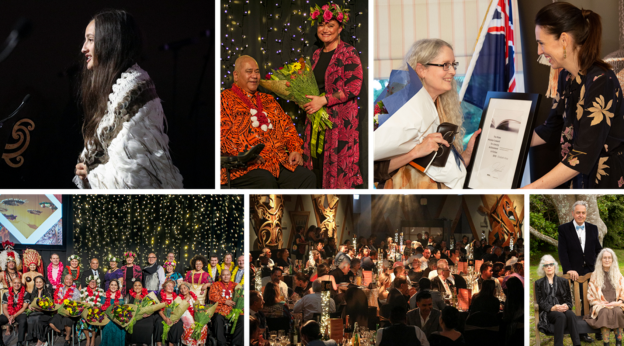
Creative New Zealand is calling for nominations for three prestigious annual awards, each recognising the valued contributions of some of our country’s most talented artists: The Prime Minister’s Awards for Literary Achievement, Ngā Taonga Toi a Te Waka Toi (Te Waka Toi Awards), and the Arts Pasifika Awards.

“Now more than ever it is important to unite and be uplifted, taking time to recognise, celebrate and honour some of our top artists and practitioners, for their achievements via our annual awards,” says Creative New Zealand Chief Executive Stephen Wainwright.

“Given the volatility of the COVID-19 environment, we are yet to finalise exactly what each official awards event or presentation will look like. This will be worked through and shared in due course but, in the meantime, we invite New Zealanders to nominate artists they recognise as deserving of these awards.”

Anyone can make a nomination for the Ngā Taonga Toi a Te Waka Toi (Te Waka Toi Awards) and the Arts Pasifika Awards, and artists are also welcome to nominate themselves. For the Prime Minister’s Awards for Literary Achievement, New Zealand citizens, residents and organisations can make a nomination, and writers are also welcome to nominate themselves.

Those nominated must be New Zealand citizens or permanent residents, and each of the awards have further specific eligibility criteria. See our website for further information on who’s eligible, how to nominate someone and how award recipients are chosen.

Nominations need to be submitted via email by the following dates (listed in order of closing date):

Across the three different award groups, nominations will be assessed by external panels representative of the relevant community who are also registered peer assessors with expertise in the relevant artform(s). The panels’ recommendations will be forwarded to the Arts Council of Creative New Zealand for approval in late August (in the case of Te Waka Toi Awards, the Arts Council’s Komiti Māori will approve the recommended recipients).

As in previous years, we intend to hold separate events for each of the three awards later in the year, with details yet to be worked through – including aligning with Government COVID-19 alert levels at that time. So far, Ngā Taonga Toi a Te Waka Toi (Te Waka Toi Awards) has been confirmed for November and will have a strong digital element this year, with details to be confirmed closer to the time.

Waiho rā kia tū takitahi ana ngā whetū o te rangi, ka whakanuia.
Let’s wait until the stars in the sky align and then celebrate.

Poetry Shelf connections: much loved books picked by NZ librarians

Screen Shot 2020-05-21 at 10.41.23 AM  screen-shot-2020-05-21-at-12.35.04-pm


Today’s list of comfort books is selected by New Zealand librarians. A number of readers have been celebrating the opening of our libraries this week on social media. Libraries were missed! I know of some book lovers who disinfected books and dropped them off in friends’ letterboxes. I have always loved libraries (along with bush and beaches). Whāngarei Public Library was a favourite haunt of mine as a child and I would walk out with the maximum number in my arms. I now imagine a book tower teetering as high as my head but I am sure they were in a bag. In recent times I have discovered the joy of library archives, most notably the Alexander Turnbull Library (Wellington) and the Macmillan Brown (Christchurch). Such joy to spend time there creating Wild Honey. Indeed if I think libraries …. I think joy, nourishment, expansion of mind and heart, comfort. The lists have gathered much loved books that offer comfort but that also offer such diverse and necessary reading experiences.

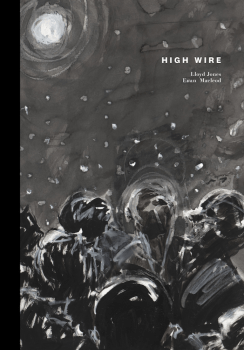
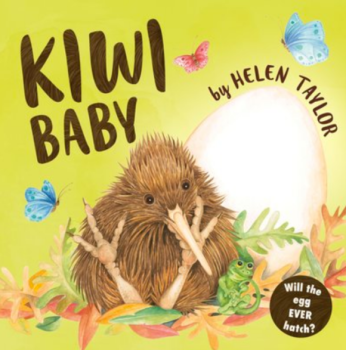
This week I have adored two books: High Wire by Lloyd Jones and Euan Mcleod (Massey University Press) and Kiwi Baby by Helen Taylor (Penguin Random House). I reviewed them both on the blog because both left me with a warm book glow that i am still feeling.

Thanks to everyone for contributing.


The book list


9781408840122   Screen Shot 2020-05-21 at 5.04.25 PM


Crissi Blair (National Library Services to Schools Facilitator)

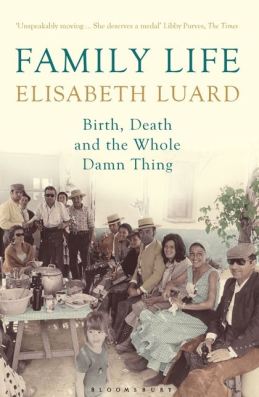
I haven’t found it easy to settle to reading during lockdown. A lot of my reading is compulsory, reading to review, but reading for pleasure? That was a little harder to find. There has been a lot of reading of recipe books, to fend off the boredom of constant home cooking, though I am much more likely to read the recipes than I am to make them, and my favourite of these is Nigel Slater’s Kitchen Diaries, filled as it is with details of everyday life along with delicious things to cook. I have long loved food fiction and memoirs and pulled out my very battered copy of My Family Life by Elizabeth Luard. The book itself has its own story – I bought it second hand in Wellington many years ago, after a hard-working few days, heading early to the airport and needing something, anything, to read. I read, I loved, I cried, I ate the glorious food in my imagination, and I recommended it to one person after another. Miraculously everyone who read it also returned it to me (not always the case) so I could dip in again now for some comfort reading.

My other comfort reading has been delving through my children’s picture book collection, trying to make some room on the shelves and thinking about what to recommend, lend and pass on to the babies and small children that are in my life now – browsing through Gavin Bishop’s magnificent Wildlife of Aotearoa (and secretly loving the pages about farm animals and what we find inside our houses more than the native birds), having a delighted secret preview of Vasanti Unka’s dazzling new book I Am the Universe (due out in September), and diving into an old favourite resource and examining the book lists in Dorothy Butler’s Babies Need Books, remembering and re-reading favourites like the Ahlberg’s Each Peach Pear Plum and Peepo, and anything by Shirley Hughes and Sarah Garland, and thinking about what might replace books on the . Perhaps the highlight for me, in the lockdown array of children’s books being shared online, has been Oliver Jeffers reading all his picture books (I have every single one) and talking about how they came to be. I’m thrilled that so many children (and their adults) have been able to ‘meet’ the authors of so many books through the internet. Those personal connections add immeasurably to the experience of the book.


Screen Shot 2020-05-21 at 5.08.05 PM


Fleur Coleman (Children’s and Youth Librarian Mahurangi East Library)

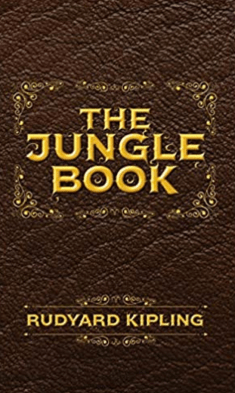
My ‘comfort book’ through this unprecedented time has been The Jungle Book by Rudyard Kipling, First Edition May 1894. Perhaps it has become a rite of passage book in our house? Lost in a sea of blankets I read to my third and final son who has just turned 13 during lockdown of Mowgli’s rejection from the jungle, his clever defeat of Shere Khan and his return to man – only to be cast aside once more for his differences. Mowgli feels like a go-between and the role his character plays in creating potential tolerance and understanding in the wider scheme is a powerful one.

COVID-19 certainly made me think about the survival of the fittest, as the supermarket shelves were emptied in haste – I worried for the people with little in their wallets. When all else fails, the law of the jungle may prevail? The fruit of the sci-fiction writer ripe for the picking?


Screen Shot 2020-05-22 at 8.45.04 AM     61RpXi55arL._SX361_BO1,204,203,200_


Linley Earnshaw (Librarian, Rutherford College)

My favourites through the lockdown had to be (in descending order):

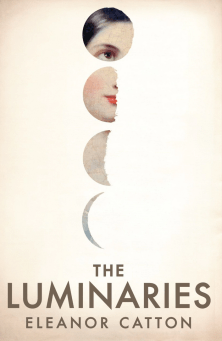
The Luminaries by Eleanor Cotton – it takes a while to read, so the timing was perfect and I’m loving the TV series.

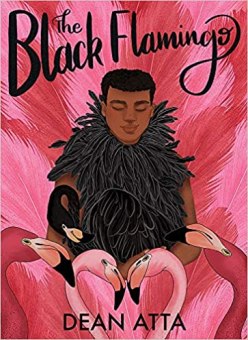
The Black Flamingo by Dean Atta was a very close second – look up the author…..he’s a superstar and the book is an awesome mix of poetry and prose describing the teen/college years of a gay trans man.

Shantaram by Gregory David Roberts – not for the fainthearted and very long (gangsters, drugs and poverty in Mumbai in the 80’s)

However, my go to book in times of real stress is……

Pride and Prejudice or anything by Austen except Emma – every word is valuable, no word is wasted.


41FeeznUDwL._SY346_


Rachel Esson (Director of Content Services at the National Library and I’m also the current President of the Library and Information Association of New Zealand Aotearoa (LIANZA))

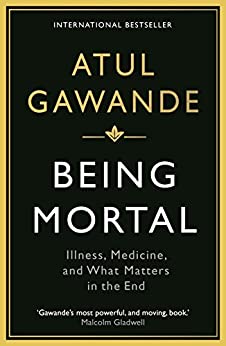
Being Mortal: Medicine and What Matters in the End Atul Gawande

My recommendation– strongly influenced by my time as a Medical librarian– is Atul Gawande’s Being Mortal. It might seem strange to be recommending a book about end of life during a global pandemic, but to me it seems more important now than ever. The book is about seeing people as individuals, and shows that enabling people to make their own choices makes their end of life more fulfilled, and families feel better. While the media is focussed on the numbers of the pandemic, this book reminds me that each number is a person with a story and family.

I first read this book as my parents were navigating increasingly poor health, and downsizing from the family home. Although the logical step was a retirement village, they chose an (only slightly) smaller house with, lower maintenance. They enjoyed nearly five years in that house. I take comfort from knowing that they made the right choice for them, and that’s ‘what matters in the end.’


51rYuchTP0L._SX329_BO1,204,203,200_  9781775436324


Nova Gibson (Librarian, Massey Primary School)

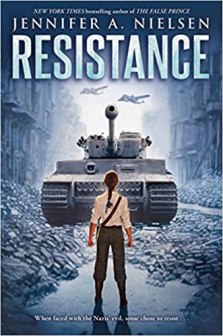
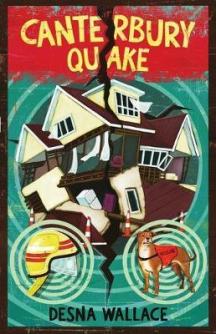
I was one of those people who found it difficult to concentrate on a meaty novel even though I was excited about having ALL this time to read! After rereading the same page of a particular novel numerous times, I decided to lower my expectations of myself and roll with it. Our school started a Youtube channel and I read chapter books and picture books for our school community. I picked humorous books Mo Willem’s Elephant & Piggie books and these proved to be popular. Another thing I struggled with is the fact that our three kids and spouses live and work overseas. I miss them and wonder about when we can see them again. I read Resistance by Jennifer Nielsen. I love WW2 stories and found that it helped put this situation in perspective as those brave resistance fighters said goodbye to their loved ones not knowing if or when they’d see each other again. The other book I read was Canterbury Quake by Desna Wallace. In Christchurch, they went through horrendous times but as I thought about the way that community supported each other with physical help and contact, I challenged myself to find ways of supporting others but in a totally different way. I ended up delivering ‘sanitised’ books on my bicycle to people who had run out of reading material.


9780099575450


Corin Haines (Library and Archives Manager, Masterton District Library)

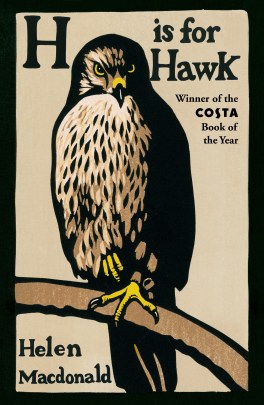
My book would be H is for Hawk by Helen Macdonald. This book was perfect for me as a lover of both memoir and grief based prose. As a sporadic reader this book drew me back into a period of intense reading on both grief and birds. I found Helen’s journey with Mabel her Goshawk and her grief compelling, moving and enriching. At once a celebration of life and the agony of coming to terms with death, it truly is one of the best things I have ever read.


image002  image001


Peter Ireland (Exhibition Specialist, Alexander Turnbull Library)

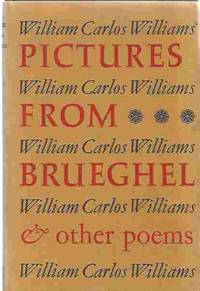
A few days before lockdown, long-awaited bookshelves arrived and were installed. This meant going through all the books in the house to sort, dust off, locate in the shelves; books, which in some cases, hadn’t been picked up since the 1970’s. It is like having access to a brand-new library. To add to this new/old horizon of reading were a few books on extended loan from the Public Library. I’ve not thought about books for comfort per se during this period, but I have enjoyed the comfort of discovering books again, realising how many books I have that are yet unread and browsing the new bookshelves. Reading poems, both loved and familiar, Being Here by Vincent O’Sullivan, for instance, and finding the unfamiliar; such as, Asphodel, That Greeny Flower by William Carlos Williams.

I bought this copy of Pictures from Breughel & other poems from a book seller in Greytown. I was as pleased to find it as he was sad to see it go, which seems to me the right terms of doing business. I fell for the cover, had to have it, bought the book home, leafed through it. It sat. Asphodel is a poem in which the elderly Williams is seeking redemption for wrongs against his wife Flossie. Discomfort is in part the prompt here as the poet attempts to come to terms with things for perhaps a final time.

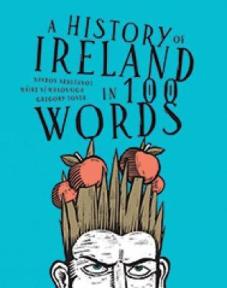
By contrast, I have enjoyed a book from the Kilbirnie branch of the Wellington Public Library – for which, in seemingly perpetual lockdown, we mourn. The History of Ireland in 100 Words appeared as a good prospect for someone with connections to Balleyhorsey in County Wicklow and so it has proved. One of the hundred words is file, poet. The word is thought to relate to a verb meaning sees, and given the high proportion of blind Irish poets, that’s, seeing in terms of prophecy. Ireland, what a country! Any place that had these lines on the reverse of their £5 note has a head start in my affections.


I am Raftery, the poet,

full of hope and love

with eyes without light,

silence without torment


Screen Shot 2020-05-22 at 9.04.13 AM    9780143788539


Pamela Jones (Children’s & YA Librarian, South Taranaki District Libraries)

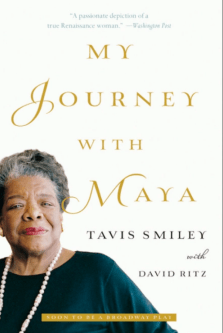
My Journey with Maya by Travis Smiley recounts the story of the author’s friendship with Maya Angelou. In this book I found peace, joy and yes, comfort, reading accounts by someone who’s life was profoundly impacted by this inspirational woman. Until I read it I only knew of Maya in passing, as a civil rights activist and poet. The book came to me at a perfect time in my life, inspiring me to begin my own journey with Maya. That journey has had me meditating on life lessons, taught me to forgive and accept myself, to accept life’s challenges without being reduced by them and most specially, to try to be a rainbow in someone else’s cloud. Maya Angelou encourages us to work at making kindness a habit and endeavour to make magic happen in others’ lives – something sorely needed in the past weeks of lockdown.

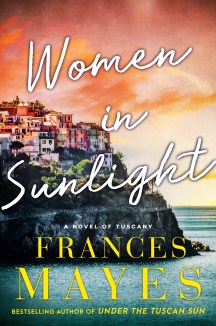
My second recommendation is Women in Sunlight by Frances Mayes.

This delightful, laugh out loud novel makes me wonder if the author too has walked someway with Maya’s voice in her head. The three women in the story, all of retirement age, make a decision to go against their families desire to place them in a retirement village (for their own good). Instead they take a leap of faith to follow their Heartsong and end up together in an Italian Village pursuing their dreams and passions. They learn to forgive & accept themselves and to make magic happen in their own lives. A wonderful example of Maya’s belief that life loves the liver of it! – and such a delight to read.


9780143774211    Walk-In-A-Relaxed-Manner


Cathy Mahone (Librarian, St Francis Catholic School)

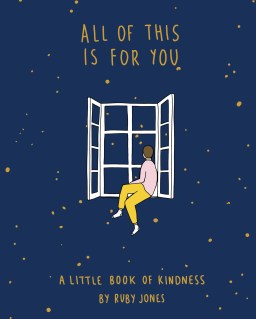
All of This is for You: A Little Book of Kindness by Ruby Jones

This is a gem of a book and so uplifting during this time of Covid19 when a little kindness can indeed lift the spirits. The beautiful simplicity of her drawings belies the poignant and powerful messages within. Ruby writes “I hope that on any given day, rain or shine, happy tears or painful ones, you can open this book and find a page that speaks to you” and indeed you do. I just love this special book.
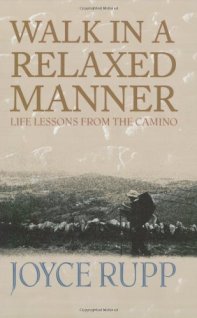
Walk in a Relaxed Manner by Joyce Rupp inspired me pre my 1st Camino back in 2014 and has nourished me post Caminos since. A book to constantly delve in, it tells the story of the writer’s physical and personal journey on the Camino de Santiago in Northern Spain. The gift of this book to me is to take life lessons from each chapter to continue your journey after you leave the Way and return home to your new reality. Your journey truly begins upon your arrival in Santiago de Compostela.


Screen Shot 2020-05-22 at 9.14.00 AM   1477644022828


Jeannie Skinner (Facilitator, National Library Services to Schools, Northland)

When invited to share a book or books that have given comfort I agreed immediately, as I absolutely associate reading with comfort, but when it came to choosing just which books to mention it got me thinking…

Is the comfort from nostalgia – re-reading old favourites, especially from childhood, when things were simpler and books were magical escapes?  Yes, maybe… Hello Anne of Green Gables, Tom’s Midnight Garden, I Capture the Castle, Flambards

Is it about familiarity with the characters, like a pair of comfortable slippers, revisiting old friends and seeing what they have been up to – perhaps picking up one of Sue Grafton’s ABC mysteries with Kinsey Milhone in California, or taking a trip to Venice in a Donna Leon novel with Guido Brunetti, solving crime, loving his family, eating wonderful food, and appreciating the play of light on the water.

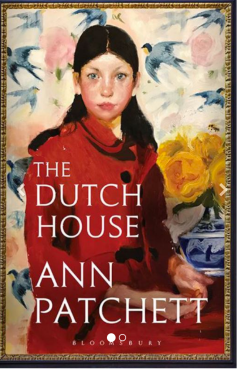
Is it about distraction and absorption into another world or the discovery of a new author? This summer I read Ann Patchett’s The Dutch House which I loved and it made me go and read others of hers – Commonwealth, Run, Bel Canto… plus her blog and her enthusiastic recommendations there such as Less by Sean Greer which I enjoyed too, and it provided a perfect escape reading plan during lockdown.

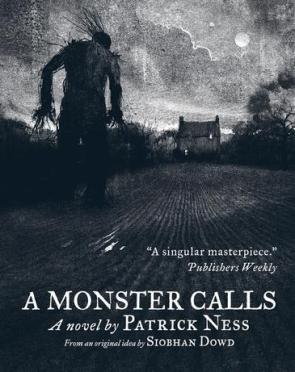
Maybe it is about the books that affirm great truths, even if they couldn’t be described as comforting reads – I’m thinking of the harrowing A Monster Calls by Patrick Ness, based on an idea by Siobhan Dowd, about a boy suffering the nightmare of the loss of his mother to cancer.  I quietly snivelled and then sobbed my way through it as it resonated with my similar recent loss (one review said it would “make a stone doorstep weep”), but ultimately absorbed the message that sometimes terrible things will happen, our worst fears realised, but that you will have the strength to manage and cope and go on.

Looking for comfort it is hard to go past the healing of laughter, and books that make me smile or laugh are always welcome. I adore well-written family stories – Jane Gardam, Ann Tyler, Barbara Kingsolver, and in children’s books favourites include Kate De Goldi, anything by Richard Peck, Katherine Rundell, and Hilary McKay, whose characters are endearing, funny, kind, interesting, clever and complicated.  Hilary McKay’s The Skylarks’ War was one of my favourites last year, and it made me go back and re-read all her Binny series where The Skylarks’ War characters first appeared.

Poetry provides comfort too – Mary Oliver is someone I often revisit and find something new each time, reminders to appreciate and celebrate the world we live in.  I’ve just made a quilt for a friend’s young daughter and stitched some words from one of Mary’s poems into the quilting…

Hello, sun in my face. Hello you who made the morning and spread it over the fields…
Watch, now, how I start the day in happiness, in kindness.

― Mary Oliver

Such books provide sustenance and insight; they wrap me in a warm and comforting blanket, and are perennials in my life.


original_400_600-1


Chris Szekely

Letters

Last year was horrible.
Someone I loved got the big C,
Prognosis twelve months.
But it happened in three.

What do you do with that?
Death for him. Depression for me.
Where do you find comfort?
He was a great reader, a great read.


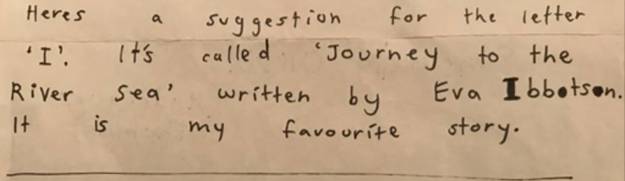
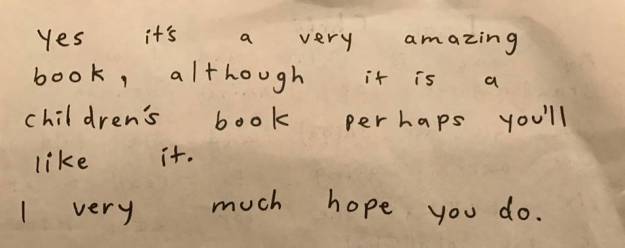
Last year I invented a personal reading challenge. I would read 26 novels, one for each letter of the alphabet, by author surname. Fiction. Not real life. Or death. And nothing sad. Choosing titles was easy. When friends heard about it, everyone had a recommendation. One day, there was a letter in the letterbox in a handwritten envelope from a girl called Olive. My neighbour’s granddaughter.


image003


How could I refuse such an invitation?

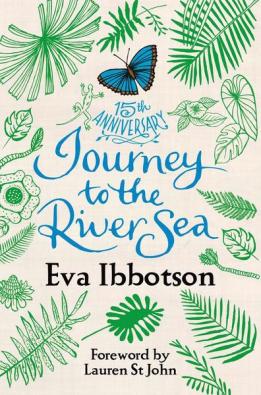
Eva Ibbotson was an Austrian-born, British children’s writer, known for her “warmth and humour, magical characters and heaps of adventure.” (1) I had never read her before, but warmth and humour sounded good to me. Journey to the River Sea was published in 2001 and tells the story of Maia Fielding, a trust fund orphan in an English boarding school. Maia is sent to live with distant relatives in the Amazon. The relatives are beastly. They want the money attached to Maia, but they don’t want her. What’s to be done?

I can see why this is Olive’s favourite story. It’s full of adventure and danger. The kids are resourceful (except for the spoilt ones). The adults are baddies (expect for the good ones). And the Amazon is amazing. For the couple of days it took to read, it was a great escape to somewhere warm; a moment of comfort.

image004

I loved it Olive. Thank you.


Screen Shot 2020-05-22 at 9.20.22 AM


Bee Trudgeon (Porirua Children’s Librarian Kaitiaki Pukapuka Tamariki)

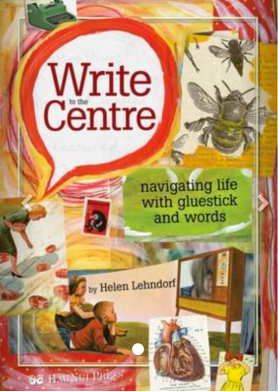
Write to the Centre – navigating life with a gluestick and words Helen Lehndorf (HauNui Press, 2016)

For the past few years I have kept Helen Lehndorf’s very valuable Write to the Centre by my bed, near my pen, Gluestick/Sellotape and diary. It’s the perfect tool for when you do not want to plug anything in, put anything on, or move anywhere, but you do need to express some of the things building up in and around you (movie tickets, restaurant receipts, mental lists, old arguments, eggy bits of what could be poetry). It has a divinely organic way of transforming the likes of simple laziness, desperate exhaustion, and deep lethargy, into playfully curious creation. I find this particularly useful when I’m feeling too bunched up – or laid low – to create (anything!), but know it is the only cure for my constriction, ennui, or despair.

As I reach for it now and find it missing, I remember, I am also periodically lending it to people who simply must take its medicine. So, now I have to find where I put it when my last borrower returned it… [didn’t have to look too far] complete with a collage of me tucked inside the cover! I don’t think I have ever picked this book up without feeling better afterwards. It permits me; and in a world of tightening rules and regulations – that is a rare and comforting thing.


MarysMonster_jkt_OTP2.indd


Desna Wallace (Librarian, Fendalton Open Air School)

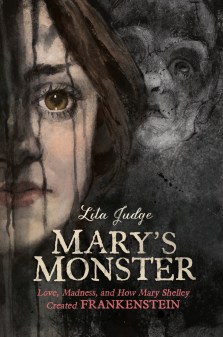
Mary’s Monster Love, Madness and How Mary Shelley Created Frankenstein by Lita Judge

This is a powerful book that brings out so many emotions when I read it. Horror, anger, joy, sadness, the whole gamut. This is also a book that whenever I pick it up, I automatically hold it tight to my chest, wrap my arms around it and hug it tight, like an old friend.

Mary’s Monster is a verse novel aimed at young adults but it is a crossover for adults too.  I love verse novels. I’m obsessed with their format. They tend to have succinct writing that in its brevity, often packs a punch, which it certainly did in this book.

Judge tells the story of Mary Shelly beginning with her young days and her relationship with Percy Bysshe Shelley. It is also an insight to the poets of the time including Lord Byron. Her story is incredibly sad but also uplifting as Mary begins to find solace and confidence in her writing. The language is sublime and I find myself often pausing after different poems, to just soak up all its beauty. The book is also heavily illustrated with the most haunting images. I feel the eyes piercing right through me and I’m connected.

It is the connection that makes this book so special. It is the connection to the beauty of art and language.

Mary’s mother died when she was a baby. At seventeen, Mary herself had a baby that also died shortly after birth.


I am seventeen


Already

I am daughter to a ghost

and mother to bones. 


I don’t offer a review here but this book and its story and stunning illustrations have had a profound impact on me, and for that reason it is a book that brings comfort. A treasure I hold dear.


Poetry Shelf noticeboard: National Flash Fiction Day is moving online

Screen Shot 2020-05-22 at 7.31.37 AM


National Flash Fiction Day / 22 June 2020

 NFFD 2020 is moving online!


To ensure the safety of our reading and writing community, NFFD moves online this year. Our big day of celebrating the shortest form will include a series of readings, interviews, discussions and prize-givings.
We begin with a new video programme, posted at the Flash Frontier YouTube channel.

Please subscribe and see what’s coming! New books, new stories, new poetry and more.  And beginning June 1: top selections from Micro Madness, and a sneak peek at the NFFD 2020 competition Long List.
Watch this space…!

Judges are deliberating – long lists and short lists coming soon! Winners will be announced at the June 22 online event.


nationalflash.org

Queries: nationalflash@gmail.com