λυρικό ελεγείο : Vana Manasiadis in conversation with Nicholas Wright
About this Event
This is the first in our An Evening With Series, hosted at UC Arts at the Arts Centre Christchurch.
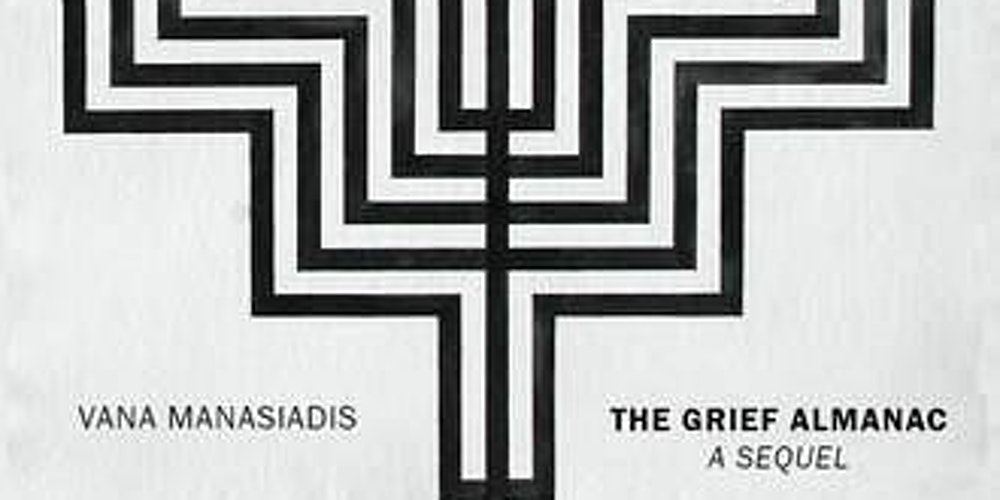
Vana Manasiadis’s The Grief Almanac: A Sequel (2019) is, as the title of this talk suggests, deeply involved with the forms of lyric and elegy. Indeed, her volume has been described as a “hybrid of poetry, memoir, letter, essay and ekphrasis” that pushes at the boundaries of poetic form “melding Greek with English, prose with poetry, and the past and present with fantasy and myth”. Do come along to hear Vana talk about the poems in this volume, her thoughts on poetic form, as well as the new work she is writing as Ursula Bethell Writer in Residence, in the University of Canterbury’s English Department.
———————-
Vana Manasiadis is a Greek-New Zealand poet and translator who has been moving between Aotearoa and Kirihi Greece the last twenty years. Her most recent book The Grief Almanac: A Sequel, followed her earlier Ithaca Island Bay Leaves: A Mythistorima in experimenting with hybridity and pluralism and is being translated into Greek for forthcoming publication in Greece. She has also edited and translated Ναυάγια/Καταφύγια Shipwrecks/Shelters, a selection of contemporary Greek poetry, and co-edited a bilingual volume of poetry, Tatai Whetu, Seven Māori Women Poets in Translation, a Spinoff ‘20 Best Poetry Books of 2018’, with playwright Maraea Rakuraku. Her residency project will include an exploration of translanguage and poetic form, of territory and authority. She will be working on poetic texts in response to various geographies of Christchurch and Canterbury, and on a series of multilingual and multimodal dialogues between exiled speakers.
Nicholas Wright is a lecturer in the English Department, University of Canterbury. He has published on a host of New Zealand poets, and is currently working on a book of essays on the contemporary lyric in Aotearoa.
Northland writer Michael Botur is launching his first recorded poetry album in his hometown of Whangārei on March 31.
Loudmouth collects 15 years of what Botur calls ‘Page and pub poetry’ – poems tested on audiences in Dunedin, Christchurch, Auckland, Whangārei and Tauranga across a decade and a half.
Loudmouth becomes one of the only spoken word NZ poetry albums on Spotify, iTunes, Amazon Music and Bandcamp.
Recorded with Steve Cox from Whangārei rap group OBC, Loudmouth is launched with a one-hour poetry show at Whangārei Central Library, 6pm March 31.
The album is 35 tracks grouped into five sections – the political, the personal, historical, slamsational and criminal.
Many of the poems have been published in NZ literary journals and websites, and readings from the book of Loudmouth were performed up and down the country in 2020.
“I published Loudmouth because I don’t agree that poets should be content simply publishing a few lines twice a year in some literary journal no one will ever read,” Botur said. “Behind the book, poetry was my first literary passion, before I got into fiction. So it’s about going back in time and fulfilling a promise to my young Otago student self.”
The 37 year old is author of ten books, has won numerous prizes and awards for fiction and poetry and performs words whenever possible, including at this year’s Auckland Improv Festival and Earth Beat Festival. Botur is included in the 2021 Auckland Writer’s Festival and will perform Loudmouth at Auckland’s Thirsty Dog as a non-festival sideshow on May 14.
“I don’t want to die without giving my best poetry an opportunity to impress audiences. Every poet should put out an album, really. It was a little hard to record and release, but far from impossible.’
“I’m passionate about oratory performance,” Botur added. “All my artist friends do amazing things on a stage with a microphone and a voice – comedians, actors, musicians, improv. I have friends that make podcasts, albums and host radio shows. We need to make literature as exciting as that. Getting these poems on the airwaves has been long overdue.”
Botur extended a challenge to other NZ poets to launch their poetry for digital download.
“We have to give voice to poetry and not confine it to the page. We have to make it exciting, entertaining and accessible. Poets: get out there and publish your stuff on Distrokid like I did.”
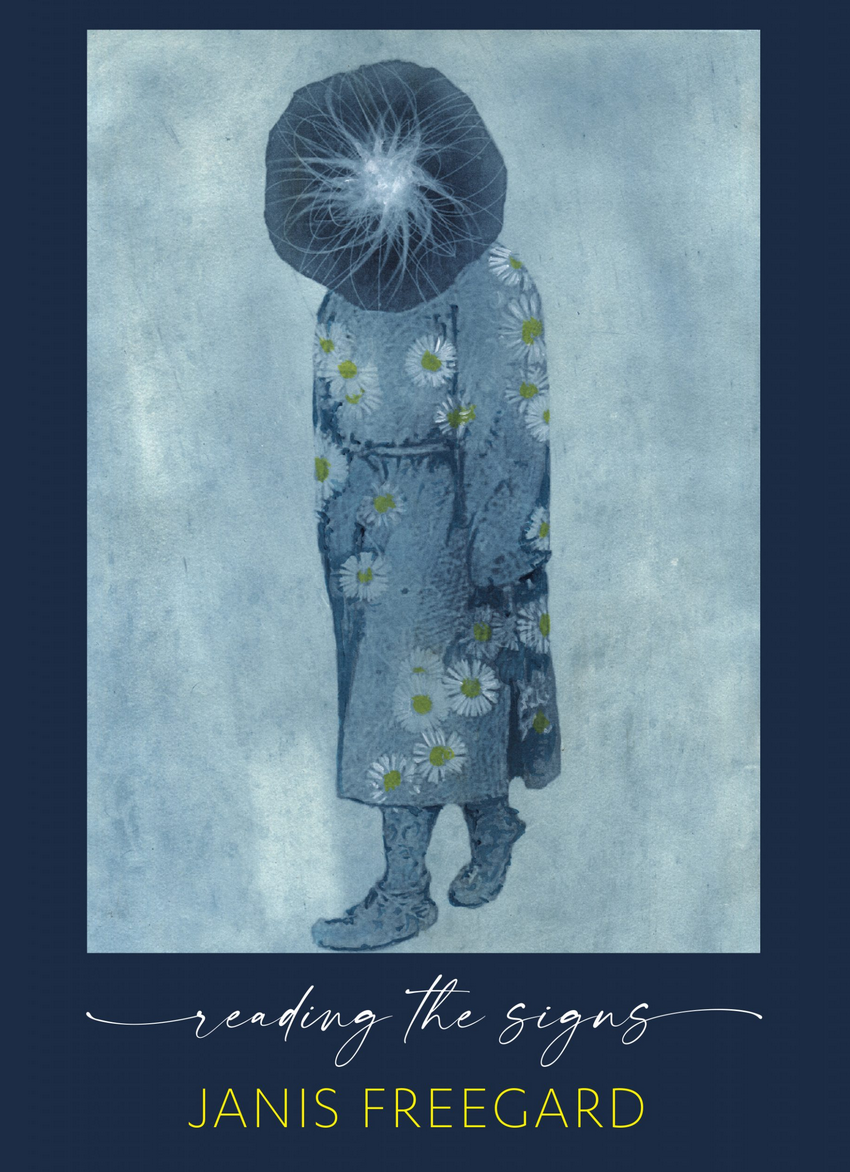
reading the signs Janis Freegard, The Cuba Press, 2020
I walk into Ema Saikō’s room to find the poet herself at the writing desk,
long hair scraped back in a bun. She wears an embroidered robe. Tea? I
offer. It seems the right thing to do.
I let her choose the teapot. I was tossing up between late evening
blue and bright green. She claps her hands and says something about
bamboo. So I go with the green one that looks like a Dalek.
from ’11. Meeting Ema Saikō’
I have been musing on national book awards and how they expand the life of shortlisted books and boost the authors and boost readership. Without a doubt they are a vital and important part of book landscapes. But like so many people, I find the idea of a ‘best’ book a little twitchy. I flagged the 2021 Ockham NZ Book Award poetry longlist as the best I have seen in ages, especially because (for once) it wasn’t top heavy with Pākehā poets. I had read, reviewed and adored eight of the books and then read, reviewed and adored the other two. If you haven’t read these fabulous books check them out. Yet there are other nz poetry books I have read, reviewed and adored that didn’t make the long list. Slowing down with a poetry book, finding the ways your body, heart and mind absorb the poetic affects is a privilege. A joy. As both author and reader I claim the writing and reading process as the most important thing.
A book has the ability to lift you.
I have been reading Janis Freegard’s poetry collection reading the signs over the past months and falling in love with the way it inhabits the moment. Janis had been awarded a residency at the Ema Saikō room in the Wairarapa. This room and the rituals Janis observed were the springboard for a sequence of connected poems.
Halfway through the book I became curious about Ema Saikō (1787 – 1861). She was a Japanese poet, painter and calligrapher much influenced by Chinese art, and who was producing work at a time when it was rare for women to do so (publicly anyway). I know nothing about her beyond her attachment to the physical world. But I am curious about the bridge from this much lauded woman to the occupants of a room named after her. It seems like Janis was also curious about Ema as her poetry and her occupation of the room become more and influenced by the poet / painter from the past. In both writing and in observing daily rituals such as making tea, especially in the making of loose-leaf tea with an exquisite concentration, Janis moves closer to Ema.
While you’re drinking the tea,
only drink the tea. By all means
notice twig shadows fluttering on the ground,
the calls of kiwi and kākā,
but do nothing else with your hands.
Let drinking the tea be the whole of it.
from ‘4. If you’re looking for a teapot, make sure
there’s a lug on the lid’
Janis writes after a fracture in her life, mending herself by writing poetry, paying attention to what is close at hand. A gender-fluid interpreter arrives in the sequence to direct her attention to things, questions, possibilities. Poetry stands in for the gold that ‘seals the fissures’:
You’ll break until you feel you may never be whole again.
(You will be.)
But you’ll be altered. Now is the time for kintsugi,
the Japanese art of repairing with gold, mending the cracks
in smashed ceramics to make something more beautiful.
You’ll reassemble yourself and use gold to seal the fissures.
from ‘8. Kintsugi’
So you could see this sequence as therapeutic, and no doubt it is, but it transcends the therapeutic and becomes a mesh of experiences: of slowing down and taking note of, of absorbing beauty in nature, from the sky to birds to trees. She is reading the sky – and the way a poem is a tree and a tree is a poem. She is reading the tea. She is absorbing stages of grief and loss and peace and life. She is translating what she feels, thinks, observes into lyrical poetry that is both steadfast and ethereal.
Ema Saikō says, ‘It is true things get lost in translation, but if you lose so much more if you don’t translate at all.’ In a sense Janis is translating herself on the line, finding lyrical form for experience, memories, feelings, contemplation. She is translating myriad connections with the world, with life – with an endangered world, with an endangered self.
It is warming to read, this book of dreaming, of signs, of being. I imagine it as a prism in the hand that shifts in the light. And here is the thing. I am never after the best book. I am after the prismatic effects that poetry has upon me, the way a book can shift and glint in my heart and mind as I read. Think how the effect changes with each book you pick up. The way it lifts you off the ground and out of daily routine and then returns you to your own daily rituals observations concentrations. An exquisitely layered and fluent book that reminds you of the power of the moment. I loved this book.
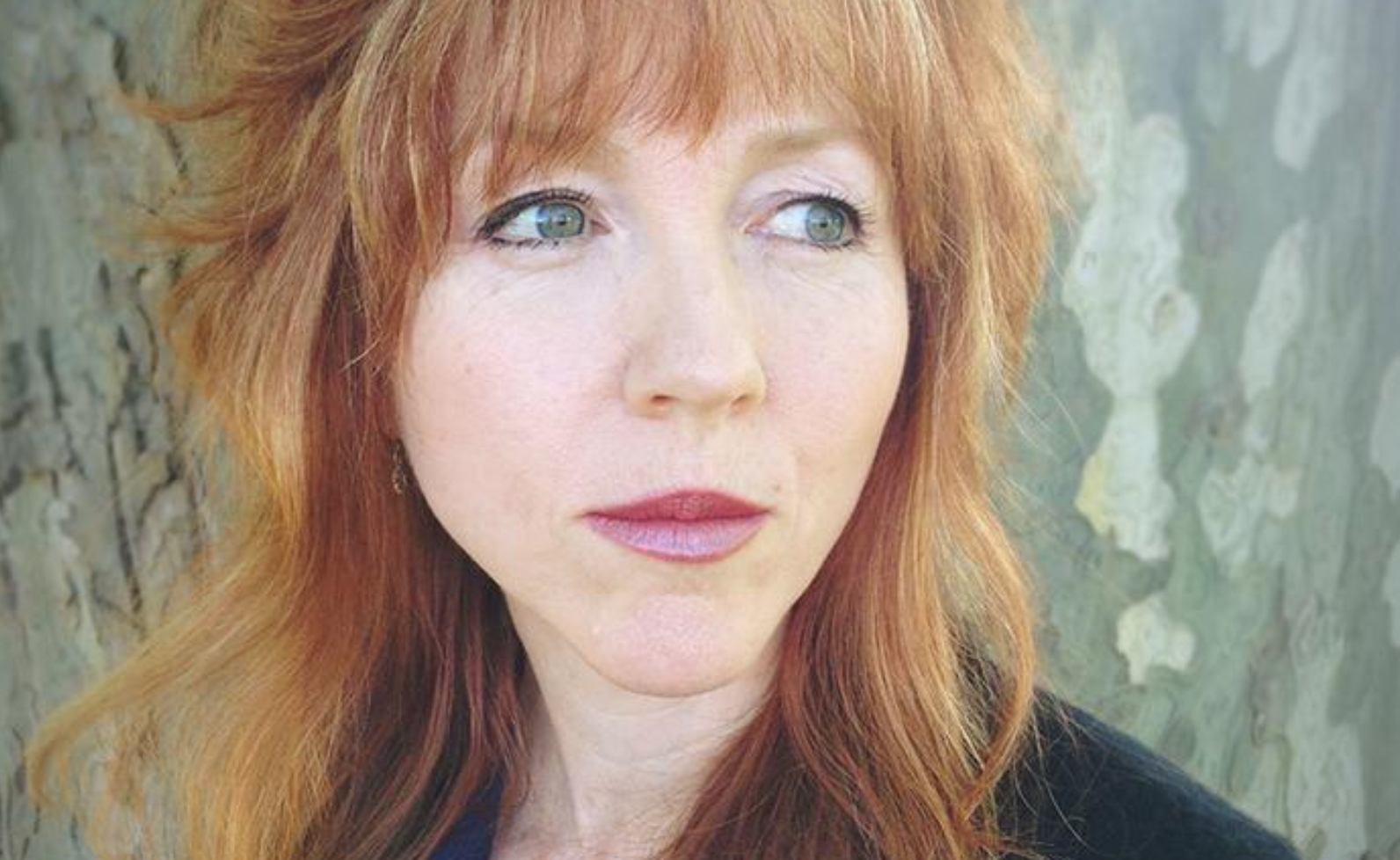
Janis Freegard is a Wellington poet, novelist and short story writer. She has won a number of awards including the Geometry | Open Book Poetry Competition and the BNZ Katherine Mansfield Short Story Award, and she was the inaugural Ema Saikō Poetry Fellow in the Wairarapa. Janis performs with the Meow Gurrrls poetry collective.
VIDEO: Janis reading poems from reading the signs (Wellington City Libraries)
Janis held the inaugural Ema Saikō Poetry Fellowship with NZ Pacific Studio in Wairarapa. The 2015 Fellow: Yukari Nikawa (Japan); 2016: Alan Jefferies (Australia) and Ya-wen Ho (NZ); 2017: Makyla Curtis (NZ); 2018: Leanne Dunic (Canada); 2019/2020: Rebecca Hawkes (NZ). For more
Listen here to Tracey Slaughter’s invigorating conversation with Jesse Mulligan (music, books, writing, solitariness, collaboration, a new short-story collection). And thanks for the Poetry Shelf nod! Meant a lot. Especially love hearing the books that make us (Marguerite Duras’s ‘quicksilver’ sentences!). Excellent music choices to hunt down too.
one is lying on the couch the other is sizzling out on the deck all UV ray the sliding door ajar C4 pumping through the top 20 808 drum machines and autotune and edgy eyeliner vocalists all pronouncement all gusto and head voice
neither are really listening to what is going on
spilled orange citric clots to the little wooden table propped up by wrappers and discarded paper
so many poems that neither give a shit about now the sun has hit the land eels wrapping themselves around snakes with straining jaws just passing each other in the light what are warrior women gonna do between battles except enjoy the summers as they enjoy them now
that they won’t last
essa may ranapiri
essa may ranapiri (Na Guinnich, Ngaati Wehi Wehi, Highgate, Ngaati Raukawa) is a Tainui poet from Kirikiriroa living on Ngaati Wairere land / they want everyone to know that the Echidna they write about isn’t a spikey mammal but a lady with two long snake tails instead of legs / go figure / tino takatāpuitanga 4eva
in the dream of foxes there is a field and a procession of women clean as good children no hollow in the world surrounded by dogs no fur clumped bloody on the ground only a lovely line of honest women stepping without fear or guilt or shame safe through the generous fields.
“First Love / Late Spring” by Mitski, from her album bury me at makeout creek.
A song I listened to while beginning to write the book in Shanghai.
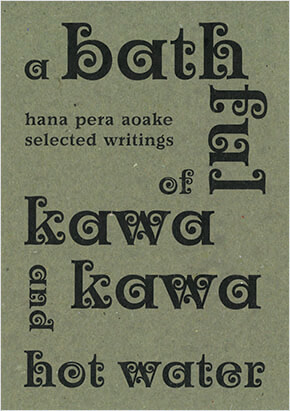
A book
A bathful of kawakawa and hot water by Hana Pera Aoake (Compound Press).
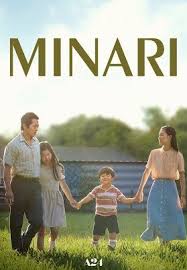
A movie
Minari
A place
Five Mile Bay, Lake Taupō, my first swim after arriving back in Aotearoa.
A meal
Char kuay teow and sweet milk tea.
A poetic motif
A window.
A place to write
Next to the windowsill where I’ve planted daffodils, in the sun, the cat perched next to me.
A poem from my book
Night train to Anyang
light changes as we cross into neon clouds
voices flicker through the moving dark
like dream murmurs moving through the body
red and silver 汉字 glow from building tops
floating words I can’t read rising into bluest air
they say there are mountains here but I can’t see them
there are only dream mountains high above the cloudline
I come from a place full of mountains and volcanoes
I often say when people ask about home
when I shut my eyes I see a ring of flames
and volcanoes erupting somewhere far away
when I open my eyes snow is falling like ash
Five questions
Is writing a pain or a joy, a mix of both, or something altogether different for you?
Writing gives me adrenaline, which is sometimes a kind of joy, or at least relief. Writing –when it’s going well – gives me energy in the moment itself, but often leaves me utterly drained.
Name a poet who has particularly influenced your writing or who supports you.
There are so many poets who have supported me and deeply influenced me; it wouldn’t be fair to name just one. I am endlessly grateful to poets Alison Wong, Helen Rickerby, Anna Jackson, Bhanu Kapil, Sarah Howe and Jennifer Wong – I walk in their footsteps.
Was your shortlisted collection shaped by particular experiences or feelings?
The book is so distinctly shaped by a particular period in my life. Some poems feel ancient to me now, distant and far away – but I don’t mind that. I was living in Shanghai, my first time living alone, feeling both brave and terrified at the same time. The poems are shaped by isolation, longing, aloneness (but not always loneliness) and in-betweenness.
Did you make any unexpected discoveries as you wrote?
Always – I think this is how writing works for me. I have a loose outline in my mind of something I want to get down on the page, usually starting with a particular image, and then the writing itself reveals to me the place I want to go. I can’t quite explain how it happens, only that I’m following threads, making connections as I go. When something unexpected happens, I think that’s when I’ve written something good.
Do you like to talk about your poems or would you rather let them speak for themselves? Is there one poem where an introduction (say at a poetry reading) would fascinate the audience/ reader? Offer different pathways through the poem?
I prefer to let the poems do the work, although I enjoy giving some background details about some poems, such as “The First Wave”, which was written while listening to the online livestream of Radio NZ while I was in Shanghai at the time of the Kaikoura earthquake in 2016. Or, “The Great Wall”, which I affectionately call my Matt Damon poem, titled after the 2016 movie of the same name.
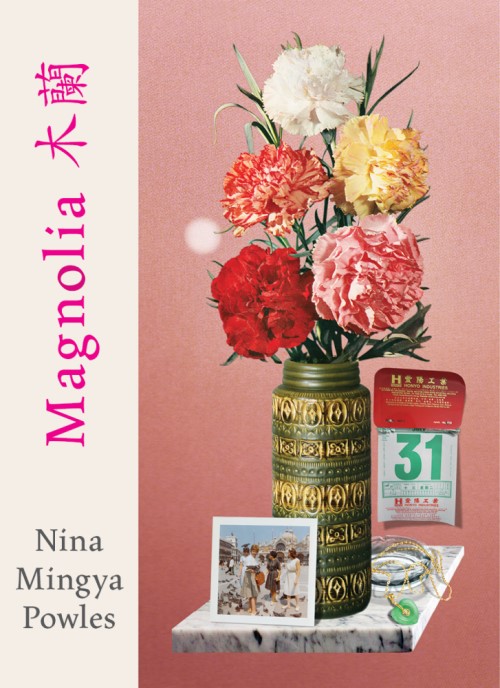
Nina Mingya Powles is a poet, zinemaker and non-fiction writer of Malaysian-Chinese and Pākehā heritage, currently living in London. She is the author of a food memoir, Tiny Moons: A Year of Eating in Shanghai (The Emma Press, 2020), poetry box-set Luminescent (Seraph Press, 2017), and several poetry chapbooks and zines, including Girls of the Drift (Seraph Press, 2014). In 2018 she was one of three winners of the inaugural Women Poets’ Prize, and in 2019 won the Nan Shepherd Prize for Nature Writing. Magnolia 木蘭 was shortlisted for the 2020 Forward Prize for Best First Collection. Nina has an MA in creative writing from Victoria University of Wellington and won the 2015 Biggs Family Prize for Poetry. She is the founding editor of Bitter Melon 苦瓜, a risograph press that publishes limited-edition poetry pamphlets by Asian writers. Her collection of essays, Small Bodies of Water, is forthcoming from Canongate Books in 2021.





 NZ Poetry Shelf