Monthly Archives: October 2017

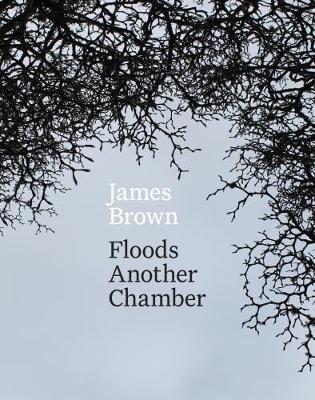
A poem from James Brown’s dazzling Floods Another Chamber and Gregory O’Brien’s launch speech (the envy of all poets!)

large_9781776561599.jpg


Postmodernism Explained

You’re dreaming. In the
dream you fall asleep and dream
you’re writing. If to

write is to reflect
what you’ve already read, and
thus to reread, to

read is also to
rewrite. What are you saying?
Wake up, you tell me.

©James Brown 2017
And for an extra sample you can read the magnificent ‘Janet and John Go to the Book Launch’ here
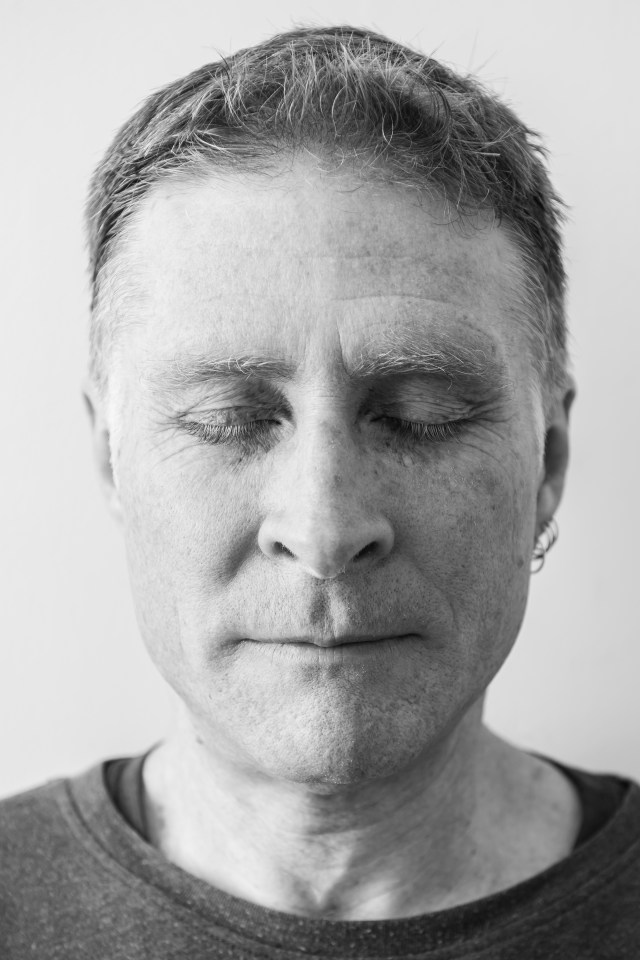
 

Brown_017 bw.jpg


The launch speech:


James Brown comes from Palmerston North

There are numerous questions that arise, like a lowland mist, from this collection, as from all of James Brown’s books: For a start, why did he ever leave his home-town of Palmerston North, to which he is so manifestly linked. Or maybe he did never leave? Or when is he due back there?

Taking this, Brown’s sixth poetry collection, as a kind of provocation, two Fridays ago I drove north to Palmerston North and checked in for the night at the Hotel Coachman, a neo-Tudor confection on Fitzherbert Avenue. Not far from ground zero—the address where Brown spent his formative years—I had decided to read this new collection on its home turf—on the south side of ‘the bustling go-ahead city at the heart of the Manawatu Plains’ as Brown once memorably wrote.

According to the Palmerston North Creative Giants website:

‘Of all Palmerston North’s Creative Giants, poet and short fiction writer James Brown stands out…’ Expectations of the new book were, accordingly, running very high in Room 102 of the Hotel Coachman. In the company of an increasing platoon of sopping tea-bags and an intermittently boiling kettle, I lay down and made my way across the flat, bicycle-friendly territory of Floods Another Chamber. . .

Despite the fact she appears in Brown’s new collection a much-remarked-upon four times, Jenny Bornholdt had earlier in the day declined the invitation to accompany me northwards on this hyper-literary excursion. . . Alone, I was consigned to my carpark-facing double room—$160 the night, which included breakfast in a rowdy dining area filled with travelling salesmen and at least one sports team. While the scrambled eggs resembled a Manawatu wetland and the spread, generally, was lacklustre, I was up to my ears in Brown’s book by breakfast time, which made it all not so bad. In fact it was as if James Brown had scripted the whole thing.

Later I drove past the Palmerston North Public Hospital, where the poet was born at 12.40am on April the 1st, 1966; a moment’s respectful silence, also, near the birthplace of Sarah Laing and the childhood home of Karl Maughan—and on Broadway Avenue where painter Pat Hanly, aged 15, was an apprentice hairdresser at Bert Pratt Limited.

The early things in life determine how we evolve. In Brown’s villanelles and quatrains, I can detect the orderly grid of the Palmerston North street plan, and the inspirational, idiot wind that crosses it. This is the place where, as Brown writes in ‘Childhood’, the days ‘inched by… Glue, glitter, galaxies. Things shone. Broke. You laughed / until you cried. There was no escape.’

While James Brown delights in poetic constraints, and is dazzling within them, he can also blast away and, like the late night motorists on Fitzherbert St, has been known to throw beer-cans and drop donuts, or their literary equivalent. . . On the subject of provincial psychology, ‘Erotic Snowdome’, from the new book, contains possibly the best, rudest line in all of New Zealand verse—or first-equal with Hera Lindsay Bird. (You’ll have to read the poem to discover this for yourselves.)

Brown is the New Zealand poet laureate of torpor, resignation and exhaustion (or maybe loss of interest), with intermittent bouts of fanatical bicycle riding. The miracle is that he can make it all so interesting and darkly humorous and weirdly moving. The poems are characterised by a process of subtle inversion whereby the personal is rendered impersonal and the impersonal becomes personal. The end result is a poetry that is simultaneously lop-sided and true. At times, it’s like L=A=N=G=U=A=G=E poetry, but definitely, to use a word from Brown’s book, funner. . .

Like the hometown, the poetry gains a certain intensity through its sprawl, pragmatism, volubility and absence of long term planning. . . Just as Palmerston North has its New Zealand Rugby Museum, Brown embraces the sacred paddock and has written the odd rugby poem (most recently ‘True Blood’ in Warm Auditorium). For such a flat place, Palmerston North casts a long shadow. Echoing the city’s single Beds R Us outlet—at 133 Rangitikei St—Floods Another Chamber includes a similarly stocked poem titled ‘Beds R Us’. . . With its conference centre, in-house training and local dialect, the Museum of New Zealand Te Papa Tongarewa—Brown’s recent long-term place of employment—configures in much of his poetry as a kind of rehash of Palmerston North, but on three or four levels.

Not surprisingly, perhaps, there are a great many poems in Floods Another Chamber about the other place, Wellington, but as any true son or daughter of Palmerston North will tell you, Wellington is only the southernmost suburb of Palmy—a feeder city or satellite. All roads, as indeed all bike lanes, lead to the one true Square.

After giving a talk at the Palmerston North art gallery—which was the other reason for my trip north two weeks ago—I fell into a conversation with a member of the audience, a district planner. When I put it to him that Palmerston North was just a theme park based on James Brown’s poetry, he appeared not to hear me and proceeded to outline, in some detail, the myriad cycle lanes that the council was now investing in—riverside bike trails, designated lanes, scenic diversions. . .  According to my new friend, the place would soon be like Copenhagen—although with Fonterra and DB in the ’hood, and the Manawatu River rolling through and occasionally flooding everything. Having just read James Brown’s new book, it was crystal clear to me that the city was preparing itself for the imminent return of its most illustrious son, its cyclist-poet laureate.

Floods Another Chamber is our latest, biggest chance to bask in the life and work of a genuine Creative Giant of Palmerston North and of everywhere in the world that does not call itself Palmerston North. The overnight trip to Palmy is an optional extra. In some very fundamental ways, this indispensable collection will take you there anyway.

Gregory O’Brien October 2017


James Brown’s previous poetry collections include Go Round Power Please (1995), which won the Jessie Mackay Best First Book Award, Lemon (1999), Favourite Monsters (2002), The Year of the Bicycle (2006), and Warm Auditorium (2012), as well as the useful nonfiction booklet Instructions for Poetry Readings (2005). He edited The Nature of Things: Poems from the New Zealand Landscape (Craig Potton Publishing, 2005), the literary magazine Sport from 1993 to 2000, and the online anthology Best New Zealand Poems 2008. James teaches the Poetry Workshop at Victoria University’s International Institute of Modern Letters.
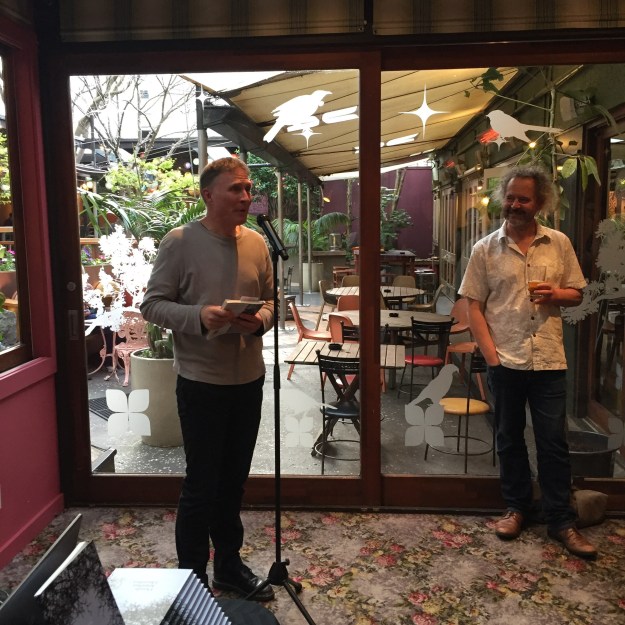
 

IMG_7711


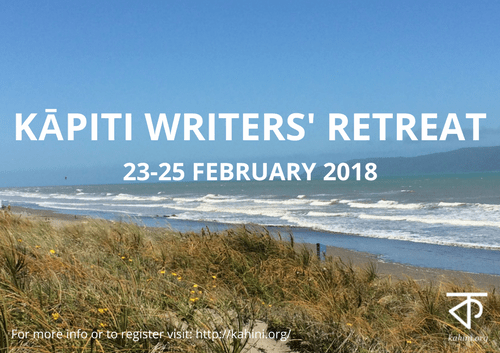
The 2018 Kāpiti Writers’ Retreat plus a memoir workshop this year

KWR2018.png


23-25 February 2018

Kāpiti Coast, New Zealand

Immerse yourself in writing and conversation this summer. There’s something for everyone–whether you’re new to writing, an established writer, or somewhere in-between. Happening from 23-25 February 2018 on the beautiful Kāpiti Coast north of Wellington, the Kāpiti Writers’ Retreat is a two-day gathering for writers that encompasses intensive morning workshops, lively discussions and space to write, relax and engage with topics critical to your work.

Kahini is delighted to host six established New Zealand writers–Airini Beautrais, Anahera Gildea, Pip Adam, Rajorshi Chakraborti, Queenie Rikihana-Hyland and Victor Rodger–at the 2018 Kāpiti Writers’ Retreat. Each writer will teach morning workshops: in fiction, poetry, memoir writing and mixed genre. In the afternoons they will lead discussions on topics pertinent to craft and literature in Aotearoa.

You’ll find community, encouragement, and a safe place in which to take artistic risks.

Find out more here


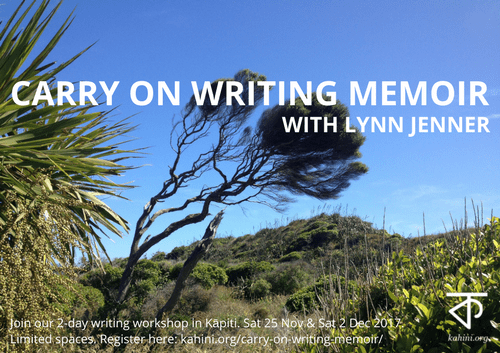
Carry on Writing Memoir with Lynn Jenner
Carry on Writing Memoir is an intensive two day workshop with writer and teacher Lynn Jenner. The workshop is intended for people who have a project underway, are interested in keeping their motivation up and want to keep on developing their writing style. Saturday 25 November 2017 & Saturday 2 December 2017 in Kāpiti. Limit of 12 places. Find out more

Carry on writing memoir.png

Ora Nui 3 – a symphonic treat of art and writing


1727982512-Cover_OraNui-3_front.png


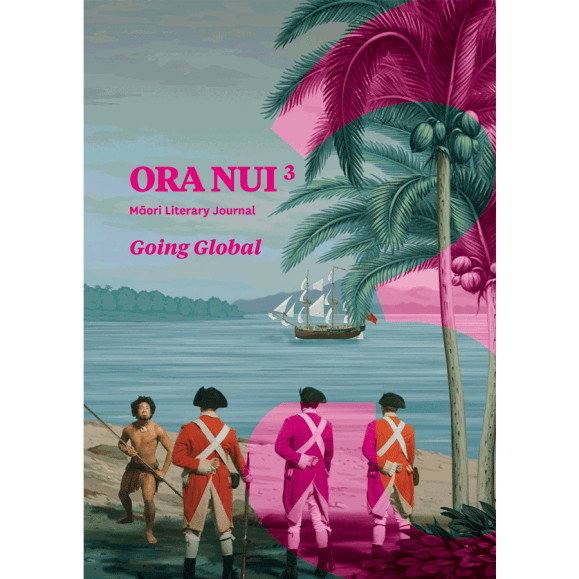
Ora Nui is a journal edited by Anton Blank devoted to Māori experimental literature;  writing that pushes the borders of identity as much if not more than it pushes the ‘how’ of writing. The latest issue draws upon issues of identity, nationhood and migration and includes a diversity voice.  Amy Leigh Wicks and Jan Kemp, for example, place European perspectives alongside those of Vaughan Rapatahana, Reihana Robinson, Robert Sullivan, Jacqueline Carter, Apirana Taylor and Marino Blank.

I think Ora Nui takes apart the whole notion of experimental and transforms it; I am thinking of writing that is testing something out, that might be tethered or prompted by experience, that doesn’t necessarily demolish stylistic traditions, and might have productive talks with them. Experimental writing is often aligned with the avantgarde, however this journal refreshes the experimental page. The journal promotes conversation that tests who and how we are and gives space for voices – some with traditions of marginalisation – to speak from the local and converse with the global. Anton Blank writes: This collection is a glorious celebration of diversity and change.

The cover showcases an image from from Lisa Reihana’s astonishing art installation, Pursuit of Venus (she has assured me we will get to see this again in New Zealand). I have propped the journal on a shelf so I can fall back into her mesmerising work. The image is the perfect gateway into writing that navigates questions of identity and belonging from multiple vantage points.


What I love about this journal though is the utter feast of voices and sumptuous artworks –  I cannot think of anything that has challenged, inspired or awed me in such diverse and distinctive ways. The poetry is symphonic in its reach and shifting keys. Here is a small sample of some of the poetry treats – I am till reading! I have just flicked to the back and got hooked on the lines of Robert Sullivan’s fruit poem, Reihana Robinson, Apirana Taylor, Briar Wood …. and then still sipping breakfast coffee, back to the dazzling currents of Reihana (especially ‘What is a nation?’).  I just bought a book of Reihana’s poetry – I am so hoping there is more in the pipeline.


Jacqueline Carter‘s  poetry often tenders a political edge. The poems included here underline her ability to get you rethinking things. These poems dig deep and resonate on so many levels.


‘The paepae

of the city’s children


is littered

with waewae tapu


people

who haven’t


been welcomed  on


people

in fact


who aren’t welcome at all’


from ‘Aotea Square’ (you just have to read the whole poem!!)


Rangi Faith pays homage to Janet Frame as he imagines the seat she sits in on a train; I have never read a portrait of Janet quite like this, and I love it.


‘When I was six years old

& running around the backyard

of our brick house in King Street,

a train steamed across the old airport

between us and the sea

carrying Janet Frame the poet.’


from ‘Janet Frame Passes through Saltwater Creek’


Rangi moves further south to pull Hone Tuwhare into a luminous rendering of place.


‘this place was always good for a waiata

to sing softly, or loudly if you preferred,

andto drum your tokotoko in time

to the incoming tide

on the earth’s Jurassic skin.’


from ‘To Hone at Kaka Point Seven Years On’


This is my first encounter with Teoti Jardine‘s poetry and I am struck by its clarity, its fluidity, its striking images.


.My Great Great Grandmother

wove her korowai with clouds.

and braided bull kelp lines

to hold the tide.’


from ‘Kuihi’


Kiri Piahana-Wong ‘s lyrical poetry holds the personal close, with both movement and stillness, little pockets of thought. I was drawn to her recounting Hinerangi’s broken heart and death.


‘On the day I died

it rained. Not just any rain,

but rain accompanied by

a sapping, brutal wind

from the southwest, the

kind that wrenches doors

from their hinges,

breaks down trees

and fences.’


from ‘On the day I died’


Two essays really struck a chord with me:

Dr. Carla Houkamau’s  ‘Māori identity and personal perspective’

Paula Morris’s ‘Of All Places: A Polemic on “International Book Prizes”‘


This is a substantial journal, a necessary journal, a must-read issue, and I have still so much left to savour. Bravo, Anton Blank for getting  this writing and this artmaking out where we can see it. I wish I could linger and share my engagement with every piece but must get back to writing my big book. I now have some new women to bring into my writing house. Thank you.


MEGA-READING AT OGH LOUNGE 18 OCTOBER 5.30-7 PM

ALL WELCOME!

LOUNGE #59 Wednesday 18 October
Old Government House Lounge, UoA City Campus, Princes St and Waterloo Quadrant, 5.30-7 pm

MC Michele Leggott

Iain Britton
Michelle Chote
Irene Corbett
Samantha Crews
Cian Dennan
Anna Livesey
Tim Page
Lisa Samuels
Helen Sword
Jamie Trower

Free entry. Food and drinks for sale in the Buttery. Information Michele Leggott m.leggott@auckland.ac.nz Poster: http://www.nzepc.auckland.ac.nz/events/lounge59_poster.pdf

The LOUNGE readings are a continuing project of the New Zealand Electronic Poetry Centre (nzepc), Auckland University Press and the University of Auckland’s School of Humanities in association with the Staff Common Room Club at Old Government House.

LOUNGE READINGS #57-59: 16 August, 20 September, 18 October 2017

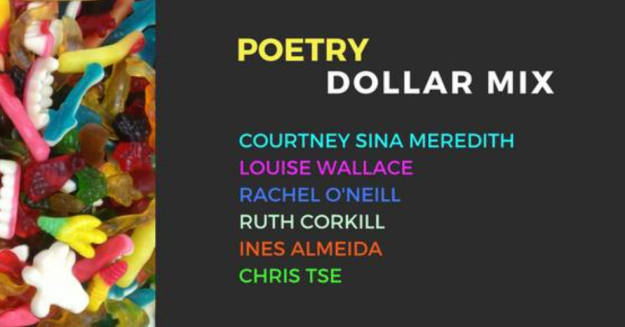
Poetry Dollar Mix – A Wellington Reading


Screen Shot 2017-10-03 at 9.18.06 AM.png


Screen Shot 2017-10-03 at 9.18.19 AM.png

General Manager – Festival of Colour Arts Festival, Wanaka

_EBdwSeZ.jpeg


Press release:

With seven successful festivals under our belt, we are still fresh and stylish and punch well above our weight. We have established our track record with sell-out seasons of music, theatre and dance performances and deservedly known as the ‘best little arts festival in New Zealand’.

The Festival of Colour runs biennially and the next one is April 2nd to 7th 2019.

We also run an ideas festival Aspiring Conversations in the alternate year – the next one is April 6th to 8th 2018. More information on the festival can be found on our website

After managing five hugely successful Festivals of Colour and two standalone Aspiring Conversations weekends, our current GM is moving to a new job so we are seeking an exceptional person to fill her shoes. The position is based in Wanaka.

You must have proven event management experience, be able to establish and maintain excellent stakeholder relationships, and have demonstrated ability at fundraising. You must also have outstanding organisational skills and the ability to keep all the systems running effectively and efficiently, often under pressure.

If you have all of the above plus a strong commitment to, and understanding of, the local and regional community together with a fine sense of humour, we want to hear from you.

Job descriptions are available from info@festivalofcolour.co.nz

How to apply

To apply please send a letter of application along with your CV plus the names of two referees to info@festivalofcolour.co.nz

We are looking for a new Landfall editor!

Monday, 2 October 2017

OUP-full-logoExpressions of interest are sought for the position of editor of Landfall (two issues per year) and Landfall Review Online which posts six new book reviews online every month except January.

Landfall is New Zealand’s foremost and longest-running arts and literary journal. It showcases new fiction, poetry and art, as well as biographical and critical essays and cultural commentary.

David Eggleton, editor for the past seven years, having shepherded Landfall through to its 70th anniversary in 2017, is stepping back to concentrate on his own writing. This presents an opportunity for someone else to take the helm at this prestigious literary journal, which is published by Otago University Press.

For further information about this role, please contact OUP publisher Rachel Scott: rachel.scott@otago.ac.nz.

Expressions of interest should be addressed to the Editorial Board of Otago University Press, and sent by email to rachel.scott@otago.ac.nz by 5pm on Friday 13 October 2017.

Poetry Shelf reviews Mimicry 3 – a cracking good mix


Mimicy 3 is edited by Carolyn DeCarlo and Jackson Nieuwland, is published by Holly Hunter and features a cracking good mix of poetry, prose and images.

Find Mimicry at Unity Auckland, Time Out, University Bookshop Auckland, Unity Wellington, Vic Books, Volume (Nelson), Scorpio Books (Christchurch) and University Bookshop Otago, or order online with dirt-cheap NZ postage.

I love the way you can’t pin the mix of voices, sometimes young, sometimes a tad older, sometimes familiar, sometimes not, sometimes widely published, sometimes just emerging, sometimes lyrical, sometimes not, into a singular style.

As usual I read my way through the poems before slipping elsewhere (bar the arresting red pages ‘Tear sheet – Red’).


I am simply going to give you a taste of the poetry static that this suite of poems generates by quoting you the first lines of the poems (you can track the prose and images yourself).

This is the kind of journal that just makes you want to write.


A very fine first-line sampler from Mimicry 3


Stacy Teague from ‘ko au te awa, ko te awa ko au / i am the river, the river is me’

you could love wide-open / against the natural framework  / of this forever


Ruby Mae Hinepunui Solly from ‘Custard’

When I was smaller than the family dog


Aimee Smith from  ‘This is where first-year friendships come to die’

Aro Valley is haunted by ghosts,


Holly Childs from ‘Closing websites’

She said I said, ‘I can’t store energy inside me, can’t retain it, so it makes sense I’


Rachel O’Neill from ‘The good bastard’

I hope Mother and Father buzz around me till Kingdom Come.


Chris Stewart from ‘fluff’

I used to lick damp fluff


Nina Powles from ‘Dialectal’

this dialect has no written form / only hands feeling for the sound / only wings


Nina Powles from ‘Yellow notebook fragments’

#5c85d2 | smoke blue made of melting clouds


Annelyse Gelman from ‘Excerpts from Heck Land, a series of centos culled from William Burroughs’s Naked Lunch [note it’s cut and paste]

I can feel the heat closing in And I luuuuuuuuve it !


Courtney Sina Meredith from ‘eye’

drove to your house            parked across the road        ‘m n town


Courtney Sina Meredith from ‘the night sky is an immigrant coming from somewhere unknown’

half the group went into the past


Joan Fleming from ‘The optimism of our generation’

Dear X. Ruin porn


Eleanor Rose King Merton from ‘narcissus’

on a beach which is the edge of another planet


Eleanor Rose King Merton from ‘this is also how ownership is indicated’

why not just welt me up and vacate the area with a pillar of salt in each of my corners


Helen Rickerby from ‘Time and I’

The thing is, I have problems with time. Time and I, we just


Maria McMillan from ‘Snow, the reflective properties of’

You grow up, the city you grew up in and left,


Briana Jamieson from ‘Light’

Sun seeped into the van


Amy Leigh Wicks from ‘Log no. 1’

There is no blanket of fog. I am running through the woods today. Last night,


Anna Jackson from ‘Surprising news about your hairstyle’

Is it possible to sail through the air out


Anna Jackson from ‘Hurricane lamp’

Erin invites me to supper (thank you) and the heat


Caroline Shepherd from ‘fog girl’s diary’

how to tell my mother that yes, I did say that I could that thing and


Caroline Shepherd from ‘love lies’

my friends all had grand ambitions of love filling


Freya Daly Sadgrove and Hera Lindsay Bird from ‘Big time talk show with Freya and Hera’

Life is like a sad bucket, old men