Tag Archives: Victoria University Press

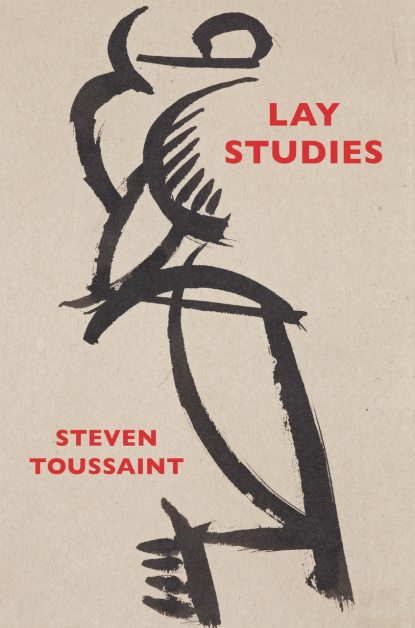
Poetry Shelf audio spot: Steven Toussaint reads ‘Aevum Measures’

Lay_Studies__35136.1555373954.jpg


Steven Toussaint reads ‘Aevum Measures’

from Lay Studies, Victoria University Press, 2019


Steven Toussaint was born in Chicago in 1986. He immigrated to New Zealand in 2011. He is the author of the poetry collections, Lay Studies (2019) and The Bellfounder (2015), and a chapbook, Fiddlehead. His writing has also recently appeared in Poetry, Commonweal, The Spinoff, Sport, and The Winter Anthology. He has been recognised in the past few years by residencies at The University of Waikato and the Michael King Writers’ Centre and with a Grimshaw Sargeson Fellowship. He is currently pursuing graduate study in philosophical theology at Emmanuel College, Cambridge.


Victoria University Press page

Steven Toussaint in conversation with Karyn Hay RNZ Lately


Poetry Shelf review: Tracey Slaughter’s Conventional Weapons


Screen Shot 2019-07-28 at 11.50.07 AM.png


Tracey Slaughter, Conventional Weapons, Victoria University Press, 2019


Tracey Slaughter came to my attention as a fiction writer; I adored deleted scenes for lovers VUP, 2016) and lauded it in my SST review:

Tracey Slaughter’s daring short fiction deposits you on a rollercoaster, hoists you in the air, puts you in a dank, dark cupboard to eavesdrop, spins you round and round, makes you feel things to the nth degree.


Conventional Weapons is Tracey’s first full poetry collection but she has been publishing poetry for over two decades. She was the featured poet in Poetry NZ 25 (2002) and has published Her body rises: stories & poems (2005). She has received multiple awards including the international Bridport Prize in 2014, a 2007 New Zealand Book Month Award, and Katherine Mansfield Awards in 2004 and 2001. She also won the 2015 Landfall Essay Competition, and was the recipient of the 2010 Louis Johnson New Writers Bursary.

Like her fiction Tracey’s poetry is unafraid of dark subject matter: violence lament teenage eating teenage not eating abortion trauma. You will also find sex need desire love. The subject matter is important but it is the poetic effects that first strike me. There is an intensity of rhythm, an insistent beat that holds a poem together like a subterranean heartdrum, a breath metronome. It is no surprise that Tracey was (and is?) a drummer.


We deepdish kiss in the purple of your parents’ lounge,

a bunker plump with buttoned vinyl, fringed


with cocktail lamps. Your little brother doctors himself

a tower of afterschool toast and shovels into the corduroy


beanbag, watching claptrap TV—we’ll lip-sync those jingles

with their punchline chords the rest of our lives;


from ‘archaeological’


The beat in this two-and-a-bit page poem catches the intensity of after-school kissing, the heightened breath as the poem ‘sucks’ in detail of tongues and pashing, with an eye looking sideways to make the citrine kitchen and the purple lounge pulsatingly real. I am bowled over by the syntax, by the surprising juxtapositions of words, the lithe rhyme. I need to let the sonic impact sink in deep and savour the exquisite word play. Yes the young kissers are ‘archaeological’ but so too is the poet as she digs deep for flakes of the past and reposits them in the present tense.

The poem ‘the bridge’ also employs lithe syntax and rhythms to replay the urgency of kiss and touch:


Let feet slip on

sills of shell, a spiral

perimeter of crush.

Currents eel

 the light into

muscled canals we need

to oar & plough, tough-thighed

in the bridge’s underworld.


Often the poems are made electric by the present tense. The opening poem ‘she is currently living’ is a startling portrait, written like a mantra, all lower case, even after the full stops, so you are compelled to keep listening to ‘where’ she is currently living:


in a dead-end off jellicoe. in the waiting room of blue vinyl fear. she is currently

living in supermarket flowers that whisper buy me in their middle-class plastic.

she is currently living in a red metal playpen riding her stepsister’s rocking horse.


If Tracey’s aural dexterity keeps you on your reading toes so do her shifting forms. There are long form poems, bite-size pieces, block prose, fractured lines, lists, multiple choice. The poem ‘how to solve and 18-year sadness’ sits on the page like heart break – the heart hinted at, the break holding apart past and present, the sadness hiding in the crevice. Another poem ‘horoscope (the cougar speaks)’ sets word clusters against left and right hand margins. The poem with its film-noir lighting centres desire, attraction, loneliness, suicide drifting song lyrics that are cut off short as the speaker finds her way:


there are girls to pick

the wings off


but I’m not one of them


And now the subject matter. For me Conventional Weapons foregrounds character, women characters, which makes this book dig even deeper under my skin. The experience is often attached to trauma, the settings lit up in neon detail, the emotional core razor sharp. I posted a piece on Poetry Shelf from ‘it was the 70s when me & Karen Carpenter hung out’ and even in that brief extract the effects were incandescent. This is a poem of youth, song lyrics and singing, macramé, neon lights, freezer food, the backseats of cars, orange lounges, soap operas, instant things but it is also a poem of vomit and of bodies eating and starving, of the traumatic smash of eating disorders.


me & Karen carpenter

blu-tacked heartthrobs

to the hangout

wall & lay down

under our own gatefold

smiles. The ridges of our mouths

tasted like corduroy & the hangout

door was a polygon of unhinged

ultra-violet. We stole lines from stones

& rolled them like acid

checkers on each

other’s tongues, testing

the discs of our tucked spines as we

swallowed. (…)


When I return to the poem ‘horoscope (the cougar speaks)’, I return to the spike in the poem’s flow, the suicide that cuts into you as you trace the portrait of a woman:


& that last verse

is chloroform

*

don’t come

back with your bad

translations of love

one writs italicised

with scars


‘the mine wife’ is another imagined portrait; a long poem that features the wife of a miner lost in the Pike River disaster and the wife’s ‘grief is opencast’. In Wild Honey I write about the way poets might step into the shoes of another’s trauma, tragedy, loss, grievance, dislocation, wrongs, grief in order to make public horrific things both as a distant and/or close witness. Is this trespass? Is this keeping trauma and human wrongs in public view? For centuries writers have imagined beyond their own experience. In this poem I am heart struck by the way a woman continues to live alongside death, in the fist of life once lived, in the daily routines of food and laundry, in the coming up for air from the dark.


to stand at the mouth

takes a long journey. It’s like

a cathedral to all

we’ve done wrong. I thought

seeing it would cave me in. But it’s the peace

of the place that doubles me over.


The birds go on dialling

God. Even without you, the trees

don’t come to a standstill. Healing is

not clearcut. Air makes the sound of where

you were last seen. I listen

for scraps in the hush.


Grief is opencast.


Tracey’s poetry reaches me just as her short fiction has: her daring poems deposit you on a rollercoaster, hoist you in the air, put you in a dank, dark cupboard to eavesdrop, spin you round and round, make you feel things to the nth degree. I can think of no other local poet who has this effect on me. The collection will slip under my clothes and travel with me for months. It is a book I feel and it is a book I think and I adore it.


Victoria University page

Rae McGregor review at RNZ National

Jack Ross launch speech  (with images)


Poetry Shelf interviews Fleur Adcock

3c58eb2e-2c98-4359-a439-504f7467e974.jpg

Fleur Adcock, Collected Poems, Victoria University Press, 2019


No; I can’t get it to knit. Scrunch!

Somewhere on the timeline between

the historical Eva whose

disappointments and retreating

daydreams I so tenderly probe

and our childhood’s ‘Grandma Adcock’

comes a fracture: Sam’s young lady,

eager emigrant, pioneer,

snaps into the dumpy figure

telling me off, when I was three,

for proving, at the tea-table,

I could put my toes in my mouth.


from ‘Reconstituting  Eva’ (originally published in The Land Ballot, 2014)


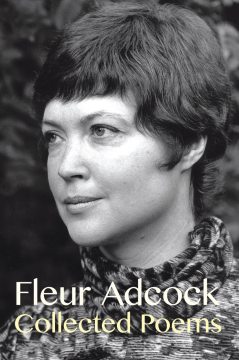
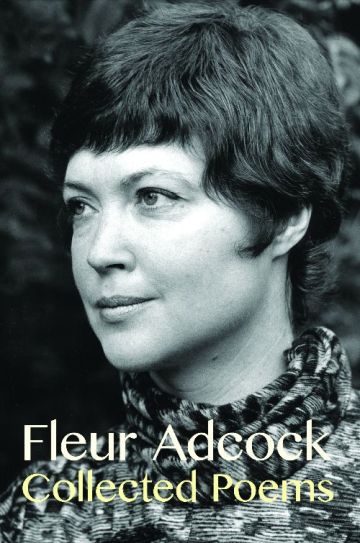
One of the many joys in researching and writing Wild Honey was reading Fleur Adcock’s poetry books – from The Eye of the Hurricane (1964) to Hoard (2017). Since then Victoria University Press has published Fleur’s Collected Poems. It is a sumptuous, substantial tribute to a much loved poet: the hardback book is beautifully designed, keenly edited and a perfect way to enjoy the scope of her poetry.

Born in New Zealand in 1934, Fleur has spent most of her writing life in Britain; she is an editor, a translator and above all a poet. She has published 18 collections of poems including the latest book along with several other Selected Poems. She edited The Oxford Book of Contemporary New Zealand Poetry (1982); The Faber Book of Twentieth-Century Women’s Poetry (1987); The Oxford Book of Creatures, with Jacqueline Simms (1995).  Her multiple awards include the Jessie Mackay Prize in 1968 and 1972, the Buckland Award in 1968 and 1979, and a New Zealand Book Award in 1984. She received an OBE in 1986, the Queen’s Gold Medal for Poetry in 2006 and was made a CNZM for services to literature in 2008.

The effects of Fleur’s poetry are wide ranging; she writes from a sustained history of reading and inquiry, from personal experience and sharp observation, from measured craft to conversational tones. Her poetry can be poignant, witty, serious, physical, abstract, humane. She assembles family and she looks back at New Zealand as she widens the definition of home.

To celebrate the arrival of Collected Poems we embarked on a slow email conversation.


At school I used to read, mostly,

and hide in the shed at dinnertime,

writing poems in my notebook.

‘Little fairies dancing,’ I wrote,

and ‘Peter and I, we watch the birds fly,

high in the sky, in the evening’.


from ‘Outwood’ (originally published in The Incident Book, Oxford University Press, 1986)


Paula: Can you paint a small snapshot of yourself as a young girl? Did books and writing feature?

Fleur:  From the age of six I was always a passionate reader, somewhat to the annoyance of my mother as the years went by. One of my favourite childhood photographs of myself (there were very few, because photographic films were almost unobtainable during the war) is of me lying on my stomach on the grass in our garden when I was eight or nine, reading a book. When I was nearly seven I was given a book called Jerry of St Winifred’s, about a girl who wanted to be a vet and who when trying to rescue a puppy from a rabbit hole accidentally discovered an ancient manuscript. This was when Marilyn and I were living in the country, as unofficial evacuees on the farm of our father’s cousins George and Eva Carter. Auntie Eva told me reading was bad for the eyesight, and restricted me to one chapter a day. If she had wanted to encourage me this would have been the best thing she could have done – in these days of reluctant readers, parents are told that if reading were forbidden more children would want to do it. In my case there was absolutely no need.

At that time we were away from our parents, and therefore writing letters and little stories for them, or at least I was – Marilyn was still at the stage of sending pictures, but it was all useful practice in communication.

The following year, 1940, we were living in Salfords, Surrey, with our mother, just across the road from the small tin-roofed public library. I used to go and browse in it alone, to borrow books. Titles I remember are Fairies and Chimneys, by Rose Fyleman, and Tales of Sir Benjamin Bulbous, Bart, which involved naiads, water sprites, etc. You will observe a fairy theme.

In what seems no time at all we were settled in a house of our own and I was reading whatever I could lay my hands on: library books, books from school, occasional books I was given as presents. Because of the wartime paper shortage these were in rather short supply. I liked adventure stories: Dr Doolittle, books by Arthur Ransome, Robert Louis Stevenson, and inevitably Enid Blyton. When I was 10 my mother lent me her copy of Gone with the Wind, and the following year gave me a rather beautiful ex-library copy of  Pride and Prejudice, which I read over and over again and still treasure. 

I was also writing poems. When I was seven, at Outwood School in the Surrey countryside, I had a little notebook in which I wrote my compositions at lunchtimes. I was there for only three months, from early June to early September 1941, and had no friends. Marilyn was away for the first few weeks, with whooping cough. Poetry was my refuge.


(…) I was impatient

for Jerry of St Winifred’s

my Sunday School prize, my first real book

that wasn’t babyish with pictures –


to curl up with it in the armchair

beside the range, for my evening ration:

‘Only a chapter a day,’ said Auntie.

‘Too much reading’s bad for your eyes.’


I stuck my tongue out (not at her –

in a trance of concentration), tasting

the thrilling syllables: ‘veterinary

surgeon’, ‘papyrus’, ‘manuscript’.


from ‘Tongue Sandwiches’ (originally published in Looking Back, Oxford University Press, 1997)


At my next school, St John’s, I won a gold star (see my poem ‘The Pilgrim Fathers’, and also the previous one, ‘Tongue Sandwiches’, re the earlier experience). I graduated to a slightly larger notebook and my subject matter expanded slightly, although one of my principal influences was still Enid Blyton – our mother thought her little magazine “Sunny Stories” was suitable reading matter for children, rather than the comics we swapped with our friends from school. I also liked ballads and melodrama. There were three more schools before the end of the war. At one we studied ‘The Lady of Shalott’: just my cup of tea, with its Tennysonian sound-effects and melancholy ending.

When I was 13 we went back to New Zealand, and I began writing nostalgic poems about such topics as “Spring in a Surrey wood”. The poems were rather fewer in my teens; some of them were carefully made, with rhymes and proper scansion, suitable for the school magazine, in which I won prizes for ‘The Bay’ and a poem about a seagull. My more private poems came under the influence of TS Eliot, whose work we studied when I was 15. World-weary disillusionment set in, together with free verse; I’ve just found one that ends with the two lines: “But what the hell does it matter? / Let’s go out and shoot ourselves.” The Waste Land has a lot to answer for.

But I’m afraid this is not a small snapshot but a sprawling album! I’ll stop.


Paula: I got goose bumps picturing the power of words and books for the young child making her way from girlhood to adolescence. Has poetry writing always been a refuge for you? Or has it developed other functions?

Fleur: Writing poetry has many functions for me; more than I can identify. It’s art, it’s therapy, companionship, a challenge, an indicator of health – I’ve always been aware that when I’m healthy I’m writing, and when I’m writing I’m healthy. It’s that much despised thing self-expression, as resorted to by generations of teenagers. It’s also, to some extent, my bread and butter. When I had a proper job, as a librarian in the civil service, time to write poetry was the unattainable ideal. Now that I’m retired I have a small pension from that ‘proper job’, but for a long time while I was freelance most of the work I did, in the form of poetry readings, broadcasting, book reviewing, translating, teaching on writing courses, going to festivals, writing libretti, etc, arose out of the fact that I wrote poetry. There’s less of that now – you don’t get quite so many commissions in your 80s – but still a certain amount. And I’m still writing the poems.

Poetry also has a social function. Some 18th century poets used to call their books ‘Poems upon Several Occasions’. I’ve written a number of those, too: poems for other people, for specific occasions or on topics that I hope they will be able to identify with. My poem ‘The Chiffonier’ about a particular habit of my mother’s (marking out special items for her children to inherit, long before she died) turned out to be common to a whole troop of mothers, I was pleased to learn from fan letters. I write a number of family poems: for birthdays, for Greg’s wedding to Angie, for the birth of my great-grandson Seth (a rare male among my hosts of female descendants), also elegies – for my parents and various ancestors, and one for Alistair that I managed to produce in time for Marilyn to read it at his funeral. There are elegies for friends, too, and increasing numbers of laments for doomed or extinct inhabitants of the natural world: birds, butterflies, insects of all kinds (my book Glass Wings contains examples), bats… It would be depressing to go on.


But now I see you in your Indian skirt

and casual cornflower-blue linen shirt

in the garden, under your feijoa tree,

looking about as old or as young as me.

Dear little Mother! Naturally I’m glad

you found a piece of furniture that had

happy associations with your youth;

and yes, I do admire it – that’s the truth:

its polished wood and touch of Art Nouveau

appeal to me. But surely you must know

I value this or any other treasure

of yours chiefly because it gives you pleasure.

I have to write this now, while you’re still here:

I want my mother, not her chiffonier.


from ‘The Chiffonier’ (originally published in The Incident Book, Oxford University Press, 1986)


Art: one of the enormous satisfactions of writing is constructing a beautiful or at least memorable and satisfying artefact. I believe that one of the essential elements of being human is wanting to create some kind of art. I remember having an argument with a friend about this, or perhaps just a misunderstanding – when I say “art” I include large areas of human creative endeavour such as gardening, growing plants, making clothes, furniture, jewellery, or anything that gives satisfaction to its creator. Some people (I’m not among them) find artistic pleasure in cooking. When my grandchildren Cait and Ella were small they spent hours of ingenuity constructing miniature items of furniture for their Sylvanian toys out of scraps of cardboard, Sellotape, fabric or whatever was around; that was art. So, I suppose, were the elaborate cakes their mother made for their birthdays; I remember one in the form of a swimming pool with blue jelly for water. For me the primary art-form is poetry. Very few things make me happier than finishing a poem I’ve been struggling with.


Paula: I love the way poetry emerges from the nooks and crannies of your life and thinking, the way it feeds and spurs. Your Collected Poems demonstrates this so clearly. Rereading the first two collections – The Eye of the Hurricane (1964) and Tigers (1967) – I am reminded how these early poems have travelled so well across the decades. Take the much-loved and anthologised ‘For a Five-Year-Old’ for example.  What were your early preoccupations as a poet in view of both style and subject matter?


I see, then, that a kind of faith prevails:

your gentleness is moulded still by words

from me, who have trapped mice and shot wild birds,

from me, who drowned your kittens, who betrayed

your closest relatives, and who purveyed

the harshest kind of truth to many another.

But that is how things are: I am your mother,

and we are kind to snails.


from ‘For a Five-Year-old’ (originally published in The Eye of the Hurricane, AW Reed, 1964 and then in  Tigers, Oxford University Press, 1967)


Fleur: I don’t think I can answer this in any meaningful way. I could look back through the early collections to see what I was writing about, but so could anyone; it’s not the same as being inside my feelings at the time, which I find it impossible to recall. I wasn’t setting out with any aim or objective; I just wrote about whatever topics suggested themselves, and my chief emotion was “Oh, good, I’m writing a poem!”

One of my first preoccupations, even as an adolescent, was my ‘exile’ from England. I wrote about this in my early teens, and also in the poem I called ‘The Lover’, in which I imagined a male persona trying to adapt to living in a new country. This ridiculous enterprise naturally misfired: everybody thought I was writing about Alistair. Serves me right, for not having had the confidence to write as a female.

Looking at The Eye of the Hurricane, I see that a number of the poems were about relationships with various men, one in particular – a natural preoccupation of a person in her 20s. One person they were definitely not about is Alistair. I was very surprised, in later years, to find that some people imagined he was the character represented in such poems as ‘Knifeplay’, when he was not at all like that.  Most of those poems were written in the nearly five years between my divorce from him and my marriage to Barry Crump in 1962. I never wrote about Alistair while I was married to him. Most of my very few poems about him were written while he was dying or after his death in 2009 – my elegy for him was modelled stylistically on his famous Elegy in Mine eyes dazzle.  My own early “battle of the sexes” poems (to use a Baxter phrase) were about my then current preoccupations. By 1959, Alistair was history.

As for the style, in those days I wrote in traditional verse forms, often rhymed, because it was easier to be convinced that I’d got a poem right if the rhymes and metre were correct. Free verse is far more difficult to judge (I don’t mean blank verse – unrhymed iambic pentameter, as in Shakespeare’s plays – which is another kettle of fish. I certainly used that from time to time.)

When it came to my next collection, Tigers, a new subject presented itself: culture shock. I was suddenly living in a wider society, in England, exposed to the harsh realities outside insular little cosy New Zealand. ‘Regression’ is a reflection of my new political anxieties, although I had also written about the nuclear threat earlier, in NZ. We were all convinced the world could end at any time, as seemed quite likely. But on the whole I rather cringe to open these two earliest collections. I think of what Katherine Mansfield wrote to JMM when he urged her to allow In a German Pension to be reissued: “It is far too immature, and I don’t even acknowledge it today. I mean I don’t ‘hold’ by it. I can’t go foisting that kind of stuff on the public” (quoted in his introduction to the Penguin Modern Classics edition).


All the flowers have gone back into the ground.

We fell on them, and they did not lie

crushed and crumpled, waiting to die

on the earth’s surface. (..)


from ‘Regression’ (originally published in Tigers, Oxford University Press, 1967)


Paula: You touch upon the way autobiography can both corrupt and enhance a reader’s pathways through a poem and the danger of making assumptions about both the speaker and subject of a poem. Some things in a poem stay secret and some are exquisitely open.  As I read my way through your collections I relish the shifting tones, sharpness, admissions, contemplations. The way poems are both oblique and transparent. Two collections have particularly affected me, but before sharing these, are there one or two books that have been especially important in the making and published result?

Fleur: Once again, impossible to answer. For quite some time The Incident Book gave me particular pleasure to look back on, but inevitably it was overtaken by others.  Every published collection that appears between covers and looks like a complete and separate entity is in fact just a bundle of individual poems. When my youngest granddaughter saw the size of my Collected Poems in New Zealand, she said to her father, “Wow! How could she write so many poems?” The answer is, one at a time. Each new poem is a world in itself, something to plunge into and be absorbed by for as long as the writing of it lasts. Only much later does it become part of a published book, if I decide to include it in one. Not every poem is chosen.


21

The fountain in her heart informs her

she needn’t try to sleep tonight –

rush, gush: the sleep-extinguisher

frothing in her chest like a dishwasher.


She sits at the window with a blanket

to track the turning stars. A comet

might add some point. The moon ignores her;

but dawn may come. She’d settle for that.


from ‘Meeting the Comet’ (originally published in Time-Zones, Oxford University Press, 1991)


My feelings about the various collections tend to be influenced by my memories of the circumstances and places in which they were written. For example, Time-Zones received its title from the travelling I was doing during that time I was working on it. It contains poems from my three months in Australia as writer in residence at the University of Adelaide in 1984, including the two long sequences at the end, ‘Mrs Fraser’s Frenzy’ (written for music, originally for Gillian Whitehead, but she decided it didn’t suit the commission she had in mind and it was subsequently set by the English composer George Newson instead), and ‘Meeting the Comet’, which I wrote in bits and pieces during my journey to and from the southern hemisphere, as a way of staying sane and having something to work on while I was in transition from one place to another. (The girl in the poem is fictional, but was originally inspired by the child of friends in Newcastle, who had the same disability although not the same history as the one in the poem.) The collection also includes poems about Adelaide, where I was living for a time, and Romania, which I had visited and where I had made good friends and had my eyes opened to a new political landscape. Altogether a bit of a ragbag – I was crossing time zones as the poems came to me.

How complicated these things are to explain.

Then there was Looking Back, which was short-listed for the T.S. Eliot prize in 1997. It gave me great pleasure to write, or at least the poems about my ancestors did, because of my obsession with genealogy, but shortly afterwards, oddly enough, I lost interest in writing poems for some years, and devoted myself to the ancestors in a big way.

Dragon Talk was important, by virtue of the fact that it marked my return to writing poetry after a gap of several years. However, I certainly wouldn’t call it my best collection; it was a necessary one, to get the wheels turning again, but afterwards I moved on in different directions.

The only book I actually conceived and embarked on as a single entity, in the way you might embark on a novel, was The Land Ballot. I wrote three or four poems about my father’s childhood, and then it dawned on me that  I might be able to produce enough for a book. I did enormous amounts of research for this, over a period of two years, 2012-2013, building up a picture of this remote community and its inhabitants, and was totally immersed in it. Two of the happiest years of my life as a writer. On the other hand, one of the happiest years of my life as a person was 1977-8 (September-June), living in the Lake District as writer in residence at Charlotte Mason College in Ambleside, surrounded by amazing scenery, with time to walk and explore and make discoveries, as well as making a quantity of new friends and spending more time than usual with many of the old ones: if you live in a famously beautiful place and have a spare bedroom you suddenly become very popular. But the poems that emerged from this time are scattered between more than one published collection.


As there was only one lamp

they had to spend the winter evenings

at the table, close enough to share

its kerosene – perfumed radiance –


his mother sewing, and he

reading aloud to her the books

he borrowed from Mr Honoré

or the Daysh boys on the next farm


from ‘Evenings with Mother’ (originally published in The Land Ballot, Bloodaxe Books and VUP, 2014)


Paula: I love the way a poem becomes a miniature absorbing world for both reader and writer, and the way the context of its making is important for the poet. Reading a book is akin to listening to a symphony; you absorb the composition as a whole with certain notes and melodies standing out. I also loved The Incident Book with its fertile movement, physical beacons and emotional underlay. I keep going back to ‘The Chiffonier’, both a conversation with and portrait of your mother. The ending never fails to move me.

But I also loved Looking Back and The Land Ballot, two collections that consider ancestors, the past and the present, an attachment (and detachment) to two places, the UK and New Zealand. I guess it gets personal; the fact I am drawn to the gaping hole of my ancestors with insistent curiosity and the fact your exquisite writing satisfies my interest as a poet. Heart and mind are both engaged. Questions might arise, I feel and think multiple things, the music holds me, the intimacy is breathtaking.

What attracts you in poetry you admire?

Fleur: Another impossible question. The simple answer is simply expressed in the last line of my poem ‘The Prize-Winning Poem’: “it’s got to be good.”  Of course you will ask what is the nature of that ‘goodness’, or excellence? I could talk about the tone, the rhythms, the emotional resonances, the sense of mystery or wonder that poems sometimes induce, but what I always want a poem to do is surprise me. The only full answer would be a list of poems I have admired over the years, which would be impractical.

This afternoon I was listening to a performance of Britten’s Serenade for tenor, horn and strings, which includes the setting of Blake’s little gem ‘O rose thou art sick’, which I’ve known and admired since childhood, but because the musical setting (also familiar to me) slows the words down I was listening to them more carefully than usual, and particularly struck by them. A perfect poem. But then yesterday I picked up the latest copy of the TLS and found a poem by Helen Farish that was totally new to me, and found it striking in a different way, possibly because of its strangeness: it makes you want to know more about the situation she describes, although on the other hand knowing too much might spoil it.

Poems serve different functions in our lives, and how we respond to them is affected by the circumstances in which we read or hear them.


Paula: Indeed. Can you name three poetry collections you have admired in the last few years?

Fleur: The answer is that no, I can’t make any such choices. I don’t do “favourite poets” or “favourite books”. To do so would not constitute a considered judgement. Enthusiasms come and go; they are things of the moment. It takes me a long time to make up my mind about the value of any particular writer. For example, many of my friends have published books that were important to me, but that would be a judgement about friendship, not necessarily about literary worth. I’d rather pass on this question.


Paula: What activities complement your love of poetry?

Fleur: Walking (in our local woods or wherever I happen to be), watching plants grow, watching birds and other living creatures in my garden or elsewhere. The greater the destruction of our natural environment, the more important these things become. When I first bought my house in London, in 1967, huge crowds of birds came to the neighbours’ bird table; miniature froglets hopped around the grass verges when I tried to mow the lawn; the buddleia tree was smothered in butterflies; we used to hear owls in the night. Now that I have my own birdfeeders, and more time to watch and observe the population, I’m more and more aware of the sad losses. On the other hand, I’m grateful for my health and continued ability to look after my garden and get out and about.

Now that my eyesight is so much worse I find myself reading less and listening to music a lot more, but that doesn’t really belong in this interview – music is a completely different medium from literature.


Paula: Thank you Fleur, especially as I posed such difficult questions. I have loved this slowly unfolding conversation that has kept me returning to the joy and richness of your poetry. Thank you for your generous and engaging responses – it is now time for you to get back to what you love – writing poems!


Paths


I am the dotted lines on the map:

footpaths exist only when they are walked on.

I am gravel tracks through woodland; I am

field paths, the muddy ledge by the stream,

the stepping-stones. I am the grassy lane

open between waist-high bracken where sheeep

fidget. I am the track to the top

skirting and scaling ricks. I am the cairn.


Here on the brow of the world I stop,

set my stone face to the wind, and turn

to each wide quarter. I am that I am.


(originally published in Below Loughrigg, Bloodaxe Books, 1979)


Victoria University Press page


Poetry Shelf review: Ashleigh Young’s How I Get Ready

How I Get Ready.jpg


Ashleigh Young, How I Get Ready, Victoria University Press, 2019


A woman smiles out of a plastic coat

its yellow turning rain to torches.


Light rests on a man waiting to cross,

coats his dog.


Light crosses a man

waiting to rest.


The hills pull fog around themselves

and trudge to the sea,

carrying all our houses.


from ‘Lifted’


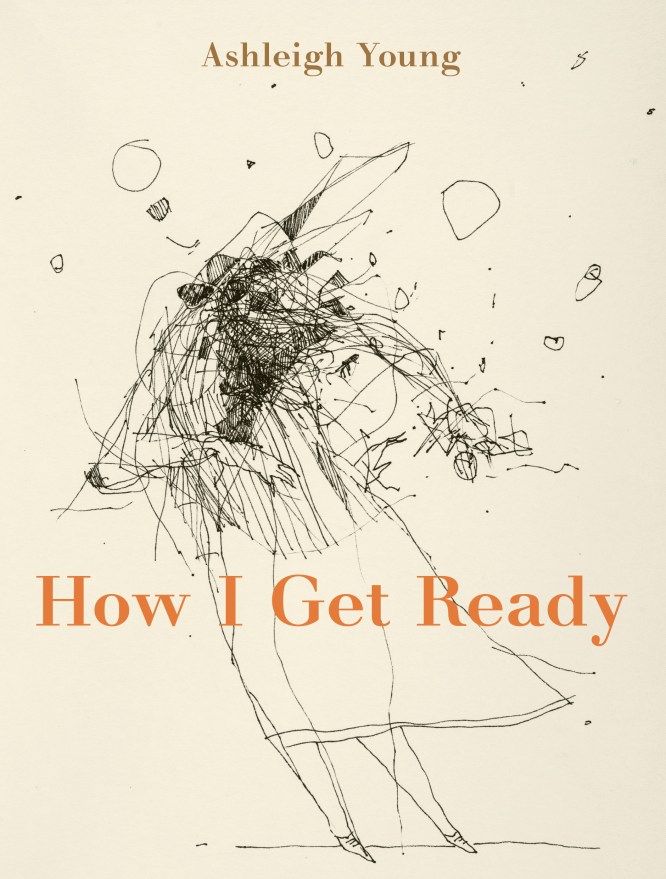
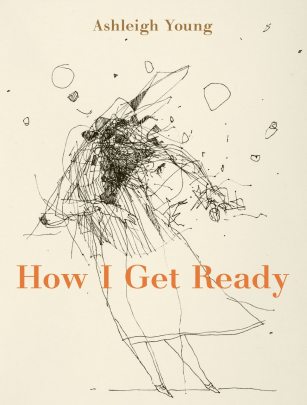
I like the shape of this book – this matters with poetry – because when a poetry book is good to hold it makes you want to linger even more, to stall upon a page. The book looks good, the paper feels good, and the cover drawing by Sam Duckor-Jones is a perfect fit. His idiosyncratic artwork moves in and out of reality, a person tilted by anxiety, the wind, both exposed and screened. A little like the poems inside the book. This is a collection of waiting, breathing, of curious things, anxieties, anecdotes, lists, found things, recycled words; little starts in your head as you read. It is extremely satisfying.

The Notes acknowledge the jump-off points of a number of poems – a line in a letter from Andrew Johnston turns into ‘Turn Out to Be Something’. Poems spring from epigraphs, a contents page, Margery Kempe, psychiatric cases, other poems. Where the poems shift to is perhaps a blend of the fictional and the personal. The speaker is always on the move.

One of the joys of reading these poems is the way connective tissue or an invisible thread holds the poems together; it might be the way you stay with one character or situation or mood. Yet the doubled reading joy is in the glorious little leaps: from an idea, admission, description or trope to another idea, admission, description or trope. Surprising, startling, fascinating and always feeding the invisible thread. Take ‘Ghost Bear’ for example. Eliot pulls me through the poem. He is the mystery and the guide. You will move from a ritual where someone tests themselves against a ghost bear with a skull head to a boy who gets electrocuted but survives then scores a try (‘He’s just showing off  / because he got electrocuted’)  to an inappropriate kiss. Before the strange, goosebump ending, I got stuck on this verse which feels like an intrusion from the poet herself:


When there are two frail old women together, there is always one

who is visibly stronger.

I have an old friend and I think about whether we will be old together

and which of us will be stronger, holding up the other

which of us the wind will push over first

for a good joke


The opening poem, ‘Spring’, begins with an eye-catching image : ‘I saw a horse lying on the street / and people were trying to help it up.’  It is a poem of little fascinations (forgive me if I keep using that word!) but it is also a poem of breath, of holding and releasing breath, of waiting. The words form little exhalations on the page. I am standing with the person (the ‘I’) standing in the street thinking random things as they wait to see that the horse will stand. I am fascinated by the little admissions (they have waited so long it is too late to go to work). I am fascinated by the personal truisms (‘When I am satisfied with one thing / I want something else’).  I am fascinated by the biography of the speaker.


My mother   assured me

that when I feel     that I am not wel-

come at home and everybody has

hatred towards me that it is       only

my imagination. This statement

made me feel very good;

I went to bed    and

slept sound


The poem arrives in surprising increments – in bursts of unsettling strangeness. Who is this speaker who must keep revealing things? I look at the Notes, only after musing on the poem awhile, and discover it is a found poem, with the words borrowed from the study of a young man with compulsion neurosis who transforms his life into bizarre distortions. (published in 1918).

‘Turn Out to Be Something’ is also a poem that involves waiting;  the speaker waits for things and then modifies the admissions; waiting is fine as long as waiting is not in vain and something is at the end, although not necessarily what is first expected.


I can wait for a layer of sandstone to form over me

and freeze and thaw and freeze and be shattered

and be piped into the sea            as long

as that turns out to be something.


Many of the poems play with lists, repeating the beginnings of stanzas before swerving or drifting in myriad directions. Take ‘Guide’ for example. A poem written for an exhibition of Colin McCahon’s Walk (Series C) at Te Papa. I love this poem; I love the way it builds upon ‘what if’ and gathers heart,  wisdom and downright surprise. Ashleigh steps off from Colin’s ‘walk’ along Muriwai Beach and walks through meditations on water (the sea, fresh water, a river mouth, waterfalls). Her poem walks us into the physical and then catapults us elsewhere. It makes my heart ache.


If a girl is lost, someone will walk a long way to get her.

If her hand is held all the way back, it will be a short walk.


I have to share the ending with you because it gets right to the heart of what makes an Ashleigh Young poem so darn good.


If a waterfall no longer has water, it is a groove

that suggests a falling motion, just as this trail

suggests a walking motion


but if a person keeps walking until there is no more walk to take

they will no longer look forward to it, so will turn back.


Pretty much every poem is a poem I want to talk about. I want to talk about ‘Driving’ because it feels like a miniature autobiography that goes deep into experience. It gets personal but it’s prismatic in image and ideas. Somehow in this mix of riding a bicycle, learning to drive and imaginative leaps, the poem feels acutely human. Like it is breathing life back into me. When I stop on this double page I am thinking you could swap ‘driving’ and ‘riding’ for any number of things. The way the things we do conjure anxious thinking and random thoughts. I read the poem and replace all the driving/ riding words for ‘writing’. For example:  I write along the street outside your house / with my heart floating loose and getting chain grease on it.

Yes this poem is a gem – it builds and ducks and freewheels. Here is the start:


They tell me any idiot can do it and I tell them

I’m not just any idiot, I’m specific. Even when my lungs

are bursting – properly bursting

like things dragged up by a deep-sea fisherman

I keep riding.                  I get tired.                      I just keep riding!


I have written about this book in Wild Honey so have tried not to repeat myself or even refer to the poems I picked to talk about in the book! But Ashleigh became one of my sky poets for all kinds of reasons.

Every poem catches me! Some books you pick up, scan a few pages and then put down because you just can’t traverse the bridge into the poems. Not this one. It is as exhilarating as riding a bicycle into terrain that is both intensely familiar and breathtaking not. The speaker is both screened and exposed. The writing feels like it comes out of slow gestation and astutely measured craft. I say this because I have read this andante, at a snail’s pace. Glorious!


What song will they play if I don’t come home tonight?

I wished  someone would write a song for me, then someone did

but it was a song berating me; it was called ‘Actually, Ashleigh’


and I think of the cruelty of songwriters as I get ready

how their music makes their words sound better than they really are

how our feelings make music seem better than it really is


and how the difficulty of getting ready is a pure, bitter difficulty

like calculus. In the back row a once-promising student cries.

What will my face become? Strings of demi-semi quavers.


from ‘How I Get Ready’


Victoria University Press page
Read ‘If So How’ from How I Get Ready


Ashleigh Young is the author of the poetry collection Magnificent Moon (VUP, 2012), and the essay collection Can You Tolerate This? (VUP, 2016) which won a Windham-Campbell Prize from Yale University and the Royal Society Te Apārangi Award for General Non-Fiction in 2017. She works as an editor and lives in Wellington.


Poetry Shelf classic poem: Tracey Slaughter picks Fleur Adcock’s ‘Composition for Words and Paint’


Composition for Words and Paint


This darkness has a quality

that poses us in shapes and textures,

one plane behind another,

flatness in depth.


Your face; a fur of hair; a striped

curtain behind, and to one side cushions;

nothing recedes, all lies extended.

I sink upon your image.


I see a soft metallic glint,

a tinsel weave behind the canvas,

aluminium and bronze beneath the ochre.

There is more in this than we know.


I can imagine drawn around you

a white line, in delicate brush-strokes:

emphasis; but you do not need it.

You have completeness.


I am not measuring your gestures;

(I have seen you measure those of others,

know a mind by a hand’s trajectory,

the curve of a lip).


But you move, and I move towards you,

draw back your head, and I advance.

I am fixed to the focus of your eyes.

I share your orbit.


Now I discover things about you:

your thin wrists, a tooth missing;

and how I melt and burn before you.

I have known you always.


The greyness from the long windows

reduces visual depth; but tactile

reality defies half-darkness.

My hands prove you solid.


You draw me down upon your body,

hard arms behind my head.

Darkness and soft colours blur.

We have swallowed the light.


Now I dissolve you in my mouth,

catch in the corners of my throat

the sly taste of your love, sliding

into me, singing;


just as the birds have started singing.

Let them come flying through the windows

with chains of opals around their necks.

We are expecting them.


Fleur Adcock


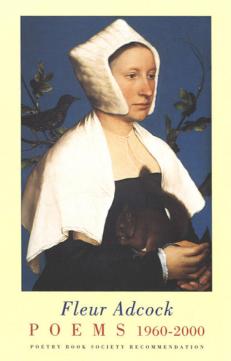
From Poems 1960-2000 (Bloodaxe Books, 2000). Subsequently published in Collected Poems (Victoria University Press); originally published in Tigers (Oxford University Press, 1967). Posted with kind permission from Bloodaxe Books and Victoria University Press.


Note from Tracey Slaughter:


When I read Fleur Adcock’s ‘Composition for Words and Paint’ I get a feeling like I’ve just stepped from glaring sunlight into a dim cool room, a blinking transition where objects shift their edges, textures and sensations blur. Things cross the retina that shouldn’t coexist – heat and cool, shade and sheen, disorientation and sharp awareness – as the dazzled eye tries to pull focus on outlines, shadows, glints. I’ve read it so many times now I could start to break down how its sheer mastery does this to me – but first I’d rather just surrender, step over that threshold, and let it return me to that liminal space it evokes, that experience of sensory eclipse.

Charted in a present tense aquiver with nowness, it’s a poem that wants to keep you in that state of dissolve, that hazy receptivity. Stanza through stanza as it tracks the movements of lovers drawing close in an intimate room, it guides the senses through concrete details that both cloud and illuminate, define and veil, observing the couple’s actions through sustained brushstrokes of metaphorical paint. It’s a poem that watches the act of love with an eye for its composition on the canvas, using the artist’s gaze to render the encounter in visual strokes and shapes, bringing bodies to slow light through questions of perspective, surface, angle, plane. As if conducting an ekphrastic exercise, analysing imagery already framed, it envisages the elements of this love scene in terms of its visual field, lining up the lovers in a studied play of light, curve, pose, dark, parallel, emphasis, depth. But if it employs the methodical and intricate tone of the artist approaching the canvas at the same time it applies the motif of paint to evoke the flooded senses of the lover lost in the work-at-hand’s erotic experience. Issues of surface, extension, colour, focus are at once used to underline the artist’s trained gaze and to wash the scene with a sensuous physical impression of the lovers’ work in progress. ‘I sink upon your image’ the speaker says – the borders of the canvas collapse. It pivots on a repeated play on ‘drawing,’ a practice which moves both brush and body – from a white line sketched around a figure, a head is drawn back, another tantalisingly down – using the term to figure both the tactile capture of the painted line and the gestural seduction of bodies, the pull and call of the lovers pacing and exploring each other in the shaded room. In that elided term, the hand that draws cannot sustain its ‘measured’ distance, it’s too coated in the palette of touch, too absorbed in lust for each line it envisages. Each brushstroke shivers on the painter’s own skin as it orders and colours objective space. It’s part of the mystery I love in Adcock’s language throughout the piece, that it can be at once controlled and lush, clinical and intoxicating – when I read it over I’m always searching for how it extracts such pulse from precision, such glistening intensity from poised restraint. Heat and chill, dark and gleam, it always keeps me blinking for how she keeps that threshold so skilfully blurred.

From an eye scrutinizing the shades and planes of love, the perspective slips to a place where the deeply implicated speaker can only ‘melt and burn’; I imagine that Adcock must have known the work of other women trying to depict female desire around this era: I always hear a tinge of Plath and Sexton in that phrasing. Perhaps there’s an echo of those poets present in the voice of this piece too, its commanding first-person, an ‘I’ intent on fixing and tracing the interaction with ‘you’ in a potent, honed, hypnotic tone. The slow processional sound of each line moves like brush or fingertip savouring the detail, like an entranced hand lingering on the contours of all it draws to light, tasting and positioning each syllable that ‘discovers’ the body with its palpable paint. It is unconventional glints of the lover that are touched upon too, the odd raw details an ordinary love-poem would read as flaws lifted into luminosity – flashes like ‘thin wrists, a tooth missing’ stand in contrast to the points of perfection a love ode would usually pick out, but the ‘tactile reality’ of this encounter sets them alight with ache and lustre. The final blur is ultimately the blur of fusion, of bodies merged and dissolved in such a close-up all sense of scale is lost from the visual field: ‘We have swallowed the light.’ The paint of the scene now spills into the speaker’s throat as she drinks in the lover: it’s a slyly rapturous depiction of orality which could have been a terrible paean to pleasure, but which Adcock’s lyric language manages to sculpt to a sultry and mutual release. Could any other poet pull off the miracle of birdsong ‘flying through the windows’ at climax? Sometimes I wonder if there’s a tint of darkness caught in the opal chains around the necks of those birds – but if there is, it is set against the tender domination of the voice, its soft imperative immediacy: ‘Now I dissolve you.’ It’s been said that a love poem always appeals as much to the reader as it does to the lover, using its language to pull and lure their senses too into a sweet-talking thrall. Consider me dissolved. ‘Composition for Words and Paint’ always has me at ‘This darkness…’


Bloodaxe Books page

Victoria University Press page


Tracey Slaughter‘s latest work is the poetry collection Conventional Weapons (VUP, 2019). She is the author of the acclaimed short story collection deleted scenes for lovers (VUP, 2016), and her work has received numerous awards, including the 2015 Landfall Essay Competition and the 2014 Bridport Prize. She works at the University of Waikato, where she edits the journal Mayhem.

Fleur Adcock, a New Zealand poet, editor and translator, resides in Britain. She has published numerous poetry collections, her most recent being The Land Ballot (2014) and Hoard (2017). This year Victoria University Press published her Collected Poems. She has won many book awards and has received notable honours including an OBE (1986), the Queen’s Gold Medal for Poetry (2006) and a CNZM for services to literature (2008).


Adcock_Collected__47517.1544061847.jpg     5582f5dd597e7.jpg

Poetry Shelf classic poem: Robyn Maree Pickens picks Joanna Margaret Paul’s ‘For Felix’


for Felix (1981)


a black shawl over a chair

& the corner

composed itself.

the light came from outside

& delayed/on the

delphinium

& behind the oak trees

1 2 3

a grey stripe

is a tennis court

& men have

white shirts only

& sometimes

arms

while the ball

flying/occasionally

thru trees

keeps the moon

in motion.


Joanna Margaret Paul


from like love poems: selected poems (Victoria University Press, 2006)

Posted with kind permission from JM Paul estate


Robyn Maree Pickens:

Recently I had the opportunity to write a review of Louise Menzies’ exhibition In an orange my mother was eating at Hocken Collections, Dunedin for The Pantograph Punch. Menzies, the 2018 Frances Hodgkins Fellow, produced an exhibition that foregrounded overlooked works by three artists, Frances Hodgkins, M.C Richards, and Joanna Margaret Paul. Of the three artists Paul seems to have been the most influential. This is evident in the enigmatic exhibition title In an orange my mother was eating, which is itself the title of a poem by artist and poet Joanna Margaret Paul (1945-2003). Published in 1981 on the occasion of the exhibition Mothers at the Women’s Gallery in Wellington, the poem records a dialogue between Paul’s daughter Maggie, and her friend Charles when they were five years old. In this poem Maggie and Charles spark off each other all the possible places they could have been born, including: “in a mirror / in a hot fire / in my gym / in my brain / in your hat.”[i] As engaging as this poem is—showing Paul’s attunement to and valorisation of her children’s world—I want to discuss another poem by Paul, one that invokes her interdisciplinary practice that included poetry, drawing, painting, photography, and film. The poem I have chosen is called for Felix and is published in like love poems edited by Bernadette Hall (Wellington: VUP. 2006, 99).

I chose for Felix because this poem has an extraordinary poetic breadth. While it is decidedly and primarily a poem, for Felix could also be a cinematic vignette, a black and white photograph, a series of graphite drawings, and a loosely gestural painting.

The corner is agentive; it has composed itself with a black shawl over a chair. In contrast to the black shawl, daylight is introduced and delayed on the slender stems of blue flowers and oak trees. From inside, the poem looks out to a tennis court in the distance (a grey stripe). The sport evokes male tennis players who again are viewed from a distance (& sometimes / arms). This distance, and the object and arc of the tennis ball lend their likeness to the moon, which Paul figures as batted between spheres, or tennis players. Paul charts this course from corner to cosmos with incredible lightness, a few sure brushstrokes, a gently panning shot. This lightness is accented formally with the short lines, lower caps throughout, ampersand symbol, forward slash, numbers, and a casually abbreviated word, “thru.”

I chose this poem partly in sympathetic response to a comment by arts writer Eleanor Woodhouse, who in a recent article primarily on Paul’s experimental film wrote, “yet the effect of dispersed critical attention—a little within the field of literature, a little within art, a little within film—isn’t additive; perversely, the effect is even subtractive.”[ii] Woodhouse’s observation—that writing done in silos on an interdisciplinary artist can be diminishing—has stayed with me. And I am conscious that writing about Paul’s poetry in a poetry forum could also be problematic. That is why I chose for Felix for its potentially “interdisciplinary” qualities, and gestured towards other possible resonances of this poem in other mediums. But it is only a gesture.

Paul was an interdisciplinary artist from the early 1970s to her premature death in 2003. In the early decades of her career she was “interdisciplinary,” or postmodern, before such a position was recognised and understood in New Zealand. This is partly why her presence is under-recognised in all the disciplines she worked in and across. Also she was a woman. In her introduction to Paul’s poems (to return to this particular discipline), editor Bernadette Hall writes:


The academic and literary worlds of the 70s were dominated by brilliant young men for

whom women might well be the Other, the Lover, the Muse. But not the Poet. Attempts

to express real womanly experience or the domestic were most likely to be sidelined as

trivial, hysterical or hormonal.[iii]


Paul was triply marginalised, as a woman, a boundary-crosser, and for her predominately everyday subject matter. This short piece introduces one of her poems and makes an attempt to validate a multi-disciplinary artist who has been neglected from several canons because she didn’t fit the circumscribed model. Call it another (small) effort towards feminist retrieval and recirculation.


[i] From In an orange my mother was eating, a digital video work by Louise Menzies in an exhibition of the same name. Hocken Collections, 16 February – 30 March 2019.

[ii] Eleanor Woodhouse. “The Transcendent and Domestic in Joanna Margaret Paul’s Films.” Contemporary Hum 19.04.18. https://www.contemporaryhum.com/joanna-margaret-paul-film-programme

[iii] Bernadette Hall. like love poems. Wellington: VUP (2006): 10.


Robyn Maree Pickens is a PhD candidate in ecological aesthetics at the University of Otago. Her poetry is forthcoming in Peach Magazine and has appeared in SAND, Cordite, Plumwood Mountain, Matador Review, Jacket 2, and at ARTSPACE. Her poetry criticism is forthcoming in The Adroit Journal and has appeared in Rain Taxi and Jacket 2. She was a finalist of the 2018 Sarah Broom Poetry Prize judged by Eileen Myles, and winner of the takahē Monica Taylor Poetry Prize 2018.

Joanna Margaret Paul (1945-2003), poet, painter and experimental filmmaker, was born in Hamilton. She graduated from the University of Auckland with a BA in Philosophy and English, and Elam School of Fine Arts. She was awarded the Frances Hodgkins Fellowship (1983) and the Rita Angus Residency (1993). During her lifetime she published several poetry collections while a range of her poems were showcased in the posthumous like love poems, edited by Bernadette Hall. Her debut collection Imogen was awarded the PEN Best First Book Award for Poetry. (1978). After her death the Wellington City Gallery exhibited her artwork in Beauty, even 1945-2003 with an accompanying book of poems.


Victoria University Press author page


41oc057AB6L._SX331_BO1,204,203,200_.jpg


Poetry Shelf Monday Poem: Ashleigh Young’s ‘If So How’


If So How


Opportunity I love you

Windows and watermelons march down the street

—Robert Winner, ‘Opportunity’


Please detail any future opportunities

you secured as a direct result of the project


oooOOOooo


I have a feeling I will be stabbed

and I wanted to tell someone.


Sometimes my neighbour’s crying

sounds like music and sometimes it sounds like confession.


At eel o’clock

the air fills with ferns and gelatinous dark . . .


I get opportunities

and release them back into the water,

their colours autocorrecting to grey . . .


Sometimes my crying feels like paperwork and

sometimes it feels like an argument

bleeding through my earplugs.


The opportunity never to do this again;

the opportunity never to be this again.


oooOOOooo


Did you meet with any people

(including festival directors)

who could have an impact

on future

opportunities for you


oooOOOooo


I was walking on the street one morning

and, yes, festival directors were winking in the snow.

One of the festival directors hid under a car

when a group of school children approached,

and I crouched down to see if he would come out,

and I saw that the festival director had lifted his body

right up into the undercarriage of the car, as if possessed.


oooOOOooo


Did the event help to increase

your long-term international

market profile

If so how


oooOOOooo


You leave the room for a moment

and when you come back, not only


has the jug come to the boil

but someone has died.


The lesser greens start to fray as

a new jag of green comes out of the soil.


I’m in over my head.

I remember praying


because I dreaded school

and the future


and I prayed to be hit in the head by a cricket ball

and to spend my last days alive hurtling


back through all of the profiles of my life. How? as if pushing

into a row of warm office shirts on the line


helplessly ensnarled

and some part of me (neck?) increasing within them,


their tiny frayed parts,

and all the workplaces they might represent.


oooOOOooo


Have you identified

any further markets

or future audience development

opportunities

as a result of this tour/event


oooOOOooo


I will go on a tour

of my future


I will identify

which of my selves


to plant in the cool damp soil

and which of my selves


to boil alive

and which of my audiences


to take down with me.


Ashleigh Young   (from How I get Ready, Victoria University Press, 2019)


Ashleigh Young lives in Wellington and works as an editor at Victoria University Press. She is the author of Magnificent Moon (poems), Can You Tolerate This? (essays), and How I Get Ready (poems). She writes a fortnightly column in Canvas magazine and is the poetry editor at The Spinoff.

Victoria University page

Ashleigh appears at Auckland Writers Festival event Literally Lorne on Friday May 17th.

How_I_Get_Ready__24131.1548903146.jpg   Screen Shot 2019-05-13 at 7.45.01 AM.png


Poetry Shelf review: Lynn Davidson’s Islander

Islander__83638.1547675687.jpg


Lynn Davidson Islander Victoria University Press 2019


Time goes slower in the sea

and faster in the mountains.

Physics has taken over

where poetry left off.


from ‘Pearls’


Lynn Davidson’s terrific new poetry collection, Islander, travels between Scotland and New Zealand, between the place she grew up (Kapiti, Wellington) and the place she now lives (Edinburgh). Divided into five parts the poems move amidst light, fire and earth. Like Dinah Hawken, Lynn pays close attention to the world about her, the physical world, the inhabited world, a world buffeted by weather, seasons, time. Her poems are layered and fluent and measured.

The opening poem, ‘My stair’, sees the speaker (the poet?) looking out, in an eerie night light, from her second-floor window onto the bus depot. She evokes a scene through pitch perfect detail and a surprising simile (‘buses lightly lumber / into the yellow depot / like bubbles back / into solution’). But the surprise for me, the point of ruffle and ripple, is the mention of the father:


My father’s heart is failing, he fills up


with fluid (like an empty bus fills up with light?)

I look for flights.


One of the pleasures of this collection is the eclectic movement. There is movement born from departure, from the sway between presence and absence, birds in flight, the ripple of water, the movement of a musing and contemplative mind. A number of poems struck me. ‘A hillside of houses leave’ is mysterious, magical and rich in movement. Like many of the poems, there is a link to birds that might be symbolic but that is always physical.


Steeped in old weather the wooden houses

remember their bird-selves and unfold

barely-jointed wings.


The poem holds the conundrum of life – its impermanence, its fragility and the little anchors, the necessary bones.


People curl inside

the bones that keep them

that will not keep them long.


The presence of birds is fitting in a collection that navigates islands – the birds might signal the ocean’s presence, the multiple flights, the multiple nests, the bird on the poet’s sight line, the bird carried by heart, the bird house and the bird lungs.

I began to see the collection as a poetry chain; where this poem rubs against that poem and that poem rubs against this. Here the light of this day touches the light of that day which touches the light of the day before all the way back to ancient times. Dinah has a poem dedicated to her and I am reminded of Dinah’s ability to evoke the spare and the luminous within a cluster of lines that then open out with absorbing richness. Lynn is similarly dexterous. This from Lynn’s ‘Bonfire’:


The mainland is rendered down

silvers and is gone.


My heart is green and raw – a pea not a heart –

front to the fire back to the wind.


The groan of stone on stone unsettles

me as I unsettle them.


Islands is also inhabited with daily lives, with anecdote and incident, thus rendering landscape humane as well as wild and beautiful. At times it made me laugh out loud as in ‘Lineage’:


I was nine months pregnant, and waiting, when the man in the

Taranaki airport shop snapped this isn’t a library you know,


and when I turned my great belly full of fingernails and teeth-in-bud

towards him he asked (hotly) if I was actually going to buy anything.


The baby made exclamation marks with its soft bones,

glared with its wide open eyes – two Os. No I said I won’t buy


my news from you.


Lynn traces family, the children who leave, the children who make home solid, the unnamed boy who names home hame, the children half a hemisphere away. This from ‘Leaving Wellington’:


Hours go by and elements still gather.

Each day my waking children, just by naming

assembled all the solid things of world:

the bath, stove, chair, the bed, the window,

the shoe, the dinosaur, the door, the wall.

Then in a kind of via negativa

they composed two empty rooms by leaving home.


I said it was an anchor but it’s not.

It’s a shadow roughly like a kiss.


This is a book to slow down with – just as you slow down when you walk the perimeter of an island – gazing into a shifting sky vista and towards the unreachable but alluring horizon line  –letting your own thoughts cascade and catch. It is a book where the view of a poem never settles but keeps revealing new lights, new joys, new surprises. I love this considered pace, this sharp revelation, this anchored heart. I love this book.


Victoria University Press author page


Lynn Davidson is the author of four collections of poetry, most recently How to Live by the Sea (2009, VUP) and a novel, Ghost Net, along with essays and short stories. She grew up in Kāpiti, Wellington and currently lives in Edinburgh.


Poetry Shelf Classic Poem: Bill Nelson picks Hinemoana Baker’s ‘Sound Check’


Sound Check


you sound just like that woman, what’s her name

she sings that one about the train

check one two one two check check

ka tangi te tītī tieke one two


she sings that one about the train

can I get another tui over here

ka tangi te tītī tieke one two

my secret love’s no secret any more


can I get another tui over here

at last my heart’s an open door

my secret love’s no secret any more

that sounds choice love what a voice


at last my heart’s an open door

you got a voice on you alright

that sounds choice love what a voice

you know the crowd’s gunna soak up the highs


you got a voice on you alright

had a bit of a band myself back in the day

you know the crowd’s gunna soak up the highs

i’d up the tops if I was you ay


had a bit of a band myself back in the day

check one two one two check check

i’d up the tops if I was you ay

you sound just like that woman, what’s her name


Hinemoana Baker from mātuhi / needle  (Victoria University Press, 2004)


From Bill Nelson: Sometime in 2009 I heard Hinemoana Baker read ‘Sound Check’ and it has stuck in my mind ever since. I think the reading might even have taken place on a mid-range PA system in a dingy carpeted room, some people laughing in the next room. Although I could be retrofitting that memory and it was in Unity Books or something. Anyway, at the time I noticed the outstanding music in the poem, and then wit and humour, and finally, the way the drama escalated as it continued.

Unusually, the poem is entirely in dialogue. A man is speaking to a woman who is trying to do a soundcheck and sings bits and pieces into a microphone. There’s no other description of the room, or the man, or the woman, or any other sounds. And yet through the poem’s pitch perfect choice of dialogue, the man is conjured up before us. A man we’ve probably all met. A pissed bloke in a pub, who likes to talk shit, knows a little bit about everything, probably from some other generation. He leans with his elbow propped on a tall felt-covered loudspeaker at one side of the stage, a beer in other hand, maybe a cigarette too. By contrast, the woman in the poem is a collection of song fragments and meaningless numbers, and it’s harder to picture her clearly. We know little about her, other than she seems like an incredibly professional musician, with a grasp of te reo Māori and a penchant for love songs.

You don’t have to try very hard to hear the music. It’s a pantoum, so there’s the repetition of course, but also the rhymes are particularly great and bang home like a drum, and there are bits of song lyrics that are italicized like they are meant to be sung. The complexity of the staccato sound check syllables juxtaposed with the rambley-bloke language of the man speaking is also really interesting and ramps up the conflict. Different people and different rhythms, looping in and out and over each other. It’s the kind of poem that is always going to be read out loud.

Pantoums are great at showing how context is important for language, how one line put against another can change it’s meaning entirely, or more accurately, provide two equally true meanings. The poem starts and ends on the same line said by the man, ‘you sound like that woman, what’s her name.’ And what seemed like an innocent enough question at the beginning, a bit idiotic perhaps but friendly enough, becomes patronising and infuriating by the time we get to the end. We cringe as he says it a final time, after a string of condescending comments and feeble compliments. He’s sounding more drunk, unable to remember what he already said two minutes ago, and I imagine him wandering off to the urinal, a poster of the gig that night right in front of his face. And he stands there with one hand propped against the wall, squinting his eyes, still unable to remember her name.


Bill Nelson’s first book of poetry, Memorandum of Understanding, was published by VUP. He is a co-editor at Up Country: A Journal for the NZ Outdoors and his work has appeared in journals, dance performances and on billboards. He is currently living in France. You can find more about him here at billmainlandnelson.com.


Hinemoana Baker  of Ngāti Tahu, Ngāti Raukawa, Ngāti Toa and Te Āti Awa along with English and Bavarian heritage, is a poet, musician and playwright currently living in Berlin. She was the 2009 Arts Queensland Poet in Residence, a writer in residence at the University of Iowa International Writing Programme (2010), Victoria University Writer in Residence (2014) and held the Creative New Zealand Berlin Writer’s Residency (2015–16). She has published three poetry collections and several CDs of sonic poems. Hinemoana’s website.


Poetry Shelf audio: Marty Smith reads ‘Hat’

004_4-009540913200 copy.jpg


Marty Smith reads ‘Hat’ from Horse with a Hat, Victoria University Press, 2014


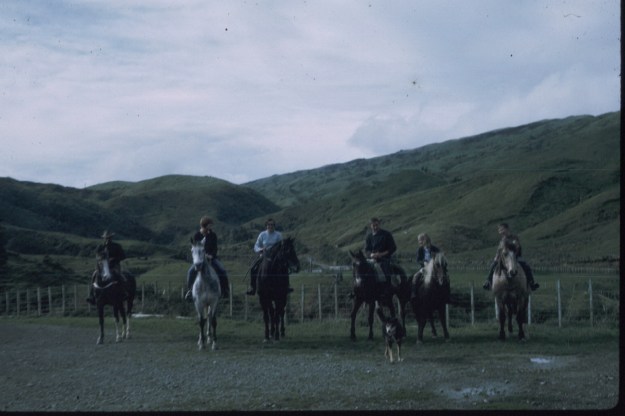
‘This is the kind of territory they were all locked together in. Here are the hills, and this is how they went to work.Left to right: Garth Smith (Dad) on Misty; Fiona Allpass on Poo: Marty Smith on Blackie: Bill Champion on Tiny: Chrissy Champion on Pet, and Paul Smith on Trixie.’ Marty on the photograph
Marty has given up teaching and administering literary events to work full time on writing a non-fiction book about what it takes to work in the racing industry and how and why people do. Her research involves regularly watching morning track work at the Hastings racecourse and betting at the TAB.