Tag Archives: Victoria University Press

Poetry Shelf celebrates new books: Seven poets read from Sista, Stanap Strong! A Vanuatu Women’s Anthology

Sista, Stanap Strong! A Vanuatu Women’s Anthology, eds Mikaela Nyman and Rebecca Tobo Olul-Hossen, Victoria University Press, 2021

Sista, Stanap Strong! gathers new writing from three generations of Vanuata women. This groundbreaking book includes poetry, fiction, essay, memoir, and song. While most of the contributors are ni-Vanuatu living in Vanuatu, some live in New Zealand, Fiji, the Solomon Islands and Canada, and some were born overseas and have made a home in Vanuatu. The arrival feels special – the anthology assembled with love, the voices tender, fierce, probing, with vital connections to both Vanuatu and the wider world. In celebration, seven poets read their anthologised poems.

Grateful thanks to editor Mikaela Nyman for assistance in assembling this post.

The Readings

Sharon Wobur reads ‘A strong woman’

Rebecca Tobo Olul-Hossen reads ‘as you turn 2 weeks old, koko dearest’

Frances C. Koya Vaka‘uta reads ‘Leiniaru, the girl from Pele Island who picks the fruit of the Niaru tree’

Elsie Nalyal Molou reads ‘This body is mine’
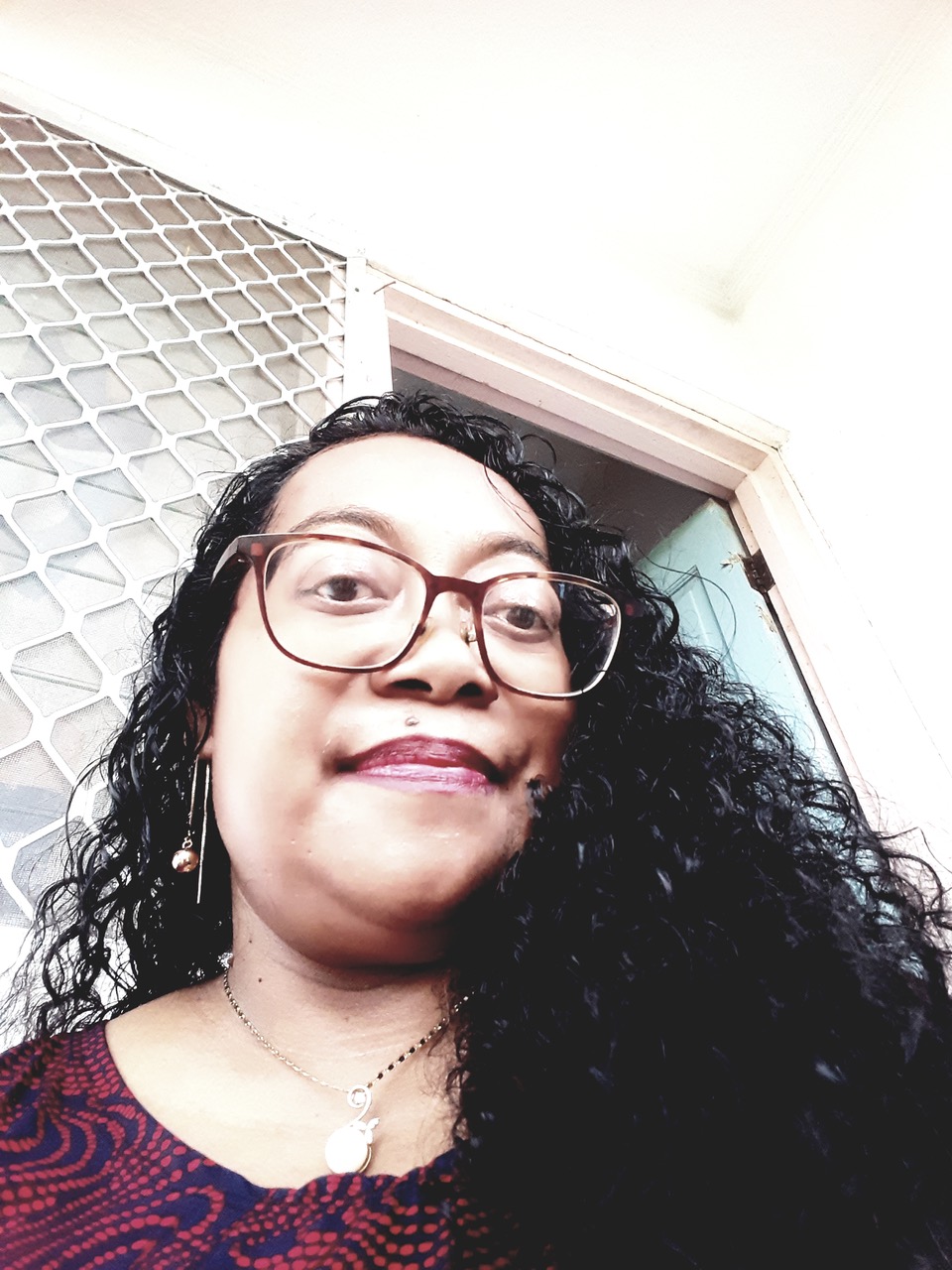
Nancy Gaselona Palmer reads ‘And she wept’
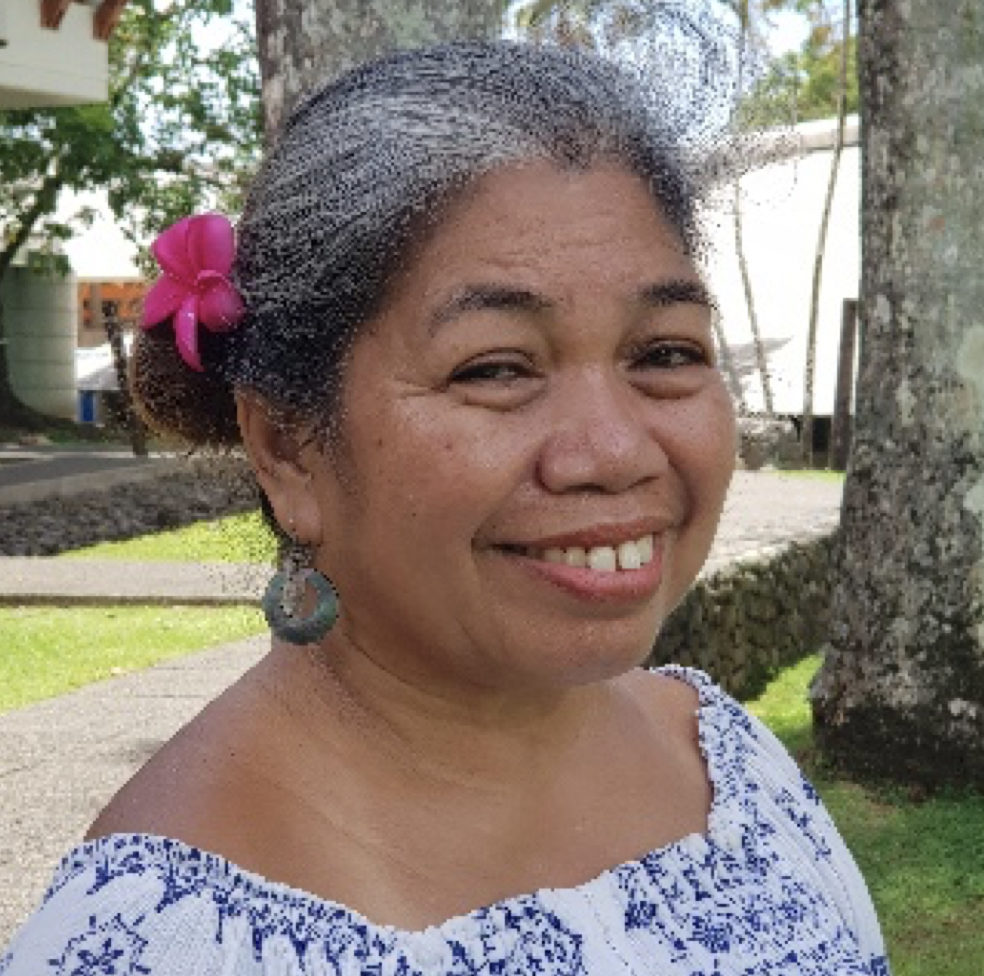
Pauline Chang Ryland reads ‘WIFE ‘ Woman in Ferocious Environments’

Ketty Dan-Napwatt reads ‘Givem wata lo olgeta’ and ‘For you today’ 

The Poets

Pauline Chang Ryland Having grown up in an environment where expressive arts was encouraged, I have been writing poetry, but have only recently begun to share my writing. My poetry is often written when I feel words spilling out of my heart, brain and lips and I just have to grab my pen and write. It’s my expression of what life dishes me and those around me, my significant memories and concerns about life and humanity, especially in the Pacific.

Ketty Dan-Napwatt:  I began writing by accident and I still do it sporadically. Because I think a lot and mull over decisions that I have to make or plan something spontaneously, it makes writing my thoughts down easier. I love language and use it creatively for writing, especially when my children urgently request words to create a specific song for public and national events – from a capella to R&B to reggae/dub and spirituals. I write about everything I feel strongly about and more as a relief activity than something to be read by others.

Frances C. Koya Vaka‘uta – Of mixed heritage with links to Sāmoa, Fiji and Vanuatu. Artist and poet, her work explores what it means to be of and belong to the islands, and contemporary issues in the islands under the pseudonym 1angrynative. She’s published in journals and anthologies. Her poetry collections of schizophrenic voices (2002) and Fragments (2018) are available through the University of the South Pacific Book Centre. She is working on two collections.

Elsie Nalyal Molou As a young woman in a very cultural based and patriarchal society, it can be difficult to find a space to voice your views on certain issues, such as violence in relationships and particularly violence against women. Poetry, is not only an escape for me to reflect on these issues, but a way for me to point out to others that these are issues we need to address. And I’m thankful that I’ve been given this space to do just that, and I hope that other young women will find their own outlets to do the same.

Rebecca Tobo Olul-Hossen completed her undergraduate studies at Massey University in Palmerston North. She is co-editor of Sista, Stanap Strong! A Vanuatu Women’s Anthology together with Mikaela Nyman. Rebecca’s and Mikaela’s collaborative poem ‘I Love You?’ was published in Sport 47. In 2020, her collaborative poem with Ketty Dan-Napwatt appeared on Sista website and her poems were included in the poetry collection Voes (published by Alliance Française in Port Vila) and in the South Pacific Communit’s poetry anthology Rising Tides. She is one of the authors and editors of Vanuatu’s first non-fiction book for children, Taf Tumas: Different journeys, one people (2020). Rebecca lives in Port Vila with her husband, sons and daughter. 

Nancy Gaselona Palmer is a poet and writer, she self-published her first book of poems Rock of Strength in 2019. She now is a contributor to Save the Children Solomon Islands project to write short stories for children below ages of 8. The stories are digitised and made available for little children on their mobile phones or tablets.

Sharyn Wobur – Works for World Vision and is originally from Gaua and the Solomon Islands. Poetry is her passion – a strategy to relieve stress where negative thoughts are written into positivity and she gains strength to soar. 

Victoria University Press page

‘Voices of Vanuata’: interview on Standing Room Only, RNZ National
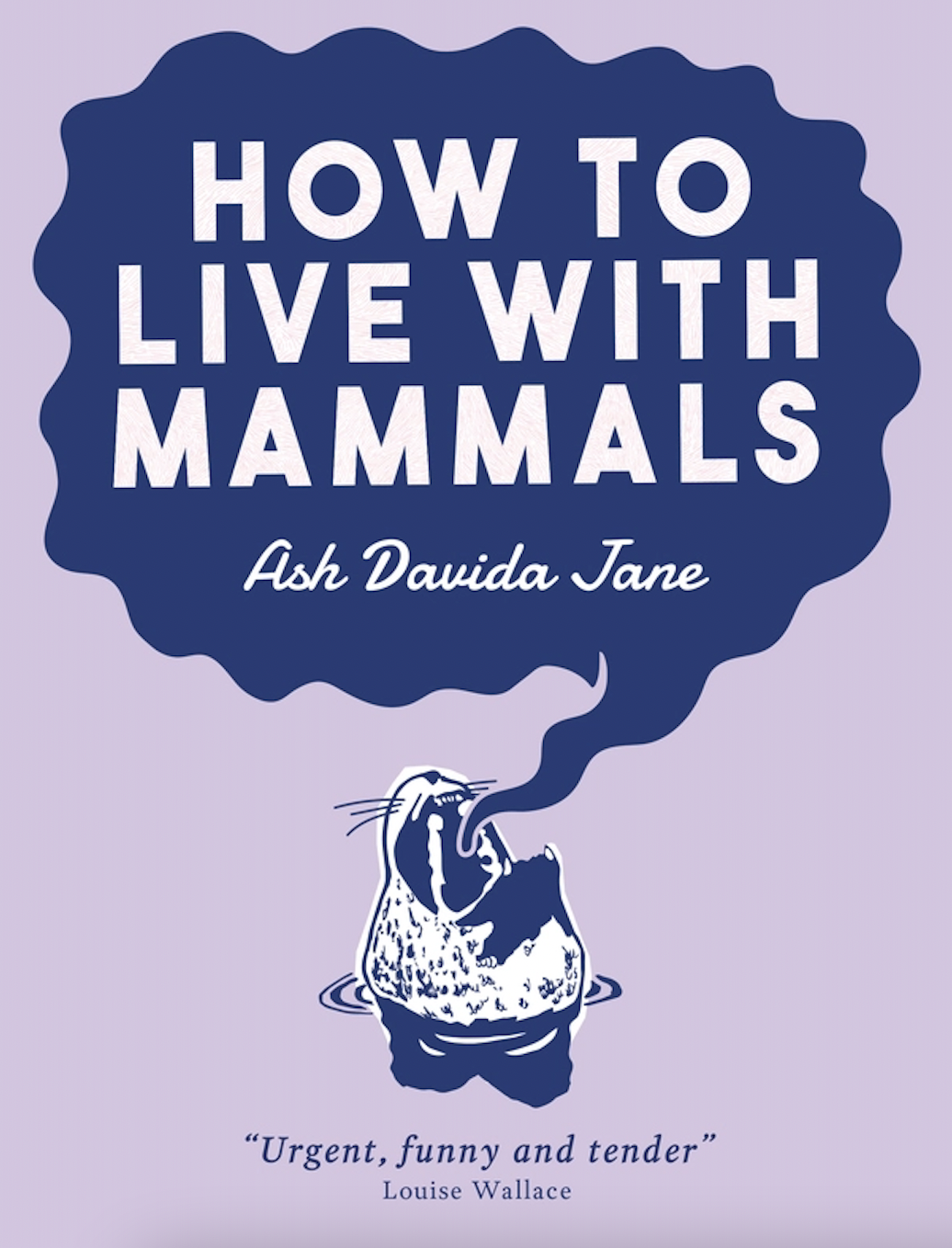
Poetry Shelf review: Ash Davida Jane’s How to Live with Mammals

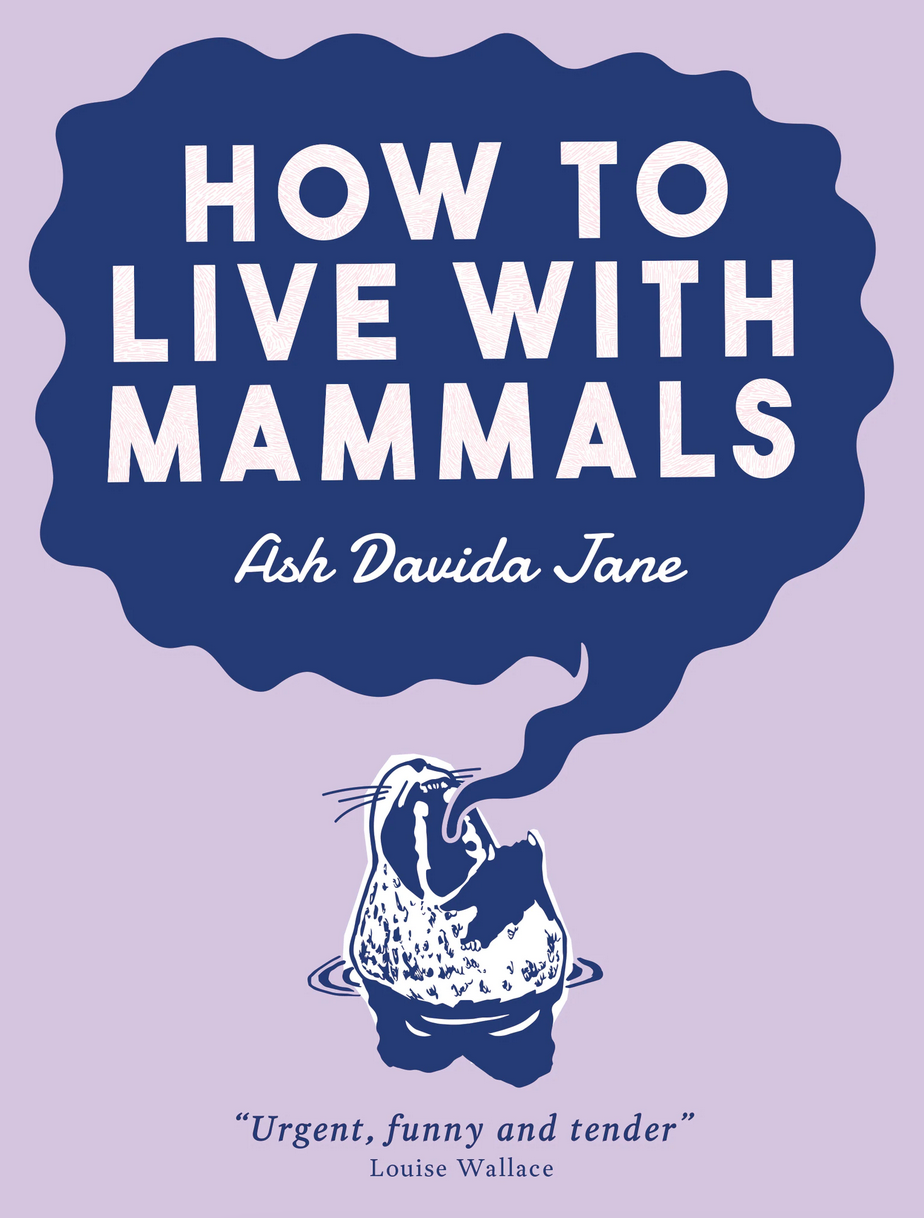
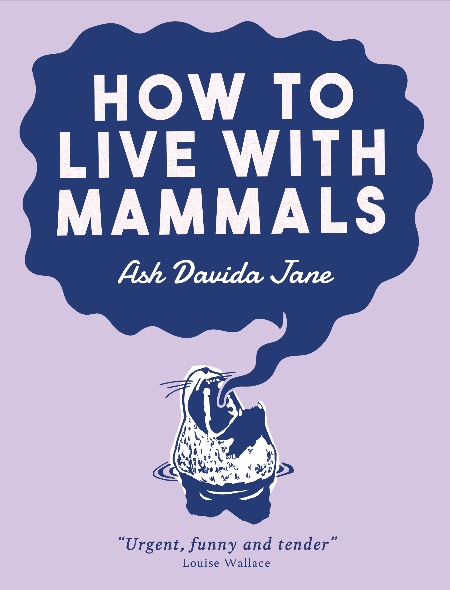
How to Live with Mammals, Ash Davida Jane, Victoria University Press, 2021

Every poem in Ash Davida Jane’s new collection How to Live with Mammals is an explosion in the mouth; the intricacies and nuances last all day, and beyond. I keep saying to myself well this is my favourite, this is the one I want to dally over and dive in deep. But then I turn the page and encounter another favourite. Therein lies the joy of poetry: the way a poem can you hold you.

I am scared I am going to pin the collection down to a single idiosyncratic reading when the poetry is full of movement and surprise, revelation and comedy. I am thinking the collection faces knowing and not knowing, paying close attention both to self and to the complicated world. There is the way things slip from grasp and the way a poem marks a place – a way of being – in the world. It is rich in multiple notes like I’m holding a refracting prism that keeps hooking me with glint and gleam. Subject matter and motifs repeat like connecting bridges: mammals, food, asparagus, the body, naming, birds, trees.

The poet – the speaking voice – looks back and looks forward, and the poem becomes present participle, a glorious bearer of movement that touches the past and the present, with longing and with forgetting. Perhaps I am saying this is a book of verbs where living feels personal, enriched by imaginings and replay, punctuated by white space, the poet’s breath.

I love considering these poems within the fertility of verbs. Take looking for example. Observing. Seeing what we have lost the ability to see. Being looked at. Not being looked at. Looking back with longing. Paying attention. Looking forward. This is just one verb-al thread that offers glorious sustenance to the collection’s arc. This from a poem that mourns a world affected by climate change:

I pay daily attentions to colour

7am waiting at the bus stop under

a sulphur-red sky

 burnt at the edges where it

sticks to the horizon

fading to a midday dull white sheen


the ocean a room of

mirrors reflecting itself

the edges of waves tinged pink

like we’re on another planet

but we’re exactly

where we’ve always been


except there’s a PE teacher

pushing us to go faster than we want to

jogging into an apocalyptic future

in polyester shorts


from ‘2050’

You could track the naming of things, the vanished names, the recalled names, the way names matter. You could trace the talking thread, self talk, alone talk, intimate talk, talking in a crowded room. You could take the bridge from assumed point of view to the poet’s place to other shoes. The poet steps into another character after her partner jokes that she’s his ‘farm wife / in my long brown skirt / and beige sweater / sleeves rolled up’. She steps into the walking shoes of Dorothy Wordsworth, borrowing lines, overlaying English lake with flittery fantail and a shared moon.

the bees emerging

from their wooden house

mistake me for

a flower and for

a moment I am one

hopelessly lacking in pollen

swaying in the breeze

and taking up space

standing still in the mud

unmaking myself amid

leaves I’ve seen a thousand times

and never wondered the names of

some trees putting out red shoots

query: what trees are they?


from ‘walking with Dorothy’


The reading rewards of Ash’s poetry are numerous. A single poem might make you laugh, recoil, identity, empathise, leap unexpectedly, gather facts, process feelings. ‘marine snow’ provoked such movement. Crikey I love this poem that moves from underwater swimming to a hatred of swimming, especially when the instructor tells the three year old a crab lives on the bottom of the pool, to the grief of last things to the grief of last things flowing into other things ( ‘the pot of coffee / is in mourning / now / the laundry / drips wet tears’) to the fact it snows underwater. Glorious. Sad. Challenging.

I don’t want to limit this book to narrow pathways and dead ends. I want you to find your own bridges and sidetracks, to leap and dive deep. Expect to be embraced in the scene. Expect heat shimmer steam. Expect the lucid and the poignant. I’m in love with these poems, every single one of them.

Ash Davida Jane’s poetry has appeared in MimicrySweet MammalianStarlingThe Spinoff and elsewhere. Her first book, Every Dark Waning, was published in 2016 by UK indie publisher Platypus Press. She lives in Wellington, where she works as a bookseller.

Pip Adam’s launch speech via Victoria University Press page

Victoria University Press page

Poetry Shelf: Ash reads from the book

Tara Comics launch page

Starling online journal: ‘Love poems when all the flowers are dead’

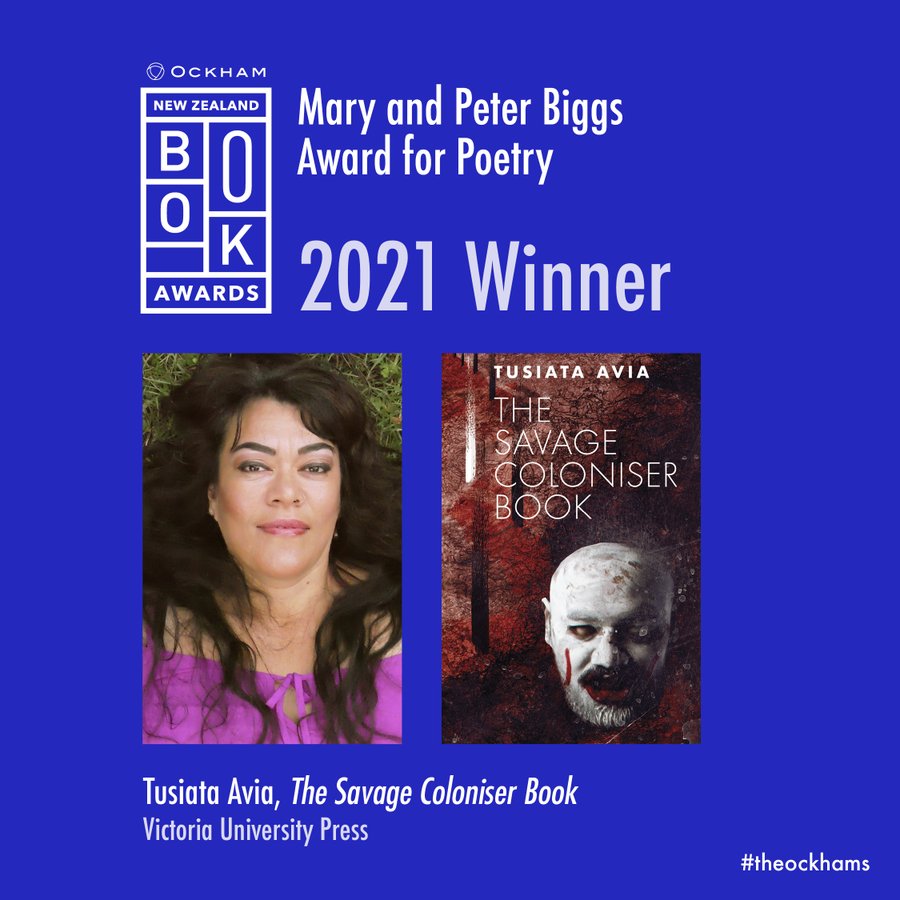
Poetry Shelf congratulates Tusiata Avia, the Ockham NZ Book Award Poetry winner (ten things she loves, a poem, an interview)

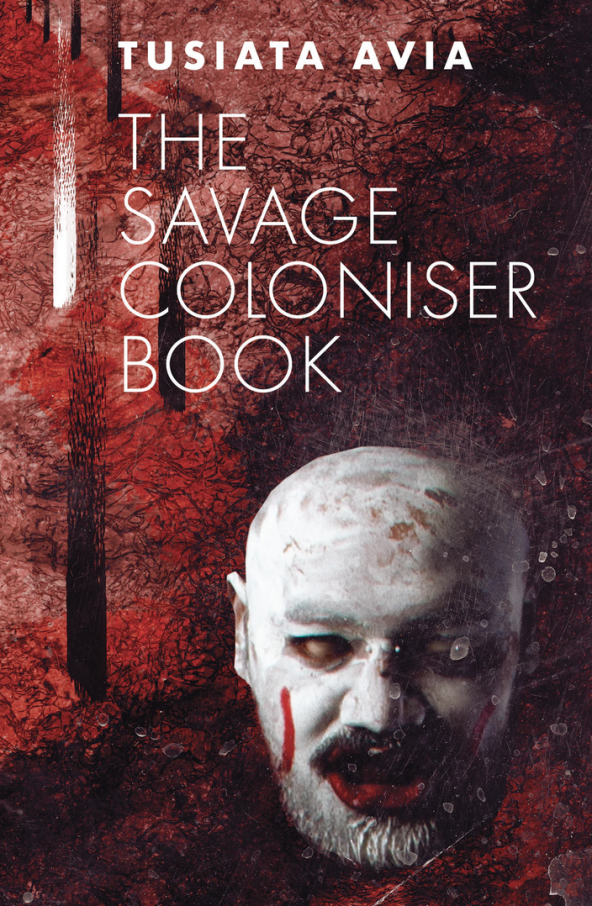
Such heartfelt congratulations to Tusiata Avia, a much loved poet who has and who continues to inspire generations of poets. Yes Pasifika poets, yes young women writing, and yes, most importantly, yes us all. Her award-winning book is magnificent. She places herself in these necessary poems: her ravaged heart, her experience, wounds, scars, thinking, feeling, urge to speak out, sing, perform, no matter the price, holding out history, the coloniser, the colonised, Ihumātao, the Australian bush fires, translating for the gutted woman, the abortioned woman, her mother, her daughter, her lovers, but at times she is disabled with epilepsy, her father a presence, and she places a prayer for her daughter, for the stars, water, lungs, and for the reader, here in these poems, she places a prayer. Extraordinary.

Ten things I love

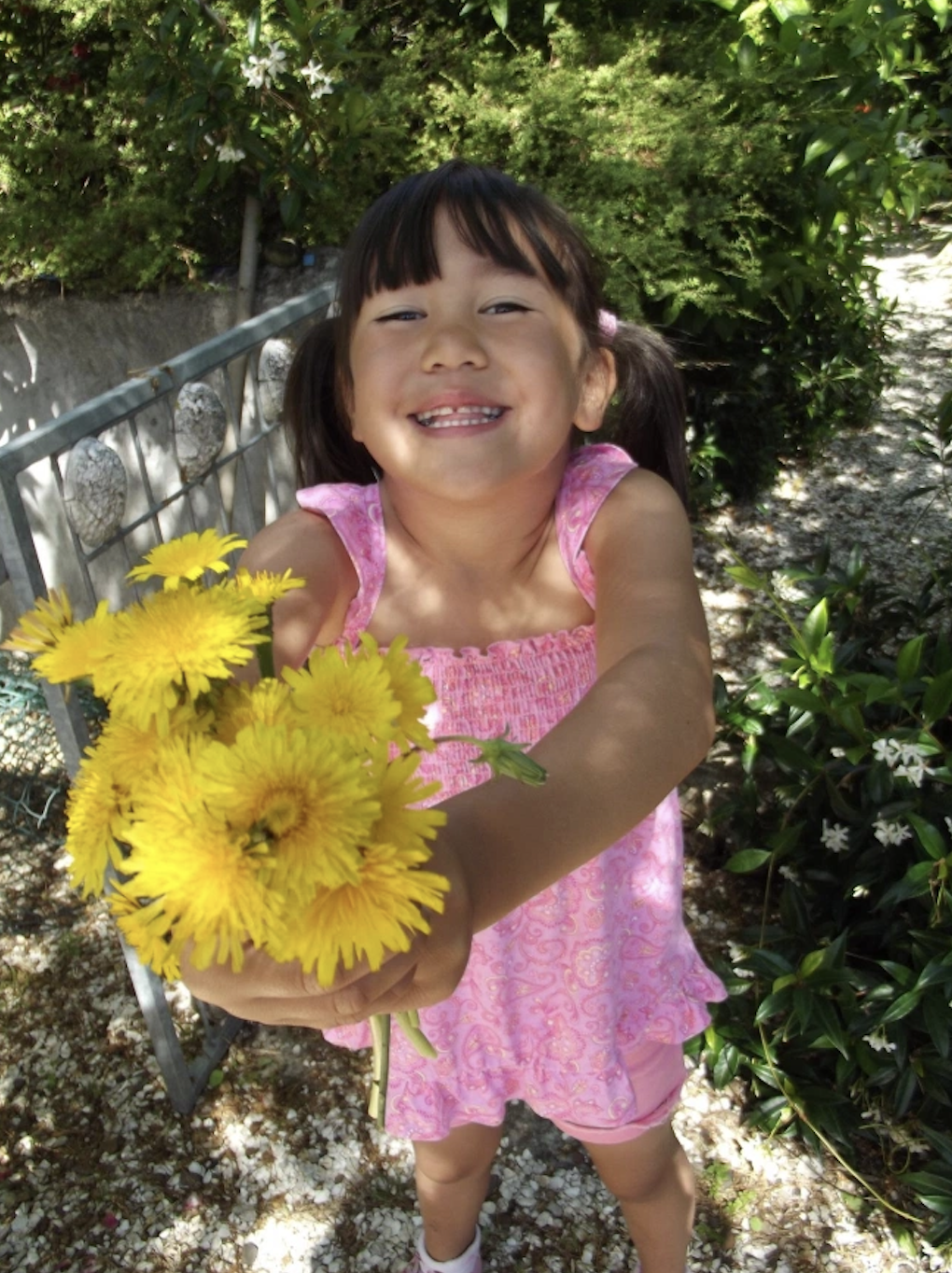
1. A photograph: The photo is of Sepela – exactly 10 years ago, a week after the big earthquake when we escaped to Hinemoana’s who lived in Kapiti then.

2. A poem by someone else: All they want is my money my pussy my blood by Morgan Parker (and pretty much anything from her book, There are more beautiful things than Beyonce.

3. A song: Back to Life by Soul II Soul

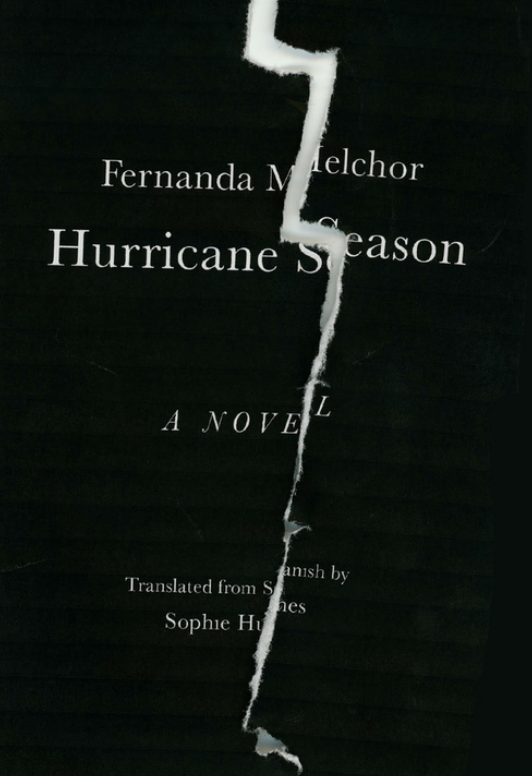
4. A book: Hurricane Season, Fernando Melchor, trans. Sophie Hughes, New Directions, 2020 (my favourite book of 2020)

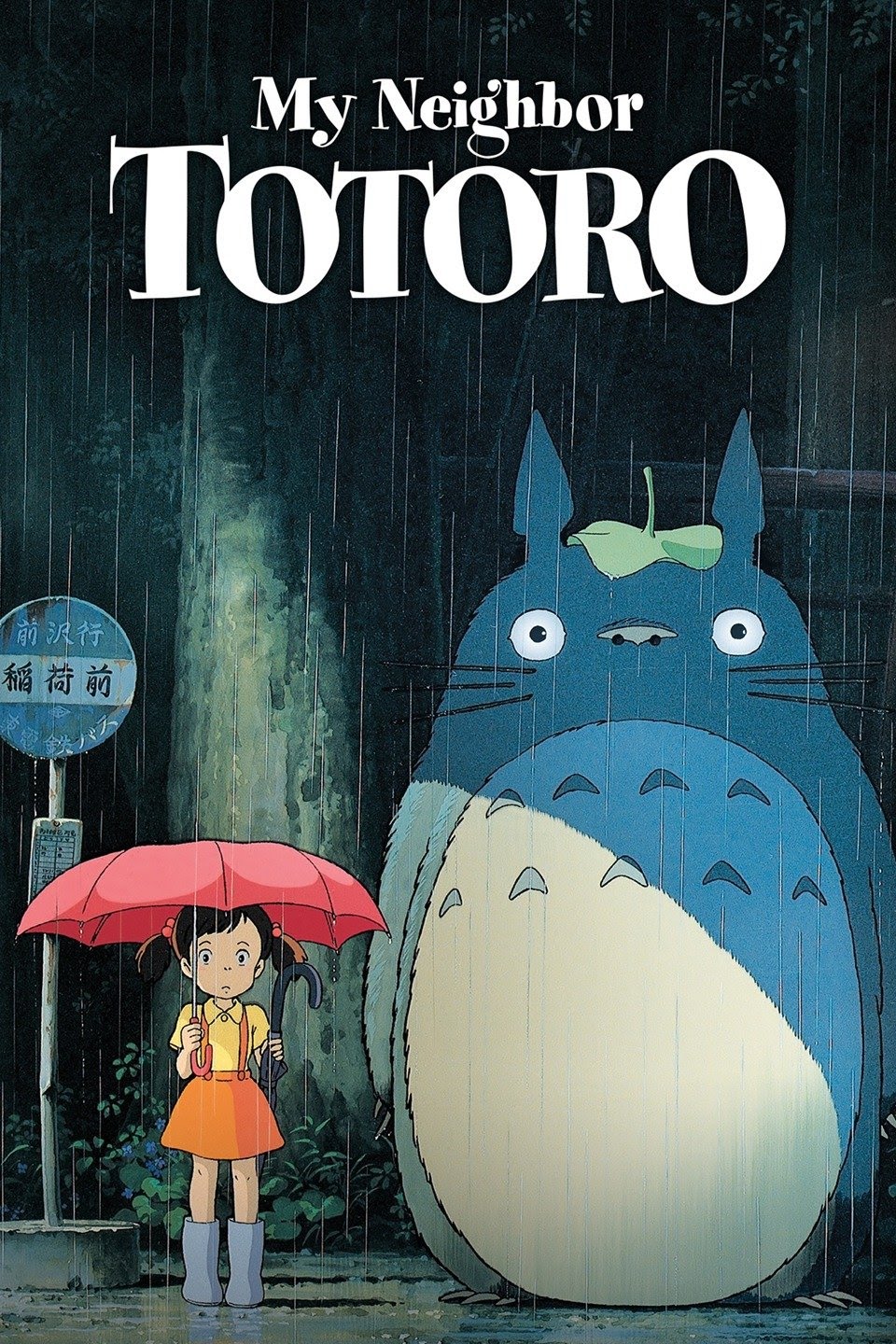
5. A movie: My Neighbour Totoro

6. A place: South Sinai coast, Egypt

7. A meal: taro (cooked in the umu) and palusamu

8. A poetic motif: Can’t think of one, but I can think of a form I love – the pantoum.

9.  A place to write: Where ever the ‘thing’ is happening (see Five questions below)

10. A poem from my book (Tusiata did a stunning performance of this at the awards PG):

250th anniversary of James Cook’s arrival in New Zealand

Hey James,

yeah, you

in the white wig

in that big Endeavour

sailing the blue, blue water

like a big arsehole

FUCK YOU, BITCH.

James,

I heard someone

shoved a knife

right up

into the gap between

your white ribs

at Kealakekua Bay.

I’m gonna go there

make a big Makahiki luau

cook a white pig

feed it to the dogs

and FUCK YOU UP, BITCH.

Hey James,

it’s us.

These days

we’re driving round

in SUVs

looking for ya

or white men like you

who might be thieves

or rapists

or kidnappers

or murderers

yeah, or any of your descendants

or any of your incarnations

cos, you know

ay, bitch?

We’re gonna FUCK YOU UP.

Tonight, James,

it’s me

Lani, Danielle

and a car full of brown girls

we find you

on the corner

of the Justice Precinct.

You’ve got another woman

in a headlock

and I’ve got my father’s

pig-hunting knife

in my fist

and we’re coming to get you

sailing round

in your Resolution

your Friendship

your Discovery

and your fucking Freelove.

Watch your ribs, James

cos, I’m coming with

Kalaniōpu‘u

Kānekapōlei

Kana‘ina

Keawe‘ōpala

Kūka‘ilimoku

who is a god

and Nua‘a

who is king with a knife.

And then

James,

then

we’re gonna

FUCK.

YOU.

UP.

FOR.

GOOD.

BITCH.


Tusiata Avia

Five questions

Is writing a pain or a joy, a mix of both, or something altogether different for you?

A mix, for sure. Often, I don’t feel like writing – unless I have an experience (internal or out in the world) that I feel the need to write about immediately. At times like that, I feel a sense of urgency, sometimes verging on desperation, to stop whatever I’m doing and write. I have pulled the car over on a busy motorway and searched for a piece of paper to scribble it down . I’m not great at the discipline of writing every day.

Name a poet who has particularly influenced your writing or who supports you.

I don’t read her so much these days, but I love Sharon Olds. She helped me to write more openly – to be honest and vulnerable.

Was your shortlisted collection shaped by particular experiences or feelings?

Colonisation, racism, illness, a bit of Covid – all the relaxing stuff.

Did you make any unexpected discoveries as you wrote?

The whole book was unexpected. I was writing another book called Giving Birth To My Father, which took ages. After a while (quite close to my deadline) I realised it wasn’t ready for the outside world. The Savage Coloniser Book had to come together really quickly, if I wanted it published for 2020. I knew I had a few poems that were very ‘2020’ lying about. I wrote to those poems in a short amount of time.

Do you like to talk about your poems or would you rather let them speak for themselves? Is there one poem where an introduction (say at a poetry reading) would fascinate the audience/ reader? Offer different pathways through the poem?

During poetry readings/ performances I used to think the poem should speak for itself but many poems really need an introduction, particularly when people are not experiencing them on the page.

Tusiata Avia is an acclaimed poet, performer and children’s writer. Her previous poetry collections are Wild Dogs Under My Skirt (2004; also staged as a theatre show, most recently Off-Broadway, winning the 2019 Outstanding Production of the Year), Bloodclot (2009) and the Ockham-shortlisted Fale Aitu | Spirit House (2016). Tusiata has held the Fulbright Pacific Writer’s Fellowship at the University of Hawai‘i in 2005 and the Ursula Bethell Writer in Residence at University of Canterbury in 2010. She was the 2013 recipient of the Janet Frame Literary Trust Award, and in 2020 was appointed a Member of the New Zealand Order of Merit for services to poetry and the arts.

Poetry Shelf review

Selina Tusitala Marsh’s review at ANZL

Poetry Shelf: Tusiata‘s ‘Love in the Time of Primeminiscinda’ (The Savage Coloniser Book)

Tusiata reads ‘Massacre’ (The Savage Coloniser Book)

Leilani Tamu review at KeteBooks

Faith Wilson review at RNZ National

Victoria University Press page

Poetry Shelf celebrates new books: Ash Davida Jane reads from How to Live with Mammals

How to Live with Mammals, Ash Davida Jane, Victoria University Press, 2021

Ash reads ‘water levels’

Ash reads ‘mating in suburbia’

Ash reads ‘transplanting’

Ash reads ‘carrying capacity’

Ash Davida Jane’s poetry has appeared in MimicrySweet MammalianStarlingThe Spinoff and elsewhere. Her second book, How to Live With Mammals, was published by Victoria University Press in April 2021. She lives and works in Wellington.

Victoria University Press page

Poetry Shelf Ash’s poem ‘undergrowth

Poetry Shelf Ash muses on ecopoetics

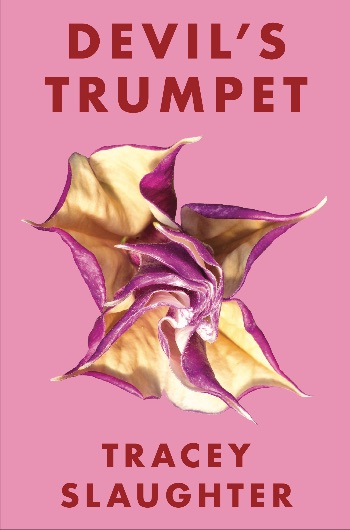
Poetry Shelf noticeboard: Tracey Slaughter launches Devil’s Trumpet

Victoria University Press and Poppies Bookstore
warmly invite you to the launch of

Devil’s Trumpet
by Tracey Slaughter

on Thursday 15 April, 6pm 
at Poppies Bookshop,
Casabella Lane, Barton St,
Kikiroa, Hamilton.

All Welcome.

Poetry Shelf review: Bernadette Hall’s Fancy Dancing: New and Selected Poems 2004 – 2020

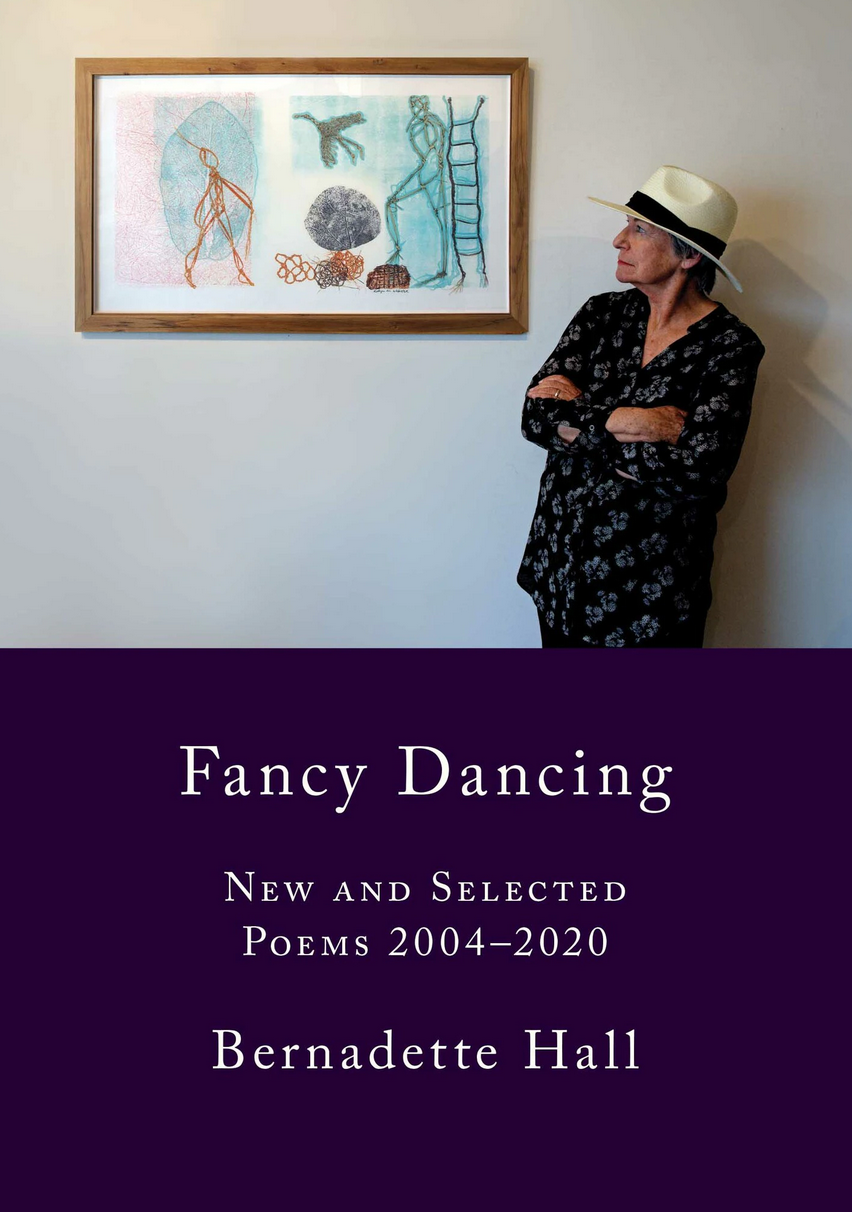
Bernadette Hall, Fancy Dancing: New and Selected Poems 2004 -2020, Victoria University Press, 2020

Campfires flicker in the night, ice masks the harbour.

I’ve made up my mind at last. I’m going to walk across

to see the others. We can sit down then

and talk about poetry, the way ‘water’ chimes

with ‘daughter’ and is there any news of her yet.

from ‘Wai-te-ta’

2020 was a year rich in New Zealand poetry and I am still dipping into my wee stack for treasures. I have long been a fan of Bernadette Hall’s poetry with its sumptuous sound and visual effects, its wide roving subject matter, and its agile engagement with ideas, experience and feeling, it’s humour.

Interestingly, picking up Fancy Dancing set me on a slightly different response to the poetry, because I stalled on Robyn Webster’s artwork before I read the poems. Robyn’s works are enticing. They appear like a fusion of needlework, embroidery and painting with maybe a whiff of printmaking. I haven’t seen them in real life so am only connecting with them as illustrations in a book and have no idea of the media. I am struck by the allure of threads, branches and tributaries, by a colour palette that shifts between soothing harmonies and piquant contrasts. There is both simplicity and intricacy.

Here I am stalling on the artworks and I see them as shadow maps of the poetry. To think of Bernadette’s poetry as rich in tributaries, branches and threads is rewarding. One thread takes you along Irish roads into experience and ancestors, another into ice and snow and the Antarctic. Gardens and friends, weather and the sea, the mountain and the angels are stitched exquisitely along the lines. There is the close-at-hand and there is the wider world. There is the warmth in harmonies and the edge in contrasts. It was so satisfying to read my way through samples from the collections I am familiar with (The Ponies (2007), The Lustre Jug (2009), Life & Customs (2013) and Maukatere, floating mountain (2016).

The final section is devoted to new poems, including an exquisite sonnet sequence that is akin to brocade it is so rich in effect. Bernadette’s included author bio is revelatory : “And as for the wilful sonnets that explode in the final pages of this book, she wonders where on earth they came from. ‘It was such fun writing them,’ she says, ‘as if I‘d kicked down the stable doors and taken to the hills.’”

If I continue making analogies with the artwork, I see the 25 sonnets as embroidery at its most intricate and dazzling. Classical threads are stitched into a contemporary context, the personal is threaded with the fictional, the imagined with the recalled. Both Phaedra and the poet are shadowy presences, their back narratives bubbling beneath the surface. The poet speaks:

Now it’s time to expand the narrative. So come

with me into a dimly lit corridor in the Mayflower

Student Hostel beside the Mississippi River

in Iowa.  (…)

from ‘v.’

Think of brocade that glints and gleams and offers pocket narratives and pinches of the surreal. Guests make appearances: friends, family, writers, artists, goddesses. You will hear rain and footsteps, but you will also hear the sumptuous audio effects that are a trademark of Bernadette’s writing. Such an ear for the resounding line. I keep wanting to quote lines to you, whole sonnets.

In sonnet xix, the ‘crazy lady, how she strides down Cuba Mall in full combat gear’ declares the area is under control. The poem culminates in the poet/speaker imagining how she would behave kindly if it were a movie: she would approach the woman in combat gear saying, ‘Thank you, / I feel so much safer in this crazy world with you around.’

I am repeatedly drawn to sonnet xxiv, a sonnet dedicated to grandchildren, a sonnet that sways between past and present, between Italian marble and four children harbour swimming, ‘their arms / like triangle roof-lines’. The image is potent, the shiver between past and present fertile, and the ending so very moving:

(…) How long it took to see

the eating, drinking, gulping, feasting of the water

body, the spasmodic sun, the specific shade.

Beautiful children, you are forever and thereafter

swimming me to shore. I could not love you more.

The final sonnet is a form of counting blessings as it gives thanks. It becomes a rich celebratory brocade, luminous and heartfelt, a gift for ear and eye. I will pin this sonnet to my study wall as I continue to give thanks to poetry, to the things near me, to what gives me courage and furnishes each precious day.

Let us give thanks for the cranesbill geranium

and the mouse eared myositis,

for the ranunculus (little frog mouth, little friend),

for the feathered nival zone, for the bug moss

in the tarn, for all that is and all that

has been and all that is to come. It is for us

to keep our courage firm, to nurse our appointed

pain, to await ‘that which springs ablaze of itself’.

from sonnet xxv

Fancy Dancing showcases the work of one of our most treasured poets. The poems will dance in your ear and on your tongue, in your limbs and in your heart. Take a read. Pick a favourite and pin it to the wall. Take heart from this gift of poetry.

Bernadette Hall is Otago born and bred. Following a long and much enjoyed career as a high school teacher in Dunedin and Christchurch, she has for the last eighteen years lived in a renovated bach at Amberley Beach in the Hurunui, North Canterbury, where she has built up a beautiful garden. Fancy Dancing is her eleventh collection of poetry. ‘It’s as close as I’ll ever get to writing an autobiography,’ she says, laughing. And as for the wilful sonnets that explode in the final pages of this book, she wonders where on earth they came from. ‘It was such fun writing them,’ she says, ‘as if I‘d kicked down the stable doors and taken to the hills.’ In 2015 she collaborated with Robyn Webster on Matakaea, Shag Point, an art /text installation exhibited at the Ashburton Art Gallery. In the same year she was awarded the Prime Minister’s Award for literary achievement in poetry. In 2017 she was made a Member of the New Zealand Order of Merit for services to literature in Aotearoa New Zealand.

Victoria University Press page

Poetry Shelf sonnet from Fancy Dancing

ANZL review by Lynley Eadmeades

Best NZ Poems, sonnet from Fancy Dancing

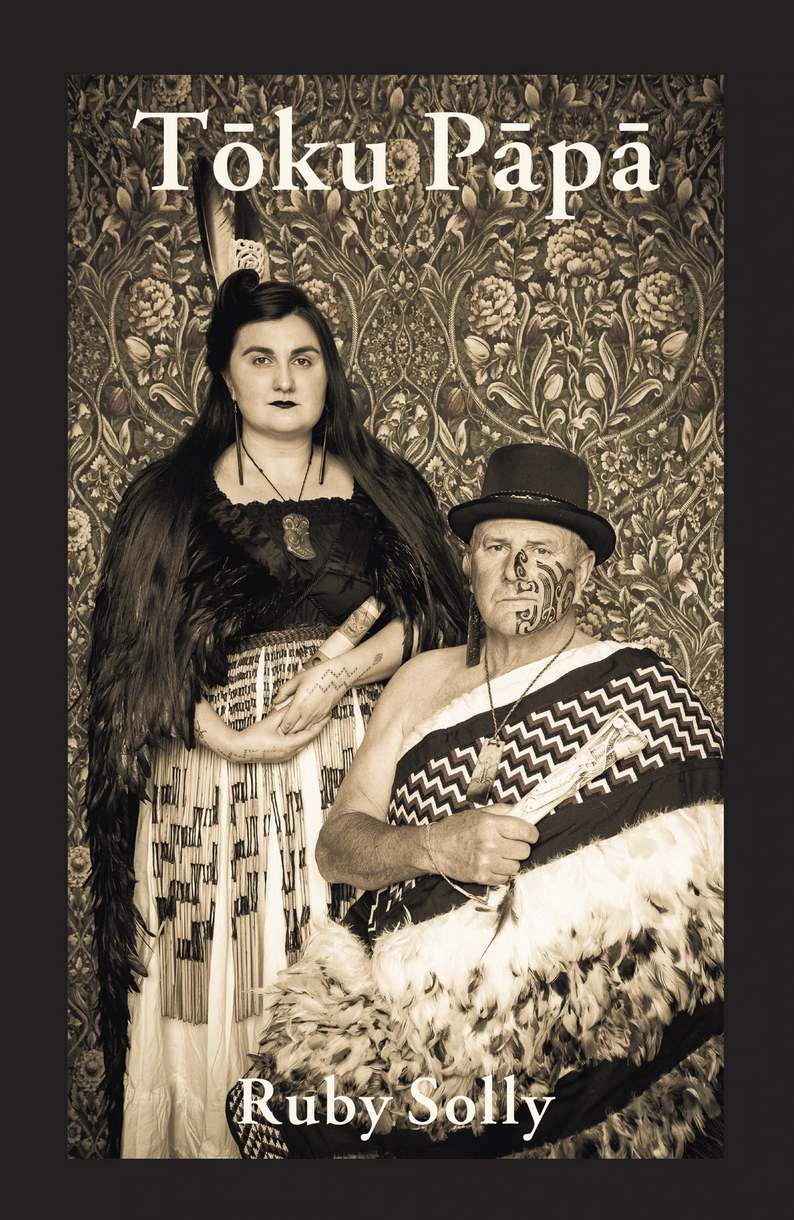
Poetry Shelf review: Ruby Solly’s Tōku Pāpā

Tōku Pāpā, Ruby Solly, Victoria University Press, 2021

Over the past year, in all my musings and readings, books have felt so very precious. Books crossing myriad categories, books for adults and books for children. Poetry has been especially precious. Aotearoa is alive with poetry communities; there’s such a richness of voice on the page and in the air (and on the screen). And it is so valued.

Pick up a poetry book, hold the book in your hand and feel its preciousness. I picked up Ruby Solly’s debut collection and it felt like I was holding love. The love imbued in the stitches and seams of its making. The photograph will hold you still and steady and already you know that in this book people will be at its heart. Its core.

Enter a poetry book that catches your heart and every pore of your skin, and you enter a forest with its densities, its shadows and lights, canopies and breaths, re-generations. You will meet oceans and rivers and enter different ebbs and flows, different currents, fluencies. You will reach the sky with its infinite hues, dreamings, navigations, weatherings (storm washed, sunlit, moonlit). You will meet the land with its lifeblood, embraces, loves, whānau, anchors.

This is what happens when I read Ruby Solly’s Tōku Pāpā.

When you first told me

that you gave me the name of our tupuna

so that I would be strong enough

to hold our family inside my ribcage,

I believed you.

The collection is in two connected parts, like the two parts of a heart, ‘awe’ and ‘kura’, two nouns linked by feathers, leading us to the ‘essence of soul’, ‘strength, power, influence’ and the red feathers used as ‘decoration, treasure, valued possession, heirloom, precious possession, sacred, divine law, philosophy, darling, chief’, and the ability to glow.

The untitled poem that begins the collection (quoted in part above), before awe and kura, addresses ‘you’, and in this heart-opening the poet draws deep into the knowledge and love and whānau that shape and nourish her, the wairua, the dark places and the light.

I am reminded of Robert Sullivan’s terrific poem ‘Voice Carried My Family’ (AUP). Voice carries Ruby, and her voice ‘carries’ everyone she thanks in her acknowledgement page. The collection has myriad tributaries, but a key river is finding voice. She is addressing her Pāpā. She is voicing her relationship and that voice is modulated as musician, as poet, as human being. She is listening to the past and the present, she is writing a river, an ocean, the sky, the land. A forest. A whānau.

The words flow like a solo instrument, with the poet as bow and breath.

There is stillness and movement, and there is always heart. You will find yourself in the scene, and the scene will pulsate and be luminous with life:

We sit together in silence,

deep in the mountain’s quiet heart.

Watching our breath melt away

the walls around us.

from ‘He Manawa Maunga’

There is a road trip to the ballet and a machete blade to be readied for work. Custard tarts are eaten as a car fills with smoke. There are swimming lessons. There is underwater and above water. There is finding the current and then finding breath. There is warmth and there is wisdom.

I especially love ‘Eulogy’ and the father wisdom:

As a child

whenever I was angry,

inconsolable,

my father would tell me to write a eulogy

to the person who had caused me pain.

He said that by the end of it

I would see

that even those who cause us pain

are precious to the world.

from ‘Eulogy’

This precious book – that in its making, its stands, rests and journeys from and towards so much – is the reason why I cannot stop reading and sharing thoughts on and writing my own poetry. The book is a gift and like so many other readers I am grateful. Kia ora Ruby. Thank you.

Ruby Solly (Kāi Tahu, Waitaha, Kāti Māmoe) is a writer, musician and taonga pūoro practitioner living in Pōneke. She has been published in journals such as Landfall, Starling and Sport among others. In 2020 she released her debut album, Pōneke, which looks at the soundscapes of Wellington’s past, present and future through the use of taonga pūoro, cello, and environmental sounds. She is currently completing a PhD in public health, focusing on the use of taonga pūoro in hauora Māori. Tōku Pāpā is her first book.

Victoria University Press page

Ruby talks with Kathryn Ryan on Nine to Noon

On Poetry Shelf: Ruby’s poem ‘Pōria

On Poetry Shelf: Ruby’s poem ‘Dedication

Ruby Solly premieres a video for her new album Pōneke and a wānanga with essa may ranapiri

Cover photograph: Taaniko Nordstrom and Vienna Nordstrom, Soldiers Rd Portraits

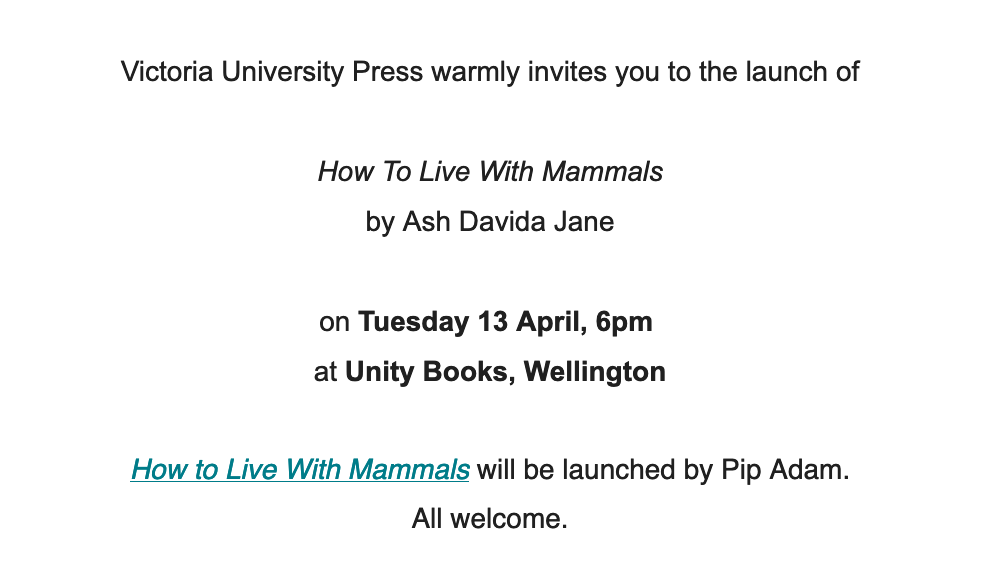
Poetry Shelf noticeboard: Launch of Ash Davida Jane’s How to Live with Mammals

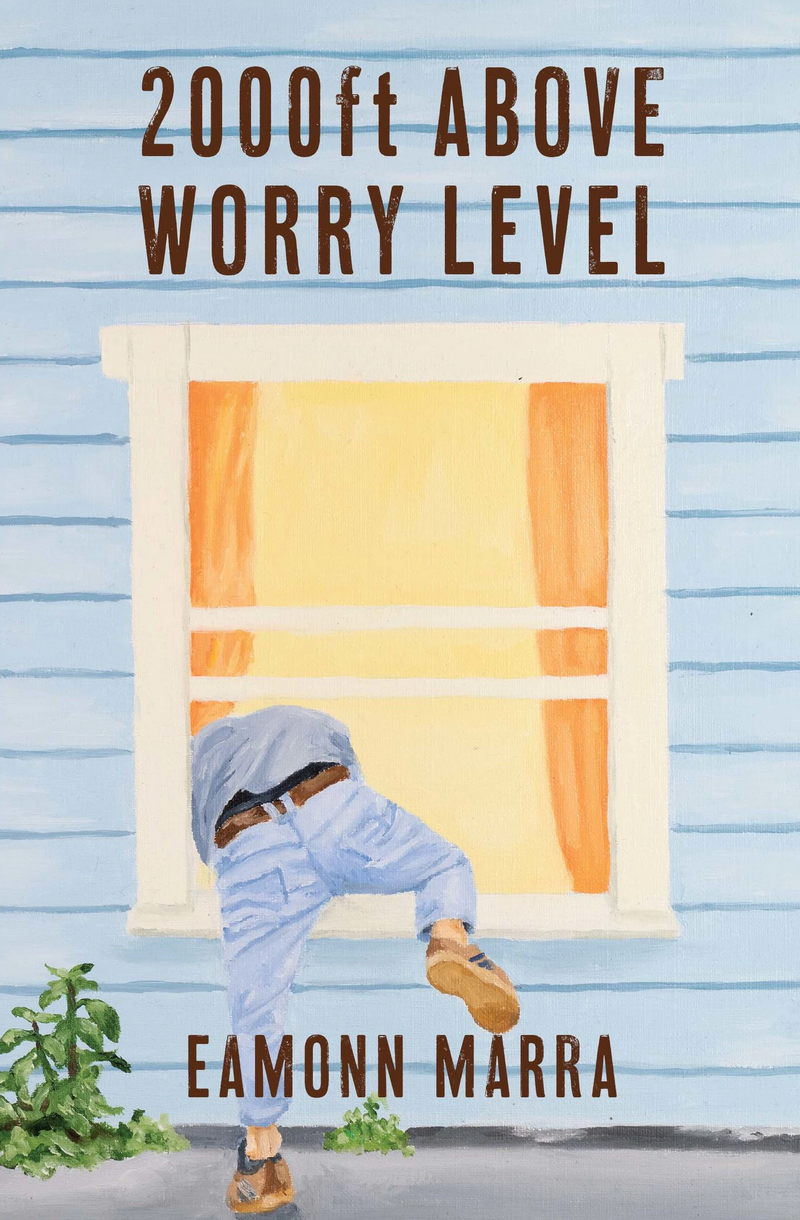
Poetry Shelf Review: Eamonn Marra’s 2000ft above Worry Level

Eamonn Marra, 2000ft above Worry Level, Victoria University Press, 2020

Have you read Eamonn Marra’s 2000ft Above Worry Level yet? It is so good. It is so real it hurts, because there you are in the edginess of life that is seldom smooth sailing, that offers up edges and grime and spikes and unspeakable challenges and making do and doing the things you need to do to get through the day. I laughed out loud and I winced and I almost cried and then I laughed out loud again and I just didn’t want to put the book down. The sentences are freshly flowing, the dialogue pitch perfect. The voice of the main character feels so real I feel like I am intruding into the story. A gatecrashing eavesdropping reader who wants everything to go ok. The bloke is just out of university and is trying to find a job, trying to hold down a room in a flat, trying to keep his mind in balance with anti-depressants, keeping in touch with his ex-girlfriend who he likes more than any other subsequent date. painting his mother’s fence slower than a snail with the help of top tips from a well-meaning neighbour. He is trying to write fiction in between the daily demands, and when his ex-girlfriend complains his short story is based on her, he claims it as fiction. Who knows whether fiction draws on real life and real life collapses into fiction in this kaleidoscopic rollercoasting 3D realism!

The novel is episodic, collaging pieces of a life, scenes from childhood alongside university days and post university, and it comes together as glorious conjunctions with its adhesive threads. Think persistence, think daily detail, what gets eaten, what gets agonised over, what gets said and what doesn’t get said, think humour and everyday tedium and enduring family attachments. The writing is almost like stream of conscious, yet it is sweetly crafted in its poise, its delicious ease. And if you crash against the dark, especially a psychological dark and the awkwardness of fitting in and making ends meet, if you do feel affected by this, and I sure did, you also absorb hope and light and rejuvenation. I started reading the book when an incomprehensible and insulting tweet about two new zealand poets really pissed me off. Reading 2000ft above Worry Level got me back on track and I just thought yes! This sublime self-transcending reading experience is why books matter.

Eamonn Marra is a writer and comedian. He was born and raised in Christchurch and now lives in Wellington. He has a masters degree from the International Institute of Modern Letters. Eamonn’s shows include Man on the Verge of a Nervous Breakdown (2014), Respite (2014/2015), I, Will Jones (2016–18), and Dignity (2018). 2000ft Above Worry Level is his first book.

Victoria University Press page

Poetry Shelf noticeboard: my review of Fleur Adcock’s at Kete Books


I woke in the middle of the night with an @RNZ earthquake message and held the radio to my ear until dawn, drifting in and out of advice, alerts and individual stories from mayors and locals, with the anxiety like a snowball gathering Covid-level talk and Covid -rule breakers, and the incomprehensible news of threats against Muslims in Christchurch, and the brutality in women’s prisons, and the bullies in the police force, and how some people should not get airspace their behaviour and views are so damaging and ugly, and I am thinking how lucky I was to have those five days up north with my family at Sandy Bay, and food in my cupboards, and a stack of poetry books to read and review, and clean notebooks for my secret projects, and panadol for pain, and the tomato plants still laden, and water in the tank, and @ninetonoon with Kathryn Ryan keeping us posted with @SusieFergusonNZ and her heartwarming Te Reo Māori.

Poetry is the lifeline, the hand held out, the music in the ear, the saving grace, the little miracle on the page.

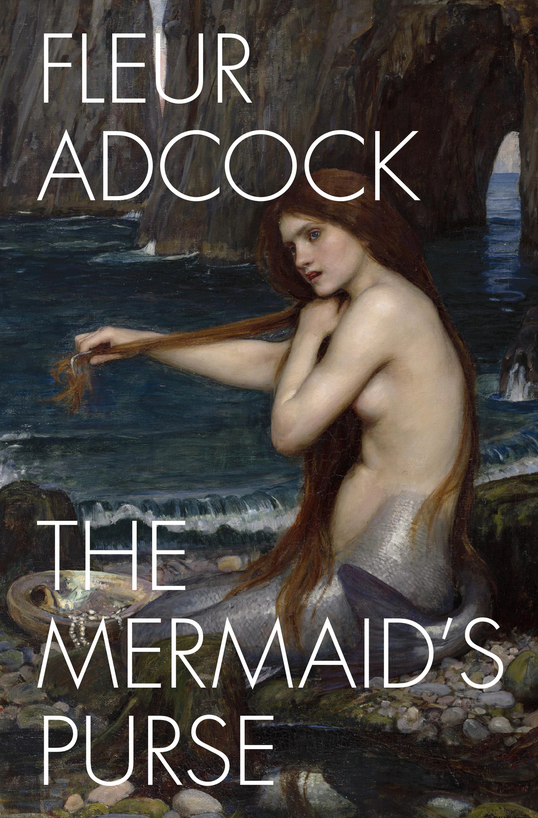
I reread Fleur Adcock’s The Mermaid’s Purse at Sandy Bay and this morning I was picturing myself back under the tree’s shade with the tide coming in, and the sun shining bright. I was back in the beach scene and back in the scenes of Fleur’s glorious poetry. Here is a sample from my review for for Kete Books:

The Mermaid’s Purse moves between places with vital attachments (New Zealand and Britain) and, in doing so, moves through the remembered, the felt, the imagined. I sit and read the collection, cover to cover, on holiday beside the dazzling ocean and white Northland sand. I am reading ‘Island Bay’, a poem near the start of the book and keep moving between the dazzle of Adcock’s lines and the dazzle of the sea. Here are the first two stanzas:


Bright specks of neverlastingness

float at me out of the blue air,

perhaps constructed by my retina


which these days constructs so much else,

or by the air itself, the limpid sky,

the sea drenched in its turquoise liquors


Both lucid and luminous, this exquisite poem sets the mind travelling. I’m reminded these poems were written in an old age. “Neverlasting” is the word that unthreads you. It leads to the infinite sky, and then to the inability of the ocean and life itself to stay still or the same, to old age.

Full review here