Tag Archives: Victoria University Press

Poetry Shelf, Poets’ Choice: Cilla McQueen and Brian Turner make some picks

418MHC3lAEL._SX346_BO1,204,203,200_

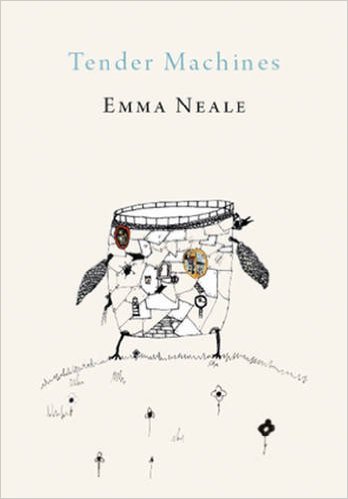
My pick is Emma Neale’s Tender Machines (OUP). Emma’s poetry is resonant on many levels and repays close reading. In her supple, expert language, she takes a loving look at the human condition in a collection which has depth, wisdom and insight.

Cilla McQueen


Being_Here_cover__66009.1423089464.140.215  Being_Here_cover__66009.1423089464.140.215   Being_Here_cover__66009.1423089464.140.215

Mostly I read poetry and non-fiction, and a lot of the latter is to to do with environmental issues in an effort to understand and do something about the disgusting rate at which we’re destroying the place. Recently I read Michael McCarthy‘s The Moth Snowstorm, which Helen Macdonald termed ‘a deeply affecting memoir and a heartbreaking account of ecological impoverishment’. I concur. Much of what McCarthy writes about mirrors what’s happened and continues to here, in NZ, and elsewhere.

Three of the volumes of poetry that I’ve read and liked most in the past year are Robin Robertson‘s The Wrecking Light, Vincent O’Sullivan‘s Being Here, and Emma Neale‘s Tender Machines. Robertson doesn’t pussy-foot around, covers a lot of ground, can be caustic, blunt, wry and shattering. O’Sullivan ranges widely both in tone and content. Apart from the wry and sly ways he approaches things I like the ways in which he highlights human absurdities. As I hear him, it’s not as if we’re too much troubled by human absurdity, it’s that we’re not troubled enough. In Emma Neale’s Tender Machines she grapples with long-standing human predicaments, the difficulties we have personally keeping a lot of the ‘ongoing human symphony’ playing while trying to work out how to silence our dreadful ‘inner racket’.

I’d like to be able to buy and read far more NZ poetry than I do these days. Back in the 1960s, when I began trying to write poems, it was possible to be familiar with nearly all of the volumes of poems by NZ writers. Not now; the result is great gaps in one’s reading. Does it matter? I don’t know.

Brian Turner

Poetry Shelf interviews Dinah Hawken — ‘any attempt to mirror the natural world is about relationship’

_MG_3288c52510c0-ccf5-4568-88dc-14eed8f6eafe


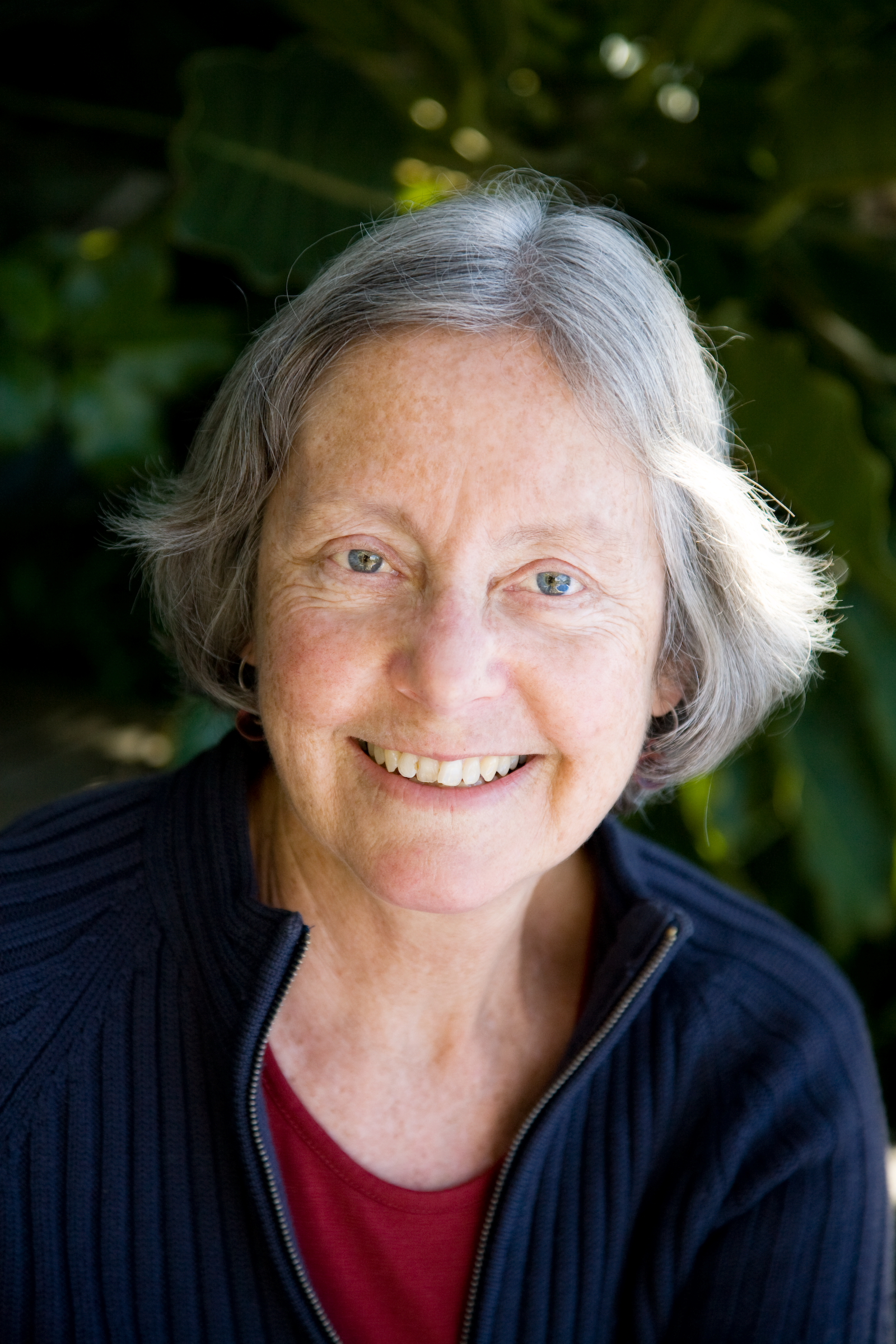
Dinah Hawken is one of New Zealand’s most critically acclaimed poets. Born in Hawera in 1943, she trained as a physiotherapist, psychotherapist and social worker in New Zealand and the United States. Most of the poems in her award-winning first collection It Has No Sound and Is Blue (1987) were written in New York in the mid-1980s while she was studying at Brooklyn College and working with the homeless and mentally ill. Her two most recent books, One Shapely Thing: Poems and Journals (2006) and The Leaf-Ride (2011), were both shortlisted for the New Zealand Book Awards. Dinah was named the 2007 winner of the biennial Lauris Edmond Award for Distinguished Contribution to Poetry in New Zealand. She lives in Paekakariki. Victoria University Press has just released a new collection of poems, Ocean and Stone.


Did your childhood shape you as a poet?

Yes I’m sure it did. One of my favourite memories as a child is my father reading A.A.Milne – the poems – to me when he came home from the farm. We didn’t have a lot of children’s books in those days (40’s and 50’s) and so he read them over and over again and we knew them by heart. Sometimes my younger brother and I would act a poem out: ‘Sir Hugh was singing hand on hip/when something sudden came along …’. What I loved, looking back, was the way my father and his voice changed when he read these poems. Suddenly he was a changed man, a more mysterious and musical man, and the poems had somehow changed him.

There was one poem that had a profound, perhaps lasting, effect on me psychologically. ‘The Dormouse and the Doctor’ – do you remember it? The dormouse was living happily ‘in a bed of dephiniums (blue) and geraniums (red)’ when the Dr came hurrying around and prescribed instead a bed of chrysanthemums (yellow and white). When ‘they took out their spades and dug up the bed/of delphiniums (blue) and geraniums (red),’ I was devastated at the injustice and imposition of it. They didn’t understand that ‘much the most answering things that he knew/were geraniums (red) and delphiniums (blue)’. I was worried by this story – the powerlessness of the small, the arrogance of grown ups – but at the same time I was impressed with the dormouse’s solution of imagination: ‘I’ll pretend the chrysanthemums turn to a bed/of delphiniums (blue) and geraniums(red).’ It made me determined to fight to remain myself, to hold onto my ideas and attractions even if I was misunderstood. Like the dormouse I was a dreamy child, but also an active one – a tomboy, keen on sports and outside a lot with bare feet. I thought of myself as a reader not a writer.


As a young adult, were there any poets in particular to which you were drawn?

When I went to Dunedin as a school leaver, to study Physiotherapy, James K. Baxter was living there and I went to some of his poetry readings and lectures. He was the first NZ poet I had ever heard or read and The Rock Woman (selected poems) was the first book of poetry (besides A Pageant of English Verse) that I had ever owned. I’ve just taken it off the shelf and it is one of the most worn books in my poetry collection. I felt the emotion and music in those poems, the power of ‘the best words in the best order’, and the sense of being understood as a human being who lives in this place, this landscape. Existential questions were in the air for me at 18 or 19 and one poem, ‘The Cold Hub’ gave me a strong sense of fellow-feeling and therefore consolation. Poetry as consolation became important for me.

The next year in Palmerston North was significant for me in terms of poetry too. I had a boyfriend who not only liked poetry (a rare find) but who really loved Baxter and who introduced me to e.e. cummings and Yevtushenko. Both mind-opening in their own ways. What’s more, in Palmerston North, I also made a close friend, Phillappa, a nurse, who read poetry and wrote it. She showed me it was possible even though I didn’t start writing seriously – though secretly – till I was in my late 30’s. She was the first person I showed my poems to at that time. And a couple of years later I applied for Bill Manhire’s undergraduate creative writing course.


Your new collection, Ocean and Stone, is one of your best yet. At times, the poems lead me to a place and point of contemplation (outside urban bedlam). The poems remind me of the way I go down to the beach in the morning and all is the same (sand sea sky), yet there is always a pull of shifting nuances. Do you ever see your poems as a way of translating relations with the natural world, both private and nourishing?

Yes I do. Moments and experiences in the natural world give me such pleasure and uplift that I do have an urge to record and share them even though words so often fail the actual experience. But the attempt feels important. And I’m glad you used the word ‘relations’ because any attempt to mirror the natural world is about relationship. I’m a person who wonders a lot and the world around me is one of the most ‘answering things’ that I know.


And wanders in that wondering. That’s what hooks me as a reader. I find your poems are often things of beauty, yet there is a political edge here. It is as though we can no long view the ocean, for example, solely through the exquisite lens of its moods and bounty. Do you see yourself as a political poet? Overtly so or in more subtle ways?

As time has gone on I realize that I am both a nature poet and a political poet though I don’t set out to be. And I hope not exclusively. A poem usually begins with a phrase, a word, an image or a feeling that has a grip on me in some way. It can be a light and friendly grip or an intense, even painful, grip. The poem develops from that and, because of my interests and preoccupations, political concerns or the landscape, often become a part.

In Ocean and stone there is a poem called ‘The uprising’ that was a commission for Lloyd Jones’s issue of the Griffith Review called Pacific Highways. I began the poem thinking about the Pacific, with no conscious intention of writing a political poem. But I’d just read a book about the state of the world’s oceans and the facts in that book, and my feelings in relation to them, naturally flowed into the poem.

But it’s a balancing act to write a political poem and I sense that many poets might disapprove of my attempts – on the grounds of didacticism, emotionality etc. I’m naturally a direct person and I’ve had to learn more indirect and layered ways of expressing myself in poetry. But I’m also willing to be direct about strong personal feelings – a political poem is also a personal poem.


No matter how many times you write a stone poem, Dinah, you have the ability to replenish the subject (I posted one of my favourites from your new collection here). Do you have other motifs to which you are drawn?

Isn’t it amazing how stirring a small stone, like a blank page, can be? I’ve just looked up that famous poem ‘Pebble’ by Zbigniew Herbert where he writes that the pebble ‘is a perfect creature/ equal to itself’ that ‘does not frighten anything away.’ That seems so true to me.

As far as other motifs go, I don’t know. Water, its fluency? Leaf, its green, its growth? ‘The child’? I find myself thinking a lot at the moment about ‘the stranger’.


Yes definitely water! And the child. The grandchildren poems add a different layer to the collection. They remind me of the way women are often keepers of the family archives (scrapbooks, photo albums, treasure boxes). Do  you feel these poems are as much a gift to the family as they are for the reader?

Definitely. I did write them as a kind of scrapbook, a record of my grandchildren’s early development, trying to ‘hold’ some of the delight and moments of discovery that babies and toddlers go through. I started, in my last book, with Elsa from new-born to 16 months and then carried on with Nate from about that age to two and a half. Such an extraordinary time, as a child meets the world. And as a parent you are often too busy to stand back and see it happening.

I’m about to put all the grandchildren poems together in a small volume for the family – and perhaps for other parents of small children as well.


The untitled fragments throughout the book (that ‘stem from the epigraph which is a found poem from The Unsettling of America by Wendell Berry’) are so fertile. I particularly loved: ‘a blank page has limits// and no limits.’ What kind of limits do you bump against as a writer?

I no longer have the external limits of time and stress and children and work that many younger writers have – I feel very lucky in that respect. I love writing without pressure – but on the other hand I do have the limits of older age; lack of energy, poorer memory, uncertain health. I find it harder to find words, I seem to have less access to dreams that were a great resource earlier in my life. Many of the poems in the second part of Ocean and Stone are about living with various kinds of decline.

There’s a difference between limits and limitations and so I also have to live within my inherent limitations as a writer. It seems important at this stage to try and see clearly what they are, whether they have any give in them, and to thrive within them. Limits and limitations have a bad name but I see them as the boundaries within which we can have the most ease and can be the most creative.


I love that dichotomy. Is doubt a key part of the writing process along with an elusive horizon of where you are satisfied with a poem?

Another way of considering the contradiction of ‘limits// and no limits’ is to think about faith and doubt in the writing process. They both seem to be essential: faith to believe that something can come from nothing; and doubt to be always willing to question what comes. When I began writing I would lurch, often painfully, between one and the other, now (fingers crossed) it’s more like quietly shifting weight. But you can’t write, can you, without doubt? You can only try to hold confidence and uncertainty in some kind of balance as you go.

I often have an intuitive idea of when a poem is finished in terms of content and length but the editing and re-arrangement inside it can go on for months. Leaving it for a good length of time helps me a lot – to free up and be less attached to what’s there. I don’t have poet friends, or a group, to share this process with at the moment but have in the past found feedback from others invaluable. It was great to have Fergus and Ashleigh at VUP look carefully at my manuscript for Ocean and Stone.


What poets have mattered to you over the last year?

The two most important books for me in the last year or so – both as a reader and a writer – are The Great Enigma by Tomas Transtromer and Faithful and Virtuous Night by Louise Glück. I’ve been attached to Louise Glück’s poetry in the past and was thrilled to discover this one (Carcanet 2014) and find it so impressive. Without your question I mightn’t have noticed that these two books, though different, have the same attraction for me. Both poets use accessible language and strong short sentences developing a narrative that is clear but at the same time mysterious. I love that. They have quite different tones; Glück’s intense, sometimes threatening, Transtromer’s lighter, more surprising. I was strongly aware of Transtromer while writing the first sequence in my book ‘The lake, the bloke and the bike’ but I’m not sure if, or how, his poems might have influenced mine.


What activities enrich your writing life?

Almost everything I do has the potential I expect, but when I think of Ocean and Stone, I see how it reflects a number of my non-writing activities. For example, babysitting grandchildren, gardening, friends, walking on the beach, Tai Chi Chuan. The last sequence in Ocean and Stone , though triggered by the McCahon painting, has a number of the names of Tai Chi postures in it and I wanted the poem to be a kind of Tai Chi sequence even if the reader doesn’t recognize it at all.

There’s no doubt that I’m a poet whose material comes from her own world but in Ocean and Stone I enjoyed very much re-telling the Sumerian myths, forgetting myself, and entering stories from another time and place. Yet stories that have relevance still.


Victoria University Press page

NZ Book Council page

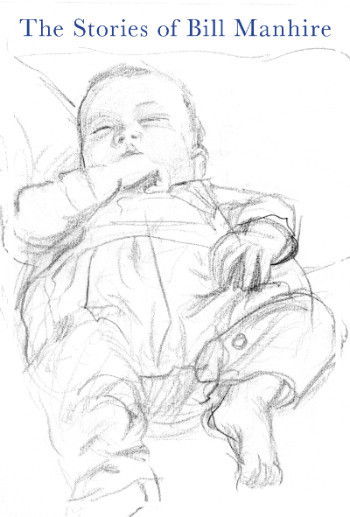
Bill Manhire’s short stories to be launched at Unity Books

62f6377b-1dcd-4d64-9e60-012cf0241973


You are warmly invited to attend the launch of

The Stories of Bill Manhire

on Thursday 12 November, 6pm–7.30pm
at Unity Books,
57 Willis St, Wellington.

The book will be launched by Damien Wilkins.
Bill will be available to sign copies.

$40, hardback.
cover illustration, ‘Sleeping Baby’ by Peter Campbell


About The Stories of Bill Manhire
Sheep-shearing galas, Antarctic ponies, human clones, the Queen’s visit to Dunedin, a pounamu decoder, a childhood in the pubs of the South Island, the last days of Robert Louis Stevenson—this is Bill Manhire as backyard inventor, devising stories in which the fabulous and the everyday collide.

THE STORIES OF BILL MANHIRE collects the stories from The New Land: A Picture Book (1990) and those added to South Pacific (1994) and Songs of My Life (1996). In addition there are previously uncollected and unpublished stories, the choose-your-own-adventure novella The Brain of Katherine Mansfield (1988), and the memoir Under the Influence (2003).

Poem Friday: Dinah Hawken’s ‘Stone’ – Its window catches any number of lights


Stone


Stony this, stony that. They are cold

today, these stones on the desk.

Stone cold. Stone blind. Stone deaf.

Heart, reception, stare, silence.

They remember the slingshot.


It is said he is a man to reckon with.

He hasn’t spoken to his son for years.

It is said that words will never hurt you.

‘To be hard in hard times,’ he announces,

‘we must build an expressway like an arrow


through the quiet heart

of your coastal town.’ Cold facts

say one thing, cold politics another.

We remember the ballistic missile.

The falling debris and the striking edge.


© Dinah Hawken Ocean and Stone Victoria University Press, 2015


Author bio: Dinah Hawken is one of New Zealand’s most critically acclaimed poets. Born in Hawera in 1943, she trained as a physiotherapist, psychotherapist and social worker in New Zealand and the United States. Most of the poems in her award-winning first collection It Has No Sound and Is Blue (1987) were written in New York in the mid-1980s while she was studying at Brooklyn College and working with the homeless and mentally ill. Her two most recent books, One Shapely Thing: Poems and Journals (2006) and The Leaf-Ride (2011), were both shortlisted for the New Zealand Book Awards. Dinah was named the 2007 winner of the biennial Lauris Edmond Award for Distinguished Contribution to Poetry in New Zealand. She lives in Paekakariki.


Note from Paula: This poem is in Dinah’s new collection just out from Victoria University Press. It is an utterly beautiful book in every detail (the feel of the pages, the choice of font, the simplicity of the cover and of course the billowing beauty of the poems themselves. I have been a Dinah-Hawken fan for a long time. I remember the pleasure of writing a long essay on Small Stories of Devotion as part of my Masters degree. There has been a sustaining chord between Dinah’s work and my writing since those far-off days. In part it is to do with the grace, the elegance, the economy, the lyricism. In part it is to do with the sumptuous view that settles as you open the window of the poem. In part it is the curious self that questions the world and the way we do things.

This poem is a thing of beauty, and it draws upon all the things I have detailed above. There is the lyricism that builds out of stress, meter and repetition (‘Stone cold. Stone blind. Stone deaf.’) There is the way a thing (stone) shakes with life and possibility. There is the way, with that small frame of the window ajar, we fall upon the beauty of an object (a stone) and then fall away to the hurt we inflict upon each other — at the level of the individual, the level of a town, the level of a nation. It really is the kind of poem that needs to speak for itself, to shimmer on the page in its own marvelous way. Its window catches any number of lights.


Victoria University Press page

NZ Book Council page

Victoria University Press warmly invites you to the launch of Ocean and Stone by Dinah Hawken

c52510c0-ccf5-4568-88dc-14eed8f6eafe
Victoria University Press warmly invites you to the launch of

Ocean and Stone   by Dinah Hawken

on Thursday 10 September, 6pm–7.30pm
at Unity Books, 57 Willis St, Wellington.

Ocean and Stone will be launched by Greg O’Brien

$35, paperback, colour drawings by John Edgar

About the book:
Ocean and Stone, Dinah Hawken’s seventh collection of poetry, is a book of many elements.

The central sequence page : stone : leaf, interspersed with the striking drawings of John Edgar, is framed by poems of growing up and growing old. They, in turn, are framed by poems written in the natural world, beside a lake and beside an ocean. At the heart of this book is urgency: the urgency to know the limits of our planet and ourselves, and to live within them.

Ocean and Stone is elemental Dinah Hawken, at once meditative and resolute.

This is a poetry collection I am so looking forward to …

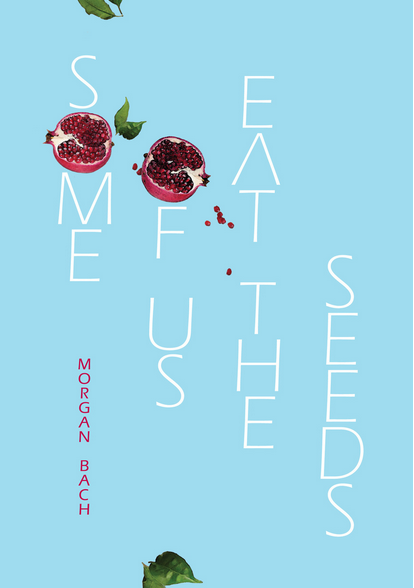
I can’t wait to read this new offering, a debut poetry collection by Morgan Bach, coming soon from Victoria University Press. What an adorable cover.

Morgan Bach’s author page is here.

Screen shot 2015-03-30 at 9.41.21 PM

Launch of two new books on and by Poet Laureate Vincent O’Sullivan

Come and celebrate Vincent O’Sullivan’s writing:

Being Here: Selected Poems by Vincent O’Sullivan will be launched on

When: Wednesday 15 April 5.30pm–7.30pm at

Where: National Library of New Zealand (Ground Floor),
70 Molesworth Street, Thorndon, Wellington.

This is a double launch with Steele Roberts for Let the Writer Stand: the work of Vincent O’Sullivan, edited by Judith Dell Panny

Dame Fiona Kidman will launch both books at this event.

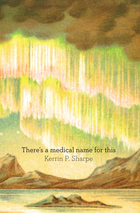
Friday Poem: Kerrin P Sharpe’s ‘she gets these letters’ — Nouns swell with options

Snapshot_20121120_8          medical_4_7_1__67194.1407673215.140.215


she gets these letters


one moment there

is vodka at

a forest wedding

the next the last

breath of a gun


she watches defiance

secret army draws

a map of Poland

the sweep of ice

fills her throat


this is the plantation

her father was taken to

perhaps this is the pine

he walked towards


as if he spent

his mornings collecting

alpine specimens

and the snow he fell into

pages of white birds


©Kerrin P. Sharpe There’s a Medical Name for This  Victoria University Press, 2014

Author bio: Kerrin P. Sharpe’s first book three days in a wishing well was published by Victoria University Press in 2012. Her work appeared in Oxford Poets 13 (Carcanet). Another book, there’s a medical name for this was published August 2014 (VUP). A third collection rabbit rabbit is in progress with a grant from Creative New Zealand.

Author note: This poem began life after I had watched the movies Defiance and Secret Army. I began thinking about the huge significance of locations and how they are changed forever when terrible crimes have been committed there. This poem was published in the NZ Listener in 2014.

Note by Paula: What draws me to this poem is the enigma and the gap. Without the back story the possibilities are myriad whether as reader you step into shoes that are autobiographical, another persona or a mix of both. There is a jostling of meaning and effect between elements; from title to poem, night to day, life to death, vodka to the last breath of the gun. Nouns swell with options: vodka, forest, the map and the plantation are nouns of elsewhere. The understatement is striking. There is the ominous ring of ‘was taken’ that is amplified by the ‘chill of ice.’ The implications of ‘as if specimens’ seems to mask from what really took place. The final image in the last two lines is utterly potent. The white snow might stand in for the clean white page, the insistence of hope, the threat of war and violence and atrocity, and the magnetic pull of the prospect of peace. For me, the word ‘sweep’ leaps out not just for the ear but semantic rewards (a clean sweep, the expanse of the scene, clearing history, fresh beginnings). This is a haunting poem. Yes, it makes a difference when you know the back story but the gaps are still profound.

Victoria University Press page

Poem Friday: Airini Beautrais’s ‘The thing is, Neil, you are all of us’ –It is a poem that haunts me, and in that haunting, I keep returning to the lines to reflect upon ‘why.’

2015-02-28 21.01.36


The thing is, Neil, you are all of us


You are the old rocker in skinny jeans

who is mumbling in the corner

you are the punk who fixes bicycles

at two o’clock in the morning.


You are the comic book girl in combat boots

whose breasts are drawn too large

you are the feminine librarian

who wants to go on a rampage.


You are the community gardener

with home-cut hair and knee holes

you are the bespectacled chicken rescuer

the guitar player and the police mole.


You are the tofu thief made to work

for the local Salvation Army.

They throw away about half of their clothes:

take as many as you can carry.


©Airini Beautrais Dear Neil Roberts  Victoria University Press 2014


Author Bio: Airini Beautrais lives in Whanganui with her partner and two sons. She is currently working on a PhD in creative writing through the IIML at Victoria University, on the subject of narrativity and verse form in contemporary long poems. Dear Neil Roberts is her third book.

Author note: ‘The thing is, Neil, you are all of us’ is one of the first parts of the book I wrote, back in 2011. I had known Neil Roberts’s story for some time and it had occurred to me it would be interesting to write a long poem about the incident. One of the things that struck me early on in my research, from reading various anarchist/ libertarian communist web entries, was the sense of ownership amongst these radical left communities for the story. It was as though each person who had re-told the story, while not endorsing Neil’s act, could identify with the way he must have felt. In this poem I drew on my own experience within the Wellington anarchist scene – although not every detail is ‘true’, the characters in this poem do approximate real people, myself included.

Within this poem the ghost of an accentual meter can be heard, and the metrical scheme, while loose, is something near the traditional 4, 3, 4, 3 ballad stanza. And it is off-rhymed, xaxa. Perhaps the ballad was lurking behind the scenes all along. It has been mentioned that Dear Neil Roberts is rhythmically close to prose. I think this is true (as it is for a wide range of contemporary free verse), but I also think that writing to a regular stanzaic shape can lead to some interesting effects. For instance, rhymes frequently occur at line-ends. And there are lines in the book that are straight iambic pentameter. It has to be remembered that poetry is a genre, and can be written in verse, prose, or any combination of the two. Writing Dear Neil Roberts as a poem allowed me to present, juxtapose and interpret information in a different manner, than if I had set out to write an extended essay or a work of New Zealand history.


Paula’s note: Not having read Airini’s note before I wrote this, I didn’t have the back history (which is fascinating!). The poem is placed near the end of her collection, Dear Neil Roberts, and traverses Neil’s story with a foot planted in the realm of invention and another within the scope of research. Forming some kind of arc across—or conversely a simmering stream below—these two choices, is the personal. Airini allows herself, her own history and predelictions, to enter the poems.

What struck me about this particular poem is its ability to move, to raise issues and to offer delight at the level of technique. The parade of chalk-and-cheese characters turns the narrative impulse over and positions you as reader squarely within the frame. The poem now addresses ‘you.’ Yes, you might be any one of these characters that, like Neil, might test boundaries or go to extremes, but there are other issues at work here too. We are all destined, in the main, to occupy the shadows of history (as did Neil) as opposed to being a key player. If there is a potential Neil at work in this parade, there is also the way in which the parade is at work in Neil. We occupy many roles, play many parts, with varying degrees of visibility and attachment. These possibilities move me, as they return me to the complicated, contradictory, and at times unfathomable make-up of what it means to be human.

If the poem flips your placement as reader, the final two lines flip your placement within the poem. Again the resonances are multiple.The cheap clothes. The bag to be filled. The societal waste. Yes we have roles but we always have needs. We are linked by common needs whatever complications are steering our lives: warmth, shelter, food.

You can read this poem as prose-like in its poetic intentions yet, as is so often the case with Airini’s poems, there is more at work here. For me, I was hooked by the aural chords that make different semantic connections. For example, I loved pursuing the ripple of ‘m’s’ (mumbling, morning, feminine, community, home, mole, army, many) and the way they are honey for the ear yet forge a buried story. This poem, as does the book, relishes the white space, the gaps, the ambiguity alongside the more prosaic intent of telling a story, bringing someone closer, circulating ideas. It is a poem that haunts me, and in that haunting, I keep returning to the lines to reflect upon ‘why.’ Marvelous.


Poetry Shelf interviews Harry Ricketts — All I can remember about his poem is that it contained the phrase “curly kale”

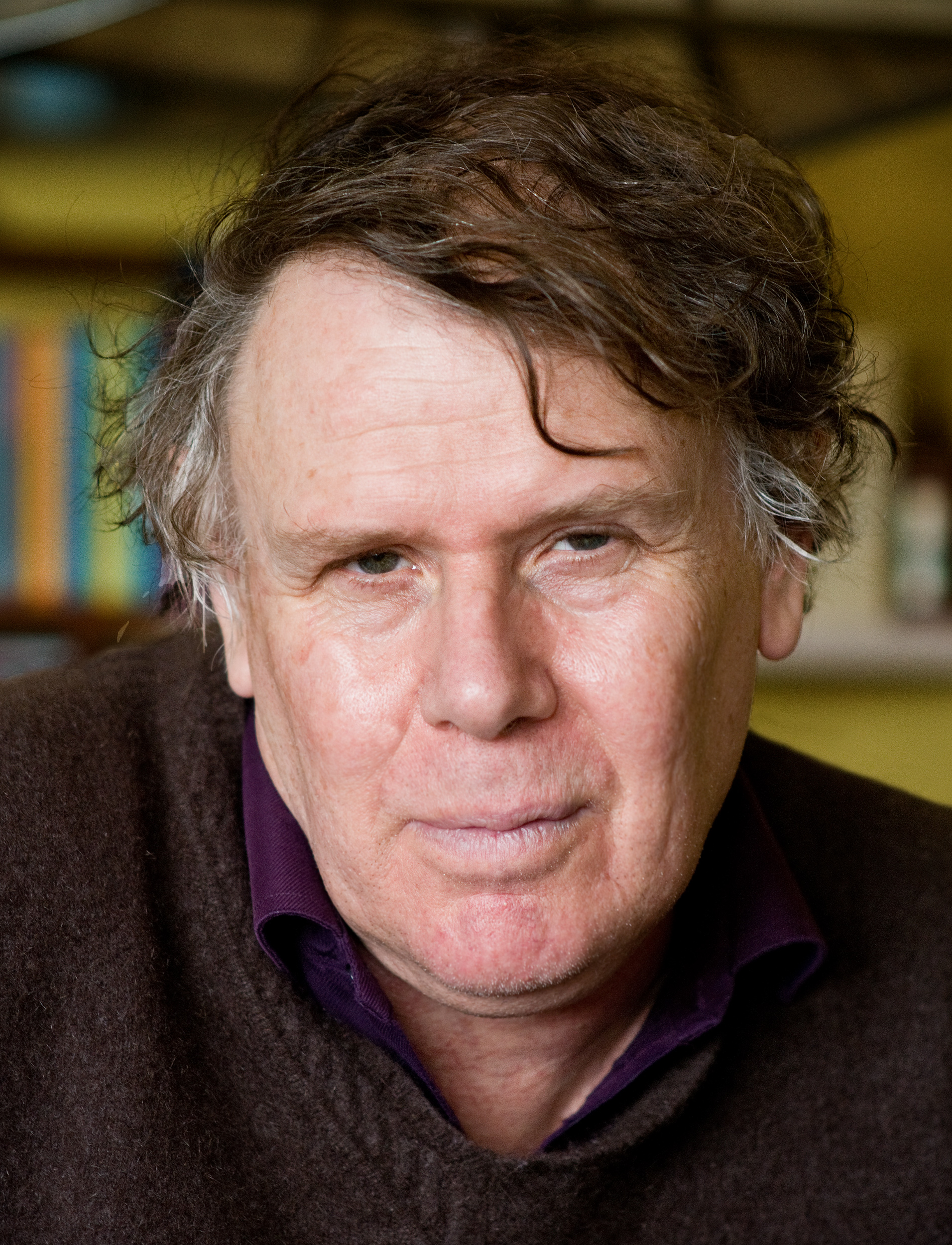
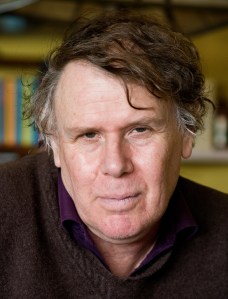
 Harry Ricketts 2011    half_dark_front_small__05477.1417645489.220.220

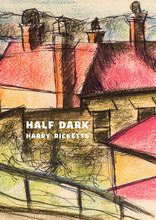
Harry Ricketts has written over twenty-five books, and while poetry is a primary love, he also writes in other genres. These include literary biography (The Unforgiving Minute and Strange Meetings:The Poets of the Great War), personal essays (How to Live Elsewhere and How to Catch a Cricket Match), and has co-edited a number of New Zealand poetry anthologies (including Spirit in a Strange Land, The Awa Book of Sports Writing and 99 Ways into NZ Poetry). He teaches English Literature and creative writing at Victoria University of Wellington. Half Dark (Victoria University Press, 2015) is Harry’s tenth collection of poems. To celebrate this new book, he recently answered some questions for Poetry Shelf.


Did your childhood shape you as a poet? What did you like to read? Did you write as a child? What else did you like to do?

My yo-yoing childhood certainly shaped me as a person. My father was in the British army, and we moved every couple of years. This has made me see everything as temporary, provisional, also to think of the present as the moving edge of the past. I read novels, the longer the better: Rosemary Sutcliff, Arthur Ransome, C S Lewis, Tolkien, Conan Doyle ‒ and endless comics. Not much poetry, though at school we had to learn poems by heart: “The Highwayman”, “Cargoes”, “Gunga Din”. They had good thumping rhythms which, together with the rhyme, made them easy to memorise. We then had to stand up and recite them in class – quite an ordeal. I still remember some of those poems and others that ‘sing in the head’, and I’m sure that contributes to my enjoyment of poets like James Fenton and Derek Mahon who use metre and rhyme much more subtly. I remember once we had to write a poem for homework. The title and subject were up to us. My effort was feeble: rhymed, of course, complete doggerel – in every sense, it was even about our dog. But one of the other boys was asked to read his poem out loud in front of the class – a great mark of favour. All I can remember about his poem is that it contained the phrase “curly kale”. And that alliterative phrase, so simple, visual and exact, has always stayed with me. Also the sudden feeling I had when he read it out: a mixture of excitement and envy. I knew that he had somehow managed to pull off something quite beyond me, but which I now felt might be possible. But mostly from the age of eight I was mad about cricket.


When you started writing poems as a young adult, were there any poets in particular that you were drawn to (poems/poets as surrogate mentors)?

I started writing poems when I was sixteen. I still thought poems had to rhyme and be metrical, and felt very daring when, trying to copy T S Eliot (whom we were studying), I wrote in what I thought was free verse. I did read quite a lot of poetry: poets were we studying like Wordsworth and T S Eliot, but also Ezra Pound, Wilfred Owen, and Holub and Cavafy (in the Penguin translations that were popular at the time). I particularly liked Cavafy and tried to imitate him.


Did university life (as a student) transform your poetry writing? What kind of discoveries did you make?

Personally university wasn’t helpful as far as writing poetry went, though I came out knowing a bit about a lot of English poetry from the Anglo-Saxon “Seafarer” to Spenser to Marvell to Gray to Byron to Browning to W H Auden. Nothing contemporary – in fact, nothing post-WW2. We had to write weekly essays – last week Wordsworth, this week Coleridge, next week Keats. It was like a whistle–stop tour of poetry’s greatest hits – wonderful in a way, but also intimidating. Sometimes I felt I was turning into a dial-a-quote.

I do remember reading some Sylvia Plath which was edgily thrilling and liking Roger McGough and Adrian Mitchell because they were funny and expressed political opinions I agreed with. I bought and read Ted Hughes’s Crow when it came out. I don’t think I ‘got’ the poems at all, but I enjoyed their dark laughter (though I wouldn’t have put it like that). This was the time when Gormenghast and Catch–22 were obligatory reading, and Bergman’s Seventh Seal and Godard obligatory viewing. We all said things like “really weird”, “far out” and “freaky”. We were terrified of being normal or at least being thought normal. It had a lot to do with the music we were obsessively listening to: Dylan, the Doors, the Stones, the Velvet Underground, Pink Floyd, later Steely Dan. Each new album was like a bulletin from another, more exciting world. We wanted our lives to be like those songs – “Strange days have found us”; “Remember what the dormouse said” – and fantasised that they were. It was very heady, and I don’t regret it, but it didn’t lead to me writing any halfway decent poems, though I did eventually write some lyrics for songs.


What about as a lecturer?

I think initially being a university teacher was another inhibiter because I only ever taught poems from earlier centuries ‒ often wonderful but not much help (at least in any direct way) with trying to write my own poems. More helpful was the only poetry writing course I’ve attended. This was a two–day affair in 1979, I think, at the Lancaster Arts Festival, run by a poet called Gavin Ewart. He was a playful-serious poet, who, like Auden, used poetic form as a starter-motor and could do everything from villanelles to clerihews, from prose poems to McGonagallesque doggerel. His poems were (are) clever, also often funny (a rare gift in poetry).

The workshop was memorable. The first day Ewart got us to write haiku and limericks and one–line poems, and one man soon got stroppy and said this wasn’t poetry and that only the rather pretty girl with black hair was producing anything remotely interesting and then he stormed out – never to return. Personally I found trying to do the forms useful and helpful, partly because it got me away from Romantic ideas of the muse having to strike – I was still very hung up on Wordsworth and Keats and notions of the creative mood, sometimes ‘suitably enhanced’. And I do think the class generally encouraged me to be less earnest, that play was okay. The second day we workshopped poems we’d sent in advance and that was helpful. Ewart was very hot on line-endings and about not being lazy with rhyme (if you used it): every word had to pay its way.

I was teaching in Leicester at the time and, partly as a result of the workshop, I joined a small group of local poets. We’d meet and discuss our work, but it all tended to be too polite, and when one member won quite a big national prize, the group combusted from envy. But I do think of that as the time when I slowly started to take writing poems more seriously. This coincided with having children, and I’d blue-tack drafts of my poems to the walls and think about them as I walked around at night, holding wakeful babies. Sometimes the poems were about my children (I had step–children too), and I think becoming a parent not only made a huge difference to me as a person but gradually also to the poems I was beginning to write. It’s not a coincidence that the first poem of mine I think is any good – “Your Secret Life” written in my mid–thirties – is about my (then six-year-old) daughter and imagining her as a teenager.


Some people want to let their poems speak for themselves while others are happy to offer provisional entry points. What do you think your role is when you ‘teach’ poetry?

I think if you’re giving a reading, it’s a good idea to say something between poems, offer an entry point, but not so as to swamp the poem. It is hard to listen to poem after poem without a break, particularly if you haven’t read or heard them before. (I have been to readings like this.) Teaching others to write poems or at least trying to help them is a different matter. It’s not your poem, so your role is more like that of a facilitator or midwife, perhaps. Sometimes your own experience can be helpful, but it’s mostly attention and encouragement. And urging them to read as much poetry as possible.


Another terrific example of poetic entry points that work is your book on the war poets (Strange Meetings: The Poets of the Great War). To me it was scholarly yet satisfyingly fresh in its approach. Your book opens rather than closes the experience of reading these writers. What did you hope to achieve with this book?

That’s very kind of you. I wanted to write a book that demythologised those WWI poets and restored them to a sympathetic human scale, something closer to the people who actually wrote the poems, who together with the horror of the war, had friendships, fallings-out, tried to find a language adequate to their experience.


We wrote 99 Ways into NZ Poetry together a few years ago. Writing the book was a way of viewing the poetry landscape in new lights for me. What discoveries did you make?

New lights for me, too, and many discoveries. You really helped me to read Michele Leggott, a poet I’ve always found very hard.


I love the way your poems reflect shifting forms, pitch, moods, preoccupations and rhythms, yet there is always a clarity of line, a sharpness of detail, the essential moment. What are key things for you when you write a poem?

That’s difficult to answer. Sometimes I’ll deliberately try to write a poem about some event, occasion or person. More usually, I’ll be doing something else altogether ‒ like writing this for you now ‒ and a word or phrase or maybe a memory will suddenly press itself on me, and I’ll find it prompts a line or another phrase and a sense of excitement. Often things just switch off; nothing more happens. But sometimes I have to keep coming back to it (whatever it is) and have to fiddle away, try this, try that. That’s the best part, don’t you think, being inside a new poem? Nothing better. When it’s finished, or as finished as it can be, you’re back in the cold again.


I like that idea — the best bit is when you are inside the poem. Really, your heart starts beating faster. The outside world fades to black (or light). Harry, you have lived both in New Zealand and Britain (like Peter Bland), but I don’t find a relentless niggling tension between here and there in your poems. It is as though a poem steered by you can lay its roots in either place. Are your poems a way of forging home? Laying roots? Being elsewhere?

That’s very perceptive. Temporary roots, anyway. I think the ricocheting childhood thing. I do think that not quite belonging to where you live can be an advantage to a writer.


I agree. Do you think your writing has changed over time?

Yes, I’m not so inhibited, not so hung-up about perfection, more prepared to try things.


Prompted by Eleanor Catton, this question: Do you think we have a history of thinking and writing about the process of writing poetry in New Zealand? Any examples that sparked you? Have you done this?

Well, there are poets who have written about this (Allen Curnow, James K Baxter, Michele Leggott, Bill Manhire among others). But I think there is a fairly general distrust of seeming to proselytise or sound too arty or up-yourself. Some cultures (France, America) seem to be able to talk about the arts (including poetry) more naturally or with less inhibition. But the rise of creative writing schools has definitely increased some writers’/poets’ ability, and desire, to talk about process. It’s a question as to whether this will help to produce better work. Good if it does, but writers sometimes, even often, write best when they break their own precepts.


What poets have mattered to you over the past year? Some may have mattered as a reader and others may have been crucial as a writer.

The Irish poet Derek Mahon and Auden always matter to me. I constantly read and reread them, and learn from them.


What international poets are you drawn to?

The American poet Mary Ruefle has been a belated discovery.


She is a fabulous discovery for me too! I feel like I want to secretly do some MR poems and see what happens. Particularly the white-out pages. What New Zealand poets are you drawn to now?

In the last year or two? Fleur Adcock’s last two collections ‒ terrific. Ian Wedde’s recent poems.


Ian’s The Commonplace Odes would have to be one of my top NZ picks. Name three NZ poetry books that you have loved.

Jenny Bornholdt’s The Rocky Shore. James Brown’s Lemon. Bill Sewell’s Ballad of Fifty-one.


You write in a variety of genres (poetry, non-fiction, critical writing). Do they seep into each other? Does one have a particular grip on you as a writer?

Yes and no, but poetry is the thing.


What irks you in poetry?

Poems that presuppose a trust they haven’t earned.


What delights you?

Surprises. Also wit.


I was drawn to the title of your new collection (Half Dark) because for me it signals the way poems emerge from and move in and out of the shadows (as opposed to a glass is half full kind of thing). Why this title?

It’s a phrase in one of the poems. As you say, it suggests movement in and out of shadows. It also suggests the mood and tone of many of the poems.


These new poems are like a steaming road with heart, memory, ideas, anecdote, sights rising up and simmering above the surface— poems that steam with life and possibilities. For me this is one of your best books yet. What discoveries did you make about poetry as you wrote? The world? Yourself?

One discovery, as I’ve explained in a note in the collection, was about a form called the triolet. I’d never imagined trying this short form with repeated lines, had shared a fairly common sense of superiority towards the form. But an Australian poet-friend Cath Vidler confessed to having become addicted to the form and suggested I try it. I found she was right; it is addictive. More interestingly, I discovered that though usually used for light verse (which is fine, ‘light’ doesn’t have to mean ‘slight’) in fact you can use the triolet for serious, even heart-breaking, subjects. It’s much more flexible than it looks. And, as poets have done with the sonnet and other rhyming forms, you can empty out the rhyme and just keep the shadowy shape. Discoveries about the world? Well, with the death of friends and family, my world is getting colder, half-dark.


I love your triolets– reading them prompted me to write one myself. I can see why they are addictive. There is a honeyed overlap of repetition and within that echo the subtle nuance of difference. Nuances steered  by shifting juxtapositions. Is there a single poem or two in the collection that particularly resonates with you?

The last poem, “About”, means a lot to me. I started it in 1980 and it’s changed over the years as I have, and I kept losing it and then finding it again. “Noddy” (about a dead university friend) brings him strongly to mind.


I love the blurb on this book. First it references your poem about the phrase ‘Mind the gap’ from the London Underground (that has haunted me too!) and then it introduces the collection as one that ‘addresses the people and places that fill a life and the gaps they leave behind.’ Gaps are so crucial in poems. For me, this entry point heightens my response to your poems. Tell me about the role of gap in this new collection.

It’s all gaps.


Indeed. Is doubt a key part of the writing process along with an elusive horizon of where/when you are satisfied with a poem?

Yes, doubt is key. Also gratitude.


The constant mantra to be a better writer is to write, write, write and read read read. You also need to live! What activities enrich your writing life?

Travel.


Some poets argue that there are no rules in poetry and all rules are to be broken. Do you agree? Do you have cardinal rules?

Rules are to be broken, but it’s worth knowing what they are first. Personally I don’t end lines with words like ‘a’, ‘the’ ‘in’ or ‘of’, unless there is a really good reason.


Do you find social media an entertaining and useful tool or white noise?

A bit of all of these.


Finally if you were to be trapped for hours (in a waiting room, on a mountain, inside on a rainy day) what poetry book would you read?

W H Auden’s Collected Poems.


Thanks Harry!


Victoria University Press author page

NZ Book Council page