Tag Archives: Victoria University Press

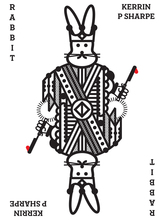
Poetry Shelf Review: Kerrin P Sharpe’s Rabbit Rabbit – There is a honeyed fluency that is downright enviable

Rabbit_Rabbit_cover_final__90799.1461637251.220.220.jpg   Rabbit_Rabbit_cover_final__90799.1461637251.220.220.jpg   Rabbit_Rabbit_cover_final__90799.1461637251.220.220.jpg


I fall with the rhythm of rowing

into long narrow light

bridges sigh like single oars


from ‘last supper in Venice’


Rabbit Rabbit Kerrin P Sharpe , Victoria University Press, 2016


Victoria University Press is publishing a heavenly suite of poetry books this year (actually all the presses are!). So many good poetry books I think I need a poetry book club where we can talk about poetry to our heart’s content with coffee and sweet little cakes. A once a month indulgence!

Kerrin P Sharpe is a very fine poet whose previous books hooked me with their agility, their lightness of touch, their grounding. She is currently the Writer-in-Residence at St Andrews College in Christchurch. In 2008, she was awarded the NZ Post Creative Writing Teacher’s Award by the International Institute of Modern Letters. She is a terrific mentor for young writers.

Kerrin’s latest book is an utter treat in the way things condense to the near point of evaporation and then unfold with such grace you get goosebumps. Bare threads shiver and shimmer as speech-bubble anecdotes hover above and below. There is necessary tenderness. Sometimes it is like looking into the mysterious dark of family archives where things or photographs or memories twitch in the patchy shadows. You move from smoky dream to real life to near fable.

If you think of poem writing as hitting the whirr and pace on a bike so the whole world feels perfect, then Kerrin is hitting that perfect whirr and pace as she writes. There is a honeyed fluency that is downright enviable (enhanced by the lack of capitals and full stops).

So many poems stand out, but I keep returning to the mother poems: the pitch of the line, the tilted head of the daughter looking, the inventive tropes, the extraordinary stories that resist mother frames. These poems belong in an anthology of mother poems because they are surprising in where they take you, the way they move you and the presence of things that do little cartwheels on the page.

I loved the way the mother’s Astrakhan coat prompts mystery that meets strange fable that meets down-to-earth pathos in ‘when a crayfish could feed 6 men‘:


yet though the coat

cracked the small change

it was when my mother’s money

stretched beyond the frontier towns


that she no longer wore

what after her funeral  seemed

little more than a fleece


There is a glorious and daring alignment of the mother’s belly and the ship she builds in ‘The mary blanche in situ.’ All poem borders slip and slide. Where does mother begin and ship end? Where does trope set sail and real life intrude?  Entering the poem is like entering a show, both magical and wondrous, and you just want to get another ticket and go through again.


my mother built her own ship

because she hated

the idea of drowning


In ‘the morning of my mother’s funeral her cup is sober minded,’ a single tea pot pours, in a little stream, like stream-of-conscious English Breakfast,the grief and thoughts of a key life moment. The poem catches the unrealness of losing a loved one; of life not stopping its circular routines and paying attention with you.


two plumbers install a shower

my mother will never use


they eat her peanut rockies

in the coronation tin


A delicious inventiveness drives the collection as a whole, as though reality is strained through kaleidoscopic filters to refurbish ordinary things with off kilter tints. There is the train that keeps a son breathing, there is the mouth of the sky that opens and drops bodies, the daughter that decides the bee sting is a butterfly kiss. In ‘a language goes silent,’ a Chinese fruit shop uses the bare threads, the strange tilts to move you:


Amy and Harry

lived in the fruit

of their shop

like mango stones


I adore this book. It shows just what things can do when you let them loose in a poem. Wonderful!

On editing – Sarah Jane Barnett interviews Ashleigh Young

img_7235    Thought+Horses+cover

A new post at The Red Room:


I like to read and review New Zealand poetry, and because I live in Wellington quite a few of these collections come from Victoria University Press. When Ashleigh Young began working as their editor, I began to notice her careful hand on the collections. I asked Ashleigh a few questions about being an editor.

Sarah Jane Barnett: I was watching the show Comedians in Cars Getting Coffee and Jerry Seinfeld asked Barack Obama, ‘If politics was a sport, what sport would it be?’ So, if editing was a sport, what sport would it be?

Ashleigh Young: I was about to say cricket – long bouts of brooding interrupted by sudden bouts of high-speed action and head-clutching – but you can say that about almost anything. About life. I wonder if maybe editing is a bit like tenpin bowling. Every bit of editorial interference is a small act of violence, essentially trying to knock things down – but there’s this attempt at elegance, at the graceful flourish. And then there’s the stubborn beauty of the pins that remain standing. Also, tenpin bowling is the sport of grudging office team-building that ends up being quite fun.

Just contradicting myself, though, I think there’s something intrinsically un-sporty about editing. The writer and the editor shouldn’t feel like they’re adversaries grappling for ultimate power. No one should be spraying champagne around if they ‘win’. They can do that at the book launch.


For the rest of the interview go to Sarah’s blog: here

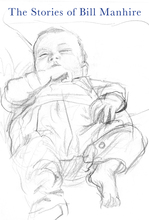
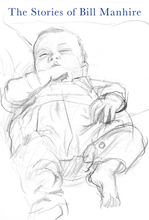
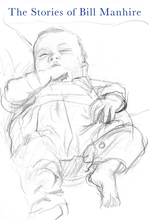
The Stories of Bill Manhire – a wee review and a wee interview – ‘I think that by and large I’ve written against rules’

bill_front_jacket__25142.1439156427.220.220.jpg  bill_front_jacket__25142.1439156427.220.220.jpg  bill_front_jacket__25142.1439156427.220.220.jpg

Bill Manhire occupies a significant position in our literary landscape — as both a poet and as founder of the International Institute of Modern Letters. As poet he is lauded on an international stage and at home was recognised  as our inaugural Te Mata Poet Laureate. As teacher and mentor at Victoria University, his outstanding contribution to our writing communities was honoured by the naming of the Bill Manhire House at IIML (April 2016). I have read Bill when he is not writing poems and have admired his clarity and elasticity of thought, but I had not read the early fiction in his recently released The Stories of Bill Manhire (VUP). Things escape us for all kinds of reason. In the 1990s, I focused on all things Italian as I wrote my doctoral thesis and missed too many local things. What a loss!

Amongst so many books I have loved, three books have really got under my reading skin in the last month: Cilla McQueen’s memoir, In Slanted Light, Tusiata Avia’s Fale Aitu, and Bill’s short stories.

Each of these books took me by surprise. Like little thunderbolts where you can feel your heart rate pick up as you read. Bill’s book didn’t cleave me apart like Kafka’s axe to the head or heart (he says the frozen sea within) but felt like the utterly satisfying thirst-quenching intake of sparkling water.  Writing that is effervescent, clear, restorative. I guess that is doing something miraculous to your parched state (a different kind of frozen sea). This is what words can do.

To celebrate this book – a short review from me and an interview with Bill.


A wee review:

The stories in this collection are gathered from The New Land: A Picture Book, South Pacific and Songs of My Life. There are previously unpublished stories, The Brain of Katherine Mansfield where you choose your own adventure, and the memoir, Under the Influence.

The writing is inventive, refreshing, surprising, on its feet skipping kicking doing little jumps.

How can I underline how good it is? As I read my way into days of reading pleasure, I squirmed cringed gasped laughed out loud sighed did wry grins wriggled on the spot leapt over the gaps laughed out loud again and felt little stabs that moved.

The stories highlight place and character, become nostalgic with detail that glints of when we were young (well for me anyway). You might move from the Queen’s visit and telling jokes to a dog named Fairburn, to a sci-fi keepsake on the tongue, to questions and answers on writing, to a dead-end job. Yes, the subjects are captivating but it is not so much what the stories pick as a starting point but how they travel. Take any story and it is a rejuvenating read. ‘Nonchalance’ for example, is like a series of postcards, travel or writing tips; or arrival tips with love and broken heart, soldiers, soldiers’ wives and the locals. You enter a realm of first things and floating elements. The readerly effects are kaleidoscopic.

To give you a taste of the book (I hope this doesn’t ruin things for you), here are some of the first and last lines. So important in a short story – these just nail it.


First lines:

Some critics write me off as just another ghost character activist, whereas I think I add up to a lot more than that.

The bishops come ashore.

Through here?

You are just an ordinary New Zealander.

The poet looks at the poet’s wife and says: You are my best poem.

He says: ‘Give me something significant.’

A slight scraggy moustache.

There are many tricks I have used repeatedly throughout my career to date, and others that I have done only really as one-offs.


Last lines:

Like a gasping in the chest.

The paddocks are left grey, stretching out to the edge of the frame.

Clouds pour across the sky and my lungs fill with air as though they might be sails.

No.

But jokes are too difficult: I’m getting someone else for that.

God bless him, and all the other poets.

That is how it is, adventure and regret, there is no getting away from it, we live in the broad Pacific, meeting and parting shake us, meeting and parting shake us, it is always touch and go.


The ‘Ghost Who talks’ made me laugh out loud with all its literary references alongside or inside the tricky business of getting ‘you’ and ‘I’ active in a story. Ha! It felt like the pronoun ghost out stalking. Then again the playful absurdities in ‘Kuki the Krazy Kea’ made me squirm with its dry wryness. Or the magician’s performance tips. Head back to the stories at the start of the book and the bits that taste a little different:  details of a nuclear winter, Ghandi’s funeral pyre, the melancholy of an empty pool, a mother colour-tinting photographs at the kitchen table. Bill enters the story to give writing tips here and there, to tilt the world a touch so you have to steady your reading feet (where next! What next!), to frame a judicious amount of missing bits, to be a little bit cheeky, to catch something provocative or lovely or poignant. This is a book I will recommend to friends.


A wee interview:


What satisfies you about writing a story?   

Pretty much what satisfies me about writing a fully-functioning poem.  There’s pleasure in the mix of surprise and inevitability, which needn’t be plot and character based. Sometimes it can just be a sense of musical completion.

I also like it if readers are given room to move and even a little work to do, and they end up feeling pleased about this, rather than grumpy. Maybe that’s explicit in The Brain of Katherine Mansfield, which is my shot at a choose-your-own-adventure story. But the best writing always invites readers to make choices as they go along. I’ve always liked Whitman’s take on the text-reader relationship: “I seek less to state or display any theme or thought, and more to bring you, reader, into the atmosphere of the theme or thought—there to pursue your own flight.”


Were there any rules you wanted your stories to obey? Or disregard? I love the way some of the stories sneak in instructions for start-out writers.

I think that by and large I’ve written against rules and tried to avoid what’s sometimes called the beige short story, of which the great exemplar is probably Joyce’s ‘The Dead’.  Glorious stuff, but . . . well, Joyce didn’t want to go on doing it, did he? Mark Haddon was writing about beige stories in the Guardian recently: ‘modest, melancholic stories, not arcs with beginnings, middles and ends, so much as moments and turning points.’  I’m a big fan of melancholy, but you read too many stories like that in a row, quiet epiphany after quiet epiphany, and the whole world starts to feel a bit insipid.

I suppose those instructions for beginning writers represent a complaint against the formulaic. What I mean is this sort of advice, which comes from a New Zealand book called How to Write and Sell Short Stories published back in the 1958:


PLOTS TO AVOID

(a)  Plots with a sex motif.

(b)  Where religion plays a dominating role.

(c)  Plots where sadism or brutality appear.

(d)  Plots with a basis of divorce.

(e)  Plots where illness or disease must be emphasised.

(f)  Plots dealing with harrowing experiences of children.

(g)  Plots dealing with politics.


And so on. Remove plots like those, and it’s hard to see what’s left.  I’m generally quite troubled by short story writing manuals, and by creative writing workshops that behave like short story manuals.


I also love the detail that catapults the reader to specific times and places  — how much did that sort of thing matter to you?

Getting the voice right in each case felt like the most important thing, and of course details are a crucial part of that.  Quite a few of the stories are really dramatic monologues, opportunities to try out some other voice or personality. That’s most obvious when they’re written in first person, but also in a strange way it’s also there in close third person.  The story called “Highlights” is third-person but it comes across in a flat, somewhat affectless voice – because it’s about a rather passive person. Anyway, the voice thing mattered to me, and I found myself trying on a range of idioms. I don’t think in general it’s a good idea to read a lot of short stories in a row, especially if they’re by the same writer, but I hope there’s quite a variety of narrating voices in the book.


Can you recommend some short-story writers?

There’s so much I haven’t read, but I’d go for Grace Paley every time.  Also Donald Barthelme and Lydia Davis. Gogol is my greatest favourite, especially “The Nose”, which I was once able to read in Russian. Early Sargeson.  Some of Ashleigh Young’s personal essays feel to me like beautifully told short stories – they just happen to be true, or true-ish. And the best of Barbara Anderson’s stories go on being brilliant – full of such sudden things. William Brandt’s collection, Alpha Male, has rather dropped out of sight, but it’s pretty fantastic – he does these wonderfully indignant, damaged narrators.


Do you have a favourite in the collection?

Probably “The Days of Sail”, though that may be because I know the back-story – it’s prompted by a covered-up assassination attempt on the Queen in Dunedin during the 1981 Royal tour.  A 17-year-old took a potshot at her from the top of a Med School building in Great King Street. Imagine if it had been successful! Dunedin would be totally on the map! Anyway, I built a rather cranky story around that fact.  There’s a nice radio adaptation that used be in the RNZ archive that I’d quite like to hear again.  It ends with a children’s choir singing “God Defend New Zealand”.


Do you find endings difficult (I have to say I loved the endings!)?    

Yes, they’re the hardest things.  I think I manage to get them right most of the time – except maybe for “The Death of Robert Louis Stevenson”, which of course is obliged to end with his death.  Not exactly a twist in the tail. Maybe the best ending is in “The Brain of Katherine Mansfield”.  Or, I should say, endings. I’ve met people who feel quite put out by the apparently brutal instruction, “Close the Book”, which comes at the close of several of the plot strands.

But “The Brain” is also about white middle-class complacency and its right-wing tendencies – so there is a “real” ending, too.  I won’t quote it, but anyone who wants to see what I mean can try to get to section 50 online, courtesy of Richard Easther and Jolisa Gracewood:   I’d also advise readers to pause on Greg O’Brien’s illustrated section headings.  There are lots of good visual arts jokes, along with a couple of depictions of C K Stead as a mad Nazi brain surgeon.


Victoria University Press page

Tusiata Avia’s book launch gave me the goose bumps

0b1eb042-a027-4f9f-bae5-5ca96dfd4ed5.jpg       IMG_3432

Fale Aitu / Spirit House Tusiata Avia, Victoria University Press, 2016

Last night I drove into the city into some kind of warm, semi-tropical wetness —like a season that no longer knew what it ought or wanted to be — to go to the launch of Tusiata Avia’s new poetry collection. Tautai, the Pacific Art Gallery, was a perfect space, and filled to the brim with friends, family, writers and strong publisher support. I loved the warmth and writerly connections in the room. I have been reading Tusiata’s book on planes as poetry now seems to be my activity of choice in the air. I adore this book and have so much to say about it but want to save that for another occasion. I was an early reader so have had a long-term relationship with it.


the launch

The room went dark and an MIT student, bedecked in swishes of red, performed a piece from a previous collection, Blood Clot. Mesmerising.

Tusiata’s cousin and current Burns Fellow, Victor Rodger, gave a terrific speech that included a potted biography. I loved the way he applauded Tusiata not just as a tremendous poet, but as a teacher and solo mother. Her names means artist in Samoan and he saw artist in the numerous roles Tusiata embodies. Writing comes out of so much. He identified her new poems as brave, startling, moving and political. Spiky. I totally agree.

Having dedicated her book to her parents, Tusiata said that it was hard to be the parent of a poet who wrote about family. When she told her mother what she was writing, her mother embraced it. She opened her arms wide. She said the skeletons need to come out. The atua. Tusiata’s speech underlined how important this book is. It is not simply an exercise in how you can play with language, it goes to the roots of that it means to be daughter, mother, poet.  It goes further than family into what it means to exist, to co-exist, in a global family. When a poet knows how to write what matters so much to her, when her words bring that alive with a such animation, poise and melody, it matters to you.

Four poems read. Lyrical, song-like, chant-like, that place feet on ground, that open the windows to let atua in and out, that cannot turn a blind eye, that hold tight to the love of a daughter, that come back to the body that is pulsing with life.

Yes I had goose bumps. You could hear a pin drop.

Fergus Barrowman, VUP publisher, made the important point that these poems face the dark but they also face an insistent life force.

Congratulations, this was a goosebump launch for a goosebump book.


Tusiata Avia’s book launch on Wenesday

Invitation to Tusiata Avia’s book launch, Wednesday 11 May, 5.30pm–7.00pm, Tautai, Auckland.


0b1eb042-a027-4f9f-bae5-5ca96dfd4ed5

You are warmly invited to the launch of

Fale Aitu | Spirit House

by Tusiata Avia

on Wednesday 11 May, 5.30pm–7.00pm
at
Tautai: Contemporary Pacific Arts Trust
Level 1, 300 Karangahape Road
(Next to Artspace)

Tusiata will read some new poems and sign copies of the book.
Refreshments will be served.

About Fale Aitu | Spirit House
Tusiata Avia is an essential voice in New Zealand and Pasifika literature. In her fearless new collection, she weaves together the voices of the living and dead, the past and the present in poems that are confessional and confrontational, gentle and funny. Speaking from Samoa, Christchurch, Gaza and New York, she combines stories from myth and the everyday, never shying away from pain or wonder.

Poetry Shelf Friday Poem: Bill Nelson’s ‘Regrets only’


Regrets only


You’ll take your grandfather roller skating,

watch from the edge of the rink.


For dinner you’ll make rabbit stew

and discuss the character of poultry.


Rose petals as a garnish, but also to eat.

Not many people know you can do that.


Sometimes it seems you’re the only two people

in an absorbing, character-based mystery.


You know this is all adding up to something—the roller skating, the rose petals, the rabbits.


©Bill Nelson 2016


from Bill Nelson’s newly released Memorandum of Understanding Victoria University Press 2016. Bill Nelson currently lives in Wellington. He was awarded the Biggs Family Prize in Poetry from International Institute of Modern Letters in 2009. He co-edits Up Country, an online journal devoted to outdoor pursuits. I did read elsewhere that he is a map maker! Lots of poems leapt out at me but I just love the ending of this poem and the electricity between those three things. This debut collection delivers clarity of voice along with tilts, kinks, uplifts and an essential dose of human warmth. Running along the beach yesterday, I was musing on how I am attracted to poems first through the ear, then through the heart, then through the tilting gaps and finally in the light of Ruth Padel’s chewy bits. I think this book delivers on all four in different ways. Worth adding to your shelf!


VUP page

Another poem on The Spin Off

Booksellers review

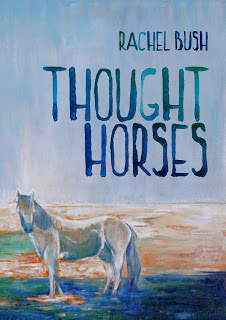
Poetry Shelf review: Rachel Bush’s Thought Horses – The bridge between reader and printed word on the page is luminous with activity


Thought Horses Rachel Bush, Victoria University Press, 2016


Rachel Bush was born in Christchurch and lived a number of years in Nelson. That she lived to see a bound copy of her last poetry collection, Thought Horses, was special because this very special collection stopped me in my poetry tracks. I rarely tweet about the books I read but this book was an exception – I urged everyone on Twitter to run down the road, buy a copy of Thought Horses, take time out from routine and noise and beginning reading.

I adore this book. Everything I love about poetry is at work here. The poems reflect my personal biases on what good poetry can do. The bridge between reader and printed word on the page is luminous with activity.


Thought Horses is written out of exquisite poetic fluency; written on the breath, on a long, sweet exhale so that it flows. There is a slowness here as though the poet is observing, absorbing and  reflecting the world through a single, leisurely pan.

The book, like Sarah Broom’s exquisite last collection, is written out of illness. The poems hold onto life, exude life, become life as they embrace sky, elephants, fan palms, birds, Venice, Anne Carson, departed friends, departing things. In the lines between are the fingertips of death. The subject matter is roving but the collection is harmonious with a unity of sound, craft, story. Perhaps it is to do with grace, writing with grace. Individual phrases catch me: ‘the rind of winter’ ‘lost is my quiet’ ‘Truth floats like scum on sea/ water’ ‘The best spring/ is in your own high/ free step’

This is the joy of poetry.

The first poem, ‘Thought Horses’ should be attached to the wall above every restless bed because it is as though the poet was thinking aloud on the line as she lay awake between four and six. Where does the mind wander? The poem provides ‘some things to think of’ and the list resembles a miniature self portrait, an anxiety map, a guide to the following day. I am expert in navigating night waking. I read this book on a plane to Nelson, after little sleep, with the world askew, and this poem nailed it.


You think of the poem you wrote about leaving a house, and how

houses we have owned will come back to us in dreams.

You think about taking your computer into the next room.

You think maybe you ought to try to sleep.


If I were an anthologist, hunting through the collection, I would build a sizable list of contenders for an updated anthology of New Zealand poems. ‘Sing Them’ is one of them. I am hoping someone asks me to edit a new anthology so I can start with this poem. It is light and lovely with little sharp bits and is a hymn to what words can do, and how poems are sung into being, into us. Each verse is a little shift, a tilt of the head to see things a bit differently, with tactile things animating the elusive, unrealness of words.


Because every day the poems

stay folded and pressed flat in

a suitcase of their pages

till the composer unfolds

them in sound lines and when

you sing them, they float.


Another poem to put in my anthology is ‘These Days’ with five little snapshots of the moods of different days that ache in the acuteness of remembering. There is the need to sleep when it is too light, the boy resisting with his string of NOs, ‘days that could make you depressed and flat as a squashed dog,’ the mother’s lesson to the dawdling son, the classroom singing, and the sweet, sugary days:


Long sugary days, you find these words come out

blurty blurty snap snap snap one after the

other and thoughts go off down little paths you

hadn’t noticed, like maybe lunch with a friend

whose round face under a merino beanie

smiles a vegetative smile, showing small teeth.


Then there is the poem I have already anthologised in A Treasury of Poems for Children because it is so vivid and surprising and is perfect to hook young ears and eyes. From ‘Early’:


The darkness wears a quiet sound

of fires died down and people who stir

in sleep. Soon they will slip on

their daily selves, button them up.


I have to point you in the direction of ‘It Ends with Forever’ which leads us back to mother and daughter and the way single words can stick in the head across a lifetime (‘frisky’ ‘forever’). This is a two-toned poem. An utterly poignant poem where death comes a little closer. In the second verse, the mother responds to the idea she will die one day by comparing herself to a kitten. She will live frisky, not forever. And then the maternal image in the first verse that made me well up:


Ah then sometimes, I wanted,

still want, something safe

and kind and firm and tight

as when our mother rolled

us in thin woollen blankets

on cold nights


OH, there are so many poems that lift you out of your skin. Mark Broach asks what is the point of poetry in the Latest Listener (April 23) and then gets a handful of poets to respond. This book is a point of poetry. Its needle pricks you. It makes you feel and be curious and review how your day will unfold. It shows the way poetry opens portals into what matters. For example, at the end of ‘ “All my feelings would have been of common things” ‘:


I once thought

many things would make my life happier

and now one by one I will let them go.


Rachel’s collection sits on my top shelf with a handful of poetry books that rise above the bulk to become something astonishing. Why? Because the heart is engaged. Because the writing is as contoured and as musical as the world no matter which way you look. Because this book was written so close to death, yet it shows the joy of life in little things, in big things, in ideas, relations, places. We all do this. We all write the world. But Rachel has made the word incandescent and in taking us back into the grit and light of living changes us. If you buy one poetry book this year, make it this one.


Victoria University Press page.

My tribute and an interview with Nelson school girl, Lucy  here.

Four poems along with Louise Wrightson’s tribute.


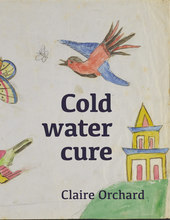
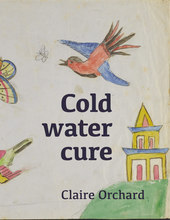
Poetry Shelf review: Claire Orchard’s Cold Water Cure – This is the joy of poetry!

Cold_Water_Cure__43428.1448931921.220.220.jpg   Cold_Water_Cure__43428.1448931921.220.220.jpg   Cold_Water_Cure__43428.1448931921.220.220.jpg


Cold water cure Claire Orchard  Victoria University Press 2016

Lately I have been thinking about the bridges that occur between poem and reader. Some bridges are so surely established that the ensuing traffic is free flowing. Noisy. Exhilarating. On other occasions, the bridges falter and it is barely possible to cross.The poem remains at arm’s length. Reading can be viewed as a travel card of crossings, but it is also invigorated by countless sidetracks  and multiple rest stops.

Claire Orchard’s debut collection,  Cold water cure, affords rich crossings. It is a book in three parts with the long middle section, a  fitting centrepiece. The first section resembles a picnic spread where everyone brings a plate and it all seems to fit together perfectly. These opening poems bring family close to the surface of reading in ways that move you. Move you to laugh out loud, to wry grins, to feel something. Claire prunes the dross, and peels a poem back to the bare bones of incident. Then she adds a little kick, a curve, a tilt and the bare bones gleam so we take notice. This is the joy of poetry. The way it enables renewed attention to old things.

So many favourites in this first section but here are a few:


Egg

What people often don’t realise, my grandfather said abruptly,

while we were sitting on a bench at the playground,

is that parenting involves taking

a lot of split-second decisions.


This poem is a grandparent anecdote involving an egg. I had no idea where the poem was taking me and it made me laugh out loud, grin wryly and feel something. All in one little poem basket.

Several of the poems suggest that Claire was once a primary-school teacher. Very rarely do I come across poems written from the point-of a-view of a teacher. It sparked a whole train of thought. I taught in primary schools in my twenties (Auckland, Wellington, London), yet I have never written poetry about these experiences as though they are low-status material or too far back in time. Janet Charman wrote some tough poems about being a high-school teacher. Johanna Aitchison has written hilarious poems about teaching English as a second language. Claire’s poems catch a knife-edge delight I recognised.

Here is the ending of, ‘Sharpening,’ one of the teacher poems:


I ask these questions without thinking,

tearing open a band-aid.

He’s six, the number of perfection.


There are a few found poems in the bunch. Found poems work best when the poet considers how best to serve them. Sometimes found poems don’t shift beyond road sign or stolen conversation and the connection is one of indifference. Not here. I especially love the one that kick starts the collection with a recycled quote from Ali Williams during the All Blacks 2011 World Cup Campaign.


Hang on

I think we’re getting ahead of ourselves here.

Last time we got ahead of ourselves,

we shot ourselves in the foot

then we did it again a few years before that –

shot our other foot.

We’re just trying to leave our feet on.


I loved the poem that riffs stream-of-conscious like when the poet spots a young man wearing the exact same T-shirt at the next table (‘Don’t let me be misunderstood’). Equally funny is ‘Poetry master class.’ This is based on sharing a copy of the poems with a late arrival at Bill Manhire’s event at the Embassy Theatre. Just hilarious with an ending that nails it. Here is an early stanza:


She referred to the presiding poet as Bill and,

before he’d begun to address himself to the first poem,

had taken a pen and scored briskly through three of its lines.


Yes there is humour in the opening banquet but there are ample reasons to savour rest stops. The end lines. The shift of the eye. The look of the poem. The sound of the poem. Tropes that renovate things. This from ‘Legendary creature’:


Your many-winged laundry rack

resembles a pale, anorexic albatross

doubled over

in the boot of the car


The middle section constitutes the bulk of the book and sets up bridges like Russian dolls, chiefly between Claire and Darwin. Unlike most poetry collections, Claire has placed her detailed notes at the start of the book. A travel guide, if you like, that signposts the link between poem and original source. Many of the poems juxtapose the words of Darwin or those connected to him with the words of Claire. The poems thus promote conversation between then and now, him and us, this idea and that idea. His experience and her experience. It is quite the thing for poets to step back in time at the moment. To take a historical figure and see what happens when you transplant yourself or your subject or both.

Such transplantation raises questions about how we represent the past. How the past infects us and vice versa. What I loved about the Darwin poems is the way his ideas percolate in the gaps but he is placed in a context of living. The poems are infused with life.

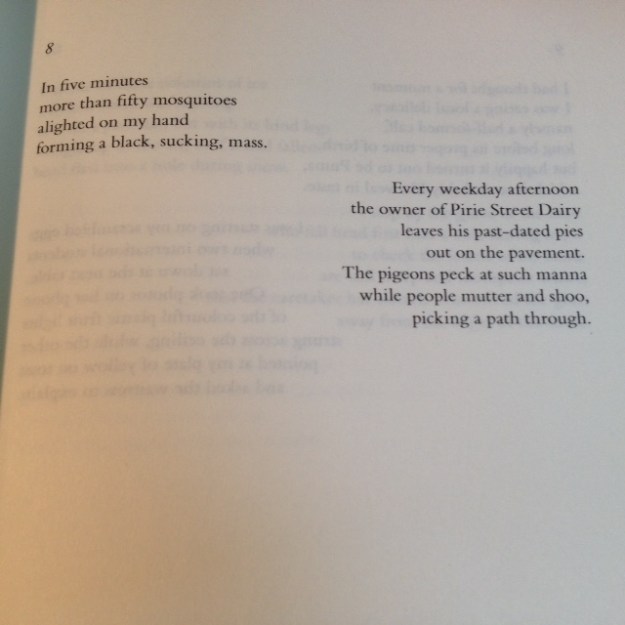
In ‘Voyages,’ Darwin’s voice sits on the left-hand side of the page, Claire on the other. I am itching to put Claire in quotation marks to stress her collision of selves. And then I think Darwin is equally unstable, and want to do the same for him. In the end, I leave them to float at will. A word from Darwin on the left prompts a personal anecdote, a musing, an image from Claire on the right. I keep looking at the page and reading the tiny stanzas and seeing them as two hand-prints. He and she. The connections are electric.

IMG_3202.JPG


Another poem, ‘Near Lima,’ provides new entries into the Darwin section.


Somewhere I read that, day to day, most of us

rarely raise our eyes more than fifteen degrees

above the horizon.


This is what the Darwin poems do. They lift us beyond the horizon line of fact, beyond the borrowed phrase or lines to reflect on how ideas rub against wife, child, animals, watches, ornaments, fish, ceremonies, death. So innovative. So stimulating.


The final section faltered for me. These poems venture out into the wider world, untethered by theme or style, which felt liberating. I am fascinated that I didn’t make it across the bridge for some of them. I don’t see these poems as failures. I see this as a failure on my part as reader. Sometimes it is like wine affected by mood, circumstances, company or context. One day a vintage hits your palate. The next day it misses. As a persistent reader of New Zealand poetry this interests me. Reading poetry is also susceptible to mood, the weather, what you have just read or done. I haven’t yet got what these poems are doing. I am planning a return visit.

I heard Claire read from ‘Voyages’ at the Lauris Edmond Poetry Prize in Wellington recently. What a treat. It could have been a disaster trying to read these two voices into audible life (do they need to be discrete?), but it was a highlight for me. Hearing the voice of the poet aloud, heightened the effect of her deft hand. I shivered with connections that I hadn’t spotted on the page. Some kind of spooky yet wonderful ventriloquism was taking place.


This book is a gift. It makes you laugh out loud. It rejuvenates. It challenges. I adore it.


Victoria University press page.


Farewell Rachel Bush, beloved poet


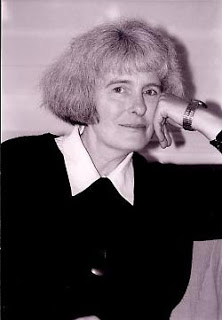
rachel+bush.jpgThought+Horses+cover.jpg
I receive this news with great sadness. I met Rachel for the first time when she read in Nelson as part of my Hot Spot Poetry Tour of Nelson last year. But her poetry caught my attention and held it a number of years ago. My thoughts reach out to friends and family.


from ‘Early’

The darkness wears a quiet sound

of fires died down and people who stir

in sleep. Soon they will slip on

their daily selves, button them up.


A rooster knows the time, says

it out loud when day is less

than a light line above the hills


This from VUP:

It is with great sadness we learned that our good friend Rachel Bush died yesterday. Rachel was a wonderful poet, an astute reader and a warm supporter of other writers. She will be greatly missed. Our thoughts are with her family and close friends.

Thought Horses, Rachel’s newest collection of poetry, will be published in April. We are so pleased that Rachel was well enough to work on her book with editor Ashleigh Young, and that she also got to see and hold her book.

We will be holding a reading and celebration of Rachel at Vic Books on Tuesday 19 April.


As part of the Hot Spot Poetry Tour children interviewed authors. Lucy interviewed Rachel:


5960977

Photo credit: Martin de Ruyter


The Interviewer: My name is Lucy and I am 11 years old. I like to write poems and LOVE to read. I go to Mahana school and I am in Year 7.

 The Interview:

Have you always loved to write and from what age?

I have always enjoyed writing, but I don’t know that I have always ‘loved’ it. When I was a bit younger than you, I was a very keen reader of Enid Blyton books and I wrote two rather pallid imitations of her books. In both of them there were four central characters called George, Kath, Alice and Anne – which names are very like those of some of the characters in Enid Blyton’s Famous Five books. I was starting to grow my hair at this time and all four characters had long plaits.

At first I wrote more stories than poems. Poems seemed to be what i wanted to write as I got older. I still write stories occasionally.

I kept a diary from when I was thirteen. I don’t exactly keep a diary any more, though sometimes I will write about particular things that have just happened but I do always have at least one notebook on the go and I write something in it most days.

What advice would you give to a writer wanting to publish a book?

I’d encourage anyone who wants to do this to go ahead. There are more opportunities now for publishing than there were when I was a young writer.

I sometimes think publishing is a gradation. At one end is someone whose poems/novels/short stories are hidden away deep in a computer file. When I was younger the equivalent was having them hidden in a bottom drawer, and at the other end is a big fat book like The Luminaries with lots of publicity for the author. A first step to publication might be sharing your writing with another person. Probably the first time I had a poem published was when I had a poem in the school magazine when I was in Year 12.

Computer software make it possible to publish your own work and have it looking very smart and stylish. A poet whose a friend of mine sends out a stylish looking card on his birthday. It’s folded in three and on five sides there’s at least one poem. On the sixth side there’s a little note about it being his birthday. (He also has a book published and has work published in magazines.) Or you can go online and publish your work there.

If you want to have a book published, I suppose you try to get some sort of publishing record first of all – maybe sending things to magazines for instance. This involves a bit of research because you need to be familiar with what sort of thing that particular magazine publishes. What sort of length are the pieces they publish? Are they prose and/or poetry?

If I had a book ready to go I would look hard at different publishing firms and what sorts of things they like to publish. I’d be trying to decide whether my book would fit in with the sort of thing they seem to want to publish.

I’d want to make a manuscript look good with no typos, a good clear plain font, double spaced with wide margin space. It would be easy to find information about this sort of thing online. Some publishers don’t want a hard copy, but prefer to be sent a computer file. Again you need to do some research. So this aspect of writing is more like being your own Personal Assistant and being business-like about trying to get work published.

What is your favourite genre to read?

I don’t have a favourite genre. I try to ready widely.

There’s almost always a book of poems that I’m reading and I keep it by my bed or in my handbag if the book is skinny enough. At present I am still reading Essential New Zealand Poems and I am also reading Horse with Hat by Marty Smith. I’ve also read some of Milton’s poetry, particular a verse drama called Samson Agonistes that for some reason I never got round to reading when I studied Milton as a university student. (Paula — these books aren’t children’s books in case you think they are.

I’m reading a novel too – it’s called Concluding by Henry Green. It first came out when I was 6 years old but of course I didn’t know anything about him then. He was talked about a bit when I was at university but was never in any of the English papers I did.

I love Victorian novels. I read and reread Dickens, Trollope and George Eliot’s books for instance.

I’m enjoying biographies more as I get older.

I’ve read several books from the Old Testament this year.

I like reading good short stories and this year I discovered an excellent writer, Lydia Davis. I also found out that nearly everyone except me had known of her work for years!

So it seems that I can’t really answer this question about my favourite genre but have just meandered around it

If you want to write in a particular genre it’s likely you’ll read that genre. At the same time I sometimes find that the books that really get me writing are a surprise. It’s not necessarily books of modern poetry that make me want to write poems.

Where does your inspiration come from?

I don’t often feel inspired. I try to keep writing and sometimes something unexpected happens and I find I’m writing more easily and confidently than usual. It’s wonderful when that happens.

Things that make me want to write vary.

What I read is often helpful. Sometimes first lines of very good writers make me want to write my own poem almost as a response to theirs. Janet Frame and Anne Carson have done that for me.

Sometimes being under a particular pressure makes me write easily. Which seems strange. Pressure might be a time constraint, like to write something in 20 minutes. Or it might be a set of ‘rules’, like ‘Write a poem that consists entirely of untrue statements’. I think the hardest thing to do is probably to be told to take as long as you need to write the best poem you possibly can about whatever you think is important. If there are constraints you can always blame them if your poem isn’t as terrific as you would have liked it to be.

Walking helps me to write. I’m pretty sure Fiona Farrell has written about how how walking helps her to write.

Glenn Colquhoun says something somewhere (I’m sorry I can’t be more precise), about writing being best when you write about those things you see out of the corner of your eyes. I like that idea. Sometimes it helps to sit with and discover what I’m really preoccupied with and use that in my writing, rather than write what I think I ought to write about.

Do you ever take a break from writing a poem and come back to it?

Yes, I almost always do this.

I mentioned earlier that I always have a notebook. Usually this is where I draft poems and then maybe weeks later I read back over this notebook. Some things I’ve written look a bit feeble but often there’s something I can use and develop further.

After a gap of time, I can often look at a poem a bit more objectively and see what needs doing to it. I would hardly ever send a poem I’ve just written away to a literary magazine because I am so likely to see things I want to change if I look at it after a few weeks.

Do you ever get writers block, if you do how can you get rid of it?

Yes, I suppose sometimes I do feel the opposite from inspired and can’t think how to begin or continue anything.

Sometimes I find that to think of it as being like having a bit of a headache is useful. Okay, it’s there, and I can either retire to bed feeling sorry for myself or just go on doing what I do as best I can. But if I decide I am suffering from Writer’s Block and stop writing then there is no chance of my writing well.

Michael Harlow once said at a workshop that if you write a word another flies to it. That’s mostly true for me. So if I can find a word or a phrase from anywhere and write it down then there is a chance some writing will happen. It may not be very good, but at least its writing.

If I was feeling flat about my writing, I used to return to a book called Writing Down the Bones by Natalie Goldberg and it helped me to forgive myself for often writing rubbishy, dull stuff. (And it also has some really good suggestions, about daily writing practice that I found useful.)

What is the hardest thing about writing?

I don’t think I can answer this very well. There’s no single thing that is particularly hard for me.

I have learned to accept that alternating between thinking I have just written a Truly Terrific Poem and thinking that I am an Embarrassing Disaster of a Writer who will never manage an even halfway decent poem doesn’t help me at all. I’m gradually realising that nothing I write will change the world and knock its little cotton socks off, but also I’ve come to realise that there’s no need to be ashamed of what I write.

Just keeping going, I guess, is hard. There are lots of other wonderful things to do. How do you balance these different aspects of your life? I’m busy, as most people are busy. I don’t write as much as I would like to write. I also need to work on regularly finishing poems and sending them away to literary magazines.

Sometimes writing can seem a bit lonely. But having a group of people you trust and with whom you can share your writing helps.

Nobody has to be a writer. But when it’s going well it’s good fun and satisfying.

Thanks for a wonderful interview Lucy and Rachel. Rachel has given us all kinds of tips about writing and has shown us the wide range of books she reads as an adult. To be a good writer you do need to keep reading and trying out things as you write — no matter what age you are! Rachel has a lovely poem in A Treasury of NZ Poems for Children called ‘Early.’

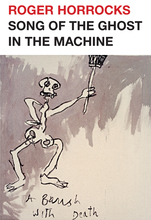
Poetry Shelf Review: Roger Horrocks and Song of the Ghost in the Machine – as you readwalk you feel invigorated, refreshed, and ready to write

ghost_cover_front__73226.1427153026.220.220   ghost_cover_front__73226.1427153026.220.220   ghost_cover_front__73226.1427153026.220.220


Song of the Ghost in the Machine

Roger Horrocks

Victoria University Press

2015


I confessed the day the Ockham NZ Book Award short lists came out I had not read this book as it felt too close to something I had in my head. Truth is I have finished a draft that I am leaving for a decent period of time before lifting it into something that works. The link with my starting point is tenuous. But it loomed large at the time.

Roger’s new collection comes out of walking. Walking in the physical world, walking through books, ideas, memory. Each section is prefaced by the biggest stack of quotations I have seen in ages in a poetry book. If ever! –  when I think further. It means there are two different reading approaches at work here. You can go shopping within the quotes and find the ones that stick.

Like a little reading map for the reader pedestrian. The sources are eclectic. Surprising.

Then there is the poetry, and this is infused with the way age changes things. For some poets, it prompts a new alertness to the world, to what matters. Roger is absorbing the world as he walks and leaving shiny traces of it in the poems.

‘This is the world I saw.’

For some poets, age is the body changing, under threat, slower. Death seems closer. Death seems to push and nudge the poems and make itself felt. For Roger, it is there in a health scare, in the passing of loved ones.

‘The body supplies the beat’

Mostly the poems are made of long lines in thick stanzas and generate the fluency of walking. One poem, ‘One Hundred Descriptions,’ amasses aphorisms, miniature thoughts, like miniature steps.

‘a square peg in the round hole of the world’

Throughout the book, as you meander and read, sidetrack and read, loiter and read, certain things leap out at you. Just like when you walk in the physical world and see the cat asleep in the flowerpot.

‘Like shoehorn, a mind is meant to ease you/ into the world, but his makes a poor fit.’

‘My cargo is close to bursting – years of sights/ and smells, ideas and anxieties, mistakes and regrets -/ but for the moment I’m still mobile, still fossicking.’


What changes the poetry when death seems that little bit closer? With this collection it invigorates it. The ideas about self and writing and how we fit in the world. How we belong. How we make attachments. How we can use words to make shadows on the page like Plato’s cave.

In his note at the back of the book, Roger talks about poetry. In my view, when I scan the decades of NZ poetry I have read, I believe poetry does anything and everything. It busts out of compartments. Not all poetry is preoccupied with self (Roger proposes much is), yet find me a poem where traces of the poet don’t flourish like tiny signatures (ah begone Barthes!). Tiny alluring signatures that reflect bias. Bias that snags on ideas, physical views, opinions, musicality, experience, poetic choices, subject preferences.

This terrific poetry collection is like walking in the world because as you readwalk you feel invigorated, refreshed, and ready to write.

Congratulations on a well deserved spot on the short list, Roger.


VUP page