Tag Archives: Victoria University Press

Poetry Shelf interviews Anna Livesey – ‘Every time I have published a book I have felt a part of myself caught in amber’


Ordinary_Time__59860.1501624161

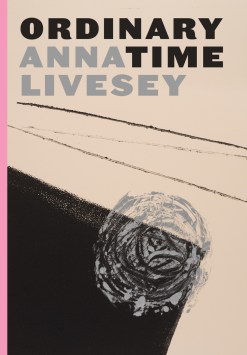
Ordinary Time Victoria University Press, 2017


‘I want a little quiet, a piece of the day

where the baby and I soak in our own silent language.’


from ‘Speech and Comprehension’


Anna Livesey has published two previous poetry collections, Good Luck (2003) and The Moonmen (2010). She graduated with an MA in Creative Writing from Victoria University and was the Schaeffer fellow at Iowa Writers’ Workshop in 2003.  Her new collection, Ordinary Time has just been published by Victoria University Press. With these new poems, personal experience is paramount because this book, with its roots and wings in the miracles and challenges of parenting, is an intimate exposure. Lines are agile, things pulse, gaps pollinate, and the glorious, challenging, curvatures of motherhood are brought searingly close.


 The interview


Paula:


‘Having not been out for days I have very little to add—

save that the house is sweet and clean, the baby safe and fed.’


from ‘Synthetic Thinking’


Before I enter your new collection of poems, I stall on the title: Ordinary Time. Poets have often used ordinary things as a gateway to the less ordinary, as a way of refreshing little patches of the world about us, whether experience, sensation or physical object. Yet the title goes deeper for me, particularly having read the word ‘parenthood’ in Jenny Bornholdt’s quote on the back cover. It feels like you are boldly staking the domestic space and the mothering role as a necessary and fertile springboard for writing. How does the title resonate for you?

Anna: One of the things I think about a lot (for whatever use it is), is our moral responsibility to the world we live in – who we should care about, who we should care for. What events – horrors and wonders –  should we allow to get under our daily carapace and work on us? Especially in this world where the news of disaster is never far away. There’s that phrase about extreme weather events: “the new normal”. Hurricane Irma – the new normal. Degradation of democracy in the States, Spain, parts of Latin America where it was once thought it be bedded in – the new normal. The end of Francis Fukuyama’s “the end of history” – the new normal.

The book starts with Peter Singer, a moral philosopher who basically says – “we are all equally valuable so we are wrong to value ourselves, our families, our tribe above those who are ‘other’…”.  And I believe that, but I also believe it is an impossible and inhuman doctrine. To me this is the puzzle at the heart of this book and the title. My beautiful, blessed, mundane life of glorious domesticity and early motherhood with my children, husband, friends and family and warm dry house with full cupboards exists in the same reality as Syria. Where children as beautiful and as beloved as mine are dying. Both of these realities are “ordinary”.

To survive and function and care for those who are most immediately our responsibility we need (or at least I need) to take refuge in the shared human mendacity of closing up our carapace and giving an emotional shrug. And in fact I think this is not really the “new” normal, but just normal – the Hobbesian description of the human condition – “solitary, poor, nasty, brutish and short” – continues to hold true. (And as I type this I think – and what is the point of poetry in all this anyway?)

And then on the other hand – the title poem talks about the late winter time when the magnolias all around Auckland are covered in their magical flowers. They look like aliens or supermodels, all lanky grace and outrageous decoration. Then the flowers fade and the “green leaves of ordinary time” appear and the magnolias just look like normal trees for another year. So yes, the title is also a nod to the magic and mania of those first early weeks with a new baby, and how they refine and change one, as a parent and inevitably as a writer.


‘(…) Across the road two magnolias, one pink, one white. In the days

since we came home I’ve watched their stark flower-spiked branches

soften and go pastoral—the green leaves of ordinary time climbing out

of the wood.’


from ‘Ordinary Time’


Paula: That nagging doubt about the value of writing poetry is a tough one. What difference does it make to the Syrian crisis, the ordinary families there that love their babies, eat, sleep, celebrate and mourn? Perhaps one response is that in translating your experience you contribute to a global poetry conversation that opens windows on how we live with our different hungers, failures, connections, kindnesses.


‘I am a person in love with nostalgia

and this unfits me for every moment of living but the one just past.’


from ‘I Am a Person in Love with Nostalgia’


You record the early weeks of motherhood and the poems undulate through fatigue and joy, routine and insistent questions. I love the way you pull things from the past into the patterns of the present. I particularly love ‘I Am a Person in Love with Nostalgia.’ It feels like there is nostalgia for former selves, but you also make a precious baby moment glow that might be a future nostalgic memory hub. What kind of returns does poetry represent for you?


Anna: The returns of poetry. Let me first be contrary and take returns in the sense of “what you get back”. In my previous book, The Moonmen, there is a poem called “Bonsense”. Bonsense means “good sense” – ‘bon’ as in the French “bonne”, for good (and indeed the Scots “Bonnie” – beautiful, cheerful – which is my daughter’s name). The poem is about the returns of poetry, and of art, the non-essential, in general. It is addressed to a dear poet friend who had a job caring for a very very small library in a small town in Montana, and ends:


“From the chest of your books

you enjoin belief

in outposts of minature sense or nonsense,

or going further, antonym, bonsense—

the elaborate folly of the heart and brain,

built curlicued, baroque.


What bonsense is this, a tiny horse, a tiny library?

The great iced cake of relationships,

the ornamental pony of compassion,

the perennial shout (SHOUT) of shared exclamation.”


The central idea here is that compassion and art spring from the same core impulse. Imagination/transportation/identification/recognition/the marvellous… these are human characteristics and lead to our greatest baroqueries – the welfare state, poetry, breeding horses too tiny for any purpose but to be admired. I don’t feel that poetry needs to “do” or “contribute to a conversation”. I think the return of poetry is merely for it to be.

And the returns in the sense of nostalgia. Every time I have published a book I have felt a part of myself caught in amber. And through my three books the amount of “me” that is there like an insect in the settled gum is greater than before. And in this book, as you observe, “me” has expanded out and encompasses my babies. As I am writing this to you, it is day one of Bonnie being fully weaned. Yesterday she had her last ever feed and five years of being pregnant, breastfeeding or both came to an end for me. So to have that moment at the early cusp of our relationship captured and kept in a way that I love, that moves me back into that moment perfectly, is infinitely precious. A memory outside myself. That is the personal return of poetry.


Paula: I loved that. For me, it is exactly why poems that venture into the domestic or the personal are utterly productive for reader and writer.


‘When my mother died she had spent

a long time in darkness.


When my grandmother died she had spent

a medium time in darkness.


When my daughter was born she had spent

a short time in darkness.’


from ‘Quotation’


That phrase ‘caught in amber’ really resonates, and that poems can be an intimate way of catching a present moment to savour the future. Is there a poem in the collection that particularly resonates with you? I found myself haunted and, as that word rightly implies, returning to ‘Quotation’. I was entranced by the generations of women and by the distinctive dark and light.

Anna: That’s like asking if I have a favourite child! I’m pleased you asked about “Quotation”. It’s a funny little poem – the opening lines include a quotation from William Calos Williams, of course — “Danse Russe”. In that poem, Williams is talking of himself, dancing naked, singing (go and read the poem now…! Such an image it is), waving his shirt around his head. His poem ends “Who shall say I am not/ the happy genius of my household?”.  My grandma was a brave woman (a WREN, among the first five WRENS to be choosen to go on a troop transport as decoders), but also a modest, genteel, English/Irish Catholic of her time. And so the image of her secretly dancing naked, admiring herself as Williams does, is part of the joy of that poem for me. And then there is the word “genius”. In my poem, as in Danse Russe, it means, essentially, “the soul of a place” – the genius loci, the ancient Roman concept that all places have a soul. So my poem is saying… who shall say that this modest woman, looking like a snuggly grandmother to me, her little grand-daughter, was not in fact a wild dancing creature, the secret, gleeful soul of the old farmhouse.

And then I just miss her so. And the farmhouse that had every aspect of a fairytale farm – my Grandpa made all the bread, there were hens and herbs and a sheepdog, a shy white cat, treasures from India (war service), a dressing table with mirrors that folded out and could be made to reflect themselves into infinity. Winegums in the pantry for story time. Easter in the garden. Woollen blankets. Grandpa’s blue farming overalls. Sunday roast – “from our own sheep”. I want every single part of it back, including and especially them.

(I should note here my family have a terrible weakness for writing books. My mother was a published historian with several books to her credit. My Grandpa wrote several local histories of the Wairarapa and a five volume self-published autobiography (Yes. Five volumes. And very interesting they are, at least to me). My grandma trained as a speech teacher in her 60s and then wrote plays which her students performed in the garden at Perrymead. She also wrote short stories for us, her grandchildren, and several of them were read on radio. So I am not just missing the rural idyll and the unstinting love of Grandparents, but also missing a formative place, where books and language and storytelling and performance were part of everyday life.)

In this poem, and in ‘Privacy’, and several other poems in the book, I was thinking about a passage from Simone de Beauvoir’s memoir of her mother’s death, A Very Easy Death. In the book she is looking for keepsakes for her mother’s friends, after her mother has died. She writes: “Everyone knows the power of things: life is solidified in them, more immediately present than in any one of its instants.” (C.f. Williams: “no ideas but in things”). So that’s the desire behind taking their house and putting it in my house — I want to “quote” their life in my life through their things.

The poem ends with another quotation, from Yeats, “John Kinsella’s Lament for Mrs Mary Moore”. Again, if you don’t know the poem, go and read it. It’s a song of grief for a witty, wise, sexy old woman (I have always loved this poem and it continues to appeal as I grow a little older myself and hope to be appreciated in the round, (even and despite my flaws), as John Kinsella appreciates Mrs Mary Moore). The repeated refrain is “What shall I do for pretty girls/ now my old bawd is dead?”. Mrs Mary Moore is, literally, a bawd. And so again this is a naughty joke on my part. My grandmother was a witty, wise, sexy older woman. She absolutely die to see that written down! But I love having that thought about her.


Paula:

‘is this how my mother felt

this fear, this,

bewilderment?

I want to mother better than I was mothered.

I can say this because she is dead.’


from ‘Bay Leaves’


I like the idea of a poem as keepsake. A way of preserving familial relations in the manner of a photograph album, a daily journal or a shoebox of mementos.

The collection offers myriad rewards for the reader. It is a bit like peeling back layers of living to expose the challenges along with the miracles or joys. I am drawn to the way the world rubs into the private life: the child washed up on the beach makes the mother hold her child that much closer. Perhaps the poems that struck deepest faced the mother, the mother no longer here, the mother who prompted the poet to look at her own mothering. Were these difficult poems to write?

Anna: No they weren’t. The difficulty was in the long years of decline. My mother was a writer, so writing feels like a very real way to honour her. Making art felt like salvaging something.


Paula: Do you think, in this move to the overtly personal, other things such as musicality, changed a little too?

Anna: I deliberately wanted some of these poems to be clumsy. Awkward subjects deserve an awkward sound. That’s not something I would have been comfortable with in my earlier work.


Paula: Were you tempted to include endnotes as some poets do? I can go either way. Endnotes open up poems in ways I don’t necessarily anticipate, adding avenues of delight, but conversely might limit my own freedom to explore and delve within the myriad possibilities of a poem.

Anna: My first book, Good Luck, had endnotes.  There was a lot of found poetry and I wanted to reference where it had come from.  With this book I thought about end notes, very briefly. And then I thought: who has the time??? And also I didn’t want to explain the poems – either they do their own work or they don’t.


Paula: Did you read any books while writing this that affect how and what you were writing?

Anna: Czeslaw Milsolz’s Roadside Dog – a little book of prose poems, limpid, narrative, engaged, straightforward, complicated, personal and full of the world. The best bits of Ordinary Time are really just a crib of Roadside Dog. Raymond Carver – again, the direct voice of his poetry. The beautiful poem, “The Haircut”, of his referenced in “Because I’m a Human”. Kate Atkinson’s Life After Life is the book that “Reading Books About the War” lifts off from. Tove Jannsen, the Moomintrolls – moments of recognition in literature affect me profoundly, especially when they are parent/child, and Tove Jannsen does these so beautifully. I am always reading Janet Frame’s poetry, and hoping for a little of her perfectly awkward insight to rub off. And then also the manuscript of my dear friend Lauren Levin. Her work is quoted in the last poem in the book. She has just had a truly wonderful book published – The Braid. If you care about poetry and about women and about the world and about justice and about beauty you should order it. And Heather Tone’s Likenesses. There are several poems for Heather in The Moonmen, and she and her luminous, curious, outsider-mind writing are a constant inspiration to me – how to live, how to write.


Victoria University Press page


Poetry Shelf Spring Season’s poetry fans: Nicola Strawbridge picks Dinah Hawken


Screen Shot 2017-10-14 at 1.31.02 PM.png


Screen Shot 2017-10-14 at 1.32.00 PM.png

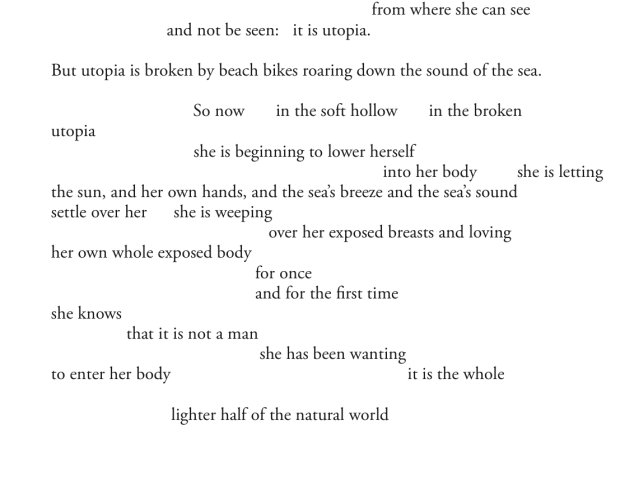
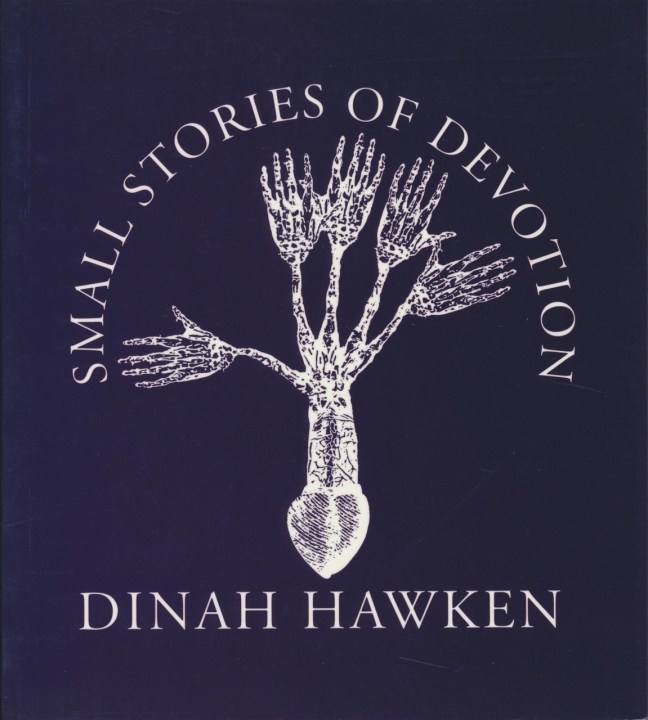
©Dinah Hawken Small Stories of Devotion Victoria University Press, 1991


Small_Stories_of_Devotion__14354.1401159901.jpg

Note from Nicola:

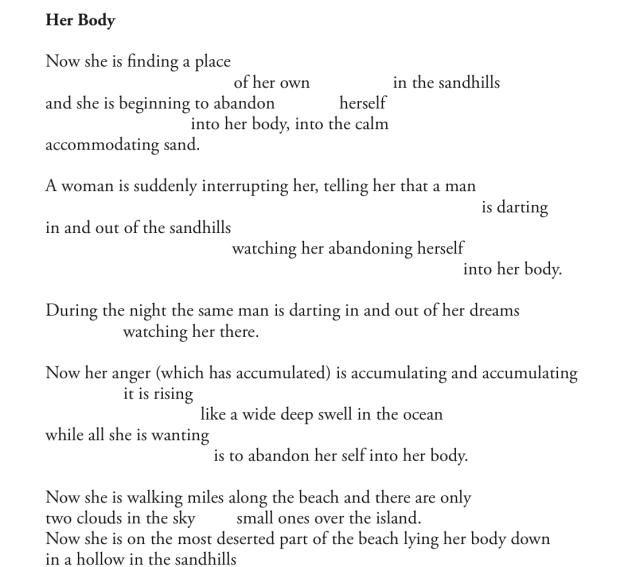
Dinah Hawkin’s Small Stories of Devotion was the first collection of contemporary NZ poems that had a big impact on me as a young woman. The collection was published the year I went flatting for the first time.  My flatmate had a copy, and I was attracted to this beautiful small blue book and it’s pocket-sized format. I hadn’t been exposed to much contemporary poetry, and it was a revelation to find work that spoke to me so directly. ‘Her Body’ is all tangled up with that time in my life where I was emerging and coming into myself as an adult. A time when I was encountering lots of new ideas about how to live, how to be in myself and in my body. This poem in particular spoke to those themes, as well as being a gateway into the world of NZ poetry. Now I read it and appreciate a layer of memory folded into its mix including a fondness for that younger woman and her questioning self. I love the poem’s rhythm, the place of the poem playing itself out, that long beach, those sandhills, the island and its two clouds. It surges and retreats, echoing the waves and the words lapping up the beach and across the page.

I enjoyed its anger (“accumulating & accumulating”), its passion and release.  I was spending a lot of time myself walking on beaches while having big existential conversations with my new friends about the world we wanted to live in, and about our sexuality and gender politics in particular. ‘Her Body’ encapsulated that exploration and the feminism that was so often at the heart of our conversations. I was she, the powerful sensual voice of the poem, the woman abandoning herself into her body. And alongside all that, entwined, the natural world, informing everything, settling on everything. A potent combination and one I’ve continued to enjoy in Dinah’s work.


Nicola Strawbridge is Programme Director of the Going West Books & Writers Festival.

Dinah Hawken is a poet who lives in Paekakariki on the Kapiti Coast. Her seventh collection of poems, Ocean and Stone, was published by Victoria University Press in 2015.


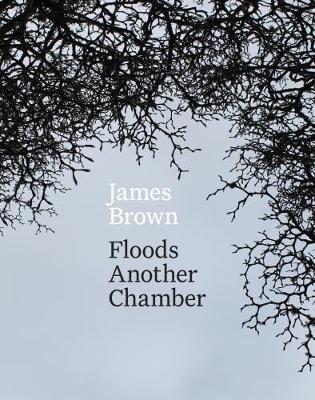
A poem from James Brown’s dazzling Floods Another Chamber and Gregory O’Brien’s launch speech (the envy of all poets!)

large_9781776561599.jpg


Postmodernism Explained

You’re dreaming. In the
dream you fall asleep and dream
you’re writing. If to

write is to reflect
what you’ve already read, and
thus to reread, to

read is also to
rewrite. What are you saying?
Wake up, you tell me.

©James Brown 2017
And for an extra sample you can read the magnificent ‘Janet and John Go to the Book Launch’ here


Brown_017 bw.jpg


The launch speech:


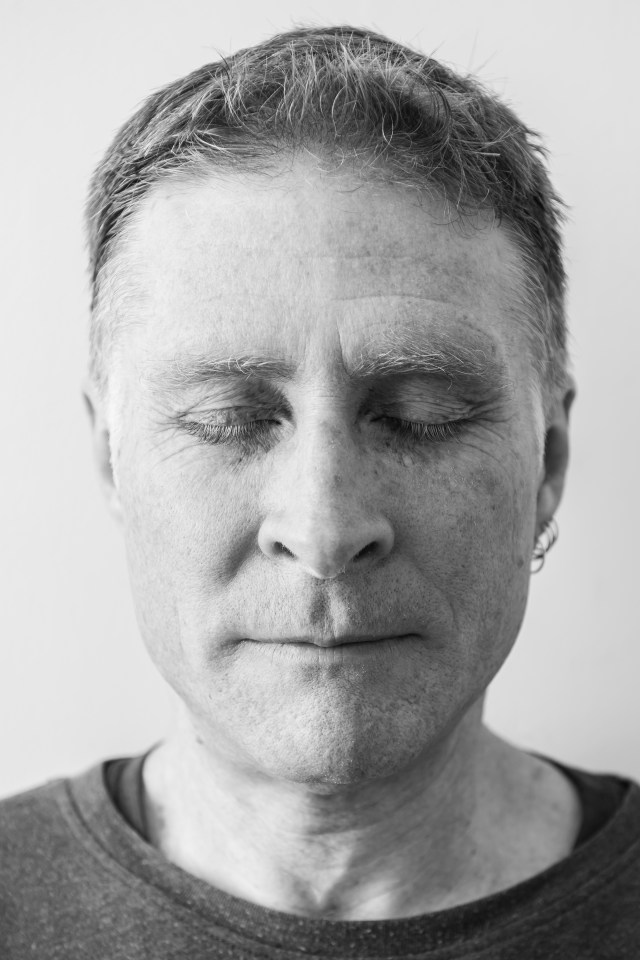
James Brown comes from Palmerston North

There are numerous questions that arise, like a lowland mist, from this collection, as from all of James Brown’s books: For a start, why did he ever leave his home-town of Palmerston North, to which he is so manifestly linked. Or maybe he did never leave? Or when is he due back there?

Taking this, Brown’s sixth poetry collection, as a kind of provocation, two Fridays ago I drove north to Palmerston North and checked in for the night at the Hotel Coachman, a neo-Tudor confection on Fitzherbert Avenue. Not far from ground zero—the address where Brown spent his formative years—I had decided to read this new collection on its home turf—on the south side of ‘the bustling go-ahead city at the heart of the Manawatu Plains’ as Brown once memorably wrote.

According to the Palmerston North Creative Giants website:

‘Of all Palmerston North’s Creative Giants, poet and short fiction writer James Brown stands out…’ Expectations of the new book were, accordingly, running very high in Room 102 of the Hotel Coachman. In the company of an increasing platoon of sopping tea-bags and an intermittently boiling kettle, I lay down and made my way across the flat, bicycle-friendly territory of Floods Another Chamber. . .

Despite the fact she appears in Brown’s new collection a much-remarked-upon four times, Jenny Bornholdt had earlier in the day declined the invitation to accompany me northwards on this hyper-literary excursion. . . Alone, I was consigned to my carpark-facing double room—$160 the night, which included breakfast in a rowdy dining area filled with travelling salesmen and at least one sports team. While the scrambled eggs resembled a Manawatu wetland and the spread, generally, was lacklustre, I was up to my ears in Brown’s book by breakfast time, which made it all not so bad. In fact it was as if James Brown had scripted the whole thing.

Later I drove past the Palmerston North Public Hospital, where the poet was born at 12.40am on April the 1st, 1966; a moment’s respectful silence, also, near the birthplace of Sarah Laing and the childhood home of Karl Maughan—and on Broadway Avenue where painter Pat Hanly, aged 15, was an apprentice hairdresser at Bert Pratt Limited.

The early things in life determine how we evolve. In Brown’s villanelles and quatrains, I can detect the orderly grid of the Palmerston North street plan, and the inspirational, idiot wind that crosses it. This is the place where, as Brown writes in ‘Childhood’, the days ‘inched by… Glue, glitter, galaxies. Things shone. Broke. You laughed / until you cried. There was no escape.’

While James Brown delights in poetic constraints, and is dazzling within them, he can also blast away and, like the late night motorists on Fitzherbert St, has been known to throw beer-cans and drop donuts, or their literary equivalent. . . On the subject of provincial psychology, ‘Erotic Snowdome’, from the new book, contains possibly the best, rudest line in all of New Zealand verse—or first-equal with Hera Lindsay Bird. (You’ll have to read the poem to discover this for yourselves.)

Brown is the New Zealand poet laureate of torpor, resignation and exhaustion (or maybe loss of interest), with intermittent bouts of fanatical bicycle riding. The miracle is that he can make it all so interesting and darkly humorous and weirdly moving. The poems are characterised by a process of subtle inversion whereby the personal is rendered impersonal and the impersonal becomes personal. The end result is a poetry that is simultaneously lop-sided and true. At times, it’s like L=A=N=G=U=A=G=E poetry, but definitely, to use a word from Brown’s book, funner. . .

Like the hometown, the poetry gains a certain intensity through its sprawl, pragmatism, volubility and absence of long term planning. . . Just as Palmerston North has its New Zealand Rugby Museum, Brown embraces the sacred paddock and has written the odd rugby poem (most recently ‘True Blood’ in Warm Auditorium). For such a flat place, Palmerston North casts a long shadow. Echoing the city’s single Beds R Us outlet—at 133 Rangitikei St—Floods Another Chamber includes a similarly stocked poem titled ‘Beds R Us’. . . With its conference centre, in-house training and local dialect, the Museum of New Zealand Te Papa Tongarewa—Brown’s recent long-term place of employment—configures in much of his poetry as a kind of rehash of Palmerston North, but on three or four levels.

Not surprisingly, perhaps, there are a great many poems in Floods Another Chamber about the other place, Wellington, but as any true son or daughter of Palmerston North will tell you, Wellington is only the southernmost suburb of Palmy—a feeder city or satellite. All roads, as indeed all bike lanes, lead to the one true Square.

After giving a talk at the Palmerston North art gallery—which was the other reason for my trip north two weeks ago—I fell into a conversation with a member of the audience, a district planner. When I put it to him that Palmerston North was just a theme park based on James Brown’s poetry, he appeared not to hear me and proceeded to outline, in some detail, the myriad cycle lanes that the council was now investing in—riverside bike trails, designated lanes, scenic diversions. . .  According to my new friend, the place would soon be like Copenhagen—although with Fonterra and DB in the ’hood, and the Manawatu River rolling through and occasionally flooding everything. Having just read James Brown’s new book, it was crystal clear to me that the city was preparing itself for the imminent return of its most illustrious son, its cyclist-poet laureate.

Floods Another Chamber is our latest, biggest chance to bask in the life and work of a genuine Creative Giant of Palmerston North and of everywhere in the world that does not call itself Palmerston North. The overnight trip to Palmy is an optional extra. In some very fundamental ways, this indispensable collection will take you there anyway.

Gregory O’Brien October 2017


James Brown’s previous poetry collections include Go Round Power Please (1995), which won the Jessie Mackay Best First Book Award, Lemon (1999), Favourite Monsters (2002), The Year of the Bicycle (2006), and Warm Auditorium (2012), as well as the useful nonfiction booklet Instructions for Poetry Readings (2005). He edited The Nature of Things: Poems from the New Zealand Landscape (Craig Potton Publishing, 2005), the literary magazine Sport from 1993 to 2000, and the online anthology Best New Zealand Poems 2008. James teaches the Poetry Workshop at Victoria University’s International Institute of Modern Letters.


IMG_7711


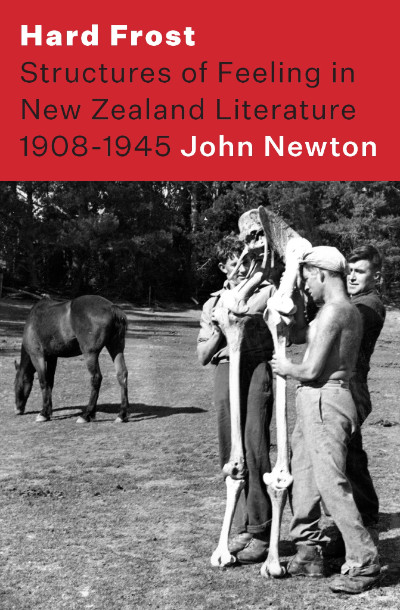
VUP Launch – Hard Frost: Structures of Feeling in New Zealand Literature 1908–1945 by John Newton

eb756412-7c32-4aab-aa61-59d53ecb163b.jpg

Victoria University Press invite you to the launch of
Hard Frost: Structures of Feeling in New Zealand Literature 1908–1945
by John Newton

on Wednesday 11 October, 5.45pm–7.15pm
at the Stout Research Centre, Victoria University of Wellington,
12 Waiteata Road, Kelburn, Wellington.

Refreshments will be served.
Hard Frost will be available for purchase courtesy of Vic Books. PB, $40.

The launch for Hard Frost will be preceded by a seminar given by John: “‘All the history which did not happen’: Allen Curnow’s critical nationalism”. The seminar commences at 4.10pm at the Stout Centre. You are welcome to attend both the seminar and launch.

Louise Wallace’s Bad Things – There is a freshness and a daring at work here

DAx7e6VUQAAZPoh.jpg


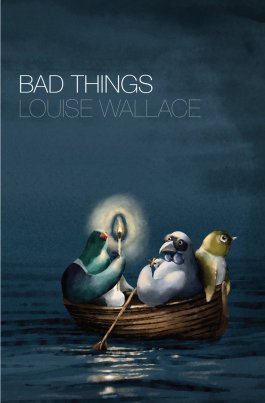
Bad Things, Louise Wallace, Victoria University Press, 2017

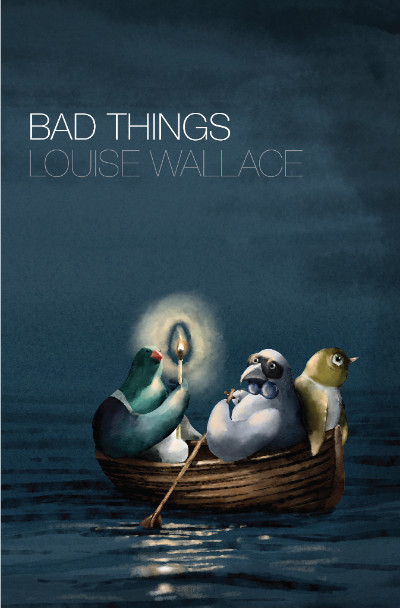
Some poetry collections depend upon a thread of similarity; connective subject matter, recurring motifs, a cohesion of form, tone and voice. Other collections resemble mosaics made of infinitely varied pieces that come together in surprising and satisfying ways. Louise Wallace’s new book, Bad Taste, exemplifies the latter. Turn the page and you have no idea what to expect – yet everything fits in the same animated package. There is a freshness and a daring at work here, because the poetry seems beholden only to its own choreography. I love that. I can’t think of another book quite like it. The cover, with the little patch of flame in the dark, and the boat waiting with its strange mix of birds, is the perfect entry into the poems.

Sometimes the poems relate little stories; condensed in prose paragraphs or strung with slashes to read in a single outbreath. Certain poems stop you in your tracks when you get to the last line and then tip you off the tracks of reading. ‘The hunt’ begins with a woman needing silence, yet it’s impossible to find when her voice rings out ‘like bells in the library’. She needs ‘to go church to pray’, but the poem does the twist and tilt and the ending becomes uneasy:


and without the silence she can’t pray / and if she doesn’t pray she will starve


Images also keep you on your reading toes: they might be strange, brightly-lit, smudged. There is, for example, a depiction of terrible things, ‘bad things’, that might fill a head:


They grow there—

a forest of tiny umbrellas.

They flourish—

a crown of terrible heads.


from ‘Bad things’


Or the sight and sound of a woman in a dump shop; ‘I’m amazed, she says’ over and over (‘Trash Palace’).

Or the sight and sound of a woman packing her husband and various assorted characters, including ‘the owner of the local chip shop’, into a row boat:


though it was extremely cramped

and they rowed

out to the open ocean

and sat quiet

and waited.


from ‘The body began to balance itself’


One poem may be densely packed and prose-like, while the next might offer short snappy lines that extend a poetic spine down the page:


resting shoulder

touching elbow


fingers to forehead

hand to cheek


from ‘Arrivals’


Strange poems, that may be hyper-real or surreal, hook with the element of surprise crouching somewhere:


7. You cannot take off the backpack.

8. You cannot just take off either.

9. You try to escape your own skin.


from ‘Right of return’


Sometimes it is a matter of taking three or four things (a man in a bus, the downhill, the light and the safety) and seeing what happens:


the light bounces

off the hill blindingly

bright and he’s saying

to himself

safety first

safety first

and he’s right, and all

through the bus

there is light.


from ‘Safety first’


Politics hue the mosaic pieces and slip in different directions, whether gender or ecological. Famous people glint the surface because their very presence is out-of-the-ordinary in the day-to-day ordinariness of what goes on. I especially like Meryl Streep, (but you also get Robert Redford and Reese Witherspoon): ‘Meryl Streep went nuts at me in the breakfast room, because I’d taken her table by mistake.’ I also like the arrival of Reeese, in ‘There are lots of ladies who have survived the desert’. The protagonist is walking in the desert, parched and desperate, when she hears wailing: ‘Reese Witherspoon emerges from behind a shrub, holding a plastic bowl full of oats and water.’ She cannot get her primus to work. Again Louise delivers the twist and tilt at the end of the poem, as though a shadow voice whispers to us to find perspective when we read of her neighbour: ‘Janet’s husband came home drunk one night and smashed a chair across her back.’


To understand the ability of the collection to travel and arc and shuffle, you need to juxtapose the offbeat with the achingly real. ‘Helping my father remember’ is the white hot searing heart of the collection. Communication is impaired: ‘Except something’s/ gone wrong with the wiring/ and he didn’t teach me/ how to fix it.’ The poem delivers such an emotional hit because of the way it lays little details alongside each other; the fact that the daughter is most like her father and his mother, and that sound might reactivate memory or that she is following him ‘through/ tall grasses, as high/ as my head.’  This time the ending is not a strange tilt but a poignant dive deeper below the poem’s surface:


We’re heading

to the river.

You find Nana,

and I’ll find you.

We won’t be lost

if we’re together.


If Louise’s new collection pulls you into a mosaic of dream, confession, anecdote or troublesome issues, it does so with a deft and darting accumulation of line. The overall effect works upon your ear, eye, heart and mind. There is stillness and movement, gaps and prickling images. I couldn’t ask for more – it’s a terrific read.


Louise Wallace is a poet and the founder and editor of The Starling, a literary journal for young NZ writers. She has published two previous collections: Since June (2009) and Enough(2013) . She was the 2015 Robert Burns Literary Fellow at Otago University.


Victoria University page

‘Reminders for December’ plus author note posted on Poetry Shelf

Louise in conversation with Pip Adam on Bad Things at Better Off Read

The Starling an online literary journal for young NZ writers


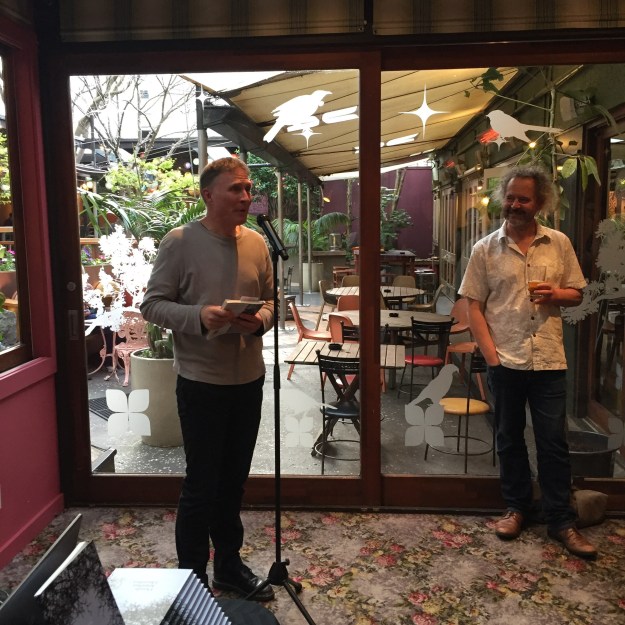
James Brown launching new collection

586d7a07-8f13-49e8-a845-33892c5a4a4f.jpg


Victoria University Press warmly invites you to the launch of
James Brown’s brand new poetry collection

Floods Another Chamber

on Wednesday 4 October, 6pm–7.30pm
at The Guest Room, Southern Cross Garden Bar,
39 Abel Smith St, Te Aro.

Greg O’Brien will launch Floods Another Chamber

Books will be for sale courtesy of Unity Books.
p/b, $25
About Floods Another Chamber


Flow: Whanganui River Poems – Paula Green in conversation with Airini Beautrais

Flow_cover__41926.1492985261.jpg

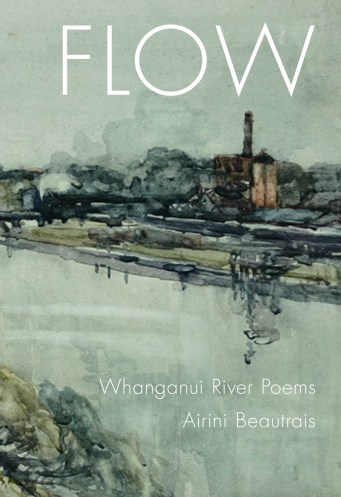
Flow: Whanganui River Poems, Airini Beautrais, Victoria University Press, 2017


Airini grew up in Auckland and Whanganui, studied both ecological science and creative writing at Victoria University and has worked as a science teacher. Her debut collection, Secret Heart, won Best First Book of Poetry at the Montana New Zealand Book Awards in 2007. She has also published North Western Line and Dear Neil Roberts.

To celebrate the arrival of Airini’s fourth poetry collection, we embarked on an email conversation over the course of a week.


Paula: After reading the first few pages of your new collection, Flow: Whanganui River Poems, I felt the kind of spark that travels like electricity through your body as you read: heart, mind, ear, eye, everything on alert. When I was doing my Masters in Italian I read the fragmented fiction of Gianni Gelati. His writing was poetic, strange, addictive. With Narratori delle pianure (Storytellers of the plains), he travelled the length of the River Po, collecting stories from people who lived there. His people, his river, yet while the river dictated the itinerary, it was less of a protagonist. Instead the people he met flourished on the page in their out-of-the-ordinary ordinariness.

I had the idea at page 24 of Flow to have an email conversation with you as I read. I wondered how my relations with the poems might change over the course of reading; the reading would act as my surrogate river with its various currents and tributaries. I wondered how I would shift in view of the poetics, the ideas, stories, characters and the river itself. The book fills me with curiosity and delight at what poems can do.

My first curiosity. How did you prepare for the river poems beyond the craft of writing? Did you travel the river, visit communities, trawl the archives or rely on memory and books?


Airini: It’s interesting to hear about Gelati’s writing. In my case, I couldn’t say ‘my people, my river’ because I’m Pākehā, and the Whanganui is definitely a Māori river. My connection with the river is different. I see it often – I drive over it at least twice a week – but it still has this sense of mystery about it. I’ve never travelled the middle reaches, although one day I hope I will.

When I began writing Flow I had two preschoolers. It was tricky to get out and about, and I was writing/ researching in short bursts while they slept, or during minimal crèche hours. I did do a little bit of travelling, which is depicted in places in the book (poems like ‘Confluence’, ‘Tributaries’ and so on). I read a lot of local histories. I read Waitangi Tribunal reports. I visited museums and galleries. I talked to a few people, but I generally feel quite uncomfortable about the prospect of interviewing someone for a poem. Also, some of the people I contacted never responded – the whole idea might have sounded too strange. There are some of my own memories in there too. When I was twelve I went on a trip with my family’s church (Quakers) and we visited a number of the marae along the river. We were guided by Morvin Simon, who passed away in 2014. That trip made a lasting impression on me. A few months later the occupation of Pākaitore happened, and we went down there to support it. There’s a villanelle in Flow called ‘Pākaitore’ about the day the police came to arrest the protestors and a group of people held hands in a circle around the park. At my book launch, local Quakers and Treaty workshop facilitators David James and Jillian Wychel told me that in fact there hadn’t been quite enough people to stretch right around, so the poem exaggerates things. I feel like that’s acceptable, in a poem. It goes for the sense of a story rather than the cold hard facts. I think all histories do this to some extent.


Paula: I was thinking about the fertile relationship between history and poetry when I read the first poem, ‘Confluence’. It seemed especially apt that the merging of two rivers also conjures the coming together of voices from the past in the poems to follow: Māori or Pākehā, a farmer, a surveyor, the surveyed.


Standing at the confluence

you can see the join in the rivers; either side

a different colour and speed.

Like standing at Cape Reinga watching two oceans


seam together.


from ‘Confluence’ (21)


Exaggeration can intensify a scene, but as I am reading, it also feels like I am reading some kind of truth. The representation of history produces multiple contesting truths, myriad confluences. Did you develop ‘how you represent history’ as you wrote? Did faithfulness or truth play a part?


Airini: I think we can only ever write an individual version of events, when it comes to history. We all come with our own interpretations. What happened happened, and there are things that are non-contestable. But how we approach these things in writing is something a little different.

I knew from the outset I couldn’t attempt anything like an authoritative history. It wasn’t my place to do that. I wanted to weave together lots of different threads, like the many tributary streams of the river. I also wanted to write something polyphonic, so I incorporated lots of different voices from different times and places. Some of these are inanimate objects talking – a fence, a shipwreck, a playground dinosaur. This is, of course, far from the ‘truth’ in the conventional sense. There are episodes I’ve narrated in the first person, from my imaginings of what it might have been like to be present. The Ongarue Rugby Club really did stage Antony and Cleopatra in the 1950s, and that just seemed so incongruous to me, but also so appropriate, that I wanted to imagine myself there. There are voices in the collection that are entirely made up, and most of them are female. The historical record is a record of privilege, and it’s largely male and largely Pākehā. Early on, another woman writer commented that most of my characters were male. I thought ‘shit, they really are,’ and the process of writing women in began. Some of them are based on real people and some of them aren’t. Some are myself and some are alter-egos.


Paula:  That we enter the voices of the river, and that those voices are no longer dominated by the authoritative status of mainly white men, is exactly what makes the collection so absorbing.  On the inside blurb, James Brown asks whether ‘verse is the future of history?’ For me, I got transported, as though on the river currents, by voice; not so much fact and not so much analysis but by way of immersion in time and place. I guess fictional narrative can also immerse you in an historical elsewhere, but poetry does it without plot momentum, character development.

In the first section of poems, ‘Catchment’, I got a strong sense of voice housed within poetic predilections of the past. I got an ‘air’ of Jessie Mackay and Blanche Baughan, with ballad-like rhythms and spine-like rhyme. Yet the poems are not exact replicas of early settler poetry; there is a different kind of economy, line length, degree of description and sentiment.

Did you read some of our early poets to infuse style of writing into place and voice? Particularly the women?


Airini: Yes, I did read some colonial poetry, including Australian poetry. Unfortunately for my purposes, a lot of it is also by, and about, men. Blanche Baughan’s poem ‘The old place’ was one that was floating around in my head. I knew I wanted to evoke the ballad tradition because I thought that if these pioneer ghosts talked in poetry, that would be the form they would choose, the form they’d be familiar with. I wanted there to be a sense of these ghosts in the book. Then again, there are some other four-line forms in the first section, ‘Catchment’, which aren’t traditionally associated with settler poetry – like the Sapphic stanza. I used that in a few poems with female narrators. It’s a very feminine and very emotive form. I’d read over and over that it was impossible to approximate classical quantitative metre in English, because English is a stress-timed language. But then I wrote these things and performed them and something strongly rhythmic came out and took me by surprise.

With the ballads and Tennysonian and Keatsian stanzas there’s an element of pastiche, but I also wanted to push beyond that. I think when traditional or inherited forms are mixed with more contemporary diction, points of view and so on, there’s tremendous potential for language to be stretched and to be weird, which is something I strive for in writing poetry.


Paula:


The first snow falls

like sugar, sown

breath-thin

on each blank mountain’s face.

The rock

pricked

apart by needling ice

like shattered bone

bears

down, and wears

down to fine scree.


from ‘Snow’ (80)


I think the playful pastiche of form and diction produces another hallmark of the book: its musicality. I was thinking this is history as music with various chords and keys, rhythms and aural densities. Did you listen to music as you wrote? When you perform the poems is the musicality significant?


Airini: I don’t listen to music when I write, because I find myself focusing on the music too much, and being distracted from what I’m trying to write, or having the emotion of the music trick me into thinking what I’m writing is moving or meaningful when it might not be. The ‘music’ in the poems is probably mostly due to the use of forms that derive from song lyrics. The poem you’ve quoted, ‘Snow,’ is modelled on a song by the troubadour Arnaut Daniel, called ‘L’aura amara’ (The bitter air). I owe a debt to Ezra Pound’s translation here. It’s a love song, but I felt the tone of loss and longing was suited to a poem about a damaged landscape. I’m really interested in complex and repetitive rhyming forms, and how the form shapes the material. The history of the lyric is a fascinating one – that poetry has its roots in music, but there’s been a divergence of the printed word and the song. In some ways it’s a great loss for poetry, but on the other hand there are different possibilities opened up by the page, and the lyric tradition can feed into these.

Some of the poems in Flow could probably be quite easily set to music, particularly the more rhythmic forms. There’s one in particular, ‘Surveyor’s grave,’ which I always hear in my head with a tune. But when I perform the poems, I just read them.


You couldn’t wield a pair of secateurs

to save yourself. And what use is a man

of unsure grip? But still, that soft hand-span

enters my thoughts, down where the ocean blurs

the land, repeatedly. The hot sand stirs

under our feet; we climb to where the tan

of pīngao, grey of marram holds what we can

be held. We’re silent, and the wind concurs.


from ‘Gathering the berries of Pimelea turakina’ (162)


Paula: Oh gosh I love the idea of Flow performed to music – the whole thing. I also love the idea of ghost forms hovering behind the poem as I read, and the way the musicality of form is like a set of lungs, stretching and receding, stretching and receding, with replenishing oxygen, over time.


I walk the baby to sleep along the bank,

among the disposable nappies, circles of bourbon bottles.

Tea from a thermos, talk of our grandparents.

I’ve bought Joe a kilo of frozen peas, to take a fish north.


from ‘Confluence’ (22)


At the start of the book a baby is being walked by the river, your baby perhaps. In my readings of New Zealand women’s poetry across the past century, for many women, but not all, writing poems fits into domestic spaces. Life intrudes and disrupts and nourishes writing. Do you think it makes a difference that you are a woman writing Flow, a woman with a family? You talked about gathering and inventing the voices of women as a counterpoint to the privileged men. How else might it matter? Or change things?


Airini: It makes a huge difference that I’m writing as a woman, and as a radical feminist woman. It makes a difference that my ‘domestic spaces’ during the writing of this book were not supportive or safe, and that by the time it was published I was re-negotiating life as a single parent and as a survivor of intimate partner violence. Writing was an act of resistance on a political level, on an artistic level, and on a personal level. I managed to write because I had a supportive extended family, particularly my mother, and I had a strong network of writing colleagues, many of whom were also women and mothers. It’s 2017 and amazing things have happened over the last century, but I still think there’s a battle involved in women’s creativity that men don’t experience in the same way. Children and child-rearing complicate this picture further.

Then there was the wonderful support of my two PhD supervisors, Harry Ricketts and James Brown, who nourished this collection from the first tentative drafts through to the final cut. I have immense respect for both of them. Our three-way conversations always felt friendly and collegial, and I feel lucky to have had this mentorship.


It’s hard for me to step back and look at the bigger picture when I’m working through the issues, but I feel that there’s so much work to do at every level, from global to individual. New Zealand women’s writing is flourishing, but there’s a way for us to go. It still feels to me like there’s a dominant maleness in our literature, which comes through in reviewing, in prizes, awards and grants, and in who we revere. What I would like to see are networks of supportive communities, where all the barriers of privilege are broken down. We live on islands and we have to find ways to work together.


Paula: It makes huge difference to me too. So far we have had five women out of fifteen Poet Laureates! The question, though, is why I am writing a whole book on New Zealand women’s poetry. I have just been writing a section on Robin Hyde and Joanna Margaret Paul – both produced poetry that was deemed too hysterical or too feeling-indulgent by men. I strongly disagreed. In fact I felt quite wrung out writing the piece, knowing that women’s writing still gets denigrated for domesticity or feelings or departure from a provisional (in my view) paradigm. I actually felt both women, and I am sticking my neck out here, wrote to counter the dark of their lives, not replicate the dark.

Reading Flow as I wrote about their poetry was so satisfying. The sumptuous choral effect produces so many layers, it is a book that demands multiple attentions. I love the fact I can’t leave this book yet. I need to spend longer with it.

Is there a book of New Zealand poetry that has had a profound effect upon you in the past year or so?


Airini: I’m happy you mentioned Joanna – she was a family friend and a great inspiration to me. Living in Whanganui, I often wish she was still around so I could drop in for a cup of tea. At the launch of Flow, Jenny Bornholdt read one of Joanna’s poems, ‘Blue Fleur.’ It meant a lot to me to acknowledge the work of those who’ve gone before. One of the things patriarchy does is pit younger women against older women or women of the past, like ‘You’re hip and sexy and we like you, but we don’t like her, she’s stuffy and old fashioned.’ This isn’t, of course, confined to poetry. But I think as women writers we have to find women role models as well as, or in place of, men. Joanna is someone I think of as a quiet trailblazer, an amazingly self-assured and independent woman, who lived her life, did her own thing and made the art she wanted to make, without being governed by the approval of the establishment. I think of Jenny as someone who has in part continued and extended Joanna’s poetic projects.

There have been lots of books that have affected me this year, in lots of different ways. One that stands out is Cilla McQueen’s In a Slant Light (Otago University Press). It made me laugh and cry. It’s written in a simple, often prose-like style, and the weight of it is absorbed almost subconsciously. I was moved by reading about Cilla’s journeys through motherhood, relationships, work and life, to creative success. It’s the story of a woman doing creative work against the odds. There’s a familiarity about a lot of the material, but also the differences that come with time, place and other circumstances. Reading her story gives me strength.


Paula: In my chapter on Joanna, I also said I would like to have tea with her and talk poetry! I think there is a strong community of women poets across New Zealand with different kinds of support. Michele Leggott, our first Poet Laureate under the National Library, continues to shine a light in the shadows so we may see women writing in the past. Sarah Jane Barnett, literary editor at Pantograph Punch, devotes significant attention to what women are doing. And I was delighted to see Selina Tusitala Marsh appointed as our new Poet Laureate. I see her becoming as beloved a national poetry icon as Sam Hunt and Hone Tuwhare.

I also loved Cilla’s memoir and was disappointed that a number of the reviews felt it missed the mark in terms of the life it revealed. I loved the way it showed, in poetic form, with as much white space as it desired, a woman coming into being as both poet and mother. Just as in Joanna’s poetry, the hints are there.

Were you tempted to use ‘Endnotes’ to signpost the layering of the poems? I can go go either way on this. I actually liked the fact there were none because it means the poem will linger and haunt me with possibilities for longer. On the other hand, a road map does satisfy curiosities and can send you in new and unexpected directions as reader.


Airini: I thought about notes, and I also thought about a timeline of events. In the end I decided against it because I thought it might over-explain things, or be something readers just skip. There’s a common idea that we have to explain ourselves in a notes section, or people might not know what the poems mean – I’ve done this before, I think most of us have done it. In this case, I wanted to let the poems stand alone, and retain a sense of mystery. I thought of them as being like objects washed up on a beach: some are identifiable, some not. I have included a selected bibliography of my main print sources so that anyone who happens to be interested in regional history can go and check it out for themselves.

The maps in the book give a visual indication of where things happened. These were kindly made for me by my brother Joe, who’s a geographer. While I was writing, I spent a lot of time looking at maps. I’d get an old topomap or a park map and spread it out on the floor and pinpoint the places I was writing about. I drew sketchmaps of the region and of where the poems fitted in.

I hope that each reader will bring their own interpretations to the work. I don’t think one always has to know exactly what’s going on, in order to enjoy a poem.


Paula: For me, that is one part of the pleasure in reading the collection. It is a bit like reading Bill Manhire’s glorious Tell Me My Name. I don’t know when I will ever check the answers to the riddles at the back. I love the mystery, the lure of the gap.

This collection formed part of your doctoral thesis. What did you navigate in the academic piece of writing?


Airini: I wrote about narrativity in long poems and poem sequences. By ‘narrativity’ I mean the extent to which a text is narrative, or, does it tell a story and how might that story satisfy conventions such as plot, character etc. I focused on how sequences are divided: into sections, poems, stanzas, lines, units of metre, and so on. I was looking at recent poetry by Australian and New Zealand writers, like Dorothy Porter, John Kinsella, and Tusiata Avia. I argued that the division into individual poems was the most significant in terms of narrative. This division allows the poet to make abrupt shifts in chronology, geography, between points of view, and so on. These shifts can support narrative or undermine it. There have been a lot of poem sequences written over the last century with a decidedly anti-narrative bent. Then in the last few decades we’ve seen a revival of the novel in verse, which often falls back on traditional narrative conventions (albeit juxtaposed with the departure from convention that comes from writing in verse). I think Flow falls somewhere in the middle of the spectrum: it’s not a single plot-based narrative but there are strongly narrative elements in it. I’m not trying to be wilfully incoherent, but I’m also not trying to attempt an exhaustive history with a chronological structure.


Paula: Was there an anecdote or voice that particularly surprised you – either in the finding or the invention?


Airini: There were lots of surprises. There was material I wasn’t expecting to include that I couldn’t let go of. I wanted to write a poem about my children playing in the river mud – which they do reasonably often. Then I read accounts by elders of growing up at Kaiwhaiki and learning to swim in the river almost before they could walk. And I stumbled across a story about a pregnant woman who drowned her four-year-old child in a high flood. This particularly haunted me. The three stories are quite separate but they came together in a poem called ‘Three mothers.’ I probably won’t ever read this one aloud because I can’t read it without crying. I think every parent has had moments of utter desperation and darkness, and we respond to those times differently, but it’s possible to see how things can go wrong in difficult circumstances. I put these stories together to reinforce the idea of interconnectedness in our lives – past and present, in bad times and in good.


The pang, the push, the slide,

the stretch, the yawning wide,


your supple form uncurled

into the waiting world


and water was your guide.


from ‘Children in the mud’ (122)


Paula: I love that poem! I think there is river-like coherence and momentum in the collection which is built on story. What animates the reading, is the interlocking sense of a provisional whole, and the gleam of the small pieces.

I was thinking, as a way of concluding our conversation, we could each pick a poem from the book that particularly resonates.  Does this change when you pick a poem from the page and a poem you have favoured on your tour?

The book runs to almost 180 pages so there is such an array of poems to choose from. I have greedily decided to assemble a tasting plater of some of the poems I love.


In the first section, one poem, ‘Final whistle’, kept pulling me back, maybe because it doesn’t play with rhyme as the others do, so aurally it breaks the sound arc. But it is like a three-dimensional snapshot of emptiness: the landscape denuded along with the men, the weather taken over human activity. My partner spent part of his childhood at Te Wera, his father running a forest. We went back to visit and saw the the village was like a ghost village. As we walked up to the shop at noon, the owner was turning the sign to CLOSED. He said it was for the last time. Their stories then rang out across the valley. It seemed so melancholic.


(…) Well, I don’t know

why I am crying,


thinking of the bush and its eerie sadness,

rain collapsing all of the things we made here.

Still, I know they’ve sawn every dip and ridge, left

nothing of value.


from ‘Final Whistle’ (63)


I loved the rich, pungent detail in ‘Seed’, its list-like qualities and the way it also becomes song as you read.


You are in the wildness, wild with song and honey.

You are the beak and tongue and claw.

You are in the rock face, weathered by the freeze-thaw,

in the summit sulphurous and stony.


from ‘Seed’ (82)


Repetition is such a drawcard for me – it evokes the river current but also the currents of history, personal lives, stories being shared. I especially like it in the title poem, ‘Flow’, with its rippling rhyme.


To the stone, to the hill, to the heap, to the seep,

to the drip, to the weep, to the rock, to the rill,

to the fell, to the ash, to the splash, to the rush,

to the bush, to the creep, to the hush


from ‘Flow’ (84)


The river often finds its way into the poems aurally and visually. In ‘Map-making’, I love the white space that cleaves through the middle of two poems like the river.


The chain clanking,       the clouds closing

we waded through wetness.    Wastex is the word for it.

Feeling each footfall,    scenting the foetid

slurry of shrubbery     sliced with the slasher.

The fog had a freshness    I felt through the flannel

cloth of my shirt:    it clung to me, clammy.


from ‘Map-making’ (88)


‘Shingle beach’ is resembles a song two keys; it reminds me of the way the beach is always in a state of flux. When you visit every day you get to know those moving sands and lights. This is the second stanza:


To even out

to open space

the stone removed

its roundness cracked.

A straighter course

a blotted spill

a metalled road

a deeper hole.


‘Shingle beach’ (90)


Some poems are luminous with sensual detail; they are a bit like establishing shots for the narratives and voices the precede and follow.


Wet tang of sheep shit, mass of trees

releasing plant-scents in the angled sun,

those smells of summers been and gone,

bruised sap, ripe humus, rising to the nose.


from ‘Kauarapaoa’ (120)


If I had to pick one poem, though I would pick ‘Pour’, the penultimate poem in the collection. The poem tips out a list of similes that snap on the line; then when you get to the end there is that sweet echo, mysterious, ambiguous, gloriously fertile. Here are the last three stanzas:


like a steamer stack

like a sudden break


like an afterbirth

like the restless earth


let it all pour out.

Let it all pour out.


from ‘Pour’ (176)


Airini: The poem I’d like to pick is ‘Plotlines’, which is kind of meandering, but sums up the main preoccupations of the project. It also links to what I was thinking about in terms of narrativity. I’ll quote the last two stanzas:


My son always wants a story. Tell me a story about a T-rex

who was far away. Tell me a story about a spider

who was lonely. And if the plotline doesn’t develop:

‘That wasn’t a story! I want a proper story!’


Obstacle, obstacle, obstacle, solution.

Even a three-year-old knows the basic devices.

Obstacle, obstacle, obstacle, attempted solution, failure.

The greatest stories of all time are geological.


            from ‘Plotlines’ (23 -24)


Victoria University Press page

VUP interview with Airini

Emma Shi’s review of Flow

Flow‘ in Overland Journal

Poetry Shelf Winter Season: Louise Wallace off-piste


Reminders for December


cut


dig


gather


heel in


lift


protect


Author’s note: The words and title of this poem were taken from a tatty book I bought from a second hand fair called The Vegetable Garden Displayed, published in 1949. I like the instructional quality of the words when re-applying them from gardening to something like loss or heartbreak – as though it can be that simple to recover! The off-piste quality for me is the amount of blank space. The poem appears in my new book Bad Things, where each word stands alone on a separate page, which is a little dramatic – I’m grateful to have an understanding publisher who will go along with my vision! I liked how all that space cushioning each word, isolates and intensifies the emotions they may contain.

Louise Wallace‘s third collection of poems, Bad Things, will be published in August by Victoria University Press. In 2015 she was the Robert Burns Fellow at the University of Otago, Dunedin. In 2016 she represented New Zealand at the Mexico City Poetry Festival. She is the founder and editor of Starling, an online journal publishing the work of young New Zealand writers.

Louise’s new book will be launched on Thursday 10th August. Details here plus details for Writers on Mondays this Monday because Louise is with Hannah Mettner, Maria McMillan & Airini Beautrais. Unmissable!


From Paula: For Poetry Shelf’s Winter Season, I invited 12 poets to pick one of their own poems that marks a shift in direction, that is outside the usual tracks of their poetry, that moves out of character, that nudges comfort zones of writing. It might be subject matter, style, form, approach, tone, effect, motivation, borrowings, revelation, invention, experimentation, exclusions, inclusions, melody …. anything!


Louise Wallace launches Bad Things and is at an excellent Writers on Mondays – on Monday!

2b24930c-5c1d-4335-a63e-423fb8cf9569.jpg


Victoria University Press warmly invites you to the launch of

Bad Things
by Louise Wallace

With readings from Lynley Edmeades, Bill Manhire, Tayi Tibble and Chris Tse. All welcome.

6pm–7.30pm on Thursday 10 August,
at Vic Books, Rutherford House, Pipitea
27 Lambton Quay, Wellington

Books by all authors available for purchase on the night, along with prints of the cover illustration by Kimberly Andrews.

 
WRITERS ON MONDAYS

Poetry Quartet: Louise Wallace, Hannah Mettner, Maria McMillan & Airini Beautrais

These poets write works of boldness and acute observation. Louise Wallace’s Bad Things, Hannah Mettner’s Fully Clothed and So Forgetful, Maria McMillan’s The Ski Flier and Flow by Airini Beautrais are diverse and exciting books of poetry. Each writer engages with language in innovative ways to explore and reimagine history, commerce, science, love and the things people do. Come and hear the latest New Zealand poetry in a reading and discussion chaired by poet and novelist Anna Smaill.

DATE: Monday 7 August
TIME: 12.15-1.15pm
VENUE: Te Papa Marae