Tag Archives: rebecca hawkes

Poetry Shelf celebrates Starling: New Writing from Young New Zealanders

Starling is a go-to online poetry space for writers under 25: wide-ranging in form, voice, subject matter, mood. It’s vibrant, essential reading. Plus there’s the bonus of a featured writer (latest issue is Sophie van Waardenberg). To celebrate the tenth anniversary and the selection of two new editors, I invited the the co-founders, Louise Wallace and Francis Cooke, along with the two writers now at the editorial helm, Maddie Ballard and Tate Fountain, to select a poem from Starling‘s past decade and write a note to explore why the poem has stuck with them.

Poetry Shelf offers a bouquet of congratulations to the editors and participants, and looks forward to Starling‘s finger on the pulse of new writing.

Starling website

Starling was established in 2015 by us (Louise Wallace and Francis Cooke) as a literary journal for authors under 25 to publish their work and read writing by their peers. At the time we hoped could give space to a community of young writers that we knew were often not given their own platform in the broader Aotearoa literary landscape. Over the decade that’s followed we’ve been very fortunate to see how much the writers of Starling have taken up the journal and made it their own – it’s been more than we’d even hoped for, and we’ve been lucky to be a part of the start of the publishing career of so many incredible authors who’ve entrusted us with their work.
As we approached the ten-year mark, it seemed like the right time to hand over the reins, and so we were very happy to announce this September that Tate Fountain and Maddie Ballard would be taking over as Starling editors, ably assisted by the Starling editorial committee, currently made up of Joy Holley and Ruby Macomber. Tate, Maddie, Joy and Ruby are all past Starling writers who have now stepped into the role of shaping the journal for its next era, and we’re very excited to read the 21st issue, which they’re currently crafting, and all the issues to follow. We hope that Starling will be around for as long as young writers need it, and we can’t wait to see what’s to come.

Louise Wallace and Francis Cooke

four poems

Driving Directionless


It happens like that sometimes, stranded in the carpark in Mt Eden
Village, and your car battery is dead because you couldn’t sit
with the silence. The rain has been sweeping in from the horizon
all day, in and out, in and out, and you’re so much younger

than you thought you were. Nothing has been constant, lately, but
things must come to an end. I thought I knew that, I really thought
I did. And Circus Circus is so warm. The cheesecake sweet, and
we talk like we’re seventy. I went to a sushi train for lunch, plates

travelling around a circuit. The jumpsuit I bought was expensive,
but money is money. It was like trying on my own skin. There,
I say to my reflection, there you are. And as we approach the red
light, I don’t think about placing my foot gently on the brake. I

don’t think about switching lanes, or how my hands automatically
flip off the indicator after a turn. Instead, I think about tomorrow
and the colour of your eyes and the rising inside me. The words
stuck, gathering at the heart. How do you translate a feeling? How

do you wash yourself clean? I want to be wanted. I want to see where
we are all going to land at the end of all this. In the passenger seat, you
listen patiently. A reminder that you are not the enemy. I don’t know
who is. The sunset is so different every day. A cloud rears up in front

of my windscreen like a tidal wave, puffy, and peach-coloured, and
astounding. I want to remember, want to keep it all with me. Time
is unsteady. Today, is today and you finally noticed.

Brecon Dobbie

On Brecon Dobbie’s ‘Driving Directionless’ (from Issue 12) 


The first time I read this poem I was overcome with envy! Partly because of its wonderful final line and partly because of how well it does sincerity, a quality I think it’s really hard to write well. I love that it’s about being a new driver in Tāmaki. I love that it mentions the cheesecake at Circus Circus. I really love that it couches its existential moments (‘How do you translate a feeling? How / / do you wash yourself clean?’; ‘you’re so much younger / / than you thought you were’) amid sushi trains and car batteries. Isn’t that exactly how life is? All the big things squeezed up against the little ones.
I’ve returned to this poem several times over the years because I love the speaker’s voice so much: wise and sad and hopeful and observant of peach-coloured clouds. I hope to read lots more from Brecon in the future.

Maddie Ballard

loss


mum went to bed for months.
got up only for using bathroom with red toilet seat &
sitting on step outside pink back door, smoking,
saying i love you without her eyes.

moving truck got stuck
under opawa’s overbridge
& my baby brother was born
just a red mess onto a matted towel.
one of those things
no one talked about.

family came to visit.
nana picked me up from school,
aunty slept, floor of my room,
& made a sticker chart so
i could be Good.

in doorways i stood
peering around corners to see
mum’s supine form or curve
of her spine as she sat outside, puffing.

her room seemed grey
i wanted to say:
what did i do?

but more than anything
i wanted to lose my first tooth;
to have a broken grin;
to tongue empty space.

mum got better suddenly –
woke up one day
& darkness had gone away,
ran out to lawn in her underpants,
cheering & dancing.

i lost a tooth eventually
& then, oh,
so much more.

Hebe Kearney

On Hebe Kearney’s ‘loss’ (from Issue 15) 

I am a huge fan of ‘quiet poems’ and Hebe Kearney is very good at them. I think they are the hardest poems to get right, and it’s also hard for them to jostle for space in a journal selection process, up against loud, funny, bold poems. But when quiet poems work, they sing – like Hebe’s piece here.

First up, if you’re looking for an example of ‘show, don’t tell’, the line “saying i love you without her eyes” hits that mark perfectly. We understand that something is off, there’s something distant about the mother – the reason she’s gone to bed “for months” – without the poet needing to spell the specifics of the situation out. I can see the “supine form or curve of her spine” as I read – Hebe offers those shapes to me. 

Towards the end, things become brighter – the mother seems to miraculously recover and the speaker loses a tooth just as she had hoped – which makes the uppercut of the last two lines hit even harder. We remember the title, ‘Loss’, and feel that emotional impact at the end.

Louise Wallace


Any Machine Can Be a Smoke Machine If You Use
It Wrong Enough

Circe likes to live comfortably. The island,
the private jet – does putting everyone else
between Scylla & Charybdis make this
worth less? Hardly. Circe is moulding you
in her fingers like soft wax – here, amorphous

child of Morpheus, are you comfortable? Circe
takes her tax, she is a circular saw coaxing sap from a slack veiny tree
& in her menagerie the sad lion is left to starve & chew
his stately mane for comfort. She will destroy your planet
to live comfortably, but oh! she is compelling –

for instance, she claims she’s only anti-vaccination
insofar as she is against the continuation of the existence
of this human race, the world’s worst disease, abominations
bombing nations, laughing lesions of senseless flesh celebrating
their own unsubtlety, the syrupy pus of which

she collects in a glass & holds to her lips. Bemused charmer
of every snake, she has taken men to space and yet has not succeeded
in getting them to respect it. She has fought a thousand wars for you
and your right to say that war is bad, although there is a comfort in it.
Knowing who your enemy is. Circe leaves a thick slick of spit

on the panther’s taut haunch, sends him off with a resounding slap
and when his whispering ear is gone she advises you sincerely
to cultivate your loneliness, make your silence
violent, remember a woman’s first blood doesn’t come
from between her legs but from biting her tongue. Circe says

to treat comfort ephemerally, like a fleecy faery-circle
of ringworm on the skin of your inner thigh, a sick unscratchable itch
you don’t want to show. If you admit that you need something that badly
then it can be taken away from you. Circe instructs you to become blood
diamond, smoky topaz, hard-edged undesiring object of destructiveness

& self-destruction internalised by all as desire, as comfort, as Circe’s white
dandelion-floss cat who flows down the street on his way to eat
or sleep or fornicate with the mouse he doesn’t keep at home
instead silently stealing out to play with her
garnet heart among the liquorice-scented ferns.

Rebecca Hawkes

On Rebecca Hawkes’ ‘Any Machine Can Be a Smoke Machine If
You Use It Wrong Enough’ (from Issue 1)

Sometime in 2015, Ashleigh Young wrote on twitter (this was back when twitter was, mostly, good) ‘One of my students has written a poem called ANY MACHINE CAN BE A SMOKE MACHINE IF YOU USE IT WRONG ENOUGH. It’s great.’ I remember reading it and thinking that I’d love to read it someday. A few months later, going through the pieces we’d received for the first issue of Starling – I remember the day exactly, it was 14 November and I was reading submissions before heading out for the second ever LitCrawl – I picked up a set of poems by a writer named Rebecca Hawkes, and there it was.

One of the best parts of editing Starling are the moments where you get absolutely smacked in the face discovering brilliant writing by someone who, until that moment, you’ve never heard of, and realise ‘oh, wait, we’re going to get to publish this?’. Rebecca’s poem was one of the first of many moments like that – I remember reading ‘Any Machine….’ and being blown away by how expansive and luxurious it was in its language, heightened and apocalyptic while still undercutting itself at the right moments with a pitch-black humour (Circe stating that “she’s only anti-vaccination / insofar as she is against the continuation of the existence / of this human race” is a particular stand-out).

Rebecca’s poem has a lot of the themes that she’s fleshed out further in her writing since, as she’s become one of my favourite poets working in Aotearoa – a merging of classical themes and very distinctly New Zealand pastoral imagery, a very physical and sensuous love of the natural world while also being enmeshed in our modern, technology-driven present. She’s throwing it all into the pot here, and I’m sure if she looks back on this early piece now there are things she might want to change or edit out, but I hope she still recognises that at the heart of the poem is a true show-stopping line – “remember a woman’s first blood doesn’t come / from between her legs but from biting her tongue” – that still hits home a decade later. It’s been a privilege to get to follow Rebecca’s writing, and the work of so many other great authors who published some of their first writing with us, since I first read this poem, and it’ll always be a special one for me because of that.

Francis Cooke
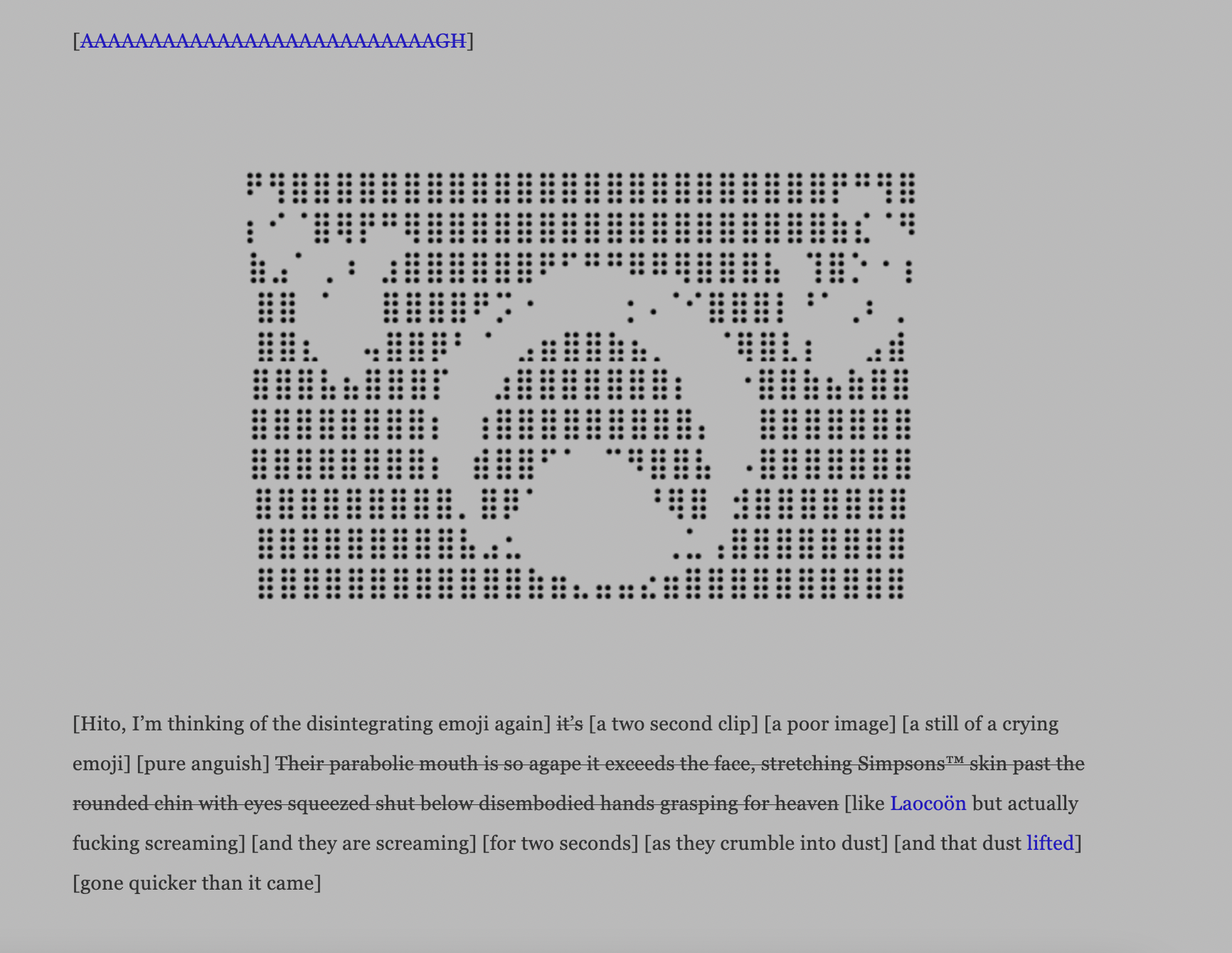
Extract from ‘UNTITLED’ by Matthew Whiteman
for complete poem, visit here

On Matthew Whiteman’s ‘UNTITLED’ (Starling, Issue 17) 

To highlight any single Starling poem from the past ten years is a daunting task. I vividly remember so many poems that struck and compelled me in my early days as a reader and contributor to the journal: Aimee-Jane Anderson-O’Connor’s ‘(Instructions)’ in Issue 6; jane tabu daphne’s ‘K–A–R–O’ and Van Mei’s ‘On Beauty’ in Issue 7; Sinead Overbye’s ‘The River’ in Issue 10 (to name only a few!). Likewise, I could list off countless poems that have made me put a hand to my heart, or pump my fist, or cheer while reading submissions during my time on the editorial committee. One of the great gifts of Starling is the range of work and of stylistic and poetic approaches that we get to read twice a year – no better job. 

On this occasion, I’d like to spotlight Matthew Whiteman’s ‘Untitled’ from Issue 17. Dedicated to German artist, filmmaker, and writer Hito Steyerl – addressed directly to, and referencing,her throughout – this is a go-for-broke, abundant, ekphrastic, pointedly intertextual poem that grabbed me immediately on the first read. Framed within an illustrated and progressively disintegrating – well – ‘disintegrating emoji’, Whiteman contextualises this ‘two second clip’, this ‘poor image’, and its silent or elongated variations, within a larger relational and arthistorical web: Steyerl’s ‘How Not to be Seen: A Fucking Didactic Educational .MOV File’ (2013), the iconic classical statue group of Laocoön and his sons; even The Simpsons, briefly, gets a look in. We are all scaffolded by our references, clear or opaque, and what I am so drawn to about this poem is that, stacked up and arranged in this form, it really could have only come from one person. 

Matthew’s ‘Untitled’ seems to bend so many poetic conventions: the fact of the title, intentionally ‘Untitled’ or else by necessity, speaks so well to the perhaps-futile search for meaning outlined in the poem itself. ‘I want to tell you what it means,’ he writes, ‘but I’m not sure I even know, Hito.’ The arrangement of the text, in square brackets and struck-through, likewise reflects this: everything is couched in erasure, something hiding even as it’s visible, or drawing from the form of emojis as textualised (as Matthew points out, ‘[‘disintegrating emoji gif’]’). The closest we get to the text outright engaging with its meaning is within the collage of this framing. It’s perhaps not an ‘easy’ read, but one that allows a few different paths for engagement, a few methods by or levels at which it might be read. (The links! The gorgeous electric blue links to give you the chance to experience the full web Matthew is pulling from!) 

I can get quite defensive of visual poetry – I never want people to think the ‘conceit’ or aesthetic identity of an effective poem nullifies or overpowers its content at line level. (In the same vein, I’m not overly interested in internet poems for internet poems’ sake; there needs to be something that grounds or further substantialises the work.) Any form can be a great act of assemblage, but the writing still has to stand out. And that’s something I love so much about this poem – that even if you stripped away all the rest of the work it’s doing, there would still be descriptions like ‘a poor image’, ‘pure anguish’, a ‘parabolic mouth is so agape it exceeds the face’, ‘disembodied hands grasping for heaven’. You would still have the immediate internal assonance of ‘Simpsons™ skin’ and ‘rounded chin’, the inbuilt, square-bracketed/struck-through pace shift of ‘[it bothers me] that lost scream [because that felt real] [wasn’t it] [someone’s scream] that then [became image] then [language]’. You would still have the closing lines to settle any of the destabilisation of what’s come before; the calm (characteristically struck-through, occasionally bracketed and linked) sentence function: ‘On Twitter [X] people just signal it like that. I want to tell you what it means but I’m not sure I even know, Hito. I think it may be a kind of speechlessness, the kind that calls you offscreen. I think you follow the scream elsewhere.’ 

I just love this poem. I’m drawn to its singularity, its stretching of form, its tone and the inherent line-toe of sincerity in a broadly comedic set-up; I’m compelled by its finding of art everywhere, its determination of meaning and its existential search, its deep thought. I feel really honoured, too, that it found its way to Starling and that we had the chance to publish it, especially as part of a longer intertextual poetic/artistic sequence within Issue 17.

Tate Fountain
Poetry Shelf Occasional Reviews: No Other Place to Stand

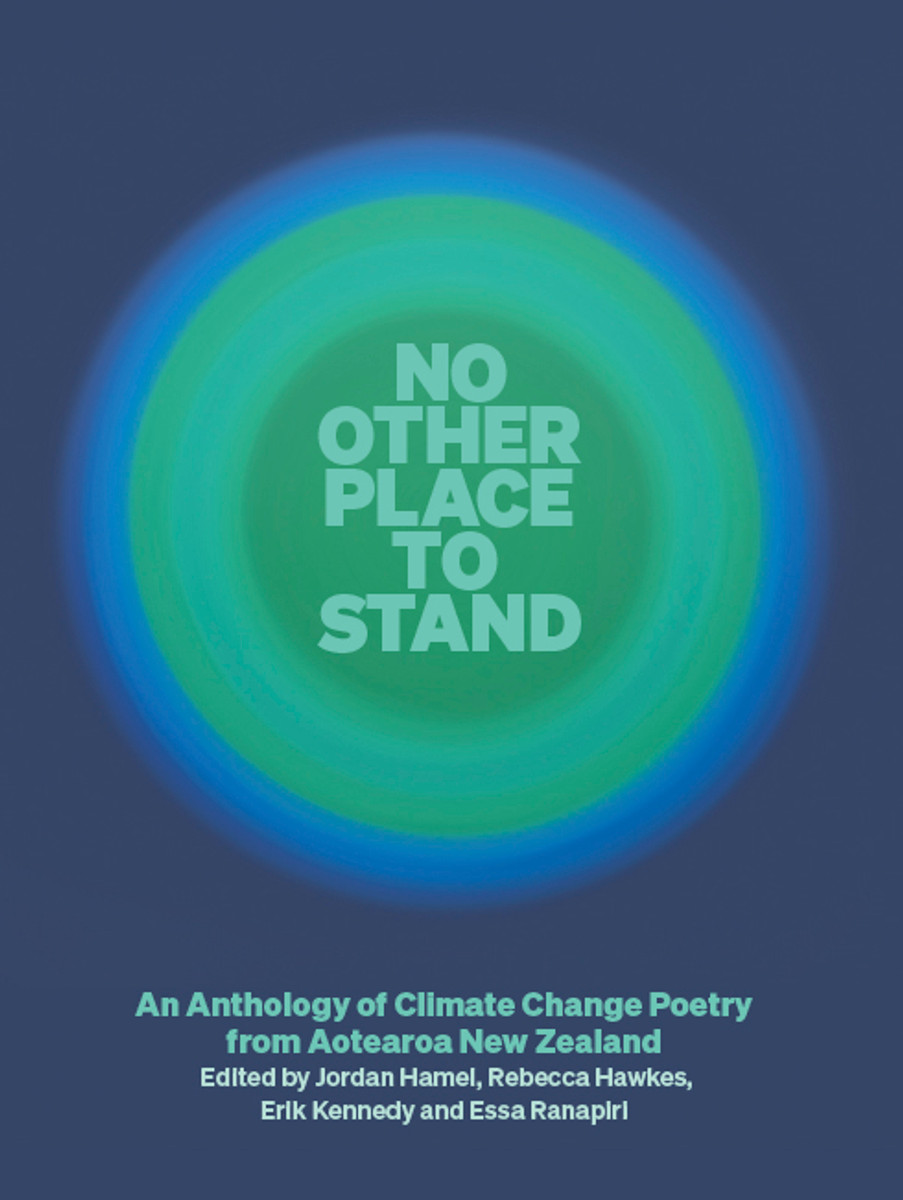
No Other Place to Stand: An Anthology of Climate Change Poetry from Aotearoa New Zealand, Jordan Hamel, Rebecca Hawkes, Erik Kennedy and Essa Ranapiri, Auckland University Press, 2022

Auckland University Press is to be celebrated for its stellar poetry anthologies. No Other Place to Stand: An Anthology of Climate Change Poetry from Aotearoa New Zealand offers an eclectic, and indeed electrifying, selection of climate change poetry. The editors, Jordan Hamel, Rebecca Hawkes, Erik Kennedy and Essa Ranapiri, are all frontline poets themselves.

The dedication resonates and stalls your entry into the book because it is so apt: “To those fighting for our future / and those who will live it.”

A terrific foreword by Alice Te Punga Somerville establishes a perfect gateway into the collection. Alice wonders, when climate change is such a mammoth issue, “about the value of the particular, the specific, the local, the here, the now”. What difference will reading and writing make when the world demands action? Alice writes: “Every single poem in this anthology speaks to the relationship between words and worlds.” That in itself is enough of a spur to get a copy of the book, and open up trails of reading, wonder and challenge.

I am spinning on the title. I am turning the word ‘stand’ over and over in my mind like a talisman, a pun, a hook. I am thinking we stand and we speak out, I am thinking we stand because we no longer bear it, and I am thinking we stand together.

The poems selected are both previously published and unpublished. The sources underline the variety and depth of print and online journals currently publishing poetry in Aotearoa: Minarets, Starling, Spin Off, Mayhem, Pantograph Punch, Poetry NZ, Blackmail Press, Overland, Sweet Mammalian, Turbine | Kapohau, Takahē, Stasis, Landfall.

No Other Place to Stand is an essential volume. You can locate its essence, the governing theme, ‘climate change poetry’, yet the writing traverses multiple terrains, with distinctive voices, styles, focal points. I fall into wonder again and again, but there is the music, the political, the personal, the heart stoking, the message sharing. There is the overt and there is the nuanced. There is loud and there is soft. There is clarity and there is enigma. You will encounter a magnificent upsurge of younger emerging voices alongside the presence of our writing elders. This matters. This degree of bridge and connection.

Dinah Hawken has long drawn my eye and heart to the world we inhabit, to the world of sea and bush and mountain, stones, leaves, water, birds. Reading one of her collections is like standing in the heart of the bush or next to the ocean’s ebb and flow. It is message and it is transcendental balm. Her long sublime poem, ‘The uprising’, after presenting gleams and glints of our beloved natural world, responds to the wail that rises in us as we feel so helpless.

6.a.

But all I can do is rise:
both before and after I fall.
All I can do is rally,

all I can do is write
– I can try to see and mark
where and how we are.

All I can do is plant,
all I can do is vote
for the fish, the canoe, the ocean

to survive the rise and fall.
All I can do is plead,
all I can do is call . . .

from ‘The uprising’

I am reading the rich-veined ancestor currents of Tayi Tibble’s ‘Tohunga’, the luminosity of Chris Tse’s ‘Photogenesis’, the impassioned, connecting cries of Selina Tusitala Marsh’s ‘Unity’ and Karlo Mila’s ‘Poem for the Commonwealth, 2018’. Daily routines alongside a child’s unsettling question catch me in Emma Neale’s ‘Wanting to believe in the butterfly effect’. I am carried in the embrace of Vaughan Rapatahana’s ‘he mōteatea: huringa āhuarangi’ with its vital, plain speaking call in both te reo Māori and English.

Take this heart-charged handbook and read a poem a day over the next ninety days. Be challenged; speak, ask, do. I thank the editors and Auckland University Press for this significant anthology, this gift.

Auckland University press page

Jordan Hamel is a Pōneke-based poet and performer. He was the 2018 New Zealand Poetry Slam champion. He uses poetry and performance to create awareness and discourse about environmental and political issues. He is the co-editor of Stasis Journal and his debut poetry collection Everyone is everyone except you was published by Dead Bird Books in 2022.

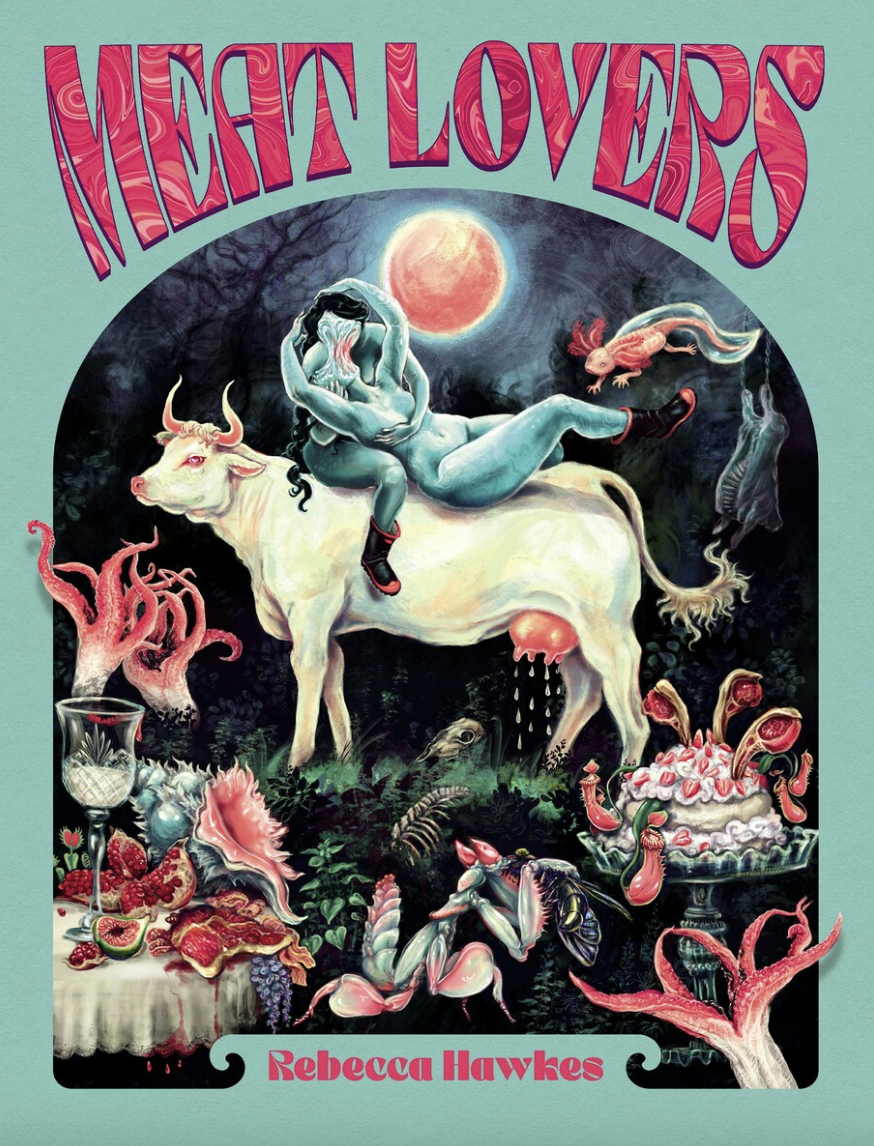
Rebecca Hawkes is a poet/painter from Canterbury, living in Te Whanganui-a-Tara. Her chapbook ‘Softcore coldsores’ was published in AUP New Poets 5 in 2019. Her first full-length poetry collection, Meat Lovers, was recently unleashed by Auckland University Press. Rebecca edits Sweet Mammalian and is a founding member of popstar poets’ posse Show Ponies.

Erik Kennedy is the author of Another Beautiful Day Indoors (Te Herenga Waka University Press, 2022) and There’s No Place Like the Internet in Springtime (Victoria University Press, 2018), which was shortlisted for best book of poems at the 2019 Ockham New Zealand Book Awards. He lives in Ōtautahi Christchurch.

Essa Ranapiri (Ngāti Wehi Wehi / Ngāti Takatāpui / Clan Gunn) is a poet from Kirikiriroa. They are part of puku.riri, a local writing group. Their book ransack was published by Victoria University Press in 2019. Give the land back. It’s the only way to fix this mess. They will write until they’re dead. And after that, sing.

Poetry Shelf Occasional Poems: Rebecca Hawkes’ CEMETERY LAWNMOWER

CEMETERY LAWNMOWER


“When viewed in deep time, things come alive that seemed inert. … Ice breathes. Rock has tides. Mountains ebb and flow. Stone pulses. We live on a restless Earth.”

—Robert Macfarlane in Underlands

tomb with a view – earthed on a volcano’s seaward slope
I kneel in fresh-cut lawn – not knowing whose bones
decompose below – only interested in the sheen
of this headstone – a slab of flashing feldspar
hewn in loving memory – my mother the geologist

surveys well-kempt lanes – reading the names
on strangers’ graves – the cemetery lawnmower
hums around us – clippers licking to and fro
constant as the waves – eroding the basalt cliff below
that threatens all our bones – even diamond gravestones aren’t forever

nor this rich labradorite – it births aurora borealis
in the right light – glints of scintillating indigo
blue morpho – sips of methylated lavender
a happenstance of kissing crystal facings – turned brilliant
in crushing heat – how we are all made

anew through strain – the only constant thing is change
in this restless earth – my mother sees these shifts
like a slow-motion picture – technicolour aeons
on the geological map – this is her gift to her children
she invented two new deaths – but gave us all of time

etched on a headstone – if we can learn to read igneous
glints of a frenzied planetary history – continents stretch like cats
and we are very small fleas – we do not live for long
we make our homes – in the fertile shadow
of the volcano – we build cities on fault lines

that fell cathedrals – we pray for everyone we love to live forever
then where there are graves – the lawnmowers graze
where there are cemeteries – there are rising stones
and women – who want to know the names not written on those monuments
but inside their very substance– ancient incantations in crystal language

tonight after the wake – we will gather on this hillside
to light fireworks – with a stray roman candle
the dry cut grass will blaze – brilliant as lava on this dormant caldera
and through it all the cemetery lawnmower – will hum darkly among the graves
tending to them – until the real volcano wakens

from a dream beyond all naming – reclaims the fallen and their stones
sowed like seeds beneath the lawn – returns us all
to the molten cradle – where the start of all life flows in liquid light
the sound of shifting continents – sure and steady as a mother’s heartbeat

Rebecca Hawkes

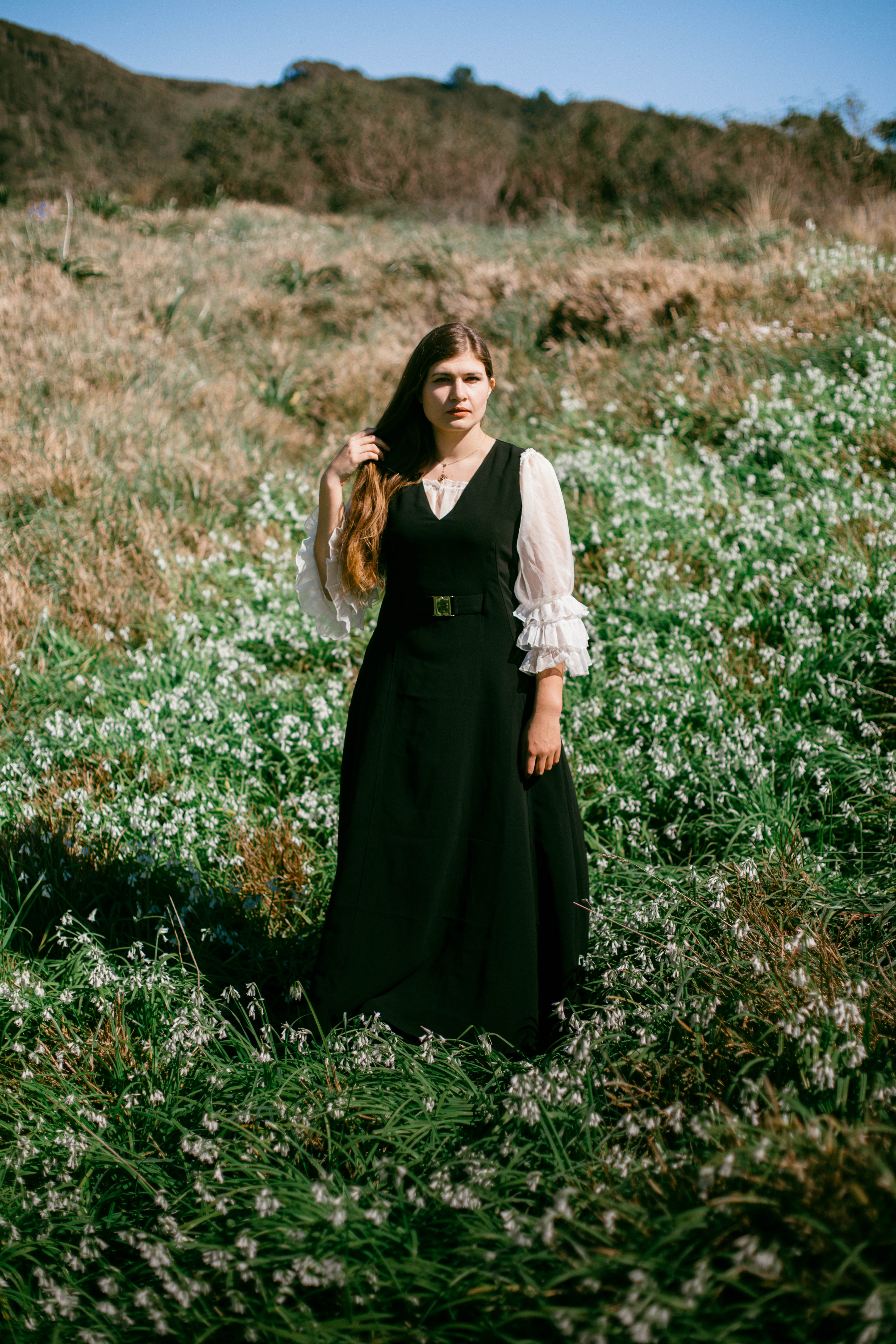
Rebecca Hawkes is a poet, painter, editor. Her first chapbook of poems Softcore coldsores appeared in the reignition of the AUP New Poets series (2019). Her debut collection Meat Lovers (AUP 2022) was awarded The Laurel Prize Best International First Collection 2022. Rachel edits the poetry journal Sweet Mammalian with Nikki-Lee Birdsey, and has co-edited an anthology of poetry on climate change, No Other Place To Stand (AUP 2022). Raised on a Mid-Canterbury sheep and beef farm, Rebecca now lives in Te Whanganui-a-Tara / Wellington. She is a founding member of popstar poets’ posse Show Ponies and holds a Masters degree in nonfiction creative writing with Distinction from the International Institute of Modern Letters. 

Rebecca Hawkes website

Auckland University Press author page

Poetry Shelf conversation: Rebecca Hawkes

Photo credit: Ebony Lamb

although the flighty vampires suckling so obscenely
are the only creatures that really belong in this scene
not the dogs or the willows or the girl
or the gorse with its raptures of yellow

that invasive stellation annexing the slopes
to wrestle black beech at the bush boundary
the smells of pollinated combat mingling by the water
sultry as marzipan and honeydew casting a heady spell

over the colonised valley the weeds like her very presence here
a legacy of other people’s blood and money
though she has yet to understand this history is her own
still finding a place in her bones let alone the land


from ‘Noonday gorsebloom’


Rebecca Hawkes caught my attention in AUP New Poets 5 (Anna Jackson’s reboot of the series). I became an instant and avid fan. Rebecca’s debut full collection Meat Lovers is now out in the world and is attracting a solar system of love. Freya Daly Sadgrove wrote this for the blurb: ‘Rebecca Hawkes is the unmatched empress of viscera. Thrillingly, perverse, utterly compelling – you eat these poems like overripe peaches, or your own tongue.’

To celebrate poetry, and the arrival of Meat Lovers, Rebecca and I have an ongoing email conversation over the past month or so.

Paula: Before we discuss your sublime debut collection, these are strange and challenging times. I am finding books help. Writing helps. I just read Rachel O’Neill’s stunning Requiem for a Fruit and it was such an uplift. Inspiring. Have you read any books lately that have stuck with you?

Rebecca: Lately I’ve been disappearing into gaming a fair amount -dystopian epic sequel Horizon Forbidden West just came out and I’ve been abandoning our world for the tragic beauty of that story. I’ve also been reading a lot, enjoying the first releases in the bounty of local poetry arriving this year. The Surgeon’s Brain by Oscar Upperton stuck in my craw, as an incisive testament to an extraordinary life. It’s  a powerful reminder of the ongoing need for rediscovery of queer history, and how we continue to fight for our place in the record. It inhabits the character of James Barry, a brilliant transgender military surgeon in the 1800s. Oscar’s work is precise and immersive – it felt like being dropped right into Barry’s whirring mind at various moments throughout his storied life. Reading the book is like speedrunning a novelised biography in a way that fits my fractured attention span, while also having plenty of room to breathe with Barry through his gnarliest thoughts. 

I’ve also just read Chris Tse’s much anticipated Super Model Minority. Rainbows and rage, passion and pride, it meets my pent-up energy in the pandemic. This book evolves Chris’ previous work reckoning with racist and homophobic violence, and the radical possibilities of joy in a doomscroller’s world.

I’ve also been lucky to receive a copy of I got you babe, the first publication by new publishing collective Taraheke/Bushlawyer. I’m so glad to see this in the world. I got you babe includes poems and essays by the five writers, holding their power and care and grief. Importantly, it places the forthcoming anthology No Other Place To Stand (which I’ve been co-editing with essa, Erik and Jordan for the past few years), in a richer, wider ecosystem of critical and creative work around climate, capitalism and colonisation. As we get closer to the anthology launching at last (it has gone to print!), it’s daunting how little has changed since the start of this project and the pandemic – the poems sent to us in 2020 have only become more (alarmingly) prescient.  The critical urgency of I got you babe is a breath of fresh air.

2022 is, despite all the overall horribleness of Current Events, set to be a killer year for poetry. I’m eager for the new books by Anahera Gildea, Michaela Keeble, Anne-Marie Te Whiu, Erik Kennedy, Jordan Hamel, essa may ranapiri, Cadence Chung, Khadro Mohamed, Michael Steven… My bundle from Titus Books just arrived and I’m reading Chris Holdaway’s Gorse Poems tonight!

Meatlovers Rebecca Hawkes, Auckland University Press, 2022

Paula: How was it, writing your sublime Meat Lovers?

Rebecca: Well, I’ve been working towards Meat Lovers for some while. After Softcore coldsores came out in AUP New Poets 5 in 2019, I wanted to do more with some of the down-home-on-the-farm poems, and build a more cohesive full-length collection set firmly in the rural gothic. The title Meat Lovers came early on. It led to the eventual bisected structure of the book, the two halves of one cracked geode. But getting there was a meandering process… 

I bloody love to write a poem, any poem, as a wry joke or full-throated cry. The puzzle and thrill of tinkering with verse ‘til it moves on its own steam and I get to watch the poem skitter off in its own chosen direction is reason enough to keep writing them. And each poem is only one weeny little fragment in the churning vortex / hot mess of whatever’s going on in my head, so a lot of them live in completely different parts of my world that would never touch outside of a word document.  A lot of poems therefore ended up on the cutting-room floor for this manuscript, as I had to corral a more cohesive set of little machines that could work as a pack for a more focused sequence. I had so many ‘spare’ poems that there were more than enough for another rather different manuscript – which in a funny turn of events was a runner-up in the Kathleen Grattan Award at OUP last year. Maybe I could have published that altogether more playful and girl-gamerish book first instead, but Meat Lovers holds the work I was most compelled to delve into, mining some darker recesses of my home and heart, and way to still live in some places from my past that I can never really return to.

Once I’d gold-panned for the vibes/themes of this book (food, farming, foolish love) and gathered my first set of poems, structuring it was the challenge – I’d never tried to be so purposeful in a manuscript order before this. I’m grateful for the early eyes of friends like Rebecca K Reilly and essa ranapiri who helped me zero in on what really mattered for the shape of this work. And then of course I kept on writing fresh poems and trying to find places for the new darlings, even as the manuscript really needed to be pruned. How has writing this book been? What is it ever like to make art, to do something freeing but also serious, disarmingly ironic but nonetheless excruciatingly sincere? At turns it has been deep work and easy fun, therapy and tomfoolery, surfing the ecstasy of creation or gruelling arduous labour. Writing the book was humbling, cos making art always kicks my ass, but obviously it’s me doing the kicking as well as my buttcheek with the boot print on it.

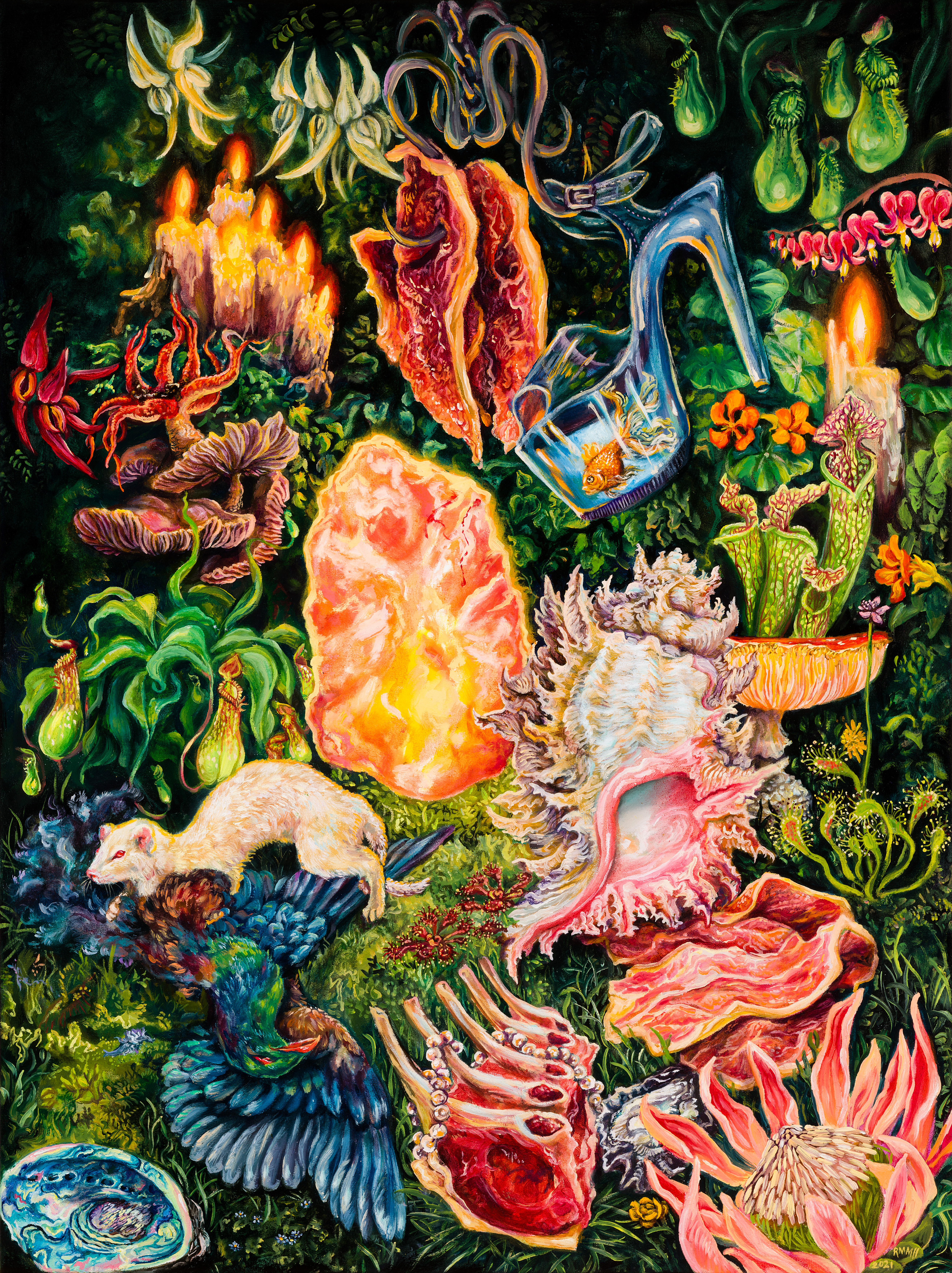
‘Frenzy’, Rebecca Hawkes, 2021

Paula: Love the idea that incongruous things in the world co-exist in the neighbourhood of the page! And love how we can never pin the writing process down to one easy answer. Yet for me it is the best thing in this wild and challenging and complicated world. Energy boosting. Heart easing. Body uplifting. Whether reading or writing. I get a similar reaction when I look at your paintings. I have lived with an artist for over thirty years and we inhabit a shared space, but also private and utterly necessarily separate spaces each day. How is it for you both painting and writing? Reading your poems and sinking into your art it is a yin and yang experience for me – the one electrified by the other.

Rebecca: For me the painterly and poetic forms are so intertwined, you could never ask me to choose one, or to go without them. That was why it was so important to me to do my own cover art, even if digital painting isn’t my main medium… and even though what I mostly see in my own paintings is how much learning I still have to do! My necessary poetry-space is laptop-sized and portable, so it’s a more readily accessible art than the ritual of setting up paints and solvents, and then cleaning brushes when I’m bleary-eyed past my bedtime. Sometimes I go months without having – or making – time to paint. But I somehow find the hours when exhibitions are coming up, like right now …

When I’m not both writing and painting I’m not my whole self. They’re things I’ve always done. As a child I constantly drew chimeras, collaging together the most interesting limbs from my gen 1 and 2 Pokémon handbooks and the dinosaurs I was obsessed with – an Arcanine head and mane on a Houndoom’s punk pup frame, equipped with the wings of a Charizard and an Ankylosaurus club tail for bashing. What’s it called when you’re a horse girl but for dragons? I was that. For me a dragon is still the ideal animal, an impossible assemblage of apex attributes, wise and prideful and wild… While my art subjects are often less creaturely now, dragon-building is still basically how I approach both paintings and poems. I rip little shreds of potent detail out of life or dreams, and solder them together to make something that has its own new roar.

Painting is where I most keenly feel the gap between the work I aspire to make and the limits of my capability. I’m not a planner, working out decent compositions in thumbnail sketches. Instead I dive right in with colour and a couple of starting images, then see what happens. Same for poetry, but with poems nobody can see the smudged under-layers lurking beneath the surface of the finished piece… Word docs are forgivingly blank behind the text, so no-one sees my orphanage of random lines, loose chimera limbs waiting to be assembled. 

Right now I’m in that horrible gulf between expectation and reality where I’m blocking in a painting, waiting for images to emerge from the mess, knowing that every mistake will be baked in forever, making slapstick attempts to shield the hideous draft with my whole body when friends visit. But when I am actually at work on a painting I let go of all that shame. I get so absorbed I might forget to breathe, eat, drink, urinate – lost in flow-focus, crouched over my canvas between the TV and the couch. As you say, artists need necessary space, to focus and to dream… but I find I get by with surprisingly little of it. 

When I paint I kneel on the carpet because there is no space in my apartment for a studio (see: me having feelings about this when I went to see Hilma af Klint’s stupendous body of work), and because painting is a kind of prayer activity anyway. It’s an act of faith, isn’t it, to scratch out some small artwork in response to the shabby miracle of the world? Writing is like that too, a deeply interior creative practice that requires me to be open, curious, trusting and responsive to whatever drifts up from my subconscious. Don’t get me wrong I don’t think my processes are all that spiritually glorious, or my artwork particularly accomplished, but when the going’s good it is transporting, and as I give my energy over to a work it breathes life back into me. Am I a pompous loon, indulging in surrender to my own bad art, while the signals of my partner’s PS4 controller and sounds of gamer swordplay beam through my body as he slays monsters in Elden Ring? Sure. But I can’t not do it.

In painting and poems I’m meditative and open, but also working hard in pursuit of something that mainly eludes me – but maybe I’ll get it next time, and this is what keeps me growing (I hope) as an artist. It also keeps me hungry for others’ work. Yes to everything you said about the energising and uplifting nature of sinking into others’ art! Reading outside of myself is crucial to my writing, and looking carefully at other people’s visual art is essential to my painting. Even though making my own art is a solitary act, if I was in a vacuum without others’ work to delight in and explore, I doubt I’d make much of anything. Do you feel this with poetry?

Paula: Absolutely. The sheer joy that the poetry of others gives me is immeasurable. I thrive on it. Like an extreme vitamin boost. For me, the process of writing is intimate, secret, unfathomable, but it is in debt to writing communities past and present. Thus my continued drive to keep Poetry Shelf alive. And I know the doubt, that aching gap between reality and expectation, I don’t know if it ever goes away. I don’t know if I can ever bear to be published again, aside from children’s books. Tell me about your connections to poetry communities. I am thinking of Show Ponies for a start! I asked Chris Tse if he was a social poet, a hermit poet or something in between!

Rebecca: I totally agree on writing being a personal activity but also inextricable from communities around and before us! Even the solitary work of writing is not completely alone… I’m always reading so my writing is inevitably in conversation with other people’s work, and eventually a handful of trusted first-readers who are the unfortunate recipients of my little jokes. Often my poems are elaborate jokes for my friends. I don’t mean to diminish the poetry by saying that… But my Wellington poet-pals are the people whose response most matters to me, and whose support buoys me along, people I trust completely with my beautiful dark twisted fripperies. I also tend to be most motivated to write when there’s a deadline, which is often some event where I know (or hope) people will show up. So even though I’ve written alone for most of my life, I’d characterise myself as a social poet these days, and am so grateful to be part of a lively community.

Show Ponies is its own beast – Freya is the horsepower behind that. But it reflects the creative connections that are possible in a community like ours, where people are good sports with open hearts. There’s a lot of trust involved in doing something big and silly. It’s as vulnerable and sincere as any earnest confessional poem. But a bunch of poets who aren’t afraid of looking like fools together is a powerful thing. To manifest your popstar destiny you have to commit to the bit!

Rebecca: I’ve missed in-person events dearly through the pandemic, and it feels miraculous that Chris and I got to launch our books to people live and in the flesh. I’m interested in what you said here about bearing to be published. Stacey Teague recently asked posted on Twitter I’m trying to figure out why I should try to get my manuscript published and what motivates other people to get their books published and several people have just said “so you can have a party!” which obviously is something you can just do (well, depending on relative pandemic risk) without all the work of writing and vulnerability of publishing at all. For my sins, I was one of the people who’d said ‘party’ right away. But the launch party for a book is so important to me, bringing all someone’s solitary work into a shared public sphere – where the book now exists as its own object and something that will literally belong to other people, outside of the writer’s brain and screens. Aside from getting to celebrate the launch, the meticulously considered process of putting a manuscript together and then having the book itself exist in hard-copy for real has been so rewarding. I’ve been publishing poems around the place for ages, but this first book feels so precious. It’s been a very different process from blatting out last-minute poems and has taught me so much more about this craft. But the blessing of poems is that we can do whatever we want with them, right? There is no requirement to write books, or to publish the poems in any format.

lambs explode onto the scene like popcorn
kernels such freshly detonated fluff
antigravity mammals no heart leaps higher
than the skipping lambs flocked in dozens
barely touching the ground for the joy
full fortnight in which they invent their limbs
before they settle down to their true vocation
grazing themselves into flesh factories
babies babies babies babies
the loin the chop the shank
the juicy vacuum-sealed rack
and great value barbecue meat pack
stunned slit hung bled gutted skinned


from ‘Hardcore pastorals’

Paula: Exactly! I was out on a rare road trip across the harbour bridge this morning and it felt like the route was lined with poems! Just the sensation of travelling got miniature poems roaming in my head. Who knows what I will do with them!

I reviewed Meat Lovers for Kete Books and absolutely loved it. First up I loved its music. Like I really love it like I might love a breathtaking album. Do you play a musical instrument? What music do you have on repeat at the moment?

Rebecca: Gosh this is so lovely of you to say! Alas I can’t claim to be a musician. I hammered away on the piano as a child and can mimic several convincing barn animal noises… Maybe I could have a go at being a heavy metal singer, but realistically that’s because my friends are just staggeringly supportive at karaoke. 

I’m charmed by the sounds of words, which I guess is why I like lush OTT poetry – where it’s permissible to load up the adjectives just because they’re delicious, and make subtle music in that way. I truly was trying to think of Meat Lovers as a concept album, actually, with a Side A and Side B, and poems that can be heard alone but build something bigger when they’re experienced in order.

Lately I’m revving songs about sad cowboys and/or the devil. I love a broody lyric. Orville Peck, Nadine Shah, The Veils, Warren Zevon, Julia Jacklin, that sort of thing. The song I was trying to keep up with while running today was Sinnerman (Nina Simone), and the song I’m looping now to tune out and write this is called I just wanna lie in bed and drink my wine (various artists), which is a mood, and just before that it was Head alone (Julia Jacklin)

you have one job
which is to hold

this disturbingly large moth
battering the woven
basket of your fingers

every instinct whining to
close your fingers and crush it

or open your palms
set the fluttering insect loose
free your hands for other tasks

but this is your job
the having and the holding


from ‘Poem about my heart’

Paula: I also love the way your collection has heart. If I pick up a collection at the moment and it is devoid of heart it feels like a remote unreachable island. Yours mattered to me. What matters to you when you write? Does heart matter?

Rebecca: For these poems, certainly. This book is one big folded stained paper heart, clumsy and earnest. It’s anchored in my foundational love for the land I grew up on, gratitude for the life my parents gave me, and care for the animals we lived with – and also the felt complications in all those things. Then there’re my attempts to write about the frustrations and discoveries, failure and bliss of eros and romance – about which there’s nothing new to say under the sun but when has that ever stopped a poet? To be honest, usually when I write I try not to worry about whether a poem has heart. Something I’m doing as play might well turn into something true, but only if I don’t try too hard! 

In both writing and reading, different modes call to me at different times, from the sentimental to disaffected… Recently I was bowled over by Frank: Sonnets by Dianne Seuss, which is an often devastating book – poems of desperation, poverty, motherhood, addiction – but often dryly funny. Just observing things, reporting without telling a reader what to feel. Her poems often have a sting in the tail that makes my guts churn, like this one. I’m drawn to gutting poems, just as I am doleful music. 

In poems I’m interested in humour and irony and the sardonic, too – how the heartfelt can be reprocessed into more distanced ways of engaging with our feelings. In editing No Other Place to Stand, I was really interested in the poems that did this. The causes, effects, and injustices of climate change, colonialism and capitalism evoke big primary emotions – Fear, Anger, Grief, Hope, Etcetera – so sometimes the only way into these subjects without getting washed away by those feelings can be to approach through slant wit. Those poems have their place in the body of climate writing alongside the activist battle cries, mourning songs, and stirring polemics that they sit with in the book. Sidling away from pure emotion doesn’t imply a lack of care to me, necessarily – the poems are still being written! And the more I learn about the pressures facing our planet and peoples, the less inclined I am to believe there’s any one right way to respond in our heads and hearts. Plus the sentimental can be treacherous too – I was trying to be careful with this in writing my book, not glorifying my nostalgia or delivering undue condemnations, especially in how I speak about aspects of farming life.

it’s not real cottagecore unless you are up to the elbow in it
blindly groping down the blood-slick canal
as another contraction ripples around your knuckles
the cow is lain on her side licking a mud angel

your hand clutching at the calf’s limp hoof
head torch slipping over your brow
as you affix the chain and brace yourself
to pull and pull until an amniotic spill

when the calf’s head breaches unbreathing
still you pull and bring the whole body wetly
into the cold world you drag the whole darkness
drenched newborn around so the mother can lick

caked salts from her motionless baby


from ‘Sparkling bucolic’

Paula: So few women have returned to the farm in their poetry. I am thinking Ruth Dallas and Marty Smith. Ruth had a nostalgic yearning for rural life so wrote farm poems from her Dunedin home to make up for not being there! Marty grew up on a farm and returns to farmland in Horse with Hat. Your return is electrified by edgy realism, razor-edged fantasy, the whole glorious mash of childhood, ‘a rural gothic’. What pulled you back?

Rebecca: Can any of us grow out of our childhoods? The longer I spend away from the farm the more strongly I feel how that land, that life, has shaped me. I have loads of long-winded thoughts about how we live and work and eat and consume and produce on these colonised islands. In my poems it was important for me to write critically and lovingly about these things – to challenge the assumptions I absorbed about the ordinary/natural state of the world as a child, while also celebrating the gifts of my upbringing, the cruelly beautiful lessons and earthing sensory experiences and many ways of relating to other animals. I carry all this with me –I am never without it. I’m glad you registered that not all the book is straight reporting on my life though – there’s plenty of fantasy and fiction in there. Let poets tell lies! 

I think often about Ruth Dallas’ Milking Before Dawn. And Marty’s book made an enormous impression on me – she really encouraged me not to worry too much about being macabre! Rural gothic, as you say, is where I’m most at home. And I was so blessed to journey ‘home’ to the farm through these poems, as well as honour previous selves formed in that place – the girl encountering a mythical panther, the adolescent queen of weed-killers, the teen rapt in agonies finding reasons to fight in the rampant gorse in the riverbed… And I hope some of this work rings true for other queer rural kids, farmhands with a taste for verse, or anyone else seeking poems with bloody dirt still fresh under their fingernails.

Paula: When I first held a copy of my debut collection I burst into tears. There was an overwhelming gap between the poetry in my head and the object I held. I can’t explain it. Something to do with a physical thing and a mental thing. Your collection has just been launched into the world – in a venue with friends and family! How is the book’s arrival for you?

Rebecca: Agh, the tears! The gap between the final proof PDF being sent off to print and the arrival of the first book was hardest for me. I’m always spelunking new depths in the elaborate limestone cave system of my self-doubt (though thankfully have enough robust arrogance to keep making art regardless). Downing tools was difficult because I knew that from here on, the book wouldn’t get any better. I wanted this book to have a wholeness between the art and writing and fussed over it for aaaaages. But at some point the endless incrementally different PDFs became a blur, so it was time to end my meddling. The months away were tough because it was when the book was most abstracted from me, just some soulless files in the ether that I couldn’t ever touch again.

But then receiving that first copy of the book was magic. Tearing into the courier package with my teeth in the work elevator to find this actual book, its own thing, with its own weight and colour and scent, an actual living object in the world freed of my brain and screens… My favourite part of the physical book is the inner covers, with a meaty marbling that I learned to do on a version of Photoshop Elements so ancient that I actually own the program (rather than subscribing annually to “creative cloud”, ew). The pinkness peeps out when the book is read, and radiates onto the creamy paper of the pages. I loved the book so much from first sight, and am so grateful to everyone at AUP for helping manifest it. And the urge to tinker further has ceased. I accept it for what it is, now – a polaroid snippet of part of my work. I no longer worry that it doesn’t contain everything I could ever put on the page, or that the gap between the work preserved in the book and the work I’m presently more interested in making will only get wider. 

Launching with Chris was a dream come true. I admire his work so much, and it’s inspiring to see how his poetic interests have developed from book to book. As fellow Show Ponies, we both love the energy of a real crowd, especially in a space like Meow. We were on the same buzz about wanting to share a live event with our loved ones and communities. There’s something so special about Wellington’s poetry scene – the city is big enough for stuff to happen, but small enough to hold a close-knit community. I’m shriekingly aware that we are not post-pandemic and there was still risk looming over the event (not least cos we were both meant to fly to the Brisbane Writers’ Festival a few days later), but I’m glad we were able to gather, for my dearest mum and Razz to travel there, for Chris and I to thrive on costumes and theatrics, to demand that a handful of people offered us some obligatory praise, and, most importantly, to perform our dramatic recital of Dragula by Rob Zombie.

Rebecca Hawkes grew up on a sheep and beef farm near Methven and now maintains a tenuous work/work balance in Wellington city. With poems widely published in Aotearoa journals, Rebecca’s debut chapbook ‘Softcore coldsores’ was published in AUP New Poets 5 for the reignition of the series in 2019. Meat Lovers is her first full-length collection. Rebecca is an editor for literary journal Sweet Mammalian and the climate change poetry anthology No Other Place to Stand (Auckland University Press, forthcoming)She is a founding member of popstar poets’ performance posse Show Ponies and haphazard coordinator of the Pegasus Books poetry reading series.

Rebecca Hawkes website

Auckland University Press page

Ash Davida Jane reviews Meat Lovers on Nine to Noon

Paula Green review at Kete Books

Poetry Shelf Theme Season: Eleven poems about breakfast

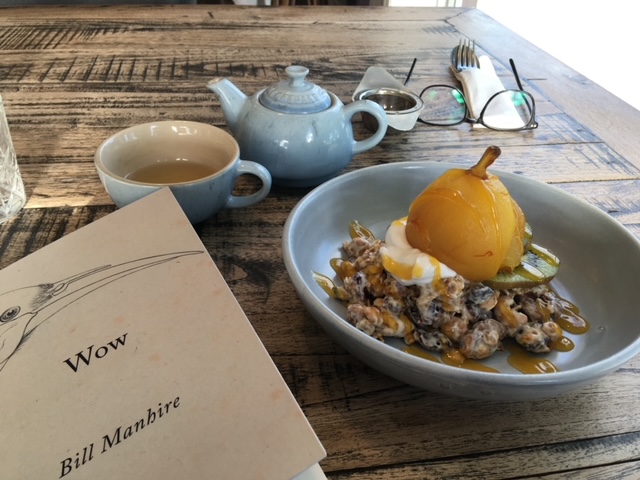
Breakfast is a lifelong ritual for me: the fruit, the cereal, the toast, the slowly-brewed tea, the short black. It is the reading, it is the silence, it is the companionship. It is finding the best breakfast when you are away at festivals or on tour, on holiday. This photograph was taken last year at Little Poms in Christchurch when I was at WORD. One of my favourite breakfast destinations. Breakfast is my gateway into the day ahead, it is food but it is more than food. It is the ideas simmering, the map unfolding, the poem making itself felt.

The poems I have selected are not so much about breakfast but have a breakfast presence that leads in multiple directions. Once again I am grateful to publishers and poets who are supporting my season of themes.

Unspoken, at breakfast

I dreamed last night that you were not you

but much younger, as young as our daughter

tuning out your instructions, her eyes not

looking at a thing around her, a fragrance

surrounding her probably from her

freshly washed hair, though

I like to think it is her dreams

still surrounding her

from her sleep. In my sleep last night

I dreamed you were much younger,

and I was younger too and had all the power –

I could say anything but needed to say

nothing, and you, lovely like our daughter,

worried you might be talking too much

about yourself. I stopped you

in my arms, pressed my face

up close to yours, whispered into

your ear, your curls

around my mouth, that you were

my favourite topic. That

was my dream, and that is still

my dream, that you were my favourite topic –

but in my dream you were

much younger, and you were not you.

Anna Jackson

from Pasture and Flock: New & Selected Poems, Auckland University Press, 2018

By Sunday

You refused the grapefruit

I carefully prepared

Serrated knife is best

less tearing, less waste

To sever the flesh from the sinew

the chambers where God grew this fruit

the home of the sun, that is

A delicate shimmer of sugar

and perfect grapefruit sized bowl

and you said, no, God, no

I deflated a little

and was surprised by that

What do we do when we serve?

Offer little things 

as stand-ins for ourselves

All of us here

women standing to attention

knives and love in our hands

Therese Lloyd

From The Facts, Victoria University Press, 2018

How time walks

I woke up and smelled the sun mummy

my son

a pattern of paradise

casting shadows before breakfast

he’s fascinated by mini beasts

how black widows transport time

a red hourglass

under their bellies

how centipedes and worms

curl at prodding fingers

he’s ice fair

almost translucent

sometimes when he sleeps

I lock the windows

to secure him in this world

Serie Barford

from Entangled islands, Anahera Press, 2015

Woman at Breakfast

June 5, 2015

This yellow orange egg
full of goodness and
instructions.

Round end of the knife
against the yolk, the joy
which can only be known

as a kind of relief
for disappointed hopes and poached eggs
go hand in hand.

Clouds puff past the window
it takes a while to realise
they’re home made

our house is powered by steam
like the ferry that waits
by the rain-soaked wharf

I think I see the young Katherine Mansfield
boarding with her grandmother
with her duck-handled umbrella.

I am surprised to find
I am someone who cares
for the bygone days of the harbour.

The very best bread
is mostly holes
networks, archways and chambers

as most of us is empty space
around which our elements move
in their microscopic orbits.

Accepting all the sacrifices of the meal
the unmade feathers and the wild yeast
I think of you. Happy birthday.

Kate Camp

from The Internet of Things, Victoria University Press, 2017

How to live through this

We will make sure we get a good night’s sleep. We will eat a decent breakfast, probably involving eggs and bacon. We will make sure we drink enough water. We will go for a walk, preferably in the sunshine. We will gently inhale lungsful of air. We will try to not gulp in the lungsful of air. We will go to the sea. We will watch the waves. We will phone our mothers. We will phone our fathers. We will phone our friends. We will sit on the couch with our friends. We will hold hands with our friends while sitting on the couch. We will cry on the couch with our friends. We will watch movies without tension – comedies or concert movies – on the couch with our friends while holding hands and crying. We will think about running away and hiding. We will think about fighting, both metaphorically and actually. We will consider bricks. We will buy a sturdy padlock. We will lock the gate with the sturdy padlock, even though the gate isn’t really high enough. We will lock our doors. We will screen our calls. We will unlist our phone numbers. We will wait. We will make appointments with our doctors. We will make sure to eat our vegetables. We will read comforting books before bedtime. We will make sure our sheets are clean. We will make sure our room is aired. We will make plans. We will talk around it and talk through it and talk it out. We will try to be grateful. We will be grateful. We will make sure we get a good night’s sleep.

Helen Rickerby

from How to Live, Auckland University Press, 2019

Morning song

Your high bed held you like royalty.

I reached up and stroked your hair, you looked at me blearily,

forgetting for a moment to be angry.

By breakfast you’d remembered how we were all cruel

and the starry jacket I brought you was wrong.

Every room is painted the spectacular colour of your yelling.

I try and think of you as a puzzle

whose fat wooden pieces are every morning changed

and you must build again the irreproachable sun,

the sky, the glittering route of your day. How tired you are

and magnanimous. You tell me yes

you’d like new curtains because the old ones make you feel glim.

And those people can’t have been joking, because they seemed very solemn.

And what if I forget to sign you up for bike club.

The ways you’d break. The dizzy worlds wheeling on without you.

Maria McMillan

from The Ski Flier, Victoria University Press, 2017

14 August 2016

The day begins
early, fast broken
with paracetamol
ibuprofen, oxycodone,
a jug of iced water
too heavy to lift.
I want the toast and tea
a friend was given, but
it doesn’t come, so resort
to Apricot Delights
intended to sustain me
during yesterday’s labour.
Naked with a wad of something
wet between my legs, a token
gown draped across my stomach
and our son on my chest,
I admire him foraging
for sustenance and share
his brilliant hunger.
Kicking strong frog legs,
snuffling, maw wide and blunt,
nose swiping from side
to side, he senses the right
place to anchor himself and drives
forward with all the power
a minutes-old neck can possess,
as if the nipple and aureole were prey
about to escape, he catches his first
meal; the trap of his mouth closes,
sucks and we are both sated.

Amy Brown  

from Neon Daze, Victoria University Press, 2019

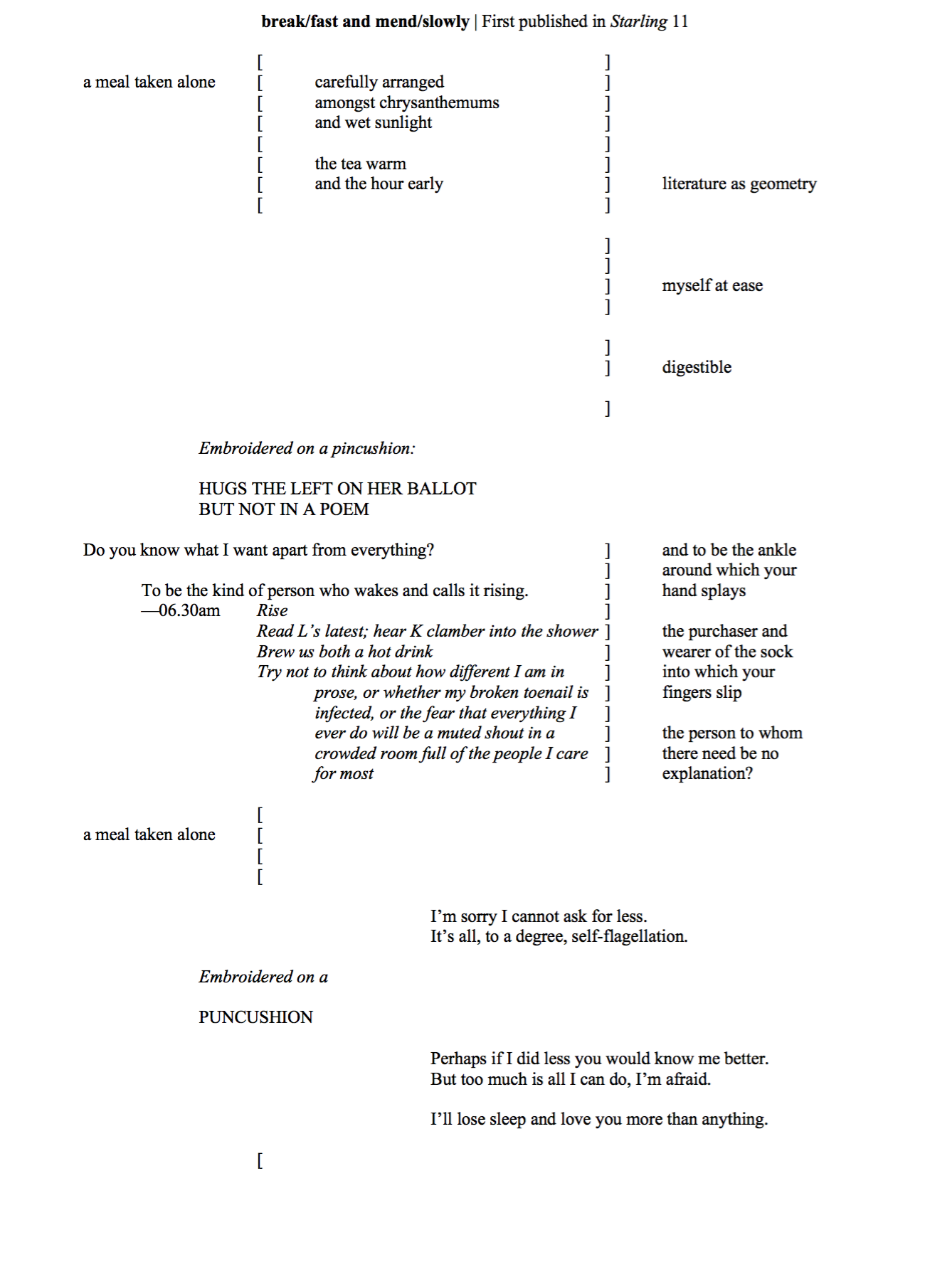
break/fast and mend/slowly


Tate Fountain

from Starling 11


Biologist abandoned

I lay in our bed all morning             

next to the half-glass of juice you brought me 

to sweeten your leaving

ochre sediments settled in the liquid

a thin dusty film formed on the meniscus

but eventually I drank it                 

siphoning pulp through my teeth 

like a baleen whale sifting krill from brine

for months after your departure I refused to look 

at the moon

where it loomed in the sky outside              

just some huge rude dinner plate you left unwashed

now ascendant                   

brilliant with bioluminescent mould

how dare you rhapsodize my loneliness into orbit

I laughed                 

enraged                       

to the thought of us   

halfway across the planet staring up

at some self-same moon & pining for each other

but now I long for a fixed point between us

because from here       

even the moon is different     

a broken bowl     

unlatched from its usual arc & butchered                

by grievous rainbows        

celestial ceramic irreparably splintered              

as though thrown there

and all you have left me with is          

this gift of white phosphorous

dissolving the body I knew you in    

beyond apology

to lunar dust     

Rebecca Hawkes

in New Poets 5, Auckland University Press, 2019, picked by Aimee-Jane Anderson-O’Connor

everything changing

I never meant to want you.

But somewhere

between

the laughter and the toast

the talking and the muffins

somewhere in our Tuesday mornings

together

I started falling for you.

Now I can’t go back

and I’m not sure if I want to.

Paula Harris

from woman, phenomenally

Breakfast in Shanghai

for a morning of coldest smog

A cup of black pǔ’ěr tea in my bedroom & two bāozi from the

lady at the bāozi shop who has red cheeks. I take off my gloves,

unpeel the square of thin paper from the bun’s round bottom.

I burn my fingers in the steam and breathe in.


for the morning after a downpour

Layers of silken tofu float in the shape of a lotus slowly

opening under swirls of soy sauce. Each mouthful of doufu

huā, literally tofu flower, slips down in one swallow. The

texture reminds me of last night’s rain: how it came down

fast and washed the city clean.


for homesickness

On the table, matching tiny blue ceramic pots of chilli oil,

vinegar and soy sauce. In front of me, the only thing that

warms: a plate of shuǐjiǎo filled with ginger, pork and cabbage.

I dip once in vinegar, twice in soy sauce and eat while the

woman rolls pieces of dough into small white moons that fit

inside her palm.


for a pink morning in late spring

I pierce skin with my knife and pull, splitting the fruit open.

I am addicted to the soft ripping sound of pink pomelo flesh

pulling away from its skin. I sit by the window and suck on the

rinds, then I cut into a fresh zongzi with scissors, opening the

lotus leaves to get at the sticky rice inside. Bright skins and leaves

sucked clean, my hands smelling tea-sweet. Something inside

me uncurling. A hunger that won’t go away.

NIna Mingya Powles

from Magnolia 木蘭, Seraph Press, 20020

Serie Barford was born in Aotearoa to a German-Samoan mother and a Palagi father. She was the recipient of a 2018 Pasifika Residency at the Michael King Writers’ Centre. Serie  promoted her collections Tapa Talk and Entangled Islands at the 2019 International Arsenal Book Festival in Kiev.  She collaborated with filmmaker Anna Marbrook to produce a short film, Te Ara Kanohi, for Going West 2021. Her latest poetry collection, Sleeping With Stones, will be launched during Matariki 2021.

Amy Brown is a writer and teacher from Hawkes Bay. She has taught Creative Writing at the University of Melbourne (where she gained her PhD), and Literature and Philosophy at the Mac.Robertson Girls’ High School. She has also published a series of four children’s novels, and three poetry collections. Her latest book, Neon Daze, a verse journal of early motherhood, was included in The Saturday Paper‘s Best Books of 2019. She is currently taking leave from teaching to write a novel.

Kate Camp’s most recent book is How to Be Happy Though Human: New and Selected Poems published by VUP in New Zealand, and House of Anansi Press in Canada.

Tate Fountain is a writer, performer, and academic based in Tāmaki Makaurau. She has recently been published in StuffStarling, and the Agenda, and her short fiction was highly commended in the Sunday Star-Times Short Story Competition (2020).

Paula Harris lives in Palmerston North, where she writes and sleeps in a lot, because that’s what depression makes you do. She won the 2018 Janet B. McCabe Poetry Prize and the 2017 Lilian Ida Smith Award. Her writing has been published in various journals, including The Sun, Hobart, Passages North, New Ohio Review and Aotearotica. She is extremely fond of dark chocolate, shoes and hoarding fabric. website: http://www.paulaharris.co.nz | Twitter: @paulaoffkilter | Instagram: @paulaharris_poet | Facebook: @paulaharrispoet

Rebecca Hawkes works, writes, and walks around in Wellington. This poem features some breakfast but mostly her wife (the moon), and was inspired by Alex Garland’s film adaptation of Jeff Vandermeer’s novel Annihilation.  You can find it, among others, in her chapbook-length collection Softcore coldsores in AUP New Poets 5. Rebecca is a co-editor for Sweet Mammalian  and a forthcoming collection of poetry on climate change, prances about with the Show Ponies, and otherwise maintains a vanity shrine at rebeccahawkesart.com

Anna Jackson lectures at Te Herenga Waka/Victoria University of Wellington, lives in Island Bay, edits AUP New Poets and has published seven collections of poetry, most recently Pasture and Flock: New and Selected Poems (AUP 2018).

Therese Lloyd is the author of two full-length poetry collections, Other Animals (VUP, 2013) and The Facts (VUP, 2018). In 2017 she completed a doctorate at Victoria University focusing on ekphrasis – poetry about or inspired by visual art. In 2018 she was the University of Waikato Writer in Residence and more recently she has been working (slowly) on an anthology of ekphrastic poetry in Aotearoa New Zealand, with funding by CNZ.

Maria McMillan is a poet who lives on the Kāpit Coast, originally from Ōtautahi, with mostly Scottish and English ancestors who settled in and around Ōtepoti and Murihiku. Her books are The Rope Walk (Seraph Press), Tree Space and The Ski Flier (both VUP) ‘Morning songtakes its title from Plath.

Nina Mingya Powles is a poet and zinemaker from Wellington, currently living in London. She is the author of Magnolia 木蘭, a finalist in the Ockham Book Awards, a food memoir, Tiny Moons: A Year of Eating in Shanghai, and several poetry chapbooks and zines. Her debut essay collection, Small Bodies of Water, will be published in September 2021.  

Helen Rickerby lives in a cliff-top tower in Aro Valley. She’s the author of four collections of poetry, most recently How to Live (Auckland University Press, 2019), which won the Mary and Peter Biggs Award for Poetry at the 2020 Ockham Book Awards. Since 2004 she has single-handedly run boutique publishing company Seraph Press, which mostly publishes poetry.

Poetry Shelf write-ups: Jordan Hamel on Lōemis Epilogue

Lōemis Epilogue

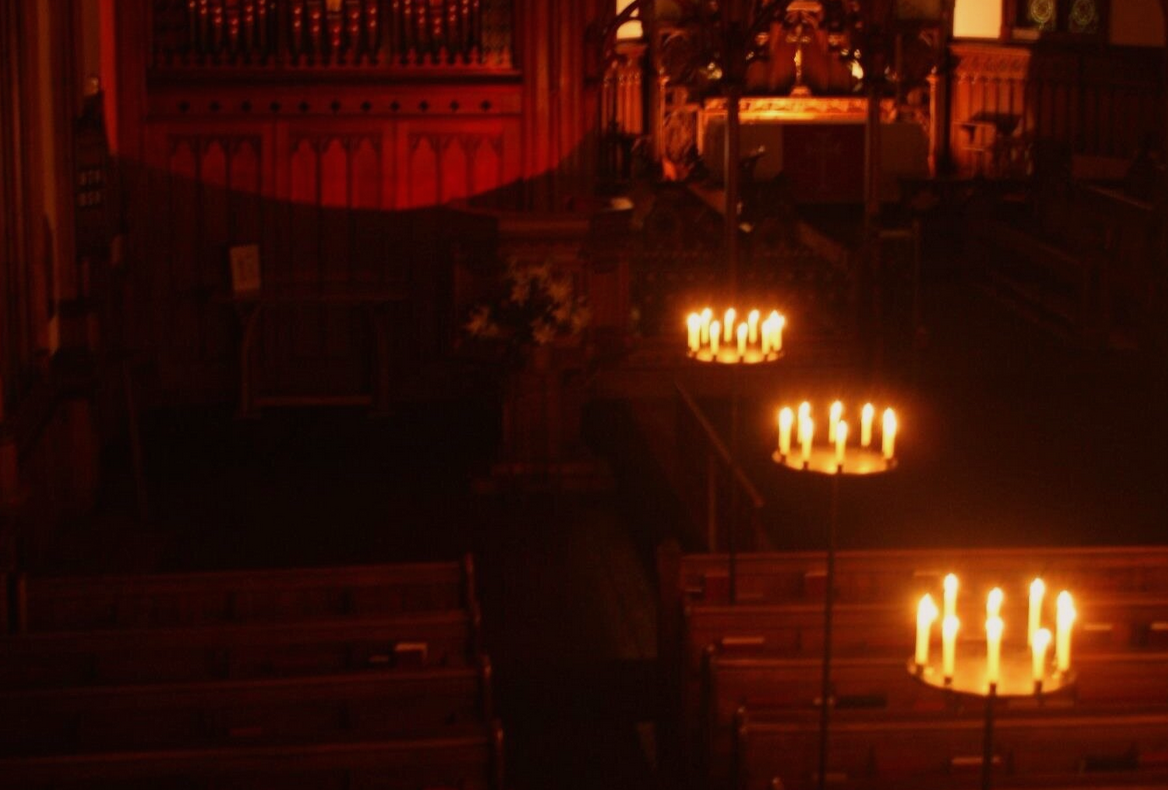
Poetry and music go together like candles and churches, and what’s better than poetry and music? Poetry and music in the cavernous St Peters church on a stormy night. Lōemis Festival’s recent event Epilogue, born out of the mind of Festival Artistic Director Andrew Laking, brought together some of the city’s finest ensemble musicians and a murderer’s row of local poets for an evening of original composition that was at times ecstatic, somber, thought-provoking, soothing and so much more. Local wordsmiths Nick Ascroft, Chris Tse, Rebecca Hawkes, Ruby Solly and Harry Ricketts were all given the opportunity to write and deliver original poems in this reimagined requiem mass and their words the space and scope they deserved.

The event page promised an echo of the original idea, that follows the same rise, fall and atmosphere, and it delivered, interspersing music and the spoken word. The event begun with a composition from the ensemble and they punctuated every poet’s performance, creating room for breach and reflection and time for the poems to wash over the crowd and reset the mood for the next poet. The church was dark and moody and still throughout, while this made for the perfect audience experience it made it impossible to take any notes during the show, as a result I’m just going to gush about all the wonderful performers who took the stage.

Epilogue

Nick Ascroft was the first poet to take to the pulpit. He delivered two new poems that were personal and inventive, hilarious and heartbreaking. While I’ve been a fan of Nick’s wit on the page for years it was great to have the opportunity to see him read in this context, not only did his poems set the tone for the evening but his opener ‘You Will Find Me Much Changed’ has been lounging about in my head ever since. Next up was everyone’s favourite poet crush Chris Tse. Dressed in dapper attire apparently inspired by a fancy can of water, Chris, much like Nick used repetition to build his sermon, like a mantra, an incantation. It reverberated off the stained-glass windows and when Chris finished with his piece, entitled ‘Persistence is futile’, I got so upset I have to wait until 2022 for his third collection.

Rebecca Hawkes was next, accidentally dressed as Kath from Kath and Kim due to a wardrobe malfunction but it didn’t matter. Rebecca is the type of poet tailor-made for an event like this, she can conjure imagery that spans the grotesque to the sublime and she has a performance style that colours those images so vividly you feel fully submerged in her world. Speaking of complex other worlds, Ruby Solly is one of the masters of weaving them together and that was on full display in her performance. Ruby also played taonga pūoro with the ensemble before her reading just to remind the audience how talented she is. The last poet of the evening was Harry Ricketts, whose Selected Poems is out in the world right now. Harry’s ‘The Song Sings the News of the World’ closed out the evening, and while it wasn’t necessarily the most complex or challenging poem of the evening, it was the perfect ending, prompting all those watching to look forward and wonder, leaving the audience with a sense of hope.

Overall it was the perfect evening, poetry and music together as they should be, in a venue built for ritual. Epilogue is the type of event that showcases what poetry can be when it’s not confined, stretching it and moulding it into something unexpected, the type of event Andrew and his VERB co-director Clare Mabey excel at producing. I sincerely hope Epilogue doesn’t live up to its namesake and we get to see it again in one form or another.

Jordan Hamel

Music by Nigel Collins and Andrew Laking, in collaboration with Simon Christie and Maaike Beekman. New texts written and read by Chris Tse, Rebecca Hawkes, Harry Ricketts, Ruby Solly, and Nick Ascroft. With Dan Yeabsley (reeds), Tristan Carter (violin), and Dayle Jellyman (keys).

Jordan Hamel is a Pōneke-based writer, poet and performer. He was the 2018 New Zealand Poetry Slam champion and represented NZ at the World Poetry Slam Champs in the US in 2019. He is the co-editor of Stasis Journal and co-editor of a forthcoming NZ Climate Change Poetry Anthology from Auckland University Press. He is a 2021 Michael King Writer-in-Residence and has words published in The Spinoff, Newsroom, Poetry New Zealand, Sport, Turbine, Landfall, and elsewhere.

Jordan Hamel’s poem ‘You’re not a has-been, you’re a never was!’

Poetry Shelf noticeboard: Epilogue new work featuring poets and musicians

Epilogue

St. Peter’s on Willis
Sat 19th June, 8pm

Epilogue is a new work that follows the form of a requiem mass, minus the death and liturgy.

Five writers accompanied by an ensemble of musicians explore a series of unrelated events, evoking ideas around transition, inevitability, rest, activity, optimism and infinity.

Music by Nigel Collins (Flight of the Conchords / Congress of Animals) and Andrew Laking, in collaboration with Simon Christie and Maaike Beekman. New texts written and read by Chris Tse, Rebecca Hawkes, Harry Ricketts, Ruby Solly, and Nick Ascroft. With Dan Yeabsley (reeds), Tristan Carter (violin), and Dayle Jellyman (keys).

What to Expect
To make Epilogue, we took the structure and sense of a requiem mass, then pulled it apart it and filled it with contemporary language and music. What we’re left with is an echo of the original idea, that follows the same rise, fall and atmosphere, but speaks to more recent events, all of which are different and personal, but connected in a broader sense. Imagine a secular order of service that alternates between music and spoken word and you’re half way there!

Who’s involved?
Nigel Collins is a playwright and musician who is best known for his work with Flight of the Conchords (Orchestra of One) and Congress of Animals. He combines with a fantastic ensemble of musicians, including bassist Simon Christie (Aurora IV), Dayle Jellyman and reeds maestro Dan Yeabsley (The Troubles). The texts have been put together by a standout collection of writers, featuring many of Wellington’s best – for more info, click on the artist profiles on this page.

Tickets: From $25

Poetry Shelf Monday Poem: Rebecca Hawkes’s ‘Poem about my heart’

Poem about my heart

you have one job
which is to hold this
disturbingly large moth
battering the woven
basket of your fingers

every instinct whirring
to close your fist and crush it
or open your palms
set the gross insect loose
free your hands for other tasks

but this is your job
the having and the holding
the moth fluttering scaly wings
into moon dust that stains your skin
ghastly silver as you do not ask

how did this thing even get in here
just maintain your grasp
on the fragile stupid alien
that flew to your light and would not go
until you caught it and it was yours

Rebecca Hawkes

Rebecca Hawkes is a queer pākehā poet, painter, and PowerPoint slide ghostwriter living in Te-Whanganui-a-Tara. Her chapbook ‘Softcore coldsores’ can be found in AUP New Poets 5. She is co-editor of the journal Sweet Mammalian and an upcoming anthology of climate change poetry, and is a founding member of popstar performance posse Show Ponies. More of Rebecca’s writing and paintings can be found in journals like Starling, Sport, Scum, and Stasis, or online at her vanity mirror.

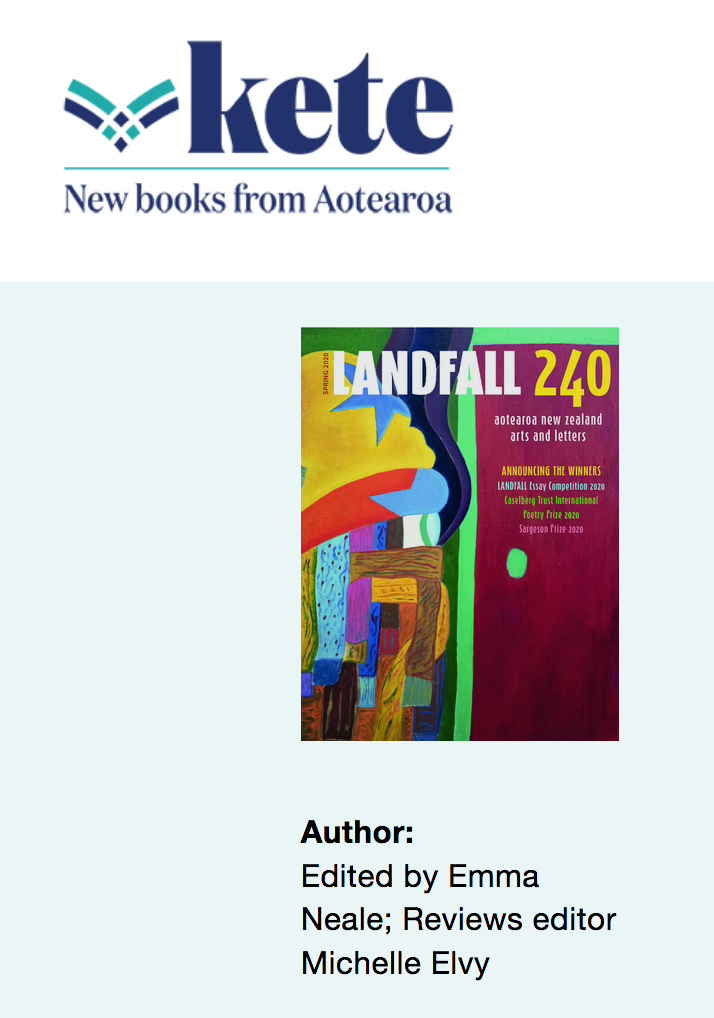
Poetry Shelf noticeboard: Paula Green reviews Landfall 240 at Kete Books

A good literary journal will offer the reader an inviting range of tones, subject matter, emotional effects and cerebral demands. Familiar writers will sit alongside new voices. Landfall 240 achieves an eclectic mix of voices, especially as it favours multiple genres: poetry, fiction, memoir, essays, artworks, reviews. Such a writing smorgasbord suits my habit of devouring issues over repeated visits and the degree to which certain pieces affect me is why I am a long-term Landfall fan.

An annual highlight is always the results of the essay competition. Editor Emma Neal received 85 entries this year and A. M. McKinnon’s winning essay, Canterbury Gothic, is a little beauty. The essay begins with a great aunt, exquisitely detailed, and moves through a city’s architectural detail to the dark and moving twists in a family history.

full review here

Poetry Shelf video spot: Rebecca Hawkes’s ‘Perendale Princess’


Rebecca Hawke’s ‘Perendale Princess’


Rebecca Hawkes is a poet and painter. She’s from a high country farm near Methven and is now living in Wellington. Rebecca’s poems have appeared in various journals, including Starling, Sport, and Sweet Mammalian – and on her website. A collection of her writing was published in August 2019 in the revival issue of the AUP New Poets series, alongside the work of Carolyn DeCarlo and Sophie van Waardenberg.