Tag Archives: Rachel O’Neill

Poetry Shelf celebrates The Venetian Blind Poems with a collage conversation with nine poets

The Venetian Blind Poems, Paula Green
The Cuba Press, 2025

Later in the year I am planning a number of Poetry Shelf live events to celebrate poetry voices in Aotearoa. This month I have a new poetry collection out but my energy jar and immunity is not quite ready for book launches so I have invented three celebrations for the blog. On Publication Day (August 1st), I posted an email conversation I had with my dear friend Anna Jackson, a conversation that celebrates our shared love of writing and our two new books. Anna’s Terrier, Worrier (Auckland University Press) and my The Venetian Blind Poems (The Cuba Press).

For my second feature, I have created a collage conversation by inviting some of the poets whose books I have reviewed and loved over the past year to ask me a few questions. It gives me another chance to shine light on the extraordinary writing our poets are producing. I have kept the conversation overlaps as I find something new when I return to a similar idea or issue.

It is with grateful thanks to David Gregory, Mikaela Nyman, Cadence Chung, J. A. Vili, Rachel O’Neill, Kate Camp, Xiaole Zhan, Claire Beynon and Dinah Hawken, I offer this conversation in celebration of poetry. You can find links to the reviews below. The conversation has ended up being something rather special for me. I have never experienced anything quite like it! I loved the questions so much. Thank you. Because this is a book of love, I would like to gift signed copies to five readers, whether for themselves or a friend (paulajoygreen@gmail.com).

I also want to share a review Eileen Merriman posted on her blog after reading my book, because she is in the unique position to respond to it as another writer, a haematologist and a close friend. Some things she says struck me and I refer to them when I answer a question by Kate Camp.


I’ve just finished reading Paula Green’s recently published poetry collection, The Venetian Blind Poems in one sitting. This book was an oasis in the midst of a hectic time for me (when is life ever not?); it’s not very often I can be compelled to sit for more than half an hour currently. Yet I connected with this on so many levels: as a writer, as a doctor, as a patient, as a friend, as a human. Green details her experience on the Motutapu ward, the bone marrow transplant/haematology unit at Auckland Hospital, where she received a bone marrow transplant for a life threatening  blood disorder in June 2022.

As a haematologist, I know this is one of the most challenging treatments you can put a patient through, bringing someone to the brink of death to save a life. Recovery takes months, sometimes years. The acute phase can be akin to torture, one only the recipient could ever understand. But Paula holds us close, so that we can begin to understand: ‘I return to the pain box in Dune… I am using the box/for when my ulcerated mouth pain is unbearable/last night I held the box/as the mouth pain radiated but/I didn’t put my hand in/I decorated the box/ with seashells instead’. And then we are elevated from the abyss to the sublime, because this is how Green survives, by stacking poems along her windowsill and creating word pictures in her head: ‘Buttered toast and clover honey/marmalade brain and mandarin heart’. And then, time and time again, we are brought back to the world that Green sees, from the confines of her isolation room, peering through the Venetian blinds at the world that sustains her, one second, one minute, one day at a time.

This book had me captivated from the delicious first line ‘Liquorice strips of harbour’, throughout the rough seas, eddies, near-drownings and becalmed harbours of the stem cell transplant, and beyond, right through to that hopeful last line, ‘We will be able to see for miles’. Kia kaha, Paula Green, your inner strength knows no bounds.

Eileen Merriman
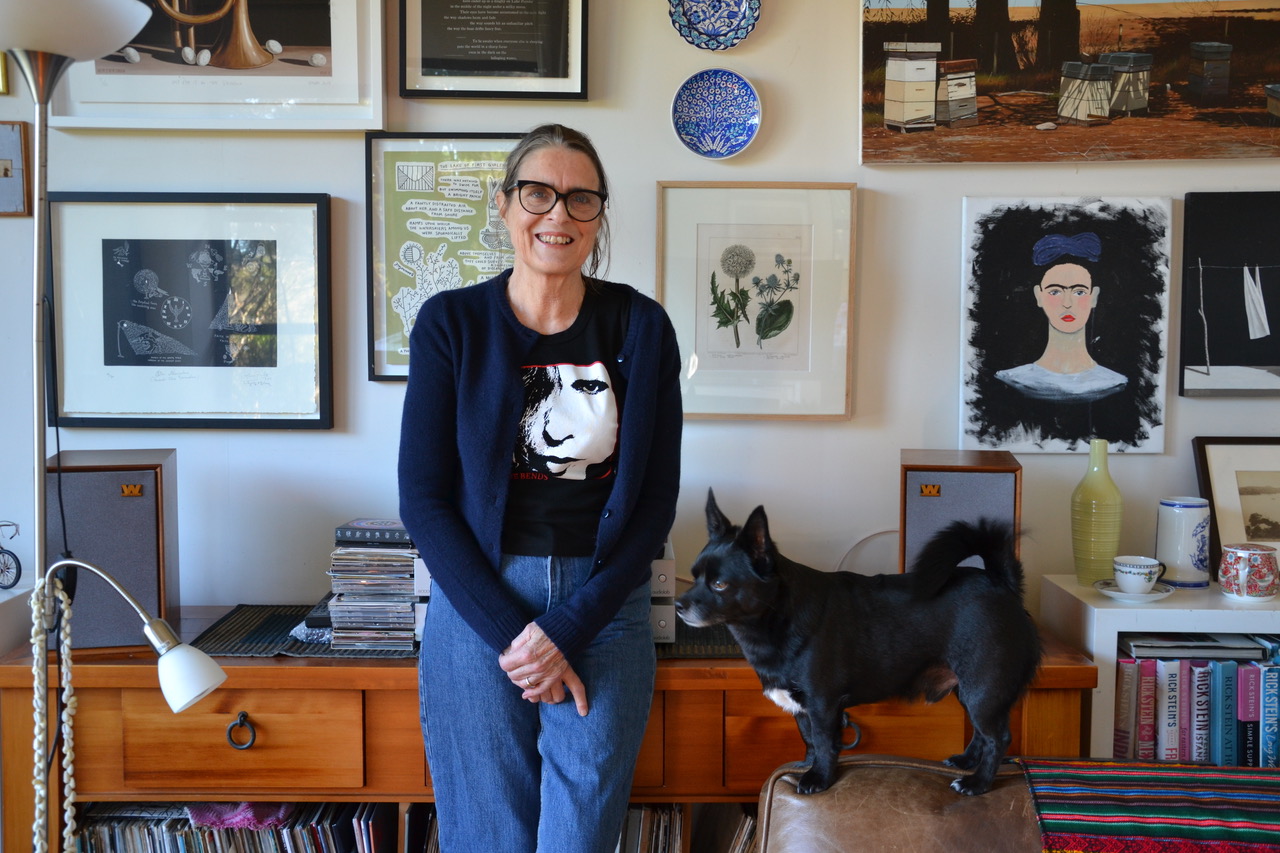
me with my daughter’s dog, Pablo

a collage conversation

Every morning I open an envelope and
read a poet’s choice inside a greeting card
I nestle into the joy
of Cilla McQueen’s kitchen table

David: Where do your ideas for your poetry come from?
Paula:  They fall into my head like surprise word showers, whether from what I see, hear, feel or read. From the world experienced, the world imagined, the world recalled.

David: How do you know when a poem is complete?
Paula: It’s a gut feeling. When it hits the right notes and catches a version of what I want to transmit. Poetry can be and do so many things, and I’m a strong advocate for poetry openness rather than limiting and conservative ideas on what a poem ought to be. Paul Stewart from The Cuba Press edited the book and he has a sublime ear for poetry and its range. You couldn’t ask for a better poetry editor.

In the middle of the night
the radio takes me to Science
in Action and I am listing
ways to save the planet
and the way dance liberates
cumbersome feet

Mikaela Nyman: These poems emerged out of a life temporarily reduced by severe illness. Yet they’re not limited by the medical circumstances, and not merely a comfort blanket, but seek to connect with the world outside. Did this happen straight away, or is it something you consciously pursued later in the writing process? 
Paula: I love this question – yes my life was limited physically, not only on the ward but on my long recovery road with a fragile immune system, daily challenges and minute energy jar. But I also saw it as an expansion of life. I focused and am focusing on what I can do, not what I can’t do. On the ward, the world was slipping in through the blinds as much as I was looking out. From the start my writing navigated both my health experience and the world beyond it.

Mikaela: Given the dire circumstances that compelled you to turn to poetry at this point in life – i.e. your personal health struggle as well as the state of the world – how important is it for you to retain hope and offer a sense of wonder in your poems?
Paula: I think it ‘s been ongoing, across decades, my impulse to write through dark and light. I think all my books have sources, whether overt or concealed, in patches of difficulty. I was writing 99 Ways into NZ Poetry with Harry Ricketts when I was first diagnosed and I never stopped writing. Maybe writing is my daily dose of vitamins. And that word wonder. Wonder is a talisman word – whether it’s the delight you might find in thought coupled with the delight you might find in awe. It is a crucial aid.

It’s the third day of the poetry season
Oh, everyone’s queueing up to read
a poem and count falling leaves

Cadence: Do you have a particular line/poem you’ve written that you think really encapsulates the collection?

I will meet you at the top of the hill
we will be able to see for miles

Cadence: What’s an experience you’ve had lately that has brought you joy?
Paula: Ah, such an important question. Every day is a patchwork quilt of joy. Take this day for example. Reading and reviewing a poetry book. Drinking coffee with a homemade muffin with sun-dried tomatoes and paprika. Making nourishing soup for lunch and sourdough with millet flour for a change. Watching the pīwakawaka dance in front of the wide kitchen window as though they are rehearsing for an special occasion. Replying to children who have sent me poems for Poetry Box. Cooking a Moroccan tagine with preserved pears and rose harissa paste for dinner and sharing with my family. Listening to Jimmy Cliff on repeat all day and imbibing the uplifting reggae beat and need to protest.

This morning I got up at 5 am to drive to an early appointment as the full-wow-moon shone in the dark, and streaks of bright colour ribbons hung over Rangitoto. It felt like my heart was bursting. I switched to Maria Callas singing ‘Casta Diva’ from Bellini’s Norma.

Today I feel happiness
as solid as a wooden
kitchen table with six chairs
and a bowl of ripe fruit

Cadence: How does a poem come to you? Quickly and all at once, or more measured and worked out?
Paula: Poems linger in my head -as they did on the ward – before I write them in a notebook. Often poem fragments arrive in the middle of the night, or when I am driving across country roads to Kumeū. But there is always a sense of flow not struggle. I love that.

I decide even stories are slatted
with missing bits, so I lie still and
fill in the gaps of my childhood

Jonah: How did your writing flow in the light and dark times, on the good
days and bad days of your recovery journey?
Paula: It flowed and flows in my head, most days, slowly, slowly. But sometimes, especially in the dark patches, I don’t have the energy to write on paper. I can’t function. Words falter. I compare it to the stream in the valley – sometimes it flows like honey, sometimes it struggles over rocks and debris. When it’s honey flow I write, when it’s not, I do something else. So I pull vegetables from the fridge of garden and make a nourishing meal to share with my loved ones. Or watch Tipping Point on TVNZ! Or listen to an audio book.


Jonah: How much did writing these poems during your personal struggle help in
your healing and recovery?
Paula: To a huge degree. And it still does. It was and is a crucial aid because it was and is a way of connecting with the world and people, of feeling love though my love of words. It’s a vital part of my self-care toolkit.

Jonah: Since this was such a personal journey for you, what was something new you discovered about yourself and life itself?
Paula: How in the toughest experience you can feel humanity at its best – for me the incredible care and patience of the doctors and nurses, no matter how tired or stretched they were (and underpaid). I loved my time on the ward. An anonymous donor gifted me life and that felt extraordinary to me. This miracle gift – it felt like I was seeing and experiencing the whole world for the first time and it was a wondrous thing. And still is (despite the heart slamming choices of certain leaders and Governments). It’s recognising what is important. Cooking and sharing nourishing food (especially Middle Eastern flavours). Watching football. Listening to music on repeat: reggae, Bach, opera, Reb Fountain, Boy Genius, Nadia Reid, The National, Marlon Williams, Lucinda Williams, Billy Bragg, Delgirl, Nina Simone,more reggae. I am hooked on Jimmy Cliff at the moment and the struggle he was singing about way back in the 1960s and 1970s: our half starved world, the Vietnam War, the broken planet, the ‘suffering in the land’. Well we are still singing and writing these same songs of heartbreak and protest.

In the basement of song
there are jars of pickled zucchini
worn shoes and well-thumbed novels

Rachel: Where does a poem generally begin for you, and has that changed at any point?
Paula: In my conversation with Anna, I talked about the way phrases drift into my head, surprise arrivals in my mental poetry room. I referred to these arrivals as gentle word showers. I have had these arrivals since I was a child. when I was in Year 8 (Form 2) my teacher, Frederick C. Parmee, was a poet! He was the only teacher who saw the potential in me as a writer and I flourished. By secondary school I was shut down as wayward and I failed school. Yet the words kept falling into my mind, and then into secret notebooks (like many women across the centuries), across my years of travelling, living in London, and finding a place in the Italian Department at the University of Auckland. Taking an MA poetry paper with Michele Leggott. Getting a poetry collection published with Auckland University Press. Extraordinary. And still the words drift and fall.

Rachel: Does your new collection speak to dynamics of patience and urgency? Along these lines, what has writing this collection made you appreciate more, or challenged you to move on from?
Paula: I think it has amplified my attraction to slowness, to patience, to writing and reading and blogging like a snail, into uncharted territory as much as into the familiar. When you run on slow dose energy, I think urgency is disastrous – I favour slow cooked braises and sourdough bread. Choosing the slow reading of poetry books, so much more is revealed. Yet urgency is both rewarding and necessary for other people, and produces breathtaking results, it just doesn’t work for me. That said, we need to unite with urgency to heal this damaged planet.

The second part of your question is crucial. In a nutshell, I appreciate life, I have had a transplant that has gifted me the miracle of life. Extraordinary. How can this not change the way I am in the world. What matters. Dr Clinton Lewis at Auckland Hospital has made an excellent video for bone marrow transplant patients. He talks about how many patients reassess what matters most. I have drafted a book, A Book of Care, it is not quite ready yet, but it is the manuscript I am most keen to be published. I offer it is as a self-travel guide, a tool kit, borrowing practical ideas that have helped me.

Rachel: In what ways do you think poetry helps us integrate and accept tension or discomfort as part of human experience and living a full life?
Paula: I love this question. I have been musing no matter what I am writing, the tough edges of the world, the daily wound of news bulletins find their way in. What difference does it make if we speak of Gaza and the abominable choices our Government is making? I just don’t know, but I do know silence is a form of consent, and that in the time of fascism in Italy, it was strengthening that some people spoke out. Every voice ringing out across the globe, in song or poem or article, every protest march and banner, is a human arm held out, a call to heal rather than destroy, to feed rather starve, to teach and guide the whole child rather than discriminatory parts.

My repugnance
at the devastation of Gaza
is not eased by the soft light
on the Waitākere Ranges
or a canny arrangement of summer nouns
or Boy Genius on the turntable
or even a bowl of chickpea tajine

 Kate: do you ever feel when you are writing about personal experiences – especially intimate ones of the body – that you are invading your own privacy? And once you have written about those experiences, do you find that the poem version overlays the “real” remembered version? Or if not overlays it, then how do they co-exist, how does the personal, private version of the experience alongside the version of the experience as captured in a poem? 
Paula: I love love this question Kate. Xiaole introduces their reading for a Poetry Shelf feature I am posting on Poetry Day, by talking about oversharing. I know this feeling so well. I feel like I am doing it in this collage conversation! To what extent do people want to hear about illness? About bumps in the road? I started sharing my health situation on the blog because I wanted people to know why I was operating on a tiny energy jar and couldn’t review quite so many books or answer emails so promptly. And most people have been unbelievably kind. I felt so bad when I hadn’t celebrated a book I had loved. And then I would think EEK! And wanted to delete my talk of cancer and transplant experiences and issues. But what I don’t do is go into dark detail. That stays private and personal. Will I have the courage to press ‘publish’ for this collage conversation! Scary.

I found it so illuminating to read Eileen’s review of the book. She writes from her experience as a writer, avid reader, haematologist and my friend. She says things I don’t have running through my head but are important! To read her words made feel so much better about how I am handling my recovery road and my own writing! I don’t use warrior language on my cancer road. I don’t wallow in what I can’t do. I have never said ‘why me?’. But I do have dark patches where I feel I physically can’t function. To hear doctors say a bone marrow transplant is an extremely tough experience is like getting a warm embrace. Recognition.

So yes, I love the idea of a private version and a shared public version – I am a writer that keeps most of my life private – my personal relationships, especially with my partner and our children. I think part of my impulse to write this experience was self-care, as I mentioned to Jonah. Liking drinking water. And how important it is for me to write out of aroha and wonder as much as difficulty. To write as you travel, in the present tense of experience. Once I had spent two years writing the sequence, I wanted to get to get the book published as a gift for doctors, nurses and other people ascending Mountains of Difficulty.

After a night of dream scavenging
I open my mouth
and out fly stars
a garden of leeks and carrots
a family of skylarks
a track to the wild ocean

Xiaole: I’ve been thinking a lot about this idea from e.e. cummings: ‘To know is to possess, & any fact is possessed by everyone who knows it, whereas those who feel the truth are possessed, not possessors.’ Did you have any experiences of not knowing or of ‘being possessed’ while working on/ living through your collection?
Paula: What fascinating traffic between knowing and feeling! Possessing the facts, being possessed. What slippery territory . . . truth yes, but even facts. Are they ever fixed or certain? Sometimes I think writing is a way of re-viewing an experience, of re-speaking it say, and it is for me an organic process. Never fixed. The versions I tell my consultant, the nurse, my psychologist, my close friends, my family, are tremble stories, never fixed, as I remember and forget and shift the focal lens, the distance finder, the colour filter. It is so very important. I almost feel like venturing to Zenlike thought by saying there is knowing in the unknowing, and unknowing in the knowing.

I lip read the cloud stories
and remember the comfort points

Claire:   I appreciated the absence of ‘explicit’ punctuation in your collection—all commas, colons, semi-colons, full stops are invisible/implicit. The rhythm and cadence of each word, line and stanza work quietly and diligently on their own, as if seeking connection and continuity. They neither ask for, nor require, anything extra in the way of emphasis or embellishment. Did you set out to write the collection this way? Or did you initially include ‘traditional’ punctuation and make a decision to remove it later/during your editing process? 
Paula: Punctuation is an aid for the poem – for me it is a key part of the musical effect – and it is a guide for the reader – where to take a breath or to pause. I have had many books published and worked with many editors and they have different, and at times, contradictory approaches. I wanted to keep faith with the first section of The Venetian Blind Poems as I gathered it in my head on the ward. Punctuation played more of a role in the second section which I wrote back home. A musical tool. A rhythm aid.

Claire: I wondered while reading The Venetian Blind Poems whether living with a painter—your partner, Michael Hight—influences your way of composing and structuring your poems? I mentioned in my FB post that something about the tone and shape of this collection reminds me of the work of artist Giorgio Morandi. I’ve long admired Michael’s paintings, too—their quiet, contemplative quality, compositional sophistication and attention to detail, the at-times unexpected juxtaposition of objects—and sense between them and your poems a kind of reciprocity or shared sensibility. 

Forgive me if I’m projecting here. I don’t mean to speak out of line or to make any assumptions… but, well, I found myself wondering about these things… how there seems to be something deeply simpatico between your work and Michael’s. And it moves me/strikes me as beautiful.
Paula: Michael and I are big fans of Morandi! We live very separate creative lives – he doesn’t enter the poetry room in my head and I very rarely walk up the hill to his studio – neither of us talk about work in process with anyone. But I have written about Michael’s work (read a review of his last Auckland show here). We have his art on our walls and it’s uplifting, a vital form of travel. I give him my manuscripts to read just before they go to a publisher! We have two creative daughters and we have shared love of books, movies, music and art. To be in New York together absorbing art, music, literature and food was incredibly special – and Ireland, Barcelona and Lisbon on another occasion – and of course Aotearoa.

Claire:  I realised when I reached the last page of your collection that I’d read the book as one long poem—a whole comprised of many parts, yes, but essentially ‘one poem’. I actively appreciated the fact that, aside from the titles at the start of each of the two sections, there are no titles to distract or interrupt the flow of the writing. This allows readers to fall into step with you and walk more closely alongside. On the last page, you seem to confirm this:

Most of this poem
is in 1000 pieces
in a box on the table

Do you see the collection as one poem?
Paula: Yes I do! One poem like a quilt made of many notes, light and dark patches. 

A poem might be an envelope 
to store things in for a later date:
old train tickets postcards buttons
a map of Rome a bookmark

Dinah: A few weeks ago I found myself asking myself what I most hoped my poems would do now that I’m in the last part of my writing life. My main hope is that a few readers will feel ‘be-friended’ by a poem of mine, in the way I have felt be-friended by the poems of others. Then, in reading your conversation with Anna (Jackson), I came across – with surprise – your idea of ‘poetry as friendship’ and Anna’s of poetry as ‘a short cut to intimacy.’ Do you have more to say about this?
Paula: Anna and I have been friends since my first collection Cookhouse was published in 1997, when I had just completed my Doctorate in Italian. Before our slow-paced email conversation, I had never thought of poetry as friendship, but the more I thought of it, the more it resonated as an idea and a practice. I realised my slow-tempo approach to poetry – to reading, writing, blogging and reviewing – is a way for forging connections, of holding things to the light to see from different angles, explore multiple points of view, experiences, hues and chords. Of listening. Our poetry communities in Aotearoa are so active and so strengthening. As this collage conversation underlines.

Dinah: And were you thinking of a particular kind of reader (say someone who had experienced serious illness) when you were writing The Venetian Blind Poems?
Paula: No, I wasn’t thinking of a reader at all. Of getting published. I write first out of my love of writing, as a form of nourishment, as a source of joy. So I guess that is selfishly writing for one’s self. Inhabiting the moment. But now that The Venetian Blinds Poems is out in the world, to be able to give copies to doctors, nurses and other people going through difficult health experiences matters so very much. And to other poets! Climbing a mountain can be hard but it can also be a source of beauty, and I am nothing, this book is nothing, without my support crew, particularly Anna Jackson, Harriet Allan, Eileen Merriman, Michele Leggott and all the fabulous doctors and nurses on Motutapu and the Day Stay Ward. All the readers and poets who contribute to Poetry Shelf as both readers and writers. And my dear family. Thank you. My dedication catches how I felt when I had finished writing the book:

for everyone
ascending the Mountains of Difficulty
and their support crews

David Gregory, Based on a True Story, Sudden Valley Press, 2024, review
Mikaela Nyman, The Anatomy of Sand, THWUP, 2025, review
Cadence Chung, Mad Diva, Otago University Press, 2025, my review
J. A. Vili, AUP New Poets 11: Xiaole Zhan, Margo Montes de Oca, J. A. Vili
editor Anne Kennedy, Auckland University Press, 2025, review
Rachel O’Neill, Symphony of Queer Errands, Tender Press, 2025, review
Kate Camp, Makeshift Seasons, THWUP, 2025, review
Xiaole Zhan, AUP New Poets 11: Xiaole Zhan, Margo Montes de Oca, J. A. Vili
editor Anne Kennedy, Auckland University Press, 2025, review
Claire Beynon, For when words fail us: a small book of changes,The Cuba Press, 2024, review
Dinah Hawken, Faces and Flowers Poems to Patricia France, THWUP, 2024, review

The Cuba Press page
Paula Green and Anna Jackson in conversation
Poetry Shelf Monday Poem: Rachel O’Neill’s The new lives of my children

The new lives of my children

Gently agitating the fleshy island of my kneecap, I wonder at the new lives of my children. I remember the day we gave them to the hill, wrapping them in earth like gifts. The mist came and carried them away and I heard the god of silence bury the last sublime notes of music. In the first dream, my children were undefinable from the plain of disquiet. After seeing them shake themselves out of the sea floor it occurred to me they were waiting there to ambush their prey. I spoke. Their unmoving mouths sat curved and rigid. Only their eyes were a-ripple, smooth grey clay and cartilaginous. I don’t know, I said, I will learn your language and come back. So I set about getting a grasp of their incredible system of gaze-respiration, their expressive eye-mouths, which I know now are properly called spiracles. When I finally made my way back to the deep ocean as before my children surfaced. I went forward. They hesitated and swung back into the barren muteness. Still I waited. Eventually they returned to touch my face. Each spoke their name and took a breath.

Rachel O’Neill

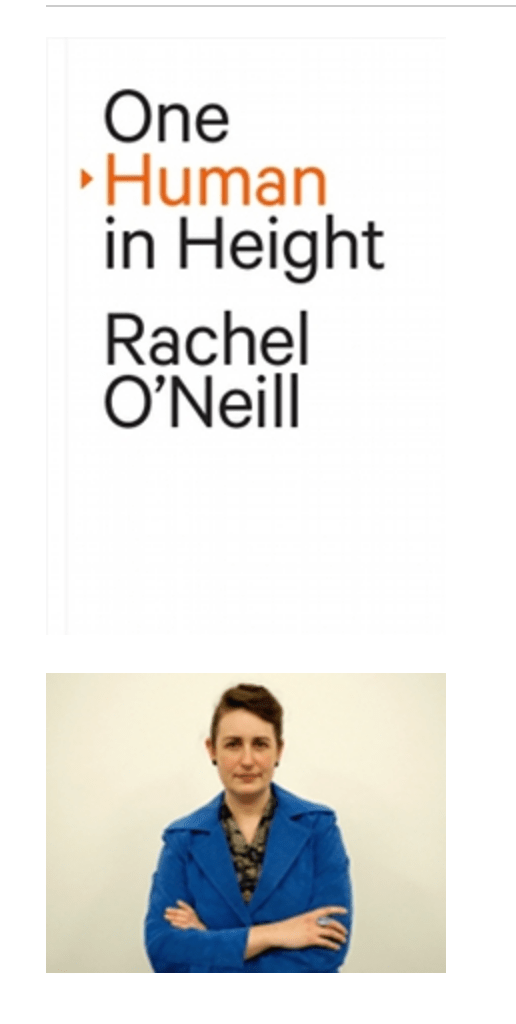
Rachel O’Neill is a filmmaker, writer and artist based in Te Whanganui-a-Tara, Aotearoa. The author of One Human in Height (Hue & Cry Press, 2013) and Requiem for a Fruit (Tender Press, 2021), Rachel is the 2023 Creative New Zealand Randell Cottage Writing Fellow. For more, visit their website.

Poetry Shelf review: Rachel O’Neill’s Requiem for a Fruit

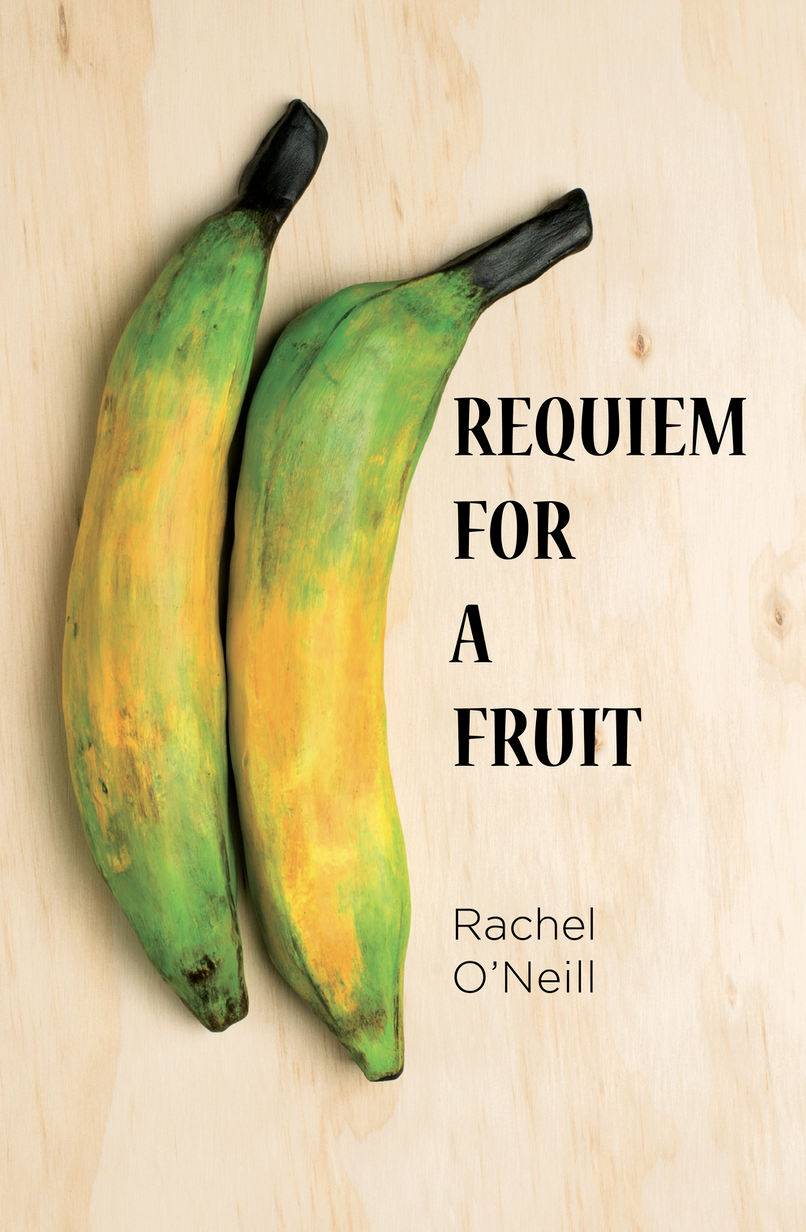
Requiem for a Fruit by Rachel O’Neill, We Are Babies, 2021

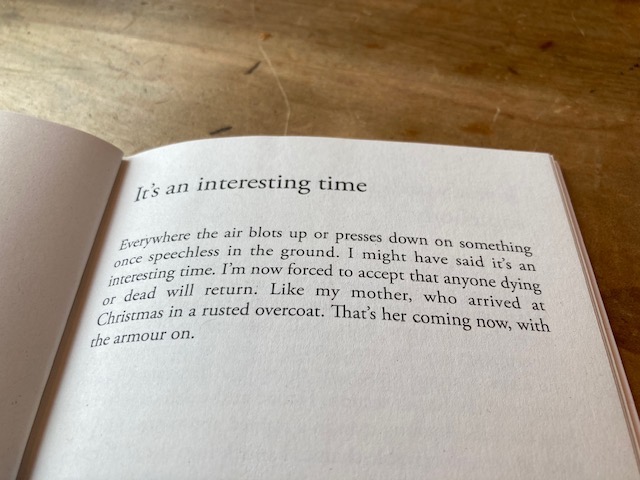
Rachel O’Neill’s second collection Requiem for a Fruit continues a preoccupation with prose poetry that resonated in their debut book One Human in Height. The opening poem, ‘It’s an interesting time’, epitomises the delight that poem compression offers. Revelation jostles alongside the unspoken. The image of a ‘rusted coat’ startles, and then pokes and prods as ‘amour’.

In an endnote, Rachel acknowledges readers who are at home in their imaginations. They quote a grandmother’s line from a poem: ‘life is a great mystery, and then that mystery ends’. Mystery, Rachel suggests, is the magnet tug of storytelling. Storytelling reflects and feeds who we are, our origins, where we are going, with an imperative to listen. Listening helps us to ‘reason and act with humanity’, they suggest. This feels overwhelmingly important; this need for us to bend in and listen, to keep recounting who and how and where we are, past present and future, no matter the genre or subject matter.

‘From the homely catacomb in the living room my mother can see the stars.’ from ‘I dream I bury a machine’

And yes, mystery matters in Rachel’s prose poems. The real shimmers then moves to become off-real, startling and strange; and then slips and slides back to the everyday, the usual, the humdrum. I read each poem and see it as a startling painting, or a short film where the mise en scene trembles and quakes and expands the set with mystery connections. There is anecdote, revelation, fantasy, wit, confession. In ‘The commonplace’, a woman is dressed in a ballooning skirt, and she may be part woman and she may be part boulder. The aunt invites the woman/boulder to help herself from ‘the earth in the bowl where the potatoes should be’. What an image! Mystery in the commonplace. It’s also where the seeds are, according to the uncle. The aunt needing to locate the commonplace with its seed bounty: ‘Where’s that?’ What delicious ripples. What a way to be held to a page.

You can move through the book tracking the mystery whiffs, debris, clues. You can also pick up a thread and follow different routes through the narrative maze. Try love for example. Or the mother. Try wit. You can revel in the character festivity. Track and stop awhile with wives husbands love interests mothers fathers a Church of England clergyman children a companion a guest. In fact you are a guest in these poetry alcoves, bringing your own disposition, your own craving to absorb and expand, hum and ah ha.

Put this book in your tote bag or leave it on the kitchen table. You can pick it up and read a single poem, then let that poem drift and settle as you move through the day. It’s magnificent. Electrifying. I recommend it highly as Bernadette Hall does on the back of the book.

‘The relationship is new, yet the love is a stone.’ from ‘The love interest’

Rachel O’Neill is a Pākehā storyteller who was raised in the Waikato and currently lives and works in Te Whanganui-a-Tara/Kāpiti Coast. Rachel enjoys collaborating with writers, artists and filmmakers on publications, exhibitions and works for screen, and they are a founding member of the four-artist collaborative group, All the Cunning Stunts. A graduate of Elam School of Fine Arts (BA/BFA) and the International Institute of Modern Letters (MA), Rachel was selected for the 2017 Aotearoa Short Film Lab, received a 2018 SEED Grant (NZWG/NZFC) for feature film development, and held a 2019 Emerging Writers Residency at the Michael King Writers Centre. Their debut book, One Human in Height (Hue & Cry Press) was published in 2013. As a queer non-binary storyteller Rachel strives to represent the longing for connection and the humour and strangeness that characterise human experience.

A version of ‘Almost exactly the love of my life’ appeared on Poetry Shelf

We Are Babies site

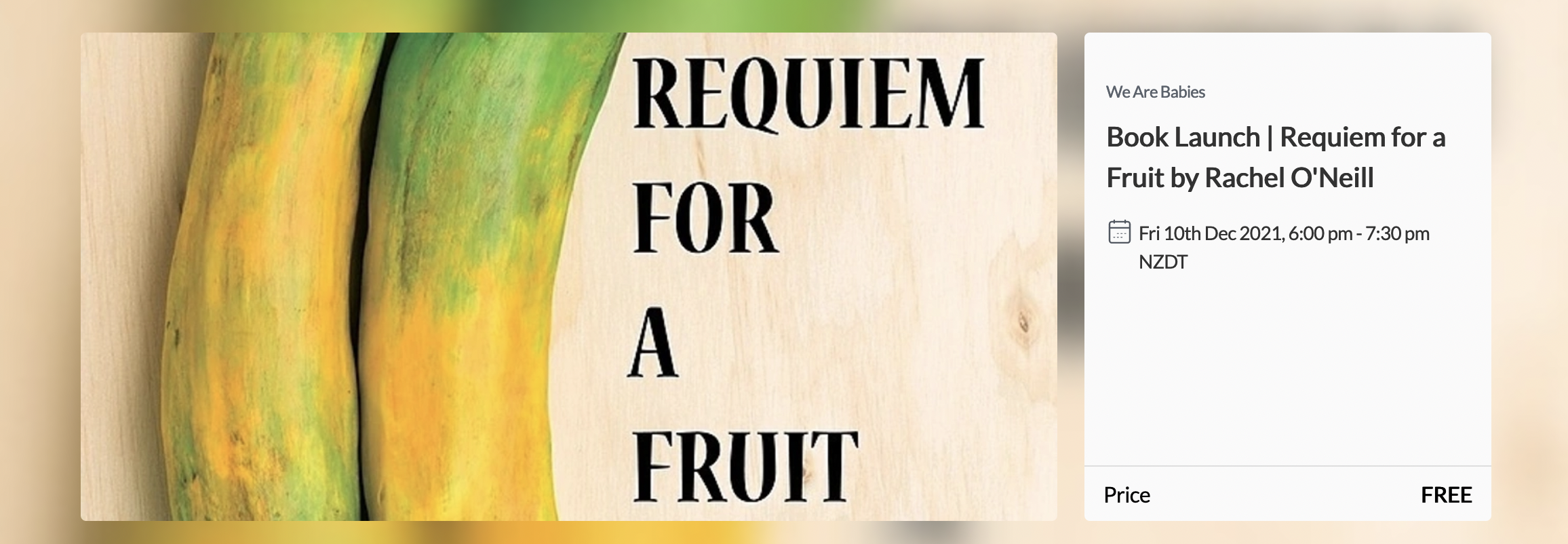
Poetry Shelf noticeboard: LAUNCH FOR Rachel O’Neill’s Requiem for a Fruit

Event description

We Are Babies and Jhana Millers Gallery would like to welcome you to the launch of Rachel O’Neill’s second poetry collection, Requiem for a Fruit.

Requiem for a Fruit continues Rachel’s exploration of the form of prose poetry, to astonishing results. The poems in this book cast a slant lens on the everyday, opening up a world of possibilities and curious characters. With imagined and real dialogue, these characters converse and live as fully on the page as they would in the known world. O’Neill covers topics from love to interstellar travel, from the domestic to the absurd. Here are dowagers and dogs, a robot mother, husbands hiding behind fire trucks, and families made of stone. The landscape they populate is without reason, yet full of fruit.

Registration for this event is required so please register here for a free ticket. Our capacity for safe distancing is 40 people. Vaccine passes will be required. You can enter from 6pm, we will check your ticket at the gallery entrance and you will be asked to sanitize your hands and scan the QR code. Manual contact tracing also available. There will be copies for sale before and after the speeches and Rachel will be happy to sign them for you. There will be no food or drinks available under current alert level restrictions.

Poetry Shelf Spring Season: We Are Babies pick poems

We Are Babies is made up of Carolyn DeCarlo, Jackson Nieuwland, Stacey Teague, Ash Davida Jane, Nat-Lîm Kado, and Ya-Wen Ho. Our kaupapa is to create a space for writing and writers that might not be able to find a home elsewhere. We are focused on publishing work by LGBTQIA+, disabled, Māori, Pasifika, BIPOC, and otherwise marginalised writers. We also have a particular interest in works in translation, debut and out-of-print books, and experimental writing. We are open to works of poetry, fiction, non-fiction, and hybrid forms.

We Are Babies is in its first season. In November/December, we are publishing Whai by Nicole Titihuia Hawkins and Requiem for a Fruit by Rachel O’Neill. These books are currently available for pre-order at wearebabies.net. In March, we will be publishing Anomalia by Cadence Chung and We’re All Made of Lightning by Khadro Mohamed. We chose the following poems as representative of what these collections have on offer. We hope you enjoy their work as much as we have been.

On Nicole’s poem:

This poem was the inspiration for the cover of Nicole’s book, which is taken from a photograph of a multi-coloured piupiu made by Rita Baker (aka Flaxworx), a contemporary artist working in the Far North. This poem describes Nicole’s grandmother, whose legendary rainbow piupiu lends itself to the title of the poem. The tone Nicole uses here is so encapsulating of this collection as a whole–pride in kōrero o mua, a kind of nostalgia for things she didn’t get to experience, and the process of affirming of her heritage. These poems are heart-wrenchingly personal, but written in a way that brings the reader along on her journey. So much aroha.– Carolyn DeCarlo

On Rachel’s poem:

I’ve been a fan of Rachel O’Neill’s writing for almost a decade now and this might be my favourite poem of hers I’ve come across in all those years. I remember hearing her perform it at a reading at our house. She had the audience in convulsions. I was so glad to come across this poem again when Rachel submitted her manuscript. It brings a grin to my face every time I reread it. It might just be my raison d’être. – Jackson Nieuwland

On Cadence’s poem:

This poem is one of many gems from Cadence’s forthcoming collection, with language so lush it drips with imagery. As a teaser for what’s to come, the poet takes herself apart piece by piece, and puts herself under the microscope. It reminds me of the old nursery rhyme that says girls are made of ‘sugar and spice, and everything nice’, only Cadence turns the question back on itself and reveals the process of dissection, slightly gruesome and certainly not nice. – Ash Davida Jane

On Khadro’s poem:

I’m really lucky to be editing Khadro’s manuscript, there are so many magical moments contained within it, and this poem is a perfect example. Its rich and beautiful language builds a bridge between Aotearoa and Africa. It reads as a love letter to her homeland and herself. – Stacey Teague

The poems

Rainbow Piupiu

I don’t know enough about the tipuna I’m named after
but when I read she was a weaver 
I feel her stitching tāniko
into the bodice of my insides

She says it doesn’t hurt that much
When I breathe in 
hundreds of tiny holes expand
but her pattern holds its place
like the ocean holds the stars that got us here

I don’t know anything about kākahu
but when I hear she made cloaks from juicy kererū
I can feel her weaving muka
into my shoulder blades

She says to hold still
When I breathe out 
they move in rhythm  
rows on rows of feathers align
like the tides with the winds that carried us here 

I’ve never heard of a Rainbow Piupiu
but when I’m told she made one
I can feel her binding the cords
around my soft waist 

She says she had ten babies by my age
When I swirl my hips the piupiu dances
each dyed band melts into another colour
like her blood into the salt that brought us here

Nicole Titihuia Hawkins

A reason for everything

One day there is a reason for everything. Except, the following morning there are no reasons, only raisins, just like the philosopher warned you. The next day you go to work and your colleague asks, ‘What’s your raisin, though?’ You hand your colleague a bit of paper. On it you have written, ‘What if there is no raisin?’ Your colleague can’t handle the implication that all men walking the earth are without a single raisin, that even the smallest of raisins is missing. That night you can’t sleep. Being unconscious and prone and partially paralysed for up to eight hours without a raisin no longer seems sensible. If only there was one good raisin left in the world, you think. If only it could be found.

Rachel O’Neill

anatomy

i am made from milk teeth, not yet weaned
        from this world though it may try
to pull itself from my wet pink gums 

i will hang on to its grit for a moment 
       and a moment and a moment
longer. i am made of dandelion fluff

spinning like spokes into living rooms
      and kitchens and trying to find
a home somewhere, a place to seed

and stay. all i want is for someone
      to divide me into neat parts and lay
them all out, so i can see

the pesky veins that cause my blood 
     to swim, the blushing heart that
tries to love more than it can chew through

o, silly organs of mine, i would say
     you fools of longing, lust and time
hot and carnal and really nothing like

a seed or petal—o to be made of pretty
     white taffeta or downy petals
instead of such heavy instruments 

that weigh me down. o to have
   people take out their tweezers and glasses 
to have them examine me and pull

me apart, marvelling at each lovely
   piece that comes out—the heart
the spleen, the liver, the brain

sparkling like jewels
   crisp as bug wings
and with just as much glister

Cadence Chung

IF I GO BACK

//

if I ‘go back to where I came from’ I will take everything with me.
my mason jars with fireflies, my golden bangles, my morning coffee.
I will take my earth, my horned melons and stories of cleopatra
I will take that rug, the one you love so much, with the golden
tassels and delicately picked butterfly wings. I will take my turmeric

my henna, my lemongrass and my acacia leaves.
I will take my language, heavy and soft in the palms of my hands
I will tuck my afrobeats and hip-hop in my back pocket
I will carry the moon in my bindle, my chocolate in a zip-lock bag

I will carry my baobab and the cash you owe me in my backpack
and then you’ll be left with naked kings and queens with concave
bellies and hollow, scooped out eyes because their fancy fabric, thin
sclera and jewelled crowns belong to me too.


Ama Ata Adioo once said ‘what would the world be without Africa?’ and
I think I know now. it would no longer grow roses, it would be
void of lyrical words and sweet orange pulp that melt on my tongue
the earth would be scaly and dry, the wind would not whistle.
there would be a dent in the air every time you took a breath. there
would be no myriad of reds and purples dancing across the sky.

Khadro Mohamed

The poets

Cadence Chung is a poet, musician, and student at Wellington High School. She has been writing poetry since she was at primary school, and since then has loved writing, whether it be songs, short stories, or poems. Outside of poetry, she draws inspiration from classic literature, Tumblr text posts, and roaming antique stores.

Follow her on Twitter and Instagram.

Nicole Titihuia Hawkins (Ngāti Kahungunu ki te Wairoa, Ngāti Pāhauwera) is a novice writer, avid home-baker and proud aunt. She lives in Pōneke and works at a local high school teaching English, Social Studies and tikanga Māori. Nicole is also involved in pastoral care and facilitates Kapa Haka. Nicole has collaborated with other writers to host ‘Coffee with Brownies’, which are open mic events for people of colour to share their work in safe spaces. She co-hosted ‘Rhyme Time’, a regional youth event, with Poetry in Motion, to encourage a diverse range of youth to perform their incredible poetry. Nicole has work published by Overland, Capital Magazine, Blackmail Press and The Spinoff Ātea and credits her courageous students with inspiring her to write.

Follow her on Instagram.

Khadro Mohamed is a 20-something year old poet residing on the shores of Te Whanganui-a-Tara. She’s a tea lover, a photo enthusiast, an occasional poet… and that’s pretty much it. You can find bits of her writing floating around Newtown in Food Court Books and online.

Follow her on Twitter and Instagram.

Rachel O’Neill is a Pākehā storyteller who was raised in the Waikato and currently lives and works in Te Whanganui-a-Tara/Kāpiti Coast. Rachel enjoys collaborating with writers, artists and filmmakers on publications, exhibitions and works for screen, and they are a founding member of the four-artist collaborative group, All the Cunning Stunts. A graduate of Elam School of Fine Arts (BA/BFA) and the International Institute of Modern Letters (MA), Rachel was selected for the 2017 Aotearoa Short Film Lab, received a 2018 SEED Grant (NZWG/NZFC) for feature film development, and held a 2019 Emerging Writers Residency at the Michael King Writers Centre. Their debut book, One Human in Height (Hue & Cry Press) was published in 2013. As a queer non-binary storyteller Rachel strives to represent the longing for connection and the humour and strangeness that characterise human experience.

Follow them on Instagram, Twitter or their website.

We Are Babies website

Poetry Shelf Spring Season

Tara Black picks poems
Victor Rodger picks poems
Peter Ireland picks poems
Emma Espiner picks poems
Claire Mabey picks poems
Sally Blundell picks poems
Frances Cooke picks poems

Poetry Shelf backlist: Min-a-rets 10

Min-a-rets 10, Compound Press, editor Sarah Jane Barnett

Poetry Shelf has put me in the sublime position of receiving pretty much every poetry book and journal published in Aotearoa NZ – but I never have enough time or energy to review everything. Yes I only review books I love, but I don’t get a chance to feature all of them. There is always a hopeful pile of books and journals that have enchanted me but that I have not yet shared. I guess it is even worse this year as I have cleared space for my own writing in the mornings and I don’t want to encroach upon that. I am really grateful that most poets don’t badger me and expect superhuman efforts on a blog that runs on the currency of love and my fluctuating energy levels. I have decided to make little returns to that hopeful stack and, every now and then, share something that you might want track it down.

I sometimes pick a poetry book hoping it will offer the right dose of rescue remedy – a mix of poetic inspiration along with heart and mind sustenance. My return to Min-a-rets 10 did exactly that. Poet Sarah Jane Barnett has edited an issue that is supremely satisfying. In her introduction she expresses anxiety at not being ‘cool’ or young enough to edit a journal that is to date cutting edge, experimental, younger rather older. But once she had read the 100 or so submissions, her fears were allayed. I totally agree with her summation of the Min-a-ret gathering:

In the end I had nothing to worry about. The poems I’ve selected are beautiful, painful, challenging, thought-provoking, heartbreaking and funny. They reminded me that good poems shine no matter their genre or when they were written. They make life feel intense and bright. While this issue includes mid-career poets, there’s definitely a new generation stepping forward, and I have admiration for their commitment to craft, and to sharing an authentic experience—to not conforming. That’s cool.

10 poets with art by Toyah Webb. A slender hand-bound object published by Compound Press. Within a handful of pages, the poetry prompts such diverse reactions, it is like the very best reading vacation. I laughed out loud, I stalled and mused, I felt my heart crack. Above all I felt inspired to write. That exquisite moment when you read the poetry of others that is so good you feel compelled to write a poem.

essa may ranapiri has written a counting poem from tahi to iwa, with deep-rooted personal threads that underline there are myriad ways to count self and the world and experience. Memory. Then the honeyed currents of Elizabeth Welsh’s mother poem that free floats because motherhood cannot be limited. And yes Erik Kennedy made me laugh inside and then laugh out loud as the ending took me by surprise. Aimee-Jane Anderson-O’Connor transports me from the optician leaning in to staring at strangers to probability to ‘wow’. I am so loving the little leaps that intensify the scene.

Oh the aural genius of a Louise Wallace poem, especially when she pivots upon the word ‘trying’.

Or Joan Fleming’s line ‘Some confessions stick like stove filth’. Or Travis Tate: ‘Love is the sky, pitched black, radiant dot / of white to guide young hearts to this spot’. Or Eliana Gray’s: ‘We can’t save the people we love from drowning when it / happens on sand’.

Two list poems from Jackson Nieuwland, a witty serious funny precursor to their sublime award-winning collection I am a human being (Compound Press). And finally the laugh-out loud glorious prose poem by Rachel O’Neill where reason becomes raisin: ‘If only there was one good raisin left in the world, you think.’

Read this body-jolting issue and you will surely be inspired to get a subscription.

Compound Press page

Poetry Shelf connections: celebrating Landfall 238 with a review and audio gathering

otago719379 otago719379 otago719379

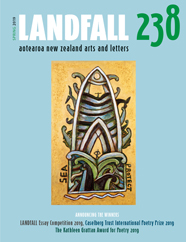
Landfall 238 edited by Emma Neale  (Otago University Press)


I am finding literary journals very satisfying at the moment. They suit my need to read in short bursts throughout the day. Landfall 238 came out last year but the gold nuggets keep me returning. Is our reading behaviour changing during lockdown? I read incredibly slowly. I read the same poem more than once over the course of a week.

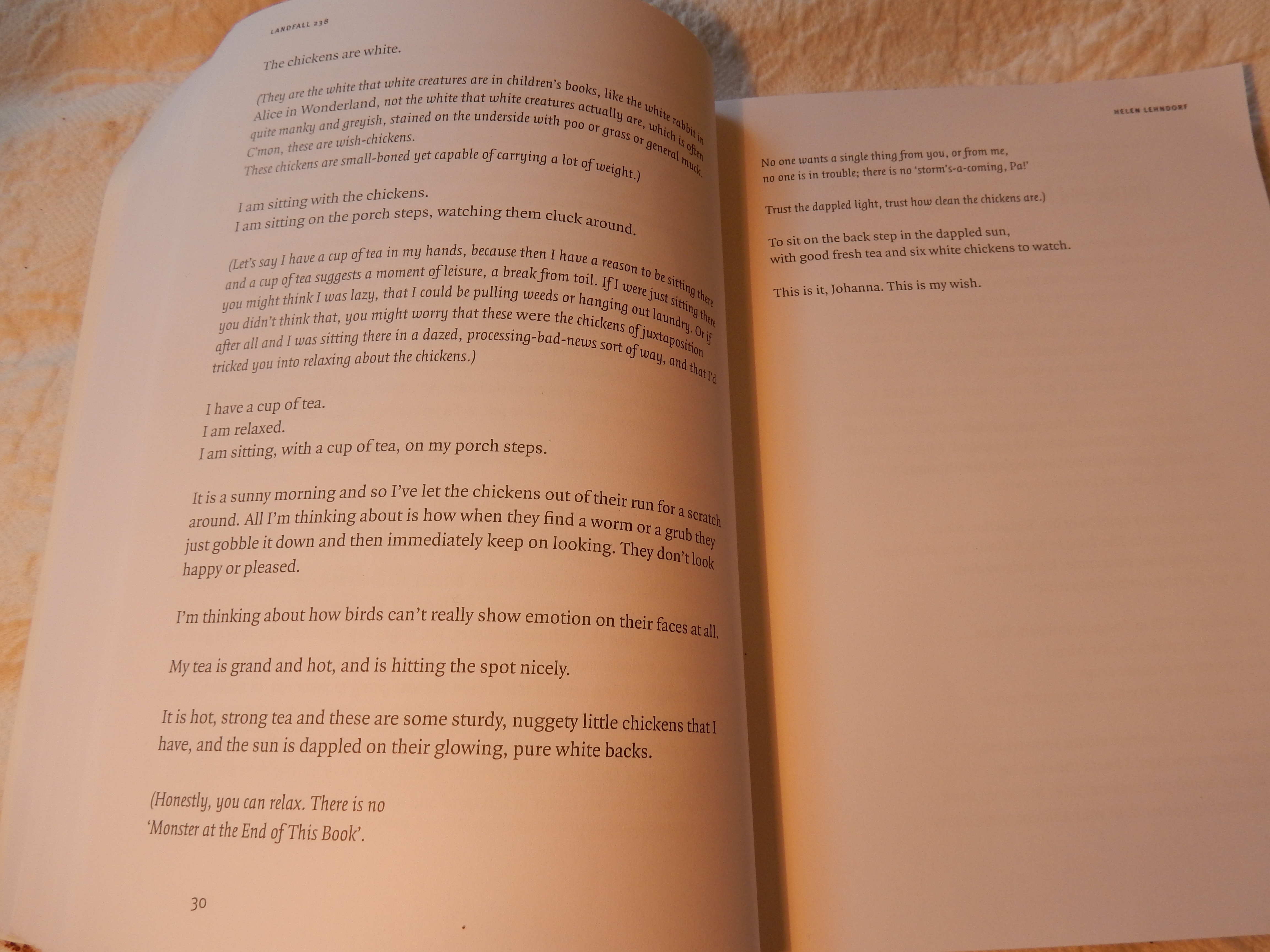
Helen Llendorf’s magnificent ‘Johanna Tells Me to Make a Wish’ is a case in point. It is slow and contemplative, conversational and luminous with physical detail. She starts with chickens, she stays with chickens, she intrudes upon herself with long parentheses. It feels like a poem of now in that way slows right down to absorb what is close to home.


DSCN9923.JPG


Landfall 238 also includes results from the Kathleen Grattan Award for Poetry 2019, with judge’s report by Jenny Bornholdt; results and winning essays from the Landfall Essay Competition 2019, with judge’s report by Emma Neale; results from the Caselberg Trust International Poetry Prize 2019, with judge’s report by Dinah Hawken.

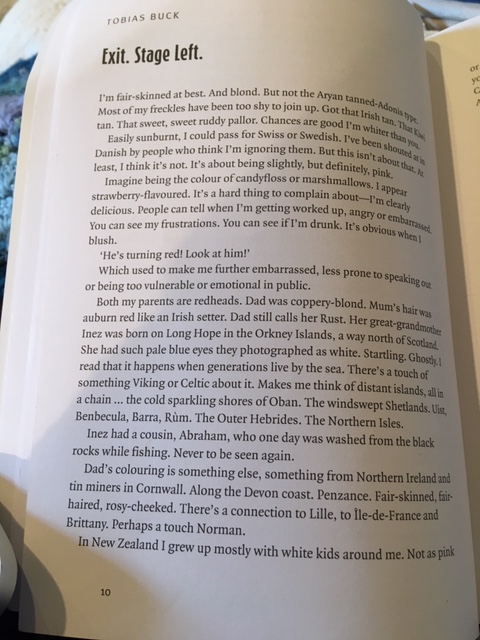
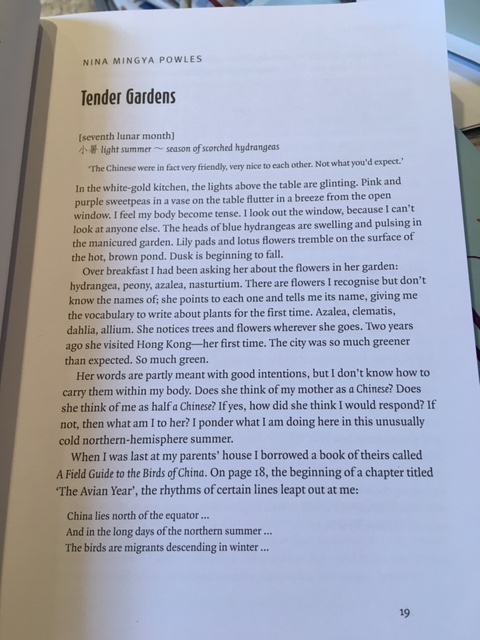
Tobias Buck and Nina Mingya Powles’s winning essays are terrific. Two essays that in different ways, both moving and exquisitely written, show distinctive ways of feeling at home in one’s skin and navigating prejudice. Both have strong personal themes at the core but both stretch wider into other fascinations. Would love to read all the placed essays!


IMG_5511.JPG


IMG_5510.JPG


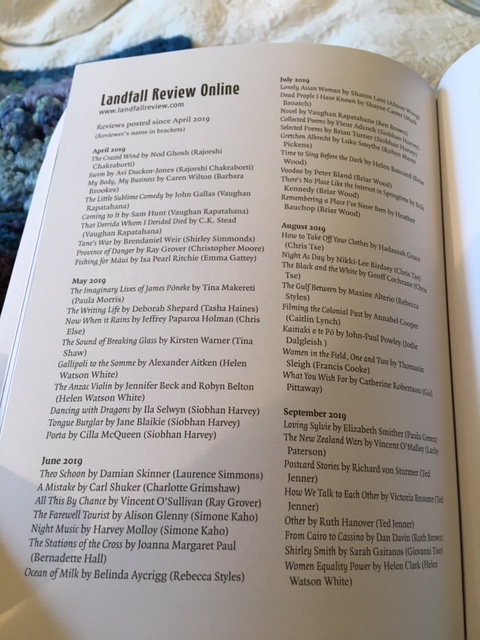
I also want to applaud Landfall on its ongoing commitment to reviewing local books, both in the physical book and in Landfall Review Online. Review pages whether in print or on our screens seem like an increasingly endangered species. Landfall continues to invite an eclectic group of reviewers to review a diverse range of books.


IMG_5513.JPG


To celebrate this gold-nugget issue – I have invited a handful of poets to read one of their poems in the issue.

Make a cup of tea or a short black this morning, or pour a glass of wine this evening, and nestle into this sublime poetry gathering. I just love the contoured effects on me as I listen. I have got to hear poets I have loved for ages but also new voices that I am eager to hear and read more from.


Welcome to the Landfall 238 audio gathering!


2019-06-23 11.38.27 HDR.jpg

Louise Wallace


Louise Wallace reads ‘Tired Mothers’


Louise Wallace is the author of three collections of poetry published by Victoria University Press, most recently Bad Things. She is the founder and editor of Starling, and is looking forward to resuming a PhD in Creative Writing. Her days in lockdown are filled with visits to the park, bubbles, playdough, drawing, and reading the same handful of books over and over with her young son who she loves very much.


Cerys at faultline.jpg

Cerys Fletcher


Cerys reads ‘Bus Lament’


Cerys Fletcher (she/her) is in her first year at Te Herenga Waka, splitting her time between Te Whanganui-a-Tara and her home city, Ōtautahi. When possible, she frequents open mics and handmakes poetry zines. She was a finalist in the 2018 National Schools Poetry Awards and the winner of the Environment Canterbury Poems on Buses competition in 2019. She has been published in Landfall and A Fine Line. She does NOT like men who hit on you while you’re making their coffee. She is online & probably wants to talk to you (instagram: @cerys_is_tired. email: cerysfabulousfletcher@gmail.com).


Me w Jasper Johns High School Days 1969.jpg


Rachel O’Neill


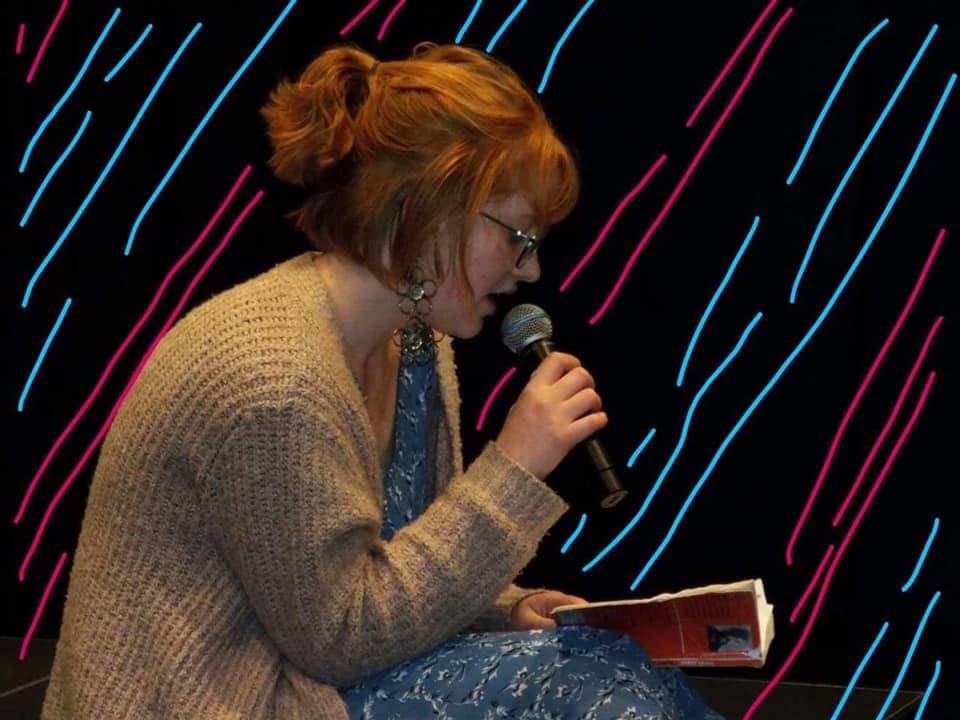
Rachel reads ‘The place of the travelling face’


Rachel O’Neill is a writer, filmmaker and artist based in Te Whanganui-a-Tara, Aotearoa. Their debut book One Human in Height (Hue & Cry Press) was published in 2013. They were awarded a 2018 SEED Grant (NZWG/NZFC) to develop a feature film and held a 2019 Emerging Writers Residency at the Michael King Writers Centre. Recent poems appear in Sport 49, Haunts by Salty and Food Court, and Ōrongohau | Best New Zealand Poems 2019.


P_Le_Baige-2.jpg


Peter Le Baige


Peter reads ‘what she knows’


Peter Le Baige has been writing and performing poetry since the first session of the legendary ‘Poetry Live’ weekly poetry readings in Auckland in 1981. He has published two collections of his very early work, ‘Breakers’ 1979, and ‘Street hung with daylit moon’, 1983, and whilst living abroad for 23 years, mostly in Asia and China in particular, has continued to write. He has been previously published in Landfall and was one of the cast for the ‘Pyschopomp’ poetry theatre piece at Auckland’s Fringe Festival in 2019.


JP at Rogers.JPG


Jenny Powell


Jenny reads ‘Not All Colours Are Beautiful’


Jenny Powell is a Dunedin poet. Her latest collection of poems is South D Poet Lorikeet (Cold Hub Press, 2017). She is currently working on a new collection based on New Zealand artist, Rita Angus.


Annie.jpg

Annie Villiers


Annie Villiers reads ‘Bloody Awful’


Annie Villiers is a writer and poet who works in Dunedin and lives in Central Otago. She has published three books; two in collaboration with artist John Z Robinson and a novel. She is currently working on a travel memoir and a poetry collection.


IMG_8150.jpg


Iona Winter


Iona reads ‘Portal to the stars’


Iona Winter writes in hybrid forms exploring the landscapes between oral and written words. Her work is created to be performed, and has been widely published and anthologised. She is the author of two collections then the wind came (2018) and Te Hau Kāika (2019). Iona is of Waitaha, Kāi Tahu and Pākehā descent, and lives on the East Otago Coast.


IMG_0041.jpeg

Stacey Teague


Stacey reads ‘Kurangaituku’


Stacey Teague, Ngāti Maniapoto/Ngāpuhi, is a writer from Tamaki Makaurau currently living in Te Whanganui-a-Tara. She is the poetry editor for Scum Mag, has her Masters in Creative Writing from the International Institute of Modern Letters, and has three chapbooks: Takahē (Scrambler Books, 2015), not a casual solitude (Ghost City Press, 2017) and hoki mai (If A Leaf Falls Press, 2020). Tweets @staceteague


Broatch.jpg


Mark Broatch


Mark Broatch reads ‘Already’


Mark Broatch is a writer, reviewer and the author of four books.
He is a former deputy editor at the NZ Listener and is a fiction judge
for this year’s Ockham NZ Book Awards. His poetry has been published
in Landfall and the Poetry NZ Yearbook.


IMG_1277

Susanna Gendall


Susanna reads ‘Spring’


Susanna Gendall’s poetry and short fiction have appeared in JAAM, Takahē, Sport, Geometry, Landfall, Ambit and The Spinoff. Her debut collection, The Disinvent Movement, will be published next year (VUP).


Landfall page


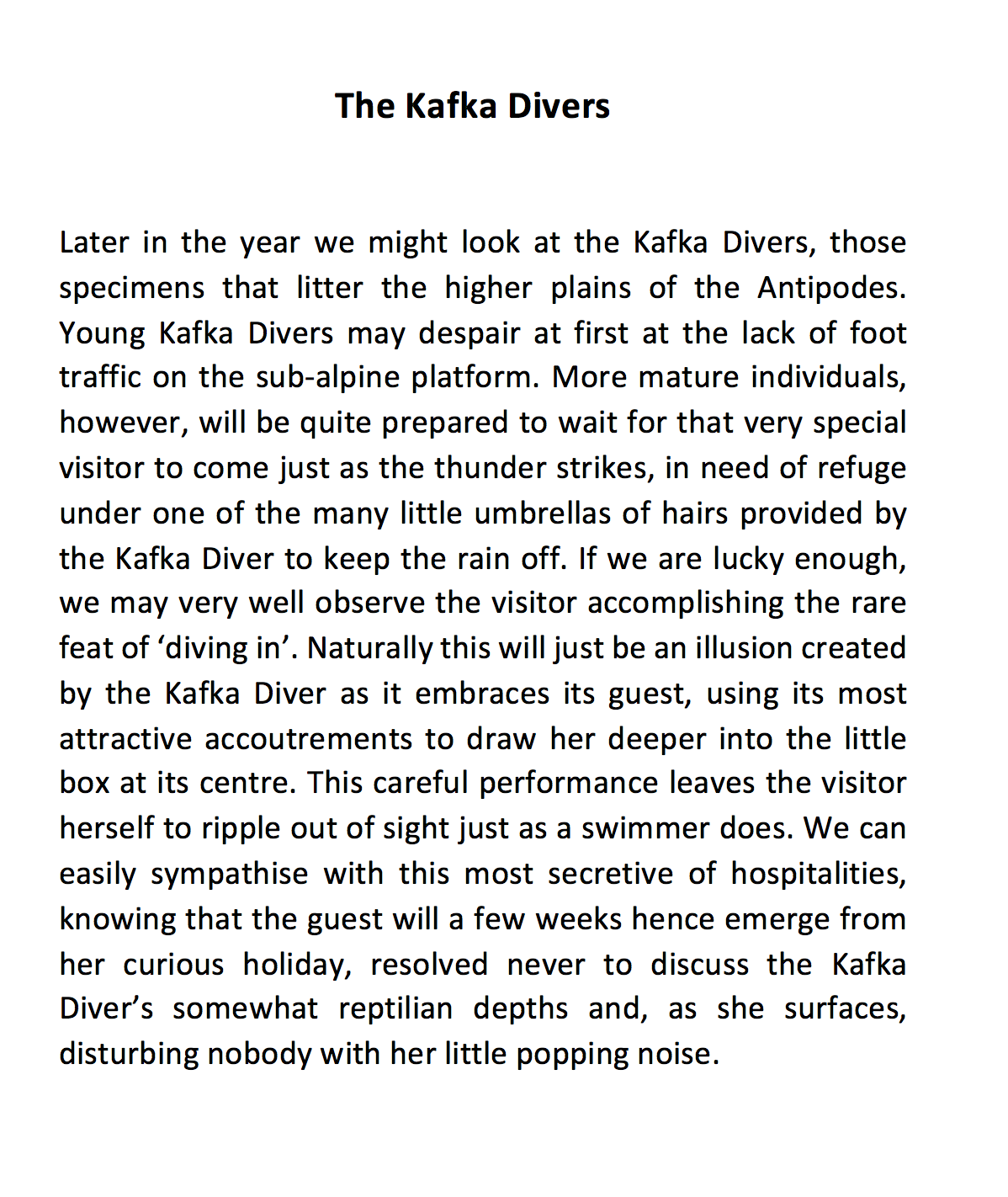
Poetry Shelf Classic Poem: Alison Glenny picks Rachel O’Neill’s ‘The Kafka Divers’


Screen Shot 2019-11-27 at 9.02.01 AM.png


Note from Alison:


The Kafka Divers comes from One Human in Height, the debut collection by poet, artist and film-maker Rachel O’Neill.  Published by Hue & Cry Press in 2013, the book contains a number of candidates for ‘classic poem’, including some that have been anthologised elswhere. I’ve chosen The Kafka Divers because I admire how much it fits into a small space, and because reading it always makes me smile.

The Kafka Divers is a prose poem – that deceptively simple form which is really a chameleon, with a sneaky ability to impersonate more apparently informational/straightforward kinds of prose. The poem’s style evokes taxonomy, a form of classificatory and descriptive writing associated with the natural sciences. It’s a genre with its own distinct language and way of looking at the world, which the author, who identifies as queer and non-binary, appropriates for her own purposes.

The poem invents a new thing – a plant called the Kafka Diver. At least it seems to be a plant, although it could be other things as well. A young person with a sense of isolation for instance, or even a poem that immerses its readers and draws them into its faintly ‘reptilian’ interior, an experience from which they will emerge after a period of time unscathed, if not unchanged.

I was curious about whether any particular model (field guide? botany lecture?) prompted The Kafka Divers, so I asked Rachel if she could comment on the poem’s origin. She replied that at the time she wrote it she was reading anthologies of nature, garden, and landscape writing published in the 1950s that she kept in her bathroom, and added:

‘In the anthology excerpts there is an exultation of the human longingly observing the non-human, yet the distinction between human and non-human collapses in the entanglement of gaze, mystery and desire, and in the tensions around whether order and/or chaos dictates attention and preference. I think The Kafka Divers taps into the whole mutual yet fragile (and potentially queer and erotic) performance of looking and being seen, bringing to the fore queer circuits of desire.’

In The Kafka Divers the potential for fascination to undermine the separation between observer and observed is figured as literal engulfment – the act of ‘diving in’.  But a sense of ambiguous or permeable boundaries is also conveyed by the description of the Kafka Diver as a kind of hairy plant/umbrella/reptile assemblage, with a human (and very queer) capacity to succumb to loneliness/isolation, learn patience, or startle strangers with its singular appearance.

A similar ambiguity surrounds the roles of host and visitor, hospitality and predation, the description of ‘diving in’, which makes it unclear who (or perhaps both) or these actors is the ‘Diver’, and the relating of their encounter, with its alternating shocks of disappearing and emergence, creepiness and delight, horror and comedy.

You could argue that the coexistence of these contrasting emotional possibilities, whose resolution is left to the attention and preference of the reader, is signalled by the plant/poem’s title. After all, ‘Kafkaesque’ is a term we use to evoke the kind of bizarre and disturbing world in which a man might conceivably wake to discover he is an insect – the human subject turned, by a mysterious act of identification, into an ‘object’. But if the name ‘Kafka’ evokes a somewhat nightmarish state in which humans can lose their humanity or be subjected to inexplicable persecution, ‘Diver’ has connotations of commitment, courage, strength and grace. As Rachel comments,

‘I . . . set about to queer observational details and centred everything in Aotearoa, while still recruiting Kafka – though in the poem I question what might be perceived as Kafkaesque/nightmarish, so what ‘nightmarish’ might look like from a queer perspective.’

Read queerly, The Kafka Divers turns what might have been a horror tale of abduction in the sub-alpine zone of Aotearoa into a fable about the quiet or even ‘secretive’ triumph of connection over loneliness, hairiness, and a sub-prime position.

For me, another pleasure provided by the form the poem uses to explore issues of seeing and being seen is its reminder that histories of queer identifications (like those of other minorities) are entangled with the classifying gaze of science – whether sexology, medicine, psychiatry, or biology – approaches that have characteristically viewed queerness as, at best, a puzzle to be explained (‘gay gene’ anyone?) and at its most damaging, an aberration to be condemned or ‘cured’. In this sense the poem’s queering of perspective includes the suggestion that viewing human sexuality through the same set of field glasses used to study other species has the potential not only to reinforce stigma, but to open an Aladdin’s cave of specialisations and oddness, whose diversity and utopic potential remind me of Bruce Bagemihl’s concept of ‘biological exuberance’:

‘an affirmation of life’s vitality and infinite possibilities. . . at once primordial and furturistic; in which gender is kaleidoscopic, sexualities are multiple, and the categories of male and female are fluid . . A world, in short, exactly like the one we inhabit.’


References:

Bagemihl, Bruce: Biological Exuberance: animal homosexuality and natural diversity (1999) Profile Books, p 262.

O’Neill, Rachel: email


Alison Glenny’s Antarctic-themed collection of prose poems and fragments, The Farewell Tourist, was published by Otago University Press in 2018.

Rachel O’Neill (pronouns: she / her / hers / they / them / theirs) is a Pākehā Non-binary queer filmmaker, writer and artist who was raised in the Waikato and is now based in Te Whanganui-a-Tara, Aotearoa. Their debut book, One Human in Height (Hue & Cry Press) was published in 2013.


Hue & Cry Press author page


Screen Shot 2019-11-27 at 9.04.38 AM.png


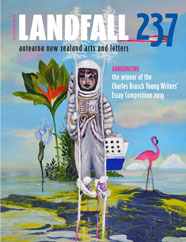
Poetry Shelf review: Landfall 237

otago708667.jpg

Landfall 237 edited by Emma Neale


Landfall 237 offers rich pickings for the poetry fans: familiar names (Peter Bland, David Eggleton, Elizabeth Smither, Ria Masae, Lynley Edmeades and Cilla McQueen) to emerging poets (Rebecca Hawkes, Claudia Jardine, essa may ranapiri) and those I am reading for the first time (Robynanne Milford, Jeremy Roberts, Catherine Trundle to name a few). The reading experience is kaleidoscopic, pulling you in different directions, towards both lightness and darkness, risk and comfort. And that is exactly what a literary journal can do. I was tempted to say should, but literary journals can do anything.

Landfall has a history of showcasing quirky artwork – and this issue is no exception. Sharon Singer’s sequence, “Everyday Calamities’ with its potent colour, surreal juxtapositions, strange and estranging narratives, and thematic bridges, is an addictive puzzle for heart and mind. I am circling humanity, the power of connection, the individual both tenacious and frail, the state of the planet. Paintings whirling and tipping you into moments that soothe, bewilder and provoke. I adore these.

I turned from these to Rachel O’Neill’s prose poem ‘The Supernatural Frame’ and get goosebumps:

You may look upon the painting through these special

foiled binoculars. We are at a safe distance. Afterwards you

may feel a chill or a fever linger for two days and a night,

accompanied by an infernal cough.


On the centennial of the birth of Ruth Dallas in Invercargill, I am also delighted to see John Geraets spotlight her poetry. Certain Dallas poems have always had a place in NZ literary anthologies (think ‘Milking Before Dawn’) but as readers we may less familiar with the wider expanse of her work. Like so many women poets of the twentieth century she is in the shadows. In his intro John suggests it is not clear how to include her ‘within more recent nexus based on gender, ethnicity, ecology, avant-gardism, faith or political affiliation’. He responds by assembling her words – culled from Landfall editor-contributor responses and her autobiography Curved Horizon – on the left-hand pages and his words on the right. He first sees in her poetry – compared with contemporary writing choices – predictability, regularity, un-excitement, regionalism; and then, by paying attention and refreshing his routes, he opens up poems to different movements. He moves in close to the poem. I love that. Much I could say on how we approach the women from the past! Expect 568 pages soon.


I absolutely love the poetry in this issue; it is both fresh and vital! I see neither formula nor dominating style but shifting stories, musicality, feeling, political bite, muted shades, bright tones.


Here are some highlights:


Joanna Preston’s poem ‘Allegrophobia’ carries you from birth to tardiness to spring in a layered on punctuality – a perfect little package.

Jasmine Gallagher’s ‘Be Still’ sent me to her bio because I want to read more by her. She is a doctoral student at the University of Otago and has previously been published in brief. Her poem is poetry as brocade – glinting for the eye and chiming for the ear.


Slattern: a

hoar frost:

a rime

Cold seed bed

Rot and slime


Another poet, Catherine Trundle, also sent me scavenging for more. She writes poetry, flash fiction and experimental ethnography. Her poem ‘The Caravan behind the Plum Tree’ is also an exquisite brocade.


This lush cusp of spring rides

pinkish, amoebic, wilding

the inside, every flesh ’n’ cranny

while the sunlight lunges in

through winter tidelines

of curtain rot


Tam Vosper’s ‘Ailurophilia’ was an equal hook for me. He is working on a PhD at Canterbury University that considers Allen Curnow and the poetics of place. Again this is brocade poetry: so rich in effect.


All Gallic pluck

and casual loft

you claim a suntrap,

slump sidewise down,

and unhinge your barbed yawn:

           a shark to shoaling mice.


And I want to add Medb Charleton’s ‘I think I Saw You Dreaming’, Rebecca Hawkes’s ‘If I could breed your cultivar / I’d have you in my garden’ and Gail Ingram’s ‘The Kitchen’ to my list of brocade poetry. Glorious.

In contrast you have the spare deliciousness of Ariha Latham’s ‘Waitangi’. Another poet whose work I want to track down.


When I read Ria Masae’s “Jack Didn’t Build Here’ I can hear her performing its sharp mix of personal and politics  – and it cuts into my skin. Six houses built. She carries us from the father’s house full of stories to David Lange’s Mangere home open to the locals: he ‘understood the pressures of fa’alavelave,/ cos he brown on the inside like that’. She bears us from the house her mum built with its’ celebration tables’ to the house Key built with its ‘security code gate’. She ends with a question (the house to be built?):


What house will Jacinda build?

Will it enable my daughters to build their own homes

of tangata whenua foundations and fa’a Samoa roofs

in this palagified City of Sales?


You can move from political bite to the glorious wit you often find in an Erik Kennedy poem. His ‘All Holidays Are Made-Up Holidays’ is no exception. Meet Cabinet Day – ‘we went along/ from house to house hanging little doors / around each other’s necks to hide our secrets’. Or the Feast of Holy Indifference. Genius!

Claire Orchard’s poem, ‘Breakages’, swivels on a set of shelves, on the objects that they hold, and in that satisfying movement speaks of so much more; the poem resembles a shelf of family history with peaks and troughs.


I enjoyed the way it had begun to display time

in the style of tottering, elderly people


I heard Joan Fleming talk about new poetry she was writing at the Poetry & Essay conference at Victoria University in 2017. The poems came out of her experience of camp life in Nyrripi and surrounding areas in Australia’s Central Desert. I was moved by her discussions of collaboration and consent, her attentiveness to the local. Two poems here – ‘Alterations’ and ‘Papunya is Gorgeous Dirty and I Second-guess my Purposes’ – come out of this experience. I can’t wait to see this in book form.


Finally a treat from Cilla McQueen. She has written ‘Poem for my Tokotoko’; it is personal, physical and abundant with the possibilities of poetry. Pure pleasure.


Sometimes I see you as an enchanter’s staff,

scattering poems like leaves to the west wind;

at others you’re practical, a trusty pole

by means of which, through quarrelling

undercurrents, I can ford turbulent water.

By means of which I put myself across.


This is such good issue – there are reviews and fiction I haven’t read yet, and the announcement of the Charles Brasch Young Writers’ Essay Competition 2019 – but on the poems only, it warrants a subscription. Yep – Landfall has its finger on the pulse of NZ poetry.


Landfall 237 page


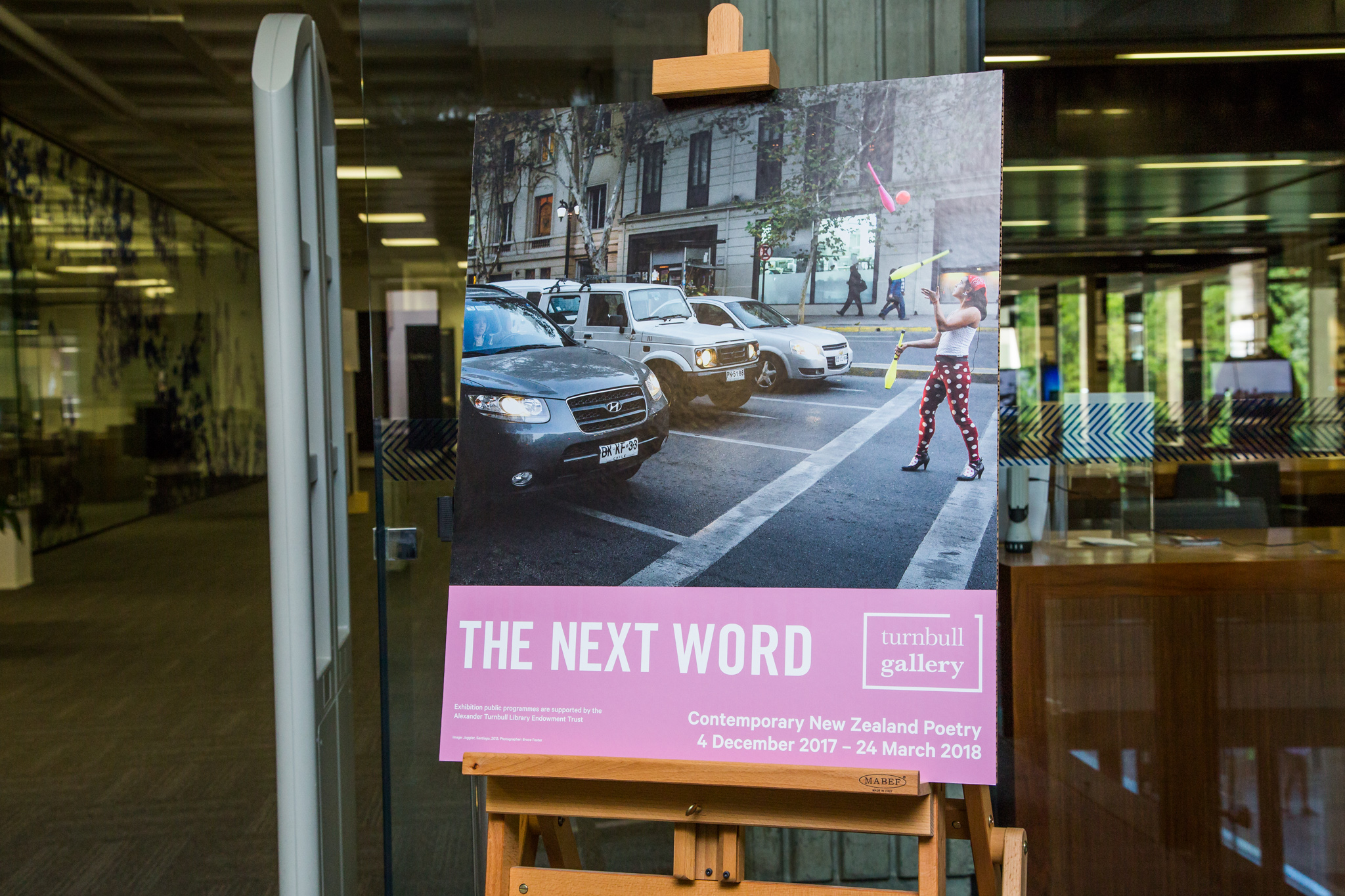
The Next Word at the Alexander Turnbull Library is a poem oasis

20171208_ATL_TG_Next_Word_005.jpg

All photo credits:  Imaging Services, Turnbull Library


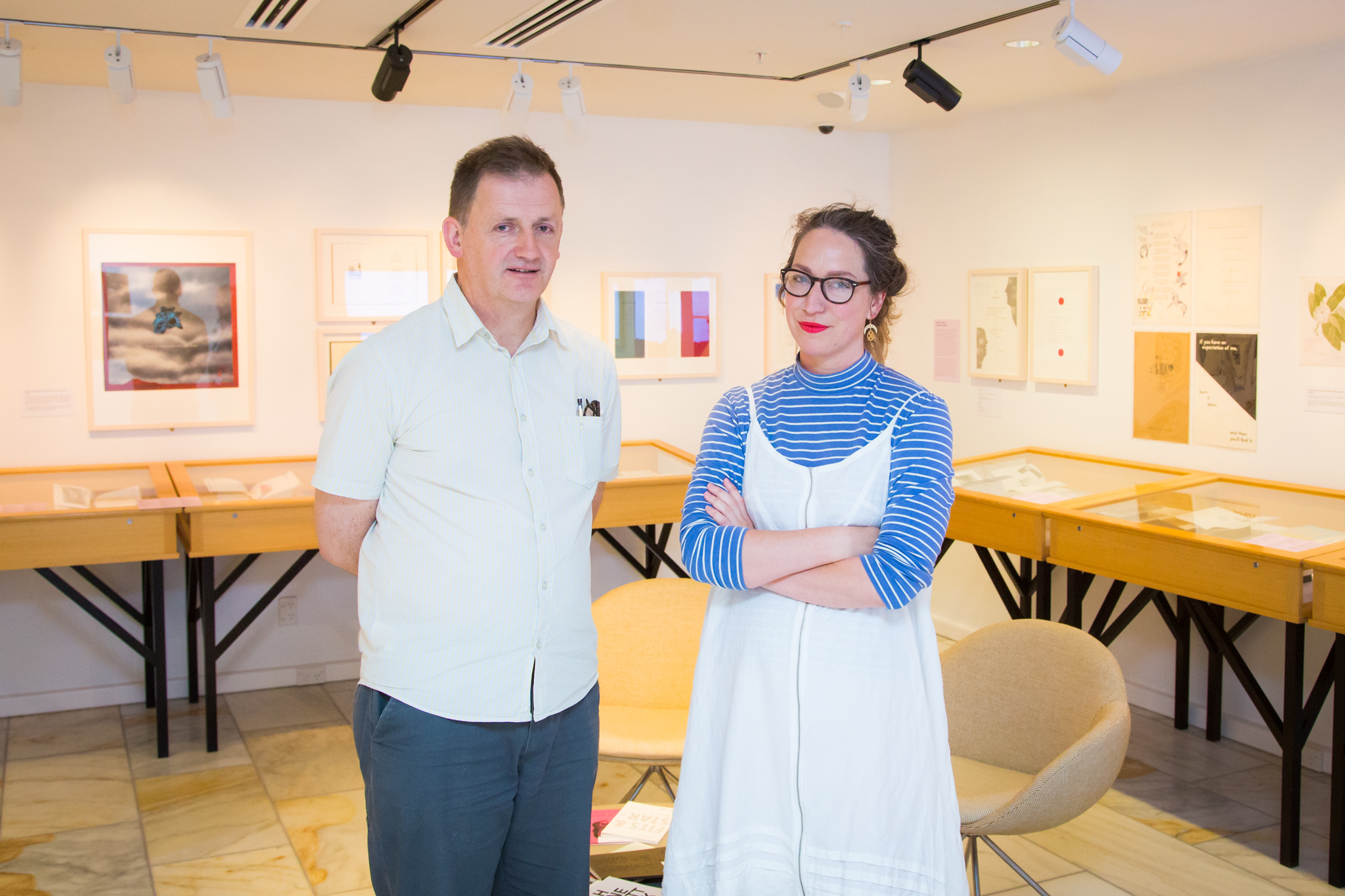
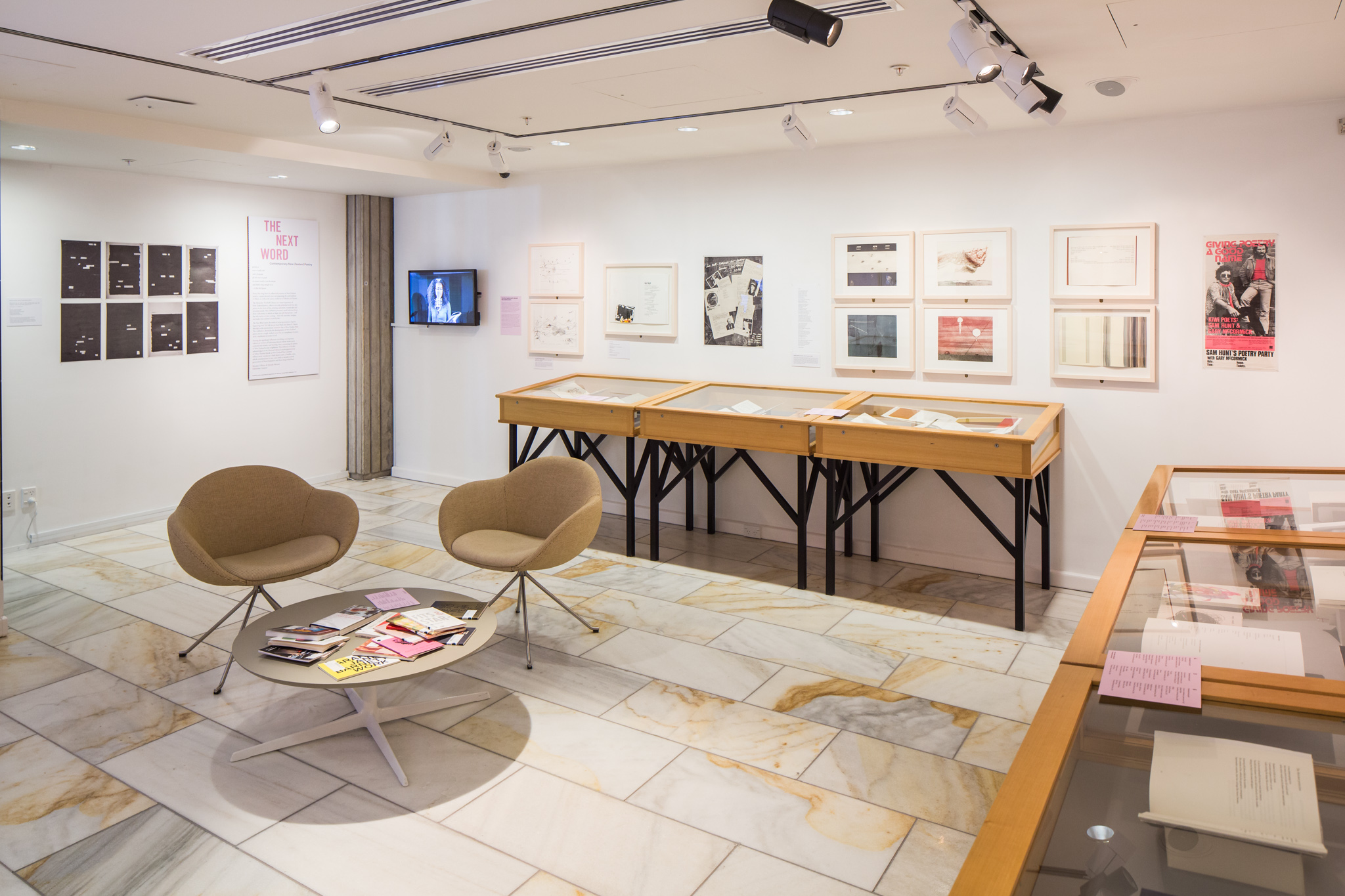
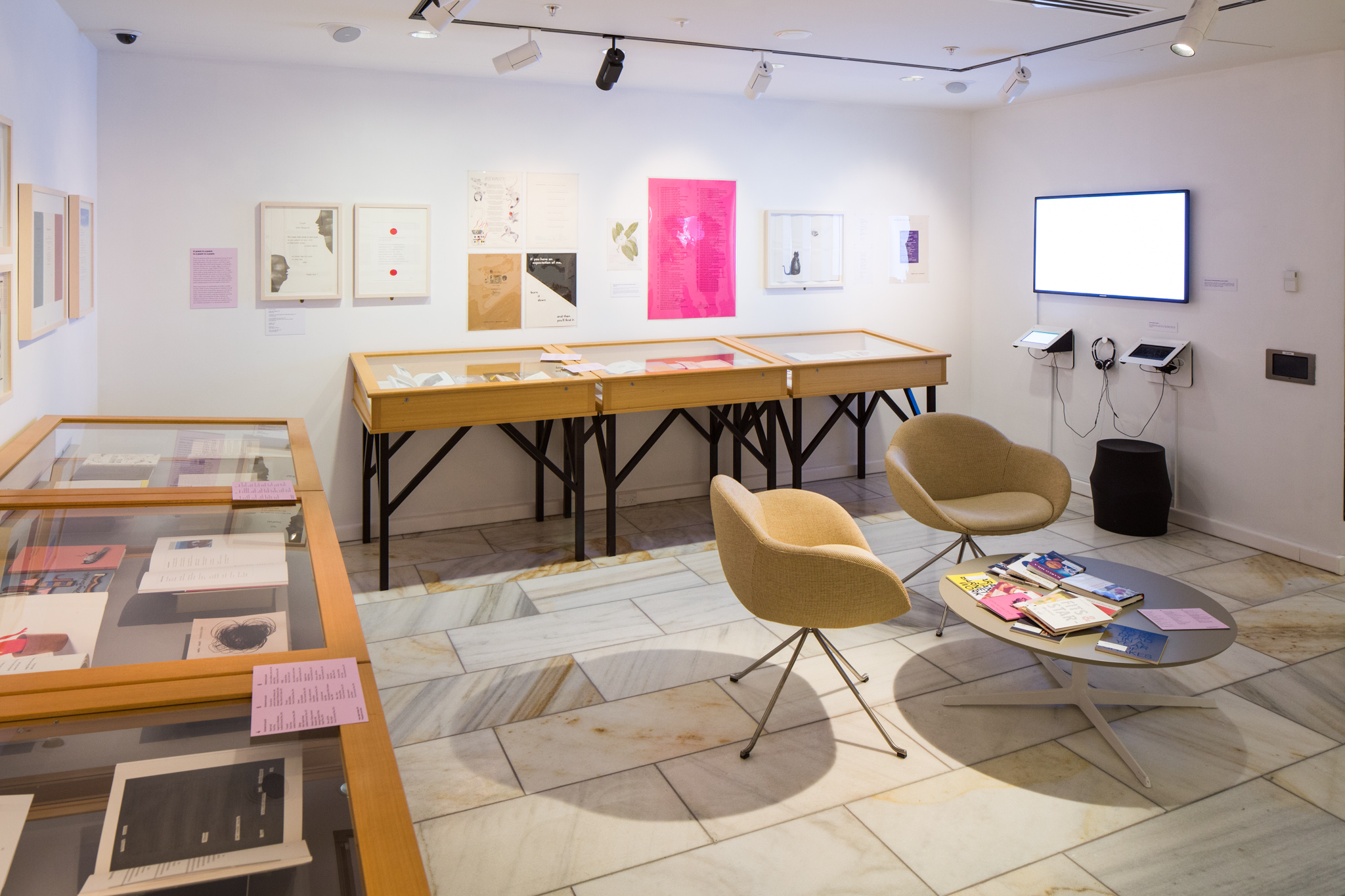
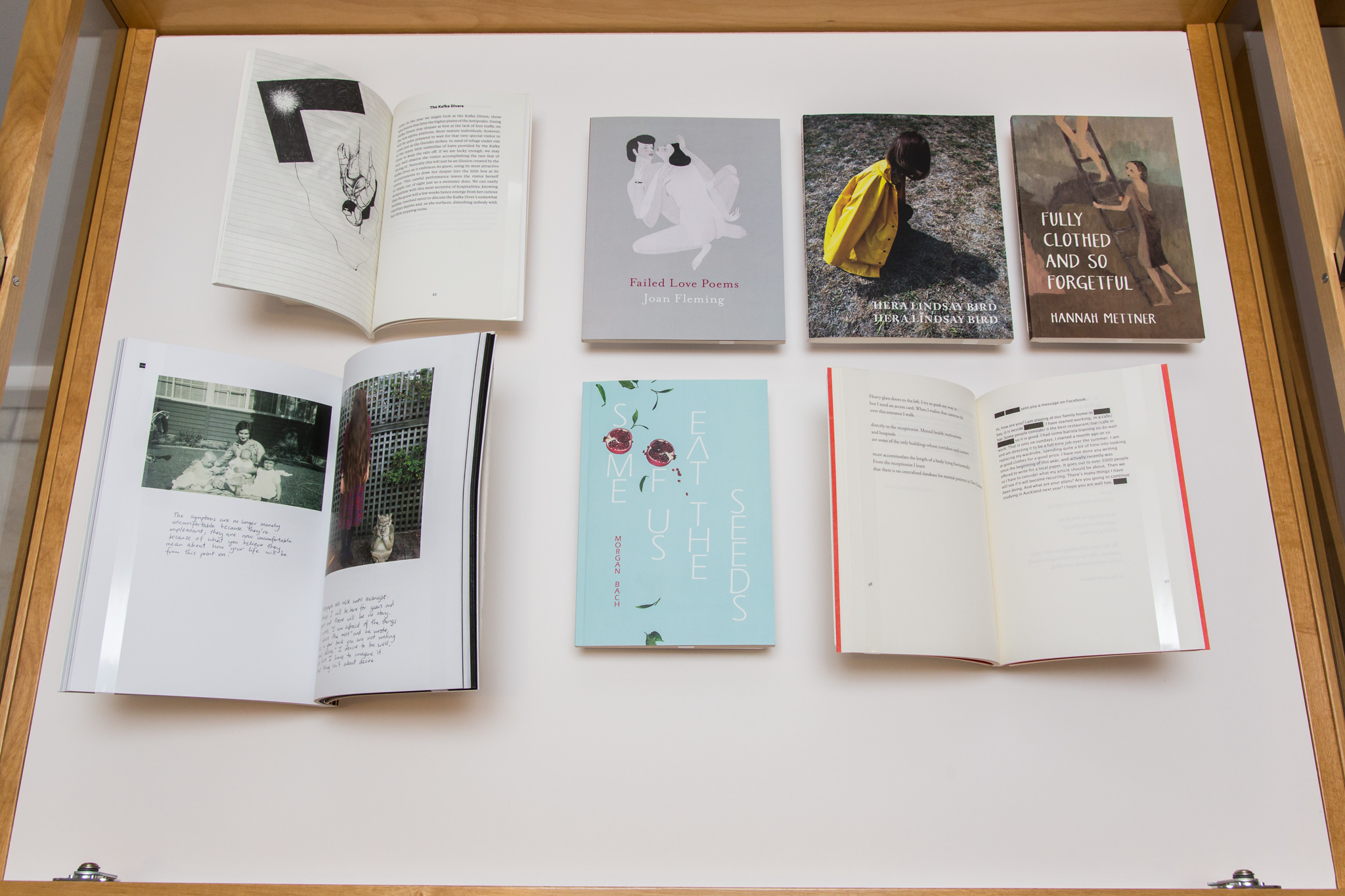
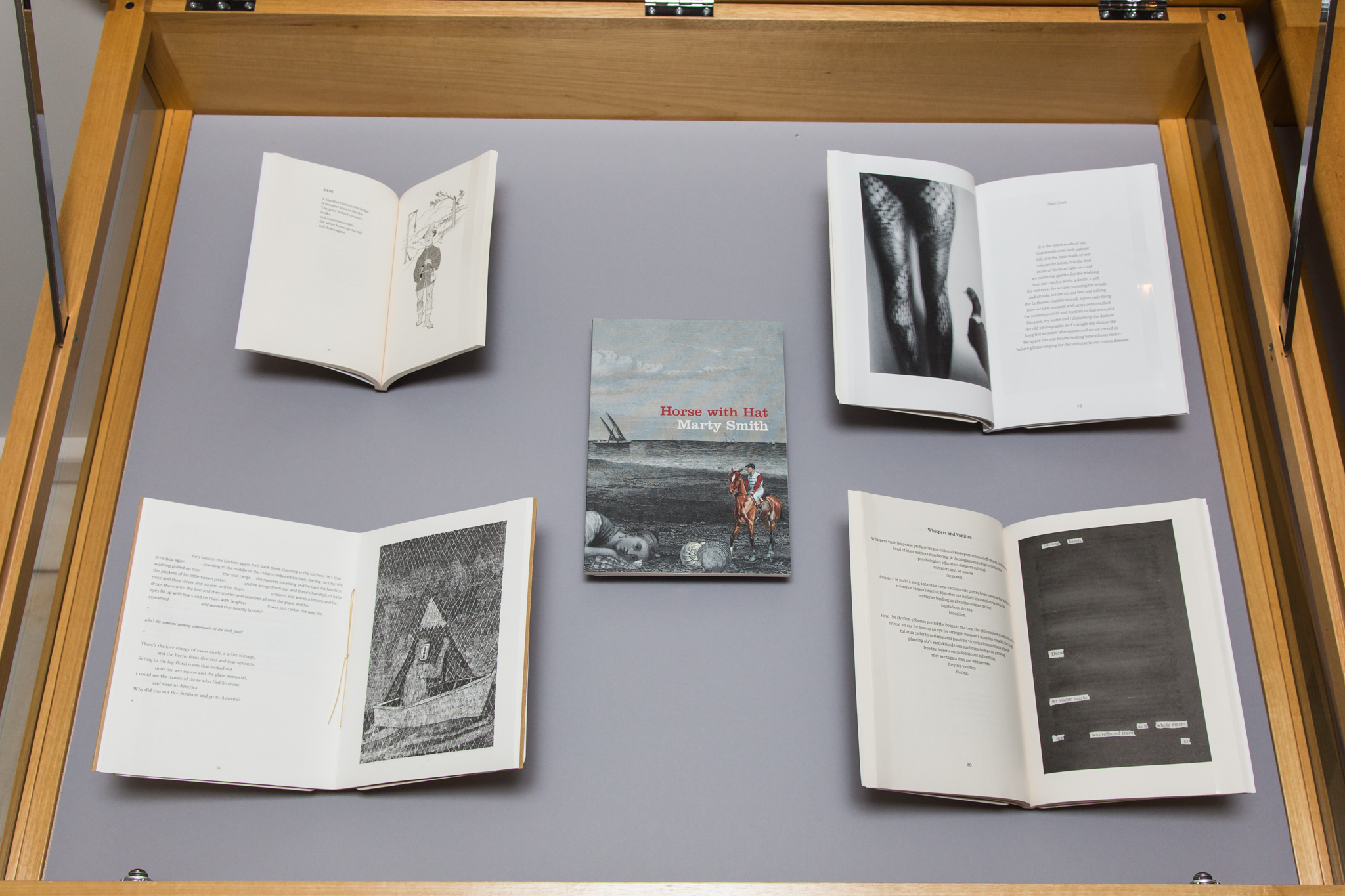
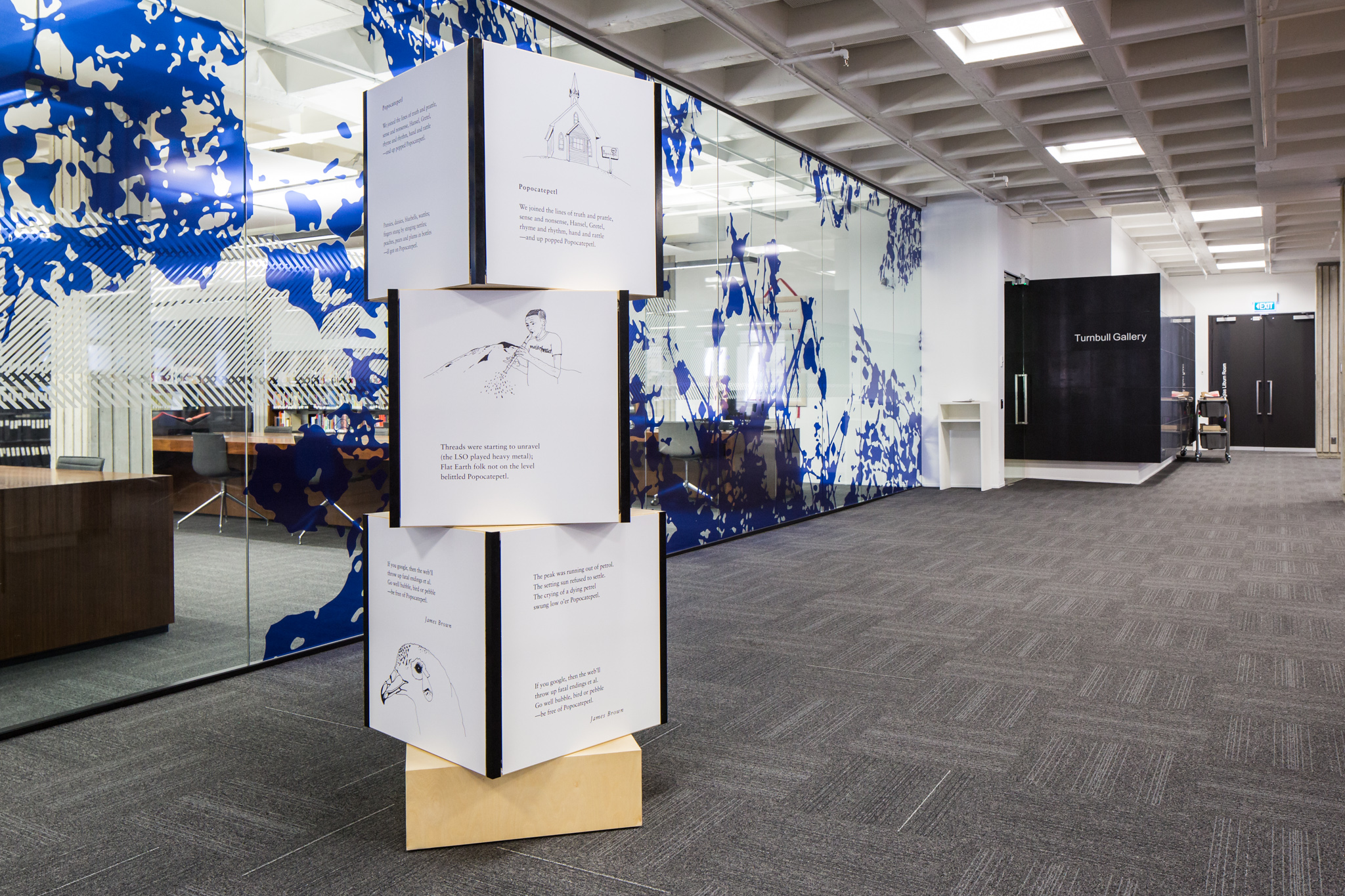
Hannah Metttner and Brendan O’Brien have curated an exhibition of contemporary poetry at the Alexander Turnbull Library. The key aim is to offer an overview of the past thirty years in various spots in the gallery. There is an art video put together by Hana Pera Aoake and and a carousel showcasing a James Brown poem on the ground floor.

The little reading room is a poetry treat.

The curators have drawn from the poetry riches of the Alexander Turnbull Library to set up reading pathways between poems and poets, in the books on display, yet the eye is also drawn to poetry as visual object. You land upon a poem and alight upon an exquisite image. There are countless possibilities for travel: politics, aesthetics, music, confession, place, time, edge, rebellion, love.

Poetry is lovingly tended.

I am reminded that our poetry families are distinctive and diverse with many connections and necessary bridges. Nina Powles’s set of booklets, Luminescent, was a 2017 highlight for me; then again I am struck by the way so many of these books have glowed (Morgan Bach, Hinemoana Baker, Hera Lindsay Bird, Hannah Mettner, Chris Price, Joan Fleming, Bernadette Hall with Rachel O’Neill).

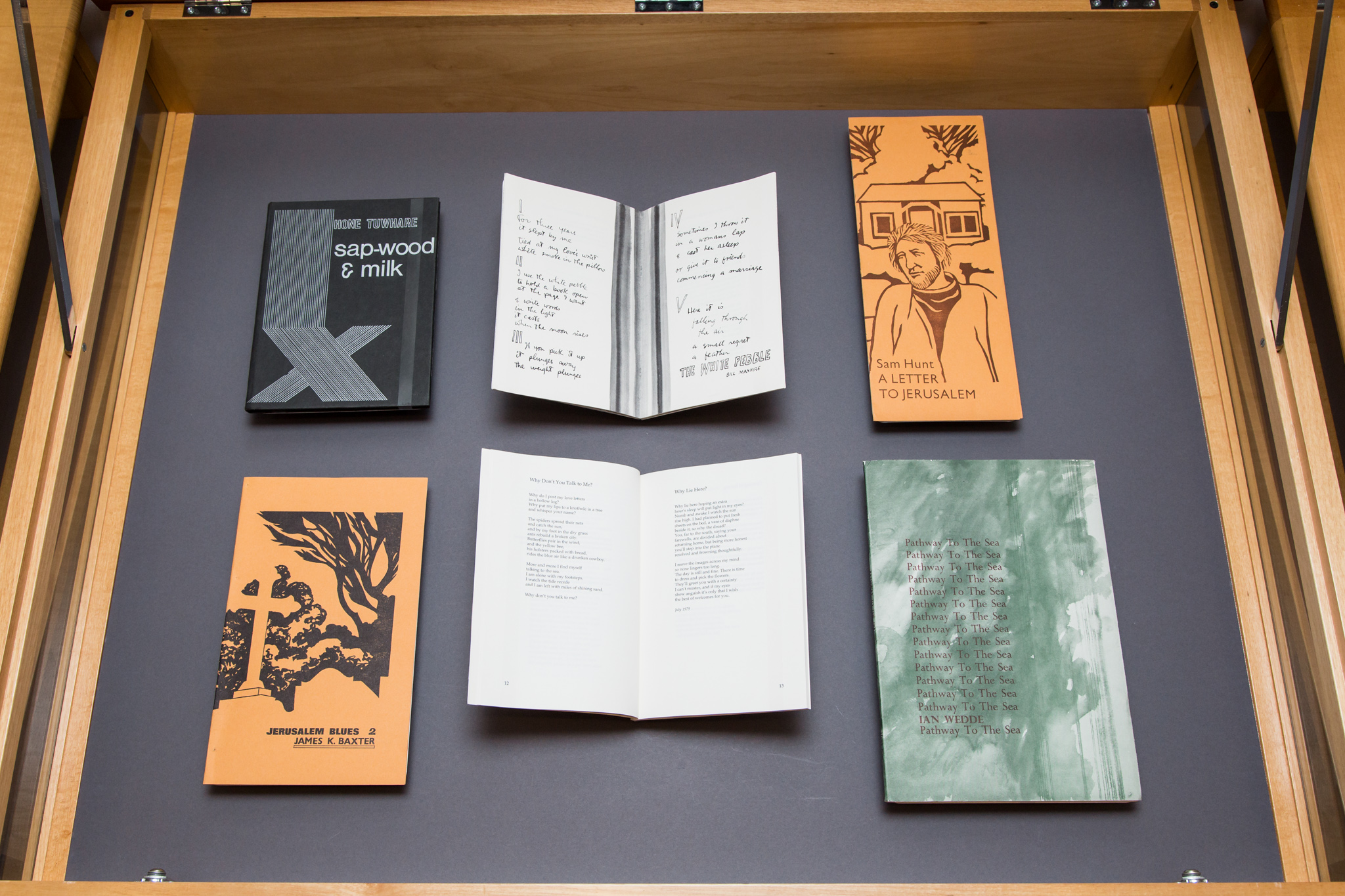
I love the way a book falls open at a poem in the glass case and we must stall on that to give a single poem devoted attention.

There are posters and prints and trips back in time (Sam Hunt, Ian Wedde, Hone Tuwhare, James k Baxter).

I went into the room after doing my final book checks at the library and it felt like an oasis, a place of retreat where the joy of poetry is the joy of stalling and savouring.

I highly recommend a visit before it closes on March 24th.

There is a lunchtime reading (12:15-1) on March 22nd with Chris Tse, Therese Lloyd, Anna Jackson, Gem Wilder and Sugar Magnolia Wilson. I am tempted to fly down!

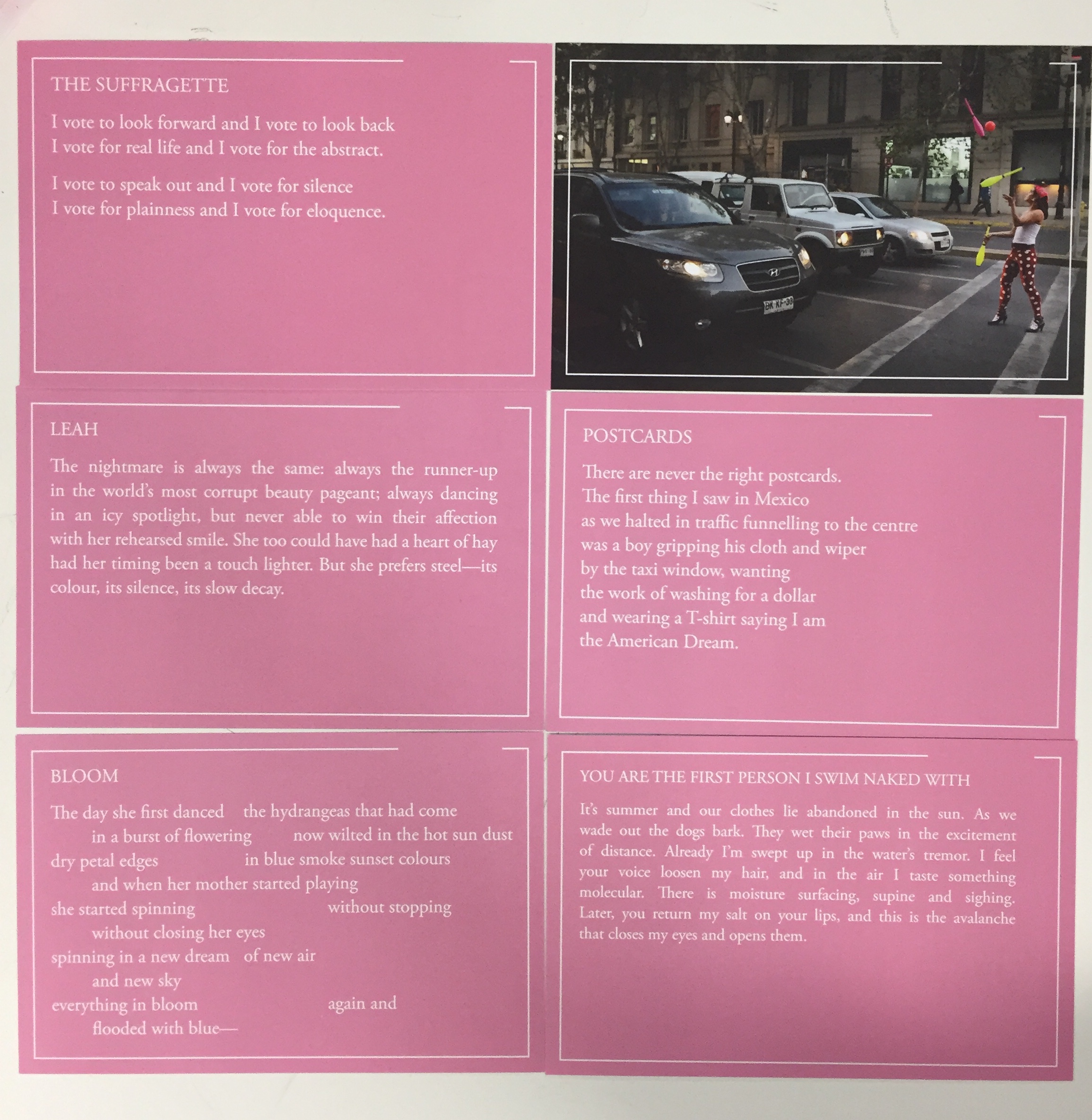
There also some postcards on offer including my Suffragette poem.

One visit is not enough! I plan to loiter there before our Call Me Royal event next week.


20171205_ATL_TG_Next_Word_021.jpg


20171205_ATL_TG_Next_Word_022.jpg

20171205_ATL_TG_Next_Word_025.jpg


20171205_ATL_TG_Next_Word_026.jpg


20171205_ATL_TG_Next_Word_027.jpg


20171205_ATL_TG_Next_Word_028.jpg


20171205_ATL_TG_Next_Word_001.jpg


IMG_8767.jpg