Tag Archives: poetry shelf monday poem

Poetry Shelf Monday poem: Murray Edmond’s ‘The Chocolate for the Ants’


THE CHOCOLATE FOR THE ANTS


It was the ants who taught you pathos.

Your oldest aunt the only one not living

in Australia stern Methodist that she was

loved you best of all her many nephews

so when you had eaten all your dinner up

gave you a piece of chocolate which you

with your grasp of the Methodist ethic of

delayed gratification placed on the bedside

table when you had been tucked up in

your narrow bed so that the pleasure

to be taken on awaking in the morning

would be all the greater than had that

chocolate been eaten when it was received

except those ants had their own wayward

thoughts and there they were exercising

their own ideas when you woke. So thickly

did they coat that chocolate piece the pathos

was you could not see the chocolate for the ants.


Murray Edmond


Murray Edmond’s recent books include Back Before You Know (2019, Longlisted for the Ockham NZ Book Awards) and Shaggy Magpie Songs (2015), two poetry volumes; Then It Was Now Again: Selected Critical Writing (2014); and Strait Men and Other Tales (2015), fictions. He is the editor of Ka Mate Ka Ora: A New Zealand Journal of Poetry and Poetics; and works as a dramaturge – Jacob Rajan and Justin Lewis’s Mrs Krishnan’s Party (2017) and Welcome to the Murder House (2018) and Naomi Bartley’s Te Waka Huia (2017/ 2018). Also directed Len Lye: the Opera (2012).


Poetry Shelf Monday poem: Airini Beautrais’s ‘Soldier’s buttons’


Soldier’s buttons


Saw a man             supine on a bench

thought maybe needs help             recognised your shoes

thought maybe acute grief             or just resting


best left alone. Walked in the other direction.

How have I been so long out of sunlight,

how have I not known down here


there are these round yellow flowers

pushed up out of the river mud.

Or maybe I knew them and forgot.


Picked some, and daises, buttercups,

willow twigs, grass flowers, a madwoman’s posy.

So many ways to be out of one’s tree.


Walked back through the park. All year we’ve sat adjacent

in private losses                   individual lack of sleep

which has manifested as a shared engagement


in mutual insults                and off colour jokes

Oi what are these flowers               That’s no way to greet me

Like a common prostitute              (Me? Or you?)


You tell me soldier’s buttons. Makes sense,

dropped at the water’s edge. I look them up.

Cotula: little cup. Bachelor’s buttons, yellow buttons,


water buttons, brass buttons, buttonweed.

Gondwanan flower that’s scattered the world.

Makes sense, strewn                           like indiscriminate histories


coins shining on shut eyelids, minutes, millennia.

Anyway, we should treat sex workers with respect.

But don’t lift bullshit when under it’s


more shit and under that more painful

than can be looked at. Little cup, can’t fill it.

Goes on flowering like a useless need.


Airini Beautrais


Airini Beautrais is a writer and teacher based in Whanganui. She writes poetry, short fiction, essays and criticism. Her work has appeared in a range of journals and anthologies in NZ and elsewhere. Her first book Secret Heart was named Best First Book of Poetry in the Montana New Zealand Book Awards 2007; it was followed by Western Line (2001), Dear Neil Roberts (2013) and Flow: Whanganui River Poems (2017).


Poetry Shelf Monday poem: E Wen Wong’s ‘Catalysis’

Catalysis


I’m sitting and pondering catalysis

musing on fumes from our molten exhaust

hydrogenation of oils makes the margarine sitting in our fridge

white dyed yellow like the lace dress you wore in 1973

snagged beneath the catalytic converters you stole for platinum.

a lot has changed since then.

if you were here you would see our city made of roads

shadows posing as guilty silhouettes

distorted paperclips of the bus stop where I wait.

in its file you would see reams of trees cloaked with marmalade leaves

it is autumn in August, and I see catalysts in my eyes.

alkylation makes the petroleum veneer beneath my feet

grey-on-grey the word “hydraulic fracking” conceals the black with blue.

the world spins too fast for our reaction to wait

salt masks the centreline

the activation energy dips beneath the level we call normal.

and I breathe powdery white clouds into this world of roads

watching as they lose themselves in the thick body of smog

as my bruised heart moves through midnight traffic

riding on the million catalysts that pepper our city of roads.

my heart rate monitor dips beneath the normal

a laconic glissando as the Bus 29 takes me to the road to the sky.

my heart falters just slightly

lingers at the long line of reactionary procession

the stagnant exhale of our earthly products.


E Wen Wong


E Wen Wong is in her final year at Burnside High School, where she is Head Girl for 2020. E Wen has been writing poetry since she was ten years old and was one of the very first fans of NZ Poetry Box. Last year, she was a finalist in the National Schools Poetry Award and Winner of the Poetry New Zealand Student Yearbook Competition.

Poetry Shelf Monday Poem: Janet Charman’s ‘daughters depart’


daughters depart


they are in the waves

beating for shore

as the little fish of their absence

swims in the fissures of my long grown bones


currents take hold

until

from sentiment

i fall to sediment

where the fumerole heat

escapes

in deep

dark

down

hair

a fontanelle

tells the stalker of memory

the necessity of tenderness


Janet Charman


Janet Charman’s monograph ‘SMOKING! The Homoerotic Subtext of Man Alone’ is available as a free download at Genrebooks. Her essay ‘Mary Mary Quite Contrary’ on Allen Curnow’s suppression of the poetics of Mary Stanley, appears in the current issue on-line of Pae Akoranga Wāhine, the journal of the Women’s Studies Association of NZ.


Poetry Shelf Monday poem: Lynley Edmeade’s ‘The Day’


The Day

Cambrian Valley


The dog lies down in the shade of the table.

Knives lie down with pieces of lunch on them.

The mountains lie down across the valley

and the sunlight lies down across everything.


When we drive Neil says I love this:

the car and the music and the dog

and the sun and the spring and the lambs

and the light and the mountains and the sky.


The sky is so blue you can almost hear it skying.


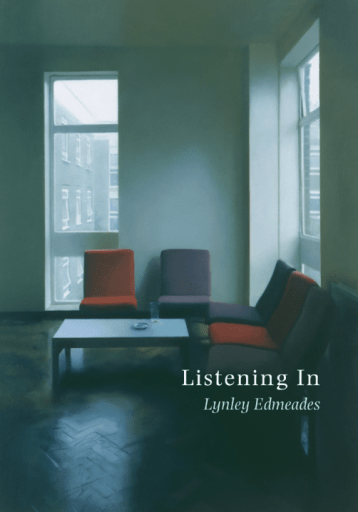
Lynley Edmeades from Listening In, Otago University Press, 2019


Lynley Edmeades is a poet, essayist and scholar. Her debut collection As the Verb Tenses (2016) was longlisted for the Ockham New Zealand Book Award for Poetry and was a finalist in the UNESCO Bridges of Struga Best First Book of Poetry. She has a PhD in avant-garde poetics, and lives in Dunedin with her partner.

Otago University Press author page

Poetry Shelf review of Listening In


Screen Shot 2020-01-08 at 11.59.12 AM


Poetry Shelf Monday poem: Emma Neale’s ‘Global’


Global


Search for counter-attack

Replace with hold

Search for attack

Replace with attach
Search for murdered

Replace with heard

Search for killed

Replace with serenaded

Search for ambushed

Replace with invited

Search for missile launchers

Replace with, oh, red silk fans

Search for front line

Replace with lamp-lit threshold

Search for grenades

Replace with iris bulbs

Search for smart bombs

Replace with crayoned paper folded into lilies, swans

Search for generals

Replace with farmers, orchardists, gardeners, mechanics, doctors, veterinarians, school-teachers, artists, painters, housekeepers, marine biologists, zoologists, nurses, musicians

Search for combatants

Replace with counsellors, conductors, bus drivers, ecologists, train drivers, sailors, fire-fighters, ambulance drivers, historians, solar engineers, designers, seamstresses, artesian well-drillers, builders

Search for profits

Replace with prophets

Save as

New World.doc


Emma Neale

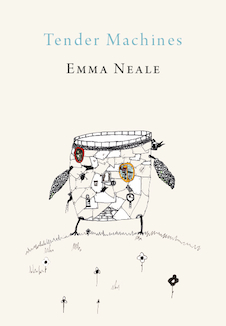
from Tender Machines  (Dunedin: OUP, 2015)


Emma Neale is the author of 6 novels and 6 collections of poetry. She is the current editor of Landfall.

Otago University page


otago122072.jpg


Poetry Shelf Monday poem: ‘School House Bay’


School House Bay


I am wearing poetry

like an overcoat. No a thermal singlet.

I am wearing the wind off the uppity

waves and the green leaves that skim

and the black-barked beech

and the cobbled light.


You can’t see the poem.

I can see the new generation bush

and a single fantail that flits

like a dandelion wish.


My thermal singlet is heavy with ghosts.

It is only the start.

I am picnicking in the thought

of a young girl and her skipping rope.

She looks through the high window.

She draws a tōtara with her sharp pencil.

The grey sky is out of reach.


Does she know the Queens of England?

Does she wear a velvet dress to match the inkwell?

Does she hear the raucous tūī?

Can she pick Istanbul on a map and draw a rectangle?


The porthole slams shut in the wind.


Paula Green

from The Track, Seraph Press, 2019


Poetry Shelf Monday Poem: Michaela Keeble’s ‘the ocean’


the ocean


the ocean faces us


he stands

with his back to us


he’s not interested

he’s interested

only in his own


expansion


he watches his belly

begin to swell


he wonders

what will come of it


he cradles the feeling

and controls it


he’s not interested in us

perhaps he is interested


in our children


we step back

stumbling


we feel his rash

blooming


we track his fish

fleeing


we test

his acid reflux


we ask


is this sickness

or birth


it’s impossible to know

how he will handle this


i have no right

to call him by his name


but i can’t pretend

he doesn’t exist


i’m scared of him

i’m scared for him


i can’t conceive

of the harm we plan


and still we must think

about our children


we have to show them

how to greet him


even if it looks

like nursery rhyme


even if we don’t know

how to pray


even if we don’t know

how to change


Michaela Keeble


Michaela Keeble is an Australian writer living in Aotearoa with her partner and kids. For a living she writes about climate change but her poems (still evidence-based) are published fairly widely, including in Pantograph Punch, Westerly, Plumwood Mountain, Southerly, Not Very Quiet, Cicerone and Mimicry. She’s currently taking part in a climate science+art collaboration facilitated by TrackZero and spends a lot of time making books with a coven of women poets who live mainly in Porirua.

Poetry Shelf Monday Poem: Jenny Bornholdt’s ‘Crossing’


Crossing


Driving across town

she feels plain

and botanical.


At a crossing

there’s a man

with a cake, girl

with a tune.

Four young people

wheel a bed,

headed for a house

where a young woman

might read, love a man/some

men, might hold their bodies

close and welcome some parts

of those bodies

into hers.


Years later

she might see these men

in suits and on television and

many years later

might pass one, a house painter,

as she drives to buy

paint, for heaven’s sake.


Now, nearing sixty,

this woman loves her husband

ferociously.

When she turns the compost

and finds the flat wrinkled body

of a mouse,

she remembers the time

he rang her in Scotland

to say he’d seen one in the pile

and what should he do?


She shovels the remains

of the mouse with the rest

of the compost to beneath

the blossom, which bows

low and graceful over neglect,

which abounds, as it does,

wonderfully, in the garden of the

southern house they move to

for a time.


He’s up to his ears

in sadness, both of them aghast

at landscape. Being asthmatic

he is immediately attractive

to animals – at the lake

a fox terrier pup takes shelter

under his chest as he lies down

on a towel after a swim.

In the kitchen a mouse

bumps into his foot. Drama

in the house! Not for the first

time. These were rooms

of costume, scenery,

leading ladies and men

on the front terrace, leaning

on architect Ernst Plischke’s rail,

stone warm underfoot, snowed

mountains as backdrop

while the deep, broad river passed

below them, always

on its way.


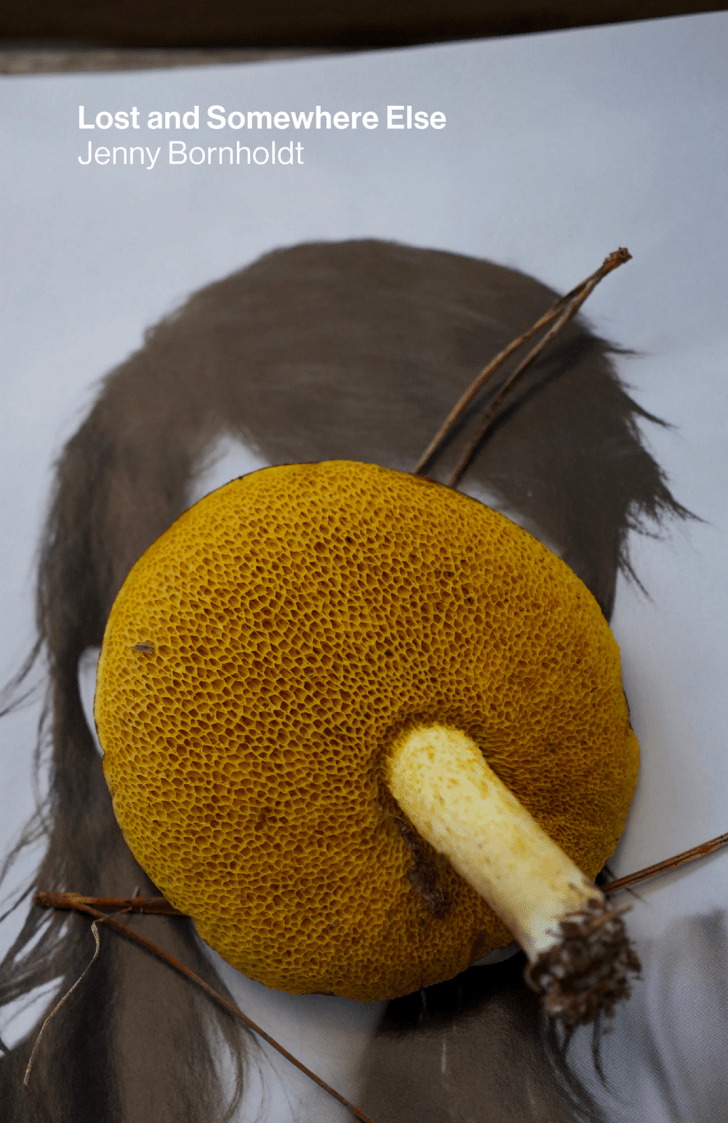
Jenny Bornholdt, from Lost and Somewhere Else, Victoria University Press, 2019


Jenny Bornholdt is the author of many poetry collections, including The Rocky Shore (Montana New Zealand Book Award for Poetry winner, 2009) and Selected Poems (2016). She has edited several notable anthologies including Short Poems of New Zealand (2018).

Victoria University Press author page


Screen Shot 2019-12-02 at 9.40.46 AM.png


Poetry Shelf Monday Poem: Hebe Kearney’s ‘Clytemnestra Takes a Bath’


Clytemnestra Takes a Bath


Woman — cast your tyrannical spell upon the water,

heart of red dwarf star, fizzing wonder,

and to the seething foam pour your oils, aromatic offerings,

libations of rose petals. Let candles blaze in the dark,

a ring of ensnaring flame.


Woman — run the bath red,

drop by crimson drop, let the red tide flow

unsheathe the cold steel, let it slide in long strokes

and when it nicks it oozes,

draw it quick down beneath the scarlet waters,

and keep it there.


Woman — I know you,

you own the distant scream or two of flesh

dragged against white marble,

the sound behind the door of a call:

in another life, you betrayed a kingdom of nothing,

wrenched off an eagle’s wings, sprayed its black blood wide,

assumed the form of a snake.


Clytemnestra — in this life, relax;

the day is beginning.

Untangle the net of your dressing gown from the bathroom floor,

wrap your blushed flesh in silk,

apply a plaster to that bright-ooze, shaving cut,

and let the crimson bathwater all the way out.

Breathe deep, dry off, moisturise.

Fish the rose petals from the teeth of the bathtub’s drain

with your hands.


Hebe Kearney


Hebe Kearney is from Christchurch but now calls Auckland her home. She is currently studying to complete her Honours in Classics and Ancient History at the University of Auckland. She couldn’t stop writing poems if she tried, and her work has appeared in Starling, The Three Lamps and Oscen.