Tag Archives: Ockham NZ book Awards

Ockham New Zealand Book Award Poetry Short list – Congratulations!

book

  • Fale Aitu | Spirit House

    Victoria University Press

    Tusiata Avia

    This is an urgent, politicised collection, which finds eloquent ways to dramatise and speak out against horrors, injustices and abuses, both domestic and public. The poems are tough, sensuous, often unnerving. Prose poems, pantoums, short lyrics, list poems, hieratic invocations: the passionate voice holds all these together. We teleport between geographies and cultures, Samoa to Christchurch, Gaza to New York. The world we think we know is constantly made strange, yet disconcertingly familiar; the unfamiliar seems normal, close to home.

  • book

    Hera Lindsay Bird

    Victoria University Press

    Hera Lindsay Bird

    The twisty, aphoristic, wrong-footing poems in this striking debut collection play the deliberately crass off against the deliberately ornate: ‘Byron, Whitman, our dog crushed by a garage door / Finger me slowly / In the snowscape of your childhood’. Similes, once a poetic no-no, perform exuberant oxymorons and flamboyant non-sequiturs: ‘I write this poem like double-leopard print / Like an antique locket filled with pubic hair’. Bird’s poems readjust readers’ expectations of what poetry can do, how it might behave.

  • book

    Andrew Johnston

    As the marvellously titled opening poem, ‘The Otorhinolaryngologist’, puts it, these poems ‘hunt[] for something / in the hollow spaces // in the voiceless spaces’. These spaces include: found material from ancestry.com, the thoughts of an Afghani, the books of the Old Testament, the myth of Echo, the radio alphabet. The reader is trusted to puzzle, to fit, to start all over again. This hugely impressive, challenging collection is scored through with a broken music that sings in the head.


  • book

    Gregory Kan

    This ambitious debut collection is built around slivers of life-narrative, principally drawn from the life of Iris Wilkinson (Robin Hyde) and — with moving laconic restraint — from the lives of the poet’s parents, before and after coming to New Zealand. These strands are made to intertwine with, and haunt, each other, not least through the evocation of various Chinese ghosts. The collection aches with bewildered loss, a sense of emotional loose ends and pasts only half-grasped.


  • Full award list here


Poetry winner, David Eggleton’s seven best things to make a poem memorable

35.jpg

David Eggleton won the Ockham Book Award’s  Poetry category this year. Here are his Seven Things That Make A Poem Memorable. Gems.

1. The first thing is the poetic license, the dispensation, a poem grants allowing the poet to take liberties with language, with literary form, to yoke together like with unlike, the probable with the improbable, in a tiny space, and create a kind of explosion — sometimes thermonuclear, as in T.S.Eliot’s Modernism-defining 1922 poem ‘The Waste Land’. Virginia Woolf wrote shortly after this was published: ‘I sun myself upon the ravishing beauty of one of his lines, and reflect that I must make a dizzy and dangerous leap to the next. . .line.’

2. The second thing is the wonderfully mesmeric power of a poem’s metre, the entrancement of its heartbeat, its rhythm, its breathing, as these two lines from a Samuel Beckett poem indicate: ‘the churn of stale words in the heart again/ love love love thud of the old plunger. . .’ Allen Ginsberg shows another way the metre can memorably become stirring, march-like, uplifting, as well as amusingly sardonic, in his poem ‘Howl’: ‘buried alive in their innocent flannel suits on Madison Avenue amid/ blasts of leaden verse & the tanked-up clatter of the iron regiments of fashion/ & the nitroglycerine shrieks of the fairies of advertising/ & the mustard gas of sinister intelligent editors. . .’


for the rest of the list on The Ockham Book Award site see here

Poetry Shelf congratulates the winner of the poetry category at the Ockham NZ Book Awards

OLYMPUS DIGITAL CAMERA   35

Photo credit:  F. J. Neuman


‘Stone clacks on stone

so creek lizards slither,

runnels slip through claws,

each cloud’s a silver feather.’

from ‘Raukura’ in The Conch Trumpet (OUP)


I was chuffed to see David Eggleton win the Poetry category for his terrific collection, The Conch Shell.

David did a wonderful interview to coincide with the publication of this book last year. He is a very fine poet who has contributed much to our writing communities.

My hearty congratulations.


from the interview:

These new poems offer shifting tones, preoccupations, rhythms. What discoveries did you make about poetry as you wrote? The world? Interior or external?

My poems like to dwell on the silver wake of a container ship, or the wet sand beneath the upturned hull of a dinghy, or the half-seen, the overheard. Poets re-arrange, but they have duties of care. X.J. Kennedy has pointed out that: ‘The world is full of poets with languid wrenches who don’t bother to take the last six turns on their bolts.’

It’s been five years since my last poetry collection Time of the Icebergs appeared, and one reason my collections have been regularly spaced that far apart is the need for more elbow-grease and line-tightening to get the burnish just so.

The poet’s mind, like anyone else’s is made up of reptilian substrate, limbic empathy and neo-cortical rationality. These shape your reveries and hopefully together lift them out of banality. Our ideas are dreams, styles, superstitions. We rationalise our temperaments, draw curtains over our windows, but poems carry an anarchic charge that reveals the force that through the green fuse drives the flower.

A poet is in the business of the unsayable being said, showing you fear in a handful of dust. A poet is amanuensis to the subconscious ceaselessly murmuring, and indeed to the planetary hum, the gravitational pull of the earth, the wobble of placental jellyfish in the womb — anything alive, mindless and gooey.

the rest of the interview here

Best first poetry book at the Ocklam NZ BNook Awards is


1411440756602.jpg  1411440756602.jpg


big congratulations go to …. Chris Tse for his very fabulous book .


Here is my review:


How to Be Dead in a Year of Snakes Chris Tse, Auckland University Press

Chris Tse is a writer, musician and actor whose poetry first appeared in AUP New Posts 4 (Auckland University Press, 2011). He resides in Wellington, his home town.

Chris’s debut collection, How to Be Dead in a Year of Snakes, responds to a moment in history not so much by narrating that history but by installing a chorus of voices. He takes an event from 1905 when Lionel Terry went hunting for a Chinaman in Haining Street, Wellington and ended up murdering Joe Kum Yung. Within the opening pages, the chilling event is situated in a wider context where laws proscribe the alienness that situates  Chinese as outsiders. This is what gets under your skin as you read.

The poems draw upon and draw in notions of distance, defeat, guilt and forgiveness. There are the unsettled imaginings of what it is to be home, to be at home and to be out of home to the extent that home becomes difficult and different. Mostly it is a matter of death (and casting back into life) whereby phantoms stalk and cry about what might have been and what is: ‘You spend your thoughts drowning in your family-/ missing from this vista- and contemplate a return with nothing to show/ for your absence.’

The collection harvests shifting forms, voices and tones that promote poetry as mood, state of mind, emotional residue. Yes, there is detailed evidence of history but this is not a realist account, a story told in such a way. Instead the poetic spareness, the drifting phantom voices give stronger presence to things that are much harder to put into words. How to be dead, for example. How to find the co-ordinates of estrangement, of that which is unbearably lost and is hard to tally (family, home, what matters in life). On page four you move from a matter-of-fact representation of the law to page five and the wife in Canton (‘you carry her bones in your body’). Two disparate but equally potent aches.

At times the poems are syncopated, with words stretched over little bridges of silence or white space. It adds an accumulating breathlessness. At times it feels like the intake of breath associated with the silence you grant the dead. When you stop and remember. Thus (as it appears in one poem), it also becomes static: ‘Listen: there’s a hunger in the air. It’s reciting prophecies./ It’s doubled up.’

Many lines sing out and stick as they haunt:

‘to kill a man is to marry a shadow’

‘We must divide the world around us into safety sets or else it splinters/ of its own accord into anarchy.’

‘The world is full of murder and words are usually the first to go’

‘Peace is a loose ideal for the abandoned/ left to sing their songs/ to themselves’

‘there will be voices to say your name/ to clear the way. The rest is up to you.’

There are many vessels of emptiness (the body, the head, the memory, the thing) and in a way each poem is a version of a vessel that becomes provisionally and movingly full. Just for a moment: ‘Now your onus is to surround/ yourself in objects    of your former permanence// a bone flute that stores folk songs and lullabies within,/ chopsticks that remember the taste of every meal.’

This collection shows so beautifully, so movingly, the power of poetry to give renewed presence to history; so that the silent bridges billow with a new awareness of how we get to this point.


The Ockham NZ Poetry short list- two reviews, an interview and a book in my bag

I am heading off to Wellington this morning to go to A Circle of Laureates, the Lauris Edmond prize event and do a smidgeon of reading in between. Thought I would share these first:

1411440756602

How to Be Dead in a Year of Snakes Chris Tse, Auckland University Press

Chris Tse is a writer, musician and actor whose poetry first appeared in AUP New Posts 4 (Auckland University Press, 2011). He resides in Wellington, his home town.

Chris’s debut collection, How to Be Dead in a Year of Snakes, responds to a moment in history not so much by narrating that history but by installing a chorus of voices. He takes an event from 1905 when Lionel Terry went hunting for a Chinaman in Haining Street, Wellington and ended up murdering Joe Kum Yung. Within the opening pages, the chilling event is situated in a wider context where laws proscribe the alienness that situates  Chinese as outsiders. This is what gets under your skin as you read.

The poems draw upon and draw in notions of distance, defeat, guilt and forgiveness. There are the unsettled imaginings of what it is to be home, to be at home and to be out of home to the extent that home becomes difficult and different. Mostly it is a matter of death (and casting back into life) whereby phantoms stalk and cry about what might have been and what is: ‘You spend your thoughts drowning in your family-/ missing from this vista- and contemplate a return with nothing to show/ for your absence.’

The collection harvests shifting forms, voices and tones that promote poetry as mood, state of mind, emotional residue. Yes, there is detailed evidence of history but this is not a realist account, a story told in such a way. Instead the poetic spareness, the drifting phantom voices give stronger presence to things that are much harder to put into words. How to be dead, for example. How to find the co-ordinates of estrangement, of that which is unbearably lost and is hard to tally (family, home, what matters in life). On page four you move from a matter-of-fact representation of the law to page five and the wife in Canton (‘you carry her bones in your body’). Two disparate but equally potent aches.

For the rest of the review see here


OLYMPUS DIGITAL CAMERA       $_35


From an interview I did with David Eggleton last year:

I love the title of your new collection (The Conch Shell, Otago University Press). The blurb suggests that this collection ‘calls to the scattered tribes of contemporary New Zealand.’ What tribes do you belong to? What literary tribes? How does the word ‘contemporary’ modify things?

Yes, I’m blowing my own (conch) trumpet at sunrise. That title refers to tide-lines of life, to surf-like sounds, to gathering good vibrations, to gods of the sea who, clarion-like, lull the waves, and to the summer of shakes, the year of quakes. And so on, to the final burnout of the run-ragged consumer. The rest is the tribal outcast, and everything you cannot pin down, or ascribe a bar code to.

In fact, the word ‘tribe’ is fraught. I think James K. Baxter brought it into the literary realm. My own tribal background is distinctly heterogeneous rather than Fonterra-homogenous, but if I look around at my contemporaries, poets and otherwise, I see most of them making it up as they go along. A poem tests a proposition; it doesn’t always prove it.


These new poems offer shifting tones, preoccupations, rhythms. What discoveries did you make about poetry as you wrote? The world? Interior or external?

My poems like to dwell on the silver wake of a container ship, or the wet sand beneath the upturned hull of a dinghy, or the half-seen, the overheard. Poets re-arrange, but they have duties of care. X.J. Kennedy has pointed out that: ‘The world is full of poets with languid wrenches who don’t bother to take the last six turns on their bolts.’

It’s been five years since my last poetry collection Time of the Icebergs appeared, and one reason my collections have been regularly spaced that far apart is the need for more elbow-grease and line-tightening to get the burnish just so.

The poet’s mind, like anyone else’s is made up of reptilian substrate, limbic empathy and neo-cortical rationality. These shape your reveries and hopefully together lift them out of banality. Our ideas are dreams, styles, superstitions. We rationalise our temperaments, draw curtains over our windows, but poems carry an anarchic charge that reveals the force that through the green fuse drives the flower.

A poet is in the business of the unsayable being said, showing you fear in a handful of dust. A poet is amanuensis to the subconscious ceaselessly murmuring, and indeed to the planetary hum, the gravitational pull of the earth, the wobble of placental jellyfish in the womb — anything alive, mindless and gooey.


Is there a single poem or two in the collection that particularly resonates with you?

Every poem resonates on its own wavelength, but I found constructing an immediate elegiac response to my father’s death one of the most turbulent. A bit like getting to grips with a storm, with a howling wind that has shape and substance.


Returning to the notion of detail, I see the accumulation of things in your poems as an overlay of highways to elsewhere whether heart, issues, ideas, fancy, memory. Yet the things also pulsate as things in their own right. What draws you to ‘the thisness of things’ (the blurb)?

Things accumulate in my poems in almost haptic fashion, wrestled there like sculptural ingredients. They accumulate, as in the random haphazard assemblages of the Dadaist Kurt Schwitters, built out of found objects in the streets. Yes, I want to acknowledge the ‘thisness’ of things, but not in the sense of ‘property’. Rather, in the sense of: he who kisses the joy as it flies, lives in eternity’s sunrise.


For the complete interview see here


Tim-FB 9780473288396-TU

Tim Upperton, The Night We Ate The Baby HauNui Press, 2014

Tim Upperton’s debut poetry collection, A House on Fire, was published by Steele Roberts in 2009. Since then, his poetry has been published in numerous journals and he has won awards for a number of them. The poems for this new collection were written with the assistance of a Doctoral Scholarship from Massey University of New Zealand, so perhaps they form/formed part of his doctoral submission. Tim will be reading as part of the Haunui Press ‘Deep Friend Poetry Reading’ series at Vic Books on 26th March. Details here.

This latest book is unlike any other collection I have seen in New Zealand; chiefly in terms of the measure of discomfort. The forms are various, scooping an edgy wit into prose blocks, villanelle, triplets, couplets and freer patterns. Yet there is connective glue at work here, and that is what makes this collection stand out. I think it comes down to voice (whether or not it is the personal voice of the poet doesn’t really matter) because the voice steering the poems is sharp, forthright, witty, edgy, grumpy. It unsettles. It keeps you on your toes. On the back of the book, Ashleigh Young suggests that ‘[t]hese willfully, calmly disagreeable poems have tenderness and courage at their heart.’ I would agree. Therein lies the pleasure of reading these poems; there is more to the brittle edginess than meets the initial eye.

The first poem, ‘Avoid,’ very clearly announces that this is a poet who loves language, that is unafraid of rhyme and rhythm working arm in arm. The poem is a miniature explosion of sound effects — with sliding assonance, bounding consonants, near rhyme and sumptuous aural connections. It brought to mind the refrain in Don McGlashan’s song,  ‘Marvellous Year,’ and Bill Manhire’s glorious ‘1950s’ in the use of rhythm and rhyme, and aural trapeze work that is ear defying. Whereas Don’s song represents a potted portrait of the world in all its warts and glory (in a marvellous year), and Bill’s poem is a nostalgic recuperation of things, Tim sets up the collection’s  negative disposition and itemises things to avoid!

For the rest of the review see here


ghost_cover_front__73226.1427153026.140.215   ghost_cover_front__73226.1427153026.140.215   ghost_cover_front__73226.1427153026.140.215

Roger Horrocks Song in the Ghost Machine

I haven’t read this book! Last year I picked it up to review then found something about it was very close to a fragile starting point I had for a book in my head. I can’t talk about poems I am writing until they are written. I didn’t want to scare my starting point off so left in the pile to read.

Now that I am hard at work writing about NZ women’s poetry, my starting point is in a little holding bay where it may or may not survive. It has been there for over a decade though and has moved to second place in  a queue.

So I am throwing caution to the wind and taking this book to read on the plane.


Eleven NZ women’s poetry books to adore and some fiction – Happy International Women’s Day!

Some_of_Us_Eat_the_Seeds_lo_res_web_RGB__56166.1434594528.220.220     7485719 front-cover   8507862 418MHC3lAEL._SX346_BO1,204,203,200_ 1415925155755

Book Award lists should promote debate. Ideas and issues should be raised. As long as judges and authors don’t come under personal attack. It is a time of celebration, let’s not forget that, but it is also a time when diverse opinions may draw attention to our healthy landscape of books.

I have just started writing a big book on poetry by New Zealand women. I have carried this project with me for a long time, and it something I care about very much indeed. It is a book I am writing with a great sense of liberation and an equal dose of love.

I bring many questions to my writing.

The shortlist for poetry and fiction in the Ockham NZ Book Awards includes 0ne woman (Patricia Grace) and seven men. There are no women poets.

This is simply a matter of choice on the part of the judges and I do not wish to undermine the quality of the books they have selected. However, in my view, it casts a disconcerting light upon what women have been producing in the past year or so.

Women  produced astonishing books in 2015. I reviewed their poetry books on this blog and praised the diligent craft, the exquisite music, the sumptuous detail, the complexities that challenge and the simplicity that soothes. I have lauded books by women that have moved me like no other, and that have contributed much to the possibilities of what a poem might do.

I am gobsmacked that not a single one made it to the shortlist.

Men have written extraordinary poetry in the past year, but so too have women.

Today is International Women’s Day. In celebration of this, here is a selection of poetry and fiction I have loved in the past year and would have been happy to award.

This list is partial. Please add to it.  Some of these women are my friends, so yes there is unconscious bias. Some of these women I would recognise in the street, some I would not.


Eleven Poetry Books by women to adore

(I have reviewed all these to some degree on Poetry Shelf or interviewed the poets)

Emma Neale  Tender Machines This is a domestic book that is utterly complex. Yet it moves beyond home to become a book of the world. The music is divine. I am utterly moved. The Poetry Shelf trophy is yours Emma.

Joan Fleming Failed Love Stories Poetry that dazzles and shifts me. This book is on replay!

Holly Painter Excerpts from a Natural History Startling debut that blew me out the window and made me want to write

Sarah Jane Barnett Work Poetry that takes risks and is unafraid of ideas. Adored this.

Johanna Aitchison Miss Dust Spare, strange, surprising, wonderful to read.

Anna Jackson I, Clodia and Other Portraits The voice gets under my skin no matter how many times I read it. So much to say about it.

Jennifer Compton My Clean & The Junkie This narrative satisfies on so many levels.

Airini Beautrais Dear Neil Roberts Risk taking at the level of politics and the personal.

Morgan Bach Some of Us Eat the Seeds Beauty of the cover matches the surprise and beauty of the poetry within.

Hinemoana Baker waha/ mouth This poetry lit a fire in my head not sure which year it fits though. But wow!

Diane Brown Taking My Mother to the Opera This is poetry making pin pricks as it moves and gets you chewing back through your own circumstances.


…. and this is just a start. Ha! Serie Barford with her gorgeous mix of poetry and prose.

Yep I am going over board here just to show you that women have footed it with the best of the men. Whichever year you look at, a different set of judges would come up with a different mix of books. Yes let’s celebrate that worthy shortlist but let’s also remember that canon shaping only revels in and reveals part of the story.


Fiction (I haven’t read so widely here and have a wee stack to get too – Laurence Fearnley and Charlotte Grimshaw here I come!)

Anna Smaill The Chimes This book – plot character, setting, premise, events – still sticks to me. The sentences are exquisite. Some books you lose in brain mist. Not this one.

Sue Orr The Party Line I see this book becoming a NZ classic – a novel of the back blocks. The characters are what move you so profoundly. So perfectly crafted.


My thoughts: 2016 Ockham NZ Book Award Poetry short list

Congratulations to all those who make the short lists! Especially in a year that was larger than a year.

Here is the short list for poetry, see below for other categories.

Poetry
How to be Dead in a Year of Snakes, by Chris Tse (Auckland University Press)
The Night We Ate the Baby, by Tim Upperton (Haunui Press)
Song of the Ghost in the Machine, by Roger Horrocks (Victoria University Press)
The Conch Trumpet, by David Eggleton (Otago University Press)
Would this be my list? No! But that doesn’t mean a thing. Book Awards will always reflect the predilections of the judges. And there are some strong collections here that I have reviewed and loved. Great to see Chris’s debut collection make the cut.
Good to see a small press make it along with the big presses who continue to show an admiral devotion to poetry.
Whom do I mourn? Emma Neale’s extraordinary collection, Tender Machines. Ahh!
I haven’t read many of the novels that made it but how I adored Anna Smaill’s The Chimes that did not. Sorry to be a party pooper on that one.
And how good to see Fiona Farrell and Lynn Jenner make the non-fiction list. I reviewed both those books on the blog and thought they were standout examples of how we can write about the world, catastrophe, home.
Fiction plus poetry equals one woman out of eight.  No women poets. Does this mean the men wrote all the best books in the past year? No way!
Is NZ literature in fine heart? Utterly yes. Astonishing books missed the long lists in both poetry and fiction. We are publishing such quality writing it makes judging almost impossible for Book Award Judges.
For those that missed out, good books have a life beyond book awards. Astonishing books are bigger than book awards. Remember that.
For those that have been picked, enjoy the well-deserved moment, then let the white noise settle and get on with what really matters. Writing.
The 2016 Ockham New Zealand Book Awards finalists are: 
Fiction
The Back of His Head, by Patrick Evans (Victoria University Press)
Chappy, by Patricia Grace (Penguin Random House)
Coming Rain, by Stephen Daisley (Text Publishing)
The Invisible Mile, by David Coventry (Victoria University Press)
Poetry
How to be Dead in a Year of Snakes, by Chris Tse (Auckland University Press)
The Night We Ate the Baby, by Tim Upperton (Haunui Press)
Song of the Ghost in the Machine, by Roger Horrocks (Victoria University Press)
The Conch Trumpet, by David Eggleton (Otago University Press)
General Non-Fiction
Maurice Gee: Life and Work, by Rachel Barrowman (Victoria University Press)
The Villa at the Edge of the Empire: One Hundred Ways to Read a City, by Fiona Farrell (Penguin Random House)
Māori Boy: A Memoir of Childhood, by Witi Ihimaera (Penguin Random House)
Lost and Gone Away, by Lynn Jenner (Auckland University Press)
Illustrated Non-Fiction
Te Ara Puoro: A Journey into the World of Māori Music, by Richard Nunns (Potton and Burton)
New Zealand Photography Collected, by Athol McCredie (Te Papa Press)
Tangata Whenua: An Illustrated History by Atholl Anderson, Judith Binney, Aroha Harris (Bridget Williams Books)
Real Modern: Everyday New Zealand in the 1950s and 1960s, by Bronwyn Labrum (Te Papa Press)
The Fiction category is judged by distinguished writer Owen Marshall CNZM, Wellington bookseller and reviewer Tilly Lloyd, and former Director of the Auckland Writers Festival and former Creative New Zealand senior literature adviser Jill Rawnsley.
The Poetry Prize is judged by former Auckland University Press publisher Elizabeth Caffin MNZM, Dr Paul Millar, of the University of Canterbury, and poet and University of Auckland academic Dr Selina Tusitala Marsh.
The General Non-Fiction Prize is judged by Metro Editor-At-Large Simon Wilson, Professor Lydia Wevers, literary historian, critic and director of the Stout Research Centre at Victoria University of Wellington, and Dr Jarrod Gilbert, a former Book Awards winner for Patched: A History of Gangs in New Zealand, of the University of Canterbury.
The Illustrated Non-Fiction Prize is judged by former publisher Jane Connor, publisher of the magisterial The Trees of New Zealand, which won the Book of the Year award in 2012, Associate Professor Linda Tyler, Director of the Centre for Art Studies at The University of Auckland, and Leonie Hayden, the editor of Mana magazine.
The winners (including of the four Best First Book Awards) will be announced at a ceremony on Tuesday May 10 2016, held as the opening night event of the Auckland Writers Festival. The awards ceremony is open to the public for the first time. Tickets to the event can be purchased via Ticketmaster once festival bookings open on Friday 18 March.

Judges announced for Ockham NZ Book Awards – I like the new judging format very much indeed

Having been a Book Award judge, and having read around 160 books, I love this new idea (three judges per category). Bravo! To just read the poetry books, or the books in your field sounds pretty fine to me. Far more manageable. I agree that it means you can read deeper and slower. All in all, the way the awards are being reshaped is spot on.

Here is the press release:

2016 Ockham New Zealand Book Awards judges announced

The 2016 Ockham New Zealand Book Awards will be judged by 12 eminent academics, writers, journalist, commentators, former publishers and booksellers from around New Zealand; a three-fold increase on the number of judges in previous years which reflects the Awards’ new judging structure.

Each of the Awards’ four categories – Fiction, Poetry, General Non-Fiction and Illustrated Non-Fiction – and the awards for Best First Book  in those categories, will be judged by a panel of three judges, all specialists in their fields. A Maori language adviser will judge the Maori Language Award.

The judges will announce their longlist finalists on November 25, 2015, and their shortlist on March 8, 2016.
New Zealand Book Awards Trust chairwoman, Nicola Legat, says the judges selected for the Ockham New Zealand Book Awards are second-to-none.

“Authors and publishers can expect to receive the rigour and respect from this year’s line-up that their books deserve. Rather than four judges reading 150 or more books, as has been the case previously, these specialists will read only the books in their category, allowing for a more detailed examination of the works,” she says.

The Fiction category, whose $50,000 prize is now known as The Acorn Foundation Literary Award, will be judged by distinguished writer Owen Marshall CNZM; Wellington bookseller and reviewer Tilly Lloyd, and former Director of the Auckland Writers Festival and Creative New Zealand senior literature adviser Jill Rawnsley.

The Poetry Prize will be judged by former Auckland University Press publisher Elizabeth Caffin MNZM; James K Baxter expert Dr Paul Millar, of the University of Canterbury, and poet and University of Auckland academic Dr Selina Tusitala Marsh.

The General Non-Fiction Prize will be judged by Metro Editor-At-Large Simon Wilson; Professor Lydia Wevers, literary historian, critic and director of the Stout Research Centre at Victoria University of Wellington, and Dr Jarrod Gilbert, a former Book Awards winner for Patched: A History of Gangs in New Zealand, of the University of Canterbury.

The Illustrated Non-Fiction Prize will be judged by former publisher Jane Connor, publisher of the magisterial The Trees of New Zealand, which won the Book of the Year award in 2012; Associate Professor Linda Tyler, Director of the Centre for Art Studies at The University of Auckland, and Leonie Hayden, the editor of Mana magazine.

“It’s always an honour to be invited to judge these prestigious and important awards but also a major commitment of time.” says Ms Legat. “So we are enormously grateful that these very busy and skilled people are happy to demonstrate their support for the awards by diving in to months of reading and debate. We very much look forward to their final longlist, shortlist and winner selections.”

The winners will be announced on May 10, 2016, at an event at the Auckland Writers Festival.

Entries to the 2016 Ockham New Zealand Book Awards can be made via http://booksellers.co.nz/awards/new-zealand-book-awards/submissions . Books published between June 1, 2014 and December 21, 2015 are eligible for entry.

The New Zealand Book Awards is enormously grateful to the generosity of its partners: Ockham Residential, The Acorn Foundation and enduring funder Creative New Zealand.

ENDS

For interview opportunities and further information please contact: Penny Hartill, director, hPR 09 445 7525, 021 721 424, penny@hartillpr.co.nz

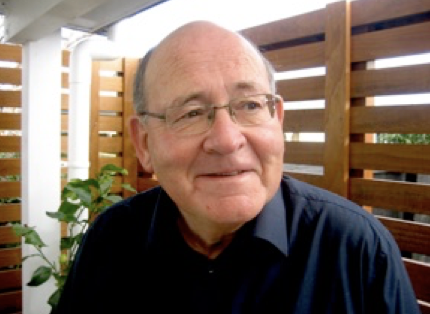
Attached: one of the 12, 2016 Ockham New Zealand Book Awards judges – Owen Marshall CNZM. Mr Marshall is one of the three fiction category judges.

Editor’s Notes:
The Ockham New Zealand Book Awards are the country’s premier literary honours for works written by New Zealanders. After a one year hiatus, the awards will return in 2016 thanks to sponsorship from Auckland property development company, Ockham Residential. The partnership, along with news of the awards’ new structure was announced last month. In July this year, the awards received a $50,000 windfall, earmarked for the top fiction work, from Tauranga community organisation, The Acorn Foundation, on behalf of one of its donors.

First established in 1968 as the Wattie Book Awards (later the Goodman Fielder Wattie Book Awards), they have also been known as the Montana New Zealand Book Awards and the New Zealand Post Book Awards. The honours, now given for Fiction, Illustrated Non-fiction, General Non-Fiction and Poetry, as well as for Best First Book and Māori language, are governed by the New Zealand Book Awards Trust (a registered charity).  Members of the Trust are Nicola Legat, Karen Ferns, Paula Morris, Kyle Mewburn, Stella Chrysostomou, David Bowles and Julia Marshall. Creative New Zealand is a significant annual funder of the awards.

The Trust also administers the New Zealand Book Awards for Children and Young Adults and National Poetry Day.

Penny Hartill
Director
P: 09 445 7525
M: 021 721 424
T: @pennyhartill
W: http://www.hartillpr.co.nz