Tag Archives: Emma Neale

Poetry Shelf, Poet’s Choice: Fiona Kidman makes some picks

sweeping the courtyard cover      Being_Here_cover__66009.1423089464.140.215


There have been  many wonderful new books about this year. But isn’t it always the way? You come to the point of saying, this is my pick, and they all come flooding along saying pick me. So, as it’s been a sensational year for South Island poets, perhaps I will make them my point of reference.

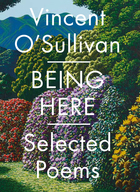
I had the privilege of launching Vincent O’Sullivan‘s Being here:Selected Poems (Victoria University Press). The beautiful hardback satisfies at every level, both from the aesthetic point of view of book production to the selection of poems which is never random, but designed to carry the reader from one place to another, as if all the poems are brand new, and speaking to each other. It includes one of my all time favourite O’Sullivan poems, ”Waikato-Taniwha-Rau” (originally from ‘The Rose Ballroom’ 1982). It begins:

We have a fiction that we live by; it is the river

that steps down, always down, from the pale lake

to the open jaws of land where the sea receives it


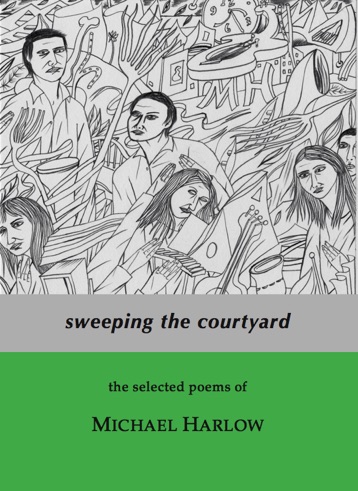
I had equal pleasure from Sweeping the Courtyard, the selected poems of Michael Harlow (Cold Hub Press) (and yes, yes, I grant that I am responsible for some cover comments, but they come from the heart). The music of language has long been a preoccupation of Michael Harlow, and his poems invite the reader to share nocturnes, harmonies and song. Thus,
“Song for two players” commences with the lines:

Are you by any chance a piano key?

she asked, reminding me

in our heart to hand affair, that not

all is black and white –


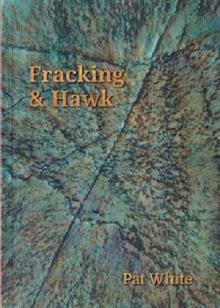
Fracking and Hawk by Pat White (Frontiers Press) is an elegant little book with a powerful voice. White is not afraid to address political issues without losing the tone of a poetic voice. The beauty of the hawk is reflected in the title poem, but also reminds us that time is running out for the earth.

418MHC3lAEL._SX346_BO1,204,203,200_  418MHC3lAEL._SX346_BO1,204,203,200_   418MHC3lAEL._SX346_BO1,204,203,200_   418MHC3lAEL._SX346_BO1,204,203,200_

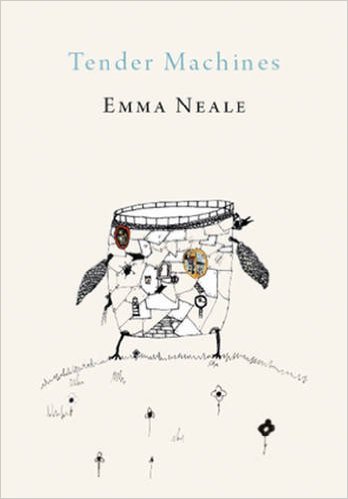
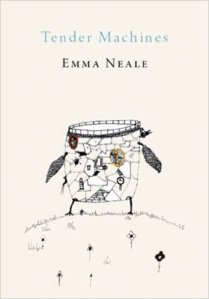
Emma Neale‘s new collection has already attracted so much comment  that there is little left to say, except that I, too, love Tender Machines, (Otago University Press). Her eloquent plangent voice just gets stronger with time.

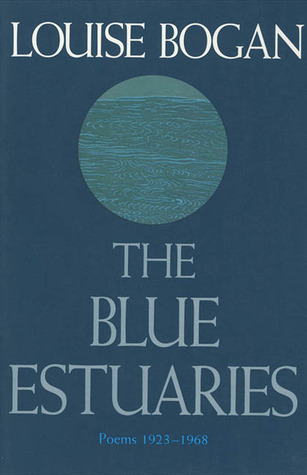
And, just to move outside this, admittedly, rather artificial boundary for a moment, there is  a poet whose work has carried me through six decades of reading poetry. She is the late American writer, Louise Bogan. The Blue Estuary Poems 1923 -1968 collects her finest work. Her poems are about yearning,the lives of women, survival. I read her every year, her work never far from the bedside table.


Fiona Kidman


9780473326364  1522562


Poetry Shelf, Poet’s Pick: Carolyn McCurdie makes her picks


Hoopla Native bird webHoopla Native bird web


There has been so much poetry I’ve loved this year, but of course there are always some poems that anchor me, enlarge and challenge me, more than others. I have read no collection that did not give in this way. But some stand out.

Two NZ collections:

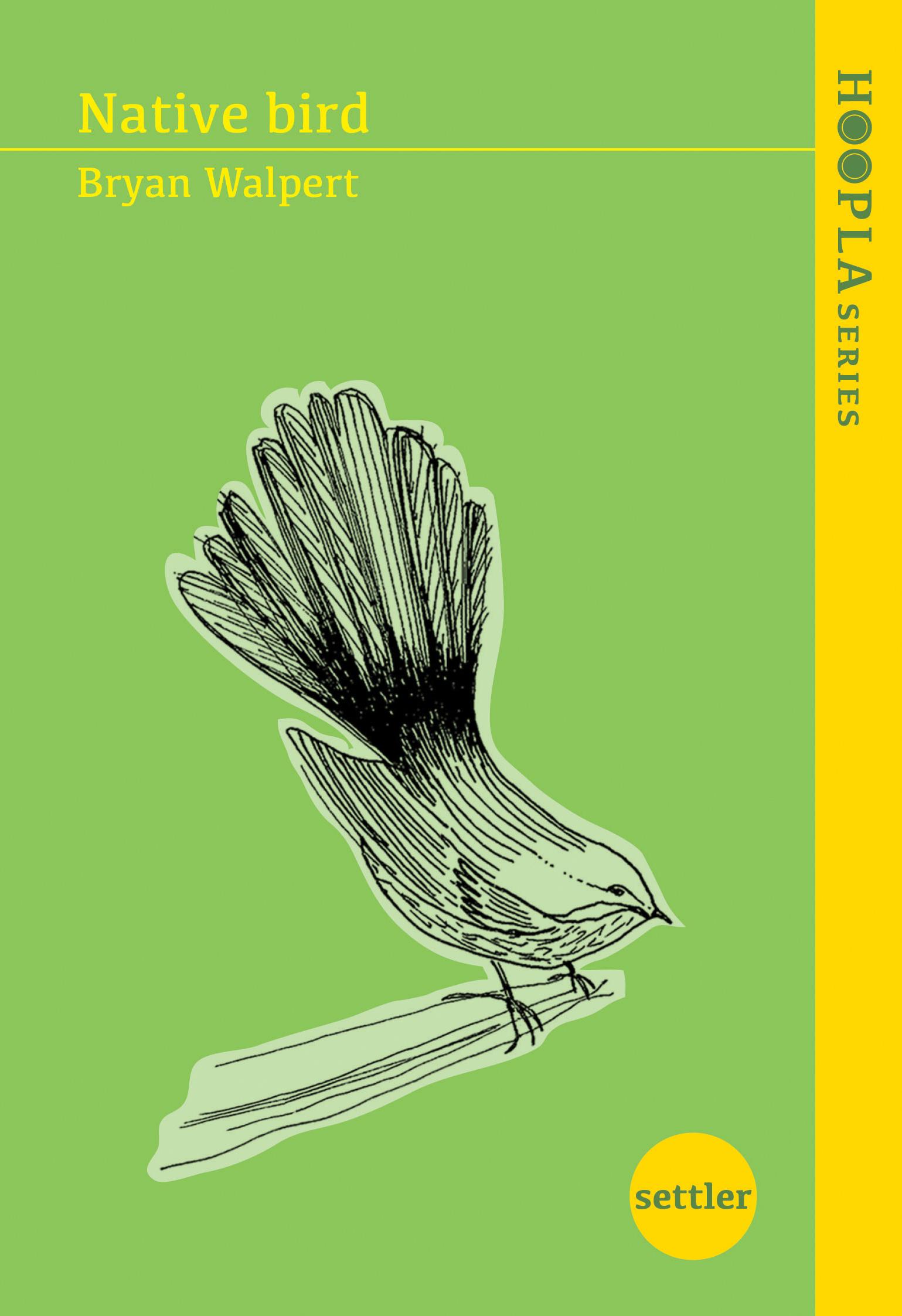
Native Bird by Bryan Walpert, Makaro Press 2015

Using metaphors of birds, the poet explores various tricky territories: being an immigrant, a father, a husband. Placed throughout the book are five poems with the title: ‘A Beginner’s Guide to Birding.’ The tone is quiet, meditative, often self-deprecating and full of clever word play, a joking that invites the reader in. These are warm, engaging poems. And beautiful. From the title poem, its context, a tramp through forest:

Gravity sings its sweet siren song –

sit, sit, sit –


Tender Machines by Emma Neale, Otago University Press 2015

Some of the tenderness here is that of all protective layers being stripped back. These poems are brave. They reach out and talk with the ‘subsonic heart’ (Alchemy, p21) as it grapples with the frazzle of life with a toddler, a teenager, with technology, with adult love and estrangement, and with poverty and privilege, a hurting planet. Yet the voice is alight with irrepressible dance and laughter. The poems plant their two feet, wave their cardboard sword, and swashbuckle.

From ‘Ross Creek’ p59:

for despair and anger

to burn again and again

right back to love –

it takes courage.


Two collections from elsewhere:

Tonight No Poetry Will Serve by Adrienne Rich, W.W. Norton 2011

It was the title of this book that hit me between the eyes and made me buy it. But for just those nights, poems like these are what you might reach for. From ‘Turbulence’ p24:

In the event put on

the child’s mask first. Breathe normally.


Cumulus by Robert Gray, John Leonard Press, 2012

The poet has collected these from his eight volumes as all that he wants to retain. I find their power overwhelming and can read them only slowly, a few at a time. Here is the Australian landscape as if from its core, the this-ness, here-ness, now-ness of sky, river, tree and surf, of street and rain against the window. From ‘Cyclone’ p253:

like the vast doom

drums of Japan,

on this tin-roofed

town.


418MHC3lAEL._SX346_BO1,204,203,200_   418MHC3lAEL._SX346_BO1,204,203,200_


Carolyn McCurdie


Poetry Shelf, Poets’ Choice: Cilla McQueen and Brian Turner make some picks

418MHC3lAEL._SX346_BO1,204,203,200_

My pick is Emma Neale’s Tender Machines (OUP). Emma’s poetry is resonant on many levels and repays close reading. In her supple, expert language, she takes a loving look at the human condition in a collection which has depth, wisdom and insight.

Cilla McQueen


Being_Here_cover__66009.1423089464.140.215  Being_Here_cover__66009.1423089464.140.215   Being_Here_cover__66009.1423089464.140.215

Mostly I read poetry and non-fiction, and a lot of the latter is to to do with environmental issues in an effort to understand and do something about the disgusting rate at which we’re destroying the place. Recently I read Michael McCarthy‘s The Moth Snowstorm, which Helen Macdonald termed ‘a deeply affecting memoir and a heartbreaking account of ecological impoverishment’. I concur. Much of what McCarthy writes about mirrors what’s happened and continues to here, in NZ, and elsewhere.

Three of the volumes of poetry that I’ve read and liked most in the past year are Robin Robertson‘s The Wrecking Light, Vincent O’Sullivan‘s Being Here, and Emma Neale‘s Tender Machines. Robertson doesn’t pussy-foot around, covers a lot of ground, can be caustic, blunt, wry and shattering. O’Sullivan ranges widely both in tone and content. Apart from the wry and sly ways he approaches things I like the ways in which he highlights human absurdities. As I hear him, it’s not as if we’re too much troubled by human absurdity, it’s that we’re not troubled enough. In Emma Neale’s Tender Machines she grapples with long-standing human predicaments, the difficulties we have personally keeping a lot of the ‘ongoing human symphony’ playing while trying to work out how to silence our dreadful ‘inner racket’.

I’d like to be able to buy and read far more NZ poetry than I do these days. Back in the 1960s, when I began trying to write poems, it was possible to be familiar with nearly all of the volumes of poems by NZ writers. Not now; the result is great gaps in one’s reading. Does it matter? I don’t know.

Brian Turner

Poetry Shelf, Poet’s Choice: Emma Neale’s favourite poetry reads 2015


otago108004   7485719


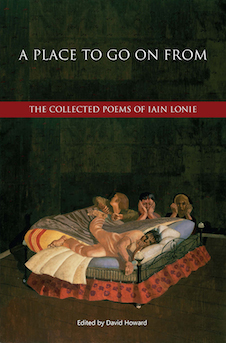
My poetry treasures for this year:  Some people say they’ve travelled, or fallen in love, or moved house, as the measure of a year’s alterations: for me, 2015 was the year I read Iain Lonie’s A Place to Go On From: The Collected Poems. The depth and frankness with which this plumbs love, grief and staring into the void is so unstinting that reading it has felt like a life event. As an act of scholarship from the editor David Howard and the author of the introduction Damian Love, it deserves to be celebrated.
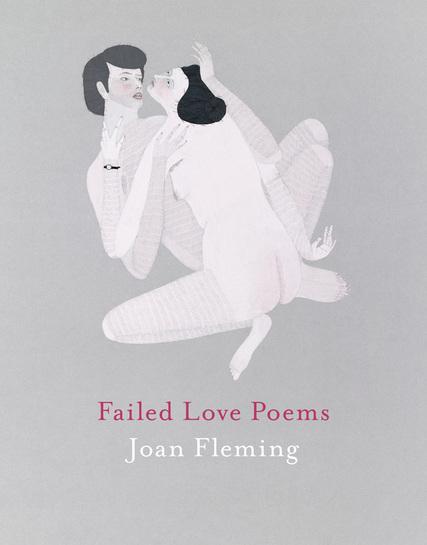
I also loved seeing the fresh direction Joan Fleming has gone in with Failed Love Poems and how quickly she takes up new role models (eg Mary Ruefle, erasure poetics) and rearranges and ‘re-aspirates’ these.

Because as a student I always used to write far too much and get reprimanded for exceeding the word limit, I have to add here Bones in the Octagon by Carolyn McCurdie – see particularly her poem about the Brothers Grimm – and oh please just one more to add – two Hungarian poets have dazzled me this year: Ágnes Nemes Nagy and Ferenc Juhász.

Emma Neale

Bones in the octagon front cover copy

Poetry Shelf review — Emma Neale’s Tender Machines takes you into a deep private space in her writing; in ways that sing and challenge, that move and muster every poetic muscle and tendon as you read

418MHC3lAEL._SX346_BO1,204,203,200_    418MHC3lAEL._SX346_BO1,204,203,200_


Emma Neale Tender Machines Otago University Press 2015

Emma Neale’s new poetry collection features a striking drawing by her son, Abe. Surprising, inventive, poetic even. The poetry is Emma’s best yet, dare I say it. To step off from the title, tenderness meets sharp edges meets exquisite moving parts, small yet perfectly formed. The collection holds you in the intimate embrace of home, yet takes you out into the wider allure of the wider world. Issues, ideas, preoccupations.

The first section, ‘Bad Housekeeping,’ is where poet tends hearth. Mostly, and movingly, Emma navigates her relations with her young son.  She is up against the elbows of insistence, demands, resistance. The mind of the mother is anchoring, roving, admitting. She is in the heart of a toddler tantrum and in the palm of world issues. These poems affect you. You can savour the poetic craft that is honey for the ear. Such musical harmonies and schisms. That is one joy of reading. You can enter the toughness and rewards of motherhood. It is as though maternal experience is the stock pot that is simmered and concentrated to a syrup that is both sweet and tart on the tongue.  The poems become the kind of poems you can hang stories upon; of this child and that child, of this moment of mothering and that. Poetry has the ability to bear story, experience, imaginings, ideas, music — all in its one tender machine (oxymoron and all). These remarkable poems do this. ‘Hard Task, Master’ is a miniature snapshot of the child — its ending breathtaking:


as he tries

to build and build

the deck of himself

against the hard, tall wall

of the world.


At times it is the concatenation of verb or noun on the line that catches you in a knot of maternal thought — son glued to mother, mother glued to son. As in ‘Towards a Theory of Aggression in Early Childhood Development’:


Hit, push, lash, scratch,

these cheeks, this jaw, this shoulder,

are these in truth our edges, outlines, will we cry

as he does, daily, nightly, sky-wrenching as sunrise

yet still hold him in our arms


There is poetic braveness here that doesn’t loiter in conventional maternal paradigms. This is a poet opening layers of skin to get to where it hurts, confuses, demands, yet never loses sight of the enduring bond. The love. This is from ‘Domestic’:


you’re our darling our treasure.


You fling a tea cup at the cat,

plump up her spine like a goose-down pillow,


jab your thumbs at your father’s face

as if to pull out its two blue plums


but ah, little fisty-kins, honeyghoul, thorny-pie,

grapple hook of your daddy’s flooded eye,


stitch by stitch hope’s small black sutures

sew love’s shadow behind you.


The rest of the collection represents a mind engaged with the world at large. There is a strong political vein that never relinquishes the notion that the personal is political and that, importantly, the political is personal. Big issues such as consumerism, the compromised state of the planet, greed, waste are there potency ingredient in the ink of the pen, yet Emma’s ideas find poetic life in a variety of ways. Always there is an attentiveness to sound, to the way the poems hit the ear before the eye/mind drifts elsewhere. Assonance is plentiful. Delicious. The musicality is a first port of admiration that sends you back to reread with ears on alert. One poem, overtly and self-reflexively, plays with musical effects, yet delivers a subterranean plea for the earth (‘”Properly Protecting the Most Pure Marine Ecosystem Left on Earth Was Not Consistent with the Government’s Economic Growth Objective”‘. Here is a sample:


The spring tries to write

its long lyric poem again:

grass blade rhymes wing tip;

leaf rim, gull keen;

salt foam, thought arc;

surf break, line break;

historical break, heart break;

riven river, toxic stream;

smoked ozone, glacial melt.


So many standout poems. I especially loved the way ‘Suburban Story’ moves. It begins with a ‘shopkeeper at my old corner store’ and then travels through a poignant catalogue of losses, minor and major. Again the exquisite ear at work, again the pulsating detail.

This is a collection of reflection, revelation, absorption. Emma wrote many of these poems during her tenure as The NZSA/Beaton Fellow, The Otago Robert Burns Fellow and The University of Otago/ Sir James Wallace Pah Homestead Writer in Residence. Such awards benefit the poet immeasurably with the gift of writing space and time. You can see it in the gold nuggets of this book. In another favourite poem, ‘Sleep-talking,’ the clogged channels of thought become poetry. Emma takes you into a deep private space in her writing; in ways that sing and challenge, that move and muster every poetic muscle and tendon as you read — in this poem and in the book as a whole.


Perhaps for the self to hold its own air

it must be played in the key of sleep:

the body an instrument that over time

we must keep pitched, soaked in night like a reed softened in water,

while dreams tune the mind’s strings with a touch that seems

as precise as if the musician’s ear cranes deep


Otago University Press page

RNZ review

Emma Neale on her title

From the book: ‘Origins‘ posted on Poetry Shelf

Warmest congratulations to Michael Harlow – Winner of 2015 Kathleen Grattan Poetry Award

Poetry Shelf extends warm congratulations to Michael and the Highly Recommended poets.


Press release:

Michael Harlow has won the Kathleen Grattan Poetry Award 2015 with his collection of poems Nothing For It But To Sing.

‘Michael Harlow’s poems,’ says Emma Neale, judge of this year’s Grattan Award, ‘are small detonations that release deeply complex stories of psychological separations and attractions, of memory and desire.’

‘This is a poet with such a command of music, the dart and turn of movement in language, that he can get away with words that make us squirm in apprentice workshops or bad pop songs – heart, soul – and make them seem newly shone and psychically right.’


On hearing the news Michael Harlow said, ‘I’m absolutely delighted particularly because it involves publication with Otago University Press. It will be wonderful to be on the OUP list.’

Michael was at a World Poetry Festival in Romania when he received the news. Commenting on the $10,000 award money he said, ‘it will buy time – the thing that all writers need. I’m planning to use the time to work on a book of prose poems.’


The award attracted 109 entries. Six poets were highly commended: Hannah Mettner, Elizabeth Morton, David Howard, Nick Ascroft, Alice Miller and Victoria Broome.

The Kathleen Grattan Award is one of the richest poetry prizes in New Zealand. Otago University Press accepts the winning manuscript for publication and the winner also receives a year’s subscription to Landfall.


Auckland poet Kathleen Grattan, a journalist and former editor of the New Zealand Woman’s Weekly, died in 1990. Her daughter Jocelyn Grattan, who also worked for Woman’s Weekly, shared her mother’s love of literature. Jocelyn generously left Landfall a bequest with which to establish an award in memory of her mother.

Previous winners are Joanna Preston (The Summer King, 2008); Leigh Davis (Stunning Debut of the Repairing of a Life, 2009); Jennifer Compton (The City, 2010); Emma Neale (The Truth Garden, 2011) and Siobhan Harvey (Cloudboy, 2013).

The biennial award will next be granted in 2017 (see Otago University Press website for further details: http://www.otago.ac.nz/press).


About Michael Harlow

Michael Harlow has published ten books of poetry: Giotto’s Elephant (AUP, 1991) and The Tram Conductor’s Blue Cap (AUP, 2009) were both finalists in the national book awards. Harlow has held numerous fellowships and residencies including the Katherine Mansfield Fellowship and the Burns Fellowship. In 2014 he was awarded the prestigious Lauris Edmond Memorial Award for Distinguished Contribution to New Zealand Poetry. This year (2015) he received the Beatson Fellowship for writers. Michael Harlow lives and works as a writer, editor and Jungian therapist in Alexandra, Central Otago.

Emma Neale and Diane Brown head north to read poetry

From Otago University Press:

Otago poets Diane Brown and Emma Neale are both part of the amazing line-up at the Ladies’ Litera-Tea in Auckland on Sunday 1 November (1–5.30pm at the Raye Freedman Arts Centre, Epsom Girls Grammar School – tickets are sold out). Diane will also be in conversation with Deborah Shepard on Tuesday 3 November at 7pm at the Michael King Writers Centre, Summit Rd (off Kerr St), Devonport.

Some poetry fans pick a recent favourite NZ poetry read – and my giveaway bundle

Thanks for sharing these. I put all the names in a hat and drew out Nicola Easthope. I will send you a wee bundle of poetry books. Can you email me your postal address please?


Sarah Jane Barnett: Congratulations on your 500th post! What an achievement and also such a contribution to New Zealand poetry readers. The book I’m enjoying at the moment is Joan Fleming’s Failed Love Poems. It’s an intense read and I feel immersed in the characters, especially in the second section. The poem ‘The invention of enough’ blew my mind!


Harvey Molloy: One book that comes to mind is Native Bird by Bryan Walpert.  It’s such a well-crafted, polished book. There’s a diversity of poetic forms and tones so the work’s quite dynamic.  There’s also a certain reticence in places, a skirting around painful issues which I find quite refreshing  – – at times emotions are understated and there’s a control and restraint which I find quite moving; the poetry is at times actively self-conscious but never cold or impersonal (for example the poem, ‘Ōakura’).  I’ll be coming back to this book.


Sian Robyns: Airini Beautrais’ Dear Neil Roberts had me enthralled enraged and weeping. To paraphrase ‘History Books’ (p 43), she admitted Neil Roberts into our histories and gave us a harrowing reminder of the particular awfulness of Muldoon’s New Zealand. Sadly, we still maintain a silence closely resembling stupidity.

Can I have two? I also loved Jennifer Compton’s Mr Clean and the Junkie. I loved the story, the sense of place, and that swooping, interfering, conversational, self-aware authorial voice.


Crissi Blair: I loved Caoilinn Hughes’ Gathering Evidence which I had from the library after hearing Gregory O’Brien talking to Kim Hill about her marvellous first lines. Congratulations on your 500th post Paula. You are doing a great job at spreading the poetry word!


Nicola Easthope: One Aotearoa poetry book I have enjoyed this year (there are so many) is Janet Frame’s The Goose Bath, winner of the 2007 Montana NZ Book Awards. I have come late to Janet’s poetry (having gobbled up her prose at university in the late 80s) and love meeting her flaring imagination and dance of language through poems with apparently innocent beginnings that usually turn, back and forth, between the light and the dark of her life.The entire collection leaves me fizzing and aching with appreciation.


Lara Anderson:

The body is a nest alive with new song
The brain is fluent in ghost
The tongue is rich with poetry ~ Siobhan Harvey from ‘Cumulus’ in Cloudboy Otago University Press, 2014

These are just a few of my favourite lines in a book of NZ poetry that I have read and re-read this year. Using the metaphor of clouds to express her feelings and to give poetic form to her son. Harvey is at times both confronted and confronting. You would think that over an extended piece you would get tired of the cloud metaphor but it provides a cohesion that allows the reader to trace the ever changing cloudscapes – like watching the weather dance across the city in time-lapse fashion. Every time I re-read her work I garner something new from it.

Anyway, thank you for your 500 wonderful posts!


Susan Wardell: I stole away from evening toddler-ing duties for a full hour to attend the launch of Emma Neale’s Tender Machines. For the first three days I kept the book lovingly tucked in it’s friendly brown-paper bag, carrying it around in my over-sized, multipurpose parenting handbag, and stealing it out just a few times a day, in the gaps between work-work and home-work, to savour the poems one, or maybe (greedily) two, at a time – along with the salted crackers keeping my ‘morning’ sickness at bay – then carefully replacing it. Parked by the road or outside the house, while my daughter squirmed/sang/ate raisins in the back seat, I cried more than a bit, and more than once, as I read Emma’s poignant, humourous, gentle, and sometimes brutally-true poems about, well… about life. To find something that could capture, without reifying, the beauty and fragility of the mundane and domestic, reading the micro everyday of mealtimes and bedtimes into the macro of our uncertain global times…. it is special. I don’t believe I had ever read what I could call a ‘true’ poem about parenting before I read Emma’s (earlier) work. This collection, too, became a lifeline, another level at which to process my own experience, emotion, as a mother and a woman and a citizen of a broken world. I breathed. It was ok to be human after all. I forgave myself as the book came out of it’s paper sheath permanently and, in the space of only a week, gained nutella fingerprints, sand in the page creases, water bottle stains, and dog ears. I finished it and cried a bit more into the spaghetti, not sure whether to blame hormones or metaphors. This collection is personal in a tender and unapologetic way, political in a raw and thoughtful way, beautiful in a subtle, tangible, heart-lifting way. It is both grounded and soaring; it is both the heartbeat and the wind. It came at just the right moment for me personally, in the way poetry often does. But I am also pleased to think of it’s permanence now, in print; it will remain as a beautiful little signpost in the history, the story, of NZ poetry… should the archaeologists of the future unearth my well-loved copy, they will know us better for it.


Kathryn Crookenden: Congratulations on your 500th post for NZ Poetry Shelf and thank you for all your efforts to promote poetry in New Zealand. I enjoy reading the blog, especially the reviews and the interviews with poets.

I have enjoyed reading Frances Samuel’s Sleeping on Horseback this year. I got it out of the library twice and then bought my own copy because there were so many poems that I enjoyed and wanted to keep going back to. Through her poems I have travelled with Chinese poets and Russian writers, visited Japan and Latvia in summer, and considered how to draw spires and towers. I like her wry humour and sharp observations. My favourite poem in the collection is ‘Just twinkling in the moonlight’ with its baby ‘all shiny with the moon.’ I’d also like to mention the gardening anthology, The Earth’s Deep Breathing, which has been a good companion for the last few weeks as I’ve been getting my own garden into shape, and Glenn Colquhoun’s The Art of Walking Upright which I read earlier this year – there are some beautiful kuia honoured in his poems.


Maureen Sudlow: I am currently reading the collected poems of Ruth Dallas, published by the University of Otago Press, and I am struck again with the breadth and depth of her writing.  Some of her work is influenced by the early Chinese poets, and some returns to the strong heritage of her own environment and upbringing. Ruth also includes haiku, which are one of my favourite poetic forms, and which are not often included in general poetry collections.

Her poems are gathered into five groups that show changes to Ruth’s writing over time.  I particularly love ‘Felled Trees’:

Nobody has come to burn them,
Long green grass grows up between them.
Up between white boughs that lie
Dead and empty, dry,
That once were full of leaves and sky.

and ‘Night Rain’

Needles of the rain
Restitch
Restitch the linen of the flesh

The rich variety of her writing brings me back to read again and again.  If you have no other New Zealand Poet on your shelves, you must at least have Ruth Dallas.  Ruth has gone but she has left a treasure trove of words behind for us to enjoy.


Helen Anderson: I am very pleased to have the opportunity to write about C.K Stead’s Collected Poems 1951 – 2006. This was a very welcome gift that has sat beside my bed all year for dipping into. It was published in 2008 and came to me via Hard to Find book store having never been opened!  I had the privilege of being in Professor Stead’s  classes far too many years ago and reading his text The New Poetic published back in 1964 accounted for my first experience of some understanding of the poetic enterprise. Collected Poems is full of surprises, the range is extraordinary and the collection includes previously unpublished work. It is an ongoing lesson about the power of language to invoke memory, to rebuild perception and to take us beyond our boundaries when crafted by a poet who is serious, playful, cynical and optimistic and an artist.

Poem Friday: Emma Neale’s ‘Origins’ … At the core, heart.


Origins


When my father made love to my mother

and their salts and foams seethed and lifted

so that a child washed up on their tides,

perhaps they held each other

in an old rotting villa with cracks and gaps

that let the rooms’ winter breath

unravel along the street

like spider silk adrift on the air.


Perhaps outside that house

an untrimmed, straggling macrocarpa

tossed in the wind like a woman in fever sheets

and the clouded sky came close and tight

as a fist screwing a lid on a jar

while nearby the city’s river cried deep in its bed,

birds circled but found they couldn’t alight;

as a chill hide of questions

grew a stubborn lichen

across the corroding, rented roof.


For there are days when the human heart

feels like spit rubbed in mud,

the mind a junk room

of broom handles and wheel-less prams,

must-stink chair nobody will sit in,

little black fly heads

sprinkled in a corner web,

ear bones of vanished mice,

single bits of faded jigsaws,

carpet littered with broken envelopes

addressees illegible,

and even when love creeps close

over the slanting floorboards,

sorrow drifts in with the smell of snow

clustered on its skin.


© Emma Neale

Originally printed in Landfall; appears also in Tender Machines (Otago University Press, 2015).

Author bio: Emma Neale works as an editor. On alternate years, she runs a one-semester poetry workshop at the University of Otago. She has published five novels and five collections of poetry, the most recent of which is Tender Machines (Dunedin: OUP, 2015).

Note from Paula: Usually in my Friday poem slot I have invited poets to write a note about their poem and I have added my own thoughts. Some poets are happy to provide sideways anecdotes or points of origin for their poems; others prefer to let the poems speak for themselves. I have no dogmatic stance on either option. Notes on poems can be utterly fascinating and provide unexpected roads into your reading. I don’t think they ever shut a poem down — as readers, when we press a poem’s start button, anything can happen. So I have decided to make the ‘note’ aspect of my  Poem-Friday feature flexible – taken up on a case by case basis.

This poem stalled me. It is the sort of poem I love to write about because it engages every part of my body — my eye, my ear, my heart and my mind. A poetry coup. Yet I wanted the poem to stand in its off-white space on the screen – shimmering, flickering on a cerebral and aural scale. Without my commentary. Intruding static. Yet I can’t help myself. Just a tad. I adore the loving craft of each line, the words and word connections that catch you by surprise, the surprise upheld like an internal beat, the way physical detail judders and then sets you off on memory tangents. At the core, heart.

This poem is the first poem in the book. Read it, and then you can’t wait to devour the poems that follow. Within the next weeks I will post a review.