Coleridge wrote his best poems in a poppyseed haze. I’m not sure about those tiles, he said from my bathtub, looking up at the ceiling. I had no idea what he was thinking: my only experience with opium was the YSL perfume, that pungent amber stuff that always sat on my mother’s dressing table. And then later, the redesigned Black Opium, an awful vanilla-sugar thing I wore to class with a scratch on my wrist, angled and shallow like a cat might have done it. When I came home, Coleridge was alight. He showed me the poem he’d written, wet with tap-drip. I know it is but a Dream, yet feel more anguish than if it were Truth, he told me. In my own visions, cross-hatched and foggy though they are, I can still make out the shape of you.
Cadence Chung Originally published in Cordite Issue 114
I wrote this strange little poem while taking a course on Romantic poetry. In one lecture, we were shown a quote from one of Keats’ letters, describing a conversation he had with Coleridge:
‘I walked with him at his alderman-after dinner pace for near two miles I suppose. In those two miles he broached a thousand things [ . . . ]—Nightingales, Poetry—on Poetical sensation—Metaphysics—Different genera and species of Dreams—Nightmare—a dream accompanied [with] a sense of touch—single and double touch—A dream related—First and second consciousness—the difference explained between will and Volition—so many metaphysicians from a want of smoking the second consciousness—Monsters—the Kraken—Mermaids—Southey believes in them—Southey’s belief too much diluted—A ghost story—Good morning—I heard his voice as he came towards me—I heard his voice as he moved away—I had heard it all the interval—if it may be called so’ (letters, 15-16 April 1819).
My friend Jackson McCarthy and I thought this was the most hilarious little passage, even though I’m sure nobody else in the course did. It made me feel a fondness for Coleridge, an almost jovial sense of camaraderie with him. In my mind, he’d gone from a serious and canonical Romantic poet to a strange uncle, or a messy friend who would text you, drunk, at midnight, with details of the evening’s disastrous escapades. He seemed the sort of man who really could sit in my bathtub high out of his mind. A lot of my poetry interacts with canons in this way; I like to think of all those old poets and characters as my friends.
Talking about opium in the course made me think of my mum’s little bottle of the YSL perfume called Opium, which was a constant fixture in my childhood remembrances of her dressing-table, always in the background while she did her makeup. I don’t think she ever really used it — it was a tiny bottle that I think was genuinely from when the perfume first came out — and it absolutely reeked. I don’t think they make it like that anymore. The 2014 Black Opium is a disappointingly safe shadow of that original concoction; sweet and vanillary and with that unidentifiable chemical undertone that all modern designer perfumes seem to have. I’m sure you could say something there about mass production, evolving beauty standards, unoriginality under late capitalism, etc.
But anyway. The poem took me a while to figure out, especially in terms of what Coleridge would actually say to me. The final sentence was changed around 5 times. Jackson has now taught this poem twice in one of his guest lectures about ways to end poems, as an example of a volta. I’m pretty sure that term traces back to the verb ‘to turn’, but it also reminds one of voltage, to a sudden spark that creates a change. Black Opium is concerned with many things — perfume, dreams, visions — but then suddenly turns to the lyric, to the you that is there in the background of any poem.
Cadence Chung is a poet, mezzo-soprano, and composer, currently one of the resident artists at Te Pae Kōkako – The Aotearoa New Zealand Opera Studio. She has released three books: anomalia (Tender Press, 2022), Mythos: an Audio-Visual Anthology of Art by Young New Zealanders, (ed.)(Wai-te-Ata Press, 2024), and Mad Diva (Otago University Press, 2025). She also edits Symposia Magazine and the New Zealand Poetry Society’s quarterly magazine, a fine line.
The Venetian Blind Poems, Paula Green The Cuba Press, 2025
Later in the year I am planning a number of Poetry Shelf live events to celebrate poetry voices in Aotearoa. This month I have a new poetry collection out but my energy jar and immunity is not quite ready for book launches so I have invented three celebrations for the blog. On Publication Day (August 1st), I posted an email conversation I had with my dear friend Anna Jackson, a conversation that celebrates our shared love of writing and our two new books. Anna’s Terrier, Worrier (Auckland University Press) and my The Venetian Blind Poems (The Cuba Press).
For my second feature, I have created a collage conversation by inviting some of the poets whose books I have reviewed and loved over the past year to ask me a few questions. It gives me another chance to shine light on the extraordinary writing our poets are producing. I have kept the conversation overlaps as I find something new when I return to a similar idea or issue.
It is with grateful thanks to David Gregory, Mikaela Nyman, Cadence Chung, J. A. Vili, Rachel O’Neill, Kate Camp, Xiaole Zhan, Claire Beynon and Dinah Hawken, I offer this conversation in celebration of poetry. You can find links to the reviews below. The conversation has ended up being something rather special for me. I have never experienced anything quite like it! I loved the questions so much. Thank you. Because this is a book of love, I would like to gift signed copies to five readers, whether for themselves or a friend (paulajoygreen@gmail.com).
I also want to share a review Eileen Merriman posted on her blog after reading my book, because she is in the unique position to respond to it as another writer, a haematologist and a close friend. Some things she says struck me and I refer to them when I answer a question by Kate Camp.
I’ve just finished reading Paula Green’s recently published poetry collection, The Venetian Blind Poems in one sitting. This book was an oasis in the midst of a hectic time for me (when is life ever not?); it’s not very often I can be compelled to sit for more than half an hour currently. Yet I connected with this on so many levels: as a writer, as a doctor, as a patient, as a friend, as a human. Green details her experience on the Motutapu ward, the bone marrow transplant/haematology unit at Auckland Hospital, where she received a bone marrow transplant for a life threatening blood disorder in June 2022.
As a haematologist, I know this is one of the most challenging treatments you can put a patient through, bringing someone to the brink of death to save a life. Recovery takes months, sometimes years. The acute phase can be akin to torture, one only the recipient could ever understand. But Paula holds us close, so that we can begin to understand: ‘I return to the pain box in Dune… I am using the box/for when my ulcerated mouth pain is unbearable/last night I held the box/as the mouth pain radiated but/I didn’t put my hand in/I decorated the box/ with seashells instead’. And then we are elevated from the abyss to the sublime, because this is how Green survives, by stacking poems along her windowsill and creating word pictures in her head: ‘Buttered toast and clover honey/marmalade brain and mandarin heart’. And then, time and time again, we are brought back to the world that Green sees, from the confines of her isolation room, peering through the Venetian blinds at the world that sustains her, one second, one minute, one day at a time.
This book had me captivated from the delicious first line ‘Liquorice strips of harbour’, throughout the rough seas, eddies, near-drownings and becalmed harbours of the stem cell transplant, and beyond, right through to that hopeful last line, ‘We will be able to see for miles’. Kia kaha, Paula Green, your inner strength knows no bounds.
Eileen Merriman
me with my daughter’s dog, Pablo
a collage conversation
Every morning I open an envelope and read a poet’s choice inside a greeting card I nestle into the joy of Cilla McQueen’s kitchen table
David Gregory
David: Where do your ideas for your poetry come from? Paula: They fall into my head like surprise word showers, whether from what I see, hear, feel or read. From the world experienced, the world imagined, the world recalled.
David: How do you know when a poem is complete? Paula: It’s a gut feeling. When it hits the right notes and catches a version of what I want to transmit. Poetry can be and do so many things, and I’m a strong advocate for poetry openness rather than limiting and conservative ideas on what a poem ought to be. Paul Stewart from The Cuba Press edited the book and he has a sublime ear for poetry and its range. You couldn’t ask for a better poetry editor.
In the middle of the night the radio takes me to Science in Action and I am listing ways to save the planet and the way dance liberates cumbersome feet
Mikaela Nyman
Mikaela Nyman: These poems emerged out of a life temporarily reduced by severe illness. Yet they’re not limited by the medical circumstances, and not merely a comfort blanket, but seek to connect with the world outside. Did this happen straight away, or is it something you consciously pursued later in the writing process? Paula: I love this question – yes my life was limited physically, not only on the ward but on my long recovery road with a fragile immune system, daily challenges and minute energy jar. But I also saw it as an expansion of life. I focused and am focusing on what I can do, not what I can’t do. On the ward, the world was slipping in through the blinds as much as I was looking out. From the start my writing navigated both my health experience and the world beyond it.
Mikaela: Given the dire circumstances that compelled you to turn to poetry at this point in life – i.e. your personal health struggle as well as the state of the world – how important is it for you to retain hope and offer a sense of wonder in your poems? Paula: I think it ‘s been ongoing, across decades, my impulse to write through dark and light. I think all my books have sources, whether overt or concealed, in patches of difficulty. I was writing 99 Ways into NZ Poetry with Harry Ricketts when I was first diagnosed and I never stopped writing. Maybe writing is my daily dose of vitamins. And that word wonder. Wonder is a talisman word – whether it’s the delight you might find in thought coupled with the delight you might find in awe. It is a crucial aid.
It’s the third day of the poetry season Oh, everyone’s queueing up to read a poem and count falling leaves
Cadence Chung
Cadence: Do you have a particular line/poem you’ve written that you think really encapsulates the collection?
I will meet you at the top of the hill we will be able to see for miles
Cadence: What’s an experience you’ve had lately that has brought you joy? Paula: Ah, such an important question. Every day is a patchwork quilt of joy. Take this day for example. Reading and reviewing a poetry book. Drinking coffee with a homemade muffin with sun-dried tomatoes and paprika. Making nourishing soup for lunch and sourdough with millet flour for a change. Watching the pīwakawaka dance in front of the wide kitchen window as though they are rehearsing for an special occasion. Replying to children who have sent me poems for Poetry Box. Cooking a Moroccan tagine with preserved pears and rose harissa paste for dinner and sharing with my family. Listening to Jimmy Cliff on repeat all day and imbibing the uplifting reggae beat and need to protest.
This morning I got up at 5 am to drive to an early appointment as the full-wow-moon shone in the dark, and streaks of bright colour ribbons hung over Rangitoto. It felt like my heart was bursting. I switched to Maria Callas singing ‘Casta Diva’ from Bellini’s Norma.
Today I feel happiness as solid as a wooden kitchen table with six chairs and a bowl of ripe fruit
Cadence: How does a poem come to you? Quickly and all at once, or more measured and worked out? Paula: Poems linger in my head -as they did on the ward – before I write them in a notebook. Often poem fragments arrive in the middle of the night, or when I am driving across country roads to Kumeū. But there is always a sense of flow not struggle. I love that.
I decide even stories are slatted with missing bits, so I lie still and fill in the gaps of my childhood
J. A. Vili
Jonah: How did your writing flow in the light and dark times, on the good days and bad days of your recovery journey? Paula: It flowed and flows in my head, most days, slowly, slowly. But sometimes, especially in the dark patches, I don’t have the energy to write on paper. I can’t function. Words falter. I compare it to the stream in the valley – sometimes it flows like honey, sometimes it struggles over rocks and debris. When it’s honey flow I write, when it’s not, I do something else. So I pull vegetables from the fridge of garden and make a nourishing meal to share with my loved ones. Or watch Tipping Point on TVNZ! Or listen to an audio book.
Jonah: How much did writing these poems during your personal struggle help in your healing and recovery? Paula: To a huge degree. And it still does. It was and is a crucial aid because it was and is a way of connecting with the world and people, of feeling love though my love of words. It’s a vital part of my self-care toolkit.
Jonah: Since this was such a personal journey for you, what was something new you discovered about yourself and life itself? Paula: How in the toughest experience you can feel humanity at its best – for me the incredible care and patience of the doctors and nurses, no matter how tired or stretched they were (and underpaid). I loved my time on the ward. An anonymous donor gifted me life and that felt extraordinary to me. This miracle gift – it felt like I was seeing and experiencing the whole world for the first time and it was a wondrous thing. And still is (despite the heart slamming choices of certain leaders and Governments). It’s recognising what is important. Cooking and sharing nourishing food (especially Middle Eastern flavours). Watching football. Listening to music on repeat: reggae, Bach, opera, Reb Fountain, Boy Genius, Nadia Reid, The National, Marlon Williams, Lucinda Williams, Billy Bragg, Delgirl, Nina Simone,more reggae. I am hooked on Jimmy Cliff at the moment and the struggle he was singing about way back in the 1960s and 1970s: our half starved world, the Vietnam War, the broken planet, the ‘suffering in the land’. Well we are still singing and writing these same songs of heartbreak and protest.
In the basement of song there are jars of pickled zucchini worn shoes and well-thumbed novels
Rachel O’Neill
Rachel: Where does a poem generally begin for you, and has that changed at any point? Paula: In my conversation with Anna, I talked about the way phrases drift into my head, surprise arrivals in my mental poetry room. I referred to these arrivals as gentle word showers. I have had these arrivals since I was a child. when I was in Year 8 (Form 2) my teacher, Frederick C. Parmee, was a poet! He was the only teacher who saw the potential in me as a writer and I flourished. By secondary school I was shut down as wayward and I failed school. Yet the words kept falling into my mind, and then into secret notebooks (like many women across the centuries), across my years of travelling, living in London, and finding a place in the Italian Department at the University of Auckland. Taking an MA poetry paper with Michele Leggott. Getting a poetry collection published with Auckland University Press. Extraordinary. And still the words drift and fall.
Rachel: Does your new collection speak to dynamics of patience and urgency? Along these lines, what has writing this collection made you appreciate more, or challenged you to move on from? Paula: I think it has amplified my attraction to slowness, to patience, to writing and reading and blogging like a snail, into uncharted territory as much as into the familiar. When you run on slow dose energy, I think urgency is disastrous – I favour slow cooked braises and sourdough bread. Choosing the slow reading of poetry books, so much more is revealed. Yet urgency is both rewarding and necessary for other people, and produces breathtaking results, it just doesn’t work for me. That said, we need to unite with urgency to heal this damaged planet.
The second part of your question is crucial. In a nutshell, I appreciate life, I have had a transplant that has gifted me the miracle of life. Extraordinary. How can this not change the way I am in the world. What matters. Dr Clinton Lewis at Auckland Hospital has made an excellent video for bone marrow transplant patients. He talks about how many patients reassess what matters most. I have drafted a book, A Book of Care, it is not quite ready yet, but it is the manuscript I am most keen to be published. I offer it is as a self-travel guide, a tool kit, borrowing practical ideas that have helped me.
Rachel: In what ways do you think poetry helps us integrate and accept tension or discomfort as part of human experience and living a full life? Paula: I love this question. I have been musing no matter what I am writing, the tough edges of the world, the daily wound of news bulletins find their way in. What difference does it make if we speak of Gaza and the abominable choices our Government is making? I just don’t know, but I do know silence is a form of consent, and that in the time of fascism in Italy, it was strengthening that some people spoke out. Every voice ringing out across the globe, in song or poem or article, every protest march and banner, is a human arm held out, a call to heal rather than destroy, to feed rather starve, to teach and guide the whole child rather than discriminatory parts.
My repugnance at the devastation of Gaza is not eased by the soft light on the Waitākere Ranges or a canny arrangement of summer nouns or Boy Genius on the turntable or even a bowl of chickpea tajine
Kate Camp
Kate: do you ever feel when you are writing about personal experiences – especially intimate ones of the body – that you are invading your own privacy? And once you have written about those experiences, do you find that the poem version overlays the “real” remembered version? Or if not overlays it, then how do they co-exist, how does the personal, private version of the experience alongside the version of the experience as captured in a poem? Paula: I love love this question Kate. Xiaole introduces their reading for a Poetry Shelf feature I am posting on Poetry Day, by talking about oversharing. I know this feeling so well. I feel like I am doing it in this collage conversation! To what extent do people want to hear about illness? About bumps in the road? I started sharing my health situation on the blog because I wanted people to know why I was operating on a tiny energy jar and couldn’t review quite so many books or answer emails so promptly. And most people have been unbelievably kind. I felt so bad when I hadn’t celebrated a book I had loved. And then I would think EEK! And wanted to delete my talk of cancer and transplant experiences and issues. But what I don’t do is go into dark detail. That stays private and personal. Will I have the courage to press ‘publish’ for this collage conversation! Scary.
I found it so illuminating to read Eileen’s review of the book. She writes from her experience as a writer, avid reader, haematologist and my friend. She says things I don’t have running through my head but are important! To read her words made feel so much better about how I am handling my recovery road and my own writing! I don’t use warrior language on my cancer road. I don’t wallow in what I can’t do. I have never said ‘why me?’. But I do have dark patches where I feel I physically can’t function. To hear doctors say a bone marrow transplant is an extremely tough experience is like getting a warm embrace. Recognition.
So yes, I love the idea of a private version and a shared public version – I am a writer that keeps most of my life private – my personal relationships, especially with my partner and our children. I think part of my impulse to write this experience was self-care, as I mentioned to Jonah. Liking drinking water. And how important it is for me to write out of aroha and wonder as much as difficulty. To write as you travel, in the present tense of experience. Once I had spent two years writing the sequence, I wanted to get to get the book published as a gift for doctors, nurses and other people ascending Mountains of Difficulty.
After a night of dream scavenging I open my mouth and out fly stars a garden of leeks and carrots a family of skylarks a track to the wild ocean
Xiaole Zhan
Xiaole: I’ve been thinking a lot about this idea from e.e. cummings: ‘To know is to possess, & any fact is possessed by everyone who knows it, whereas those who feel the truth are possessed, not possessors.’ Did you have any experiences of not knowing or of ‘being possessed’ while working on/ living through your collection? Paula: What fascinating traffic between knowing and feeling! Possessing the facts, being possessed. What slippery territory . . . truth yes, but even facts. Are they ever fixed or certain? Sometimes I think writing is a way of re-viewing an experience, of re-speaking it say, and it is for me an organic process. Never fixed. The versions I tell my consultant, the nurse, my psychologist, my close friends, my family, are tremble stories, never fixed, as I remember and forget and shift the focal lens, the distance finder, the colour filter. It is so very important. I almost feel like venturing to Zenlike thought by saying there is knowing in the unknowing, and unknowing in the knowing.
I lip read the cloud stories and remember the comfort points
Claire Beynon
Claire: I appreciated the absence of ‘explicit’ punctuation in your collection—all commas, colons, semi-colons, full stops are invisible/implicit. The rhythm and cadence of each word, line and stanza work quietly and diligently on their own, as if seeking connection and continuity. They neither ask for, nor require, anything extra in the way of emphasis or embellishment. Did you set out to write the collection this way? Or did you initially include ‘traditional’ punctuation and make a decision to remove it later/during your editing process? Paula: Punctuation is an aid for the poem – for me it is a key part of the musical effect – and it is a guide for the reader – where to take a breath or to pause. I have had many books published and worked with many editors and they have different, and at times, contradictory approaches. I wanted to keep faith with the first section of The Venetian Blind Poems as I gathered it in my head on the ward. Punctuation played more of a role in the second section which I wrote back home. A musical tool. A rhythm aid.
Claire: I wondered while reading The Venetian Blind Poems whether living with a painter—your partner, Michael Hight—influences your way of composing and structuring your poems? I mentioned in my FB post that something about the tone and shape of this collection reminds me of the work of artist Giorgio Morandi. I’ve long admired Michael’s paintings, too—their quiet, contemplative quality, compositional sophistication and attention to detail, the at-times unexpected juxtaposition of objects—and sense between them and your poems a kind of reciprocity or shared sensibility.
Forgive me if I’m projecting here. I don’t mean to speak out of line or to make any assumptions… but, well, I found myself wondering about these things… how there seems to be something deeply simpatico between your work and Michael’s. And it moves me/strikes me as beautiful. Paula: Michael and I are big fans of Morandi! We live very separate creative lives – he doesn’t enter the poetry room in my head and I very rarely walk up the hill to his studio – neither of us talk about work in process with anyone. But I have written about Michael’s work (read a review of his last Auckland show here). We have his art on our walls and it’s uplifting, a vital form of travel. I give him my manuscripts to read just before they go to a publisher! We have two creative daughters and we have shared love of books, movies, music and art. To be in New York together absorbing art, music, literature and food was incredibly special – and Ireland, Barcelona and Lisbon on another occasion – and of course Aotearoa.
Claire: I realised when I reached the last page of your collection that I’d read the book as one long poem—a whole comprised of many parts, yes, but essentially ‘one poem’. I actively appreciated the fact that, aside from the titles at the start of each of the two sections, there are no titles to distract or interrupt the flow of the writing. This allows readers to fall into step with you and walk more closely alongside. On the last page, you seem to confirm this:
Most of this poem is in 1000 pieces in a box on the table
Do you see the collection as one poem? Paula: Yes I do! One poem like a quilt made of many notes, light and dark patches.
A poem might be an envelope to store things in for a later date: old train tickets postcards buttons a map of Rome a bookmark
Dinah Hawken
Dinah: A few weeks ago I found myself asking myself what I most hoped my poems would do now that I’m in the last part of my writing life. My main hope is that a few readers will feel ‘be-friended’ by a poem of mine, in the way I have felt be-friended by the poems of others. Then, in reading your conversation with Anna (Jackson), I came across – with surprise – your idea of ‘poetry as friendship’ and Anna’s of poetry as ‘a short cut to intimacy.’ Do you have more to say about this? Paula: Anna and I have been friends since my first collection Cookhouse was published in 1997, when I had just completed my Doctorate in Italian. Before our slow-paced email conversation, I had never thought of poetry as friendship, but the more I thought of it, the more it resonated as an idea and a practice. I realised my slow-tempo approach to poetry – to reading, writing, blogging and reviewing – is a way for forging connections, of holding things to the light to see from different angles, explore multiple points of view, experiences, hues and chords. Of listening. Our poetry communities in Aotearoa are so active and so strengthening. As this collage conversation underlines.
Dinah: And were you thinking of a particular kind of reader (say someone who had experienced serious illness) when you were writing The Venetian Blind Poems? Paula: No, I wasn’t thinking of a reader at all. Of getting published. I write first out of my love of writing, as a form of nourishment, as a source of joy. So I guess that is selfishly writing for one’s self. Inhabiting the moment. But now that The Venetian Blinds Poems is out in the world, to be able to give copies to doctors, nurses and other people going through difficult health experiences matters so very much. And to other poets! Climbing a mountain can be hard but it can also be a source of beauty, and I am nothing, this book is nothing, without my support crew, particularly Anna Jackson, Harriet Allan, Eileen Merriman, Michele Leggott and all the fabulous doctors and nurses on Motutapu and the Day Stay Ward. All the readers and poets who contribute to Poetry Shelf as both readers and writers. And my dear family. Thank you. My dedication catches how I felt when I had finished writing the book:
for everyone ascending the Mountains of Difficulty and their support crews
David Gregory, Based on a True Story, Sudden Valley Press, 2024, review Mikaela Nyman, The Anatomy of Sand, THWUP, 2025, review Cadence Chung, Mad Diva, Otago University Press, 2025, my review J. A. Vili, AUP New Poets 11: Xiaole Zhan, Margo Montes de Oca, J. A. Vili editor Anne Kennedy, Auckland University Press, 2025, review Rachel O’Neill, Symphony of Queer Errands, Tender Press, 2025, review Kate Camp, Makeshift Seasons, THWUP, 2025, review Xiaole Zhan, AUP New Poets 11: Xiaole Zhan, Margo Montes de Oca, J. A. Vili editor Anne Kennedy, Auckland University Press, 2025, review Claire Beynon, For when words fail us: a small book of changes,The Cuba Press, 2024, review Dinah Hawken, Faces and Flowers Poems to Patricia France, THWUP, 2024, review
The Cuba Press page Paula Green and Anna Jackson in conversation
Mad Diva, Cadence Chung Otago University Press, 2025
But lo! Here’s my heart in my hands, clots squished on my sleeve, all sinewy and stringy in that way organs are. If you don’t want to take it, well, I wouldn’t blame you. But it’s the same heart those poets had once. One with reckless abandon, always finding love in every little corner and squashing it flat on the page.
from ‘Love Lyrics’
A recurring word that epitomises poetry collections I have read and loved this year is heart. The word is particularly applicable to Cadence Chung’s second collection, Mad Diva. Not only does the poetry offer heart ripples, it is rich in ear and art, and most definitely heat. A symphony of heart. And yes, as the title suggests, we are entering the addictive terrain of opera, a chorus of intensity, an intensity of chorus, with threads of painting and poetry making moving in and out of view.
I once sat in an auditorium listening to Alessandra Marc sing arias and you could hear a pin drop. It was a full scale body reaction. I could scarcely breathe. I get that when I put Maria Callas singing Bellini’s Norma on repeat on the turntable. Listen to ‘Casta Diva’ and let that settle under your skin. I was raised with an opera soundtrack and grew deep into loving it, but I was surprised how my relationship with the music changed when I had finished my PhD in Italian and could understand the words! Suddenly I was catapulted into everyday language delivering scenes of desire and betrayal and amore. I think of this haunting scene of listening because here I am in Mad Diva and it is grit and grandeur and intake of breath . . . and yes, catapulting us into different ways of listening reading understanding. Ancora. Ancora. Ancora.
Mad Diva‘s opening poem ‘Mélodie’ spirals around song, a singing heart, an off-key dream, and stands as a vital entry point into the poems to come, the way poetry is pitched in diverse keys, with harmony and disharmony, solo flights and connecting chords. Or the way languages generate melody with their different pronunciations and accents on vowels and consonants. The musical notes of speech. One of the delights of reading poetry is the surprise arrival – especially individual words on the line. Janet Charman is a whizz at this. As is Cadence. This is poetry to listen to. This is poetry to feel from your seat in the auditorium.
O, the night that stretched before us! The cool lamplight of it, shining like cicada-wing.
from ‘VI. O, the night’
Thematic subject matter is a unifying thread in the collection. It is like we venture into an opera house to witness performance, to move in and out of opera scenarios, but these divas are out and about in the world as much as they inhabit the skin of a character. Let’s move in deeper. Let’s listen in wider. These mad divas. Let’s move behind the scenes and the surface brocade. Across two acts, these poetic performances, dig deep into yearning and fancy dress, painted bodies and madness, weapons and treasures. It’s personal. It’s imagined. It’s sung across centuries.
In One Thousand and One Nights, Scheherezade told stories to stay alive, to witness the next dawn, but in the mesmerising poem ‘Scheherezade’, she is Ubering into town with the poet/speaker. The poet/speaker is musing on what it would be like to be locked in a bind of telling, never speaking herself. And herein is a glittering hook of the collection: yes it’s a dazzling navigation of divas in performance, on and of stage, but it’s also the navigation of a poet in the seismic heart of poem making, drawing upon other poets as aids. What to tell? What to speak? How to speak? The voice sometimes appearing in italicised dialogue, sometimes not: ‘How do I write about the Great Themes?’ Or: ‘They say all poetry is about Love, Death, / and Time. What a horrible thing a poet is, / writing about these things instead of living / them, deep inside a lover thinking about / what a sensual poem it will make.’
The poem ‘Scheherezade’, feels like a pulsating core of a collection that portrays a poet as much as it portrays divas. It is personal vulnerable tactile aromatic as it speaks to the way making poetry can never be pinned down to exactitudes. It is gauze for us to peer through:
I try to be like her, swallowing my histories in rattles of metal, hide my grandmother’s jade in the back of my jewellery box. But my foreignness finds me anyway, in mispronounced names and schoolyard games and men leaning in ever closer on the bus. I call to her: with a clink of long earrings she looks at me. Tell me Scheherezade, I try to say. When does the telling end? Tell me, When does the silence come? I fill every space with poems and only in the dull hum of the ride home do I realise how stupid, how stupid it all sounds. She can only tell, I can never ask. She is as distant to me as a ship gauzed by time.
Ah. So much to say about this sontuosa collection. It is akin to unpacking a heart basket packed with entangled treasures, with flakes of wound, multiple perfumes, pinpricks of discovery tragedy epiphany, the fireworks and nuances of recognition . . . because every time you unpack this precious basket (just liking putting on a much loved album), you hear and discover something anew, behind the scenes, behind the character, that new connection, an idea that trills, an idea -knot to play with, a ‘cicada-wing’ spark of what poetry can light. So it’s a standing ovation: Bravissimo! Bravissima!
a reading
‘Habits’
‘Ulysses’
‘Fire Island’
a conversation
Were there any highlights, epiphanies, discoveries, challenges as you wrote this collection?
I guess in a way, Mad Diva was a whole series of tiny epiphanies. It’s a bit of a culmination of different manuscripts that hadn’t quite worked out. I’d written very glitzy, narrative-based ones, and also very confessional ones, and this manuscript merges the two in a combination of the fantastic and the lyric. Many of the poems are named after and in the voice of famous divas in the canon — Carmen, Delilah, Salomé, Scheherazade — and I discovered how easy it is for me to drive a poem through a character voice. It was what helped me combine the two facets of my writing: a first-person confessional voice combined with a character façade. It’s a bit like a recital, where you’re still yourself, but a heightened, slightly over-the-top version. I think that’s an important balance in poetry, and a tricky one to pull off! Readers often assume the lyric ‘I’ is the poet, and while that is true in a sense, I never want to just be recounting a true experience without transforming it in some way. Especially when some of the poems in the collection deal with topics of madness and mental illness, I wanted to keep some distance, for both myself and the readers, while still staying truthful to the lyric project.
What matters when you are writing a poem? Or to rephrase, what do you want your poetry to do or be?
Really, I hope that a poem is whatever the reader needs it to be! Having your poetry read by different people is such a strange experience, because you get so many different responses and interpretations. When I read a poem that I love, it shocks me, gives me a little jolt that I carry throughout the day. I want to see something in there that I couldn’t have written myself, that makes me see things just a little differently. I’m always going on about transformation, but I think it’s really true. A poem transforms the poet’s experience or thoughts, then the poem transforms the reader, and so on: a chain of tiny differences is created.
Are there particular poets that have sustained you, as you navigate poetry as both reader and writer?
The poets I’m constantly reading are my contemporaries in this new generation of poets. In particular, my beautiful friends Jackson McCarthy, Amelia Kirkness, Zia Ravenscroft, Maia Armistead, and Joshua Toumu’a. I’m really inspired by the boldness and assuredness of new writers, and the heavy lyric moment we’re returning to. Being self-effacing is out, being insecure is out, cringing at earnestness is out. Love is in!
We are living in hazardous and ruinous times. Can you name three things that give you joy and hope?
The biggest thing that keeps me going is being part of the strong arts communities I’m in. Being in a bookshop or concert hall or theatre or dive bar and having it full of enthusiastic people is so special. Three specific things that have been giving me joy lately: going to and running literary events, rehearsing for operas with my music friends, and playing with my little cat Hebe.
Tell us about your tour
As part of Mad Diva’s release, I went on tour to four cities: Te Whanganui-a-Tara | Wellington, Tāmaki Makaurau | Auckland, Ōtepoti | Dunedin, and Ōtautahi | Christchurch. These launch events featured guest poets Jackson McCarthy, Zephyr Zhang 张挚, Rushi Vyas, Claudia Jardine, and Amelia Kirkness, as well as guest singers from the New Zealand School of Music, and Sarah Mileham, Tomairangi Henare, Teddy Finney-Waters, and Emily-Jane Stockman. It was such a fun and chaotic time. It took place over the span of a week, so I tried to cram in as much sightseeing as I could while also performing and connecting with friends around the country! We had a great turnout at all of the events and I was so thrilled to meet new people, as well as people I’d only ever met online. I had no idea what to expect with the tour, so I was really heartened to see people coming out to support new poetry.
Cadence with Emily-Jane Stockman, at Little Andromeda, Ōtautahi Christchurch
Cadence Chung is a poet, composer, and singer currently in her Honours year at the New Zealand School of Music. Her nationally bestselling chapbook anomalia was released in 2022 with Tender Press, and her anthology of young artists, Mythos, was released in 2024 with Wai-te-ata Press. Her next book, Mad Diva, was released in April 2025 with Otago University Press. She also performs as a classical soloist, presents on RNZ Concert, and co-edits Symposia Magazine, a literary magazine for young New Zealanders.
anomalia, Cadence Chung, We Are Babies Press, 2022
scrapes and yellow bruises on her knees, she is learning the terrain, learning that some things cut and some things stain, she is learning that the sky above is full of balls of light that you can’t touch or feel or taste she is getting used to the injustice of it all.
from ‘specimen ‘332: the astronomer’
anomalia is Cadence Chung’s debut collection, and was written during her final year of secondary school in Wellington. She has been writing since she was young, and began publishing in her teens. Cadence has made two demo albums and her musical Blind Faith was staged at her secondary school in 2021. She hit the poetry headlines with ‘Shadows / shades’, a poem she wrote in response to NZQA using a poem by white supremacist and murderer Lionel Terry in a Level 2 History exam.
The collection’s opening poem, ‘abstract’, underlines how anomalia heightens a sense of the imprecise, the irregular. Stare at a word long enough, say it often enough, and it slips into the unfamiliar, the unpredictable, the unsteady. The word ‘abstract’ may reference a summary that acts as prelude or doorway. It may be ideas that stand as theoretical window. Or the removal that signals a clearance from expected settings. The word/idea/flashpoint bounces me back to the title of the book, and I am musing on how a word wobbles on the line, how this thought or that gesture, this appearance or that choice, deviates from expectation.
Poetry is a perfect place to contest everyday anomalies. The word may wobble on the line, but the word on the line can emit light, can resist subjugation. And Cadence’s poetry demonstrates this.
Poetry is a perfect place to celebrate the present tense, to make use of the gerund, the present participle, in order to keep moving: to keep searching, collecting, surrendering, dissecting, loving, pretending, existing, recurring.
Cadence’s collection is a curious curiosity cabinet with its recurring motifs and themes: cicada, vivisect, blood, science, anxiety, specimens, antique shops, milk(y), love. But it is more than that. It is more than physicality. Cadence has probed into the tender flesh of being human, with scalpel and penetrating lens, and laid the seeping wounds and insights into the clearing that is poem.
There is the insistent and constant need to classify, sort, catalogue or vivisect the specimen. The specimen may be a gathered object, a body’s organ, but I also see it as self. The poet is driven to sort, classify, catalogue, vivisect self. It is the beating heart, the fragile state. It is elusive and unknowable. Self is placed in display cabinet. Self becomes cabinet. Self becomes poem. And if the specimen is dismembered, split open, if the self is vivisected, this is poetry of pain, hurt, danger, vulnerability.
The floating and ambiguous ‘me’ is more than body parts. It is astonishing to peer into the glass cabinet of the poem and hit the sharp edge of anomaly. Where the most important things (I love you) are incommunicable. Where sorrow is easily categorised but matches no category. Where uncertainty is a certainty. Where life is sonnets and getting tender about mushrooms, a flirting moon. And life is ‘patching together / every scrap and semblance i know of’. Also from the poem ‘that’s why they call me missus fahrenheit’: ‘Because everything’s too bitter / to not suck on the sweet bits’.
Oh and scientist poet, poet scientist, becomes dissident. They long to subvert the results, the order – and gore becomes glitter cluster. From ‘anatomy’: ‘keep trying to understand the strange strange anatomy / of existence’.
The collection has hooked onto my skin, down my breathing passages. The poetry is provisional anchor. Searchlight. Distress signal. Gritty field. Self reflection.
anomalia is a breathtaking debut.
like i have admired everything in my life with recklessness and without hesitation
how could i not? when there are drawers full of herbs pictures of distant towns
ripped waistcoats long-gone family crests love letters to dispense from heart-covered machines
for a penny each how could i not? when i am so used to being collected
like dust between pages like sludge in a gutter like eyeliner on skin left to sit
how could i not? when i am lonely so everything reminds me of love
We Are Babies is made up of Carolyn DeCarlo, Jackson Nieuwland, Stacey Teague, Ash Davida Jane, Nat-Lîm Kado, and Ya-Wen Ho. Our kaupapa is to create a space for writing and writers that might not be able to find a home elsewhere. We are focused on publishing work by LGBTQIA+, disabled, Māori, Pasifika, BIPOC, and otherwise marginalised writers. We also have a particular interest in works in translation, debut and out-of-print books, and experimental writing. We are open to works of poetry, fiction, non-fiction, and hybrid forms.
We Are Babies is in its first season. In November/December, we are publishing Whai by Nicole Titihuia Hawkins and Requiem for a Fruit by Rachel O’Neill. These books are currently available for pre-order at wearebabies.net. In March, we will be publishing Anomalia by Cadence Chung and We’re All Made of Lightning by Khadro Mohamed. We chose the following poems as representative of what these collections have on offer. We hope you enjoy their work as much as we have been.
On Nicole’s poem:
This poem was the inspiration for the cover of Nicole’s book, which is taken from a photograph of a multi-coloured piupiu made by Rita Baker (aka Flaxworx), a contemporary artist working in the Far North. This poem describes Nicole’s grandmother, whose legendary rainbow piupiu lends itself to the title of the poem. The tone Nicole uses here is so encapsulating of this collection as a whole–pride in kōrero o mua, a kind of nostalgia for things she didn’t get to experience, and the process of affirming of her heritage. These poems are heart-wrenchingly personal, but written in a way that brings the reader along on her journey. So much aroha.– Carolyn DeCarlo
On Rachel’s poem:
I’ve been a fan of Rachel O’Neill’s writing for almost a decade now and this might be my favourite poem of hers I’ve come across in all those years. I remember hearing her perform it at a reading at our house. She had the audience in convulsions. I was so glad to come across this poem again when Rachel submitted her manuscript. It brings a grin to my face every time I reread it. It might just be my raison d’être. – Jackson Nieuwland
On Cadence’s poem:
This poem is one of many gems from Cadence’s forthcoming collection, with language so lush it drips with imagery. As a teaser for what’s to come, the poet takes herself apart piece by piece, and puts herself under the microscope. It reminds me of the old nursery rhyme that says girls are made of ‘sugar and spice, and everything nice’, only Cadence turns the question back on itself and reveals the process of dissection, slightly gruesome and certainly not nice. – Ash Davida Jane
On Khadro’s poem:
I’m really lucky to be editing Khadro’s manuscript, there are so many magical moments contained within it, and this poem is a perfect example. Its rich and beautiful language builds a bridge between Aotearoa and Africa. It reads as a love letter to her homeland and herself. – Stacey Teague
The poems
Rainbow Piupiu
I don’t know enough about the tipuna I’m named after but when I read she was a weaver I feel her stitching tāniko into the bodice of my insides
She says it doesn’t hurt that much When I breathe in hundreds of tiny holes expand but her pattern holds its place like the ocean holds the stars that got us here
I don’t know anything about kākahu but when I hear she made cloaks from juicy kererū I can feel her weaving muka into my shoulder blades
She says to hold still When I breathe out they move in rhythm rows on rows of feathers align like the tides with the winds that carried us here
I’ve never heard of a Rainbow Piupiu but when I’m told she made one I can feel her binding the cords around my soft waist
She says she had ten babies by my age When I swirl my hips the piupiu dances each dyed band melts into another colour like her blood into the salt that brought us here
Nicole Titihuia Hawkins
A reason for everything
One day there is a reason for everything. Except, the following morning there are no reasons, only raisins, just like the philosopher warned you. The next day you go to work and your colleague asks, ‘What’s your raisin, though?’ You hand your colleague a bit of paper. On it you have written, ‘What if there is no raisin?’ Your colleague can’t handle the implication that all men walking the earth are without a single raisin, that even the smallest of raisins is missing. That night you can’t sleep. Being unconscious and prone and partially paralysed for up to eight hours without a raisin no longer seems sensible. If only there was one good raisin left in the world, you think. If only it could be found.
Rachel O’Neill
anatomy
i am made from milk teeth, not yet weaned from this world though it may try to pull itself from my wet pink gums
i will hang on to its grit for a moment and a moment and a moment longer. i am made of dandelion fluff
spinning like spokes into living rooms and kitchens and trying to find a home somewhere, a place to seed
and stay. all i want is for someone to divide me into neat parts and lay them all out, so i can see
the pesky veins that cause my blood to swim, the blushing heart that tries to love more than it can chew through
o, silly organs of mine, i would say you fools of longing, lust and time hot and carnal and really nothing like
a seed or petal—o to be made of pretty white taffeta or downy petals instead of such heavy instruments
that weigh me down. o to have people take out their tweezers and glasses to have them examine me and pull
me apart, marvelling at each lovely piece that comes out—the heart the spleen, the liver, the brain
sparkling like jewels crisp as bug wings and with just as much glister
Cadence Chung
IF I GO BACK
//
if I ‘go back to where I came from’ I will take everything with me. my mason jars with fireflies, my golden bangles, my morning coffee. I will take my earth, my horned melons and stories of cleopatra I will take that rug, the one you love so much, with the golden tassels and delicately picked butterfly wings. I will take my turmeric
my henna, my lemongrass and my acacia leaves. I will take my language, heavy and soft in the palms of my hands I will tuck my afrobeats and hip-hop in my back pocket I will carry the moon in my bindle, my chocolate in a zip-lock bag
I will carry my baobab and the cash you owe me in my backpack and then you’ll be left with naked kings and queens with concave bellies and hollow, scooped out eyes because their fancy fabric, thin sclera and jewelled crowns belong to me too.
Ama Ata Adioo once said ‘what would the world be without Africa?’ and I think I know now. it would no longer grow roses, it would be void of lyrical words and sweet orange pulp that melt on my tongue the earth would be scaly and dry, the wind would not whistle. there would be a dent in the air every time you took a breath. there would be no myriad of reds and purples dancing across the sky.
Khadro Mohamed
The poets
Cadence Chung is a poet, musician, and student at Wellington High School. She has been writing poetry since she was at primary school, and since then has loved writing, whether it be songs, short stories, or poems. Outside of poetry, she draws inspiration from classic literature, Tumblr text posts, and roaming antique stores.
Nicole Titihuia Hawkins (Ngāti Kahungunu ki te Wairoa, Ngāti Pāhauwera) is a novice writer, avid home-baker and proud aunt. She lives in Pōneke and works at a local high school teaching English, Social Studies and tikanga Māori. Nicole is also involved in pastoral care and facilitates Kapa Haka. Nicole has collaborated with other writers to host ‘Coffee with Brownies’, which are open mic events for people of colour to share their work in safe spaces. She co-hosted ‘Rhyme Time’, a regional youth event, with Poetry in Motion, to encourage a diverse range of youth to perform their incredible poetry. Nicole has work published by Overland, Capital Magazine, Blackmail Press and The Spinoff Ātea and credits her courageous students with inspiring her to write.
Khadro Mohamed is a 20-something year old poet residing on the shores of Te Whanganui-a-Tara. She’s a tea lover, a photo enthusiast, an occasional poet… and that’s pretty much it. You can find bits of her writing floating around Newtown in Food Court Books and online.
Rachel O’Neill is a Pākehā storyteller who was raised in the Waikato and currently lives and works in Te Whanganui-a-Tara/Kāpiti Coast. Rachel enjoys collaborating with writers, artists and filmmakers on publications, exhibitions and works for screen, and they are a founding member of the four-artist collaborative group, All the Cunning Stunts. A graduate of Elam School of Fine Arts (BA/BFA) and the International Institute of Modern Letters (MA), Rachel was selected for the 2017 Aotearoa Short Film Lab, received a 2018 SEED Grant (NZWG/NZFC) for feature film development, and held a 2019 Emerging Writers Residency at the Michael King Writers Centre. Their debut book, One Human in Height (Hue & Cry Press) was published in 2013. As a queer non-binary storyteller Rachel strives to represent the longing for connection and the humour and strangeness that characterise human experience.
Putting this collection together, I tried to group some of my all-time and recent favourite poems in ways where they sat comfortably next to one another – my little poetry playlist/mixtape for Poetry Shelf. Many thanks to Paula for inviting me to put it together, and to all the poets who agreed to be included (and apologies all my favourites that I couldn’t fit in – I was already pushing the limit!).
Alistair Te Ariki Campbell is one of my very favourite writers, especially his love poems. I feel like people often get self-conscious or apologetic about writing love poems – less of this, please! ‘The Fall’ is one of the reasons why it’s so good when a great poet absolutely gets in their feelings – a small, exquisite moment of tenderness, along with useful health & safety advice.
Sophie van Waardenberg is one of the people following in Alistair’s tradition as a great NZ love poet – she’s been slowly building up a collection of wonderful, open-hearted love poems across different journals over the last few years. ‘schön’ is the first of these that I read, a cascade of details and slightly askew metaphors that accumulate into something wonderful.
Cadence Chung’s ‘Hey Girls’ is similar to Sophie’s cascade of moments and images, building into a torrent – it’s one of a series of long, wild poems that have been part of Cadence’s rampage across NZ literary journals over the past two years (see also ‘Girls just wanna have fun’ in The Spinoff, ‘fight scene’ in Food Court, ‘that’s why they call me missus farenheit’ in Landfall, and much more). I’m very excited for her first book, arriving from We Are Babies press next year, giving her just enough time to finish high school in the interim.
I am a very easy touch for any poem that makes me laugh, and Caroline Shepherd is one of the funniest out there – she’s a master at telling jokes as a way to communicate something honest and sincere and sometimes painful. ‘MH370’ was a poem that I remember reading (in Mimicry journal, much loved and missed) and wanting to tell everyone about immediately. (Note: if you want to keep the theme of love poems going rather than pivoting to air disasters, feel free to substitute in Caroline’s equally great ‘Crush Poem!’ here).
I had the same response to ‘Children are the orgasm of the world’, which was the first Hera Lindsay Bird poem I ever read, and wanted to shout from the rooftops about for weeks afterwards (although I think I mostly settled for reading it loudly to my flatmates). I still think about it every time I see a bag with a cheerful affirmation on it.
Hannah Mettner’s ‘Birth Control’ is a recent favourite, one that knocked me down when I first read it in Sweet Mammalian, and then did so again when I heard her read it at Unity Books a few months ago. I love long, exploratory poems like this – something with the time and scope to tell you something new about art history and biblical studies on the way to its conclusion.
Sinead Overbye’s ‘Wormhole’ is another big, wide-ranging poem – I love Sinead’s writing in this form (see also her ‘The River’, ‘Hinemoana’ and more). She always uses her experimentations with the layout of her poem to structure and guide the reader to something deeply felt – she’s another very open-hearted writer. This was originally part of an exquisite corpse experiment for the Digital Writers Festival in Australia where it was paired with music from Ruby Solly (as well as video and coding from two Australian artists, Veronica Charmont and Ruby Quail), and I highly recommend reading it with Ruby’s accompaniment.
Chris Tse and Louise Wallace are both two of my favourite poets and favourite people, so I picked favourites by them that I think read well next to one another. ‘Spanner–A Toast’ and ‘Why we need a reunion’ are both quiet, reflective poems that still hit me hard, years after first reading them. I remember Bill Manhire once described one of Louise’s poems as being like a pebble dropped in the centre of a lake – at first it might seem small, but the ripples keep spreading further and further in your mind after you’ve read it. I think both of these poems do that.
Tayi Tibble’s ‘Karakia 4 a Humble Skux’ is the most recent poem I’ve read that stopped me in my tracks, so it’s the last poem here. It comes towards the end of her new book, Rangikura, and after all of the turbulence in that collection is an incredible moment of calm and transformation – Tayi is always shifting and surprising me as a reader, and she does it again here.
The poems
The Fall
for Meg
I had been painting the blue sky a brighter blue. I had been higher than I thought possible. When I fell, the sun wheeled spokes of light about my head
I make no excuses for my fall – anyone that aims at such heights must take the necessary precautions. He must take care to lean his ladder against a fixed object, preferably a star.
O love, knowing your constancy, how did I fail to lean it against your heart?
Alistair Te Ariki Campbell
from It’s Love, Isn’t It? The Love Poems, Alistair Te Ariki Campbell and Meg Campbell HeadworX, 2008
schön
my girl watered her cacti until they drowned my girl filled my house with flowers until the house coughed and fell down
my girl ties yellow ribbons to my hair with her cold hands and calls me beautiful in swooping german and my girl laughs
when my girl laughs she cuts my life in two and two again where she kisses me there is love fizzing from my cheeks to the car windows
and we walk into the supermarket at midnight when the lilies have gone quiet and hold hands past the eggs and milk and cut-price easter bunnies
when my girl wakes up she looks at me close and still smiles my girl nearest to me in the world plucks her eyebrows and frowns and proves her face
my girl and I, here we are, refusing to decide what to feed each other in the crumbed kitchen with the lights off
my girl and I spill our egg yolks on wednesday’s astrology forget that we are paper boats pushed out to sea by wistful hands
my girl forgets with me the drycleaning ticket my girl forgets with me the breakfast cost
my girl becomes a calendar and I curl up inside her my girl becomes a tongue twister and I curl up inside her
my girl lets the spring in through her hands she puts her hands over my ears and I remember how it feels
it is nice and nice and nice
Sophie van Waardenberg
from Mimicry 4, 2018
Hey girls
Hey girls could we dance in the glister of a winter night could we hum along to the hazy beat of jazz? We could be neon
we could be starlets eyeliner like slits in our skin holding that little 20s powder compact in the shape of a gun (with a matching bullet-shaped lipstick).
God, girls I’d love to glow as green as radium glassware, discarded in the night like a ghost’s banquet, all the dead dames and dandies
sipping toxic wine, listening to the click of the Geiger counter getting louder louder louder, girls, there are graves that still hum with radiation, that you
can’t stand too close to or your cells will go haywire split, swirl, divide oh girls I’d paint my lips fluorescent green just to poison for 24,000 years longer.
Hey ladies if the jazz gets too much then how about we listen to the slow descent into tragedy that Chopin always reminds me of like the blood
crusted onto a stale knife with lapis, emerald, ruby on the hilt. We could waltz far too close at the ball cause a scandal come home with
our petticoats swapped around and smelling like each other, so much so that the swallows would change their paths, mix up their routes confused
with the exchange of souls and lace, and love. My girls, I could be the humble gardener with crooked teeth and dirt down my nails you could be the fair dame
who never accepts marriage proposals and spends all her time planting violets to coat in coarse sugar make the bitter petals sweet. Girls, we could dance
in the dry-throated-heart-thumping mess of waiting backstage before a show, listen to the crowd shout louder than the glaring stars. We could wear huge
plastic earrings, so heavy they can only be worn once a year. Girls, let’s tie the ends of our button-down blouses and make them into crop-tops wear sunglasses on
our heads, but never let them blind us to our brightness. Hey hey hey girls if flowers bloom on my grave then I hope they have disco lights on their stamens
so people never forget the sweat-slicked thumpthumpthump of my past; the statues of the Greeks were once painted and were hideously gaudy, but we forget that things were not always
just bronze, marble, and plaster. We forget the click from the gravestones, growing louder every day. Ticktickticktick tick, the ground is growing heavy from the weight of such
blistering souls it carries. Tickticktickticktick, girls, before it’s too late let us paint ourselves with the brightest pigment and burn our kisses into history books ‒ xoxoxo.
Cadence Chung
from Poetry New Zealand Yearbook, Massey University Press, 2021. The poem was the winner of the 2021 Poetry New Zealand Yearbook Student Competition, Year 12 division.
MH370
A whole ass plane disappeared five years ago and we still Take the bins out and get Thai takeaway
Turn on the news and they’re talking about the print on the royal baby’s bib and I feel like dragging a really large wine glass into somewhere crowded and politely drowning in it to force the point that an ENTIRE plane disappeared OUT OF THE SKY and it isn’t the first thing the Prime News guy opens with like
“Kia ora good evening, I’m Eric Young, an entire fucking plane disappeared 1825 days ago, and this is prime news”
I am no expert in planes or in flight or in anything I am silly and stupid and stuck on this, unattractively, like a mad child
but: an airplane, gone, vanished that flushed, roaring engine 227 passengers, 10 flight attendants, 2 pilots and a snack cart
And the world continues, which I guess is what it does But I want to place a formal compliant to whoever is in charge of this kind of thing that cornflakes shouldn’t go on special when a plane is missing, or at the very least milk should also go on special at the same time
A plane leaves and we look for it and when we don’t find it, we go on. We let the world get away with being this big. Worse- we know it’s this big and we don’t spend all our time afraid. That is the point. Sorry it took so long to say so. Something should not be so large and unforgiving
Caroline Shepherd
from Mimicry 5, 2019
Children are the Orgasm of the World
This morning on the bus there was a woman carrying a bag with inspirational sayings and positive affirmations which I was reading because I’m a fan of inspirational sayings and positive affirmations. I also like clothing that gives you advice. What’s better than the glittered baseball cap of a stranger telling you what to strive for? It’s like living in a world of endless therapists. The inspirational bag of the woman on the bus said a bunch of stuff like ‘live in the moment’ and ‘remember to breathe,’ but it also said ‘children are the orgasm of the world.’ Are children the orgasm of the world like orgasms are the orgasms of sex? Are children the orgasm of anything? Children are the orgasm of the world like hovercraft are the orgasm of the future or silence is the orgasm of the telephone or shit is the orgasm of the lasagne. You could even say sheep are the orgasm of lonely pastures, which are the orgasm of modern farming practices which are the orgasm of the industrial revolution. And then I thought why not? I like comparing stuff to other stuff too. Like sometimes when we’re having sex and you look like a helicopter in a low budget movie, disappearing behind a cloud to explode. Or an athlete winning a prestigious international sporting tournament at the exact same moment he discovers his wife has just been kidnapped. For the most part, orgasms are the orgasms of the world. Like slam dunking a glass basketball. Or executing a perfect dive into a swimming pool full of oh my god. Or travelling into the past to forgive yourself and creating a time paradox so beautiful it forces all of human history to reboot, stranding you naked on some distant and rocky outcrop, looking up at the sunset from a world so new looking up hasn’t even been invented yet.
Hera Lindsay Bird
from Hera Lindsay Bird, Victoria University Press, 2016
Birth control
We begin with the viral video of the anaconda in New England giving birth to her exact genetic copies because she’s never even seen a male snake in all her eight years behind glass.
The headlines are calling it a virgin birth.
I watched the video this morning— now everywhere I turn, a Madonna, a snake. Oh, Rome, how you worship your silk-hipped mothers!
You heap your offerings of smoke and ash, your hard heels of bread. This church is just another Santa Maria with an old woman in a shawl and a takeaway coffee cup shaking outside.
*
At the Vatican yesterday, I wondered if he-who-sees-everything could see the small t-shaped thing inside me. I walked through the metal detectors and bag-check and had the surreal thought that the Pope might sweep down to deny me entry like Jesus in The Last Judgment.
When I first had it inserted, I bled for a month and ruined all the underwear I owned, even though I rinsed them in cold water first the way my mother taught me. Every day I’d think it’d stopped, but it kept coming— Mary’s stigmata, Eve’s—relentless like the blood after birth— uterus closing like a fist with nails cutting into the palm.
In the Vatican there is so much art, so much wealth, but what I notice is the absence of Madonnas. Every wall in Rome is frescoed with Marys except here, the holy centre.
*
At home, my daughter, who has grown so tall so quickly it looks like someone has grabbed her at either end and pulled, starts taking the pill to manage her bleeding.
Six months ago she was innocent as grass. Seems like every initiation into womanhood is an initiation into pain. Into seeing the other women busying around us, bruising hips on the corners of tables, gasping in the bathroom as their stitches tear—
trying to hold back the knowledge of it, doing their best always, always rubbing honey into the wound, almond butter into the cracks in their hands, delivering us into the knowledge of blood.
*
In this church the colours are fairy floss and hayfever and bubble-gum flavoured milk but Byzantine.
The gold is so bright that we glow a bit, even though we joked about burning up as we walked in. If god made gold, it was definitely for this—to dazzle us into a submissive kind of belief.
But, later, all these churches later, what I remember is the fresco of the one woman with her arms held wide trying to call her companions to order, like Bitches, please, and that poor woman on her left with a toddler and a baby on her lap each clamouring for a breast.
Another woman seems to be resting a sandalled foot casually on the decapitated head of a man. Her robe drapes a bit in the blood, but she’s too deep in conversation to notice that. On the far side of the group the woman in blue has her arm raised to receive a raven while she whispers in her friend’s ear.
This is the pastel chaos of womanhood. And behind them all in black, a neat semicircle of men.
*
What’s helpful is to know what the line ‘Blessed be the fruit’ actually means. It’s what the serpent said to Eve just before she bit—what Eve said to Adam juice dripping down her chin.
*
In Rome, outside every church are four or five armed soldiers and a jeep, spilling ash from their cigarettes between the cobblestones, watching. Kitset boys in camouflage and blood-red berets.
I sit on the steps of the fountain and google the church— the first church in Rome dedicated to Mary, it holds the head of the virgin martyr Saint Apollonia. But before that it was a pagan temple dedicated to Carmenta — goddess of childbirth, prophecy and technical innovation. Inventor of the Latin alphabet.
And the old woman, begging outside? One of the soldiers calls her Maria and hands her a bomboloni wrapped in a paper napkin.
*
The light around the broken temple of the virgins is orange and thick. If the flame went out, the women were blamed for being unchaste. Whoever the culprit— she was buried alive with just enough apricots and milk
to make the death a low-angled wasting. What would her heart do, while her face was pulling back into its bones? She would cry, and you would too, for spending your life a servant to fire, and never knowing how it felt to burn.
*
Parthenogenesis is the ancient word for a virgin birth— not magic, but a well-documented biological process in many plants and animals. Typically, what has happened
is that if men can’t explain a thing, they call it witchcraft and destroy it. There is a hymn for everything here and this is the hymn for days made narrow through lack of sleep. This is the hymn for the good-bad gift of knowing.
Hannah Mettner
from Sweet Mammalian 7, 2020
Wormhole
Sinead Overbye
from Scum, July 2020
Spanner—A toast
To be the sun. To be locked in the care of glass. To show, then offer. To know that love is the most dangerous sting yet to still give up an arm. To wake from machines and know your hope will never be yours alone. To take to those machines as an unexpected spanner. To fill a touch with a complete backstory. To leave sugar at my door to keep you close. To crave
but not seek. To know the future and avoid it. To accept that after silk comes rain from dark, honest clouds. To lose a smile at a storied game of chance. To let the morning sweep away the last nine months. To wrong no other even when the line’s gone dead. To family and friendship. To starts, to ends, to towers we go.
Chris Tse
from He’s So MASC, Auckland University Press, 2018
Why we need a reunion
Something about long driveways, wizened trees sprawling overhead, the stew and the yeasty bread. Country comes from the stereo. I like it, I admit – but only in this house.
At the lunch table it’s the same old stories – comforting like the meal. What will you do? My family’s favourite question. I try to think of a new answer, one they might not mind.
Nana broke science. She overpowered our genes – wrestled them to the floor. Let’s forget about who got the coffee table she made from shells. But who did? Let’s forget that.
I could have used a funny uncle growing up. Call me ‘Boss’, he said, and we did, but never saw him much. Other than that, I can’t mention names – everything is touchy still. We won’t be here forever you know, the gorse will eat the hills.
Louise Wallace
from Since June, Victoria University Press, 2009
A Karakia 4 a Humble Skux
I take a bath in my body of water I take a bath in my body of water
I know I am the daughter of rangi papa tangaroa I know I am the daughter of rangi papa tangaroa
& every yung god who fucked it up before me. & every yung god who fucked it up before me.
Every day I breach the surface cleanly Every day I breach the surface cleanly
& step out dripping so hard & step out dripping so hard
ya better call a plumber. ya better call a plumber.
God I’m a flex. God I’m a flex.
I’m God’s best sex. I’m God’s best sex.
I am made in the image of God. I am made in the image of God.
I am made in the image of my mother. I am made in the image of my mother.
I am made in the image of I am made in the image of
my mountain my river my whenua
my mountain my river my whenua
Yeah I’m as fresh as my oldest tipuna. Yeah I’m as fresh as my oldest tipuna.
Even when I’m lowkey I’m loud. Even when I’m lowkey I’m loud.
Lil, but a million years old. Lil, but a million years old.
I’ve been germinating like a seed I’ve been germinating like a seed
been on my vibe like an atom been on my vibe like an atom
& I am wilder than anything & I am wilder than anything
my ancestors could have imagined. my ancestors could have imagined.
So release the parts of me that call for change So release the parts of me that call for change
but the energy is stale. but the energy is stale.
I’m switching it all up I’m switching it all up
fishing stars into the sea fishing stars into the sea
and painting the skyful of whales. and painting the skyful of whales.
Keep it humble, keep it skux. Keep it humble, keep it skux.
Keep it pushing, keep it cute. Keep it pushing, keep it cute.
I be in the marae doing the dishes I be in the marae doing the dishes
cos there’s mahi to do. cos there’s mahi to do.
Creator and Creation. Creator and Creation.
I am made of the same I am made of the same
star matter as legends. star matter as legends.
Āmene. Āmene.
Lesh go. Lesh go.
Tayi Tibble
from Rangikura, Victoria University Press, 2021
Francis Cooke is a Wellington author and co-editor (with Louise Wallace and the editorial committee of Tate Fountain, Claudia Jardine and Sinead Overbye) of Starling journal.
Hera Lindsay Bird was a poet from Wellington. She hasn’t written a poem in a long time, and no longer lives in Wellington.
Alistair Te Ariki Campbell (1925 – 2009) was born in Rarotonga and lived in Aotearoa from the age of eight. During his writing career of sixty years, he published 20 poetry collections along with novels, plays and an autobiography. His many honours and awards included a NZ Book Award for Poetry (1982), an Honorary DLitt from Victoria University of Wellington (1999), the Prime Minister’s Award for Literary Achievement (2005). He was made an Officer of NZ Order of Merit (2005).
Cadence Chung is a poet and student at Wellington High School. She has been writing poetry since she was at primary school, and draws inspiration from classic literature, Tumblr text posts, and roaming antique stores.
Hannah Mettner (she/her) is a Wellington writer who still calls Tairāwhiti home. Her first collection of poetry, Fully Clothed and So Forgetful, was published by Victoria University Press in 2017, and won the Jessie Mackay Award for best first book of poetry at the 2018 Ockham New Zealand Book Awards. She is one of the founding editors of the online journal Sweet Mammalian, with Sugar Magnolia Wilson and Morgan Bach.
Sinead Overbye (Ngāti Porou, Te Aitanga-a-Māhaki, Rongowhakaata) is a poet and fiction writer living in Wellington. In 2018 she completed her MA in creative writing at the IIML. She founded and co-edits Stasis Journal. Her work can be found in The Pantograph Punch, Tupuranga Journal, Turbine | Kapohau, Starling, and other places.
Caroline Shepherd is (still) a Victoria University student whose work has appeared in the Spinoff, Starling, and Stasis, along with some other places that do not start with S. She is based in Wellington and likes mint slices, actually.
Tayi Tibble (Te Whānau ā Apanui/Ngāti Porou) was born in 1995 and lives in Wellington. In 2017 she completed a Masters in Creative Writing from the International Institute of Modern Letters, Victoria University of Wellington, where she was the recipient of the Adam Foundation Prize. Her first book, Poūkahangatus (VUP, 2018), won the Jessie Mackay Best First Book of Poetry Award. Her second collection, Rangikura, was published in 2021.
Chris Tse is the author of two poetry collections published by Auckland University Press – How to be Dead in a Year of Snakes (winner of Best First Book of Poetry at the 2016 Ockham New Zealand Book Awards) and HE’S SO MASC – and is co-editor of the Out Here: An Anthology of Takatāpui and LGBTQIA+ Writers From Aotearoa (AUP, 2021).
Sophie van Waardenberg is a poet from Tāmaki Makaurau and a current MFA candidate at Syracuse University, where she serves as an Editor-in-Chief of Salt Hill Journal. Her first chapbook-length collection, does a potato have a heart?, was published in Auckland University Press’s New Poets 5 (2019).
Louise Wallace is the author of three collections of poetry published by Victoria University Press, most recently Bad Things. She is the founder and editor of Starling and is currently working on a PhD in Creative Writing at the University of Otago. She spent the level 4 lockdown at home with her partner and young son on the Otago Peninsula.
Poetry Shelf Spring Season
Tara Black picks poems Victor Rodger picks poems Peter Ireland picks poems Emma Espiner picks poems Claire Mabey picks poems Sally Blundell picks poems
Music is the first poetry attraction for me. I am drawn to poems that sing. Poems sing in multiple keys with affecting and shifting chords, rhythms, harmonies, counterpoints, pitch, cadence, codas, crescendo. Tune your ear into the poetry of Karlo Mila, Emma Neale, Sue Wootton, Bill Manhire, Hinemoana Baker, Michele Leggott, Nina Mingya Powles, Lily Holloway, Alison Wong, Chris Tse, Mohamed Hassan, Gregory Kan, Anna Jackson, David Eggleton and you will hear music before you enter heart, mystery, experience, startle. Take a listen to Bernadette Hall or Dinah Hawken or Anne Kennedy. Anuja Mitra. Louise Wallace. How about Grace Iwashita Taylor? Ian Wedde. Tusiata Avia. Tayi Tibble. Rebecca Hawkes. Helen Rickerby. Selina Tusitala Marsh. Murray Edmond. Apirana Taylor. Iona Winter. Rose Peoples. Sam Duckor Jones. Vincent O’Sullivan. Kiri Pianhana-Wong. Jackson Nieuwland. Serie Barford. Listening in is of the greatest body comfort and you won’t be able to stop leaning your ear in closer. I think of one poet and then another, to the point I could curate an anthology of musical poets. I can name 100 without moving from the kitchen chair. Ah. Bliss.
But for this theme I went in search of poems that speak of song. The poems I have selected are not so much about song but have a song presence that leads in multiple directions. And yes they sing. Once again I am grateful to publishers and poets who are supporting my season of themes. Two more themes to go.
The poems
poem to Hone Tuwhare 08
the master
adroit composer of
‘No Ordinary Sun’
has gone
and still
the music grows flows grumbles and laughs
from his pen
only the old house has fallen to the wind and storm
death shakes the tree but the bird lives on
Apirana Taylor
from A Canoe in Midstream: Poems new and old, Canterbury University Press, 2009 (2019)
Between Speech and Song
I’m sorry, you said.
What for, I said. And then
you said it again.
The house was cooling.
The pillowcases had blown
across the lawn.
We felt the usual shortcomings
of abstractions. I hope,
you said. Me too, I said.
The distance between our minds
is like the space
between speech and song.
Lynley Edmeades
from As the Verb Tenses, Otago University Press, 2016
Dust House
my sister is humming
through wallpaper
the front door is shutting
and opening like lungs
to kauri trees
leaping upwards through air
my lungs are pressed
between walls
grey warblers sing like
dust moving through air
the sunflower is opening
and shutting like lungs
my lungs are shifting
the air
Rata Gordon
from Second Person, Victoria University Press, 2020
Lullaby
The woman next door sings so slowly someone must have died. She practices her sorry aria through the walls. When we bump on the steps she is neighbourly, maybe, with her purpled eyes. She tries for lightness. The radio tells me it is snowing somewhere south. Drifts fall down for days. The presenter uses the word ghastly far too often. In the ghastly snow, he says, animals dig for their calves. When we meet on the path my own voice is chestnut and dumb. ‘It’s a ghastly thing,’ I say. ‘It was a ghastly mistake.’ In the dark the woman’s voice touches a sweet, high place. It’s a small cupboard where her children once hid when she’d tried to explain – which you never really can – why the animals must paw in the cold, brown slush. Where are the young? Who hears their low, fallow voices?
Sarah Jane Barnett
from Bonsai – Best small storiesfrom Aotearoa New Zealand, edited by Michelle Elvy, Frankie McMillan and James Norcliffe, Canterbury University Press, 2018
Song
i
The song feels like singing,
looks out the window:
clouds glued to the sky,
harbour slate-grey,
hills like collapsed elephants.
There’s food stuck to the highchair,
a plastic spoon on the floor.
The cat stares up in awe at the fridge.
The song opens its mouth,
but seems to have forgotten the words.
ii
The song wakes up.
It’s dark.
Someone is crying.
The morepork in the ngaio
shakes out its slow spondee:
more pork more pork more pork.
Back in the dream a line
of faces passes the window.
Each face smiles, lifts
its lips to show large teeth.
iii
The song sits at the window, humming
ever so softly, tapping
a rhythm on the table-edge, watching
the harbour slowly losing
colour. At the very far end
of the harbour slightly up to the right,
a zip of lights marks the hill
over to Wainuiomata. If that zip
could be unzipped, thinks the song,
the whole world might change.
iv
The song strokes the past
like a boa, like some fur muff
or woollen shawl,
but the past is not soft at all;
it’s rough to the touch,
sharp as broken glass.
v
The song longs to sing in tune.
The song longs to be in tune.
The black dog comes whenever
the song whistles, wagging its tail.
The black dog waits for the song’s whistle.
The black dog wants a long walk.
vi
The song croons “Here Comes the Night”
very quietly. Meanwhile the baby
spoons its porridge into a moon.
The black dog leads the song
down long, unlovely streets.
The night is slowly eating the moon.
Harry Ricketts
from Winter Eyes, Victoria University Press, 2018
The Crowd
The crowd is seaweed and there’s always one man too tall at least or one man dancing too much or one woman touching too much. We form short bonds with each other. The man next to me we briefly worry is a fascist. But him and I set a rhythm of touches with each other as we’re together and apart from the music and the bodies. When the bassline and the drums are inside my entire body they always shake up grief like sediment in water so that I am the sediment and my tears become water. And I am the water and the seaweed at the same time and I hover in the thick of the sound experiencing myself experiencing sound and feeling and my body as one piece of a larger thing. I want to be part of a larger thing as often as I can. So many days there isn’t enough music to pull us together. We shred each other, other days. A little rip. A tiny tear. A deep cut. We curl backwards into ourselves to do the damage. I follow the line. I rise into it because it is the sea and the only thing to do is to rise. I am bread and I am fire. I am the line of the horizon as it is reflected back to you. We make our own beds and lie in them. You will have said something. To me. Later, as I think it through I remember us neck to neck, clutching.
Emma Barnes
from Sweet Mammalian 7
singing in the wire
The song is a clutch of mailboxes
at the end of an undulating road,
an unsteady stack of bee-hives
beside poplars.
The song is the whine from a transformer,
crickets, waist-high roadside grass,
a summer that just will not let up.
The song is a power pole’s pale-brown
ceramic cup receiving a direct hit
from a clod flung by my brother.
It is looped bars laid
against the white paper of a gravel road.
Released the year and month my father died,
‘Wichita Lineman’ can still bring me the valley
where we lived,
still bring me grief, the sound
of wind through wire, the loneliness
of country verges; but does not bring
my father back. You can ask
too much of a song.
Kay McKenzie Cooke
from Born To A Red-Headed Woman, Otago University Press 2014
thursday quartet 9:15
The stairwell grew and rolled
with slackened half-night. Quite clearly
she saw how her words had become her.
When she sang she remembered; her breath was deep
letters unnudged. The stairwell hummed. Everything
smelt of other people’s hands.
One, two, three. Another life had trained her ready.
She knew these breaths. It had been a day
of near misses, daredevil secret creatures
who followed her home, a line of sight
and the road, misadventured art deco.
Had she been good enough?
At night her window smithied day.
She could see the boats as they came.
The stairwell rose and then uprising
the first notes.
Pippi Jean
Trigger
When Johnny Cash was sad he’d call Willie Nelson and ask for a joke.
Willie knew a dirty joke – good or bad – was the secret to happiness.
Some people haven’t yet realised that Willie Nelson is one of the greatest singers, guitarists
and songwriters. But there’s time. There’s always time. Despite it being funny how it always seems
to just slip away. Still, to add to the legends of Willie smoking pot on the roof of the White House
and blowing out interviewers so that they couldn’t remember where they parked their car or where they lived or worked,
we can now thank Willie not only for his 70 albums and for writing the greatest jukebox weepie of all time…
But, also, on some level, he helped keep Johnny Cash alive for as long as he lasted. Johnny battled his depression
with a dirty joke from Willie Nelson. I’m not saying it works for everyone but it served The Man in Black.
carrying its song to crushed metal, smashed glass,
and fading in echoes of the old folks’ choir.
David Eggleton
from The Conch Trumpet, Otago University Press, 2015
Ephemera
My brother says that he doesn’t
understand poetry. He hears the words
but they all intersperse into a polyphonic
whirl of voices; no meaning to them
beyond the formation and execution
of sounds upon lips, pressing together
and coming apart. I cannot touch or feel
words, but I see them ‒ the word ‘simile’
is a grimacing man, poised on the edge
of polite discomfort and anguish. ‘Dazzled’ is
a 1920s flapper with broad, black eyes
and lank black hair around the edges of
her face. A boy in my music class hears
colours ‒ well, not hearing as such, he says,
but images in his mind’s eye. People play
tunes and ask him what colour it is, but
they play all at once, and he says that it is
the indistinguishable brown of all colours
combined. I think of a boy I used to know
called Orlando, and how this word conjures
the sight of a weathered advert for a tropical holiday
in my mind ‒ a forgotten promise, just ephemera
and not to be mentioned. The History room at school smells
like strange, zesty lemons, like the smell when you
peel a mandarin and its pores disperse their
sebum into the air, or when you squeeze the juice
from a lemon into your hands, and feel it dissolve
the soapy first layer of skin. I always think of
a certain someone when I smell this, even though
they wear a different perfume, and when I listen
to soft guitar ballads I think of them too, even though
I know they wouldn’t have heard them. All
of the sounds and smells and thoughts blend
into ephemera, scorched postcards of violets and
swallows, etched with the perfect handwriting of
old, consigned to antique stores that smell of
smoke. Things of the past with no value, no
substance, just air filled with citrus mist. I collect
each word and strain of what was once fresh in
my mind, in a forgotten jacket pocket, to be discovered
on some rainy day, years later. I’ll pull out the
postcard and think of the way I always look twice
when I see someone with curly hair; the word ‘longing’
is a blue wisp that creeps between the cracks
in my fingers. That wisp hides in these things,
tucked away, like the 1930s train tickets I found
in an old book. I wonder if their owner ever made it
to their destination. I wonder who they were.
Cadence Chung
first appeared in Milly’s Magazine
Love songs we haven’t written
Within the warm wreckage of me,
I’d never dare to ask you, but
in that moment when pain finds it plowing rhythm,
would you want me dead?
It’s a startling thought.
So round and whole and ordinary.
But you can’t know these things until
you’re sunk deep in the geometry of them. Of course,
the bed I lie on would be lily white and threatening levitation.
I would imagine the emptiness I leave and
you would think of all the ways to fill it.
That is the grotesque version.
It should of course be the other way around.
I don’t need misery to write poetry.
For me words come only after precarity passes
and there is safety in sitting still for long stretches.
Words, eventually, have the thickness of matter
left out too long in the sun. My love,
If we had a daughter, I’d be more dangerous.
She’d lick words whole out of the air.
I would recognize her tiny anthem.
Like you, she’d need two anchors, and only one mast.
Like me, she’d be immovable, a miniature old woman
by seven years old.
Catherine Trundle
thursday’s choir
my singing teacher says yawning during lessons is good
it means the soft palate is raised and air circulates the bulb of your skull
to be pulled out between front teeth like a strand of taut hair
gum skin or yesterday’s nectarine fibre
in empty classrooms my body is a pear, grounded but reaching
the piano is out of tune, its chords now elevator doors
a shrieking melody that says: relish the peeling off
floss til you bleed and watch through the bannisters
voices merge like a zip ripped over fingers
reeling backwards and thrown to the wall
are all the arcades, rubber children
midnight sirens and birds sounding off one by one
the sopranos cry out offering forged banknotes
while the altos bring the alleyways
you crash through the windscreen, thumbs deep in pie
laundromat coins with that rhythm
Lily Holloway
Emma Barnes lives and writes in Te Whanganui-ā-Tara. She’s working on an anthology of Takatāpui and LGBTQIA+ writing with co-conspirator Chris Tse. It’s to be published by AUP in 2021. In her spare time she lifts heavy things up and puts them back down again.
Sarah Jane Barnett is a writer and editor from Te Whanganui-a-Tara. Her poetry, essays and reviews have been published widely in Aotearoa. Her debut poetry collection A Man Runs into a Woman (Hue + Cry Press) was a finalist in the 2013 New Zealand Post Book Awards. Her secondcollection Work (Hue + Cry Press) was published in 2015. Sarah is currently writing a book on womanhood and midlife.
Kay McKenzie Cooke’s fourth poetry collection was published by The Cuba Press in June 2020 and is titled Upturned. She lives and writes in Ootepoti / Dunedin.
Cadence Chung is a student from Wellington High School. She started writing poetry during a particularly boring maths lesson when she was nine. Outside of poetry, she enjoys singing, reading old books, and perusing antique stores.
Lynley Edmeades is the author of two poetry collections, most recently Listening In (Otago Uni Press, 2019). She lives in Dunedin and teaches poetry and creative writing at the University of Otago.
David Eggleton is the Aotearoa New Zealand Poet Laureate 2019 – 2022. His most recent book is The Wilder Years: Selected Poems, published by Otago University Press.
Rata Gordon is a poet, embodiment teacher and arts therapist. Her first book of poetry Second Person was published in 2020 by Victoria University Press. Through her kitchen window, she sees Mount Karioi. www.ratagordon.com
Lily Holloway is a queer nacho-enthusiast. She is forthcoming in AUP New Poets 8 and you can find her work on lilyholloway.co.nz.
Pippi Jean is eighteen and just moved to Wellington for her first year at Victoria University. Her most recent works can be found in Landfall, Starling, Takahe, Mayhem, and Poetry New Zealand Yearbook among others.
Harry Ricketts teaches English literature and creative writing at Victoria University of Wellington Te Herenga Waka. His Selected Poems appeared in June, Victoria University Press.
Simon Sweetman is a writer and broadcaster. His debut book of poems, “The Death of Music Journalism” was published last year via The Cuba Press. He is the host of the weekly Sweetman Podcast and he writes about movies, books and music for a Substack newsletter called “Sounds Good!” (simonsweetman.substack.com to sign up). He blogs at Off The Tracks and sometimes has a wee chat about music on RNZ. He lives in Wellington with Katy and Oscar, the loves of his life. They share their house with Sylvie the cat and Bowie the dog.
Apirana Taylor, Ngati Porou, Te Whanau a Apanui, Ngati Ruanui, Te Ati Awa, is a nationally and internationally published poet, playwright, short story writer, novelist, actor, painter and musician. He has been Writer in Residence at Canterbury and Massey Universities. He frequently tours nationally and internationally visiting schools, tertiary institutions and prisons reading his poetry, storytelling and taking creative writing workshops. He has written six collections of poetry, a book of plays, three collections of short stories, and two novels. His work has been included in many national and international anthologies.
Catherine Trundle is a poet and anthropologist, with recent works published in Landfall, Takahē, Poetry New Zealand Yearbook, Not Very Quiet, and Plumwood Mountain.
Landfall 241, edited by Emma Neale, reviews editor Michelle Elvy
Otago University Press, 2021
As Landfall 241 is the final issue edited by Emma Neale, Poetry Shelf takes a moment to toast the stellar work she has done as editor over the past few years. Like the other Landfalls under her watch, the latest issue is a vital compendium of poetry, fiction, reviews, essays and artwork. I am delighted to see a range of familiar and unfamiliar voices, emerging poets and those established, and to traverse wide-ranging subject matter and styles. The winners of the Charles Brasch Young Writers’ Essay Competition are announced and the artwork is sublime, distinctive, eye-catching.
Bridget Reweti’s stereoscopic photographs invert Allen Curnow’s ‘Unknown Seas’ to become ‘Known Seas’. If you hold the double images at the right distance and look though to the horizon you get a sense of spatial depth. It got me considering how I ‘hold’ a poem and experience multiple shifting depths. The way a poem pulls you into space in myriad ways. The way you float through layers, in focus out of focus, absorbing the physical, the intangible, the felt.
I made a long list of poems that held my attention as I read. Alison Glenny’s extract from ‘Small Plates’ haunted me with its off-real tilts:
The poets move together in flocks. One finds a new song and the others take it up. Developers move in and the poets rise together to find a new perch. The night is a forest with missing eaves. So much wood to build boxes for poems to live in. Each leaf a quarrel over the exact placement of the moon.
In the end I assembled a Landfall reading comprising voices I have rarely managed to hear, if ever, at events. It is so very pleasing to curate a reading from my rural kitchen and feel myself drawn to effervescent horizons as I listen. The print copy is equally rewarding!
The poets in Landfall 241: Joanna Aitchison, Philip Armstrong, Rebecca Ball, David Beach, Peter Belton, Diana Bridge, Owen Bullock, Stephanie Burt, Cadence Chung, Ruth Corkill, Mary Cresswell, Alison Denham, Ben Egerton, Alison Glenny, Jordan Hamel, Trisha Hanifin, Michael Harlow, Chris Holdaway, Lily Holloway, Claudia Jardine, Erik Kennedy, Brent Kininmont, Wen-Juenn Lee, Wes Lee, Bill Manhire, Talia Marshall, Ria Masae, James McNaughton, Claire Orchard, Joanna Preston, Chris Price, Tim Saunders, Rowan Taigel, Joy Tong, Tom Weston
Cadence Chung reads ‘that’s why they call me missus fahrenheit’
Claudia Jardine reads ‘Field Notes on Elegy’
Ria Masae reads ‘Papālagi’
Stephanie Burt reads ‘Kite Day, New Brighton’
Tim Saunders reads ‘Devoir’
Jordan Hamel reads ‘Society does a collective impersonation of Robin Williams telling Matt Damon “It’s not your fault” repeatedly in Good Will Hunting‘
Rowan Taigel reads ‘Mothers & Fathers’
Trisha Hanifin reads ‘Without the Scaffold of Words’
The Poets
Stephanie Burt is a professor of English at Harvard and has also taught at the University of Canterbury. Her most recent books include Callimachus (Princeton University Press, 2020) and Don’t Read Poetry: A book about how to read poems (Basic, 2019).
Cadence Chung is a student at Wellington High School. She first started writing poetry during a particularly boring Maths lesson when she was nine, and hasn’t stopped since. She enjoys antique stores, classic literature, and tries her best to be an Edwardian dandy.
Jordan Hamel is a Pōneke-based writer, poet and performer. He was the 2018 New Zealand Poetry Slam champion and represented NZ at the World Poetry Slam Champs in the US in 2019. He is the co-editor of Stasis Journal and co-editor of a forthcoming NZ Climate Change Poetry Anthology from Auckland University Press. He is a 2021 Michael King Writer-in-Residence and has words published in The Spinoff, Newsroom, Poetry New Zealand, Sport, Turbine, Landfall, and elsewhere.
Trisha Hanifin has a MA in Creative Writing from AUT. Her work has been published in various journals and anthologies including Bonsai: Best small stories from Aotearoa New Zealand (Canterbury University Press, 2018). In 2018 she was runner up in the Divine Muses Emerging Poets competition. Her novel, The Time Lizard’s Archeologist, is forthcoming with Cloud Ink Press.
Claudia Jardine (she/her) is a poet and musician based in Ōtautahi/Christchurch. In 2020 she published her first chapbook, The Temple of Your Girl, with Auckland University Press in AUP New Poets 7 alongside Rhys Feeney and Ria Masae. For the winter of 2021 Jardine will be one of the Arts Four Creative Residents in The Arts Centre Te Matatiki Toi Ora, where she will be working on a collection of poems.
Talia Marshall (Ngāti Kuia, Ngāti Rārua, Rangitāne ō Wairau, Ngāti Takihiku) is currently working on a creative non-fiction book which ranges from Ans Westra, the taniwha Kaikaiawaro to the musket wars. This project is an extension of her 2020 Emerging Māori Writers Residency at the IIML. Her poems from Sport and Landfall can be found on the Best New Zealand Poems website.
Ria Masae is a writer, spoken word poet, and librarian of Samoan descent, born and raised in Tāmaki Makaurau. Her work has been published in literary outlets such as, Landfall, takahē, Circulo de Poesia, and Best New Zealand Poems 2017 and 2018. A collection of her poetry is published in, AUP New Poets 7.
Tim Saunders farms sheep and beef near Palmerston North. He has had poetry and short stories published in Turbine|Kapohau, takahē, Landfall, Poetry NZ Yearbook, Flash Frontier, and won the 2018 Mindfood Magazine Short Story Competition. He placed third in the 2019 and 2020 National Flash Fiction Day Awards, and was shortlisted for the 2021 Commonwealth Short Story Prize. His first book, This Farming Life, was published by Allen & Unwin in August, 2020.
Rowan Taigel is a Nelson based poet and teacher. Her poetry has been published in Landfall, Takahe Journal, Shot Glass Journal, Aotearotica, Catalyst, After the Cyclone (NZPS Anthology, 2017), Building a Time Machine (NZPS Anthology, 2012), and she has been a featured poet in A Fine Line, (NZPS). Rowan received a Highly Commended award for the 2020 Caselberg International Poetry Competition with her poem ‘Catch and Kiss’. She can often be found in local cafes on the weekend reading and writing poetry over a good coffee.
Poetry New Zealand Yearbook 2021, ed Tracey Slaughter, Massey University Press
Poetry New Zealandis our longest running poetry magazine – it features essays and reviews, along with substantial room for poems. Tracey Slaughter has taken over the editorial role with the 2021 issue, a wide-ranging treat. A poet and fiction writer, she teaches creative writing at the University of Waikato. Her new collection of short stories, Devil’s Trumpet, has just been released by Victoria University Press.
Winners of the Poetry New Zealand Poetry Prize and the Poetry New Zealand Yearbook Student Poetry Competition are included. Aimee-Jane Anderson-O’Connor is the featured poet. To celebrate the arrival of the new issue – with 182 poems by 129 poets – I invited a few to read.
Cadence Chung reads ‘Hey Girls’ (First Prize, Year 12, Poetry New Zealand Yearbook Student Poetry Competition)
Brecon Dobbie reads ‘Diaspora Overboard’
Nida Fiazi reads ‘the other side of the chain-link fence’
Lily Holloway reads ‘The road to the hill is closed’
Michele Leggott reads ‘Dark Emily’
Aimee-Jane Anderson-O’Connnor reads ‘Cat’ and ‘If the heart is meat made electric’
Kiri Piahana-Wong reads ‘Before’
essa may ranapiri reads ‘Hineraukatauri & Her Lover’ (for Ruby Solly)
Jack Ross reads ‘Terrorist or Theorist’. Listen here
Michael Steven reads ‘The Gold Plains’
Cadence Chung is a student at Wellington High School. She first started writing poetry during a particularly boring maths lesson when she was nine. Outside of poetry, she enjoys singing, reading old books, and perusing antique stores.
Brecon Dobbie recently graduated from the University of Auckland with a BA in English and Psychology. She is currently writing as much as possible and trying to navigate her place in the world. Some of her work has appeared in Minarets Journal, Howling Press and Love in the time of COVID Chronicle.
Nida Fiazi is a poet and an editor at The Sapling NZ. She is an Afghan Muslim, a former refugee, and an advocate for better representation in literature, particularly for children. Her work has appeared in Issue 6 ofMayhem Literary Journal and in the anthology Ko Aotearoa Tātou | We Are New Zealand.”
Lily Holloway (born in 1998, she/they) is a forever-queer English postgraduate student. Her creative writing has been published in Starling, Scum, The Pantograph Punch, Landfall and other various nooks and crannies (see a full list at lilyholloway.co.nz/cv). She is an executive editor of Interesting Journal and has a chapbook forthcoming in AUP New Poets 8. Lily is based in Tāmaki Makaurau, is a hopeless romantic and probably wants to be your penpal!
Michele Leggott was the New Zealand Poet Laureate 2007-09 and received the Prime Minister’s Award for Literary Achievement in Poetry in 2013. Recent collections include Vanishing Points (2017) and Mezzaluna: Selected Poems (2020). Michele coordinates the New Zealand Electronic Poetry Centre (nzepc) with colleagues at the University of Auckland. In 2017 she was elected a Fellow of the Royal Society of New Zealand.
Aimee-Jane Anderson-O’Connor writes thanks to the support of some of the best people on this big watery rock.
Kiri Piahana-Wong (Ngāti Ranginui) is a poet and editor, and she is the publisher at Anahera Press. Her poems have appeared in over forty journals and anthologies, most recently in tātai whetū: seven Māori women poets in translation,Solid Air: Australian and New Zealand Spoken Word and Set Me on Fire(Doubleday, UK). Her first poetry collection, Night Swimming, was released in 2013; a second book, Give Me An Ordinary Day (formerly Tidelines), is due out soon. Kiri lives in Auckland with her family.
essa may ranapiri / tainui / tararua / ootaki / maungatautari / waikato / guinnich / cuan a tuath / highgate / thames / takataapui / dirt / dust / whenua / there is water moving through bones / there are birds nesting in the cavities
Jack Ross works as a senior lecturer in creative writing at Massey University. To date he’s published three novels, three novellas, three short story collections, and six poetry collections, most recently The Oceanic Feeling (Salt & Greyboy Press, 2021). He was the managing editor of Poetry New Zealand Yearbook from 2014-2019, and has edited numerous other books, anthologies, and literary journals. He blogs here.
Michael Steven was born in 1977. He is an Auckland poet.


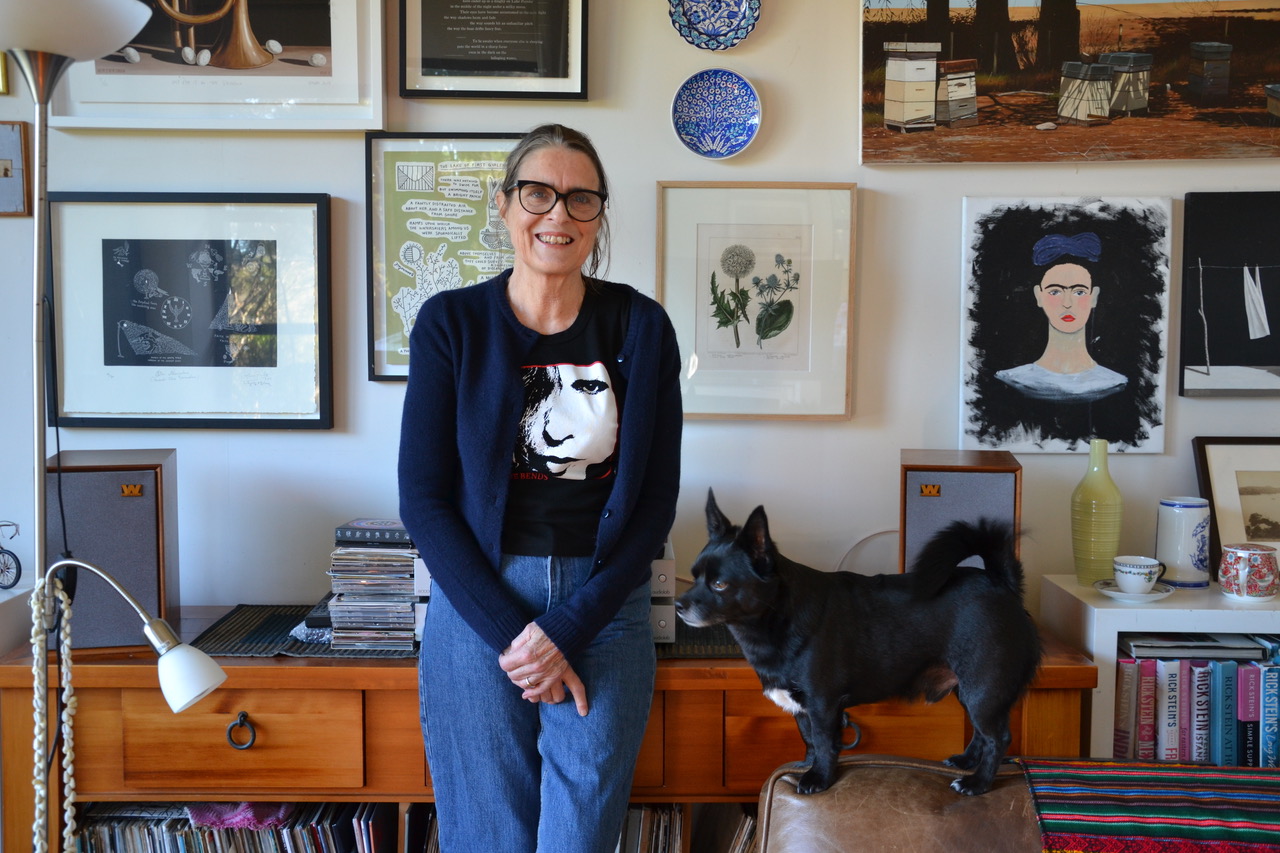
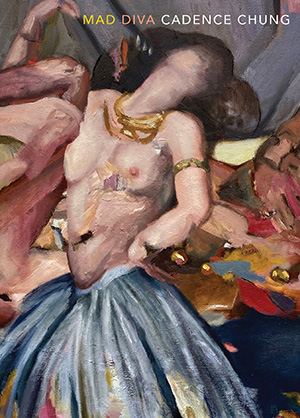
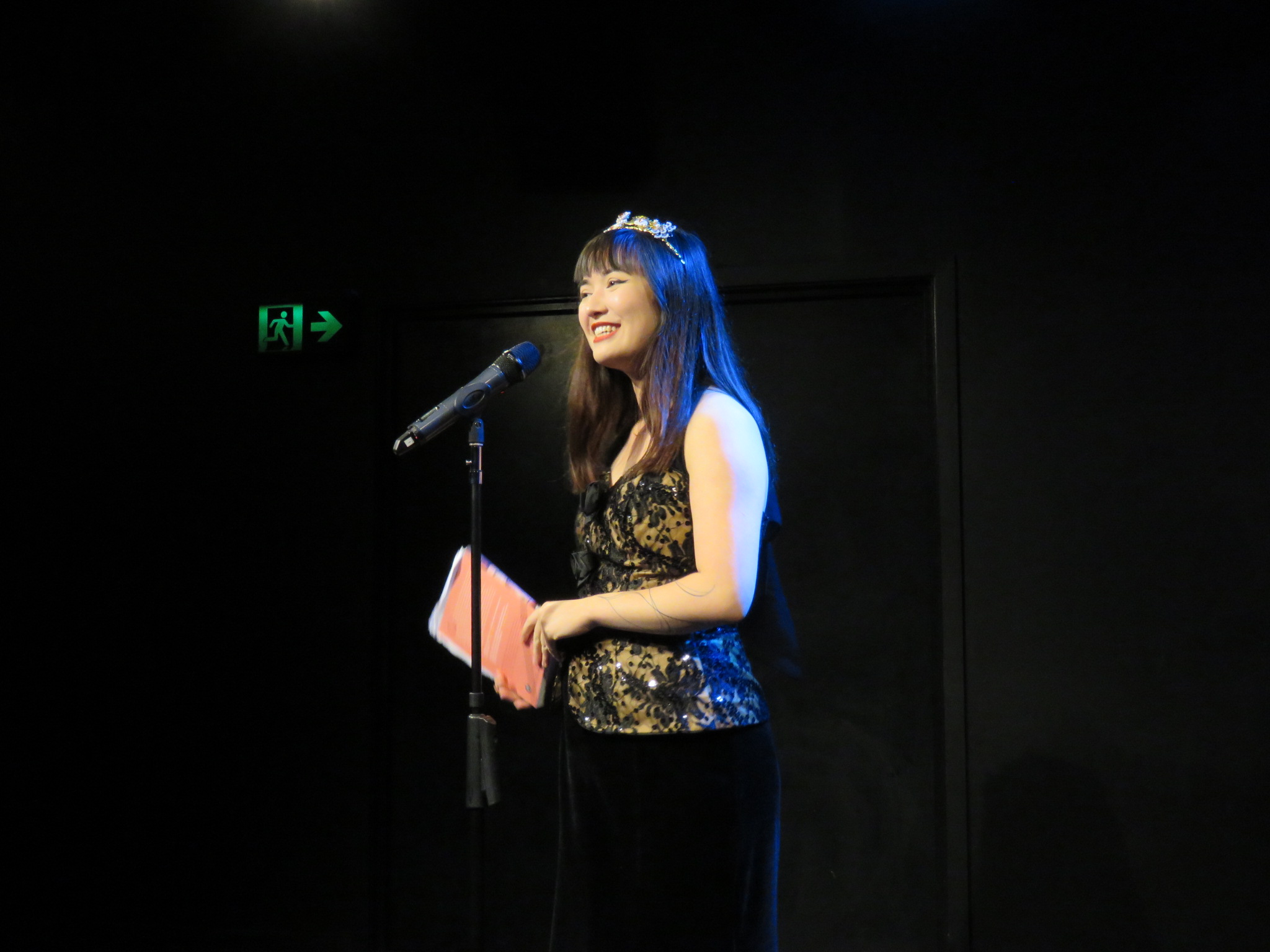
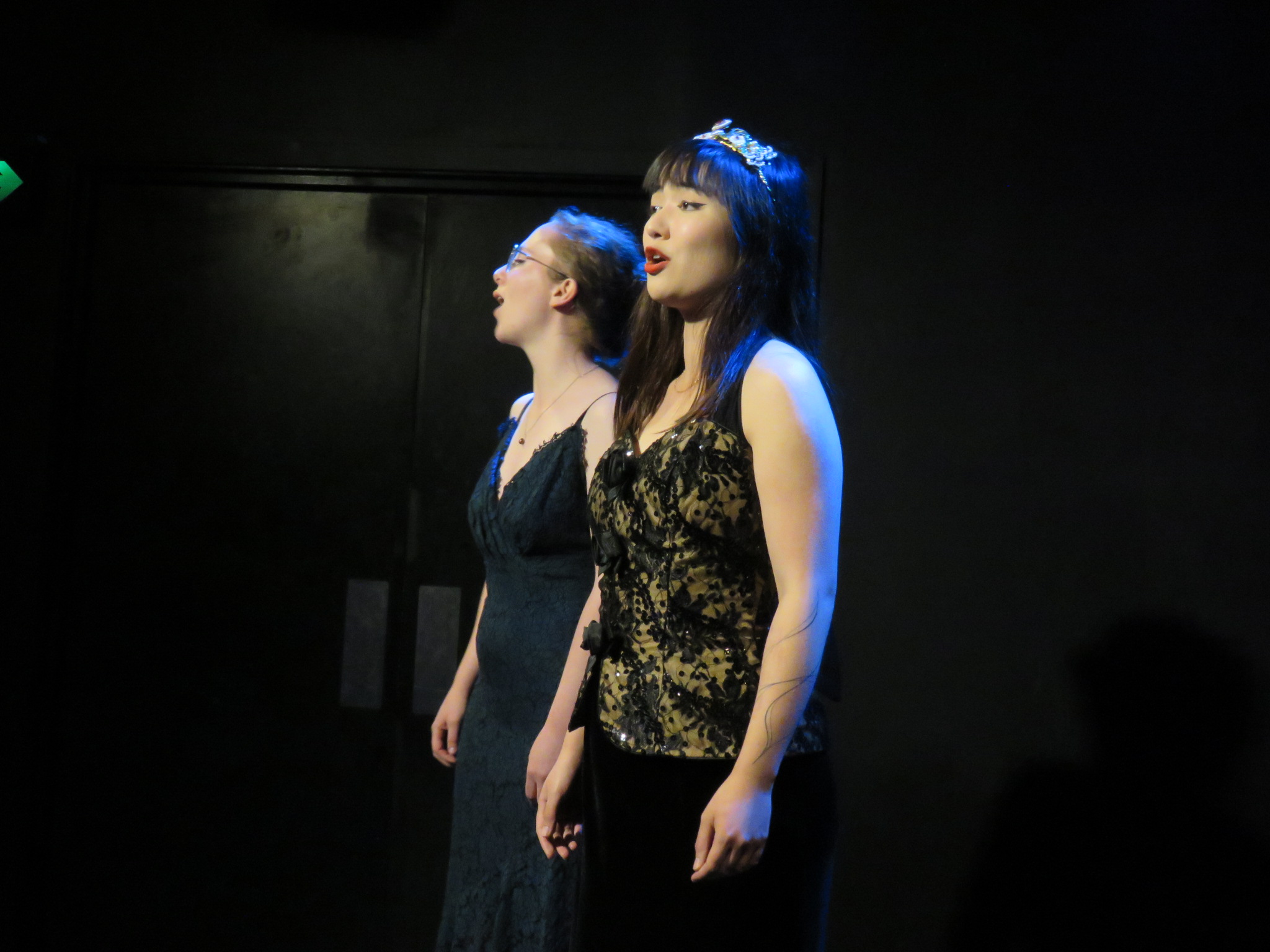
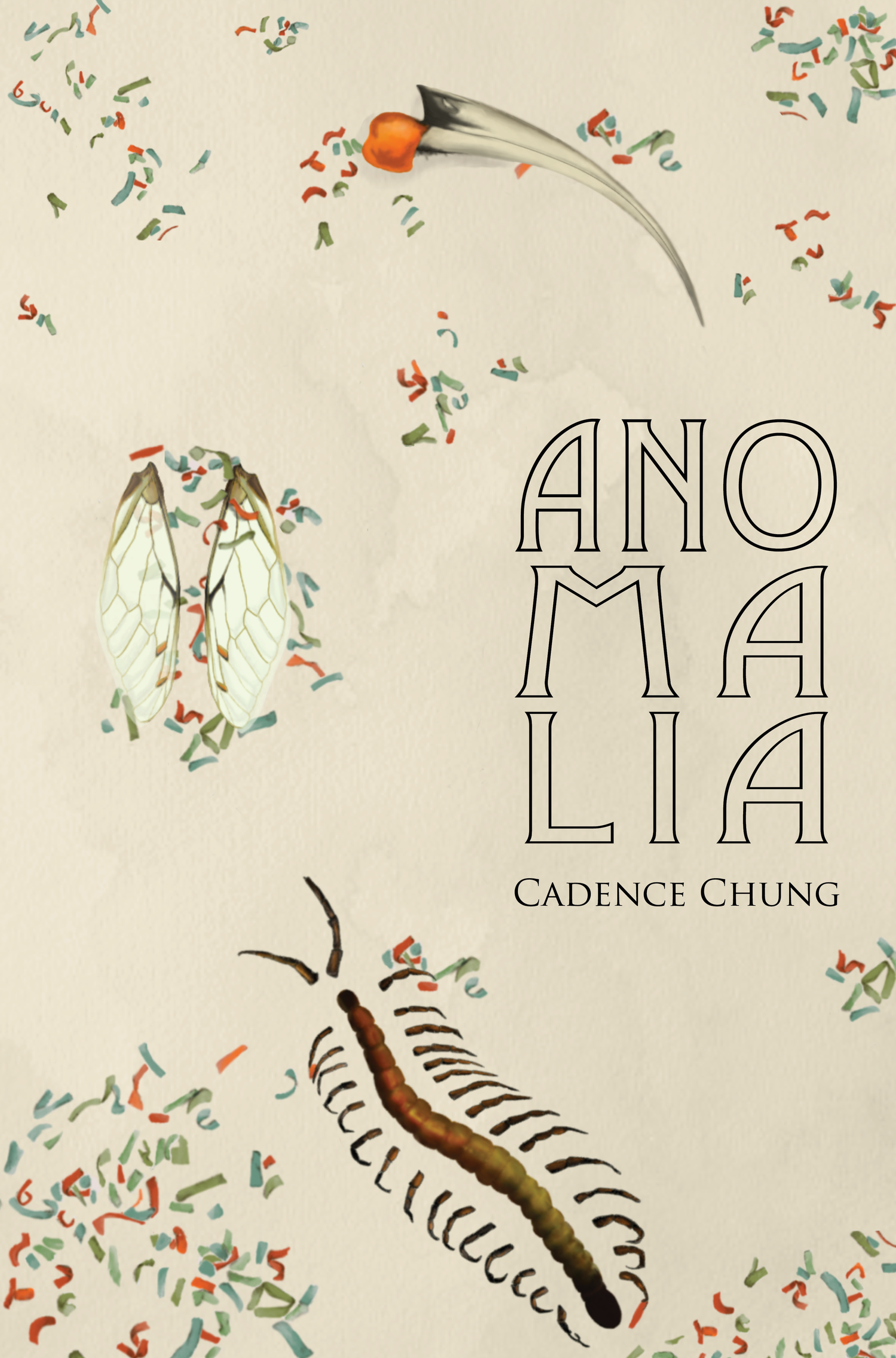
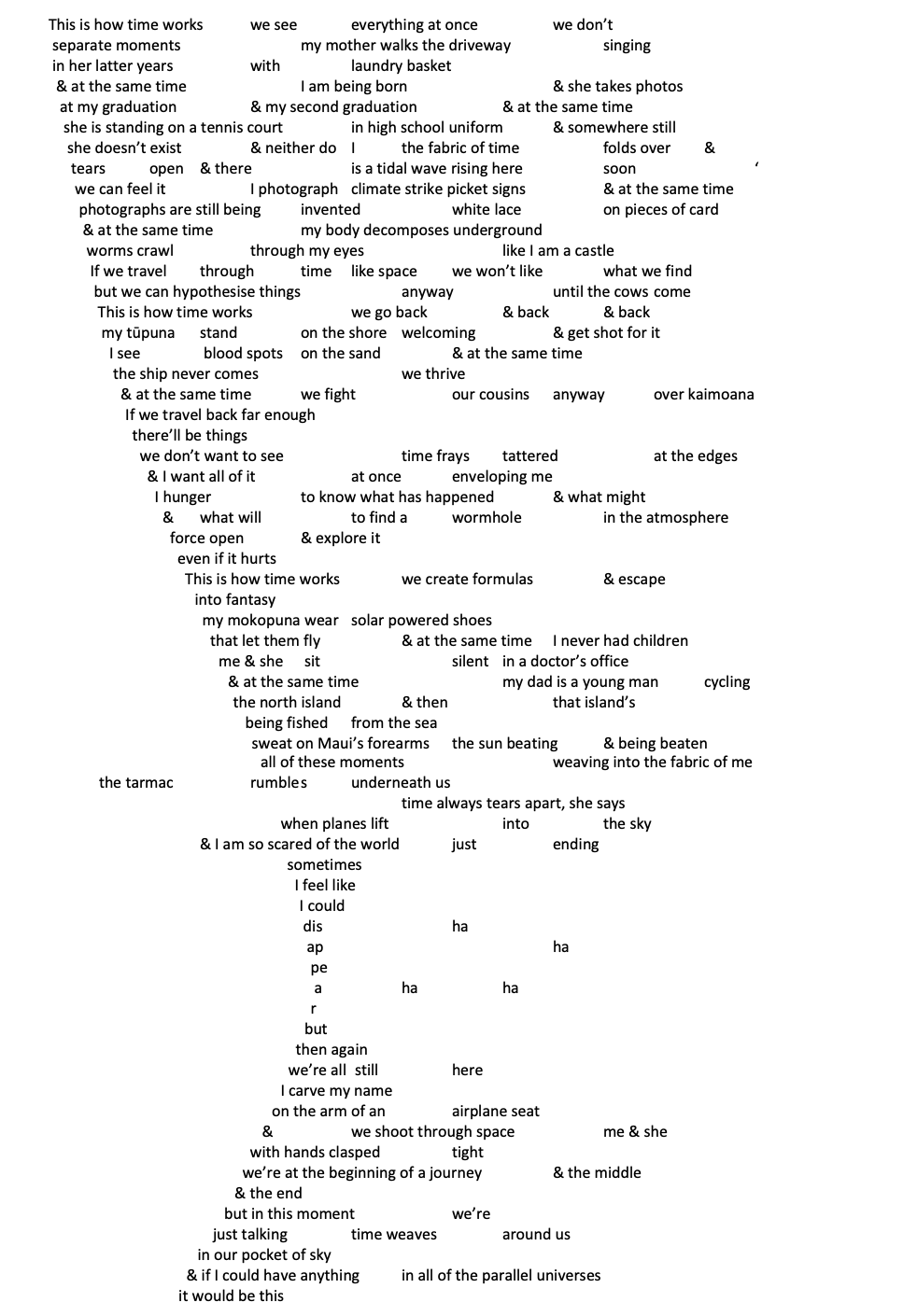

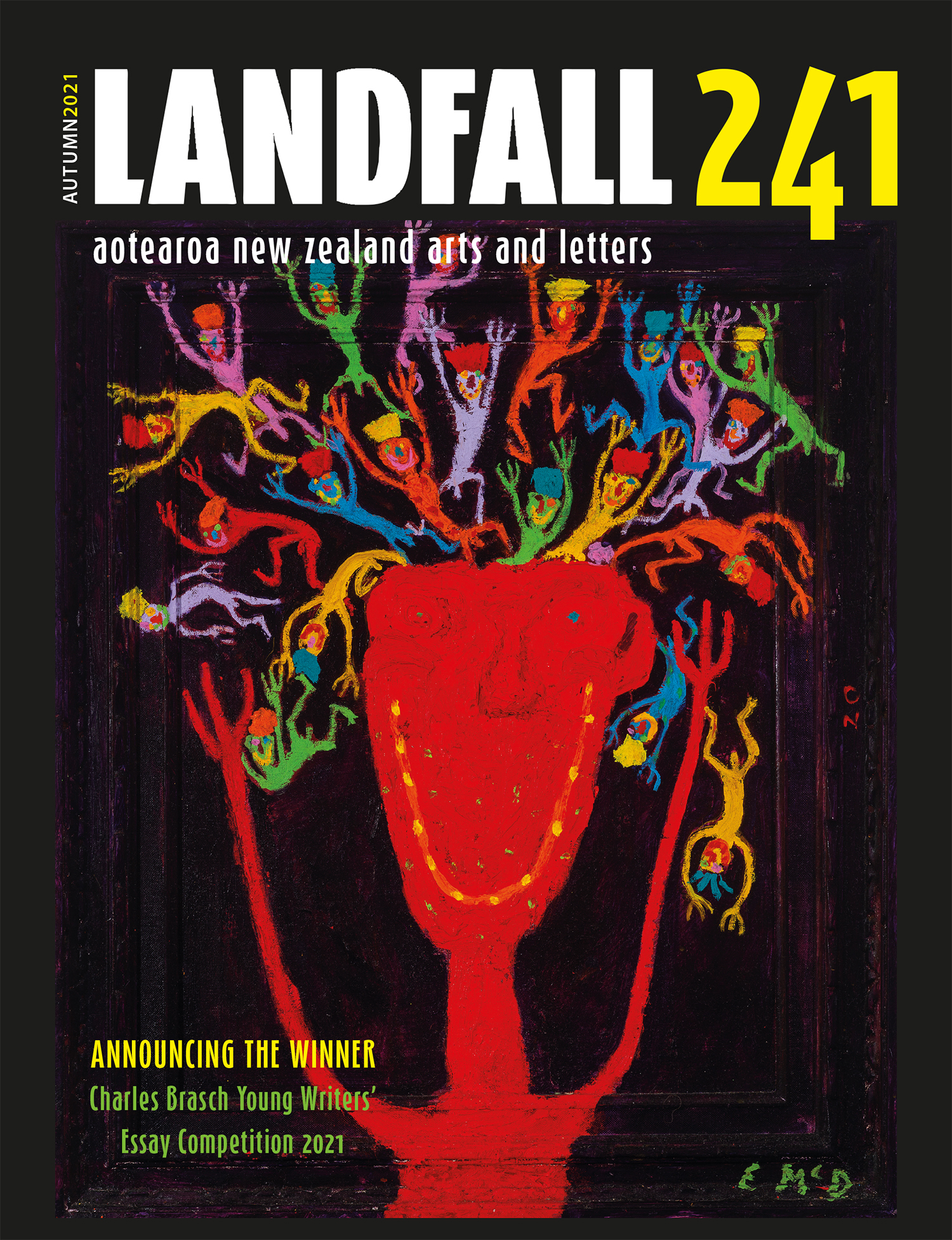
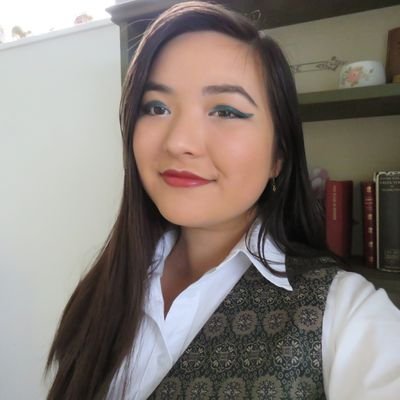
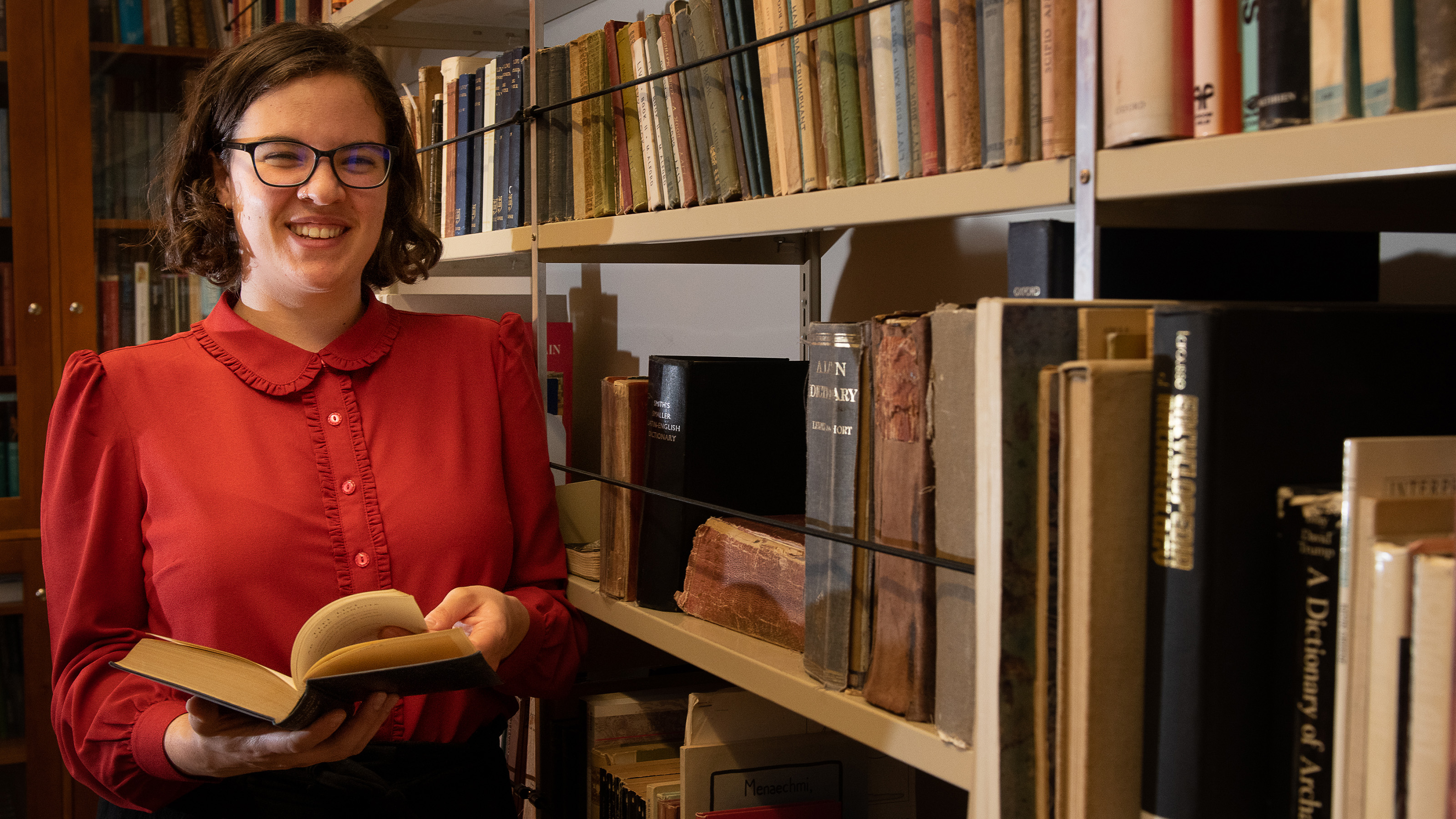
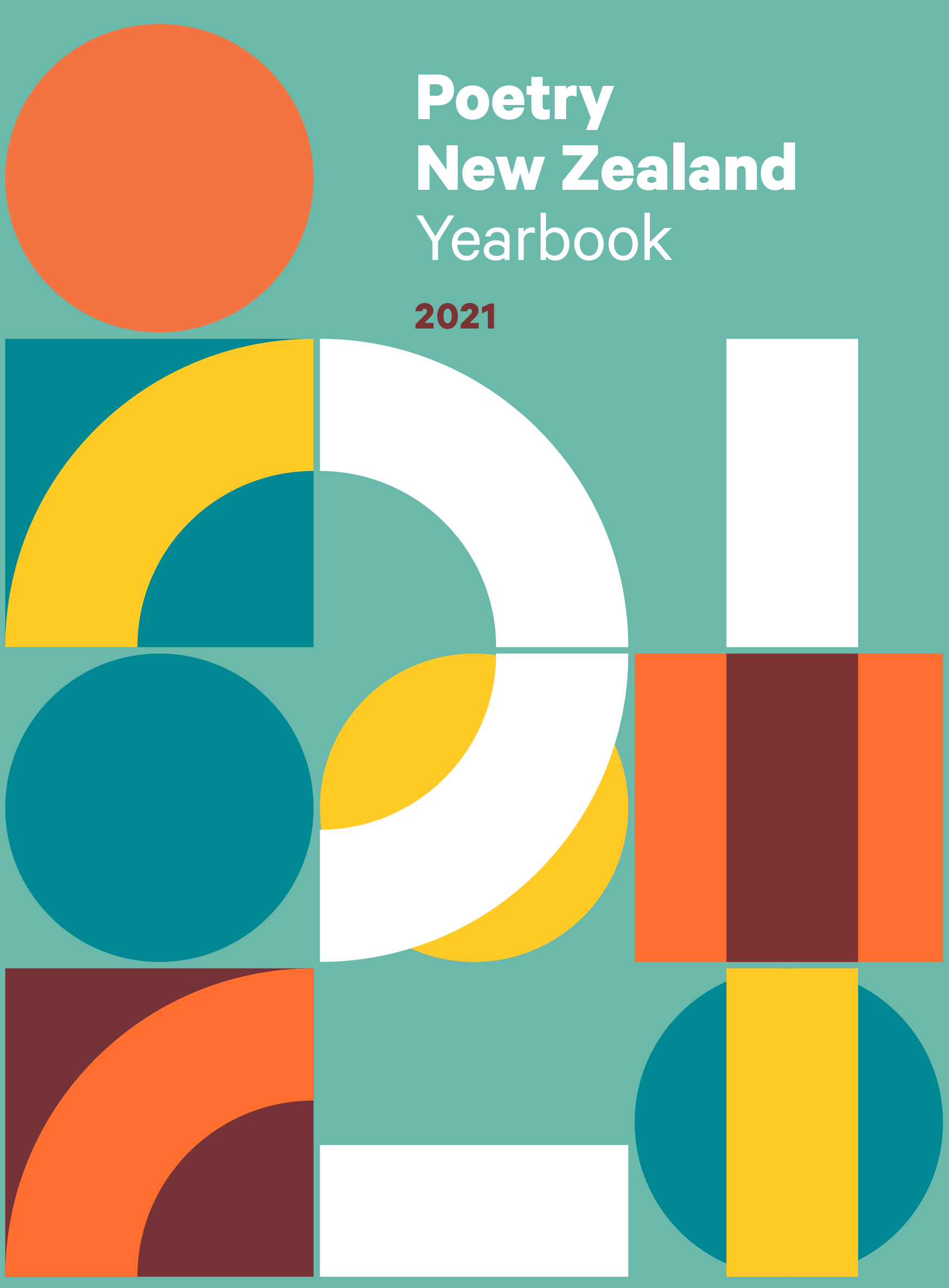
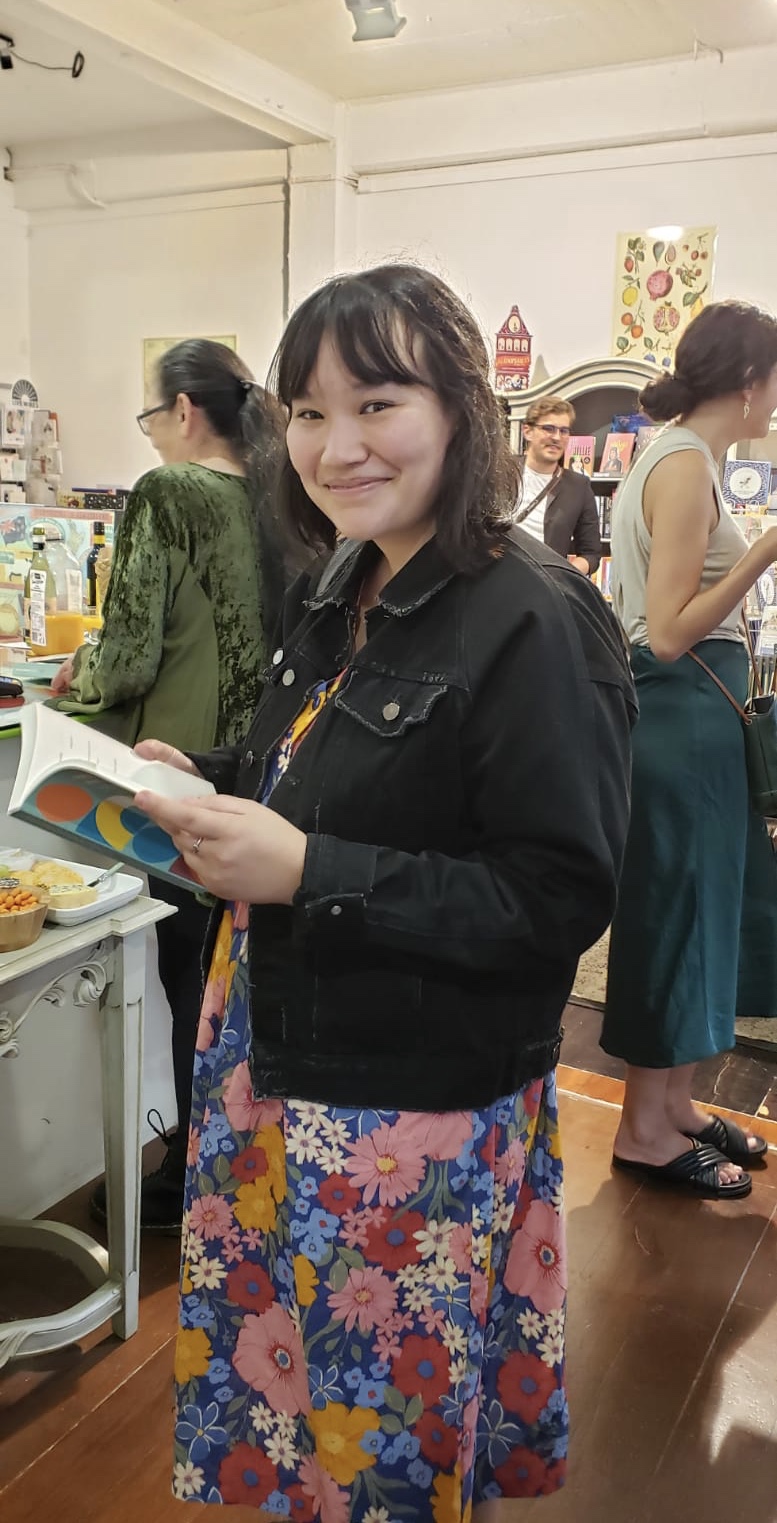
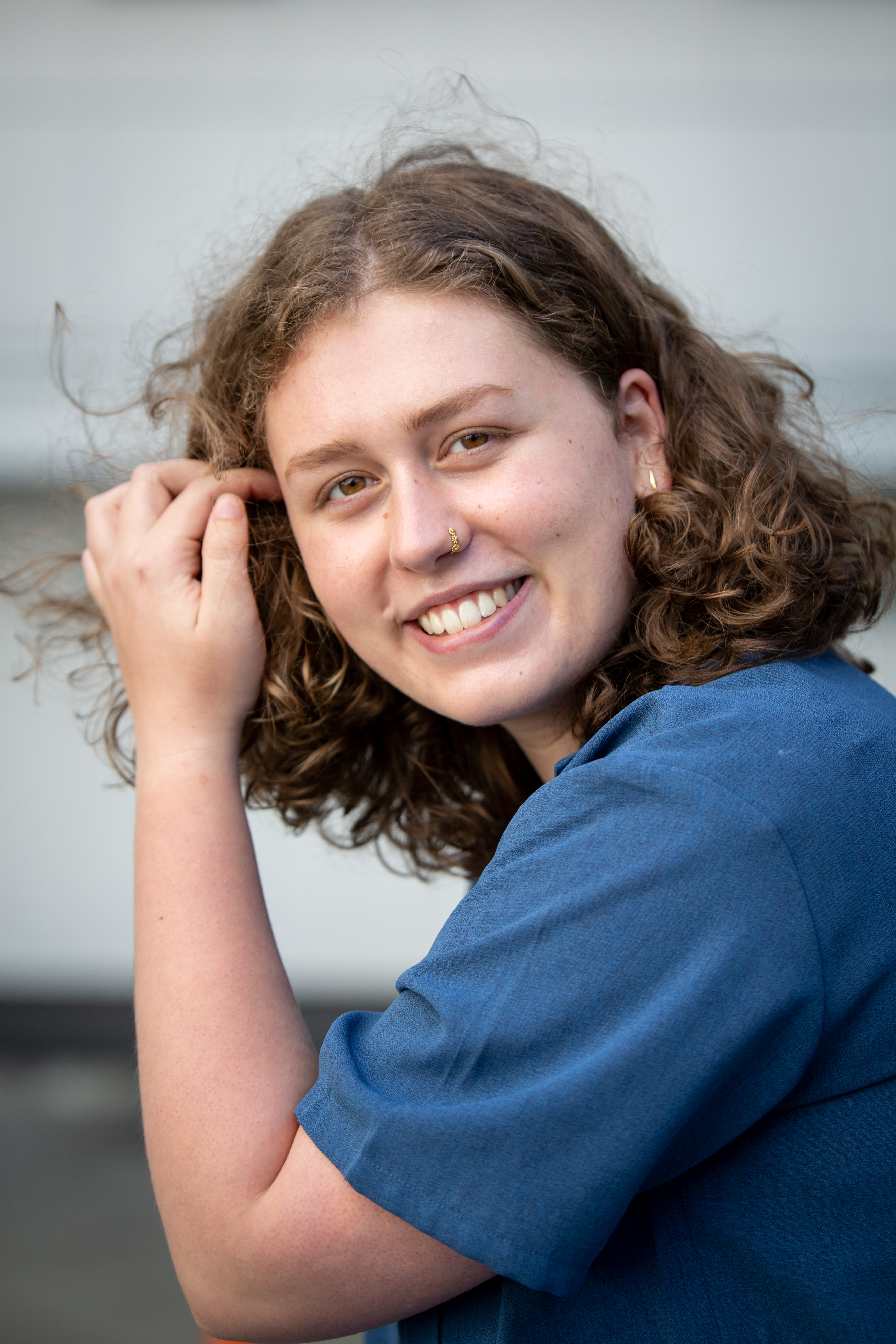
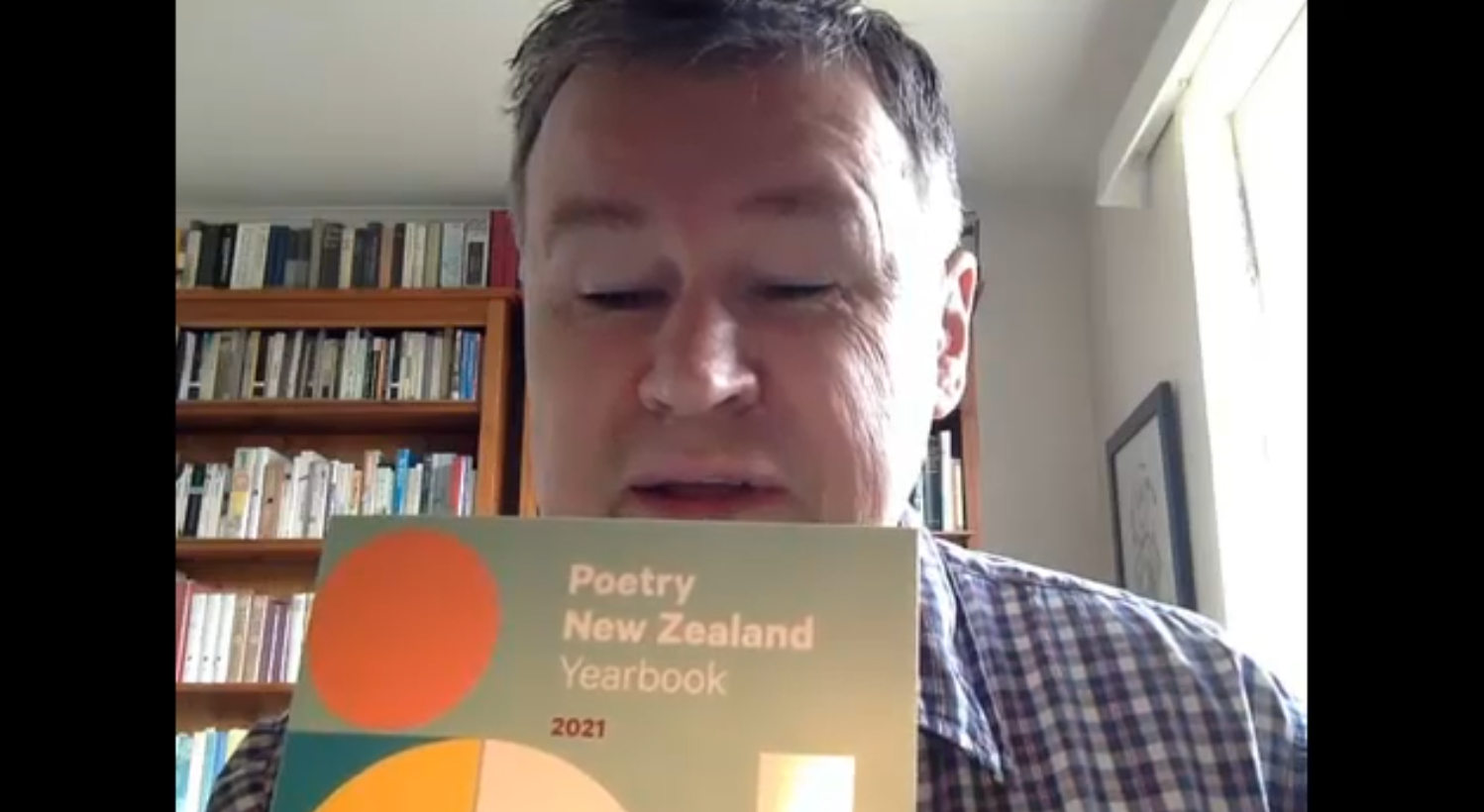
 NZ Poetry Shelf