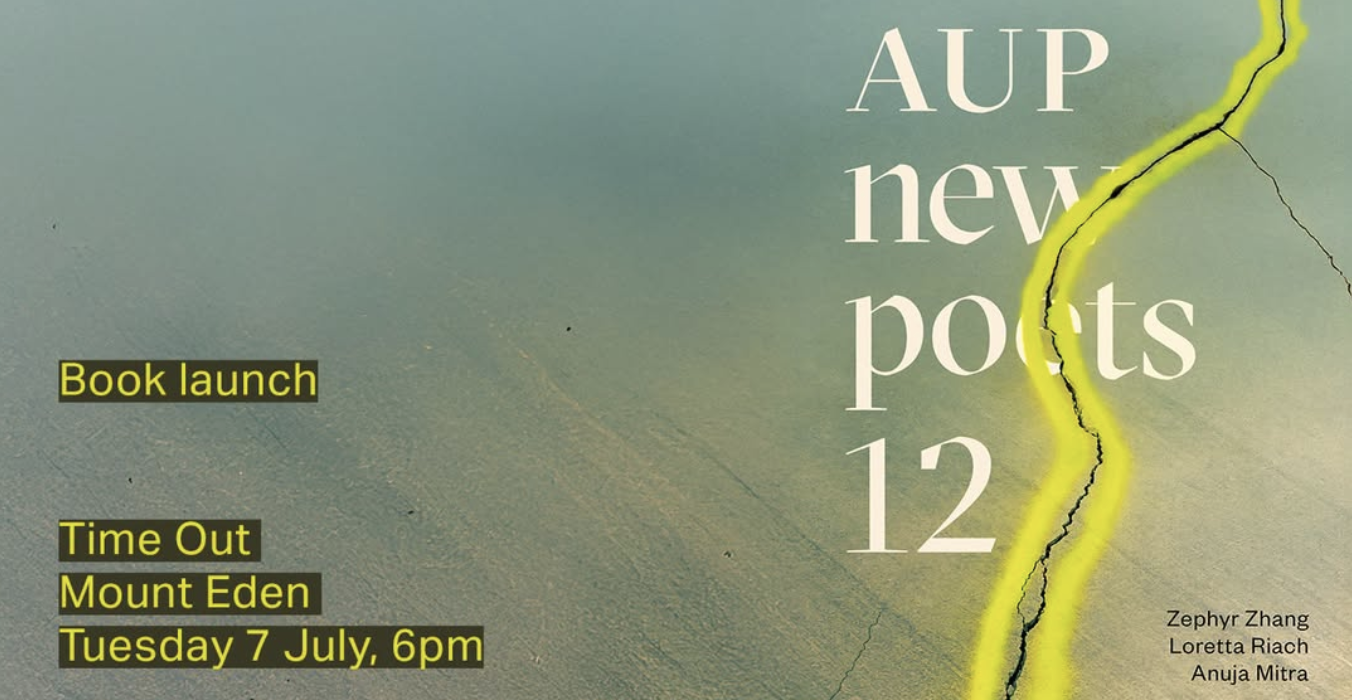
Launching NP12 tonight! Come along and hear three remarkable poets, Zephyr Zhang, Loretta Riach and Anuja Mitra.
Join us to celebrate the publication of AUP New Poets 12, featuring collections by Zephyr Zhang, Loretta Riach and Anuja Mitra.
‘‘AUP New Poets 12 carries on the high standard set by the series and gives a fuller canvas to three young poets who I know we will read much more from in the years to come. Open-hearted, funny and extremely current, Anuja Mitra, Loretta Riach and Zephyr Zhang all write engrossing collections that deliver on the promise of their appearances in local and international journals.’ — Francis Cooke
Tuesday 7 July 6pm
Time Out Bookstore 432 Mount Eden Road Auckland
Come along for readings and light refreshments. Series editor Anne Kennedy will be launching the book, which will be available to purchase courtesy of our generous hosts and the authors available to sign your copy.
All the world’s a stage, & all the poets have main character energy
Man taught a machine to write poetry with the bones of bards past. Man forgot to tell the machine how to worship the moon & let the intrusive thoughts win. The machine will never understand how poetry is gathered in the tight corners of poets’ obsessions— or how being a poet is accepting the role of brazen leader of the lovesick, keeping their congregation fed & watered until the next Lorde album drops. A machine will never understand the unbreakable bond between main character energy & seasonal affective disorder. A machine is a poor substitute for poets who wield white space as a placeholder for catharsis. You know their kind. The lost-in- their-own-world poets who imagine every walk to the dairy as a musical number. The vengeful metaphor poets who get their driver’s licence just to casually cruise past an ex’s house with a kauri trunk hitched to their car. The chaotic good poets who reject social mores by leaking a group chat line by line as a thought experiment— their hypothesis being: poetry is just gossip with line breaks. Man trained a machine to analyse the entirety of human creativity & surmised that the point of poetry is sacred self-expression. But we all know it’s not that deep. Spoiler alert: it’s doing shots at karaoke during a transcendental rendition of ‘You’re So Vain’. This is our way of dealing with the world constantly falling apart & knowing that our coping mechanism options are limited. Be a sonnet. Be a loop. Be entered. Be exited. Be ceremony. Be colloquial. Be a monologue played for praise. Be audacious enough to break the fourth wall. Life is a sitcom & you are the star; everyone else is the studio audience lapping up each punchline & plot twist. In this poem, you can piss on the machine & it will tell you it’s raining. Poor, wet machine. Looking without seeking. History without experience. Voice without conviction.
Chris Tse
Chris Tse is the author of three poetry collections published by Auckland University Press and co-editor of Out Here: An Anthology of Takatāpui and LGBTQIA+ Writers from Aotearoa. He was New Zealand’s Poet Laureate from 2022-25. His fourth collection of poetry, Dance-Floor Romance, will be published by Auckland University Press in September 2026.
“Poetry probably isn’t necessary, strictly speaking. It doesn’t happen because somebody thought it financially viable or ethically responsible or somehow socially vital. But in the bombed cities, the wasted homes, the dishevelled places, poems are still being written; poems are still being written in Palestine. And so one of the reasons that artmaking remains radical is that its existence alone suggests, or even speaks into reality, however briefly, an alternative system of value. In this I’m something of an old-school progressive. Poetry goes on in the sense that it just happens — despite violence; motivated by nothing; needed, but less than shelter; heralded by no dollar, poets continue their work. Poetry also goes on in the sense that its aesthetic conception of value chafes with a world in extreme turmoil, ruled by monied interests, in which a genocide is unfolding on our phone screens; it figures by negation another, better world of no violence. For poetry makes nothing happen: it survives (Auden). And so we go on. In which direction? Ake, ake, ake; onwards.” Jackson McCarthy
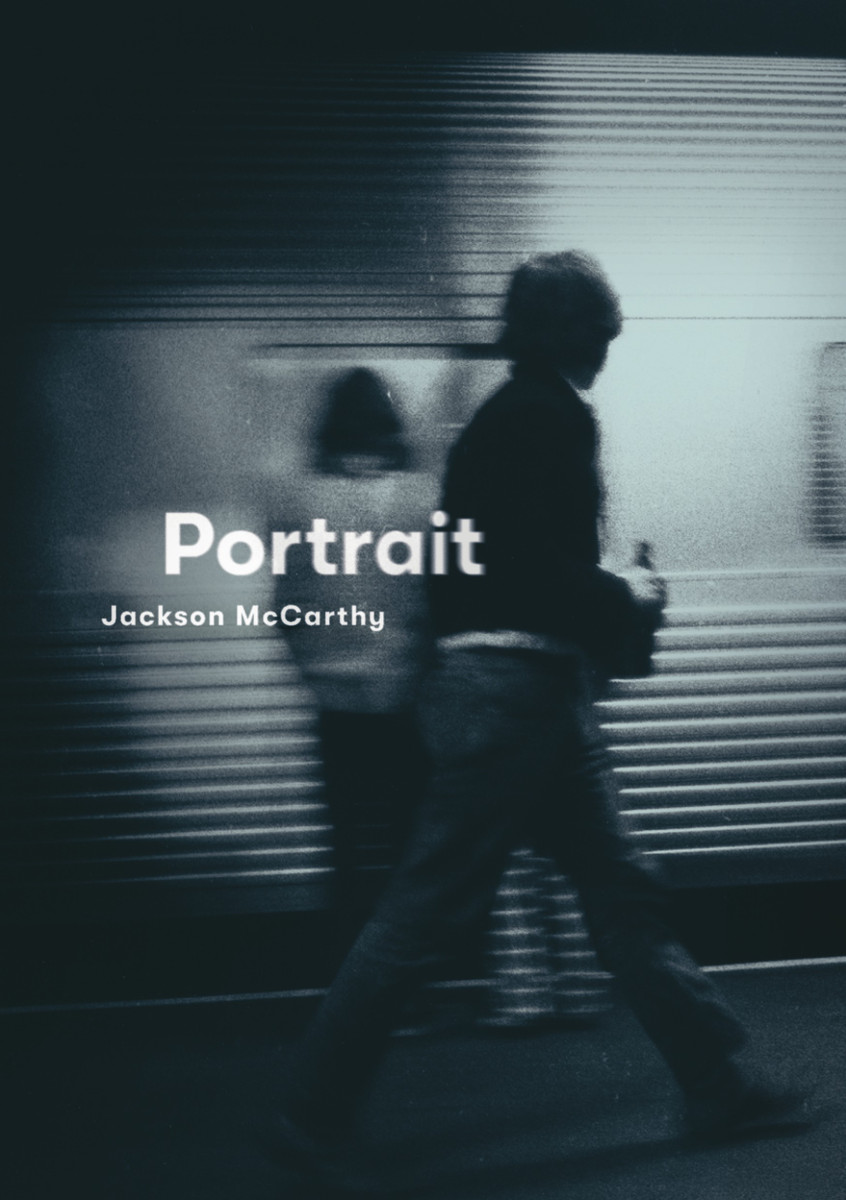
For the past month I have spent time with Jackson McCarthy’s sublime debut poetry collection, Portrait (AUP, 2026). It is the kind of poetry experience that underlines why, no matter how rugged my road is, how depleted my energy jar is, poetry is both vital and connecting, so utterly nourishing. Our conversation sparked ideas for my blog, for my own writings. To hear Jackson read was a bonus.
This week a special event took place: the celebration and gifting of the tokotoko to Robert Sullivan Ngāpuhi (Ngāti Manu, Ngāti Hau / Ngāti Kaharau) and Kāi Tahu (Kāti Huirapa ki Puketeraki), our current Poet Laureate, at the National Library. The tokotoko, embued with mana, is carved by master artist carver, Jacob Scott, and specially created to fit the laureate. The event was sadly moved from Matahiwi marae in Hawke’s Bay, due to the storm, but was a moving and fitting ceremony that included karanga, singing, speeches and readings from around 18 poets. Since 2007, when the National Library took over the appointment of the Poet Laureate, the Laureates have been Michele Leggott, Cilla McQueen, Ian Wedde, Vincent O’Sullivan, CK Stead, Selina Tusitala Marsh, David Eggleton and Chris Tse.
Monday: Poetry Shelf Monday Poem – A sickle sun by Megan Kitching
Tuesday: Poetry Shelf Playing Favourites – Melinda Szymanik picks Erik Kennedy (she writes her own poem version!)
Wednesday: Poetry Shelf Breathing Room – Love by Jenny Powell
Thursday: Poetry Shelf Playing Favourites: Jenna Todd picks Michael Pederson (and his incredible ode to bookshops)
Friday: Poetry Shelf conversation and reading – Jackson McCarthy
An invitation: I invite you to choose a poetry book you love that has been published in Aotearoa in 2025 or 2026. Write a paragraph (or two) on why you love this (your choice what you write) and choose a poem that, with permission from the poet and publisher, I would include. paulajoygreen@gmail.com
My new post box: PO Box 58, Waitākere 0660.
Song
I was licking the moon like a streetlamp before the water razed the city — people, jobs, lovers, I feel your movements glowing and reckoning with me. Some people say the loss I felt
with you was inevitable, a foregone conclusion, but I can still breathe the air around the dark shape of your body.
The life I’ve felt has been larger only than this tide; tonight, messages from family reach me, surreal, on my phone.
My cousins in Beirut can feel the terror in the air, I go on with so little left to speak; listen to my heart, these songs of loss I write while I cannot hear the bombs.
Portrait, Jackson McCarthy Auckland University Press, 2026
To celebrate Jackson McCarthy’s sublime debut collection, Portrait, Jackson and I embarked upon a conversation about poetry, and in particular his new book. The conversation is interspersed with readings from the collection.
Paula: Reading a new poetry collection so often widens and shifts what poetry can be and do. I find myself opening rather closing the pores of a poem, I find myself feeling thinking breathing intuiting listening. Not wanting to explain. Wanting to share how and why it clicks with me so very deeply.
That’s me as a reader — what verbs signal you as poet, writer of your debut collection?
Jackson: I like your verbs, Paula! I like “thinking” especially. There’s a lot of mental preparation that goes on before I sit down and write a poem. I write quite quickly; or, if a poem is taking too long, I drop it and come back to it later, sometimes weeks or months later. Each time I return, I touch things up quite fast and then let the changes settle. Often you can’t get a real sense for the picture until the paint dries. All the meanwhile, though, I’m thinking — as well as feeling, breathing, intuiting, listening — and so I consider that the main constitution of my practice: being alive.
‘No art’
Paula: Yes! Being alive in the poem. Listening is key to me as both reader and writer of poetry. I am listening to your deft lyricism, every word-note pitch perfect: “We sit / in the quiet of waiting” (from ‘Mahuika as a boy’). Like listening to the aural dexterity of ‘No art’. This is the first deep satisfaction, the lyricism of the line. How important is poetry as lyricism for you?
Jackson: Well, for me, it’s probably the essential thing. Poems are silent, fixed, complete on the page. Yet everything about poetic technique (metre, rhyme, enjambment, and so on) aspires to the status of voice. And so the poem lives a double life. It’s both something static on the page and something enacted in the process of reading; something that reveals itself to us line by line almost spontaneously, each time as if for the very first time. It’s both a typographic object and a verbal performance. So the poem mystifies or lives in the gap between stasis and process, and between (why not say it all?) the dead and the living.
If this is a limited view — which it is; I don’t know if I’ve properly accounted for visual poetry — it’s at least a generative constraint. I’m not in the business of giving definitions, saying what poetry is or isn’t. But if I were to say that painting consists in the application of paint to a surface, surely that definition, while limited, is wide enough to encompass many spectacular things. Those are some thoughts about lyricism and listening, and the relationship between silence and sound, which many types of poetry and surely some prose too can evoke. I’m grateful that you’ve spent time “listening” to my book in this way. Then there’s lyric, as a genre — and I do think of my poems as lyric poems, generically speaking, as well.
And, further, I have to say that the songwriters have been a big influence. I mentioned lyricism (an effect), lyric (a genre), but lyrics (as in, lyrics to songs)… they can be wild. You’ll get the most abstract and wonky piece of verse; the syntactic relationships will be so densely recombinable — the kind of lines that would be flagged as rather oblique if they were presented as poetry — and then a whole stadium of people will place those words in their mouths and sing them as their own: “O life is bigger / It’s bigger than you, and you are not me / The lengths that I will go to / The distance in your eyes” (“Losing My Religion”, R.E.M.). If you reckon people aren’t interested in difficult and abstract verbal constructions, then you haven’t been paying close enough attention to songs. That relationship between the singable, shareable line and the density of meaning that travels under its music… it’s a very very special thing, and poets should look there for energy. Then, of course, you get the songwriters of extraordinary, winning, straightforward eloquence: “In my head / I play a supercut of us / All the magic we gave off / All the love we had and lost” (“Supercut”, Lorde).
Paula: Are there other poets who you especially admire for their lyricism?
Jackson: Auden is king, but I would never have approached him or probably poetry at all if it weren’t for Frank O’Hara. O’Hara’s early poems display a French influence and are certainly his most lyric in the genre sense of the word. But I like the relaxed, fluent, chatty later style, too. The studied naturalness of those later poems is very special — and I think weird and weirder for how it’s self-reflexively “casual”, rendered, and so not casual at all.
‘Adam’
Paula: The opening poem, ‘Prelude’ is the perfect stepping stone into a collection that cares as much for the invisible as for the visible, for space and quiet and hollows.
And for self. For intimate self. Hollow self. Thinness of self. Emptying out and taking in. Fabrication. Pronouns on the move. We readers are gathering to listen. Some poets hold self at a distance when they write, while others venture into the super confessional, or poetic fictions.
[….] Well, I too could be mean, possessive, obsessed with my own thinness —
for a crowd had gathered like black water to hear these: my innermost thoughts.
from ‘Adam’
‘Uniform’
I find your collection the most original navigation and weave of self I have encountered in ages. So many lines to quote! How important was and is self as these poems came into being, whether hollow or present or imagined?
Jackson: I’m not sure I was thinking directly about “self” per-se. I think a lot of the poems are sort of tricksy about the presentations of self they contain. I suppose I went to some pains to show how an author might construct a poem’s speaker, as in my poem “Uniform”. The mode is confession, but the poems are not me. Still, they’re an expression of my thinking, my emotions, my taste — maybe something about all the posing and posturing in the book is merely contradictory, then. But I hope instead that binaries such as “author/speaker” and “self/not-self” are thrown into some sort of counterpoint, melodically independent but harmonically dependent on one another, a complication rather than a contradiction. Thank you for your comment about “weave” — I think that signals that what I was going for worked for you, which is good to hear.
The next book, I reckon, will be placed more directly on what readers (and me too, if you catch me on a good day) will call “my” voice and “my” persona than some of the poems in this book. But I always allow myself to extend or fictionalise when I need to. I remember my friend Cadence Chung told me that she finished a poetry reading once and somebody came up to her and told her how brave she was. She accepted the compliment, but thought privately to herself, “Well, it would have been brave if I had read you my diary entry or cried on stage, but instead I crafted a work of poetry and then edited it and then rehearsed and performed it.” Whenever we set down words as writers, we mark a fissure in time; every time we write “I”, that typed object which we think describes our changing selves we render fixed. The poems bare me — they hold me up — but they are not me, largely because I am a person, and they are poems.
‘Music’
Paula: On my second reading of the book, I became even more scratched and moved by the appearance of (upper case) Death and (lower case) death.
that there’s always a distant cliffside called Death and somebody saying No on it, refusing life;
that there are always those fabricates of memory that lacerate the present with reminder of the past —
from ‘Music’
Past present and maybe future rubbing against each other, with tendrils in grief, whether fabrications or memory, with tendrils in death. I so ache as I read ‘Night train’, offering past or death, getting lost in the blue.
Tell me about the recurring ache arrival of Death death.
Jackson: Thank you for noting that turn of phrase in “Night train”: one way is the past and the other way (the future, extrapolated to its extreme) is death. It’s easy to think that death is the only certainty; the only real thing, realer than life. But, as Ben Lerner reminds us, “there’s too much piety in despair” — and love, of course, is “more avant-garde than shame / or the easy distances” (“No Art”). Sometimes in the book I capitalise Death because I mean for him to be my enemy and among us, personified, or out there in the landscape. Other times, I refer more generally to the bodily phenomenon known as death. Probably that’s all I meant by the distinction, but I’m not sure. Some people say that death is the great mystery, but I don’t think so. I think life is the mystery.
‘Night train’
Paula: Indeed. If there are the stutter echoes of death, there are also the equally affecting and connecting strands of love desire body touch sensuality.
Poetry’s not pinned down here. It’s physical and it’s longings.
Jackson: I love that physical aspect you mention. I’m thinking back to my comments about lyricism, lyric, and lyrics here… what’s important about those aspects of writing is that they induce embodied effects in the reader, whether subvocalising in the head or reading aloud. In that way the poetry is evocative of what it means to have a body, and indeed to have sex or go out dancing or take drugs — those things people do that make them feel embodied. The longing follows naturally, because we know that the high can’t last forever; because all things and this body too will go; and because when we come, we also come apart, in “the pale light that each upon the other throws” (Wallace Stevens).
Paula: I adore your visual tropes, the power of the metaphor and similes to infuse a poem visually and, in doing so, offer ideas and feelings an uplift. I jotted down so many beauties.
“My life has since continued to devolve into a succession of windowless rooms, and at the door of each a guest is greeted and enters.”
Do you have any favourites? Something that falls into your writing ink and it’s surprise and it’s skin-prickling delight?
Jackson: I’m always surprised by what I write. Honestly, I’m just grateful that there’s something there (when there’s something there, that is!). At the moment, I quite like my poem “Happiness” for its straightforward, civic speechiness — and I like its ending image: “Take me out down the streets / of my mind and just look / at the people’s sudden faces”. “Happiness” was the last poem I wrote for the book, and it’s seemed to have dropped me into a new style and swagger, a new directness, which I feel ready for. But I worry that it includes a line I feel sometimes but don’t hold to be true: “I don’t believe that life is real”.
Paula: I love the presence of other poets, poetry books, on writing poems, on being a poem, on thinking about other poets, on sleeping with a poetry book under the pillow. What poets have nourished you over the past couple of years?
Jackson: Let me give you a list! While I was writing the book, I loved Dickinson, Auden, Glück, Frank O’Hara, James Tate, Ben Lerner, Hera Lindsay Bird, Tayi Tibble, Eliot, Carl Phillips, Li-Young Lee, Coleridge’s conversation poems, Alex Dimitrov, Bill Manhire, Maia Armistead, Sam Hunt, Cadence Chung, Jake Arthur, and Henri Cole. More recently, since finishing the manuscript, I’ve been loving Kate Camp, James Schuyler, Keats, Glück (still), and O’Hara (again).
‘Aubade’
Paula: When you were writing this collection, did you make writing discoveries? Like what mattered to you in creating a poem? And also in gathering a whole collection with its echoes and knitted strands and quietness?
Jackson: With this book, a lot of the poems I had endings for first — sometimes choice phrases, sometimes just general notions of where the poem needed to go. So a lot of the time, I was writing teleologically, hurtling toward a foregone conclusion, and that was the discovery: What conditioned or brought to my mind such a phrase as “you don’t have to be ashamed anymore” (from my poem “Aubade”)? What happens before I can allow myself this line? Conversely, in my new work I’ve found myself with some very beautiful opening stanzas but fudging the endings. This is dangerous work, and I fear for myself.
As for arranging the book… Thankfully, the echoes and motifs were more or less accidental. I was just in a particular moment as a writer, with my pet subjects and figures and turns of phrase. I think if I knew the book’s design from the start I’d be so intimidated I wouldn’t write anything at all. I just worked on a poem at a time, and eventually had the sense that they were talking to each other in generative ways, and then arranged them in an order that best sparks and reveals those ways. But it took a while for the book to come to form — some stuff is from when I was sixteen. The best you can do is put your head down and hope. What do you think I wished for? I wished for what I always wish for. I wished for another poem. (Glück)
‘Song’
Paula: I read ‘Song’, the final poem again and I am holding my breath. How do we write? How do we read? How do we continue to write poems when the world is so awry and bombs are being dropped. This being so personal for you with your Beirut familial connections.
My cousins in Beirut can feel the terror in the air, I go on with so little left to speak; listen to my heart, these songs of loss I write while I cannot hear the bombs.
from ‘Song’
I feel the book itself is the reply. This incredible book that was first dreamed up at Dark Sky Cottage in 2024. More hollows. More writing as going on. What do you think? Or should I be using the word feel, this book I feel so intently?
Jackson: It’s easy here to retreat into cliche. Don’t worry, you won’t find me rhapsodising about how “urgent” or “necessary” my own poetry is. Poetry probably isn’t necessary, strictly speaking. It doesn’t happen because somebody thought it financially viable or ethically responsible or somehow socially vital. But in the bombed cities, the wasted homes, the dishevelled places, poems are still being written; poems are still being written in Palestine. And so one of the reasons that artmaking remains radical is that its existence alone suggests, or even speaks into reality, however briefly, an alternative system of value. In this I’m something of an old-school progressive. Poetry goes on in the sense that it just happens — despite violence; motivated by nothing; needed, but less than shelter; heralded by no dollar, poets continue their work. Poetry also goes on in the sense that its aesthetic conception of value chafes with a world in extreme turmoil, ruled by monied interests, in which a genocide is unfolding on our phone screens; it figures by negation another, better world of no violence. For poetry makes nothing happen: it survives (Auden). And so we go on. In which direction? Ake, ake, ake; onwards.
Thanks again, Paula, for your kind words.
Jackson McCarthy is a poet based in Te-Whanganui-a-Tara Wellington. He is of Lebanese, Māori, and Pākehā descent. His poetry has been published widely in Aotearoa literary journals, including Landfall Tauraka, Ōrongohau | Best New Zealand Poems, The Spinoff, Starling, and Sweet Mammalian. Portrait (Auckland University Press, 2026) is his first book.
When a shooting star crashes to earth it becomes a bookshop. Super -califragilisticexpialidocious spelled backwards is: dear bookshops you are the sugar. Och yes, the dream’s not without some drama, but what writer worth their salt hasn’t been tutted at for sneaking their wares onto those pucker ‘Top Picks’ spots? Or been guilty of taking every freebee offered even on strictly ‘only browsing’ days because the to-be-read pile’s grown taller than organ music & that billionaire’s guilty conscience. Eek, that’s nowt compared to my mum’s rogue antics: leafing through the poetry section just to announce that’s ma boy to anyone in earshot – the book raised up like a chalice as onlookers gawp, gripe or panic. A question: is there a more glorious emporium of wonder to be caddish in than a bookshop? Answer: hard no. That said, I am sorry bookshops, but suffice to say, it’s never not fawning, I never don’t carol shop local & shop indie like I’m chanting the chorus of an anthemic pop banger. & I’ve not stopped worshipping at your literary altars since I first found my mettle mottling behind the strong wooden beams. Oh bookshops, I’ve taken to weeping at your artsy window displays; taken to rejoicing at your skin-trillingly thrilling in-store readings; taken to oversharing with your brigade of brilliant booksellers only to be rewarded with hot literary gossip. I’ve found refuge in your real, & imagined, parlours: purring like a wet cat scarved around human legs as a tin of kippers opens. After all, to be gifted books & gift books in return is one of life’s greatest pleasures. When a shooting star crashes to earth, well, you’ll know it by the way it glows.
Michael Pederson
Edinburgh poet laureate Michael Pederson’s Lines on Glister & Glow was written as a commission for Independent Bookshop Week by the Booksellers Association UK.
In May, Pedersen visited Aotearoa for the Auckland Writers Festival. Starting at the sold out gala, he featured in eight events. His looming figure, bouncy curls and musical accented wisdoms led him to be a festival favourite – the bookshop sold out of his books on event number two.
I sat on a wrap up panel with Michael, where he read this poem, his ‘love letter to bookshops,’ from Lines on Glister & Glow and I cried. I looked out to my close industry friend in the audience, she was crying too. Firstly, there’s nothing like a poem waxing lyrical about your chosen vocation but secondly, this poem captures all the best parts of being in a bookshop for everyone who visits – the bookshop – what he calls ‘the lighthouses of the high street’ – as a stage.
Filling the senses, Lines is punctuated with crispy p’s that respond to the word bookshop: Top picks. The pop banger. The gossip! Parlours, purring. And taste! Sugar, salt, kippers.
Traveling beyond the books – there’s the story of the writer – the aspiration, the glorious pride shining out of his Mum – ‘that’s ma boy.’ Can’t you just see it?
The true goodness of a bookshop – the anticipation of discovery, of finding what you didn’t know you wanted, of gift of books, the safety and comfort of belonging. It’s a poem that is glorious to listen to, but it reads on paper with exceptional rhythm – the bustle & hum pulses off the page, it makes you want to drop everything and go.
Jenna Todd
Michael Pedersen is a prize-winning Scottish poet and author, a former Writer in Residence at Edinburgh University, and Edinburgh’s Makar (Poet Laureate). His prose debut, Boy Friends, was published by Faber in 2022 – it was a Sunday Times Critics Choice and shortlisted for Best Non-Fiction at Scotland’s National Book Awards. The Cat Prince & Other Poems, his third collection, won the Books Are My Bag Readers Award for Best Poetry 2023. Pedersen has also been shortlisted for the Forward Prizes for Poetry and won a Robert Louis Stevenson Fellowship. His work has been praised by the likes of: Stephen Fry, Irvine Welsh, Ocean Vuong, Bernardine Evaristo, & many more. His debut novel Muckle Flugga was published by Faber in 2025 to rave reviews. Muckle Flugga was narrated as an audiobook by Jack Lowden and will appear in translation editions in 2026 in French, German, Spanish, and beyond.
Jenna Todd (Kāi Tahu) hails from Ōtepoti and was Time Out’s longtime manager until taking over ownership in 2026. New Zealand’s Young Bookseller of the Year 2015! Kobo Booksellers NZ Winter Institute Scholarship 2014 (Seattle). toddShe also works as a freelance photographer. Jenna reviews books monthly on RNZ’s Nine to Noon and fortnightly on 95bFM’s breakfast show and presented on the now retired book podcast Papercuts, on The Spinoff. She currently sits on the boards of the Auckland Writers Festival and Auckland University Press. She has been Chair of Booksellers NZ and sat on the NZ Book Awards Trust. She was a fiction judge for the 2018 Ockham New Zealand Book Awards.
Is love in the blessing of language? Is love in the plummet of sleep in dances of dreams in flight of ancestral songs? Does love leap out of your skin in the first flush of touch? Or is love in the land, that great keeper of exits and entrances.
Is there love in some kind of justice? Or is love in the universe of your eyes?
Jenny Powell
Jenny Powell’s latest poetry collection, Biology Field Trip a different way of seeing has been published by Cold Hub Press. She is currently studying English at the University of Otago.
The light lengthens on the carpet, a sure symptom of afternoon. I haven’t left the house today because there’s only one reason to do that, and I’ve already got goat cheese. A half moon is only a quarter of the moon. This sky should win trophies. I look at other people, their energy, and think they must have been raised by marmots. I know for the sake of social cohesion we must try to live togetherly, like Bronze Age women and men, but it’s been a long week, and, anyway, petrol prices have gone up again.
Erik Kennedy
I love Erik Kennedy’s 2022 collectionAnother Beautiful Day Indoors. It’s a banger – witty and bleak, smart and uplifting. I have been reading and re-reading it the last few months. You should read it too.
Anyway here is the title poem (one of my faves), and the response I was inspired to write which itself turned into a poem:
Rank Outsider after Erik Kennedy’s ‘Another Beautiful Day Indoors’
I haven’t left the house today yet someone asked me why I’m so good at jigsaws and I said I really love a puzzle but really poems remain a mystery although this one held a mirror and really it’s just an immune response and I already have my clot of blue vein though really the moon is running late and the marmots are all deeply asleep and really everyone is better at a distance but I tell them really it’s because petrol is still too expensive so here I am alone indoors, a sure symptom of a beautiful day
Melinda Szymanik
Melinda Szymanik is a Tāmaki Makaurau based writer of children’s fiction, including picture books, short stories and novels, some of which have won awards. Occasionally her work turns out to be a poem and she has learned not to fight this as they can be dirty brawlers. Her adult poems have appeared in Poetry Aotearoa Yearbook,NZ Poetry Shelf, takahē and Roi Fainéant Press.
Erik Kennedy is the author of the poetry collections Sick Power Trip (2025), Another Beautiful Day Indoors (2022), and There’s No Place Like the Internet in Springtime(2018), all with Te Herenga Waka University Press, and he co-edited No Other Place to Stand, a book of climate change poetry from Aotearoa and the Pacific (Auckland University Press, 2022). He is the poetry editor of takahē and an adjunct fellow in English at the University of Canterbury. Originally from New Jersey, he lives in Ōtautahi Christchurch.
Megan Kitching is an Ōtepoti Dunedin poet. Her debut collection At the Point of Seeing (Otago University Press, 2023) won the Jessie Mackay Prize for Poetry in the 2024 Mātātuhi Foundation Best First Book Awards and was awarded Best International First Collection in the UK Poet Laureate’s The Laurel Prize 2024. In 2021, Megan was the inaugural Caselberg Trust Elizabeth Brooke-Carr Emerging Writer in residence.
Tuesday: Poetry Shelf Playing Favourites: Serie Barford picks Albert Wendt
Wednesday: Poetry Shelf Playing Favourites – Philippa Werry chooses Bill Manhire
Thursday: Poetry Shelf Te Araroa Dispatch 3 – poems and images by Jillian Sullivan
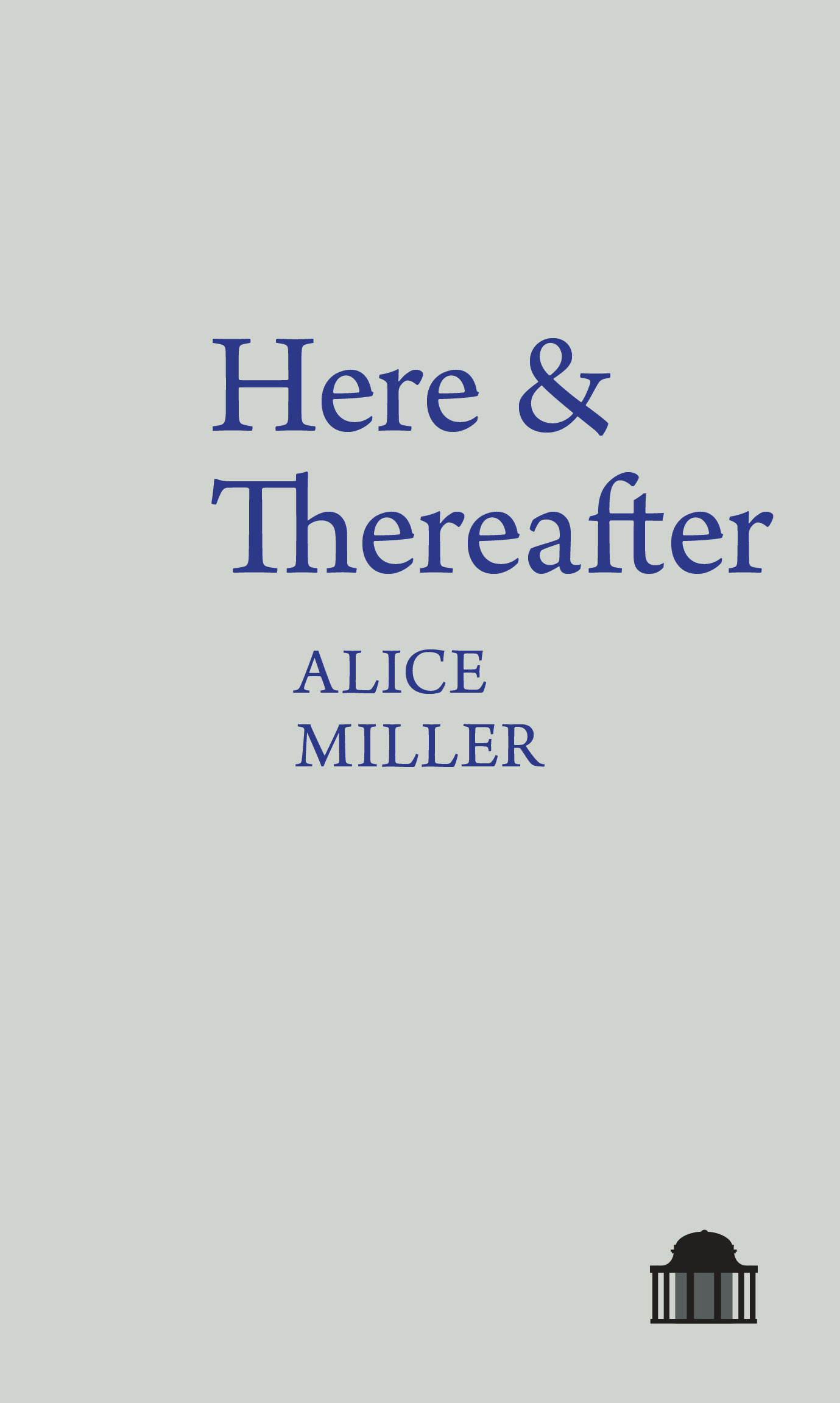
Friday: Poetry Shelf conversation and reading – Here & Thereafter by Alice Miller
This week I have ended up with a lot of unanswered emails – I aim to get to them over the coming week. Thanks for getting in touch! You are welcome to send me review copies but I can never promise to review them all. Send to: PO Box 58 Waitākere 0816.
If you have a poem that fits my ongoing series Speaking Out To For With – do send – political gets personal, personal gets political, poetry speaks out and sideways and whether quietly or loudly. paulajoygreen@gmail.com
And do send poetry news!
Wanted to add so much more here but after a week of storm power cuts in ten minutes we have scheduled cut for the day!!
Here & Thereafter, Alice Miller Liverpool University Press, 2026
When we’re young we know poems matter, later we still know but have to admit there’s no way they can. After all, much more than sandcastles are vanishing. With these odds, one part must keep singing and it’s that proof we keep.
Alice Miller from ‘Old Romantic’
Paula: Often when I read a new poetry collection, it shifts and resettles what poetry can be and do, refreshes the light and dark of the world. Your new collection is an incredible conduit for light and dark. What was tough and what was illuminating as the book came into being?
Alice: Thank you. It feels quite mad writing poems when the world’s perched on the brink of apocalypse and we’re only coming up with more alarming ways to tip ourselves over the edge. But with poems, I still want to multiply the world, to blast it open, to see a thousand places at once. The machinery of poems—the page, the line break, the stanza break—are all so exciting. What lightness is acceptable in such darkness? I don’t know the answer, but this book certainly grapples with that question.
I left the death certificate of my grandmother in our mailbox for days, as if to invite
her back to Berlin where she was born, as if she might like to have come last night
to the Akademie der Künste for the talk by Claudia Rankine
about the new words we’re not allowed to say.
from ‘Future Proof’
Paula: I also embraced the collection as an echo chamber. I was drawn to the movement between past and present, especially the past and present of Anna, your German Jewish grandmother, especially on the brink of WWII, and especially as we face multiple brinks and unfoldings of war in 2026. How did contemporary circumstances affect you as you wrote?
Alice: Yes, there are very noisy echoes between past and present here. The month before my son was born, Russia invaded Ukraine and troops were shooting at a nuclear power plant a thousand miles from where we live in Berlin. And I realised, oh right. I’d thought my family stories were these dramatic war stories (and they are, about the Holocaust, WWII bombings in London, the creation of the atom bomb), but I also saw how much they’re just stories from a continual flow of conflict. As I was writing about my grandmother fleeing Germany in the 1930s, the German Government was supporting Israel to carry out a genocide in Gaza, and we were all forbidden from saying the word “genocide” in public. As if our silence could erase the fact that it was occurring.
I don’t think we can stay here. Anna left to get as far as she could from Europe and now we see it again. But what use leaving for those who can’t? What use speech?
Out on the Strip, a woman sings, glint of gold at her wrist. Moon’s own slice of sky. Ragged waves pull at sand, again, and again.
from ‘Gaza’
Paula: I love how you return to the mantra, the personal is political, and flip it so acutely to the political is personal. I get to think and feel your poems. Your poetry is intimate at the level of self and family stories and equally vital in a wider more global reach. How important is it to both speak out and challenge and to share an intimate self?
Alice: I’m so glad that works. It was important to me that this book did that, or at least tried to. I found the balance really difficult.
Paula: I love Bill Manhire’s endorsement: “There aren’t many historians who sing, but singing is exactly what Alice does in this new book”. You sing so much into being, into remembering, into imagining: the horrors and catastrophes, a newborn baby, forgotten stories, home, most especially home. Your book is still singing in me. Are there other poets or whose poetry books who sing in you?
Alice: Definitely. I love Diane Seuss’ Modern Poetry, which I recommend to anyone who’s lost their faith in poems (it happens to us all sometimes). We were lucky enough to see Anne Carson read recently, and she’s such an extraordinary writer—and performer, too. I keep going back to Jericho Brown’s The Tradition and the ways he plays with form. I’ve also been reading Vicente Huidobro’s fragmentary, urgent Arctic Poems, translated by Tony Frazer. Closer to home, I definitely need to catch up, but I’m a fan of recent (recent to me!) books by Rebecca Hawkes and Erik Kennedy.
Paula: I picture us in a cafe drinking coffee and sharing favourite lines from the collection, lines that stop me in my reading tracks. Like: “how the poet knows how / to keep the whole world from spilling into her”. And like: “always the river / stepped in up to my neck, soaking me in time”. And this: “and how tremendous we are / when we go back home / if only we can remember / which song home is”. Can you share a couple of favourite lines?
Alice: I love this idea. I tried to add to this, but I find every line insists on clinging to the next! But I like your collection of lines very much. Thanks, Paula.
In the dream my friends were all suddenly architects. It had something to do with holding things up. A bridge had collapsed, and everyone I knew was talking about how they would fix it, or else how they wished they’d never studied architecture and instead become an actor. There were lemurs on the fallen bridge; fur-covered creatures leaping between weeds that now were building their green shots through the broken concrete.
from ‘Bridges’
a reading
‘Everyone’s Here, Stranger’
‘Unpromised Lands’
‘Now and Never’
‘Relief’
Alice Miller’s fourth poetry collection is Here & Thereafter (Pavilion, 2026). She is also the author of a novel, More Miracle than Bird (Tin House). Alice lives in Berlin, but she and her family are planning to return to Aotearoa in 2027.

 NZ Poetry Shelf