Caselberg Trust International Poetry Prize 2014


Capture2-700x220 images-3

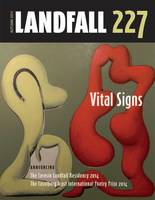
Sue Wootton (now poetry editor for ODT) will judge the Caselberg Trust International Poetry Prize 2014. For details on Sue and the award see the link here.

Information for Entrants

The competition opens 1st October 2013. Entries will be judged blind. First prize, $500, Second prize $250, plus 5 Highly-commended for which there are no monetary prizes. The first- and second-placed poems will be published in the May 2014 issue of Landfall, and all winning and highly-commended entries will be published on the Caselberg Trust web-site (copyright remaining with the authors).

Poems must be the original work of the entrant, previously unpublished, and not submitted elsewhere. Poems must be no more than 40 lines in length.

Entries must be typed, double-spaced, and any style or subject will be considered. The poet’s name must not appear on the manuscript.

Entries may be submitted by e-mail to poetry@caselbergtrust.org  typed double-spaced in the body of the e-mail rather than as attachments. Up to three entries may be sent in one e-mail.

Alternatively, entries may be submitted by post (typed, double-spaced, on one side of the page) to ‘Caselberg Poetry Prize, PO Box 71, Portobello, Dunedin 9048, NZ’.

Entry fee: $15 for up to three poems from any one entrant. Payment may be made to any branch of the ANZ Bank or by online direct credit, to the Caselberg Trust, a/c no. 06-0901-0353698-00, giving your name as the payer reference; or by cheque made out to ‘Caselberg Trust’.

Along with your entries, whether by e-mail or as hard copy, please provide your name and postal address and phone number, and your e-mail address (for receipt of your entry fee when this is received). If you have no e-mail address, and you want a receipt, please send a stamped addressed envelope.


Pam Brown at LOUNGE #34 – and with Gregory O’Brien in Wellington

In Auckland, Pam Brown is part of Lounge #34. Performances by 10 students and visiting writers  including Lisa Samuels and Murray Edmond.

Old Government House Lounge, University of Auckland  City campus, Princes St,

5.30 pm – 7.30 pm      free entry, drinks and food for sale

info: m.leggott@auckland.ac.nz poster: http://www.nzepc.auckland.ac.nz/events/lounge34_poster.pdf


And in Wellington:

AUSTRALIAN POET : PAM BROWN

in conversation with Gregory O’Brien

DATE AND TIME: Friday 20 September at 6pm
VENUE:  International Institute of Modern Letters, Kelburn Campus, Victoria University

Since her first collection appeared in 1971, Pam Brown has been a mover and shaker in the quivering pyramid of Australian verse.  Born in Seymour, Victoria, in 1948, she was one of the most accomplished poets loosely (and inadequately) labelled the ‘Generation of ’68’ — a wave of young writers fuelled by a heady mix of urban culture, international modernism and dissatisfaction with the ‘outbackery’ of much Australian poetry, past and present. Among her glorious swarm of books —17 poetry collections as well as countless pamphlets, collaborations and other titles — are Cocabola’s Funny Picture BookAutomatic SadCafe Sport, Dear Deliria and Authentic Local. Her latest book, Home by Dark, appeared from Shearsman in the UK earlier this year. For seven years she was co-editor of the on-line journal Jacket, and remains Associate Editor of Jacket2. She continues to explore poetry’s various avenues, on the page and in digital and other contexts. Recent and ongoing concerns can be sampled on Pam’s website.   For more see IIML page.

my idiosyncratic Sunday hot spots at the Going West Literary Festival

Not sure where the poetry is in this, but just wanted to share some favourite moments from the Sunday sessions at the Going West Literary Festival (after all, I am an honourary Westie!).

What I love about this festival is you sit in the hall with a whole bunch of other readers for the whole day and you never know quite what will be up next (sure, there is a programme, but thanks to Murrray Gray, the sessions take you to regions and zones and conversations you may have never experienced before. I like that!).

Cover for flyer   Cover for flyer

1. First up, the first time I have ever cried at a Writer’s Festival. Corinne Bridge-Opie was in conversation with Max Cryer as she has just published her memoir on her life as an opera singer. The conversation was full of fascinating anecdote and interrupted with opera tracks. She was married to New Zealand tenor, Ramon Opie. I loved the story about the white chiffon dress she bought to wear when she sang at Convent garden (I think?) with its flowing sash that you could sling down down the back or wrap about the neck to look more glamorous. There was a white chiffon flower on the shoulder to hide the stitching, but just before she was to go a stage with the other girls the assistant to the most-important-man in the building came and snipped it off. He always wore a white gardenia and would not be upstaged.

It was when the tracks played that I became undone. We heard the crackling recording of the aria sung at her wedding and the crackling recording of Corinne and Ramon singing together. On each occasion she would be mouthing the words, her face transfixed with joy and love, and every pore of her body was hijacked back to this moment in time. To sit on stage and listen to the love of your life (he has since passed away) sing with you must have been strange. As some one in the audience, it was breathtaking.

Here is her blog.

2. Sarah Laing talked about the visual, dream narrative in her book The Fall of Light with Dylan Horrocks. In my view, reviewers just didn’t get this sequence. It is like a novella within a novel -so you have to read it visually. Buried within the pomegranate seed (with its visual appeal and luminous symbolism) are the secrets to architectural wonders. You get to see shelves and shelves of the buildings that grew out of the seeds, and you see Rudy with his hand against the glass about to dissolve through the barrier into the room with the woman growing out of the wood like a tree. Sarah said she had tried to write Rudy’s dreams into the narrative but it didn’t work. By using her pen and water-colours, Sarah ‘wanted to infuse the book with a sense of unreality, to unsettle the narrative prose.’ For me, that is exactly what happens as you read the entwined narratives. ‘My hand slips out of the reality more than the language part of my brain does,’ she said.

9781775533030   9781775533030   9781775533030

And on blogging, ‘I can show you my crossings out and my false steps.’ In a nice follow-on from Corinne, Sarah said she had fantasies of being an opera singer, a fortune teller, a psychic and a gymnast when she was a girl. ‘To be a writer, is a good fit for all these fantasies, of what my life might be.’ In the spirit of the festival, Dylan and Sarah produced a great conversation.

IMG_3877 IMG_3878

3. Science fiction writer, Phillip Mann was in conversation with David Larson. It was the first time Phillip had ever been at a festival onstage (you would never have known!). He came up with my favourite anecdote. He was sitting at his typewriter when his wee daughter came and sat on his lap and asked what he was doing. ‘Writing a book,’ he said. ‘Can I write a book?’ she asked. So he got a fresh page and she began to tap and thump until all the keys went into a big clump (remember those old fashioned typewriters!). ‘What does it say?’ she asked. ‘It says Once upon in a deep dark forest there lived a little girl,’ he said. Her eyes filled with story-book wonder. He removed the page and said, ‘Here is your book.’ Gorgeous!   His blog here.

4. As Philip was describing the most terrible alien in his book, The Disenchantment of Paradise, a creature with acute psychic powers, a ladder of light flickered across the black back drop behind him. (almost like the ladder on Sarah’s book cover). Loved it!

5. Hearing Anne Kennedy and Charlotte Grimshaw read fiction aloud for decent chunks of time from two novels that I have loved. It just brings the exquisite craft of their sentences to a new level.

the-last-days-of-the-national-costume  9781869799984 9781869799984

6. Cathy Downes’s updated performance: Talking of Katherine Mansfield. This is an extraordinary performance that is deeply moving. And to hear Cathy recite ‘The Doll’s House’ — the story came alive on stage like a real thing. I was feeling absolutely sapped of energy having ben at the festival all weekend but the moment she started I was on the edge of my seat. Magnificent!

Thanks Murray Gray, Naomi McCleary and the Going West Trust team. It was a very good festival indeed. Thank you. Pity so few Auckland writers and publishers made the journey out west, but there were some great audiences.

Emma Neale says adieu to her ODT spot

Emma Neale has just announced she is retiring from her job as the Monday Poem selecting editor for the Otago Daily Times. She has done a terrific job, and said it was ‘gratifying to launch new writers through the paper.’

Sue Wootton, the new editor, is interviewed in the paper this morning. ‘It was the obvious question for a leading New Zealand poet: ”What makes a good poem?” ”If you poke it with a stick and it moves it’s alive,” Sue Wootton says.’ See full piece in ODT.

The ODT is also a consistent reviewer of New Zealand Poetry. Bravo! Could we see other papers taking this up please? And publishing a poem once a week?

images-2images-3

Emerging Poets at Going West; here are their three poems

New Voices comp  IMG_3868

Siobhan Harvey introduced the winner and the runners-up of the 2013 Emerging Poets Competition in an engaging session at Going West Literary Festival on Saturday. Anna Hodge (Auckland University Press)  judged the competition and the winners were announced and showcased at an event on New Zealand Poetry Day. The three poets were all different but shared an engaging simplicity that then revealed pleats and folds that moved you. Congratulations to the three poets.  I was delighted they gave me permission to post their winning poems.

On the winners, see here. I managed to get a photo of Jack Spicer at Going West but missed the others.

The winner:

Breakfast in Iraq:


the morning smells

of motorways and salt.

all the birds are

empty. last night

the journalist

fell asleep listening

to a woman retching

into a bucket.


somewhere a car bomb

has spat a million tacks

outside a supermarket.

a woman in a sun dress

sucks blood from the

henna of her hair.


it is after dawn but

no children sing

for pastry and milk.

a television plays

cartoons to the growing

crowd of umlauts

where eyes used to be.


© Elizabeth Morton 2013


The runners-up:

Before I go to bed

I play digga on dad’s computer.

When you leave the computer for a long time-

the screen changes.

it changes to stars that go past really really really fast.

I like to sit and look at it

and it feels like I’m in space.

One time I was looking for a really really really long time

and I thought something might happen at the end.

But nothing did.

Maybe this is what you see all the time

– when you’re dead?

Before I go to bed.

I ask mum- what happens when you die?

Mum said – don’t worry,

Cos you’re just a little boy

Now go to sleep

Sack of potatoes

It’s a new day tomorrow.

© Jack Spicer 2013


New moon


I can measure the time you’ve been away

by the small black moon rising.


That day I put your bags into the boot,

laid your vintage hat carefully on the back seat.


A little finger lingered where it shouldn’t have,

held back, stopped instead of pressing on.


I heard the dull thud of a door not quite closing

and knew some part of me was stuck.


Still we made it, little finger held up,

straight like a lady drinking tea,


all the way to the airport.

Snug with its plaster coat on,


ready for a colder climate half way across the world.

Only it wasn’t going with you.


It had to stay here with me, to heal,

and it has, just as you said it would.


And it didn’t loose its nail after all –

it’s been strong, holding on,


though it swelled and missed you terribly.


© Rosetta Allan 2010


Tusiata Avia at Going West: She caught you up, spun you round, and deposited you back somewhere on earth

IMG_3870

Tusiata Avia was a star in her 5pm slot at the Going West Festival. The audience burst into spontaneous applause after every poem. She read some old favourites from Wild Dogs Under My Skirt. I hadn’t heard her read from Bloodclot before but it gave mesmerising new layers to the poetry  — to hear the way her voice transformed the words with added poignancy and edge. Tusiata is a poet but she is also a storyteller, and you travel as you hear each poem.Her new poems have such clarity of voice, whatever the subject matter. She took you to the day of the quake and made you a feel sliver of that tension through her evocative rendition of the day. It was personal. It was poetic. It was moving. I loved her new poem where she is in search of a manifesto for writing poems. She resists it, subverts it and the presents it. ‘I can write about poetry but I can only use ordinary words like good and fruitbats.’ [might not quite have that right, sorry Tusiata!]. ‘For me it will always be about stories.’ ‘Most of the time I just get a glimmer, a picture on the fruit bowl of my skill.’ Her last poem, a list poem, began with a Sonya Renee’s line “My body is …” It caught you up, spun you round, and deposited you back somewhere on earth. She told her story (stories), she made the words sing and shine, she gave you fleeting peeks of Tusiata; she moved, she entertained, she delighted. It was the perfect way to end a long and satisfying day.

PS I am not sure why Auckland writers don’t take that trip out west to support our taonga, our special gusts. I was disappointed.

IMG_3875  IMG_3874

Wild Dogs and other animals: Tusiata Avia is performing today

goingwestfestival442

Last night it was real honour to read poems as The Curnow Reader at the Going West Literary Festival. I also got to hear Charlotte Grimshaw give her eloquent key-note address. She managed to link the sewer pipe of her childhood, the architecture and complexities of Albert Speer and her fiction. The sewer pipe was not just a physical object cutting through the bay, something to walk and even ride a bike on, it was a bridge to an imaginative and psychological elsewhere as much as it was a bridge to a physical elsewhere. She used to go for long walks in the city when she was bored (from Parnell to Avondale say) and the buildings became not-buildings, but topographical markers that prompted different, psychological meanings. What I loved about this talk, is the way it opened up the Charlotte’s fiction; it cast it in a new light. It strengthened the sense of layers in her writing. Layers that draw in politics along with narrative (a novel, she says, must be colourful, a good page turner, but also have ideas buried down the engine room. It is also clear that her fiction, and fiction in general, must have some kind of empathy, and that is exactly what Charlotte delivers.

Bob Harvey drew us in to his autobiography with the help of a slide show. It was very moving, nostalgic even, as he drew you into the heart of his life and of politics. It seems to me that we have so much to protest about at the moment, so much that seems vulnerable (The School Journal, our private lives, our heritage, the freedom for children to learn through play and take risks, those that cannot afford to feed their families, the land and the sea). Charlotte also said that it is important that fiction asks the right questions (not necessarily providing answers). After hearing Bob I drove home wondering how our politicians are serving us today.

Today, at 11.15,  Peter Bland and I are conversing and traversing our topic: Here comes that childhood pond again. We are talking about the world of childhood and poetry in general.

Then at 5pm the magnificent Tusiata Avia will perform some of her poetry. I would love to see Auckland poets show their support of this Christchurch star and come and listen. She is worth hearing.

Unknown-2   Unknown-2   Unknown-2   Unknown-2

giveaway results on Poetry Shelf

goingwestfestival442

To celebrate this weekend’s Going West Festival I offered two books as giveaways.

Thanks to Steele Roberts, Poetry-Shelf follower kiwiscan is getting a copy of Peter Bland’s Collected Poems.

And I have copy of my recent poetry collection The Baker’s Thumbprint for Anna Crow.

Can you email your postal addresses please?


Bill Manhire talks to Poetry Shelf: Inner muddle is much better for the work

bill-manchester pic

Few writers have gifted the New Zealand poetry community to the degree Bill Manhire has — not just in the richness of the poetry and essays he has published and the anthologies he has edited, but in the extra curricular activities he undertakes (and has undertaken) as mentor, teacher, commentator, panelist, tweeter (consistently comes up with useful links), reviewer, interviewer, and all-round promoter of New Zealand poetry.

Bill’s work has been acknowledged in the numerous awards: winner of the New Zealand Book Award four times, and the Poetry Category in 2006 for Lifted. He has received the Prime Minister’s Award for Poetry, is an Arts Foundation of New Zealand Laureate, was the inaugural New Zealand Poet Laureate, was an Antarctica New Zealand Arts Fellow, and a Katherine Mansfield Memorial Fellow in Menton, France.

manhireselected300dpi__91470.1351471428.140.215  lifted.9780864735096__56475.1347922527.140.215 billmanhirecollectedhb.9780864734211__99738.1347922445.140.215 victimsoflightning.9780864736222__12162.1349055315.140.215

Bill was born in Invercargill in 1946, and grew up in the Deep South, where his father was a publican. Bill studied at the University of Otago and University College London, and recently retired as the founding director of The International Institute of Modern Letters at Victoria.

Last year saw the publication of Selected Poems, a collection that I reviewed for The New Zealand Herald (Victoria University Press). The book itself is elegant — lovingly produced, with an exquisite cover featuring Ralph Hotere’s portrait of Bill. You get the very best of Bill when you enter the book – poems spanning decades of writing, poems that reflect his characteristic wit along with his sideway entries into the world. His poems often hold a little moment that you step into, and even though they may be stitched together with a handful of words, you feel compelled to linger (‘The Lid Slides Back,’ ‘Old Man Puzzled by His New Pyjamas,’ ‘It Is Nearly Summer,’ ‘Girl Reading’). Other poems tackle grand subjects without subsiding into melodrama, cliché or sentimentality. Instead they return to the age-old comfort of rhyme and repetition, with the agile lines building (and building) with musical finesse, and soft lines of traction hinting at the deposits — emotional, political or philosophical (‘Hotel Emergencies,’ ‘Erebus Voices,’ ‘1950s’). These are poems that stick to you, that become part of your daily routine. Perhaps, it is because they hark back to the joy of being read to, some kind of magical incantation that can be short or long, but that always draws you in and leads you back out into the ordinary extraordinariness of a moment, or of the world (‘The Ladder,’ ‘Kevin’).

Bill kindly agreed to answer some questions for Poetry Shelf:

Did your childhood shape you as a poet? I loved the analogy you made between the tree-hut and writing on Poetry Box – like a tree hut, you say, it is good if there is room to get in, and maybe even sleepover.

Well, the best hut my brother and I built was an urban one – in the abandoned lift shaft of the old Carlton Hotel in Dunedin, which was out the back of the Crown, where we lived.  The location was like a bombsite – there’d been a fire; there was lots of dead concrete, mangled steel, desperate vegetation. All that remained of the Carlton, really, was the brick lift shaft, still climbing up the side of the Grand Hotel. I suppose it was a lift shaft. We built several floors in there. It was a bit dark and pointless, though it felt like a triumph as we did it. It’s all redeveloped now – part of the Southern Cross.

If I think about that, it begins to look emblematic – setting down a pattern. Building your house in an abandoned house – as if you needed the past in order to make something new. All things fall and are built again, as Mr Yeats said, and a lot of poems are built in the ruins of older ones – Eliot’s The Waste Land would be the great example.

Making huts involves making and shaping – getting things to fit – as I think I said on Poetry Box. But, in building a hut, you’re also copying adult ways of managing the world, which is what you do as a beginning writer.

What about growing up in pubs?

My whole childhood was pubs – country pubs until I was 12 – which was more drunks and racehorses than it was poetry. My mother read poetry though. She had a copy of The Golden Treasury, and a poem she could recite by heart (and which I pretty much can, too) was Arnold’s “Requiescat”. It’s about the yearned-for release of death. I think the poem expressed for her just how bewildering and exhausting her life had become – in pubs in rural Southland, 12,000 miles from her home in Edinburgh:

Her life was turning, turning,

In mazes of heat and sound.

But for peace her soul was yearning,

And now peace laps her round.

Did university life (as a student) transform your poetry writing? I am thinking back through the Big Smoke collection (which is vibrant and vital, but there were other strands of poetry kicking and breathing).

I started at Otago in 1964, just after I turned 17. I remember we studied Spenser and the Metaphysicals and Shakespeare’s Sonnets in English I – much better for me than a creative writing workshop might have been. There was actually a pretty big poetry-writing world in the universities nationwide. The NZUSA even had a cultural arm: the New Zealand Students’ Arts Council. There was an annual student arts festival (music and theatre primarily), which moved from campus to campus. There was an associated student “literary yearbook” (edited from the campus where the festival was in any particular year); and all universities had their own yearbooks, too. I think Review (at Otago) might be the only one that still survives.  Campus newspapers were much more interested in literature and student writing back then, too.

I co-edited the 1969 Arts Festival Literary Yearbook with John Dickson. Ian Wedde had edited it the year before, Denis Glover’s son, Rupert, was editor the following year. A lot of now familiar names appeared in the yearbooks: Albert Wendt, Renato Amato, Ken Arvidson, Michael Jackson, Rachel Bush, Vincent O’Sullivan, Hilaire Kirkland, Bob Orr, Chris Else, Peter Olds, Jan Kemp, David Mitchell, Alan Brunton, Russell Haley, Murray Edmond . . .  There’s a poem by Patrick Evans in 1967, which he won’t want to remember.

I also co-edited the Otago Capping Book, so maybe some sort of satirical impulse was there early on. I’ve always felt that poets should have a disenchanting function as well as an enchanting one. Sometimes the two impulses can live inside the same poem . . .

Yes, poetic friction can be as inviting as poetic harmonies. Not just that playful irony. Sometimes the music is a sweet tonic for the ear, but then there are the points of darkness, the mystery, edge, fear, grief and so on (I think of your poems ‘Erebus Voices’ or ‘Kevin’).

 Looking back, it wasn’t just that grassroots material in print, but the poetry gigs and tours that were also a sign of the times.

The NZSAC was fairly entrepreneurial. They toured the American poet Robert Creeley in the early seventies. And ran national poetry tours involving people like Hone Tuwhare, Denis Glover, Sam Hunt, Jan Kemp, Alan Brunton.

Otago University and Dunedin were out of the swim in some ways.  There weren’t any poets in the Otago English Department (unlike Auckland: I remember one of the academic staff at Otago referring to Auckland University as “that nest of singing birds”). The much-mythologised Freed was essentially an Auckland project.

But Otago had the Burns Fellowship, which brought people like Hone Tuwhare down to Dunedin. And there was Trevor Reeves, with Cave and the Caveman Press; and Don Long’s Edge was coming out of Christchurch – both of them chasing a vision of how local and global might inform each other that was distinctively different from what existed in a journal like Landfall.

In recent times, graduates of writing classes seem to maintain contact as ongoing, supportive writing groups. Were there early versions of this when you were starting out?

 There was the monthly poetry group that people like Brasch and Baxter and Iain Lonie were part of, as were a bunch of aspiring writers like me. It was really an early version of a creative writing workshop, though it moved around from house to house, the way book groups do these days. We cyclostyled our poems, read them aloud, commented on them.  I remember challenging Charles Brasch’s use of the word “squalid” in his poem “Red Sea Amber” when he brought it to one session. (He was courteous and unaffronted and entirely unconvinced.) I also remember Charles bringing his “Lady Engine” poem to a meeting and explaining that it was a writing-out of a dream not long after the death of his mother. That sort of thing was useful news to me. Even the editor of Landfall didn’t necessarily know what a poem “meant” at the time that he wrote it.

When you began writing poems as a young adult, were there any poets in particular that you were drawn to (poems/poets as surrogate mentors)?

Carl Sandburg and Walt Whitman were important for me at age 16, my last year at high school; a couple of years later, it would be Larkin, and Plath’s Ariel. Then James Wright.  Robert Creeley was the transforming encounter: I bought his collection, For Love, in 1966, and it feels like I read it several thousand times. But I liked the ballad form, too – and its modern versions, especially as produced by someone like Bob Dylan. It’s easy to forget how important the world of folk music was back then. (I have a sudden memory of writing pastiche numbers for the Band of Hope Jug Band, with Gordon Collier. I don’t think they came to anything. I hope not: “She’ll take you in the kidneys / and she’ll take you in the brain; / she’ll take you so you’ll never be / the same old man again.”)

I can remember the first album I bought was Bob Dylan’s Subterranean Homesick Blues and my father immediately said, ‘Well he can’t sing.’ Years later, he admitted that Bob could definitely write!

 It is also interesting looking back to a time when we wrote without computers — no easy access to a delete button.

Getting a typewriter was a big thing. It’s hard now to imagine just how big. The gap between handwriting and the typewritten page was an astonishing thing: you could suddenly see what you’d done, what its quality was. And even then, every word counted: you couldn’t just delete/copy/paste etc. I remember typing out whole volumes of poetry that were in the university library but I couldn’t otherwise get hold of.  A couple by R.S. Thomas, for example, which puzzles me now. Fugitive poems by Ted Hughes and others that were in journals but not yet in books.

I did the first version of Malady on a typewriter. I can’t imagine doing something like that on a screen.  That expression “analog warmth”, which I think points back to the world of vinyl, also speaks to the feel of a typewritten poem.  In fact it applies to most of the poems I love.

My weirdest typewriter story comes out of editing the Arts Festival Literary Yearbook.  Alan Brunton sent some stuff in, prose and poetry – including some versions from Catullus – and the thing was, there were no spaces after any of the punctuation points. I thought this was all very avant-garde and deliberate and worked very hard to make sure the typesetters at Caxton didn’t add the spaces back in.  I asked Alan about this years later and he said, Oh, big mistake: that was because I didn’t know how to use the space-bar on the typewriter.

There were a number of significant poets in NZ from the 1940s onwards (Curnow, Mason, Glover, Baxter and so on). Was there one in particular that you connected with?

For me, the one-in-particular would be Mason, though I can see that in terms of achievement he might well be fourth on that list. I bought his Collected Poems in 1963, Whitcombe and Tombs, Princes Street, Dunedin. I loved the way the feelings in them fought against the formal controls: even the punctuation collapsed under the pressure of feeling, yet the shells of the stanzas held firm – just. We know now, I guess, that that particular aspect of the poems probably had something to do with Mason’s bipolar illness. His were poems that suited me emotionally at the age of 17, and still suit the adolescent tucked away inside me.

Do you think your writing has changed over time? I see an increased thoughtfulness and an ability to tackle big subjects in ways that are utterly moving but still firmly embedded in the everyday (with those trademark flecks of irony and wit).

 Yes, I think I’ve grown up and stepped a bit more fully into the world – mainly because life requires you to.  Yet there’s still that thing they say about always feeling like the youngest person in the room. I think it’s quite good for writers to feel out of their depth. Inner muddle is much better for the work that gets made than a belief that you can walk on water.

“All poets are young poets actually,” says Seamus Heaney – and that seems right to me. You can be young, or wild and old and wicked ­– but as far as the poems are concerned you can’t afford to be middle-aged.

 There has been shifting attitudes to the ‘New Zealand’ label since Curnow started calling for a national identity (he was laying the foundation stones that we then had the privilege to use as we might). Does it make a difference that you are writing in New Zealand? Does a sense of home matter to you?

In my head I’m more local than national – and local for me still means the deep south, the Southland and Otago countryside.  There’s that childhood imprint. The hills are the right shape, and sit against the sky as hills ought to.

More generally, I think poets live in actual and virtual communities, and the circumferences keep shifting.  There are the poets you know and read in your everyday life. At the other extreme, there are all the poets dead and alive whom you feel you know well through reading their work. Emily Dickinson is supposed to have been this curious recluse – but if you read her letters, you see that she was intensely alive in a huge community of poets.  I myself have spent a lot of time hanging out with her in that upstairs room.

What irks you in poetry?

Self-importance.

What delights you?

Back to Emily Dickinson: I’m with her on the physical response that poems produce when they’re really working.  You feel as if the top of your head has been taken off, or so cold no fire can ever warm you.  That’s how you know you’re in the presence of a poem. Also ­– and maybe this is a contradiction – I like the fact that poetry is in some basic way part of the entertainment industry.

 Name three NZ poetry books that you have loved.

Peter Bland, My Side of the Story

Jenny Bornholdt, Summer

Geoff Cochrane, The Sea the Landsman Knows

The constant mantra to be a better writer is to write, write, write and read read read. You also need to live! What activities enrich your writing life?

I’m in favour of grandchildren just at the moment.

Not all poets are good at performing their work, but once you have heard Bill Manhire read a poem such as ‘Hotel Emergencies’ aloud then the musicality of the writing becomes even more apparent (we are then able to play the LP of Bill in our minds as we read). Are you aware of this aspect as you write?

 Not consciously, not actively. But the music of the poem, whatever kind of music it is, needs to properly complete itself for the poem to be finished.  Meaning is irrelevant to that.

I used to sway a lot when I first read poems aloud. I still do a bit. That’s an odd thing in someone so physically inhibited. I also make those strange incantatory, shamanistic noises that poets make. I can’t help it.

 Do you find social media an entertaining and useful tool or white noise?

I like Twitter, but not Facebook. I don’t really know what this means.


Eleanor Catton recently suggested there is no reviewing culture in New Zealand in The Guardian. Do you agree?

 I suspect Ellie is looking for a culture of discussion and ideas that’s in the society generally, not just locked away inside writing festivals, Kim Hill interviews and the odd university seminar. Something a bit more convincing than the national shame of Parliamentary Question Time.

But, for reviewing, I suppose it is pretty thin, though maybe – as usual in New Zealand – it’s a population thing. It’s a general anxiety everywhere – that the review culture is thinning out, books pages shrinking or vanishing, especially in newspapers and weeklies. But in New Zealand we had much less to go on in the first place. The danger is that you end up mainly with salaried academics doing the reviews because they can afford to write without a fee; or people with axes to grind and a bit of froth around the mouth. It’s hard to know whether the increasing richness of the internet compensates for this (the-axes-to-grind thing) or exacerbates it.

As both a reviewer and a reader, I am drawn to reviews that build rather tear apart – that’s not to say you can’t be critical, but I want to explore what a story or a poem is doing. I am not really interested in filtering a story or poem through preconceived ideas (prejudices?) of what a story of poem ought to be.

There’s less range and texture and quality in, say, the poetry-reviewing scene than there is in contemporary NZ poetry. But if you add to the Listener, which still sets the pace, forums like New Zealand Books and Metro, plus online developments like this one, things don’t look too bad.  The greatest danger in a place like New Zealand is that you get a few people who want to run out onto the field as players, yet also want to blow their whistles and hand out yellow cards. That’s a very difficult thing to bring off.

Finally if you were to be trapped (in a waiting room, on a mountain, inside on a rainy day, for a decision) for hours what poetry book would you read? Actually I think the context would affect which book to large degree.

 A new book from James Brown wouldn’t go astray. Every waiting room should have one.

Thanks Bill.

Bill’s page, Victoria University Press

New Zealand Book Council author page

nzepc author

Arts Foundation biography

Tuesday Poem, Hotel Emergencies

Bill on Twitter

Making Baby Float: Bill with musicians at Frankfurt

Three Islands review of Selected Poems

Paula Green review The Victims of Lightning

Interview with Guy Somerset in The Listener

Interview for NZ Poetry Box here.

Sam Hunt recites a Sarah Broom poem to Kathryn Ryan

Unknown-1

Sam Hunt talks about the new Sarah Broom Poetry Award, recites a few poems in his magnificent, melodic way (one by Sarah and one by Seamus Heaney) and tells Kathryn that he always listens to poems first. So many New Zealand poets think the way a poem sounds is the first and crucial point — including me. Interesting interview!

Play it here.

Sarah Broom Poetry Award details here.

My post on Sarah here.

Sam Hunt web site here.

Unknown Unknown-1