To celebrate my tiny role as the Curnow Reader I have The Baker’s Thumbprint to giveaway on Poetry Shelf

6414994

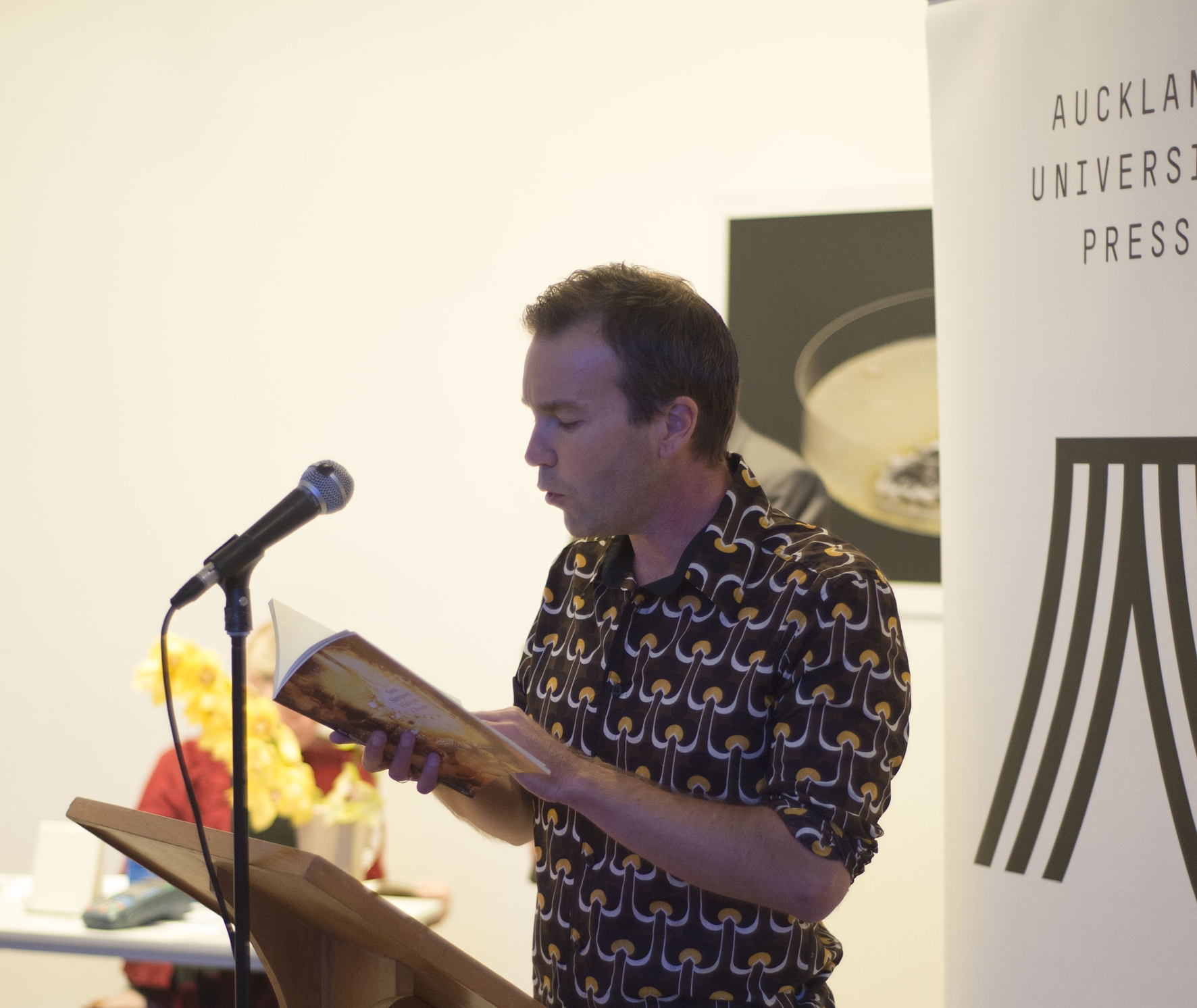
On Friday night I will be reading poems as the Curnow Reader at the Going West Literary Festival. To celebrate this occasion I have copy of my recent collection, The Baker’s Thumbprint, to give to someone who likes this post. Cheers!

Friday 13th, Titirangi Hall

7. 00pm Welcome/Mihi

7.30 The Curnow Reading: Paula Green

7.50 KeynoteAddress: Charlotte Grimshaw: In Conversation–On Conversation

8.30 Leadership in a Landscape: Sir Bob Harvey

9.30 Supper and wine

A Peter Bland giveaway to celebrate Going West Literary Festival

goingwestfestival442

This weekend is the Going West Literary Festival – a feast of words in Titirangi Village. I have been going to this festival for years, mostly sitting in the audience listening to New Zealand authors on a range of subjects from birds to explorers to poetry to storytelling. I have witnessed some very special performances: Bill Manhire reading ‘Hotel Emergencies,’ Chris Price and Nigel Cox delivering keynote addresses, Allen Curnow reading poems, his son Wystan reading poems. Jenny Bornholdt, Steve Braunias, Martin Edmond, Anne Salmond, Tusiata Avia, Selina Tusitala Marsh … it is an absolute treat.

To me this is New Zealand’s family festival that still runs without excess formality and still slides back the doors for morning tea, lunch and supper. You get to eat lunch on the same bench as your favourite fiction writer and a poetry fan from Albany. Altogether special.

This weekend I feel very honoured to be the Curnow Reader on Friday night, and on Saturday morning to have a conversation with Peter Bland on the joys of writing poetry for children, and poetry in general. I have a spare copy of Peter Bland’s Collected Poems : 1956 – 2011 to give to someone who likes this post (randomly selected).

9781877577994   9781877577994   9781877577994   9781877577994

When: Saturday 14th September 11.15am: Here comes that childhood pond again: Peter Bland and Paula Green traverse the world of childhood and poetry in general.

I reviewed Peter’s new collection briefly in The New Zealand Herald here.

NZ Books review of Collected Poems by Michael Hulse here.

Listener interview here.

New Zealand Book Council entry on Peter Bland here.

Peter talks to NZ Poetry Box here.

Review of Peter’s children’s poetry collection The Night Kite here.

This was the best poetry gig I have been to in ages

IMG_3849

On Saturday, Grace Taylor organised a fundraising event for the Rising Voices Youth Poetry Slam project. It was held in a grand house in Remuera where the host, Jo, provided mouthwatering food (an absolute feast of food). In between the tasty morsels, there were equally tasty poetry treats from four talented slam poets (Grace, Selina Tusitala Marsh, Brian Gashema and Husam Aldiery).

The event was to raise funds to help with the mentoring of the young poets. Unlike other Slam Poetry events, this one mentors the poets for six weeks prior to the competition — with writing and performing workshops. The third Rising Voices Poetry Slam will be held this Saturday (14th) in the Auckland Town Hall’s Concert Chamber at 7 pm. You can book through http://www.ticketmaster.co.nz or phone 0800 111 999 or 09 970 9700. Tickets $15 – $20.

Each poet read several courses of poems with poignant introductions and comments. This is the standout thing. These poets tap deep into what matters to them so the poetry is as much from the heart as it is furnished with political bite (without sappy emotion or sentimental cliches or angry shouting). The page can appear so much more reserved than the intimacy of open space in someone’s lounge. Everybody was both moved and challenged, entertained and comforted. These poets are storytellers as much as they are musicians. Poetry is an entry point for awareness and attentiveness -both politically and of the self.

Grace kicked off the afternoon. She is a youth worker who was born and raised in South Auckland with a Samoan mother and an English father. Grace said that poetry has enabled her to ask and navigate the important questions (Why I can’t speak Samoan? Who am I?). Her debut collection will be released on November 2nd. Her first poem, ‘I am the Va’a,’ was in debt to Albert Wendt as she explores that space between one person and another, places and experiences. This, then, was a powerful and moving performance  of a personified Va’a — as a person of mixed culture.

IMG_3855

Grace said listening to music (Ben Harper, Bic Runga) was her way into poetry. She used to write down lyrics in a songbook, and from that her love of playing with words grew. She performed ‘Black Black Tea,’ a poem that responded to her cousin in Samoa, a solo mother of three. It affected Grace as she performed it and it affected us as we listened. The musical intricacies coupled with the pain and the love was a combination that hooked your attention utterly (‘her salts and knots unravelling before me’).

She also performed a poem that she wrote before and after the birth of her son and said that some poems need to be written for the page (as well as performed) and this was one of them. It was very moving (both for Grace and us).

IMG_3852


Brian, a 17-year-old student at Northcote College, won the Rising Voices Poetry Slam last year. His family are from Burundi, but he was born in Kenya. He was inspired by hip hop – borrowing and adding lines of his own. A number of his poems have been for English oral assessments with a teacher helping him find a starting point for a poem (memory, for example). He poems luxuriate in rhyme. That is the first gift — the way the phrases  and rhyme choices are nectar for the ear; ‘came bold and rolled masses of the old’ ‘taught you to live enormous and never be dormant’ and rhymed ‘answer’ with ‘cancer’ and rhymed ‘history,’ ‘mystery’ and ‘intimacy.’ The second gift was the way poems layered insight upon heart — thus you get compassion and warmth and thoughtfulness.

Before he performed his poem, ‘Tick Tock,’ (his teacher got home thinking about time) he said, ‘It kinda just happened but it didn’t turn out the way I thought it would’ (that’s poetry!). And in his poem, ‘new writers will arrive with less italics and more bold’ (nice!). And ‘define your time and design a new movement.’

IMG_3856

Husam is from Syria although he has never lived there (lived in both The States and here). He is currently a third-year student of medicine. His first poem ‘Hijab’ explores the experience his mother faces wearing the veil and how he reacts to that experience (‘my mother’s headscarf is a symbol of her modesty’). Husam also read the first poem he wrote. He wrote it on his phone when he had to wait somewhere for two hours. The poem opened and spread with thinking and being (philosophy and experience). ‘What the hell are you fighting for?’ and ‘teach myself to open my eyes and descend your gravity’ and ’19 years of unanswered questions in the corners of my face folds.’

Husam said people often come to him with ailments as though he can diagnose them. He read ‘Surgery in Space,’ a terrific poem dedicated to his father (a brick wall). The lines grew in poignancy as the son dug and peeled the layers back in a portrait that sung out with honesty: ‘In my eyes my father was a brick wall’ ‘dug through layers of regret that accumulated beneath the skin’ ‘galaxies of missed opportunities and lost love.’ It felt like we were invited into the most intimate moment: quiet, subtle, heartfelt.

IMG_3854

Selina read from Fast Talkin’ PI before moving on to new poems. Her new collection, Dark Sparring, will be released on November 15th. She read the love poem, ‘LA International Airport’ that she read to her husband for the first time at the Poetry Olympics in London. (‘You and I are a big, international airport terminal under renovation.’). Moving and witty, her words jilted you. In her second love poem, ‘Fish Man,’ the lines were sparking: ‘your words icebergs tearing a strip into the ship that sunk’ and ‘Your love has tsunamied me.’  She performed this last poem from memory and said she had practiced it walking down Queen Street pretending she was talking on the phone.

Selina’s new collection comes out of grief – the grief at her mother passing from breast cancer and the way kick boxing channelled her mourning. Her poem, ‘Kick Boxing Cancer’ is like a sequel to her ‘Fast Talkin’ PI’ poem with her compounding ‘I am a woman …’  lines. But while this poem is also about empowering women, it is too about remembering and replenishing the maternal line (‘I am the woman with the pot, I am the woman with the pen’ and ‘I am the woman storming out/ I am the woman storming in’). This taster from her new collection, just made me want more.


This was a special occasion. I liked the way poems were performed by memory but were at times read from the page (Selina’s blue biro in a notebook, and Husam from his phone). I also liked the way the seasoned slam poets were more interactive than the rest of us as an audience. The way they audibly react to the bits they love — like you do inside your head when you are reading a poem in the hammock or waiting for the bus or in bed late at night.

To finish up Grace said: ‘We give a part of ourselves and we all have a moment of being vulnerable.’ I agree. For those people that think Slam Poetry is all shouting and overstatement and emotional floodgates and shonky rhyme, think again. This was the best poetry gig I have been to in ages. Moving, challenging, inpsiring. I salute you!

If anyone wants to support this project financially let me know and I will put you in touch with Grace. there are a handful of tickets available for The Rising Voices Poetry Slam on Saturday night.

PS Apologies if I misheard any of your lines!

A cup of tea with Ruth Todd and Morrin Rout

     DSC00950

Racheal King has been appointed the new Literary Director of The Press Christchurch Writers’ Festival, an appointment that signals the departure of Morrin Rout and Ruth Todd. Morrin and Ruth have worked in the service of New Zealand literature for a long time, not only as Festival Directors, but also promoting and celebrating New Zealand books on air. Their dedication to books and generous support of our writers and our writing underlines that these two women are literary taonga. When I was in Christchurch recently, we three had a cup of tea and a conversation on the joys of poetry.


To begin with, I clarified the origins of their working relationship. Coinciding with the Suffragette Anniversary, Ruth began Women on Air on Plains FM, and it was several years before Morrin joined her.


MR: I went and joined Ruth and from the moment we got on the microphone together, it’s been a special chemistry.


Then for about eight years Ruth and Morrin also ran Bookmarks on National Radio, a programme devoted to New Zealand writing (with very generous attention paid to poetry). A number of local writers were prompted to write to The Listener when Morrin and Ruth’s Bookmarks was not included in the new Arts on Sunday programme (they retained Simon Morris to speak on film).


MR: Getting Bookmarks was a real surprise to us — it was thanks to Ruth’s boundless optimism, and a very good engineer at PlainsFM with all the right sound equipment. Then, because we were now doing the National Radio programme, more local people started listening to us …


RT: … and coming to events. Literary and poetry events have been a big part of what we do.


MR: And that lead to an invitation to co-ordinate events for The Christchurch Arts Festival and then The Press Christchurch Writers Festival. So it has been continually evolving, no grand plan.


RT Things just pop up!


MR And years later we are still at it!


RT: We still have the Bookenz programme on PlainsFM and we will still do some events. I found it very hard giving away Women on Air, but it’s nice having Saturday mornings free.


MR: I am still on the Writers Festival Trust in an advisory, mentoring role.


RT: I am still involved with the Crime Writers’ Awards.


PG: I have been interviewed by both of you in terms of poetry books and I have enjoyed the conversations immensely. What are your aims when you review a poetry book?


MR It was not so much us reviewing the books as us giving the poets an opportunity to talk about their work, and read their poems.


RT: The reading of the poems. I don’t like hearing a poetry interview where the poet doesn’t read anything. I’d rather a poet read and then talked. Keep us out of it really.

Poetry for me has got to be read. Which is quite hard for some poets if they don’t like reading aloud.


MR: I’d like to think that over the years we have given numerous people opportunity to read – that they wouldn’t get that kind of exposure very often.


RT: Especially local people.


MR And we’ve helped people gain some confidence.


MR: There is the beauty of editing where you can take things out.


RT: We always wanted to have a lot of New Zealand poets for the Festival. Poetry sessions have always been an important part of the Writers Festival.


PG: Did you read poetry as a child or a teenager?


RT: All I can remember is Robert Louis Stevenson’s A Child’s Garden of Verses that I got for my seventh or eighth birthday.


MR I don’t remember actively reading poetry, but I remember my mother quoting poetry to me. One of her favourites was, ‘Tiger, tiger, burning bright/ In the forests of the night’. I don’t know why that had been a favourite of hers, but she had been a school teacher. I do remember some poetry at school, but it was never something that grabbed me the way fiction did. I didn’t really start reading poetry until we had to for the interviewing. I was really grateful to read poetry.


R When I look back it was all English poetry, hardly any New Zealand poets. It wasn’t until Lauris Edmond, Fiona Kidman, Bub Bridger, those older women. We didn’t do any New Zealand poetry at university. When I was teaching English in secondary schools, it started to happen. I was searching for New Zealand poets. There were some early ones, Allen Curnow and so on. Now there is a wonderful feast of New Zealand poets. I would hardly read any poets other than New Zealand. Poetry is still being published even if poetry books might not sell that much.


MR: There are still brave publishers out there. Not just the well known ones, the AUPs and VUPs continuing to publish poetry – but there’s also the smaller ones, Cold Hub Press, Seraph Press for example.


RT: There are little groups all over the country, little collectives, bringing in a few well know poets to perform alongside those that aren’t. It’s very strong.


MR: Of course we are incubating poets at Hagley Writers’ Institute, which is a nice thing to do. Kerrin and Frankie McMillan, who are both wonderful poets, are tutors. And Bernadette Hall is our patron so she will be doing a workshop with them.


RT: And the Secomdary School poetry Competition brings out a lot of young poets and The School For Young Writers with their annual anthology of writing. There are a lot of poems in that each year.


Can you name a poetry book that you have enjoyed in the past year or so?


MR:  Kerrin P Sharpe’s Three Days in a Wishing Well. It’s a delight, so full of Kerrin. People who don’t know Kerrin don’t know that, but you get a strong impression reading it that you are dealing with someone who’s very whimsical, and a great lover of words. And like with all good poetry books, there are poems that you come back to time and time again. I love the way she has animals moving through her poetry, especially the deer.


RT: I love Bernadette Hall’s The Lustre Jug. I love Fiona Farrell’s The Inhabited Initial.


MR: and Fiona’s The Pop-Up Book Of Invasions, that’s good too. I am also a big fan of James Brown.


RT: I think someone like Sam Hunt has done a lot for poetry. He’s out there talking to people.


PG: We all like different kinds of poetry. What are some key ingredients of poetry that matters to you? When it hits the right notes for you?


MR: I don’t like poetry to be too obvious, to be too neat. I like it to be something that forces me to want to read it again. I usually sit and try and read it through on a first-reading, at a superficial level, and then I leave it and go back to it over numerous readings – and then that tells me whether there is some depth in the poems.


RT: Poems have to have something that just grabs me, a spark, because a poem is not like reading a novel, it’s more like reading a short story.


MR: Some poetry books resonate with you more as they bring up things that are familiar to you. Or they will introduce things that are slightly off key and will make you look at things again. And I also like a bit of humour, sometimes, not always. And playfulness.


RT: Yes, I like a sense of playfulness.


M A bit of whimsy in there is nice. I don’t like people who take themselves too seriously.


RT: And original language. Usually if I have heard someone read, that’s what I remember. I go back to the poem. And I can hear them reading it.


PG: I really like poems to be musical.


RT: Yes, musical, almost songs, some of them. I remember when the National Orchestra performed Robert Sullivan’s Captain Cook in the Underworld. That’s quite exciting. Quite a lot of poetry is now being transposed into music.


PG: I was at the Poetry Salon in Auckland recently and Janet Charman questioned whether there is good and bad poetry because such a notion took you back to the fifties where Allen Curnow and his peers proscribed what was good and bad – and women didn’t fit into that. Do you think there is good and bad poetry?


MR: Probably, but that’s such an individual thing. I don’t think it is something that can be proscribed.


RT: I never think of it in that way, I just know what I like.


MR:  There is poetry that works and poetry that doesn’t work. And maybe that’s a better definition than good and bad.


RT: Poetry that doesn’t have any feeling or rhythm – sometimes just a string of words doesn’t do much for me unless I’ve heard it read.


MR: Gosh that’s a debate. What do you think about it?


PG: There is the historical argument that Janet put forward, but on the other hand, we make judgements about poetry. It is subjective, but not all poetry works. Then again, I find some reviewers review poetry through such limited frames about what a poem ought to be or do. Women’s poetry can still be dismissed for an attachment to domestic things. Poetry also doesn’t need to be judged solely in terms of a Western model – or poetry for the page.


PG: Do you think that the earthquake has produced more poetry in Christchurch?


RT: There has been some: Fiona Farrell, Tusiata Avia, Jeffrey Paparoa Holman. Perhaps there hasn’t just been poetry, but I think people have written things.


MR: I don’t see that as surprising. They were going to be writing anyway, and they have got a new topic to write about.


PG: I just wondered if it was more than local writers such Fiona. That the earthquake has prompted others to write.


MR: It is slowly evolving.


RT: It has helped people –helped others understand. For me, it was putting some of my thoughts into poems I will treasure — I am glad they wrote because I couldn’t.


MR: In our classes, students were a bit tentative about writing about the earthquake in the beginning. They wanted to wait a bit, privately they may have written, but I didn’t see an outpouring.


RT: No, not huge.


MR: Most people were so busy trying to exist in those first days, but slowly people have begun to.


RT: When Tusiata read those amazing poems of the earthquake, and they played those on the radio several times, and still do. I think that’s where poetry is really powerful.


MR: It certainly is.


RT: And I think it is helpful to ordinary people like me who can’t write.


PG: Do you have an ethics or codes of reviewing/interviewing?


RT: I just like to say as little as possible.


MR: I agree with that.


RT: I don’t want to analyse poetry to death.


MR: I don’t want to impose a structure. If I sense someone wants to move in a particular direction then I am happy to let them do so, and to follow on.


RT: I wouldn’t interview a writer if I didn’t like their poetry.


MR: Or there might be a poet whose work I didn’t particularly like but who has a standing. I wouldn’t mind interviewing someone like that. What we don’t do is interview poets if we haven’t read their work.


PG: I do sometimes wonder if reviewers have read the work in full or if they are simply indulging in their own preconceptions and prejudices.


What are the strengths of New Zealand Poetry?


RT: There seems to be support for one another, particularly in the little communities scattered about, there are several different groups in Christchurch. They all do different things and they seem to encourage each other. Particularly new poets.


MR And are very committed to poetry. I’d have to mention Doc Drumheller’s Catalyst as showing a great enthusiasm and offering encouragement to many different of poets.


RT: I would feel that if I was quietly writing at home and going to those groups eventually I would pluck up courage to perform something as it is so non-judgemental. Community groups are great.


MR: Poetry is still being published — that’s bold and that’s courageous. Publishers may know that there won’t be terribly many sales, but they are still willing to put poetry out there. It’s one thing to have it spoken and another to see. And the actual publications themselves are of great quality. They are real little objects, art objects. That’s admirable.


RT: A magazine like Takahe has always had a big focus on poetry. Landfall.


MR: There is Sport and a proliferation of online journals.


RT: Michele Leggott’s nzepc. Whitireia’s 4th Floor Literary Journal. That’s been brilliant. Best NZ Poems where poets get to choose other poets. I look up that when I am looking for a poem.


RT: The fact we now have a Poet Laureate. I like that idea and the poet has a chance to spend time writing.


PG: Just to have that honour, too.


MR: It elevates poetry. It signals that poetry is important.


RT: It is a way we are able to appreciate important writers and poets. Fiction and non-fiction get a lot more attention.


MR: Well, you’d have to say that poetry seems to be proliferating.


RT: If I’ve got to speak at a funeral I don’t use a bit out of a novel I always use a poem. We remember poems.  I don’t remember quotes from novels, but I can quote from poems.


PG: Thank you Morrin and Ruth, not just for the tea and conversation, but also for your enthusiasm, support and tireless promotion of New Zealand books (and poetry in particular!). You are two Christchurch treasures.


Sarah Jane Barnett: Three tips for beginning poets


Sarah Jane Barnett’s fabulous, debut poetry collection was short-listed in the Poetry Category at this year’s New Zealand Post Book Awards. She has contributed a piece to the ongoing series On Poetry that  NZ Poetry Shelf is hosting. I totally agree with her tip that reading makes a writer (and I would add writing). Read read read write write write (a simple but time-tested formula. There was an excellent interview in the Listener but you need to subscribe in order to follow link.

bookawards

Sarah Jane Barnett  A Man Runs Into a Woman Hue & Cry 2012 This is what I wrote about this book last year (part of it ended up on the blurb at the back of the book): Sarah Jane Barnett’s debut collection is a gift for the ear. The words are poised, graceful, musical; verbs and adjectives soar and vault and balance. Within her glorious word gymnasium, Barnett is a poetic trapeze artist with feet on the ground and magical arcs and sidesteps in the air. As the cartographer of human experience, she steps boldly into the shoes and lives of others – a cable television engineer, a geographer, a pipeline worker. Her alert mind and canny eye for detail translate and transform what we may have missed in the world into poetic vignettes that are both light-footed and fresh.

the red room Sarah’s blog

Hue & Cry

And now from Sarah:

Three Tips for Beginning Poets

 Even though I’ve been writing poetry for the last ten years, I still feel like a beginner. I can’t imagine this will ever change. Every time I read a new collection of poetry I learn something new. There is always somewhere else to go; some new poems to write. So, while these tips are aimed at writers who are just starting out, I think they are useful for any writer.


1. Read poetry


A few years ago at a writers festival I met one of my idols, Canadian poet Christian Bök. After he signed his book for me I asked him what advice he had for poets just starting out. His one word reply: “Read.”

It seems an incredibly obvious statement to make, but I’ve been given the same piece of advice by many other poets, and it’s now the piece of advice I give to other people. I think that sometimes poets become so focussed on writing new work that they forget the best poetry is part of a wider dialogue with other poems and art forms. It’s not just about reading, though, but reading with a critical eye. Poets are notorious magpies. By reading other poets you can look at the mechanics of their poems. What tricks do they use? How do they use form, language, sound, and imagery? What poems make you excited and why? Once you figure out these things, you can try them out in your own poems. This tends to result in poems that sound like the poet that’s inspired you, but in the process you learn how poems work.

A great exercise related to this idea is to take the first line of a poem you like, and then use that line to write your own poem. At the end, take away the first line.


2. Experiment with form


After I finished my MA in creative writing I had writers block for about six months. No matter what I tried, I could not write a poem. To feel like I was doing something useful with my time I started to write short stories. These came easily and I enjoyed playing with dialogue, narrative, and place, which poets don’t usually get to do. In the end the stories weren’t very good, but after I finished writing them I started to write long narrative poems, and now these are my favourite poems to write.

What I am trying to say is that no time writing is wasted. If you’re a poet there is a lot to learn from writing stories, creative non-fiction, and essays. I think that every fiction writer should write some poems as a way to learn about how to apply pressure to language.

3. Never give up on a poem


I started to seriously write poetry in 2002 after attending a workshop run by Christchurch poet, James Norcliffe. James was the first person to encourage me to send poems out for publication, so I own him a lot. The best piece of advice he gave during that workshop was to never give up on a poem. Sometimes it takes a long time for a poem to reveal itself. It’s a bit like an archeological dig: you’re not sure what the final find will look like.

Take a recent poem of mine. I wrote this poem at the beginning of my PhD and it never really worked. The form was wrong, and the last few lines were rubbish. I’d take it out every three or four months and push the words around the page. A few weeks ago – four years since I first wrote that poem – the poem finally revealed itself.

Sarah Jane Barnett is a writer, reviewer, and tutor who lives in Wellington. Her debut collection, A Man Runs into a Woman (Hue & Cry Press) was selected as a finalist in the 2013 New Zealand Post Book Awards. She blogs at http://theredroom.org.

Vision of Escape — a poem by Lorna Staveley Anker

I posted a little feature on the recently published, selected poems of Lorna Staveley Anker. I am now able to post a poem from her collection, one which I made reference to in my review of her book. I have a spare copy of the book to give away to a random follower of the blog or someone who likes this post (on Friday).


‘There are numerous poems that stand out in The Judas Tree, (I love the compounding detail in ‘Recipe for Writing a Poem in the Dark’), but I want to finish with a peek at ‘Vision of Escape.’ In this poem a city is being traversed and the driver asks, ‘what is poetry?’ The poem then travels from ornate metaphor to gloomy night to stationary moment to ornate-but-cooler metaphor to stalled car. Ingenuous. The poet deftly moves in and out of reality and ‘the moment’ — and as the title suggests that is exactly what the pen does. Poems are as much the stalled car as they are the “green/ Aegean sea.”’ Then there is rippling tension between the title and the movement in the poem.


Vision of Escape


At the city crossing

you ask,

what is poetry?

and I reply,

us                     here

snug in this       warm

ruby-red    gold-encrusted

Venetian    glass     goblet.


Fool – you say,

we are sitting

in our saloon car.

It’s a wet winter night

and we’re waiting for

the red lights to change

to green.


No matter

I retort,

when that happens,

we switch time and

place   to    a

gold-spangled-fish bowl

at the bottom of some

faraway cool green

green Aegean

sea.


Suddenly

you stall the engine.


© Lorna Staveley Anker The Judas Tree  Ed Bernadette Hall Canterbury University Press 2013

I have a copy of The Judas Tree to give away to a Poetry Shelf follower

I just realised I have two copies of The Judas Tree by Lorna Staveley Anker (see my post here).

I bought a copy and then got sent a review copy.

Next Friday I will pick a follower of Poetry Shelf to send to the spare copy to.

judas_tree    judas_tree

Lorna Staveley Anker: As much the stalled car as the cool, Agean sea

Lorna Staveley Ankar The Judas Tree (Canterbury University Press, 2013)

judas_tree   judas_tree

Bernadette Hall has edited The Judas Tree, a selection of poems by Lorna Staveley Anker (1914 – 2000). The book also contains a detailed bibliography of publications, chronological autobiographical notes and an introduction by the editor.

This poet was unknown to me and I was grateful that she was not only brought to my attention, but that I was able to place her poems within the context of her life and times. Having just reviewed a novel for The NZ Herald by an Italian author (Elena Ferrante) who insists on absolute anonymity, I have been musing on the usefulness of authorial contexts. Since Roland Barthes’ provocative ‘Death of the Author’ essay decades ago — and truckloads of theory on the role of the reader and the performance of ‘texts’ — I think it is very clear the author is not the sole authority on what is written/published. If we remove ‘authority’ from the cult of the author, then we might be left with authorial context (autobiography, social and cultural times, opinions and so on).  Thus, I welcome with open arms access to such details — along with a vital conversation on the practice of writing and reading fiction and poetry.

So a brief author context: Lorna was born in Christchurch. When she was two, her father died from throat cancer and her mother took in boarders to support the family. The mother’s grief was amplified by the death of her three brothers in 1918. Her mental state affected Lorna. Lorna married a fellow teacher, had five children and began writing and publishing in the 1960s. After the death of her husband, she became more public as a writer, with poems appearing in numerous journals and magazines. Her debut collection appeared in 1986, My Streetlamp Dances, with two more to follow. Lorna writes in an essay on women in wartime, ‘I am a war casualty.’ She suffered from night terror, agoraphobia, anxiety, panic attacks, and in her final years, Parkinson’s Disease.

Bernadette concludes the book with a moving set of acknowledgements — above all, to Lorna herself: ‘if she hadn’t been such a beautiful presence; if I hadn’t been invited to speak at her funeral; if I hadn’t suspected that the subversiveness of her conversation might be reflected in some hidden-away manuscripts; if she hadn’t brought up her daughter to be as fearless as she herself was, this book might never have come into existence’ (106).

Lorna’s poems reflect a mind that engaged with the world acutely, wittily, compassionately. There is a plainness to the language in that similes and metaphors are sidestepped for nouns and verbs. These are poems of observation, attention, reaction, opinion, experience. The starting point might be the most slender of moments — and the poetry opens out from there, surprisingly, wonderfully.

In the first section (and indeed the largest section), war makes its presence felt; from the pain of departures, to the pain of the wounded, to the ache of loss. At times Lorna filters a poem through the eyes of her young self (for example, trying to make sense of Armistice Day). At times a concrete detail makes the poem more poignant (‘her spade searching/ her garden for/ her three lost sons’). In ‘Arie’s Tale’ the detail that renders the pain sharper is the ‘tyreless rims.’ In this poem the dead are carried away on a bicycle that makes such a clatter it is the hardest thing to bear (‘He felt it wasn’t respectful/ to his customers’). Lorna’s war poems stretch in all directions — they never forget the life that goes on and they never forget the heartbreak and loss that are etched indelibly. One of my favourite poems, ‘V.E.Day … and Neenish Tarts,’ moves beautifully between these two opposing but entwined forces. From the darkness of battle (now over), the poem moves to the grandmother dancing on the bed (as warm flesh weaves/ pink circles/ under a nightgown’; and from there to ‘Let’s have Neenish tarts for tea’ (this is cause for celebration). This first section of the book is a terrific addition to New Zealand war poetry because it casts a light on women at war (even when they remain in the kitchen).

The remainder of the book shows that Lorna is more than a war poet. Her sense of humour is there in the dance with a tea-cosy upon her friend’s head. There is the recurrent political edge that marks a mind roving in the world (‘Every headline is grit in the eye’). There is the slight surrealness of the the house in Lyttleton that swells every night, ‘Since they widened the road.’ There is the stepping around poetic corners to re-view the facts or first impressions (The company agent (her father) collected all the statistics in his diary but would you guess ‘the uplands and plains/ of early Canterbury ever/ yielded beauty, colour, form’).

There are numerous poems that stand out (I love the compounding detail in ‘Recipe for Writing a Poem in the Dark’), but I want to finish with a peek at ‘Vision of Escape.’ In this poem a city is being traversed and the driver asks, ‘what is poetry?’ The poem then travels from ornate metaphor to gloomy night to stationary moment to ornate-but-cooler metaphor to stalled car. Ingenuous. The poet deftly moves in and out of reality and ‘the moment’ — and as the title suggests that is exactly what the pen does. Poems are as much the stalled car as they are the ‘green/ Aegean sea.’

Lorna’s collection is a delightful discovery. Her poems never sit still (do any?). They take you to grief and yet to laughter. Their linguistic simplicity is a gateway to a rich, reading experience. I am very grateful.

Canterbury University Press

Mary McPherson on Lorna Staveley Ankar

Mary’s review in Landfall

The editor Bernadette Hall is to be congratulated on bringing these poems to a wider audience. Bernadette lives at Amberley Beach in North Canterbury. She has published numerous collections of poetry including The Lustre Jug, and edited Joanna Margaret Paul’s Like Love Poems: Selected Poems. She was a judge for this year’s New Zealand Post Book Awards and co-founded the Hagley Writer’s Institute in Christchurch.

Bernadette Hall New Zealand Book Council

Bernadette Hall Victoria University Press

Bernadette Hall nzepc