New literary translation prize for NZ secondary schools, to be judged by Eleanor Catton

_70501637_eleanorcatton_getty

New literary translation prize for NZ secondary schools, to be judged by Eleanor Catton
 
New Zealand’s leading national reading charity, the New Zealand Book Council, is pleased to announce the inaugural Moving Words prize – a literary translation prize for New Zealand secondary schools.
 
The prize has been developed by the New Zealand Book Council in conjunction with the New Zealand Centre for Literary Translation and Wai-te-ata Press at Victoria University of Wellington, and the Ministry of Education. The prize is a reflection of New Zealand’s multi-ethnic and multilingual society and aims to inspire and reward excellence in literary translation by secondary-level students.
 
“We are delighted to be able to offer an avenue for the celebration of literature and language in our secondary schools and to inspire students to approach writing, and indeed reading, from a fresh perspective,” says New Zealand Book Council CEO, Catriona Ferguson.
 
Man Booker Prize winner Eleanor Catton will chair a judging panel that will select the top three entries out of 20 shortlisted entries.
 
The prize is awarded for the best previously unpublished translation into English, te reo Māori or New Zealand Sign Language of a piece of poetry or prose of no longer than 400 words.
 
Prizes are:
 
·         $500 to the first place winner(s) and $500 to their school.
·         $250 to the second place winner(s) and $250 to their school.
·         $125 to the third place winner(s) and $125 to their school.
·         A special prize will be awarded by the Honourable Chris Finlayson to the best translation from Latin or Greek.

Translations will be judged on accuracy, literary merit and on the entrant’s choice of the original piece for thematic and stylistic complexity.
 
The award is open to New Zealand residents or citizens who are attending a New Zealand secondary school, or receiving home schooling at a secondary school level, and are under 19 years of age at the closing date for submissions to the competition.
 
Closing date for submissions is 26 September 2014.
 
Entry forms can be downloaded from http://www.movingwordsnz.weebly.com or by emailing movingwordsnz@bookcouncil.org.nz.
 
For further information, visit http://www.movingwordsnz.weebly.com.
 
For more information on the work of the New Zealand Book Council go to:
 
http://www.bookcouncil.org.nz
http://www.booknotes-unbound.org.nz
http://www.facebook.com/NewZealandBookCouncil
@nzbookcouncil
 
For media enquiries, please contact New Zealand Book Council Communications Managers:
 
Rachel O’Neill (Rachel@bookcouncil.org.nz)
Phone: +64 4 801 5546
Fax: +64 4 801 5547
 
Catherine Cradwick (CatherineC@bookcouncil.org.nz)
Phone: +64 4 801 5546
Fax: +64 4 801 5547
 

Anne Kennedy and Iain Sharp in conversation

      kennedy_180 sharp_180  
Anne Kennedy has had success in every genre she tackles – fiction, poetry and film.  Her latest volume of poetry won its category in the 2013 NZ Post Book Awards. Her latest novel The Last Days of the National Costume is a finalist in the fiction category of this year’s awards. She holds The University of Auckland Residency at the Michael King Writers’ Centre, working on her next novel.
In his day job Iain Sharp is a manuscripts librarian in the Sir George Grey Special Collections at Auckland Library. He is well known as a reviewer and writer, as a poet and he has authored two books. 

 
Join them in a conversation about the world of writing over a glass of wine.

Sunday 24 August 2014, 4 pm
Michael King Writers’ Centre, Summit Road
Takarunga Mt Victoria, Devonport (off Kerr St)

Entry by koha ($5)
Bookings recommended (by August 22)

Ph: 09 445 8451
E: assistant@writerscentre.org.nz

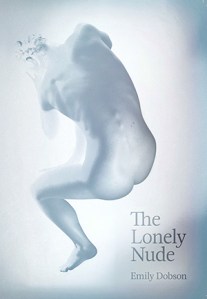
Emily Dobson’s The Lonely Nude — The collection allows the imagination to corkscrew slightly, leaving the poem ajar for other things.

cv_the_lonely_nude                 IMG_2664

Emily Dobson, The Lonely Nude Victoria University Press, 2014

Emily Dobson’s debut collection, A Box of Bees, gathered much critical praise and was named as one of The New Zealand Herald’s Books of the Year in 2005. That same year she took up the Glen Schaeffer Fellowship in Iowa.

Emily’s new collection, The Lonely Nude, is a collection to read as a whole as much as it is a collection to read in pieces. Like a symphony in parts, or a poetic memoir that doesn’t reside solely in self-confession, experience or anecdote. The collection allows the imagination to corkscrew slightly, leaving the poem ajar for other things. Connections, disconnections, vulnerabilities, epiphanies, fantasies. It is as though the poet’s pen is driven by the real and outsidethereal. Musings, sidetracks, daydreams, anxieties. The seven sections establish thematic clusters as the titles suggest: ‘Prehistory,’ ‘The Lonely Nude,’ ‘A Holiday in Mexico,’ ‘Fall in America,’ ‘Winter,’ ‘Spring,’ ‘Going Home.’ These titles suggest an arc of living and travelling, yet the book title underlines the fragility of movement. Yes, the poet has posed as a life model (and there are poems on this topic), but there are various other nudities rippling through the lines. Scandalous gossip stolen from a women’s magazine in ‘Rude Jude goes nude.’ Or the nightmarish scenario of a house being blown away while showering in ‘Unfamiliar weather.’ (‘Foreignness is just things we’ve forgotten/ ways we could have been.’)

These new poems share the restraint and elegance of a Jenny Bornholdt poem. The line breaks are exquisite as though the poems are breathless. As though the poet has slowed the reading right down to snail’s pace so we can stall and ponder. This is nowhere more evident than in the perfect little poem, ‘Hotel Mexico.’


Hotel Mexico

The bedspread is red

like ink

in the room

with small breezes

we’re sprawling

and a few small drops

of rain are falling

on the dust

on the concrete

small buds

are opening

in our lips

spreading carelessly


These new poems shift and settle on the page in myriad ways, with or without punctuation, with or without hesitancy. At times there is a spark of humour. Often there are lines that Emily acknowledges as ‘stolen’ in her detailed footnotes. These poems emerge out of reading the world and merge into a world of reading. There is an anchor in daily life, yet the poems float and fly like a poet’s mind on the move without limitation. Lyricism is the ink in the pen. So too are the shifting forms. The ability to catch just the right modicum of detail to make a moment shine. As James Brown said of Emily’s first book, these poems are a joy to read.


I want to end with another poem that caught me:


The house

The house faces south

and we are couched in the dark side of a hill.

The grass is long and always wet.

We envy the hill opposite: we long for its sun.

There are holes in it, tunnels,

like a pencil has been poked through.

The two pines are always black as pitch.

A guitar in the corner keeps creaking.

At night the little train all lit up inside

rattles briefly around the hill,

in and out of the tunnels.


Victoria University Press page

New Zealand Book Council page

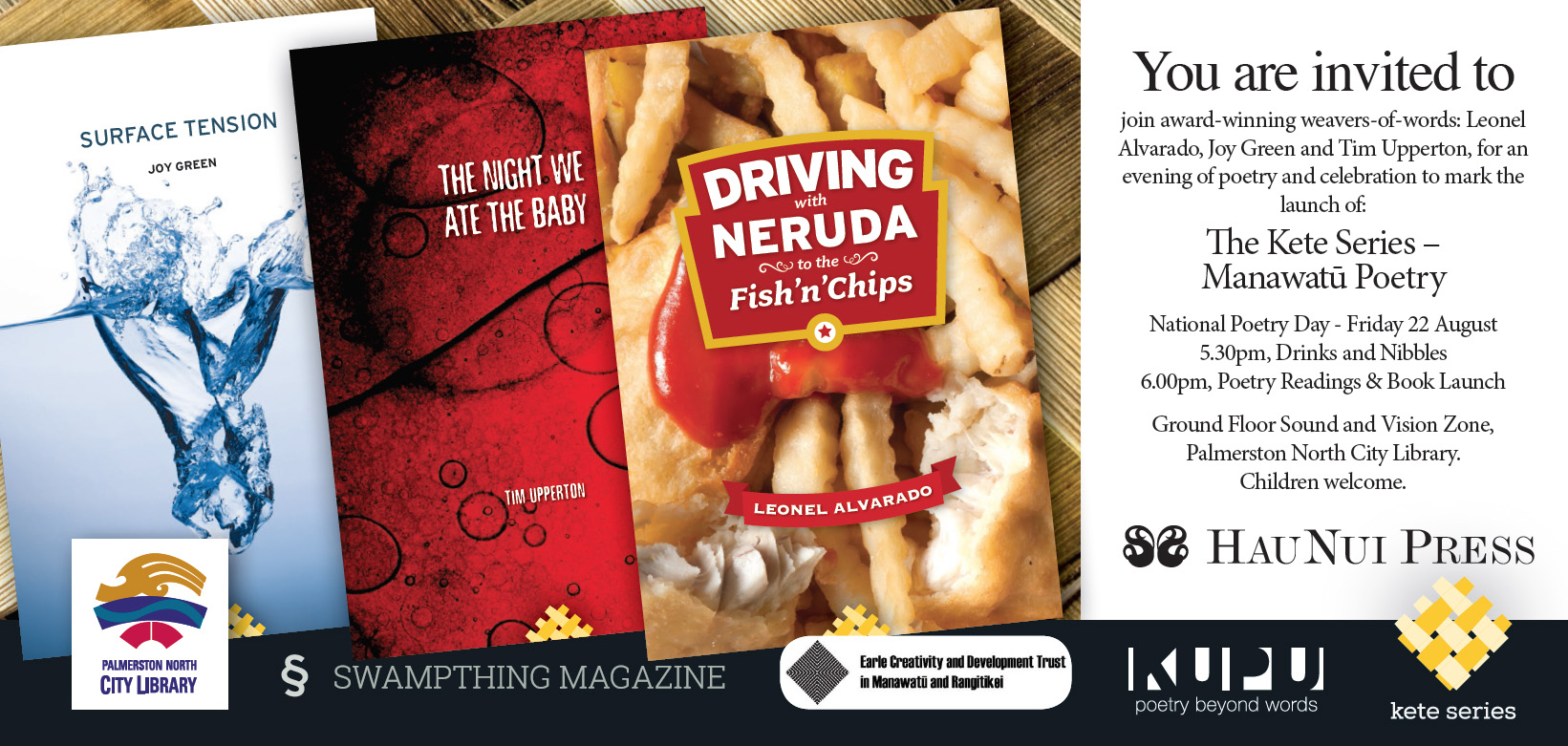
All Tomorrow’s Poets at Time Out Bookshop on NZ Poetry Day is a must-go-to event in my view

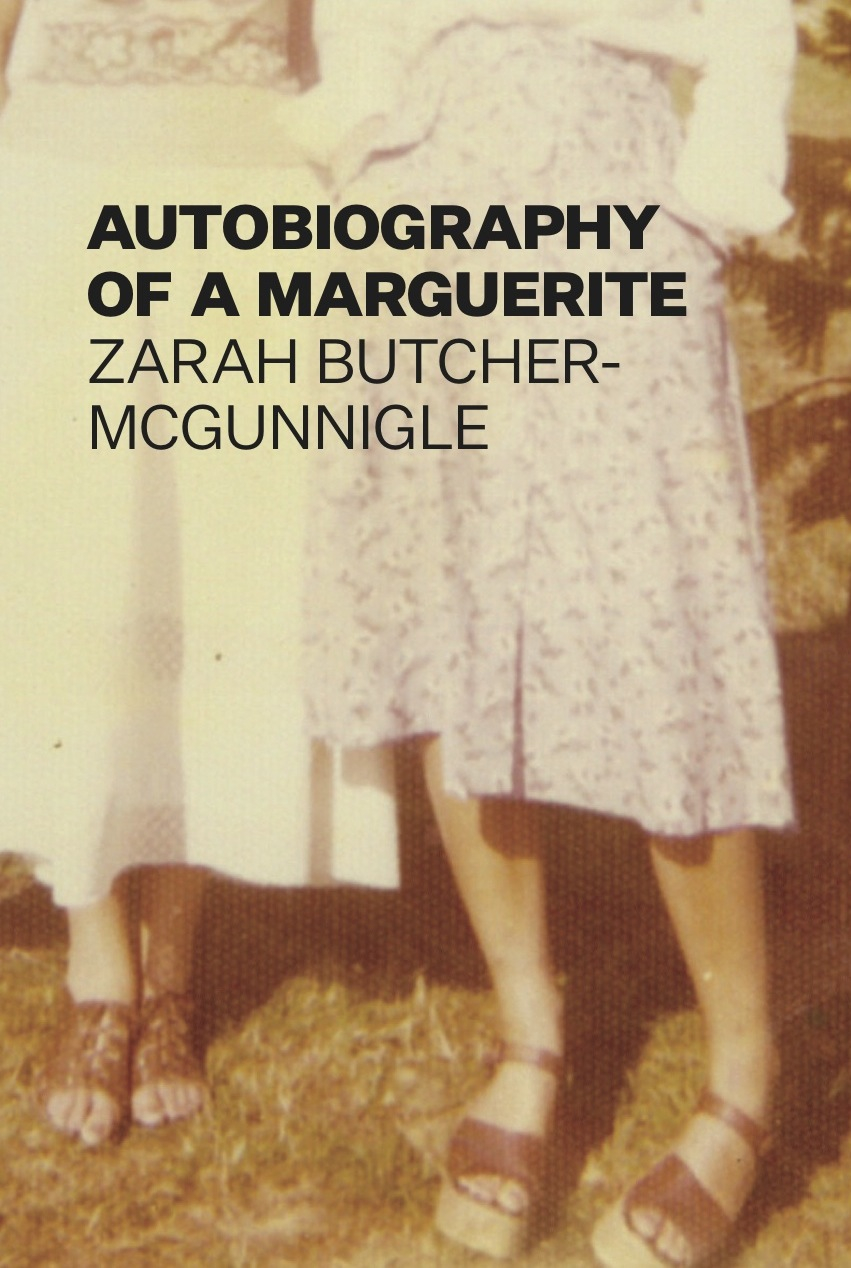
AutobiographyofaMarguerite_cover

This event looks terrific! I picked Manon as the winner when I judged The New Zealand Post Secondary School Competition a number of years back (I would so love to hear what she is doing now!) and shortlisted Kirsti for the Sarah Broom Poetry Award this year and and raved about Zarah’s book at her launch and here (and Steven’s). This is some line up. And I love the fact there are people here I have never heard of.

If I wasn’t doing a swag of things in Hamilton for Poetry Day I would be there with bells on. Anyone want to write about this event I will post it on Poetry Shelf. Cheers!

All Tomorrow’s Poets will be a unique and exciting event, showcasing cutting-edge New Zealand poetry and situating it in the context of Aotearoa New Zealand’s literary history.

MC’d by Gregory Kan and Steven Toussaint, the event will feature:

Ross Brighton
Kirsti Whalen
Craig Foltz
Isobel Cairns
Zarah Butcher McGunnigle
Jessica Hansell aka Coco Solid
Gregory Kan
Steven Toussaint
Alex Wild
Manon Revuelta

…reading their own work alongside a New Zealand poem which they have found inspirational.

All Tomorrow’s Poets will take place in the reading room, upstairs at Time Out Books, in an informal atmosphere with copious food and drink.

Come along from 6.30pm on August the 22nd to explore the expanding possibilities of poetry.

Location: Upstairs at Time Out Books, 432 Mt Eden Rd, Mt Eden, Auckland

Entry Details: Free

Contact Details: please direct any questions to Time Out Books at books@timeout.co.nz

Gregory O’Brien talks to Kim Hill about Michele Leggot: hearing Michele read was simplybreathtaking

cp-heartland   cp-heartland

Gregory O’Brien was in conversation with Kim Hill this morning talking about Michele Leggott’s collection, Heartland (AUP). Michele’s book is a finalist in the Poetry section of The NZ Post Book Awards this year. Kim and Gregory pondered ‘difficulty’ in poetry but mostly  uncovered the way Michele’s book opens its arms to the reader.  Gregory is a poetry storehouse as he leads you this way and that, towards and away from the poems. Hearing Michele read from one or two was magnificent– the musicality evident, the electric connections multiple, the images resonant, the personal glimpses alluring. You can hear the discussion here.

Poem Friday: Nicola Easthope’s ‘Standing’ a metaphor that is open and pliable

OLYMPUS DIGITAL CAMERA

Standing

They say I am rock in matters of work

that the holes I dig are smooth-sided and honest

my shovel tip sharp, and handle engraved

with the flank-lines of gneiss, the green hold of forests.


But today I wake as pelvic-pink soapstone

with a ditch to shoulder, my buckling knees

tip me crown to the bottom of this infinite fissure

the litter of night time, the folding of trees.


Author’s note: This poem was fuelled by bare legs on hot concrete, the traditional Japanese garden at Pataka Museum and Art Gallery on Waitangi Day, and my return to full time work. Here, I’m exploring the baffling twin-set self I experienced in the early days of Term 1 last year: the coexistence of my reputation as an authentic, confident teacher, with my private anxieties at meeting 120 teen strangers’ needs – and being liked by them – along with a seemingly unscalable workload. Working out the worry!

Author bio: Nicola is a poet, activist, and teacher of English and Social Studies at Kāpiti College in Raumati, where she also coordinates the Eco Action Group. Her first poetry collection, leaving my arms free to fly around you, was published by Steele Roberts Aotearoa in 2011. She is currently completing her second manuscript, entitled Working the tang.

Links: http://www.creativecoast.co.nz/nicola-easthope-poet

http://www.steeleroberts.co.nz/books/isbn/978-1-877577-57-4

Paula’s note: I loved the gracefulness of each line in this poem. The enigma and the restraint. I loved the contrasting verses and the way image resonates so profoundly. If the images function as metaphor, and indeed they do, they are open and pliable. I love the literal presence of tools that can then ignite the dual sides of self. The title too is enigmatic, potent. I was lead from the place where one stands to the regard of others and then oscillated between these two meanings as the image took me from keenness and capacity to doubt and incapacity.  The final face is striking, ‘the folding of trees,’ and is a perfect, effervescent tablet to leave at the end. It sets the whole poem sparking again.

August On the Shelf: Poetry picks from Emily Dobson, Siobhan Harvey, Harry Ricketts, Jack Ross, James Norcliffe

Siobhan Harvey: Conversations by Owl-Light, Alexandra Fraser, Steele Roberts, July 2014 Conversations by Owl-Light is the first collection by Auckland author, Alexandra Fraser who is one of the finest contemporary writers engaging with scientific themes in New Zealand. Chemistry, love, botany, family, astronomy, tarot and ancestry: this heady mix of themes is delicately and decidedly well handled by Fraser’s evocative language, pinpoint accuracy and sumptuous concern for human interaction. See here for more details.

Autobiography of a Margueritte, Zarah Butcher-McGunnigle, Hue & Cry, June 2014 See here. Each time I read this first collection of prose-poems by Butcher-McGunnigle I’m staggered by its depth, skill, astuteness and vibrancy. A workbook for illness; a diary of familial dysfunction; a finely tuned navigation through self-representation and identity: Autobiography of a Margueritte is all this and more. A must-read.

Siobhan Harvey‘s recent books are 2013 Kathleen Grattan Award for Poetry winning Cloudboy (Otago University Press) and, as co-editor with James Norcliffe and Harry Ricketts, Essential NZ Poems – Facing the Empty Page (Penguin Random House NZ, 2014). Recently, a poem from a new work she is creating was runner up in 2014 New Zealand Poetry Society International Poetry Competition.


Harry Ricketts:  I Knew the Bride, Hugo Williams, Faber & Faber, 2014  Hugo Williams is my favourite contemporary English poet. His line in mordant wit and lurching loss gets me every time. Here the suite of poems called ‘From the Dialysis Ward’ really hits the spot.

Harry Ricketts recently co-edited Essential NZ Poems – Facing the Empty Page (Penguin Random House NZ, 2014). Harry has a new collection of poems out next year with Victoria University Press.


James Norcliffe: A couple of the poetry books I have been reading recently are Siobhan Harvey’s Cloudboy and James Tate’s Return to the City of White Donkeys.

Cloudboy is a remarkable achievement: passionate, imaginative and sustained. It’s hard enough to pull off a short sequence but Siobhan negotiates a book length sequence effortlessly. It is easy to see how this book won the Kathleen Grattan Award last year.

I returned to James Tate’s book because I wanted to talk about flash fiction to a class at the Christchurch School for Young Writers just in advance of National Flash Fiction Day on (appropriately) the shortest day. I’ve been a huge admirer of James Tate ever since I came across The Lost Pilot years and years ago. Return to the City of White Donkeys is a collection of prose poems wry, often funny and often unsettling. Wonderful. I really enjoy Tate’s deadpan surrealism and I was lucky enough to hear him read in America a few years back. There was standing room only on a bleak rainy night.

James Norcliffe recently co-edited Essential NZ Poems – Facing the Empty Page (Penguin Random House NZ, 2014).


Jack Ross: First of all, there’s  the Collected Poems of Jack Gilbert (New York: Alfred A. Knopf, 2012). I picked this up secondhand and have been reading it with increasing delight and respect ever since. There’s something plain and straightforward about this guy that really appeals to me. When the book was nominated for the 2013 Pulitzer prize, the citation read: “a half century of poems reflecting a creative author’s commitment to living fully and honestly and to producing straightforward work that illuminates everyday experience with startling clarity,” which I think is quite nicely put. He’s the very opposite of a showboat poet (not that they can’t be fun too, sometimes). He died shortly after the book appeared, so it really is the last word on a lifetime devoted to the craft.

Another book I’ve been reading in this month is the final, complete version of Doc Drumheller’s 10 x (10 + ’10) = 0 (Christchurch: The Republic of Oma Rāpeti Press, 2014). I first met Doc last year, at the Hawke’s Bay Poetry Conference (though we’d been corresponding on and off for years), and found him a very interesting person to talk to. This huge, ten-part poem, compiled over the past decade, consists of a series of poems compiled according to stringent writing restrictions, rather in the mode of an Oulipo project. The tenth and twentieth poem in each volume is a palindrome, reading the same backwards and forwards. Give the popularity of such poets as Christian Bok (Eunoia), it’s nice to know that New Zealand has its own workshop of potential literature humming away down there on the Canterbury Plains (and finding periodic expression in the journal Catalyst, which Drumheller also edits).

Jack Ross teaches at Massey University Albany.  He has a poetry book coming out later in the year from HeadworX. It’s called “A Clearer Look at the Hinterland: Poems & Sequences 1981-2014.” Catch up with what he is doing on his blog here.


Emily Dobson: On my bedside table for the last little while has been Marty Smith’s Horse with Hat (VUP: 2014). Any adjective I think of for this book I quickly think of its opposite – it is loud, but also quiet, wicked but also exquisitely tender, you get this primal sense of the horses but it is utterly human – the affection the poems have for their characters is palpable. The collaboration with Brendan O’Brien is brilliant. One of my favourite poems is ‘A mile here, a mile there’, which completely floored me when I first read it on Turbine. Knowing what Marty has put into these poems from when I first met many of them 10 years ago on the MA, I can’t think of a more deserving winner of the Best First Book of Poetry in this year’s NZ Post Book Awards. I’m very proud of her.

Emily Dobson‘s new collection of poems, The Lonely Nude, was published by Victoria University Press in July. I will review this on Poetry Shelf.

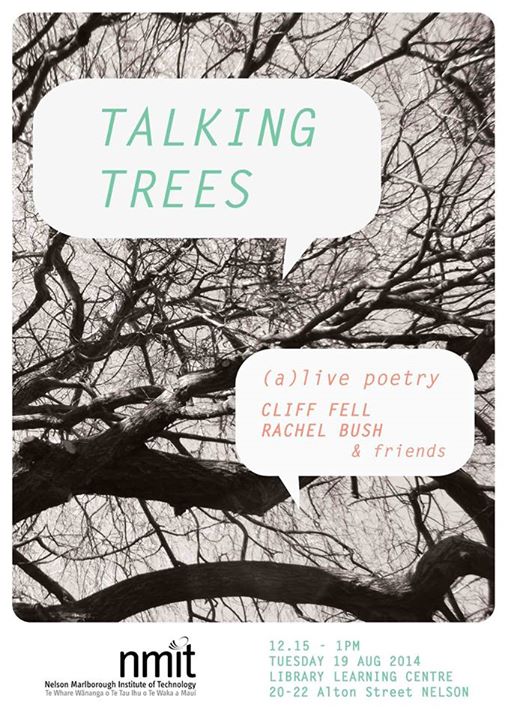
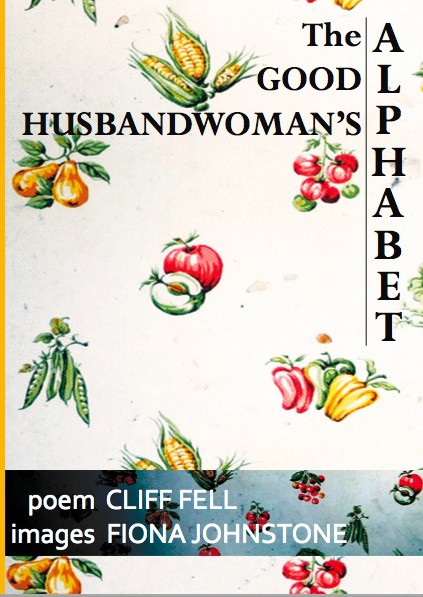
Cliff Fell’s The Good Husbandwoman’s Alphabet This gorgeous sequence holds you within its frame

TGHWA cover for Paula     TGHWA cover for Paula

Cliff Fell, The Good Husbandwoman’s Alphabet, Last Leaf Press, Motueka, 2014


Cliff Fell has published two previous poetry collections, The Adulterer’s Bible (Victoria University Press, 2003) and Beauty of the Badlands (Victoria University Press, 2008). His debut book gained the Adam Prize in Creative Writing and the 2004 Jessie Mackay Prize for Best First Book of Poetry. He currently lives on a farm near Motueka and teaches at Nelson Marlborough Institute of technology.

His new book, The Good Husbandwoman’s Alphabet is a team effort, as Cliff has worked in conjunction with artist, Fiona Johnstone and photographer, Ivan Rogers. The book is both slender and aesthetically beautiful. The images are alluring hooks that can either be read as self-contained visual poems or as part of an alternative narrative thread that forges subtle connections with the arc of Cliff’s text. Exquisite.

The poem takes the alphabet as its framing device. Each letter pirouettes upon the possibility of words, the power of words, the shimmering vulnerability of words. The voice of the husbandwoman gives us glimpses, only ever glimpses as we discover in ‘G,’ yet she accumulates, piece by piece, in the relations she unveils. Signals of self in ambiguous traces. You get to the end and hold a trembling portrait that flips and twists to become a portrait of the husbandman. Or is it. The ‘he’ and the ‘you’ slip and slide so you are not sure where husband ends and adultery begins (this poem has its origins in The Adulterer’s Bible).

This gorgeous sequence holds you within its frame. The mysterious code on the final page sends you back to see the portrait in a new light. An intense and aching light and I am not spoiling the hit of the revelation by speaking of it here. The lines are deft and bereft (ah the ache) and befit the narrating woman. Little pockets of confession, reflection and quiet. It is a joy to read.


Bridle

These words: throat-lash, brow band, bit—

how a horse gets broken in.

Each night I am unbridled.

Never try to understand a marriage.

It’s beyond the knowing of all but the finest

gentleman: how the bridle’s said to fit the bride.


NZ Book Council page

Victoria University Press site

NMIT page