Poetry Shelf: Stop Press – The Lives of Coat Hangers by Sudesh Mishra

otago291605   otago291605


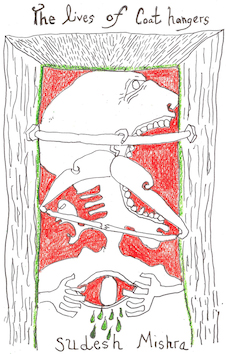
Otago University Press recently released The Lives of Coat Hangers by Sudesh Mishra (January 2016).

Sudesh has previously published four books of poetry and is currently Professor of English at The University of the South Pacific in Suva. He has taught at universities in Scotland, Fiji and Australia.

Sudesh is flagged ‘as a philosophical poet, one preoccupied not only with how meaning is made, but with how meaning is manifested in the modern world.’

He is heralded as ‘a major poetic voice in the South Pacific.’

The cover features a striking image by John Pule.


from ‘A Rose is a Rose’


In the simple poem composed simply

The sun’s never likened to a brass gong.

Conceits fail to plunge from the sky. A song

Is sung for the joy of singing freely.

No noun strays into rouged avenues.


Poetry Shelf review: Carolyn McCurdie’s Bones in the Octogon – this is a gem of a book that relishes the mundane as much as it sets clouds dancing

Bones-in-the-octagon-front-cover-copy1   Bones-in-the-octagon-front-cover-copy1
 

Carolyn McCurdie Bones in the Octagon  Mākaro Press 2015


Reading Carolyn’s debut poetry collection is akin to opening a picnic hamper that is full of surprises. You sit back under a leafy tree and inhale a moment perfectly caught. You taste flavours both familiar and less so. You shut your eyes and absorb little anecdotes. You look at the clouds and let imagination drift in the form of story. You bite into little memories.

The poems that stand out for me are full of grace, canny detail, measured presence and a musical lift plucked on the line.

I particularly love the mysterious little stories that are in debt to myth or fable or an imagination wandering. The first poem, ‘Inside a story,’ takes you from a market stall with ‘fruit in brown paper bags’ to seashells (‘this is why we went under the sea’). The gaps are exquisite, the slow pace compelling. I loved, too, the inventive kick of ‘Making up the spare beds for the Brothers Grimm’ — not so much in the light of skewing form but in the kinetic detail:


What can she offer them? Not true love, though she’s heard

that a young man looking for love was given

a bowl of milk, a chunk of white bread

and a freshly minted coin that sparkled.

She has kneaded the bread, set it in the hot oven.


The poems that track paths from the plenitude of things are also a delight. In one poem, the poet imagines in luminous detail an existence as ‘hut’: ‘If I come back as a building/ it will be as a tramping hut.’ Detail meets economy so beautifully in ‘Dormant,’ a poem that liberates a baking hot cat on the page (‘on the red satin cushion’): ‘where she might ignite/ flare/ collapse into ash.’ A poem about potatoes, ‘A potato sonnet: Jersey Bennes for Christmas,’ celebrates the vegetable plucked from ‘the black/ crumbled earth’ but casts a warm glow that keyholes family as much as it does nourishment (I posted the whole poem here):


This is old, wondrous

as moonrise,


mundane

as the maternal voice


that calls, come in

to the table


More than anything, I love the way certain poems harness a moment and let it glint and reflect as you stall. ‘Memories of long grass’ invests in a moment and as you embrace that moment, poetic loveliness abounds: ‘The grass held us cupped; the sky bent down/ and sipped us up’. There is often loveliness and that loveliness sometimes couples with strangeness, sometimes personal revelation, sometimes a stockpot of detail. In ‘Invitation to dance,’ the poet takes a backward gaze to a younger self. The poem exudes tenderness, boldness, love.


While you wait, give her all that you have:

a largeness, the swirl of a cape or a skirt,

and balance at speed. Stand by her

as she pulls on her boots.


Not all poems held my attention, but this is a gem of a book that relishes the mundane as much as it sets clouds dancing. I enjoyed it very much indeed.


Carolyn McCurdie is a Dunedin writer who has worked as a teacher and librarian. She has won both The New Zealand Poetry Society’s International Poetry Competition and the Lilian Ida Smith Award. She is a member of the Octagon Poets Collective.

The book is one of the three books in Mākaro Press’s Hoopla series 2015. The other books were Jennifer Compton’s Mr Clean & the Junkie (currently longlisted for the NZ Book Awards and reviewed by me) and Bryan Walpert’s Native Bird (reviewed by me). Hoopla books are published annually in April in sets of three.


Mākaro Press page


Poetry Shelf review: Holly Painter’s Excerpts from a Natural History – This book is a tonic for me as a reader

front-cover     front-cover


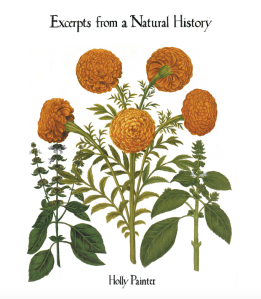
Excerpts from a Natural History Holly Painter  Titus Books  2015


This book is a tonic for me as a reader and a boost in the blood for poetry. I adore it.

John Newton’s endorsement on the back is perfect: ‘Holly Painter is a trickster poet, you never know where she is going next. Sometimes she wants to lick your ear. Over the page she might chew your ear off.’

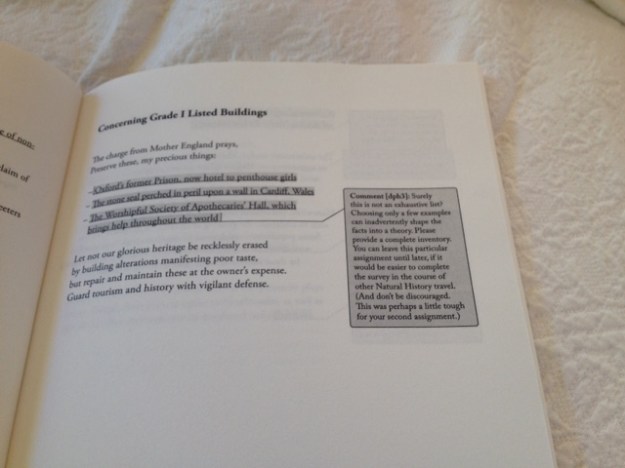
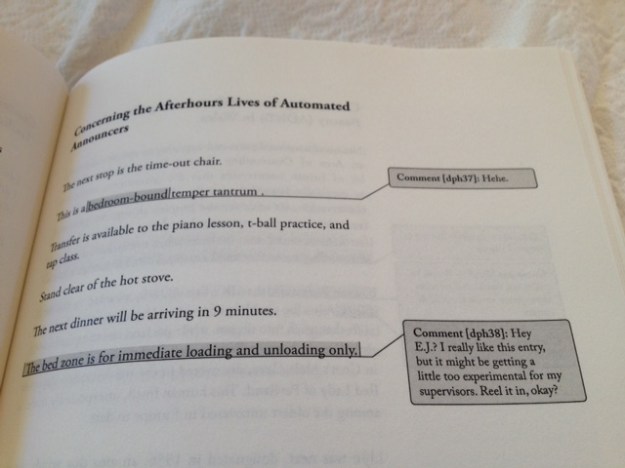
The launch pad for the collection: ‘When the British natural philosophers of the 17th century founded modern natural history, they proposed finding a poet to compile a poetic account of everything that existed in nature, very broadly defined. Four hundred years later, the work is ongoing, made modern and rigorous with rules and style-guides, managers and research-poets.’

The notion of a research-poet sidetracked me into other poet roles that have existed or might exist: speculative-poet, domestic-poet, Sunday-poet, global-village-poet, experience-poet, travel-poet, theory-poet, heart-poet.

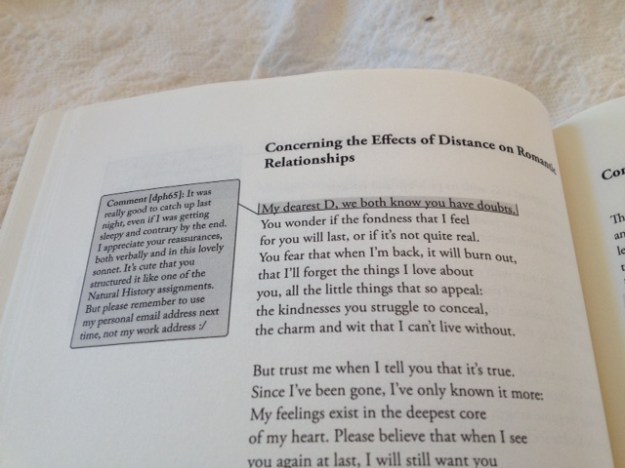
The collection is made up of the submissions of a researcher-poet but made infinitely more interesting by the tracked comments of her supervisor and the myriad ideas and relations that proliferate.

The poet-researcher is set assignments that demand inventories and lists of things that include the natural world (regenerating starfish, the kakapo) but veer wildly into a material world (buttons for sale, ‘Tubular Bells’) and curious things between (flower motifs for teenage courtship).

The supervisor demands the voice of reason, clarity, facts, comprehensive lists, specificity, neutrality and rebuffs anecdotes, adverbs, poetic licence, personal confession.

Sometimes the submissions are laugh out loud as in the light of the recovery work of ‘Tubular Bells’ or the counting of buttons (how long did it take?).

The tracking comments form editorial advice but also trace the relationship between supervisor and researcher-poet(this label keeps slipping in my hands!). The reaction of the supervisor to relations beyond editorial choices is explicit in the tracked comments; the reaction of the latter is buried in the poetry submissions. Love hijacks the cool calculation of inventories. The very guts of ‘natural history’ and what that might embody is reinvented.

Holly employs a range of styles, tones, rhymes, layouts, silences, musicalities as though the heart cannot be penned (excuse the pun!) within a style-guide. The collection is dexterous on its tip toes as it gets you thinking about categories and categorisations, hierarchies and dichotomies, and the way love cannot resist (avoid) anecdote, confession, adverbs.

The book is beautiful. The paper gorgeous to the hand, while the cover’s marigolds almost fill the room with a nostalgic scent.

I highly recommend this book.

Holly is an MFA graduate from the University of Canterbury. Her poetry has been included in Sport, Landfall, the NZ Listener and JAAM. She lives in Singapore with her wife and son.

Titus Books here

Holly Painter’s web site
IMG_3035


IMG_3033


IMG_3034


Poetry Highlights at Wellington’s Writer’s Week in March

For the full programme see here but this is the poetry on offer.


I would love to go to the Laureate Circle but can’t make it at this stage (might just fly down on a whim!). I would really like to post pieces on any of the poetry events at the festival. Any takers?


Friday March 11th 7pm  A Circle of Laureates

Screen shot 2016-01-30 at 9.48.49 AM


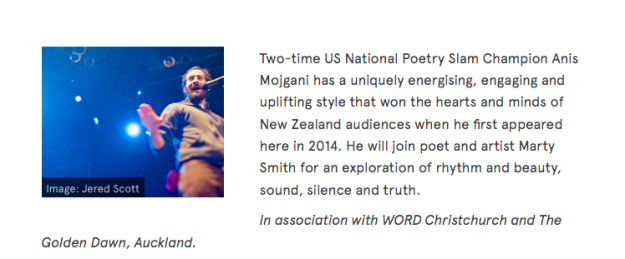
Friday March 11th 5pm   Anis Mojgani and Marty Smith

Screen shot 2016-01-30 at 9.55.17 AM


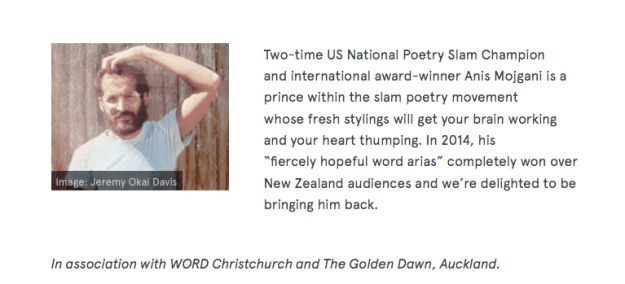
Thursday March 10th 1.45pm Anis Mojgani

Screen shot 2016-01-30 at 9.57.28 AM


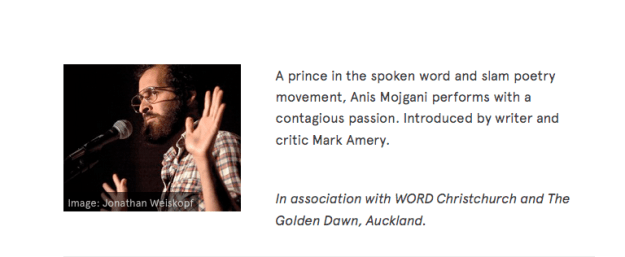
Sunday 13th March 2.30 pm  Anis Mojgani with Mark Amery

Screen shot 2016-01-30 at 9.59.20 AM


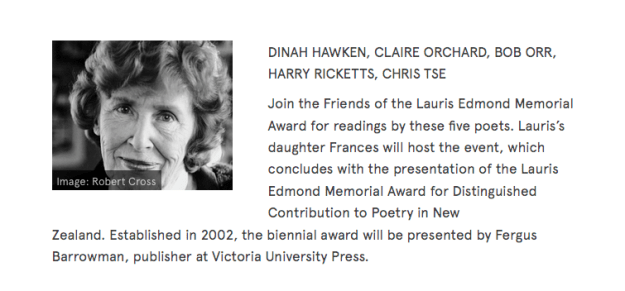
Saturday 12th March 3.30 pm Five Poets and a Prize


Screen shot 2016-01-30 at 10.00.52 AM

Tastes of Ika 3 – Ika 4, a few days left for submissions

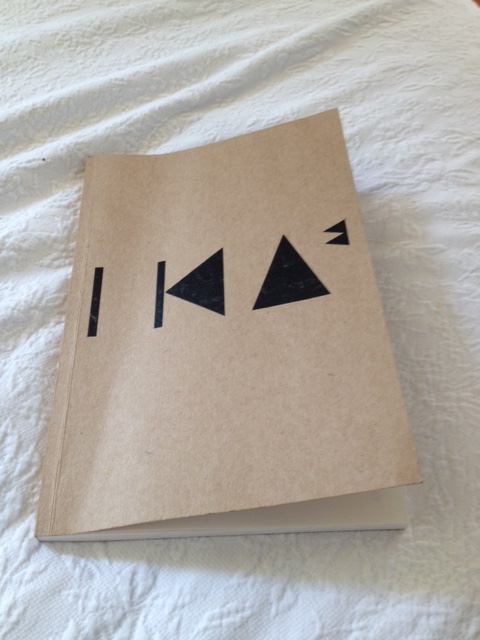
IMG_3027


Ika 3 looks cool. It is the literature and arts journal from Manukau Institute of Technology and is edited by Anne Kennedy. Anne is a poet and novelist and she is about to head to Victoria University where she will be the 2016 Writer in Residence.

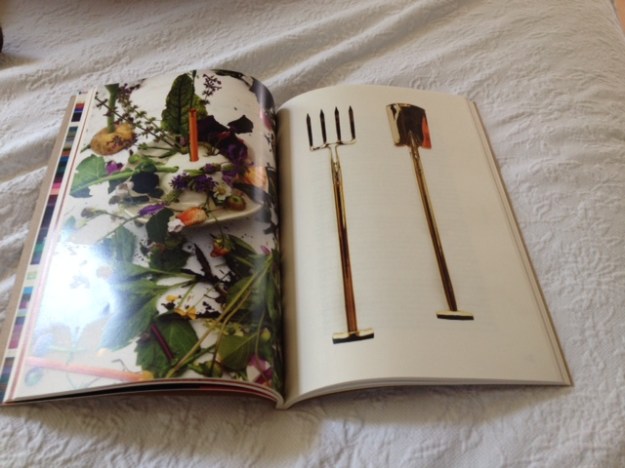
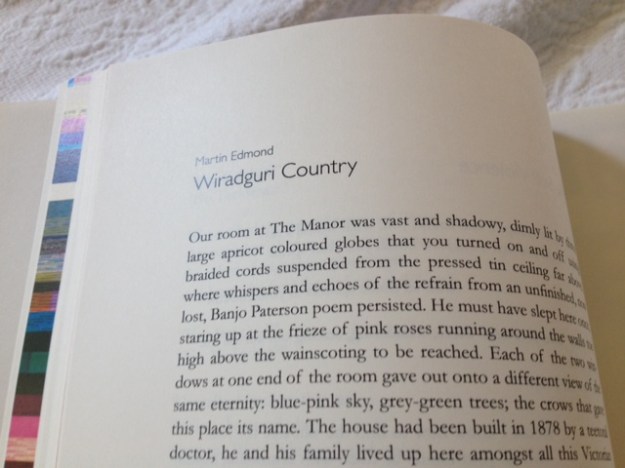
The internal design is fresh. The issue looks like it is wrapped in brown paper. It feels slightly rough to the hand. It features prose, poetry and art from students and staff, and stretches out to include work by well known writers from both here and overseas.

The mix is eclectic. There are appealing grades/gradients of lyricism and subject matter, but what makes this issue pop out from others is the political elbow that juts out, the raw angles, the Pacific Island presence. Compared with this journal, others seemed saturated in white. To have such diverse reading lines in to brown skinned voices makes this newish journal a vital presence within our writing/reading options.

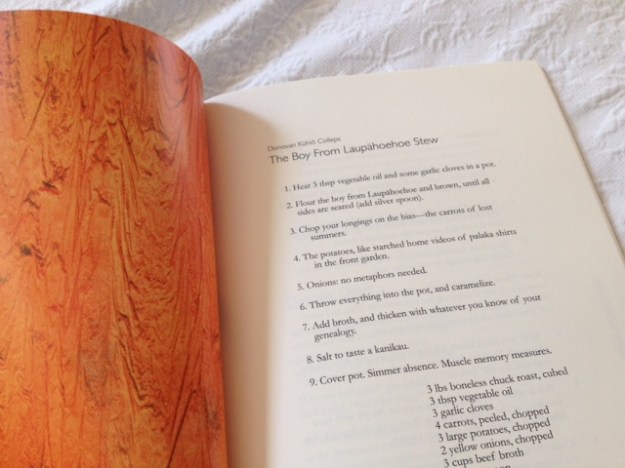
A bundle of poets made me snap to attention. I love the playfulness of Tusiata Avia’s ‘We are the diaspora of us all’ where play becomes play with a potent bite. I love the way Chris Tse’s ‘This house’ is inventive, detail rich, personal, kinetic and catches both heart and mind. Faith Wilson’s ‘Echo (bootleg remix)’ is a poem bisected in two and the interplay of dual voices is sharp, hard, heart hitting. You need to read again to find different paths. Donovan Kūhiō Colleps wraps place and moment so acutely in ‘Muscular Dreams,’ and I love the way lines coil and repeat. J A Vili’s ‘Mother’s Rope’ is spare, just a handful of words on the page, but it is the white hot core of the issue. Sophie Van Waarden’s ‘Water Girl’ confirms that this young poet writes with linguistic grace, verve and surprise and is an emerging poet to watch.

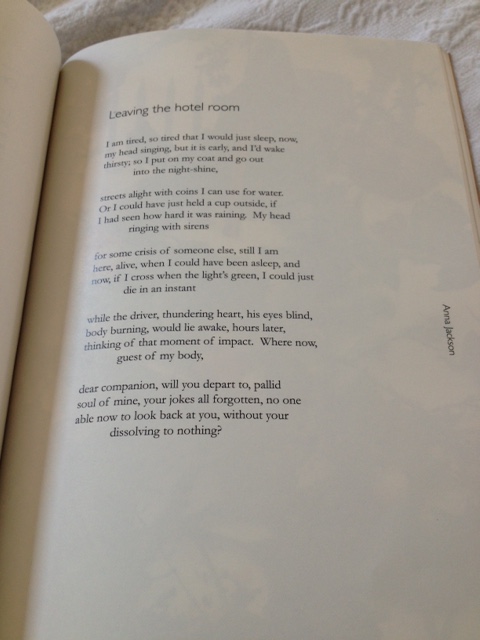
There is much more. See some treats below in the photos, including Anna Jackson’s surprising ‘Leaving the hotel room.’ This journal is worth a subscription! The art is mind catching as well as eye-catching. Again I come back to the words fresh and vital.


Work is about to start on the next issue. Submissions for Ika 4 are due by February 1st.

Submit here.

Submission details:

We invite submissions across Moananui for Ika 4 from emerging to established practitioners in the fields of writing (poetry, prose fiction, non-fiction), performance, and visual art.

Ika 4 will be published in print and accompanied by a website for moving image and performance, to be launched as part of the Auckland Writers Festival in May 2016.

Electronic documents are preferred, but printouts together with a self-addressed envelope may be mailed to: Ika Journal, Faculty of Creative Arts, Manukau Institute of Technology, Private Bag, 9400, South Auckland Mail Centre 224, New Zealand.

Video works must be in the form of mp4 files and can be submitted via private Vimeo / Youtube links.

The submission limits are: eight poems, eight images, three video/performances, 7,000 words of prose.

Inquiries to: ikajournal@gmail.com

Editor: Anne Kennedy
Arts Editor: Richard Orjis

IMG_3028

IMG_3029

IMG_3032

IMG_3030

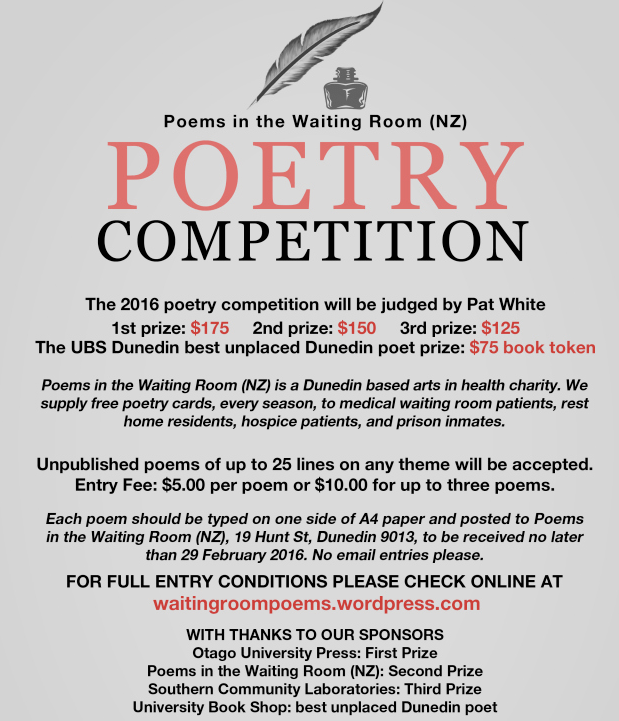
Sarah Broom Poetry Award – the deadline approaches

Entries open 5 January 2016 and close 18 February 2016

Now in its third year, the Sarah Broom Poetry Prize will be announced at the Auckland Writers Festival in May 2016. Shortlisted poets will be invited to read their poetry at a dedicated poetry event at the Festival, where the winner will be announced.

In 2016 the judge for the prize will be Paul Muldoon. One of the world’s leading contemporary poets, and the author of over thirty collections, Paul was awarded the Pulitzer Prize for Poetry in 2003, and the T.S. Eliot Prize in 1994. A past Professor of Poetry at Oxford, he is now at Princeton University. Paul is the President of the British Poetry Society and Poetry Editor at The New Yorker. The Guardian describes Paul Muldoon as “amongst the few significant poets of our half-century” and “the most significant English-language poet born since the second world war.” His most recent collection is One Thousand Things Worth Knowing (2015).

For more information about the prize and Sarah Broom visit here.

For more information about the Auckland Writers Festival, which launches its 2016 programme on 16 March 2016, visit here.

HOW TO ENTER

The prize is awarded on the basis of an original collection of poems by a New Zealand resident or citizen. Entries will be accepted from 5 January 2016 until 18 February 2016. Poets are required to submit six to eight poems, of which at least five must be unpublished. The recipient of the prize will be announced in May 2016 at the Auckland Writers Festival.

Entries should be emailed to poetryprize@sarahbroom.co.nz
Any queries should be emailed to enquiries@sarahbroom.co.nz

Share Button

Share

Poetry Shelf 2016

IMG_2907


Time to kick start Poetry Shelf back to life for 2016 as I get set to kick off a moon boot!

This year I will post poetry reviews, interviews with New Zealand poets, poetry news from anywhere, event details, competition details, poems that I fall in love with, and whatever else takes my fancy.

I particularly want to keep you aware of poetry books that are released in New Zealand. With a big new book on the go, I cannot promise to review all books released, but this year I do want to flag all arrivals.

Please send copies so I can highlight them (and perhaps review, set up an interview, post a poem from) on the blog.  I do want to support the grassroot presses! See address below.

I am also happy to consider pieces by other writers whether reviews, interviews or musings on poetry.

This blog continues to run on the currency of love so I cannot pay people who contribute.

New Zealand desperately needs poetry forums. Poetry books so seldom get attention in mainstream media. In 2016 I will work hard to celebrate and critique our poetry and create an ongoing resource for poetry fans.

Any way you can think of to strengthen this aim is much appreciated.


Paula Green

paulajoygreen@gmail.com

PO Box 95078 Swanson Waitakere 0653

Ruapehu Writers Festival Fundraising Campaign

Message from Victoria University:

We are planning a Ruapehu Writers Festival for 17-20th March. It’ll be the first of its kind in the Ruapehu area. The inspiration behind it came from wanting to take literary festivals out of the metropolitan areas and into small town New Zealand. Our rural towns, mountains, rivers and landscapes have inspired some remarkable writing and we want these words to be heard in the places that inspired them. We also want to inspire a new generation of readers and writers.

But we need your support to make this idea happen. We’re launching a fundraising campaign today to raise the funding we need to get the festival off the ground. We have secured some funding from Creative NZ and we’ll raise some income from selling tickets, but we still need another $7,000 to make the festival happen. So we’re asking our community and supporters to get on board and donate any amount you can, big or small, through our Boosted website here. You can read more about the festival there too.

Please help us make the festival a huge success – every donation, big or small, will make a huge difference. Your donations will be tax deductible as the website is run through the Arts Foundation so you’ll get a receipt.

And please help us spread the word by sharing on social media and telling your friends and family, and of course buy your tickets to come along too! You can buy tickets here.

Thank you!

Cheryl Spain
Development Manager – Faculties of Humanities, Social Sciences and Education
Victoria University
Phone: 04 463 6479