I am currently reading Chris Price’s new collection … it is fabulous! Want to savour slowly. Have loved everything I have seen by Lynley so far — so eagerly await the book.
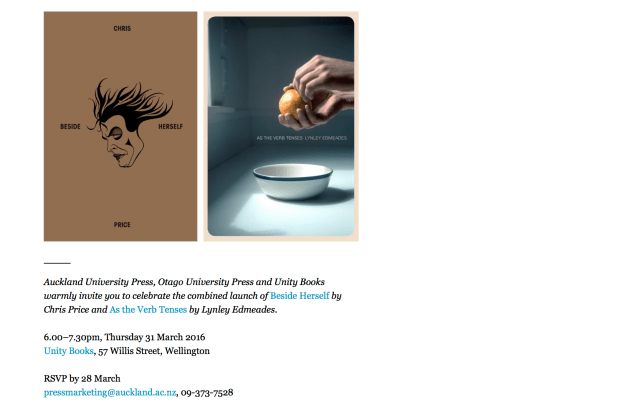

I am currently reading Chris Price’s new collection … it is fabulous! Want to savour slowly. Have loved everything I have seen by Lynley so far — so eagerly await the book.
Auckland, 9 March 2016:
An “especially strong list of applicants” for New Zealand’s preeminent literary fellowship has been whittled down to two.
New Zealand writer and journalist Diana Wichtel and Dunedin writer Breton Dukes will share the 2016 Grimshaw Sargeson Fellowship.
Now in its 30th year, the Fellowship is a national literary award offering published New Zealand writers, both here and overseas, the opportunity to focus on their craft full-time, providing an annual stipend of $20,000 and tenure at the Sargeson Centre in Auckland.
Diana, who has worked as the television and feature writer at the New Zealand Listener since 1984, will be using the fellowship to work on a memoir exploring the impact of the Holocaust on her own family history.
Diana’s father survived the Holocaust by jumping from a train bound for Treblinka extermination camp and hiding in the forest. After liberation he then moved to Canada.
“The fellowship is an incredible opportunity that I’m truly grateful for,” she says.
An acclaimed short-story writer, Breton will be using the fellowship to work on his first novel. The story begins with a helicopter crash and then follows a number of characters after the crash.He says it is incredible to be following in the path of so many accomplished New Zealand writers.
The Trust is delighted that Breton and Diana are the Grimshaw Sargeson fellows for 2016, says Sargeson Trust chair Dr Elizabeth Aitken-Rose.
“They were selected from an especially strong list of applicants and now join a large group of distinguished fellows, many of whom are regarded as New Zealand’s most eminent writers.
“For three decades the Fellowship has offered writers time and space to work, often at a key stage in their writing careers. Both Breton and Diana have strong projects for their time in residence. We are certain the fellowship will be of great help to them in taking their work to the next level.”
The Fellowship will run from April 1 to November 30. Breton will have the first stint at the residence with Diana finishing out the tenure.
Previous winners include Alan Duff, Michael King, Marilyn Duckworth, and Janet Frame. In 2015 the fellowship was awarded to Robert Glancy and Duncan Sarkies.
The fellowship has been recognising and supporting some of our greatest talents for 30 years, says Paul Grimshaw, partner, Grimshaw & Co.
It offers vital support to New Zealand writers to focus, uninterrupted, on their work, Grimshaw says. “They are contributing to New Zealand’s literary landscape and we are very proud to support them.
Wonderful! Grabbed a cheap seat to go to Circle of Laureates on Friday but this is definitely outside whims! Ah if only that backyard portal was on green light.
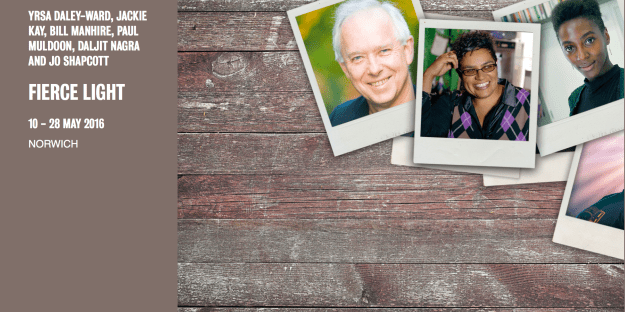
‘Perhaps no art form captured the complexity and terror of the First World War more acutely than poetry. Drawing on their experiences, poets used their art to reflect on the war’s impact, from the horrors of the battlefield to the ways in which the conflict rendered a familiar world unrecognisable to those left living in it.
For Fierce Light, leading poets from countries that participated in the First World War, including Yrsa Daley-Ward, Jackie Kay, Bill Manhire, Paul Muldoon, Daljit Nagra and Jo Shapcott, are each creating new works that endeavour to understand the incomprehensible, exploring contemporary events while also contemplating the First World War. These works will be presented alongside a series of specially commissioned short films, each made in response to the new poems and the themes raised within them. Fierce Light launches with an exhibition and a special live event featuring the poets during the City of Literature programme at Norfolk & Norwich Festival, before the poems and films are presented on radio, at other literary festivals and online.’
Full page here

Book Award lists should promote debate. Ideas and issues should be raised. As long as judges and authors don’t come under personal attack. It is a time of celebration, let’s not forget that, but it is also a time when diverse opinions may draw attention to our healthy landscape of books.
I have just started writing a big book on poetry by New Zealand women. I have carried this project with me for a long time, and it something I care about very much indeed. It is a book I am writing with a great sense of liberation and an equal dose of love.
I bring many questions to my writing.
The shortlist for poetry and fiction in the Ockham NZ Book Awards includes 0ne woman (Patricia Grace) and seven men. There are no women poets.
This is simply a matter of choice on the part of the judges and I do not wish to undermine the quality of the books they have selected. However, in my view, it casts a disconcerting light upon what women have been producing in the past year or so.
Women produced astonishing books in 2015. I reviewed their poetry books on this blog and praised the diligent craft, the exquisite music, the sumptuous detail, the complexities that challenge and the simplicity that soothes. I have lauded books by women that have moved me like no other, and that have contributed much to the possibilities of what a poem might do.
I am gobsmacked that not a single one made it to the shortlist.
Men have written extraordinary poetry in the past year, but so too have women.
Today is International Women’s Day. In celebration of this, here is a selection of poetry and fiction I have loved in the past year and would have been happy to award.
This list is partial. Please add to it. Some of these women are my friends, so yes there is unconscious bias. Some of these women I would recognise in the street, some I would not.
Eleven Poetry Books by women to adore
(I have reviewed all these to some degree on Poetry Shelf or interviewed the poets)
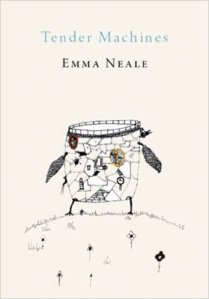
Emma Neale Tender Machines This is a domestic book that is utterly complex. Yet it moves beyond home to become a book of the world. The music is divine. I am utterly moved. The Poetry Shelf trophy is yours Emma.
Joan Fleming Failed Love Stories Poetry that dazzles and shifts me. This book is on replay!
Holly Painter Excerpts from a Natural History Startling debut that blew me out the window and made me want to write
Sarah Jane Barnett Work Poetry that takes risks and is unafraid of ideas. Adored this.
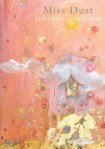
Johanna Aitchison Miss Dust Spare, strange, surprising, wonderful to read.
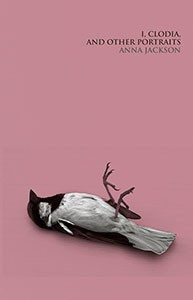
Anna Jackson I, Clodia and Other Portraits The voice gets under my skin no matter how many times I read it. So much to say about it.
Jennifer Compton My Clean & The Junkie This narrative satisfies on so many levels.
Airini Beautrais Dear Neil Roberts Risk taking at the level of politics and the personal.
Morgan Bach Some of Us Eat the Seeds Beauty of the cover matches the surprise and beauty of the poetry within.
Hinemoana Baker waha/ mouth This poetry lit a fire in my head not sure which year it fits though. But wow!
Diane Brown Taking My Mother to the Opera This is poetry making pin pricks as it moves and gets you chewing back through your own circumstances.
…. and this is just a start. Ha! Serie Barford with her gorgeous mix of poetry and prose.
Yep I am going over board here just to show you that women have footed it with the best of the men. Whichever year you look at, a different set of judges would come up with a different mix of books. Yes let’s celebrate that worthy shortlist but let’s also remember that canon shaping only revels in and reveals part of the story.
Fiction (I haven’t read so widely here and have a wee stack to get too – Laurence Fearnley and Charlotte Grimshaw here I come!)
Anna Smaill The Chimes This book – plot character, setting, premise, events – still sticks to me. The sentences are exquisite. Some books you lose in brain mist. Not this one.
Sue Orr The Party Line I see this book becoming a NZ classic – a novel of the back blocks. The characters are what move you so profoundly. So perfectly crafted.
Congratulations to all those who make the short lists! Especially in a year that was larger than a year.
Here is the short list for poetry, see below for other categories.
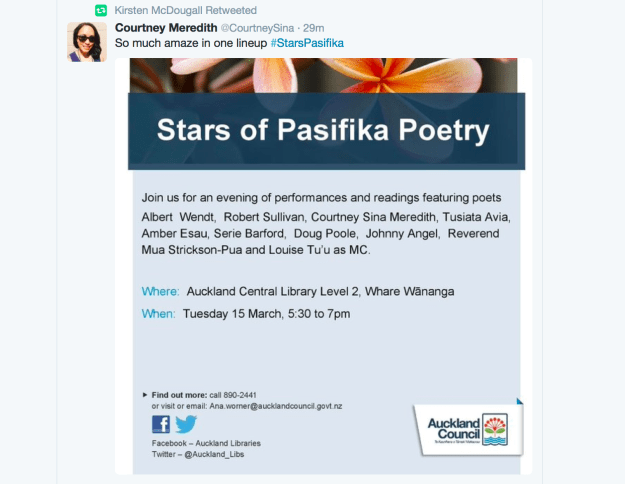
Word of mouth! Love the way Auckland Central Library draws in the poets.
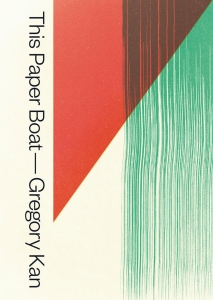
Gregory Kan This Paper Boat Auckland University Press 2016
Gregory Kan’s debut poetry collection, This Paper Boat, is a joy to read on so many levels.
Kan’s poetry has featured in a number of literary journals and an early version of the book was shortlisted for the Kathleen Grattan Poetry Prize in 2013. He lives in Auckland.
Paper Boat traces ghosts. We hold onto Kan’s coat tails as he tracks family and the spirit of poet, Robin Hyde (Iris Wilkinson). The gateway to family becomes the gateway to Iris and the gateway to Iris becomes the gateway to family. There is overlap between family and missing poet but there is also a deep channel. The channel of difficulty, hard knocks, the tough to decipher. There is the creek of foreignness. The abrasiveness of the world when the world is not singular.
Kan enters the thicket of memory as he sets out to recover the family stories. He shows the father as son fishing in the drains, the mother as daughter obedient at school. Yet while he fills his pockets with parental anecdotes, there is too, the poignant way his parents remain other, mysterious, a gap that can never be completely filled:
In the past when I thought about people my parents
were somehow
not among them. But some wound stayed
wide in all of us, and now I see in their faces
strange rivers and waterfalls, tilted over with broom.
The familial stands are immensely moving, but so too is the search for Iris. Kan untangles Iris in the traces she has left – in her poems, her writings, her letters. He stands outside the gate to Wellington house, listening hard, or beside the rock pool. There is something that sets hairs on end when you stand in the footsteps of ghosts, the exact stone, the exact spot, and at times it is though they become both audible and visible. Hyde’s poems in Houses by the Sea, are sumptuous in detail. I think of this as Kan muses on the rock-pool bounty. When he stands at her gate:
I have to hear you to keep you
here, and I have to keep you
here to keep coming back.
I think too of Michele Leggott’s plea at the back of DIA to listen hard to the lost matrix of women poets, the early poets. To find ways to bring them close.
Kan brings Iris (Robin) close. His traces. Iris becomes woman as much as she does poet and the channel of difficulty fills with her darknesses as much as it does Kan’s. There is an aching core of confinement: her pregnancy, her loss of the baby, her second pregnancy, her placement of the baby elsewhere, her mental illness. His confinement in a jungle. His great-aunt’s abandonment as a baby.
The strands of love, foreignness and of difficulty are amplified by the look of the book. The way you aren’t reading a singular river of text that conforms to some kind of pattern. A singular narrative. It is like static, like hiccups, like stutters across the width of reading. I love this. Forms change. Forms make much of the white space. A page looks beautiful, but the white space becomes a transmission point for the voices barely heard.
At one point the blocks of text resemble the silhouettes of photographs in a family album. At another point, poems masquerade as censored Facebook entries.Later still, a fable-like poem tumbles across pages in italics.
The writing is understated, graceful, fluent, visually alive.
I want to pick up Hyde again. I want to stand by that Wellington rock pool and see what I can hear. I have read this book three times and it won’t be the last.
In the final pages, as part a ritual for The Hungry Ghost Festival, Kan sends a paper boat down the river ‘to ensure// that the ghosts find their way/ back.’
The book with its heartfelt offerings is like a paper boat, floating on an ethereal current so that poetry finds its way back to us all (or Hyde, or family).
Auckland University Press page
A terrific interview with Sarah Jane Barnett
Sequence in Sport
For Eventfinda tickets go here
The Poet Laureate Celebrations includes this event! Looking forward to my trip south.
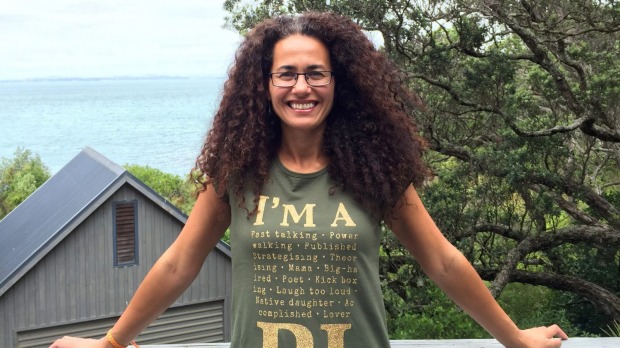
In two weeks, one New Zealand woman will stand in London’s Westminster Abbey to perform a poem for the Queen on behalf of 53 countries.
Selina Tusitala Marsh, a Pasifika poet and Auckland University academic, has been commissioned to write and perform a poem at the Commonwealth Day Observance on March 14.
As well as the Queen, the service will be attended by Commonwealth Secretary-General Kamalesh Sharma, along with High Commissioners and other dignitaries from across the Commonwealth.
See the rest of the article and a video link here.
 NZ Poetry Shelf