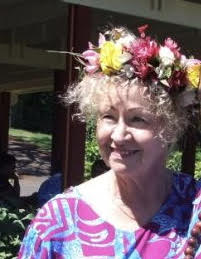
If you were to map your poetry reading history, what books would act as key co-ordinates?
I couldn’t read as a child. I didn’t read a book till I was 20. My father read me all sorts of crazy stuff. However, I did read poetry. Because it was short and the sounds were wonderful. I read Keats and Shakespeare and the war poets very young, maybe around ten. It’s slow music, really, poetry. I had no idea what many of the words meant. I liked the beat, the rhythms and the small stories of those poems. I remember carrying little poetry books around everywhere, like they held some secret. And they did!
Around that time my mother sent me to an old woman in Avondale for elocution lessons. My mother thought I was swearing too much! ‘Ain’t’ and ‘not never’ etc. Old Mrs Davy was paid to ‘straighten me out.’ Huh! What she did was teach me the beauty of reading poetry, aloud. She made The Highwayman provocative and wild and fun!
C.K. Stead and Allen Curnow were milestones too, because they read to me at university, and made poetry go beyond the page into a life. And Riemke Ensing because she was wildly passionate, and she unpicked poetry like my father ate flounder; sucking the juice around every small bone.
Later I found a seductive freedom in the voice of Hone Tuwhare’s No Ordinary Sun – in Jenny Bornholdt and Paul Muldoon, and Simon Armitage’s Seeing Stars. Check out his poem, Song – perfect beauty.
What do you want your poems to do?
I guess I write to see and hear more about the world I’m in, to be surprised and bear witness to its wonders. I want these poems to be true to their geography, and their people.
When I wrote Walking to Africa, I wanted the poems to stand tall and be loud, and tell the world that adolescent depression is Shit!
In this Large Ocean Islands sequence I want the poems to go beyond the cliché of Pacific Islands, beyond the beachside resorts, to their stronger, truer and older heart.
Which poem in your selection particularly falls into place. Why?
For me each poem is loaded with the story of its writing, and the wider events that surround it. ‘Large Ocean Islands’ is part of a bigger work in progress, and I’m still being challenged to balance the whole, and to give each poem its place and an integrity of its own too.
‘The White Chairs’ is the ‘oldest’ poem of the sequence. You could say it belongs.
UNDRESSING THE LIVES OF THE SILENT HEROES
ADORNED IN SPECTACULAR SUNLIGHT
In reply to C K Wright’s The Obscure Lives of Poets; Revelation lives on a large ocean island
Three serve time in New Zealand. Two in fruit canneries
where golden peaches become the names of their children; Queenie
and Bonnie, who is really Bonanza. One mama brings a nectarine
stone through airport customs in her underwear. Another time,
between two breasts of Kentucky Fried Chicken. Neither flourish.
One thousand roosters with insomnia. One survives the storm that takes
his only son, spends his days in view of the sea, much of it riding.
The sound of one mango falling. Three named after the fathers
of the fathers of monolingual seafarers who came ashore, and left
behind narrow eyes and a new mode of cranial wiring. One of ten
is taken and becomes one of fifteen, unrelated; family ties mapped
back to uplift and shift and fire. One too many three legged dogs.
One joins the police because he believes he can take his dog to work.
One walks around Avatiu harbour at night looking for stars
that have slipped their leash, fallen into the sea. He will be there
to rescue them. One family, the size of fifteen islands connected
by ocean currents. One dances in the lagoon, waist high
in blue, and bouncing for the effect it could have on his waistline,
but only after sunset, and only on the neap tide. One big family.
One maintenance man is sent to prison for acquiring money
that did not belong to him. He has a penchant for high
performance running shoes and real diamonds.
One teaspoon of pawpaw seeds alleviates diarrhoea, and maybe hook worm.
One hands a machete to his son, says just get on with it boy,
not meaning the taro patch or the elephant grass or the palm fronds
hanging over the windows, pulling a blackness over his house.
One Ian George painting is not enough; one stone turtle on the rough grass.
One stays on even after his wife and kids leave, sleeps on a mat
on a friend’s deck, till the mosquitos find him, and immigration says
there is a fine for that sort of behaviour. One wave after one wave.
One island is all one needs to join the dots. One small paradise
emerges in the path of the old navigator, and sets the scene
for growing silent heroes in spectacular sunlight.
There is no blueprint for writing poems. What might act as a poem trigger for you?
I remember Jenny Bornholdt saying how a poem’s form finds itself in the writing, and I think that’s true. In Cyclone Season, the unrelenting heat and the way it lingers for weeks here, triggered a list of observations, repetitive and often banal.
Every day I write ‘stuff’ on my phone. Anything. Sometimes I’m amazed how something so ordinary here is spectacular, and starts a chain of surprise and insight. Like seeing a man at the lagoon at dusk with two small turtles in a tub of water. Watching him later taking them out swimming with him, like they were his children.
Poems are like vehicles; they have doors and windows, and they take you places.
Listening and watching, closely, ruminating, tasting, breathing them in – and sometimes being courageous – that triggers poetry.
If you were reviewing your entry poems, what three words would characterise their allure?
I’m not sure I am seeking to be ‘alluring’ in the poems I write.
In Large Ocean Islands I’d like the reader to see the wonder of the Cook Islands, and honour it. Each small island is big, and delicate and vibrant, and heavy with old wisdom. Sometimes I get a glimpse of something here that is so far removed from where I come from it feels like I’ve moved in time to what ‘we’ were before consumerism and capitalism and industrial economies. There’s a deep truth and a beauty here, that’s both joyous and heart-breaking.
You are going to read together at the Auckland Writers Festival. If you could pick a dream team of poets to read – who would we see?
Seamus Heaney, Robin Hyde, Yehuda Amichai Hone Tuwhare … OK, not a ‘real’ dream then? So many great poets to choose from! Let’s go with… Selina Tusiatala Marsh, Chris Tse, Tusiata Avia, Glenn Colquhoun …
Jessica Le Bas has published two collections of poetry, incognito (AUP, 2007) and Walking to Africa (Auckland University Press, 2009), and a novel for children, Staying Home (Penguin, 2010). She currently lives in Rarotonga, where she works in schools throughout the Cook Islands to promote and support writing.
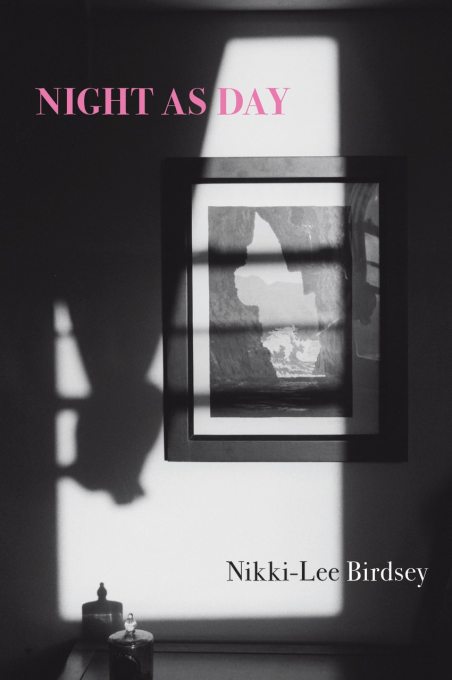
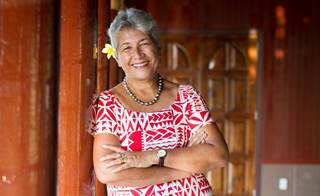
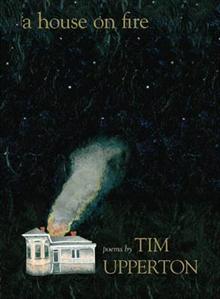

 The judge for the 2019 WriteNow poetry competition is Fiona Farrell. Fiona is one of New Zealand’s most acclaimed and versatile writers. She is an award-winning poet, novelist, short story writer and essayist. In 2007 she was awarded the Prime Minister’s Award for Fiction, and she held the 2011 Robert Burns Fellowship at the University of Otago. Recently she edited the 2018 edition of