Well this looks good – but I will be in Wellington!
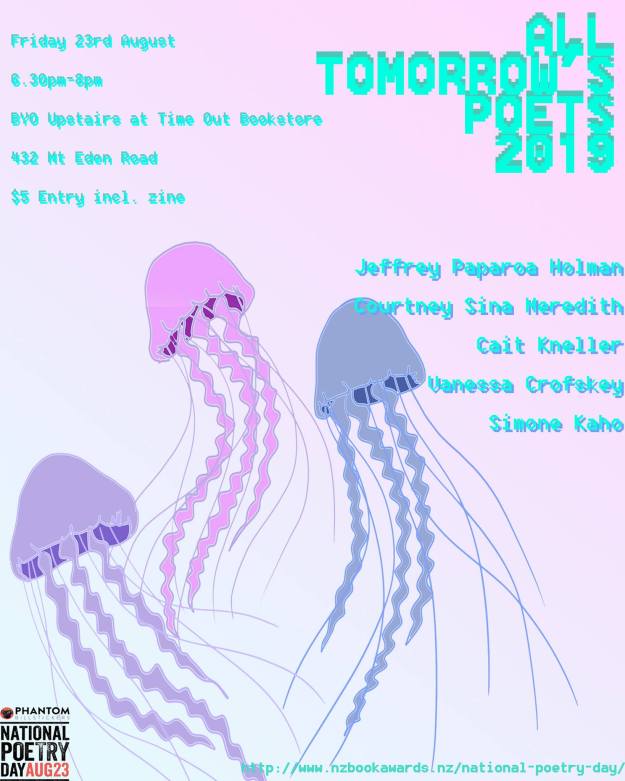

Well this looks good – but I will be in Wellington!
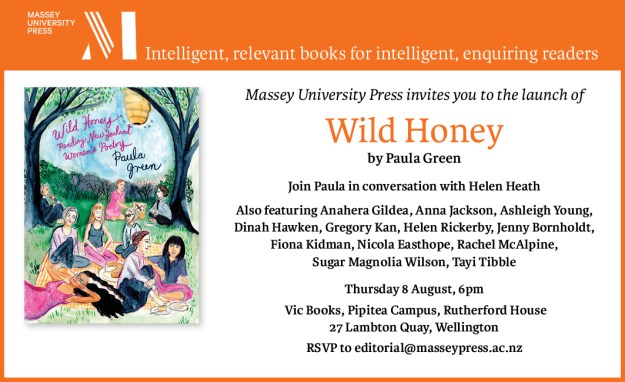
Ok I love this idea!
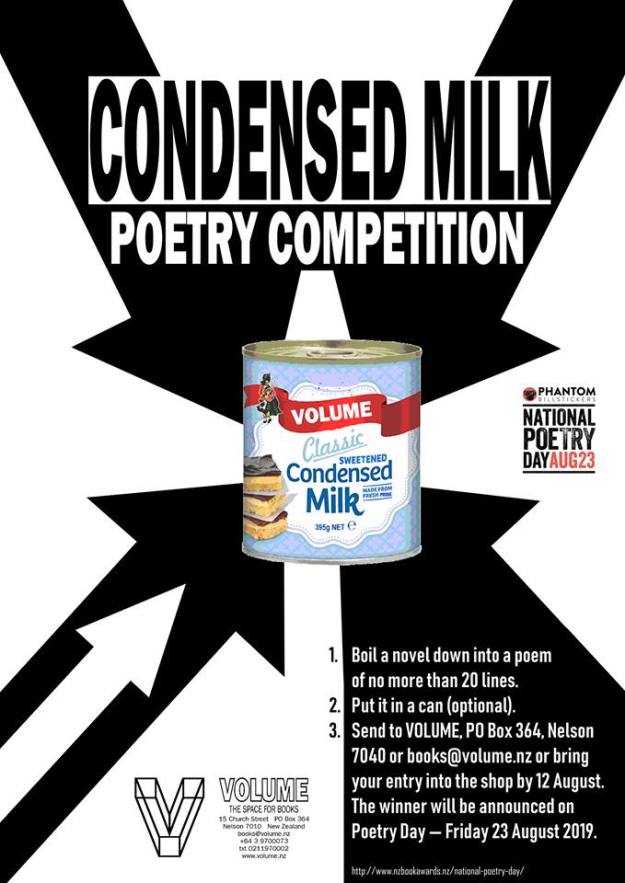
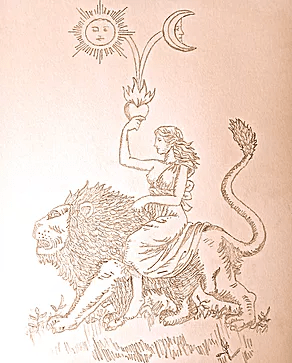
Submissions for Sweet Mammalian‘s sixth issue and the Wellington LitCrawl micro-residencies close at midnight on 31 July.
There are five micro-residency places available. The micro-residencies will take place over the weekend of Verb’s literary festival in Wellington, November 9-10 2019. The poets will be provided with a gallery space to write in for 2 days, a stipend, and the opportunity to read in the Sweet Mammalian Launch which will take place as part of the LitCrawl on 9 November.
Send up to five poems to sweetmammalian@gmail.com. Let the editors (Rebecca Hawkes and Nikki-Lee Birdsey) know in the email whether you’d like to be considered for the micro-residencies. You can support this with an attached micro-residency application of up to a page about yourself, your work, and what this opportunity would mean for you.
So send in your most thrilling writing this Leo season! All your roars and purrs and beastliest words.


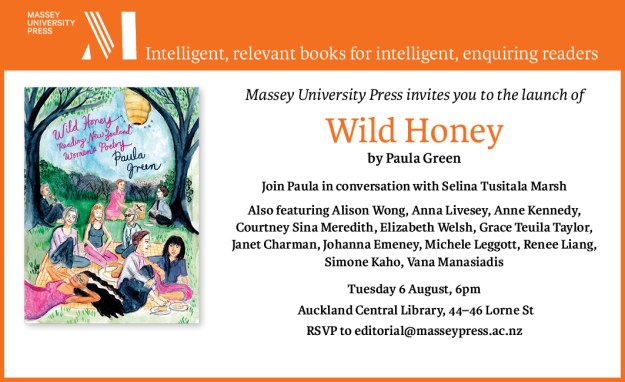
Auckland University Press and Unity Books Wellington
warmly invite you
to attend the combined launch of
Helen Rickerby’s How to Live
and AUP New Poets 5 with Carolyn DeCarlo, Sophie van Waardenberg,
and Rebecca Hawkes. Edited and with a foreword by Anna Jackson
6–7:30pm, Wednesday 7 August 2019
Unity Books, 57 Willis Street, Wellington

‘Requiem’ was first published in the Atlanta Review (USA) in 2017. (I wrote the first draft during a Kahini workshop on the Kapiti coast).
Janis Freegard’s most recent publications are a novel The Year of Falling (Mākaro Press, 2015) and a poetry collection The Glass Rooster (Auckland University Press, 2015). Based in Wellington, she is a member of the Meow Gurrrls poetry group and blogs occasionally.
entrar en el silencio
entrar en el silencio que no es un silencio
restos de un zapato por boca de un eje
oxidado caldera a un tenedor en el arroyo
estanque de anguilas, donde desmanteló la draga
terminó su canción en un valle de escombreras
entrar en el silencio que no es un silencio
entrar en un silencio que nunca fue
las ruedas de un helecho de germinación lokie
una señal de tren vestido de líquenes
el signo de una mina donde los muertos
todavía persisten perdido a los amantes queridas madres
entrar en un silencio que nunca fue
introducir entonces el mundo sin llamar
la excavación de perforación sluicing tala
agricultura pesca arando un sueño
acarreando una isla de las constelaciones
en el resplandor de un reinado extranjero
introducir entonces el mundo sin llamar
entrar en el silencio entrar entrar la oscuridad
la colmena de la invitación entrar
la majestad Introduce el vino entrar
el desierto mientras que usted puede entrar en
con banderas y entrar con instrumentos
entrar en el silencio entrar entrar
enter the silence
entering the silence that is not a silence
remains of a shoe by the mouth of a shaft
rusted boiler at a fork in the creek
pond of eels where the dredge dismantled
ended its song in a valley of tailings
entering the silence that is not a silence
enter a silence that never was
the wheels of a lokie sprouting fern
a railway signpost clothed in lichen
the sign to a mine where the dead
still linger lost to lovers dear to mothers
enter a silence that never was
enter then the world without knocking
digging drilling sluicing felling
fishing farming ploughing a dream
hauling an island from the constellations
into the glare of an alien reign
enter then the world without knocking
enter the silence enter the dark enter
the hive of the invitation enter
the majesty enter the wine enter
the wilderness while you may enter
with flags and enter with instruments
enter the silence enter enter
geben Sie die Stille
Eingabe der Stille, die keine Ruhe
bleibt eines Schuhs durch den Mund einer Welle
verrosteten Kessel mit einer Gabel in den Bach
Teich von Aalen, wo der Bagger abgebaut
beendete seine Songs in einem Tal der Tailings
Eingabe der Stille, die keine Ruhe
geben Sie eine Stille, die niemals war
die Räder eines Lokie Sprießen fern
ein Eisenbahn Wegweiser in Flechten bekleideten
das Zeichen, um eine Mine, wo die Toten
noch verweilen, um die Liebhaber lieb Mütter verloren
geben Sie eine Stille, die niemals war
Geben Sie dann die Welt, ohne anzuklopfen
Graben Bohrungen Schleuseneinschlag
Fischerei Landwirtschaft Pflügen einen Traum
Schleppen eine Insel von den Sternbildern
in die Blendung einer fremden Herrschaft
Geben Sie dann die Welt, ohne anzuklopfen
geben Sie die Stille einzugehen die dunkle eingeben
der Bienenstock der Einladung geben
die Majestät geben Sie den Wein geben
die Wüste, während Sie können eingeben
mit Fahnen und mit Instrumenten geben
geben Sie die Stille geben geben
from an unpublished series called ‘Wild Iron’
Jeffrey Paparoa Holman is a Christchurch poet and a writer of non-fiction, and senior adjunct fellow in the School of Humanities and Creative Arts at the University of Canterbury. Born in London, Jeffrey immigrated to New Zealand in 1950, growing up in the Devonport naval base in Auckland, then the coal mining town of Blackball on the West Coast of the South Island. He has worked as a sheep-shearer, postman, psychiatric social worker and bookseller.
Jeffrey’s poetry collection As Big as a Father was longlisted for the Montana New Zealand Book Awards (2003). In 2007, Jeffrey and Martin Edmond won the Copyright Licensing Limited Award giving them $35,000 each towards a non-fiction project. Best of Both Worlds: The Story of Elsdon Best and Tutakangahau, was published by Penguin in 2010. Jeffrey was the 2011 Waikato University Writer-in-Residence and in the same year shortlisted for the Ernest-Scott History prize, Australia. In 2012, he was awarded the Creative New Zealand University of Iowa Residency. The resulting book, The Lost Pilot: A Memoir was published by Penguin NZ (2013). In 2014, Jeffrey travelled to Berlin on a Goethe-Institute scholarship, pursuing research for his current project, a family history based on links with his German relations.
Jeffrey’s SHAKEN DOWN 6.3: Poems from the Second Christchurch Earthquake was published by Canterbury University Press in 2012. His most recent collection, Blood Ties: New and Selected Poems was published by Canterbury University Press in 2017.
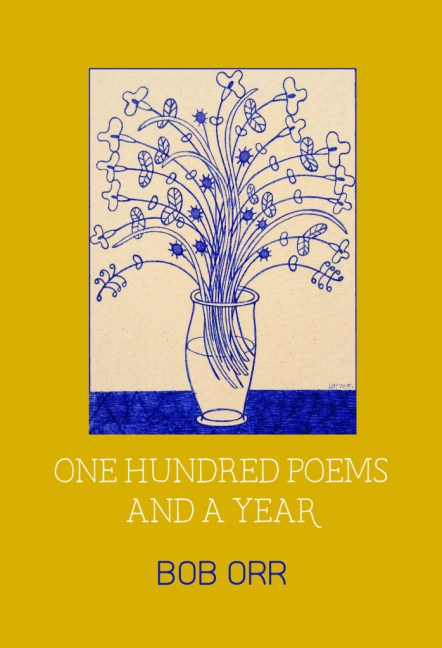
Bob Orr, One Hundred Poems and a Year Steele Roberts, 2018
Consider this book of mine
as if it were a rucksack
containing what you might need
if you were to step outside your door.
There are poems heavily knitted
as fisherman’s jerseys
in case you should find yourself
all at sea. (…)
from ‘Rucksack
Bob Orr was born in the Waikato. He worked as a seafarer on Waitematā Harbour for 38 years and now lives in a cottage on the Thames Coast. In 2016 he received the Lauris Edmond Memorial Award for Poetry and in 2017 was the Writer in Residence at the University of Waikato where he wrote most of One Hundred Poems and a Year, his ninth collection.
The book looks gorgeous – beautiful cover design with an oxygenated font and layout inside. Everything has room to breathe. Barry Lett’s exquisite drawing of ‘Blue Flowers’ on the cover is revisited in a poem.
Because sometimes you
remind me of a Catalan fisherman
these are the blue flowers of the Mediterranean
***
With a felt-tip pen
bought in a supermarket
one day you created myriad blue stems
from ‘A vase of blue flowers’ for Barry Lett
The poems are equally full of air and verve. The opening poem, ‘Rucksack’, is a perfect entry point as it likens the collection to a rucksack you might take with you for the day. We can expect poems we might shower with; that favour the casualness of jandals, the toughness of tramping boots, bare feet. The poem’s final image flipped me. Bob’s poetry moves through the air, out in the complicated, beautiful world and then underlines human vulnerability with the final line’s ‘bare feet’:
I wrote them while walking down a road with bare feet.
The collection is steeped in the sea: you will find boats, sea birds, ocean harvests and harbours as Bob travels by land and by ocean. He travels in the present time and he travels back through the past, gathering in friends and places, other poets, beginnings and endings. Poetry, the writing and reading of it, is ever present as the world becomes a page, a script to be read, a poem to be crafted.
I mention the containers
of the Maersk Hamburg Sud or P&O Line
if only because my autobiography
or even this poem
and the cargo it must carry
would be incomplete without them.
from ‘Autobiographic’
There is death and endings; there is marriage and beginnings.
This evening I fly back
a delta-winged moth
my sadness like moondust
my night vision glowing like an infra-red camera
a stranger to these parts
gliding between the bittersweet shadows of apartments
to enter again if only I could find them
the strawberry fields that were said to be forever.
How many times and for what purpose
did we have to break
each other’s
hearts?
from ‘A woman in red slacks’
I missed this book when it came out last year – and it is such a treasure. The fluid lines at times feel like the arc of a bird drifting across the sky and at other times draw upon the ebb and flow of the sea – always beautifully measured. Poetry has so many effects upon us – reading this book the effects are both multiple and satisfying. It comes down to music, intimacy and exquisite reflection, and an engagement with the world that matters. I love this book.
Steele Roberts author page

 NZ Poetry Shelf