Kiri Piahana-Wong reads and discusses her poem, ‘NIght Swimming’ from Night Swimming, Anahera Press, 2013
Kiri Piahana-Wong (Ngāti Ranginui) is a poet and editor, and she is the publisher at Anahera Press. Her poetry has appeared in over forty journals and anthologies, most recently in tātai whetū: seven Māori women poets in translation, Solid Air: Australian and New Zealand Spoken Word and Set Me on Fire: A Poem For Every Feeling (Doubleday, UK). Her first poetry collection, Night Swimming, was released in 2013; a second book, Give Me An Ordinary Day (formerly Tidelines), is forthcoming. Kiri lives in Auckland with her family.
Back in Level Three lockdown, but this time I can read, despite the wide awake nights. Rata Gordon’s debut poetry collection Second Person is mesmerising. It held me in the grip of poetry from first page until last. Yes! I devoured this collection in one sitting and then went back to dawdle on the poems that pulled me back in.
I have been musing on the way poetry can offer the reader a chain reaction of poem joy (among many other things of course). But joy seems like a good thing to imbibe at the moment.
Reading Second Person filled me with poetry joy.
This is a book of birth, babies, death, the universe, love, motherhood, water, sky, wildlife. It is a book that celebrates the present tense, the way we can inhabit the now of being. My first joy is visual as the poems are brocaded with hues and gleams. It is as though an artist has animated poems with their colour palette: ‘I painted sonnets on the wallpaper’. I adore the way a smattering of colour words spike the poems to gorgeous new levels. It fills me with joy.
I’m dressed in yellow leaking
gorse seeds out my pockets like
crumbs I am dressed in white skin
drinking from the spout of a
teapot (…)
from ‘The pregnant pioneer looks over her shoulder’
The second joy is the joy of sound. Many of the lines are short, the rhythm breathy with ample white space at the end of the line. These poems flow like a honey current. Again I am filled me with joy. At times it is the rhythm of walking. At time is is the rhythm of lying on the couch and looking out a wide window and breathing in and out, in and out. You inhale the poem.
As much as there is the physicality and a sensual present, there are also signposts to behind-the-scenes, to what is hinted at but not detailed. A taste from this poem for example:
In Delhi the dust
gets up your nose and into
your veins it swims
through the insides
of your bones
In April you want to hurt
yourself in the hotel room
but you don’t becuase a mango
will make it better
You walk through the streets
in the second person as if
watching yourself from behind
your backpack and your hands
are limp but your heart is
beating
This is all you have
to look forward to
your heartbeat and a
mango
everything else has dissolved:
your family
your intentions
from ‘Mango’
There is an unspoken story signposted here, and it may be real or fictional. It is the mood of the speaker, the state of mind, that holds as you read. The speaker becomes second person, alive, that beating heart, that mango luminous. I am musing on the way, as we write poems, as we insert ourselves above, between, behind and in the lines, we always become second person, whether past present future. I am filled with joy at this thought: the peering into the self inserted into the poem that is close at hand and walking away. Ah.
A third joy is the poetry stitching that shows through at times. Little windows open onto the writing of a poem, its making doesn’t just appear out of thin air, but is something altogether more mysterious, complicated, self-sustaining. I especially love ‘I find slaters’ with its surprising curves and bridges. Here is the middle bit:
I am rifling through this poem
trying to find
its hidden meaning.
If I rifle through fallen leaves
I find slaters.
The leaves are being digested.
How much twiddling do trees do?
Do they doodle on the sky?
Do they do a little spiral?
Second Person is fresh, layered and utterly captivating. Just the ticket when you want to lie back on the couch and nestle into a welcome and very satisfying poetry retreat. I love this book.
Rata’s poetry has appeared in a number of Aotearoa journals. She works in the arts and mental health.
I’m very sorry to say that given the COVID alert level two status, the misgivings some of our presenters had on traveling and the impact of the guidelines on social distancing, and people gathering, the Featherston Booktown Board of Trustees have made the difficult decision to cancel the last Words in Winter events for August due to be held in the Anzac Hall on this Saturday, 22 August.
We were so looking forward to hosting Shayne Carter, Richard Langston, Lynn Freeman and the four wonderful poets from Wellington: Sam Duckor-Jones, Tayi Tibble, Jordan Hamel and Helen Rickerby at Featherston Booktown this weekend!
We hope to reschedule the events soon, either in the late Summer or at the Featherston Booktown Karukatea Festival in May next year (6-9 May 2021).
I hope you won’t be too disappointed and we thank you again for your support and patience…
Anuja Mitra lives in Auckland where she is finishing a Law/Arts degree. She is co-founder of the online arts magazine Oscen at oscen.co, and more of her writing can be found in Signals, Starling, Sweet Mammalian, Mayhem, The Three Lamps and Poetry NZ.
Landfall 239 edited by Emma Neale, Otago University Press, 2020
To celebrate the arrival of Landfall 239, edited by Emma Neale, I invited a few poets to read their poems from the issue.
The new issue is an excellent place for small reading retreats. You get fiction, non-fiction, poetry and reviews. It includes heavenly embroidered panels by artist Vita Cochran; they took me back to my primary school days when embroidery was a thing. Surely this will inspire a swag of us to pick up needle and thread, and get creative. I equally adored the paintings – oil on linen or canvas – by Star Gossage. These muted portraits, favouring blue / green palettes, hum with mood and presence. Gosh I love them.
You also get the winning essays in the Charles Brasch Young Writers’ Essay Competition 2020. And they cut through any stasis. Especially Grace Lee’s winning essay, ‘Body/Love’.
Small reading excursions are so very satisfying. And with me not going out for the forseeable future, I am very glad to settle back on the couch, and watch / listen to this Landfall reading. And then venture back into the book to read the fiction and reviews. Wonderful.
Thank you Landfall poets for contributing to a Poetry Shelf Lounge event.
Lynley Edmeades reads ‘Notice’
Leonard Lambert reads ‘Nights of Wonder, Days of Splendour’
essa may ranapiri reads ‘echidna goes to see the drone perform in front of a live audience’
Jo-Ella Sarich reads ‘The Jasmine (We need to talk about suicide)’
Tim Saunders reads ‘Demilune’
Nicola Thorstensen reads ‘Legacy’
The Poets
Lynley Edmeades is the author of two books of poetry: As the Verb Tenses (2016) and Listening In (2019), both published with Otago University Press and both longlisted for the Ockham New Zealand Best Book Award. Lynley is a lecturer at the University of Otago, and she is currently working on a book of essays.
Leonard Lambert is a long-established NZ poet with a publication history stretching from A Washday Romance (John McIndoe, 1980) to Somewhere in August: SelectedPoems 1969-2016 (Steele Roberts, 2016). His most recent publication is a chapbook, WinterWaves, from Cold Hub Press. Between poems he paints and is a regular exhibitor around his home turf of Hawke’s Bay.
Emer Lyons is a lesbian writer from Cork, currently in the last months of a creative critical PhD at Otago.
Talia Marshall (Ngāti Kuia/Rangitāne ō Wairau/Ngāti Rārua/Ngāti Takihiku) is a poet and essayist with one son and one dog who has a poetry collection forthcoming from Kilmog Press titled Bad Apple. In 2020 she is writing about Ans Westra’s photographs of Māori as part of her Emerging Māori Writer’s Residency at Victoria University. Her essay titled ‘This Is the Way He Walked Into the Darkest, Pinkest Part of the Whale and Cried Don’t Tell the Others’ was quoted on the cover of POETRY magazine’s February 2018 Aotearoa issue.
Kōtuku Titihuia Nuttall (Te Āti Awa, Ngāti Tūwharetoa, Ngāti Rangatahi, SȾÁ,UTW̱ First Nation) is a creative writing student at Te Pūtahi Tuhi Auaha o Te Ao (IIML). Her work has been published in Landfall, Turbine / Kapohau, Starling, Food Court, and Te Rito o Te Harakeke.
essa may ranapiri (Ngāti Raukawa/Tainui/Ngāti Takatāpui/Clan Gunn/Highgate) is a person or some shit / or whatever / they wrote a book of poems called ransack / it’s still in th world / the only time they use they/them pronouns for themselves is in these bios / isn’t that funny / thx goes out to their ancestors / who are as big as everything / just wow / just everything / they will write until they’re dead
Jo-Ella Sarich is a lawyer, writer, and mother to two young girls living in Te Awa Kairangi. Her poems have appeared in a number of print and online publications, including New Statesman, The Lake, Cleaver Magazine, Barzakh Magazine, Quarterday Review, Shoreline of Infinity, takahē magazine, Shot Glass Journal, the New Zealand Poetry Society’s Anthology for 2017 and the Poetry New Zealand Yearbook 2017. Tumblr link, @jsarich_writer.
Tim Saunders farms sheep and beef near Palmerston North. He has had poetry and short stories published in Turbine|Kapohau, takahē, Landfall, Poetry NZ Yearbook and Flash Frontier. He won the 2018 Mindfood Magazine Short Story Competition, and placed third in the 2019 and 2020 National Flash Fiction Day Awards. His book, This Farming Life, was published by Allen & Unwin in August, 2020.
Nicola Thorstensen is a member of Dunedin’s Octagon Poetry Collective, which organises monthly poetry readings. Her work can be found in a number of New Zealand periodicals and journals, including Takahē, Poetry New Zealand and political anthology Manifesto Aotearoa.
Yellow Moon | E Marama Rengarenga: Selected Poems Mary Maringikura Campbell, edited by Mark Pirie, HeadworX Publishers, 2020
Mary Maringikura Campbell’s poetry chapbook Maringi was awarded the Earl of Seacliffe’s Poetry Prize in 2017. She began writing poems at the age of 13 and her work has appeared in various journals and anthologies. Her poetry has been translated into French and Italian, she sings and performs her own folk songs, and is a member of the drama group Te Ohu Whakaari. She is the daughter of poets Alistair Te Ariki Campbell and Meg Campbell. In 2011, with Peter Coates, Mary co-curated the Alistair Te Ariki Campbell exhibition at Pataka Museum in Porirua, which then travelled to the Cook Islands.
Apirana Taylor suggests the poems in Mary’s new collection resemble waka sailing over numerous tides and ocean undercurrents. A striking image and a perfect entry into poetry that moves you as you read. This is a book where the world matters, family matters, and a dark edge is countered with lightness. You will read of the moon, fish, the ocean, a coconut tree.
The opening poems are like an anchor; the first poem offers a genealogy that embraces:
Savaiki
Born of Te Ariki
Descended from
Atea and Hakaotu
Do not judge me
because my skin burns in the sun
I know who I am
and the direction I am travelling
Towards Savaiki
Towards the Son
The second poem anchors the poet in a beloved place, home, which is family as much as it is physical. The poem is like a marker of self – and the handful of words reverberate so beautifully I can feel the scene. I can feel what is not said. I feel as though I have been welcomed into the book. This is the second poem:
Small Town
Bends in the road
Paekakariki
a small town
north of Pukerua Bay
A full moon
Bright as a torch
in your face
My parents sleep
outside my window
A giant gull disappears
mid air
nothing is as it seems.
Enter the poetry and you enter the undercurrents Apirana spoke of: there are broken people, women to be honoured (a woman with six children to care for is a Goddess), the storms and raging bulls inside one, suicides and grief, psychiatric care, anger. Darkness yes, but there is an attentiveness to others, the way love is also inside you, the way love stretches out and makes contact, the way love gives advice. Human to human. Mother to son.
The chapbook Maringi forms the second half of the book. It contains a number of family poems I find particularly moving. I posted ‘How We Love’ on Poetry Shelf around the time Wild Honey came out as I had made contact with Mary because of Meg’s poetry. ‘How We Love’ is one of the most moving and open-heart poems for a mother and father I know of. The last two lines make me weep. Still. You can read the poem here. It is a list poem with unexpected turns. It has the music of both love and hate. Feeling is in the driving seat. The family stories hinted at. Just as they should be, kept hidden from our inquisitive eyes. You can read the poem here.
Mary’s ability to make me feel, without sitting me down and handing over full explanations of her life, is what makes her poems sing. Gloriously.
Hole in My Heart
Mum
It’s been two years
since you left a hole in my heart
See
You can put your hand through it.
Yellow Moon E Marama Rengarenga is a mesmerising self-portrait. A family portrait. It glints with light and dark, contemplation, love. The poems are full of holes, just as the heart is holey, and that adds to the pleasure and joy of reading this book. Each poem is a pulsating heart. Perhaps you can put your hand through it. Some of the poems will stick to me for a long time. Thank you.
Acclaimed New Zealand writer Elizabeth Knox is to receive an honorary Doctor of Literature from Te Herenga Waka–Victoria University of Wellington.
“Elizabeth Knox is an inspiration to young people and emerging writers and is helping grow the next generation of literary talent in Aotearoa New Zealand,” says Chancellor Neil Paviour-Smith. “This honorary doctorate acknowledges her enormous contribution to literature.”
The honorary degree will be awarded during graduation week in September.
Ms Knox, who was made a Companion of the Order of New Zealand Merit for her services to literature in this year’s Queen’s Birthday Honours, is one of New Zealand’s most successful writers. She has achieved national and international acclaim for her powerfully imagined novels for adults and younger readers.
The author of 17 works to date, her most recent book is The Absolute Book, published by Victoria University Press. She was awarded the Prime Minister’s Award for Literary Achievement in Fiction in 2019.
Born and raised in Wellington, Elizabeth Knox began her degree in English Literature at the University in 1983, and it was in Bill Manhire’s Original Composition course that she started work on her first novel, After Z-Hour. She graduated in 1987, the same year After Z-Hour was published by Victoria University Press.
Her best-known work, The Vintner’s Luck, won the Deutz medal for Fiction and the Readers’ Choice and Booksellers’ Choice awards in the 1999 Montana New Zealand Book Awards. In 2001 it was awarded the inaugural Tasmania Pacific Region Prize. It has since been published in 10 languages.
Her Dreamhunter Duet series for young adults also received national and international recognition. Dreamhunter won the 2006 Esther Glen Award for New Zealand children’s literature and Dreamquake won an American Library Association Michael L. Printz Honor Award for Young Adult Literature in 2008.
Elizabeth Knox has been a Victoria University of Wellington Writing Fellow, a Katherine Mansfield Menton Fellow, and a recipient of the Michael King Writer’s Fellowship. She was one of the five inaugural recipients of an Arts Foundation Laureate Award in 2000. In addition to fiction, she has published essays and lectures on writing and how the imagination works.
She currently teaches a course in world-building at the International Institute of Modern Letters at the University.
Gumboots squelch across the paddock
it’s still dark and she’s making her way
over to the milking shed
a coat covers her to her knees
and tents over her growing belly
I imagine her working like normal
using her knees to lift
to carry the bucket home for breakfast
creamy milk, unpasteurised
perfect for porridge
trek back across the paddock, Tama-nui-te-rā
has begun to poke his head above the horizon
to warm the back of her
her belly starts to stir
then greet her with a few kicks
then she can get ready for her job
at the shop in town
or the mill,
whichever came first
and clean or cook
right up until the very due date
that week she will have her first girl
at eighteen
and a few years and girls later
she will marry down at the courthouse
then years later she will have 13 grandchildren
of course she will have favourites
and she will continue to work
and work and work
right up until the very last minute
and Tama-nui-te-rā will greet her
one last time
then farewell her not long after
*
her heels click across the footpath
it’s dusk and she’s making her way
a few streets over to the bus stop
a coat covers her to the ankles
it tents over her entirely
Jessie Puru
Jessie Puru, Ngāti Te Ata, Tainui,Ngā Puhi, is a Māori/ Pākeha poet and mother of one daughter living in Auckland. Her work has been published in Ika, Blackmail Press, Landfall, Poetry (US), and she was runner up for the Emerging Poets Competition in 2019. Jessie is currently working on her first collection of poems following the life of a young wāhine trying to find her connection with Te Ao Māori. She also has a Bachelor of Creative Arts from MIT and Master of Creative Writing degree from AUT.
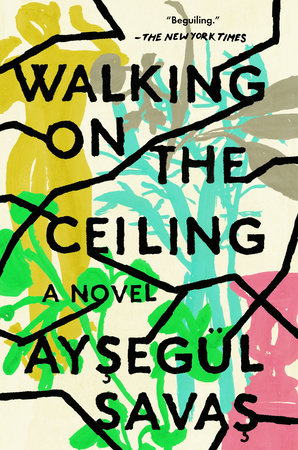
Ayşegül Savaş grew up in Turkey and Denmark, and currently lives in Paris and teaches at the Sorbonne. Her writing has appeared in The New Yorker, Granta, The Guardian, The Paris Review Daily, The Dublin Review and elsewhere, and was shortlisted for the Glimmer Train Fiction Prize and the Graywolf Emerging Writers Award. She has an MFA from the University of San Francisco. Her debut, Walking on the Ceiling, was published May 2019 (Riverhead Books, an imprint of Penguin Random House). Her second novel, White on White, is forthcoming from Riverhead Books.
I spotted this book on The New Yorker book page – just a few sentences that sent me hunting down a copy (The Women’s bookshop had a wee stack).
I adore this book. It is light and dark, economical, sumptuous, sweetly crafted. It made me sad and it filled me with joy.
Nunu moves from Istanbul, her home town, to Paris. She barely knows a soul but meets M., a British writer whose novels are set in Istanbul. Together they roam the streets and museums of Paris, and as they roam, they draw the far-off streets of the city they love closer. It is a novel of movement – writing as a form of travel, travelling as a way of recalling the faulty and elusive past.
The sad thread for me is the mother-daughter relationship – enigmatic, strange, silent.
This is novel writing at its utmost elegance as it brings two cities to life: kaleidoscopic, kinetic, clandestine. Catching the physicality, the sensual layers. It is so very moving, this portrait of a young woman finding herself missing as much as she recognises her presence.
The title makes sense near the end of the book! Took me by delicious surprise.