Poetry Shelf poem: Paula Green’s ‘Twisted Citrus’


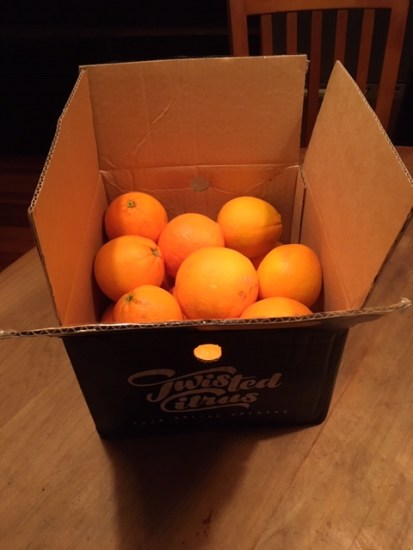
IMG_5823.JPG


Twisted Citrus


I have ordered a box of oranges

lovingly picked from the Gisborne trees

to juice with apples lemon and ginger


because my throat is spiked with nitpicking negativity

from politicians underplaying our collective successes

and overplaying our minor failures


because my heart is missing beats

at the thought of politicians opening borders

without defining safely


because my knees are weakened

by a woman claiming herself as the colour white

and that swamps don’t matter


because my head distrusts a leader

prepared to smash and grab

in order to gain power and get the country back


because I can’t sleep

because our safety might be under threat

because human decency is even more so


because

and so


I will unpack the box of oranges

and place in a glass bowl so their winter

goodness shines through


Paula Green


Poetry Shelf connections: John Gallas’s Unscythed’


Unscythed


By Paparahi Flat, just past the droving bridge,

a vasty field of uncut corn rattles, torn,

sere and straggle-flapping, up to Bonners Ridge.


It’s Winter now. I don’t know why, in ragged rot,

this tall and stalky race were left uncropped, bereft

of use or profit, bluntly clattering, forgot


and draggled-pale, their shreddy leaves like flags,

their cracked confusion like a beaten, huddled troop,

abandoned, standing still, in August’s rimey rags.


Their neighbour-whispers, nods and anxious wags betray,

it seems to me, some shabby incredulity

at some long luck, some higher husbandry that stays


their felling and their muddy end, some shrunk surprise

that they are left alone. I watch them gasp and click.

Their green-time gone, their salad-days long passed, they rise,


a little blankly, yes, a little like a crowd

achatter when the show is done and all the darkling

auditorium of earth an empty shroud


of wind and cold, but standing still. Perhaps this way

of dying, atom-slow, defying expectation

and the time, this easeful progress downwards, may,


with distant busyness, and blindness in the dark,

be mine. I leave the gate and cross the mudded bridge.

Above the track two slapping kahu wheel and cark.


I follow them to Brackall, past the flooded farm,

across the ice at Denham’s Dip to Birthday Creek,

and then the rimu’s shelter, and its sudden calm.


John Gallas


John Gallas is a NZ poet published by Carcanet. His 20 collections include The Song Atlas, Star City, The Little Sublime Comedy and 52 Euros. The Extasie (60 love poems) and Rhapsodies 1831 (translation of French poet Petrus Borel) to be published January and March 2021. He presently lives in Leicestershire. His a librettist, St Magnus Festival Orkney poet, Saxon Ship Project poet, Fellow of the English Association, tramper, biker and merry ruralist. Presently working on two sets of poem-prints (’18 Paper Resurrections’ and ‘Wasted by Whitemen’). ‘Unscythed’ written in Sefton, near Rangiora: home of bro.

Poetry Shelf poets on poems: Kay McKenzie Cooke and Rachel McAlpine read and respond to new poems


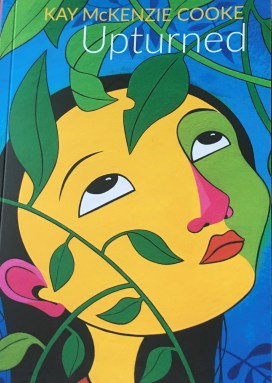
Kay McKenzie Cooke reads ‘No Longer Applies’ from Upturned, The Cuba Press, 2020


Kay McKenzie Cooke, Kai Tahu, Kati Mamoe, lives in Dunedin. Her fourth poetry collection Upturned has just been released from The Cuba Press. Her website and blog can be found here.


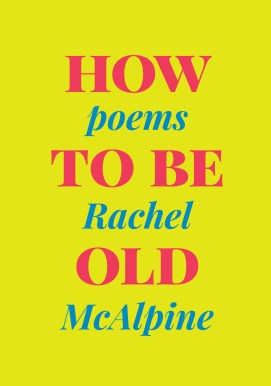
Upturned cover.jpg   How-to-Be-Old-cover


Rachel McAlpine reads ‘Reading a paper book’ from How to Be Old The Cuba Press 2020


Poet Rachel McAlpine lives in Wellington and is 80. She blogs, podcasts and draws (badly) as well as writing poems. How To Be Old, her latest collection of poems, will be launched by Fiona Kidman at Unity Books on Tuesday 21st July at 12.30 pm.


The Cuba Press


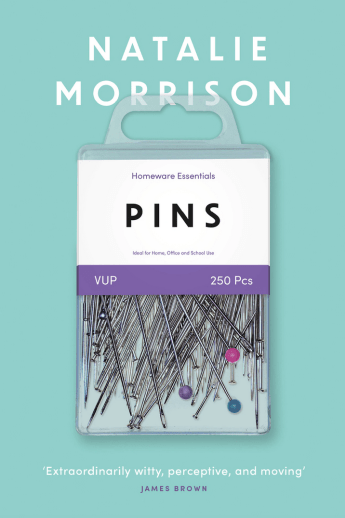
Poetry Shelf interview with Natalie Morrison


natalie-morrison-2020-ebony-lamb-photographer-8.jpg

Photo credit: Ebony Lamb


Natalie Morrison has an MA in Creative Writing from the Institute of Modern Letters, where she received the Biggs Family Prize for Poetry in 2016. She lives and works in Wellington. Victoria University Press recently published Pins, Natalie’s debut collection. The book is most definitely poetry, the kind of poetry that affects your breathing patterns because it is so good, so original, so addictive. But it also resembles a letter, as the speaker addresses her missing sister, and a catalogue of fascinations, as she tracks an obsession with pins. The collective result is book that centres upon family, and then radiates out into pocket-book narratives of loss, curiosity, yearnings, attachment. The title itself ‘pins’ sends me in multiple directions before I even open the book, and then vital movement continues as I read. This is a book to treasure.


I can just about trace the birth of your fascination.

We were cordoned off from the fireplace with a moveable

copper façade. Nana was stitching one of Grandad’s

socks. We didn’t have any clothes on,

were still dripping slightly from the bath.

You picked up a pinch of metal

and in the dim light tried to see what it was

you were holding. I continued reading Beatrix Potter

with a damp index finger. Nana told you to be careful:

What you have in your hand is very sharp.


Caution: where there is a pin

there will be puns.


One must love a sister in the same way one must love

jabbing oneself in the foot halfway up a flight of carpeted stairs.

Our parents told you I would be a nice surprise.


from Pins


Paula  What were the first poetry books that mattered to you?

Natalie  Not a whole book really, but I remember my mum reading us ‘The Rime of the Ancient Mariner’ and being really taken with it. Gotta love the drama.

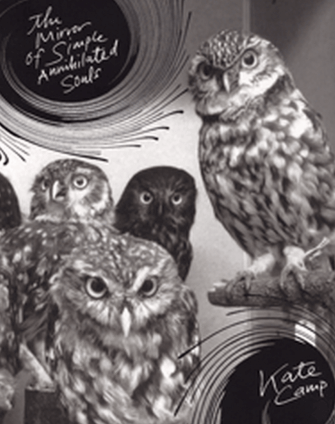
Then in high school ‘The Love Song of J. Alfred Prufrock’ by T.S. Eliot really resonated with me for some reason, and I still get parts of it stuck in my head. A few memorable books a bit later on were Kate Camp’s The Mirror of Simple Annihilated Souls (I always think of the owls on the cover) and a collection of W.S. Merwin’s, both of which I became attached to and didn’t want to return to the library. But don’t worry, I did.
 

Screen Shot 2020-07-13 at 1.04.03 PM


Paula  What poetry books are catching your attention now?

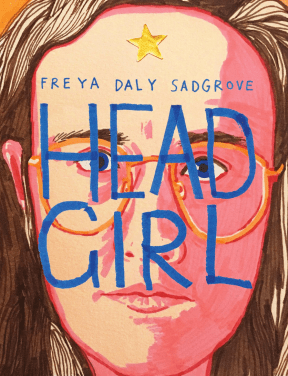
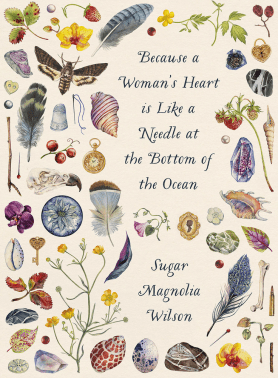
Natalie Freya Daly Sadgrove’s Head Girl was super kick-ass. I adored Sugar Magnolia Wilson’s Because a Woman’s Heart if Like a Needle at the Bottom of the Ocean, particularly the epistolary sequence. I’m very in awe of Gregory O’Brien at the moment – something just snaps into place. Also looking forward to reading Second Person by Rata Gordon. I’m a hopeless sucker for a good cover and I had a peep at the first few pages the other day…intrigued!
 

Screen Shot 2020-07-13 at 1.06.17 PM.png     Screen Shot 2020-07-13 at 1.07.14 PM


 Drop one pin into a glass of clear

cold water for several minutes.

Then immerse your hand in the language

of the water until you find it.


from Pins


Paula  Your debut collection is exquisite, both melodious and tactile, economical and rich. What do you hope from a poem or a book-length sequence such as this?

Natalie  Thank you! Mostly I hope it behaves itself. Or that I can keep it in line with the shape of itself, being so long and fragmented. It’s nice when the pieces start interacting with each other and when they move through moods/sounds/scenes.
 

Screen Shot 2020-07-13 at 12.58.52 PM.png


Paula  Does this change for you as reader? What attracts you in poems by others?

Natalie  I’m attracted to the usual things; the sounds a poem creates, the voice(s) it uses and the way the words fall together. But I love love love it when the poem is also kinda mischievously fun and cracks that sly-sideways smile at you. Quirky also does it for me, and a bit of classic sass.


Paula  Your book does just that! Wit is a vital ingredient. James Brown likened Pins to Anne Kennedy’s 100 Traditional Smiles, and I see the connections. There is both a quirkiness and a crafted musicality, yet perhaps a key link is that of narrative. Narrative is such a fertile option for the poet. What drew you to it?

Natalie  I’m not sure exactly. A bit to do with what I was reading at the time? I was also lucky to be surrounded by such beautiful narrative-making from my classmates that year, it was relatively contagious.


Paula  Would you ever want to write a novel?

Natalie  So tempted to go for the pun… Well, that would be pretty cool. People who are able to sustain a whole novel have my absolute admiration. It would take a gazillion years though; I’m fairly distractable, which is why I think Pins is so bitsy.


Paula  I love the degree of white space in the collection – resonant for me on so many levels. It is both a visual and aural pause, a silent beat for eye and ear, a place to savour what you have just read. It also acknowledges the missing sister. Can you comment on the white space?

Natalie  That’s a really awesome way of looking at it. For sure, I think the in-between spaces echo the little gaps the missing sister leaves in the narrative.

With poetry in general, I enjoy the blanks that we draw tiny conclusions about. It’s like staring at old floral wallpaper – you start to see all sorts of faces and figures.


But I will always have you in the back of my mind,

unwinding like the coil pin in the body of a bright,

jittery, copper toy.


from Pins


Paula Staring at anything! I also love the way the missing sister is the family hub, but you don’t explain and you don’t resolve. Although I do feel like I am moving through fictions – what is true? – as though I am playing with a set of Russian dolls. If I had written this, I would want to leave it in the hands of the reader. No explanations. Do you agree?

Natalie  Sort of? I would say there needed to be just enough to nudge the narrative along, but I’m not into overloading a piece with the whys and wherefores either. Especially this piece; it felt right for there to be spaces left. For me personally, the poem orbits around the longing created by the little absences. Maybe a part of longing is piecing together what we can from hints, and hints of hints? That’s how it is in my mind anyway – but yes, very onboard with leaving some of the work with the reader. Partly because I really enjoy the hugely varying assumptions people make about it, or is that too wicked of me? I’ve confounded at least one uncle….whoops!


Hail:

walking into a downpour of a thousand brisk pins.


from Pins


Paula  I agree – the poetry is a lace-like arrival of longing around the white space – actual and implied. So much to adore about the book – especially the pivotal presence of pins. You catch them in so many surprising ways. I love nana and the sunsets, the barcode pin, acupuncture and voodoo, the downpour. Do you have a few favourites?

Natalie  Thanks so much, Paula. Trying to dredge for ‘pins’ around the place morphed into an obsession in itself. I still have pin-themed dreams which is pretty ouch!

As to favourites, hmmm… the futuristic surgical pin for the brain, the bobby pin trail, the pin-filled swimming pool and the pigeons are probably my faves. The pin sonnet was quite satisfying too.


Because of your early attachment with fairy stories,

I wasn’t surprised to pick up your trail of bobby pins

along the footpaths of Wellington’s suburbs. I imagined

finally arriving at your gingerbread destination.


from Pins


Paula I was filled with joy as I read this book, so it felt like you filled with joy as you wrote it. But that might be far from the truth of writing it. Was it joyful? Did you struggle and were plagued with doubt?

Natalie  Yay, I love that it’s had that effect on you reading it.

All of the above! Plagued by doubt is definitely my resting state in most of what I do, and I’m probably not alone there? It was certainly joyous at times, especially when something falls into place – that’s quite exhilarating.


If all the pins in the world were gathered together

you would be very much pleased.

But all the pins in the world

cannot be gathered

together.


from Pins


Paula  My Wild Honey research exposed a catalogue of doubt – my doubts in my ability to create the book but, more importantly, across a century of woman writing and doubting and finding their way into a public spotlight. Some women were kneecapped and roadblocked by the attitudes of the men in charge to their work.

Has Covid 19 affected you as either reader or writer? Did you write any poems in lockdown?

Natalie  I don’t think any of us get away without being affected by Covid 19 and everything that’s happening right now. I imagine it having all sorts of impacts on writing and art-making that we might only notice after the fact maybe? When we were in lockdown, I finished up reading a few of the books I had started and then it was quite nice to return to some old comforting favourites around the flat. I didn’t write as much as I had hoped. It seemed like everyone had lofty goals for their lockdown which didn’t necessarily get realised. My grandma says ‘you can only do what you can do.’


Paula  Wise grandmothers! What do you like to do apart from writing?

Natalie  Anything to do with making odds and ends. At the moment, I’m knitting like a fiend in a race to finish a sleep sack for my nephew before he gets too big. I have a bad habit of thinking of new projects before the old ones are finished, ah! Overall, it’s a comforting thing to do.

When the stars align, I really love going tramping with friends, usually in the Tararua ranges. It doesn’t happen as often as I’d like, but it’s really special to me.


Pigeons know nothing about pins.

Literally nothing.


from Pins


Victoria University Press page


Poetry Shelf Monday poem: Serie Barford’s ‘The midwife and the cello’


The midwife and the cello


I was perched amongst pīngao
contemplating a paragliding instruction

Don’t look at what you want to miss

when a woman sat beside me

pointed at the lagoon’s mouth
breaking into hazardous surf

crooned I’m a midwife
sing and play cello

I observed her eloquent hands
sand burying sprawling feet
lines networking a benevolent smile
dreads tied with frayed strips of cotton

remembered you returning home
buoyant with the miracle of birth

the baby with omniscient eyes
you eased into this world

how she lay within your arms

didn’t cry


Serie Barford


Serie Barford was born in Aotearoa to a migrant German-Samoan mother and a Palagi father. Her latest collection, Entangled Islands (Anahera Press 2015), is a mixture of poetry and prose. Serie’s work has appeared in numerous journals and anthologies. She was awarded the Seresin Landfall Residency in 2011 and is a recipient of the Michael King Writers’ Centre 2018 Pasifika residency. Some of Serie’s stories for children and adults have aired on RNZ National. She has recently completed a new collection, Sleeping with Stones.


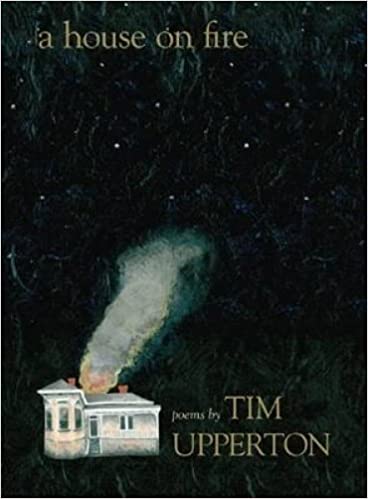
Poetry Shelf audio spot: Tim Upperton reads ‘So Far We Went’


511kMfddHhL._SX366_BO1,204,203,200_.jpg


Tim Upperton reads ‘So Far We Went’ from A House of Fire


Tim writes:

This villanelle is from my first book, A House on Fire (Steele Roberts, 2009). It was later anthologized in Villanelles (Everyman, 2012). Villanelles are almost always sad (there are exceptions – Wendy Cope has written some funny ones). The repetitions inherent in the form circle, return, like old griefs or regrets. It’s a form that seems – at least to me – in tune with our current moment.

Tim’s second poetry collection, The Night We Ate The Baby, was an Ockham New Zealand Book Awards finalist in 2016. He won the Caselberg International Poetry Competition in 2012 and again in 2013. His poems have been published in many magazines including Agni, Poetry, Shenandoah, Sport, Takahe, and Landfall, and are anthologised in The Best of Best New Zealand Poems (2011), Villanelles (2012), Essential New Zealand Poems (2014), Obsession: Sestinas in the Twenty-First Century (2014), and Bonsai (2018).


Poetry Shelf picks from new books: Michele Amas’s ‘The Documentary’


The Documentary

A grandson takes a stone
from a southern Pacific coast
carries it in his wallet
across the world
to place on a grave

His fingers feel for distant music
above this limestone pit
this morbid formation
Wearing a borrowed yarmulke
his hand sweeps the soil
his head is full of old notes
the blood maps of history

We are no relation
but every relation
here amongst this baby bowl
pelvis, these anonymous thigh bones
removed of salt, more beach wood
than bone, these splinters and knuckles of pumice
you might find floating at the sea’s edge
this scattered ancestry

Bone is what bone is
a composition of elements
like air, like music
but once we were naked
at gunpoint
and I was a wife who lost her memory

Maybe you are my grandson
but I forget
Beside me a man
who clutched a satchel
of Stravinsky and Debussy
to cover his nakedness
A musician like you
that was his transport
clutched to his lungs
that was his oxygen

Hear our chorus
our bony percussion
our grandson, our grandson’s sons
hear us claim his future
and our escape
Do not be caught unarmed
bring your film, your press, your theatre
your manuscript, your piano, your pencils
bring your keepsake gift, your promise
bring your stone


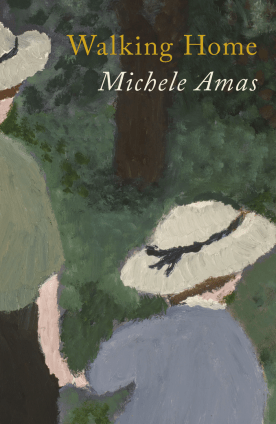
Michele Amas from Walking Home, Victoria University Press, 2020


Michele Amas (1961 – 2016) was a poet and actor. In 2005 she completed an MA in Creative Writing at IIML and was awarded the Adam Prize. Her debut collection After the Dance appeared the following year and was shortlisted for the Jessie Mackay Best First Book of Poetry Award. Ken Duncum has edited a posthumous collection, Walking Home selecting poems from across the decade, including the final poem she wrote.


Victoria University Press author page

Poetry Shelf review of Walking Home


Paula: I am completely in the grip of this poem. Phrases roll about in my head – it is in debt to the private circumstances of the poet, but it is snug in this world-wobbly moment. The poem resembles a fable designed to keep both writer and reader going. It is song and it is anchor and it is ache. It is family. I am thinking – in these uncertain and unsettling days – of pinning the the final stanza to my wall, maybe my heart, because there is so much we can bring and create and connect with. It’s strange, but this poem both fills me with joy and makes me cry. Read the book – it is breathtakingly good.


Screen Shot 2020-06-29 at 11.51.08 AM


Poetry Shelf update: new feature


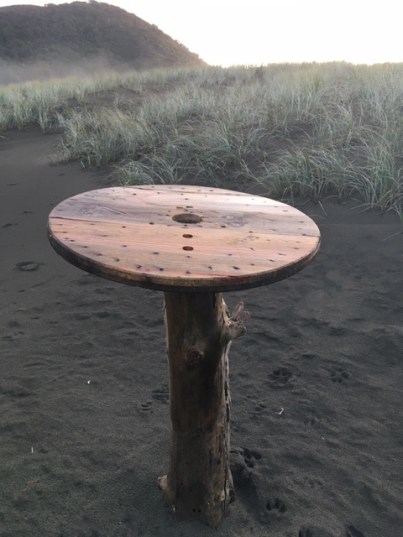
IMG_5787.JPG


Te Henga /Bethells Beach flask of tea with a good book stop


Poetry Shelf picks from new books


Poetry greetings from gale, hail, rain, sun!

This week I am launching a new feature. I am motivated by the number of high-quality poetry books appearing in Aotearoa this year – the way I’m writing reviews at a snail’s pace, and the way our poetry books could do with a whole lot more attention. So each week I will pick a poem from a new book that has really grabbed me.

Monday Poems are unpublished – and by invitation.

I also plan to do a few theme-based readings – it means we get to hear poets read from across the country.

My idea to invite poets to do an audio or video of themselves reading and discussing one of their own poems is now booked up until November! Yeah.

And there are interviews in the pipeline.

I am still reading and writing at a snail’s pace, Poetry Shelf is alive but andante.


Ngā mihi nui

Paula