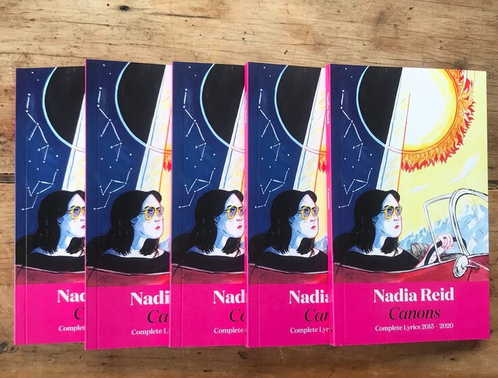
Poetry Shelf review: Nadia Reid’s Canons: Complete Lyrics 2015 – 2020

Nadia Reid Canons: Complete Lyrics 2015 – 2020 (Slow Time Publishing)

You are

The best thing

That I have ever had

I broke my leg on that hill

I remember it so

We were looking for arrows

Looking for something

Closer to the edge of all that I am

You are wanting

Something more

For your life

And for our life

Nadia Reid from ‘Best Thing’ Out of My Province

Each time Nadia Reid releases a new album I have it on repeat for days, and then keep returning. Her songs offer a sweet partnership between melody and lyric, transporting me to both the edges and centre of living, smooth and sharp. With her multi-timbred voice embracing shadows and light, I just can’t stop listening. Her latest album Out of My Province (2020) was my go-to album during Level 4 and 3.

In Wild Honey I claimed Nadia, along with Aldous Harding, Lorde and Chelsea Jade as poets, four women shortlisted for the 2017 APRA Silver Scolls. So many wonderful songwriters in Aotearoa to add to this list: Hollie Fullbrook, Bic Runga, Reb Fountain, Moana Maniopoto, Anika Moa, Don McGlashan for a start. Put an album on and you get the song. The word and musical choices are inseparable, the one feeding the other. But you can also focus on the lyrics, because the word is a musical choice as much as it carries stories, feelings, ideas, connections and truths, along with similes, metaphors, omission, repetition and rhyme.

Reading Canons I am celebrating Nadia’s lyrics as poetry. I can replay them in her voice or mine, stripped back bare so the word is a musical note. The syllables and the white space establish rhythm and, in that heavenly combination, build mood and presence.

Rather than placing the lyrics in chronological order of the albums – Listen to Formation, Look for the Signs (2015), Preservation (2017), Out of My Province (2020) – the collection moves though shifting moods and experience. There is loneliness, emptiness and sharpness. There is heart, love and relations. Above all there are seasons. There is LIFE!

Reading the lyrics, with their exquisite effects, Nadia’s words make music, while also scoring and underscoring personal experience, intimate stories. I am wondering if this is a case of writing into a way of knowing. Of setting down anchors, and of liberating self. Each song draws upon multiple preservations, formations and signs. A moment in time, an experience, a recognition. Poetry can be a matter of writing out of one’s place and of testing a way of being. This is what haunts in Canons.

Individual lines stick:

          ‘Closer to the edge of all that I am’

          ‘I threw out my winter coat

          I cut the sleeves off all I’d known’

          ‘I am making friends with who I used to be’

          ‘All my undoing

          Will become a lonely life’

        ‘We see things in a different light

          I’m looking outward into the night’

Read the lyrics and you hear the economy, the roominess, the unspoken, the unsung that resonates on the albums. Glorious!

There is also an introduction by the very articulate music critic and author Nick Bollinger (check out his music reviews on The Sampler and Music 101 at RNZ National or his memoir Goneville).

I love Canons – it’s fabulous in its own right, but it also leads me back to the breathtaking albums. This is a time, in the midst of pandemic and global upheavals, when music can deliver the utmost comfort, get your skin prickling, your heart and limbs moving, your mind stilled or on the move, and you feel all the better for having listened.

You can order the book from Nadia’s website, and she will sign it for you and add a dedication upon request.

Afterthought: I would welcome a series of lyric books showcasing the fabulous songwriters of Aotearoa.

‘These lyrics can be read alongside the songs, or not; they can be taken any which way. I feel privileged to document the lyrics of my first three albums and to be able to share the hard and the dark and also the joy and elation of my life so far.

I hope that all song, poetry and music can be the guiding light in your life as it is in mine.’

Nadia Reid ‘Author’s Note’
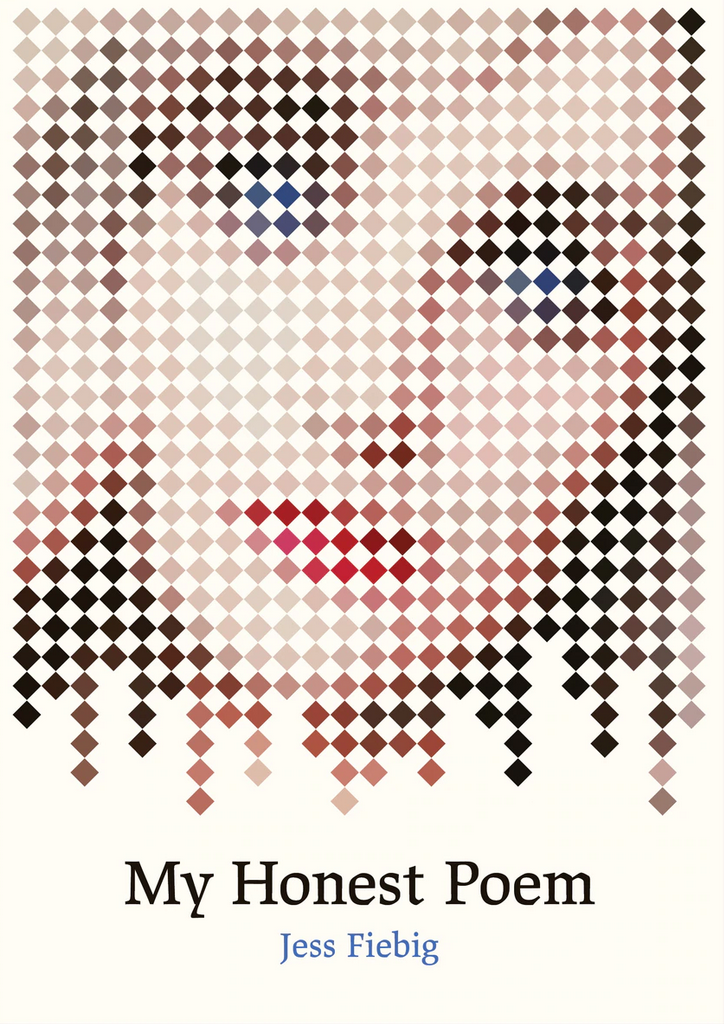
Poetry Shelf review: Jess Fiebig’s My Honest Poem

Jess Fiebig My Honest Poem Auckland University Press 2020

When I was a scrap of blonde hair, pink cheeks

and jam-smeared hands, my grandma would say

‘that girl always needs a pen in her hand’

and at twenty-eight, I think she called it,

right from the start.

from ‘My Honest Poem’

I first picked up Jess Fiegbig’s book when we were in lockdown and I held the book at arm’s length as I was navigating my own dark thoughts. It wasn’t the time to cross poetry bridges into difficult subject matter. Yes this is a book of darkness, of anxiety, family violence, sex, drug addiction but it is also a book of hope, grit, grace. Jess’s poems navigate a woman coming into being along a rocky road, but the book is also a revelation of poems coming to life.

The title suggests the writing is an opening up, the poems frank, holding out for truth. And truth is a hot coal to handle. Prismatic. Shining this light here and that light there. For Jess it is also the heat (and ice) of writing from the searing embers of personal experience. Yet when she writes though tough subjects, her love of writing pulsates, and the words are agile on the line:

I slide two fingers

down my throat

to ease out the knots

I have folded myself into

starting gently at the bottom

and working my way up

just like

when I sat on his knee

at six years old

and he carefully combed

my tangled blonde curls

from ‘Knots’

The middle section of the book, ‘I get lost in lovers’, is both an emptying out and a replenishing. There is the physical vomiting that brings up both bile and the internal weights. ‘Kitchen Sink’ ends with the image of the grandmother and her handbag (‘the kitchen sink’) that carries ‘so much that is heavy, unnecessary’. The poet’s kitchen sink is internal, we infer: ‘I lug my own kitchen sink with me’. This swing between shedding and reclaiming finds the sharp-edged things as well as love, friendship, desire.

You need to add the crafting of poems, the hints at how poems arrive, the way certain words shimmer or blaze on the line. Yes these poems are linguistic treat. Lithe, fluent, musical, economical, image rich. Poetic choices are amplifying the subject matter. Take a stanza from ‘Hypnic Jerk’ for example. You get a murmur of ‘mms’, the tantalising hit of ‘dream souvenirs’. The image of the apple in the throat conjures voice, growth, presence, absence, the memory scaffolding maintained by a go-to image. The very fickle and hard-to-articulate business of memory:

     I have kept

           dream souvenirs

     for a time when remembering you

     wouldn’t grow an apple

                                in my throat


     from ‘Hypnic Jerk’

I find this stanza in ‘Party After Riccarton Races’ equally gripping:

     Sunday, without sleep,

     I seek out the beach, hope

     that sand on skin might release

     the brine in my head.

The poem describes a party in a multi-storied swimming-pooled home, where white powder is offered in lines on platters rather than canapes – but it is the ‘brine’ in her head that catches me, the salty agent of preservation that is holding things the speaker wants to discharge and dissolve.

People feature. Lovers, yes. Friends. In the beginning an achingly honest depiction of a mother with various addiction and distances, the abusive boyfriend of her mother. It is particularly moving to read in the acknowledgements Jess’s mention of her mother: ‘whose support of me telling these story shows real grace’. The grandmother is a recurring figure and she is a magnet of warmth and wisdom.

When we say grace,

she declares that I have cold hands, and

a warm heart; don’t go giving it all away.

My grandmother has perfect fingernails

her lined palms are soft, fleshy,

as they rest tenderly

on my arm; her touch

feels like home.

from ‘Palmistry’

The land also becomes a grounding. A way of locating a scene, a relationship, an outing, a mood shifter, an epiphany. Again the poet’s craft, the exquisite movement of word on the line, both aurally and visually, assists the story being told, the personal story being laid down:

     the yolk yellow leaves,

     brash and unashamedly golden

     in this lilac light,

     are shocking in their defiance

     of the gentle pastel landscape


     they stir something inside me

     that has lain still

                                    for so long.


     from ‘Dead Man’s Point’

My Honest Poem is a move towards new beginnings. The poetry is fresh, succulent and lyrical. Perhaps the most moving collection I have read this year; it might be difficult for some readers, but this is a poetry arrival to celebrate. It took courage to write this book, and it took a finely-tuned ear and eye to achieve such a poetry gleam.

Auckland University Press page.

Jess Fiebig is a Christchurch-based poet whose work has featured in Best New Zealand Poems 2018, Poetry New Zealand Yearbook 2018 and 2019, Landfall, Turbine | Kapohau and takahē. She was runner-up in the 2019 Sarah Broom Poetry Prize.

Jess is reading in my Wild Honey session at Word in Christchurch.

Poetry Shelf noticeboard: Pip Adam named as Victoria University of Wellington Writer in Residence

Detail from photo by Ebony Lamb

This is very good news indeed! Congratulations from Poetry Shelf.

Pip Adam named as University Writer in Residence

Acclaimed novelist Dr Pip Adam has been appointed the Te Herenga Waka—Victoria University of Wellington International Institute of Modern Letters (IIML) and Creative New Zealand Writer in Residence for 2021.

Celebrated for their formal daring and emotional rawness, Dr Adam’s books include a collection of stories Everything We Hoped For, and the novels I’m Working on a Building, The New Animals, and most recently Nothing to See.

Dr Adam gained an MA in Creative Writing with Distinction from the University in 2007, and a PhD in 2012, and she received the Acorn Foundation Fiction Prize at the 2018 Ockham New Zealand Book Awards. She was also the recipient of a 2012 Art Foundation New Generation award.

She is well-known nationally as a contributor to Jesse Mulligan’s show on Radio New Zealand, and as a creative writing teacher, book reviewer, and literary activist. Her popular podcast ‘Better Off Read’ features conversations with writers and artists.

While holding the residency, Dr Adam will work on a futuristic novel in which sound will be explored as a way of structuring the narrative.

Director of the International Institute of Modern Letters, Professor Damien Wilkins, says, “Pip is already a major novelist. Her planned writing project extends her imaginative reach further still and promises to be an exciting addition to the national literature. It will be terrific to have Pip at the IIML.”

Commenting on the appointment, Dr Adam says, “I feel ridiculously grateful, excited and, unusually for me, a bit lost for words. I am looking forward to spending next year working in a building where so much exciting other work is going on. Communities are really important to my work and I can’t wait to be among the varied folk of the IIML. It is so great to have some space and time to write my new book.”

Dr Adam takes up the residency at the IIML in February 2021.

Poetry Shelf Monday Poem: Emma Neale’s ‘The First World Hotel’

The First World Hotel

You’re quite some guest, you know, buddy. Wet towels tossed in loose crumples like botched thank-you notes; toast crumbs Hanselled in pockets of your room; thoughts and plans kept schtoom behind that door-sized don’t disturb sign. The other occupants only ever hear you from behind the clam-shell of your walls; as if your murmured conversations always hide private, no-tell pearls.

Sometimes, true, they glimpse you in the front foyer as you knock storm-strewn camellias, tea-bag brown, from your shoes; shake rain, wood-smoke, and leaf-lint from your lapels. Or with their arms laden with laundry, linen, they might pass you in the corridor’s electric fritz and hum, where your fleet nod and smile flash up like ID, for security scans that you hope run glitch-free, let you back into your own hushed interior.

They carry on: attend to quiet comforts. Not after-dinner mints on pillows; white cloths folded into mute swans; not single malt, strong, campfire peaty and dry, in doll-sized phials. They store and preserve the apple-fall of small realisations. Such as, when you leave, how polite this son will be, as he acknowledges transient strangers in the world’s anonymous spaces.

Emma Neale

Emma Neale is the author of six novels and six collections of poetry. Her most recent novel, Billy Bird (2016) was short-listed for the Acorn Prize at the Ockham NZ Book Awards and long-listed for the Dublin International Literary Award. Emma has received a number of literary fellowships, residencies and awards, the most recent of which is the Lauris Edmond Memorial Award for a Distinguished Contribution to New Zealand Poetry 2020. Her first collection of short stories, Party Games, is due out late 2020/early 2021. Emma lives and works in Ōtepoti/Dunedin, and she is the current editor of Landfall, New Zealand’s longest-running literary journal.

Poetry Shelf noticeboard: Poetry at Christchurch’s WORD Festival

WORD 2020 in Christchurch is a celebration of writers, books, thinks, talkers, journalists in Aotearoa. Honestly I haven’t dared look at the programme until today because I didn’t want to jinx heading south to participate in this festival.

This is a WONDERFUL feast and I can’t wait to go! Yes you can feast on words! Banquet on stories. Long lunch on poetry. Smorgasbord on ideas.

Take poetry for example. There is such a glorious range of poetry events from book launches to readings to a stand-up poetry quiz.

Check out book launches by Mohamed Hassan, Fiona Farrell, Tusiata Avia, Bernadette Hall and John Newton

You can listen to Bill Manhire in conversation with John Campbell (Wow).

You can go to New Zealand Poet Laureate David Eggleton’s poetry picks: Cilla McQueen, Kay McKenzie Cooke, James Norcliffe, Owen Marshall and Bernadatte Hall.

You can go to the Poetry Slam Finals.

The Canterbury Poets’ Collective poetry performances.

Go to Ray Shipley’s Late Night Poetry Hour: Mohamed Hassan, Freya Daly Sadgrove, Dominic Hoey, essa may ranapiri and more

My Wild Honey session where I will be in conversation with Morrin Rout plus readings by Cilla McQueen, Bernadette Hall, Selina Tusitala Marsh, Tusiata Avia, Jess Fiebig, Freya Daly Sadgrove and Frankie McMillan.

PLUS I am doing an interactive Poetry Playground interactive session for children.

So many great things in this programme but I can highly recommend:

The astonishing Witi Ihimaera with sublime musician Kingsley Spargo (saw a version at GOING WEST and wow!!).

Elizabeth Knox talking about her supremely good read The Absolute Book.

Eileen Merriman discussing her breathtaking YA novels.

Five writers writing a letter to Katherine Mansfield.

A Ralph Hotere session that includes Bill Manhire and Cilla McQueen.

The GALA night that might be sold out now.

The great debate.

Adventurous women.

The arrival of Ko Aotearoa Tātou | We Are New Zealand

So many good things – and yes there are some clashes that will be tough on the day for me!

Congratulations WORD (esp Rachael King for designing this wide-roving programme). You can check out the WORD banquet here – do pop down to Christchurch for a long weekend and join us for an inspirational, heartwarming, mindfeeding occasion.

You can see the full programme here

Poetry Shelf Lounge: Kay McKenzie Cooke and Jenny Powell celebrate David Eggleton’s Poet Laureate Weekend at Matahiwi marae

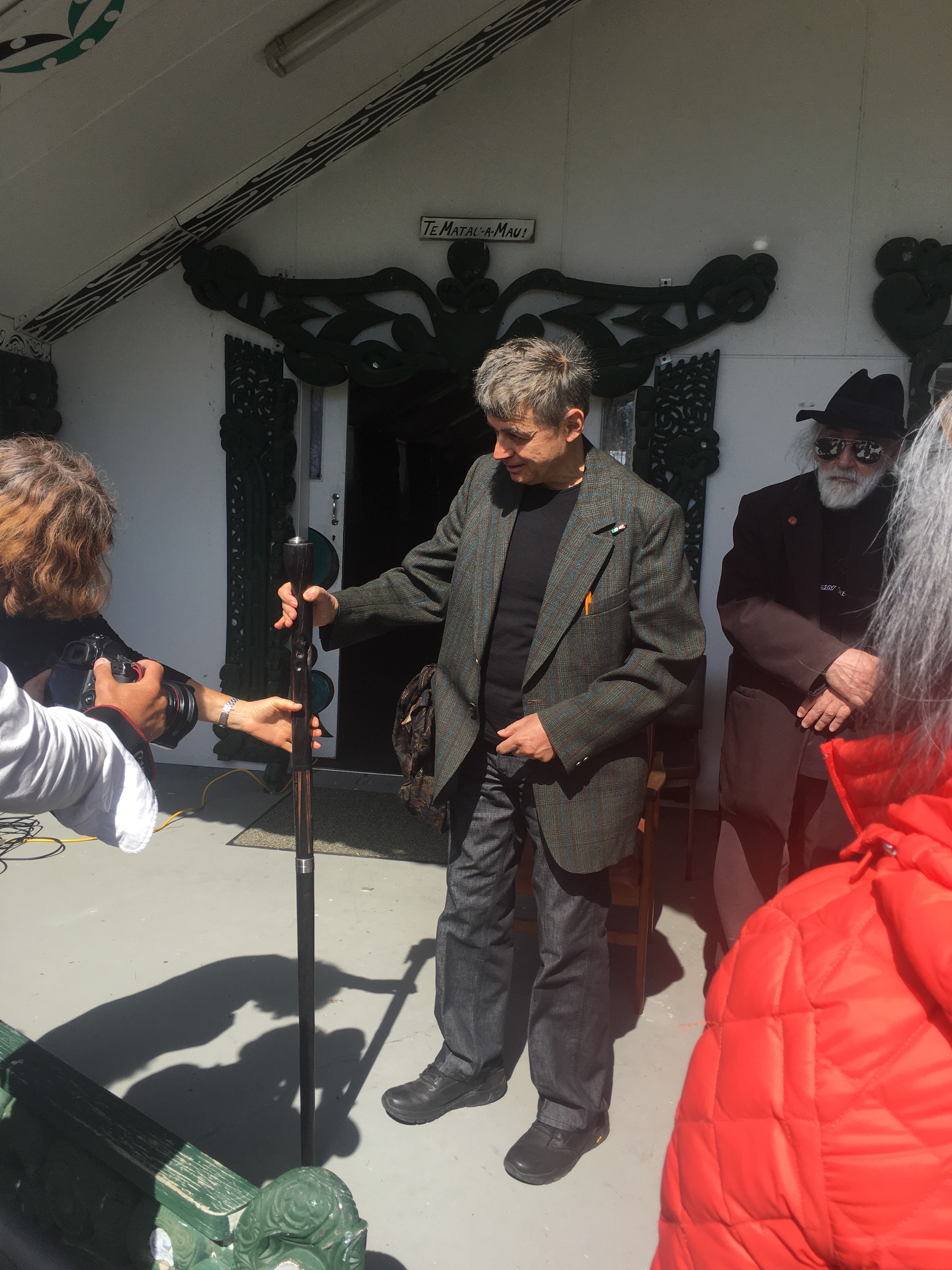
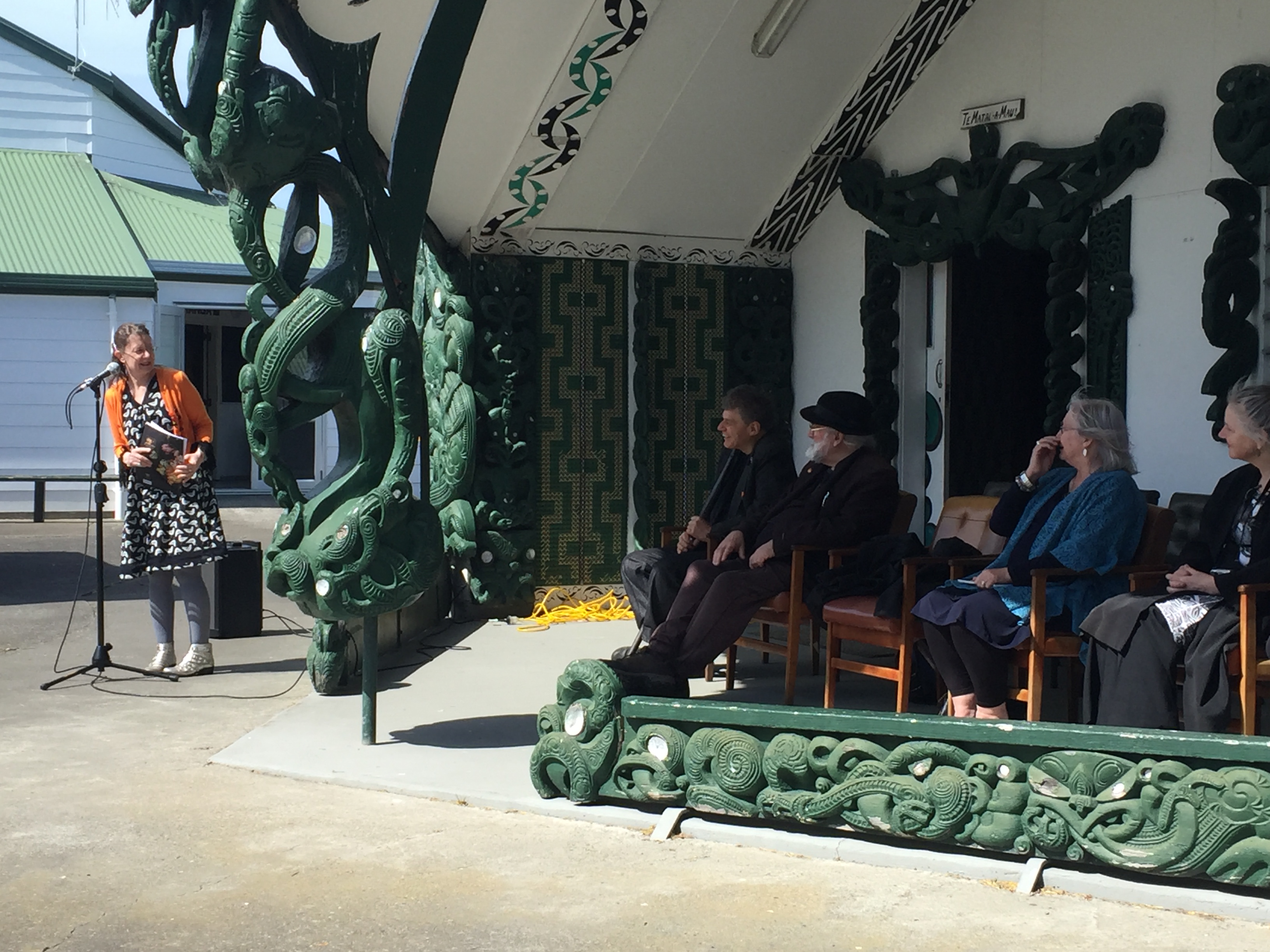
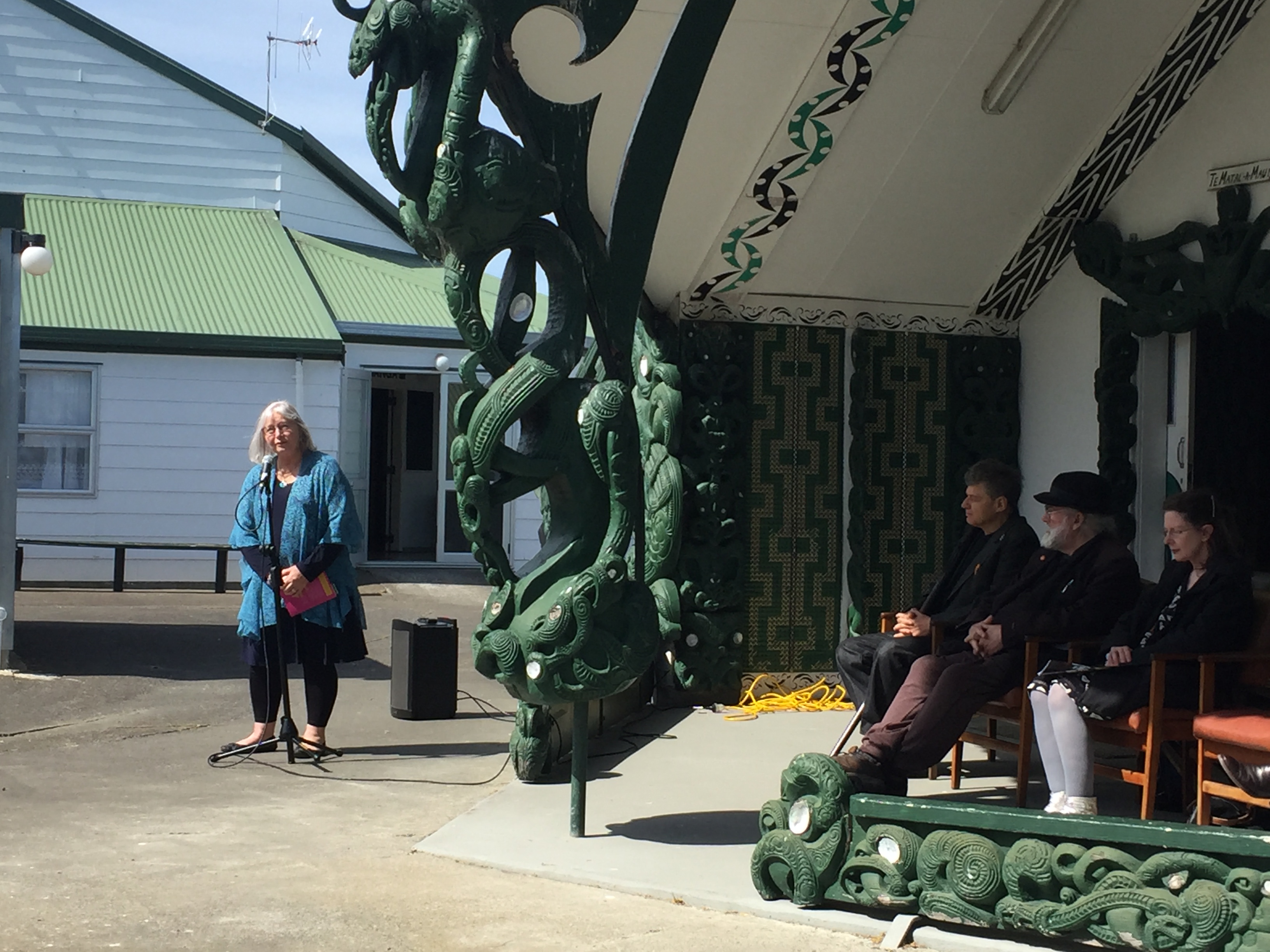
David Eggleton at Matahiwi Marae (photo Lynette Shum)

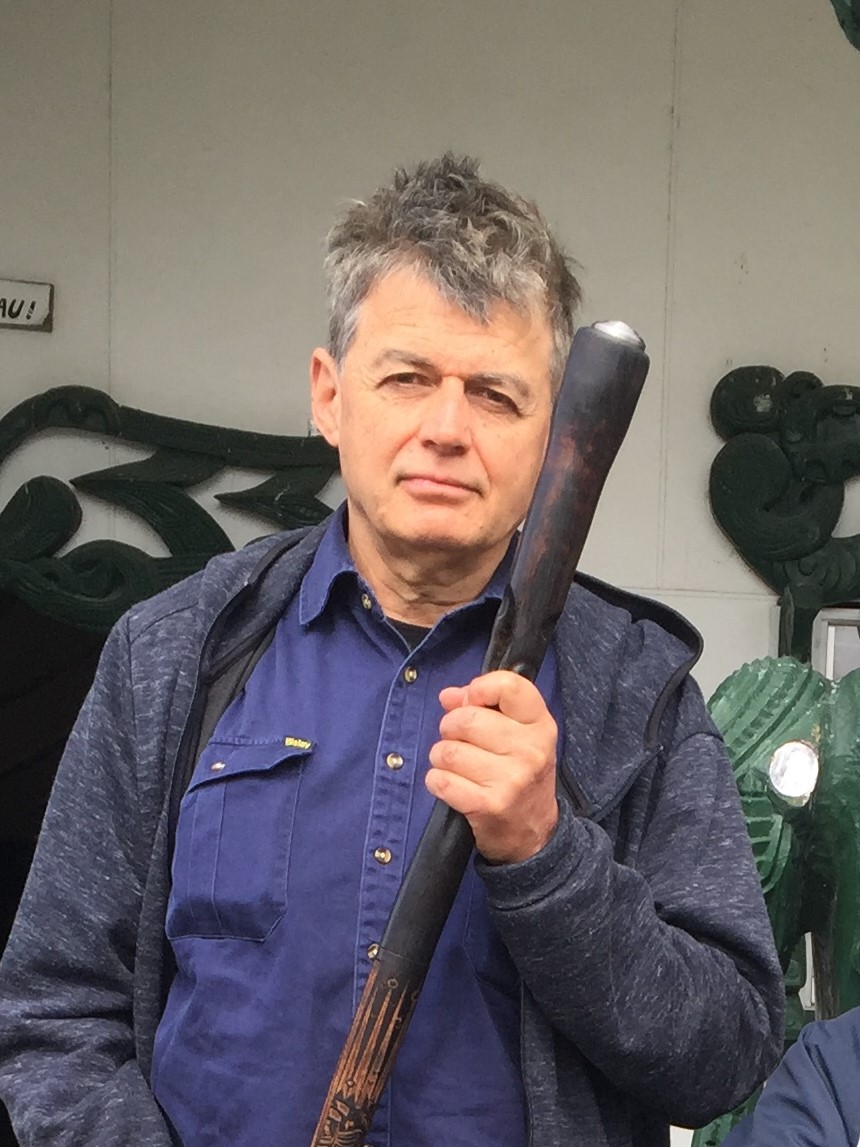
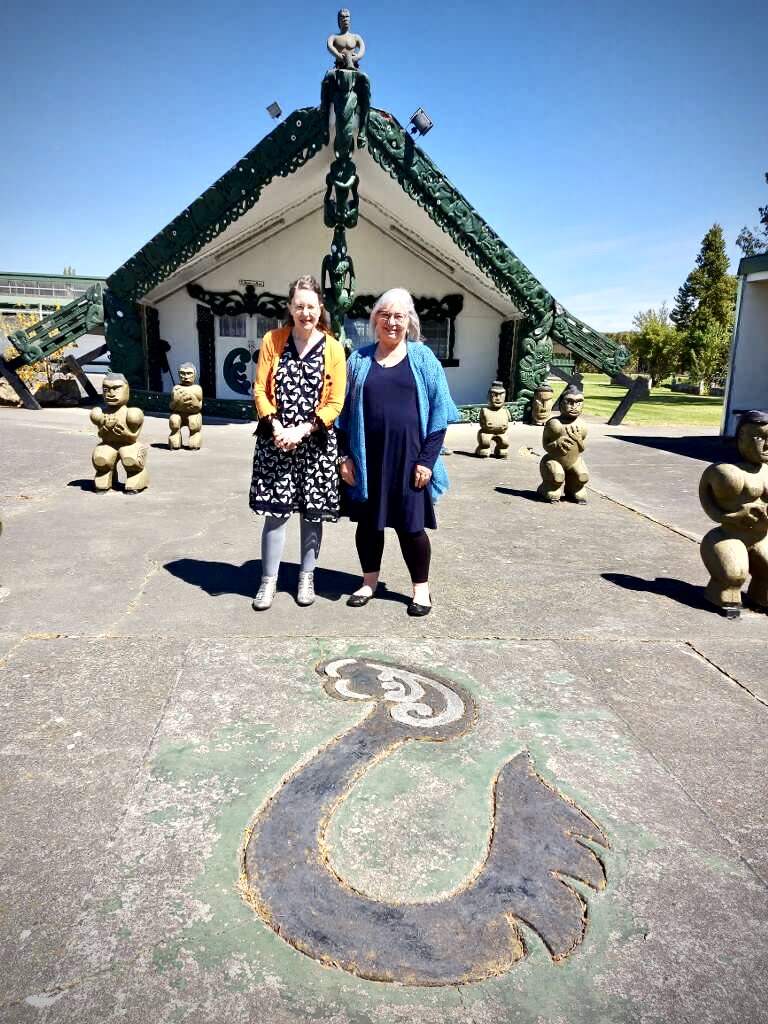
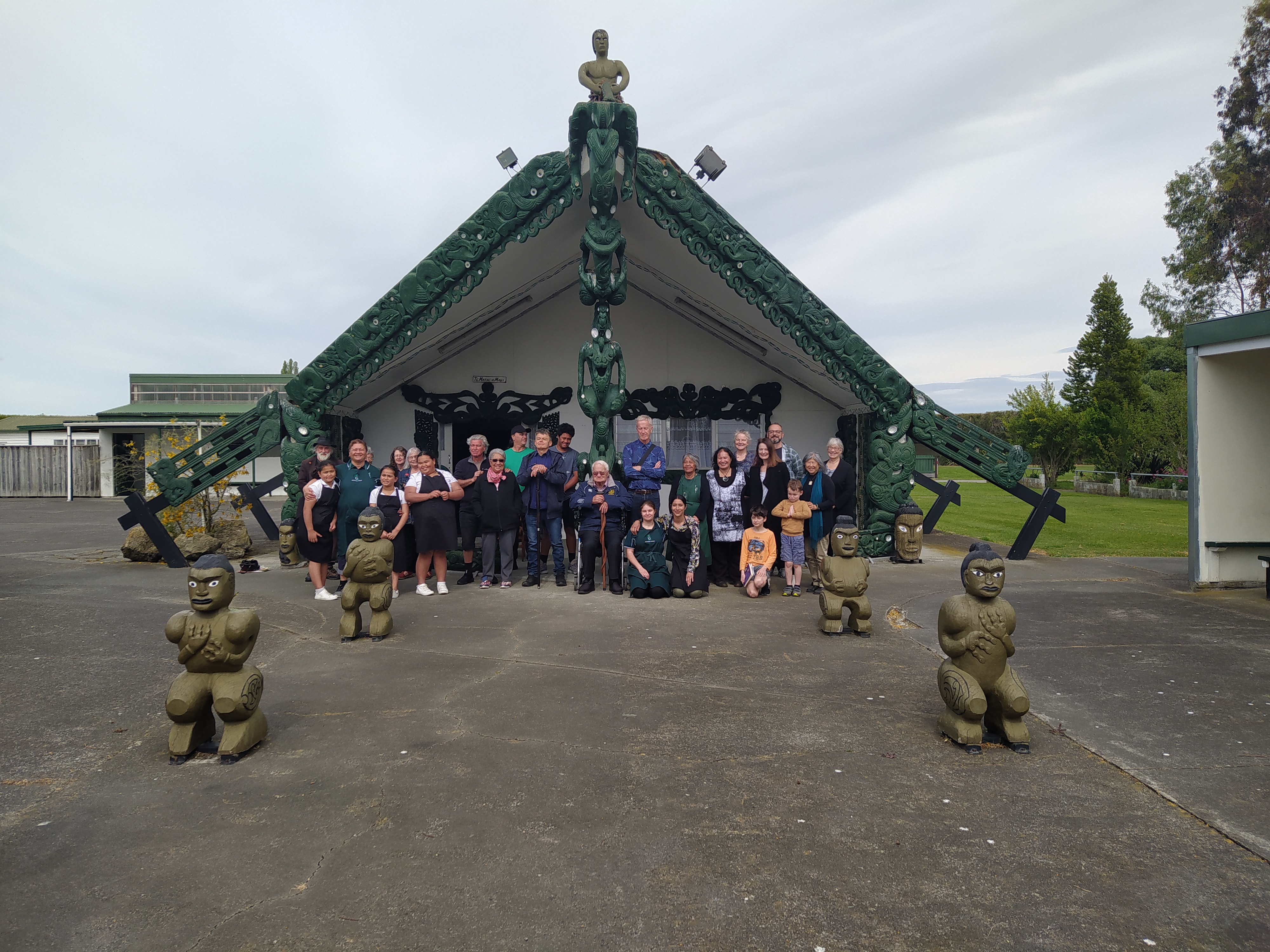
Last weekend David Eggleton celebrated his New Zealand Poet Laureateship at Matahiwi marae accompanied by Charles Ropitini, whanau, friends, National Library staff (including the Library’s empathetic Laureate champion Peter Ireland) and poets (Jenny Powell, Kay McKenzie Cooke and Michael O’Leary). David was presented his tokotoko carved by Haumoana carver Jacob Scott. On the Saturday evening Marty Smith hosted Poets Night Out at the Hasting Events and Arts Centre, Toitoi.

The National Library also announced that due to the restrictions Covid has placed upon David’s Poet Laureate plans his term would be extended for another year. David has gifted Aotearoa a richness of poetry in printed form, but his appearances as a performance poet are legendary, inspirational, charismatic. He is appearing at the Christchurch Word Festival late October and will now be able to bring his poetry to the people over the next two years, as was his aim. Wonderful!

Two of David’s guest poets – Kay McKenzie Cooke and Jenny Powell – share their experience of this special weekend.

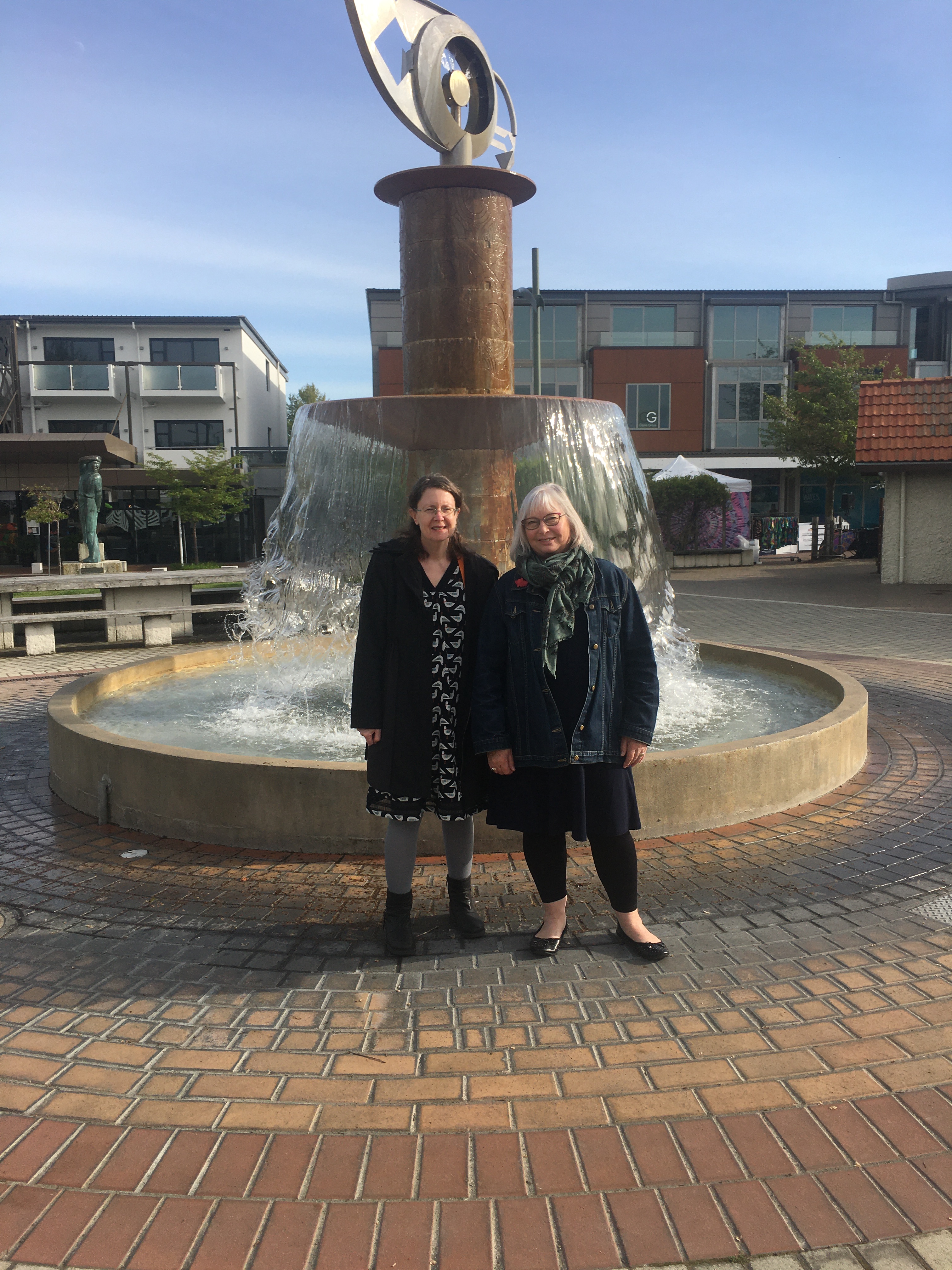
Jenny Powell and Kay McKenzie Cooke

David’s tokotoko is called Te Kore, meaning ‘the void’. The dark maire has a natural hole near the upper end. When he received it his body straightened, as if a spiritual and physical source of creativity became one.


Like the tangata whenua of Matahiwi marae, the tokotoko radiates what is needed. I held it on the way to the evening poetry reading in Hastings and again on the way home. Did it matter? Yes.


The void. The beginning, the creation, the end. Here it was, playing out in a bend of time and words. In the before of my ton weight suitcase, organisational order, waiata to practise, transport logistics, food and food. In the then. Matahiwi marae in its glory of green bounty, Māui hooking us into his welcome, kuia hooking us into love. River flow of oratory, Poems of the south, of love, of colour, of rapid fire Eggleton resonance and the moon beaming in story and song.


In the leaving, small children bound on fields, frail elders offer blessings, words spiral, tears flower. In the meeting house, enduring peace of the deep void.

Jenny Powell

Matahiwi marae (photo Katrina Hatherly)

After Being Introduced

Naturally, there are many other memories but maybe I particularly remember David’s grin, Fieke’s calmness, Jenny’s silver boots, Peter’s careful attention, the humour and innate sense of arrangement from the National library trio (Joan, Lynette and Katrina) and Michael’s Fleetwood Mac black hat and white t-shirt emblazoned with the words: A Hard Day’s Night.

~*~

Friday:

Michael, Jenny and I practice our waiata for David. E Tu Kahikatea. We sing it out in a patch of sun cut to the shape of a motel’s open door. We are kind of happy with how it sounds. Jenny’s top notes, my more middling muddle, Michael’s lower notes verging on bass, all blending to invoke a tree standing braced for whatever will come at it, bolstered by those who stand close to protect and the togetherness of all this conjured up in the final lines.

~*~

Our first chance to meet the National Library trio: Lynette, Joan and Katrina, is at tonight’s dinner. They exude friendliness, kindness, humour, order and care – and that’s just on the first take. There’s room for even more to surface as the weekend unfolds. (Such as the Joni incident – but I am jumping ahead of myself and anyway, it’s probably one of those you-had-to-be-there episodes.)

~*~

Saturday:

Jenny and I are on the hunt for breakfast early and surprisingly enough for us, we manage not to get lost. Go us! As we look out from our outside table onto Havelock North’s shiny newness, including a fountain and locals setting up stalls for a market on clean concrete, a brittle breeze reminiscent of Ōtepoti’s nor’easterly, licks at our ankles.

~*~

Outside the Matahiwi marae gates, that same cold breeze niggles at our backs and shoulders. Charles our te reo-speaking representative, tells us the moon is in a benevolent phase – all augurs well – and points out the maunga, the mountains, in the distance. He names them and tells us the meaning of the name – which, sadly, I promptly forget. However, I do notice that after being introduced, the mountains appear to draw a little nearer.

~*~

More people arrive to join the waiting group. David’s no-fuss whanau flock quietly together. And then the pōwhiri begins, a karanga calling us to proceed in safety. Wings of grief beat in my chest like something fighting waves of memory.

~*~

We are welcomed with kōrero, karakia, by tīpuna, voice, mountain, awa, spirit, wairua, with love, aroha. Charles responds with an operatic kōrero sung on our behalf in te reo, laced with waiata that soars and rolls in an awa of pride. We line up to elbow-hongi, covid-style. A kuia at the end of the line grabs each of us into a hug.

~*~

The unwrapping of the tokotoko begins with a blessing by Jacob, then revealed and handed to David by the carver. Made of maire, it is tall and straight, yet shapely. It is black with a small sweep, or wave, of brown. Pango and parauri. Somewhere, silver glints. The carver tells us it speaks of Māui and his brothers, of boldness and spirit. Of stirring, mischief-making, mixing things up and pitting against. It has weight. Mana. David tests its strength by thumping the ground with it. He appears satisfied. He smiles.

It is time for Michael, Jenny and me to sing our waiata. Unfortunately, all of the previous day’s blend and timing takes flight leaving only the unpolished, rough side of the päua, shy of colour and magic. It’s a pretty rough delivery. No matter. It’s done. The tree still stands. It takes more than that to fell a kahikatea.

David’s son does a far better job, calmly, confidently singing a self-composed song that soothes, charms and rocks like a waka launched on to slowly moving water.

~*~

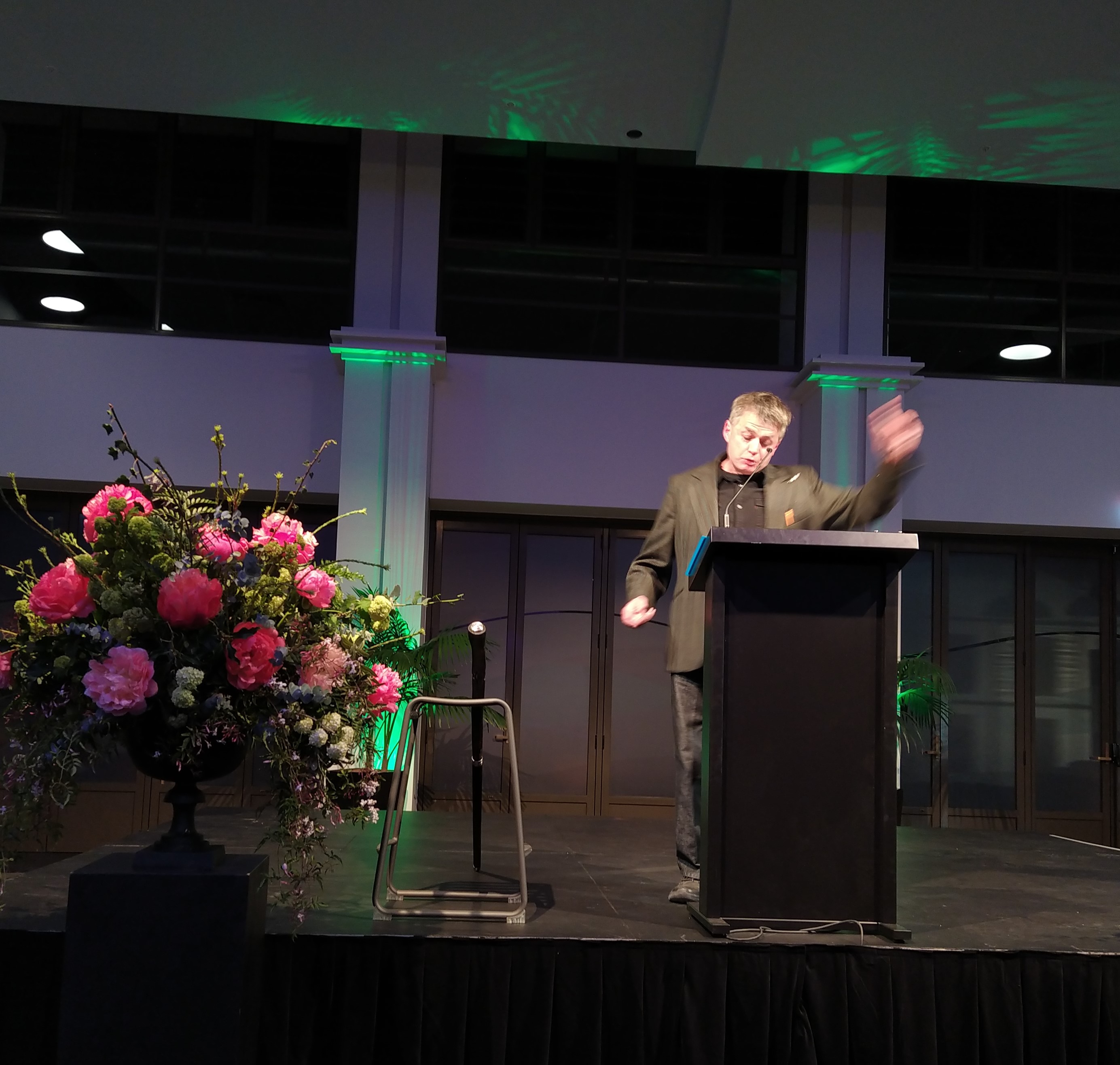
Saturday night, David, Michael, Jenny and I make poetry the winner at Poets Night Out at the Hastings Events and Arts Centre, Toitoi, in all its glory and glamour; sumptuous flower displays, laser beams creating a dancing landscape on ceiling and walls. The event is bookended by two beautiful young singers and linking it all, Marty in shimmering gold jacket delivering her diamante introductions.

~*~

Sunday:

Mōrena. Back at the Matahiwi marae, we are hugged. Fed. Allowed into more stories. Humour sparks. We are told a little more of the coming into being of David’s Poet Laureate tokotoko; its name, Te Kore; its character, its insistence not to be firewood, but instead a walking, talking stick with fire to fill any void in its belly.

~*~

As we make our reluctant farewells, a kuia gifts Jenny and myself quiet words of encouragement to take back home to Ōtepoti with us. She loves our poetry. She may write some herself now. She particularly loves the way Jenny speaks her poems. I feel there is more she wants to say. Deeper things. But there is no time left.

~*~

More farewells outside the marae as we get into cars. Some of the good-byes are to people we will see again. Others, maybe not. As the car I am in moves away, I notice the maunga, the mountains, have moved. I watch as they fade back into the distance.

~*~

Jenny Powell has published seven individual and two collaborative collections of poems. She is part of the touring poetry duo, J & K Rolling. Jenny is currently in the Wairarapa as the RAK Mason Writing Fellow.

Kay McKenzie Cooke’s fourth poetry collection, titled Upturned, was published by The Cuba Press, mid-2020. At present she is far too busy to write. A predicament she hopes will not be permanent.

David Eggleton is a Dunedin-based writer, critic and poet. His first collection of poems, ‘South Pacific Sunrise’, was co-winner of the PEN Best First Book of Poetry Award in 1987. His seventh collection of poems, ‘The Conch Trumpet’, won the 2016 Ockham New Zealand Book Award for Poetry. He received the Prime Minister’s Award for Excellence in Poetry in 2016. His most recent collection of poetry is Edgeland and Other Poems, with artwork by James Robinson, published by Otago University Press in 2018. He is the current Aotearoa New Zealand Poet Laureate.

The New Zealand Poet Laureate Blog

Piece by Peter Ireland on NZ Poet Laureate site

Photos by Joan McCracken, Katrina Hatherly and Lynette Shum from the National Library and Jenny Powell and Kay McKenzie Cooke

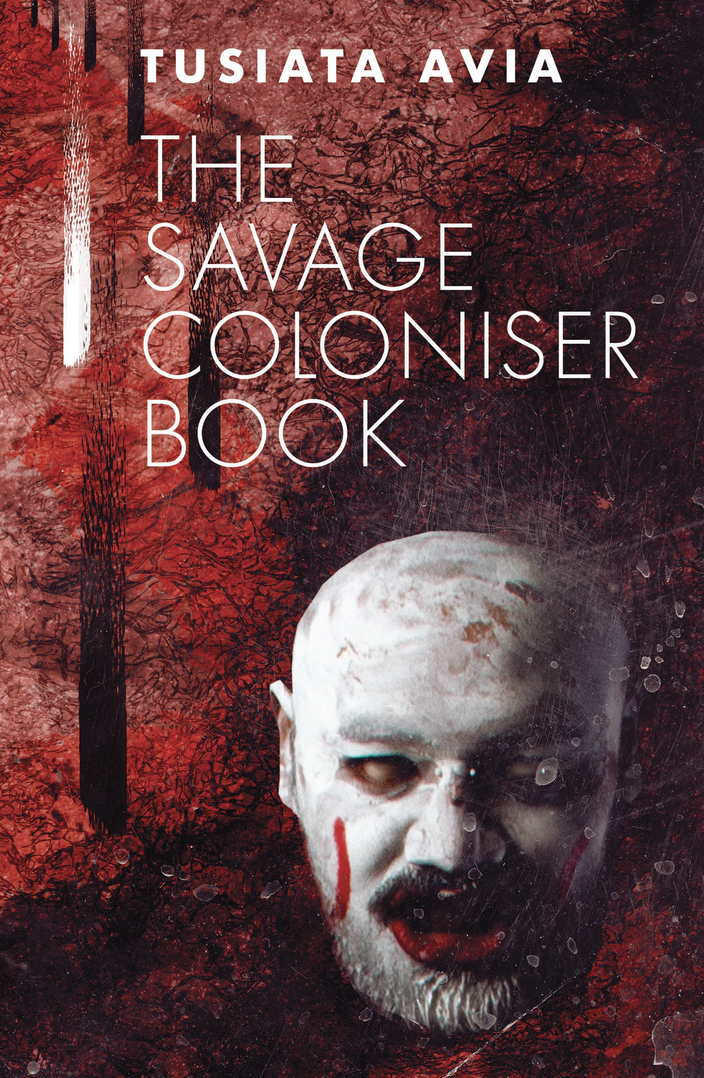
Poetry Shelf Monday Poem: Tusiata Avia’s ‘Covid in the time of Primeminiscinda’

Covid in the time of Primeminiscinda

I’m not listening to Jacinda

I’m going to my friend’s party and all the herbalists are there

listing all the things:

Thieves Oil, whiteywood, kānuka, honeysuckle, pōhutukawa,

horopito, elderberry syrup.

It’s really easy, they say, all you have to do is go for many

miles into the wilds, recognise the right things, pick them,

dry them in a confusing and special way, boil them, decant

them, strain them into pure glass bottles and seal them.

You’ll be lucky to find them for sale anymore.

This freaks me out so I go home.

Level 1

I’m listening to Jacinda

I’m telling myself that I’m staying the hell away from herbalists

and Facebook

I’m sitting in cafés with the panickers, the terrified and the lonely.

I know there is plenty to panic about.

I’m staying six feet away

chatting to the old man with the stroke in his arm and his leg.

How are you? he asks. I’m good, I answer.

I’m watching the surprise in his droopy eye

and his lopsided smile.

I’m talking to the German Hare Krishna, who owns the café,

and asking her how she copes with everyone coming in

and eating their anxiety and leaving saliva on the plates.

They’re just stimulated by all of this, she says, but I have Krishna

and I will be all right.

Level 2

I’m waking up at five in the morning and I’m thinking maybe

Jacinda has become my Krishna

Hare Jacinda

Rama Primeminiscinda

I take her picture down and light my incense to nothing at all.

I’m asking my eighty-six-year-old mother to ring me half

an hour before she comes into the same room as

me and my daughter, so I can disinfect:

the light switches and the door knobs and the cupboard handles

and the fridge door and the microwave door and the knife-

drawer handle and the taps and the dishwasher door and the

bench and the tabletop and her dining-room chair and the

back of her chair and the landline phone and the TV remote

and the heat-pump remote

and then I walk quickly to the other end of the house

and disinfect the toilet and the flush button and all the light

switches and the taps and the empty towel rail.

I keep reminding my daughter:

Imagine Uncle is lying on the floor with his feet here and

his head there, that’s how far you have to stay away from Granny.

I speak loudly to Mum (cos she’s pretty deaf):

Stay away Mum, stay away.

Before my brother and my niece arrive for the last time,

my daughter is deep-frying panikeke

I say the word dangerous more than fifteen times

then I’m standing under the shower and forcing myself to

breathe

just leaving her with the boiling oil and standing under

the water and trying to breathe. I am just having a shower I am just

having a shower I am just having a shower.

I’m listening to Jacinda and clicking on her message to the nation

and the full media briefing she does afterwards

and the science woman with bright pink hair who shows us how

to wash our hands.

I am calling a briefing for my mother and daughter.

I am Jacinda

I’m plugging myself in to the TV and turning the volume up

loud enough that my daughter

has to cover her ears

and my mum can hear.

Are you ready, I ask them? Are you ready?

Level 3

Jacinda is saying tomorrow is lockdown

I know my daughter is out of sanitary pads and I’m not sure

if the taxis will keep running, so, I’m going to Wainoni

Pak’nSave with six zillion other people.

Jacinda told us to shop normally.

I’m telling myself: Shop normally shop normally shop normally

I’m forcing myself to buy one packet of toilet paper

and four cans of baby beetroot. A woman is taking photos of all

the different kinds of sanitary pads to send to her daughter.

She steps back and bumps into me. I’m trying not to freak out,

I’m forcing myself to walk slowly around the supermarket

walk slowly walk slowly walk slowly.

I’m going back to the health and beauty aisle and searching for

Rescue Remedy and not finding it

I see a guy I met on Tinder ages ago and didn’t sleep with

and he says, Well, how do you tell the story?

and gives me a look as if it is a thing that neither of us

could know, as if it is a thing perhaps no one could know.

In the carpark a couple of young bogans

stick their heads out of the car window

and cough as loud as they can, laugh and drive off.

I’m reading what the microbiologist has said about

disinfecting.

You have to let it sit for ten minutes

or you’re just moving the bacteria around.

I thought I was doing a good job keeping my mum safe.

I thought I was keeping her safe, so if she does die,

at least I will know I did all the right things

but I’ve just been moving it around.

Level 4

I’m listening to the bugle call in the kitchen.

Jesus isn’t coming back or Armageddon

or even the end of Level 4

but here is the moment of silence, so I stop

whatever ten-minute meal I am making

and remember those who have fallen: the Anzacs and the Covid

cluster down the road at the Rosewood Rest Home.

Tusiata Avia from The Savage Coloniser Book Victoria University Press, 2020

Tusiata Avia is an acclaimed poet, performer and children’s writer. Her previous poetry collections are Wild Dogs Under My Skirt (2004; also staged as a theatre show, most recently Off-Broadway, winning the 2019 Outstanding Production of the Year), Bloodclot (2009) and the Ockham-shortlisted Fale Aitu | Spirit House (2016). Tusiata has held the Fulbright Pacific Writer’s Fellowship at the University of Hawai‘i in 2005 and the Ursula Bethell Writer in Residence at University of Canterbury in 2010. She was the 2013 recipient of the Janet Frame Literary Trust Award, and in 2020 was appointed a Member of the New Zealand Order of Merit for services to poetry and the arts. Her latest collection, The Savage Coloniser Book, has just been published by Victoria University Press.

Victoria University Press page

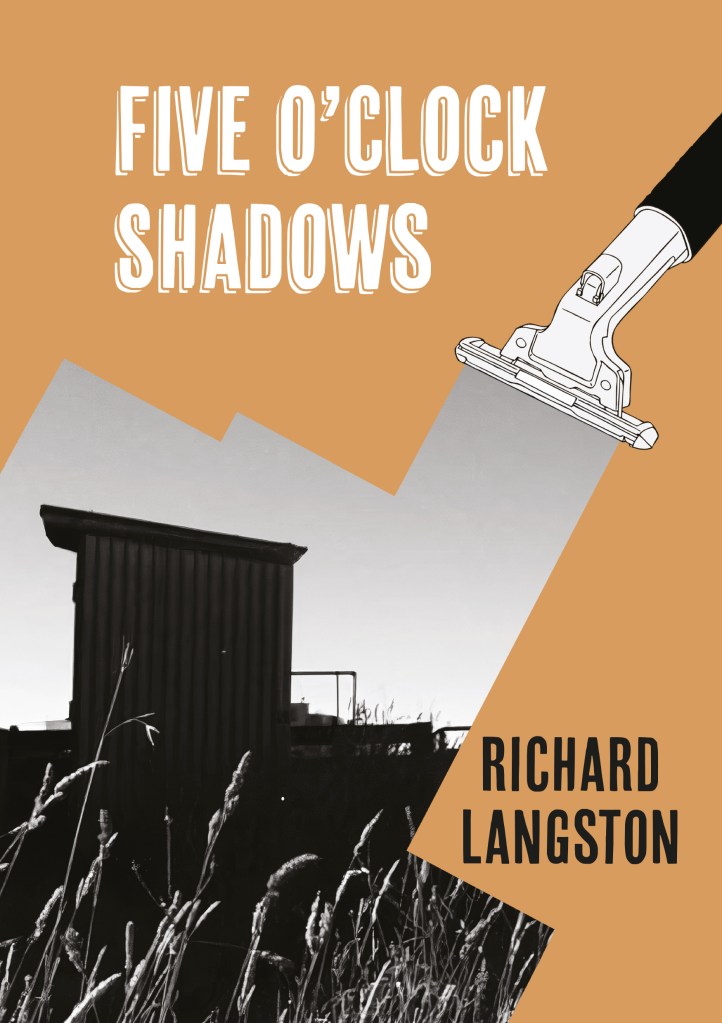
Poetry Shelf Lounge: Richard Langston reads from his new collection, Five O’Clock Shadows

Richard Langston reads three poems from his new collection, Five O’Clock Shadows (The Cuba Press, 2020)

Richard Langston is a poet, television director, and writer. Five O’Clock Shadows is his sixth book of poems. His previous books are Things Lay in Pieces (2012), The Trouble Lamp (2009), The Newspaper Poems (2007), Henry, Come See the Blue (2005), and Boy (2003). He also writes about NZ music and posts interviews with musicians on the Phantom Billstickers website.

The Cuba Press author page