
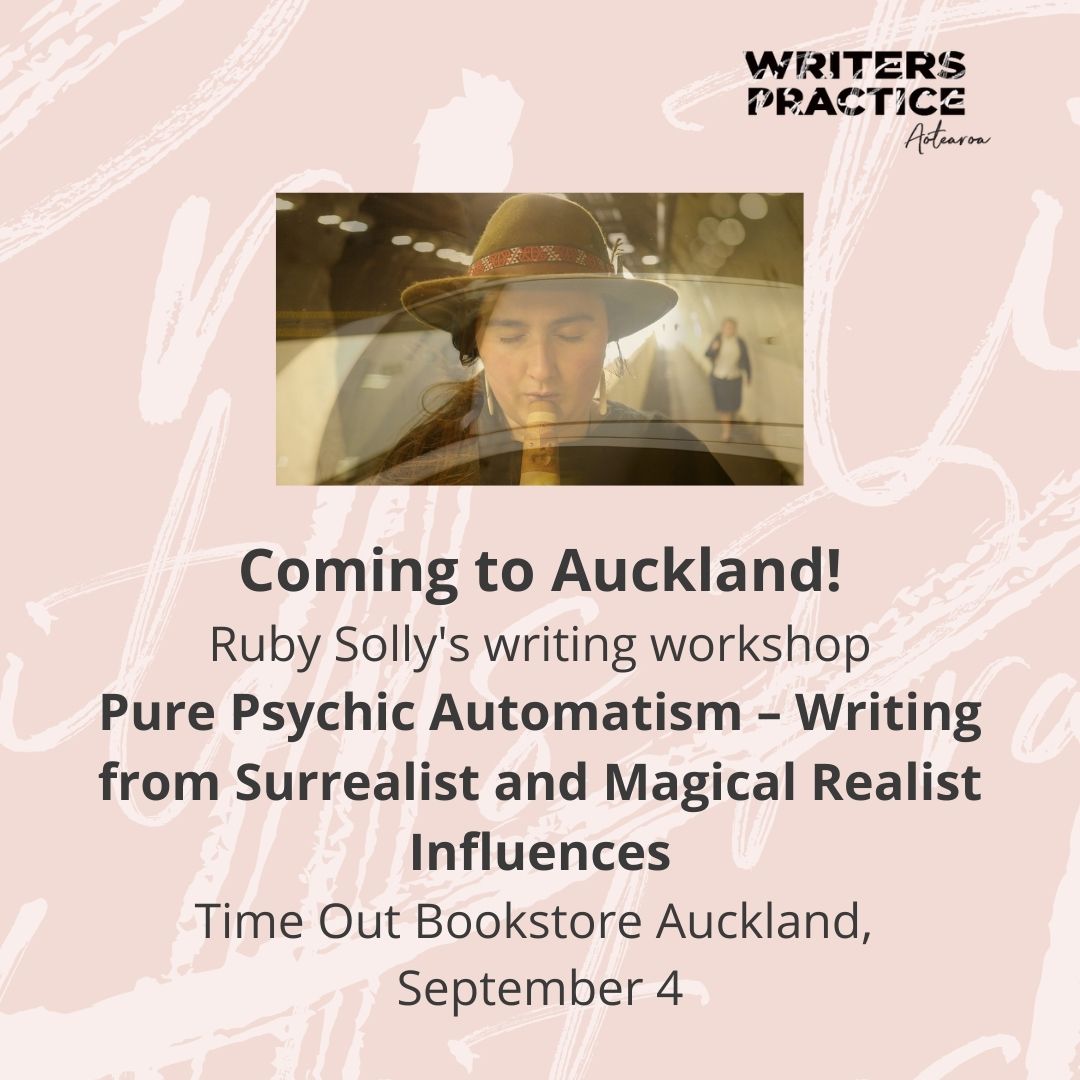
The written word is powerful, but it is also a chance to play and create things which we cannot have in our real lives. More so, it is a place to create things that are impossible even to think about; overripe stones, long hair always full of nocturnal animals, and sugar set fragily ajar by the wind. Join us as we read authors such as André Breton, Leonora Carrington, Richard Brautigan and Samuel Beckett. This workshop will also feature collaborative work using surrealist games and techniques developed during the surrealist movement, as well as exercises inspired by the work of surrealist and related writers. A great workshop for all who wish to extend their writing, to embrace the strange, and work on their potential to describe the indescribable.
Limit of 12 participants.
Details here
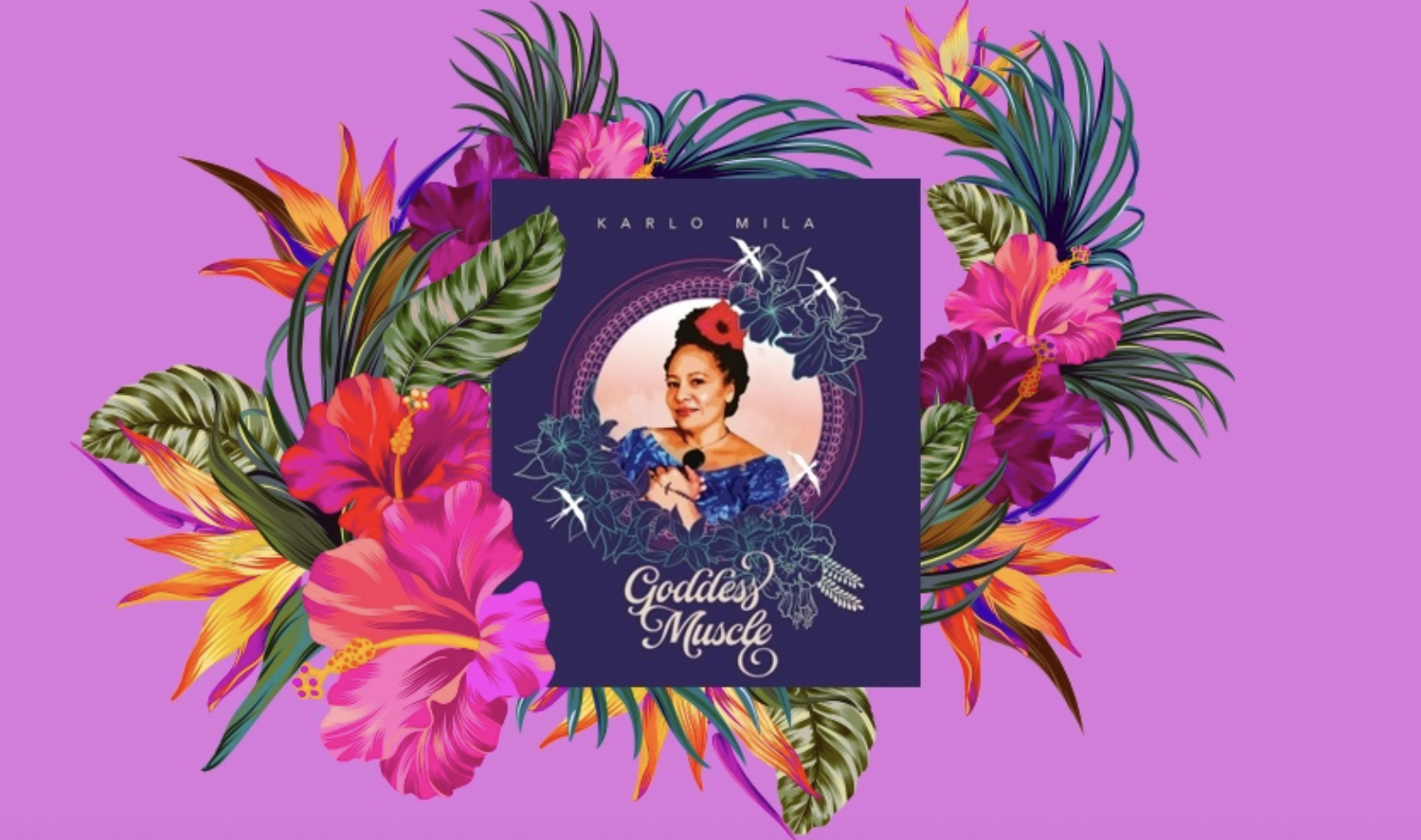
Catherine Woulfe from The Spinoff invited six women to write a short piece celebrating Karlo Mila’s Goddess Muscle: Selina Tusitala Marsh, Leilani Tamu, Nadine Anne Hura, Kirsten Lacy, director of Auckland Art Gallery Toi o Tāmaki, Rebecca Sinclair, deputy pro-vice chancellor at the college of creative arts, Massey University and me. We each contributed a paragraph and a photograph.
I so loved this book. It is the kind of book that rises above your reading shelves and sticks, and was one of my top poetry reads of 2020. I was also privileged to hear Karlo read at my Wild Honey session at VERB. Such charisma on the page and in the air.
I got my daughter to take a photo of me with the book and before I could stop myself I lost in a poem, savouring the poetry richness, forgetting to smile for the camera, transported, uplifted a universe away from the lounge. If you haven’t read Goddess Muscle yet please do. Check out the celebration here. This is my piece:
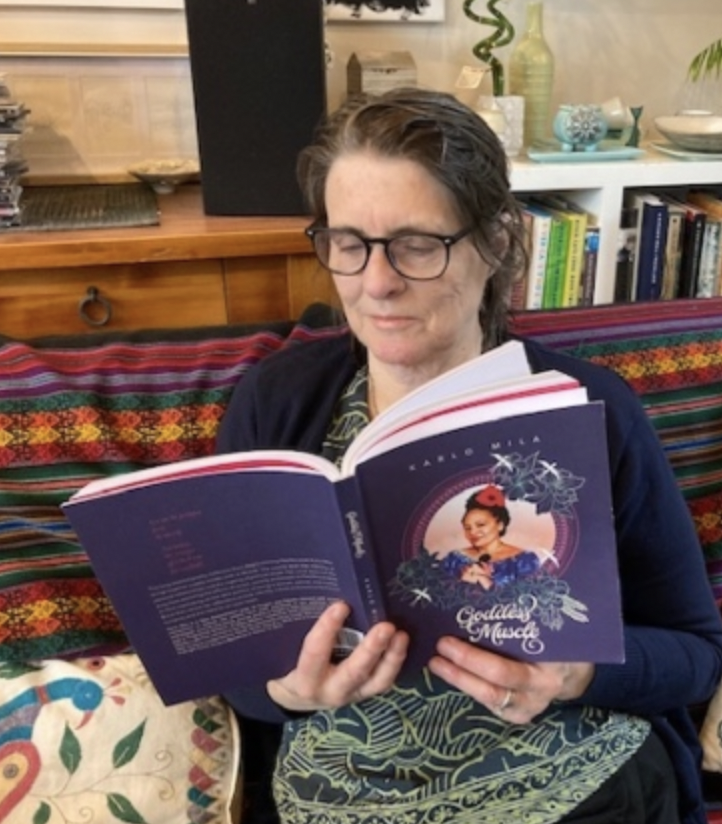
Goddess Muscle is a gift. I can barely account for how it will stretch your reading muscles, your beating heart, your enquiring mind, your compassion, your music cravings, your empathy. Karlo has extended her own poetic muscle and offered poetry that is wisdom, strength, refreshed humaneness. I am all the better for having read it.
The collection is crafted like a symphony, an experience of shifting life, seasons and subject matter, so as you read the effects are wide reaching. Karlo faces significant political issues: climate change, the Commonwealth, colonialism, racism, Ihumātao, “the daily politics of being a woman, partner and mother”. She faces these global and individual challenges without flinching. The resulting poems are essential reading, never losing touch with song and heart, always insisting in poetic form how we can do better. How we can be a better world, recharge humanity. I would like to see these poems read in secondary school. You can read Moemoeā: (composed for poets for Ihumātao) here.
Karlo reads from Goddess Muscle here.
My review at Poetry Shelf
Poetry Shelf – poets on their own poems: Karlo Mila reads ‘For Tamir Rice with Love from Aotearoa’
Dream
I woke with the birds.
We were on a bus somewhere in England,
a double-decker red one and the driver
turned up an arterial which had turned to grass.
He turned us around and took us commuters
in the reverse direction. We were working
our way through the contents of my soft
gym bag which was filled with beads,
shiny coins, and we’d piled them up on the bus floor
so a young boy with his parents sitting opposite us
dived into them before I could scoop them back.
I had asked the bus driver if he could let a passenger know
that they might miss their bus stop now that
we had changed direction, but he instead quoted
a lengthy passage of Shakespeare I think
in which he quoted owls do cry.
Robert Sullivan
Robert Sullivan lives in Oamaru. He belongs to Ngāpuhi (from Kāretu and Omanaia), and Kāi Tahu (Karitāne). His seven collections of poetry includeCaptain Cook in the Underworld, Shout Ha! to the Skyand the best-selling Star Waka. He co-edited three major anthologies of Pacific and Māori poetry. His PhD, Mana Moana, examines the work of five other indigenous Pacific poets. His eighth collection, Tūnui / Comet will be published by AUP later this year.
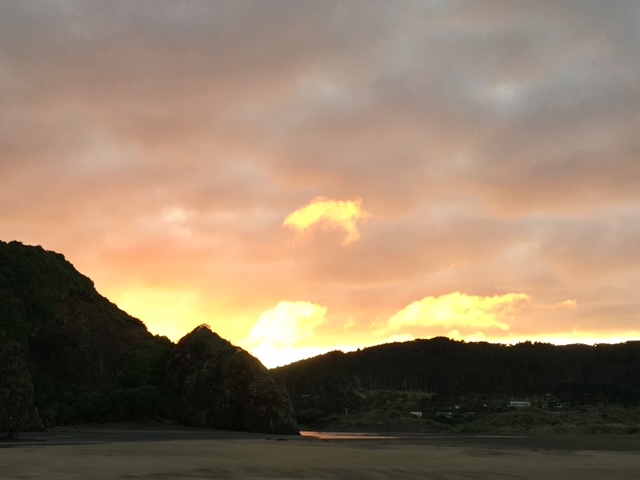
Light, lightness, lighting, lightly, that startling moment when it’s you on the deserted beach, and the sun appears on the horizon, a blinding glorious beauty blast that lifts you off the sand. Light, the shifting weather coming in from the coast, mapped out in shade colour daydream, storm and clarity. Yes poetry is home for the dark, but it is most definitely a place to celebrate the light.
The poems I have selected are not so much about light but have a light presence that leads in multiple directions. Once again I am grateful to publishers and poets who are supporting my season of themes.
The poems
Like Lamplight
One day when you are beside me
invite me to speak
of the secrets I never knew
I wanted to tell you, of the warmth
I never knew I owned
until you released it
by moving close as lamplight seems
to glass. Ask me
why I came to you
with the reverence of one
who sees a flower bloom
where none has bloomed before.
By saying what is
I will have said what is.
Sometimes when you are content
ask me what it is
that moves me to want to hold you so,
so often, and laugh when I tell
you the same old
indestructible thing.
One day when you are
where you need no invitation to be
I will tell you
how you flower
like lamplight in me.
Brian Turner
from Selected Poems, Victoria University Press, 2019
A swim with mum
She abandoned the boat one summer
and began to swim
a careful clumsy breast-stroke through the river. From the jetty
to the bridge, from the bridge to the jetty and
back again, patient as a beaver.
At twilight
the one light
is Mum, swimming.
She wears a black whaleskin onepiece
and her strange pale skin,
her hair a slow-moving beacon
through the mildew of trees.
She tells me the garden looks different, is smaller
from the river
and that one never grows familiar
with the soft tongues of weed that browse the skin.
Each breath when she swims is held and let go like a precious thing,
a pushed swing:
this is the only time she is not talking.
The river that runs past the house is darker, is quieter
when mum is swimming.
Ashleigh Young
from Magnificent Moon, Victoria University press, 2012
Still Life with Wind in the Trees
So much of the planet is fragile:
things that flap on the line,
stuff on a plate, a car skidding
over the paddocks . . .
I mean: abrupt, conditional,
and as usual,
brief: so that you once again assume your place.
Yet what if one day you looked out
through the open window
and saw mortality
in the grey scribble
of a boy holding an apple?
Fragility. Brevity. Beauty, even.
Light in available space.
And what’s joy?
Even a pencil will point to it.
for Joanna Margaret Paul, 1945-2003
Bill Manhire
from Lifted, Victoria University Press, 2005
A Life
The late afternoon
finds you seeking
clarity in a book
of Rilke poems, a
shortbread biscuit,
and a cup of lemon
tea—with a dash
of honey.
The honey swirls
down through the
tea, and biscuit
crumbs fall into
the book, lodging
in the spine. The
fading sun slants
across the page.
Today, you decide,
you are truly content
to call your life a
great song. Or even
a small song.
A lullaby. Something
to sing your child to
sleep.
Kiri Piahana-Wong
from Night Swimming, Anahera Press, 2013
Saipipi, Savai’i, Samoa
Nana Se’ela asked me once
Eke mana’o e fai sau malu?
i turned to her, my makas widening in shock
i gaze down at the jellyfish, seagulls, and crosses
under the stars
tattooed around her thighs
in my Samoglish i questioned
me? Ae ā Mum?
Nana’s throat made a raspy sound
like she was going to spit on the sand
true – Mum was lost to Niu Sila burdens
disguised as palagi exoticness
had less time for village matters
she was spread between two Motherlands now
The first, native to her tongue rooted from the sands and plantations
where her mother gave birth to her.
The second, native to her offspring where she became mother herself.
Mum was fiapalagi, out of necessity
but i was palagified out of consequence.
so, was I much different?
i tilted my face up to the stars
that were more familiar to me
than the ones on Samoan thighs
without turning to her, i answered
Leai fa’afetai, Nana.
i felt her stare at me for a long pause
before puffing on her rolled tobacco.
we sat there silently looking at the night sky
until we were tired and went to sleep
side-by-side on a falalili’i in her fale.
Ria Masae
from ‘Native Rivalry’ in AUP New Poets 7, Auckland University Press,
experiments (our life together)
here is my experiment with the dark
we run to the top of the street and crossing it
become aware of the fountain’s lip and mosaics
under water pink blue hyaline we step through
the foot bath yes the gold leaf is holding on
here is my experiment with stars
it is a dormitory on the top floor this two o’clock
the babies wrapped loosely in sheets asleep
and somehow not falling out of their little moulded beds
the blinds drawn down the afternoon heat
here is my experiment with humours
aqueous the home movie
tears on the lens and always the return
to rivers their flumes and fumaroles
so plural so carrying so carried away
here is my experiment with light
which leaves me now the dear shapes
gone to sound the end wrapped around
the beginning a piano in a dark room that is
quite what it is like and never the same
here is my experiment with river
memory and the wind ruffles her hair
there are no fences on the sun only a truck
bouncing on the flood its wheels gone and us inside
scared to death and still steering
here is my experiment with rain
we swim and let the current take us
where it will which is some toehold around
the corner under cliffs of black honeycomb
the saltwater pool afloat on its concrete rim
here is my experiment with amygdala
in the morning we find a bar and marmelata
as the sun comes up and the streets are cool
a slice of duomo at the end of each stony block
an orchestration a theatre of the mind
here is my experiment with immanence
who was waiting there who was asking me
to look at heaven from the end of a dark wharf
and when I did when I raised my empty eyes
the city was there a necklace of light a horizon
here is my experiment with periphery
who was asking me not to forget
rippling scales in another room a gallery
at the top of the stairs a cupola a vault
a canopy a river of light on the ceiling
Michele Leggott
from Heartland, Auckland University Press, 2014
Into the Blue Light
for Kate Vercoe
I’m walking above myself in the blue light
indecently blue above the bay with its walk-on-water skin
here is the Kilmog slumping seaward
and the men in their high-vis vests
pouring tar and metal on gaping wounds
the last repair broke free; the highway
doesn’t want to lie still, none of us
want to be where we are
exactly but somewhere else
the track a tree’s ascent, kaikawaka! hold on
to the growing power, sun igniting little shouts against my eyeballs
and clouds come from Australia
hunkering over the Tasman with their strange accent
I’m high as a wing tip
where the ache meets the bliss
summit rocks exploding with lichen and moss –
little soft fellas suckered to a groove
bloom and bloom – the track isn’t content
with an end, flax rattling their sabres, tussocks
drying their hair in the stiff southeasterly; the track wants to go on
forever because it comes to nothing
but the blue light. I’m going out, out
out into the blue light, walking above myself.
Rhian Gallagher
from Far-Flung, Auckland University Press, 2020
Cannon room. Soft delight.
Rattling fight. Mud platoon.
Fighting fit. Parlour’s floor.
Blind allure. Iron bit.
Head device. Treasured caul.
Blank morale. Not advice.
Mighty fall. Good to go.
Aching slow. Dead appall.
Acre of snow. Dead applaud.
Nightly call. Goodbye go.
Back in old. Noted vice.
Head of lice. Threatened more.
Binding law. Lying wit.
Crying quick. Hole in wall.
Rat in flight. Bloody moon.
Crayon gloom. Lantern light.
Oscar Upperton
from New Transgender Blockbusters, Victoria University Press, 2020
he moves his hand
down the dip of her back
over her buttocks
then up again
each stroke
the sound of a wave
over shingle
it’s like your skin has a grain he says
like the scales of a fish
oh she says feeling the world turn
liquid
she turns and there
it is — a touch
of rainbow in her skin
as he catches her
in the right
light
Alison Wong
from Cup, Steele Roberts, 2006
Sailing
A wet shrub drips a thousand tiny mirrors.
Cows climb from the blue-veined clay.
The sea’s monster lung trembles.
Ocean lilies of yachts spread sail.
Sunlight bubbles on the purple cloudpane.
Time lies in its sunburn.
A knife cuts open a grapefruit’s centre.
Pips sparkle like summer boats.
David Eggleton
saying your names
after Richard Siken
the earth has names in every language / in
body language, an unravelling, the self offered,
open-faced and blushing, leaves flat and
extended, tender / since the beginning of human
thought / we’ve been drunk with naming,
with godly names, secret names / true names
with absolute power / animal names, not scientific
but the names wild beasts give the world, guttural
and warm, worn in the throat, irresistible /
inexpressible, but we’re trying, gesturing
at the sky and the ground, like babies learning
to speak, imitate, repeat, we learn the sounds
other people respond to / the more we love
a thing the more names it has, like the sun,
my emotional support star, my long-distance
lover, the original hot girl, the inventor
of sunsets, distant world in a sci-fi novel,
wildfire / if you look directly at it everything
dissolves / each name gets closer but refracts /
like looking through a prism, light glancing
everywhere, refusing to be held
Ash Davida Jane
from How to Live with Mammals, Victoria University Press, 2021
Spark
Our son, nearly one, has one near-word:
another determined birth
the sound stutters, gutters
then rushes and floods
“A-la,
a-lie,
a-lie-uh,
a-lie-uh-duh.”
He points to lamp and torch,
to LEDs on clock, computer, answer machine,
to sun-strike – on sash windows, ignited
from an old ute’s wing mirror, firing
a red beech leaf as it falls, flares,
flaught – like torn newsprint in a grate
as it spasms into flame….
“That’s right!” we say, “A light, a light.”
And as he points to hyacinth, door, cat,
and tries,
“A-lie?
A-lie-uh.
A-lie-uh-duh!”
say, “No, that’s a flower, a door, a cat,”
but he, small and earnest professor,
cranes forward a little on his rump,
to repeat slowly and with extra care
“A-lie.
A-lie-uh.
A-lie-uh-duh”
until we look again.
It gathers in thick cones,
rods of bee caves
dozens of lilac oboe mouths
peeled back into stars.
It hovers on one wall
like a vertical lake
that rapidly drains
to miraculous views
(a dog! a tree! a car!)
then fills again with itself
hard, white, stilled.
It unfurls, blackbird-blue,
to arc and vault
from windowsill to garden
where discs and glints of it
flock, merge, and wheel apart
into hedge, clothesline, pegs, water,
frost on red roof, green blade, yellow grain:
“A-lie.
A-lie-uh.
A-lie-uh-duh.”
“Ah,” we say, “We see. There.
And there.
Light. Light.
All shapes of light.”
Emma Neale
First published in Spark, Steele Roberts, 2008
Windows
I like the light that comes up
from down beyond the land.
I like the human light
yellow in windows.
The people moving about
in them. I like, too,
the way they amplify the light
beyond the land.
The way it will not last too long,
The way it will be extinguished by
another light we call the dark,
where everyone goes to recall
the light & the way it was,
among the fall of shadows.
Richard Langston
from Five O’Clock Shadows, The Cuba Press, 2020
The poets
David Eggleton is a poet and writer of Palagi, Rotuman and Tongan descent based in Dunedin. He has published a number of poetry collections, and has also released a number of recordings with his poetry set to music by a variety of musicians and composers. He is the former Editor of Landfall and Landfall Review Online as well as the Phantom Billstickers Cafe Reader. His book The Conch Trumpet won the 2016 Ockham New Zealand Book Award for Poetry. In 2016, he received the Prime Minister’s Award for Literary Achievement in Poetry. His most recent poetry collection is The Wilder Years: Selected Poems, published by Otago University Press in May 2021. He is the Aotearoa New Zealand Poet Laureate for 2019 – 2022.
Rhian Gallagher’s first poetry collection Salt Water Creek (Enitharmon Press, 2003) was shortlisted for the Forward Prize for First Collection. In 2008 she received the Janet Frame Literary Trust Award. Her second poetry collection Shift, (Auckland University Press 2011, Enitharmon Press, UK, 2012) won the 2012 New Zealand Post Book Award for Poetry. A collaborative work, Freda: Freda Du Faur, Southern Alps, 1909-1913, was produced with printer Sarah M. Smith and printmaker Lynn Taylor in 2016 (Otakou Press). Rhian was the Robert Burns Fellow in 2018. Her most recent poetry collection Far-Flung was published by Auckland University Press in 2020.
Ash Davida Jane’s poetry has appeared in Mimicry, Sweet Mammalian, Starling, The Spinoff and elsewhere. Her second book, How to Live With Mammals, was published by Victoria University Press in April 2021. She lives and works in Wellington.
Richard Langston is a poet, television director, and writer. Five O’Clock Shadows is his sixth book of poems. His previous books are Things Lay in Pieces (2012), The Trouble Lamp (2009), The Newspaper Poems (2007), Henry, Come See the Blue (2005), and Boy (2003). He also writes about NZ music and posts interviews with musicians on the Phantom Billstickers website.
Michele Leggott was the first New Zealand Poet Laureate 2007–09 under the administration of the National Library. She received the Prime Minister’s Award for Literary Achievement in Poetry in 2013. Her collections include Mirabile Dictu (2009), Heartland (2014), and Vanishing Points (2017), all from Auckland University Press. She cofounded the New Zealand Electronic Poetry Centre (NZEPC) with Brian Flaherty at the University of Auckland where she is Professor of English. Michele’s latest collection Mezzaluna: Selected Poems appeared in 2020 (Auckland University Press).
Bill Manhire founded the creative writing programme at Victoria University of Wellington, which a little over 20 years ago became the International Institute of Modern Letters. His new book Wow is published by Victoria University Press in New Zealand and Carcanet in the UK.
Ria Masae is a writer, spoken word poet, and librarian of Samoan descent born and raised in Tāmaki Makaurau. Her work has appeared in various publications including, Landfall, Takahē, and 2020 Best New Zealand Poems Anthology. A collection of her poetry, titled, ‘What She Sees From Atop the Maunga’, can be found in, AUP New Poets 7. She is currently working on a sole anthology of poems for publication.
Emma Neale is a writer and editor. Her most recent collection is To the Occupant. In 2020 she received the Lauris Edmond Memorial Award for a Distinguished Contribution to New Zealand Poetry.
Brian Turner was born in Dunedin in 1944. His first book of poems, Ladders of Rain (1978), won the Commonwealth Poetry Prize and was followed by a number of highly praised poetry collections and award-winning writing in a wide range of genres including journalism, biography, memoir and sports writing. Recent and acclaimed poetry collections include Night Fishing (VUP, 2016), and Just This (winner of the New Zealand Post Book Award for Poetry in 2010). He was the Te Mata Estate New Zealand Poet Laureate 2003–05 and received the Prime Minister’s Award for Poetry in 2009. He lives in Central Otago.
Oscar Upperton lives in Wellington. His first collection New Transgender Blockbusters was published by VUP in March 2020. His second collection, on the life of nineteenth century surgeon Dr James Barry, is upcoming.
Kiri Piahana-Wong is a poet and editor, and she is the publisher at Anahera Press. She lives in Auckland.
Alison Wong is the coeditor of the first anthology of creative writing by Asian New Zealanders. A Clear Dawn: New Asian Voices from Aotearoa New Zealand (AUP, 2021). Alison’s novel, As the Earth Turns Silver (Penguin/Picador, 2009) won the NZ Post Book Award for fiction and her poetry collection Cup (Steele Roberts, 2006) was shortlisted for the Jessie Mackay Award for best first book of poetry. She was a poetry judge at the 2018 Ockham New Zealand Book Awards.
Ashleigh Young is the author of Magnificent Moon, Can You Tolerate This?, and How I Get Ready. She works as an editor at VUP.
Ten poems about clouds
Twelve poems about ice
Ten poems about dreaming
Eleven poems about the moon
Twelve poems about knitting
Ten poems about water
Twelve poems about faraway
Fourteen poems about walking
Twelve poems about food
Thirteen poems about home
Ten poems about edge
Eleven poems about breakfast
Twelve poems about kindness
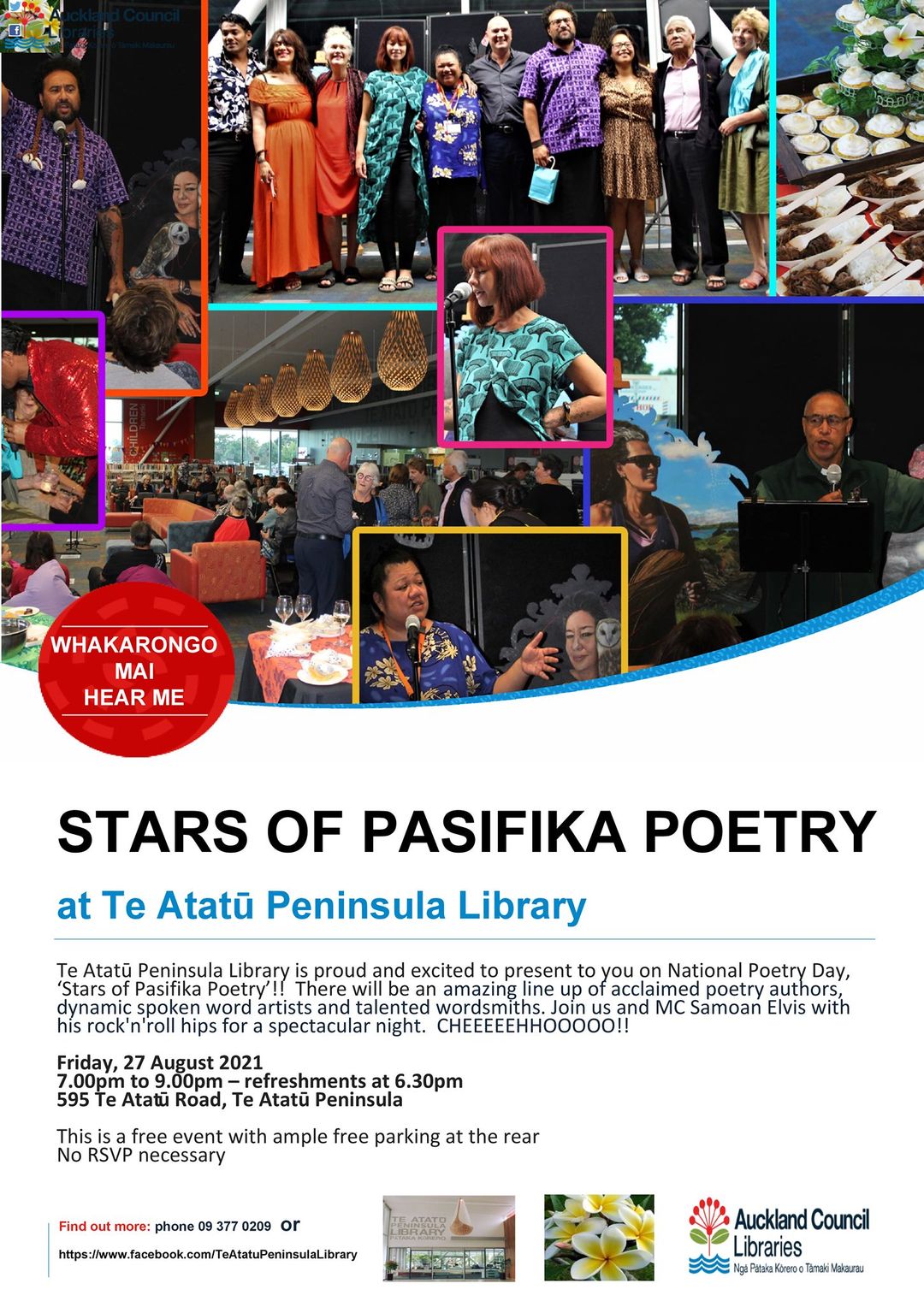
Wonderful radio!
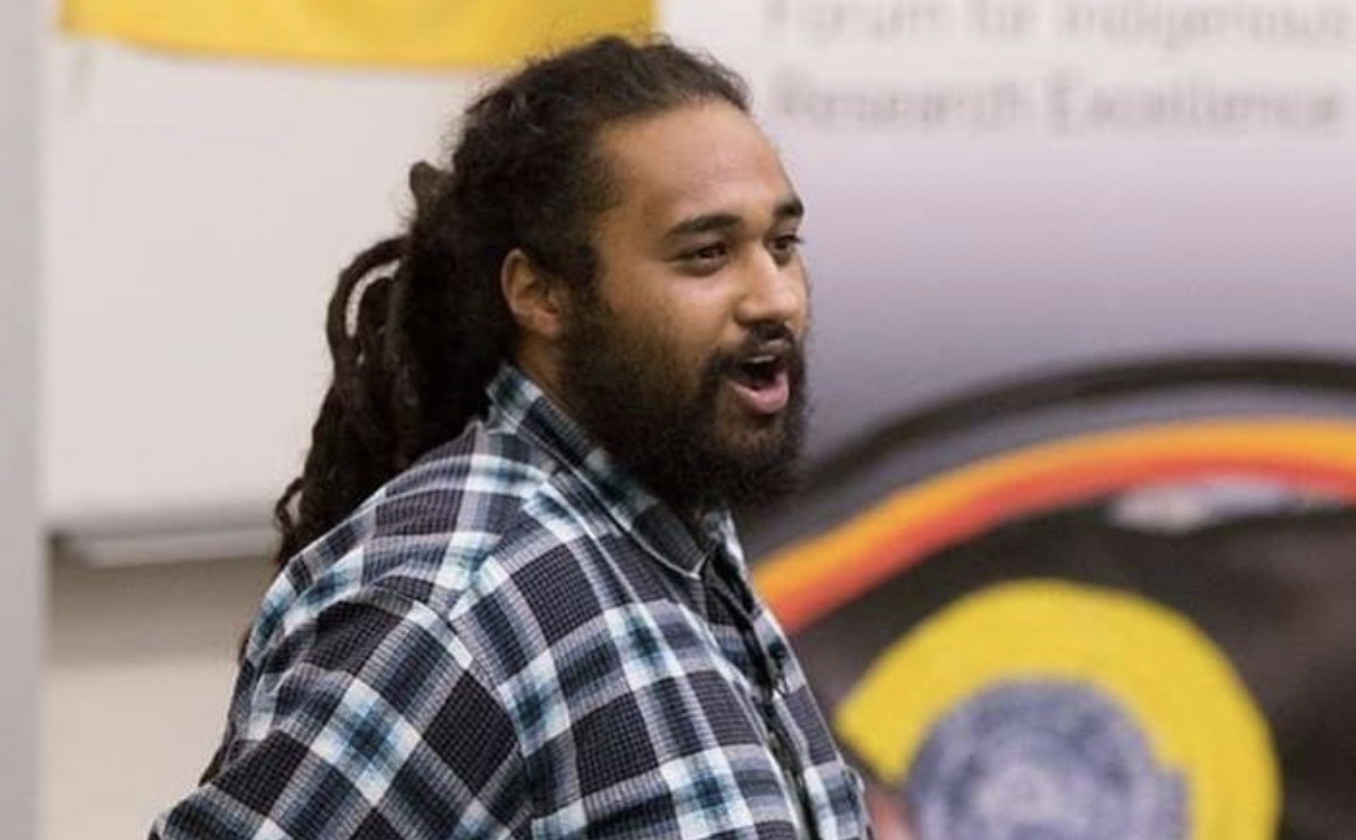
National Poetry Slam winner Te Kahu Rolleston performs some of his poetry and speaks with Kathryn Ryan about giving rangatahi voice to hopes and dreams through performance poetry. E Tū Whānau is running a spoken word competition, the kaupapa being “hopes and dreams for my world, my future, my whānau”. Te Kahu’s offering tips and encouraging everyone to enter and get involved. He’s no stranger to enthusing young people. Listen duration 31′ :32″ Add to playlistDownload
Alumni of the prestigious Banff Centre’s Indigenous Writing Programme, Te Kahu runs spoken word workshops with rangatahi in schools around the country to endear them to a life-long love of reading and spoken word poetry. Te Kahu’s approach is to fill the room with joy and happiness, so learning – and writing – is a joy.
 NZ Poetry Shelf