
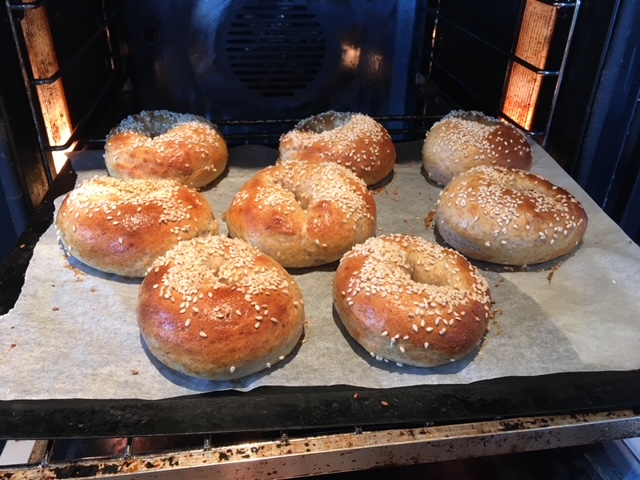
Home is a state of mind, it’s where you lay your roots down, where you trace your roots, feed yourself, friends and family, bake your bread and make kombucha, where you stand and sleep and dream, it’s a physical place, a small house with wooden floors and comfortable couches, a garden with kūmara almost ready to harvest, shelves overflowing with books, my family tree, my family treasures, my thoughts of life and my thoughts of death, a series of relationships, myself as mother, partner, writer, home is my reluctance to drive beyond the rural letterbox, it’s contentment as I write the next blog, the next poem, sort the kitchen cupboards, light the fire, conserve the water, feel the preciousness of each day.
The poems I have selected are not so much about home but have a home presence that leads in multiple directions. Once again I am grateful to publishers and poets who are supporting my season of themes.
The poems
all of us
once upon a time
all of us here
were one of them there.
maybe
in another skin
in a life before.
maybe
only a few weeks ago.
land of the long white cloud,
land of no borders,
floating
adrift
near the end of the world,
near the end of the sea.
we came
and stayed
and with our accents
call
this place
home.
carina gallegos
from All of Us, Landing Press, 2018
there’s always things to come back to the kitchen for
a bowl of plain steamed rice
a piece of bitter dark chocolate
a slice of crisp peeled pear
a mother or father who understands
the kitchen is the centre of the universe
children who sail out on long elliptical orbits
and always come back, sometimes like comets, sometimes like moons
Alison Wong
from Cup, Steele Roberts, 2005, picked by Frankie McMillan
What’s the pH balance of yin + yang?
lake / river / liquid / beverage / additional charges or income / (of clothes) classifier for number of washes / hai bian / shang hai / shui guo / zhong guo / Sway by Bic Runga / three drop radicals on my guitar / liquid cement / tai chi at Buckland’s Beach / put your facemask on and listen to the rain on a UE speaker /
It’s not outlandish to say I was raised by the water. Aotearoa is a land mapped in blue pen, each land mass a riverbed. Originally swampland, the water gurgles from kitchen taps and runs silent cartographies underneath cities of concrete.
I was raised by my mama, raised with the treasures of every good cross-pollinated pantry. We have rice porridge for breakfast and mee hoon kueh when I plead. My siblings and I vie for iced jewel biscuits kept out of our reach, packed tightly into red-lidded jars on the highest shelf of our pantry. We stretch torso to tiptoe to reach them, knocking the jars off their perch with our fingertips. The dried goods we ignore on the levels below are the real jewels in the cabinet. From behind the creaky door comes the festivities of Lunar Celebrations: dried mushrooms, dried shrimp, vermicelli noodles, black fungus, herbal remedies, that good luck moss you eat on New Year’s.
Chinese cooking is a testament to soaking. Benches overflow with an array of colanders, damp towels cover small white bowls of noodles, rehydrating. We wash rice in liquid choreography: Pour. Swirl. Measure by the pinky. Drain.
My mum is from Ma Lai Xi Ya, her mum’s mum from Fujian, China. I google map the curve of a bordering coast, trace a line through the wet season pavements of Kuala Lumpur and end up with fingerprints all the way to Oceania. From my house you can see the windmills of Makara, jutting out like acupuncture needles. The sea rushes the wind like nature’s boxing lessons.
We fly back to Malaysia every couple years, past the sea-lapsed boundaries of other countries. In Singapore I am offered moist towelettes on the plane. In KL, where two rivers meet by the oil of Petronas, I shower in buckets of cold water and reunite with faulty flushing.
The first ethnic Chinese came to New Zealand during the 1850’s, following flakes of fortune. They came for the gold rush, fishing for luck on the unturned beds of rivers. Wisps of fortune lay in thousand year old rocks worn down to alluvial alchemy. Chinese last names carried through the cold water creeks. They died in sea-burials.
Tones and tombs. You made your river, now lie in it. Yǐn shuǐ sī yuán. To think of water and remember its source; to remember where one’s happiness comes from; to not forget one’s roots or heritage.
Oriental Bay is the closest beach to us in Wellington City. On weekends, we drive out for picnics, happy to migrate our schedules. The beach was named by George Dupper in the late 1840’s after the boat he arrived on. Fresh off the Bay. Oriental Parade is famous for 22,000 tonnes of imported sand. In my house we are displaced soil in torrential rain. I search ancestry on Wikipedia, then look for my own last name.
Think of water and remember its source. Where do our pipelines go? When do our bodies enter the main frame? Oriental, noun. Characteristic of Asia, particularly the East. Rugs, countries, bamboo leaves. A person of East Asian descent (offensive). A beach with fake grains. Imported goods and exported gooseberries. The fruits of our labour, measured and drained.
I think tourists find the green unsettling. It never stops pouring.
Year of the money. Year of the pig. Year of the scapegoat, the migrants, the rats on the ship. Labour. Lei. Qi Guai. Guai Lo. I google the wind howls around a shipwreck. I google microtraumas until my eyes bleed transparent. I google:
- why do chinese people love hot water
- can chinese people swim
- why are there so many chinese in auckland
- chinese people population
- chinese people opinion
Ink blue motions stencil sight lines into the harbour of my eyes. I rub at ink sticks until the ocean turns to soot. The rising shadows of New World Power loom from water’s depths. We float currency back to motherlands in a trickle down economy. What’s the pH balance of yin + yang?
I was raised with the dawn promise of an unpolluted skyline, pools in cyan-printed eyes, long white dreams of the colony. My body the cycle of a washing machine, bleached into safety. I was raised in a world full of oysters, one lofty pearl held between the whiskered snout of a dragon. But you can’t feng shui the comments on Stuff articles.
Feng shui just means wind water. It’s not scary. Duān wǔ jié is the annual dragon boat festival. I throw zongzi in the river to protect Qu Yuan’s body. Remember how you moved across the world to know you had been here already? My mum says she caught sight of the harbour and it’s why she will never leave. I watch her from the doorway, her frame hunched across the sink. She belongs here. The soft light of morning streams through the window, catching glints on small rice bowls. I can hear a pot of water boiling. She soaks bones for breakfast, then asks if I’m hungry.
Vanessa Mei Crofskey
from A Clear Dawn: New Asian Voices from Aotearoa New Zealand, eds Paula Morris and Alison Wong, Auckland University Press, 2021
blue beat
Every morning he milked the cow.
It was the chime that woke me and my sister,
metal against metal,
the fall of the empty milk-bucket’s handle
as he put it down to open the gate
right beside our sleep-out.
At the end of the day, in socks,
the cold, clear smell of fresh air
still on him, was his way
of arriving back;
the glass of water he gulped,
the hanky dragged from his pocket,
how he leaned back with a grunt
against the nearest doorpost
to rub and scratch the itch,
or ache, between his shoulders. Once,
seeing me poring over a map of the world
trying to find Luxemburg,
he teased, saying something
about how I couldn’t wait to leave.
None of us knowing then
that he would be the first to go,
leaving us
long before we could ever leave him.
Kay McKenzie Cooke
from Born to a Red-Headed Woman, published by Otago University Press, 2014
We used some
concrete blocks
the hollow kind
that let the grass
grow through
to make a carport
then took a few
out back to
plant a herb garden
parsley thyme
used to step out
mid-dish to snip off
fronds till
it all went to seed
now my mother’s not
been out the
back door in
more than a year
they’ve grown into
massive aberrant
plants to match
the trampolines
around the flats
on either side
Jack Ross
Bliss
If I were to describe this moment
I may write
bliss
If bliss meant quiet, companionship
you in the garden, me hanging washing
the fresh scent of rain on the air
the murmur of voices inside
You and me
not far away
bliss
Rose Peoples
Reasons you should retire to the
small town the poet grew up in
Because you have a Grahame Sydney book on your coffee table.
Because you are public figure
reinventing yourself as a public figure –
in Central Otago.
Because you can buy advertising space cheap
and write a column about
local issues.
Because you know how moorpark apricots
ripen from the inside
and look deceptively green.
Because it’s a gold rush
a boomer boom town.
Because you are a big fan of Muldoon
flooding the gorge
for the generation of electricity –
when the river rose
it formed little islands
possums, skinks and insects
clung to power poles
to escape drowning.
Because you fell in love when you were sixteen
with the dusty curtains
in the high school hall –
immense as the horizon
holding the town in.
Ella Borrie
from Stasis 2020, picked by Aimee-Jane Anderson-O’Connnor
In my mother’s house
Everything is always evening:
curios in candlelight, blowpipes,
riding crops, cabinets of Caligari.
Children used to giggle in the rhododendrons;
dragons wander up to the door.
There were nightingales.
The ghosts hunch, passing the port,
rehash old scandals, broken trysts,
all those garden parties long ago.
Harry Ricketts
from Just Then, Victoria University Press, 2012
Hunting my father’s voice, County Down
It begins with the medieval
throat clearing of crows
high over Scrabo tower. You
were the boy your mother
forgot to drown and still
you holler for help
So here’s a bloody conundrum
shot to blazes and back
and your brother Jimmy
in a slow swim to save you
Dad, the land is full of boulders
an apron of stones
to feed a nanny goat
chalk a plenty to soften your voice
All those stories, enough
to hang a man, come Easter
All that dreaming
the time it took
to dig breath for the fire
the knot and bog
of the back parlour where Jimmy
washed roosters
and sister Maureen, her hair
lovely enough to stop your throat
Frankie McMillan
appeared on a Phantom Poetry Billsticker 2015
SH5
From Bluff Hill we can see the ships come in. Past the buoys stitched crooked like Orion’s belt. My school is art deco seashell and lavender climb. Girls press their hands to the frames and breathe on the glass. There’s this one boy who got peach fuzz before the rest of them. His voice cracks seismic and we all swarm. I practice my California accent down the landline and my mother laughs behind the door. We pass him around like chapstick. Hickies like blossoms on his neck, like rose-purple flags planted behind pine trees and beach grass. There are socials. Socials with glow sticks and apple juice in cardboard cartons. We all look at him. We look at him, through him, to see each other. A postcard is no place to be a teenager. The sea air is too thick. Rusts my bicycle in the garage. Rusts the door hinges. Stings in the back of my eyes.
Our town’s like honey. You get knee deep. Arataki. Manuka. Clover. Sweet. Council flat, Sky TV, pyramid scheme, boxed wine, sun-freckled early twenties. Ultra-scan, veganism, Mum’s club with the girls who went to your kindy. His sisters, their perfume vanilla and daisies, their babies fat and milky. We could have built a vege garden. I could have kept a shotgun under the mattress.
Most of us. Most of us leave. We carve the initials of our high school sweethearts into lumps of driftwood and throw them out to sea. To big cities where no one knows us, where the cops drive with their windows up and their sleeves rolled down. We learn to sleep through the traffic. We keep on leaving till we find a way to go. We leave so one day we can maybe come back.
Aimee-Jane Anderson-O’Connor
from Starling 6
The Shed
It was a shed before it was home to Tongan relatives. The inside smelled like Dad’s work gloves, musk and dirt. Dust caught in cobwebs draped over muddy tools. Overgrown insects nested between the spades and hoes. Wonky stacks of building stuff lay against the walls,window frames, doors, planks with flaking paint and nails poking out. Dad would be busy in the humming dark behind the shed, shovelling smelly things in the compost.
He’d reach the bottom of the pit in one spadeful, burying green- oaty food waste and feathering rich crumbly compost over the top with delicate shakes. I liked the slicing sound of the spade when he dug deep. The mouldy compost frame kept everything together for so many years. To Dad’s left there was the chicken coop, with a motley crew of chickens and a duck. He’d built a pirate-rigging treehouse in the trees above. To his right the long brown garden where everything he planted thrived, giant broccoli and gleaming silverbeet. Runner beans grew up a chicken-wire frame separating the veggie plot from the pet cemetery at the back where flowers grew amongst wooden crosses with cats’ names scrawled on them.
There was a flurry of bush between us and neighbours. One bush grew glowing green seed-capsules we wore as earrings, there was a sticky bamboo hedge and the rotten log sat solidly in a gap. The bush was thick enough for birds to nest in, dark patches in the twigs that cried in spring. Sometimes we’d hear strangled shrieks and sprint to retrieve dying bodies from cats’ mouths; saving lives for a few moments. Dad said we’re allowed to pick flowers to put on graves but otherwise it’s a waste.
Simone Kaho
from Lucky Punch, Anahera Press, 2016
Home is on the tip of your tongue when
you lose your tongue
watch your tongue
wag your tongue
hold your γλώσσα
cat got your tongue
sharpen your tongue
bite your γλώσσα
bend your tongue
keep a civil tongue
slip some tongue
speak in γλώσσες
roll your tongue
give great γλώσσα
loosen your tongue
find your tongue
find your γλώσσα
Βρες your γλώσσα
Βρες τη γλώσσα
Βρες τη γλώσσα σου
Vana Manasiadis
And Are You Still Writing?
All day in the spaces in between
soothing, feeding, changing the baby,
fielding work, balancing accounts, juggling memos,
tidying away the wandering objects
left in tidemarks in every room –
spill cloths, rattles, stretch ’n’ grows,
a stray spool of purple cotton,
coffee cups, litters of shoes –
a poem waited,
small, tight-skinned, self-contained:
a package left on the doorstep of an empty house.
It was to be a poem
about the spaces in between.
From it would grow
menageries and oases:
wilds and silence.
But, as so often, dusk came.
The pen cast its image on the page.
The shadow lengthened, deepened
and thickened, like sleep.
Emma Neale
from Spark, Steele Roberts, 2008
The poets
Aimee-Jane Anderson-O’Connor was awarded the 2018 Charles Brasch Young Writers’ Essay Competition, and the 2017 Monash Prize for Emerging Writers. Her work has appeared in Starling, Mayhem, Brief, Poetry New Zealand, Landfall, Turbine, Flash Frontier, Mimicry, Min-a-rets, Sweet Mammalian, Sport and Verge. She is Poetry New Zealand‘s 2021 Featured Poet. She writes thanks to the support of some of the best people on this great watery rock.
Ella Borrie is a Te Whanganui-a-Tara based poet from Otago. She co-edited Antics 2015 and her work appears in Mimicry, Starling and Turbine | Kapohau. The title of this poem is inspired by Louise Wallace’s poem ‘How to leave the small town you were born in’.
Kay McKenzie Cooke’s fourth poetry collection was published by The Cuba Press in June 2020 and is titled Upturned. She lives and writes in Ootepoti / Dunedin.
Vanessa Crofskey is an artist and writer currently based in Pōneke Wellington. She was a staff writer for online arts and culture journal The Pantograph Punch and has a collection of poems out in AUP New Poets Volume 6.
carina gallegos, originally from Costa Rica, has worked in journalism and development studies, and with refugee communities since 2011. She published poems in All of Us (Landing Press, 2018) with Adrienne Jansen. She lives in Wellington with her family and refers to New Zealand as ‘home’.
Simone Kaho is a digital strategist, author, performance poet and director. Her debut poetry collection Lucky Punch was published in 2016. She has a master’s degree in poetry from Victoria University’s International Institute of Modern Letters (IIML). She’s the Director of the E-Tangata web series ‘Conversations’ and a journalist for Tagata Pasifika. In 2021 Simone was awarded the Emerging Pasifika Writer residency at the IIML.
Vana Manasiadis is Greek-New Zealand poet and translator born in Te Whanganui-a-Tara and based in Tāmaki Makaurau after many years living in Kirihi Greece. She is 2021 Ursula Bethell Writer-in-Residence at Te Whare Wanaga o Waitaha Canterbury University. Her most recent book was The Grief Almanac: A Sequel.
Frankie McMillan is a poet and short story writer who spends her time between Ōtautahi/ Christchurch and Golden Bay. Her poetry collection, There are no horses in heaven was published by Canterbury University Press. Recent work appears in Best Microfictions 2021 (Pelekinesis) Best Small Fictions 2021 ( Sonder Press), the New Zealand Year Book of Poetry ( Massey University) New World Writing and Atticus Review.
Emma Neale is a writer and editor. Her most recent collection is To the Occupant. In 2020 she received the Lauris Edmond Memorial Award for a Distinguished Contribution to New Zealand Poetry.
Rose Peoples is from Te Awakairangi/Lower Hutt. She is a student at Victoria University and, having finished her law degree last year, decided that the logical next step was to embark upon a Masters in Literature. She is a bookseller at Good Books. Her work has previously appeared in Cordite, Mimicry and Starling.
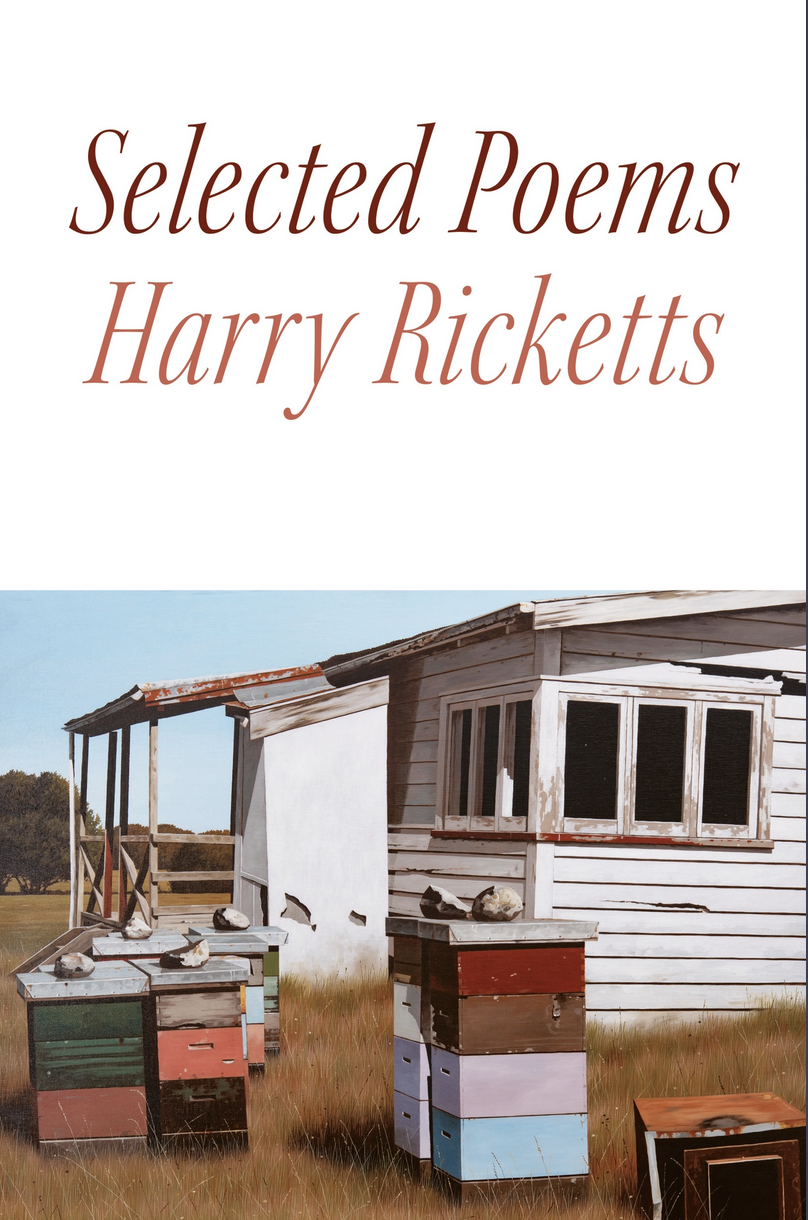
Harry Ricketts teaches English Literature and creative writing at Victoria University of Wellington Te Herenga Waka. His latest collection Selected Poems was published by Victoria University Press, 2021.
Jack Ross‘s most recent poetry collection, The Oceanic Feeling, was published by Salt & Greyboy Press in early 2021. He blogs on the imaginary museum, here[http://mairangibay.blogspot.com/].
Alison Wong is the coeditor of A Clear Dawn: New Asian Voices from Aotearoa New Zealand (AUP, 2021), the first anthology of creative writing by Asian New Zealanders. Alison’s novel, As the Earth Turns Silver (Penguin/Picador, 2009) won the NZ Post Book Award for fiction and her poetry collection Cup (Steele Roberts, 2006) was shortlisted for the Jessie Mackay Award for best first book of poetry. She was a poetry judge at the 2018 Ockham New Zealand Book Awards.
Ten poems about clouds
Twelve poems about ice
Ten poems about dreaming
Eleven poems about the moon
Twelve poems about knitting
Ten poems about water
Twelve poems about faraway
Fourteen poems about walking
Twelve poems about food


 NZ Poetry Shelf