Category Archives: Uncategorized

Poetry Shelf – Spring Season’s poetry fans: Catriona Ferguson picks Janet Frame


Wet Morning


Though earthworms are so cunningly contrived
without an opposing north and south wind
to blow the bones of Yes apart from the flesh of No,
yet in speech they are dumbly overturning,
in morning flood they are always drowned.

This morning they are trapped under the apple tree
by rain as wet as washing-day is wet and dry.
An abject way for the resilient anchorage of trees,
the official précis of woman and man,
the mobile pillbox of history, to die!


©Janet Frame, The Pocket Mirror (New York: George Braziller, 1967) posted with kind permission from Janet Frame Literary Trust.


Note from Catriona: Having been promised non-stop glorious weather in New Zealand I arrived from the chilly northern hemisphere to an unimpressive, soggy spring. I was taken aback by the Auckland rain; I grew up in Scotland and thought that I knew a thing or two about weather but apparently not. Happily, the first gift I received on arrival was a copy of The Pocket Mirror by Janet Frame. Frame’s ‘Wet Morning’ still reminds me of that time.


Catriona Ferguson is Director of the Publisher’s Association of New Zealand, which represents book, educational and digital publishers in New Zealand. She was formerly the Chief Executive of The New Zealand Book Council and has also worked for Creative New Zealand and the British Council.


Janet Frame, one of New Zealand’s most beloved authors, both at home and abroad, wrote in various genres, but one of her chief loves was poetry. She published one collection The Pocket Mirror, but wrote copious poems across the course of  her lifetime. With the prior blessing of Janet, and the help of her literary estate, Bill Manhire edited the posthumous The Goose Bath. The collection went on to win the 2007 New Zealand Book Award for Poetry.


9781869790172.jpg                41ymMCH+owL._SX324_BO1,204,203,200_.jpg


Poetry Shelf Spring Season’s poetry fans: Peter Ireland picks Bill Manhire


Kevin


I don’t know where the dead go, Kevin.

The one far place I know

is inside the heavy radio. If I listen late at night,

there’s that dark, celestial glow,

heaviness of the cave, the hive.


Music. Someone warms his hands at the fire,

breaking off the arms of chairs,

breaking the brute bodies of beds, burning his comfort

surely to keep alive. Soon he can hardly see,

and so, quietly, he listens: then someone lifts him

and it’s some terrible breakfast show.


There are mothers and fathers, Kevin, whom we barely know.

They lift us. Eventually we all shall go

into the dark furniture of the radio.


©Bill Manhire from Lifted (Wellington: Victoria University Press, )


Note from Peter:

Between the earth and sky of my 1960s Ashburton was the radio; a New Zealand-made Ultimate complete with earth and aerial wires. I remain in the dark about what you were to do with the earth, but the aerial provided passable reception when attached to the wire wove base of my bed.

The Ultimate was a budget model, suffering in comparison with those radios with a short-wave function that I coveted, but I should have known better than to paint it white in a moment of teenage idleness.

In a house without books and lacking the wit to utilise the local library the radio was my source of stories, together with those told by my father and relations.   I went to bed early most nights to listen to the serialisation of books like Nevil Shute’s A Town like Alice, or Alistair Mclean’s Ice Station Zebra and South by Java Head and was transported.

How could one not feel addressed by Kevin?

In this wondrous poem, Bill makes some stabbing observations in that last ravishing verse, about mothers and fathers we barely know, lifting us, and dark furniture of the radio as ultimate destination. Whether the mothers and fathers are truly those we don’t know, or those we did and couldn’t know, I am more saddened than heartened at the thought. As destination I wouldn’t book to go there, but I do keep returning to Bill’s poem and the transcendent possibilities of its ‘celestial glow.’


Peter Ireland works at the National Library in Wellington where, among other things, he looks after the Poet Laureate. And still listens to the radio.

Bill Manhire, inaugural New Zealand Poet Laureate, has published award-winning poetry, edited anthologies, written short story collections and founded IIML. Lifted won the Poetry Category in the 2006 Montana New Zealand Book awards.  This year he released a new collection of poems, Some Things to Place in  a Coffin, and in collaboration with musician Norman Meehan, published Tell Me My Name, a book of poem riddles (or riddle poems) set to music.


somet_things_to_place_in_a_coffin__40224-1482273596-220-2202.jpg   tell_me_my_name_front__47436-1482273132-1280-1280.jpg    lifted.jpg


Poetry Shelf Spring Season’s poetry fans: Ros Ali picks Elizabeth Smither


Spring bulbs

Plant them carelessly. The earth straightens them.
Already they have divided and multiply.
They stand straight up like pencils

among last year’s survivors, also thicker
for a year’s disregard, a feeble weeding
an intention to reform as a gardener

knowing nothing will change: the philosophy
is too broad, too many variants
the huge tree, the little viola

one shivering, the other sending shivering down
on a white head near the ground, sheltering
its tremulousness a little, in its shadow.

©Elizabeth Smither, Night Horse (Auckland: Auckland University Press, 2017).


1497223465774.jpg


Note from Ros: Delving into Elizabeth Smither’s special new collection, Night Horse, when it was released in June, the poem ‘Spring bulbs’ was an arresting reminder of the fresh green shoots of random bulbs surprising my winter garden, and the all too familiar failure to reform. Significantly, the poem deftly and tenderly shifts its focus, into a deeper contemplation of the vulnerability, beauty and power of the natural world.

Rosalind Ali is a teacher of English and Writing, and Director of Libraries at St Cuthbert’s College in Epsom. She is a member of the Michael King Writers’ Centre Trust and co-facilitates the Michael King Young Writers’ Programme with poet and teacher, Johanna Emeney.


Elizabeth Smither has written five novels, five collections of short stories and seventeen poetry collections, the most recent of which was The Blue Coat (2013).  She has twice won the major award for New Zealand poetry and was the 2001–2003 Te Mata Poet Laureate. In 2004 she was awarded an honorary DLitt from the University of Auckland for her contribution to literature and was made a Member of the New Zealand Order of Merit. She was given the Prime Minister’s Award for Literary Achievement in 2008. In 2016 she won the Sarah Broom Poetry Prize, New Zealand’s most valuable poetry award, judged by Paul Muldoon, and those poems are included in Night Horse.


Poetry Shelf Spring Season’s poetry fan: Marion Castree picks Louise Wrightson

Wood

(for Dave Russell)


I have lived on this quarter-acre

of clay longer than the trees.


The tī kōuka are the exception

and they are crumbling inside

their long reptilian trunks.


The elderly kowhai still

conjure up their gold nuggets

but the wood is moody; it sulks

and smolders in the fireplace.


It’s the wood from the big gum

that warms and entertains us;

every night is Guy Fawkes,

all flare, crackle and spicy scent.


Twelve cubic metres of Mac

keep us warm in winter;

there are stashes under the trees

among the pop-up seedlings.


The red eye of the fire

transforms us; we soften

under its gaze, swap news,

try to make sense of things.


Our house started as a cottage

that was sawn in half.


The four rooms were trundled

across paddocks, two at a time,

and dumped here on a slope.


The floors were tawa boards,

the walls were lined with scrim

and newspapers from 1886.


I won’t get started on the renos

but one of our many builders

came from Bucharest.


Dave thought he was a con

because his apron was so new

it creaked and his tools

were sharp and oiled (like him).


He muttered pisses of vood,

bluddy selly pisses of vood

because the houses in Romania

are made of brick or concrete.


He didn’t show for work

one day: he just rang and said

vood is too much feedle.


It can be—but when we ripped

up the cork tiles in the kitchen

and found the floor was matai

a friend said wistfully;

I’ve always wanted

to be that sort of person.


I’ve lived here forty years—

Forty years and not yet found 

a cure for being human—

James Keir Baxter wrote that;

he lived next door for a while.


This table I write on is rimu;

it hosts a kauri salad bowl,

steak knives with olive handles

and ironwood salad servers.


At a very posh party I saw

a woman help herself to some

decorative, coloured wood

shavings in a bowl and scatter

them over her chicken salad.


I watched, mesmerized,

while she chewed them up.


I should have told her the truth

but she had eaten them

by the time I remembered—

Better a cruel truth than a

comfortable delusion—

Edward Abbey said that;

I wish he’d lived next door.


Anyway, here is the thing;

when I am fed into the flames

(inside a plain plywood box)

please think of trees and vood;

they mean the world to me—


Breathe out and in.

Keep warm.


©Louise Wrightson Otari Poems & Prose Otari Press, 2014


cv_otari.jpg


Note from Marion: This poem is for Dave Russell and also a love poem to wood and all that it can mean to us in our world, particularly in our home patch. The wood in all it’s manifestations is a pleasure to behold.

I have allowed this poem to idealise home for me. Home of course requires give and take from its people but the presence of wood offers so much unconditionally. This is a magnificent poem, perfect in form and also in parts, very funny.

Marion Castree is a Wellington bookseller, NZ book buyer and staff manger at Unity Books.

Louise Wrightson has an MA with Distinction in Creative Writing from the IIML (The International Institute of Modern Letters) Victoria University, Wellington. She lives and writes near Otari-Wilton’s Bush, a 100-hectare reserve of regenerating forest. Her work has appeared in numerous anthologies and journals.


Louise Wrightson has an MA with Distinction in Creative Writing from the IIML (The International Institute of Modern Letters) Victoria University, Wellington. She lives and writes near Otari-Wilton’s Bush, a 100-hectare reserve of regenerating forest. Her work has appeared in numerous anthologies and journals.

Poetry Shelf Spring Season’s poetry fans: Elizabeth Caffin picks Allen Curnow


A Busy Port

I

My turn to embark. A steep gangplank
expects me. An obedient child,
I follow my father down.

It happens that the sun will have topped
a black hill beside the time-ball tower,
and found the spot of a fresh

tear on Bob Hempstalk’s cheekbone, whose wet
red eyes blink back seaward where he leans
for’ard at the wheel-house glass;

one hand wipes an eye, the other shakes
a half-hitch loose, unlashing the wheel.
A man’s tears, obscene to me

caught looking. Too late now. The time-ball
drops. Quayside voices (not for my ears)
discuss the dead, bells repeat

ding-ding across the wharf. Brightwork traps
the sun in brass when I next look up,
following my father down,

who made the trip himself many years
past. The old rust-bucket gets up steam.
Frequent sailings from where we live.

II

Winched aboard still warm over the for’ard
hatch the morning’s bread hangs by a breath
of its own. It smells of bed.

An enriched air. The urinal under
the wharf drip-feeds, the main steam below
sweats. Darky Adams, deckhand

engineer stoker bangs his firebox
open, slings in a shovelful, slams
the insulted flame back home,

thick acrid riddance topples the way
smoke rolls by its own weight, in an air
that barely lifts, off the stack.

One jump clear of the deck the plank dips
with a short uneasy motion, deep-
sea talk to the paddler’s foot

out of my depth, deeper yet, off the Heads,
our Pillars. Pitching like a beer-can.
I’m hanging on tight, can’t hear

clashes from the stokehole for the wind
yelling, crossed on the wheel he’s yelling
back, ‘Ay, bit of a stiff breeze’.

Eyes that last I saw in tears can read
abstruse characters of waves, on course
between them, our plunging bows.


©Allen Curnow Early Days Yet (Auckland University Press, 1997) published with kind permission from the Curnow Estate.


1448418925728.jpg


Note from Elizabeth: This is one of the wonderful poems recalling moments of his childhood that Allen Curnow wrote in the last years of his life. They move me especially because I too had a Canterbury childhood and can also remember sailing out from Lyttelton through the Heads, ‘our Pillars’. Curnow captures the excited anticipation of this birthday treat with his father but at the same time the child’s perplexed and disturbed glimpses of grief and death. (It seems the skipper’s wife has just died.) The voyage becomes the voyage we all make from birth to death; he ‘follows [his] father down’ not only into the bowels of  ‘the old rust bucket’ but also towards death, ‘who made the trip himself many years/ past’.  The famous time ball drops as it always did at 1pm but also to signal the passing of time, the course of his life and of his father’s. The two perspectives of small boy and elderly poet merge; precise details of sight, smell, sound blend with an almost mythic vision in this great poem.

Terry Sturm’s biography of Allen Curnow, Simply by Sailing in a New Direction, and Curnow’s Collected Poems were published at the end of September.


Elizabeth Caffin was formerly director of Auckland University Press, which
published Allen Curnow’s poetry over many years. She is also the co-editor,
with Terry Sturm, of the recently published Collected Poems of Allen Curnow (Auckland University Press, 2017).

Allen Curnow (1911 – 2001) published numerous poetry collections – from his debut with Valley of Decision (1933) to The Bells of St Babel (2001). He also produced criticism, plays and anthologies that contributed at both national and international levels. Among numerous awards, he received the Commonwealth Prize for Poetry and the Queen’s Gold Medal for Poetry.

1505692801947.jpg    1506300705951.jpg

Poetry Shelf Spring Season’s poetry fans: Dionne Christian picks Bernard Gadd


birches

for the fortieth season
three silver birches
one after the other
suddenly turn
sun’s light green

all evening
between silver birch leaves
firework trails
and in the quiet house
a smell of smoke

luckily birch
bark or leaves
are useless
for writing on
and later regret

ah comrade
Odysseus, you and I
forever stare
through birch branches
at Sirens and seas

will we fell the brich
taking sun
from the house,
the huge tree
old as us?

we keep a big yard:
lawns where infants run,
“forests” of shrubs,
birch trees for cats
and children to climb

each pulse
is a triumph
just when encouragement’s
needed the silver birch
shows green hearts

catching my breath
watch layers of clouds
behind the tree
rush this way or that
or drift in icy calm​

©Bernard Gadd, Ash Moon Anthology, Eds. Alexis Rotella and Denis M Garrison (Baltimore, Maryland: Modern English Tanka Press, 2008.


images.jpeg


Note from Dionne: This is a poem which might not, at first, speak of spring. It talks of being old and melancholy, watching the world pass by through windows, and yet each spring the birch trees come to life and renew your own spirit. these birch trees were outside the study where my father-in-law worked and kept his extensive collection of poetry books. When the house was sold, the first thing the new owners did was to chop them down.


Dionne Christian is the arts and books editor at the New Zealand Herald newspaper. She has worked for 30 years as a journalist on staff and as a contributor for magazines and newspapers; she has a keen interest in literature, history and the arts.

Bernard Gadd wrote poetry, fiction, plays, and was a reviewer. He was also a teacher, editor, anthologist, and publisher known for his pioneering work in the classroom, championing the use of local stories to inspire students.

Poetry Shelf Spring Season’s poetry fans: Lydia Wevers picks Jenny Bornholdt

Then Murray came


It was the morning for

selling the car, but

when I went out to start it,

it wouldn’t go. Greg went

to get petrol on the bike. I

rang the A.A. Then Ray

arrived. I said I’m sorry, he

said don’t worry and looked at

the car and at the wheels and

in the boot and said she’s a lovely

old thing. He tapped the coil

and the fuel pump to try to

make it go. Greg came back

with petrol, but that didn’t help.

Then, because there was nothing else

to do, we went inside and had coffee

and Ray smoked and talked about

going to Outward Bound and sleeping

and losing a stone.


Then Murray came.

He drove up the hill in his yellow

A.A. car, shaking his head. Got out and said

I was sure you were having me on. Last time I was

here you said you were selling it

and the other day I saw you walking

through town and I thought ‘thank god she’s

sold that thing’. He cleaned the carburettor

and laughed. Put more petrol in, replaced a

filter. I said I wasn’t joking, there’s

someone here who wants to buy it. Murray

laughed and said sure. No, no, I said, it’s

true. Ray. See, there he is, up at the

window. Murray looked up and Greg and Ray

waved. How much is he paying for it? asked

Murray. I started to say and he stopped

me. Said no, on second thoughts, don’t tell

me. I don’t want to hear about this.

Ray came down and took over

holding up the bonnet of the car.

What’s your name? he asked Murray.

Murray, said Murray. Well I’m

Ray, this is Greg and this is

Jen. Hello Murray, we said.

And then the car started.


©Jenny Bornholdt from How We Met, Victoria University Press, 1995


met_001__04716.1399604422.jpg


Note from Lydia: I laughed aloud when I first read this poem. Selling a car which won’t start, Greg getting petrol on the bike, Ray smoking and talking about Outward Bound, it is a micronarrative of intense suburban familiarity and yet… also heroic (‘then Murray came’), touching about relationships (‘ I thought thank god she’s sold that thing’ ) and an acute register of local idiom while also suggesting the Pinteresque deeps that lie behind what is said. How much is he paying for it?  asked Murray…no, on second thoughts don’t tell me’.

‘Then Murray came’ has lodged in my head. It shows me the world I live in, but freshly, deeply, newly, wittily. And at the end, after Murray has come (I’d like to know Murray) the car starts.


Lydia Wevers has recently retired as the Director of the Stout Research Centre at Victoria. She is a lifelong reader of New  Zealand writing and a literary historian.


Jenny Bornholdt has published ten books of poems, the most recent of which is Selected Poems. Her collection The Rocky Shore was a made up of six long poems and won the Montana New Zealand Book Award for Poetry in 2009.

She is the co-editor of My Heart Goes Swimming: New Zealand Love Poems and the Oxford Anthology of New Zealand Poetry in English.

Jenny’s poems have appeared on ceramics, on a house, on paintings, in the foyer of a building and in letterpress books alongside drawings and photographs. She has also written two children’s books.


New editor appointed for Landfall journal


Emma Neale.credit Abe Baillie.jpeg

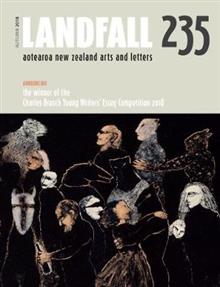
Emma Neale has been appointed as the new editor of Landfall, published by Otago University Press.

Neale, who lives in Dunedin, has published six novels and five poetry collections, and edited several anthologies.


She is a former Robert Burns fellow (2012) and has received numerous awards and grants for her writing including the Janet Frame/NZSA Memorial Prize for Literature (2008), the University of Otago/Sir James Wallace Pah Residency (2014), and she was Philip and Diane Beatson/NZSA Writing Fellow in 2015.

Neale was awarded the Kathleen Grattan Award for 2011 for her poetry collection The Truth Garden, and was a finalist for the Acorn Foundation Fiction Prize at the Ockham New Zealand Book Awards 2017 for her novel Billy Bird.

She has extensive experience as a literary editor and reviewer, and holds a PhD in New Zealand Literature from University College London (UK).

In making the announcement, Otago University Press publisher Rachel Scott says the role of Landfall editor is one that is at the heart of New Zealand arts and literature.

“Otago University Press is pleased to entrust this position to a writer and editor of such distinction and talent.”

Landfall is New Zealand’s foremost and longest-running arts and literary journal. Published biannually, it showcases new fiction and poetry, as well as biographical and critical essays, cultural commentary and visual arts.


Landfall was founded in 1947 by the Dunedin writer, critic and arts patron Charles Brasch.

Retiring editor David Eggleton was editor between 2009 and 2017 (from issues 218 to 234), one of the longest tenures of any Landfall editor. An award-winning poet and critic, Eggleton was recently awarded a Fulbright-Creative New Zealand Pacific Writers’ Residency.

Poetry Shelf – Spring Season’s poetry fans: Lynn Freeman picks Johanna Emeney

Shaken Down


In the hospital corridor,

the one two of my shoes

on hard lino,

then something

sounds broken—


a thermometer—


I have left people here

in rooms

and cabinets.

They’ve gone cold

in others’ hands.


The spine of me

spills

into so many

ball bearings…


Orderlies wheel

prone passengers.

Nurses pass

with busy eyes,


until one pauses

to put on gloves,

coveralls, booties.

She sticks up a sign


[DANGER HAZARDOUS SUBSTANCE]


and calls

for a flashlight,

holds it at an angle

to find beads of me-

rcury lodged in cracks

between wall and floor.


Without a fuss

she gathers masking tape,

an eyedropper,

index cards,

and uses them to

corral what is herdable

into new glass tubing.

Her cards say:

MY MOTHER DIED

WHEN I WAS YOUNG TOO, LOVE


What miracle

to approach

naked breakage,

to chase it unafraid,

gather it up

and talk it back down

to something

resembling normal.


©Johanna Emeney,  Family History, Mākaro Press, 2017


Note from Lynn:

The spine of me

spills

into so many

ball bearings…

This image has stayed with me since I first read Shaken Down. Even before reading the footnotes, I felt this poem must have come from Johanna’s own experience, directly from her heart. Like most people, hospitals for me are places of memory, loss, fear and guilt. This poem, in a few lines, reminds us of how alien hospitals can feel, despite the kindness of the people doing the best to save the people we love.


Lynn Freeman is Presenter of RNZ National’s arts/culture programme Standing Room Only. She is a former NZ Book Awards judge and an avid reader.


Johanna Emeney lives in Auckland where she tutors at Massey University and co-facilitates the Michael King Young Writers Programme. She has been placed third and been commended in the Hippocrates Prize for Poetry and Medicine and shortlisted for the International Montreal Poetry Prize. Her debut collection was entitled, Apple & Tree (2011).


Poetry Shelf Spring Season’s poetry fans: Laurence Fearnley picks Rhian Gallagher


Smartest Buttercup in the World

Mt Cook Lily


You cup rain in your leaves

(sometimes a tramper will drink from you)

when the rocks heat up

you close each underside shutter

so as not to lose a drop

– there’s a whole brain inside your leaves –

opening below, closing above.


Tall as a small tree and what a flower you make:

pearl set off by your intelligent leaves

more brilliant than snow –

you do not melt in the day but hold sway

in the lethal alpine terrain

born of rock dust and the furnace summers

and the deep-minus winters.


They called you a lily but you are

buttercup; they put your portrait on postcards

and stamps and the side of planes –

fame has not gone to your head,

you are an altitude above it all

– the largest buttercup in the world

the smartest buttercup in the world.


©Rhian Gallagher, Freda du Faur: Southern Alps 1909 -1913 (Otakou Press, 2016)


Note from Laurence: Dunedin-based poet Rhian Gallagher was selected for the 2016 Printer in Residence programme run by the University of Otago’s Otakou Press. Rhian produced a suite of poems based on Australian mountaineer Freda du Faur, the first woman to reach the summit of Aoraki/Mount Cook, in December 1910. She was not the first female mountaineer in New Zealand but she was young and single and this created problems because she lacked a husband or chaperone – and therefore spent days and nights alone in the company of her male guides. Freda may have been a ‘lady’ climber but she was also the greatest amateur mountaineer in this country during the summer seasons she spent at Cook, and she became famous.

‘The Smartest Buttercup’ – the opening poem in Rhian’s collection – has also faced problems with identity, representation and fame. Called the Mt Cook Lily by most, this buttercup grows in the alpine regions and has adapted a unique way of surviving the freezing cold and summer heat. Anyone walking up the Hooker Valley in early summer will know the Mount Cook Buttercup: it’s a beautiful flower that stands its ground.

Laurence Fearnley lives in Dunedin. In 2016 she was the recipient of the Janet Frame Memorial Award and the NZSA Auckland Museum Grant and she is currently researching and writing a book of essays and stories based on landscape and scent, divided into top notes, heart notes and base notes. For the past year she has also been co-editing an anthology of New Zealand mountaineering writing with Paul Hersey. This work has been generously funded by the Friends of the Hocken Collections and will include non-fiction, archival material, fiction and poetry and will be published by Otago University Press in 2018.

Rhian Gallagher first collection, Salt Water Creek (Enitharmon Press, 2003), was shortlisted for the Forward Prize for First Collection. Her second collection, Shift, (Auckland University Press 2011; Enitharmon Press, UK, 2012) won the 2012 New Zealand Post Book Award for Poetry. Gallagher’s most recent work Freda: Freda Du Faur, Southern Alps, 1909-1913 was produced in collaboration with printer Sarah M. Smith and printmaker Lynn Taylor (Otakou Press 2016).