
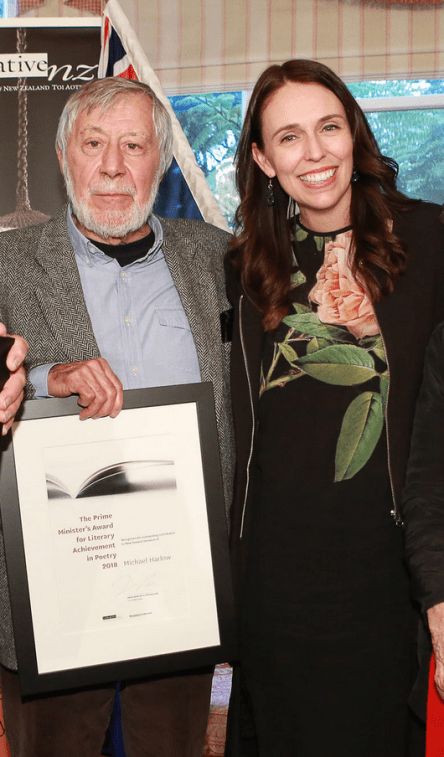
Photo credit: Courtesy of Creative New Zealand. Photographer: Neil Mackenzie
Warm congratulations to Michael Harlow on receiving the Prime Minister’s Award for Literary Achievement in Poetry this year. To celebrate this well-deserved honour, Michael has shared a few poetry memories and thoughts.
Paula: Name a favourite poetry book by another poet that has stuck with you over time.
Michael: Wallace Stevens’ Harmonium. And then I have to include Emily Dickinson’s Selected (especially the one edited by James Reeves, the best commentary on her work in the Introduction).
Paula: A favourite poem that has also endured.
Michael: ‘The Emperor of Ice-Cream’ by Stevens. And it’s only fair to include Eliot’s ‘The Love Song of J. Alfred Prufrock’. They do share first chair in the orchestra.
Paula: A performance or reading by another poet that has had an effect upon you.
Michael: Robert Frost reading on a number of occasions. And I can’t forget a reading by e.e. cummings at the Poetry Y in NYC near the end of his life. I’m not sure why, since he read in a very flat, slightly monotone style. And must include Dylan Thomas, especially his ‘Child’s Christmas in Wales’. And closer to home, the first time I heard Cilla McQueen read: one could hear that ‘Writing [poetry] is the painting of the voice’, in the original ‘L’écriture est la peinture de la voix’ (Voltaire).
Paula: A poetry epiphany in terms of your own writing.
Michael: When I realised, fairly early on in my music studies, that ‘Poetry is when words sing’. At the same time I was trying to impress the girl next door (literally), who played the piano and the flute, and who said she really liked poetry. As it has turned out, ‘to tell love one must write’.
Paula: If you got to select a group of poets (dead or alive say) who could read at a festival with you – who would you pick?
Michael: Oh, and oh, here we go. Sir Thomas Wyatt (I can hear him so musically on the page); Emily Dickinson, if she could ever be enticed; Gertrude Stein; Henry Miller (the prose that is in poetry); Dylan Thomas (because he’s Dylan Thomas); Cilla McQueen; Michele Leggott, because she reads the words and not the ideas (that’s where the music is); Gerard Manley Hopkins, to hear the voice of ‘sprung rhythm’; Elizabeth Smither, such clarity; the late Christopher Middleton, English poet long resident in USA, and one of the foremost translators from the German (we did read together on a few occasions, and I learned a lot from him); Emma Neale (as poet) for the way she does ‘make words sing’, exemplary in the sound-and-sense converse; Joseph Brodsky (in Russian and English); Charles Simic, who always knows how to ‘say’ a poem; Robert Frost, who always ‘says’ his poem; Brian Turner, because you can hear that he has not only ‘thought’ his poems but has lived them…
Paula: A poem of your own that has really sung for you.
Michael: A poem entitled ‘And yes’, a lyric, love poem (the heart poems are the hardest ones to write and they seem somehow to be inevitable sooner or later).
And, yes
Sometimes your touch
love’s homecoming is
Not to put too fine a call
on what heart knows
despite head’s long
success in all silly else;
that is, by ‘all flowers’
and these candles,
love’s invitations
you light up a parcel of dark,
the way your breasts
wear sunlight: the heart
has reasons reason
cannot know. The green
wild call of spring
that waits over the hill,
and here in love’s bed
wants me you to kiss
and all our trulys touch.
And that is the story
about yes: never trust
a god who does not dance. –
©Michael Harlow from Cassandra’s Daughter (Auckland University Press, 2005)
In the praise of the familiar …
like the same worn chair
that’s shaped
my body, the same
smooth cup that soothes
cracked lips, the same
old view through
the same stained window
of birds in the bird-bath
fighting for crumbs. It’s
wonderful knowing
what to expect, the way
night follows day
no matter what. I thrill
to the clatter
of what’s done and dusted
presenting itself
as eternally fresh.
Age
These are the years
of the lone park bench,
of empty harbours
and sunken ships. And yet
there’s a spaciousness
to this abandon
that keeps
insisting
it’s a sort of love. So
why should I fear
such a rich aloneness
when I’ve spent lifetime
creating it for myself?
Now there can only be love poems
Now there can only be
love poems. All
those angry words
will, in the end,
have to let go
and live where only love
can live. Its got
something to do
with passing time
and earth’s deep silences
and your shy smile,
and everything we did
or didn’t do. But now
there can only be
love poems. There’s
no time for anything else.
©Peter Bland, from Voodoo (Steele Roberts, 2018)
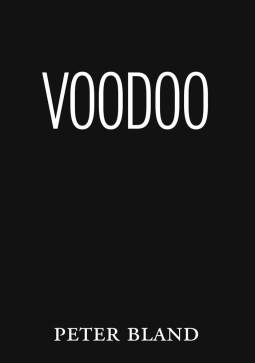
Peter Bland recently sent me his two latest poetry collections from Steele Roberts – Voodoo and The Happy Garden: New & Selected Poems for Children – and told me to use them anyway I liked on my blogs. In his letter, Peter was concerned about the visibility of poetry in bookshops and review space. The NZ Book Council’s 2018 book reading survey suggests we are definitely reading poetry but I wonder if we are buying it to the same degree? Our National Poetry Day suggests we have myriad poetry communities doing all manner of things with an explosion of small presses and journals matching the output of the university presses dedicated to poetry. Yet as much as I try, it is a real challenge keeping a finger on our local poetry pulse. Often a publication escapes my attention because I just don’t know of its existence.
So I am delighted to celebrate the arrival of two books from Peter Bland, one of our poetry elders.
I posted a poem from the children’s collection on Poetry Box (he is one of our best children’s poets) but I was hard pressed to pick just one from Voodoo. I wanted to post the whole book! The poems in the new collection exhibit the species of reflective state that often appears in old age and that produces fertile and thought-provoking poetry. Peter pares everything back to the essential detail, an idea that lingers, a mood that governs an image, a recollection, a pulsating thing. Peter has gifted us numerous much-loved poetry collections – this one is also a real treasure. The world slows down as you read, to the vital moment, the person and place that matters.
Steele Roberts page
Peter Bland talks to Karyn Hay about his two new collections
NZ Book council author page
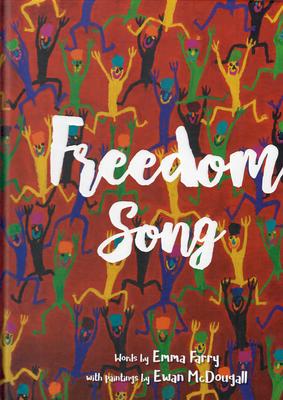
Freedom Song is a large format, sumptuously produced book of poetry where the image carries as much impact as the text. (Be Loved Press, August 2018)
Artist Ewan McDougall has produced bright paintings.
Emma Farry’s poem steps off from personal experience. She had worked on a television documentary that looked at poverty and violence in everyday lives. She has a background in the mind body spirit genre.
Joy Cowley has endorsed the book: ‘There is so much balm for the soul in this book and I hope many people find healing in Freedom Song. It’s a wonderful gift to the world.’
Think of this as a spiritual song to a better world, truth, good, harmony, peace. The paintings are glorious.
Emma Farry web site
He Loved Her Lemonade Scones
They fell in love between the end of the footie season
and the start of shearing. Sheep gazed, bewildered.
The paddocks stretched up into the hills,
mostly scrub and a few old stands of bush.
‘Now listen here,’ he said, and that was it really.
©Bill Manhire
Bill Manhire’s most recent poetry collection is Some Things to Place in a Coffin. His new project with Norman Meehan, Bifröst, is now in the studio.
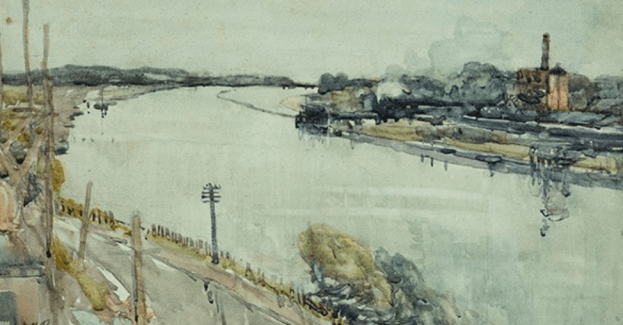
‘I’m reading at the Sarjeant this Sunday, and talking about connections between artworks in the collection and the poems in my book. This event is in support of the Sarjeant redevelopment. If you’re nearby, please come along. We are so lucky to have such an amazing gallery in Whanganui. Also, we have a rich history of visual art here, and a lot of people have made work about the river. I’m quite excited about being able to show people a glimpse of what’s in the collection. I got to visit the collection store in the process of putting this event together and it’s mindblowing. Thanks Jaki, Jennifer, Raewyne and the Sarjeant team for bringing this together.’ Airini Beautrais


Poemlines run from Hawke’s Bay across mountain, river and sea to the Poets Laureate and their tokotoko. In October, they will lead the poets back to the Bay, to Te Mata, to Matahiwi and the Blyth Auditorium.
A not-to-be missed highlight of the Festival, this unique event will celebrate the joy of poetry with eight of the eleven Poets Laureate: Bill Manhire, Rob Tuwhare for Hone Tuwhare, Elizabeth Smither, Michele Leggott, Cilla McQueen, Ian Wedde, C.K. Stead and Selina Tusitala Marsh.
Hawke’s Bay Readers & Writers Festival congratulates Elizabeth Smither on winning the poetry category of the 2018 Ockham New Zealand Book Awards. He toi whakairo, ka ihiihi, ka wehiwehi, ka aweawe te ao katoa. Artistic excellence makes the world sit up in wonder.
Chair: Marty Smith

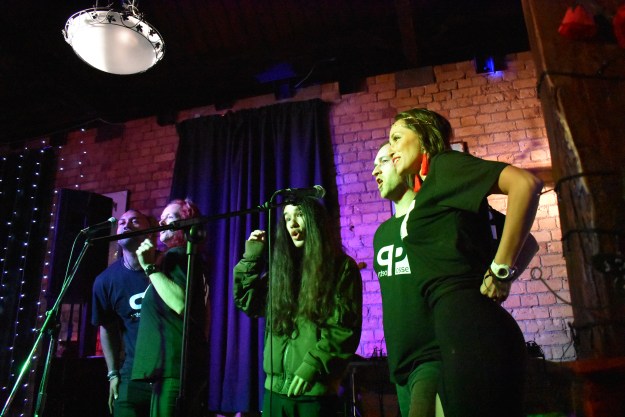
Poetry Posse: Northland’s only performance poetry troupe.
Michael Botur has curated a suite of poems from Northland/ Te Tai Tokerau poets to showcase on Poetry Shelf. There are four here – but there easily could have been ten representing a vibrant and vital poetry scene. I grew up in Northland – its soil is in my blood and bones and every time I hit the top of the Brynderwyn Range I feel home and at home. This is where I first started writing poems, where James K Baxter stood on the Kamo High School stage a week or so before he died, where I discovered Hone Tuwhare in the school library. To get a poetry line to what is happening now, so many decades later, gave me goosebumps. Kia ora.
Two poems from Vivian Thonger
Gardening with grandmother
for Elizabeth Bishop
Child, stove in
grandmother
in bed, secretly:
stove in her bed,
her teacup, her almanac. Bed
the tears, black the stove,
brown the bread.
Man the kettle,
iron the buttons. Time
the clever dark tea,
marvel with crayons
on the pathway.
House old jokes,
fall between
winding moons. Dance
like rain on another
hot old, failing old roof. Carefully
open half-rigid
grandmother, string
her up, birdlike.
Plant her out
in chilly September.
©Vivian Thonger
Stop hey what’s that sound? (Haruru sonnet)
An engine throbs over hills to the north.
I expect the farmer in his 4×4
to crest in silhouette, cattle cantering ahead,
dog barks and bull bellows trailing
the procession of cutesy cutouts.
The hill is still. The engine revs. Perhaps
a ‘copter’s hurtling to the beach,
to hoist aboard a battered kayaker
coughed up onshore, his empty craft bobbing
off among the rocks, hijacked by dolphins.
Wrong. A plane emerges, shades of WW2,
twin vapour plumes expand and blanket
gorseflower culverts full of yellow cheer.
Roundup, not romance. I’m new here.
©Vivian Thonger
Vivian Thonger is a Kerikeri poet, writer, performer, actor and musician with degrees in psychology and creative writing. Member of Northland’s Poetry Posse; regular participant at Whangarei’s monthly Dirty Word event. Poetry published in Offshoots 13+14, Fast Fibres 2,3,4+5. See here.
Two poems from Piet Nieuwland
Kahukura
Walking to the sea to breathe
We go at dusk, dark
Waves coloured copper, emerald
Take refuge in the night, your voice
Between the mirror and the mirror
Stars taught me to write
A new semantic in light playing on the warp
And abra cloud silk wind weft
Its dialect, weightless as
Oceanic neutrinos and spring jasmines on
A path to nowhere that overflows
With kisses and bejewelled aureoles
Laughing a luminescent charm
Those kaleidoscope eyes, chocolate
In a garden of pomegranate and orange
Tulips and amaranth, blood
In the clay of our flesh
© Piet Nieuwland
An Indium Morning
Between Te Whara and Paepae o Tū
Pohutukawa elbows knotted
With an asymptotic curve of fine holocene sands
Taonga islands drifting through a sifting, shifting lens
Where we landed,
Cloud caverns of frontal activity loom
A spring tide in spring pulls the dunes down
Ice plants melt in the white sun
In a season of fires
A red kete, red tee shirt
Ebony bikini, blushing cheeks
Red billed gull quartet
He korero[1], plays the ivory surf
The fertile ocean carved whakairo
Into literatures of foam and air
A pizzicato for children
Ngaruaroha, her cello, violins
Trembling like the toiling clouds
Haere mai te kara
Ka nuku nuku
Ka neke neke
© Piet Nieuwland
Piet Nieuwland has poems and flash fiction appear in numerous print and online journals published in New Zealand, Australia, United States of America, and Canada. He is a performance poet, book reviewer, edits Fast Fibres Poetry and lives near Whangarei.
Two poems from Vaughan Gunson
Right now
This won’t be news to you,
but it’s always worth noting, scribbling on a tablet
those times when you’re snug
with the world, like an Avocado stone
inside the pale green oily flesh of the fruit
and I don’t know
whether to extend this idea into a neat
or twisted metaphor about life
and the tree with an egg-shaped fruit
with skin like an Armadillo’s shell, even though
I’ve never touched an Armadillo, being
just the first thing that came to me, and maybe
I’m starting at the beginning of the alphabet
—poems
are often just the start of something,
like that philosophical treatise you’re confident
will be the last word on Schopenhauer.
That’s what it feels like when you begin writing,
thinking you have all the answers.
Or maybe it’s like having the very best sex
after the very best conversation
when you ascend into each other
and then it’s over,
that philosophical treatise didn’t even last a page,
and no comparison was made
between loving life right now
and a fruit or animal starting with the letter ‘B’.
© Vaughan Gunson
Rough
Detouring, if on hunch, taken perhaps by a message imbedded on a faded sign,
which invites you, in an old fashioned way,
to leave the criss-crossed tourist route
to sail along a wide street, used once
by carriages and proper women in white
embroidered dresses, and barefooted kids
in collars; a temporary stretch of bitumen
and stone, before the mud and puddles
return, that our quiet ancestors knew
in their distant photos, who looked down
more often to the unevenness of ground
we’ve strived to flatten. Look both ways
at the easy floating trees and timbered walls―
you won’t see our rough desires and coarse
pleasures; the blistering from all we polish.
© Vaughan Gunson
Vaughan Gunson lives in Hikurangi, north of Whangarei. He’s an occasional writer of poems and a regular columnist on light and heavy matters for the Northern Advocate newspaper. A small selection of poems and columns can be found here.
Two poems from Michael Botur
Don’t Look Down
Don’t look down, maintain your tightrope traipse
Ignore that you’re a blob on a rock in space
And a slim Darwinian coinflip made you exist in the first place.
This race of ruthless apes frustrates, so keep the faith.
Don’t look down when you can’t keep chill about the daycare and doctor’s bills
When all your friends seem to be on Bondi Beach holidays, eating Instragram canapes
When prices rise like a flooding tide and your income ain’t gone up since two thousand five
A millennial, with fuck-all, everything seems to scream without a home loan for property that’s overpriced you won’t survive.
Don’t look down and doubt your little miracles. They’ll light your day with rainbow fingerpaint
Then go from gleeful squeals to meningococcal in the brain whether or not you pray
But don’t conclude the earth’s a black and unforgiving place
With earthquakes and fates undeserved; it worsens if you look down and lose faith.
Some days nice guys finish thousandth place while snakes get to golden parachute away
Other days you wake and the news is nothing but nooses, another Robin Williams gone,
another Bourdain, Cornell or Chester Bennington.
Water and air are free but there’s no land left to live on.
Survive your tightrope life. Don’t let malice upset your balance.
Leave imposter syndrome at home. Pour your hearts out on Wednesdays to strangers on a stage.
Recycle. Exercise. Admire the skyline. Be grateful for rain.
Don’t let WINZ get under your skin. Don’t scream at redneck Letters to the Editor in vain
Balance pride in the left hand, regrets on the right
Good times behind, and eyes on the other side.
© Michael Botur
Somebody To Smoke With
I sat the Friday night in a Subaru
in a car park with male ape mates in oversized
XL white
t-shirts sucking on pipes
Just for somebody to smoke with
Did three weeks sweaty sunburned work
pushing a post hole borer in the dirt
with an ex-con who shared his pipe,
wet with spit from our lips.
At knock-off we said Fuck it, wiped ourselves down
with a paint-stiffened towel,
shared a bucket of crunchy KFC motivated by munchies,
washed it down with cans of bourbon cola Cody’s
pleased to have a bro to share a cone and a Family Feast. We
grown men make out like we are staunch, strong, chill, unafraid
like we ain’t at pains to get laid and praised
cause we could get hit by a bus any day
Men in their 30s, 40s, 50s. Men in matching patches, hoodies,
Men in rugby stubbies. Men in cycle-lycra.
Men having mid-life crises.
Men ram-raiding Unichem pharmacies
at 4.15 on a Thursday morning, squealing tyres and guilty pleas
And getting bulldogs and BPs tattooed on our cheeks
Consigning us to a life we can’t come back from,
like tryina climb a hydroslide
All cause we wanted somebody to be a bloke with
To feel less alone, somebody to smoke with.
© Michael Botur
Michael Botur, born 1984, is of Polish and British ancestry, hails from Christchurch and lives in Whangarei. He has published one novel, five short story collections and tonnes of journalism.


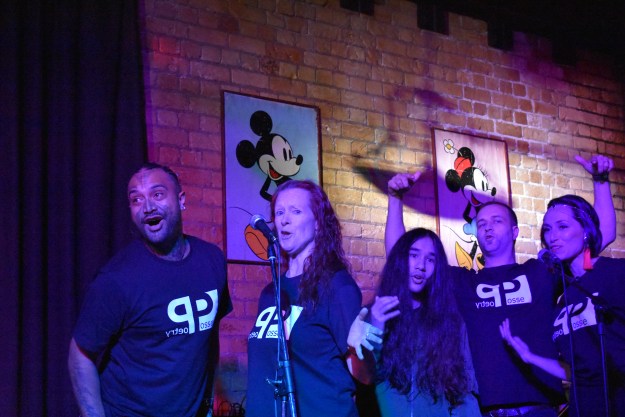

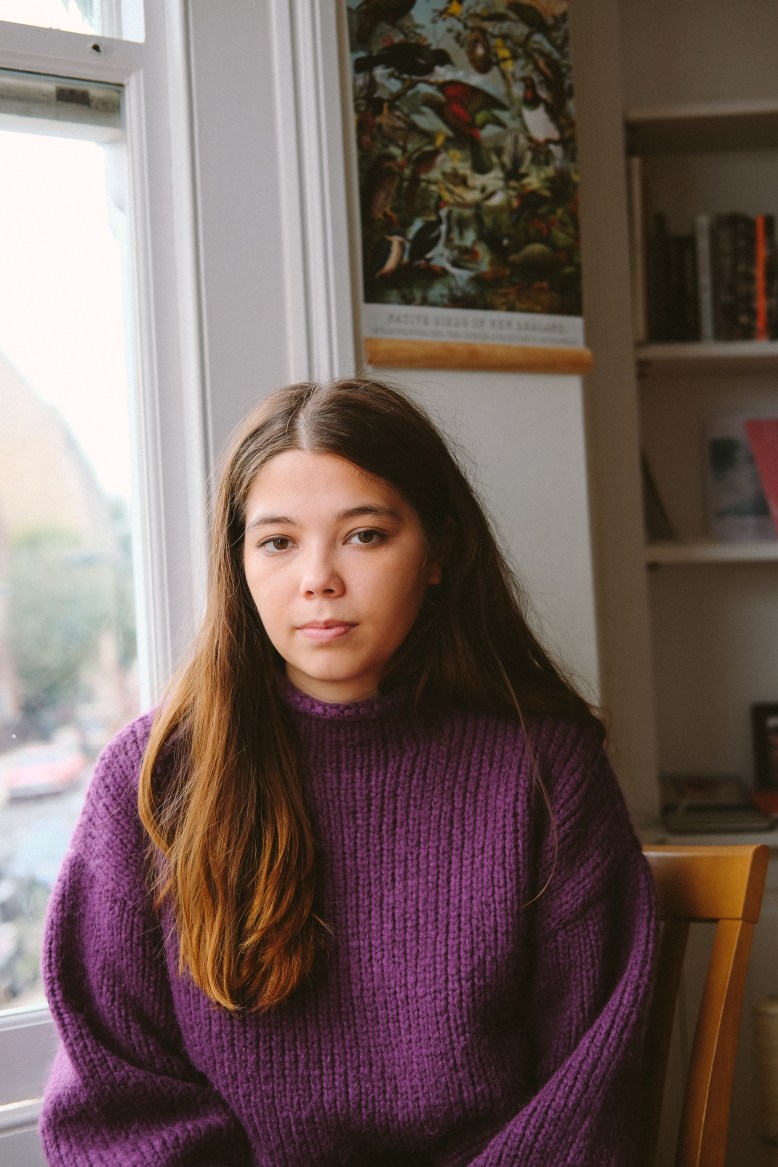
Photo credit: Sophie Davidson
‘Mid-Autumn Moon Festival 2016’ was originally published in Starling 5.
Nina Powles is from Wellington and currently lives in London. She is the author of Luminescent (Seraph Press, 2017) and is poetry editor at The Shanghai Literary Review. Her poetry pamphlet Field Notes on a Downpour is forthcoming from If A Leaf Falls Press in late 2018. Nina is on the shortlist for the the inaugural Women Poets’ Prize (UK).
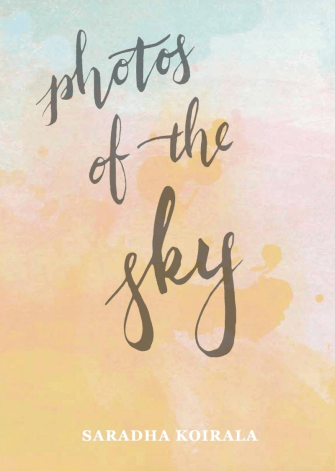
Saradha Koirala and The Cuba Press warmly invite you to celebrate the launch of Photos of the Sky. Launched by the wonderful Tim Jones.

 NZ Poetry Shelf