Category Archives: Uncategorized

Poetry Shelf Classic Poem: Sugar Magnolia Wilson picks Hera Lindsay Bird’s ‘ Kiss me harder, Abraham Lincoln’


Kiss me harder, Abraham Lincoln


In poems you can do anything you like. You can start fires, or break the law. You can break the law by starting fires. You can set fire to the house of your worst enemy. In poetry, you can have worst enemies. In real life, I’m still working on it. In terms of candidates there’s that dickhead at the salad bar, not to mention the girl who used to ring me up and scream at me, but I’ve got a new phone number now and as much as I hate the salad guy, I’d like to think that I’m a contentious citizen who wouldn’t intentionally try to burn his house down. Besides, I don’t have his address. But I’m totally onto you, salad man! In poems you can make out with whoever you like, even if they died forever ago. In poems you can say, ‘Oh Abraham Lincoln, kiss me harder.’ I have a friend who’s angry at poetry because he says it makes life more beautiful than it really is, which is a dumb reason to hate anything. Hating poetry because it makes life more beautiful is like hating ketchup on your burger because it makes your burger more delicious than it really is, or hating the swans on the lake, for making the lake seem more peaceful. Fuck off swans! How am I supposed to make an accurate emotional assessment of the lake with you gliding around like a toilet paper commercial? Sometimes all I want is a poem that feels like real life. Something directionless and frightened, without any literary subtext, or clever double meanings. Clever double meanings are like those magic eye puzzle. You can get really good at seeing the hidden picture, but in the end you’re still the asshole sitting in the library at lunchtime saying ‘I can’t believe you guys can’t see the dolphins,’ to no-one, because your friends all left hours ago. Sometimes all I want is the poet to come clean and say, ‘I have no idea how to live.’ Sometimes I just want to list some things that I like. That song ‘In the Hall of the Mountain King.’ The names of lipsticks. Poached eggs on a stack of potato cakes. Houses. Flowers. Swamps and the monsters who live in them.  The internet.


Hera Lindsey Bird

The poem originally appeared in Sport 40, 2012 in a slightly different version.


Sugar Magnolia Wilson on ‘Kiss me harder, Abraham Lincoln’

I had a dream a few weeks ago that I asked Hera why she’d changed the line “Fuck off swans! How am I supposed to make an accurate emotional assessment of the lake with you gliding around all serene?” to “Fuck off swans! How am I supposed to make an accurate emotional assessment of the lake with you gliding around like a toilet paper commercial”. The first iteration comes from an issue of Sport back yonky-donks ago, I think 2011 or 2012. So, I assume it was a poem written in her MA year at the IIML. It was the first time I’d read anything by Hera, and I think the first time I’d really read anything by a young New Zealand poet that really spoke to me. In fact, I’m not sure I even knew that people under 300 could have poems published in New Zealand.

I think the toilet paper version is what’s in her book, and I feel like that line got snazzed up, but, I wish it hadn’t been snazzed. I love how not loud this poem is, how it’s almost bored. I read this line in a book once that said all beautiful girls are bored. And I think this is the poem version of that, a beautiful, bored girl. I love how it’s not trying to prove anything big or deep, but at the same time it stands up and says ‘you fucking know what? Poetry can be whatever the hell you want it to be” – it hits right at the heart of what old white dudes have been telling us poetry shouldn’t be since forever. But I’m totally onto you, poetry book guy! I think I took this poem too literally. I literally wrote a poem for my MA manuscript which was JUST a list of things I liked – my friend Ada, miso soup, small glittery things in dusty corners. No one in my class liked it. But I did and it was a confusing time.

I also love that this poem is like Dorian Gray, and Keats is Dead so Fuck Me From Behind is like his bloated painting in the attic. Or maybe this poem is like Charlie Sheen in Two and a Half Men, and Keats is Dead is like his coked-out body lying on a velvet bed with a neon orange party hat on? See? It’s way harder than she makes it seem.

Anyway. It’s one of my all-time favourite classic NZ poems. It’s changed the way I write and I am so grateful to have encountered it when I did. I also love the poem Hooting, but Paula says I’m only allowed to write about one (she didn’t, I’m just too lazy). But read it here


Sugar Magnolia Wilson is from a valley called Fern Flat in the Far North of New Zealand. She completed her MA in creative writing at the International Institute of Modern Letters at Victoria University of Wellington in 2012. Her work has been published in literary journals such as Turbine, Shenandoah, Cordite, Landfall and Sport. She is co-editing an anthology of the new generation of New Zealand poets with Hannah Mettner for AUP. Auckland University Press published her debut collection Because a Woman’s Heart Is Like a Needle at the Bottom of the Ocean earlier this year.


Hera Lindsay Bird is a poet from Wellington. Her debut collection Hera Lindsay Bird was published with Victoria University Press in 2016, and Penguin UK in 2017, and a Laureate’s Choice Pamphlet ‘Pamper Me to Hell & Back’ came out in 2018. She is an Arts Foundation new generation recipient, winner of the 2011 Adam Prize, the 2017 Jessie McKay Prize for Best First Book, and the 2017 Sarah Broom Prize.


Poetry Shelf Monday Poem: Jess Fiebig’s ‘Summer’


Summer 2016


that summer was heavy, thick

I felt myself weighted,

struggling to move through air

it was underwater with open eyes

breathless and pressurised

seeing everything through

the blur and sting

of sea water


my new breasts were tight and hard in my chest,

and I had to sleep on my back for the first time;

my body was an unfamiliar collection of bones,

brittle as shells, and freshly bleached hair.


it was an achingly empty summer,

it was bitten, itchy skin,

damp thighs rubbing on denim,

it was bare chested and freckled,

salt licking new scars


it was the season of lemons

softening in the bowl,

damp fur, and fingernails bitter and green

from tearing and linking

daisy stems


it was clotted black blood, sprinklers,

strawberries and razorblades,

it was warm, long nights alone


it was the summer of the 6 am hate poem,

the first summer the soles of my feet

grew thick and hard

and as I watched shadows stretch

and felt cool wind come off the water,

it was the summer

I fell in love with

myself.


Jess Fiebig


Jess Fiebig is a nationally-recognised poet, educator and performer living in Otautahi/Christchurch, New Zealand. Her writing has featured in journals such as Aotearotica, Catalyst, Landfall, takahē, Turbine, Poetry New Zealand Yearbook and Best New Zealand Poems 2018. Jess was commended in the 2017 and 2018 New Zealand Poetry Society International Poetry Competitions and was highly commended in 2019 Sarah Broom Poetry Prize. Her poetry explores themes such as madness, sex, love, family violence, friendship, drugs and dislocation. Jess teaches creative writing and is a tutor at the Christchurch School for Young Writers.  Jess’s website.


Poetry Shelf noticeboard: Victoria University announces second Emerging Pasifika Writer’s Residency

Victoria University of Wellington’s International Institute of Modern Letters (IIML) is delighted to announce the second Emerging Pasifika Writer’s Residency for 2020.

2 August 2019

The Residency, which includes a writing room and a stipend of $15,000, will run for three months during the first half of 2020. Applications are open now.

Current Resident, playwright Leki Jackson-Bourke says, “Where I come from, writing isn’t really a ‘thing’. Being here at the IIML as the Inaugural Emerging Pasifika Writer in Residence dispels that myth. It has been such a luxury to have extra time, space and resource—and being away from my community has given me time to reflect on how important it is for us to champion and write our own stories. We must tell our truth, before someone else does.”

The Residency is unique in offering the chance to work in a stimulating, established community of writers, with a mentor from the Pasifika arts community. Leki’s mentor, renowned playwright Victor Rodger says, “As well as close involvement with his own writing, the mentorship has given Leki the chance to encounter works which have challenged, provoked and expanded his frame of reference and which, I believe, will help his development as a writer.”


details here


Poetry Shelf audio spot: Tracey Slaughter reads ‘She is currently living’


Screen Shot 2019-07-28 at 11.50.07 AM


‘She is currently living’ appears in Conventional Weapons, Victoria University Press, 2019


Conventional Weapons is Tracey’s first full poetry collection but she has been publishing poetry for over two decades. She was the featured poet in Poetry NZ 25 (2002) and has published Her body rises: stories & poems (2005). She has received multiple awards including the international Bridport Prize in 2014, a 2007 New Zealand Book Month Award, and Katherine Mansfield Awards in 2004 and 2001. She also won the 2015 Landfall Essay Competition, and was the recipient of the 2010 Louis Johnson New Writers Bursary.


Poetry Shelf reviews Conventional Weapons.

Victoria University Press author page


Poetry Shelf in conversation with Amy Leigh Wicks

c2c29528-aa4b-47c3-8776-b016ad9931d9.jpg


Who doesn’t hope

for a fishing net

to come heavy

from the water with

an old locked box

caught in the net?


from ‘Loretta’


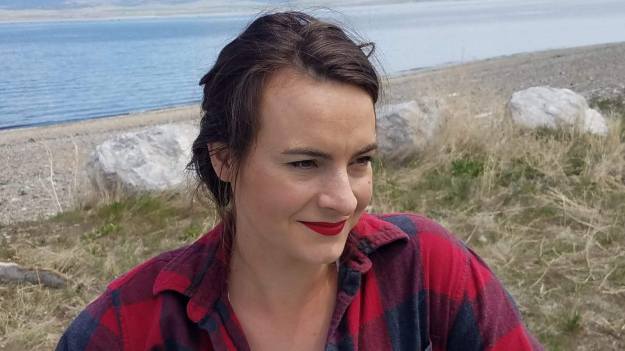
Amy Leigh Wicks holds a PhD from the International Institute of Modern Letters at Victoria University. Originally from New York, her debut collection Orange Juice and Rooftops appeared in 2009 while her poetry has also appeared on The Best American Poetry blog and in several local journals. She lives in Kaikōura with her husband.

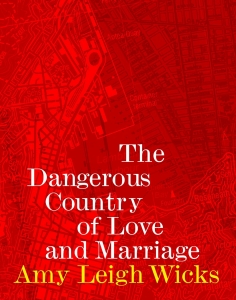
Amy Leigh’s new collection The Dangerous Country of Love and Marriage is an intricate weave of themes, motifs, forms and sound effects that offers much for the reader. Strangeness and discomfort sit alongside beauty and soul searching as a woman writes between her birthplace and her new home. The enigmatic gaps in the narration are counterbalanced by sumptuous detail, exquisite images, tiny admissions; the melodic lines build both the music of place and the music of character. As much as it is a physical world marked by mountains, oceans, anchors and salt, it is an abstract world marked by conversations with God. It is a collection that has stuck with me.


1560378285137


Amy Leigh Wicks, The Dangerous Country of Love and Marriage, Auckland University Press, 2019


Paula:  When did you first start reading and writing poetry?

Amy Leigh:  I remember coming across a box in my grandparent’s attic when I was about seven.  The box was filled with mostly handwritten poems by my Grandma.  They mostly rhymed, and her writing was in cursive, so I couldn’t make out all the words. I felt I had found a treasure box.  Later, I locked myself in Grandpa’s office and emerged however many hours later with a poem I’d written that I gave to Grandma.  She cried a little when I read it aloud to her, and took me out for an ice-cream sundae, which was as good as winning the lottery as far as I was concerned.


Paula: Oh what a wonderful memory. Were there any poetry turning points and/or epiphanies between that young girl writing and your recent collection?

Amy Leigh: A whole sky full of stars map the journey between little Amy Leigh writing and this collection.  The epiphanies and turning points are bright pinpricks against a darker subconscious, and the constellations that I see, clear as Orion, are comprised of poems, lectures, exhibitions, drawings on napkins.  Reading Nikki Giovanni’s poem Ego Tripping in high school alongside Shakespeare’s sonnets; sitting in Lorene Taurerewa’s Brooklyn studio as she described walking to school beside the barefoot James K. Baxter in Whanganui; working on sestinas and villanelles with locals in Kaikōura after the 7.8 earthquake: these are some of the influences that shape the way I read and the way I write.


The house is quiet and then the sound of bees

gather at my head. Will you let me be swallowed

by this? Another wave, another scalloped

rim of water on top of quiet water.


from ‘Impasse’


Paula: Your new collection weaves multiple themes and poetic effects. I view it as both a long narrative poem and a sequence of intensely connected pieces. What do you like your poetry to do?

Amy Leigh: When selecting poems for this collection, I wanted the reader to be able to let the book fall open and read a single poem without feeling they’d missed something vital. I also wanted a cover-to-cover reading to feel like one unfolding narrative that moved forward in time and backwards through memory in order to recover things that may have been lost along the way.


When the roof is pried from

the house and I am a sardine

(blinkless before you)


what will you say to me?

I see your hills, and yes,

every night a different

sun leaves slamming the door,

rattling the handle behind it.


from ‘Psalm III’


Paula: At times it felt like poetry as prayer. Did it ever feel like that to you?

Amy Leigh: Very much.  The sestinas offer a sort of liturgical reprieve, and Epiphany deals directly with the uncertainty and catharsis of prayer—‘it was just me, alone with the bruise/ of a bad decade, finally asking toward the sky/ for a little help, shuddering ugly tears until/ I was dry in the silence of an answer I’m still/learning to understand.’


expatriate


it is like heaven

here and every

where else too

but some sad

-ness hangs in

the air and I do

not know if I

carried it or of

it carries me


Paula: I am drawn to the way the collection layers the strange, unknowable and the unsettling within the context of a marriage and multiple homes. Does it make a difference where you are when you write?

Amy Leigh: Yes, I believe it does.  I’ll write where I am, regardless of the environment, but Kapiti Island at sunset in Plimmerton, wooden tables cluttered with tea cups at writing group in Kaikōura—these things affect my writing the way altitude, rainfall, and sunlight affect the flavour profile of a coffee bean.


Where else is there to go once I’ve got

paper, a new pencil with a green eraser

and half a peanut butter and jam sandwich? If

I could erase one year of my life

what would fill the hole? (..)


from ‘August’


Paula: How much of yourself do you let into the sequence and how much do you hold at arm’s length? In some ways I see the poems as both losing and finding things (including self).

Amy Leigh: While the poems in this collection are based on happenings in my life, the only confessional elements of the work that I’ve retained, are those elements that feel necessary to the advance the poem, or the collection. I have kept and discarded facts intentionally while putting this book together, in an attempt to perform the artist’s task as Louise Gluck describes, which ‘involves the transformation of the actual to the true.’


Paula: I have many favourites (‘Psalm II’, ‘Psalm III’, ‘Water Song’, Psalm X’, ‘Log No. 4’) but which poem particularly resonates for you? In either subject matter or resolution?

Amy Leigh: It depends on the day for me. Usually my favourite poem is the one I’ve just finished writing, until a bit of time goes by and I can look at it more objectively and less like an offspring of mine that needs nurturing. At the moment I’m fond of ‘Remnant’.  Just a little poem, but it makes me smile to be sharing a personal revelation that I find a little embarrassing in such a public way.


Remnant


Once I said, I want

to be a lawyer, a doctor,

and a ballerina—


I woke twenty years later

writing these poems.


Paula: Are there any poetry books that you have read in the past year or so that have particularly mattered?

Amy Leigh:  I’m reading Sugar Magnolia Wilson’s Because a Woman’s Heart is Like a Needle at the Bottom of the Ocean at the moment.  I met her at a reading in Wellington recently, and I felt as if someone had filled the room up with champagne while she read her work and we were all floating in it. Her voice and her words had this incredibly soft effervescent quality. Then when I held the book in my hands and let it fall open (which is what I like to do first before I begin reading a collection from start to finish) I opened to Full moon celebrations and I thought, this is really something.  To feel such resonance and joy at reading a stranger’s words is an incredible thing.


Paula: What do you love to do when you are not writing?

Amy Leigh: I love to dance and cook, and paint, although not usually at the same time. I also love to curl up with a stack of books on a rainy day, but if I’m not careful, before long I end picking up my pen and notebook.


Auckland University Press page


Poetry Shelf noticeboard: Stephanie Burt in conversation with Valerie Duff-Strautmann

Listen here


STEPHANIE BURT IS MANY things: poetry co-editor at The Nation, transgender activist, Guggenheim Fellowship recipient, the author of many books on literary criticism, which include, but aren’t limited to, Close Calls with Nonsense and The Poem Is You. Burt has a new book out called Don’t Read Poetry — not the title you might expect from someone (poet, literary critic, Harvard professor) who has devoted her life’s work to reading and writing poetry and reading and writing about poetry. The book is for those who are already reading poetry as well as for potential readers of the genre, but she is particularly interested in the latter — those who have avoided poetry or decided they hate it after being instructed to like a particular kind of poem. Burt is interested in having readers come to poems as “fan favorites” rather than as works in a professional hierarchy. Don’t Read Poetry might as easily have been called Read Many Poems, since Burt gives her readers a broad selection, helping them find a poetic niche or find their way back to poetry, perhaps after a long estrangement.

Don’t Read Poetry is divided into basic categories (Feelings, Characters, Forms, Difficulty, Wisdom, Community) so the reader can make sense of various poems’ raison d’être; ultimately, the book flows like a mixtape with the categories as organizing principles, reliant on each poem’s authenticity and voice. Burt’s intentions are clear from her introductory comments: “This book […] gives not just ways to read poems but reasons to read them, and ways to connect the poets and poems of the past, from Sappho and Li Bai to Wordsworth to some poems being written right now.”

We discussed Don’t Read Poetry over coffee in Belmont, Massachusetts, where we both live.

Poetry Shelf noitceboard: Lani Wendt Young’s NZBC talk

Screen Shot 2019-08-06 at 8.42.47 AM.png
Beloved Samoan author Lani Wendt Young presents an evocative talk on reading and writing in the digital age. Brought to you by NZBC.

About this Event

Join us for Stories from the Wild: Reading and Writing in the Digital Age, a brave and personal talk on the growth of Pasifika literature and how digital technologies are disrupting traditional publishing and offering new opportunities for both readers and writers.

Held in Wellington High School’s character auditorium, Stories from the Wild: Reading and Writing in the Digital Age will be delivered with Lani Wendt Young’s distinctive honesty, humour and passion.

Transport to the event is available via the number 3 bus, which stops outside the school on Taranaki Street. Follow signs from Taranaki street to the auditorium.

Parking is available in the both the Massey University and Wellington High School car parks – entrances on Taranaki street.

The auditorium has wheelchair access and gender-neutral bathrooms.

We look forward to seeing you there!

“To delve into what it means to be a reader in the digital age, we must first talk about what it was like before.