Category Archives: NZ poetry interview

Poetry Shelf interviews Sue Wootton: ‘interweaving and texture in a poem is an effect I love’

Sue_Wootton-092012-300dpi.jpg

The Yield, Sue Wootton, Otago University Press, 2017

Sue Wootton’s latest collection of poetry is a sumptuous read, a read that sparks in new directions while clearly in debt to everything she has written to date. The cover is so very inviting. I have been a fan of Sue’s poetry for a long time and was delighted she agreed to share thoughts on poetry and the new book.

Sue Wootton lives in Dunedin, where she is the selecting editor for the Otago Daily Times Weekend Poem column and co-editor of the Health Humanities blog Corpus: Conversations about Medicine and Life. She is a PhD candidate at the University of Otago, researching connections between creative practice, literature, and medicine. Sue’s debut novel, Strip (Mākaro Press, 2016), was longlisted for the fiction prize of the 2017 Ockham NZ Book Awards. The Yield (Otago University Press, 2017) is her fifth collection of poetry. Sue’s website. Find Corpus here.


The+Yield.jpg  The+Yield.jpg


and you wonder if unspooling is, will ever be, your forte,

a question you will never answer since it never ends,

this casting your line on gale or water

from ‘Unspooling’


PG: Let’s begin with the world of books. What books affected when you were young and what books have affected you as an adult poet?

SW: My mother used to take us to the Whanganui library every Saturday morning to collect an armful of books for the week, and we were lucky in having a family friend who used to give books—lovely hardback illustrated books—for birthday and Christmas presents. I still have the one I received from her on my sixth birthday: Candy and the Rocking Horse by Gwyneth Mamlok. Oh Candy, how I loved your red hat, your bright pink tights, your long boots, and the way you and your dog Peppermint did everything together, just the two of you! Other beloved books included Hubert’s Hair-Raising Adventure by Bill Peat, Patrick by Quentin Blake and Horton Hatches the Egg by Dr Seuss. A little later I fell big time for Roald Dahl with Charlie and the Chocolate Factory. Ian Serraillier’s The Silver Sword made a huge impression on me, and there was a novel set in the crypt of Winchester cathedral about which I remember nothing except the sinister feelings it evoked and the grip it had on me. By then I was hooked on books that stirred my imagination, especially by describing other possible worlds. I chewed through the Narnia series and Lord of the Rings, and in my teens went through a major science fiction phase, devouring books by authors like Ursula K. Le Guin and Isaac Asimov. Poetry hit me as a force in my final year of secondary school, when we were given poems by Dylan Thomas. We studied King Lear that year, and I remember being well and truly woken up when I heard Richard Burton bring those words to life. And I discovered e e cummings around the same time, and was amazed to see what can happen when syntax and word are unpacked and put back together askew, strange, and suddenly with so much more verve than “ordinary” language.

As an adult, I would credit Harmonium by Wallace Stevens for jolting me forward in terms of realising what the ‘blue guitar’ of poetry can do: “Things as they are / are changed upon the blue guitar”; they become “A tune beyond us, yet ourselves”.  There have been many other influences, too many to list in full, but probably my most thumbed volumes are by Emily Dickinson, W. B. Yeats, W. H. Auden, Czeslaw Milosz, Louise Glück and Elizabeth Bishop.


PG: Your latest collection is a sumptuous feast of sound and image amongst other things. Several poems feature knitting and I decided that knitting is a perfect analogy for the way your poems interlace the aural and the visual to produce sensual patterns. Your poems have enviable texture and that texture engages both mind and heart. What matters most when you write a poem?

SW:  Thanks, interweaving and texture in a poem is an effect I love, so I’m pleased if you find it in some of my work. I can get very absorbed in the pattern-making. I like the way Glen Maxwell describes words and phrases as being capable of giving up at least four types of meaning: solar (the daytime, dictionary denotation), lunar (dream and shadow-sense), musical, and visual. Some words are particularly richly endowed with these extra layers, so they can act as portals to interlacing patterns inlaid within the poem. It’s the intertwining, the entanglement, that matters most, because it’s only through connection and relationship that we can experience life. Or, as Emily Dickinson much more succinctly wrote: “The mind lives on the heart / like any parasite”.


PG: As I read, the poetry of David Eggleton and Michele Leggott came to mind.  They both write out of their own skin in ways that are quite unlike the local trend to write conversational poetry. I could see a similar idiosyncratic pulse driving your poems as though you were pushing your boundaries, resisting models, playing and challenging what you could do as a poet. I am wrong to think this?

SW:  I suppose this is something to do with my sense that writing poems is an embodied process. How could a poet not write out of their own skin? It’s a matter of probing language for a response, and following what happens. And then paying attention to how that feels. Is it good on the tongue, does it sing in the ear, does it resonate in the heart and mind? Does it intrigue? Has it got heft and mass, or is it a ghostly drifter? Is it slow or swift? Is it eager or melancholy? Quiet or noisy? I can only start shaping the poem properly once I have a sense of these things.


Measure my wild. Down to my last leaf,

my furled, my desiccated. This deciduousness,

this bloom. Calculate my xylem levels,

my spore count, fungal, scarlet

in a bluebell glade. Whoosh,

where the foliage closes on a great cat.

Test me: how many tigers in my jungle,

how many lions at roam? Map my rivers,

deltas, estuaries. Mollusc, whelk, worm.

from ‘Wild’


PG: I am really struck by the heightened musical effects in these poems. You have always had an attentive ear to the way poems sound but this collection almost feels baroque in the leapfrogging alliteration, assonance and sweet chords. Was this deliberate or an unconscious progression?

SW: I’m not overly conscious of working the musicality of poems as I’m writing them, but undoubtedly I do love sound and lyrical effects in language and this seems to naturally surface in my work. Sometimes I consciously decide to use a poetic form as a template to get started on something, because it can be helpful to have an incubating frame. Whatever words I’ve got, I’ll push them around within the frame until something starts to happen. That something is a gut feeling that the gears have meshed, and things are underway. It’s about then that the poem starts to generate its own peculiar hum. I’ll find myself wanting to shape or enhance that fundamental pulse, and that seems to involve going deaf to the outside world in order to listen to the language itself, word speaking to word, image to image, sound to sound. But it’s an instinctive thing mostly—although there is also a constant back and forth between being immersed in the poem and zooming out to ‘hear’ and ‘see’ it more dispassionately.


PG: Some of the poems (‘The needlework, the polishing,’ ‘Pray,’ ‘Priest in a coffee shop,’ ‘Graveyard poem,’ ‘Poem to my nearest galaxy’) engage with the spirituality either through a church building or prayer. Do you see poetry as a vessel to explore the divine? I am also thinking of the way the landscape frames beauty and you as poet tender your version of that (‘Central,’ ‘Hawea,’ ‘A day trip to the peninsula’).

SW: I am not religious in the sense of believing in a god or gods or in cleaving to any institutionalised religious belief or practice. I resent being told what to think and I am allergic to dogma (she says dogmatically). “I like an empty church”, as I say in ‘The needlework, the polishing’. But I do think life is marvellous, in the sense that it’s a marvel, and I think that remembering to marvel at life is hugely important, and in this way I definitely consider myself to have a religious sensibility. Paying attention to nature and landscape, that’s one way to transcend the petty personal and recall the awe-fulness of being alive. In the human world, I do like buildings like churches or mosques or some art galleries and museums that have been designed to facilitate attention, reflection and reverence. Sacred spaces, if you like. And yes, some poetry can also open such a space: architectural, composed, a place of formal dignity.


PG: That’s a lovely way to think of the poetic space. To take notions of the landscape further, place does resonate strongly in the collection, particularly the allure of Central. What local poets offer sustenance when it comes to the poetry of place?

SW: I find myself thinking of poets of waterscape, actually, rather than landscape – poets like Bob Orr (especially his poem ‘The Names of Rivers’), Rhian Gallagher’s poems about creeks and rivers and salt marshes, Cilla McQueen’s poems that quietly celebrate Otago harbour and lakes, Brian Turner’s odes to rivers, and Hone Tuwhare’s Tangaroa poems.


Some words dwell in the bone, as yet

unassembled.

from ‘Lingua incognita’


The bones that lie around Black Lake are lichen spotted.

They do not gleam. They are not white.

Not the idea of bone, but bone itself, scattered, split.

from ‘Black Lake’


PG: Are there places in particular that are deep in your bones (to borrow your recurring motif) and call to be written?

SW: Going back to the water poems above, and to quote Bob Orr, there’s a creek near Whanganui that ‘runs through my life’. We used to visit it when I was a small child, and although I’ve never been there as an adult, I keep finding echoes of it elsewhere, as when I was walking along the Omarama stream in North Otago just last week. The Otago peninsula, and several beaches north and south of Dunedin are in me too. And I like the repetition of walking my Dunedin neighbourhood, how (as Charles Brasch wrote) “I walk my streets into recognition”. But it’s the water-places in my life that really haunt me and keep calling to be written.


PG: There are traces of the personal in the poems—deaths, a family picnic, illness, a declaration to live life to the utmost, friendship—but I would suggest you hide in the crevices. I am also fascinated by the way the personal does not necessarily mean self confession or family anecdote. What is your relationship with the personal when you write poetry?

SW: I hope that’s so, that the writer is hiding in the crevices and the poems are standing in  the foreground. That seems the right way round to me. I feel that my task when I write a poem is to construct an artefact out of language. The results are always much more interesting if I can get my personal self out of the way of my writing self. My personal self has the usual limited preoccupations, whereas my writing self has much wider vision. I think this is because my writing self tends to be always in conversation with dead and living writers, and they often have interesting things to say, and that make me stretch my own pen beyond mere anecdote or autobiography. There’s a lot more out there to write about, things much more intriguing, more puzzling, more important. And along the way, poets are allowed to make things up. Indeed, this is a very liberating approach. For example, the picnic poem you mention describes a completely imaginary picnic. Then again, many poems in The Yield do have personal resonance, but being poems they have all been through that ‘blue guitar’, and become changed. Not false, mind. Never untrue!


PG: I was utterly delighted and moved to see you dedicated a poem to me. Thank you! In my debut book, Cookhouse, I dedicated poems to women who played a role in my writing origins. I called them my ‘afternoon-tea poems,’ because I imagined my poem stood in for this beloved ritual. Which poets, significant in your writing origins, would you invite to afternoon tea?

SW:  This would need a long table and I hope it wouldn’t end in a bun fight, but let’s see: Emily Dickinson, Emily Bronte, Elizabeth Bishop, Louise Glück, Carol Anne Duffy, Adrienne Rich, Amy Clampitt, Kathleen Jamie, and a few blokes: James K Baxter, Gerard Manley Hopkins, Bob Dylan, Leonard Cohen, Hone Tuwhare and William Shakespeare.


PG: So many poems in the collection stand out for me (and indeed there are a praiseworthy number of award-winning poems here). I especially love ‘Calling,’ ‘Wild,’ ‘Lunch poem for Larry,’  ‘Admission,’ ‘Picnic,’ ‘Unspooling,’ ‘Strange monster,’ ‘A treatise on the benefits of moonbathing,’ ‘The crop,’ ‘Daffodils.’ Oh a much longer list than this – I deliberately left off most of the award winners. Do you have a favourite because of its origins? Or the way it formed itself on the page?

SW:  Maybe ‘Strange monster’ because it was a surprise to me in every way—it was one that seemed to generate its own heartbeat from the get-go; it just galloped away. And ‘The crop’, for the opposite reason, because it cavilled and bitched and moaned about being written, and took years to find its final shape.


Let parasols be wrecked in soonest storm and let them drop.

Tree be tree and branch be branch. Lean, lean, into the spaces between.

from ‘Wintersight’

Jesse Mulligan and Simone Kaho in conversation (in case you missed it because it is excellent!)

13 Mar 2017

Poetry: Lucky Punch by Simone Kaho

Auckland poet, Simone Kaho, is from New Zealand and Tongan ancestry. She earned her MA in creative writing from the International Institute of Modern Letters. Her poetry has been published in journals such as JAAM, Turbine, and The Dominion Post. She joins Jesse to read from her book Lucky Punch.

Lucky Punch, Simon Kaho

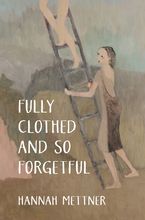
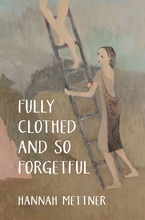
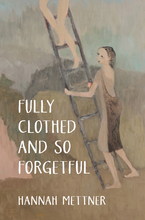
Poetry Shelf interviews Hannah Mettner: ‘I want to be emotionally moved by a poem, and nothing less’


FullSizeRender.jpg


We believe in the steps.

We tell our children and then our

grandchildren about the cool

pond at the top where sun-

carp clean our feet and where

we can sleep. The steps are one of

the beautiful mysteries of

life, like how did we get here,

fully clothed and so forgetful?


from ‘Higher ground’


Hannah Mettner is a Wellington-based poet from Gisborne. Her poems have appeared widely in literary journals, including Sport, Turbine and Cordite. She is co-editor with Morgan Bach and Sugar Magnolia Wilson of Sweet Mammalian, an online poetry journal launched in 2014.

I first heard Hannah read at the Ruapehu Writers Festival last year and I was immediately hooked. To celebrate the arrival of her debut poetry collection,  Fully clothed and so forgetful (Victoria University Press), Hannah agreed to do this interview. As you will see from my comments in the interview, this collection has struck a chord with me on a number of levels. I absolutely adore it.


The book is launched tonight: 16 March 2017 from 6.00 pm – 7.30 pm

The Guest Room, Southern Cross, 39 Abel Smith St, Wellington


PG: You include two quotations at the start of the book—one by Eileen Myles and one by Adrienne Rich—that underline your status as reader, while the book itself is infused with your reading life.  Can you name three non-poetry books that have sparked you any time from zero until now? And three poetry books, from any point in your reading timeline, that have also affected you?

HM: Ah yes, I mean, it wasn’t meant as any kind of political statement, choosing two gay poets to front the book, although it definitely can be, I just love their writing, and those particular poems. And then those parts of those poems stuck out as handy things to highlight at the outset of the book. As to my reading, well, I’ve always liked reading, and I wonder if it’s partly a control thing: I find people quite hard work, they’re so fascinating and unpredictable and needy, with a book you can just shut it when you get to satiety, and come back to it when you’re ready. Then I studied English Lit at uni, and I work at the Turnbull Library now, so books are very thoroughly part of my comfort zone, and I get a bit panicked if I don’t have one nearby, to serve as a social safety blanket. I remember being completely transported by a Margaret Mahy book The Door in the Air and Other Stories, as a young person. Strange little vignettes into other possible lives: very like one of the stories in that book about a girl who meets a wizard with a house full of different windows depicting different worlds. Obviously all of Mahy’s books are fantastic, and that magical realism has definitely been a thing that has kept my interest over the years, both as a reader and a writer, she’s so good at combining the very mundane with the extraordinary. Another book I’ve come back to again and again (a big deal when you’re a bit blind and reading is a pleasure/pain situation like it is for me) is Jeanette Winterson’s Written on the Body, which is scorchingly personal and profound. Those two books are really my sun and moon, there are heaps of other books I’ve read and loved, but nothing quite like those. Poetry books are perhaps too numerable to mention? Though I distinctly remember that James Brown’s first book Go Round Power Please was the book that got me reading and eventually writing poetry. I checked it out from the public library in Gisborne not long after having my first baby, and discovered that poetry was a great way to ‘get more bang from my buck’ when I was too tired and busy to make much headway with novels. Those poems are so humble and personable, and so varied, so I could read a couple, then turn them over in my head until I could get to the next couple (which is a great way to read poetry in my opinion).


Fully_Clothed_and_So_Forgetful__32303.1486956777.220.220.jpg   Fully_Clothed_and_So_Forgetful__32303.1486956777.220.220.jpg   Fully_Clothed_and_So_Forgetful__32303.1486956777.220.220.jpg


PG: Your debut collection, Fully Clothed and So Forgetful, gave me goose bumps as I read and took me beyond words to that state where you stand somewhere wild and beautiful and just stall beyond language to absorb the world. My initial reaction is simply to tell the reader to read your book. But then I start accumulating a list of what I think your poetry is doing: the poems are inventive, unpredictable, melodic, on the move, strange, love-soaked. What key things matter when you write a poem?

HM: Thank you! That is a lovely thing to have someone say about my writing, and quite strange because these poems have become so familiar to me now that I’ve almost become disenchanted by them: you know, the feeling of old outfits you’ve worn too many times and are giving way at the knees or something. The key thing that matters to me in a poem (whether one I’m writing or reading) is that it gets me in the gut. I get very frustrated by poetry that feels empty, or emotionally disengaged or distant, or is teasing the reader or holding them at arm’s length. I just find it boring, I mean, I know that different poems and poets have all sorts of intellectual fare to offer, but I want to be emotionally moved by a poem, and nothing less.


PG: I feel the same way. Your book generated strong emotional engagement for me, which is why it mattered so much. I am particularly excited by the way you create poetic movement. Is this something organic and unconscious or deliberate and cultivated?

HM: I guess it must be unconscious, because it’s not something I’ve gone in thinking about or worked at. Maybe it’s because I’m a chronic fidgeter? Or maybe because lots of my poems come to me when I’m walking. Or maybe it’s because I have a terrible attention span?


PG: The first poem, ‘Higher ground,’ is memorable, resonant and fablesque. I fill to the brim with it and don’t want to undercut the way I absorb its magical effects—the poetic side lanes and underpasses and overbridges—by explaining what I think it is doing. But I would say, as a tiny hinge into the poem, it reminds me how we can so easily become immune to what we see and hear. How do you feel about talking about the poetry you write?

HM: Ah yes, well this poem is an example of one that came to me while walking! In Wellington, as you know, there are lots of hills, and my old house was up one of them, and then up ninety steps. This made walking home from school with my kids kind of a drag, and so this poem, with its promise of glories to come, is really just an exaggeration of the daily bribery of walking home from school up what is basically a mountain. We totally become immune to life, it’s kind of tragic eh? One of the things that was promised to me when I had kids was that “they’d make me see the world with fresh eyes” and more parental romanticisations like that, and I really don’t know if that’s been true or not. But I do spend a lot of time trying to look at things like that anyway. I used to think I was going to be an artist, so maybe it comes from that? Experiencing the world, then deconstructing it in order to be able to reconstruct it on the page?


PG: I loved the oblique appearance of Gertrude Stein and her Tender Buttons in your ‘Gender buttons.’ While your poetry does not replicate the anarchic and playful syntax of a Stein poem, your phrasing is deliciously agile and surprising (‘I wake to you nuzzling into my bed/
complaining of the quick-sand carpet in the hallway’). Do you feel Stein influenced your language in any way or your inventive links between object-self-word-love?

HM: Well actually I’m not a huge Stein fan, I find her poetry difficult to engage with, and I suspect she was kind of a horrible person. In fact, this poem came about because I told the person I was in love with at the time that I thought she looked like Stein (who she also hated), and then I felt so bad that I wrote a love poem by way of apology. But I am interested in Stein’s idea of ‘Cubist writing’, which I guess in my poems isn’t even close to the exaggerated effect she achieves, but I like the idea of multiple things going on, multiple ways to access a work, multiple planes of understanding, gaps in meaning which the mind auto-fills. And I like the idea of language constructing a world, rather than merely referencing it, you know, then I can say each of my lil poems is its own world, like one of the windows in the wizard’s house. I would love it if that’s how they were read, like objects to be picked up and transported by, either a snow-globe or a portkey.


PG: Another reason the collection affected me so much is that is deeply yet originally personal. I felt like making a caption to go over my desk: poetry is personal. Your poems demonstrate that you can dig deep into personal experience and self-scrutiny in ways that are inventive and quiet. There are some big things faced: a teenage pregnancy and not meeting expectations to marry a man.  So many of the poems, with strong personal origins, are effervescent with possibilities. I am thinking of ‘In the Forest of the night,’ inspired by William Blake’s ‘The Tyger,’ but hovers like a miniature, fully-formed autobiography (the fearful child, the maternal embrace, the maternal anxiety, the supressed feelings, the broken relationship). Did you have lines you would not cross in order to protect those close to you?

HM: Well yes, poetry is personal. Very personal. I do hope no one reads these and recognises (a part of) themself, and is upset. The relationship poems are unnamed for this exact reason, but the family ones are probably more problematic. Funnily enough the ones about my parents are pretty tidily summed up by saying they’re about miscommunication (or lack of communication), and I hope they’re grown-up enough to understand that everyone sees things differently, and that this is my version of events, so to speak. The kid-ones are the most worrying, as I don’t want them to be like some shameful or burdensome photo brought out at a 21st party. But there aren’t many of them, and I’ve tested them out on Lucia and Jethro, who seem ok with them. We talked about this a lot in Hera’s TMI course last year: what is too personal, what sorts of things make you a ‘bad person’ for disclosing about someone else in a poem, etc etc. I try to think ‘how would I feel if someone said this about me?’ and bear that in mind, and there are lots of excruciatingly personal disclosures about myself in here, so maybe that balances it out? But also, that responsibility can be a bit crippling and sometimes you think ‘well fuck it’ and just write.


PG: I love the way you place a personal revelation within intriguing and inventive contexts and layer it like an artichoke so that is exquisitely simple yet flavoursome on the tongue. I am thinking of ‘Trip with Mum,’ where you go to Disneyland and take rides with your aging mother—real or imagined—and have difficult conversations until you spin away from probing questions to a far-off planet: ‘I’d try shouting things like, What do you know about pain?! and I’m afraid! and finally, I love you! as I grew smaller and smaller and she grew older and older and everything just kept spinning.’ Is the autobiographical thread a significant part of how you write?

HM: Well I guess so, erm. I don’t know if that’s just narcissistic and unimaginative or what, but I guess I just don’t want to speak for anyone else, or tread on any toes, and other people are better qualified than me to tell their own stories. But also it’s a by-product of the way I think and experience the world: by relating information and experience directly to my personal history and developing self. I remember our MA class having a near-fight early in the year when Chris presented us with a reading which basically posited that people assume poetry is autobiographical, and that the narrator is the writer. We, mostly, railed against this on principle, wanting perhaps to protect our right to mystery, but I think we all secretly knew that the ‘I’ is the I. I’ve been emboldened by the opening poem in Hera’s book, which gives the reader permission to read it as a book about her (and the title), and Greg’s book which is openly autobiographical while looking outward at people and events to hang his history on in the complicated and beautiful way that true life does.


PG: Are you after some kind of autobiographical truth when you write, however elusive that might be? I am wondering if this is why the book has so intricately hooked me.

HM: Autobiographical truth? I guess so, in the sense that I’m prone to self-reflection. I’m quite a socially anxious person, and a major introvert, and one of those people who analyse social interactions excessively as they’re happening and potentially going on for days afterward just in the normal course of things. Looking at your actions in the world so closely is perhaps not healthy, but it is interesting, especially the way different people work in given situations and relations.


PG: Feminism is such a complicated, multifaceted, highly contested set of ideas and practices. It always has been and is especially so today. I think your collection is in debt to a feminist engagement with the world that is mobile and probing. Do you think it makes a difference to your poetry that you are a woman? Does feminism matter?

HM: Of course I’m a feminist, though I tend to think in essence feminism is very simple, actually, which is not to say women and womanhood aren’t complicated and gloriously multi-faceted, or that femininity as an identity within feminism (particular for lesbian, bi and trans women) isn’t highly contested. And yes, for sure feminism matters, and I think it needs to keep on mattering, more loudly and insistently than it has to date, for quite a while yet. I think it’s (perhaps too) clear that it matters to my writing that I’m a woman, it matters that I’m a feminist women, that I’m a mother, that I’m a teenage pregnancy statistic, that I’m bisexual, that I grew up in a working-class Christian family etc etc. Those large facts, plus all the more messy detail of just living—that’s my subject matter. I think every writer’s personal history matters to them in their writing to some extent, whether as information or bias, but not all writers are keen to share that information, or maybe they don’t think it’s interesting enough? But the feminist in me wants it to be enough! I want women to write their stories and for them to be enough! I get the sense that it’s sometimes considered not tasteful to be a bit political in poetry, that poetry should be a respite from the real world, but I want to read more poetry about the intricacies of other people’s lives.


PG: Are you a solitude poet (you keep poems to yourself) or a community poet (you exchange poems with friends for feedback)? Have you had any poetry mentors?

HM: I’m definitely not a solitary poet! If I was, I don’t think I’d get anything done. I’ve been lucky enough to be part of multiple communities of writers at different times: first my Masters class, then “poetry club” as we fondly call it, and Hera’s TMI school last year. All of those places have been so wonderful for being peopled with other humans who want to think and read and write, and I’m so grateful and in love with and in awe of all those humans! My longest-standing ‘community’ are definitely Sugar Magnolia Wilson and Morgan Bach, who are also my co-editors for Sweet Mammalian. Magnolia’s poems are like crystals, each with special powers, which you can pick up and feel humming through your skin, and which leave you altered and fumbling about on the astral plane. Morgan has this incredible gift for knitting centuries’ worth of narrative weight and detail into small and exacting visions which seep into your subconscious and trick you into thinking they’re your own memories. Those two, phoar, I’m so goddamn lucky to know them, to read their things when they’re vulnerable and new, and to have them do the same for me!


I’ve never had an official ‘mentor’, but do you think Anna would be too embarrassed if I claimed her? I think a significant portion of young writers in New Zealand, particularly women, wouldn’t be writing the way that they are if it wasn’t for her. Her writing is so smart, with such a dry sense of humour and openness to silliness too, such a unique voice, such clever observations, but they’re also unashamedly ‘womanly’ poems: they’re about friends and family, they’re domestic and comfortable and they still give you such feels. SO good!


Sometimes in your sleep I hear you roar

and it echoes in the back of my jaw, child,

in the forest of the night.


from ‘In the forest of the night’


Victoria University Press page

Radio NZ  National: Harry Ricketts reviews the book with Kathryn Ryan


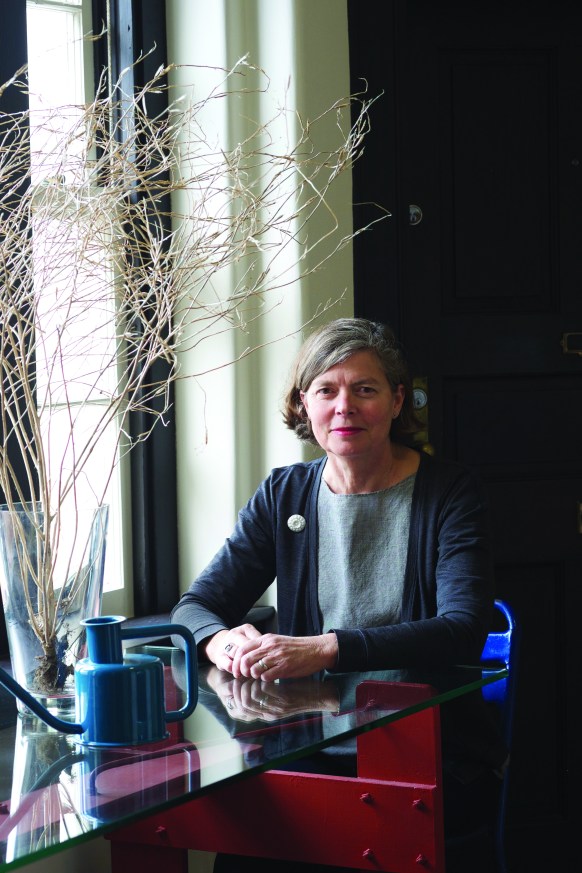
Poetry Shelf interviews Jenny Bornholdt: ‘There’s always a feeling, a kind of charge, when a poem is making itself known’


Jenny Bornholdt (Deborah Smith 2016).jpg

Photo credit: Deborah Smith


‘The moon came up

and all our thinking

went sideways.’


from ‘Full Moon’


Jenny Bornholdt is one of my favourite New Zealand poets, so a new Selected Poems is an occasion worth marking. Her poetry traverses decades; her poems never lose sight of the world at hand, are unafraid of the personal or little ripples of strangeness, and underscore a mind both roving and attentive. There is an ease of writing that might belie slow craft but Jenny’s poetry is exquisitely shaped from line to form. Returning to the early poems, I was taken once again by their enduring freshness. A lightness of touch, honeyed lines. As poet, Jenny harvests little patches of the world and transforms them into poems. Patches that might be ordinary or everyday, offbeat or linked to feeling something – patches that stall me as reader. I love that. When I read the poems, I get access to a glorious poetry flow yet there are these luminous pauses. If I were writing an essay, it might explore the poetics of pause and currents.

When I was editing Dear Heart, I pictured a little chapbook of Jenny Bornholdt love poems because she has written some of my favourites whether for husband, father or child (‘A love poem has very long sentences,’ ‘Poem,’ ‘Pastoral,’ ‘Mrs Winter’s Jump,’ ‘The inner life’ ‘Full Moon’ for starters).

To have this new book is a gift. Thanks Jenny for the interview.


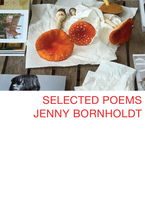
selected_poems_jenny_bornholdtrgbweb__66924-1464840641-220-220   selected_poems_jenny_bornholdtrgbweb__66924-1464840641-220-220   selected_poems_jenny_bornholdtrgbweb__66924-1464840641-220-220

Selected Poems Jenny Bornholdt, Victoria University Press, 2016


Did your childhood shape you as a poet? What did you like to read? Did you write as a child? What else did you like to do?

Yes, I think it did. I was one of those kids who read a lot – anything that was going. I loved the Readers Digest. My mother took us to the library every week and I got out four books, which was the limit then. I also spent a lot of time outside – we had kids our age next door and over the road and we spent most of our time with them.


When you started writing poems as a young adult, were there any poets in particular that you were drawn to?

I didn’t write any poems til I was about 18. I read a lot of novels and if I thought about being any kind of writer it’d would’ve been a novelist, or journalist, which is the direction I headed in.  I’d read some of the Mersey poets when I was younger and I remember liking Roger McGough’s casual, ‘talky’ style.


Did university life transform your poetry writing? New discoveries or directions?

University was where I discovered poetry. I really had no idea about anything before I went there.  Everything was exciting – from Middle English to contemporary American poetry. And I did the ‘Original Composition’ course, which changed everything.


‘So careless the trees—

having remembered their leaves

they forget them again

so they fall on us, big

as hands.’


from ‘ Autumn’


Your poetry reflects a quiet absorption of the world that surprises, moves and astonishes. Sometimes it feels as though you tilt the world slightly for us to see. What are key things for you when you write a poem?

Each poem is different, but there’s always a feeling, a kind of charge, when a poem is making itself known. It’s a matter of trusting yourself and following the direction of the poem.


Reading your new Selected Poems sent me back to the original collections with admiration and delight. It is fascinating reading across the arc of decades—gathering echoes, favoured motifs, shifting melodies. Do you think your poetry has changed over time? Did you spot points of return such as leaves, the garden, or baking?

There are many points of return. One thing that surprised me was the number of tea towels in my poems.

It was really interesting making the selection for this book – there seemed to be such a strong sense of continuity. I can see changes, though, and that’s good. I think I’m writing better poems – they seem stronger to me. Over time I think I’ve let myself get a bit weirder.


Ha! I love the idea of tea towels. I never spotted them. I think I need to send you a poetry tea towel to celebrate. I am always drawn to the conversational tone that is both of the everyday and rises beyond it in your poems. How do you see your poems working as conversation?

They’re probably a conversation with myself. Me saying things out loud to see what happens.


Some of your most moving poems document illness. Do you think illness made your writing life more difficult or did writing give you solace and energy? Or something altogether different?

Illness definitely made my writing life difficult. I was out of action for a year with bad hip pain and didn’t write anything. I could barely get out of bed. Then, after surgery, I spent a year recovering and during that time my writing life began to surface and I found enormous solace in it. Writing gave me a way of processing what had happened – of making it into something else. It was like turning the awfulness around and sending it off in another direction.


‘For six weeks now I’ve been outside of weather

and of reading. Outside of myself.’


from ‘Along way from home’


The result for the reader is a cluster of poems that draw you into that experience of illness, then lead you in so many other directions. You have never been afraid of a longer poem, of longer lines and and a slow unfolding of subject matter like a storyteller holding a listener in the delicious grip of attention. Do you have one that particularly resonates for you?

I love all the poems in The Rocky Shore. You’re probably not meant to say that about your own work, but there you are. Those poems resonate because they’re so much about my life and what’s important in it. Those poems really found their form.


I love the Rocky Shore too. I agree they have found just the right form and within that form a perfect alchemy of ingredients. It is on my shelf of classic NZ poetry books. When you were putting the selection together was there an older poem that surprised you – like coming across a long-lost friend?

I was surprised by ‘Waiting Shelter.’ I think that one’s still got something.


‘How you remember people. To remember

them as well as they remember you.

To remember them with abandon. To


abandon remembering them. Which is

better? or worse? Rooms and rooms

and always people moving in


and out of them. Love,

love, a knock on the door. A

heart murmur to remember you by.’


from ‘Waiting shelter’


What poets have mattered to you over the past year? Some may have mattered as a reader and others may have affected you as a writer.

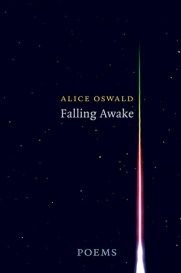
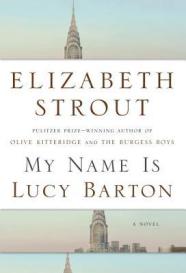
I’ve read and re-read Mary Ruefle’s book of essays Madness, Rack, and Honey – it makes me want to write. I find prose writers often affect me strongly – I’ve just read by Elizabeth Strout, for the third time this year. It’s one of the most affecting books I’ve ever read. Alice Oswald’s new book of poems Falling Awake is a marvellous, strange thing.


What New Zealand poets have you been drawn to over time?

Dinah Hawken, Bill Manhire, Andrew Johnston, James Brown, Mary Ursula Bethell, Geoff Cochrane.


Michele Leggott has talked about a matrix of early women poets in New Zealand who supported each other. Have you sustained a vital conversation with poet friends on your own work and on the whole business of writing poetry?

Greg (O’Brien) and I talk about poetry a lot – it helps to live with someone who does the same thing you do. And I often talk to friends (some of them writers) about writing and reading. It’s so much a part of my life that I can’t imagine not talking about it.


Some poets argue that there are no rules in poetry and all rules are to be broken. Do you agree? Do you have cardinal rules? Do you have rules you particularly like to break?

I think it’s more that there are conventions and, as in any art form, these can be done away with as long as what happens ‘works’. Poems are strange things – they have their own logic and find their own forms.


‘This poem was always going to end there, with Frankie

and the toast. That image has been the engine


of the poem, but then

more happened.’


from ‘Big minty nose’


The constant mantra to be a better writer is to write, write, write and read read read. You also need to live! What activities enrich your writing life?

Most things, except doing my tax return.


Finally if you were to be trapped for hours (in a waiting room, on a mountain, inside on a rainy day) what poetry book would you read?

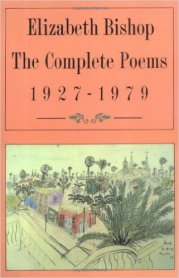
Elizabeth Bishop’s Compete Poems.


51yTZd+toIL._SX319_BO1,204,203,200_.jpg     9780393285284_300.jpg    25893709


Victoria University Press author page


On editing – Sarah Jane Barnett interviews Ashleigh Young

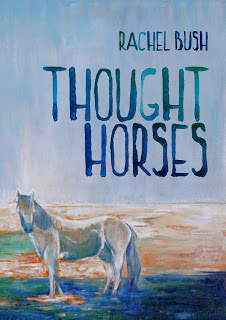
img_7235    Thought+Horses+cover

A new post at The Red Room:


I like to read and review New Zealand poetry, and because I live in Wellington quite a few of these collections come from Victoria University Press. When Ashleigh Young began working as their editor, I began to notice her careful hand on the collections. I asked Ashleigh a few questions about being an editor.

Sarah Jane Barnett: I was watching the show Comedians in Cars Getting Coffee and Jerry Seinfeld asked Barack Obama, ‘If politics was a sport, what sport would it be?’ So, if editing was a sport, what sport would it be?

Ashleigh Young: I was about to say cricket – long bouts of brooding interrupted by sudden bouts of high-speed action and head-clutching – but you can say that about almost anything. About life. I wonder if maybe editing is a bit like tenpin bowling. Every bit of editorial interference is a small act of violence, essentially trying to knock things down – but there’s this attempt at elegance, at the graceful flourish. And then there’s the stubborn beauty of the pins that remain standing. Also, tenpin bowling is the sport of grudging office team-building that ends up being quite fun.

Just contradicting myself, though, I think there’s something intrinsically un-sporty about editing. The writer and the editor shouldn’t feel like they’re adversaries grappling for ultimate power. No one should be spraying champagne around if they ‘win’. They can do that at the book launch.


For the rest of the interview go to Sarah’s blog: here

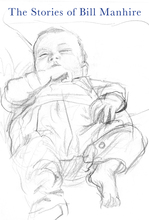
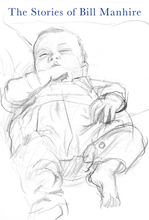
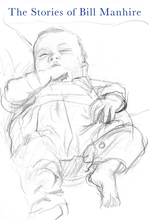
The Stories of Bill Manhire – a wee review and a wee interview – ‘I think that by and large I’ve written against rules’

bill_front_jacket__25142.1439156427.220.220.jpg  bill_front_jacket__25142.1439156427.220.220.jpg  bill_front_jacket__25142.1439156427.220.220.jpg

Bill Manhire occupies a significant position in our literary landscape — as both a poet and as founder of the International Institute of Modern Letters. As poet he is lauded on an international stage and at home was recognised  as our inaugural Te Mata Poet Laureate. As teacher and mentor at Victoria University, his outstanding contribution to our writing communities was honoured by the naming of the Bill Manhire House at IIML (April 2016). I have read Bill when he is not writing poems and have admired his clarity and elasticity of thought, but I had not read the early fiction in his recently released The Stories of Bill Manhire (VUP). Things escape us for all kinds of reason. In the 1990s, I focused on all things Italian as I wrote my doctoral thesis and missed too many local things. What a loss!

Amongst so many books I have loved, three books have really got under my reading skin in the last month: Cilla McQueen’s memoir, In Slanted Light, Tusiata Avia’s Fale Aitu, and Bill’s short stories.

Each of these books took me by surprise. Like little thunderbolts where you can feel your heart rate pick up as you read. Bill’s book didn’t cleave me apart like Kafka’s axe to the head or heart (he says the frozen sea within) but felt like the utterly satisfying thirst-quenching intake of sparkling water.  Writing that is effervescent, clear, restorative. I guess that is doing something miraculous to your parched state (a different kind of frozen sea). This is what words can do.

To celebrate this book – a short review from me and an interview with Bill.


A wee review:

The stories in this collection are gathered from The New Land: A Picture Book, South Pacific and Songs of My Life. There are previously unpublished stories, The Brain of Katherine Mansfield where you choose your own adventure, and the memoir, Under the Influence.

The writing is inventive, refreshing, surprising, on its feet skipping kicking doing little jumps.

How can I underline how good it is? As I read my way into days of reading pleasure, I squirmed cringed gasped laughed out loud sighed did wry grins wriggled on the spot leapt over the gaps laughed out loud again and felt little stabs that moved.

The stories highlight place and character, become nostalgic with detail that glints of when we were young (well for me anyway). You might move from the Queen’s visit and telling jokes to a dog named Fairburn, to a sci-fi keepsake on the tongue, to questions and answers on writing, to a dead-end job. Yes, the subjects are captivating but it is not so much what the stories pick as a starting point but how they travel. Take any story and it is a rejuvenating read. ‘Nonchalance’ for example, is like a series of postcards, travel or writing tips; or arrival tips with love and broken heart, soldiers, soldiers’ wives and the locals. You enter a realm of first things and floating elements. The readerly effects are kaleidoscopic.

To give you a taste of the book (I hope this doesn’t ruin things for you), here are some of the first and last lines. So important in a short story – these just nail it.


First lines:

Some critics write me off as just another ghost character activist, whereas I think I add up to a lot more than that.

The bishops come ashore.

Through here?

You are just an ordinary New Zealander.

The poet looks at the poet’s wife and says: You are my best poem.

He says: ‘Give me something significant.’

A slight scraggy moustache.

There are many tricks I have used repeatedly throughout my career to date, and others that I have done only really as one-offs.


Last lines:

Like a gasping in the chest.

The paddocks are left grey, stretching out to the edge of the frame.

Clouds pour across the sky and my lungs fill with air as though they might be sails.

No.

But jokes are too difficult: I’m getting someone else for that.

God bless him, and all the other poets.

That is how it is, adventure and regret, there is no getting away from it, we live in the broad Pacific, meeting and parting shake us, meeting and parting shake us, it is always touch and go.


The ‘Ghost Who talks’ made me laugh out loud with all its literary references alongside or inside the tricky business of getting ‘you’ and ‘I’ active in a story. Ha! It felt like the pronoun ghost out stalking. Then again the playful absurdities in ‘Kuki the Krazy Kea’ made me squirm with its dry wryness. Or the magician’s performance tips. Head back to the stories at the start of the book and the bits that taste a little different:  details of a nuclear winter, Ghandi’s funeral pyre, the melancholy of an empty pool, a mother colour-tinting photographs at the kitchen table. Bill enters the story to give writing tips here and there, to tilt the world a touch so you have to steady your reading feet (where next! What next!), to frame a judicious amount of missing bits, to be a little bit cheeky, to catch something provocative or lovely or poignant. This is a book I will recommend to friends.


A wee interview:


What satisfies you about writing a story?   

Pretty much what satisfies me about writing a fully-functioning poem.  There’s pleasure in the mix of surprise and inevitability, which needn’t be plot and character based. Sometimes it can just be a sense of musical completion.

I also like it if readers are given room to move and even a little work to do, and they end up feeling pleased about this, rather than grumpy. Maybe that’s explicit in The Brain of Katherine Mansfield, which is my shot at a choose-your-own-adventure story. But the best writing always invites readers to make choices as they go along. I’ve always liked Whitman’s take on the text-reader relationship: “I seek less to state or display any theme or thought, and more to bring you, reader, into the atmosphere of the theme or thought—there to pursue your own flight.”


Were there any rules you wanted your stories to obey? Or disregard? I love the way some of the stories sneak in instructions for start-out writers.

I think that by and large I’ve written against rules and tried to avoid what’s sometimes called the beige short story, of which the great exemplar is probably Joyce’s ‘The Dead’.  Glorious stuff, but . . . well, Joyce didn’t want to go on doing it, did he? Mark Haddon was writing about beige stories in the Guardian recently: ‘modest, melancholic stories, not arcs with beginnings, middles and ends, so much as moments and turning points.’  I’m a big fan of melancholy, but you read too many stories like that in a row, quiet epiphany after quiet epiphany, and the whole world starts to feel a bit insipid.

I suppose those instructions for beginning writers represent a complaint against the formulaic. What I mean is this sort of advice, which comes from a New Zealand book called How to Write and Sell Short Stories published back in the 1958:


PLOTS TO AVOID

(a)  Plots with a sex motif.

(b)  Where religion plays a dominating role.

(c)  Plots where sadism or brutality appear.

(d)  Plots with a basis of divorce.

(e)  Plots where illness or disease must be emphasised.

(f)  Plots dealing with harrowing experiences of children.

(g)  Plots dealing with politics.


And so on. Remove plots like those, and it’s hard to see what’s left.  I’m generally quite troubled by short story writing manuals, and by creative writing workshops that behave like short story manuals.


I also love the detail that catapults the reader to specific times and places  — how much did that sort of thing matter to you?

Getting the voice right in each case felt like the most important thing, and of course details are a crucial part of that.  Quite a few of the stories are really dramatic monologues, opportunities to try out some other voice or personality. That’s most obvious when they’re written in first person, but also in a strange way it’s also there in close third person.  The story called “Highlights” is third-person but it comes across in a flat, somewhat affectless voice – because it’s about a rather passive person. Anyway, the voice thing mattered to me, and I found myself trying on a range of idioms. I don’t think in general it’s a good idea to read a lot of short stories in a row, especially if they’re by the same writer, but I hope there’s quite a variety of narrating voices in the book.


Can you recommend some short-story writers?

There’s so much I haven’t read, but I’d go for Grace Paley every time.  Also Donald Barthelme and Lydia Davis. Gogol is my greatest favourite, especially “The Nose”, which I was once able to read in Russian. Early Sargeson.  Some of Ashleigh Young’s personal essays feel to me like beautifully told short stories – they just happen to be true, or true-ish. And the best of Barbara Anderson’s stories go on being brilliant – full of such sudden things. William Brandt’s collection, Alpha Male, has rather dropped out of sight, but it’s pretty fantastic – he does these wonderfully indignant, damaged narrators.


Do you have a favourite in the collection?

Probably “The Days of Sail”, though that may be because I know the back-story – it’s prompted by a covered-up assassination attempt on the Queen in Dunedin during the 1981 Royal tour.  A 17-year-old took a potshot at her from the top of a Med School building in Great King Street. Imagine if it had been successful! Dunedin would be totally on the map! Anyway, I built a rather cranky story around that fact.  There’s a nice radio adaptation that used be in the RNZ archive that I’d quite like to hear again.  It ends with a children’s choir singing “God Defend New Zealand”.


Do you find endings difficult (I have to say I loved the endings!)?    

Yes, they’re the hardest things.  I think I manage to get them right most of the time – except maybe for “The Death of Robert Louis Stevenson”, which of course is obliged to end with his death.  Not exactly a twist in the tail. Maybe the best ending is in “The Brain of Katherine Mansfield”.  Or, I should say, endings. I’ve met people who feel quite put out by the apparently brutal instruction, “Close the Book”, which comes at the close of several of the plot strands.

But “The Brain” is also about white middle-class complacency and its right-wing tendencies – so there is a “real” ending, too.  I won’t quote it, but anyone who wants to see what I mean can try to get to section 50 online, courtesy of Richard Easther and Jolisa Gracewood:   I’d also advise readers to pause on Greg O’Brien’s illustrated section headings.  There are lots of good visual arts jokes, along with a couple of depictions of C K Stead as a mad Nazi brain surgeon.


Victoria University Press page

Poetry Shelf interviews Cilla McQueen – ‘I’m always listening. It’s a subtle thing, poetry.’


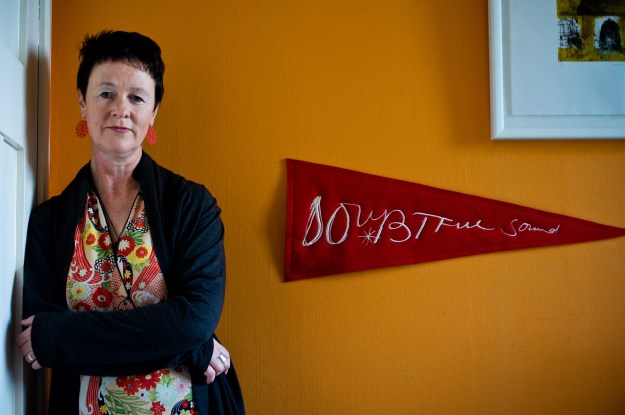
Cilla 2014

Photo Credit: Rhian Gallagher


Cilla McQueen has published 14 poetry collections, has won the NZ Book Award for Poetry three times and was New Zealand Poet Laureate 2009 -11.  Her last collection of writing was  an exquisite suite of little books in a box entitled Edwin’s Eggs and other poetic novellas (OUP, 2014). The book, written during her Laureateship and posted in pieces on the Laureate blog, was a poetic response to pictorial works in the National Library. I reviewed and loved it here.  Reading favourite Cilla poems that other poets picked on an Otago University post sent me flying back to all the poems I have loved, and like Michele, Emma, Ian, Bill and Brian, I would have trouble picking just one. Every book serves a poetry talisman to carry with you. I am currently writing the foundation stones of women’s poetry in New Zealand but I also want to cast a light on several women in the last few decades (small part of a larger work).  I want to explore women poets who are a significant part of the strata upon which we write. Cilla is one of them.

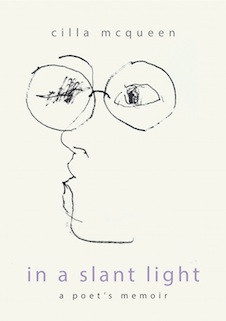
What prompted this interview, however, is the recent release of In Slant Light: A Poet’s Memoir.  This book has affected me on so many levels. It is beautifully written. It takes me back to the unfolding of self and notself on the page when you barely call yourself a poet. That Cilla started writing poetry when most around her were men, and most of the women poets were hiding in the shade, meant that she was ‘daring’ to write.  Or ‘transgressing’ as she also puts it.  The book makes me want to delve back and write my way through Cilla’s poetry. I want to sit in a kitchen and drink tea with her and talk about writing and books and life. Her memoir leaves gaps, and I love that, but it reveals the dimensions of a life that have enriched the dimensions of the poems on the page.

In Slant Life: A Poet’s Memoir  Otago University Press, 2016


The Interview

Did your childhood shape you as a poet? Your new memoir is most definitely the memoir of a passionate reader.

Yes, I’m sure it did. I was fortunate to have parents who knew the importance of reading and who loved all the arts.

Screen Shot 2016-04-30 at 10.37.08 AM

Cilla 1954 Arthur Street School


What did you like to read as a child?

Everything – A.A. Milne, Lois Lenski’s The Little Airplane, lots of fairy stories, adventure stories, myths and legends. Especially stories about going through some portal into another world, for instance Alice in Wonderland and Through the Looking Glass; the Narnia books by CS Lewis; The Door That Wasn’t There by Ursula Horsley Smith, with Rosemary Cosgrove’s illustrations.


Oh yes! I loved those portals too. Did you write as a child? What else did you like to do?

I wrote letters to my aunts, uncles and grandparents overseas, usually to thank them for birthday or Christmas presents. These were a hard task but were insisted on by my mother, who made sure the spelling and writing were up to standard. I wrote poems and stories in cut-in-half exercise books. I thought of these as real books and was pleased with them. I also liked ballet, mime, gymnastics, making up plays.


Did you write in your teenage years? Did you read poetry?

I was very taken with concrete poetry at one stage and had fun chopping up lines of words and putting them in a new order, to make nonsense or a peculiar new sort of sense.


What three words resonate with your time as a teenager?

Eager, curious, self-conscious.


Great words. Fascinating to consider the degree they stick with us. When you started writing poems, were there any poets in particular that you were drawn to?

Shakespeare, Donne, Villon, Dylan Thomas, Prévert; Beat poets; e e cummings; began to read New Zealand poetry after meeting James K. Baxter in 1967.


Your first book appeared in 1982 (Homing In) when not as many women poets were as visible as they are today. How did this affect you as a writer?

I felt shy, unsure, surprised that it was well received. As a new woman writer I felt junior in a mainly male artistic circle. I also felt somehow transgressive, for daring to write.


Do you think it makes a difference when the pen is held by a woman?

It certainly ‘makes a difference’ to the life of the woman holding the pen. And further, to the minds and lives of the women who read her writing.


Your poems are infused with such musicality they sing themselves to life. Yet what makes them matter so very much is the heartbeat — the way a poem will creep deep under your skin as reader because it makes the world matter. What are some key things for you when you write a poem?

A sense of joy in the release of restrictions of everyday language, a feeling that anything goes – I can think, experiment, change, manipulate the language to make it supple and economical. I’m always listening. It’s a subtle thing, poetry. Cocteau wrote that ‘[Poetry’s] modesty consists in masking its own equations’ (Diary of an Unknown).


Do you think your poetry has changed across the decades?

It’s probably better self-edited. I didn’t go to a writing school, so made all my mistakes in public, as it were. The work has gone through periods of change, particularly unruly in the performance poems, but also periods of paring down and stripping, also lyric periods when musicality seemed paramount. Each new poem brings to bear all the language experience of previous poems.


otago291603.jpg  otago291603.jpg


Your new memoir has affected me on so many levels. Partly because I am a poet who also had to find her writing life, who has lived with a painter for thirty years, who spent a long time with another language and who found joy in many of the books and films you mention. But most importantly, because the memoir is so beautifully written and because it raises issues that will have affected many women writing.

What were the joys and difficulties of writing a memoir?

Looking for and finding fresh memories and writing them down; recasting familiar ones, looking around the edges of the familiar; realising one’s place in the past and in present time. Pinning down what happened when, and thinking about the reasons why.


Why poetry and not prose?

Associated memories flood in very fast – I need to use compressed language to retain the feel of them. I find that a fragment of memory is best expressed in poetry because it presents itself not as a narrative but as a simultaneous  display, more like a dream. It seems that poetry can collapse time.


Did you have filters at work as you wrote? A need to conceal for the sake of others and for the sake of self?

No need to conceal, but a natural process of selection operated, and on top of that, the selective forces of poetry. I didn’t feel compelled to lay all bare – what’s the point.


For me, your memoir represents the emergence of multiple, overlapping selves (reader, poet, mother, wife, lover, friend, teacher). What moved me so deeply was the way in which the poet found room to breathe and exist. At one point, in the middle of your life with Ralph Hotere and your daughter, you write: ‘I have to look carefully to find myself amongst all this.’ What tipped you into writing?

I had been writing a journal for several years, just for myself. As I started to read more poetry the language of my daily thoughts was affected; thoughts appeared in chunks and slivers, which I then worked on until the product resembled a poem, or so it seemed to me. When Ralph and Andrea and I spent a few months in Avignon in 1978 I began to write seriously, with their encouragement. I sent an early poem on a postcard to Hone Tuwhare, ‘Saturday Afternoon in Provence’, about the Pont du Gard.


Your memoir, so poetic on the page makes the gaps of telling poignant. What did you most love about this period? What did you find most difficult?

I loved the inspired conversation of creative discovery in a life where the arts were central, 24/7. My difficulties were normal – balancing lives, being teacher, wife, mother and breadwinner until Ralph’s work started to sell.


This is memoir written out of love, and that is infectious, but there are subterranean hurdles. Is writing joy for you, or is it pain, or is it a mix of both?

Of course, it is a mix of both.


You studied and taught French. Did this affect your poems at all?

It gave me practice in thinking in another language, about grammar, vocabulary and syntax. There’s a clarity in French syntax that I find satisfying; through teaching, I learned to see language as a magical, plastic substance.


Music has been a significant part of your life as a poet, particularly in view of your performances. What key things matter in this poem-music collaboration?

The ability to listen. Trust in another performer’s musical ear. Inner hearing of the musicality in words. A sense of time. Delight in shared discovery through improvisation.


The detail in the memoir is so vivid it makes time and place shimmer on the line. It is a way of laying down roots in a poem. Would you write a sequel?

I don’t usually like to do the same thing twice. In fact, in the sequence of my oeuvre, especially in long poems such as ‘Bump and Grind, (spinal fusion)’ in Benzina (1988); the Berlin Diary (1990); ‘The Autoclave’ in Markings (2000), and many Bluff poems, I’ve already traced the progress of my life until now.


What irks you in poetry?

Its difficulty.


What delights you?

Its difficulty.


The constant mantra to be a better writer is to write, write, write and read read read. You also need to live! What activities enrich your writing life?

Gardening, walking, drawing, thinking up imaginary music.


Finally, if you were to be trapped for hours (in a waiting room, on a mountain, inside on a rainy day) what poetry book would you read?

I’d like a Complete Shakespeare, please.


Thanks Cilla.


Otago University Press page

Poets pick favourite Cilla poems

Cilla’s Laureate page

NZ Book Council page

NZ Electronic Poetry Centre page

Te Ara video clip


Edwin’s Egg


Poetry Shelf interviews Chris Price – ‘a little dash of crazy, a pinch of furious, and a dash of self-loathing on the one hand, and a bit of song and dance and delight on the other’

Chris Price 2009(13) credit Robert Cross.jpg

Photo credit: Robert Cross


How the song will wait

no matter how long,

how high the moon

or tower, however dry

the seed or flower —

the song will raise you.


from ‘Spell for a child to remember’


Chris Price is the author of two previous poetry collections (Husk, The Blind Singer) and a generically playful collection of biographical anecdotes ( Brief Lives). Her debut collection won the Jessie Mackay Award for Best First Book of Poetry (2002). She now teaches Creative Writing at the IIML at Victoria University. Previously, she had stints editing  Landfall and coordinating The International Arts Festival’s Writers and Reader’s Week in Wellington. Her poetry pleasingly follows its own course, as though this poet is not beholden to passing trends. This originality cements her place as a unique and important voice in New Zealand poetry. I got to hear Chris read from her new collection, Beside Herself, at CK Stead’s recent Laureate events in Napier and I came away feeling these edgy poems that hit both shadows and light were her best yet. I could hear the audience appreciating the utterly satisfying pitch of the poems with their oohs and aahs.


1458509279350.jpg   1458509279350.jpg

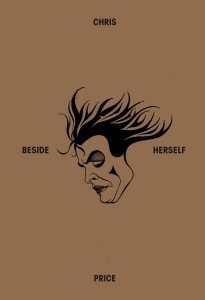
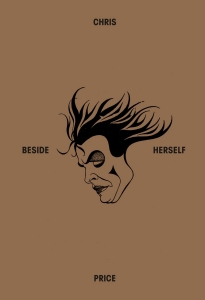
Beside Herself  Chris Price  Auckland University Press  2016


To coincide with the release of the new collection, Chris agreed to an interview with Poetry Shelf.


Did your childhood shape you as a poet? What did you like to read? Did you write as a child? What else did you like to do?

My family were great readers, and bedtime stories were big for me – eventually some of the stories were on LPs, which my parents would put on when I went to bed, to be summoned back with an imperious call of ‘Other side!’ when the LP needed to be turned over.  The Count of Monte Cristo is one I remember.  Because my brother and sisters were quite a bit older than me, I spent a lot of time as a kind of only child.  When I had to go out with my parents on shopping trips or to visit their friends, I was always happy as long as I had a book. I wasn’t one of those who started writing early, though.


When you started writing poems as a young adult, were there any poets in particular that you were drawn to (poems/poets as surrogate mentors)?

I said my family were great readers, but that didn’t generally include poetry.  I can remember two main strands that had a hold of me in my teenage years – one was Japanese and Chinese poetry, which I found in the public library, and the other was the poetry I was taught in school – Keats and Shakespeare, mainly.  If we ever read New Zealand poems in the classroom, I don’t remember it – perhaps a bit of Denis Glover, which I didn’t really connect with at that age. But I did have a teacher in the fifth form who later published a book of poems himself – perhaps his enthusiasm was influential, although we also mocked his beard-stroking in the classroom.  My sixth form teacher (Sandra Coney’s sister) encouraged me to enter a school poetry award judged by Lauris Edmond, in which I received a ‘highly commended’.  Later, I read Lauris’s poem ‘The Pear Tree’ in the Listener, and wrote to her asking where I might find a copy of the book (that’s how clueless I was).  She sent me a copy, which I still find quite extraordinary.  Those small moments of encouragement or being taken seriously can be quite disproportionately important early on.


That is so lovely. My intermediate teacher was a poet who ended up in The Big Smoke anthology. They couldn’t trace him so I read his poem. It felt very spooky. He was like a little epiphany. Did university life transform your poetry writing? Discoveries, sidetracks, peers?

Oh, utterly.  I hadn’t really encountered much contemporary poetry before university, so everything came as a revelation, and lectures on poems by Blake, Rilke, Stevens or Curnow or Rich must have taught me something about the intense pressure the best poets bring to bear on language.  I do think everything you take in at that age becomes a kind of compost for your later writing life, so it’s important to take courses that involve direct encounters with great writing. I’m not a great believer in doing an undergraduate degree that consists of nothing but creative writing workshops.  That said, having the peers and encouragement of a writing workshop (I was in the first writing workshop taught by Karl Stead) cemented the idea that poetry was something a person could do.  It took quite some time, nonetheless, before I rediscovered the courage to give it a go after university. Somehow I hadn’t acquired enough belief in my capacity to do it well to keep going at the time, but the idea of writing hung around until it seemed necessary to put up or shut up.

The massive sidetrack of university life was music, but that’s another story.


Are there any theoretical or critical books on poetry that have sustained or shifted your approach to writing a poem?

On the whole, I am challenged, educated and sustained by great poems first, and criticism second. Theory and criticism can help move poetry along when it seems to be getting stuck or stale, but it can also generate flat writing. But I do find it exhilarating to watch a great reader unpack how a particular poem works.  Poems thrive on a mix of conscious and unconscious knowledge and craft, I think.


What poets have mattered to you over the past year? Some may have mattered as a reader and others may have affected you as a writer.

Last year was prosaic.  I forbade myself the pleasures of poetry in order to finish researching a book about a poet.  So obedient was I to the ban that I didn’t write a single poem last year, and didn’t read a great deal of poetry either.  It’s a pleasure to be return to reading it in 2016: it’s a great pleasure, for example, to have a new book from Andrew Johnston, and it’s looking like it will be a big year for NZ poetry.


What New Zealand poets have you been drawn to over time? What international poets?

I tend to admire poets and poems that have qualities I lack and envy: humour (James Tate, James Brown), surrealism and strangeness (Charles Simic, Greg O’Brien), or that sense of fundamental human decency that can’t be faked, and that emanates from poets such as Jenny Bornholdt and Rachel Bush.  At various points in the past, Robert Hass, Anne Carson and Alice Oswald have been important to me.  At the moment I am a little more interested in what I can learn from the poets in the generations after mine than those who come before, but Bill Manhire’s ability to leave room in his poems for the reader to roam around in offers a model I continually fall short of. I never quite get to the bottom of what they are doing.


Your poems always make delicious demands on the reader – the ideas borne along finely crafted lines, the well tended gaps, the dazzling sound. What are key things for you when you write a poem?

Listening for and being led by the music of the poem has always been central – to the extent that I now feel as if I may need to break the hold of that aspect of poetry to some degree, because it has begun to feel like my default setting. I started (affectionately) calling some of the poems in this book my ditties and jingles — meaning that they have had unabashed fun with quite strong rhyme or assonance. I don’t necessarily want to acquire the habit, though.  I never went looking for rhymes, but it seems they came looking for me.


You spent 2011 in Menton as the Katherine Mansfield Fellow. Your new collection, Beside Myself, does not re-present physical traces of France to the degree I have spotted in some Mansfield Fellows. However, it does open out to the world, to the way the world is carried in one’s head. What difference did Menton make to your poetry, and to this book in particular?

Well, there is a whole journal of the time in Menton, written in poetry and short bursts of prose, that registers the physical traces experience in quite minute detail, as well as thinking about what I was reading there.  It was my guilty pleasure to begin each day at the writing room – where I was working on the prose book I mentioned earlier – by warming up with some writing in this journal, which threatened to become a kind of pleasurable avoidance strategy, albeit one sanctioned by the terms of the Fellowship, or so I thought.  But really I began it because I wanted to register the specialness of the experience on a granular level, and I knew that it would flee from me in future years if all I did was take photographs of where I was, while writing about elsewhere.  In a way it’s the written equivalent of a photo album.

A number of the poems in Beside Herself are lifted from that journal.  I spent a lot of time in the galleries up and down that coast that are the legacies of the Modernists who lived and painted there: Picasso, Matisse, Chagall, Bonnard, Cocteau.  And in some of the galleries in Paris and Rome and Oxford, which I also visited on that trip.  The sequence ‘Museum Pieces’ is a record of encounters with some of the artworks I saw that year.  And the little poem ‘Appreciation’ emerged at the end of my morning walk to the writing room in the Villa Isola Bella, on which I would often listen to podcasts. In this case it was a Poetry Foundation podcast that gave me the opening line of the poem.


In a short review of your book (forthcoming for Fairfax), I suggested reading your new book was like entering a poetry thicket and that I wasn’t quite sure what would emerge from the light and dark. It felt like all manner of characters inhabited these woods. I loved this playfulness. What did character and shifting personae mean to you in these poems?

Persona here has often meant a chance to unleash aspects of personality that don’t see daylight otherwise – a little dash of crazy, a pinch of furious, and a dash of self-loathing on the one hand, and a bit of song and dance and delight on the other.  And then there are a few figures I think of as marionettes, or Punch and Judy figures, larger than life rather than realistic.  I wanted to write poems that avoid the pretence of wisdom.


I love the way you can refresh a well-worn subject, such as you do in ‘Abandoned Hamlet.’ Again character seems crucial. This is such a kaleidoscopic book of people. What kind of characters are you drawn to?

I suppose I have always been interested in monsters.  Also the ‘damaged goods’ of humankind: very early in my writing life I began writing people who could be described as outsiders with redeeming characteristics, or magnificent failures. I don’t know where that comes from. Some of the characters in this new book seem to be irredeemable, though, which may have something to do with a pessimism about human nature that has increased as I’ve got older. Others are more vulnerable beneath the surface.


Language choices are vital, but as I read your characters, empathy is close at hand. What matters in the how of writing them?

My interest is in trying to inhabit and understand rather than judge. The first person is perhaps a more troubling but vivid way of doing this.

For a time when I was in my teens I thought I would like to be an actor, and it’s true that, like many actors, I like to hide in other people’s clothing. I just do my acting on the page. There’s a recent poem by Will Kemp  that expresses this impulse quite neatly.


I especially loved the sequence that features Churl. The detail is sumptuous. He gets under your skin.


Churl remembers every

curse and kick that sent him

on his way to this outskirts hut

where even his damp fire

wants to smoke him out.


from ‘The Book of Churl’


Where did the starting point for this poem come from?

I wanted to write a sequence featuring a single character, like Hughes’s Crow or Berryman’s Henry.  I covet the fierce energy of language and attitude in those sequences, but of course I am no Hughes (and a good thing too), so the character who arrived was a much gentler, if still flawed, anti-hero. The poem’s language world is influenced by the Anglo-Saxon alliterative tradition, which probably goes back to hearing Seamus Heaney reading his translation of Beowulf on the radio in the late 90s and being entranced.  To me the Anglo-Saxon part of the English language is a bit like raw protein – it does the most basic work of being human. (Although readers will find that the poem is not absolutely rigorous about excluding Latinate language, I decided not to fight it if the poem seemed to need it.)

The experience of writing Churl was a bit like what certain fiction writers talk about when they refer to hearing a voice and simply writing it down. I wrote most of it over a period of ten days or so when found I could sit down each morning and simply re-enter the voice world of the poem as if it was there waiting for me to step into it each day. About two-thirds of it flowed out quite easily this way – the final third was harder. I am fond of Churl, who despite his poor manners and outsider status has a rough kind of virtue that I find attractive.  One of my redeemable outsiders.


Indeed. I am fond of this character too. There are so many poems that elevate this collection into something special. I particularly liked the poem that tweaks the title of the book. Here the pronouns are particularly slippery, but the magnetic core is a simmering fusion of revelation and invention.


Step sideways.

Now look back

at whatever’s

left standing

in your shoes.


What looks

is reduced to the size

of a bird’s-eye

chilli, hot and salty


staring back at that bonesack

that functions as yourself.


from ‘Beside Yourself’


Are you cautious about self-exposure as a poet?

If poems emerge, as the American poet Peter Gizzi suggests, from a combination of one’s autobiography and one’s bibliography, then my writing has probably leaned more heavily on the bibliographical. It has been said of my previous work that I am, to a considerable degree, not present in it.

I began writing with a conviction that my life doesn’t make for interesting reading, a position that has both disabling and enabling aspects for a writer, as I have gradually come to realise. I am still a believer in following the demands the poem makes, and I don’t often sit down with a desire to write about something that has happened to me. Writing and revising a poem is an act of listening for the possibilities the language offers, rather than a transcription of pre-existing experience, so fictions arrive fairly quickly.

That being said, ‘Beside Yourself’ (not strictly speaking the title poem, as the pronoun takes a sideways step between one and the other) deliberately entertains the confessional, and sets out to lose some composure, both formally and personally. I also had in mind Jenny Bornholdt’s infinitely calmer and more measured poem ‘Confessional’ and its remark, about the world not having had much time for personal poetry lately, along with my own sense that the first person had become profoundly unfashionable, even embarrassing, in certain quarters of American poetry.

On one hand all writing is, in a sense, autobiographical.  On the other, if a poem does deploy autobiographical information, it had better be in the service of something larger than oneself.  I have a t-shirt from American musical duo The Books with the slogan ‘Freedom from expression’, which is a slogan I march under in life and in the workshop.


Which poem really worked for you?

Aside from Churl, whose creation seems a little bit magical, I am still pleased with ‘Tango with Mute Button’, at least half of which was written in my head while the scene at the gym it describes was actually happening, so that  I had to keep repeating it to myself then run off to write it down asap! It might be the most autobiographical poem in the book. And ‘Spell for a Child to Remember’, which is a kind of verbal antidote to the darker currents of the book.


Leo Bensemann’s drawings fit the book perfectly. What sort of connections do you see between them and your poems?

I was initially drawn to the fierceness of the mask on the cover, which seemed to catch the tone of some of the book.  But when I went back to Peter Simpson’s book about Bensemann, to make a copy of the mask to send to AUP, I realised that some of the other images in the Fantastica series also caught different aspects of the book – the rather combative relationships, the impotent fist-shaking of Churl at the powerful, the broken gallows and hangman’s noose that register the destructive or self-destructive aspects of ego, and the contrasting freshness, self-possession and charm (in the magical sense) of the Little Witch.


I also love the way little (or bigger) lists make their way into your writing. What is the allure of a list?


A list is elaboration

and incantation.

It calls up devils or angels,

constructs clockwork mice or pavlovas.

It can be funny, or furious,

insouciant or obsessive,

and sometimes both

at once. It can underline

or undermine itself.

List lives on

repetition

and variation.

The road of excess leads

to the palace of wisdom

except when it leads to A&E.


Tell me about the title. There are so many meanings. It suits the way you step into the poems and then step out of them to tilt everything. There is you, and then there is so much more. There is internal confusion, almost like a little fit, and then there is the holding at bay (alongside) of self.

The title points two ways.  ‘Beside’ in the sense of ‘as well as’ or ‘in addition to’ celebrates the chance to be someone else on the page.  But ‘beside herself’ in the more obvious sense of being out of control, and also conscious of that fact, which can be an almost out-of-body experience.


What irks you in poetry?

Lack of urgency. One question I have heard Fergus Barrowman ask of a poem sums it up: ‘Is your journey really necessary?’ Humourless experimentalism (as opposed to the playful kind, which I often love).


What delights you?

A poem that is like Dr Who’s Tardis – bigger on the inside than it appears from the outside, and likely to take me somewhere both strange and mysteriously familiar.


Some poets argue that there are no rules in poetry and all rules are to be broken. Do you agree? Do you have cardinal rules? Do you have rules you particularly like to break?

I am reminded of something the poet Frederick Seidel said in his Paris Review interview: ‘I like to hear the sound of form, and I like to hear the sound of it breaking.’ For any given rule there’s probably a successful piece of writing that breaks it. But that’s different from saying anything goes and sanctioning lack of control.  It’s handy to try playing by a fair number of the rules at first, to figure out why the ‘rules’ have become the ‘rules’ before you experiment with breaking them. As time goes by, a cardinal rule your poems have lived by might just stop being useful to you for a time.  Compression might come to seem cramped and narrow, expansiveness may become saggy and lacking in energy.  Music might become cage rather than liberation.


Do you find social media an entertaining and useful tool or white noise?

Both.


The constant mantra to be a better writer is to write, write, write and read read read. You also need to live! What activities enrich your writing life?

Listening to music and making it, looking at paintings, photographs, modern dance: wordless art forms are the most enviable and the most soothing, but I also get poems out of the Film Festival. Conversations with people who are more psychologically acute, more generous and funnier than I am. Getting out into the natural world as a counterbalance to all that reading.


Finally if you were to be trapped for hours (in a waiting room, on a mountain, inside on a rainy day) what poetry book would you read?

That might be a good moment to fill in a gap in the classics. The list of things I ought to have read will always be too long, but Dante (who I’ve only read in part) would be near the top, despite the fact that I am a bit allergic to traditional religion.  Or the epic of Gilgamesh, or the Icelandic sagas… So much to read, so little time.


Thank you Chris.


Auckland University Press page

My Fairfax review

Poetry Shelf interviews Fiona Kidman – I tend to write now out of a state of happiness

fiona desk.jpg

Photo credit: Ian Kidman (at Villa Isola, Menton)


Dame Fiona Kidman has gifted much to New Zealand literature — not just in the books she has published but also in her participation within our writing communities. She has written almost thirty books and over sixty scripts for radio, film and television. Her novels are published internationally and are well loved at home. Her latest novel, The Infinite Air, features Jean Batten, and is rich with thematic layerings. It was released in the UK in March and will appear in USA, France and Germany later this year. For many of us, whether readers or writers or both, Fiona has pioneered crucial pathways for women. Her books have galvanised our shelves and lives for decades. Poetry has always been a love, with her first collection appearing in the 1970s. As a followup to the exquisitely produced Where Your Left Hand Rests, Penguin Random House has just released a new collection under the Godwit imprint: This Change in the Light: A collection of poems. Again, it is a beautiful hard-cover book to hold in the palm of your hand.

To mark the occasion, of this new book, Fiona agreed to an interview and to include the following poem.


9781775538554.jpg   9781775538554.jpg   9781775538554.jpg   9781775538554.jpg


7
There are gaps in this story. She was not
always unhappy, she grew sunflowers
and hot-headed snapdragons, bowers
of colour, love-in-a-mist, and the hot
suns warmed her face. Money arrived
from the far-away aunts, the husband came
into his own, she could look without shame
at her sisters, still childless. ‘We survived,’
she would say with pride.
But she is restless
in the bed. A woman she knows (of course
she knows her) stands at the foot, a pause
in her voice, hesitating to confess
that she had the grandchildren to gather
from school. ‘It doesn’t matter. You’re here.’


from ‘How I saw her: 10 sonnets for my mother’


Did your childhood shape you as a poet? What did you like to read? Did you write as a child? What else did you like to do?

I was indeed a child who read and wrote from an early age. I was an only child and I grew up in isolated rural areas. As it happened, I learned to both read and write when I was in a country hospital for a lengthy period:  I was six. My parents were not able to visit me, and I began to read everything in the hospital library, mostly adult books. Learning to write provided me with a way to keep in touch with my parents. This isn’t meant to sound  tragic. Later, I had friends at school and some remain close to this day. One of them, at Waipu DHS, was the writer Jennifer Beck. Another friend is an artist, and we undertook the creation of annual summer ‘magazines’ together.  I encountered people like myself in out of the way places. I think it is easy to overlook that the New Zealand countryside is home to an amazing and diverse number of people who love books and the arts in general.

That said, there were a lot of starry skies that I watched on my own, and fishing expeditions that I took by myself. I would often slip out of the house at around 3 a.m. and walk to the river. My mother owned Palgrave’s Golden Treasury and I started to draft poems when I was about nine or ten. It all sounds a bit, odd, I know, but times have changed.  The short answer is books were my lifeline to the outside world, and writing for Anne Shirley’s children’s pages in the Herald gave me an early awareness of writing and its possibilities.


When you started writing poems, were there any poets in particular that you were drawn to (poems/poets as surrogate mentors)?  You began publishing in the 1970s when not many women poets were visible. How did this affect you as a writer?

Well, as I said, I had begun to write poems as a child, although that dropped off while I led a pretty average teen age life in provincial towns, reflected in my poem “The Town”. I did still read poetry. I worked as a librarian so it was there for the taking. After I was married, and a young mother, I met some poets at a women writers’ workshop at Auckland University in the late 1960s and my interest was rekindled. Some of the North American women poets caught my attention. I loved, and continue to love, the work of  Elizabeth Bishop and of Louise Bogan. Bishop evoked the natural world with such exquisite precision that I read and re-read her over and again. And of course, she was raised in Nova Scotia where I have connections and friends. I refer to carrying her Selected Poems  on my first visit to NS in This change in the light. Bogan is less known in New Zealand, but her slightly tough sardonic attitude to relationships belie a tenderness that runs beneath the poems. The Blue Estuaries is among my favourite books.


Did the politics of the seventies and the renewed attention to women’s issues affect your poetry?

Oh yes, definitely. I was in it up to my neck. Of course I was reading Sylvia Plath and Anne Sexton, Maya Angelou, all those women who had cries of anguish of one kind or another.  It’s hard to talk about those times now, because from this distance some of it reads like ‘sorry for myself’ poetry, and I fell into the way of writing like that myself. The difference was that writers like Plath and Angelou had great command of their craft. I’m not so sure about Sexton now, I don’t return to her work with particular pleasure. And, for sure, there were issues that we all wanted to address.  There was a big group of women here in New Zealand writing poetry and it was great to have that solidarity among us. A lot of us read together at various venues over the space of some years – Lauris Edmond, of course, who was my great friend, Elizabeth Smither,  Rachel McAlpine, Marilyn Duckworth, Meg Campbell and others. In 1975, International Women’s Year, nine of us had books of poetry published (there had been perhaps ten by women in the previous ten years), in 1977 Riemke Ensing collected our work in Private Gardens , a landmark publication. Lauris and I had a joint launch for our first books in Wellington, at the University Club. My book was Honey & Bitters (note the ampersand!) and Lauris’s  was In Middle Air.  Among the several remarkable features of that very crowded launch party was Denis Glover’s now famous –or infamous, as you might choose to see it- remark about “the menstrual school of poetry.”


Do you think it makes a difference when the pen is held by a woman?

Many women have different preoccupations to men. My poems tend towards the domestic – unashamedly.


What poets have mattered to you over the past year? Some may have mattered as a reader and others may have been crucial in your development as a writer.

It’s really hard to specify poets within a time frame because there are poets who as a reader one returns to over and again. Robin Hyde was an early influence and I go back to her often. Her poem “Whangaroa Harbour” is one of the most gut wrenching New Zealand poems I know, and it’s set in the north, where I come from. “White irises” moves me in the same way:


Till single among stones I saw

The white, the ragged irises,

Cold on a sky of petals dead,

Their young cheeks roughened in the wind….


Just reading her makes me reach for my notebook.

I enjoy the work of Billy Collins – now there’s a male writer who sees a lot of the same things that I do. I like his openness to both sorrow and joy. His poems let me in to his world.

I go back to poets like Robert Frost, that quiet gravitas reminds me of where poetry can go – everywhere, really. And I’m immensely impressed by John Burnside, the British poet.

Apart from Hyde that’s a bloke’s line up, but really, I’m reading all over the place all the time, and perhaps it indicates that I’ve moved on from that exclusive world of female writing of the 1970s. There was so much I didn’t know then, and I’m still learning from people I consider to be masters of the craft.


What New Zealand poets are you drawn to now?

Vincent O’Sullivan, whose work just mines richer veins with each new book, Michael Harlow, with his singular exquisite lightness of touch, Cilla McQueen, Diana Bridges, Emma Neale. But this isn’t a talent quest, I’m drawn to a whole range of poets, and sometimes just to a particular poem. Some of the poems in Anne French’s new collection are gorgeous. Harry Ricketts read a new bracket of poems at the Wellington festival which moved me to tears.  And at  the Ruapehu Writers  Festival which you and I have just attended, I read with some poets I’d never heard of, and I was simply bowled over: Magnolia Wilson and Hannah Mettner are poets whose work I can’t wait to experience in books. Vana Manasiadis read on that panel too, and I’ve admired the Greek influences in her work since she began writing. The poems in Elizabeth Smither’s recent collection Ruby Duby Du suggest some new direction in her work, a spontaneous combustion of grandmotherly affection, which I like very much. Mary McCallum has written some fine poems and I hope that now she is a publisher she will put modesty aside and collect some of her own work, rather than leaving them in blog form.


What about elsewhere?

Sharon Olds. Her linguistic range, her intensity and passion crunch my heart, end of story.

John Burnside, as I’ve mentioned is a favourite. Billy Collins again. Carol Anne Duffy. Jacky Kay. Anne Carson, sometimes but not always of late, she can be a bit fey for me.


Name three NZ poetry books that you have loved.

A Matter of Timing, by Lauris Edmond

Wild Honey, by Alistair Te Ariki Campbell

Cassandra’s Daughter, by Michael Harlow (well, I would say that, wouldn’t I, it’s dedicated to me, but I do indeed love it)


Any other reading areas that matter to you?

I read Maori and Polynesian work and I’m interested in the emergence of this different, more fluid and musical voice. Alistair Te Ariki Campbell, whose work I greatly admired, was one of the more influential of the earlier Polynesian voices to emerge in the 1960s and 1970s.


Your poems are written with grace, an eye for incandescent detail and an ear for the lilt of a line. As readers we are drawn into a vitality of place and human relations within each frame of the poem in ways that matter profoundly. What are some key things for you when you write a poem?

Thank you for the compliments. But that’s a hard question. Poems tend to pounce on me out of nowhere. No, that’s not strictly true, they arise out of my day-to-day life, my family, my garden – not a flash one, but bounded in a semi-circle by native trees we (Ian and I) planted more than 40 years ago, and the sea lying before us to the south. The poems are rarely planned, which is not to say that once they’re jotted down they don’t go through many re-workings. The poems actually went into hiding for something like  17 years, hard years that involved nursing others, and then in 2006 I went to Menton as the Katherine Mansfield fellow. That time of sheer joy, of rediscovering myself as a free and happy person, released some inner tension and holding back that had been going on for a long time. I started to write poems and wrote one nearly every day for the last months of my stay there.


Yes! I witnessed this joy and poetic return as I read Where Your Left Hand Rests. Do you think your poetry has changed across the decades?

Yes. I think I was a bit of a misery guts in the earlier work. I tend to write now out of a state of happiness. I’m also a lot more conscious of form than when I set out. That said, I look back and wish that I had some of the raw energy the early poems demonstrated.


Your new collection of poems, This Change in the Light, is a joy to hold: hardback, ribboned, with very fine paper stock.  In some ways, it is a gift for the reader, and in other ways it is like a family heirloom. A beloved object. Do you see this collection as a gift to family?

Yes, as a matter of fact I do. In particular, it is a gift to my daughter Joanna. However, I am the real recipient of the gift, the gift of family.

As far as the book as an object is concerned, of course it wouldn’t exist were it not for Harriet Allan’s belief in my work, and the design team at Godwit she drew together to create such beautiful images. Anna Kidman’s photographs bring another dimension too. She is a granddaughter by marriage and although those pictures are black and white, she has a way of portraying light that captures the essence of the book’s title. In the opening shot she also captures our family, a country wedding, the glimmering dusk as the party begins, the figures unrecognizable unless you know who they are, my own lovely and beloved tribe.


I was particularly drawn to the mother sonnets. What were the joys and difficulties of writing this sequence (see poem above)?

Partly it comes back to these questions of craft.  In my earlier work I didn’t pay as much attention to it as I should. I think one needs to know the rules before they go about breaking them. I had never written sonnets before, although I’d read them since childhood. I grew up in a fairly tightly disciplined environment – despite the freedom to explore the countryside. Although my parents and I lived in considerable hardship, table manners, proper speech, etiquette were all instilled in me on a daily basis and meals were served with  the ritual of a banquet.   When I came to write about my mother, it occurred to me that she needed quite a formal approach and I decided to set about this through sonnets. There were only meant to be one or two of them, but of course the life of a mother isn’t contained in just a couple of sonnets. Ten don’t do her justice, as it is. But I wanted to get as much of her down in them as I could, and that discipline of the Petrarchan sonnet was immensely challenging but satisfying as well. I must say that by the end of each one I felt as if I’d written a novel.

I’d like to add here, that in spite of the discipline, I had a very intense relationship with my mother throughout her life and she lived with us for several years towards the end, until she entered the Home of Compassion. My mother’s love for me was the nearest I will ever know to unconditional love and it has taken me many years to express that. It was important to me not to use the first person pronoun, so that she could be seen as an entity in herself


Some exquisite poems in the collection lead elsewhere. The poem that re-presents the house of Marguerite Duras gets under your skin. There is a tinge of melancholy in that emptiness. Something a little uncanny. Do you write of things immediately or let them simmer and review them across various distances?

It depends really. I keep a journal when I’m travelling and describe things to myself in fairly concrete detail. That’s where writing for television was handy training. I’m not much of a photographer, but I learned to describe what the person holding the camera should see. So there are these notes to refer back to later on.  I am a long time admirer of Duras’s work and I identify with aspects of the solitude she embraced in her life. I’ve followed her footsteps in different places, including going down the Mekong River in a flat-bottomed barge in 1992, seeking the site of her Vietnamese childhood home. At Neauphle-le-Chateau I saw the abandoned house but I still had a very potent sense of her presence. I could see myself living in that house.


People are important in this collection. To me they are lovingly crafted into life. What matters to you when you draw real people into your poems?

Well, that’s hard to describe. Some of my work has been harsh towards people in the past. In this book, love, and love remembered are what count.


The collection comes out of age, out of an attentiveness to the world and the people that surround. Does your age make a difference as you write poems? I have to say I am drawn to the tender undercurrents and the thoughtful engagement.

Yes, age makes a difference.  I see my immediate world in a different light, and with great gratitude for good fortune. I look, too, as in my poem “Malala Yousafzai: in tribute” to the next generation to take up the reins in the interests of our survival. I haven’t stopped battling for what I believe to be right, but I understand that we have to trust the young. I do. They are better than they are given credit for.
What satisfies you about poetry that perhaps you don’t get when writing a novel?

Each process is different, in the same way that writing a short story is different from writing a novel.  There is the obvious satisfaction of being able to complete it in a relatively short time, although some of my poems have sat around for years until I’ve come back to them and decided whether there was something in them or not. There is joy in spontaneity of expression.


What do you want readers to take away from these new poems?

Oh. Hmm. A moment of recognition perhaps.


What irks you in poetry?

Shallowness


What delights you?

Openness. A sense of truthfulness.


The constant mantra to be a better writer is to write, write, write and read read read. You also need to live! What activities enrich your writing life?

The garden where I live. Travelling if I can, and that includes travelling in New Zealand. Ian and I try to get to the Hokianga every year. My family life, the movies. A great pleasure is finding a quiet time at the Penthouse in Brooklyn, a nearly empty theatre with a great big screen in front of me, and a glass of pinot gris beside me. I’m on some committees, and the Randell Cottage Writers Trust has been a big focus of my energies in the past 15 years. We have a French writer and a New Zealand writer every year, each has 6 months occupancy of the Cottage. I like live music and theatre but getting out and about in the city at nights is more challenging than in the past, so I don’t go so often these days.


Finally, if you were to be trapped for hours (in a waiting room, on a mountain, inside on a rainy day) what poetry book would you read?

Elizabeth Bishop’s Selected Poems . I always take the book on an overseas trip, planning for just such a contingency.


Thank you Fiona.


PenguinRandom House page

Fiona Kidman’s website

NZ Book Council author page

Radio NZ review of This Change in the Light with Harry Ricketts