Category Archives: NZ poetry interview

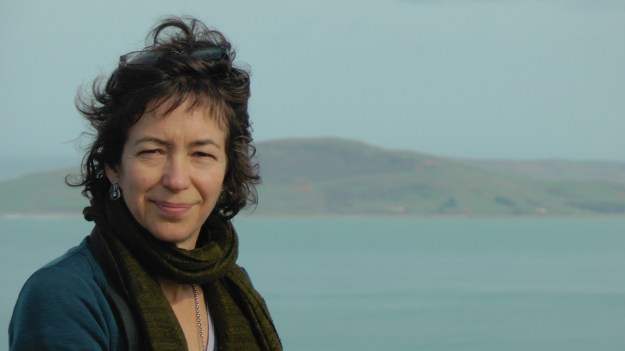
A conversation and poem from the Sarah Broom Poetry Prize Finalists: Jane Arthur

Jane Arthur_2018.jpg


To check up on the state of your heart you must lie back


with your tits out so a warm-handed stranger-

technician can run a small device across your ribs

like a barcode scanner. She seems not to see your skin,

is only concerned with looking beneath it. You want to ask her,

What is it that makes me different

from others who’ve lain here, does my heart hide deeper

in my chest, do my nipples watch you cock-eyed, disturbingly,

am I more beautiful than 50% of others or.

On a black-and-white screen there’s something grainy

and pulsing, trapped in a wedge frame

like an embryo, unheard. This is your heart, twitching.

Watching it you can’t tell what from what, all you know is

the image is moving and you are alive. What a miracle

of existence, you now understand, to have a life inside you

and you want to clutch the technician and rejoice.

Now you can hear it, too, your heart—thumping, muffled,

like listening with your ear pressed up against a wall,

the white-noise hiss of the ocean trapped behind.

But that’s not ocean, not white noise,

it’s blood noise. That’s blood pumping through your heart

to your veins. You hear it through a wall

of veins, bones, fat, flesh, skin keeping all this life inside you

like one big intricate loving dam.


©Jane Arthur


If you were to map your poetry reading history, what books would act as key co-ordinates?

Formatively, I was a music-obsessed teen, so the liner notes of the angsty ’90s: Kristin Hersh, Tori Amos, R.E.M.. Patti Smith. Before that: the poems of Leonard Cohen and Pam Ayres. More recent inspirations: Jenny Bornholdt’s Miss New Zealand; Geoff Cochrane; Kim Addonizio’s What Is This Thing Called Love; Louise Glück’s Vita Nova; random editions of Sport; A Hole is to Dig by Ruth Krauss and illustrated by Maurice Sendak. Online poetry journals, including Sweet Mammalian, Starling, Turbine/Kapohau. The Poetry Foundation website. And most recently: essa ranapiri’s incredible Twitter thread of great NZ poems.


What do you want your poems to do?

I guess I want them to be intellectual exercises that end up appearing thoroughly non-intellectual. I want them to be approachable, definitely messy and imperfect, a bit funny but completely heartfelt without being gross? At least, that’s what I want them to “be”. What I want them to do is … reassure awkward readers that we’ve all been there and it’s cool, don’t worry about it.


Which poem in your selection particularly falls into place. Why?

“To check up on the state of your heart you must lie back” is one of those rare poems that burst out of me in one sitting (having been rolled around my brain for a day or so) and didn’t change significantly after that. An earlier version was published in Ika and two years later only a few words have changed. I wish I knew why some poems come out easily, it’s much more efficient. I am typically the world’s most painfully slow and fussy writer … more of a deleter.


There is no blueprint for writing poems. What might act as a poem trigger for you?

Standing in the shower. Brushing my teeth. Trying to write a different poem. Reading fiction. Going for a walk. Restless nights. Pretending to be someone else. Deadlines.


If you were reviewing your entry poems, what three words would characterise their allure?

Familiar, surprising, dorky


You are going to read together at the Auckland Writers Festival. If you could pick a dream team of poets to read – who would we see?

HRH Selina Tusitala Marsh as MC because I want her to be everywhere at all times. Some of the finest new, super-young poets like Tayi Tibble, Nina Powles and Freya Sadgrove – I’d ask the Starling eds to organize that bit. With interludes from Faith Wilson, Coco Solid, Hera Lindsay Bird, Chris Tse and Fleur Adcock. With a surprise VIP encore from Margaret Mahy during a round of whisky.


Jane Arthur was born in New Plymouth and lives in Wellington with her partner, baby and dogs. She has worked in the book industry for over 15 years as a bookseller and editor, and is a founder of the New Zealand children’s literature website The Sapling. She has a Master’s in Creative Writing from the IIML at Victoria University, where her supervisor was Cliff Fell, a 2017 Sarah Broom Poetry Prize finalist. She also has a Diploma in Publishing from Whitireia Polytech and a Master’s in English Literature from Auckland University. Her poems have appeared in journals including SportTurbineIka, and Sweet Mammalian.


The four finalists will read from their work at the Sarah Broom Poetry Prize event at the Auckland Writers Festival on Sunday 20 May, 3.15-4.15pm. 

Sarah Broom Poetry Prize page.


Poetry Shelf interviews Manon Revuelta


image1.jpeg


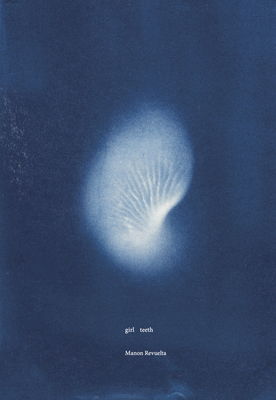
girl teeth Manon Revuelta, Hard Press, 2017


Manon Revuelta’s chapbook, girl teeth, prompted me to track her down and do an email interview over about a month. It was such a pleasurable conversation I didn’t want it to end. 


Paula: A number of years ago I picked your poem as the winner of the New Zealand Post Secondary School Poetry Competition. While I had to ponder for ages on the shortlist, your poem lifted above the rest and stuck to me with its glorious intricacies. It was a clear winner. In my speech on the night I borrowed from Ruth Padel and talked about the poem’s ‘chewiness’. All these years later I discover your chapbook, girl teeth, and am once again caught in the luminous effects of your writing. Can you build a little portrait of your writing life in the intervening years?

Manon: Thank you Paula, these are such kind words. It was such a lift to win that prize. That was all the way back in 2008, a whole ten years ago and my final year of high school. Since then my writing life has continued as more of an undertow, as I think it does for many. I studied English and Film in Auckland, where I took some wonderful courses with Lisa Samuels and learned all about language poetry. I also met Greg Kan, who became a good friend and as a fellow poetry nerd introduced me to some tremendous writers like Ariana Reines and Aase Berg. After university, I worked as a bookseller at Time Out Bookstore for a couple of years. That was such a blessing; I got to read a lot and organise poetry events and work amongst the most loving and inspiring group of people. I moved to London a few years ago, and when that became too exhausting and I fell in love, I moved to Berlin, which is where I am now.


IMG_9127.JPG


It’s taking a very long and occasionally dispiriting time to sort out what I’d like to do to earn a living, as I don’t think poetry is that. I’ve worked in countless subsidiary post-graduate roles from check-out girl to nanny to unpaid intern, but writing seems to be a really comforting constant in my life and all these things in their own ways have come to inform what I write and allow freedom for it. I have had poems published here and there, and last year my dear friends Anna and Owen published girl teeth, my first chapbook, with Hard Press. That was the accumulation of a couple of years of writing, and a very special project to me.


large_girljacket.jpg


Paula: I can really identify with this! London was a significant struggle and turning point for me as a writer (there were more to come though!). I find poetry fits so beautifully in the gaps of living – for me doing my degrees, being a parent, earning a living – yet it is so essential that poetry is larger than a gap. When I read your collection I am immediately struck by the right-hand pages that are uniformly devoid of text like little white pauses. It is akin to the silence after a piece of orchestral music that allows what you have heard to reverberate. The poems themselves are a satsifying mix of silences and sumptuous detail. What matters as you write a poem?

Manon: Oh London! It’s a beast. Everyone you meet seems so driven and everything is moving at such a fast pace and sometimes that means you’re inspired to seriously think about what you want and other times it means you just drown in everything you don’t want. I agree, it is important for poetry to be larger than a gap… but it’s sometimes barely possible for it to exist at all and I’m impressed that it makes its way in.

I suppose what matters to me as I write a poem is just that it at some point causes that indescribable glint? And that I can feel attuned to what that is for me, not someone else, and most importantly, enjoy the process. Poetry is my only opportunity to do strange things with language; to turn it into something elastic. For a long time I was really interested in formalism, and then swung the other way entirely, and I guess I have wanted to reconcile those… Italo Calvino quoted Paul Valery (I only seem to have read him in quotes) who said “one should be light like a bird, not like a feather”. I think that’s a great and far too quotable way of putting it, this velocity we respond to and attempt. That being said, I wouldn’t want to ever apply a rule to anything. I don’t know! You always find new ways of achieving things.


Paula: Italo Calvino is great – he is what inspired me to study Italian until there were no degrees left. I love his Six Memos for the Next Millennium. He has a lecture in there called ‘Lightness’. There is also quickness, visibility, multiplicity, and exactitude. He died before he wrote the sixth (consistency) or delivered any of them. I love your quote and fits your writing. There is both economy and agility on the line.


are poems shells

bone caves

gentle blunt beaks

lived in and left

for others to crawl into

Your first poem, ‘Shells’, is a delight. It reminded me of what Hinemoana Baker wrote on the back of her book, waha | mouth: ‘I’d like to think that opening this book to read is like standing at a mouth of a cave, or a river, or a grave, with a candle in your hand.’  Your tropes pull in multiple directions. On the one hand a poem might be held to the ear like a shell and who knows what you will hear. On the hand there is the mysterious dark space that Hinemoana draws upon. Do you ever relinquish music and mystery?


Manon: Yes that’s exactly where I got it from! The ‘Lightness’ lecture. I really love that book.

I liked posing a sort of question in that poem; I feel uncertain sometimes what poems are, what they are for. There is this intense inhabiting when writing and then they can later feel like such foreign things. Not in the sense of being possessed by some genius that flows through you; just that writing is a thing you are present in and then the written thing feels almost like a by-product. Mary Ruefle writes about a friend of hers whose poems, after time has elapsed, “look like handkerchiefs. Something I needed to blow my nose in, wipe some tears with, with a little lace at the edges and my initials in the corner. Poetry is so weird.”

That’s an incredible quote from Hinemoana; I love that image of a flame held up to illuminate a tiny part of something immense. I think the last two pieces in the chapbook, the more essayistic ones, were an effort to cast a wider light on things, to relinquish some mystery. Poems can be quite ciphered and condensed, which I love, but it felt good to write something more sprawling.


Paula:  What poets feel close to the way you write? Are there poets who write so differently to you but whom you admire?

Manon: That’s tricky… I can only look at what I like, rather than see if my work is close to it. I know some poets I’ve been reading lately are Carl Phillips, Anne Carson, Jean Valentine, Dorothea Lasky. I have always carried a torch for Paul Celan. There are of course poets who write differently to me but whom I admire greatly- perhaps someone like Alice Notley- her poems are very long! Also Hera Lindsay Bird. She makes me laugh and weep, a rare combination, at least in poetry.


Paula: I am moved by the arrival of a mother (your mother?) in the poems.


as a girl i watch my mother’s earlobe

pulled down by an earring and

the tiny hole

i can see right though and

i plant the sea there

from ‘girl teeth’


A mother (your mother?) reappears in the more essay-like longer poem, ‘Duchess’. There is such tenderness at work here, surprising in detail and revelation, it refreshes how we as adult daughters can write (our) mothers. Your Louise Bourgeois quote sets up the poem: ‘She shows herself at the very moment/ she thinks she is hiding’. Elizabeth Smither has a breathtaking poem, ‘My mother’s house’, in her latest book, Night Horses, where she watches her mother move through the house from her car.

What drew the mother, her various visibilities and invisibilities, into your poems?


Manon: Perhaps as a starting point, I have always been close with my mother; she is an incredible woman and occupies a huge space in my heart. I also think mother/daughter relationships are always to some degree complex and fraught and intense. There are so many invisible histories that make up what is visible in ourselves, our lives… I think in recent years I became fascinated by tiny signs of my mother’s influence coming through in me, and started to think about the deeper roots of my behaviour habits. A sort of psychoanalysis, I guess, which in turn led to an analysis of my mother, and of her mother, and of the ripple effects trauma can have in generations; the inheritance and expression and rectifying of those effects in and on the (particularly female) body. I was reading a lot of women who were interested in these ideas too; Louise Bourgeois’s journals, Chantal Akerman’s No Home Movie, Theresa Hak Kyung Cha. It’s also both disturbing and important to me to look at the way femininity is constructed, and so much of that for me has happened through my mother, and by her mother, and so on. It felt very right to try to map these things out in writing. Is motherhood/daughterhood something you’ve explored in your poetry?


Paula: Yes! My first book, Cookhouse was criticised for its domestic focus, as unworthy of poetic attention, but the key thread, the white-hot core, was maternal. My doctoral thesis explored the maternal as it asked whether it made a difference if the pen held by an Italian writer was a woman. I argue for hinges and connections and the power of ‘and’. I am also interested in the ripple effects that pass from mother to daughter (and daughter to mother) but that also pass through generations of women writing. We have inherited so many freedoms, as both daughters and writers, yet we still face a need to speak out on myriad issues that affect women detrimentally. I write about this in my new book within the context of reading New Zealand women’s poetry.


Breadcrumbs

What a rarity

to appear in my own map

like when

I’m watching my hands

wash each      other

or pulling a rope of my own hair

out of a drain

like its     pondweed

or even seeing the ham

chewed into something different

when I spit it into a napkin


Your poems are like lacework; they hook the personal along with intense visual detail and a delight in thought. Are you cautious about self revelation? About appearing in your own map? Do you have any taboo areas?


Manon: Well you can probably tell I like banality! I hope we are moving on from a hierarchy of ‘poetically worthy’ material … I know Lauris Edmond was really criticised for writing about domesticity and motherhood too, and she is still overlooked. I guess, I hope, all that fuels a fire and a revision. Your book sounds so wonderful.

I don’t feel cautious about self revelation, I think it would be strange to be writing poetry if that were the case. But it also isn’t really something I do on purpose. I think it feels very free and private, even though you kind of know it isn’t? It can be a bit unsettling (in a nice way) when that all gets turned inside out and you publish something, but I don’t think that makes me omit things. I love reading writing that is TMI, so that reassures me.


Paula:  Is there a poem in the collection where the stars aligned and it particularly resonates for you?

Manon: I think the essay about the week with my grandmother resonated a lot. We had only met once before and weren’t able to speak each other’s language, so it was quite an intense experience, observing the ways disconnected families connect, speaking in the absence of words, the shapes we make out of silence. There were all these things that seemed to slot in with it; going to see the ruins of a nearby castle, my reading surrounding rocks and this story of Pyrrha. It was initially conceived as a voiceover for a film – which is still in progress – so it feels like an ongoing project with things falling into place. It also resonates in the context of living in a place where I don’t speak the language properly.


Paula: I loved that poem. There is a poetic finesse that depends on fluidity, storytelling,

sharp images, slow-pitched discovery and absolute tenderness.


So: still alive. And so henceforth:

another cup of instant coffee and

toast, another bath, clothes put

on, cooked lunch, another long

afternoon nap while I go out

walking. We don’t know what to

do with each other: we sit together

at her table eating over-ripe

bananas, peeled grapes, carefully

de-pithed segments of mandarins.

The refrigerator humming. She

examines my hands in her hers.

from ‘Bec/Nid/ Vent/Rêves Beak/Nest/ Wind/Dreams’


PaulaWill Berlin slant your writing?

In my research for my book I have noticed New Zealand poets living overseas have such different relations with home in their writing (Katherine Mansfield, Fleur Adcock, Lola Ridge). Some are nostalgic and the poem becomes a surrogate home while others are almost patronising. I am intrigued to read what Hinemoana Baker produces in Berlin. Will poetry ever become a way of writing home?

Manon:  As far as writing from Berlin goes, I think I haven’t changed what I’m doing at all… at least as you say, the poem feels a surrogate home wherever one goes. The only thing is that living here allows a lot more time to write (cheaper living than NZ = working at a day job less, etc.) so I do feel I can have more of a balance.


Words open and close and open;

breathing through their sutures.

from ‘Bec/Nid/ Vent/Rêves Beak/Nest/ Wind/Dreams’


Your book is a joy to read Manon. Thank you so much for the conversation. I want everyone to race out and find a copy of the book. It is my chapbook of 2017.

Hard Press page


30768045_10156528480629645_896466916_o.jpg


At Jacket 2: Vaughan Rapatahana interviews Robert Sullivan and includes new poems

Vaughan Rapatahana’s interview here


What would you like to see more of in Aotearoa poetry from your point of view as a poet? In other words is there sufficient recognition, publishing scope, critical space given to poets who craft their work in ‘different’ ways?

I’d love to see new voices find publication from a wide range of styles and personal backgrounds so that we reflect our diverse community in terms of race, class, gender, sexuality, and beyond to be as inclusive as possible. Poets have never had greater access to media and to publishing than now, although our mainstream publishers no longer have deep pockets. It’s always a writer’s task to convince, or make curious, or satisfy, or entertain a readership, and it’s a lyric poet’s task to evoke the particulars of being and a sense of the flow state that created the feelings attached to being ‘somewhere’ at the time. A poem might be on the fridge next to a flat roster, or on the edge of a windswept cliff facing the ghosts of Kapiti Island. There are so many other kinds of poetry I wouldn’t know where to begin, except to encourage that too.


Paula: I am dead keen to see a new book of poetry – love the new ones.


12 questions for Ockham NZ Book Award poetry finalists: Sue Wootton

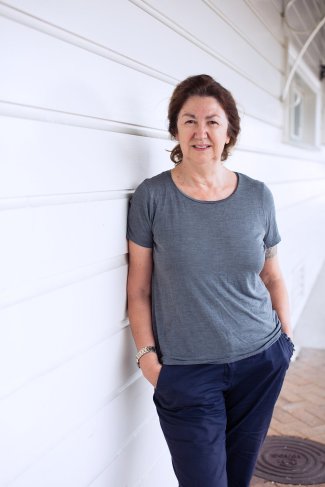
Sue_Wootton-092012-300dpi.jpg


Congratulations on your short-list placing!

Thank you Paula!


What poetry books have you read in the past year?

And this is why you should always keep a reading diary … I’ll have to cobble this together from flawed memory and my messy bookcase. Here goes: most recently, a ‘slim volume’ in the Penguin Modern Poets Three series with work by Malika Booker, Sharon Olds and Warsan Shire. In contrast, also Sentenced to Life and Injury Time by Clive James. Before these: Undying by Michel Faber, the poetry collections on the Ockham longlist, Bill Manhire’s Some Things to Place in a Coffin and Tell Me My Name, Walking by a River of Light by John Gibb, South D Poet Lorikeet by Jenny Powell, Getting it Right by Alan Roddick, Alzheimer’s and a Spoon by Liz Breslin, Taking my Mother to the Opera by Diane Brown, Fracking & Hawk by Pat White, The Trials of Minnie Dean by Karen Zelas, Taking My Jacket for a Walk by Peter Olds, Wolf by Elizabeth Morton, Where the Fish Grow by Ish Doney, Family History by Johanna Emeney, Possibility of Flight by Heidi North-Bailey, Withstanding by Helen Jacobs, Conscious and Verbal and Learning Human by Les Murray, Poems New and Collected by Wistawa Szymborska, Poems 1962-2012 by Louise Glűck, and X  by Vona Groarke.  

I like keeping an anthology handy too, and in the past year have been dipping in and out of two: Andrew Motion’s Poetry by Heart (on the bedside table) and Carol Ann Duffy and Gillian Clarke’s The Map and the Clock (next to the sofa).  


What other reading attracts you? 

Oh boy, you should see the pile of books by my bed – too many to list here. I enjoy both fiction and non-fiction (especially essays, biographies or memoir). Fiction-wise, I’ve recently finished Fiona Farrell’s wonderful Decline and Fall on Savage Street and am now reading Where My Heart Used to Beat by Sebastian Faulks, and some short stories by William Trevor. I’ve recently reread Olive Kitteridge and My Name is Lucy Barton by Elizabeth Strout (I love all of  Strout’s work!). Vincent O’Sullivan’s All This By Chance is standing by for Easter.

Nonfiction-wise, I’m itching to start neuroscientist Antonio Damasio’s The Strange Order of Things and Marilynne Robinson’s new essay collection What Are We Doing Here? (I love all of Robinson’s work!).


Name some key starting points (or themes) for your collection. 

This is quite a hard question for me to answer because The Yield wasn’t pre-planned as The Yield – it grew very slowly into The Yield, and I only recognised that I had a coherent  collection very late in the process. In hindsight I can see quite clearly that the poems are bound together by themes of give and take, love and loss, flexibility and rigidity, toil and harvest. This finally clicked into place for me after I wrote the poem called ‘The Yield’. It was only after that that I felt I had a potential collection in my hands. But most of the poems in the collection were written in the couple of years preceding that moment, and during those years I had no idea whether a book would eventuate. I had hope, but not much evidence!


Did anything surprise you as the poems come into being? 

Every poem I write is a surprise to me. I can never get over that fact – it amazes me, always.


Find up to 5 individual words that pitch your book to a reader.

These words are from The Yield: haul, reach, lift, roam, home.


Which poem particularly falls into place for you?

Not sure if I can select one – they all have their place.


What matters most when you write a poem?

I like a tight synthesis of sound and sense.


What do you loathe in poetry?

 Sometimes in an art gallery I stand in front of a painting I find ugly or too obvious or (conversely) too obscure – challenging, anyway, a canvas that maybe bores me or offends my personal sense of aesthetics, perhaps even my values. But still, alongside my ‘this is not one for my living room wall’ reaction, I can still respect the graft and the craft that went into making it – so long as it’s well made. Ditto, poetry. What I appreciate, above all else in poetry, is knowing that the poet has really leaned in. That’s a fundamentally appealing quality for me, even if I can’t adore the finished product. But if a poem is attentively made, and it somehow moves me – then I’m all in.


Where do you like to write poems?

 In my study or on the kitchen table (though I scribble scraps in my notebook anywhere, any time).


What are strengths and lacks in our poetry scenes?

We seem to have a lively open mic scene all over the country, with a new fizz of high energy youthful involvement alongside the different – no less intense – energy of more experienced voices. I love the diversity of this, the way it opens our ears and hearts and minds to each other. It’s good, too, to see extroverted poets out there connecting with audiences, attracting media comment and generally flying the flag for poetry. But don’t forget the page! I’m a big believer that poetry is a craft learned by practice. Getting better at it is done through serving a kind of apprenticeship, learning the tools of your trade, and being supported, mentored and informed by more experienced practitioners, so for me it’s really great to see newer literary journals like Mimicry and Starling rising up (though I’m sad to see the end of  JAAM).

Nothing matches the developmental push that comes from submitting work to a well-read editor to be scrutinised word by word. It’s healthy, too, to have enough possible publication places to be able to avoid only submitting work to your friends or classmates. So, I think we can do with still more editor-curated poetry publications to nourish the development of poetry in Aotearoa-New Zealand. Another lack: we need more platforms for the kind of stimulating and informative longform poetry review that critics like Lynley Edmeades, for example (in a recent Landfall Review Online), are so good at writing. But also, no one should be expected to write a seriously-considered review for nothing. Work is work, even if at the end of the day it’s not mud, but ink, on your hands. Funding, funding, funding: there’s a permanent problematic lack!


Have you seen a festival poetry session (anywhere) that has blown you off your seat (or had some other significant impact)?

I was at the 2010 Granada Poetry Festival in Nicaragua – truly a festival, a celebration of la poesia. The readings were held in parks and plazas. The Nicaraguan people have a passionate regard for poets and poetry – they turned out in their thousands to hear readings from their own and international poets. One particular event stands out for me. It was an evening reading, outside, warm and dark in the main town plaza, with about 2000 people in the audience – all ages, children, teenagers, parents, grandparents. Their listening was so attentive (most poems were voiced twice, once in the poet’s language and again in Spanish translation) – I watched face after face absolutely blossom in response to some lines. There was a feeling of us all being tapped into a high-voltage current – such power. Sheer zappery! And all from words.


If you could curate a dream poetry session at The Auckland Writers Festival which poets would be there and who would mc or chair it?

Sharon Olds, Louise Glück and Rita Dove in conversation with Carol Ann Duffy.


Poetry Shelf interviews Anna Jackson


On my way elsewhere. 


My shoulders are sore, and my feet.  But I have my vision.

I will look past the old man whose beard drips

down like a stalactite, to the light

at the end of the tunnel – it isn’t a cave

he sits in, but a tunnel, and out

the other side there is a path as white

as sand.  There is a break in the clouds to the East,

but the light falls from the West – it is later

than I thought.  I should have gone home long ago

and he, no doubt, has come a long way himself,

is no doubt just resting a moment, not living in a cave. 

Though it isn’t a cave, but the mouth of a tunnel, and I 

should be getting home, though I have no family

to go home to and the fireworks can be seen

from here, through the tunnel, which could

be seen as a frame, almost.  Would you rather

have twenty-twenty vision of the fireworks or be blind

with five children around you, five children

clamouring for fireworks that you cannot light? 

I would ask the old man this question, if

he were close enough to hear me – I don’t know

how well he can hear.  But what I thought

was the sound of the fireworks I think is the old man, light

catching his eyes suddenly so they shine in the dimness,

calling out from inside the tunnel to me:

“even if you lit them, you wouldn’t be able to see.”  


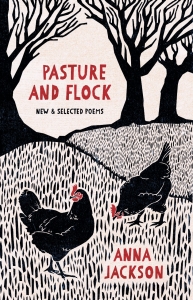
©Anna Jackson in Pasture and Flock
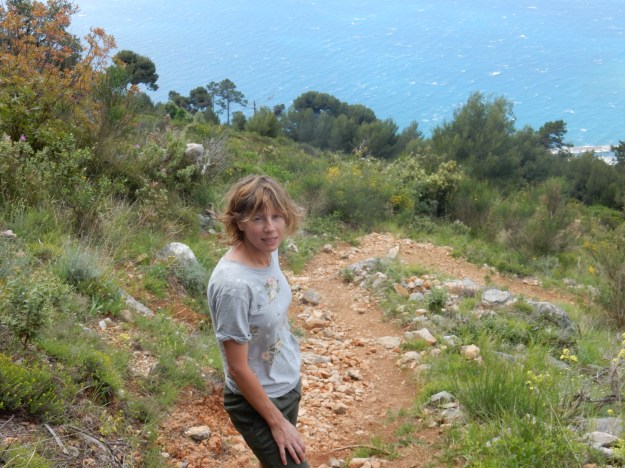
 

DSCN3393.JPG


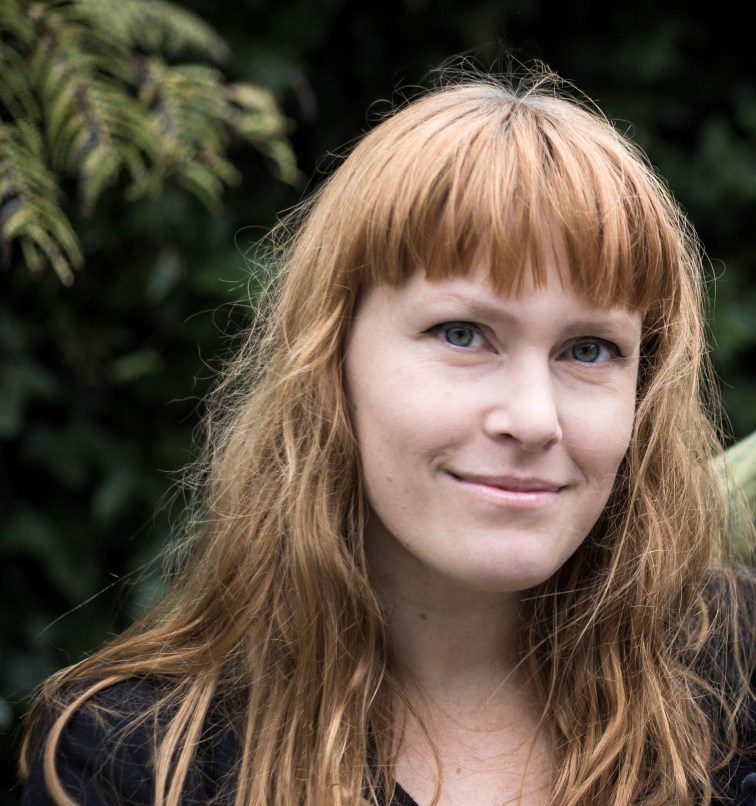
Anna Jackson debuted in AUP New Poets 1 and has subsequently published 6 poetry collections with Auckland University Press. She has a DPhil from Oxford, and is an Associate Professor of English at Victoria University. She has organised several poetry related conferences with Helen Rickerby (most recently Poetry & the Essay) along with the Ruapehu Writers Festival (much loved by participants). In 2009, with Charles Ferrall, she published  British Juvenile Fiction 1850 – 1950: The Age of Adolescence, and in the following year, Diary Poetics: Form and Style in Writers’ Diaries 1915 -1962.

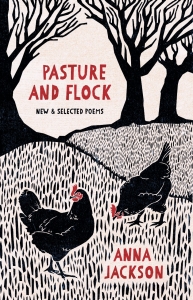
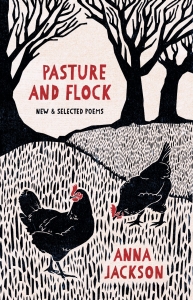
When Anna Jackson’s Pasture and Flock: New & selected poems arrived in my reading lap, I stalled on the perfect cover and the perfect title for curated travels across 25 years of poetry. There is new growth, myriad viewpoints, shelter and flight. My relationship with the poetry extends back to the first publication as does my friendship with Anna. Opening this book is like opening a poetry album where the ghosts above the line are our shared conversations, celebrations and confessions. Yet when I enter the poem, our interlinked history dissolves, and it is just the poem flaring and gliding in my mind.
 

1520468027554.jpg   1520468027554.jpg   1520468027554.jpg


An unfolding email conversation with Anna

Paula: Right from the start your poetry has touched a chord with me. I am reading the early poems, and the litheness on the line, the measured wit, the roving curiosity are as captivating as when your debut poems appeared in AUP New Poets 1 and The Long Road to Teatime. Reading the poems from the early collections, I wondered what it is like musing back on the young woman who wrote them. Are you startled to see what you wrote? What do you love about these first outings? Was there difficulty?

Anna: It is more startling finding unpublished things I wrote at the time, when I really don’t know where they are going to go or what I was thinking.  Because these poems were published I have never forgotten them so completely, but I like returning to that sense of who I was, and who we were, when I was writing poetry for my friends at the age of 23 (“looking as young as the teenagers at the bar” – well of course I did, I was only 23!).  I wasn’t writing for publication except we found we could use the old printing press at the university, so we wrote some things to play around with the letterpress with, and then we got more ambitious and made little chapbook anthologies of our writing, with a photocopier and woodcuts, or maybe they were linocuts.


Paula: I am really drawn to the ‘friendships’ you set up with other writers and the way the poem becomes conversation or story, surprising in the paths taken.


The sun has taken to me.

It rarely comes out now

without stopping to talk.

I am expected to drop everything.


from ‘My friendship with Mayakovsky’


Often your family and friends are drawn into the other scenes. I especially love the Dante poems where you are all lost in a thicket of autobiography, musings and literary engagements.


In the middle of the journey

we found ourselves lost.

‘This is the jungle,’ said Johnny.

Roe asked if we had a map.

‘Not a road map,’ said Simon.

‘So what sort do you have?’

We looked for a life map.


from ‘The road to Karekare’ in ‘The long road to teatime’


Were these early literary friendships like a support crew as you started out, or a way to take risks and refresh the inherited page, or something in between or altogether different?

Anna: Yes and yes…In Dunedin, writing and publishing poetry was a way of taking part in an arts scene I wanted to be a part of.  There were empty warehouse buildings, scavenged equipment, all sorts of projects people were trying out, some of which never amounted to anything, some which were just one-off experiences.  One evening Alastair Galbraith, a musician, writer and artist, read through a Marguerite Duras script with me, I can’t remember why, but it was an extraordinarily powerful theatrical experience for me, except more intimate than theatrical because we were performing for no one.  And making friends with Mayakovsky, travelling with Dante, was part of this way of living in connection with other writers and artists, on and off the page.


Paula: Were there losses in not including the whole sequences? From my point of view there is a greater economy of travel, yet the underlying pulse of intersections is not diminished. So the family refreshes Dante and Dante refreshes the family—and that ‘would of selves’ hungry for ‘hot buttered toast’.

Anna: The collection includes six sequences, two from my first book, and I only edited them a little, for “economy of travel” as you say and also to cut out some lines or stanzas that still embarrass me.  I selected six whole sequences rather than fragments from more sequences, to tell whole stories as much as I could, and I think another story tells itself through the sequence of sequences too maybe.


Paula: I have edited earlier poems when performing them in public on the spot! There is the little nag hovering above a word or a line that I finally pay attention to. When an editor coincides with that nag, I sit up and listen.

It is fascinating how this new version of sequences retains the original chords yet makes the synchronicities between books sing with different intensities. I am thinking of the voice of the child (Johnny, Elvira, Rufus), relations with writing, the imagined and longed for, the lived.

With The Gas Leak you step into narrative, but family is still in acute focus. There is a humaneness at work, little wisdoms, a playful yet serious pushing at familial boundaries. What freedoms and advantages did you find in writing this book? How did the sonnet help?


Has someone broken in?

I wouldn’t know what was missing.

For years I have left

the door open

thinking even mud

from the break-in would be

a gain


from ‘A master key is easy to procure’


Anna:

The family in acute focus, I like that.  The sonnet form allowed for a very taut story-telling voice, the sonnets in the book being reduced sonnets, with fourteen lines but very short lines.  I would put as much as I could in each poem and then cut it back, and when I couldn’t cut it back any further, I would add an additional element and then cut again.  Perhaps I was doing something like that with the narrative too, with the rearrangement and fictionalization of elements of autobiography and elements of narrative I’d taken from Gerrit Achterberg’s Ballade of a Gas-fitter – a “ballad” that is also written in sonnet form.  It is a heightened, fraught version of a family that only incidentally resembles, sometimes, my own.  I wrote it very quickly, between classes, making use of whatever material was to hand, a discussion of Xeno’s arrow with a colleague, an attempt to use the barre around our office lifts for leg stretches, the children’s soccer game in the weekend, a song on the radio.  There isn’t a word I would change, but I’ve already found changes I would make to two of the poems in the new selection at the end of Pasture and Flock.


Paula: What draws you to poetry rather than narrative?

Anna: I went to a novel-writing workshop run by Curtis Sittenfeld once, and she said writers reveal a lot about themselves in fiction in details they don’t think are giving anything away – how much characters drink, or what they worry about, or how they respond to a telephone ringing.  I think poetry offers more secrecy, but maybe I am giving away more than I mean to.  I do think I am writing narrative though – sometimes little narratives in individual poems, sometimes a narrative sequence across a series of poems.  I like the possibility for different forms of narrative, shorter stories, or stories that leap across gaps and shifts in perspective.


Paula: Catullus is your point of return. What attracts you to his poetry? In meshing your voice and his, your preoccupations and his, again you freshen poetic possibilities. There is daring and there is conversation, particularly when you turn your attention to Clodia. The I, Clodia poems have always resonated for me.


I might cry over your verses –

tears of laughter

but these are real tears,

I’m grieving.

Look at what wax my little bird,

yesterday – this was

somebody, closer to me than …

you had better be leaving.


from ‘Pipiabat’


Anna: Yes, the Catullus for Children poems were a kind of translation game, domesticating Catullus not just into a contemporary New Zealand setting but revisiting his poetry in terms of the preoccupations of a seven-year-old child.  I liked how the excess and passion of his poetry translated into the different kinds of excesses of the playground, and also was interested to see what was left with the very adult themes of his poems taken away.  I, Clodia is a more serious engagement with the poetry, putting the love affair with Clodia (or Lesbia as he calls her), that several of his poems return to, right at the centre of a narrative I construct through a series of poems in her voice.  I was drawn to the narrative possibilities that the Catullus poems suggest but do not resolve, and I was also drawn to the romantic intensity of the poetry, and wondered what it would be like to be on the receiving end of it, and perhaps to match it.


Paula: I enthused wildly on the blog about your chapbook with Seraph Press (Dear Tombs, Dear Horizon). Much of these poems were written when you had the Katherine Mansfield Fellowship in Menton. You have included ‘Dear Tombs’ that comes out of that cluster of experience. On my blog I wrote:

The poem steps off from graffiti witnessed on rocks: ‘You are my most lovely horizon’. Each experience, thought, recalled page or vista steps off into the mysterious elsewhere of thinking, and from the elsewhere of thinking into the paradoxical here yet elsewhere of writing. The horizon is the translucent line where Mediterranean sky meets Mediterranean sea, a sensual hook of beauty that stalls the walker, but it is also the indefinable lure that poses a need to write, to think, to experience. It is Katherine Mansfield, the other authors, the conversations that stick, the not-home-ness that becomes a home-ness. (see here for review)

What prompted the ‘Dear Tombs’ narrative? I do think these poems lift from the page in glorious ways. Did your French writing sojourn make a difference?


Dear Tombs, I do not see anything here but dust.

Dust, dust, dust and beyond your hollows

and pillars, some trees still clinging to the dust

that gives them nothing, not a swallow

of water in it, a good winter one with rain,

a bad winter the one they have just had, and the one to follow.


from ‘Dear Tombs’


Anna: Yes, I was wonderfully home and not-home in France, and at home and not-at-home in my own writing as well.  Poetry is something I can write in between what I ought to be doing, as a form of procrastination or resistance, so it was both liberating and unnerving to feel an obligation to write, and to write something I couldn’t otherwise have written.  The Dear Tombs, Dear Horizon chapbook was made up of notes I wrote to myself, work towards writing rather than writing itself, not a way I usually work, but a way of writing I could do every day.  It did come to take on a kind of life and rhythm of its own and I was really pleased Helen Rickerby would publish it as a Seraph Press chapbook.  I feel it has a lightness and spaciousness like our life in France.  It wouldn’t really have worked to work up the notes into a different kind of poetry, except I did work up the dream at the very end of the chapbook about the tombs, exactly as I half-jokingly planned in those notes, in terza rima.  And then that set me off writing a few other poems in terza rima – but none of the others have the depth and glittery darkness of Dear Tombs.


Paula: The new poems continue this uplift. I love all of them, but especially ‘Flammable’, ‘On my way elsewhere’, ‘Bees, so many bees’, ‘Pasture and flock’. Really any page I land on becomes a favourite. There is a pulse of love that is always surprising and that is steered by shifting melodies. Which poems have particularly fallen into place for you? What mattered as you wrote these?


The world was flammable, we knew it was.

Our hair lit up with candle-light, we peeled off

the wax from the table and made it into

something beautiful, tender as the high voices

of the castrati, fine as smoke through the grain

of an old LP, a radiance through their song

like the flame of a wick slowly burning,

burning in its casing of wax. We all felt it.


from ‘Flammable’


Anna: ‘Flammable’ and ‘On my way elsewhere’ I think have something of that glittery darkness of Dear Tombs.  They both, in fact, have darkening skies and glittering lights, candlelight again in ‘Flammable’, and fireworks in ‘On my way elsewhere’, but I also mean a kind of coming from elsewhere, a sort of charged darkness.  They are about what we can’t see, can’t have, don’t know about ourselves, and I think they have something of an oracular quality about them, represented in ‘On my way elsewhere’ by the old man in the tunnel.  Maybe they are also a bit silly, a bit absurd, or at least a bit comic.  Most of the poems have been published in journals and I sent “On my way elsewhere” out to a few in turn but couldn’t place it anywhere, but it is one of my favourites.


Paula: I like the idea of glitter and darkness in a poem. You often draw real people into your poems, as we have already discussed. Does this ever make you uncomfortable?

Anna: I have written some I won’t publish because they draw too closely on real life, in ways that might be uncomfortable for the people I’ve written about. To make a poem work, often you want to push it as far as you can into discomfort.  And sometimes you will take risks for the work, at the risk of other people as well as yourself.  I mean, I have.  It is the same in fiction and essays – Brian Blanchfield’s brilliant, compelling book of essays, Proxies, was written with the method of keeping going from any starting point until he reached a point of personal discomfort or shame.  It makes for brilliant reading but it is very exposing, for himself and sometimes for other people he writes about.  I think he is extraordinarily brave.


Paula: Writing is the most important thing, but there are so many other aspects to a poet’s life: public readings, festivals, reviews, interviews, book awards, teaching. How do you feel about these extra demands?

Anna: I think most poets probably write because it is such a secret art, no one watches you do it.  You can be very controlled about what you release, no one has to see the early drafts or the work that goes nowhere, or goes somewhere you don’t want anyone to know about.  So public events are everything the poet has chosen against.  I love teaching and I have really brilliant, engaged students this year who constantly surprise me with new insights, but it is always still a little frightening standing at the front of the lecture hall, hoping the hour will go well.  There is a poem in Pasture and Flock, ‘The Cooking Show’, about the dread of lecturing, wishing I could lecture in secret, under a blanket with a torch.   You want people to read your work, and so the invitations to take part in events are very welcome, but I always wish I didn’t have to do them.  I don’t want to put people off inviting me by saying this, I’m grateful too to be asked.  I think it is the same for most writers.  And it isn’t as if publishing the work isn’t also an act of exposure you sometimes dread.  You still want to do it.


Paula: Why write poetry? Why read it?

 Anna: I read poetry almost every day.  It allows for a different kind of thinking and seeing.  I love fiction too and the way you can be immersed in a whole other world, but poetry allows for micro-immersions, intense unfinished experiences like dreams, that can have that same urgent resonance a dream can have.  Some poems I have held in my head for years, a poem is very portable.  I would like to think a poem of mine could have that kind of resonance for another reader.  Writing poetry is itself a micro-immersion in a developing dream, a dream you can partly control, even as it takes control of you.  It is like a more active form of reading.  And then you have written a poem, that wouldn’t be in the world if you hadn’t written it.


Pasture and flock


Staring up into the sky my feet

anchor me to the ground so hard

I’m almost drowning, drowning

in air, my hair falling upwards

around my shoulders, I think I’ll hug

my coat closer.  I’m standing

on hundreds of blades of grass, and 

still there are so many more

untrodden on.  Last night, in bed,

you said, “you are the sheet

of linen and I am the threads,” and

I wanted to know what you meant

but you wouldn’t wake up to tell me

and in the morning you didn’t

remember, and I had forgotten

till now when I think, who is

the blades of grass, who is the pasture?

It is awfully cold, and my coat

smells of something unusual.

It almost seems as if it is the stars

smelling, as if there were

an electrical fault in the sky,

and though it is almost too dark

to see I can see the sheep

moving closer, and the stars

falling. I feel like we are all

going to plunge into the sky

at once, the sheep and I,

and I am the sheep and I am

the flock, and you are the pasture

I fall from, the stars and the sky.


©Anna Jackson


Auckland University Press author page

‘Meet Viva la Novella shortlistee Anna Jackson’ – interview with Seizure Press includes her new project!

‘What are you working on now?

I am writing a book about poetry and at the moment I am finishing a chapter on sprawl in poetry, while thinking about a chapter on dead poets and what it means to write in anticipation of being dead.’
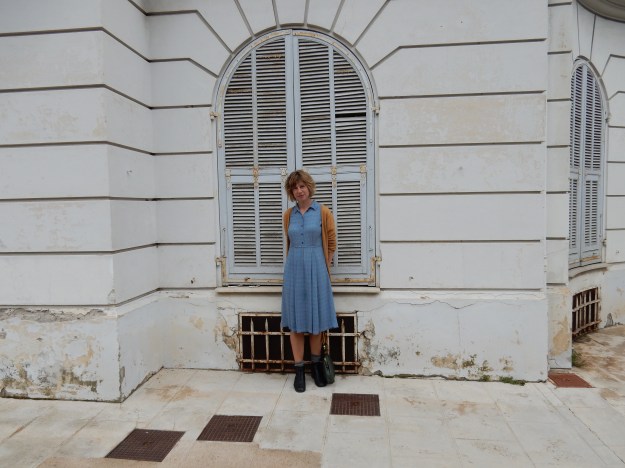
 

DSCN1936.JPG


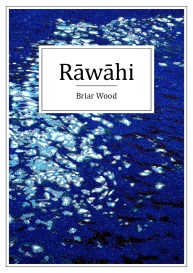
12 Questions for the Ockham NZ Book Awards poetry finalists: Briar Wood

2E4A6298BriarWood.jpg


Congratulations on your short-list placing!

Kia Ora.


What poetry books have you read in the past year?


Say Something Back – Denise Riley

The Bonniest Companie – Kathleen Jamie

Dark Sparring – Selina Tusitala Marsh

Citizen – Claudia Rankine

Deep River Talk Hone Tuwhare


What other reading attracts you?


Fiction – La Rose Louise Erdrich; Parable of the Sower Octavia Butler; A Girl Is a Half-Formed Thing Eimear McBride; Sleeps Standing Moetu Witi Ihimaera with Hemi Kelly; Foreign Soil  Maxine Beneba Clarke

History  – Tuai Alison Jones and Kuni Kaa Jenkins; Inglorious Empire: What the British Did To India Shashi Tharoor

Journalism and Essays –   Feel Free Zadie Smith; False River Paula Morris; The Best and the Brightest David Halberstam


Name some key starting points (or themes) for your collection

wāhi, places, the ambience and etymology of words, kupu kōtuitui


Did anything surprise you as the poems come into being?

Yes, the thematic intensity and interconnections as the collection e-merged.


Find up to 5 individual words that pitch your book to a reader.

negotiating,  rerenga, ecoconscious, beò, karadow


Which poem particularly falls into place for you?

‘Kuramārōtini’


What matters most when you write a poem?

Aligning kupu


What do you loathe in poetry?

I don’t loathe anything or nothing in poetry.


Where do you like to write poems?

Near Maungatapere.


What are strengths and lacks in our poetry scenes?

Te reo writing and performance is a strength – there should be more promotion of it.

The performance and publishing scene is quite inclusive and can be more so.

More consistent newspaper reviews of poetry and media outlets paying to publish poems.


Have you seen a festival poetry session (anywhere) that has blown you off your seat (or had some other significant impact)?


Performances at hui for Te Hā ki Tāmaki – Contemporary Maori Writers by Whaitiri Mikaere and Te Kahu Rolleston pass on their energy and  aroha for te reo with an integrated intensity.


If you could curate a dream poetry session at The Auckland Writers Festival which poets would be there and who would mc or chair it?


Any of the poets could mc or chair it.

Kiri Piahana-Wong

Jacqs Carter

Te Kahu Rolleston

Paula Morris

David Eggleton

Brian Turner


Rawahi-Front-Cover_high-res

Anahera press page

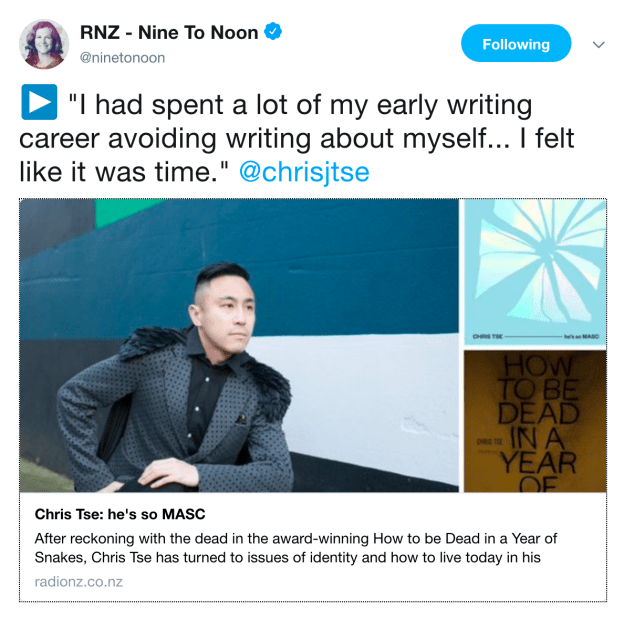
Chris Tse in conversation with Kathryn Ryan @radioNZ


Screen Shot 2018-03-26 at 1.42.25 PM.png

this is great!

Listen here

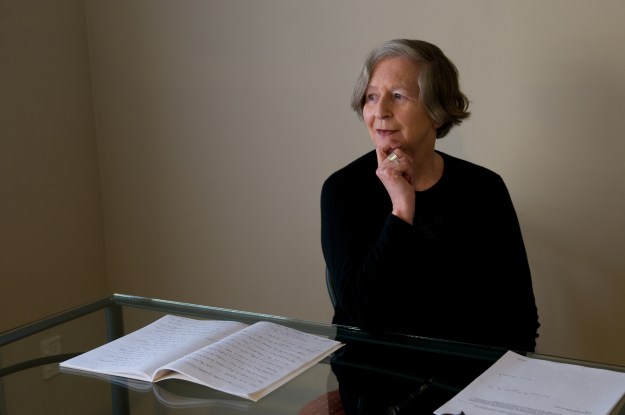
12 Questions for the Ockham NZ Book Awards poetry finalists: Elizabeth Smither


DSC_0067.jpg


Congratulations on your short-list placing Elizabeth!


What poetry books have you read in the past year?

Everything by Wislawa Szymborska and the Penguin Modern Poets series (3 poets in each clutch purse-sized collection): Emily Berry/Anne Carson/Sophie Collins; Malika Booker/Sharon Olds/Warsan Shire etc.


What other reading attracts you?

Almost anything. At the moment I am re-reading Rex Stout and the yellow pyjama-wearing detective Nero Wolfe.


Name some key starting points (or themes) for your collection.

I never discover a theme until a collection is put together. The connections between individual poems can be as subtle and perverse as the most delicate rhyme or rhythm.


Did anything surprise you as the poems come into being?

Perhaps the secret life of animals?


Find up to 5 individual words that pitch your book to a reader.

‘The heart heals itself between beats’ because it was a commission with an extra scoop of fear attached.


What matters most when you write a poem?

Depth and uncertainty.


What do you loathe in poetry?

Nothing. It’s important not to loathe anything.


Where do you like to write poems?

Propped up on a bank of pillows in bed, with the concert programme on the radio and perhaps a glass of wine.


What are strengths and lacks in our poetry scenes?

The chutzpah of our independent publishers; a tendency for too much adulation.


Have you seen a festival poetry session (anywhere) that has blown you off your seat (or had some other significant impact)?

Margaret Atwood and Hans Magnus Enzensberger at the Aldeburgh festival. I read first and sat down between them, shivering.


If you could curate a dream poetry session at The Auckland Writers Festival which poets would be there and who would mc or chair it?

I think I’d do a Dead Poets session. Keats and Shelley, Robert Lowell, William Empson, John Crowe Ransom, Tomas Tranströmer, Szymborska, of course… the possibilities are endless. It might have something of the bitchy tone of ‘The Real Housewives of Melbourne’.  To chair it one of the Paulas: Green or Morris.


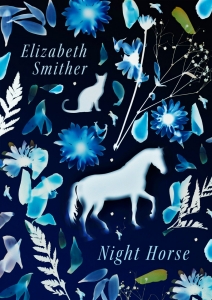
Night Horse AUP author page


1497223465774-1.jpg


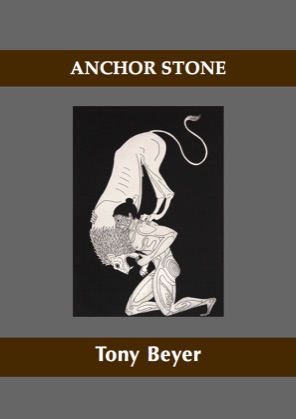
The Ockham NZ Book Award Poetry Finalists: an interview with Tony Beyer


Screen Shot 2018-03-20 at 8.55.02 AM.png


Congratulations on your short-list placing!

Thank you!


What poetry books have you read in the past year?

My favourite NZ books in 2017 were Stu Bagby’s Pockets of Warmth (Antediluvian Press) and John Gibb’s Waking by a River of Light (Cold Hub Press). Recent publication of their respective collected poems has sent me back volume by volume through Galway Kinnell and A. R. Ammons, admired late US poets. Also a delight to have Alistair Te Ariki Campbell’s Collected Poems – VUP’s finest ever publication!


What other reading attracts you?

Very interested lately in female North American long-form poets, specifically Rachel Blau du Plessis, Beverly Dahlen, Daphne Marlatt and Eleni Sikelianos. I read a lot of European and Asian fiction in translation. Non-fiction usually includes Victorian and ancient history.


Name some key starting points (or themes) for your collection.

Finding myself unexpectedly between teaching engagements and having to re-think my assumed identity. The New Pacific Studio fellowship in late 2011, when I was encouraged to be creatively selfish. Since then I seem to have established a modus operandi that keeps me writing whatever else is going on.


Did anything surprise you as the poems came into being?

There was a strong awareness that these were some of the poems I had waited a long time to be able to write.


Find up to 5 individual words that pitch your book to a reader.

Right here now and always.


Which poem particularly falls into place for you?

‘Li Bai’ focuses many of the concerns in the book about environment, identity, time, culture and memory, etc. ‘The characters’ probably does the same in a more succinct, oblique manner. I suppose my basic allegiance is to poetry.


What matters most when you write a poem?

I want to tell the truth and communicate with others. The work is more important than I am.


What do you loathe in poetry?

Reductive expectations.


Where do you like to write poems?

Everywhere.


What are strengths and lacks in our poetry scenes?

Strengths: the new work appearing from younger poets, inventing the future and guaranteeing there will be one; growing bilingual and multilingual awareness has enriched our Pacific possibilities and commands response. Both factors indicate our unique position and opportunities in the Anglosphere.


Have you seen a festival poetry session (anywhere) that has blown you off your seat (or had some other significant impact)?

Have not attended festivals.


If you could curate a dream poetry session at The Auckland Writers Festival which poets would be there and who would mc or chair it?

NZ now: Airini Beautrais, Sarah Jane Barnett, David Howard and Erik Kennedy, MC’d by Stu Bagby.

For all time: Tomas Tranströmer, Charles Olson, Lauris Edmond and C. P. Cavafy, chaired by William Carlos Williams.


9780473411046


Poetry Shelf interviews Chris Tse


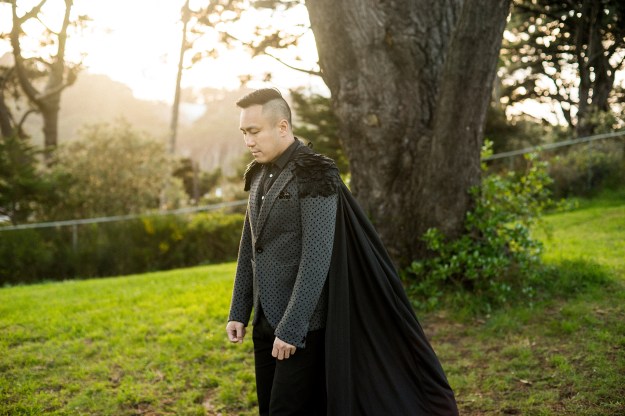
Chris Tse - October 2017 - 01x - Photo by Rebecca McMillan.jpg


Chris Tse is a poet, actor and musician whose poetry first appeared in AUP Poets 4. His award-winning debut collection, How to be Dead in a Year of Snakes, responds to a moment in history – a 1905 murder – not so much by narrating that history but by installing a chorus of voices. I loved the book as you will see here.

I consumed Chris Tse’s new poetry collection, He’s so MASC, in one sitting, because I was caught in its grip. The knottiness belies the grace and fluidity of writing, but the tangle of self – the laying on the line and the holding in reserve – haunted me. It feels utterly exposing, playful, inventive and daring. It is warm, vulnerable, strong. I began to fear a review might appear heavy-footed alongside its lithe connections; like a delicately balanced house of cards, a review might miss the point and topple it over. Instead I have opted for an unfolding email conversation.

Chris made a deeply personal speech at his launch, acknowledging heartfelt gratitude to his friends and family. His tears, in hoping his friends and family were proud of him, moved me to tears. He told us that, for the first time in his poetry, ‘the speaker is one hundred percent me’.  This is the book that matters. Chris also hoped the book might find its way into the hands of people who might ‘see themselves in it’.


      1517533295117.jpg   1517533295117.jpg

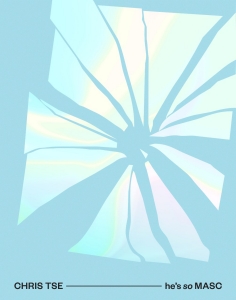
Chris Tse, He’s So MASC, Auckland University Press, 2018


Paula: Are you hesitant to answer questions about this book? I am hesitant to ask them! In the first poem we meet wolves. The wolf is also there in the last poem and makes a number of appearances in between, with teeth and claws and transformations. They can never settle to a single trope or behaviour or ache. I don’t want to explain the wolf. I just want to say they were a subterranean sharpness that clawed me. I can’t stop talking about the wolf. They are plot device, semantic undercurrent, emotional barometer, love infected, unreliable protagonist, hidden key. Ah, there is that glorious knottiness. Can you say anything about the wolf?


The wolves are closing in

on the ballroom while the band members

look out and brace themselves

for the conflict to come. Shit just got real.

They pick up their instruments

and clear their throats.

from ‘Intro’


Chris: For me, a big part of getting this book ready for publication was figuring out how I’m going to talk about it. With Snakes, it was like there was a safe following distance between me as author and the book as a literary/historical object. With this book, I don’t feel the safety of that distance given its themes and content, and honestly that’s a little terrifying. I work in communications and part of my job is to train our staff in how to deal with the media and select committees. We drill them on all the possible questions they could be asked and the best ways to answer them so that nothing throws them. I’ve been feeling I need to do that for myself for this book just to make me feel less anxious about it!

I like to think of each of the poems in this book being a single wolf roaming the terrain of my personal history. The first wolf poem I wrote for the book was ‘Lupine’, but it began life as a poem about my brother and I. Eventually, as the poem begin to take shape, it was clear that my brother had nothing to do with what I was trying to say in the poem. From there on, the image of the wolf and its association with transformation and masculinity felt like a good fit for what I wanted to explore, and so wolves began to pop up in other poems. I love how you’ve described the wolves as an ’emotional barometer’ – that’s a really apt description of what I wanted them to do in the book. They seem to have a habit of popping up in poems where I’m feeling uncertain, heartbroken, or angry.


Paula: I think the diverse self exposures is one reason why this book has affected me so much – and the sway between distance and intimacy. Things are at a distance and things keep disappearing. Presence is handlocked with vanishings, and not just the speaker in the poem. That flitting in and out of view intensifies the emotional impact for me, the unspoken. I am wondering too if distance is also coupled with masquerades and masks?


I can almost run my fingers through

the sun-streaked strands of those days


when I was nothing but a silhouette

disappearing into fog—just a sketch.


I could step into a crowd and never

resurface. No one would suspect anything.


from ‘Belated backstory’


Chris: The masquerades and masks are definitely there for distance. I’ve been performing my entire life – in public and private – so it was essential that this book, as unflinchingly open and true to my experiences as it is, also acknowledged the masks I’ve worn to protect, to give myself confidence, and to play. Those masks have been an important tool of survival and a way to make sense of the mess that sometimes builds up in my head. It’s also in part a response to having a somewhat public life now and the expectations that some people have of me as a Chinese New Zealand writer, especially given how few there are of us. I’ve talked at length in the past about being piegeon-holed, so I won’t go into all of that again, but sometimes I do feel like I’m performing the part of a Chinese New Zealand writer to appease others and meet a certain need. I can’t and won’t ever deny that side of me, but this book was a chance to draw from the intersectionalities of who I am.


Paula: Yes! The Chinese New Zealand part surfaces here and there – I was thinking like little teeth marks teeth to carry on the Wolf presence:


I’ll go to my next grave                     wondering

whether I pushed them hard enough to never settle

for being the token Asian in a crowd scene or

the Asian acquaintance in an ethnically diverse television series

from ‘Punctum’

I like the way intersectionalities of self are so important. The ‘coming out as a poet’ poems feel high risk when masks and arm’s lengths are dropped or reduced. I found these poems witty and raw and touching a chord. Yet there is also the nerve-ending intersections with coming out sexually. The one standing in for the other.


There’s no such thing as the perfect time or the best way to tell loved

ones about your poetry inclinations. You need to muster up every

ounce of courage in your being and just say it: I am a poet. You could

say ‘I write poetry’, but there’s something non-committal about

that phrasing, like you only dabble now and then and would prefer

not to attach labels to your preferences. Prepare yourself for a full

spectrum of emotional reactions, from ‘You’re still the same person

to me’ to ‘I can’t be friends with a poet’.

from ‘I was a self-loathing poet’


Paula: Is this an example of letting the poetry do the talking?


Chris: Absolutely. And not just letting it talk, but also letting it have the last laugh, so to speak. It was important to me that a poem like that (which dealt with something that I don’t exactly fondly look back upon!) had a healthy dose of humour in it to soften some of the emotional barbs for me as a writer. It’s not that I’m trying to run from the memory of that moment in my life or downplaying its significance. Rather, I see it as a way to embrace it for what it is while still being able to continuously learn from it and move forward.

Those intersectionalities of the self are important, and possibly even more so for readers who are trying to find someone they can identify with. On the flip side, those intersectionalities can be so easily carved up and used as labels to make someone or something appear more palatable or accessible. Even I’ve been guilty of this: as this book was coming together I would joke with my friends that this was “the gay book”, but it could just as easily have been “the break-up book” or “the pop music book”.


Paula: Sometimes poetry books should come with playlists at the back! This was what I was listening to at the time.

Is there a poem that particularly resonates with you – where everything has fallen into place and it just works or it matters in other ways? For me it is ‘Release’. I gasped when I read this. Maybe it is feeling that is both intense and restrained. I love this poem. Then again I like the surprise and momentum of ‘The saddest song’. I also adored ‘Wolf Spirit —Fade’, the last poem, but readers have to discover this poem for themselves.


Chris: Well, being the mix tape/playlist geek that I am, I’ve made two playlists for this book: Side A and Side B! They feature songs and artists that inspired the poems or feature in the poems themselves.


I can fit the saddest song in the world in my carry-on.

I can fit the saddest song in the world in my right-side brain.

But I can’t fit it in my lungs or hold on to it with confidence

when underwater.               And I can’t fit the saddest song

on one side of a 90-minute cassette tape without

an uncomfortable interlude cutting into its breath.

from ‘The saddest song in the world’


‘The saddest song in the world’ is the poem that resonates the most for me – I consider it the heart and soul of the book. Writing ‘Release’ was a very confronting experience. I read that poem now and I feel so vulnerable, but it was important to me that it had a place in the collection. Every time I had to revise what was in or out, I fought for it to be in, even though it feels like a ‘selfish’ inclusion because of its personal significance, so I’m glad it resonated with you as a reader! I’ve never performed it and I don’t know if I ever could. ‘Punctum’ and ‘Performance—Part 2’ were the last two poems written for the collection, after my publisher had already seen a final-ish version of the manuscript. They were both based on two separate lines that I’d been holding on to for a long time but just didn’t want to play with any of the other poems. When those two poems were finished it felt like I’d clocked a video game – those two lines were the things I needed to complete my quest!


Paula: One of the great attractions in the collection is movement. There are vital points (themes, events, revelations, states of being) that shine out, that repeat and overlap, a bit like a constellation. But it is the movement between that creates the knottiness I first mentioned, and I am not thinking of an ugly mess of a knot, just intricacies and complications.

What attracts you in the the poetry of others. Did you read any books that got under your skin while you were writing this?


Chris: I can’t pinpoint what attracts me to a particular poet or type of poetry – keeping an open mind is essential – but lately I have been drawn to poets and books that aren’t afraid to be sassy, funny or messy.

Unsurprisingly, I read a lot of poetry by gay male poets while writing this book: D.A. Powell, Richard Siken, Stephen S Mills, Ocean Vuong, Saeed Jones, Danez Smith, Andrew McMillan and Mark Doty, to name but a few. D.A. Powell was one of the first contemporary gay poets that I remember reading while I was an undergraduate and being absolutely shaken by his syntax and the emotional intensity of his writing.

Reading Hera Lindsay Bird’s first book was a revelation – a real YES! moment that in its own little way gave me the confidence to carry on with the types of poems I wanted to write for the book. Maggie Nelson’s The Argonauts and Bluets have also had a profound effect on me recently. Her work is often described variously as memoir, essay or genre hybrid. It’s all drawn from her personal experiences, which are then filtered through many layers of what interests and excites her. That, to me, is poetry. The way she’s able to draw in so many threads to weave a net of support over a single narrative is fascinating to experience as a reader.


Paula: Finally, I love the title. It feels like a little challenge. You are opening the space of masculinity – stretching poems wide open to its possibilities. As our conversation so clearly shows your book challenges us as much as it challenges you. I am really intrigued how certain books, such as this one, matter so much to me – often it is because they anchor themselves in human experience in distinctive ways. This seems like a scary, tricky question but what do you love about your book?


Chris: That is a scary question! It’s apt that you’ve mentioned the title because that is what I would pick. For the longest time – even before Snakes was published – I thought I knew what the title of this book would be. But somewhere along the way it became clear that my working title wasn’t going to cut it, and this book needed something spikier with loads more character. HE’S SO MASC instantly felt right – it’s cheeky, it’s a little irreverent and there’s a pop music connection (Cyndi Lauper’s She’s So Unusual). And I love what Greg Simpson, the cover designer, has done with it too – the dash drawing my name into the title, the italicised ‘so’. In a way the title is a challenge – the word ‘MASC’ is so loaded in gay culture and I wanted to turn that on its head. It’s my way of pushing back on everything I’ve ever been told that made me feel like I wasn’t enough or didn’t fit in.


Auckland University page

Chris Tse website

Friday poem at the SpinOff