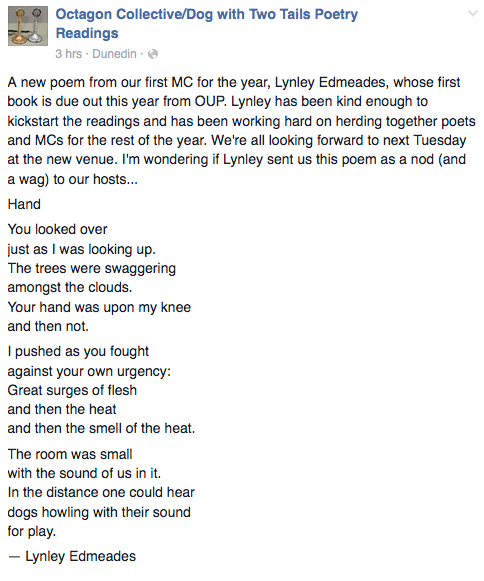
I am looking forward to this book!

I am looking forward to this book!
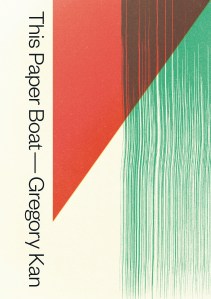
Auckland University Press and Gregory Kan warmly invite you to the launch of
This Paper Boat
6pm, Thursday 25 February
Time Out Bookstore
432 Mount Eden Road
Mount Eden Village
Auckland
My mother used to make up stories in the darkness that no one knew the endings to. It was a kind of permission to have imperfect and beautiful plans.
Please join us in celebrating the publication of Gregory Kan’s debut poetry collection, launched by award-winning poet Michele Leggott.
6pm, Thursday 25 February 2016
Time Out Bookstore
432 Mount Eden Road
Mount Eden Village
Auckland, 1024
RSVP not essential but helpful for catering
Phone 09-373-7528 or email pressmarketing@auckland.ac.nz
For the full programme see here but this is the poetry on offer.
I would love to go to the Laureate Circle but can’t make it at this stage (might just fly down on a whim!). I would really like to post pieces on any of the poetry events at the festival. Any takers?
Friday March 11th 7pm A Circle of Laureates
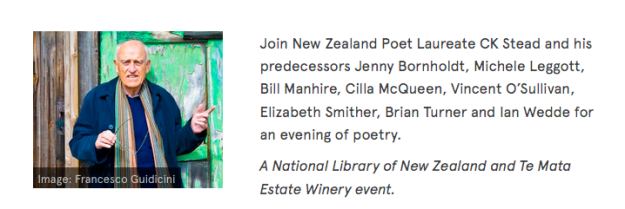
Friday March 11th 5pm Anis Mojgani and Marty Smith
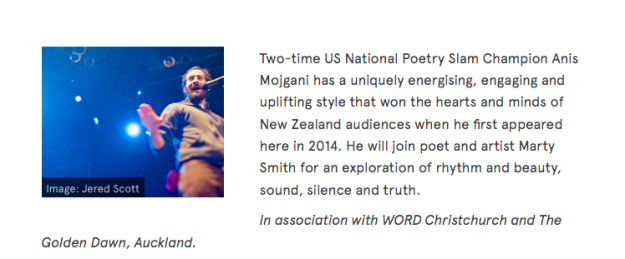
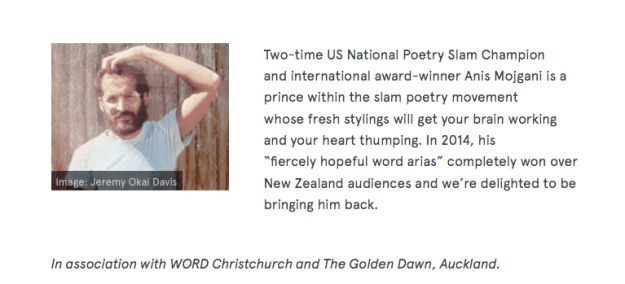
Thursday March 10th 1.45pm Anis Mojgani
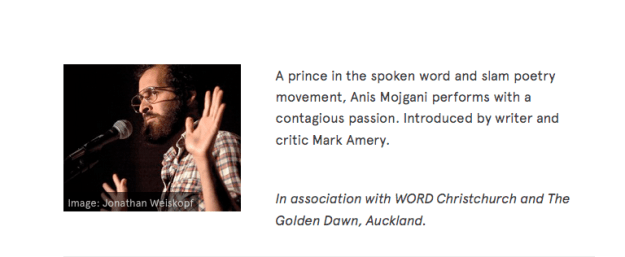
Sunday 13th March 2.30 pm Anis Mojgani with Mark Amery
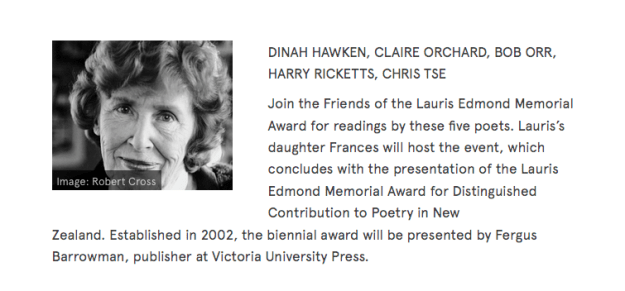
Saturday 12th March 3.30 pm Five Poets and a Prize
Whangarei Sculpture Walkway (by carpark of Te Matau o Pohe, Port Road, Whangarei
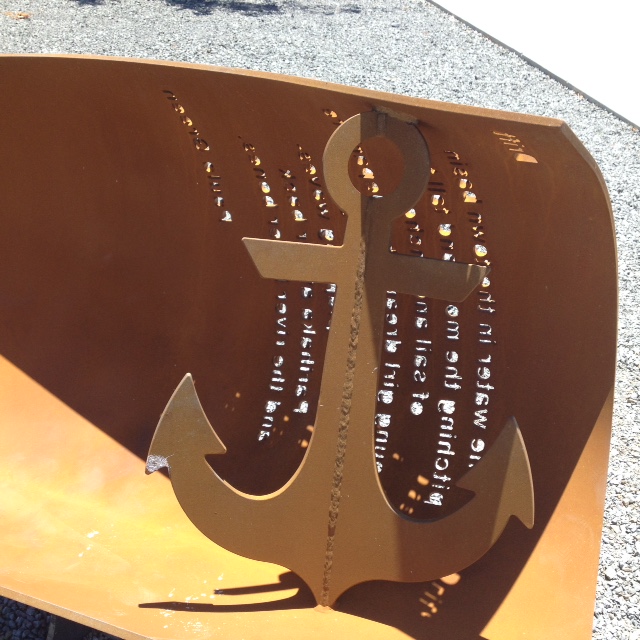
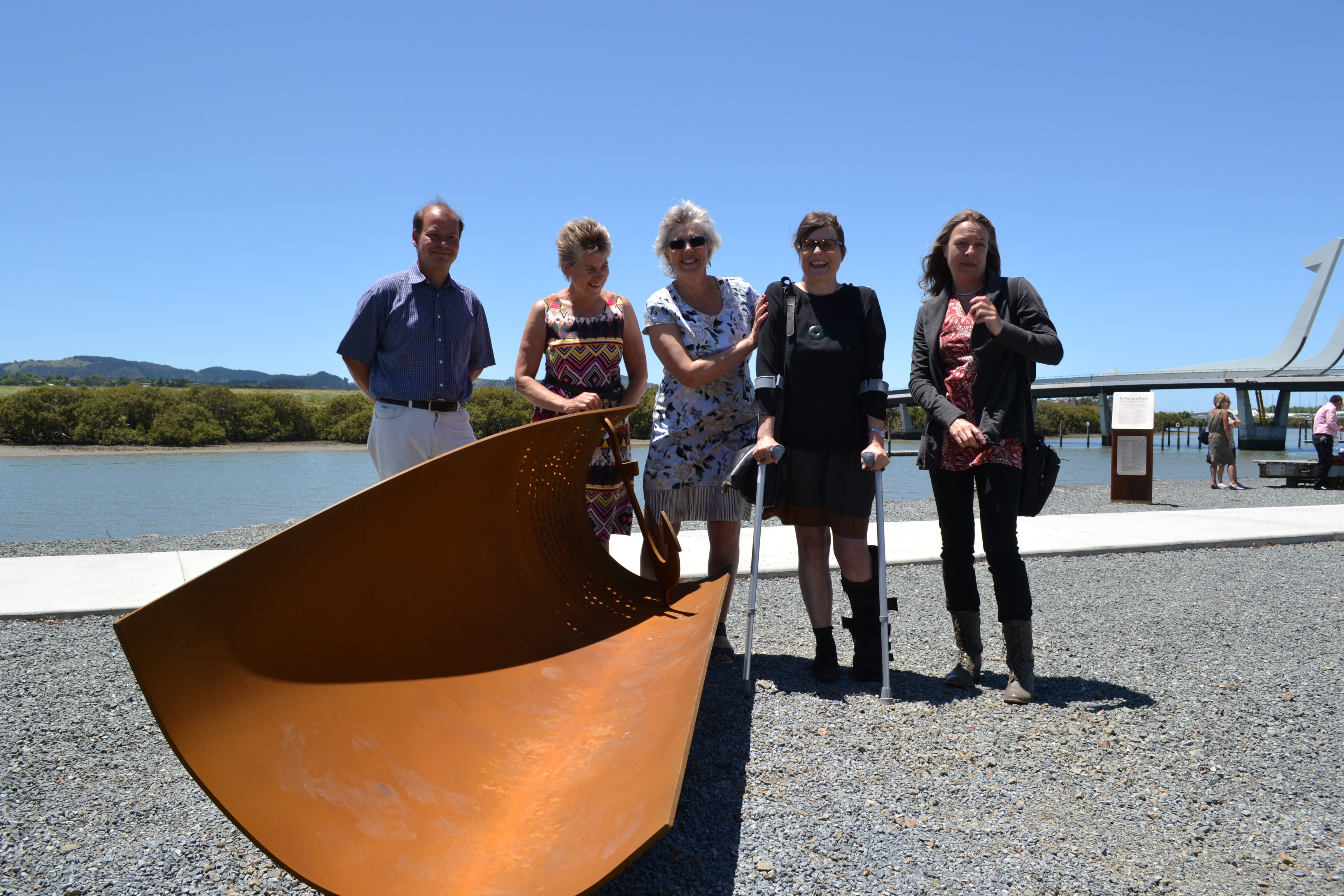
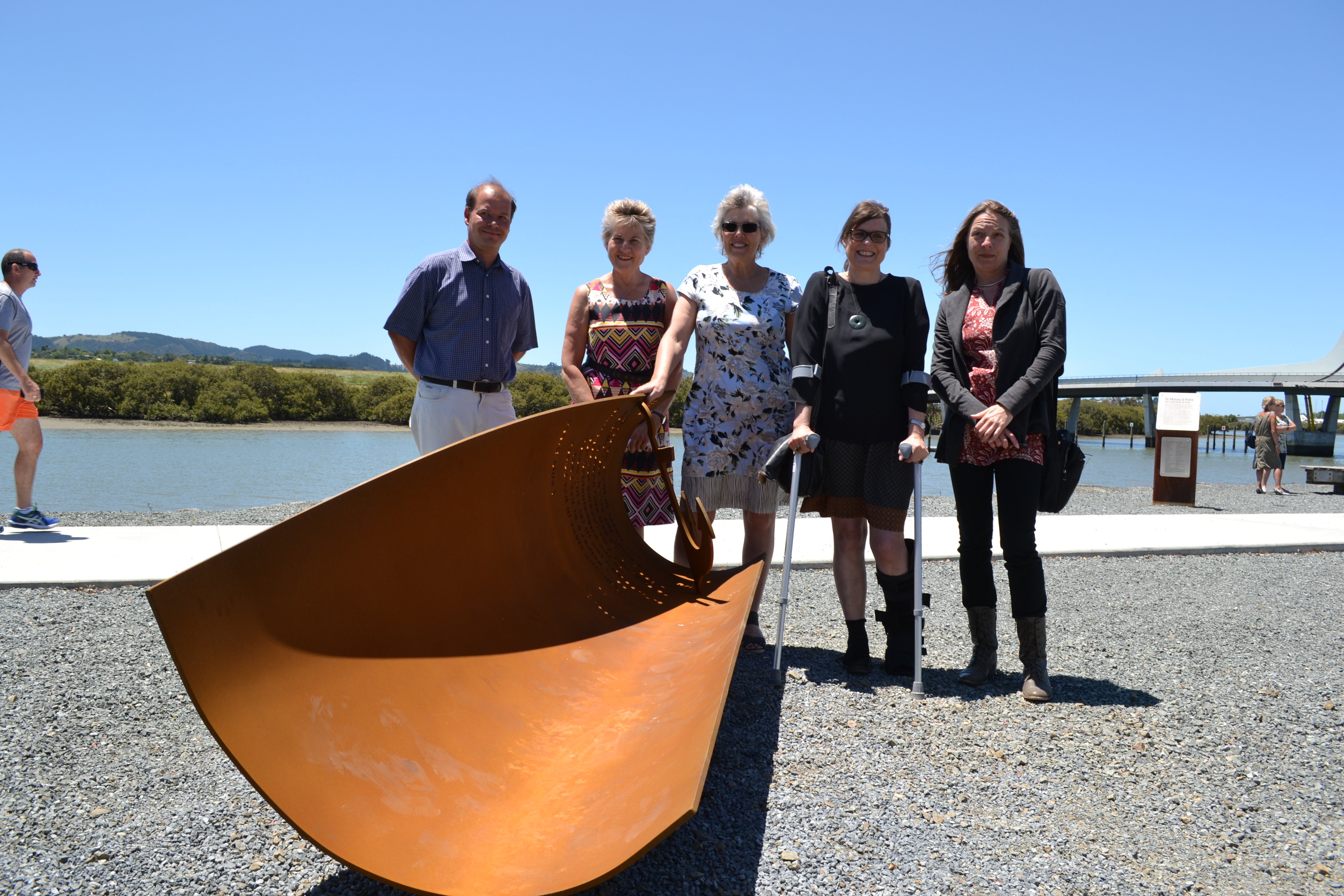
Yesterday Michael and I drove up to Whangarei with our dog Molly for the blessing of a sculpture. Thanks to Creative Northland, my poem, ‘Drift’,’ has been transformed into a steel sculpture by Miriam Von Mulert and the local firm, Culham Engineering.
It was such a lovely occasion. A small group of people gathered to contribute the blessing including my step sister, Kerry.
Andre Hemara from Whangarei District Council blessed the piece and made his mihi nui.
The Mayor, Sheryl Mai, and Deputy Mayor, Sharon Morgan spoke. When I think of Mayors I picture a legacy of men in suits at a distance (Bob Harvey a different case altogether) but to see these two women in cotton dresses speaking with such warmth and empathy I elt like it was West Auckland before the Super City.
I spoke and Miriam spoke and the very lovely Hinu from Creative Northland spoke.
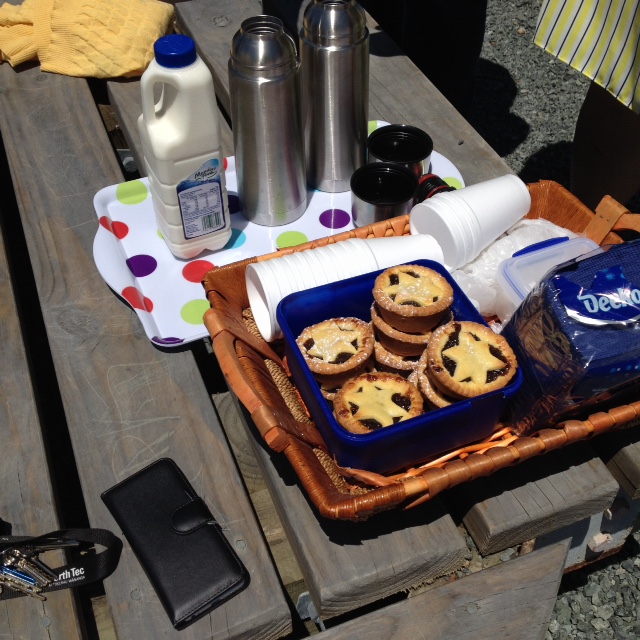
We then shared water, tea and heavenly Christmas mince pies.
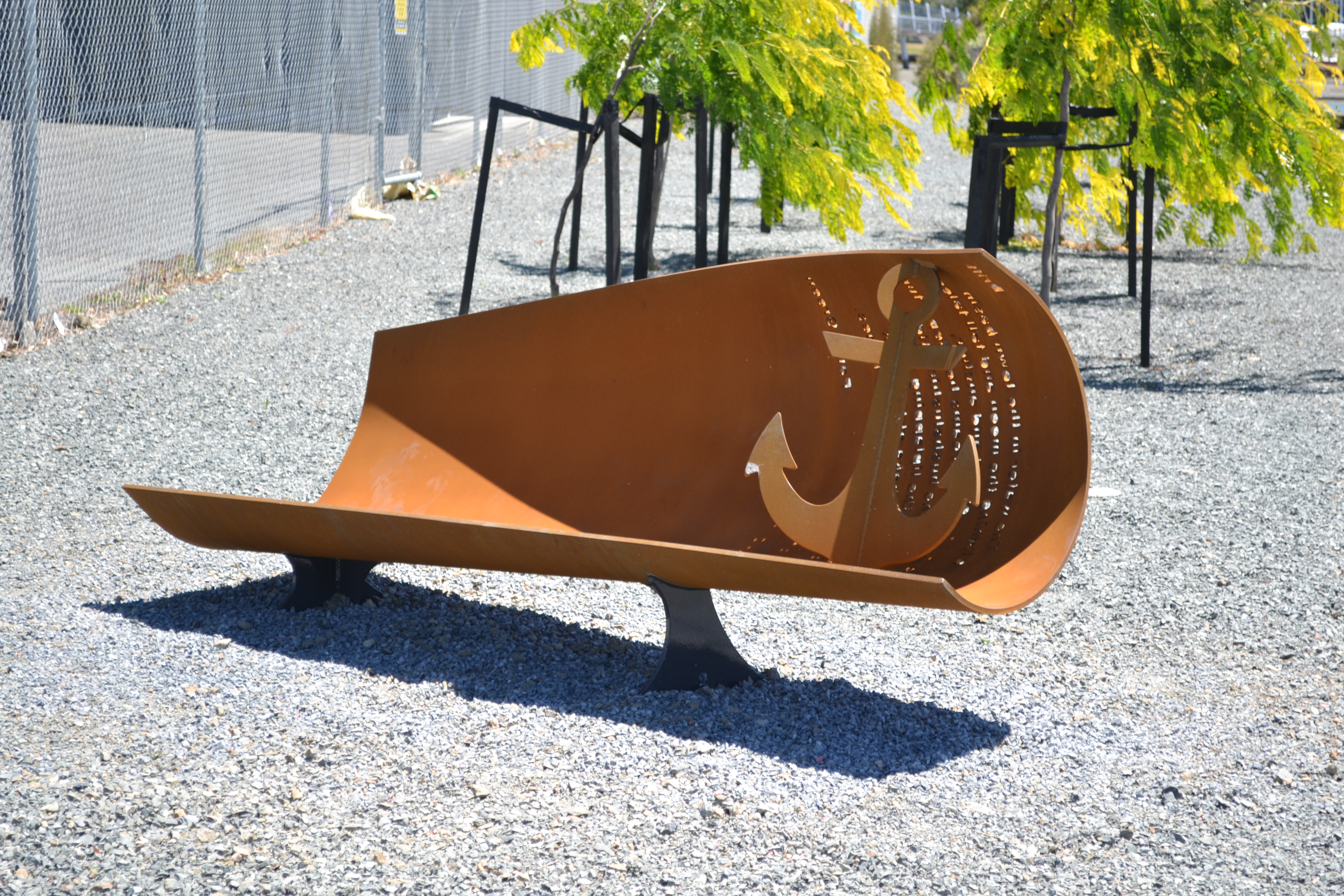
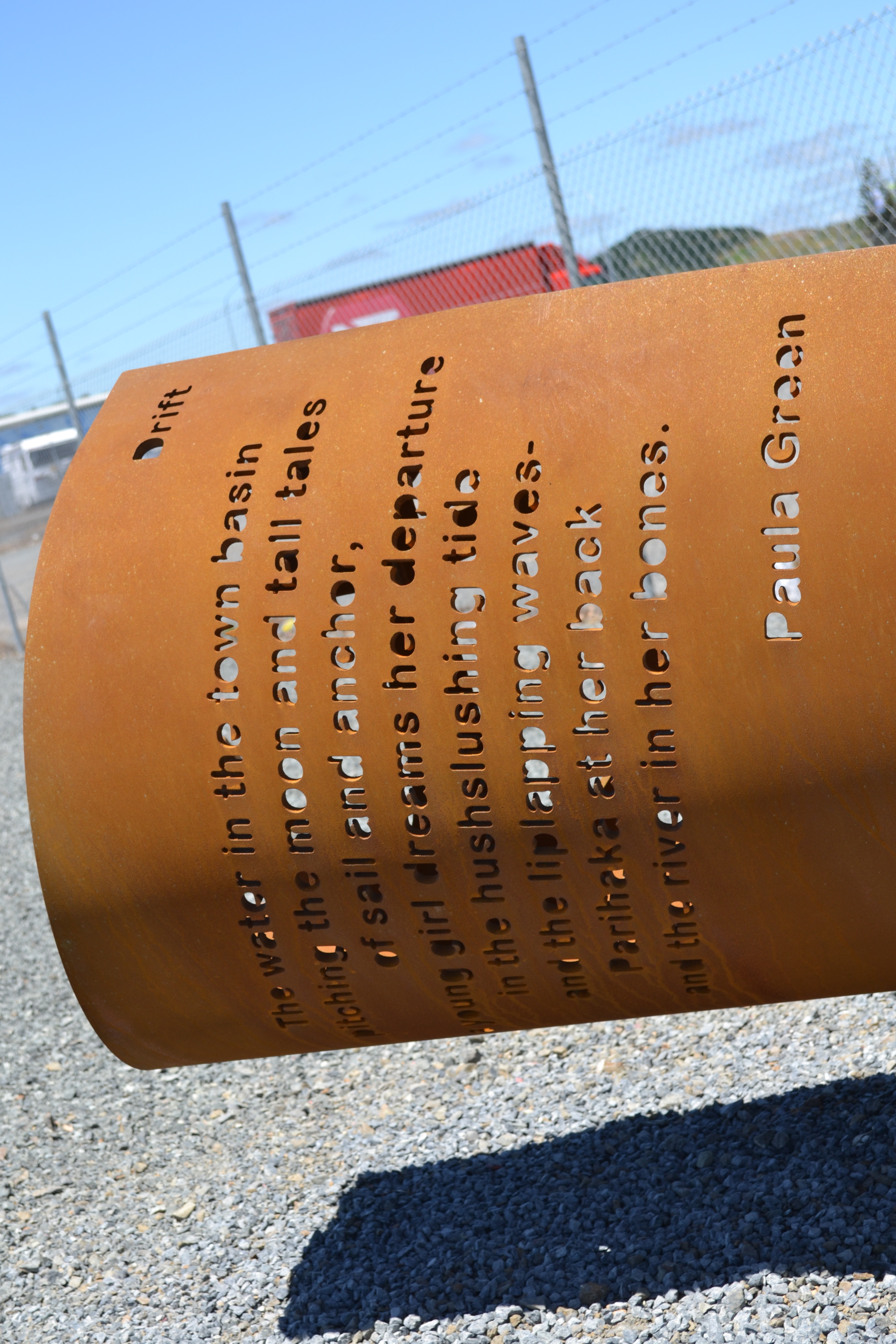
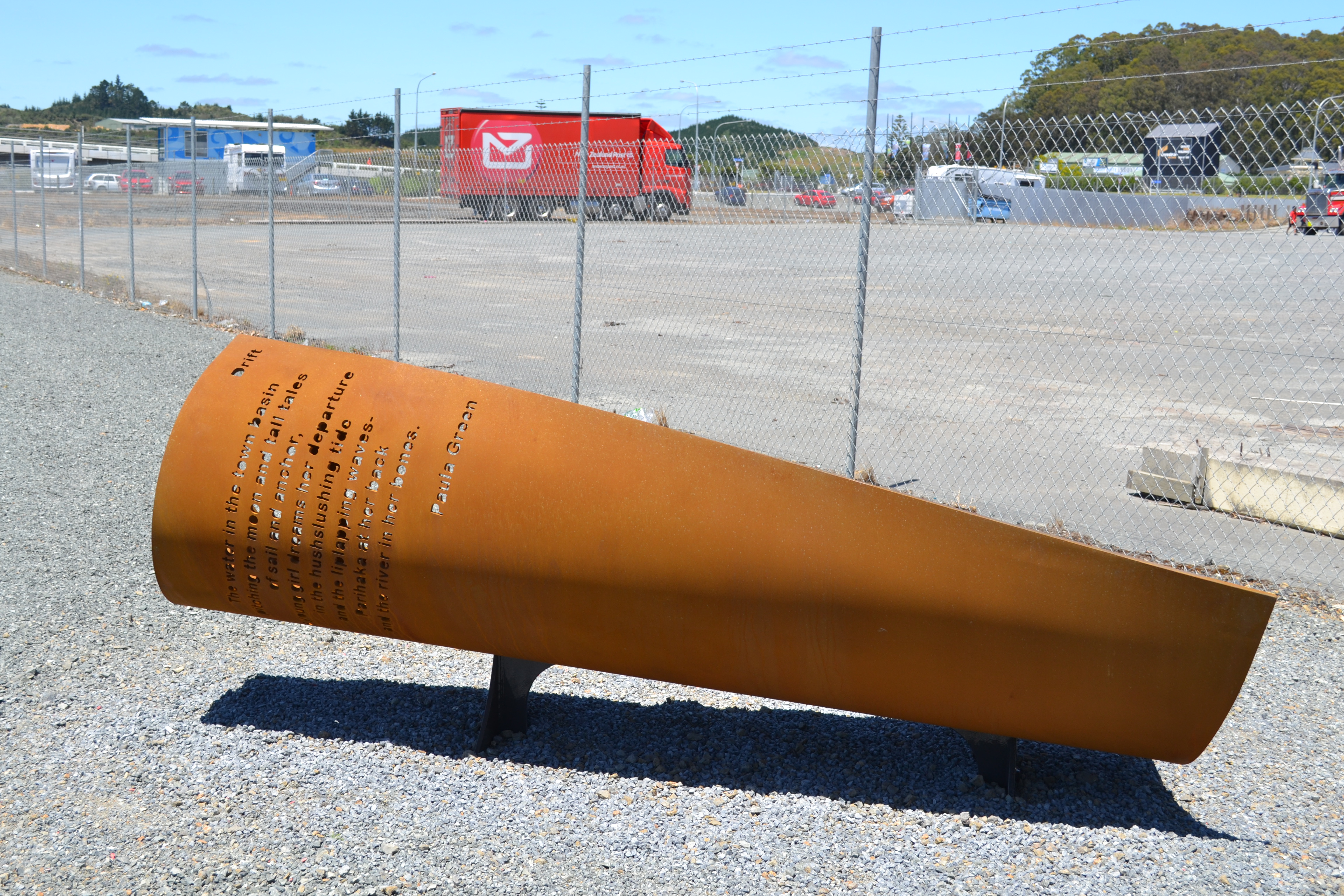
I loved the poetic possibilities of the work. The way it folded to seem like the empty page or a billowing sail or a blank canvas, The way it was both anchored and ready to drift like the young girl who left Whangarei at eighteen. When I first left school, having failed to some degree, and with no idea how to be or where to be in the world, I enrolled in night school and learnt Te Reo. I learnt to acknowledge my mountain and my river. When I set sail into the unknown of the world, I took this anchor with me. The poem became my mihi from the seventeen year old to the present me. There is a strong line tethering us.
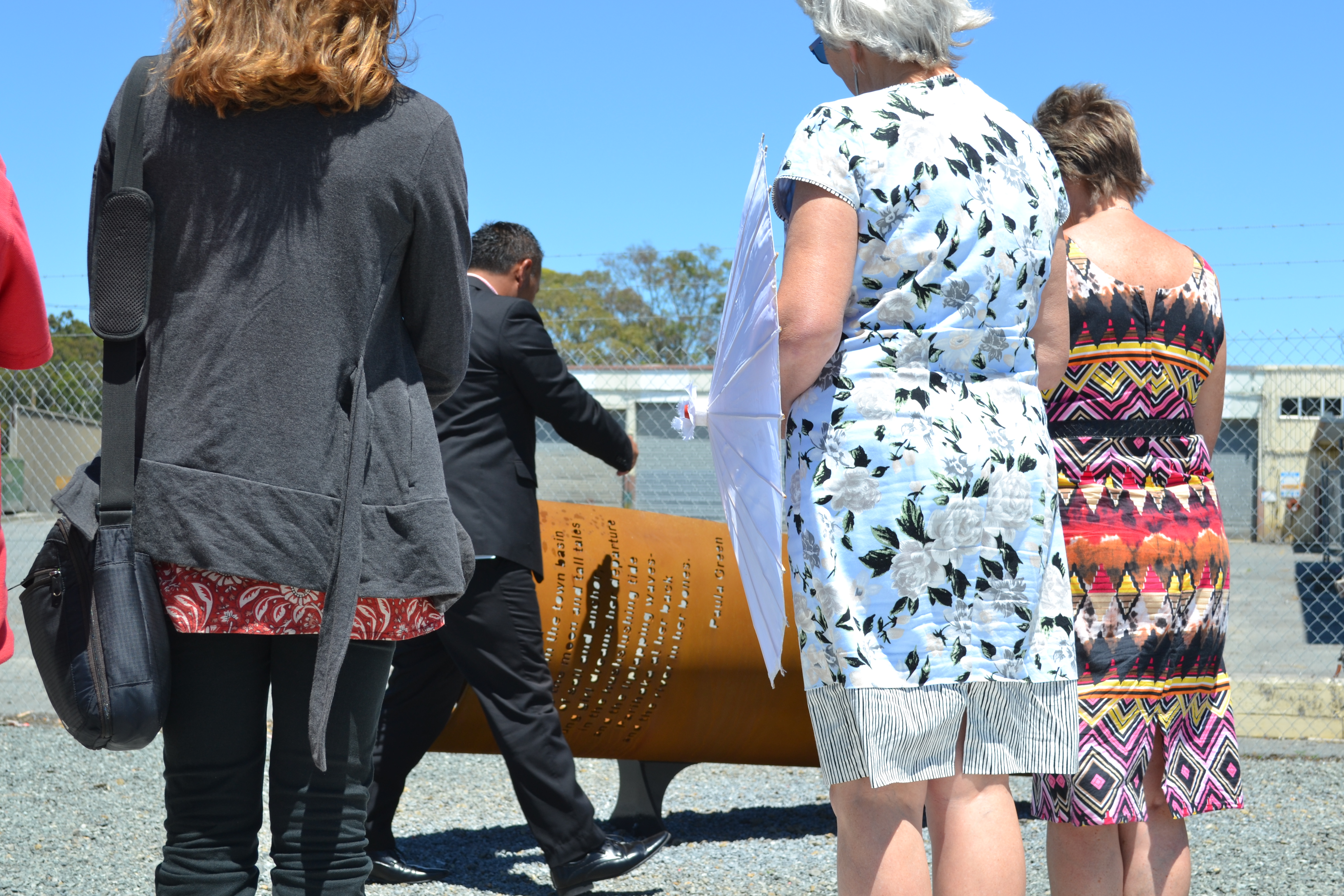
Andre blessing the piece.
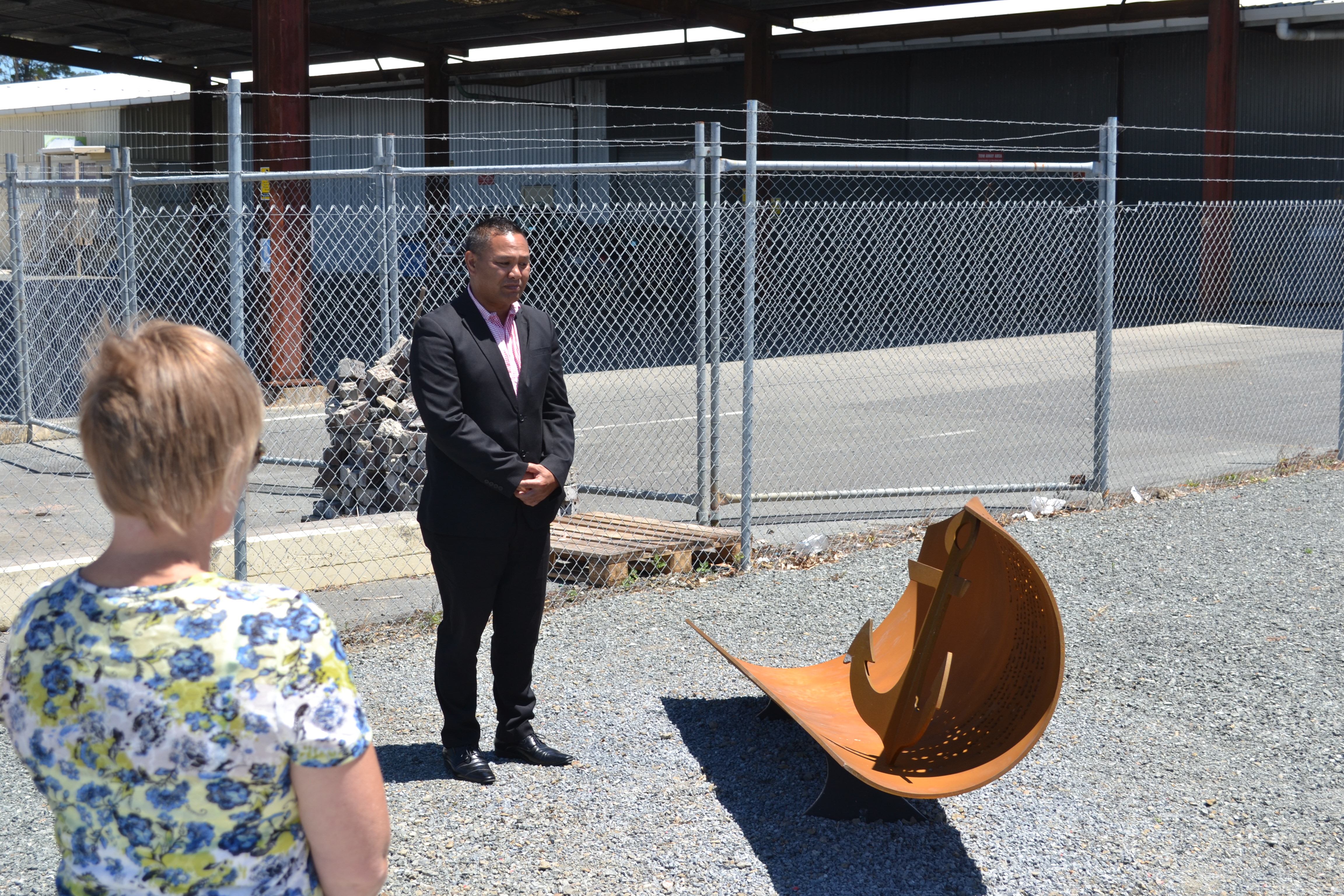
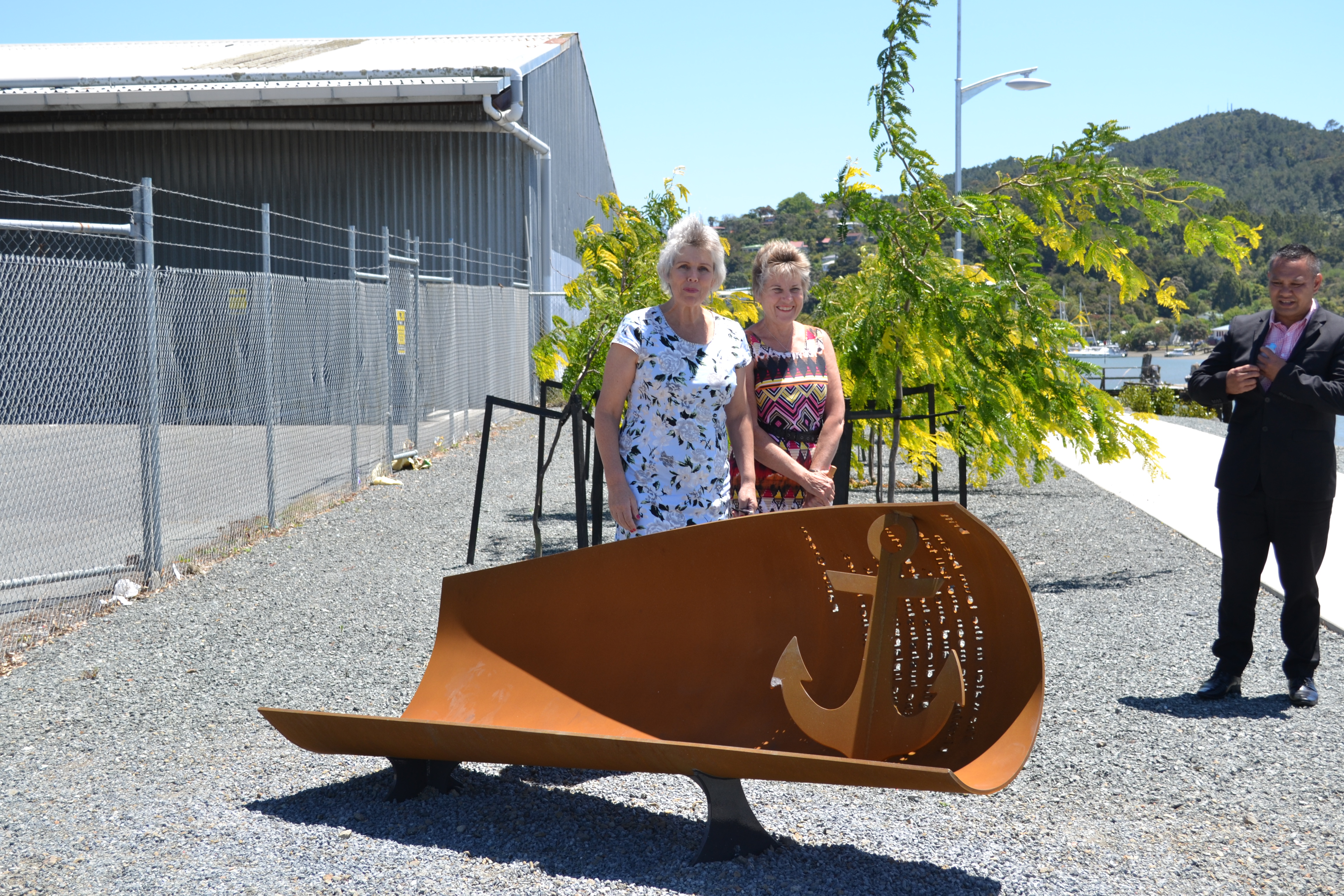
The Mayor and Deputy Mayor made beautiful speeches. The Mayor said she would like to see more poetry on the walkway.
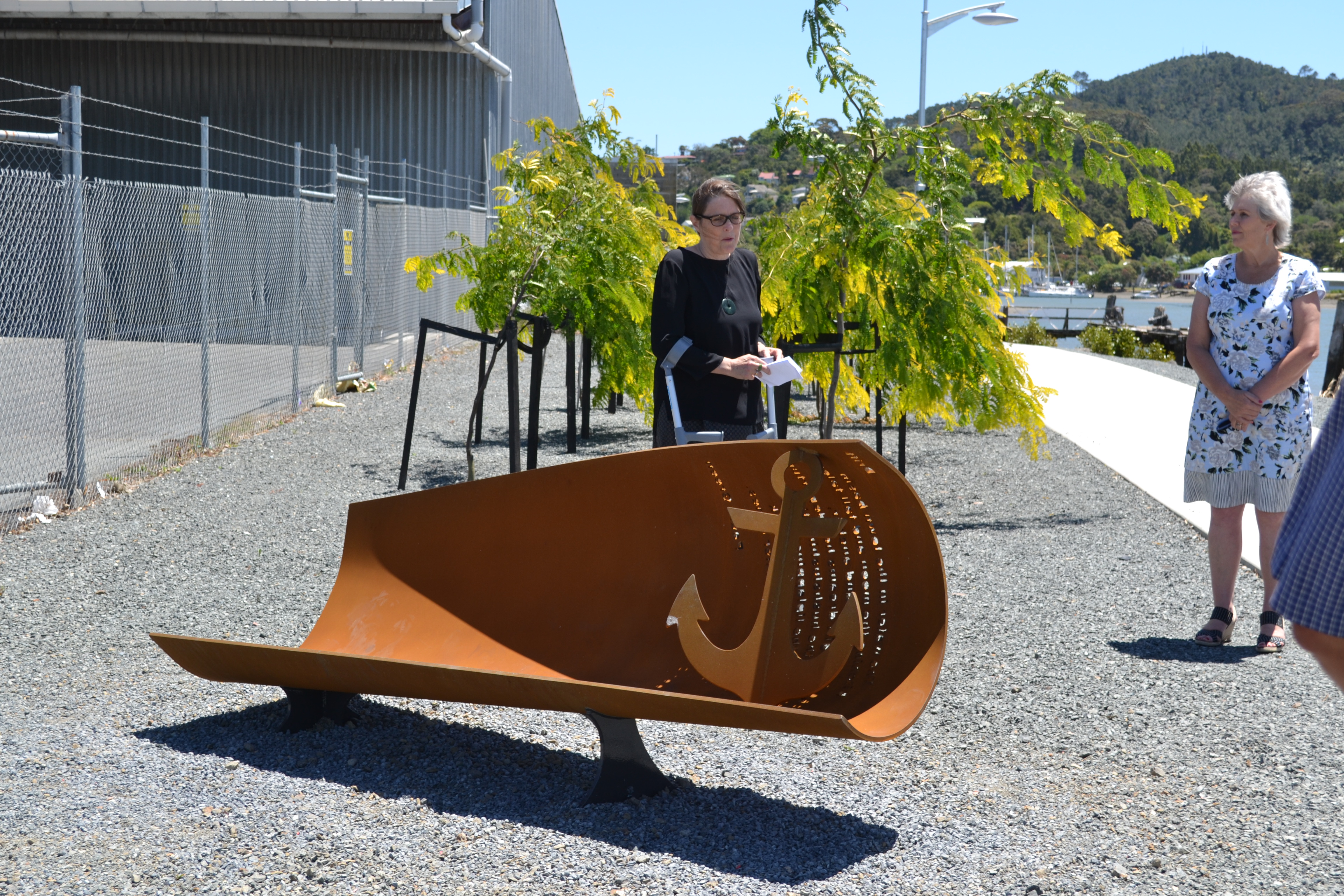
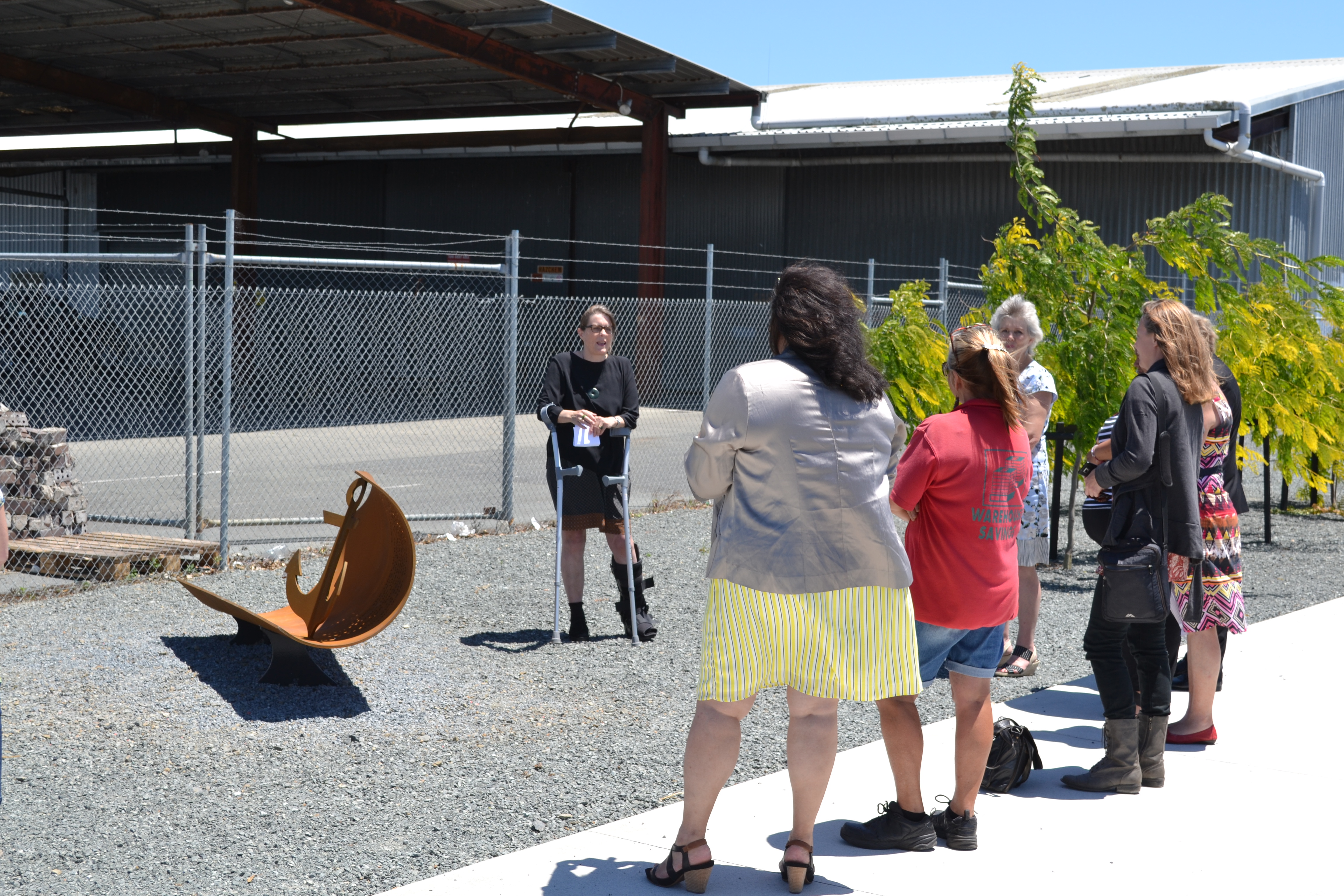
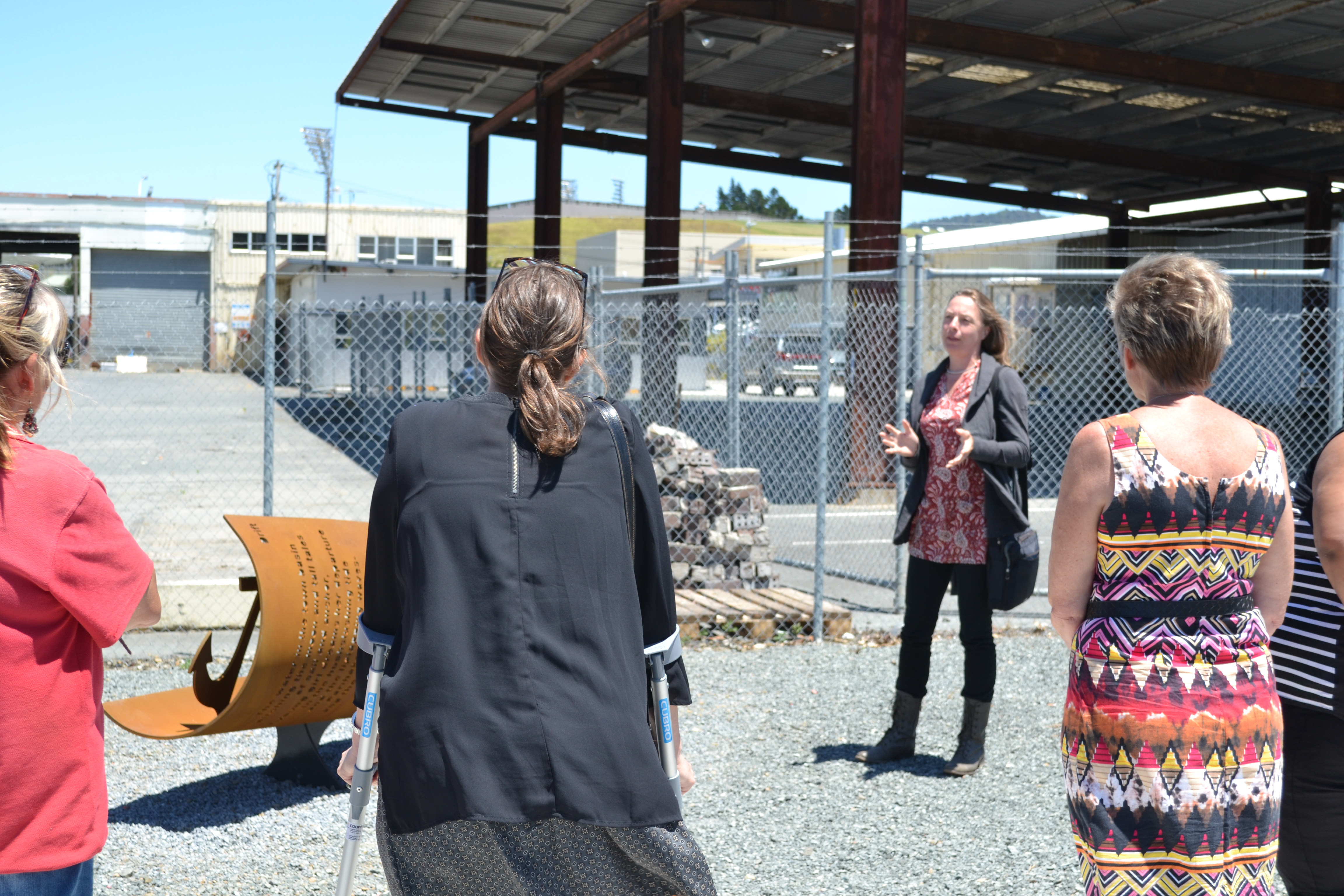
Miriam
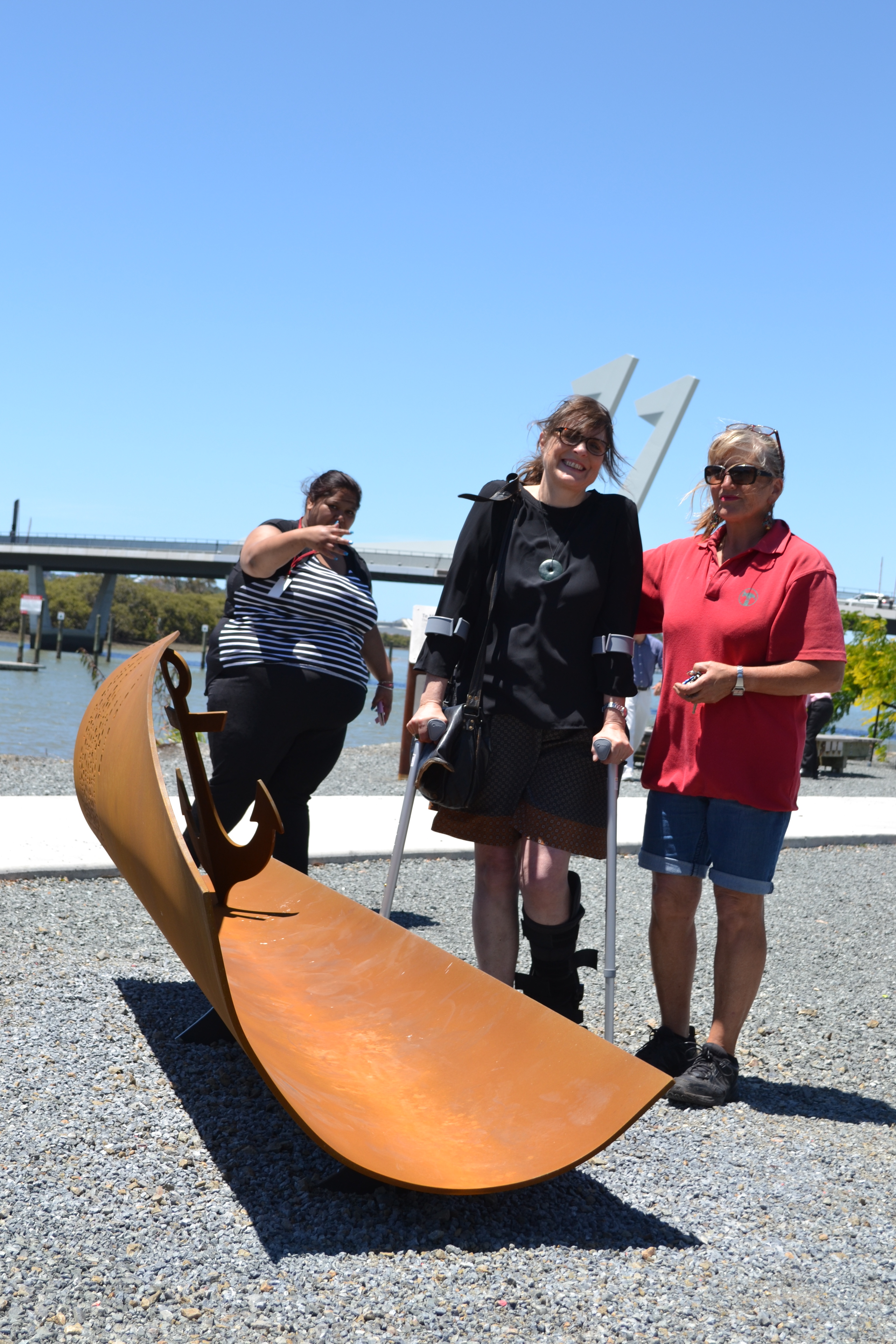
With Kerry.
The Mayor holds me up.
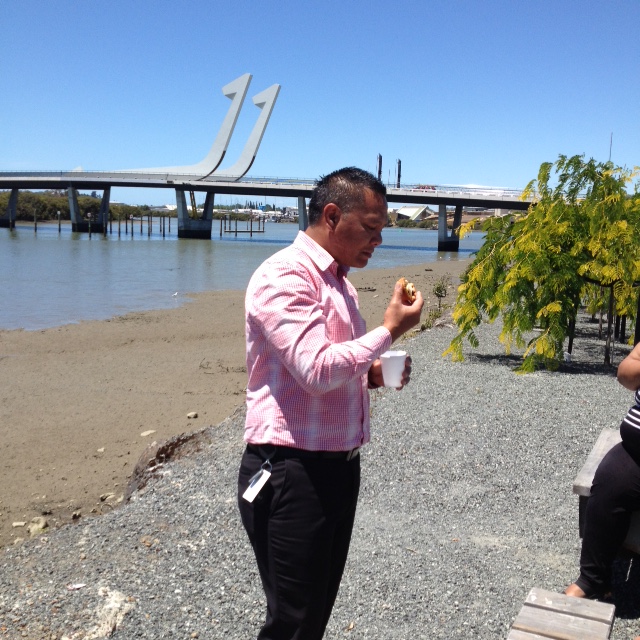
Andre sampling the excellent mince pies.
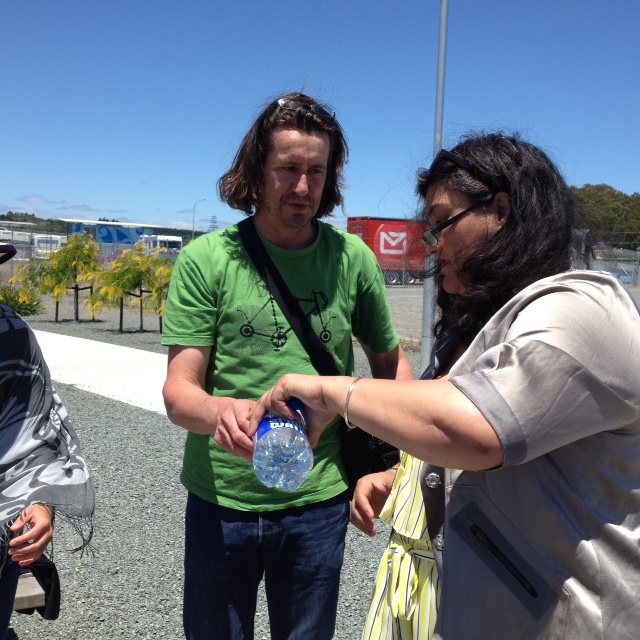
Hinu and Michael
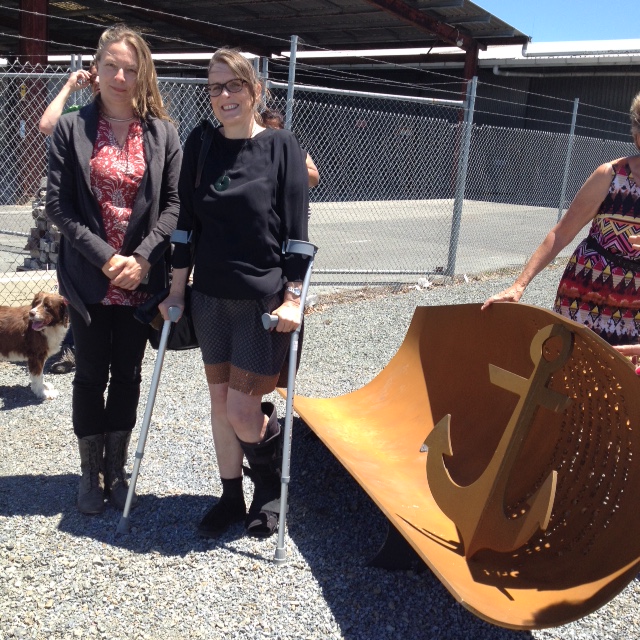
Miriam and I
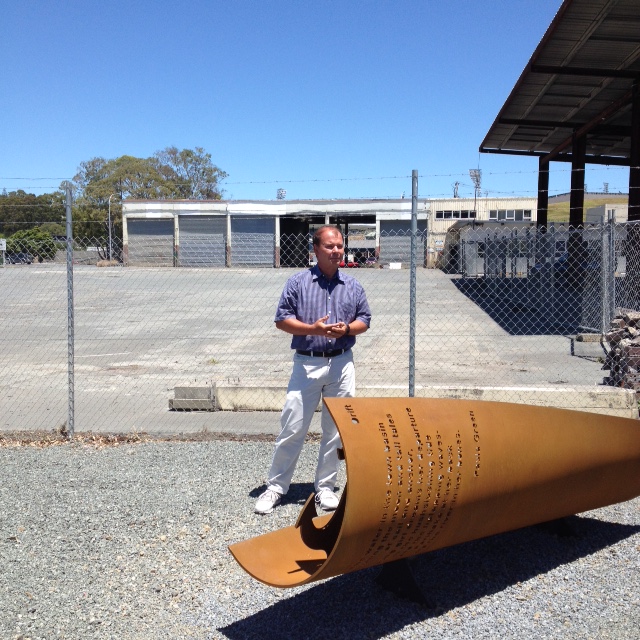
The engineer
A warm thank you to everyone who made this possible.

An online publication that I’m still engaged with, and keeps giving, was the collection: A Festschrift for Tony Frazer, which celebrated the 64th birthday of Tony Frazer, the editor of Shearsman. As one of many writers with a poetry book published through Shearsman Books, and poems published within Shearsman Magazine, I follow, revisit, and greatly admire Tony and his Shearsman imprint. As outlined on the publication homepage, Tony is one of the great poetry editors of our time, publishing more than 300 writers; but more importantly, encouraging and validating the writing process through championing new writers, writers in translation, a Classics series, and working tirelessly to promote poetry. Here is an insightful quote that sums Tony up perfectly:
‘Tony Frazer must be held to account for he is a publisher who resolutely fails to be everything a publisher should be: he is enthusiastic, literate and does not concern himself with projected sales figures. What can be done to stop him? Very little, I fear’ – Marius Kociejowski
Over the years I’ve purchased volumes from Shearsman, such as Gael Turnbull’s There are words…Collected Poems, discovered Gustaf Sobin, Theodore Enslin, Anthony Hawley, Frances Presley, Anne-Marie Albiach, Pablo de Rokha…and at this moment, are reading poems by one my favourite poets, the late Lee Harwood Collected Poems.
On the local front, this year I had the privilege of being part of a poetry reading with Roger Horrocks – Song of the Ghost in the Machine (Victoria UP, 2015) – and hear first hand the meditative ghost ambling to-and-fro, from word-to-world. From what I understand, it was Roger’s first poetry reading in 30 years. A great occasion and a great book!
Another highlight this year was being invited by Michele Leggott to be part of the Six Pack Sound #2 series at the nzepc. The second series included recordings by Stephanie Christie, Makyla Curtis & Hannah Owen-Wright, Doc Drumheller, Selina Tusitala Marsh and Jack Ross. Thanks to Michele Leggott, Brian Flaherty and Tim Page for making this happen.
Sam Sampson
Summer Noelle has invited a number of New Zealand poets to talk about and read a poem they wish they had written.
I have just pre-recorded my choice with Noelle (you will have to wait until summer to find out which poem!)
What a treat to have a conversation with someone who has read and loved the poem too with such enthusiasm. After I finished, I realised I spend a lot of my time writing poems, and writing abut poems, but very rarely having conversations about poems. Ha! It is such a pleasure.
Maybe I need to invent a poetry book club.
Bravo Summer Noelle and RNZ!
A taster of what’s to come:
Bill Manhire’s kicking us off plus Paula Green, Michele Leggot, Ashleigh Young, Joan Fleming, Airini Beautrais, Elizabeth Smither. Plus many more to come.

Kia ora koutou,
You are warmly invited to the launch of Serie Barford’s poetry and short story collection, Entangled Islands, published by Anahera Press, and held in conjunction with Poetry Live. With music by Brendan and Alison Turner, and readings from the book by Serie. MC-ed by Kiri Piahana-Wong. Entangled Islands will be launched by Karlo Mila. Food and drink available from the bar. Thanks to Creative New Zealand for supporting the publication of this book.
8 pm: Brendan and Alison Turner (folk/blues duo)
8.45 pm: Book launch
9.15 pm: Poetry Live resumes with open mic – all welcome to read
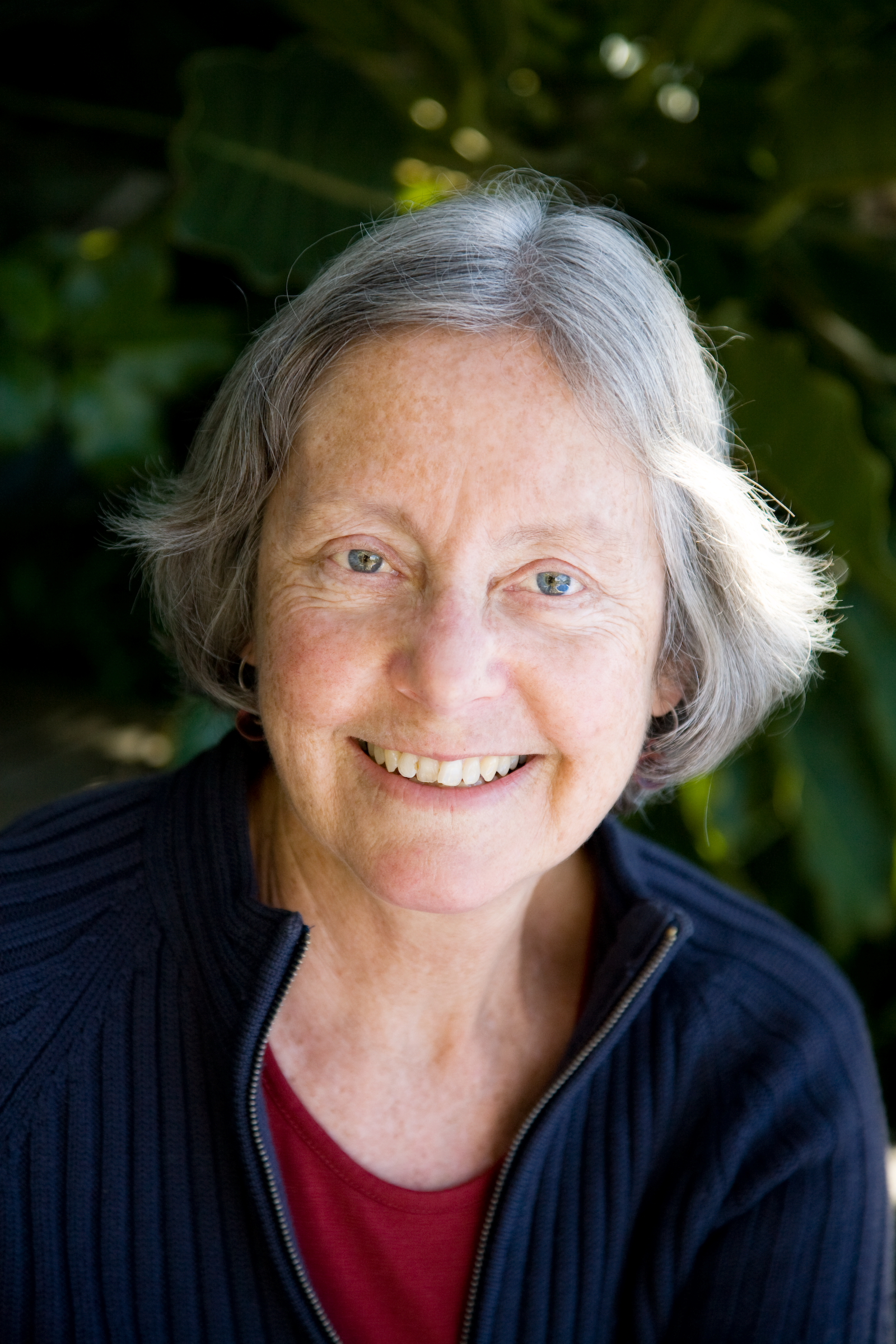
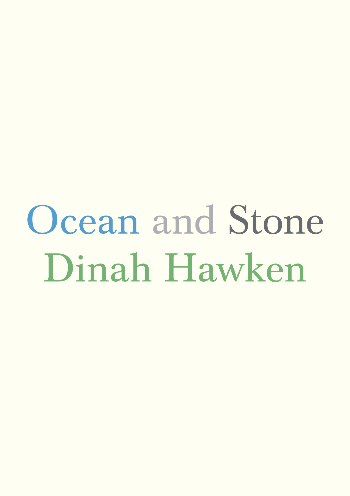
Dinah Hawken is one of New Zealand’s most critically acclaimed poets. Born in Hawera in 1943, she trained as a physiotherapist, psychotherapist and social worker in New Zealand and the United States. Most of the poems in her award-winning first collection It Has No Sound and Is Blue (1987) were written in New York in the mid-1980s while she was studying at Brooklyn College and working with the homeless and mentally ill. Her two most recent books, One Shapely Thing: Poems and Journals (2006) and The Leaf-Ride (2011), were both shortlisted for the New Zealand Book Awards. Dinah was named the 2007 winner of the biennial Lauris Edmond Award for Distinguished Contribution to Poetry in New Zealand. She lives in Paekakariki. Victoria University Press has just released a new collection of poems, Ocean and Stone.
Did your childhood shape you as a poet?
Yes I’m sure it did. One of my favourite memories as a child is my father reading A.A.Milne – the poems – to me when he came home from the farm. We didn’t have a lot of children’s books in those days (40’s and 50’s) and so he read them over and over again and we knew them by heart. Sometimes my younger brother and I would act a poem out: ‘Sir Hugh was singing hand on hip/when something sudden came along …’. What I loved, looking back, was the way my father and his voice changed when he read these poems. Suddenly he was a changed man, a more mysterious and musical man, and the poems had somehow changed him.
There was one poem that had a profound, perhaps lasting, effect on me psychologically. ‘The Dormouse and the Doctor’ – do you remember it? The dormouse was living happily ‘in a bed of dephiniums (blue) and geraniums (red)’ when the Dr came hurrying around and prescribed instead a bed of chrysanthemums (yellow and white). When ‘they took out their spades and dug up the bed/of delphiniums (blue) and geraniums (red),’ I was devastated at the injustice and imposition of it. They didn’t understand that ‘much the most answering things that he knew/were geraniums (red) and delphiniums (blue)’. I was worried by this story – the powerlessness of the small, the arrogance of grown ups – but at the same time I was impressed with the dormouse’s solution of imagination: ‘I’ll pretend the chrysanthemums turn to a bed/of delphiniums (blue) and geraniums(red).’ It made me determined to fight to remain myself, to hold onto my ideas and attractions even if I was misunderstood. Like the dormouse I was a dreamy child, but also an active one – a tomboy, keen on sports and outside a lot with bare feet. I thought of myself as a reader not a writer.
As a young adult, were there any poets in particular to which you were drawn?
When I went to Dunedin as a school leaver, to study Physiotherapy, James K. Baxter was living there and I went to some of his poetry readings and lectures. He was the first NZ poet I had ever heard or read and The Rock Woman (selected poems) was the first book of poetry (besides A Pageant of English Verse) that I had ever owned. I’ve just taken it off the shelf and it is one of the most worn books in my poetry collection. I felt the emotion and music in those poems, the power of ‘the best words in the best order’, and the sense of being understood as a human being who lives in this place, this landscape. Existential questions were in the air for me at 18 or 19 and one poem, ‘The Cold Hub’ gave me a strong sense of fellow-feeling and therefore consolation. Poetry as consolation became important for me.
The next year in Palmerston North was significant for me in terms of poetry too. I had a boyfriend who not only liked poetry (a rare find) but who really loved Baxter and who introduced me to e.e. cummings and Yevtushenko. Both mind-opening in their own ways. What’s more, in Palmerston North, I also made a close friend, Phillappa, a nurse, who read poetry and wrote it. She showed me it was possible even though I didn’t start writing seriously – though secretly – till I was in my late 30’s. She was the first person I showed my poems to at that time. And a couple of years later I applied for Bill Manhire’s undergraduate creative writing course.
Your new collection, Ocean and Stone, is one of your best yet. At times, the poems lead me to a place and point of contemplation (outside urban bedlam). The poems remind me of the way I go down to the beach in the morning and all is the same (sand sea sky), yet there is always a pull of shifting nuances. Do you ever see your poems as a way of translating relations with the natural world, both private and nourishing?
Yes I do. Moments and experiences in the natural world give me such pleasure and uplift that I do have an urge to record and share them even though words so often fail the actual experience. But the attempt feels important. And I’m glad you used the word ‘relations’ because any attempt to mirror the natural world is about relationship. I’m a person who wonders a lot and the world around me is one of the most ‘answering things’ that I know.
And wanders in that wondering. That’s what hooks me as a reader. I find your poems are often things of beauty, yet there is a political edge here. It is as though we can no long view the ocean, for example, solely through the exquisite lens of its moods and bounty. Do you see yourself as a political poet? Overtly so or in more subtle ways?
As time has gone on I realize that I am both a nature poet and a political poet though I don’t set out to be. And I hope not exclusively. A poem usually begins with a phrase, a word, an image or a feeling that has a grip on me in some way. It can be a light and friendly grip or an intense, even painful, grip. The poem develops from that and, because of my interests and preoccupations, political concerns or the landscape, often become a part.
In Ocean and stone there is a poem called ‘The uprising’ that was a commission for Lloyd Jones’s issue of the Griffith Review called Pacific Highways. I began the poem thinking about the Pacific, with no conscious intention of writing a political poem. But I’d just read a book about the state of the world’s oceans and the facts in that book, and my feelings in relation to them, naturally flowed into the poem.
But it’s a balancing act to write a political poem and I sense that many poets might disapprove of my attempts – on the grounds of didacticism, emotionality etc. I’m naturally a direct person and I’ve had to learn more indirect and layered ways of expressing myself in poetry. But I’m also willing to be direct about strong personal feelings – a political poem is also a personal poem.
No matter how many times you write a stone poem, Dinah, you have the ability to replenish the subject (I posted one of my favourites from your new collection here). Do you have other motifs to which you are drawn?
Isn’t it amazing how stirring a small stone, like a blank page, can be? I’ve just looked up that famous poem ‘Pebble’ by Zbigniew Herbert where he writes that the pebble ‘is a perfect creature/ equal to itself’ that ‘does not frighten anything away.’ That seems so true to me.
As far as other motifs go, I don’t know. Water, its fluency? Leaf, its green, its growth? ‘The child’? I find myself thinking a lot at the moment about ‘the stranger’.
Yes definitely water! And the child. The grandchildren poems add a different layer to the collection. They remind me of the way women are often keepers of the family archives (scrapbooks, photo albums, treasure boxes). Do you feel these poems are as much a gift to the family as they are for the reader?
Definitely. I did write them as a kind of scrapbook, a record of my grandchildren’s early development, trying to ‘hold’ some of the delight and moments of discovery that babies and toddlers go through. I started, in my last book, with Elsa from new-born to 16 months and then carried on with Nate from about that age to two and a half. Such an extraordinary time, as a child meets the world. And as a parent you are often too busy to stand back and see it happening.
I’m about to put all the grandchildren poems together in a small volume for the family – and perhaps for other parents of small children as well.
The untitled fragments throughout the book (that ‘stem from the epigraph which is a found poem from The Unsettling of America by Wendell Berry’) are so fertile. I particularly loved: ‘a blank page has limits// and no limits.’ What kind of limits do you bump against as a writer?
I no longer have the external limits of time and stress and children and work that many younger writers have – I feel very lucky in that respect. I love writing without pressure – but on the other hand I do have the limits of older age; lack of energy, poorer memory, uncertain health. I find it harder to find words, I seem to have less access to dreams that were a great resource earlier in my life. Many of the poems in the second part of Ocean and Stone are about living with various kinds of decline.
There’s a difference between limits and limitations and so I also have to live within my inherent limitations as a writer. It seems important at this stage to try and see clearly what they are, whether they have any give in them, and to thrive within them. Limits and limitations have a bad name but I see them as the boundaries within which we can have the most ease and can be the most creative.
I love that dichotomy. Is doubt a key part of the writing process along with an elusive horizon of where you are satisfied with a poem?
Another way of considering the contradiction of ‘limits// and no limits’ is to think about faith and doubt in the writing process. They both seem to be essential: faith to believe that something can come from nothing; and doubt to be always willing to question what comes. When I began writing I would lurch, often painfully, between one and the other, now (fingers crossed) it’s more like quietly shifting weight. But you can’t write, can you, without doubt? You can only try to hold confidence and uncertainty in some kind of balance as you go.
I often have an intuitive idea of when a poem is finished in terms of content and length but the editing and re-arrangement inside it can go on for months. Leaving it for a good length of time helps me a lot – to free up and be less attached to what’s there. I don’t have poet friends, or a group, to share this process with at the moment but have in the past found feedback from others invaluable. It was great to have Fergus and Ashleigh at VUP look carefully at my manuscript for Ocean and Stone.
What poets have mattered to you over the last year?
The two most important books for me in the last year or so – both as a reader and a writer – are The Great Enigma by Tomas Transtromer and Faithful and Virtuous Night by Louise Glück. I’ve been attached to Louise Glück’s poetry in the past and was thrilled to discover this one (Carcanet 2014) and find it so impressive. Without your question I mightn’t have noticed that these two books, though different, have the same attraction for me. Both poets use accessible language and strong short sentences developing a narrative that is clear but at the same time mysterious. I love that. They have quite different tones; Glück’s intense, sometimes threatening, Transtromer’s lighter, more surprising. I was strongly aware of Transtromer while writing the first sequence in my book ‘The lake, the bloke and the bike’ but I’m not sure if, or how, his poems might have influenced mine.
What activities enrich your writing life?
Almost everything I do has the potential I expect, but when I think of Ocean and Stone, I see how it reflects a number of my non-writing activities. For example, babysitting grandchildren, gardening, friends, walking on the beach, Tai Chi Chuan. The last sequence in Ocean and Stone , though triggered by the McCahon painting, has a number of the names of Tai Chi postures in it and I wanted the poem to be a kind of Tai Chi sequence even if the reader doesn’t recognize it at all.
There’s no doubt that I’m a poet whose material comes from her own world but in Ocean and Stone I enjoyed very much re-telling the Sumerian myths, forgetting myself, and entering stories from another time and place. Yet stories that have relevance still.
Victoria University Press page
NZ Book Council page
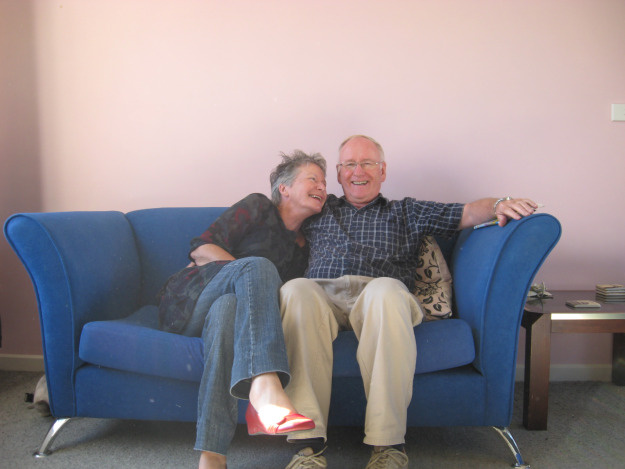
I have been a fan of Bernadette Hall’s poetry for a long time so was delighted to see she has received this honour. I missed the initial release when I was walking the beauty of Stewart Island. This is well deserved. A little dance of poetry joy ensues! Reading a book by Bernadette is poetry pleasure. Utterly satisfying for ear, eye, heart and mind.
You can see the full achievements of Bernadette as both poet and teacher here on the Creative NZ press release here.
My review of Bernadette’s most recent collection Life & Customs here.
Bernadette talks to Poetry Shelf here.
Victoria University Press page
New Zealand Book Council page
New Zealand Electronic Poetry Centre page
Canterbury University Press page
Best NZ Poems edited by Bernadette Hall here
My review of The Lustre Jug in The NZ Herald
 NZ Poetry Shelf