Category Archives: NZ poetry book

Poetry Shelf review: Mohamed Hassan’s National anthem

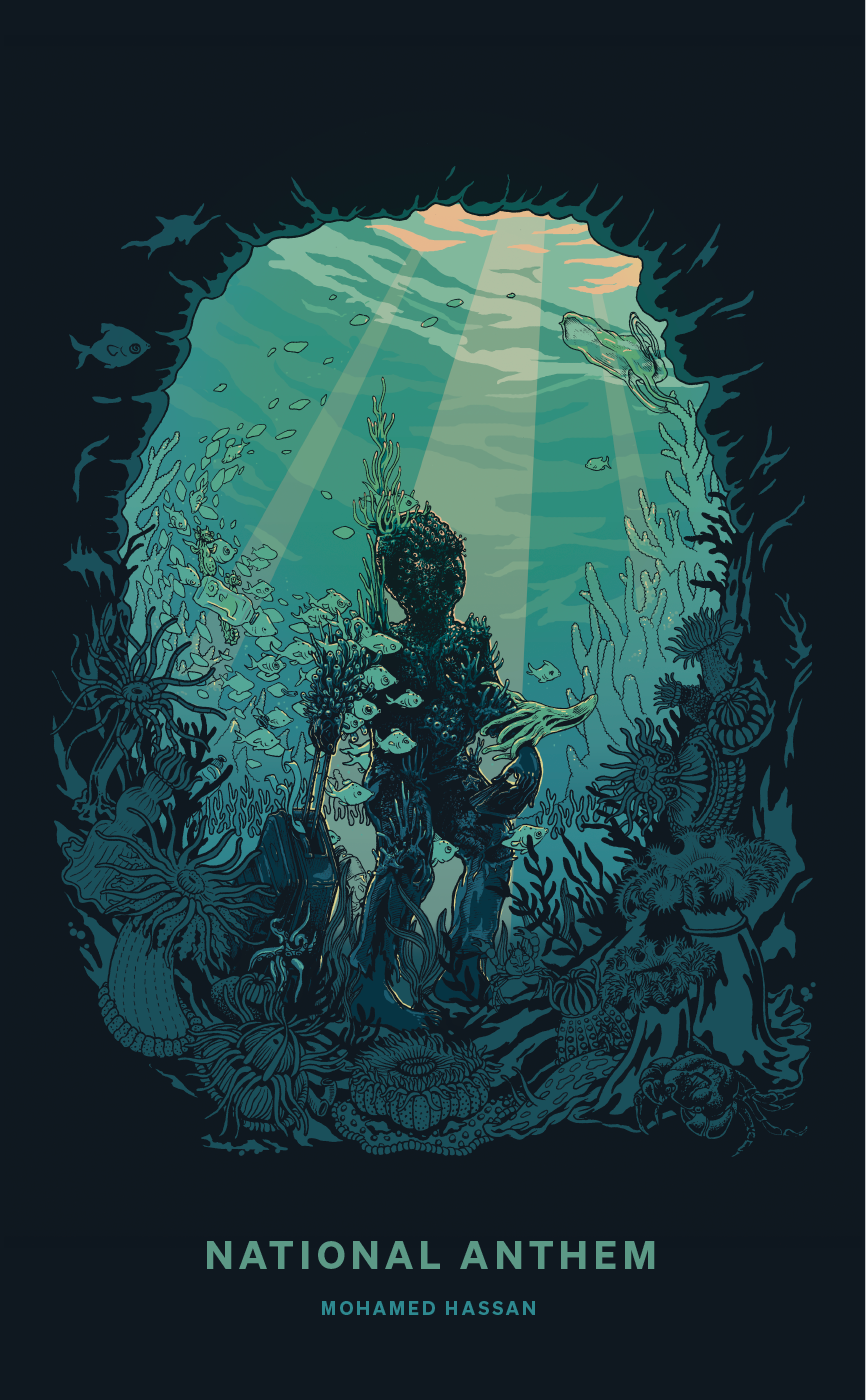
Mohamed Hassan, National Anthem, Dead Bird Books, 2020

the songs I breathe to

make my bones ache

smell like mama’s deep

fried cauliflower after

a long day of diaspora


from ‘John Lennon’

Reading Mohamed Hassan’s new collection, National Anthem, opens up what poetry can do. It widens your heart. It makes you feel. It makes you think. It gets you listening. It makes you think about things that matter. Humanity. Family. Soil.

It makes me yearn for a world where divisions and privileges – based on where you come from, the colour of your skin and the language you speak – are no longer active.

The poetry I have loved this year keeps returning to the word listen. For all kinds of reasons. The way poetry is music, the way poems active with sound feed your ear. The way you listen to other voices that are distinctive and are vital chimes on human experience. I need to read these poems. I need to read these poems and listen to how tough it is when people insist on sideswiping those who do not match their own reflection and choices.

Mohamed’s poetry, amongst other things, is written in soil, with all its significance – this living breathing life-essential earth that nourishes us, hearts, minds, bodies, connections. Soil, as a living entity is so contested and so unbearably damaged by greed and ignorance. It defines where we stand and where we have stood. Mohamed writes from the soil he has left behind in Egypt and the soil of his second home Aotearoa, the soil of his travels. The ink soil in his pen carries the earth of dreams, experiences, kinship, wounds, connections. Islamophobia. Revelations. Griefs. Hopes.  

Such acutely personal poetry is sometimes filtered through other characters, whether speaking of racism, isolation, separation, love:

I am a poet who writes about my feelings but can’t open up without being in character

without the stage lights and the orange diffusers softening my face for the audience 

from ‘Grief is an expensive habit’


Family is important. The poems never lose sight or contact with family. The grandfather looms large in particular dreams and memories. He is in a humiliating childhood scene, but he is also loss:

you can’t discard a loss the way you can

a birthday gift or a broken laptop


it lives with you, sleeps in the spare room

by the laundry and occasionally eats your food


I want to never lose my parents

but find a loss like that in someone


a love that sears into your lungs and lingers

if you draw the short straw and not die first


from ‘Bury me’

The grandmother is equally important. She is there in ‘When they ask you / why you speak so well for an immigrant’, a poem that reacts to the title’s misguided and recurring compliment:

Tell them

about your grandmother’s laugh

how you never quite knew whether she was story or myth

the upper lip in your conviction

or a song ringing in your bones

drifting through the kitchen window

with the fried shrimp and newspaper voodoo dolls

National anthem layers experience, and that layered experience opens up what immigrants deal with. This cannot be underestimated. This daily erosion. The intricate and extraordinary poem, ‘Life at a distance’, recounts the family’s move to Aotearoa, the mother yearning for home, bearing the racial slurs, crying bathroom tears. Twenty years later, the educated, assimilated and beloved son moves to Istanbul with his ‘kiwiness’.

migration is its own form

of social isolation


an ocean that sits between you

and everyone else

This is the kind of poem that burrows in deep with its complications and toughness, its epiphanies and its wisdoms. I want to hear it read aloud. To hear it sung in the air. This is a son’s story and a mother’s story, a braid of realisations: ‘and you realise she is wading through / her own migration, that like her / you are a dandelion flung in the wind’. One verse depicts the mother still watching Egyptian soap operas and skyping the grandmother, but doing things and being in a country she no longer wants to leave. ‘Home’ has doubled back on itself.

she tells me she is praying

I come home


and home

by any other name


is a quarantine

you have chosen


is a field of dandelions

flung together


learning to grow

In fact this is the kind of book that burrows in deep with its deft and moving exposures. The poetry is the hand on the heart, the hand never leaving the heart, especially after the individual, societal and cultural wounds of the mosque attacks, and the cumulative stories of grief, disharmony, anxiety, uncertainty, ignorance. The personal stories. The politics. Mohamed names the terrorist because he wants the repeated name to fade to oblivion. Jacinda refuses to name the terrorist because she too wants to demolish any shard of power or presence. Mohamed is using words, shaping poems, intensely personal, searingly political, to dissipate a name and move towards healing a community.

we will say your name

until you you are no more real

until your oblivion fades


and we will have sprouted

daffodils from our pain

a forest from our eyes

a mountain

a most beautiful way to heal


and who will worship you then?


from ‘The Prime Minister will not say his name but I will’

The poems hold out hope, time and time again, in an image or a phrase, in a word such as daffodils, in the idea that arms opening wide will embrace the whole person not just what they choose, in the dissatisfaction of arm’s length, in ‘the five stages of peace’. I keep wanting to share a poem with you, to sit down with you in café and say read this, feel this, ponder this, be changed, open your arms wide and greet the whole person, the poem. I am a privileged white woman with a warm home and food in the fridge, a loving family, a long history of publication, a tertiary education, a history of travel, a place to call home. But I need to listen harder. When will these global hierarchies and inequities end?

Mohamed brings us back to a person holding a pen fuelled with ink and soil and memory and challenge. He puts himself on show (albeit in character at times) no matter the pain. Here he is at the airport, at customs where some people sail through invisibly, while some people are interrogated because of name or colour. It is the poem’s ending that gets me, that keeps reminding me – in this catastrophic year of pandemic, overstretched frontline staff, hate crimes, wars, conspiracy theories, poverty, insufferable greed, and sexual and domestic abuse – every name and statistic is a real person. A real person with story.

This ending. This poem. Buy the book and read the poem:

listen

let’s take things slow

I want this, I do

but let’s build a relationship

on more than just racial profiling


I want you to know the real me


can’t you that I

well …


I’m just a boy

standing in front of a boy

asking him


to let me in


from ‘Customs: a love story’

The title poem, ‘National anthem’ is also a beauty, a poem of pledges that include good coffee, voices in unison, the grandmother’s laugh, zero flags and borders. The final stanza, the final lines in the collection are the kind of lines that will keep you going over corrugated roads and spiky living, that will keep you going whatever your story, whatever your challenges, and pain and love and prospects of death or hope. I am so hoping that Mohamed gets to read at Aotearoa festivals next year, not just five minutes in a poetry line up, but in a whole session where we can hear his words sing and shine and cut and hold out arms and offer such exquisite and necessary hope.

to those who would plot to sow me love

to bake me warmth and never break my art

to rob my eyes for safe keeping

to drown me in unconditional trust


to build with me

a new sun


I pledge myself


to you


from ‘National anthem’

Mohamed Hassan is an award-winning journalist and writer who has lived in Egypt, Aotearoa and Turkey. Hewas the winner of the 2015 NZ National Poetry Slam, a TEDx fellow and recipient of the Gold Trophy at the 2017 New York Radio Awards. His poetry has been watched and shared widely online and taught in schools internationally.

Dead Bird Books page
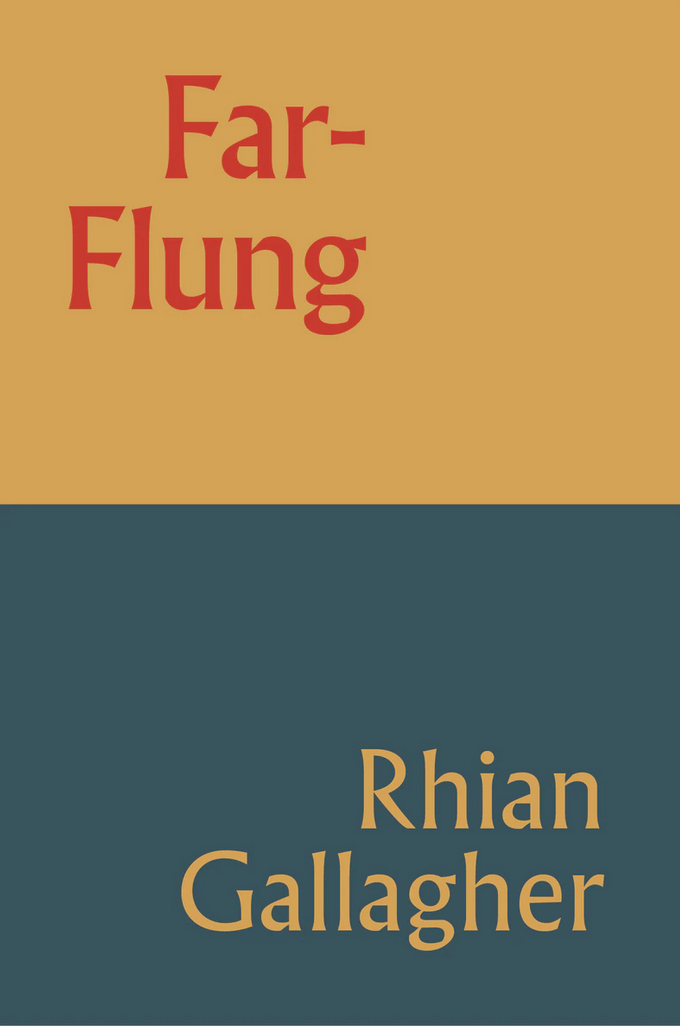
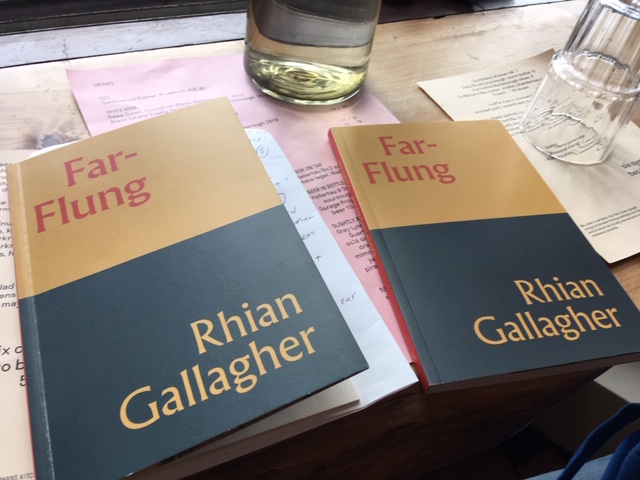
Poetry Shelf review: Rhian Gallagher’s Far-Flung

Rhian Gallagher,Far-Flung Auckland University Press, 2020

Into the Blue Light

for Kate Vercoe


I’m walking above myself in the blue light

indecently blue above the bay with its walk-on-water skin

here is the Kilmog slumping seaward

and the men in their high-vis vests

pouring tar and metal on gaping wounds

the last repair broke free; the highway

doesn’t want to lie still, none of us

want to be where we are


exactly but somewhere else

the track a tree’s ascent, kaikawaka! hold on

to the growing power, sun igniting little shouts

against my eyeballs

and clouds came from Australia

hunkering over the Tasman with their strange accent


I’m high as a wing tip

where the ache meets the bliss

summit rocks exploding with lichen and moss –

little soft fellas suckered to a groove

bloom and bloom – the track isn’t content

with an end, flax rattling their sabres, tussocks

drying their hair in the stiff south-easterly;

the track wants to go on

forever because it comes to nothing

but the blue light. I’m going out, out

out into the blue light, walking above myself.


Rhian Gallagher, from Far-Flung


Rhian Gallagher’s debut poetry book, Salt Water Creek (Enitharmon Press) was shortlisted for the Forward Prize First Collection, while her second book Shift was awarded the 2012 New Zealand Post Book Award for Poetry. She has received a Canterbury History Foundation Award, The Janet Frame Literary Trust Award and in 2018 she held the University of Otago Burns Fellowship. This year I welcomed the arrival of Far-Flung (Auckland University Press). It is a glorious book, a book to slowly savour.

Far-Flung is in two sections. The first section, with deep and roving attachments, navigates place. Think of the shimmering land, the peopled land, the lived-upon and recollected land, with relationships, experiences, epiphanies and upheavals. Think of the past and think of the present. Think of school classrooms, macrocarpa and our smallest birds. Think of a nor-west wind and Donegal women. These poems exude a delicious quietness, a stalled pace, because this is poetry of contemplation, musings upon a stretching home along with ideas that have shaped, and are shaping, how the world is.

The other day I turned up in an Auckland café to meet poet Anna Jackson for lunch, and we both brought along Far-Flung to read (if we got to wait for the other). I read the opening lines aloud to Anna when she arrived, and then she started reading the book. We were lost in the book. I am now imagining how perfect it would be to have a weekly poetry meeting with a friend, where you sit and read the exact same book over lunch. Perhaps I am returning to the afternoon-tea poems from my debut book Cookhouse, where I thought I would take afternoon with poets I loved (in the shape of a poem) for the rest of my life. That didn’t exactly happen (in the shape of a poem), but I guess I have been engaging with poetry in Aotearoa ever since.

Rhian’s opening poem ‘Into the Blue Light’ is a form of poetry astonishment. Let’s say awe, wonder, uplift. The spiritual meets the incandescent meets the hot sticky tar of the road repairs, and the ever-moving scene, with its biblical overtones (‘the bay with its walk-on-water skin’), references a fidgety self as it much as it scores physical locations. I keep coming back to the word ‘miracle’, and the way we become immune to the little and large miracles about us. Miracle can be a way of transcending the burdensome body, daily stasis, the anchor of here and there, the shadow of death, and embrace light  and engage in light-footed movement. This is definitely a poem to get lost in. You don’t need to know what it is about or the personal implications for both poet and speaker. Perhaps this is what astonishment poems can do: they draw us into the blue light so that we may walk or drift above ourselves.

The second poem, ‘The Speed of God’, underlines the range of a nimble poet whose poetic craft includes the lyrical, the political, the personal and the reflective. Here Rhian wittingly but bitingly muses on the idea that God made the world too fast to get men right.


Or maybe if he’d made man and said, ‘You learn how to
live with yourself and do housework and then I might think
about woman.’

The second section of the book focuses upon voices from Dunedin’s Seacliff Lunatic Asylum and is in debt to research along with imaginings. The Lunatic Act of 1882 defines a lunatic within legal parameters rather a medical diagnosis. The institution was more akin to a prison than a place of healing, with those incarcerated granted no legal rights.  As a national inspector of lunatic asylums, hospitals and charitable institutions, Dr Duncan MacGregor ‘feared New Zealand was being overrun by a flood of immigrants from lowly backgrounds’.

Rhian’s ‘The Seacliffe Epistles’ sequence is unbearably haunting. The endnotes acknowledge the sources, many poems in debt to inmate’s letters. Reading the poignant poetry, I am reminded of the way we still haven’t got everything right yet. We still have the dispossessed, the muted, the disenfranchised, the underprivileged. And that is another haunting seeping into the crevices of the book.

Far-Flung showcases multiple bearings of self, place, and across time. There is the child smelling the ‘gum trees in the gully’, rhyming her way across a wheat field, as letters and words start to produce sound and sense. From those tentative beginnings, words now offer sumptuous music for the ear, groundings for the heart, little portholes into our own contemplative meanderings. As Vincent O’Sullivan says on the back of the book: ‘I can think of no more than a handful of poets, whose work I admire to anything like a similar degree.’ This is a glorious arrival, a book of exquisite returns that slowly unfold across months.

Rhian Gallagher’s first poetry book Salt Water Creek (Enitharmon Press, 2003) was shortlisted for the Forward Prize for First Collection. In 2007 Gallagher won a Canterbury History Foundation Award, which led to the publication of her book Feeling for Daylight: The Photographs of Jack Adamson (South Canterbury Museum, 2010). She also received the 2008 Janet Frame Literary Trust Award. Gallagher’s Shift (AUP, 2011) won the 2012 New Zealand Post Book Award for Poetry. In 2018, she held the University of Otago Robert Burns Fellowship.

Auckland University Press page

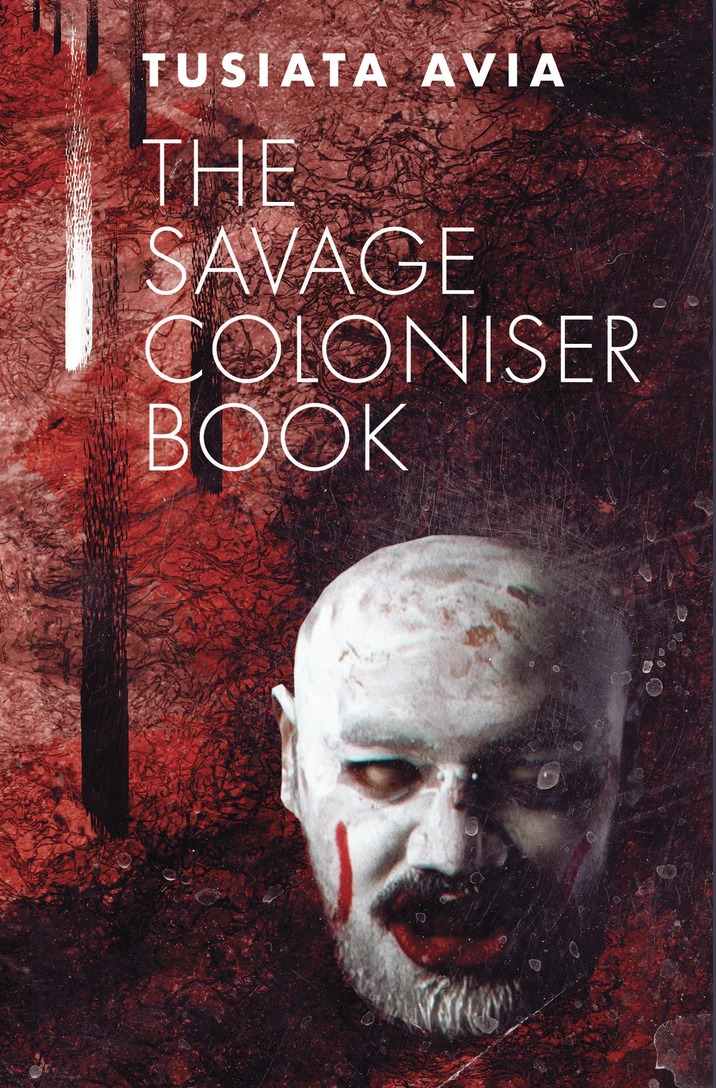
Poetry Shelf review: Tusiata Avia’s The Savage Coloniser Book

Tusiata Avia, The Savage Coloniser Book, Victoria University Press, 2020

I have just read Selina Tusitala Marsh’s brilliant review of The Savage Coloniser Book at the Academy of New Zealand Literature, and if you read one book review this year, from first line to last line, read this. It pays sublime tribute to Tusiata Avia’s book at a personal level and at a wider level. This is a taster:

The Savage Coloniser Book poetically documents our wounds, and by doing this provides poetic catharsis. Avia goes through the wound – colonisation, slavery, genocide and racism – and back through it several times. It’s an uncomfortable read in many places. Some might avert their eyes, refuse to lift off their own bandages to see, but it’s a wound that belongs to all of us and one shared by people of colour the world over. These are wounds that leak into our day-to-day lives, whether you’re paying in a bookshop or praying in a mosque, whether you are having coffee with blithely racist friends or standing in a protest line.

Tusiata Avia places herself – her ravaged heart, her experience, wounds, scars, thinking, feeling, her urge to speak, sing, perform, make poetry, no matter the price, the energy needed, holding history out, with tempered rage, with unadulterated rage, quietly, loudly, singing, shining, her heart on the travesties, the coloniser, the colonised, on the Pākehā who crossed lines into abuse, and into the light there, right there the unspeakable abuse that needs to be heard, whacking Captain Cook from his pedestal, sighting Ihumātao, the Australian bush fires, ‘The white fella houses go up in smoke. // They start living in caravans / like they’re the dispossessed’, and the refugees, in lines of sight, heart lines ear lines, ah the point of the blade when you hear the Manus Island refugees, the plundering of lives and loves and dreams and ways of being across time, the plundering of the land, the living growing nurturing land, ‘you might even have to remove a mountain’ to get to the ore, Jacinda’s house colonised by a Polynesian family, worried daughter listening to Jacinda and her daily Covid briefing, translating for worried mother, worried daughter, finding her mother’s Broadsheets, the gutted woman, the abortioned woman, her lovers, her daughter who wants her mother to be more specific, but she is disabled with epilepsy, saying thingy to beloved daughter, disinfectant wiping surfaces for her beloved mother, in the time of Covid, in the time of reckoning, the near death, again the near death, epilepsy on the floor, her passed father a presence, the white people who claim white as colour, and more, and worse, and notes for the critic with their suffocating paradigms and agendas, racism, and standing in the room with the white people who are finding it hard to be white and just won’t shut up, and she places a prayer, a prayer for water, her daughter, the stars, lungs, child, air, the reader and more – in her poems, in these necessary poems.

dear Tusiata

hold your book to my ear

hold your book to my eye

hold your book to my lungs

hold your book in my bloodstream

hold your book up for my forebears

hold your book up for my friends and family

hold your book in my heart

hold your book, hold your book

love Paula

Selina Tusitala Marsh’s review at ANZL

Poetry Shelf: Tusiata‘s ‘Love in the Time of Primeminiscinda’ (The Savage Coloniser Book)

Tusiata reads ‘Massacre’ (The Savage Coloniser Book)

Leilani Tamu review at KeteBooks

Faith Wilson review at RNZ National

Victoria University Press page

‘Protest is telling the truth in public … We use our bodies, our words, our art and our sounds both to tell the truth about the pain we endure and to demand the justice that we know is possible.’ DeRay Mckesson, On the Other Side of Freedom  (quoted at front of book)

Poetry Shelf noticeboard: Nina Mingya Powles’s live (from London) book launch

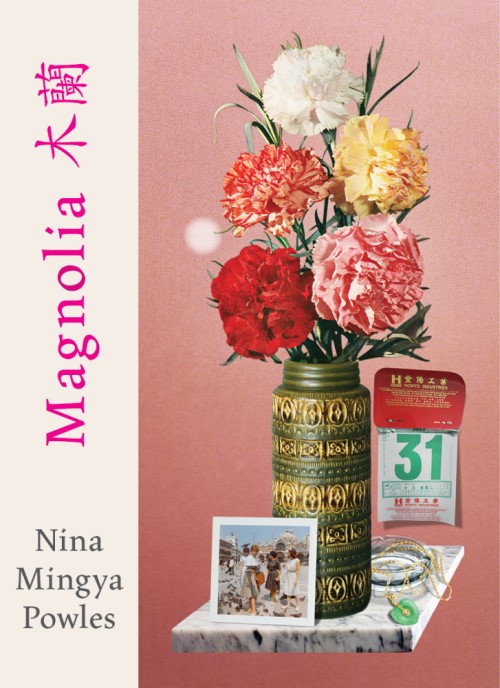
Help us celebrate the launch of Magnolia 木蘭 by Nina Mingya Powles in the time of covid! Nina is stuck in lockdown in London, from where she will do an Instagram Live reading to celebrate the publication of the New Zealand edition of her fabulous new poetry collection.

Join us on Wednesday 2 December at 9 pm NZ time on Nina’s Instagram page. (It will also be available to view later, but live is best!) To view the video you’ll need to have an Instagram account.

If Instagram isn’t your thing, or even if it is, you can also look forward to the real-life launch we’re planning with Nina in March!! Details TBC.

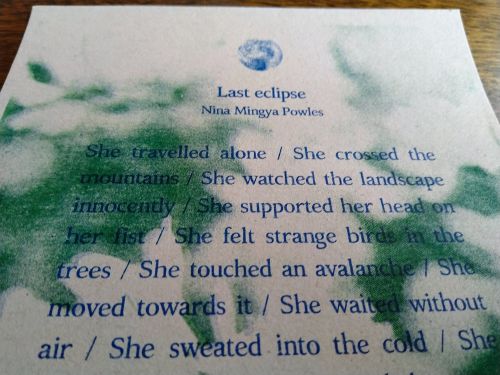
You can buy Magnolia 木蘭 from good bookshops, or direct from us. First 100 direct orders will also get a limited edition risograph print made by Nina herself of one of the poems in the collection.

About Magnolia 木蘭

Home is not a place but a string of colours threaded together and knotted at one end.

Shanghai, Aotearoa, Malaysia, London—all are places poet Nina Mingya Powles calls home and not-home; from each she can be homesick for another. A gorgeous bittersweet longing and hunger runs through the poems in this new collection from one of our most exciting poetic voices.

In Magnolia 木蘭 Powles explores her experience of being mixed-race and trying to find her way through multiple languages: English, Mandarin, Hakka, Māori. Powles uses every sense to take us on a journey through cities, food and even time, weaving her story with the stories of women from history, myth and film.

The gorgeous cover features an artwork by Kerry Ann Lee.

The UK edition of Magnolia 木蘭 was shortlisted for the Forward Prize for best first collection.

“This is a book of the body and the senses, whether the million tiny nerve endings of young love; the hunger that turns ‘your bones soft in the heat’; the painterly, edible, physical colour of flowers and the fabric lantern in the pattern of Maggie Cheung’s blue cheongsam; or ‘the soft scratchings of dusk’. These are poems of ‘warm blue longing’ and understated beauty, poems to linger over, taste, and taste again. As Powles searches for home she leaves an ‘imprint of rain’ in your dreams.”
—Alison Wong

About the author

Nina Mingya Powles is a poet, zinemaker and non-fiction writer of Malaysian-Chinese and Pākehā heritage, currently living in London. She is the author of a food memoir, Tiny Moons: A Year of Eating in Shanghai (The Emma Press, 2020), poetry box-set Luminescent (Seraph Press, 2017), and several poetry chapbooks and zines, including Girls of the Drift (Seraph Press, 2014). In 2018 she was one of three winners of the inaugural Women Poets’ Prize, and in 2019 won the Nan Shepherd Prize for Nature Writing. Magnolia 木蘭 was shortlisted for the 2020 Forward Prize for Best First Collection. Nina has an MA in creative writing from Victoria University of Wellington and won the 2015 Biggs Family Prize for Poetry. She is the founding editor of Bitter Melon 苦瓜, a risograph press that publishes limited-edition poetry pamphlets by Asian writers. Her collection of essays, Small Bodies of Water, is forthcoming from Canongate Books in 2021.

Poetry Shelf review: Bill Manhire’s Wow

Bill Manhire, Wow, Victoria University Press, 2020

Excuse me if I laugh.

The roads are dark and large books block our path.

The air we breathe is made of evening air.

The world is longer than the road that brings us here.

from ‘The Armchair Traveller’

Over my decades of reading New Zealand poetry, some poets stand out. To my discovery of Hone Tuwhare in my secondary-school library in the early 1970s, I add the joy of reading Jenny Bornholdt, Bernadette Hall, JC Sturm, Michele Leggott, Emma Neale, Tusiata Avia, Cilla McQueen, Anna jackson, Bill Manhire. So many other poets have given me goosebumps across the decades, poets who have made me pick up a pen and write, who have hooked my attention and then kept me listening. What is it that makes a particular poet, such as Bill Manhire, our first national poet laureate, a favoured return over years? For me it starts with music, moves through heart, silence, mystery, ideas, wit. I seem to favour bridges into poetry thickets, and these thickets might appear within a handful of words or a book-long sequence.

At WORD Christchurch a few weeks ago, I went to some excellent sessions. I have already written about the miracle of being there in the time of Covid, along with my festival highlights – but how fitting one favourite was the Bill Manhire / John Campbell conversation celebrating Bill’s new collection, Wow. John discussed the lasting effect of being in a Bill Manhire class at university and reading his poetry. I carried away such warmth and enthusiasm for poems and what poetry can do. John launched the conversation by explaining Bill’s impact on him: ‘A light went on in my head and heart which has never gone out’. This line has stuck with me. Poetry turns on internal lights. Gifts us an internal galaxy system. Coincidentally the house lights are always up in WORD sessions so it felt like a living-room or café conversation without the usual audience / speaker barrier at work. I kept wanting to join in! Afterwards fans lined up with the book to get signed and I pictured the queue of people racing home to find their own Wow enthusiasms. I will barely scrape the surface of how many paths through the collection.

Wow, co-published by Carcanet in the UK and Victoria University Press here, is one of four winter recommendations by the Poetry Book Society, an organisation TS Eliot and friends founded in 1953.

I begin with Wow’s preface: ‘they’ve cleared away / the clearings’.

The mystery is potent. The image haunting. I was sitting in my Ōtautahi hotel room, looking out at the parking-lot clearings, with Wow in hand, and I couldn’t stop leapfrogging from city clearings to bush clearings to mental clearings to poem clearings. And I couldn’t stop wondering what replaces the clearing, and the word bounced about in my head so much it lost sense. And then it became vital: we need clearings. We need clearings in the city, and the bush, and in our heads. Maybe we need clearings in poems, where the the light and dark intermingle, and the glints sit next to the ominous.

Thickets and clearings. The first poem is a song of the extinct huia, a fitting call onto the book’s musical terrain, and to uncertain and unsettling presents and futures. Such a poignant note to enter a collection with:

I lived among you once

and now I can’t be found

I’m made of things that vanish

a feather on the ground

from ‘Huia’

Turn the page and ‘Untitled’, a short poem, is an altogether different form of song. The dark edges are prominent, the silence (the unspoken, the withheld) a hook. This poem is the complete Manhire package: you get music, silence, mystery, dark edges, light turns.

Untitled

This book about extinct birds is heavier than any bird:

heavier than the dark bird eating my heart,

page after page of abandoned wings.

I lift it up and sit it on my lap

and listen to it purring.

Bill Manhire

John invited Bill to read the four-lined ‘A Really Nice Trip’, where the speaker visits several ‘Pleasant’ places: ‘Then we went all the way out to Pleasant Point.’ The audience laughed and loved it, and I pictured everyone picturing a mindstream of pleasant places. The poem is a wee joke. The poem turns up in reviews and on festival stages. The poem is also like a clearing for our own pleasant places, in my case, reeking of summer and green tea in a flask. Ah such a tongue-in-cheek, underrated word that scoots over how a Valley or a Flat or a Point can be satisfying, pleasing, a downright pleasure.

Yes! Bill is the maestro of ordinariness (a bit like Jenny Bornholdt is too) where an economy of words releases any number of treats. There is comfort in the ordinary – that pleasant place – that is sometimes so ordinary it becomes unreal, super-real. This kind of poetic ordinariness makes pinpricks on your eyelids, and you settle back in your chair or hammock as the armchair traveller, the poetry traveller, and it is altogether wonderful. I quoted the first stanza from ‘The Armchair Traveller’ at the start of this review, because it is this one of those classic Manhire poems that is going to haunt like ‘Kevin’ haunts you, or ‘The Ladder’ or ‘Erebus Voices’ or ‘Hotel Emergencies’ or ‘The Victims of Lightning’. Here is the last verse:

Time now to let the story take its course,

just settle back and let the driver drive.

Bliss is it late at night to be alive,

learning to yield, and not to strive.

from ‘The Armchair Traveller’

‘The Armchair Traveller’ is a poetry thicket at its very best – you get the light and dark, the mystery, the silence and the exquisite music. There is comfort but there is also discomfort. Perhaps the comfort –for me even in the darkest threats – is expanded by Bill’s fondness for rhyme and repetition. At times the rhyme resembles an incantation, a list, or repeating sounds, an insistent beat, but at other times, rhyme feeds the mysterious business of being human. ‘Warm Ocean’ is full of repetition and rhyme, assonance and alliteration, a sweet concatenation of musical effects and human connections, both within hearing and at a whisper.

Don’t play the music don’t play the music

says the man

who walks around town saying

over and over don’t play the music

all songs being made

as we know from things that hurt

ice that melts flames that fall from the sky

yes all of that and more

and the father goes on singing

long after his daughter leaves the church

from ‘Warm Ocean’

Yes! Wow offers multiple impacts as you read. Three poems in a row are heart catchers: ‘Knots’, ‘Our Teacher’, ‘The Sky’. Things are missed and missing. So poignant. Such treasures. How to tear yourself apart from the magical movement of ‘The Sky’? Impossible:

A man comes by with coal in a wheelbarrow,

muttering, muttering. He wants

to sell us warmth, his feet don’t leave the ground.

We think that we will always miss the sky.

It says look up whenever we look down.

from ‘The Sky’

Read Wow and you get story and song, light and dark, the surreal, constant surprise, but there is also always wit and humour. I laughed out loud at the indignant woman who thought she had phoned the cattery to get her vegetarian cat named Coleslaw back, and the bemused listener couldn’t get a word in edgeways. ‘The Lazy Poet’ is hilarious as it overlays cricket and poetry (‘He wonders about the word “thicket” …/ then turns on the cricket’) until ‘rain stops play’. I also laughed out loud at ‘The Deerculler’s Wife’, as it signals a poem that might be drowning, or yelling to get attention, or even blowing a yellow whistle.

Like many poets, Bill uses a roving speaker, who may or may not be autobiographical, invented, borrowed, an amalgamation of voices, experiences, imaginings. In a blog he wrote for Carcanet, he talks about the action between the speaker in the poem and the person who writes, and the way characters, one in particular, who keep turning up in his poetry. This nimble voice keeps us on our reading toes. Bill’s vagabond ‘I’ is best friends with an inquisitive and acquisitive eye and ear as it gathers in the world, real or imagined.

Wow will haunt you – so many of these poems have joined my list of memorable poetry encounters (see my list above to add to). The baby in the title poem says ‘wow’ while the big brother says ‘also’. This new collection sparks both the ‘wow’ moments and the ‘also’ moments. Get lost in its glorious thickets and then find your way out to take stock of the ordinary (and out-of-the-ordinary) world about you.

Bill closed his WORD session by reading ‘Little Prayers’, written in response to the Christchurch terrorist attack, 15 March 2019. This is a poem to hold in your heart. I will leave you with the opening verse, in the hope you will open the book, in your armchair or hammock, and begin reading:

Let the closing line be the opening line

Let us open ourselves to grief and shame

Let pain be felt and be felt again

May our eyes see when they cease crying

Let the closing line be the opening line

from ‘Little Prayers’

Bill Manhire’s most recent books include Some Things to Place in a Coffin (2017), Tell Me My Name (with Hannah Griffin and Norman Meehan, 2017) and The Stories of Bill Manhire (2015). He was New Zealand’s inaugural poet laureate, and founded and until recently directed the International Institute of Modern Letters at Victoria University of Wellington. He has edited major anthologies, including, with Marion McLeod, the now classic Some Other Country: New Zealand’s Best Short Stories (1984).

Victoria University Press page

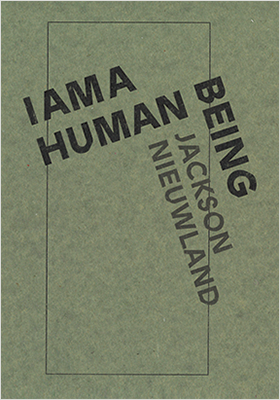
Poetry Shelf review: Jackson Nieuwland’s I am a human being

I am a human being, Jackson Nieuwland, Compound Press, 2020

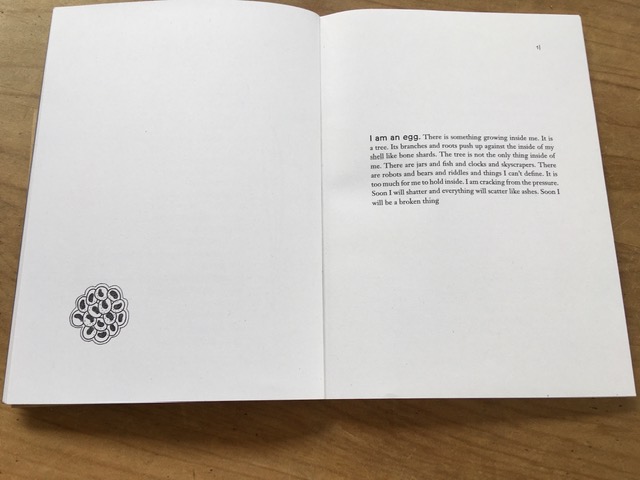
Sometimes you pick up a poetry book and you know within a page or two, it is a perfect fit, a slow-speed read to savour with joy. That’s how I felt when I started reading Jackson Nieuwland’s I am a human being. I love the premise embedded in the title, that in turn generates a sequence of poems that form a secret title list poem (I am an egg, I am a tree, I am tree, I am a beaver, I am a bear, I am a dog, I am a bottomless pit, and so on).

The opening poem offers an image that, in its exquisite and heart-moving detail, underlines the range of the book: physical, metaphorical, fable-like, metaphysical, autobiographical. In one poem the speaker suggests they are not quite sure who they are yet, that there is no single word that adequately defines them (‘agender, genderfluid, trans …’). This book, so long in the making, lovingly crafted with the loving support of friends, with both doubt and with grace (think poise, fluency, adroitness), this book, in its lists and its expansions, moves beyond the need for a single self-defining word.

Instead we are offered the image of the egg – and the way we hold a universe of things inside us, and that sometimes we might break.

This is intimate poetry. This is slowing down to observe the quotidian, the daily comings and goings, the things you see and feel when you stop and reflect and imagine, that then tilts to surprise. There is uplift and there is slipstream.

This is contoured poetry because it ignites so many parts of you as you read. You will laugh out loud as you read. You will feel the poignant witty wise delightful magical joy. The shifting melodies. There are keyholes to light and keyholes to dark. The speaker speaks of outsiderness, of what it is to fit, and what it is to not fit.

Sometime you will turn the page to a glorious pun.

Sometimes the vulnerability is a sharp ache above the surface of the line. This from ‘I am version of you from the future’:

Your past self looks at you with sympathy.

They pull you into a tight hug.

You begin to sob

releasing years of tears

that had been held inside

due to the conditioning you received

from a patriarchal society

and the overload of testosterone

pumping through you body.

As you sink into your own embrace,

the two versions of you merge into one,

and you begin again

given a chance to do it all over

but differently this time,

with an open heart

like quadruple bypass surgery.

The risk of death is high

but what other choice do you have?

I am a version of you from the future.

This is just the beginning—

I am a human being is my favourite poetry book of 2020 so far. I like the addition of Steph Maree’s line drawings. I like the way the poetry stretches in its imaginings to draw closer to an interior real that is never fixed. I like the way the poetry is both anchor and liberating kite. I like the acknowledgement that, in order to know who you are, you need to embrace many things. I love this book so very much from first page to last. In the endnotes, the page where the poet gives thanks, I read the best acknowledgement ever:

And thank you for reading

this book. I’ve gone back and

forth with myself for years

about whether these words are

worth anyone’s time. It means

the universe to me that you’ve

read all the way to the end. I

hope you found something that

meant something to you.

Jackson Nieuwland is a genderqueer writer from Te Whanganui-a-Tara. Their poetry has appeared in a number of journals, in print and online.

Compound Press page

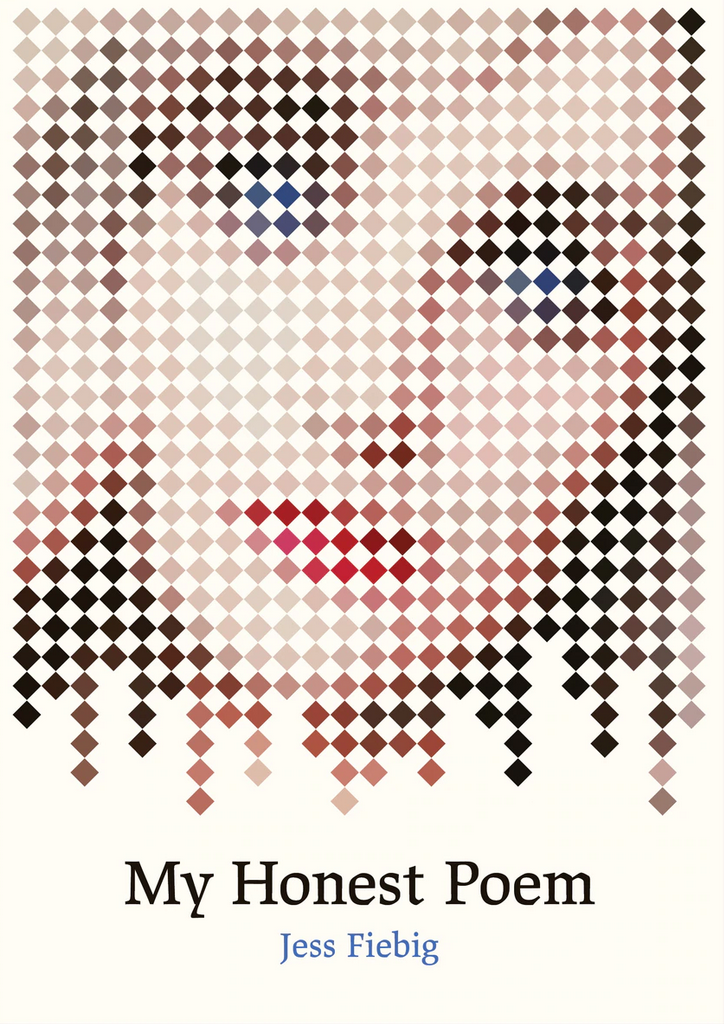
Poetry Shelf review: Jess Fiebig’s My Honest Poem

Jess Fiebig My Honest Poem Auckland University Press 2020

When I was a scrap of blonde hair, pink cheeks

and jam-smeared hands, my grandma would say

‘that girl always needs a pen in her hand’

and at twenty-eight, I think she called it,

right from the start.

from ‘My Honest Poem’

I first picked up Jess Fiegbig’s book when we were in lockdown and I held the book at arm’s length as I was navigating my own dark thoughts. It wasn’t the time to cross poetry bridges into difficult subject matter. Yes this is a book of darkness, of anxiety, family violence, sex, drug addiction but it is also a book of hope, grit, grace. Jess’s poems navigate a woman coming into being along a rocky road, but the book is also a revelation of poems coming to life.

The title suggests the writing is an opening up, the poems frank, holding out for truth. And truth is a hot coal to handle. Prismatic. Shining this light here and that light there. For Jess it is also the heat (and ice) of writing from the searing embers of personal experience. Yet when she writes though tough subjects, her love of writing pulsates, and the words are agile on the line:

I slide two fingers

down my throat

to ease out the knots

I have folded myself into

starting gently at the bottom

and working my way up

just like

when I sat on his knee

at six years old

and he carefully combed

my tangled blonde curls

from ‘Knots’

The middle section of the book, ‘I get lost in lovers’, is both an emptying out and a replenishing. There is the physical vomiting that brings up both bile and the internal weights. ‘Kitchen Sink’ ends with the image of the grandmother and her handbag (‘the kitchen sink’) that carries ‘so much that is heavy, unnecessary’. The poet’s kitchen sink is internal, we infer: ‘I lug my own kitchen sink with me’. This swing between shedding and reclaiming finds the sharp-edged things as well as love, friendship, desire.

You need to add the crafting of poems, the hints at how poems arrive, the way certain words shimmer or blaze on the line. Yes these poems are linguistic treat. Lithe, fluent, musical, economical, image rich. Poetic choices are amplifying the subject matter. Take a stanza from ‘Hypnic Jerk’ for example. You get a murmur of ‘mms’, the tantalising hit of ‘dream souvenirs’. The image of the apple in the throat conjures voice, growth, presence, absence, the memory scaffolding maintained by a go-to image. The very fickle and hard-to-articulate business of memory:

     I have kept

           dream souvenirs

     for a time when remembering you

     wouldn’t grow an apple

                                in my throat


     from ‘Hypnic Jerk’

I find this stanza in ‘Party After Riccarton Races’ equally gripping:

     Sunday, without sleep,

     I seek out the beach, hope

     that sand on skin might release

     the brine in my head.

The poem describes a party in a multi-storied swimming-pooled home, where white powder is offered in lines on platters rather than canapes – but it is the ‘brine’ in her head that catches me, the salty agent of preservation that is holding things the speaker wants to discharge and dissolve.

People feature. Lovers, yes. Friends. In the beginning an achingly honest depiction of a mother with various addiction and distances, the abusive boyfriend of her mother. It is particularly moving to read in the acknowledgements Jess’s mention of her mother: ‘whose support of me telling these story shows real grace’. The grandmother is a recurring figure and she is a magnet of warmth and wisdom.

When we say grace,

she declares that I have cold hands, and

a warm heart; don’t go giving it all away.

My grandmother has perfect fingernails

her lined palms are soft, fleshy,

as they rest tenderly

on my arm; her touch

feels like home.

from ‘Palmistry’

The land also becomes a grounding. A way of locating a scene, a relationship, an outing, a mood shifter, an epiphany. Again the poet’s craft, the exquisite movement of word on the line, both aurally and visually, assists the story being told, the personal story being laid down:

     the yolk yellow leaves,

     brash and unashamedly golden

     in this lilac light,

     are shocking in their defiance

     of the gentle pastel landscape


     they stir something inside me

     that has lain still

                                    for so long.


     from ‘Dead Man’s Point’

My Honest Poem is a move towards new beginnings. The poetry is fresh, succulent and lyrical. Perhaps the most moving collection I have read this year; it might be difficult for some readers, but this is a poetry arrival to celebrate. It took courage to write this book, and it took a finely-tuned ear and eye to achieve such a poetry gleam.

Auckland University Press page.

Jess Fiebig is a Christchurch-based poet whose work has featured in Best New Zealand Poems 2018, Poetry New Zealand Yearbook 2018 and 2019, Landfall, Turbine | Kapohau and takahē. She was runner-up in the 2019 Sarah Broom Poetry Prize.

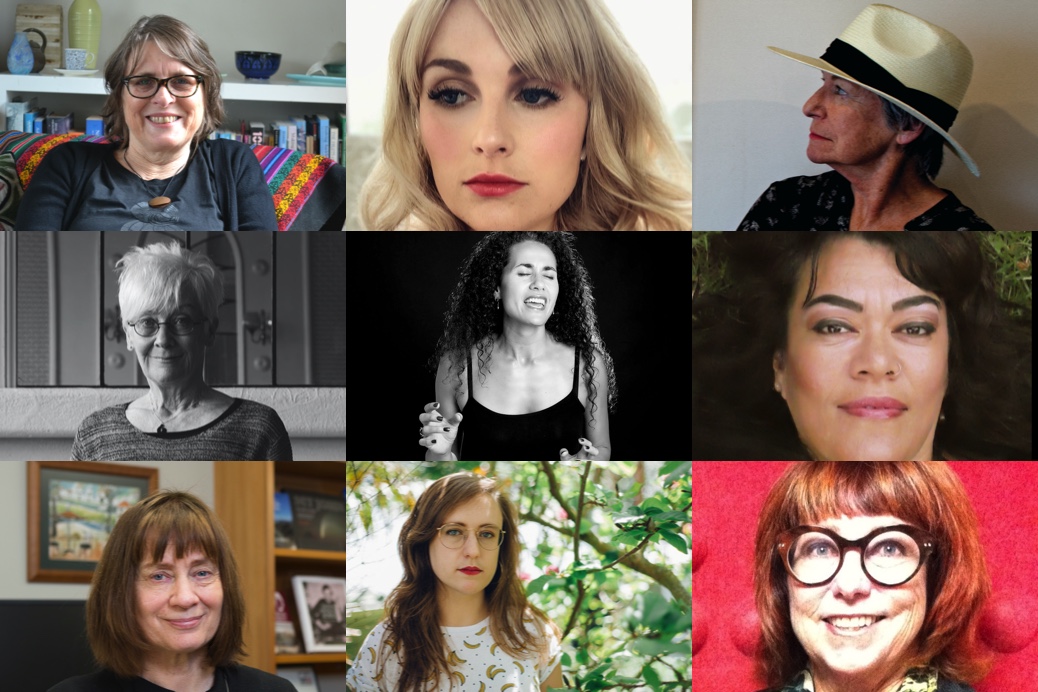
Jess is reading in my Wild Honey session at Word in Christchurch.

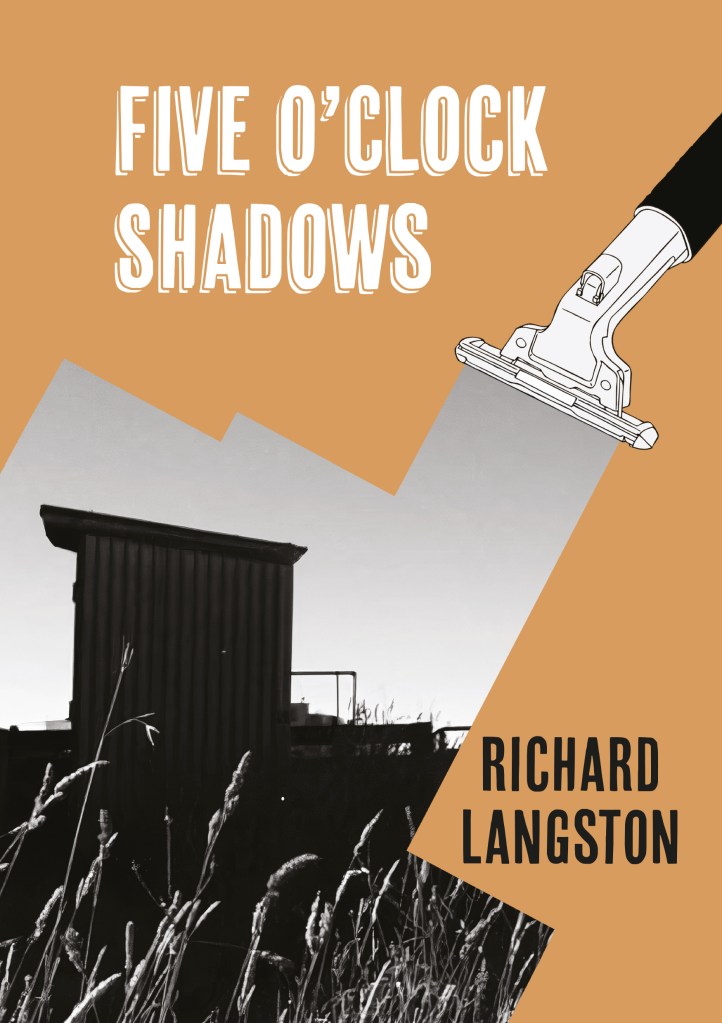
Poetry Shelf Lounge: Richard Langston reads from his new collection, Five O’Clock Shadows

Richard Langston reads three poems from his new collection, Five O’Clock Shadows (The Cuba Press, 2020)

Richard Langston is a poet, television director, and writer. Five O’Clock Shadows is his sixth book of poems. His previous books are Things Lay in Pieces (2012), The Trouble Lamp (2009), The Newspaper Poems (2007), Henry, Come See the Blue (2005), and Boy (2003). He also writes about NZ music and posts interviews with musicians on the Phantom Billstickers website.

The Cuba Press author page

Poetry Shelf review: Diane Brown’s Every now and then I have another child

Every now and then I have another child, Diane Brown, Otago University Press, 2020

Sometimes you reach for memory,

an impossible task in this throw-away

world. What choice is there but to slip

on your new self as if you come clean

without story

from ‘This Is How It Is for All of Us’ in Every now and then I have another child

Diane’s Brown previous book, a poetic memoir entitled Taking My Mother to the Opera, was ‘a rollercoasting, detail-clinging, self-catapulting, beautiful read’ (from my review ). I loved the book so was very interested to see how I engaged with Diane’s new one: Every now and then I have another child.

The new book is narrative poetry; a narrative comprising individual poems with a cast of characters that offer multiple viewpoints. For me it is a collection of border crossings, with notions and experiences of motherhood the key narrative propulsion. Everything blurs and overlaps as the fictional touches the surreal and brushes against the real.

I am reminded of Luigi Pirandello’s play, Six Characters in Search of an Author (1921), but in this case it is an author in search of characters and characters in search of each other. Joanna is a writer, poet, creative writing teacher and mother. Anna, her doppelgänger, is homeless and gatecrashes funerals. There is a mysterious baby, both phantom and pseudo-real. There are two sons, one a geek on the spectrum scale and one a sensitive surfer. There is a stepmother, a missing mother and an alcoholic father. Add in a detective, a former lover and a baby in the mural on the wall.

Life is dislocating; the borders are porous with movement between what is real and what is not real, what is present and what is missing, what is longed for and what is abandoned. Reading your way through the poetry thickets is reading symphonic psychological effects. It is reading deep into the shadows and discovering shards of light. Being mother and being daughter is complicated and complicating. There are cryptic clues, a dead body, another dead body, a crying baby, a need to imagine, a need to name and be named. Reading the list of characters underlines the way in which the narrative is also genre crossing: think fiction, memoir, poetry, detective fiction, flash fiction.

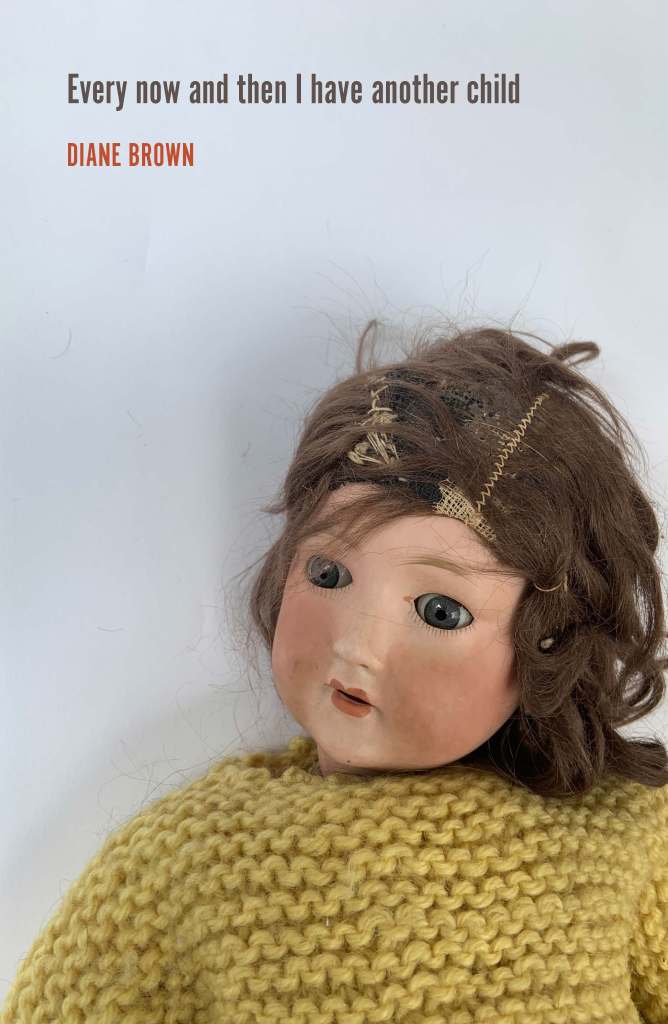
I can’t think of another book like it in Aotearoa. The spooky porcelain doll photographed by Judith White on the cover (my standard reaction to porcelain dolls) sets me up for various hauntings. Joanna is haunted by a phantom baby and her missing mother. Anna is haunted by Joanna, and by life itself. There is the way in which writing itself is a kind of haunting. How do you start? How do you keep going? How do words matter? And i would add reading. Reading this is a kind of haunting. I am thinking of the way the past – with its shadows and its light – has the ability to haunt.

Issues of creative writing are touched upon, and make you reflect back on the making of the narrative, on the author herself. If there are multiple border crossings, are there also ways in which ‘Diane’ hides in the thickets, leaves traces of herself in various characters, encounters, epiphanies? You cannot package this sequence within a neat and tidy story where everything makes sense and the real outweighs the dream or imaginary scape. Nor would you want to. We are reading poetry that draws upon rich genre possibilities, the slipperiness of writing when you try to pin it down, the evasiveness of memory, the multifaceted prongs of experience.

And that’s what makes the collection such a rewarding read. You will bump into the calamitous real world with the homeless, conspiracy theories, alternative facts, North Korean missiles. You will move from Dunedin to Auckland to Alice Springs and London, with Dunedin being the physical heart of the narrative. Geographic movement, temporal movement, emotional movement: with all roads leading to motherhood and creative processes. It is a sumptuous and haunting book that you need to experience for yourself without a reviewer ruining the startles, the surprises, the puzzles and the moving connections. I am going to do something I have never done before and leave you with the terrific last poem so you can read it, then get the book, open it at page one and find your own way to the ending. Listening hard along the way. Poetry is most definitely a way of listening. ‘Listen.’

Written on the Body

The Baby

I’ve heard the narrator give

borrowed advice: writers

need to kill their ego.

Never easy to follow yourself,

harder still to coax children

from cocoons into the light,

tracing every inch of skin

and reading what is written

with indelible ink.

Word that may unearth

the buried and extinct,

can re-ice glaciers,

turn petrified trees back

 into lush green leafiness,

repopulate the seas,

and extinguish fires

raging out of control

at the top of the world.

But to see such words,

you have to strip bare, hold

nothing back and listen. Listen.

Diane Brown

DIANE BROWN is a novelist, memoirist and poet who runs her own creative writing school, Creative Writing Dunedin. Her publications include two collections of poetry (Before the Divorce We Go to Disneyland and Learning to Lie Together), a novel (If the Tongue Fits), a verse novel (Eight Stages of Grace), a travel memoir (Liars and Lovers), a prose/poetic memoir (Here Comes Another Vital Moment) and a poetic family memoir (Taking My Mother to the Opera). In 2013 she was made a Member of New Zealand Order of Merit for services to writing and education.

Otago University Press page

Poetry Shelf interviews Rachel McAlpine

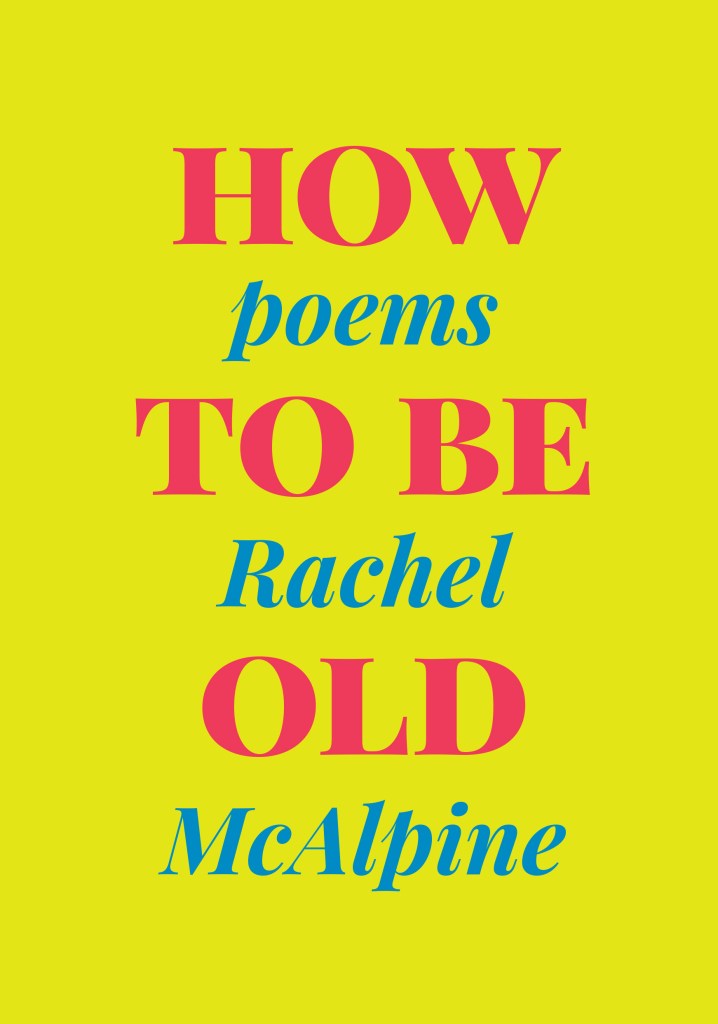
How to Be Old: Poems Rachel McAlpine, The Cuba Press, 2020

Nobody knows your neck squeaks.

Nobody knows your heart

is a bowl of poems.


Everything you do is very very good

and very very good is good enough.


The past supports us

like a trampoline.

The future? Face it.

Unlace it. Embrace it.


At dusk I want to be with you and stay.

I love it when you ask about my day.


from ‘Fortune  cookies’


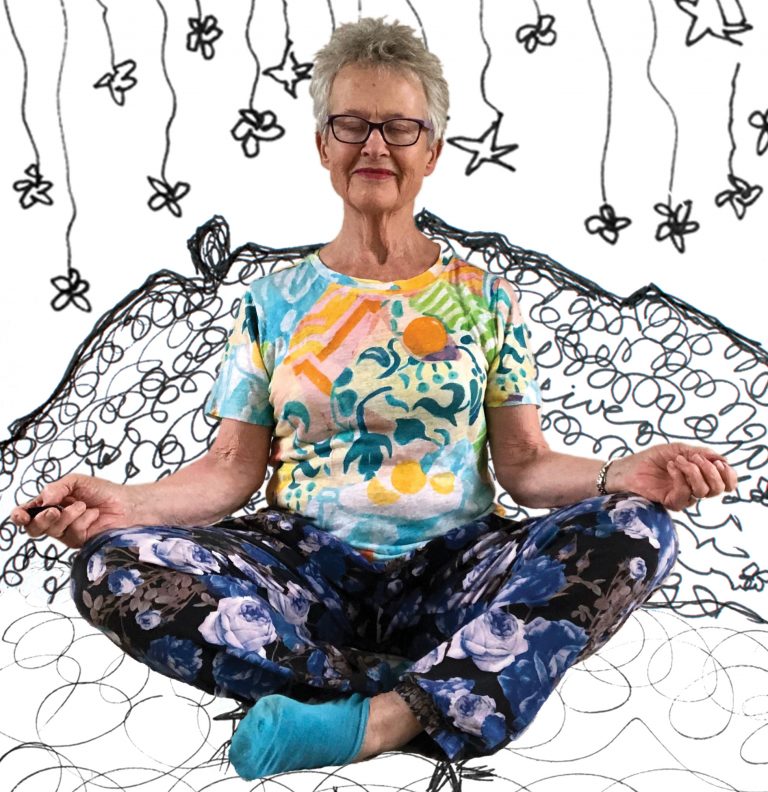
Wellington writer Rachel McAlpine blogs and podcasts about old age. She has published novels, songs, plays, books about writing as well as a number of poetry collections. To celebrate her 80th birthday she has published a new book of poems, How to Be Old. She kindly agreed to answer some questions for Poetry Shelf.

The Cuba Press page

Rachel’s blog Write into Life


Paula: Like me, you are a Minister’s daughter. I am wondering what you read as a child?

Rachel: Everything available! We (six girls) went to the library every Friday and came home fully loaded with books. But the Book of Common Prayer had the most irresistible and enduring influence on my language.

Paula: What books stood out in your teenage reading?

Rachel: Wuthering Heights, Jane Eyre, Tess of the Durbervilles spring to mind.

Paula: Can you name a few poets that have really mattered to you across the decades?

Rachel: Across the decades? Well, Allen Curnow was at university with my parents and was even engaged to my mother for two weeks: thus I was aware that some poets were living humans. This mattered to me because at school we read dead poets and only dead poets. My mother read Whim Wham in the Saturday Press which reinforced my arcane insider knowledge. Poets who first took my breath away include Pablo Neruda, Gerard Manly Hopkins, Emily Dickinson, Federico Garcia Lorca, Erica Jong and Adrienne Rich. Then a wave of young male New Zealand poets in the 1970s got me thinking hmm, maybe I could do that too…

When we bang on about our trips

and our memoirs and our blogs

and our grandchildren (best of kind)

our ills and pills and volunteering

our hearing aids and hips—

pay attention, don’t switch off

because this

is our first attempt at being old

and we’re wondering how to do it

not just for us but for you.


from ‘Templates’


Paula: I was really struck by your reaction to Sam Hunt’s contention in the 1970s that women either wrote very good or very bad poems: ‘just women scribbling their little women’s nothings’. So rather than mimic his lyrical voice–you wrote from life, and you wrote for women, and in doing so refused to see women’s writing (the how and the what) as mediocre. I love you for this. Your bolshiness. I see that inspirational bolshiness there in your new book! Am I right?

Rachel: Oh sure, I can’t help seeming bolshy even when I think I’m being most reasonable. Many of the poems in How To Be Old come from a bolshy approach to the clichés of old age. Come on now! What does that even mean, “age is just a number”? What is old age really, specifically, cold-bloodedly like—not to the observer but to the old person?

Paula: Do you think things have changed for women writers? I just checked out the latest Starling issue and its nearly all women (under 25s). Women poets are writing anything and everything, and are most definitely in the spotlights.

Rachel: Agree! Was it Arthur Baysting’s 1973 anthology The Young New Zealand Poets that included 19 men and one woman, Jan Kemp? With International Women’s year looming that was a red rag to a bull. Hard to imagine now.

Paula: Yes – although there is still a way to go. I talk about it in Wild Honey. I just love the energy and output from the current wave of young poets.

Your new book How to Be Old is a glorious evocation of old age. Such captivating self-exposure. Was this also a feature of your first collections? What angst made its way into your poetry then?

Rachel: Hey thanks, Paula! My first collection was basically shouting “I feel sad!” (as you need to sometimes). After that I jumped feet first into other issues, mainly feminist ones. My own experience is a good starting point for making a larger point digestible. Not much angst in How To Be Old, although some sadness tempers the joy.

In the seventies and eighties

as a mournful poet

and strident feminist

(there was no other sort)

I shouted loud and rude

mean and bold

waking up my sisters

with the stories of their lives.


from ‘Growing my brand’


Paula: You were a significant voice for me in the 1970s – did you feel part of a writing community, particularly women? What about now?

Rachel: In the 1970s and 80s I totally felt part of a community, a world of women who were busting to write about our own experience and women who needed to hear our voices, which were also theirs. Then I dipped out of the literary world for a couple of decades: I was very absorbed in my work with digital content until 2015. I did keep writing poems but didn’t publish. So as a poet I’ve been a bit of a loner since then, except for those who have followed my blog and podcast.

The bravest are millions


Out there living the bravest days

are the very old, the frail old

using every scrunch of the soul

for the next impossible chore.

The very old must win and win

on multiple fronts

day after trembling day.


Out there building the bravest lives

are the young

knowing what we knew

and did not do.


Rachel McAlpine


Paula: I think Wild Honey has really made me feel part of communities of women writing and supporting each other. Like you I am a loner poet but so many possibilities for connection these days.

Your new collection refreshes the way old age can be both viewed and lived. The poems are tender, vulnerable, provocative, entertaining. What prompted to you to publish a collection after a bit of a gap?

Rachel: Two things. A, I sold my business and had time on my hands. B, I turned 75 and abruptly realized that I might live another 25 years. So I needed a little hobby to keep me busy (joke). I went late and went hard at old age. Obsessed about it, researched it, decided to do at least one thing per month for a year to improve my chances of having a healthy old-old age. That project, my boot camp for the bonus years, shone a light on my own barmy ageism and society’s odd way of talking about old age. A year later, I started processing this strange interlude and the product was this book, How To Be Old. (Which of course is not a manual.)

I gave myself one year

to understudy for the role

of someone old.

I was confused but I was committed.

Month by month I tackled

housing and eating and exercise

finance and hobbies and friends and voice

happiness and brain and mind

and identity

and lastly, nervously

the existential bit.


from ‘My boot camp bonus years’


Paula: Let’s go back to old age. Just as there are continued pressures on young women to achieve ridiculous ideals there are equally ridiculous notions about old age: on ‘how to be old’. Your collection navigates this so beautifully – but can you comment on what delights and what bugs you about ‘how to be old’?

Rachel: That’s the nitty gritty, isn’t it? Well, no doubt about it, my own old age so far offers many delights. I’m alive, for one thing. At dawn I’m inclined to say, Good morning world! Thank you for having me! (I’m deeply privileged to have superannuation and a roof over my head and to live in this beautiful place.) I’m interested in my brain workings: my short-term memory is crap but the rest is working better and faster than ever… until too soon I get tired and it goes on strike. So in dance rehearsals I learn choreography at a perfectly acceptable rate—then instantly forget it. Puzzling, isn’t it? I like the So what? attitude that many old people report: that is rather obvious in my poems, I hope. What bugs me? Nothing so far except when I get a whiff of condescension from someone younger—but then that was me until I was 75, so I do understand.

A cold teabag on a sore eye feels good.

A cold mermaid on the eye

feels good too.


Tell you what, Granny.

What say I write a prescription

to stop you forgetting

that your friend is dead

because that makes you sad.


from ‘Alternative therapy’

Paula: Love love love this age attitude, and I love the tips for well-being in the last section of poems. Can you comment on this section?

Rachel: My lovely granddaughter Elsie was my life coach when she was little. I recorded her wise words for future reference and tickled them into poems. So the book ends with some of her tips. You could use them, Paula: then you would know how to breathe, what to do when zombies come up the toilet, and how to think. 

Paula: Thank you! What did you hope for the poetry as you wrote? In terms of the ‘poemness’ and the poems’ reception?

Rachel: Every now and then I let myself slip into something lyrical or mysterious. But the poems are intended to be read aloud by anyone and talked about over coffee (not studied at university) so I guess I wanted most of them to be clear, funny, challenging and sort of comforting. I’ve had great feedback from readers, who always bring so much to the table. An occupational therapist tells me she has been reading my poems to all her client groups. That is absolutely perfect: I couldn’t wish for more.

You are tourists in our land.

We are prisoners of slow.

That said, we’d rather be quick than slow

and we’d rather be slow than dead.


from ‘Slow’


Paula: I love the way you open pronouns wide – to embrace versions of you and welcome in the reader. Do you have no-go areas as a writer?

Rachel: I think in my old age I don’t judge people so much. (Or do I?) When it comes to aging, we’re all doing own best thing. And I have been many different people.

Paula: Do you bring autobiography and fiction together or did you navigate forms of truth?

Rachel: There’s no way I can control the way people read my poems so I might as well use myself as my own lab rat. My confidence is based on the certainty that I’m not a one-off. With How To Be Old I think I express ideas about aging that many others also think or have half-thought. That’s my wee gift to the world.

Paula: Indeed! What words fit you as poet? I think of provocative, personal, poetic fluency.

Rachel: I love hearing that, of course. Actually I mainly write for the joy of it so maybe that comes through?

Paula: Ah, my favourite poetry guide too – I write for love and joy! Do you have doubt tagging along? Is there a particular poem that was hard to write?

Rachel: I have a well of black muck inside me which converts to self-doubt if stirred. I’m human.

We take anecdotes and turn them to the light.

We polish them in private.

They are touchstones. So it goes.


from ‘How older people talk’


Paula: What else do you love to do apart from writing?

Rachel: Dance, sing, draw, read, think, do Pilates, tai ch’i, walk on Mt Victoria, watch Netflix and hang out with my friends and family.