Category Archives: NZ poetry book

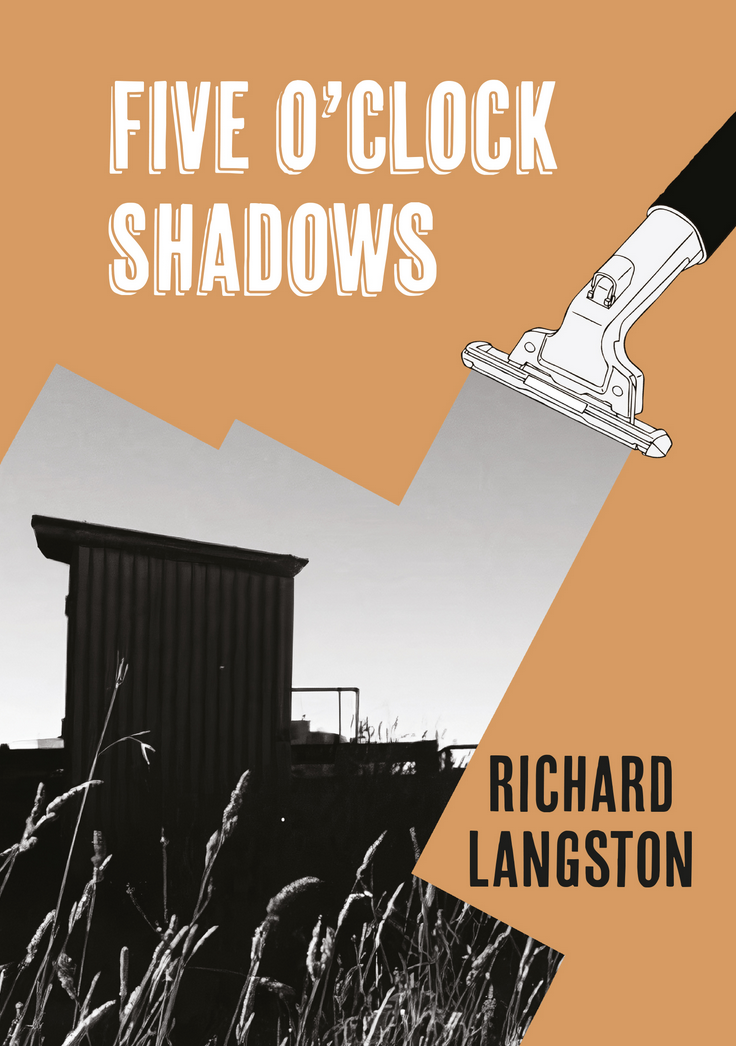
Poetry Shelf review: Richard Langston’s Five O’Clock Shadows

Richard Langston, Five O’Clock Shadows, The Cuba Press, 2020

We often wonder

what moves us in a day –

was it words in a sequence

that surprised us

or notes played by someone

who kept their mouth closed

& let the sound leave

their broken body

from ‘Hill walk’

I am writing this as Tāmaki Makaurau is back in lockdown, wondering if I will pack the car for our first family summer holiday up north in years, worrying how Auckland businesses will cope, how families will cope, and sleeping like a patchwork quilt. Poetry is such a necessary diversion. It even makes up for patchwork sleep. I still have a wee stack of 2020 poetry books and now the 2021 stack is growing. It is like a preserving cupboard of treats along with the canned tomatoes and the black beans.

Richard Langston’s book has been on my mind for months after hearing the reading he did for Poetry Shelf. This week has been the perfect time to return to the poems. I finished the book and the word that came to mind, a word I have never applied to a poetry collection, was precious. This is a precious book – it has poise and it is personal.

The first poems take me to the land. I am musing on how Allen Curnow and the crew of white men writing poetry in the middle of the twentieth century were digging their way into a New Zealand kind of poetry. They were moving away from the early poets that filtered the land and experience through poetry models from Britain. It is a complicated story that has been retold so many times over the decades, in so many different contexts, with so many different biases and erasures. Ah. And then the land barely got a look in in poems. I feel there is a book to be written that traverses the relationship between the land and poetry, that never lets the poem lose contact with the reader, that never lets the poem service the theory and little else, that acknowledges the suffering and heartbreaking losses of the tangata whenua.

The first poems in Five O’Clock Shadows make the land precious. I am reminded of how Sue Wootton, Brian Turner, Airini Beautrais (a river), Hone Tuwhare, Ruth Dallas have done this in distinctive ways. Like these poets, Richard’s poems also travel with myriad subject matter: from the closing of a tavern, to a lost dog, to Dunedin, to refugees, to Sunday in the islands. But it is the land poems that first strike me. I am musing on how earth warmth and leaf light can permeate a whole book. So yes, this is a collection of earth warmth. You get to stand in the land poems and the poem is beauty and anchor and care.

We love the land by eye & feel & sun

& shadow. It grows within us.

This is who we are, this is how we find ourselves.

from ‘Map’

There is a spareness in all the poems, a light rich economy. Goodness knows what it took to write these, but when they reach me there is an exquisite poise. Every word belongs. I also found ‘Bsharri, Lebanon’ – a poem penned for Richard’s sisters who travelled to their ancestral village – precious. This ancestor poem is a poem to hear read aloud:

We have come to hug you,

we have come to kiss you for the life

you made us.

We have come, ancestors, to love

you as you taught us. We have come,

ancestors, & now we are together.

Ancestors, we hug you, we kiss you.

Ancestors, we weep, because

we have come.

The poetry is economical but each poem launches you into multiple musings, feelings, intricacies. I love ‘Please, do not’. The poem begins with infectious word wit and then travels to the punch-gut restorative ending – and the word ‘enough’. I want you to read the whole poem but here is the beginning:

Please do not yell,

such a small shattering word –

YELL – I prefer yell-ow

that might imply surrender

or a field of flowers holding

their faces to the sun,

why not peace, or acceptance,

such lovely hard-earned words.

Perhaps the poems that strike deepest, that are most precious, are the several addressed to mother and father. Eulogies, recollections, re-tracings. I am thinking how Richard’s poems are made of parts and you need to experience the coming together of these parts to get the reading joy in full. If I take a stanza or two to share with you, I am distilling the magic. These poems are magic, moving, must-reads: ‘Plums’, ‘Sons’, ‘Snoring’, Threaded’, ‘There’. In writing the poems both mother and father are held close, like a gift for family, like a gift for us as readers who also live and love and mourn. I especially love ‘There’, a poem that places the mother at the centre. Here are a few stanzas near the end of the poem (again I implore you to read the whole poem):

What we share is our story.

I sit with her

& look out at the weather.

The windows

are full of the day.

She doesn’t know. I do not know.

We have our story,

our fallible memories.

Her mouth

hovers by the spoon,

& we watch the weather.

You can tell this book matters so very much to the poet – and the degree of personal investment is contagious, whether in words gathering the land, family, experience, memory. Think of the poems as personal plantings in the undergrowth of life, with all manner of glorious lights shining through. Like I said, I reread this book in our return to lockdown, and by the time I got to the end I was filled with the joy of living and writing and reading. I am going to leave you with the final poem in the book, that takes us back to the land (crikey we never left it), how the need to be creative is such a necessary thing and how we share so many attachments – ‘together on this whenua’.
Richard Langston is a veteran broadcasting journalist and director, who comes from Dunedin, and was a driving force in the city’s music scene in the 1980s. He lives in Wellington and is a proud member of the three-person South Wellington Poetry Society.

The Cuba Press author page

Richard reads from Five O’Clock Shadows

Off the Tracks review
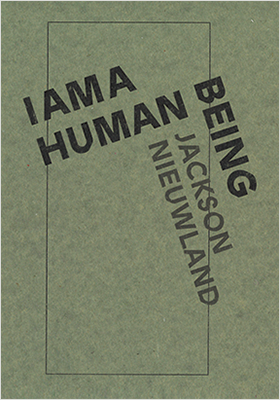
Poetry Shelf celebrates the Ockham NZ Book Awards Poetry Longlist: Jackson Nieuwland reads from I Am a Human Being

Jackson Nieuwland, I Am a Human Being, Compound Press, 2020

Jackson reads from I Am a Human Being

Jackson Nieuwland is a human being, duh. They are a genderqueer writer, editor, librarian, and woo-girl, born and based in Te Whanganui-a-Tara. They co-founded the reading/zine series Food Court. This isn’t even their final form.

Compound Press page

Poetry Shelf review (Paula Green)

Pantograph Punch review (Vanessa Crofskey)

Landfall on Line review (Erik Kennedy)

Chris Holdaway (Compound Press) celebrates Jackson’s place on the longlist with a poem

Poetry Shelf celebrates Ockham NZ Book Award Poetry Longlist: A Bill Manhire poem and audio link

Someone was Burning the Forest

We did not know why the child was crying,
nor why he stood bare-shouldered at the window.
How had he come by those skimpy feathers?
The mother had fallen from the tower
a moment after she began to answer. I looked around
and there were many towers, also other bodies.
Now I was on the ground myself. I could hear
the child but no longer see him. Perhaps
he was still aloft. The towers were dissolving
yet surely there were trees. It was dark now
but I knew there must be many bodies.
I would need to climb to see where we might go.

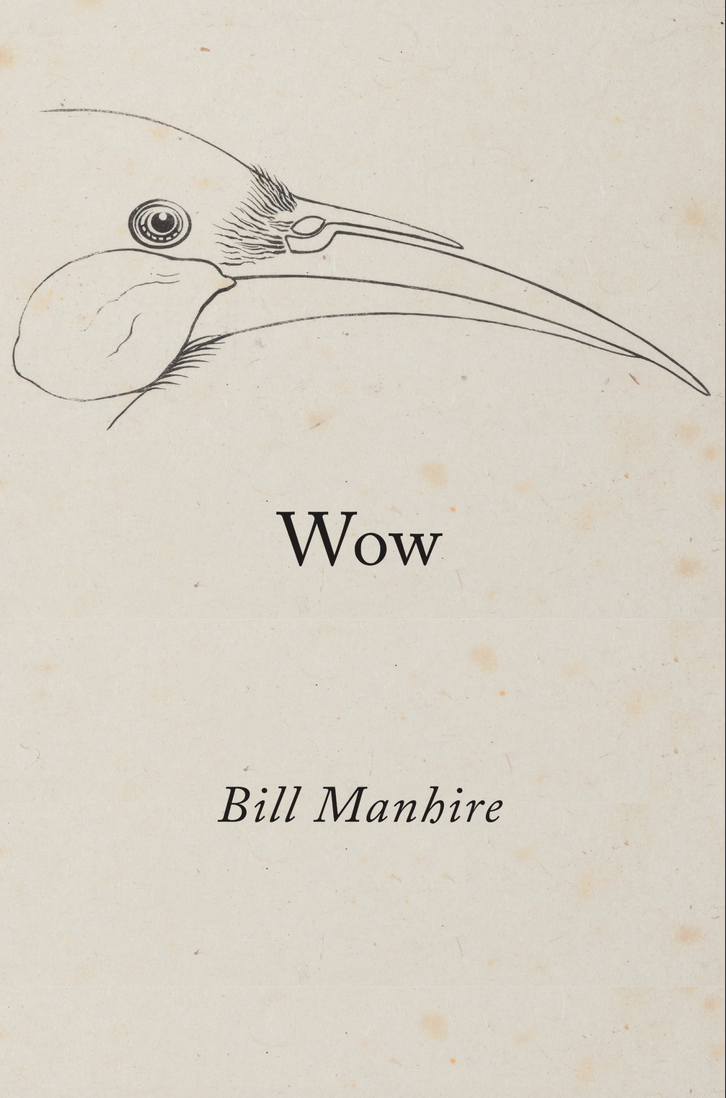
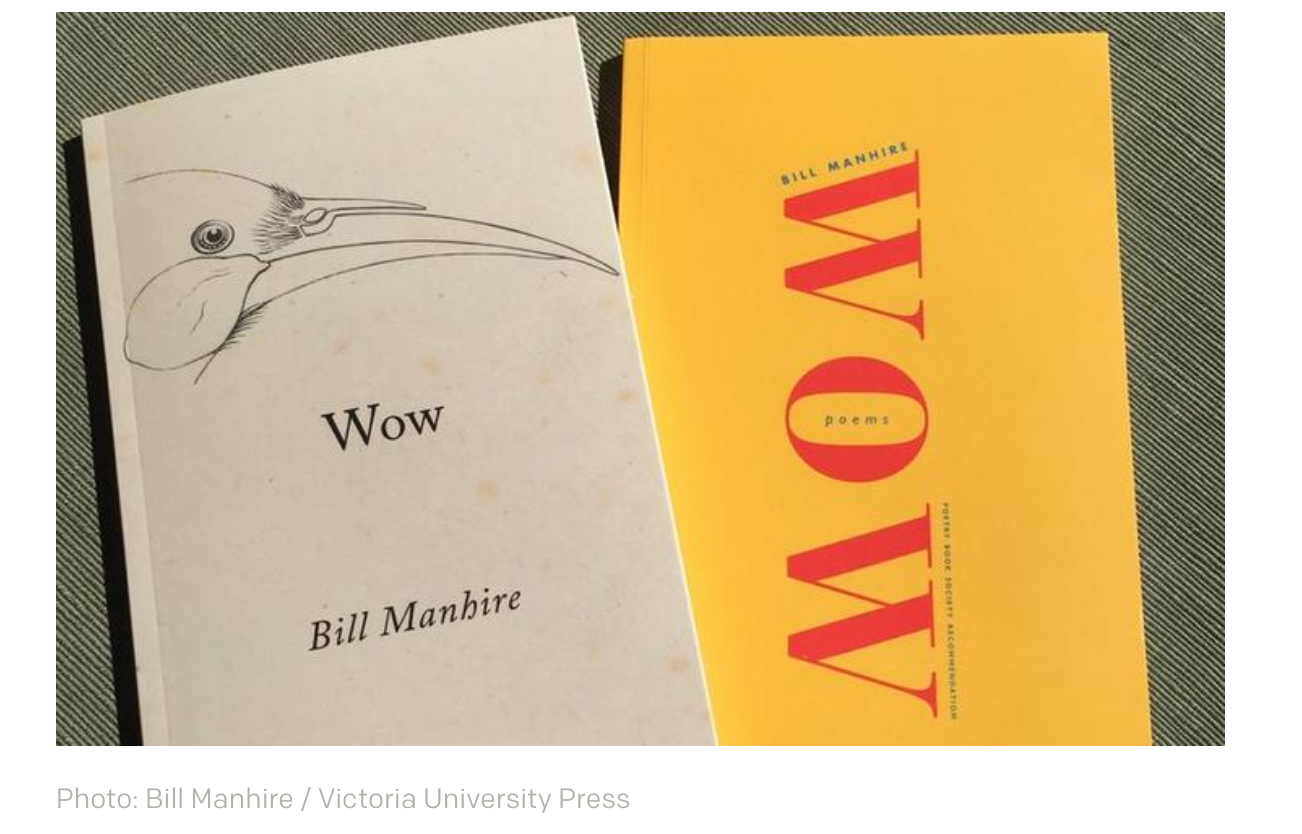
Bill Manhire, Wow Victoria University Press, 2020

Have a listen: For the first Stress Test of 2021, Rough Trade Books welcomed special guest Bill Manhire to join them for music and poems.

Bill Manhire’s most recent books include Some Things to Place in a Coffin (2017), Tell Me My Name (with Hannah Griffin and Norman Meehan, 2017) and The Stories of Bill Manhire (2015). He was New Zealand’s inaugural poet laureate, and founded and until recently directed the International Institute of Modern Letters at Victoria University of Wellington. He has edited major anthologies, including, with Marion McLeod, the now classic Some Other Country: New Zealand’s Best Short Stories (1984).

Victoria University Press page

Poetry Shelf review

ANZL review (Anna Jackson)

Chris Tse reviews Wow on Nine to Noon, Radio NZ National

‘Huia’ Poem of the Week in the Guardian

Bill Wows the crowd at WORD

Poetry Shelf celebrates the Ockham NZ Book Awards Poetry Longlist: Natalie Morrison reads from Pins

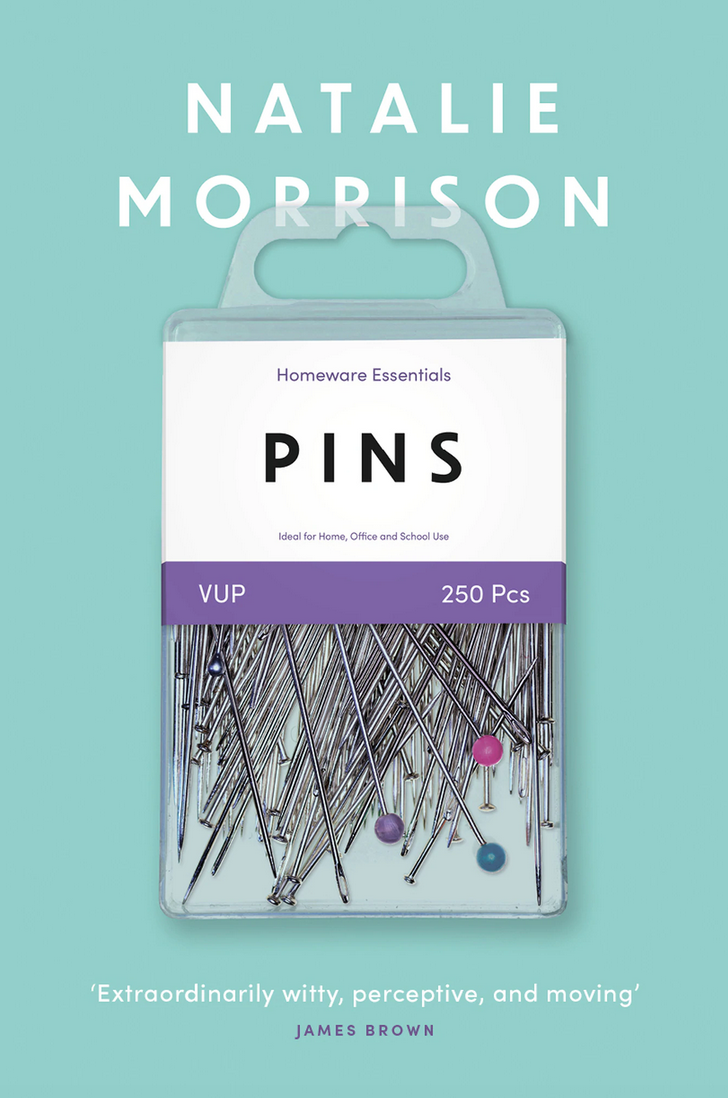
Natalie Morrison reads from Pins, Victoria University Press, 2020

Natalie Morrison has an MA in Creative Writing from the International Institute of Modern Letters, where she received the Biggs Family Prize for Poetry in 2016. She lives and works in Wellington. Pins is her first book and is on the Ockham New Zealand Book Awards Poetry Category longlist. 

Victoria University Press page

Poetry Shelf launch of Pins

Poetry Shelf interviews Natalie

Poetry Shelf review: Hinemoana Baker’s funkhaus

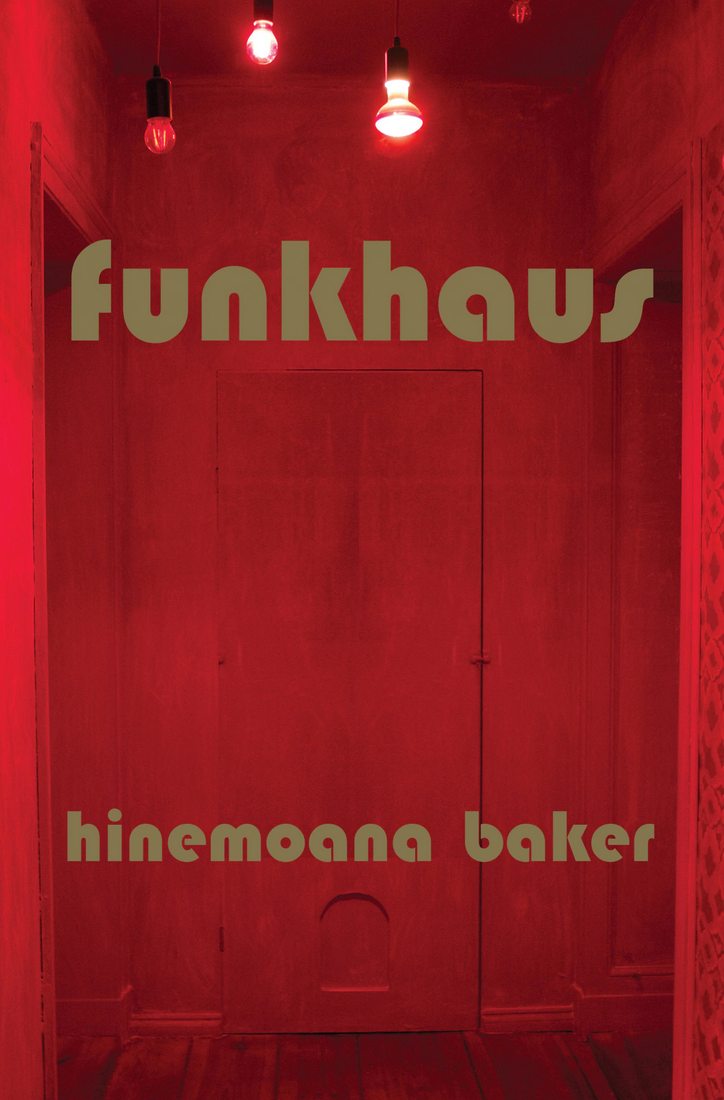
Hinemoana Baker funkhaus Victoria University Press, 2020

A woman carries in her arms

a heavy rectangle of sky –

roofs and treetops.

She places it in the back seat

of her car to calm down.

You and I sit

like separate circles

of a Venn diagram

unaware of the fabled

tasting zones of the tongue.

from ‘flomarkt’

Hinemoana Baker’s new poetry collection is peppery, salty, sweet. The poems form a bridge between two homes, Aotearoa and Berlin, and the overall effect is a book you want to keep reading. Again and again and again. I have been reading funkhaus since it arrived in my postbox May last year. Some books are like this. The German word ‘funken’, we learn in the blurb, is ‘to send a radio signal’. I love the idea that poetry becomes a form of broadcast. I love being an antenna, picking up the static, the silences, the connections across eight months.

funkhaus is on the Poetry category longlist of the Ockham New Zealand Book Awards. The shortlist will be announced on March 3rd.

Hinemoana has always achieved a stop-you-in-your-tracks fluency, maybe because she is a musician and her ear is attentive to the sound of the line, regardless of the subject matter, the personal admissions, the political acumen, the light along with the biting dark. I am listening to funkhaus and admiring the pared back melodies, both the acoustic and the electric.

Pepper blacks the pan so never

Shake it near me, wait

For the flagrant animation

In my bed base

In mountain situations

Sleep swaddled, wake ecstatic

from ‘Narcissist advice column’

What has gripped me more than anything – and maybe this particularly matters in these Covid times – is the way most poems are peopled. Yes there is a mesmerising view out the window where the birds are flying in formation. Yes there is a new vacuum cleaner. Yes there is the question of whether extinct species might be revived. But touch the beating pulse of this collection and you will feel people. Unlike the camera that gravitates towards the people-emptied landscape, Hinemoana draws people in close. Think loved ones, friends, family, passersby. Sometimes a poem is infused in the surreal and you imbibe a scene that tilts and sticks. This is is the start of ‘friday night’, a little beauty of a poem:

Way down south

in the south

of the  south island of himself

over greyscale trees.

Eagles and meteorites are not.

On other occasions the poem is grounded in the personal. There is always the gap, the quavery silence, the unnamed pronouns (I, we, you, he, she, they), the spiky detail that fascinates, the heart of experiencing, of imagining, of replaying. I especially love ‘aunties’, a poem Hinemoana read for Poetry Shelf (2019). This glorious tour de force of a poem makes people (aunties) utterly, movingly, wittily, wincingly, gorgeously present.

We had a marching auntie and an eyelash-curler aunty, a

headscarves one, a lavender talcum powder aunty and a satin

running shorts one. We had an aunty who was laid out on the

sheepskin rug by that uncle when she was six, and seven and

eight. These might be the same aunties. We had an aunty who

died on the same day as her own sister and turned into that

white horse on the green hill. A drawn-on-eyebrows aunty who

said I don’t care how good they are at yodelling they’re giving

country music a bad name those girls.

Ah but I also love ‘mother’, ‘waitangi day’, ‘if i had to sing’, waiata tangi’. Find the book. Find your own clearings.

Hinemoana crafts poetry as flourishing movement. In part as melodic flow but also in the way poems come into being in surprising ways. The unexpected paths and sideturns. The underlays and overlays. The semantic chords and the visual alerts. In ‘fox’, an animal is spotted outside in the snow (‘The most powerful things / are the ones we simply come across’). The poem entrances as you move from this sweet epiphany to loss of appetite, your own child dying, to the skin as kidney to:

Climbing into the air outside your door

a tufty plant grows from a cobblestone.

And there –

there is the sandwich board with pictures of fruit

and words you don’t understand

which make nothing happen.

Another sublime example is ‘flohmarkt’, the poem I quoted from at the start of the review. Here we move from the striking opening image of woman and sky to tongue myths to dog and bike owners, and then to chairs. This is how poetry can move. It is gap and it is breathtakingly resonant. Here is the end of the poem:

I live with a surplus

of chairs, mostly empty.

My one, with its smooth

wooden arms and your one

if you were here.

The kind of chair you never want

to get up out of

the kind of chair for which

prepositions were invented.

Maybe this sounds old-fashioned but for me Hinemoana’s poetry gets down to the essence of things. There is an addictive economy that opens out into lush and surprising fields of reading. Like a yin and yang effect. Like poetry as a basket of essential oils that you flick on your wrist and carry all day. That work for each of us differently. That sustain and delight, that get you moving and thinking. That change as you wear them over the course of eight months. Poetry as essential. Poetry as skin tingling essential. It feels essential to Hinemona – to be writing poems, to be travelling across the poetry bridge, that arc of static and connection between Berlin home and Aotearoa home, to be grounded in her friends and whānau, her writing support crew. She acknowledges the vital support of those who have offered aroha and wisdom, publication and recording opportunities, reviews, translations, festival invitations in her endnotes. I offer a small thank you to Hinemoana – each book is a gift and we are all the better for residing within your latest one.

HINEMOANA BAKER is a poet, musician and creative writing teacher. She traces her ancestry from Ngāti Raukawa, Ngāti Toa Rangatira, Te Āti Awa and Ngāi Tahu, as well as from England and Germany (Oberammergau in Bayern). She is the author of the poetry collections Funkhaus (VUP, 2020), waha | mouth (VUP, 2014), kōiwi kōiwi (VUP, 2010), and mātuhi | needle (co-published in 2004 by Victoria University Press and Perceval Press).

Hinemoana has edited several online and print anthologies and released several albums of original music and more experimental sound art. She works in English, Māori and more recently German, the latter in collaboration with German poet and sound performer Ulrike Almut Sandig. She is currently living in Berlin, where she was 2016 Creative New Zealand Berlin Writer in Residence, and completing a PhD at Potsdam University.

Victoria University Press page

The Spin Off review (Elizabeth Heritage)

Pantograph Punch review (Arihia Latham)

NZLA review (Kiri Piahana-Wong)

Poetry Shelf review: Karlo Mila’s Goddess Muscle

Karlo Mila, Goddess Muscle, Huia Publishers, 2020


Paintbrushes in our hands

drafting our dreams,

remembering the chants,

writing the poems,

relearning the language

composing the chants,

cooking the dinners,

carrying the children,

paying the bills,

fighting the fight,

with our tax-paying,

car-driving hands.


A collective of artists

narrating a story

we can bear to live in.

Creating an image

of ourselves

we can love

to look at:


from ‘Our Generation : ‘Āina Aloha’


Karlo Mila’s new poetry book is the most gorgeously produced collection I have held in ages. It feels good. It looks good. It is a pleasing shape. It has abandoned the reigning tradition of black ink upon white page in favour of a wider colour palette for both font and background. Sometimes I have to peer in close to read as though the physical act of reading is as important as cerebral connections and heart boosts. It continues to matter to me as addicted poetry reader at the moment: the effects a poetry collection has upon you as you read and as you move away. How satisfying when poetry uplifts heart and stimulates brain, soothes tired bodies and sets us swaying.

Several artists contributed work for the book and, as the acknowledgement page underlines, these vibrant works are personal: Delicia Samero’s portraits of Karlo, a collaborative mural Aloha ‘Āina and Naomi Maraea’s depiction of Hikule‘o.

I adored the 2021 poetry longlist for the Ockham New Zealand Book Awards having been so affected by the eight books I had read and reviewed. And now I can add a ninth sublime read: Karlo’s Goddess Muscle. The collection ignites every reading muscle: from heart to mind to breathing to memory to pulse. Karlo engages with light and dark, fragility and strength, relationships, family, sisterhoods, writing mentors, life mentors, political issues. Her words meet the line, create the lines like a movement of water, lap lapping in your ear, across your skin, with ebb and tide, the words in debt to water fluency as they flow gentle and honeyed, or hit sands, rocks, obstacles. Such sweet flowing lyrical currents. Always audible, always mesmerising. This is poetic craft at its most agile.

Dark, lovely cowrie-shell eyes,

who’d expect the lies,

unless you flipped that fragile shell over

to the serrated crack

of the backside,

where the sea slugs reside,

that weak pink flesh on the inside.

Everyone’s got a living surprise,

the part that they hide.


from ‘The Tale of Hine and Sinilau’

The book begins with a gathering, a gathering of lineage, ancestors, relations. This becomes place, somewhere to write from and to and because of. The gathering involves balance, re-orientation. The gathering (both noun and verb) becomes writing and this is what writing can do.

It is their

soft singing,

cellular love songs,

the chanting lyric of bloodlines,

accompanying you

all the way

through the lonely.


from ‘Your People Will Gather Around You: Love After Love’

The ocean is paramount, not just in the water fluency of the lines, but in the recurring motifs and the personal attachment. “Oceania’ is an ocean homage, image, self-defining: ‘I call on the memory of water’.

Karlo acknowledges writers and loved ones who have sustained her, who are the essential oils of writing. She lights a candle for Teresia Teaiwa in ‘For Teresia Teaiwa’. I am moved to tears as I read this loving tribute to poet who affected and inspired so many others.

I will light this candle.

The spendy kind,

cradled in glass,

that burns for days

smelling of coconut and vanilla

and I will say prayers for you

even though my prayers

are like bad poems

and are often wordless.


I hope,

at the least,

you will feel the

long-burning

flame of my intent,

warming the space

between us.

The tribute poem to JC Sturm cuts to the bone of reading, sidestepping Baxter and his sickening offences, Karlo taking a road trip to Jerusalem with her own broken heart and her mother, moving under his over-present lines to Jacquie. How I love this poem, this mihi: ‘But moving under all that surface skimming / was you.’ The poem to Hone Tuwhare is pure delight. The sonic torque (can I say that, think sounds spinning on word axes) is sensational.

You boilermaker,

fabricating lyrical weld

from blast furnace

of sun,

slowed,

stopped and

set

on white horizon

of page.


from ‘A Conversation with Hone Tuwhare’

Karlo’s love poems have always gripped me and I favoured them in Wild Honey’s ‘Love’ section. This collection faces broken love, longings, touch, loneliness, attachment with shifting intensities, hues, admissions. There is someone at the end of the poem, an addressee, a beloved, a lover lost, a lover found, and Karlo never forgets that. The poems are layered, intimate, deeply personal. I am still held in their grip.

Goddess Muscle is crafted like a symphony, an experience of shifting life seasons and subject matter, so as you read the effects are wide reaching. Karlo faces significant political issues: climate change, the Commonwealth, colonialism, racism, Ihumātao, ‘the daily politics of being a woman, partner and mother’. She faces these global and individual challenges without flinching. The resulting poems are essential reading, never losing touch with song and heart, always insisting in poetic form how we can do better. How we can be a better world, recharge humanity. I would like to see these poems read in secondary school.  You can read ‘Moemoeā: (composed for poets for Ihumātao)’ here.

Goddess Muscle is a gift. I can barely account for how it will stretch your reading muscles, your beating heart, your enquiring mind, your compassion, your music cravings, your empathy. Karlo has extended her own poetic muscle and offered poetry that is wisdom, strength, refreshed humaneness. Thank you. Thank you.

If we were truly to reorient

to life as relatives,

commonwealth

would mean more

than what we might cling to

in the face of a dangerous

and uncertain future.


Let us not

use the word ‘commonwealth’

to try and insulate fate

with the soft fur of fine-feathered friends.


No,

let us spread our wings

to a much wider vision than that.

It may be the end of the world as we know it

but let us not fear

the remaking of another one.


To the young people I say,

there may be no jobs

but there is plenty of work to be done.


So let us harness our collective wisdoms:

divers, different and divergent.

Let us create an atmosphere

of kindness and love

for even the air we breathe,

fresh water, trees, people, ocean.

Let us create a dream house,

a great place to raise a family.


For therein lies the fate

of an extraordinary family of relatives.


Where what we have in common

is all of us.


from ‘Poem for the Commonwealth, 2018’

Dr Karlo Mila is a New Zealand-born poet of Tongan and Pākehā descent with ancestral connections to Samoa. She is currently Programme Director of Mana Moana, Leadership New Zealand. This leadership programme is based on her postdoctoral research on harnessing indigenous language and ancestral knowledge from the Pacific to use in contemporary leadership contexts. Karlo received an MNZM in 2019 for services to the Pacific community and as a poet, received a Creative New Zealand Contemporary Pacific Artist Award in 2016, and was selected for a Creative New Zealand Fulbright Pacific Writer’s Residency in Hawaii in 2015.

Goddess Muscle is Karlo’s third book of poetry and has been longlisted for the Ockham New Zealand Book Awards 2021. Her first, Dream Fish Floating, won NZSA Jessie Mackay Best First Book of Poetry Award at the Montana New Zealand Book Awards in 2006. In 2008, Karlo collaborated with German-born artist Delicia Sampero to produce A Well Written Body.

Huia Publishers author page

Poetry Shelf – poets on their own poems: Karlo Mila reads ‘For Tamir Rice with Love from Aotearoa’

Poetry Shelf review: Fiona Farrell’s Nouns, verbs, etc

Nouns, verbs, etc. Fiona Farrell, Otago University Press, 2020

Once upon a time there was

a story.

It lived in the mouth of an

old woman.

It was a bad-tempered story

that kicked the door in and

threw plates. It did not behave

itself.

But she gave it shelter.

She had made it herself.

She had fed it with her own

blood. She had spat her own

stomach into its straining

beak. She knew why it cried.

from ‘The old woman’s story’

Fiona Farrell, much loved poet, novelist and nonfiction author, began writing poems in childhood, at times in ‘wonky capitals’ with the delicious ‘thump’ of end rhyme. She discusses her evolution as poet in the terrific preface to her selected poems published last year. There were comic poems that made her class laugh, the earnest poems of high school with elevated expectations of what a poem ought to be, and the kick in the gut when, at 19, a young man laughed at the poem she showed him. She stopped writing.

It’s so difficult in 2020 to convey just how it felt to be in this world where men, past and present, stood about booming to one another like so many kākāpō on a steep hillside.

from ‘Preface’

So many other women in the 1960s through to the 1970s were writing on scraps of paper in scraps of time getting scraps of attention and rarely making it onto the hallowed ground of men, their journals, their university course material, their poetry gigs.

Today I’ve embroidered relativity

polished the Acropolis

knitted Ulysses

and baked two trayloads of cantatas

for the kindy.

Now, if the baby sleeps another hour

I’ll just about have time

to whip up some of that

Instant Immortality.

from ‘Preface’

Fiona’s ‘Preface’ echoes so many women’s voices I read in my Wild Honey travels. I think of how long it took me, along with other women, to move from hidden notebooks to going public and getting published. For Fiona it was the death of her father, and his complicated presence in her life, that started her poetry pen moving again: ‘The way the simple act of choosing words can give the illusion, however temporary, of control when emotion threatens to overwhelm’ (‘Preface’). She showed the poem to someone she shared a teacher’s college office with and took up the suggestion to get it published.

Fiona’s Nouns, verbs, etc. (selected poems) includes extracts from her four collections: Cutting Out (1987), The Inhabited Initial (1999), The Pop-Up Book of Invasions (2007) and The Broken Book (2011). Interspersed between the extracts are clusters of uncollected poems and, at the end, my favourite endnotes ever, a suite of fascinations that complement the joys of reading the poems, unexpectedly, beautifully. Fiona said she heeded the positive response to the endnotes in The PopUp Book of Invasions.

Nouns, verbs, etc. is a Poetry Treasure House. Across decades of writing, the poems are guided by inquisitiveness, linguistic nimbleness, a freshness of voice that survives over time, an exposed heart, the presence of I and we, political undercurrents. There are human and humane attachments because the recurring revelation is that this poet cares. Poetry stands as a means of care: for self, for loved ones, for the world, for the present and the past, for the stretch and possibilities of languages. In particular Fiona has cared about women; in their daily lives, in a history of writing, in genealogies, in other places and other times, in the need to resist subjugation and erasure.

She sits in the dark

on the rough side of

Sunday. The wood is

bare down here, torn

from a tree. She gets

her woolly hat. The

table is saw scrawl

screw and scratch.

She brings a cushion

and some crackers.

The table is a bare

bivvy. Brace and

bruised knuckle.

She flings a sheet

over. She will

live here

for ever.

from ‘The table’ – The Broken Book

The poem Fiona wrote upon the death of her father signalled the way poetry can be a necessary part of our lives as both readers and writers. I know through the extraordinary number of letters and poetry I received during our various lockdowns how vital poems were, whether we were writing or reading.

Each of Fiona’s books, both poetry or prose, has been necessary reading for me, right from the goosebump discovery of The Skinny Louie Book in 1992 to a suite of books responding to the earthquakes in Christchurch. The Broken Book transmuted from a book of walking essays to an earthquake book where the essays were interrupted by poems like quake jolts. It was written because of the Christchurch quake, and it makes the everyday voices away-from-the-cameras visible, the living with damage and daily fear and little blessings palpable. Again poetry becomes necessary.

The PopUp Book of Invasions was prompted by Fiona’s writing residency in Donoughmore, Ireland, the manuscripts her book borrows its title from, and the layering of contemporary invasions along with those in her whakapapa and Aotearoa. She wrote: ‘It was a strange feeling, being there. I wrote to express that’ (from ‘Endnotes’).  Again the book becomes necessary reading.

I love the insertion of the unpublished poems in thematic clusters. There are a handful of love poems – so you get to enter a poetry love glade and imbibe the heat and shimmer and connectivity of love. I have no idea when the poems were written, but they feel so vital and fresh. Original. I want to quote from all of them but here is a taster:

They tied the knot.

It was a knot of their

own devising. They

went over and under,

over and under many

times, and it held. So

they could fly, tied

to earth by the knots

around their ties.

So they could always

find their way home.

from ‘Knot-tying for beginners’

Another cluster centres upon travel, upon home and not home, upon hills and mountains, lakes and harbours that anchor you into the guts and grit of the land, and then sets you drifting through place to people and back to the way place shapes and nourishes us. I especially love ‘Our trip to Tākaka’. I want to hear this poem read aloud, to hear the mood ripple through the understated repetitions and motion, the effect travel has upon us, the surprises that become part of our luggage, as we move along, and as we arrive back home.

Some poems carry whiffs of fable – I am picturing the poet blowing on the white page as though it were glass, with a fable presence making its subtle mark. There is always the everyday commonplace experience, relationships or objects in Fiona’s poetry, but there is also the way the poem transcends the realism and makes the ordinary glow.

The fathers swayed beneath us

walking like mountains on

their big legs. We looked

about, seeing the way ahead.

The fathers said hang on!

They held us by the ankles

lest we fall. And sometimes,

they flung us out into empty

air, and we were lost. We

squealed, flailed, knowing

already the pain of solid

ground. But the fathers

caught us on the downward

flight. Gathered us to the

knotting of old jerseys

smelling of fish and vege

gardens and Best Bets and

the whole wide place we’d

glimpsed from their tops.

from ‘The fathers’

Fiona Farrell’s poetry sparks language into dynamic combinations because, as the title of the book suggests, words have mattered to her – from the origins of words, to ancient languages, to codes and punctuation. In The Inhabited Initial endnotes – a collection that celebrates the organic states of words and languages – I discover the origin of the question mark and the punctuation mark. The original exclamation mark was a word that monastic monks inserted to denote moments of joy. I love this! Little glades of joy in the flow of a text. Nowadays the exclamation mark can be a form of shout and exhibitionism. Equally fascinating: Roman scribes used full stops to mark rest bays for breath in the flow of a text. I am thinking poets have a more open relationship with punctuation and how it adds to the reading of poetry.

Nouns, Verbs etc is a reading delight. It offers distinctive travel itineraries that set you drifting in unfamiliar skies, lingering in some poems as though you stall in the familiar rooms of your house, daydreaming between the lines, wondering at the power of nouns and verbs to provoke such intense feelings and connections. Let me raise my poetry glass and toast this glorious book (and loving Otago University Press production). Thank you Fiona, this necessary book is a gift.

FIONA FARRELL has published poetry, fiction, drama and non-fiction. Uniquely among New Zealand writers, she has received awards in all genres. Her poetry has been shortlisted for the New Zealand Book Awards and has been widely anthologised. Her first novel, The Skinny Louie Book, won the New Zealand Book Award for Fiction. Three later novels have been shortlisted for that award, and five have been longlisted for the prestigious International Dublin IMPAC Award. In 2013 she received the Michael King Award to write twinned books prompted by the Christchurch earthquakes and the city’s reconstruction. The non-fiction work, The Villa at the Edge of the Empire, was shortlisted for the 2017 Ockham NZ Book Awards. In 2018 she edited Best New Zealand Poems for the International Institute of Modern Letters. Farrell has received numerous awards, including the Prime Minister’s Award for Fiction and the ONZM for Services to Literature. She made Dunedin home in 2018.

Otago University Press page

Kete Books review by Renee Liang

ANZL review by Stephanie Johnson

Fiona Farrell: interview with Robert Kelly, Standing Room Only, Radio NZ

Readings and interview with Morrin Rout, Bookenz, Plains FM

Poetry Shelf interviews Fiona Farrell

Poetry Shelf summer reviews: Helen Jacobs’s A Habit of Reading

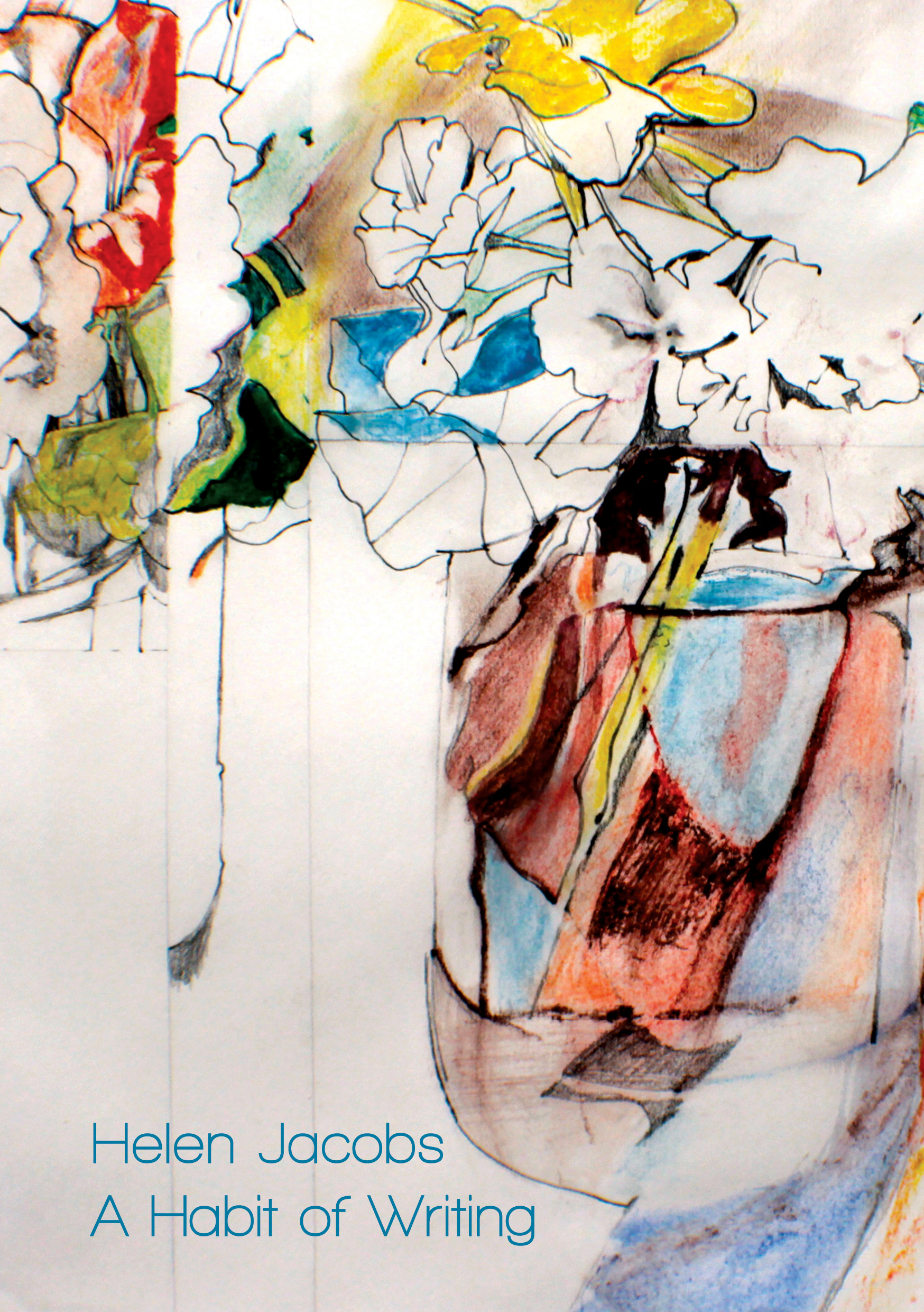
Helen Jacobs, A Habit of Writing The Cuba Press, 2020

Flying

I am being ordinary

and flying on a word

as the mist of the morning

unfolds.

I am being ordinary

in a community

where all are old and ordinary

and I am flying on a word

to meet the sun.

Helen Jacobs

Helen Jacobs (the pen name of Elaine Jakobssen) was born in Pātea, Taranaki in 1929. She has published eight poetry collections, and contributed to numerous journals both in Aotearoa and offshore. During her time as Mayor of Eastbourne, Helen advocated for the local environment and local writers and artists. She worked at the Women’s Electoral Body and was appointed to the Planning Tribunal. Since her time in Christchurch she has been a longtime member of the Canterbury Poets Collective. Aged 91, she lives in a retirement village and is still writing.

Helen’s new collection A Habit of Writing is a delight. Here is a poet writing in old age, absorbing things, often small, but sometimes large, always captivating: an object, walking, a flower uncurling, the hills, the wind, a pot of utensils. Each poem slowly and exquisitely unfolds its subject with rivered fluency, with enviable economy.

These are poems to place on your tongue, one at a time, where they will slowly dissolve leaving vibrant aftertastes that last all day. I read the poems before I went to sleep and I got straight back when I woke up. Perhaps I am drawn to the state-of-being of a woman in her nineties, where relations with life and death shift a tad. Where age is a close companion. Words matter a lot. She reaches out for words. She writes. She celebrates.

Fluency

Fluency traipsed off with the years,

shuffled out imagery.

I look at the pots on the balcony

the plants static, consonants and vowels

straight up.

They do not speak in the wind.

Look to the hills. I do,

as the low cloud ends wisp

across the ridges.

This is a collection of miniature pieces that form a larger mosaic, a wider picture that holds up the poet’s lived-in world. I am acutely drawn into an experience of age that makes me see things a little differently. And that is good. When Helen was ‘young’ and in her sixties she would see the ‘oldies’ out on a bus excursion, and now when she is out on the retirement-village bus she sees the young go by on bicycles. Her steps might be slow. She might slowly examine a geranium leaf as she waters her pots. She might repeat her mother’s ritual and drink a glass of port wine at Christmas. A sonnet would never suit ‘the bowls we play’; free verse is the ticket. It is the ‘small things / as my time grows old’ she observes, that ‘remark the larger world.’

Here I am, a young one on Helen’s time scale, but I am drawn to the slow step, to the measured pace, the prolonged look, to the way a single object or activity can be both rich and comforting in reward. The poem ‘Thinking of lemons’ reminds me how we skate over the surface of things, places, people, experiences. How every person we brush against in the street has a story, a sequence of dreams and mishaps. How every view is on the move, and like a good book, or a good poem, reveals further lights and shadows.

Reading A Habit of Writing offers the utmost joy and comfort. This is a book to savour and to give away. Glorious.

Watercolours

You said, ‘Write me sonnets,’

perhaps –

If I squeeze the day,

wring the hours, spin-dry the minutes,

perhaps the drips will swell dry words.

There will be watercolours,

washes of light.

The Cuba Press author page

ODT review

Rachel McAlpine piece

Poetry Shelf review: Nina Mingya Powles’s MAGNOLIA 木蘭

Nina Mingya Powles, MAGNOLIA 木蘭, Seraph Press, 2020

鸣 (míng), the cry of animals and insects, rhymes with tooth, which rhymes with precipice, which rhymes with the first part of my Chinese name.

I am full of nouns and verbs; I don’t know how to live any other way. I am a tooth-like thing. I am half sun half moon, and the scissors used to cut away the steamed lotus leaves. I am honey strokes spreading over the tiles.

Certain languages contain more kinds of rain than others, and I have eaten them all.

from ‘Fieldnotes on a downpour’

I have been a fan of Nina Mingya Powles’s poetry since her chapbook Girls of the Drift (2014) through to her glorious poetry boxset Luminescent (2017). The poems are probing, lyrical, self-inquisitive, with women placed centre stage. Her new collection Magnolia 木蘭was also published in the UK (Nine Arches Press) and was shortlisted for the 2020 Forward Prize for Best First Collection. In 2018 she was one of three winners of the inaugural Poetry Prize, and won the Nan Shepherd Prize for Nature Writing the following year.

Currently living in London, Nina is a poet, zine-maker and nonfiction writer of Malaysian-Chinese and Pākehā descent. I have long been fascinated with the idea that poetry is way of writing home, whether home is physical, on the move, a state of mind, ancestral connections, familial relations, an anchor, an epiphany. And if poetry is a way of writing home it is also a way of writing to / for / with / by / underneath / inside / from (home). Magnolia is an organic version of this as it shifts languages on the tongue, layers sensual detail, raises identity questions, and moves from London to Shanghai to Aotearoa. Smells and tastes of elsewhere bring elsewhere closer to the point the paper is imbued with scent and living matter, and your reading taste buds pop.

there are only dream mountains high above the cloudline

I come from a place full of mountains and volcanoes

I often say when people ask about home

from ‘Night train to Anyang’

Senses are on alert as you read a Nina Powles poem, and I love the physical sensation as you read:

After Mulan saves China / fireworks rain down in waves of multi-coloured

stars

from ‘Girl warrior, or: watching Mulan (1998) / in Englsih with subtitles

Food is an exquisite presence, often connecting you to place, a particular memory or event, love, home. But sometimes Nina lingers on food for the sheer pleasure of food itself: it’s tofu for the love and sake of tofu, lotus leaves and sticky rice ‘sucked clean’. I have felt a similar addictive tastebud reaction reading the poetry of Ian Wedde, particularly The Commonplace Odes.

for the morning after a downpour

Layers of silken tofu float in the shape of a lotus slowly

opening under swirls of soy sauce. Each mouthful of dòufu

huā, literally tofu flower, slips down in one swallow. The

texture reminds me of last night’s rain: how it came down

fast and washed the city clean.

from ‘Breakfast in Shanghai’

Colour is equally vital, sometimes the hue of the land is evoked but, at other times, the tone of a particular painting is foregrounded. It makes a difference that I have stood in the Tate Gallery in London and felt the astonishing hum of Rothko’s colour palate, and have imbibed the colour in Agnes Martin’s equally heavenly paintings. I am curious that Nina’s poems, so active with colour, affect me as much as the artworks. It is as though the poem and the artwork are placed on my wrist like perfume and I feel the colour-pulse streaming through. Really the whole experience is both words and greater than words. Really it is as though a poem has the ability to hum inside us. Like colour.  

#fee10c | saffron: pigment in medieval manuscripts

If I could step inside any Rothko painting it would be Saffron

(1957), which is different from his other yellows because of the thin

bright line that divides the colour fields, not colour shapes or colour

squares or colour blocks, none of which are wide enough to contain

the light. A line dividing two yellow atmospheres glows along the

edges, an electric current. If you stare long enough it seems to get

bigger, slowly opening at one end until it forms a bright gap that

you could just fit through by putting each one of your limbs inside,

one by one, until you are swallowed by light and your skin is the

colour of sunflower petals right before they die and you are either

floating or drowning or both at the same time.

from ‘Colour fragments’

Reading Nina’s collection, I keep fine-tuning what a poem can do. One moment it is the origami bud unfolding in my palm to expose surprising petals of feeling. The next moment she retraces her steps though a city she once lived in; walking and writing through the city and subsequently the miniature poem version. We choose how we move through the poem as miniature city, me on tiptoe, slowly, slowly. This experience is deeply affecting in ‘Falling city’, where the poet lived when young, where she is falling in love, where things have changed and things have remained constant. Nina is seeing and imagining and writing Shanghai by walking; and by reading Shanghai writer Eileen Chang / Zhāng Àilíng, by reading Robin Hyde, by reading maps (‘each person has their own secret map’), visiting ramen bars, musing on ‘New Woman’.

18. What was Chang herself like? I don’t know, but I think she

understood this moment when the dream and the real begin to blur.

She understood how the sky in Shanghai contains many different

colours at once: “At the horizon the morning colours were a layer of

green, a layer of yellow, and a layer of red like a watermelon cut open.”

19. When reading her stories in translation it’s like trying to see

her from a great distance. Or through a thick pane of glass. I am

standing outside, peering into rooms where her ghost has been.

20. As autumn deepened I expected to see your face on the street

or in the subway station. After you left I thought I might feel sad

that this possibility could no longer exist. Instead after a while the

outlines of trees looked sharper, like a fog had lifted.

from ‘Falling city’

The shortish middle sequence, ‘Field notes on a downpour’, is a favourite. There is a hunger for words that fit, for Mandarin fluency, for her mother whose name means rain and language, together meaning ‘cloud tints’. In its intimacy, small details, flâneur pace, mother closeness, disappearances, its repeating motifs, particularly clouds and rain, its naming and its confessions, its love yearnings, this sequence is succulent poetry. And I keep musing on why I am so attracted to the making of poetry, whether writing it reading it, and that it maybe comes down to poems that move into and from the heart of the matter. I don’t mean it has to be full of feeling. I don’t mean it has to fit the facts or perceived realities. I mean it navigates poetic truths: that on certain occasions, in certain places, for a particular person, radiating multiple lights and nuances, this is how it is. In this crumpled and self-challenging world – poetry flicks on the human switch. I am musing this because Nina’s incandescent poetry navigates a bundle of vital questions on who and how and where she is. On what being a particular human in a particular place means to her. On when being asked where you come from digs deep. On needing to eat words. On feeling the rain in all its colours. On being in love.

In order to make learning Mandarin easier, I started to see the

characters as objects I could collect and keep close to me.

魔 (mó), spoken like a murmur, an evil spirit or demon.

One night you said my name in the dark and it came out like a ghost

鬼 from between two trees 林. A ghost that rhymes with a path

between rice fields which rhymes with a piece of steamed bread which

rhymes with paralysis of one side of the body which rhymes with thin

blood vessels.

In June the cicadas were so loud we thought the trees would swallow

us whole.

from ‘Field notes on a downpour’

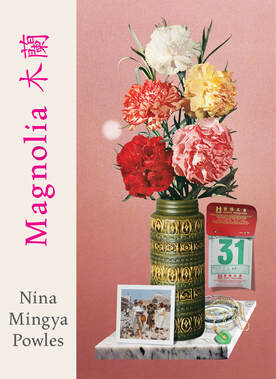
I turn to the blurb on the back of the book and see so many of the words that have guided my reading: hunger, longing, home, mixed-race, languages, women, colour, rain. Magnolia 木蘭 is origami poetry – it will unfold in your body as you read. It is miniature-city poetry that will reinstate multiple existences of home. It is rain poetry that will fall as gleaming light and stomach nourishment and tattoo your skin. It is love poetry and disappearance poetry. It is heart poetry and human poetry that, in this extraordinary year, will get you contemplating your own downpours and magnolias, and in those musings discover poetry solace. Oh, and it has my favourite cover of the year: an image by Kerry Ann Lee (Allora, 2017), and it is lovingly produced by Helen Rickerby and Seraph Press. Glorious!

I want to know the names of the trees in all other languages too so

that I find out what they taste like to other people. But my mouth

can only hold so much.

from ‘Magnolia, jade orchard, she-wolf’

Nina Mingya Powles is a poet, zinemaker and non-fiction writer of Malaysian-Chinese and Pākehā heritage, currently living in London. She is the author of a food memoir, Tiny Moons: A Year of Eating in Shanghai (The Emma Press, 2020), poetry box-set Luminescent (Seraph Press, 2017), and several poetry chapbooks and zines, including Girls of the Drift (Seraph Press, 2014). In 2018 she was one of three winners of the inaugural Women Poets’ Prize, and in 2019 won the Nan Shepherd Prize for Nature Writing. Magnolia 木蘭 was shortlisted for the 2020 Forward Prize for Best First Collection. Nina has an MA in creative writing from Victoria University of Wellington and won the 2015 Biggs Family Prize for Poetry. She is the founding editor of Bitter Melon 苦瓜, a risograph press that publishes limited-edition poetry pamphlets by Asian writers. Her collection of essays, Small Bodies of Water, is forthcoming from Canongate Books in 2021. 

Seraph Press page

Poetry Book Society review

Poetry Shelf radio review of the year: Chris Tse reviews Bill Manhire’s Wow @ninetonoon

My favourite 2020 poetry review on the radio:

Chris Tse discusses Bill Manhire’s Wow with Kathryn Ryan on Nine to Noon. I loved how Chris said reading the collection reminded him of strolling through the emptied city in lockdown. Yes! Strolling through Bill’s poetry – everything sharpens, the birds are returning, it affects you on so many levels, the invisible is present, fleetingly, lyrically.

This is just wonderful! Listen here.