Category Archives: NZ poetry book

Poetry Shelf Audio Spot: Louise Wallace reads Darling-

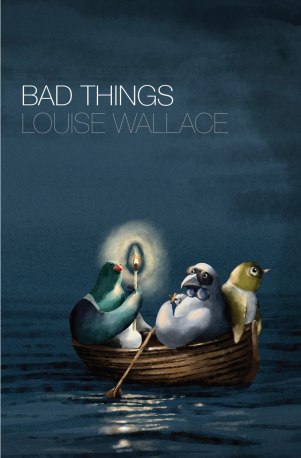
Bad_things__80029.1495774909.jpg

Louise Wallace, Bad Things, Victoria University Press, 2017


‘Darling—’ from Bad Things—


Louise Wallace now lives in Dunedin and is the author of three collections of poetry, the most recent being Bad Things (Victoria University Press, 2017). In 2015 she was the Robert Burns Fellow at the University of Otago. She is the founder and editor of Starling, an online journal publishing the work of New Zealand writers under 25 years of age.


Pip Adam talks scintillating poetry with Jesse Mulligan


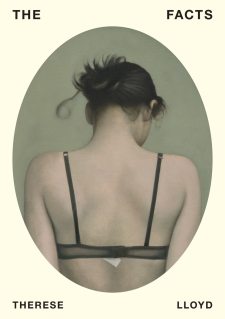
The_Facts_low_res__11927.1513281444.jpg    34f7a73a-292f-4df6-aa54-292bb296d162.jpg


Pip Adam talks poetry with Jesse Mulligan

at RNZ National


Therese Lloyd’s The Facts      Check out my review

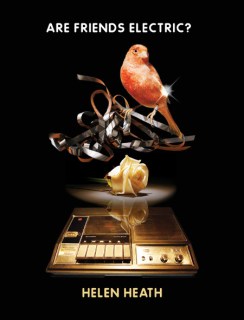
Helen Heath Are Friends Electric?    Check out Helen reading 2 poems and our interview

Helen Rickerby‘s poem ‘George Eliot: A Life’  Check out Helen reading an extract


Wonderful! and thanks for the Poetry Shelf plug


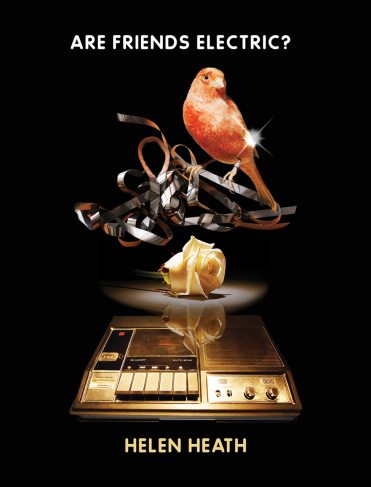
Poetry Shelf audio spot: Helen Heath reads two new poems from Are Friends Electric


Are-Friends-Electric__83457.1522198652.jpg


‘Greg and the bird’

and the bird’


‘A rise of starlings’


Helen Heath’s debut collection, Graft, won the NZSA Jessie Mackay Best First Book for Poetry Award. It was also shortlisted for the Royal Society of New Zealand Science Book Prize (the first poetry or fiction shortlisted). Helen has a PhD in Creative Writing from Victoria University of Wellington’s IIML. Her new collection, Are Friends Electric, is a poetic smorgasbord that offers diverse and satisfying engagements.


Paula Green and Helen Heath in conversation

Victoria University Press page


A chance to hear Sam Duckor-Jones reading poetry @BATS_Theatre


screen-shot-2018-06-11-at-9-48-24-am.png


Saturday June 23rd Sam Duckor-Jones and Marolyn Krasner  BATS Theatre Wellington

Sam is reading from his debut collection People From The Pit Stand Up (VUP). He is a sculptor and poet who lives in Featherston. In 2017 he won the Biggs Poetry Prize from the International Institute of Modern Letters at Victoria University of Wellington.


People_from_the_Pit__67052.1523498723.jpg


Poetry Shelf in conversation with Majella Cullinane

robbie burns (1).jpg


Majella Cullinane, originally from Ireland, has lived in New Zealand since 2008. She graduated with an MLitt in Creative Writing from St Andrew’s University in Scotland and her debut collection was published by Salmon Poetry in Ireland. She has received a number of awards including the Robert Burns Fellowship at Otago University and the 2017 Caselberg International Prize for Poetry. She is currently a PhD candidate at the Centre for Irish and Scottish Studies at Otago University. She lives in Port Chalmers.

Otago University Press has just released Majella’s second collection, Whisper of a Crow’s Wing. It is a terrific read that furnishes a sumptuous bridge between homes, contemplations and experience – with luminous detail, undercurrents and themes. To celebrate the book’s arrival, we embarked on a slowly unfolding email conversation.


Screen Shot 2018-06-05 at 8.49.18 AM.png


The conversation


I too find myself in a bedroom now, the reflection of myself in the window,

only the line of my torso, my arms in a white woollen jumper.

Below me the neighbour’s house; behind that a tree stripped by winter.

I am neither idle nor riveted by my eyes, but at this moment

the letters race to catch each other across the space; the sound

in my ears is the piano keys and the slow stretch of bows against strings.

It is the day before the shortest day of the year.

The sky is grey; it has started to rain.


from ‘Winter Solstice’


Paula: The first line of the first poem, ‘Winter Solstice’, stalled me: ‘In the dark I cannot say what the day begins with.’ Is this how it is writing a poem at times? You are writing into the light from the dark? Or the exact opposite?

Majella: I think what I meant is more practical in that I hadn’t opened the curtains. The opening line of my poem is specifically a response or answer to Kinsella’s poem (epigraph) which begins:

The day dawns, with scent of must and rain… (Kinsella)

and I’m saying/opening with:

In the dark I cannot say what the day begins with…(Me) 


Paula: Yes! I love the way you set up a conversation. The line is a perfect entrance into the poem itself but, as I stalled on it, I began to think about all the different ways to come to writing a poem. I love the way poetry can sidetrack you and then return you to the heart of a poem. My thinking got quite twisty because I was thinking I write into both dark and light when I begin a poem, always with jolts of surprise as the words hit the page. How is it for you when you write a poem?

Majella: How I come to write a poem varies widely. Generally I tend to let ideas and images simmer or gestate for quite a while first, or I might write a line or two and leave it and then return later. I’m a great believer in free-writing or writing down the page and letting words spill out unhindered, unedited.  I suppose it’s my way of discovering what the poem is about and what it is I want to say. I need to write my way in.  If something is not quite working I often like to move stanzas around. At some point I think there is, as you describe, a kind of jolt of surprise when you see that the poem is taking shape and you know what it’s trying to say.  Rarely, and it’s like a beautiful gift, I will get a poem fully formed, one that doesn’t need too much tweaking. But this is very rare. It is the craft and close attention to each word that I really love about poetry, the way poetry has this magical way of making you stop and notice the seemingly small things in life. Also because I also write fiction I think poetry allows me to access the stiller, more reflective side of my personality.


III

I watch the slow tide one late February day,

stare into the grey whiteness of sky,

marvelling at the vagary of clouds.

If they could unshackle themselves,

I’d parcel them up with the mountains,

the inlets, the sea,

paint them on canvas,

carry them home under the nook of my arm.


from ‘Broad Bay’


Paula: Simmering and gestating are like the invisible threads of a poem. Stillness along with slow contemplation is such a captivating feature of your poetry. I am also drawn to the sumptuous detail in your poems: pungent, sharp, intriguing, scene building. I am always intrigued by the way details work and the various places it leads me as reader. What does detail do for you in your poems?

Majella: An attention to detail mostly helps me to reconnect with memory and place, and thereby conjure imagery associated with a particular time and place. It also enables me to explore language, and hopefully enrich the essence of a particular poem. The curiosity engendered by specificity or detail also allows me to discover new things. For example, I’m fascinated by NZ flora and fauna which is so specific and unique to this country, and am interested in connecting that uniqueness, which may be taken for granted if you grew up here, to my own experience of being an outsider/immigrant and to my sense of place in the world. Perhaps it is my attempt to root or anchor myself in familiar and unfamiliar landscapes, and for the present and past to coexist and play with or against each other.


Paula: Is there one poem where the detail particularly works for you?


We’re not there yet, but there are hints: in the pink-red clasp of sorrel,

the cicada easing a pitch lower, shedding its voice. The wind

changing direction like the act of entering a room and forgetting

what it is you came for. The sky tinged in blue-lavender,

spools of cloud whipping over the hills like wounds.


from ‘Finale to the Season’


Majella: I think most of my poems use detail to attempt what I discussed above. ‘Finale to the Season’ juxtaposes details from my past and present to explore the contrasting seasons –  New Zealand’s early autumn, with the reference to the cicada and the grey warbler in the southern hemisphere and in the Northern hemisphere early spring with ‘crows stalking frozen trees’ and also the memory of my parent’s house where my sister and I shared ‘our own narrow bed’. The contrast of the first and third stanza, between the here and there is suspended for a moment, or at least hinted at when I write ‘the season’s murmurings are breached.’ Perhaps what I’m trying to achieve here, at least imaginatively, is that the past and present converge somehow and it is through imagery and connection with place that a momentary connection is possible.


The birch collar box lying in the centre of his suitcase the day he had left.

And you wondered about it, whether or not it had been returned;

if he had ever worn such a neat, rigid, clean thing, knee deep in rain and mud,

with the boom of the guns deafening, the smell of the kitchen,

the stove’s heart miles away.


from ‘Op Shop, 1985’


Paula: Yes – I was really struck by the way some of the poems arc between here and there, New Zealand and Ireland. I was quite moved by them. Another poem that struck me was ‘Op Shop, 1985’. Rather than place, this poem animates people. Do you ever feel poems are a way of anchoring place and people when you have attachments in both hemispheres? Poetry is a way of being at home?

Majella: Absolutely. I’ve lived in New Zealand since 2008 and to be honest it took me a while to settle in. Although there are many similarities between NZ and Ireland there are many differences, and not just with the flora and fauna, which is the most obvious thing but culturally too of course. I am now a dual citizen of Ireland and New Zealand and feel very much at ‘home’ in both countries. I think a big part of that settling-in period, and eventual ease with having a foot in each hemisphere so to speak, was achieved by exploring my feeling and experience through poetry, and the realisation that it’s not one place that necessarily makes a home but rather the people that, as you suggest, animate it whether they be living or dead.


Paula: Do you still touch base with Irish poetry?

Majella: Very much so.  There’s a lot going on in Ireland in terms of poetry and fiction at the moment. Favourite Irish and Northern Irish poets include Vona Groarke, Michael Longley, Kerry Hardy, Sinead Morrissey, Eavan Boland just to name a few. But my reading is pretty wide. I also love Scottish and American poetry.


Paula: I got to hear Vona at AWF a few years ago. She is so good, and I have loved books by Sinead and Eavan. I also love the way Eavan writes about poetry. I will have to track down the other two! What about New Zealand poets? Are there any that you have really engaged with?

Majella: Rhian Gallagher, Emma Neale and Sue Wootton for their lyrical intensity, striking imagery and attention to form and craft.


Paula: Musicality is such a feature of their poetry, both on the page and when they perform. Do you write for the page or is reading aloud equally important? An early New Zealand poet, Eileen Duggan, with familial links back in Ireland, was shaped by Irish song. Not so much individual songs but the love of song, of women singing.  Has Irish singing influenced your poems?

Majella: I read everything I write aloud, both poetry and fiction. Sound is so essential when writing poetry so that each draft I write I’m reading and re-reading it as I go. As for Irish song, I wouldn’t say I’m influenced by Irish singing but I do listen to music while I’m writing/drafting mainly classical music and I love soundtracks. Mind you having said that I do love Irish ballads: Siúil a Rún, She Moved Through the Fair, Raglan Road, etc. so maybe I’ve been influenced subliminally. I certainly used to sing a lot as a young child and had singing and piano lessons. I’ve often said if I didn’t write I probably would have gone into music.


You called just after eight. I could hear the longing in your voice

as raw as the air two days earlier when the hills were dusted with snow

and temperatures plummeted. We wrapped your grandson in layers

vest, long johns, hat and gloves. I stayed in and cleaned, found traces of myself

in drawers and cupboards, in scraps of paper and old notebooks, piled

laundry on the bed and folded it.


from ‘Compline’


Paula: For me the joy of your collection lies in the multiple subjects that depend upon musicality and contemplative movement. The poems engage so intricately with people and place, but there is an emotional undercurrent that also hooks me. I love ‘Compline’, the poem for your mother that catches the ache of distance. There are the tender mother observations in ‘You Say’ and ‘The Little Boy That Got Away’.

In some poems, grief is measured and utterly moving – as in ‘There But For’. I am drawn into the width and depth of being human in your poems. How important is it to write as both mother and daughter? To write the tough experience along with the jubilant and the wonder?


Majella: Well, when I first started writing I was a little hesitant to use the personal in poetry, which is why I wrote quite a few dramatic monologues, especially in the first collection. It is a form I still love as it allows me to explore another I and perhaps connect with the latent thespian in me. There’s quite a gap between the first and second collections. In a way that gap mirrors the experience of being both here and there, of becoming a mother in New Zealand, and consequently knowing what it is to be a mother, and how my own mother feels about distance, especially as I’ve been coming and going from Ireland since I was twenty and haven’t lived there since 2004.

Regarding writing about the tough, or difficult in life, well, the older I get I find I need to write about all aspects of being human as you suggest.  Even in the most difficult situations I have encountered, there is, if I look hard enough, and slow enough, a little wonder and hope to be found. I’m reminded of that phrase, the darkest hour is just before dawn. 


Paula: Can you pick one poem to post at the end? My collections often have poems that particular matter to me. Do you have one like this?

Majella: One poem that particularly matters to me would be Feather, inspired by Dickinson’s Hope Is The Thing With Feathers.  The idea that until we ‘know’ we can always hope, and even when what is hoped for is not possible we can still feel it to be real somehow – through the power of the imagination.


Feather                

If only everyday was as simple as listening to birds, their small voices

plucking the grey-blue morning, emboldened on this first day of spring.

We too might dare to hope that what has long been desired is not so far away.

Let’s suppose it is here already, as real as this room’s radiator

switching itself on and off; the thermostat of our longing unhindered

by a dial of hours. Rather it exists in a kind of elsewhere,

or takes form in the wanderer who crosses bridges and borders

without restraint. Better to loosen the tangle of our rough wishes,

of the could-have-beens and might-have-beens and know we had it all,

just for a moment. Beneath the clamour of sounds –

logging trucks rattle to and fro from the port, a dog barks at the passersby.

A friend writes a message, subvoce – imagine, imagine,

and the bird that sheds a feather without knowing,

is the one we might chance upon, pick up and carry home


©Majella Cullinane Whisper of a Crow’s Wing


Otago University Press page


\\


A Radio NZ National poetry interview: Megan Whelan and Tayi Tibble

Screen Shot 2018-06-05 at 8.53.21 AM.png


This is electrifyingly good! The book is out in July.  So in the meantime:


Victoria University Press page

Tayi’s Anzac Day poem at The SpinOff

Kaleidoscopes‘ at Starling

‘For a cigarette and a blanket‘ at The Wireless

Identity Politics’ at Poetry Foundation


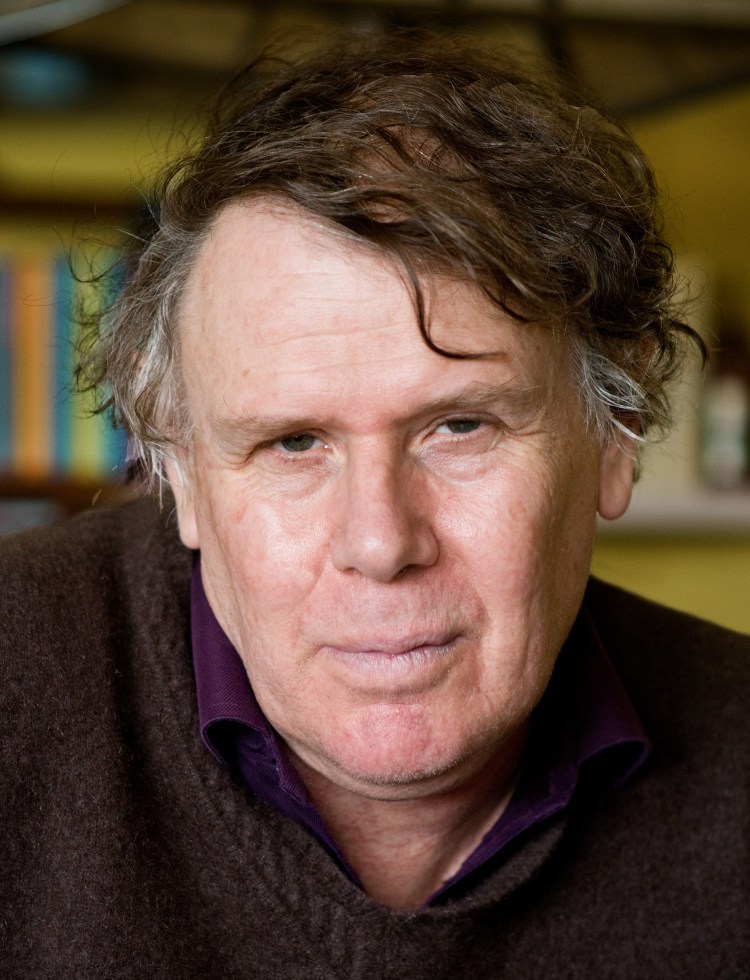
Poetry Shelf Interview: Paula Green in conversation with Harry Ricketts


HR_004s.jpg

Photo credit: Robert Cross


Harry Ricketts teaches English literature and creative writing at Victoria University. His thirty plus books include poetry, literary biographies and essays. His biography, Strange Meetings: The Poets of the Great War, is a terrific example of how nonfiction can depend upon heart and intellect, deep scholarship and personal engagements. The war poets are illuminated with fresh insight, emphasis and connections. Harry’s latest poetry collection, Winter Eyes, relishes the power of language to do many things: to lay down musical chords, prismatic subject matter, personal revelations. The poems made me grin wryly, stop and reread, and on occasion weep. It was with great pleasure we embarked upon an unfolding email conversation.
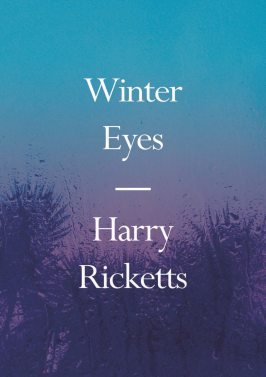
 

Winter_Eyes_cover__15974.1518725766.jpg

 Harry Ricketts, Winter Eyes

Victoria University Press, 2018


Talking about poetry


iv


The song strokes the past

like a boa, like some fur muff

or woollen shawl

but the past is not soft at all;

it’s rough to the touch

sharp as broken glass.


from ‘Song’


Paula: The first poem, ‘Song’, is the perfect entry into your new collection. The poem, songlike and exquisitely paced, turns in multiple directions. It favours the external alongside the interior, the strange alongside the everyday. Do you see this new book as a stretching out?

Harry: Yes I do in some instances. I certainly hadn’t written anything like ‘Song’ before. It was a poem which seemed to sing itself rather than having to be fetched. Quite often phrases or lines will come to me, and I’ll jot them down and come back to them and see if they’ll catch fire. I’ll usually do several drafts, fiddling around, chopping and changing, finding new possibilities. That wasn’t the case with ‘Song’. I wrote the first few sections all in one go; then later added a bit more, and it seemed to know when to end. A few of the other poems happened like that, too. I’m not sure the emotional topography is all that different, though.


She bites at the cheese scone

I’ve buttered and quartered, chews

slowly. ‘Yesterday,’ she begins,

‘it was whurr-whurr-whurr.’ Stops.

‘It was,’ I say. ‘But today

it’s calm and bright.’ ‘Yes,’ she agrees


from ‘Picnic’


Paula: The emotional topography is contoured and that is one of the reading pleasures. In fact some of the poems are acute emotional hits even though the strata of feeling is subtle. I am thinking of ‘Picnic’ and the mother observations that are restrained and tender. Or the word play in ‘Margravine Cemetery, Barons Court’ that almost becomes a haunting. To what degree are you putting yourself in the poems as opposed to a composite speaker?

Harry: I am mostly putting myself into the poems, or bits of myself anyway; they are all personal to varying degrees, even confessional, though I know for some people that’s become a degraded term. The ‘mother’ poems are about my own mother in a direct, if slivery, way. I suppose I’m trying to maintain one side of a conversation with her now that she can’t complete sentences any more. In a different way, I think that’s also true of the sequence about my late stepson. But in other poems a kind of transformation does seem to have occurred, and the speaker both is and isn’t me. I think that’s true of ‘Song’, ‘Margravine Cemetery’, ‘Fields of Remembrance’ and some of the triolets and tritinas. ‘S. 1974’, on the other hand, is straight ventriloquism.


This grave is a-tilt

As though the earth moved:

Agnes. Something. Faithful …


Red and yellow leaves steering down

The soft October afternoon.


from ‘Margavine Cemetery, Barons Court’


Paula: The mother poems work so beautifully, and I now realise why I felt like I was eavesdropping on intimate moments. I think the personal movement – this shifting from confession to shards to grey areas to ventriloquism – is what heightens the multi-toned effect of reading. Nothing feels like an exercise. There are the diverse currents of feeling but there are also the eclectic conversations. Could you see this as a collection of conversations that stretch out to place, family, incident, other writers?


Cape daisies mauve the hills, give me a spring

to the spirit my mother beside me will not hold

onto, any more than the rhododendron’s pink –

‘Oh lovely!’ She too was once in the pink,

a student in the black-out, and it’s spring,

and she’s in love’s stranglehold


from ‘Spring’


Harry: Yes, I agree, though I hadn’t quite seen the collection like that till you pointed it out. I think poems are forms of conversation with others, real and imagined, often conversations one would like to have had. Years ago, a friend and I used to play what we called The Dylan Game. We imagined ourselves in a railway carriage, empty except for us. The train stops at a station. Into our compartment steps Bob Dylan. There is no corridor; the next stop is twenty minutes away. What will we say to him and he to us? The game went on for some months till we realised we’d be so nervous and star-struck, we wouldn’t be able to say a word. Among the many other things poetry can do, it can fill some of that gap, with family, friends, other writers, fictional characters, the living, the dead. Those kinds of conversations have been an aspect of your poetry, too, haven’t they?

Paula: Yes, and I haven’t quite thought of it like that either. All those people that stalk through my poems! I like the idea of poetry inhabiting a gap, furnishing a gap almost – writing the gap. I am also struck how you stretch form in this collection. The ‘Grief Limericks’ are a case in point. Steve Braunias published these on The Spin Off and it has had a near record number of views. How did the tight rhyming form work for such tough subject matter? Are there other examples that you feel transcend form as exercise and catch something extra?


I once had a stepson called Max,

liked Gunn and Blood on the Tracks.

But things were askew,

were tangled in blue.

I once had a stepson called Max.


from ‘Grief Limericks’


Harry: The constraints of any reasonably tight poetic form can sometimes actually be a help in writing poems involving strong and difficult feelings. John Donne has a couplet: “Grief brought to numbers cannot be so fierce, / For he tames it, that fetters it in verse”, though I’m not convinced about the ‘taming’ exactly. ‘Grief Limericks’ is part of a sequence of elegies for my late stepson Max. As I say in the Notes at the back of the collection, I got the cue from Nick Ascroft’s ‘Five Limericks on Grief’ in his recent collection Back with the Human Condition, though I follow Edward Lear’s original format in which line one is repeated as line five. It’s the clash of the form’s comic associations and inexorable patterning with such unexpected subject matter. I don’t think of any of the triolets and tritinas in Winter Eyes as ‘exercises’. A few are meant to be playful in a mordant sort of way, but each is also trying to catch some flashing moment, some twist of feeling.

Paula: Yes! Repetition is such a lure; on the one hand it is a thing of comfort, it heightens feeling or relishes playfulness. The glare of the water in ‘Lake Rotoma’ cuts into the daily routine: ‘Mostly we eat, talk, drink and read.’  There is the flashing moment, the twist of feeling.

On the back blurb, poetry is offered as both comfort and confrontation. This works for me as I read through the collection. I don’t think I have seen these two words in partnership in a blurb and they really got me thinking about being both reader and writer. They explain why I love your book so much but also, and this surprised me, tap into my writing life. What do you want as a poetry reader? Did any books particularly stick with you as you wrote Winter Eyes?

Harry: I want many different things as a poetry reader. I want to be pulled into a world. I want to be startled. I want to be shown things. I want the hairs to stand up on the back of my neck. I want to be moved. I want to be amused. (I don’t want to be patronised, bullied or conned.) I dip in and out of a lot of poetry, ancient and modern, local and overseas. I was reading Airini Beautrais’s and Therese Lloyd’s poetry very intently during the two to three years I was writing the poems in Winter’s Eyes, because I was lucky enough to be one of their creative writing PhD supervisors. Their work has certainly stuck, as has Andrew Johnston’s Fits & Starts, Hera Lindsay Bird’s Hera Lindsay Bird, Nick Ascroft’s Back with the Human Condition and Chris Tse’s How to be Dead in a Year of Snakes. But there are various poets who are just part of my mental landscape, and some of them show up in these poems one way or another: W.H. Auden, Philip Larkin, Bill Manhire, Lauris Edmond, Derek Mahon, Wendy Cope, Andrew Marvell, Carol Ann Duffy …. songwriters like Dylan.


This ‘thinly plotted’ pantomime

must always end too soon.

There’ll be time, we say; there’ll be time

to rewrite our part in the pantomime


from “Hump-backed Moon’


Paula: What you want as reader sums up the effects I have had reading Winter Eyes. I was amused by ‘On Not Meeting Auden’, moved by the Max and mother poems, and got goose bumps as I read ‘Song’ and ‘Hump-backed Moon’. This multi-toned book takes you many places. Do you just write for the page? Or do you also write to read aloud?


Out there, all this hot, bright morning

the tūī working the flax,

white bibs bobbing up and down.

In here, it’s cooler and dimmer.

Deep in my English Auden

suddenly in your ghost again.


from ‘Love Again’


Harry: I usually write with the page in mind. I like the visual aspects of poems, the line-breaks, the verse-breaks, using syllabics as an organising principle or skewing a set form, all the possibilities of shaping words and rhythms on the page. The English poet C.H. Sisson, who wrote mostly in free verse, says somewhere that the proof of a poem is in its rhythm, not a fashionable view. I like poems that sing, particularly if it’s a broken song. I do sometimes think while working on a poem that it might go okay aloud or later discover that it seems to. ‘Song’ works all right aloud, I think; but ‘Love Again’, one of the elegies for my stepson, is quite compressed in places and is probably better on the page. It’s hard following a lot of new poems at a reading; it’s easy to lose track; you can’t stop and go back. My ideal poetry reading is where I know most of the poems already and can enjoy listening to how the poet reads them. Of course, some poets are mesmeric readers. Bill Manhire is. Seamus Heaney was.

Paula:  Jesse Mulligan interviewed Jane Arthur, the Sarah Broom Poetry Prize winner, last week and got her to read the same poem twice. I thought that was genius. So yes, when you hear Bill read ‘Hotel Emergencies’ or ‘Kevin’ or the Erebus poems after having read or even heard them before, you just feel more enriched. I have to say I really loved your reading at Miaow last year. I could feel the audience around me move forward and listen.

The process of writing a poem is so mysterious. Was there one poem in this collection that took you by surprise?

Harry: Thank you for what you say above. Very generous. Several of the poems took me by surprise. I was in the middle of a university meeting when the opening line of ‘Grief Limericks’ came into my head: “I once had a stepson called Max”. I hadn’t been thinking about him. ‘Good at Languages’, about my friend Nigel, started when I was, as in the poem, walking down the steps to the Von Zedlitz Building where I work. I heard this blackbird and instantly thought of him and the lines he would quote from John Drinkwater’s poem. ‘Napier, Christmas 2017’: we were driving to Napier and suddenly just before we got there way out in a field there was a sign saying “Shock your Mum. Come to Church” in huge letters, and I knew I had to write a poem around it. Actually, I think most of the poems took me by surprise, and I’m grateful they did.


Thank you Harry. It is always a pleasure to talk poetry with you.


Good at languages


(for Nigel, 1950-2008)

You were good at languages,

could play any tune by ear:

“Doesn’t it go something like this?”

you’d say, and so it did. Poetry

wasn’t your thing, but you had two

standbys you could always pull out.

The first you’d remembered

from Alec Annand’s A Level

English class. I was so impressed

the first time you produced it,

early one summer morning in 1970

as you drove us in your Morris Traveller

to the Ribena factory in Coleford

(“Gateway to the South”, you called it).

The pigeons as usual were eating

gravel off the road and clattering up

from under the wheels. And suddenly you came out

with “O sylvan Wye, thou wanderer

through the woods.” And there it was

down there below us, not in a poem,

but real, woody (and silvery), wandering.

This morning as I walk down the steps

from Glasgow St to Von Zedlitz

a blackbird starts to sing. Which was your other

standby (remembered from some other class):

“He comes on chosen evenings

My blackbird bountiful, and sings

Over the garden of the town …”

I can hear you recite the lines

with that slight grin in your voice.

It’s the palest shadow of you,

but for now, actually forever, it will have to do.


©Harry Ricketts 2018


Victoria University Press page

Radio National: Kim Hill and Harry Ricketts interview

Jesse Mulligan and Louise Wallace talk about Fiona Kidman’s Speaking with my grandmothers


Screen Shot 2018-05-31 at 4.28.41 PM.png


You can hear the discussion and read Louise’s fabulous  poem. Check out Fiona’s full sequence in Where Your Left Hand Rests (Godwit, 2010). It is poetry in an exquisitely produced book.


All the same, grandmother

how many hills are there left to stand on

because I tell you, it’s getting quite

lonely on this high moral ground

and now that I’ve found you, guilty secrets and all,

I can’t keep away, can’t stop looking at your picture


from ‘High ground’ in the sequence ‘Speaking with my grandmothers’


  Call for submissions – Ngā Kupu Waikato: An anthology of Waikato poetry.


                         Ngā Kupu Waikato: An anthology of Waikato poetry.


Submission closing date is 31 August, 2018.


Open to anyone who has lived in the Waikato region for at least one year.


No more than five poems, please. Preferably NOT previously published, although this is not hard and fast. However, if previously published, do note where & when, please.

Can be on any kaupapa and in any style – just as long as they are not too long, eh! However, poems pertaining to some aspect of the Waikato rohe or region, will be looked at most favourably.

Ki te reo Māori rāua ko te reo Ingarihi hoki – In the Māori language and the English language also.


Please submit to ngakupuwaikato@gmail.com

As attachments in ONE WORD DOCUMENT. Please also include a one-sentence outline of your ties to Waikato – past or present.

Poems will initially be longlisted, and then a panel of Waikato-based poets will select the poems to be included in this anthology.

Tēnā koe.

Vaughan Rapatahana

Editor


THANK YOU to Hamilton City CNZ Creative Communities Scheme for the generous funding available.


Screen Shot 2018-05-28 at 6.48.28 PM.png