Category Archives: NZ poetry

Poetry Shelf Monday Poem: an extract from Lee Posna


The problem, everybody’s problem, is myself. Which is neither mine, nor self, but what of that? (I have no self-control: there’s nothing to control.) The more I work at it, the deeper it gets. In this it’s like a hole or a painting. It being me. There’s no law that binds depth to beauty. Some bind it to horror, they shadow me like imperial clouds. Mom’s the concubine. The sky’s like a painting over a hole in which one finds an empty vault steelier than angels. ‘The sky is blue, no?’

The problem gets deeper. I stare at a bald patch of lawn where a black seething mass resists my visual cortex. I bend down toblindside emerge ants = fire. I put out the fire. Then everything’s made of fire (not the logic of a bad dream, but the truth of an ancient fancy). The garrigue burns, the house burns, the urethra burns, the universe pounds with voids so cold they burn like ice on flesh. The twitter of a chaffinch burns in the olive.

I’m calm now. I can reason. The scream barrelled like a train through a dead station. Another won’t be long. Its echo pulls my face a bit, I’m calm now. I can reason. I can reason a little way. I stack my reason upon its twin till it starts to gain some ground from the dust. I’m always screwing around in the dust. This is how all babels are made, one stone upon another. They stretch across the peneplains of hidden hominid. The sky has room enough for every end.

The problem is the solution (like divine speech): death. Not to take the shortest path to it, but rather to fight against traffic up the road leading from it. Just as the litter-bearers of a certain dying pope did summer of ‘64, working toward the holy land:

Pius II set out for Ancona to rouse a late crusade, 200 years after the age burnt out. Deserters filled the road overlapping like ghosts. His men drew the litter’s heavy damask curtains despite the violent heat to spare their swimming head the heartless tableau. He arrived in time to see the late Venetian fleet dock, and soon after died.

A good solution to a bad problem, which always already contained defeat. Defeat is part of the larger plan. What kind of plan is this? Not the right one. And worse, not the wrong.

See how this plays out for a planet, a people, a family, another? A little shoot squeezes through some barren peneplain; the shoot grows into a forest; the forest into a house; the house into fire; the fire into words; the words into swords; the sword like a clock’s hand never stops turning; the clock like a star’s engine–.

While I am my blind spot: for myself I can only infer its operation, as one infers the presence of dark matter. I believe in my defeat – I feel it happening, I see it in my beard, under my eyes, in my way, that is my pattern, in my work, which increases order, a kind of order, whose growth is outpaced by disorder – which makes my reality, giving ground for belief: an elegant feedback loop. What do I believe? What I’m forced to.

I see the end of my life many years from now, or else two, or it may be six weeks from Monday. In the manner of light, which illuminates, but hardly penetrates (at most it reaches a thousand metres into the sea), I see from one end of the universe to the other. I see and note the faces of all who have never lived, and will one day remain unborn, from Eve’s aborted sister until the end of time. I smell the rock, and paint the rock’s sex, and paint the nude’s sky, and render great walls of galaxies to hide your eyes. The matter is limited, and it contains defeat.

He’s not me. The Provencale painter, not me. What is true for you in your private heart is true for all men (thank you 19th century). I bow to the 19th century, I crawl into the 19th century as into my mother’s slack womb, as this fully unfurled genotype starting to decay. I burrow into pillows in the corner of this warm room. I squeeze them to force the door of innocence, to strangle Adam and ride him into the brane of myth. This is neither his voice nor mine, I like to think it’s both (though it’s neither). I make no space for his spicy fire, voice, temper – I’ll tell you about that soon, it’s part of this hateful experiment. I like to think I can undo a gross of years, expiate the omnipotent violence of ‘it was’ and animate Cezanne at thirty-something, year of the hanged man. There’s his corpse, thirty-something years before the decay begins in earnest. He’s sleeping, an empty bottle of Cairanne at the foot of his easel. I slither along the floorboards (we’re in his atelier), shoeless, shirtless, sweating in moonlight. My underwear stinks. The crickets swell the night thick with rosemary. Crouching next to his crumpled beard (where’s his pillow?), his face turned toward me, the miasma of wine, fougasse, tobacco clouds me in rank heat: corruption enters the saint. And so I solemnly open his mouth, which makes a sticky sound, allowing the corpse to speak. That is, my corpse.


©Lee Posna from ‘Completely Supportless Blue’


Lee Posna lives in Wellington and works at Pegasus Books. Books he’s recently enjoyed include Hill by Jean Giono and Difficult Loves by Italo Calvino.


Poetry Shelf audio spot: Wen-Juenn Lee’s ‘Prologue’


DSCF9614.JPG


Prologue‘ appeared in Three Lamps, an online journal from the University of Auckland, edited by Paula Morris.


Wen-Juenn Lee edits poetry for the Australian literary journal, Voiceworks. She works and lives in Melbourne, and writes of home and belonging.


For women who signed the petition and the women who step forward


IMG_4390.JPG

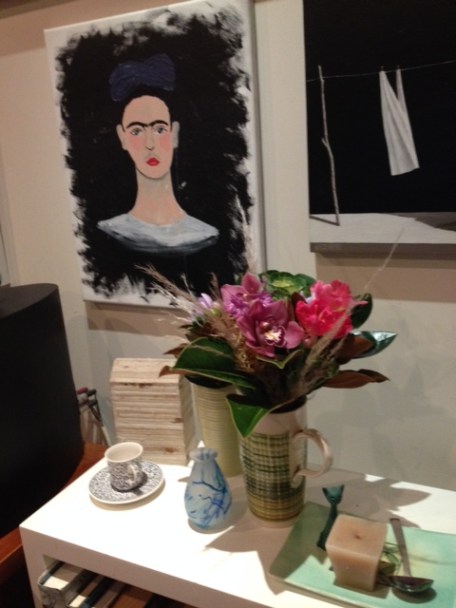
Frida Kahlo by my daughter, Estelle Hight


125 years ago today many but not all New Zealand women got the vote.

I have waited until today to let this sink in and react

I am sitting here at my kitchen table with the grey clouds and a bite

in the air thinking of our early women poets who held hands with

the English suffragettes and risked their words to shape a better

future for all women by writing and speaking out and imagining

an equal life for women without violence and without poverty

and without being spoken over or patronised or ignored

on the grounds women were not men’s equal. I am thinking

this and the way I have a support crew of women who have held

my hand over the past year through difficulty and celebration

and I am wondering how we are risking words to shape

a better future for all women by writing and speaking out

and imagining lives without violence or poverty or denigration

or erasure or inequity and I am thinking of Selina Tusitala Marsh

and Tusiata Avia who have held my hand in this tough year

and who stand tall and proud for all women but especially

Pasifika women and speak out about abuse be it physical

or emotional and who then stand even taller and show

how words can sing and who get young Pasifika

women singing and I can feel the chain of hands stretching

back through a line of women writing to Blanche Baughan

and Jessie Mackay and I can feel the hand of Airini Beautrais

who is brave in her writing and Dinah Hawken who showed

me the tug of war between men and women and the way they

let the rope go and the way Fiona Farrell gave voice to her

broken city and we could hear the small stories of living

and here I am taking stock and giving thanks to the women

who came before me and giving thanks for my vote

and my freedom to choose education and motherhood

but thinking then of my notfreedom within medical systems

that know best and education systems that let children down

and clamp the Arts and the way even now our voices might

be trampled upon when we don’t sing in harmony. I am thinking

we bake bread and we buy bread and we get married and we don’t get married

and we live with women and we live with men and we hang out washing

and soothe the troubled child and we change gender and we go to work

and fold the clothes and get bruised and make the money stretch and make dreams

and try to keep warm and run away and chop the wood and get degrees

and we hold hands and we keep holding hands because there is strength in difference.

This year has almost wiped me out or so it feels but to sit here at the kitchen table and

reflect back on those brave early women who never gave up and who embraced shrill

and loud and forceful puts me back with the wind blowing through the manuka

back to that moment when I wrote a poem for Neve and her parents

and the world felt full of hope because kindness is just as important as strength.


Written in one breath by Paula Green, 19th September 2018, Bethells Valley, Waitakere


IMG_4405.JPG


Poetry Shelf Monday Poem: Lynn Davidson’s ‘Leaving Bass Rock gannet colony ‘


Leaving Bass Rock gannet colony


After skypointing to show

it’s ready


after one last dive, shorting the sea

(the crack, the pressured current fizzing)


after one last moment of great aloneness: a fleck

in oceans


after the last fish in its gut –

the fin and skin and bone of it – tears apart


it takes a final flight, blowing

Bass Rock into the feathery pieces   we call


aura or

atoms    we called


father or

Adam


©Lynn Davidson


This poem was was published in New Writing Scotland 35. Bass Rock is a rock/island in the Firth of Forth. It’s a huge gannet colony and has a long and interesting history of human habitation too.

Lynn Davidson writes poetry, fiction and essays. Her latest poetry collection Islander will be published by Shearsman Books and Victoria University Press in 2019. Lynn currently lives in Edinburgh.


Poetry Shelf audio spot: Rebecca Hawkes reads ‘Sighting’


Screen Shot 2018-07-23 at 11.04.47 AM.png


Photo credit: Mitchell Botting 


‘Sighting’ was originally published in Starling 5


Rebecca Hawkes is a poet and painter who has traded the tussock-clad hills of the Canterbury high country for the suburban slopes of Wellington. More of her work can be found in Landfall, Mimicry, Sport, and elsewhere via her website.


image.png


image.png


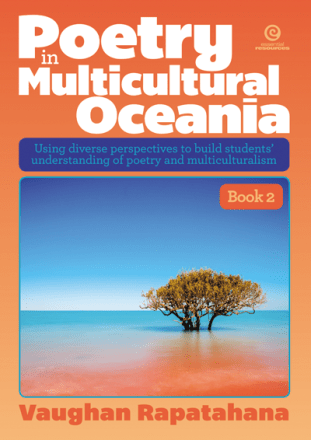
Poetry in Multicultural Oceania 2 – a teaching resource for Years 6 to 9


909ff650-8574-440e-954e-5c6548f874da.png

Poetry in Multicultural Oceania Book 2

edited by Vaughan Rapatahana, Essential Resource, 2018


‘mountains once roamed/ this land’  Apirana Taylor


Vaughan Rapatahana has edited a second collection of poems with associated activities to encourage the reading and writing of poetry and to further develop a student’s multicultural awareness. Vaughan is committed to drawing upon diverse poetry voices: Māori, Pākehā, Pasifika, Aboriginal Australian, Asian.

This issue includes: Mere Taito, Renee Liang, Apirana Taylor, Gregory Kan, Alan Jeffries, Simone Kaho, Paula Green, Michelle Cahill, Reihana Robinson, Alison Wong, Serie Barford, Michele Leggott, Selina Tusitala Marsh, Iain Britton, Makyla Curtis, Lionel Fogarty, Shasha Ali.

Each section includes the poem, a warm-up, focus on vocabulary, tips on reading aloud, consideration of the language and layout, questions to explore understandings and evaluations, followup suggestions.

The subjects are wide ranging but generally attached to identity issues.


I love the way this book will expose new and familiar poets to students and teachers and offer accessible and stimulating entries into poems. Bravo Vaughan for continuing to celebrate local poetry. This is an essential resource.


‘I am told that the wai of who/ is the water of our veins’  Makyla Curtis


Vaughan Rapatahana commutes between Hong Kong SAR, the Philippines and Aotearoa New Zealand. He is widely published in several genres in Māori, English and other languages.  His latest poetry collection is ternion (erbacce-press, Liverpool, England). Vaughan has a PhD in existential philosophy from the University of Auckland. Vaughan has written commentaries for Jacket2 (University of Pennsylvania), including a 2015–2016 series and a new series currently in progress.


Essential Resource page


A Poetry Reading: The Kink Poetroversy


image001.jpg


This year’s Winter Readings will belatedly
be held in the month of September in
Paekakariki, continuing a popular event
at the City Gallery in Wellington
2003-2008. Each event featured a tribute to an
album or group. This year’s readings form
a tribute to the Kinks.

Sunday, 23 September 2018
Poets: Iain Sharp and Joy MacKenzie (Nelson),
Michael O’Leary and Damian Ruth (Paekakariki),
Mark Pirie, Mary Campbell and Wyeth Chalmers
(Wellington) and Bill Dacker (Otago).
MC: Rob Hack

Venue: St Peter’s Hall, Beach Rd, Paekakariki.
Time: 12-2pm.

Admission to the reading is by koha. Books for
sale from 12.00pm.

Earl of Seacliff Art Workshop (ESAW) will publish
an anthology of poems (free with koha) by the
readers featured to celebrate the event.

Winter Readings are presented by:

HeadworX Publishers

Paekakariki Community Trust

Poetry Archive Trust

Earl of Seacliff Art Workshop

Poetry Shelf Monday Poem – Charlotte Simmond’s ‘Teach Me, I Will Execute’


Teach Me, I Will Execute


Insert some sort of political comment here

about privilege and perspective and 1st wrlds and then

insert an uplifting hope inspo to combat fear


or else you’ll justify all the retiring folks who leer

that these tiring millennials are entitled ignorant young narcissists, so then

insert some sort of political comment here


that shows off all the things you care

about: communism, class, colour, climate, conditioning, but then

insert an uplifting hope inspo to combat fear,


and to validate why this collection deserves a share,

why it is relevant and should matter to humen,

insert some sort of political comment here


about the woes of the world and the villainies we [bare/bear]

and the news of the day, but bait the next click by then

inserting an uplifting hope inspo to combat fear.


You dried up old fruit! You withered old pear!

Complaining that hair doesn’t rhyme with beer! Okay then,

I’m inserting some sort of political comment here

but insert the uplifting hope inspo to combat yr fear yrslf.


©Charlotte Simmonds


Charlotte Simmonds is a Wellington writer, translator and, until the end of this year, also a historian of medicine. Her goals and aspirations are forestalling homelessness and escaping poverty.


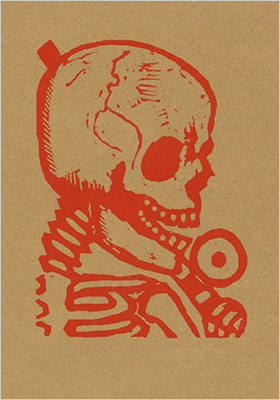
In the hammock: min-a-rets issue 9 spring 2018


Minarets9_webcover.png


Min-a-rets is published by Compound Press and Issue 9 is edited by Craig Foltz

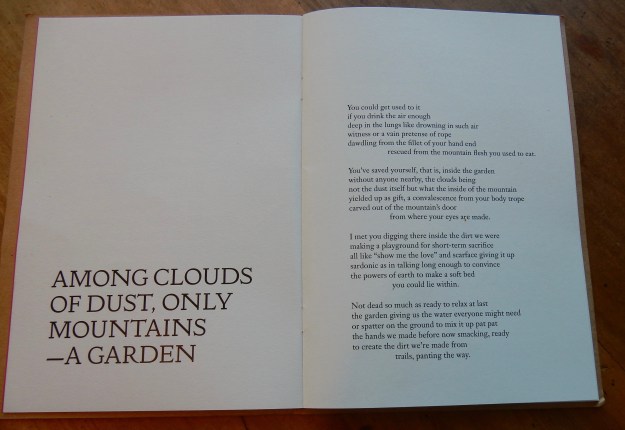
The editor’s motive was ‘to create a forum for an absurdist, collaborative experiment, roughly based on the surrealist Exquisite Corpse experiments from the 1920s’. In the collective approach to writing the second writer only sees the last line of the first writer.


In this instance:

28 writers got a line of text, a specific form and 7 days to produce a piece. The last line was handed onto the next writer. There were four groups each starting with the same first line: Among clouds of dust, only mountains – a garden

The writers come from New Zealand, USA, Taiwan, Australia and Sweden and include Joan Fleming, Nina Powels, Ya-Wen Ho, Steph Burt, Airini Beautrais, Lisa Samuels, Anna Jackson, Amy Brown, Sarah Jane Barnettt, Essa Ranapiri, Rebecca Hawkes.

Names were put in a hat to assign group and order.

Four poems, without attribution to individual writers, achieve a sweet and surprising fluency. It is like picking up a stitch from the previous writer and taking  it wherever you fancy. Sometimes it is a shift in pattern, sometimes repetition.

Four distinctive poems like a game of whispers in the ear or the game where you draw a head, fold the paper over and let the next person continue with a modicum of clues. I was hungry to keep reading, motivated by the bridge between stanzas.

What a delight to read the hooked stitches: the surprising links and the wayward disconnections. I utterly adore this issue, both startling and sumptuous.


DSCN9583.jpg


Compound Press page