Janet Newman is based in Horowhenua. She has a PhD in creative writing from Massey University for her thesis entitled: “Imagining Ecologies: Traditions of Ecopoetry in Aotearoa New Zealand.” Her poetry collection Unseasoned Campaigner was a runner up in the 2019 Kathleen Grattan Award and will be published by Otago University Press next year. She was the winner of the 2017 IWW Kathleen Grattan Prize for a Sequence of Poems, the 2015 New Zealand Poetry Society International Poetry Competition, and the 2014 and 2016 Journal of New Zealand Literature Prize for New Zealand Literary Studies.
Vaughan Rapatahana, Te Ātiawa, commutes between Aotearoa, Hong Kong SAR and the Philippines. He writes in multiple genres (chiefly poetry, criticism and commentaries) in both his main languages, te reo Māori and English. He graduated with a PhD (on Colin Wilson) from the University of Auckland, and has published several poetry collections both here and overseas. Atonement was nominated for a Philippines National Book Award in 2016 and he won the Proverse Poetry Prize the same year. He editedNgā Kupu Waikato: an anthology of Waikato poetry (2019).
Vaughan is a terrific champion of poetry in Aotearoa – he shines a light on poets that deserve far more attention than they currently get, particularly in his articles posted at Jacket2. He has also edited multicultural books of poetry with poetry exercises for secondary schools (Poetry in Multicultural Oceania – Book 1, Book 2 and Book 3, and the most recent teaching resource Exploring Multicultural Poetry 2020). He is a much admired poet in his own right.
My review of Vaughan’s latest collection, ngā whakamatuatanga / interludes, Cyberwit 2019
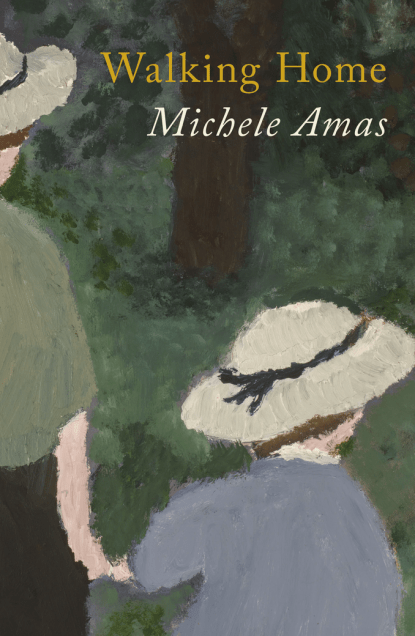
Michele Amas Walking Home Victoria University Press 2020
Hold your own hand
Not the idea of it
or the theory of it
Hold your own hand
with your own hand
Hold it
See how confident
how knowing it feels
how held it feels
It will cross the road
with you
It will be your older brother
sister it will be your parent your lover
It says I’ve got you
relax now
from ‘Walking Home’
Michele Amas (1961 – 2016) was a poet and actor. In 2005 she completed an MA in Creative Writing at IIML and was awarded the Adam Prize. Her debut collection After the Dance appeared the following year and was shortlisted for the Jessie Mackay Best First Book of Poetry Award. Ken Duncum has edited a posthumous collection, Walking Home selecting poems from across the decade, including the final poem she wrote. In his introduction he writes:
Michele jotted down fragments, phrases, verses, anywhere and everywhere – it was how she did her thinking and feeling about things, herself, the world – and this effort to feel and understand was never more pressing than in the last two years of her life. Most of the poems in this book were written without thought of publication, but those in the last sequence, ‘Walking Home’, are particularly like bulletins from Michele’s soul, naked, without artistic pretence, reminder notes to live (in all senses of the word).
There is something immensely appealing about writing for the sake of writing, without publication or public attention, just as there is something enormously moving when a writer faces their own mortality. We approach the need to be published and to garner attention in so many different ways. Our relationship to writing, when faced with life-threatening illness, is unpredictable. I am deeply curious about writing as a way of warding off death, as a way of achieving equilibrium, and making connections in the most difficult circumstances. I found the final collections of Sarah Broom and Rachel Bush deeply gripping because they created poetry, at the edge of death, that is luminescent with life. I am equally moved by WalkingHome.
Reading Michele’s collection reminds me that reviewing can be so much more than a recap that reduces the magic of an unfolding book or critical judgement in terms of both success and failure. I am interested in the effect a book has upon me as reader, upon how it makes me think and feel, on how it affects relationships with the past and the present, with both the world at large and more intimate settings, with my private circumstances. The capability of poetry is vast. Yet what happens when we are reading work that the author never really intended for the public domain? In my extensive research for Wild Honey, I so often came across women who wrote for the sake of creating, and were disinclined to name it poetry / poems. I feel close to these issues, and agonise over what to put in a review of this book. I take this book personally. I write reviews as a form of intimate engagement with what I read.
The opening poem ‘The Documentary’ resonates sweetly with gaps and loops. It is both rich and economical, and the perfect entrance into a collection of such exquisite layering. The poem becomes talisman.
A grandson takes a stone
from a southern Pacific coast
carries it in his wallet
across the world
to place on a grave
Poetry is also something we might carry. Here I am at the start of the book, brimming with both sadness and delight. We might carry the poem and the stone as solace, as keepsake, to mark the graves of those we lose, to hold when we are close to death. This feels like the hardest review I have ever written, and so yes, I will call it an engagement. The mark of a poem that catches is when you keep reading it over and over (like when you play an album or song over and over as only that will do). I keep playing this poem over and over, marveling at the scene. Here is the end of the poem:
Hear our chorus
our bony percussion
our grandson, our grandson’s sons
hear us claim our future
and our escape
Do not be caught unarmed
bring your film, your press, your theatre
your manuscript, your piano, your pencils
bring your keepsake gift, your promise
bring your stone
And so through the gate, into a collection that offers vignettes of prismatic life, from the way it is not easy to be happy to the story of an actress whose baby is taken because the courts decide an actress is less stable. Perhaps by choosing to write for the sake of writing as opposed to the sake of publishing, you can eyeball dark and light without filter or expectation. Writing as a form of liberation. ‘This Is About You – Isn’t It?’ is a poem of deliberate mishearings and imaginings, and accruing feeling.
He’d build things for you
like lakes
for your swans.
I wanted you to be married
so that I could be married –
I guess it’s as simple as that.
Many poems in Walking Home are written out of the flaws and complexities of living and loving as mother and lover. I adore the three ‘Tender Years’ poems, where mother addresses daughter, and exposes hurts, dislikes, yearnings, wisdom, epiphanies, experience. Poems cut through just diverse and distinctive experiences, often changing key memorably. Hanging out the everyday washing in ‘Separate Lines’, the two neighbours don’t discuss war or religion, but the poem takes us beyond ‘safe ground’:
Tonight at six we watch the war
think of the washing out
of mud, of blood, both sides
will dress from a laundry pile
a fence between them
two separate lines
Ah. I just want you to read this book. This multi-toned glorious book with every note pitch perfect, with roving subject matter and delving points of view. I have thunder and storm outside as I read, and a threatened national border, toxic political point scoring, and I am reading poems that fill me with joy and melancholy, and then more joy. Mostly joy. Transcendental. Transporting. I once read a review of Sarah Broom’s final collection Gleam that incensed me to the moon and back because the reviewer suggested the book’s relationship with near death would always affect the reader, and that was far more potent than the poems themselves. The reviewer had missed or eclipsed the exquisite poetic effects. Walking Home offers a equally breathtaking reading experience.
I get to the last poem, ‘Walking Home’, and this is broadcast from serious illness, drawing us to the way illness ripples out to affect those close by, to the way the poet learns to hold her own hand. The poet confesses she reads a poem backwards, but the poem is long, which means things are topsy turvey with answers arriving before questions, and admits she wants ‘to read this disease backwards’. The unease, the uncertainty is there in the fragments: the what to do and how to be, the entreaty to her daughter, the fear, the ‘age’ disappearing at arm’s length, the pain and lack of appetite, the writing, the writing of pieces that may or may not be called poetry, in the eye of the poet. What matters is the love of writing in these gleaming self exposures (to borrow Sarah’s title), and now, as I hold this book close in the storm, the love of reading matters. I adore this poem so much.
The idea being
we walk each other home
so let me
The idea being
there’s no physical address
it’s a concept, right
so let me
This is an astonishing book. Quiet, raw, physical, getting deep into the truth of things. Astonishing. I take this book personally and I will carry the poems with me and I am utterly grateful Ken Duncum and Victoria University Press have risked its publication.
heat of that glittering night and all the other nights
of careless yearning since then tumbling
from limb-crushing dancefloor into the crisp
3AM air with his voice still ringing in my ears:
You’ve got to go to the city.
You’ve got to reach the other side of the glass.
Some of us are neither sunburst nor shade
but a symptom of formative summers caught
somewhere in between like hands pressed against
the edge of the rest of our lives. The glass was
my own making and all my future wonders were
one swift and decisive thought away. I wrote all
my desires in my breath for anyone to read them.
Chris Tse
Chris Tse is the author ofHow to be Dead in a Year of Snakes and HE’S SO MASC. He is co-editing an anthology of LGBTQIA+/Takatāpui New Zealand writers due to be published by Auckland University Press in 2021.
Today we have a poetry and music video premier from Ruby Solly with film created by Sebastian Lowe and Viktor Baskin, as well as a wānanga around toi kupu, music, and writing into place between Ruby Solly and essa may ranapiri.
I’ve been reading your poetry forever (since before I even knew you) and have been so privileged to hear you play and sing in public, and these songs on Pōneke are just giving me so much life recently! Just stilling those anxious jitters I’ve been struck with after the end of lockdown. It feels so of the outside as well. To me the songs create this river where you dip in and out of such a strength of emotion, I go from chilling and vibing to crying and humming along; face wet! It feels like something I’ve been needing for a long time. And there also poems that go with each one!
Before I ask you anything about the album could you talk a bit about how you got to where you are, your whakapapa and journey here to this time/place?
Ruby Solly Kia ora Essa!
Kā mihi nui for opening this wānanga space. I was a reader of yours before we met too! I love how we get to be woven together in this way, it’s very special to me. I really like the idea of these pieces forming a river as when I was recording them, I looked at a lot of old river routes from pre-colonial times. I like to think of the water under the concrete and how it can be heard in these pieces. After I finished the album I was actually gifted some of the original river stones from the Te Puni Stream which runs under my street, which joins up to the Waimapihi which features on the album. Was a perfect taonga to be given to mark being able to bring those songs and sounds out into the world again.
I whakapapa to Kai Tahu and Waitaha on my taha Māori, but I also have Jewish, Irish, Scottish and English whakapapa within me. I whakapapa back to Waihao as my tino marae in Te Wai Pounamu, from the Rōpa whānau. I was really lucky to grow up on the foot of Mount Ruapehu where I learnt koauau from my primary school teacher, Maria Kuppa, which was my first time meeting ngā taonga puoro. I started playing cello when I was about seven when we lived in Taupo, which also features on the album. I started playing taonga puoro again at university under the korowai aroha of mentors such as Al Fraser, Ariana Tikao, and Rob Thorne. I’ve lived in Pōneke for seven years and over that time have been lucky to receive teachings on our whakapapa here from Kai Tahu kaumātua, as well as learn from locals and historical records about this place and how my histories are placed within it.
essa Sounds like the album is such a culmination of things for you, everything is of course, but it’s cool to pay attention to the whakapapa of our mahi so thank you for sharing that e hoa.
So the songs are lyricless but you wrote these little pieces of toikupu to go with the waiata (which i love!) it really gives context to the music but they work so well as pieces of music themselves. They are full of stories from around the region, what was something (or some things) you learnt that really stuck out to you and why?
Ruby Completely, I think with me when I get an idea it’s not necessarily a poetry idea or a music idea or an art idea; it’s just an idea in and of its self and I get to grow it into whatever direction I choose depending on how I treat it and feed it.
I did! It was hilarious because I wrote these very dry factual explanations of each track and then showed one of my cousins who pointed out how academic and dry they were. I’d just finished my masters so I was in this very academic Pākehā writing frame of mind and it reminded me to break out of that. I thought about how so much of our histories have been given to us and passed down through toikupu and song, and that maybe this work is adding to that tradition. I wrote all the poems in one big day during lockdown, but I had all the info in my head from the descriptions I’d written previously which took a lot longer. That’s often how I work as a writer anyway with a research and thinking phase taking up a lot of time and the actual writing just coming in at the end, I call it the internal blackboard a lot to explain it. The original descriptions can still be seen on the bandcamp page though in case that style suits people better.
I think the things that stuck with me the most were the places that I could whakapapa too, which says a lot about representation within arts and the importance of it. Pieces like the two Karaka poems / songs, and the ones with tohu from ōku mātua tūpuna like Koukou are so special to me. Something I love about taonga puoro is the presences that show up for you when you play, and learning to not only read those tohu but play with them.
I thought about you for this wānanga because one, I love your work, and two, because I’ve heard you read some hōhonu, beautiful pieces about place and your connection or disconnection with it. I love the way you unpack these things like taking things out of a messily packed suitcase, then show us everything inside then pack it neatly so we can see the whakapapa behind these feelings. It really inspires me as a writer and an artist. For you personally, how does writing about place affect you as a Māori writer?
essa I just want to speak to something you were saying at the top there before answering your question. It’s so true that the lines between forms are colonial constructions and it makes so much sense for me for this art to take on many forms, I often have paintings and poems and songs that speak to similar things like a little family work. I don’t know I just think that smooshing of form is really cool!
Writing about place is everything really, it hurts a lot, it challenges me, it makes me feel everything I lack, but also it’s everything we are and will be and have been. Because it’s all about place right? The whole state of things is due to where we are placed, where we are displaced. I wrote a poem about my marae, a place I have only passed on the highway or “visited” via the google maps and the work really does summon something, like just putting words into the world establishes some tenuous connection point. Like a little gift from my ancestors. But also I do worry I fetishize that disconnect sometimes, make my life about the things I don’t have rather the opportunities and connections that I can make. It’s also funny as well because growing up I feel like a lot of things teach you that place doesn’t matter like all the names of the streets are some dead colonizers from Britain and the shows on TV are American, none of us present on the box. It has really been a learning experience for me over the last ten or so years finding place or even coming to see it.
And that is another thing about Pōneke that I really love is how it seems to cuts through that noise – that hypermarketed, hyper commercialised, there is always an ad waiting noise, especially with the melodies that keep returning and returning (we see that spiral again) and the all that incidental sound of place itself. And also it’s so layered, taonga puoro, instruments, found sounds, voice, and bird’s song. Would you be able to talk a little bit about the recording process?
Ruby Yes! The idea of art, or just expression in general being placed into different categories is really colonial when you boil it down. Being able to communicate across mediums and languages is a strength we have inherited from our ancestors that we continue to build upon.
I feel that sense of being challenged. Place is so… present in te ao Māori, we’re asked where we’re from before we’re asked who we are which is both a beautiful thing, and a very complicated thing for those of us who have not been privileged to have that relationship with turangawaewae cultivated in the physical sense. Writing into a place is a very Māori way of creating I think, and yes, it hurts to do it and to move through it. But it definitely gave me a deeper sense of understanding and helped me work through the kind of fetishizing that can happen with any diaspora. I’ve heard it referred to as “competitive pain” within our Jewish diaspora, and I really wanted to be able to choose how I presented that pain and how I wove it with all the other emotions that come with it, the full spectrum of it.
Thank you! When I create complete works like a book, or album, or a large piece without a major prompt I like to try and have it so even if no one was ever to see it but me (and my descendants possibly); we would still grow and learn from it. Then I decide whether I want that to be shared wider. I think in many ways that can cut out the subconscious desire to make something to fit the norm or to serve others, which in many ways serves people who don’t always have their needs met in media usually.
For the recording process I recorded taonga puoro within the different environments, responding to them in real time. Then I layered up cello at home afterwards to support the taonga puoro. Some tracks have some extra layers of sounds from the places when I wanted to really tune in to particular sounds like the gulls on Matiu-Somes island for example (they were also dive bombing me so I had to have a few goes). The whole thing was actually recorded on an iPhone four which I haven’t told anyone until now because I was super whakamā about it! But I learnt a lot about recording and took principles from how jazz bands recorded around one singular microphone in the 1920s with things being placed different distances from the mic. The mixing really added to the sound too which was done by Al Fraser.
essa I have listened to a lot of pro stuff recorded on phones there is a lot of life in those kinds of set ups I think! There is even a strange ideology I think behind those pristine soundproofed spaces set aside for recording, it benefits the subject matter so much for the recordings to done in the spaces they’re responding to! The mix is awesome, brings it all together so well, Al did a great job!
Some final questions, what would you want people to take from this record if just one thing?
Also you have a book of poetry coming out next year do you feel there is an overlap between that work and this?
Ruby Completely! It’s given so many people so many more options! I think as well it can be used as a tool to remove the ’sacred room’ element of recording where we try to eliminate all noise in a studio, and through that it can bring the environment back into the music as a contributor. I think acknowledging the space you’re in and all that brings is a big part of te ao Māori and it feels really good to be able to look at recording in that way as a method of decolonizing the recording process. Al is awesome! We both had finishing off the album and all its components as a sort of lockdown project, and it was so good to have someone who really understood the work and how I’ve developed as a player and a person through it.
I think if I could pick one thing for people to take away… it would be an increased ability to listen to and feel histories in places, with more of a sense of presence. To show people that idea that the repercussions of the past are still here, and we kind of get to look back at them in a way where we see the good and the bad all mixing together, and we get to decide where we go with that information. I’ve had lots of conversations with friends and whānau recently about matakite and te ao wairua, and I think my path into that world is being able to hear places and their histories. It’s deep work to be able to share that and I feel grateful to be walking on that path.
I do! I think for me there again is that creative process where there is a seed of an idea or an experience, and I get to choose what I feed it with and how I grow it. With the book, I started writing it long before I realised. So many of my pieces were about growing up on mount Ruapehu and Turangi, or my family histories and relationships, and then I just saw this thread with my connections to Kai Tahu and all these other people and places through my Dad and that was what was growing as the book. I’m excited for people to read the book because it does that same thing I think, it acknowledges that there is the good and the bad and all of it is our history and has lead to us. There’s a real narrative of me starting to see and hear that through my childhood and figuring out how I choose to live with it. I’m super fascinated too with the parts of our culture we don’t always acknowledge. Things like how we raise children, or the things we value, or the way we structure our speech. I think those things are often the parts that colonisation struggled to remove, and through them that’s often how we find and reclaim our ways of being and so much of our matauranga. Dad used to get me to swim down this river every summer, while everyone else had boats and life jackets, because he wanted me to be a strong swimmer because it was a survival skill for us and our environment. Little pieces like that are often misunderstood, but can be great gifts. I’ve saved myself from drowning many times.
Each week Poetry Shelf invites a poet to read and discuss a poem of their own that has mattered to them.
Johanna Emeney reads ‘Night Nurses’ from Family History Mākaro Press 2017
Johanna Emeney’s two collections of poetry are Apple & Tree (Cape Catley, 2011) and Family History (Mākaro Press, 2017). Her nonfiction work focuses on medicine and poetry: The Rise of Autobiographical Medical Poetry and The Medical Humanities (Ibidem, 2018) “Disability in Contemporary Poetry” in Routledge’s Companion to Literature and Disability (2020). She was 2020’s editor of Poetry New Zealand, and judge of the Open section of the New Zealand Poetry Society’s annual competition. Jo has a background in English Literature, Japanese and Education—subjects which she read at Pembroke College, Cambridge. She is a senior tutor at Massey University, Auckland.
In the bakery my son said ‘Can we have meringues?’
They looked dubious but I said OK.
The coffee was long gone, the only tea was herbal.
I had better leaves at home.
‘Can we have Fanta?’ the kids asked,
‘Yeah ok,’ I replied, no use worrying about teeth.
There weren’t many shoppers, and no one re-stacked shelves.
In the frozen aisle all I could hear
was the low growl of the freezer motors
and my son saying ‘Ice cream!’
Whaddya know, they still had his favourite.
We could eat it before it melted.
No such luck in the wine and beer.
I knew I had a bit of whiskey in the cupboard.
‘Can I have a Turkish?’ my son said
in the confectionery section, ‘Yeah, you can
have a Turkish,’ I said, and his eyes lit up.
It was still so good to see that.
When the internet went down there was half an hour
of screaming, and I said maybe we’ll try again later,
although I knew that was bullshit. Then the phone
network dissolved and we lost touch
with the grandparents.
When the power blackout came I said let’s pretend
we’re camping and we got out the gas stove
and made a fort out of blankets.
I made them each a milo.
No bath so we went straight to bed
and read Harry Potter seven with a candle
up to where Harry sees the silver doe in the forest.
Every time they said one more chapter I said OK.
When the candle burnt out I said snuggle up.
One head on each of my shoulders.
‘Tomorrow can we go to the pond?’ asked the eldest.
‘Sure,’ I said. I’d told him fantastical things
in the past, like that there really are fairies
inside trees, that willow is a magic wood,
and that crystals can calm us.
The sky seemed thicker than I’d ever seen it,
and I didn’t like the noise, or lack of noise maybe,
that hovered behind the car alarms and occasional dog.
I knew the streets were lined with rubbish,
I heard the wind breathing in the last leaves.
‘Sleepytime,’ I said, and the boys slowly went quiet.
I missed the cats, the way their feet would press into my back
as I lay in bed. My arms were going dead
from the weight of my children’s minds.
I lay there and breathed.
Airini Beautrais
Airini Beautrais is a writer and teacher based in Whanganui. She writes poetry, short fiction, essays and criticism. Her work has appeared in a range of journals and anthologies in NZ and elsewhere. Her first book Secret Heart was named Best First Book of Poetry in the Montana New Zealand Book Awards 2007; it was followed by Western Line (2001), Dear Neil Roberts (2013) and Flow: Whanganui River Poems (2017).
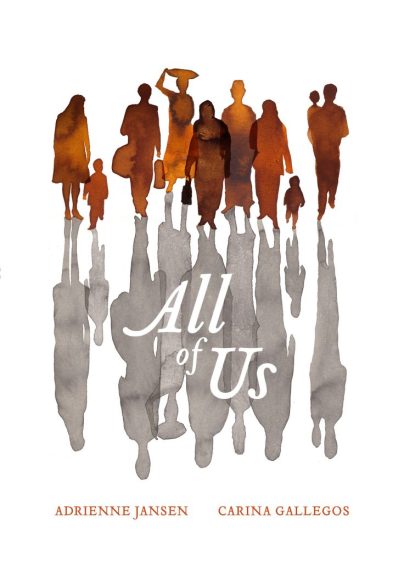
Adrienne Jansen reads ‘Bread’ from All of Us, poems which tell small stories of migration, co-written with carina gallegos. Published by Landing Press, 2018, and longlisted for the Okham NZ Book Awards 2019. Adrienne is a Wellington writer who writes poetry as well as fiction and non-fiction. She’s also involved with Landing Press, which publishes poetry that many people can enjoy.
my mama didn’t prepare me for this, but her illness did
a forced pause for the heartburn of a worlds over consumption
isolation, a foreign concept for villages of homes
with more bellies than the home-belly can house
but indeed the sky has stopped bleeding, is now naked and breathing
standing outside under nights blanket I try to sink mybreath in tune with it
the mouths of the monsters to our own making are now unveiled, are you listening?
my heart is in my mouth
baited
&
breathing
Grace Iwashita-Taylor
Grace Iwashita-Taylor, breathing bloodlines of Samoa, England and Japan. An artist of upu/words led her to the world of performing arts. Dedicated to carving, elevating and holding spaces for storytellers of Te Moana nui a Kiwa. Recipient of the CNZ Emerging Pacific Artist 2014 and the Auckland Mayoral Writers Grant 2016. Highlights include holding the visiting international writer in residence at the University of Hawaii 2018, Co-Founder of the first youth poetry slam in Aoteroa, Rising Voices (2011 – 2016) and the South Auckland Poets Collective and published collections Afakasi Speaks (2013) & Full Broken Bloom (2017) with ala press. Writer of MY OWN DARLING commissioned by Auckland Theatre Company (2015, 2017, 2019) and Curator of UPU (Auckland Arts Festival 2020).
Cast your mind back to the first time you came this way,
the road windy, corrugated, dusty,
the surface mostly the colour of yellow clay, cuttings
stained with the leer of water seeping.
On the left the ever-ascending slopes,
the Old Man Range, white flecks
in blue gullies near the summit,
and your young old man wondering when
we’d ever get to Alexandra, your mum complaining
about ‘the blessed dust’, both of them
cursing the ‘wash-board surface’ and you thinking
about the number of times she told your father
that ‘it didn’t matter’ when it clearly did. And that
was the way it always was with them,
it is with you, it is, period. Until, you might say,
something happens that’s never happened before.
Like love came back and sent hate packing
never to return, and peace of mind arrived
like a dove from afar, decided to stay, and you
no longer dreamed of what might have been.
Brian Turner
Brian Turner was born in Dunedin in 1944. His debut collection Ladders of Rain (1978) won the Commonwealth Poetry Prize. He has published a number of collections including Just This which won the NZ Post Book Award for Poetry in 2010. He has received the Prime Minister’s Award for Poetry (2009) and was NZ Poet Laureate (2003-5). He lives in Central Otago.
In April 2019 Victoria University Press published Brian’s Selected Poems, a hardback treasury of poetry that gains life from southern skies and soil, and so much more. When I am longing to retreat to the beauty of the south, I find refuge in one of Brian’s poems. The economy on the line, the exquisite images, the braided rhythms. Read a poem and your feet are in the current of a gleaming river, your eyes fixed on a purple gold horizon line. His poetry presents his beloved home in shifting lights, but the range of his work offers so much more.
Brian became an Officer of the New Zealand Order of Merit for services to poetry and literature in the 2020 Queen’s Birthday Honours. He was to be the honoured writer at the Auckland Writers Festival year – he would have been on stage with John Campbell so am very sad to miss this event.

 NZ Poetry Shelf