Category Archives: NZ poetry

NZ Poet Laureate Vincent O’Sullivan sings the praises of Rhian Gallagher

poetlaureate-rhiangallagher

Over the past two years, Vincent O’Sullivan, current New Zealand Poet Laureate, has posted on the Laureate blog the work of poets he admires enormously. This has been a great way to dip and delve into New Zealand poetry. Rhian won the NZ Post Book Award for Poetry in 2011 with her debut collection (I was one of the judges) in year that was particularly strong in poetry. Fingers crossed these terrific new poems signal a new collection in the pipeline.


He writes:

When Rhian Gallagher returned from almost two decades out of the country, and won the NZ Post Award in 2011, it seemed to me that there was a perceptible addition to what went on in our poetry. Here was a freshly attentive linguistic edge, a direct sensual intensity, a focus and gutsiness in writing of memory and regret, that seemed just that bit different from what any other writer here was doing. One reviewer called her poems ‘assiduously polished’, another picked up on ‘the visceral strength of her language’. What I admired then I find there again to admire in these unpublished poems. I’m glad my almost last laureate blog becomes the forum to display them.

– Vincent O’Sullivan

You can see the selected poems here.


Screen shot 2015-05-23 at 10.50.09 AM

Winner announced at AWF- Sarah Broom Poetry Prize 2015


 Diana Bridge

Wellington poet Diana Bridge was announced as the winner of the Sarah Broom Poetry Prize at the Auckland Writers Festival on Sunday 17 May.

Bridge has published five collections of poems, the latest of which, Aloe & other poems, came out in 2009. She was awarded the Lauris Edmond Memorial Award in 2010, for her distinguished contribution to New Zealand poetry, and her essay, “An attachment to China” won the 2014 Landfall essay competition.


The award-winning Irish poet Vona Groarke was guest judge for the prize in 2015. She describes Bridge’s poems as “colourful and playful, but also careful, thoughtful and wise.”  “There is a kind of fierce beauty to this work, alongside its rigorous intellect and formal grace.” Bridge accepted the $12,000 award at the Sarah Broom Poetry Prize event.


“I am overwhelmed and proud to be the recipient of an award set up to honour the work of Sarah Broom”, she says.

“I like to think that a tiny particle of her courage served to stiffen my spine the day I chose the poems I sent off. For I picked poems not in the hope that they might just work in a New Zealand context, or in what I imagined might be the context of the competition. I chose the poems that mattered most to me.”

“So – in went the story of Arjuna, from the Hindu text, the Baghavad Gita; in went a poem that was a response to the whole – prolific – output of the formidable professor of poetry at Oxford, Geoffrey Hill; in went a poem called ‘The Henrys’ that tackles all those terrible medieval and Tudor executions we have been subjected to in print and on the screen in recent years.”

“I am excited that we are ready for poems that spring from anywhere on the globe.”

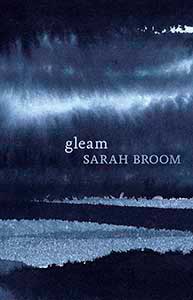
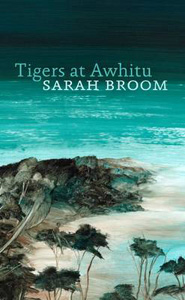
The prize, now in its second year, was established to celebrate the life and work of Sarah Broom (1972-2013), author of Tigers at Awhitu and Gleam.


Vienna-based Alice Miller and Wellington’s Ashleigh Young were also shortlisted.


Diana Bridge
Bridge, who has a Ph.D. in Chinese poetry, has worked on the China-based poems of Robin Hyde and published an essay, “O to be a dragon”, and a Translation Paper, “An Unexpected Legacy: Xie Tiao’s poems on things”.  She is at present working on the translation of a selection of classical Chinese poems.

Vona Groarke writes: “Whether it is the violence of medieval history, the engagement with nature, or a re-imagining of Ovid that is the subject, Diana Bridge’s poetry has authority and elegance. Technically sophisticated, this work is complex but never obscure; lyrically charged but never sentimental. It is unflinching in its observational commitment, but also enjoys its ability to fashion unusual and arresting imagery. There is a kind of fierce beauty to this work, alongside its rigorous intellect and formal grace. In a description that rings true of much of her work, her poem ‘Prospero’s Stones’ notes, ‘driven phrases that lap /around each other’: this is a poetry that is linguistically alert, but that also remembers to ply sound and meaning into the kind of poetic weave that is colourful and playful, but also careful, thoughtful and wise.”


#AWF 2015 A Letter to Poetry Shelf: Laurence Fearnley on being a Festival Chair

This is a terrific letter — open, honest, generous, thoughtful and it is the mark of the kind of writer Laurence is, the kind of woman she is. I was at her session, and yes, I felt uncomfortable at the point she got heckled. For the audience, for the other panelists and for Laurence herself. To be honest, I was sitting in the front row, and because I could almost reach out and touch the speakers, at times I almost started joining in! Truely, I had to stop myself and say, no I am NOT on this panel! That is a measure of the vitality of the conversation. Yes, there might be ways to improve as chair (I always feel this no matter what I do!) but this session sparked all kinds of thoughts in my head. All credit to the chair. I was also utterly impressed with Laurence’s level of engagement with the work. When someone takes time out to read your books and to think about your books it is incredibly moving (not all chairs do this!).

I think there are many ways to be a chair. We are all different as this glorious festival demonstrated. You had the nerves and infectious enthusiasm, that utter passion for poetry from John Campbell, and the ensuing poetry conversation with Carol Ann Duffy. A special occasion indeed. You had the measured way of Jim Mora that welcomed the general reader as much as the writer when he spoke with Tim Winton. Equally special. You had the sparkling reach of Noelle McCarthy in conversation with Helen Macdonald. Gold! All different, all producing different kinds of vital conversations. These are all professional talkers so does it make a difference when the chair is a writer?

I like the fact Laurence asks for help here. Perhaps the festivals could build a short list of experienced chairs willing to briefly mentor (answer the questions of) fledgling chairs. In a reply to my festival post Laurence poses some of the questions she might ask.

What about the heckler? I agree with the points below wholeheartedly,  but I have been guilty of this to the point I ended up on the front page of the Sunday Star Times and was hounded by reporters. At the now infamous session that Kim Hill chaired where she was rude to the international panelists, and talked at length without allowing them to speak, I yelled at her from the back “We have come here to hear three fabulous writers speak, not three fabulous writers under attack.’  Etched in brain. The audience stood and clapped in unison. I felt like I was going to faint. You had to be in the room to understand what happened. Perhaps I am responsible for this new species of festival hecklers. I am the hugest fan of Kim’s radio show, her interviews are the best but I felt a line was being crossed. I guess Kim has never forgiven me. I was rude. Alice Sebold hugged me. There is always a price when you speak out publicly, even as a heckler.

It all comes back to that word that Eleanor Catton floats: kindness. We need kindness. We need critical debate. But we don’t need to knock the stuffing out of people. Read the article  I posted before this one on reviewing books.

If I could, I would reach and give Laurence a hug. Thanks heavens someone did. I admire your courage enormously.

Paula Green


Hi Paula

You raised the issue of chairing in your blog and I’d like to reply. At the weekend I chaired a session ‘Art of the Novel’. Despite having been a writer on upwards of 50 panels, it was my first time as a chair for a group of novelists and the combination of my inexperience, nerves, and over-enthusiasm (and probably over-thinking) proved to be a a disaster. Twenty minutes into the session an audience member started heckling me. I couldn’t hear what he was saying but it was soon communicated that I was talking too much and interrupting.

As the Auckland festival becomes larger I can see problems concerning chairing increasing. Audience members clearly have little tolerance for poor chairs so dissatisfaction will increase.

There are some fantastic, skilled chairs out there (Fiona Farrell, Paula Green, Kate de Goldi, Jolisa Gracewood, Emily Perkins to name a few I have had the pleasure of meeting) and I was wondering if there might be value in including a back-stage, 40 minute chairing session at the start or end of each festival day for people like me who have not chaired a panel, or for people who feel a little rusty. I know we are sent notes on chairing (which I re-read, believe me) but it would have been fantastic for my nerves if I had been able to ask an experienced chair a couple of questions concerning problems I had. For example: reading the panelists works raised some complex ideas that I wished to discuss. How could I have communicated those questions, maintaining the complexity of the idea without the question becoming confused, and needing additional clarification or follow-up questions that interrupted the writer? I am sure, that with your experience, you would have ideas on how to tackle those problems.

So, would any of you be prepared to offer help in this way?

I don’t think heckling is the answer to shaking up a poor session. I think it creates a flee or fight response in the chair, makes the audience apprehensive (is it a one-off heckle, is the audience member nuts and will continue heckling, what impression is this making on the panelists), and the panelists uncomfortable (because they are usually nice, sympathetic people).

After my panel – when I had already got the message – a woman came up to me, grabbed my arm and snapped, “learn to button your lips.” It was a shit remark, coming at the end of a bad session, and surplus to requirements. Thank God for the kindness of Stephanie Johnson, Jill Rawnsley and Charlotte Henry.

Laurence Fearnley


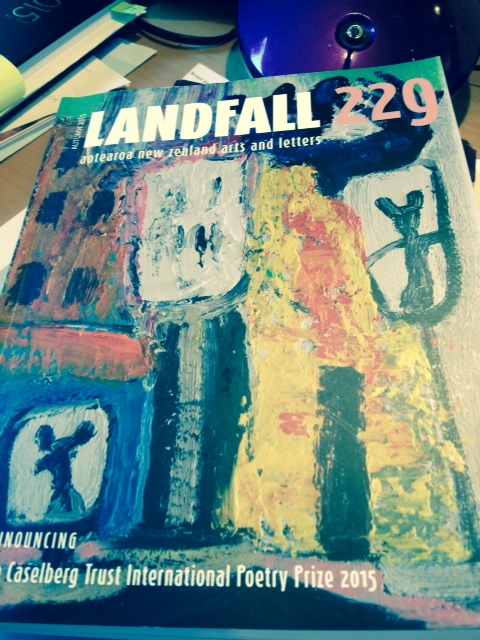
Ten things to love about Landfall 229

photo


Shortly after Sport arrives in my box, I get a bright new issue of Landfall. My little list below maps my ‘loves’ so far — like little ‘like’ ‘share’ ‘favourite’ or ‘retweet’ buttons. Editors might compile a journal with an arc of contours (aural, thematic, emotional pitch, genre, experimentation, quietness and so on) as I have always done with an anthology so you move through shifting readerly experiences from start to finish. However, I never read a journal like this.  It’s dip and delve.

1. Straight to the review section to books I have missed, and books I have reviewed. Ha! I Have missed (all meanings intended) reading Ian Wedde’s The Grass Catcher: A digression about home (Victoria University Press). Martin Edmond’s scintillating review meditates on the implications of writing the past alongside his critique of Ian’s illuminations of his own. ‘Home’ was a key notion that came under scrutiny within my doctoral thesis and within the context of Italian women writing novels in the twentieth century. It still fascinates me. This review has sent me scuttling to buy the book. In particular: ‘This is not one of those writer’s memoirs that says: here is how I became the resplendent creature I am today. It is too multi-faceted, too in love with the world, you might say, to serve such a purpose.’

2. Rata Gordon’s poem  ‘Tinkering’ is like an electric train on electric tracks. You get to the end and you want to travel that route again. Wow!

3. Discovering Michael Harlow picked  Sue Wootton’s poem, ‘Luthier,’ as the winning entry in The Caselberg Trust International Poetry Prize (2015). This poem is sumptuous in detail and that detail evokes mood, music, character, place in a transcendental kind of way. I would love to hear this poem read aloud to hear the poet lift and connect and pause, the hit of certain words on the line (flitch, slink, Sitka, bedrock). Sue demonstrates the way a poem can take a small moment/thought/action/thing and then open out intimately for the reader. A word that comes to mind and that is so overused when speaking poetry is luminous. But this poem is utterly and breathtakingly luminous.

4. Discovering Christina Conrad still writes poems.

5. Short poems can be very very good. So much happens in the white space that holds them This is the case with Louise Wallace’s ‘Mirage/Arizona.’

6. Tina Makeriti’s essay, ‘This Compulsion in Us.’ Strikes a chord because I am fascinated by museums too; enthralled by the things that stick to the objects that only you can see or hear or feel. Loved Tina’s exploration of a museum’s paradox, in that it preserves treasures yet ‘also captures and immobilises things that make sense only in motion, that should breathe and transform.’

7. Runner-up in The Caselberg Trust International Poetry Prize (2015), the opening lines in Jessica le Bas’s ‘Four Photographs from a Window’ : ‘The first is a shot in the dark/ buttoned up and black suited’

8. An Elizabeth Smither short story that underlines what an exquisite hand she has when it comes to fiction (‘The Trees’).

9. The way Sue Reidy’s poem, ‘The primitive,’ became etched on my skin.

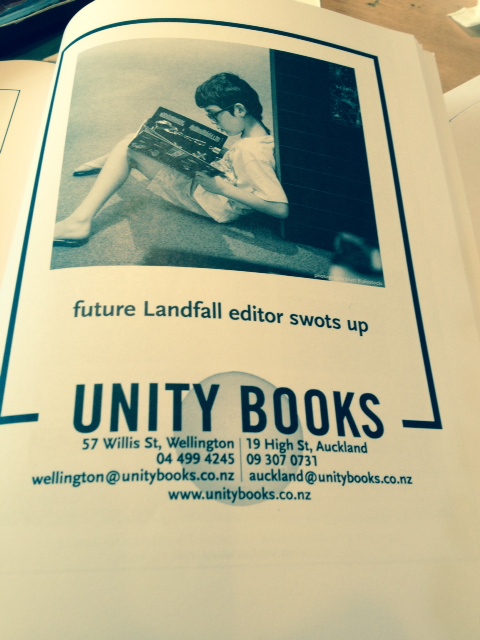
10. Lots more delights but I have to mention the Unity-Books, standout ad. A child reading a book, thank you!

photo


On reading Sport 43

Sometimes a literary journal is just the ticket for rainy-day blues, diversion, or the need to put a finger on a literary pulse. Ha! The notion of a literary pulse is where debate ensues. Each finger will be sensitive to different nuances, different implications.  I strongly believe that national anthologies that claim to represent a wide group ( New Zealand, for example) must be challenged if gender, ethnicity, age or geographic-location biases fuel significant blind spots. For decades, women were the blind spot in anthologies and journals, and now, at times it seems there is token representation of  work by Māori, Pasifika and Asian authors. Literary journals, however, are often the bloodline of a place, a niche, a literary disposition, and nearly always reveal the predilections of the editor. Sport comes out of Wellington, and it is to a great degree of Wellington (not in subject matter, but in terms of authors selected). It is a celebration of the writing by both established and emerging writers that have some connection with the city, often through Victoria University or its Press.  I have no problem with this.  I most definitely have no problem with this when the work included catches my attention and sends me in directions both familiar and unfamiliar.

The latest issue worked a treat for my rainy-day blues.

Seven essays are sprinkled through the selection of poetry and fiction, and if this is a new feature, it is a feature I applaud in this climate of idea-sharing in creative and stimulating forms. Long may it continue.

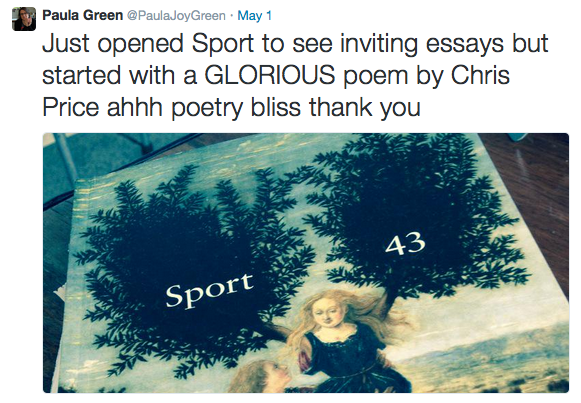
When I first picked up the book, I went straight to Chris Price (out of longing for a new collection perhaps) and immediately did a tweet review. Tucked away at the back of the book, it felt like the best had been saved for last with the playful, audacious flick and flash of words that catch your ear and send you flying to a nursery rhyme or Murphy’s Law or cheeky wit or the subtle twist and let’s-be-serious of the last word, ‘unspoken.’

Screen shot 2015-05-12 at 10.14.03 AM

This time I went to an unfamiliar name first, ‘Ruth Upperton,’ and what a discovery. Think I must have yearning for the comfort and absolute pleasure of poetic musicality (why I like the poems of Michele Leggott and Bill Manhire so much). Ruth has appeared in other journals, has just finished a law degree and lives in Palmerston North. Her five poems are different, the one from the other, but are linked by gorgeous rhyming (off, aslant, sliding), infectious repetitions, aural chords, sumptuous words. There is poetry out of sentences and there is poetry out of curiosity. You shift between comfort and strangeness.


from ‘The lonely crow’

Nothing sadder than a lonely river.

Nothing darker than a single crow.

Shiver at the strong’s surrender.

Play a tune on your June piano.


James Brown’s terrific poem, ‘Mercy,’ made me hungry for a new James Brown collection.

Anna Jackson’s three cooking-show poems suggest she is just getting better and better ( I am working my way through Catallus so I can review her new collection soon). I love the way the ingredients (excuse the pun) in these poems shift and flicker from one poem to the next, and in their new baking dishes taste a little different. The sort of poems that evoke a steady engagement at the level of sound and narrative.

Sarah Jane Barnett’s sequence of poems, Addis Ababa,’ caught me by surprise. They take me to an elsewhere, the elsewhere of  displacement, of otherness, of immigrants. The poems step up from everything Sarah has previously written, and then take another step into risk, empathy, inquiry, experience. What a combination.


Rachel Bush’s ‘Long and short,’ is a poem that moved me with its exquisite detail and revelation, a family story (true or false) that catches in the throat. The poetic glue: the baked bread.


So many things accumulate. They weigh us

off balance. We struggle to stay upright,

we lurch and are precarious. Our feet are flat

and sudden. It was easier when we had

a mum and dad. Easily we could blame them

when we were less than we desired.


Still most essays and fiction to read, but started here: Damien Wilkinson’s lecture/essay navigates a subset of the ‘ought’ and ‘ought not’ of narrative: the way it ought/ ought not represent some kind of personal change (character based). Fascinating following the thread of argument. Is this a requisite ingredient in poetry? That poems ought to navigate some kind of change? I raise this because, and I am shifting tack a little here, I am fond of poems that exhibit some kind of movement (and movement may be zen-like and hold change within its sameness and vice-versa). Poetic movement need not be on a grand, spectacular scale. It might be miniature shivers in the poem, sweet little movements that you catch out of the corner of your eye, or a flicker in your ear, or a faint tremble of your heart, or the tug of an idea that is itching to confound, challenge and pull you elsewhere. That is what I felt when I read, ‘She cannot work,’ Ashleigh Young’s foray into fiction. It is what I felt reading this issue of Sport, a catalogue of movements that displaced my state of fatigue.


Sport: miniature shivers in the writing, sweet little movements that you catch out of the corner of your eye, or a flicker in your ear, or a faint tremble of your heart, or the tug of an idea that is itching to confound, challenge and pull you elsewhere.


Poetry Live’s 35th Birthday Celebration

Tuesday 5th May 8pm, Thirsty Dog, Karangahape Road, Auckland

The Poetry Live team welcomes you to a special event: our 35th birthday. All through the month of May we will be holding special readings celebrating Poetry Live and this important milestone.

To kick things off on Tuesday 5th May we will have a mihi from MC Rachael; a short speech about Poetry Live from Judith McNeil; music by Otis Mace; poetry readings by former Poetry Live MCs Miriam Barr, Piet Nieuwland, and Christian Jensen; and a Poetry Live-themed open mic.

Guest musician: Otis Mace
Otis Mace is a Auckland based singer/songwriter/musician who performs crafty, irreverent, comic takes on life in Aotearoa. Love ballads, pop noir and surreal protest songs tangential to most mainstream music. A long-time supporter of the Poetry Live nights and wholehearted ranter ,reader and raconteur, come and see his seventh show as guest artist! Vivid stories introduce provocative and punchy pop gems. He has toured extensively and opened for diverse acts: Billy Bragg, The Violent Femmes, Screaming Blue Messiahs, D.O.A. Albums are on Powertool and Jayrem and Ode, and now OMM (Otis Mace Music).

Guest poets:

Miriam Barr
Miriam Barr first came to Poetry Live in 2001 as a 19 year-old who had never read her poems to anyone but a few friends and family members. She is now the current national coordinator of NZ’s National Poetry Day and her book Bullet Hole Riddle was published by Steele Roberts last year. Poetry Live has been her home away from home for over a decade. One night at Poetry Live in 2005 she met her husband, poet Daniel Larsen, and poet Shane Hollands, a meeting that would lead to the creation of performance poetry group The Literatti. For six years she served as an MC and saw Poetry Live through its last year at Grand Central in Ponsonby, the move to the Classic Studio on Queen St, a short stint at Te Karanga and the first years at the Thirsty Dog.

Piet Nieuwland
Piet Nieuwland started reading poetry in Kaikohe and made his first appearance at Poetry Live in 1984. He soon took on the role as MC and was included in the Globe Tapes. Since then he has read poetry in a wide variety of gatherings, meetings, hui, cafes, restaurants and bars throughout New Zealand and beyond, including Pecha kucha evenings. His poems have been published in Landfall, Live Lines, Mattoid, Takahe, Snafu, Take Flight, Tongue In Your Ear, Poetry NZ and in online journals including the Blue Note Review. He is currently involved in Poets Exposed readings in Whangarei and has just co-edited a chapbook compilation of Northland poetry titled Fast Fibres Poetry. Fast Fibres 2 is in preparation.

Christian Jensen
Christian is a former creative director of The Literatti, and was one of the organisers of the Metonymy Project, a collaborative project that sends a poet and a visual artist on a 6-week blind date, culminating in an exhibition. His work has been published in such places as Snorkel, The Hay(na)ku Anthology, Otoliths and the De-Formed Paper. His book, Zin Uru (Soapbox Press) was released in 2008. Christian was an MC at Poetry Live from 2006-2012.

Open Mic: This week we have a themed open mic. We welcome you to read poetry about Poetry Live. (General open mic will also run.) 5 min max as usual.

Koha entry

MC: Kiri

Finalists for The Sarah Broom Poetry Prize 2015


    cp-tigers-at-awhitu cp-gleam

The judges are delighted to announce the three finalists for the Sarah Broom Poetry Prize 2015.


The prize attracted almost 200 entries from across the spectrum of New Zealand poets, from the new and emerging to the established and the iconic. The shortlist was chosen by the 2015 guest judge, Irish poet Vona Groarke.


The finalists are:

Diana Bridge: a Wellington-based poet, the author of five collections, including aloe & other poems (2009).

Alice Miller: a New Zealand poet based in Vienna, whose first book The Limits was published in 2012.

Ashleigh Young: a Wellington-based editor, essayist, and poet, whose first collection of poetry, Magnificent Moon, was published in 2012.


“The Sarah Broom Poetry Prize is about celebrating poetry,” says judging panel member Sarah Ross. “The diversity of the entries received, and the tonal and formal complexity of the best work, its deftness, its moments of insight, poignancy, and humour – all of this has made the judging process enormously rewarding. So too has working with the generous and perceptive Vona Groarke.”


The Sarah Broom Poetry Prize aims to make a substantial ongoing contribution to supporting poetry in New Zealand. The value of the prize is $12,000 in 2015.


The three finalists will read in a free session at the Auckland Writers Festival on Sunday 17 May from 1.30-2.30pm in the Upper NZI Room, Aotea Centre, Auckland. Vona Groarke will announce the winner at this event

Queries should be emailed to: enquiries@sarahbroom.co.nz

For photos or other details of finalists please email sarahceross@gmail.com

For more information about Sarah Broom or the Poetry Prize visit www.sarahbroom.co.nz


FINALIST DETAILS:

Diana Bridge

Photo credit: Simon Woolf

Diana Bridge has published five collections of poems, the latest of which, aloe & other poems, came out in 2009. She was awarded the Lauris Edmond Memorial Award in 2010, for her distinguished contribution to New Zealand poetry, and her essay, ‘An attachment to China’ won the 2014 Landfall essay competition. Diana is based in Wellington.

Vona Groarke writes: “Whether it is the violence of medieval history, the engagement with nature, or a re-imagining of Ovid that is the subject, Diana Bridge’s poetry has authority and elegance. Technically sophisticated, this work is complex but never obscure; lyrically charged but never sentimental. It is unflinching in its observational commitment, but also enjoys its ability to fashion unusual and arresting imagery. There is a kind of fierce beauty to this work, alongside its rigorous intellect and formal grace. In a description that rings true of much of her work, her poem ‘Prospero’s Stones’ notes, ‘driven phrases that lap /around each other’: this is a poetry that is linguistically alert, but that also remembers to ply sound and meaning into the kind of poetic weave that is colourful and playful, but also careful, thoughtful and wise.”


Alice Miller

Photo Credit: Dylan Whiting

Alice Miller’s first book The Limits was published by Auckland University Press and Shearsman in 2014. She is a graduate of the International Institute of Modern Letters and the Iowa Writers’ Workshop. Last year she was a Grimshaw Sargeson Fellow, a Visiting Writer at Massey University, and a resident at the Michael King Centre. She is based in Vienna.

Vona Groarke writes: “The ‘I’ and ‘We’ of Alice Miller’s poetry are rarely familiar and never predictable. The same is true of her poems, which are fully-charged and teem with surprises of imagery, narrative and language. Nothing moves in a straight line in this work: instead, the poems tend to turn on small pockets of beguiling mystery. Characters emerge out of an apparent nowhere and do the darndest things before they slip off again, as if in secret, out of the sightline of the poem. It all makes for an intense and intensely involving experience: the lines are so well managed and the narrative so deftly and subtly manoeuvred as to leave one ruffled, but pleasantly so. What might seem like aphorism turns out to be a strange and complicated proposition, as in ‘Saving’ where, ‘some of the moments we cling to most / are the futures we never let happen’. This is work that turns on a sixpence, and that manages each of its fascinating turns with assurance and aplomb.”


Ashleigh Young

Ashleigh Young is an editor, essayist, and poet. Her first collection of poetry, Magnificent Moon, was published by Victoria University Press in 2012, and recent work appears in Sport, The Griffith Review, Five Dials, and Tell You What. She co-teaches a workshop in science writing at Victoria University with science writer Rebecca Priestley, and she blogs, mostly about cycling, at eyelashroaming.com. Ashleigh is based in Wellington.


Vona Groarke writes: “Ashleigh Young’s poems defy their tight spaces to offer expansive and resonant narratives. Hers is a poetic world that derives great charge and vigour from proper nouns – named people and places -and specific, beautifully delineated detail that, as in flash fiction, sparks an entire world to life. People talk to each other in these poems, and whole lives get encapsulated in the kind of language that is as exact as it is vivid, as careful as it concise. Take for instance, ‘Electrolarynx’ with its arresting line: ‘Then our silence made a condemned building of us all’, or the opening of ‘Become road’: ‘When the car stops we are beginning already to become road’. These are poems that begin with the familiar, and then carefully walk it to the edges of perception, where it catches the light in arresting, singular and finely memorable ways.”


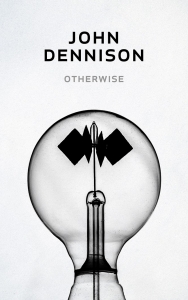
John Dennison’s Otherwise — a literal evocation and a metaphorical ripeness


1423778022214   1423778022214

Otherwise, John Dennison, Auckland University Press, 2015

John Dennison was born in Sydney, raised in Tawa, studied in Wellington and St Andrews, Scotland, and is currently a university chaplain at Victoria University. His debut poetry collection, Otherwise, carries glowing endorsements from Vincent O’Sullivan and Gregory O’Brien on the back. It is a co-publication with Carcanet Press in the UK. He has also authored Seamus Heaney and the Adequacy of Poetry (forthcoming from Oxford University Press in 2015).

This debut collection is a collection to slip in a pocket and savour on a daily basis.

Otherwise is imbued in love. Take ‘Touch and Go’ for example. You see ‘love’ in a moment caught within the poem’s frame; a blackbird, the game played, relations, life, dusk. And then the game becomes other. Like a tantalising elsewhere, so that just as things hide and seek, the world slips and slides and settles, in view out of view, a world hiding and a world revealed, open closed. Throughout  the collection, there is a consistent sway between a need to be literal, to celebrate this thing and that moment, and a need to lay the trope of elsewhere. A literal evocation and a metaphorical ripeness. And that sway gives the poems a delicious, almost metaphysical shimmer. A shiver almost. Like the sight is steam rising after rain upon the summer path.

There is also a love of language that is contagious. You want to keep reading and you want to start writing. Delicious phrasing abounds: ‘hot glob of dust’ ‘My lighthouse, my love, the rocks are night all around.’ Musicality is scored deftly upon each line: ‘small branches fret the roofing iron.’ Individual word choices refresh and surprise, particularly in the case of verbs and nouns: ‘this acupuncture of light’ ‘You wake as you home across London’s/ threshold.’ There are the repetitions, a word or phrase that slips to reappear a few lines later because ‘some things bear repeating.’ Comfort for the ear and then a shift in meaning.


Many poems stand out. For example, John’s reprisal of Allen Curnow’s ‘Lone Kauri Road.’ This carries the gold of Allen’s poem in its veins and then it moves elsewhere. One of the best reprisal’s I have read in ages. Here is how it ends:


(…)  Forgive my making light of

the glass half-empty and you weighing up the dregs;


but I will get up like a love-cast father

awakening to children’s voices, the night-

time true underfoot, who hears their laughter


and finds, at the unclosed door, the seam of light.


You will fall upon spiritual traces, stepping stones if you like, along an underlay-stream: ‘a congregation welling up’ (geese), ‘this sometime church’ (a swimming pool), ‘the joining of hands,’ ‘when by grace we vowed to enter marriage.’

The title of the collection signals ‘otherwise’ and it is there in the title poem: ‘We are so otherwise, and elsewhere lies our hope.’ This is the joy of the collection: the way the poem grounds you  in the marvellous detail of the here and now so you feel earthed, and then uplifts you to the transcendental possibilities of elsewhere. To a state of philosophical musing. Not all the poems held my attention, but unlike similar experiences with other books, I know it is a matter of returning at a different time to find that captivating entry point. This is a tremendous debut.


Auckland University Press page