Jordan Hamel is a Pōneke-based poet and performer. He was raised in Timaru on a diet of Catholicism and masculine emotional repression. He is the current New Zealand Poetry Slam champion and has words published or forthcoming in Takahē, Poetry NZ, Mimicry, Sweet Mammalian, Glass Poetry, Queen Mob’s Teahouse and elsewhere.
On Friday 6th September I was in Dunedin to celebrate Wild Honey with local poets. The occasion was moving in its connections and warmth, but made even more so by the sadness many felt at the death of much loved Dunedin poet, Elizabeth Brooke-Carr that afternoon.
Elizabeth Brooke-Carr was a poet and writer. She taught English in secondary schools for twenty years and has tutored creative writing evening classes. Her work includes The Soldier and the Poet, a collaborative piece with Clair Beynon. Her poems, and her short story ‘Jimmy the Needle’, have been published in the Otago Daily Times. Her articles on social justice and environmental issues have appeared on the web, in Touchstone, the National Methodist Newspaper, as an exemplar in NZ Secondary Schools Scholarship Examination, and in Connections a collection by Philip Garside Publishing. Her 2005 essay won the open section in the Dunedin City Council’s competition about the built environment. She was awarded an NZSA mentorship in 2007, and in 2009 was winner of the NZSA 75th anniversary National Competition. Elizabeth was the inaugural writer-in-residence, Down the Bay, at the Caselberg Trust cottage in 2010.
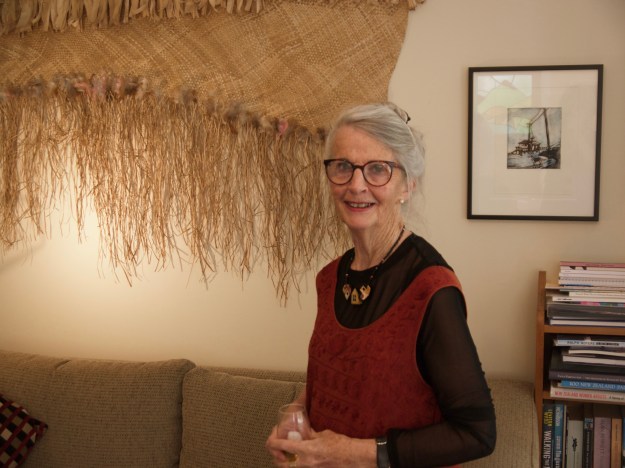
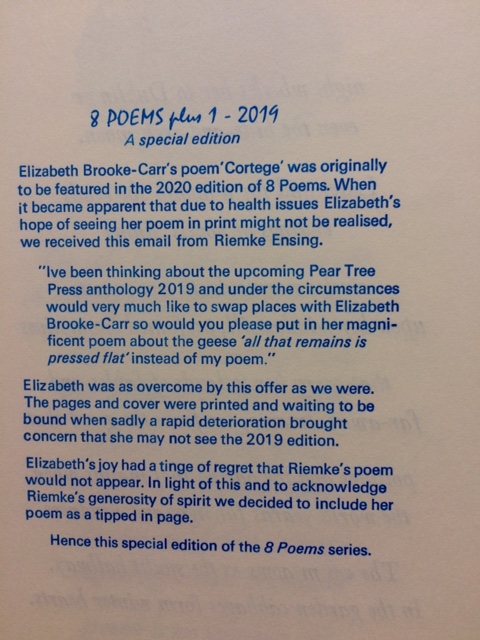
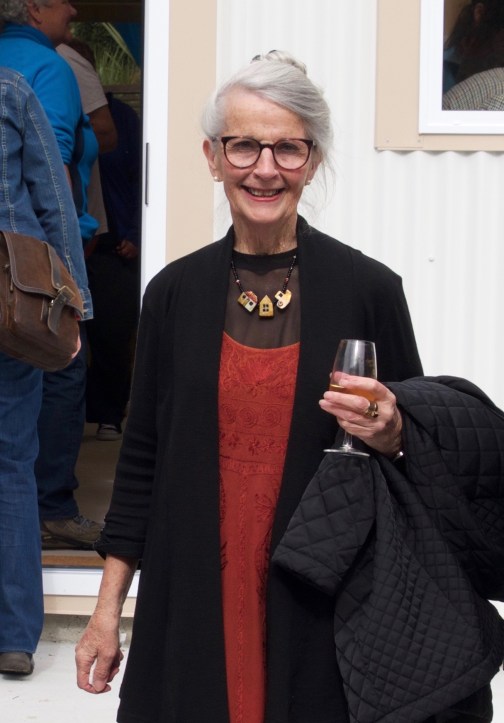
I have invited some Dunedin poets to pay tribute to Elizabeth. Jenny Powell shares the poem of Elizabeth’s that she read at the Wild Honey event. I have also included the introduction to the new 8 Poems plus one which became a wee letter-press-printed anthology of 9 poems in order to publish Elizabeth’s this year rather than next. The anthology was released in time for her to see it and depended upon an act of kindness from Riemke Ensing. Thanks to The Pear Tree Press I have also included Elizabeth’s poem.
I chose Elizabeth’s poem to read partly because it’s about a Clydesdale horse and partly because there are a series of coincidences attached to the poem.
Kay McKenzie Cooke and I, otherwise known as touring poets J & K Rolling, posed with Clydesdales for the photo we use on our posters. Elizabeth loved the photo. It reminded her of childhood days, and so she went on to write her poem.
J & K Rolling have a shared trait of getting lost. It’s not a great quality when you’re on tour. Last year, inland from Owaka, we were driving down a country road looking for the farmhouse where we were staying the night. After a while we came to an old dairy factory and Kay decided we weren’t on the right road, so we turned around and drove back. Coincidentally, directly across the road from the dairy factory was the setting for Elizabeth’s poem. It was the site of the farm where she lived as a child.
But I wasn’t prepared for the final coincidence.
Elizabeth died this afternoon.
Nobby and Joseph
He hauled the bulky leather collar from a peg
at the back of the high walled barn,
heaved it up in a crane-swing arc
to fasten around Nobby’s burnished shoulders,
a soft word or two blurted into his neck
with awkward country affection,
a rub of his jaw, a nudge, and down to the garden
they trudged, Joseph close behind
the old Clydesdale, silky leg feathers
flaring wide in a lumbering dance, through the gate
harnessed to a single-furrow plough
nosed firm into the earth.
Joseph held the reins lightly, the hand grips hard
turned the sod slice by slice,
like strips of blubber flensed from
the sides of a dark-fleshed whale, rolling them
over onto the back of the last neat row
until the whole field was an ocean
of green fringed waves. His turf is kept by another
now, who sits astride a ride-on mower,
smoke wafting, incense-blue,
from the exhaust-pipe thurible, rumbling deepthroated
down swathes of sombre lawn
flanked by granite headstones,
one, with Joseph’s name and a few shy words
of love, tethered in gold letters,
blinks in the sinking sun.
Elizabeth Brooke-Carr
Dunedin, New Zealand
Sue Wootton
I selected several of Elizabeth’s poems for the ODT when I was editing the poetry column, and also had the privilege of publishing a couple of pieces by her, recently, for Corpus. “All hitched up” is about receiving her first dose of chemotherapy and contains her poem “The Vein Whisperer”.
With kind permission from The Pear Tree Press, here is the ‘Introduction’ and Elizabeth’s poem; from 8 Poems plus 1 by New Zealand Poets 2019,designed by Tara McLeod (Auckland: The Pear Tree Press, 2019):
‘All that remains is pressed flat’ Elizabeth Brooke-Carr, 8 Poems plus 1:
Claire Beynon shares one of Elizabeth’s poems that recently came to light after quite a search. ‘I took it to our writing meeting yesterday and read it out to the group – it’s a poem that Paddy Richardson especially loved. She said it had stayed with her long after first being published in the ODT’s Monday Poem series (several years ago, when Diane Brown was editor).’
When bright red was eclipsed by silver shoon
You see your teacher perched on a spare desk
at the front of the classroom. A dusty blackboard
behind, frames her there, skirt tucked tight around
her calves. She stares across the top of your head,
draws a long, deep breath, Silver, she says, pausing
to open the book on her lap. She begins to read.
You are captivated by her bright red lipstick,
it goes right to the corners of her mouth.
You hear your mother say scarlet is for show-offs
and only clowns take lipstick out to the corners.
Your teacher knows none of this.
She is enchanted by Silver. Her lips, full and lucent,
send tiny stars wheeling off into the round,
as she aspirates each soft, silvered sound.
You forget bright red and what your mother said.
Everything is silver.
Your teacher is swaying a little, peering this way
and that as she reads. You know she’s walking
with the moon, and soon you catch up.
You’ve never heard of shoon, or casements,
but now you see them, glistening. You reach out,
touch silver fruit on silver trees, step around
the sleeping dog, look up to doves. Startle
when a mouse darts by. You’re moveless near the
edge of a silver stream when you become aware
your teacher has stopped reading. She has
closed the book, a far-away look in her eyes.
Ah, girls, she sighs, Walter de la Mare!
She speaks his name in a spangle of stars,
clasps him close to her chest as she swoons
and steps down to the floor. You’re still thinking
of the moon, leaving the sky to come and walk
with you at bright red noon, slowly, silently
to the end of your days, in her silver shoon.
Elizabeth Brooke-Carr
From Jane Woodham:
Listen to Elizabeth read an extract from her novel Greywacke
All that remains is pressed flat,
a strip of bare earth up on the hillside
and, between the leaves of a book
she was reading that morning, four stiff stalks
bearing sunrise petals. A softly coiled feather
brats the air when she turns the page.
from ‘All that remains is pressed flat’, 8 Poems plus 1
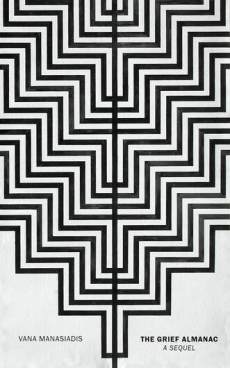
Launched in 1999, AUP New Poets first introduced readers to Anna Jackson, Sonja Yelich, Janis Freegard, Chris Tse and many other significant New Zealand voices. Relaunching this year under the editorship of Anna Jackson and with a bold new look, AUP New Poets5 includes substantial selections from the poetry of Carolyn DeCarlo, Sophie van Waardenberg and Rebecca Hawkes.
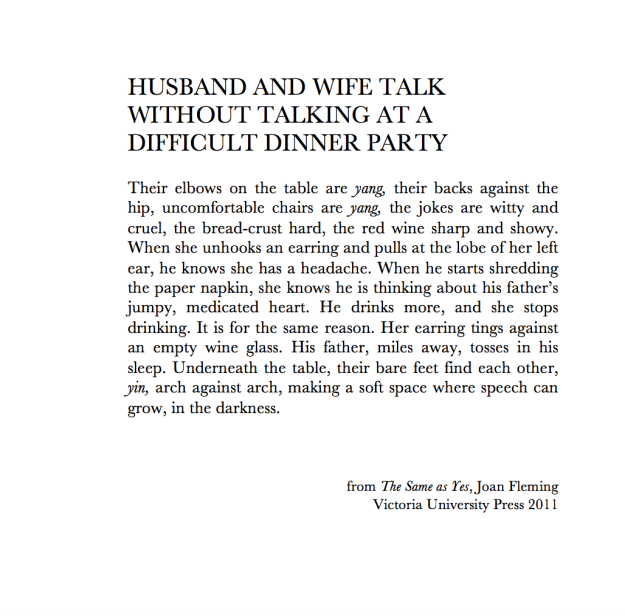
I first read Joan Fleming’s ‘Husband and Wife Talk Without Talking At A Difficult Dinner Party’ at university, when something about the simple domesticity yet the ‘intolerable solitude’ of love (‘Translations VI’, Failed Love Poems) struck me – at a time when I was just beginning to read tragic, suburban love stories by Raymond Carver. (I liked the line, ‘He drinks more and she stops drinking. It is for the same reason’ and I did not know why, until later I realised that it reminded me of the wife in ‘The Student’s Wife’, who wakes up in the middle of the night and calls her husband’s name, but he does not answer.)
Love is different in ‘Husband and Wife Talk Without Talking At A Difficult Dinner Party’, different because it is not marked by suffocating drabness, but sleepy attentiveness, knowing the patterns of someone else with the instinctiveness you know it’s going to rain when storm clouds appear. (Simone Weil: ‘Attentiveness is the rarest form of generosity.’) It is with this attentiveness that the poem breathes: there is the hard brittleness of a wine glass, the clattering of forks, underpinned by the softness of silent communion. A couple sits, one drinks and one doesn’t, and they suffer quietly, and maybe they’ll leave and go to bed, alone with their griefs and little traumas. Maybe they will talk without saying anything important at all.
Here, we have the external actions of people, yang, and the inarticulate feelings they have, yin. This heartbeat of yin and yang underpins the very heartbeat of the poem. Yang, the boundaries in self between you and me, yang, the face I present to the wider world: of husband shredding his napkin, of wife touching her earlobes. In this, I am reminded of my parents who interact with the formality of Chinese tradition. My parents do not say, ‘I love you’, but ask ‘have you eaten?’ Yet. They know I talk loudly when I’m tired and they know when I’m irritated and trying to disguise it with forced cheer; they would just never tell me they know. To the outsider, someone walking past the window, a plus one at the party, anyone that isn’t the husband or wife, maybe they would notice the shredded napkin, the unnecessary earlobe-touching, but they can only guess; they can observe but never decode. This is a poem of extended people-watching, in the sense that we too, are outsiders with the privilege of understanding a couple’s private state, if only fleetingly.
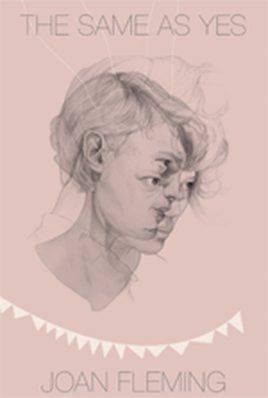
When we are lucky enough to know people that know us intimately, that know us well, they will know the difference between your laugh and your forced laugh, and this is where the duality of yin and yang can occur. Husband and wife are having a conversation without using their words at all. She says, I have a headache. He says, I’m worried about my father. The dinner party is Difficult because maintaining your yang is Difficult in the face of your worries, because expressing your yin is near impossible. I found the last line in the poem so devastating, not because it ends with silence, but something of the frail and incomplete yin, ‘a soft space where speech can grow’. This tender, fragile possibility of communion (in whatever form that takes) is part of the larger love letter I see in Joan Fleming’s The Same As Yes. It struck me then, as it strikes me now, how ordinary intimacy and its limits can feel to me more concrete, more sorts of tragic, than anything else.
Wen-Juenn Lee works in Melbourne, and writes when she can. She writes about Wellington, her family, and her feelings. Her work has appeared in Landfall, Southerly, and other publications.
Joan Fleming is the author of two collections of poetry, The Same as Yes and Failed Love Poems, both from Victoria University Press, and the chapbook Two Dreams in Which Things Are Taken (Duets). Her new collection Dirt is forthcoming with Cordite Books. She holds a PhD in ethnopoetics from Monash University, Melbourne, and is the New Zealand/Aotearoa Commissioning Editor for Cordite Poetry Review. She currently lives in Madrid, and in 2020 she will travel to Honduras for the Our Little Roses Poetry Teaching Fellowship.
Helen Heath won the 2019 Ockham New Zealand Book Awards with her poetry collection, Are Friends Electric? National Poetry Day sat down and talked to her about ‘that moment,’ the themes that recur in her work and why poetry is so hot in Aotearoa.
The law is, that those who love you
will not help you get better.
Yes, they will sit next to you in a car
and take you through space
both moving forward at exactly the same speed
showing your profiles to each other
which are ageing rather more cruelly
than the fronts of you.
They will do things like park their car on the footpath for you
leaving only a card on the dashboard as a plea for clemency
and they will do explaining for you
when people do not understand your language
because you appear absolutely fluent while in fact
you are somewhat on fire.
They might take you to the monastery
with its not very important frescoes of Jesus
faintly visible and let you look down into valleys
that literally never see the sun.
They hope you will find this soothing
but perhaps it will be terrifying, the train of marvels
with its gorges and viaducts
and the medieval villages it passes though
on its way to the coast.
Maybe better to take you to the wardrobe
the armoire, where all the sheets and towels are
and where there used to be stickers of the Incredible Hulk
which glowed in the dark.
Except we gave the wardrobe away
left it out on the street with a sign saying
FREE
and when we woke up
or when we looked around
it was gone.
Kate Camp
Kate Camp is a Wellington-born essayist and poet, with six collections of poetry published by Victoria University Press. She has also written essays and memoir. Unfamiliar Legends of the Stars won the NZSA Jessie Mackay Best First Book of Poetry Award (1999), and The Mirror of Simple Annihilated Souls won the New Zealand Post Book Award for Poetry (2011). Snow White’s Coffin was shortlisted for the award in 2013, and The internet of things was longlisted in 2018. She has received the Creative New Zealand Berlin Writer’s Residency (2011) and the Katherine Mansfield Menton Fellowship (2017). Her essay ‘I wet my pants’ was a finalist in the Landfall essay competition in 2018.
The poem was originally published in Plumwood Mountain: An Australian journal of ecopoetry and ecopoetics
Catherine Trundle is a writer, mother and anthropologist, based in Wellington. She writes flash fiction, poetry and ethnography, and experiments with unpicking the boundaries between academic and creative genres. Recent works have appeared in Landfall, Not Very Quiet, Plumwood Mountain and Flash Frontier.
Just back from a wonderful visit to Dunedin. We got to celebrate Wild Honey last night thanks to Massey University Press, Kay Mercer and Dunedin Libraries, and Bronwyn Wylie-Gibb and the University Book Shop. There was a great turn out of poetry fans, and a set of readings that prompted both laughter and tears. We even got to hear Fiona Farrell sing! The occasion felt even more precious because that afternoon local poet, Elizabeth Brooke-Carr, had passed away, and so many local poets were together. Jenny Powell read one of Elizabeth’s poems as a tribute.
Heartfelt thanks to the readers: Sue Wootton, Carolyn McCurdie, Fiona Farrell, Kay McKenzie Cooke, Diane Brown, Jenny Powell, Eliana Gray, Emer, Lyons and Emma Neale.
Wild Honey continues to place women’s poetry under a warm and receptive light. I was humbled by the joy, the warmth and the generosity in the room. I am humbled by the way it continues to be an open home.
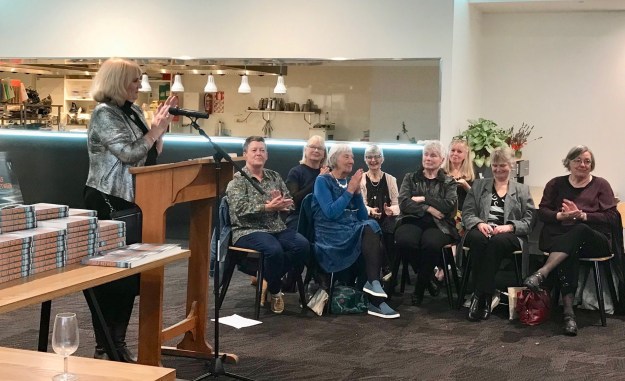
Emma Neale’s introduction was so good I want to share it with you – plus a few photos taken by Kay.
Wild Honey introduction
Tena kotou katoa
Ko Emma Neale toku ingoa ….
What a fabulous, upbeat reason for us all to be together tonight. It is very happily my role to introduce Paula Green to you all and talk a little about Wild Honey.
I noticed at around page 200 of Wild Honey that in my reading habits, I was inadvertently reflecting the structuring principle of the book. For those of you who haven’t looked into it yet — the book gathers small communities of women poets in separate rooms of a capacious imaginary house: so we move from the Foundation Stones of 19th-century authors Jesse Mackay and Blanche Baughan and of early 20th century writer Eileen Duggan, through to spaces such as the study, the music room, the hearth, the hammock and the garden, where Paula reflects on the thematic concerns, the psychological spaces, the poetic techniques, and also the lives of the writers she gathers there.
I realised last week that I’ve been carrying the book with me into every nook and cranny of my own house – brushing my teeth while reading it – burning dinner while cooking from it, or rather, by miming cooking while actually travelling deep into the passageways and chambers of the book itself. I didn’t twig to all this until I found myself nearly braining the family rabbit with it, as I tried to dish out pellets and straw to him in his outside hutch while Wild Honey was still tucked under one arm. Clearly this potentially book- and rabbit-wrecking approach is a mark of how compelling the prose is – capable of supplanting a cell-phone as the glued-to object to stare at. I suspect this won’t just be true of fellow poetry obsessives: the prose is pellucid, generous, and welcoming.
The book embraces myriad voices; it’s receptive to multiple styles, and it actively celebrates the writers it discusses. It doesn’t pit one writer against another, try to champion one above another, or upbraid writers for perceived political derelictions, but it listens attentively to what each writer has to say, and aims to capture and characterise the tone of their preoccupations. It’s a history of women’s poetry here in Aotearoa, yet one that is also a memoir of reading, as Paula laces the analysis with vivid personal responses and descriptions of how reading other women’s work has bolstered and boosted her — not only as a professional writer, herself interested in aesthetic questions, but as a person moving through time, dealing with love and loss, memory and projection, physical injury and philosophical problems, seized by the beauty of the natural world, shocked by social toxicity … it’s a vast and varied coastline of human experience.
I think it’s important to say that even as we encounter generations of writers here, learn of their preoccupations and savour the sensuous aspects of their expression, one of the delights of reading this book is finding Paula’s own poetic signature throughout. It travels with you like a piwakawaka flitting along at shoulder height on a hiking trail – so you can start to feel kind of blessed and graced yourself with the ability to communicate in the same free, light and spirited way … until you actually try to express all the things this book achieves.
Wild Honey is so embracing, so capacious, that what I would really like to do before starting the readings and our conversation, is to ask everyone here —but particularly the poets — to both congratulate and thank Paula for her diligence, her energy, her curiosity, her own creative gifts and above all tonight for her generosity. You can whoop, clap, dance, sing, stomp your feet – pull out a clarinet or a trombone if you have one — just make a bloody great non-library- like racket.






 NZ Poetry Shelf