Category Archives: NZ poems

Poetry Shelf connections: celebrating Landfall 238 with a review and audio gathering

otago719379 otago719379 otago719379

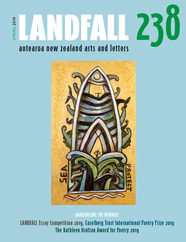
Landfall 238 edited by Emma Neale  (Otago University Press)


I am finding literary journals very satisfying at the moment. They suit my need to read in short bursts throughout the day. Landfall 238 came out last year but the gold nuggets keep me returning. Is our reading behaviour changing during lockdown? I read incredibly slowly. I read the same poem more than once over the course of a week.

Helen Llendorf’s magnificent ‘Johanna Tells Me to Make a Wish’ is a case in point. It is slow and contemplative, conversational and luminous with physical detail. She starts with chickens, she stays with chickens, she intrudes upon herself with long parentheses. It feels like a poem of now in that way slows right down to absorb what is close to home.


DSCN9923.JPG


Landfall 238 also includes results from the Kathleen Grattan Award for Poetry 2019, with judge’s report by Jenny Bornholdt; results and winning essays from the Landfall Essay Competition 2019, with judge’s report by Emma Neale; results from the Caselberg Trust International Poetry Prize 2019, with judge’s report by Dinah Hawken.

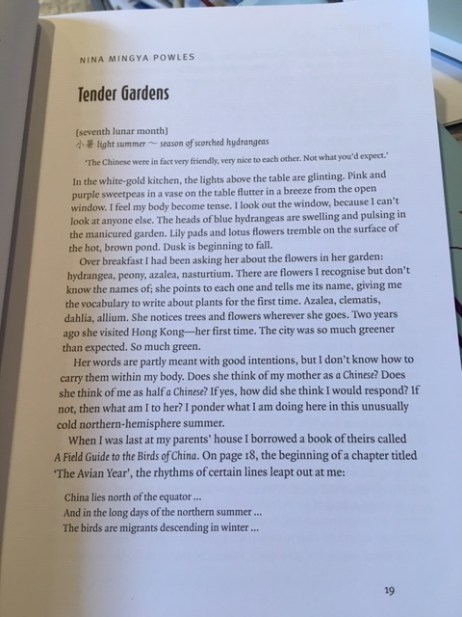
Tobias Buck and Nina Mingya Powles’s winning essays are terrific. Two essays that in different ways, both moving and exquisitely written, show distinctive ways of feeling at home in one’s skin and navigating prejudice. Both have strong personal themes at the core but both stretch wider into other fascinations. Would love to read all the placed essays!

 

IMG_5511.JPG


IMG_5510.JPG


I also want to applaud Landfall on its ongoing commitment to reviewing local books, both in the physical book and in Landfall Review Online. Review pages whether in print or on our screens seem like an increasingly endangered species. Landfall continues to invite an eclectic group of reviewers to review a diverse range of books.


IMG_5513.JPG


To celebrate this gold-nugget issue – I have invited a handful of poets to read one of their poems in the issue.

Make a cup of tea or a short black this morning, or pour a glass of wine this evening, and nestle into this sublime poetry gathering. I just love the contoured effects on me as I listen. I have got to hear poets I have loved for ages but also new voices that I am eager to hear and read more from.


Welcome to the Landfall 238 audio gathering!
 

2019-06-23 11.38.27 HDR.jpg

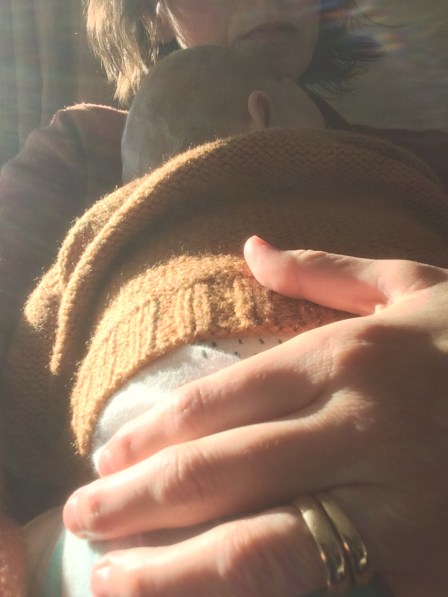
Louise Wallace


Louise Wallace reads ‘Tired Mothers’


Louise Wallace is the author of three collections of poetry published by Victoria University Press, most recently Bad Things. She is the founder and editor of Starling, and is looking forward to resuming a PhD in Creative Writing. Her days in lockdown are filled with visits to the park, bubbles, playdough, drawing, and reading the same handful of books over and over with her young son who she loves very much.


Cerys at faultline.jpg

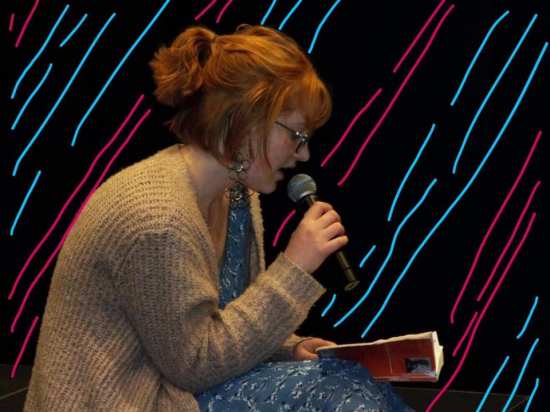
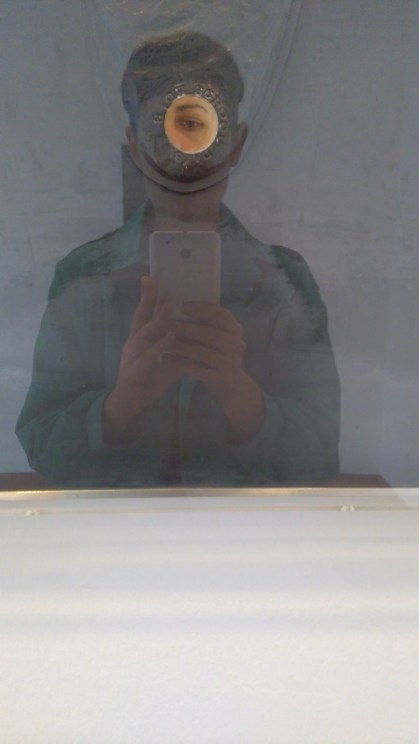
Cerys Fletcher


Cerys reads ‘Bus Lament’


Cerys Fletcher (she/her) is in her first year at Te Herenga Waka, splitting her time between Te Whanganui-a-Tara and her home city, Ōtautahi. When possible, she frequents open mics and handmakes poetry zines. She was a finalist in the 2018 National Schools Poetry Awards and the winner of the Environment Canterbury Poems on Buses competition in 2019. She has been published in Landfall and A Fine Line. She does NOT like men who hit on you while you’re making their coffee. She is online & probably wants to talk to you (instagram: @cerys_is_tired. email: cerysfabulousfletcher@gmail.com).


Me w Jasper Johns High School Days 1969.jpg


Rachel O’Neill


Rachel reads ‘The place of the travelling face’


Rachel O’Neill is a writer, filmmaker and artist based in Te Whanganui-a-Tara, Aotearoa. Their debut book One Human in Height (Hue & Cry Press) was published in 2013. They were awarded a 2018 SEED Grant (NZWG/NZFC) to develop a feature film and held a 2019 Emerging Writers Residency at the Michael King Writers Centre. Recent poems appear in Sport 49, Haunts by Salty and Food Court, and Ōrongohau | Best New Zealand Poems 2019.


P_Le_Baige-2.jpg


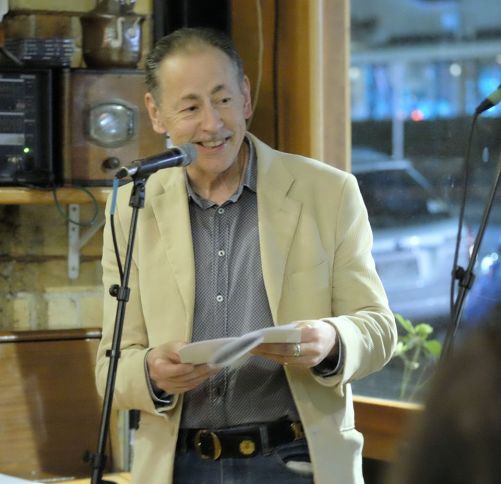
Peter Le Baige


Peter reads ‘what she knows’


Peter Le Baige has been writing and performing poetry since the first session of the legendary ‘Poetry Live’ weekly poetry readings in Auckland in 1981. He has published two collections of his very early work, ‘Breakers’ 1979, and ‘Street hung with daylit moon’, 1983, and whilst living abroad for 23 years, mostly in Asia and China in particular, has continued to write. He has been previously published in Landfall and was one of the cast for the ‘Pyschopomp’ poetry theatre piece at Auckland’s Fringe Festival in 2019.


JP at Rogers.JPG


Jenny Powell


Jenny reads ‘Not All Colours Are Beautiful’


Jenny Powell is a Dunedin poet. Her latest collection of poems is South D Poet Lorikeet (Cold Hub Press, 2017). She is currently working on a new collection based on New Zealand artist, Rita Angus.


Annie.jpg

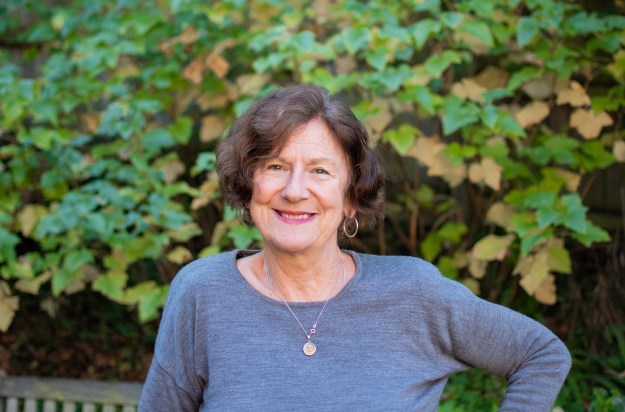
Annie Villiers


Annie Villiers reads ‘Bloody Awful’


Annie Villiers is a writer and poet who works in Dunedin and lives in Central Otago. She has published three books; two in collaboration with artist John Z Robinson and a novel. She is currently working on a travel memoir and a poetry collection.


IMG_8150.jpg


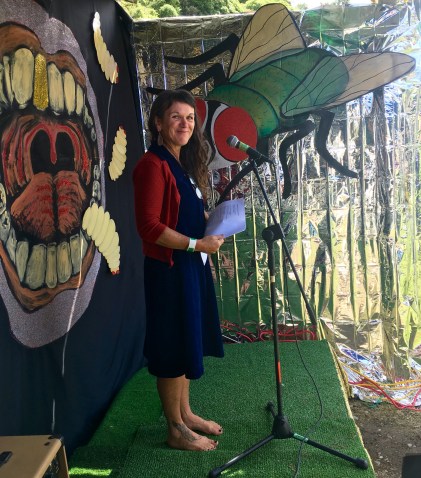
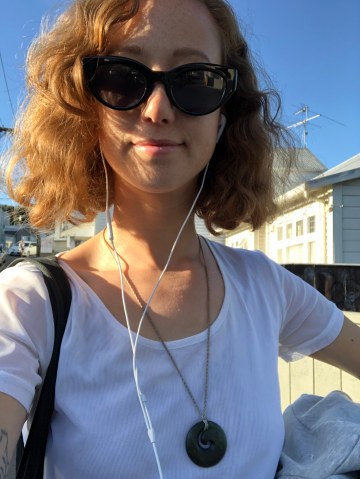
Iona Winter


Iona reads ‘Portal to the stars’


Iona Winter writes in hybrid forms exploring the landscapes between oral and written words. Her work is created to be performed, and has been widely published and anthologised. She is the author of two collections then the wind came (2018) and Te Hau Kāika (2019). Iona is of Waitaha, Kāi Tahu and Pākehā descent, and lives on the East Otago Coast.


IMG_0041.jpeg

Stacey Teague


Stacey reads ‘Kurangaituku’


Stacey Teague, Ngāti Maniapoto/Ngāpuhi, is a writer from Tamaki Makaurau currently living in Te Whanganui-a-Tara. She is the poetry editor for Scum Mag, has her Masters in Creative Writing from the International Institute of Modern Letters, and has three chapbooks: Takahē (Scrambler Books, 2015), not a casual solitude (Ghost City Press, 2017) and hoki mai (If A Leaf Falls Press, 2020). Tweets @staceteague



Broatch.jpg


Mark Broatch


Mark Broatch reads ‘Already’


Mark Broatch is a writer, reviewer and the author of four books.
He is a former deputy editor at the NZ Listener and is a fiction judge
for this year’s Ockham NZ Book Awards. His poetry has been published
in Landfall and the Poetry NZ Yearbook.


IMG_1277

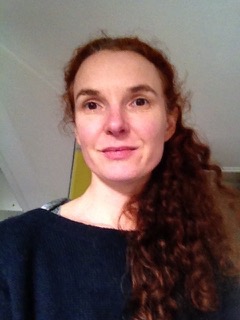
Susanna Gendall


Susanna reads ‘Spring’


Susanna Gendall’s poetry and short fiction have appeared in JAAM, Takahē, Sport, Geometry, Landfall, Ambit and The Spinoff. Her debut collection, The Disinvent Movement, will be published next year (VUP).


Landfall page


Poetry Shelf connections: Murray Edmond’s ‘East Coast Waves’


East Coast Waves


Someone practicing a violin

who hasn’t practiced in a while,

a bike that has not been ridden

for a year or more

squeaks like that violin,

couples wonder who that person is

alongside whom they each walk,

facial muscles straining to relax

after 15 East Coast waves

performed rapid-fire,

at the dairy door

the lonesome existentialist

is writing words with water

on the concrete pavement stones,

while the pigeons in the phoenix palm

have eyes only for each other


Murray Edmond


Murray Edmond lives in Glen Eden, West Auckland. His latest book, Back Before You Know, includes two narrative poems, ‘The Ballad of Jonas Bones’ and ‘ The Fancier Pigeon’ (Compound Press, 2019).

Compound Press page


Poetry Shelf connections: Tusiata Avia reads ‘Massacre’


Tusiata photo _Hayley Theyer_ Phantom cover.jpg


Tusiata Avia reads ‘Massacre’

The poem and audio appear in Best NZ Poems 2019.


Tusiata Avia is a poet, performer and writer. She has published three books of poetry, a chapbook, three children’s books and is included in over 100 anthologies, journals and online publications. Tusiata has held a number of writers’ residencies and awards, including the CNZ Fulbright Pacific Writer’s Fellowship at University of Hawai’i and the Janet Frame Literary Trust Award.  Known for her dynamic performance style, she wrote and then performed Wild Dogs Under My Skirt as a one-woman show (2002-2009). In 2016 it became a multi award-winning play for 6 women, directed by Anapela Polata’ivao. In January 2020 Wild Dogs Under My Skirt made its American debut, Off-Broadway.


Poetry Shelf connections: Bernadette Hall’s ‘the landscape of longing’


the landscape of longing

in memory of Gerry Melling, poet and architect 1947-2012


I shall explain herein the arrangement and symmetry

of private buildings from the position of the heavens in respect of the earth,

the inclination of the zodiac and from the sun’s course


just the cold left now like a smooth glove on the top of my hand

though the joint between my fingers is still warm


an object under the eye will appear very different  from the same object in an open space       


think of the shell as part of the architectural setting, a shallow canopy

over the Madonna who, with her child, has been gathering raspberries


the injury which nature would effect is evaded by means of art


take, for example, the more tensile forms of tiny fish that dart,

a little more weighted with their body mass,

more straightforwardly down, slewing side to side like footballers

shaping new subtleties of line to distract the eye


it is the part of a skilful (wo)man  to consider the nature of the place, 

the purpose of the building and the beauty of it


think of the falcon and the falconer,

of words in circular and ovoid shapes like the seventy-one

cervical vertebrae that held up the neck of the plesiosaur

think of Beethoven’s Quartet No. 15 in A minor

think of the Sky Box overlooking the West Bank in Wellington

think of Gerry and Geoff and Celeste and all the other beautiful people


Bernadette Hall


italicised text taken from the writings of the Roman architect, Vitruvius 80-15BC


Bernadette says:  Here is my lockdown poem. Some of the lines have been floating around for a while. I’ve long wanted to write something for Gerry. How good that this week Geoff Cochrane and Celeste should join him.  I’ve no idea who Celeste is. She appears in one of Geoff’s poems. She sounds beautiful. All I can say is, here’s to love and friendship, they are timeless. And thank you to all who are working to keep us all safe.


Poetry Shelf connections: Charlotte Simmonds ‘What He Did’

What He Did


Write 500 words ☐

Write a poem ☐

Write a poem for Paula ☐

Write any poem ☐

Write anything ☐

Write a word (for Paula?) ☐

Write a word ☐

Dishes ☑

Date pudding ☑

Dishes ☑

And it was evening, and it was morning, one day.


Email Paula ☐

Reply to Paula ☐

Dishes ☑

Feel guilty for lack of productivity ☑

Dishes ☑

And it was evening, and it was morning, a second day.


Do taxes ☐

Dishes ☑

Feel guilty for date pudding ☑

Dishes ☑

And it was evening, and it was morning, a third day.


Exercise 30 min ☐

Exercise 15 min ☐

Go outside ☐

Feel guilty for feeling guilty ☑

Reject a negative thought ☐

Avoid crowds ☑

Reject a negative thought ☑

And it was evening, and it was morning, a fourth day.


Get enough sleep ☐

Clean teeth evening ☐ morning ☐

Have a shower ☐

Dishes ☑

Feel guilty for lack of personal hygiene ☐

Dishes ☑

Clean teeth muthafucka you can’t go to the dentist in the apocalypse!!!

And God said, “Let the waters swarm a swarming of living creatures.” And God created the great sea monsters, 15,000 virus species with which the waters swarmed, and God saw that it was good. And God said, “Fill the waters of the seas,” and they did, between 10,000 and 200,000 of them in every drop of seawater.

And it was evening ☑, and it was morning ☑, a fifth day.


1000 words translation/2000 words editing ☐

500 words translation/1000 words editing ☐

200 words translation ☐

100 words translation ☐

0-50 words translation ☐

1 hr work ☐

Write a word ☐

Dishes ☑

Feel guilty for not writing a word ☑

Dishes ☑

And behold, it was very good, and it was evening, and it was morning, a sixth day.


Apply for wage subsidy ☑

DO TAXES ☐

Dishes ☑

Feel guilty for living in NZ ☑

Dishes ☑

Now the viruses of the heavens and the earth were completed and all their hosts. And God completed on the seventh day His work what he did, and He abstained on the seventh day from all His work what he did because there was no more work and He was out of it.


Eat enough calories ☑☑☑☑☑☑☑☑☑☑☑☑☑☑☑☑☑☑☑☑☑☑☑☑☑☑☑☑☑☑☑☑☑☑☑☑

Timtams?

Ice cream? Milo?

Tiramisu?????

Dishes ☑

Feel guilty for having a functional government ☑

Dishes ☑

And behold, God had created a universe so it did not matter that He was out of work because He had His universal income. There was evening, and there was morning, a 16th day.


Dishes ☑

Feel guilty for being alive ☑

Dishes ☑

God was never bothered again. There was evening, and there was morning, a 26th day.


Charlotte Simmonds


Charlotte Simmonds is a writer, editor and translator indoors, Wellington.


Poetry Shelf connections: 4 poems from Tony Beyer


Loose leaf


hard to tell if the rain

enhances or limits contagion


its voice in the night

calms the anxious world


the dog involves himself

in a tighter knot of sleep


surprising how the mind

almost emptied of hope


is also empty of fear

unless concern for everyone


not just one

is not love but fear


dawn and birds return

and the dog wakes expectantly


my neighbour over the fence

lets me know how they’re doing


nothing dramatic

but nothing as usual either


and in the bare streets

maybe hope too will return


Mourning the normal world


a café table

or on the back porch at home


a hug from a friend

or seated alone


leafing through new books

just bought from Unity


a grandchild conversing

earnestly with the dog


frisbee or touch in the park

with brothers and their sons


wives of both generations

shaking their heads


at immemorial

masculine folly


a cousin from the UK

staying for a week or a month


vegetables exchanged

garden to garden


shared home baking

and home preserves


Upside


yet the wind still

dries the washing on the line


and the sky intermittently blue

over Taranaki


encourages us

grizzling into the garden


voices on the other side

of fences are reassuring too


already halfway

through Zola’s Earth


which took some exhuming

from dust on the shelf


the message is it’s really

the planet and our attention to it


that matters

and like frost on winter stubble


or deceased parents

spared all this by chronology


we are useful

and expendable


Black hat


the virus rode in

from points north

on a sickly horse


it was worse

than politics

or target practice


it stole conversation

and book shops

and football


it stole lives too

each of them

irreplaceable


days like a tide

receded after it

leaving sadness bare


explaining to

children and old

folks was difficult


something we’d

done or not done

something shameful


Tony Beyer


Tony Beyer writes in Taranaki. His recent work can be found online in Hamilton Stone Review, Mudlark and Otoliths; and is forthcoming in print in Kokako and Landfall.

Poetry Shelf connections: Amy Brown’s ‘If we’re lucky we have time’


If we’re lucky we have time


to divide batter into bowls and drop a different colour into each, then tip the mixtures

into a tin and use a knife to drag pink through blue and yellow through green knowing

in this, at least, there’s no getting it wrong


to lie on the driveway, arms angelic, and be tickled with chalk tracing our edges


to say, This is how big you are – enormous! – look at how much space is yours


to adopt kittens and not be annoyed when they pad across our faces overnight because

really we aren’t sleeping


to read little and slowly, attention brittle and bracketed


to turn the spare bedroom into a quarantine zone for when he comes home

from the COVID ward with symptoms and should no longer touch us


to count the hairs that come away between my fingers


to order three plain grey T-shirts because the world has sold out of scrubs


to answer teenagers’ emails which begin, As you know these are uncertain times and

I’m truly sorry I haven’t submitted my essay yet, and end, I hope you don’t get sick


to hear fear in his language that reminds me of his dearness


to sing Twinkle Twinkle Little Star or The Barrel as our hands turn into volcanoes –

Look at my lava!


to spray all the handles with Ajax and feel like an Ancient Greek propitiating Apollo

to ward off the plague


to find glitter on my cheek three months after New Year’s Eve


to smile at the three-year-old announcing, The kitten’s pooing in her glitter tray again


to imagine holding a social proximity party at which everyone must be within 1.5 metres

of more than one other person


to consider how to get our wills witnessed from a safe distance


to listen to a kids’ podcast about why leaves fall off trees; when the days get too dark it is

right to let go of what allows you to grow


to decide


to hibernate


Amy Brown


Amy Brown is a poet, novelist and teacher. In 2012 she completed a PhD in creative writing at the University of Melbourne. She is the author of The Propoganda Girl (VUP, 2018), which was shortlisted in the 2009 NZ Book Awards, and The Odour of Sanctity (VUP, 2013), a contemporary epic poem. She is also the author of Pony Tales, a series of children’s novels. Amy’s most recent collection, neon daze, was published by Victoria University Press in 2019.


My review of neon daze

The Spin Off – ‘Turning on the Light Ladder: Amy Brown on motherhood and writing neon daze

Radio NZ – Harry Ricketts reviews neon daze

Poetry Shelf – excerpt from neon daze

Victoria University Press author page


Poetry Shelf connections: Marty Smith’s ‘My lights, for Paul’ with poem and audio


My lights, for Paul

April 8, 2020


All summer long I go on

till every gap is gone,

winding and twisting

wires of lights,

higher and higher


I’m not worrying, I’m looking up

breathless


making more and more:

red bobbles on a plastic buoy

blue glass balls on a round ball valve

a warm white pyramid, tipped with gold

changing colours

on fluorescent globes


I covered it all in lights

right up to the top spike

of the monkey puzzle,

twenty foot high, dazzling out

in black space beside


a five-by-five foot glowing ball

of cats’ eyes, shining greenly

into the velvet dark

and in behind, the port lights

on the estuary


and still my wish is not bright enough

Paul is struggling to stand


the moon, strangely yellow too,

stops to pose above my lights,

pooling moonlight onto the sea


it’s all set up in front of the seat

where Paul can sit

and smoke and see them glow


the tiny red tips on the sea glass globe

are fading now, tail lights going away


Paul says he’s here to play pool,

not look at my lights


he sits smoking and staring at them

shining out of the softest night


he says,

I’d like to see them go in a line down the lawn

and into infinity


Marty Smith


Paul-DSCF9310 copy

Photo credit: Florence Charvin


Marty reads ‘My lights, for Paul’


Poet Marty Smith is in lockdown in Hawkes Bay. She plays pool every Friday night (not now) with Paul and a small hard core group. When the competition begins again, it will be renamed as the Davis Cup. For Paul Davis, the best pool player of all.


Poetry Shelf meditation: John Gallas ‘Self-Isolation : the Hermit-Poet copes’


Self-Isolation : the Hermit-Poet copes.


Being an Isolate Hermit, but not ill, is as awful as being under mild house arrest, kept in by a distant flood or too much sun, or just disliking the season or the times : that is, not very.

Guthlac of Crowland retreated to an island in the fens for twenty years. Wulfric of Haselbury shut himself inside some big rocks at Haselbury Plunkett. Julian of Norwich spent most of her life in a tiny wee cell stuck on her local church, watching Jesus bleed above her head while the population dropped dead of the plague outside.

There is a lesson here : that With Purpose, Away from the World, Much May Be Done.

Guthlac , who would not go to the shops for fear of (mostly moral) infection, ate clags of barley- bread and drank mud-water, and saw Demons with shaggy ears, horses’ teeth, throats vomiting fire and scabby legs, who would never stop shreiking. With much self-scourging, however, his soul was made safe, and his time passed usefully, and he now has his statue at Crowland Abbey (second tier up the old nave). When Guthlac died, honey poured out of his mouth and he flew away on a beam of sunshine with some Angels and became a Saint. How good is that ?

Wulfric (29 years a Hermit) had cold baths and wore a hairy shirt with chain-mail on top, and gnawed turnips and clover. His isolation focused his mind so well that he became an expert weather-forecaster and doctor, and told King Henry by cosmic vibes that he (the King) was soon going to die of food poisoning, which he did. One-nil to the Isolate ! (also now a Saint).

Julian of Norwich, of course, is perhaps the finest example of Retreat & Thrive. She wrote. Lord, did she wrote. While most of us might take up knitting or play Scrabble, Julian established direct communication with God, who Revealed Things to her via (note well, you isolates) the pure and specialised air of her cell, which was subsequently filled instead with crowns of thorns, submarine journeys, lots of blood and three different versions of Heaven. Julian now has a splendid swing-bridge named after her near Norwich Railway Station, something more than any of us can probably hope for.

These are more secular times, and we have, mostly, other gods. Yesterday, I got stuck into several of mine. I began a 2000-piece jigsaw of ‘Hunters in the Snow’ ; wrote a poem about a ruffled swan on a flooded pond near Stanton-under-Bardon ; listened to the audiobook of ‘The Hobbit’ ; made scones (and ate them) ;  and read some more chapters of ‘Anna Karenina’ (who has time for that in their healthy days ?). Today the sun is out, and I am going to really really concentrate under the plastic tiki on the wall with some mud-water, and have a vision of Beowulf, who will tell me about some brilliantly exciting and murderous adventures (which I will write down ; pen and paper are well ready) and come back tomorrow, shaggy ears and all, and tell more. Like Julian’s ‘Revelations of Divine Love’, I’m hoping there will be a Short Text, followed by a Long Text, followed by general fame and a literary Sainthood.

Cheer up, folks : we have nothing to lose but our ordinariness !


John Gallas. NZ poet published by Carcanet. 20 collections including The Song Atlas, Star City, The Little Sublime Comedy and 52 Euros. The Extasie (60 love poems) and Rhapsodies 1831 (translation of French poet Petrus Borel) to be published January and March 2021. Presently living in Leicestershire. Librettist, St Magnus Festival Orkney poet, Saxon Ship Project poet, Fellow of the English Association, tramper, biker and merry ruralist. Presently working on two sets of poem-prints (’18 Paper Resurrections’ and ‘Wasted by Whitemen’). ‘Unscythed’ written in Sefton, near Rangiora : home of bro.


Poetry Shelf Monday poem: Kiri Piahana-Wong’s ‘ Give me an ordinary day’


Give me an ordinary day


Ordinary days

Where the salt sings in the air

And the tūī rests in the tree outside our kitchen window

And the sun is occluded by cloud, so that the light

does not reach out and hurt our eyes

And we have eaten, and we have drunk

We have slept, and will sleep more

And the child is fed

And the books have been read

And the toys are strewn around the lounge

Give me an ordinary day


Ordinary days

Where I sit at my desk, working for hours

until the light dims

And you are outside in the garden,

clipping back the hedge and trees

And then I am standing at the sink, washing dishes,

And chopping up vegetables for dinner

We sit down together, we eat, our child is laughing

And you play Muddy Waters on the stereo

And later we lie in bed reading until midnight

Give me an ordinary day


Ordinary days

Where no one falls sick, no one is hurt

We have milk, we have bread and coffee and tea

Nothing is pressing, nothing to worry about today

The newspaper is full of entertainment news

The washing is clean, it has been folded and put away

Loss and disappointment pass us by

Outside it is busy, the street hums with sound

The children are trailing up the road to school

And busy commuters rush by talking on cellphones

Give me an ordinary day


And because I’m a dreamer, on my ordinary day

Nobody I loved ever died too young

My father is still right here, sitting in his chair,

where he always sits, looking out at the sea

I never lost anything I truly wanted

And nothing ever hurt me more than I could bear

The rain falls when we need it, the sun shines

People don’t argue, it’s easy to talk to everyone

Everyone is kind, we all put others before ourselves

The world isn’t dying, there is life thriving everywhere

Oh Lord, give me an ordinary day


Kiri Piahana-Wong


Kiri Piahana-Wong, Ngāti Ranginui, is a poet and editor, and is the publisher at Anahera Press. Kiri’s first full-length collection, Night Swimming, was published in 2013.